Translations
American King James Version, King James Version
And where is now my hope? as for my hope, who shall see it?
And where is now my hope?
As for my hope, who shall see it?And where is now my hope? as for my hope, who will see it?
Where then is my hope? and as for my hope, who shall see it?
Where then is my hope?
And as for my hope, who shall see it?And where [is] now my hope? Yea, my hope, who doth behold it?
And where is then my hope? yea, my hope, who shall see it?
Where then would be my hope? And, as for my blessedness, who should see it!
Berean Standard Bible, Majority Standard Bible
where then is my hope?
Who can see any hope for me?where then is my hope?
As for my hope, who will see it?Where then is my hope? and who will see my desire?
Where is then now mine hope? or who shall consider the thing, that I hoped for?
Douay-Rheims (Challoner revision)
Where is now then my expectation, and who considereth my patience?
Pictures
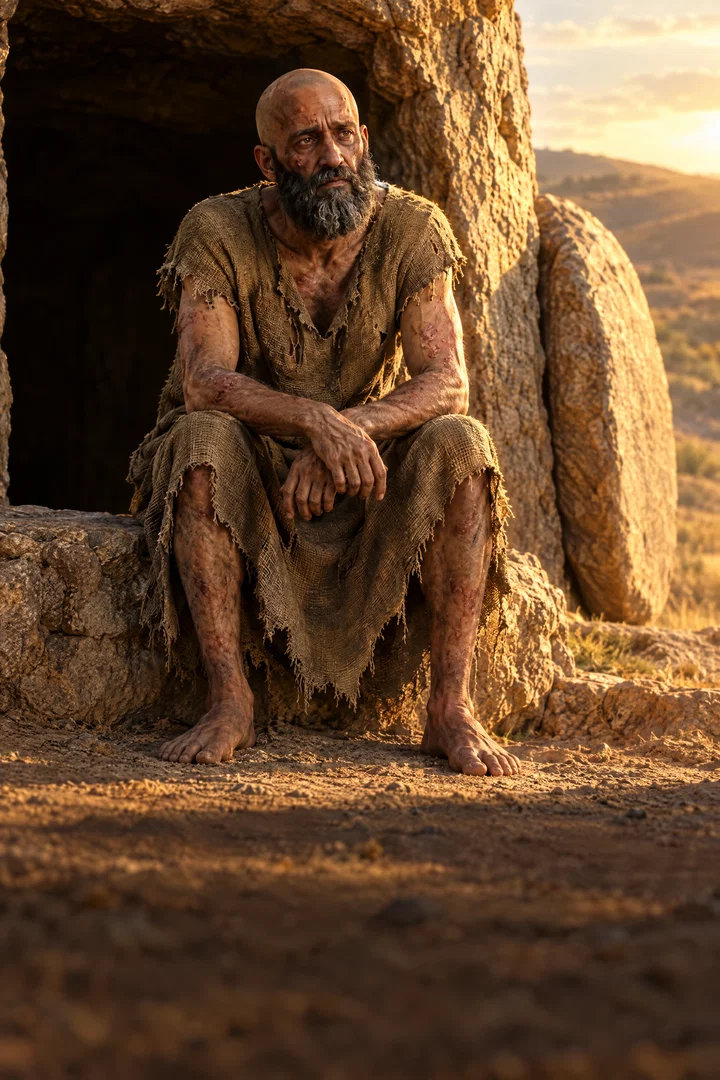
Cross-references 20 of 24
- Job 14:14-15
If a man die, shall he live again? all the days of my appointed time will I wait, till my change come.
Job waits for his change and for God to call him from death.
- Job 19:25-27
For I know that my redeemer liveth, and that he shall stand at the latter day upon the earth:
Job’s hope rests on his living Redeemer and seeing God after death.
- Psalms 88:10-12
Wilt thou shew wonders to the dead? shall the dead arise and praise thee? Selah.
Both portray Sheol as darkness and forgetfulness, where the dead do not praise God.
- Isaiah 38:18
For the grave cannot praise thee, death can not celebrate thee: they that go down into the pit cannot hope for thy truth.
The grave cannot praise the Lord, and its inhabitants cannot hope in his truth.
- Psalms 6:5
For in death there is no remembrance of thee: in the grave who shall give thee thanks?
Both describe the dead in Sheol as having no remembrance or praise.
- John 5:28-29
Marvel not at this: for the hour is coming, in the which all that are in the graves shall hear his voice,
The dead in the grave will hear Christ’s voice and come forth.
- 1 Thessalonians 4:13-16
But I would not have you to be ignorant, brethren, concerning them which are asleep, that ye sorrow not, even as others which have no hope.
Hope for the dead is fulfilled when Christ returns and raises them.
- Job 14:12
So man lieth down, and riseth not: till the heavens be no more, they shall not awake, nor be raised out of their sleep.
Both describe the dead as lying asleep until a future awakening.
- Isaiah 26:19
Thy dead men shall live, together with my dead body shall they arise. Awake and sing, ye that dwell in dust: for thy dew is as the dew of herbs, and the earth shall cast out the dead.
Both texts speak of hope for life beyond death.
- Ecclesiastes 9:4-6
For to him that is joined to all the living there is hope: for a living dog is better than a dead lion.
Says there is no knowledge or activity in sheol.
- 1 Corinthians 15:22
For as in Adam all die, even so in Christ shall all be made alive.
Promises life in Christ after death in Adam.
- 1 Corinthians 15:54-55
So when this corruptible shall have put on incorruption, and this mortal shall have put on immortality, then shall be brought to pass the saying that is written, Death is swallowed up in victory.
The dead are raised to immortality, and death is overcome.
- Romans 8:24-25
For we are saved by hope: but hope that is seen is not hope: for what a man seeth, why doth he yet hope for?
Hope concerns what is not yet seen and is awaited patiently.
- Ezekiel 37:11-12
Then he said unto me, Son of man, these bones are the whole house of Israel: behold, they say, Our bones are dried, and our hope is lost: we are cut off for our parts.
Lost hope in the grave is restored when God opens the graves.
- James 5:11
Behold, we count them happy which endure. Ye have heard of the patience of Job, and have seen the end of the Lord; that the Lord is very pitiful, and of tender mercy.
Job’s patience in suffering brings comfort and hope.
- Psalms 146:4
His breath goeth forth, he returneth to his earth; in that very day his thoughts perish.
both teach thought and hope perish at death
- John 6:39
And this is the Father’s will which hath sent me, that of all which he hath given me I should lose nothing, but should raise it up again at the last day.
lost unless raised at last day
- Ecclesiastes 9:10
Whatsoever thy hand findeth to do, do it with thy might; for there is no work, nor device, nor knowledge, nor wisdom, in the grave, whither thou goest.
both teach no knowledge or hope is seen in sheol
- Psalms 16:8-11
I have set the LORD always before me: because he is at my right hand, I shall not be moved.
The passage connects it with hope beyond the grave.
- 1 Corinthians 15:18
Then they also which are fallen asleep in Christ are perished.
without resurrection dead are perished
Commentary
Each commentary is drawn from primary sources: the writings of Ellen G. White and Adventist pioneers and periodicals. Each commentary is separate. Its own words are not a quotation; follow the references to read the source passages.
Pioneers and periodicals
43 sources
Job in his affliction despairs of any hope to be seen in this life and asks who could see or share any hope for him as he waits for death in the grave.RH Dec 30, 1915ST Jun 23, 1881RH Jun 8, 1869 He pictures that grave as his house where he lies in darkness in kinship with corruption and the worm and rests together in the dust.ST Mar 13, 1879RH Nov 19, 1872RH May 5, 1874 It is the underground abode of the dead where there is no work, device, knowledge, nor wisdom and no conscious communion with the living.ST May 27, 1880ST Oct 11, 1877 His hope is therefore not realized while he lies in the grave but goes down with him to the pit still awaited and unseen.RH Sep 22, 1859RH Sep 5, 1854RH Oct 31, 1854RH Sep 4, 1855ST Aug 18, 1881 That hope is the resurrection and change from mortality to immortality when his living Redeemer shall stand at the latter day upon the earth and he in his own restored flesh shall see God for himself.RH Oct 30, 1855ST Oct 13, 1881RH Sep 4, 1855RH Jan 19, 1864
Setting in Job's Suffering
The question belongs to the long dispute between Job and his three friends over the cause and purpose of his afflictions and of human suffering, a dispute reckoned as extending from chapter 3 to chapter 31 and more narrowly from chapter 4 to chapter 31.STST Jun 17, 1913ST Mar 27, 1893 The book of Job as a whole sets forth the problems of providence, sin, and suffering.ST Jun 17, 1913 This chapter stands within the record of Job's affliction in which his friends wrongly ascribe his suffering to sin.ST Jun 17, 1913
He speaks here out of perplexity, conscious of his own integrity yet unable to comprehend God's dealings with him.ST Mar 27, 1893 In part he reasons from his friends' assumption that affliction signifies divine displeasure, though he does not charge God foolishly.ST Mar 27, 1893 God beheld the end from the beginning and was working through that darkness for His own enduring glory, for the comfort and hope of thousands of sufferers afterward, and for blessing upon Job himself.ST Mar 27, 1893
The utterance is his reply in which he maintains his innocence and longs for death, seeing no hope before him.RH Dec 30, 1915 He finds no prospect of recovery from death and asks who can discern or share any hope for him.RH Dec 30, 1915ST Jun 23, 1881 While he waits for death his hope remains unfulfilled in the grave.RH Jun 8, 1869
Grave as House of Death
The question where hope now is and who shall see it belongs to Job's description of Sheol as his house and the house of the dead.ST Mar 13, 1879RH May 5, 1874RH Aug 27, 1872ST Jan 24, 1884 He makes the grave his home and makes his bed in darkness, calls corruption his father and the worm his mother and sister, and goes down to the bars of Sheol to rest together in the dust.ST Mar 13, 1879RH Nov 19, 1872RH May 5, 1874ST Oct 13, 1881RH Aug 27, 1872 He waits there with the grave for his home, lying in darkness in kinship with corruption and the worm and resting together in the dust among corruption and worms until his change comes.ST Mar 13, 1879RH Nov 19, 1872ST Oct 13, 1881ST Jan 24, 1884 His hope is not fulfilled while he is dead, but he waits in the sleep of death with worms consuming his body, resting in hope of awaking at Christ's coming.ST Oct 13, 1881ST Jan 24, 1884
Sheol so described is a place of silence, secrecy, sleep, rest, darkness, corruption, and worms.RH May 5, 1874ST Mar 15, 1877RH Aug 27, 1872 It is pictured as waiting for Sheol as house and making the bed in darkness, calling corruption father and the worm mother and sister, with hope gone and unseen by anyone.RH May 5, 1874ST Mar 15, 1877RH Aug 27, 1872 The dead go down to the bars of Sheol when rest together is in the dust, resting in Sheol in the state of death where hope is unseen until the dead are raised.RH May 5, 1874RH Aug 27, 1872RH Mar 28, 1865 It is the state of the dead pictured as darkness, corruption, silence, and rest in the dust, where the dead have no awareness and no one can see or experience hope while remaining in that state.RH Mar 28, 1865ST Jul 29, 1875
Sheol is the underground abode of the dead and the state of death.ST May 27, 1880ST Oct 11, 1877 It is a place of silence and death, of silence, darkness, secrecy, corruption, and death, without work, device, knowledge, nor wisdom.ST May 27, 1880ST Oct 11, 1877 The dead there do not remain conscious and do not carry on communication with the living, for their thoughts have perished and they await the resurrection.ST May 27, 1880 They lie asleep and do not consciously think or act.ST May 27, 1880
The passage treats Sheol as the grave and death in the dust of the earth.RH Nov 19, 1872RH Oct 31, 1854RH Jun 12, 1860ST Aug 23, 1877 The dead are not in Heaven nor in hell but in the dust of the earth, making the grave the house and corruption the kin, with the lot placed in darkness and the pit until a future deliverance.RH Nov 19, 1872ST Aug 23, 1877 It is not a place of conscious torment but of death and the destruction of being, with corruption and worms as companions and descent to Sheol in the dust, and hope hidden beyond sight in the grave.RH Nov 19, 1872RH Oct 31, 1854 The question about hope is thus part of the teaching that the dead are in the grave, in darkness and the pit.RH Oct 31, 1854RH Jun 12, 1860ST Aug 23, 1877
In that dark home the dead lie in silence and corruption until the appointed change.ST Aug 18, 1881ST Jun 23, 1881ST Mar 20, 1879 Job's hope cannot be seen while he lies in the grave, for in the darkness and corruption he describes no one can see or experience that hope.ST Aug 18, 1881RH Apr 28, 1863ST Mar 20, 1879 There is no active, visible hope there, and no hope of recovery from death to be seen or shared, only death as sleep and rest in the dust.ST Aug 18, 1881ST Jun 23, 1881ST Jul 29, 1875 The grave is described as a place of darkness and silence where the dead lie until they are raised, and where hope is absent and beyond the reach of anyone who might see it there.ST Jul 29, 1875RH Apr 28, 1863ST Mar 20, 1879
Hope Hidden Until Resurrection
Job's question where his hope now lies and who shall see it presents hope as not yet seen, hidden beyond sight, gone and unseen while he rests in the dust.RH Sep 22, 1859RH Oct 31, 1854ST Aug 18, 1881ST Aug 8, 1906RH Apr 28, 1863 He asks who can see what he longs for after describing corruption and worms as his companions and his descent to Sheol in the dust, belonging to a setting that treats Sheol as the grave and death rather than conscious torment.RH Oct 31, 1854ST Aug 18, 1881RH Apr 28, 1863 In that dark home the dead rest in the dust amid corruption and worms, having no active, visible hope that anyone can see or experience there.ST Aug 18, 1881RH Apr 28, 1863RH Nov 18, 1858 The loss of hope in death means the dead lie in the grave where their hope is no longer seen or active, in rest and privation of life until they rise.RH Sep 22, 1859RH Nov 18, 1858 In connection with Job 14:14-15, that unseen hope is the righteous person's reward at the judgment when Christ comes.ST Aug 8, 1906
That hope is not realized or fulfilled during death and while he lies in the grave, for death is not its fulfillment and God is not expected to be seen at death.RH Oct 30, 1855RH Sep 5, 1854ST Oct 13, 1881ST Jul 1, 1875ST Apr 29, 1908 The grave is his house and his bed is made in darkness, with corruption as father and the worm as mother and sister, and there he waits in the sleep of death with worms consuming his body.RH Sep 5, 1854ST Oct 13, 1881RH Oct 28, 1915ST Jul 1, 1875 His waiting there places hope beyond the grave, in the life God will restore when the dead are called forth and raised to see God for themselves.RH Oct 30, 1855RH Oct 28, 1915ST Jul 1, 1875 That awakening is at Christ's coming, when in his flesh and in his own restored body he will see God, with no other hope but that resurrection.RH Sep 5, 1854ST Oct 13, 1881ST Apr 29, 1908
His hope goes down to the pit with him still awaited rather than departing as a conscious soul, unseen until God calls him to live again.RH Sep 5, 1854RH Sep 4, 1855ST Apr 5, 1905 Death is sleep in the dust, not conscious existence in heaven or hell, pictured as house and bed in darkness for a period of rest in the grave rather than immediate life in heaven.RH Sep 5, 1854ST Jan 24, 1884ST Mar 20, 1879 The grave so described is a place of darkness and silence where the dead lie until raised, beyond the reach of anyone who might see hope there.ST Apr 5, 1905ST Jan 24, 1884ST Mar 20, 1879 The change waited for is from mortality to immortality at the resurrection, when the dead wait for their change and rest in the dust until called to answer.RH Sep 4, 1855ST Apr 5, 1905ST Jan 24, 1884
That change is the resurrection itself, while until then the condition is rest in the dust in darkness and corruption.RH Sep 22, 1859RH Nov 19, 1872ST Apr 5, 1905ST Apr 29, 1908 The dead are not in heaven or in hell but in the dust of the earth, lying in darkness in kinship with corruption and the worm and resting together in the dust until the change comes.RH Sep 22, 1859RH Nov 19, 1872 Without a resurrection they will forever lie in their graves mingled with the clods of the valley.RH Nov 19, 1872 When the righteous dead are raised at Christ's coming, the person resting in the dust waits in the grave for that change and resurrection.ST Apr 5, 1905ST Apr 29, 1908
Hope therefore lies beyond the grave in the life God will restore when the dead are called forth in the resurrection.RH Oct 28, 1915ST Dec 17, 1896ST It is not in conscious life after death but in the future resurrection, when the living Redeemer will call from the dead.ST Dec 17, 1896ST Death is faced in quiet unconsciousness, trusting that the living Redeemer will call forth at the appointed time, and resurrection is the hope of life beyond the grave.ST Dec 17, 1896ST
Resurrection and Christ's Coming
Job's hope is the resurrection, when he will see God in his flesh and not at death, for he will wait in the grave for that hope to be fulfilled.RH Oct 30, 1855RH Sep 4, 1855ST Dec 3, 1885 His hope was not something to be seen while his rest is in the dust, for he describes the grave as his house and says his hope will go down to the pit with him, still awaited rather than departing as a conscious soul at death.RH Oct 30, 1855RH Sep 4, 1855 The change he waits for in the dust is from mortality to immortality and from death to life, the future awakening of the righteous dead when they are raised at Christ's coming.RH Sep 4, 1855ST Apr 29, 1908ST Dec 3, 1885ST Dec 2, 1886
That hope rests on the living Redeemer who will stand at the latter day upon the earth, when Job will be resurrected and in his flesh, in his own restored body, see God for himself.ST Oct 13, 1881RH Jan 19, 1864RH Jun 8, 1869ST Dec 19, 1916RH Sep 26, 1854 While dead his house is the grave, his bed made in darkness, corruption his father and the worm his mother and sister, with worms consuming his body in the sleep of death and with no other hope but awaking at Christ's coming.ST Oct 13, 1881RH Jun 8, 1869RH Sep 26, 1854 His hope is therefore not lost even though it cannot be seen while he rests in the grave, and it is not fulfilled by going to heaven at death or by living consciously in heaven after death.RH Jan 19, 1864RH Jun 8, 1869ST Dec 19, 1916 While he waits in the grave he is associated with corruption and the worms, not with departed spirits, expecting God to call him back to life at the latter day when the dead are raised.ST Oct 13, 1881RH Jan 19, 1864RH Sep 26, 1854
In connection with Job 14:14-15, this unseen hope is the righteous person's reward at the judgment when Christ comes.ST Aug 8, 1906ST Aug 8, 1906ST Apr 15, 1903 The dead wait in the grave until the day of general promotion, when believers receive their reward at the Lord's coming.ST Aug 8, 1906ST Aug 8, 1906ST Apr 15, 1903 God's resurrection power is the answer to whether Job can be recovered from death when death brings darkness and silence.RH Jan 19, 1864
The verse therefore teaches that at death man sleeps unconscious in the grave and does not go to heaven as a spirit.ST May 27, 1880RH Apr 16, 1901RH Sep 26, 1854 The dead do not remain conscious, do not consciously think or act, do not carry on communication with the living, and do not behold God's face as angels do, for their thoughts have perished in sheol, the abode of the dead, a place of silence, darkness, secrecy, corruption, and death without work, knowledge, or wisdom.ST May 27, 1880RH Apr 16, 1901 They remain in the grave until Christ comes to raise them, and only then shall they see God's face.RH Apr 16, 1901RH Sep 26, 1854
Sources