Psalms 88:10
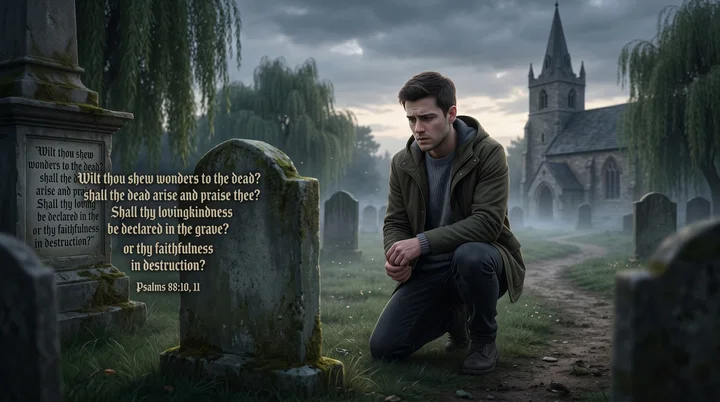
Wilt thou shew wonders to the dead? shall the dead arise and praise thee? Selah.
Translations
Will you show wonders to the dead? shall the dead arise and praise you? Selah.
Wilt thou shew wonders to the dead? shall the dead arise and praise thee? Selah.
Wilt thou shew wonders to the dead?
Shall the dead arise and praise thee? Selah.Wilt thou show wonders to the dead? shall the dead arise and praise thee? Selah.
Wilt thou shew wonders to the dead? shall they that are deceased arise and praise thee? Selah
Wilt thou show wonders to the dead?
Shall they that are deceased arise and praise thee? [SelahTo the dead dost Thou do wonders? Do Rephaim rise? do they thank Thee? Selah.
Wilt thou do wonders to the dead? shall the shades arise and praise thee? Selah.
For the dead, wilt thou perform a wonder? Or shall, the shades, arising, give thee thanks? [Selah.]
Berean Standard Bible, Majority Standard Bible
Do You work wonders for the dead?
Do departed spirits rise up to praise You?
SelahDo you show wonders to the dead?
Do the departed spirits rise up and praise you? Selah.Will you do works of wonder for the dead? will the shades come back to give you praise? (Selah.)
Wilt thou shewe a miracle to the dead? or shall the dead rise and prayse thee? Selah.
Douay-Rheims (Challoner revision)
Wilt thou shew wonders to the dead? or shall physicians raise to life, and give praise to thee?
Pictures
Cross-references 20 of 35
- Psalms 115:17
The dead praise not the LORD, neither any that go down into silence.
The dead do not praise the Lord; they go down into silence.
- Psalms 6:5
For in death there is no remembrance of thee: in the grave who shall give thee thanks?
The dead do not remember or give thanks to God.
- Ecclesiastes 9:5-6
For the living know that they shall die: but the dead know not any thing, neither have they any more a reward; for the memory of them is forgotten.
The dead know nothing, and their feelings and earthly involvement have ended.
- Isaiah 38:18-19
For the grave cannot praise thee, death can not celebrate thee: they that go down into the pit cannot hope for thy truth.
The dead cannot praise God, while the living can.
- Ecclesiastes 9:10
Whatsoever thy hand findeth to do, do it with thy might; for there is no work, nor device, nor knowledge, nor wisdom, in the grave, whither thou goest.
Both describe the dead as having no knowledge or activity in the grave.
- Job 14:12-15
So man lieth down, and riseth not: till the heavens be no more, they shall not awake, nor be raised out of their sleep.
Both describe the dead as asleep until God calls them.
- Job 10:21-22
Before I go whence I shall not return, even to the land of darkness and the shadow of death;
Both describe the realm of the dead as a land of darkness.
- Job 17:13-16
If I wait, the grave is mine house: I have made my bed in the darkness.
Both describe Sheol as darkness, corruption, and rest in the dust.
- Acts 2:29
Men and brethren, let me freely speak unto you of the patriarch David, that he is both dead and buried, and his sepulchre is with us unto this day.
Peter says David died and was buried.
- Acts 2:34
For David is not ascended into the heavens: but he saith himself, The LORD said unto my Lord, Sit thou on my right hand,
David had died and had not ascended to heaven.
- Psalms 31:17
Let me not be ashamed, O LORD; for I have called upon thee: let the wicked be ashamed, and let them be silent in the grave.
Both describe the dead as silent in the grave.
- Daniel 12:2
And many of them that sleep in the dust of the earth shall awake, some to everlasting life, and some to shame and everlasting contempt.
Both describe the dead as sleeping in the dust and awakening.
- 1 Thessalonians 4:13-16
But I would not have you to be ignorant, brethren, concerning them which are asleep, that ye sorrow not, even as others which have no hope.
The dead who sleep will be raised when the Lord descends.
- Job 14:20-21
Thou prevailest for ever against him, and he passeth: thou changest his countenance, and sendest him away.
The dead pass away and know nothing of events among the living.
- Psalms 146:4
His breath goeth forth, he returneth to his earth; in that very day his thoughts perish.
both cited to show dead have no thought or mental power
- Job 14:13
O that thou wouldest hide me in the grave, that thou wouldest keep me secret, until thy wrath be past, that thou wouldest appoint me a set time, and remember me!
Both describe the grave as the place of the dead.
- Psalms 30:9
What profit is there in my blood, when I go down to the pit? Shall the dust praise thee? shall it declare thy truth?
Both ask whether the dead can praise God.
- John 5:28-29
Marvel not at this: for the hour is coming, in the which all that are in the graves shall hear his voice,
The dead are in the graves until called forth.
- 1 Corinthians 15:52-53
In a moment, in the twinkling of an eye, at the last trump: for the trumpet shall sound, and the dead shall be raised incorruptible, and we shall be changed.
The dead are raised incorruptible, and the mortal puts on immortality.
- Acts 24:15
And have hope toward God, which they themselves also allow, that there shall be a resurrection of the dead, both of the just and unjust.
Promises a resurrection of both the just and unjust.
Commentary
Each commentary is drawn from primary sources: the writings of Ellen G. White and Adventist pioneers and periodicals. Each commentary is separate. Its own words are not a quotation; follow the references to read the source passages.
Pioneers and periodicals
33 sources
The verse asks whether God will show wonders to the dead and whether the dead will rise to praise Him, and the answer to both is No, for the dead do not witness His working nor rise in conscious praise.RH Jan 8, 1857ST Nov 25, 1886RH Sep 22, 1859 With the verses that follow it pictures the grave as destruction and darkness, silence and the land of forgetfulness, where His lovingkindness and faithfulness and righteousness are neither declared nor known.ST Feb 6, 1907RH Feb 2, 1864RH Sep 26, 1865 The dead are asleep and unconscious, knowing nothing and having no thought, feeling, work, knowledge or wisdom, silent and inactive until they are raised.ST Feb 6, 1907ST Dec 19, 1900ST Aug 25, 1881 This is true of the whole person, not of the body only, for the thinking and remembering part enters an unconscious state and loses knowledge, and the dead are not living conscious souls apart from their bodies.RH Feb 2, 1864RH Oct 2, 1855RH Jul 10, 1860 They must arise in order to praise God, and the sleeping saints will remain in the grave without awareness or praise until they awake at the resurrection.RH Sep 26, 1865RH Sep 26, 1854RH Sep 5, 1854
Question and Grave
The verse asks two rhetorical questions, whether God will show wonders to the dead and whether the dead will arise to praise Him, and both admit only No for an answer.RH Jan 8, 1857ST Nov 25, 1886RH Sep 22, 1859RH Aug 27, 1872RH Oct 2, 1855 It is a strong denial that the dead witness God and rise in conscious praise, teaching that the dead do not arise to praise God and are not conscious and praising Him in heaven.RH Jan 8, 1857RH Sep 22, 1859RH Aug 27, 1872RH Oct 2, 1855RH Feb 2, 1864 If the dead were conscious and happy they would praise the Lord, and it would be a greater wonder if they did not, for a good man praises God only while he lives and has being, but when he dies he stops praising, which he would never do while consciousness lasted.RH Feb 2, 1864 The word wonders there refers to miraculous manifestations, including the resurrection of the dead.ST May 7, 1912
Read with the following two verses, the passage portrays the grave as destruction, darkness, silence and the land of forgetfulness.RH Feb 2, 1864RH Sep 26, 1865RH Aug 5, 1862RH Nov 18, 1858ST Aug 18, 1881 In Sheol, the grave, the dark and the land of forgetfulness, God's lovingkindness, faithfulness, wonders and righteousness are neither declared nor known, and the dead have no remembrance or thanks.RH Feb 2, 1864RH Sep 26, 1865RH Aug 5, 1862RH Nov 18, 1858ST Aug 18, 1881 The dead there know nothing and praise nothing, do not see God's wonders, do not declare them, and do not rise to praise Him, but remain silent and inactive.ST Feb 6, 1907RH Feb 2, 1864RH Sep 26, 1865RH Aug 5, 1862RH Aug 27, 1872 This shows that the dead are not active, conscious souls apart from their bodies, and that the belief that the righteous at death go to heaven to join the angels in praise is not true.RH Sep 26, 1865ST Nov 25, 1886RH Oct 2, 1855 It also shows that the preaching mentioned in 1 Peter 3:18-19 did not take place in Sheol.ST Aug 18, 1881
By presenting the dead as presently unable to rise and praise, the question is framed as a plea for deliverance.ST Sep 28, 1904 The declaration is inspired truth about the state of the dead, spoken by David as moved by the Holy Ghost and not out of his own heart, and it cannot be set aside as mere human sentiment that is not the word of God.RH Apr 12, 1860 It is David's reason for deprecating the approach of death, proving he believed death ends conscious remembrance, thanksgiving and praise of God rather than freeing his soul to praise God unceasingly in heaven immediately, for otherwise he would have abstained from such remonstrance.RH Aug 5, 1862RH Nov 18, 1858
Unconscious Death and Hope
The dead are unconscious and asleep, knowing nothing, without conscious thought, feeling, emotion, work, knowledge, or wisdom, performing none of the acts of a living person, silent and inactive until they are raised.ST Feb 6, 1907ST Dec 19, 1900RH Dec 23, 1862RH Jun 12, 1860ST Mar 30, 1882 Read with the following verses, the questions whether the dead witness wonders and rise to praise show that the grave is a land of forgetfulness where the dead do not declare wonders or faithfulness, do not arise to praise or proclaim loving-kindness, faithfulness, wonders, and righteousness, do not remember God or give Him thanks, and do not exercise any power of mind.ST Feb 6, 1907ST Dec 19, 1900ST Aug 25, 1881RH Dec 23, 1862RH Jun 12, 1860 Death is the return of all, good and bad alike, to the dust, and the dead are incapable of feeling or emotion and cannot arise to praise.ST Dec 4, 1884ST Mar 30, 1882
This unconsciousness concerns the whole person and not the body only, for the thinking, remembering, intellectual part enters an unconscious state at death and loses its knowledge, leaving nothing but the particles of which the person was composed.RH Feb 2, 1864RH Oct 2, 1855RH Jul 10, 1860ST Dec 19, 1900 The dead are not active, conscious souls apart from their bodies, and death suspends the person's thought and activity so that the dead do not perform the acts of a living person and remain silent until raised.RH Oct 2, 1855ST Dec 19, 1900 Unless there is a resurrection this condition of utter unconsciousness for the intellectual being and decay and ruin for the body is eternal destruction.RH Jul 10, 1860
All the dead, righteous and wicked alike, go to the grave and do not remain conscious, for death brings all to the dust, the grave, Sheol or Hades, described as a land of darkness, forgetfulness, and silence where the dead do no work and have no knowledge or wisdom.ST Dec 4, 1884ST Mar 30, 1882 Sheol is a place of silence, secrecy, sleep, rest, darkness, corruption, and worms, where the dead do not rise to praise God or proclaim His faithfulness and have no knowledge of what is done.RH Aug 27, 1872RH Mar 28, 1865ST Jun 23, 1881ST Mar 15, 1877RH May 5, 1874 There the dead remain till God calls them, silent and inactive, with wonders neither shown nor known.RH Aug 27, 1872RH Mar 28, 1865RH May 5, 1874
Praise is impossible while dead, so the dead must arise in order to praise God.RH Sep 26, 1865RH Sep 26, 1854RH Sep 5, 1854RH Dec 23, 1862ST Oct 28, 1889 The grave is destruction, darkness, and the land of forgetfulness where the dead do not know or declare loving-kindness, faithfulness, wonders, and righteousness, and death leaves its victims without awareness or praise until they awake.RH Sep 26, 1865RH Sep 5, 1854ST Apr 11, 1900 The sleeping saints remain in the grave without awareness or praise until they awake at the resurrection, asleep until God raises them at the day of restoration.RH Dec 23, 1862ST Apr 11, 1900ST Oct 28, 1889
The verse therefore denies the immortality of the soul and denies that the dead are conscious and praising God in heaven.RH Jan 8, 1857RH Sep 22, 1859 It denies that the righteous at death go to heaven to join angels in praise or enter God's presence, denies that the dead pass at death into conscious bliss or misery in heaven or hell fire, and denies that death is birth into higher life or a gate to endless joy.RH Sep 26, 1865ST Nov 25, 1886ST Aug 28, 1884RH Sep 5, 1854 Death is an enemy's domain brought by sin, not a passage into heavenly life, and the grave is darkness, destruction, and forgetfulness rather than conscious bliss or misery.ST Aug 28, 1884RH Sep 5, 1854 Unless there is a resurrection this unconscious ruin is eternal destruction, while immortality is to be sought and is put on only at the resurrection through the gospel.RH Jul 10, 1860
For the same reason the preaching mentioned in 1 Peter 3:18-19 did not take place in Sheol, where wonders and righteousness are not known and loving-kindness and faithfulness are not declared.ST Aug 18, 1881 The conversation between the rich man and Lazarus cannot take place immediately after death, since the dead are unconscious, incapable of feeling or emotion, and unable to arise to praise.ST Mar 30, 1882 Being taken to God is different from dying and happens by bodily translation as with Enoch and Elijah, not by death releasing a conscious soul to pass into conscious joy or woe, for the dead go to the grave to be buried with their people and praise and celebration end.RH Sep 5, 1854 Those who trust in God may have to pass through this land of darkness and valley of the shadow of death, but comforted by His rod and staff they will come again from the place of the dead and live by Him who died and lives again.ST Nov 25, 1886
Sources