Translations
American King James Version, King James Version, Webster Bible, Revised Version
Then the LORD answered Job out of the whirlwind, and said,
Then the Lord answered Job out of the whirlwind, and said,
Then Jehovah answered Job out of the whirlwind, and said,
And Jehovah answereth Job out of the whirlwind, and saith: —
And Jehovah answered Job out of the whirlwind and said,
Then Yahweh responded to Job, out of a storm, and said:—
Berean Standard Bible, Majority Standard Bible
Then the LORD answered Job out of the whirlwind and said:
Then the LORD answered Job out of the whirlwind,
And the Lord made answer to Job out of the storm-wind, and said,
Then answered the Lord vnto Iob out of the whirle winde, and said,
Douay-Rheims (Challoner revision)
Then the Lord answered Job out of a whirlwind, and said:
Pictures


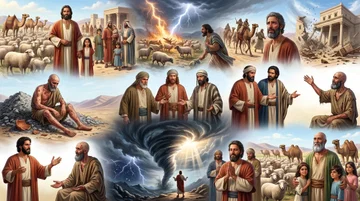
Cross-references
- Job 38:31-33
Canst thou bind the sweet influences of Pleiades, or loose the bands of Orion?
God cites the stars as another part of creation in his challenge to Job.
- 1 Kings 19:11-13
And he said, Go forth, and stand upon the mount before the LORD. And, behold, the LORD passed by, and a great and strong wind rent the mountains, and brake in pieces the rocks before the LORD; but the LORD was not in the wind: and after the wind an earthquake; but the LORD was not in the earthquake:
Both texts describe God addressing a person from amid overwhelming natural signs.
- Job 42:1-6
Then Job answered the LORD, and said,
Job responds to God’s whirlwind voice with submission and humility.
- Nahum 1:3
The LORD is slow to anger, and great in power, and will not at all acquit the wicked: the LORD hath his way in the whirlwind and in the storm, and the clouds are the dust of his feet.
Both describe the LORD speaking or moving in the whirlwind.
- Ezekiel 1:4
And I looked, and, behold, a whirlwind came out of the north, a great cloud, and a fire infolding itself, and a brightness was about it, and out of the midst thereof as the colour of amber, out of the midst of the fire.
Both scenes begin with a whirlwind.
- Job 37:9
Out of the south cometh the whirlwind: and cold out of the north.
Elihu had already noted the whirlwind.
- Job 40:4
Behold, I am vile; what shall I answer thee? I will lay mine hand upon my mouth.
Job responds to the voice from the whirlwind with confession and humility.
- Job 31:35
Oh that one would hear me! behold, my desire is, that the Almighty would answer me, and that mine adversary had written a book.
the request Job 38:1 grants
- Isaiah 40:12-28
Who hath measured the waters in the hollow of his hand, and meted out heaven with the span, and comprehended the dust of the earth in a measure, and weighed the mountains in scales, and the hills in a balance?
Questions about creation and God’s greatness echo Job’s encounter with divine mysteries.
- Job 38:19-24
Where is the way where light dwelleth? and as for darkness, where is the place thereof,
God questions Job about the dwelling places and paths of light and darkness.
- Job 39
Knowest thou the time when the wild goats of the rock bring forth? or canst thou mark when the hinds do calve?
The beasts further display God’s creative power.
Commentary
Each commentary is drawn from primary sources: the writings of Ellen G. White and Adventist pioneers and periodicals. Each commentary is separate. Its own words are not a quotation; follow the references to read the source passages.
Ellen G. White
5 sources
The Lord begins to answer Job out of the whirlwind.PK 163.2–164.1MH 431.2–3RH Oct 16, 1913GC88 471.1 In this answer He reveals the might of His power.PK 163.2–164.1RH Oct 16, 1913
The speech it introduces continues through chapters 38-40 with questions about creation.Ms 236, 1902, par. 2–4MH 431.2–3 Those questions affirm that God created the world and that human beings had no part in its creation.Ms 236, 1902, par. 2–4 They show that human wisdom is limited, since God's mysteries in nature are beyond finite understanding.MH 431.2–3 Instead of claiming to comprehend the infinite, people are called to faith.MH 431.2–3
Hearing the Lord's voice and glimpsing his Creator led Job to abhor himself and repent in dust and ashes.PK 163.2–164.1RH Oct 16, 1913GC88 471.1 After that repentance God was able to bless him abundantly and make his last years the best of his life.PK 163.2–164.1RH Oct 16, 1913
Sources
Pioneers and periodicals
27 sources
After Job's words were ended and his friends had ceased answering him, the Lord Himself answered him directly out of the whirlwind and storm cloud in majesty and glory.ST Sep 22, 1914RH Jan 6, 1916RH Apr 4, 1912ST Jun 30, 1909RH May 28, 1857 It was God's coming down to Job in answer to his long desire to find Him and have Him hear his cause, proving He had listened to all that was spoken.RH Apr 4, 1912ST Jun 30, 1909ST Jul 22, 1908 The answer opens some of the sublimest utterances ever given, a long series of questions about the creation and ordering of the earth and familiar things Job could not explain, to contrast the majesty and power of the Infinite with human weakness and show the folly of fathoming His plans or complaining against His providence.ST Sep 22, 1914ST Jun 30, 1909ST Jul 22, 1908RH May 28, 1857RH Dec 16, 1873 The questions are not given to be answered by men, but to show that finite wisdom is limited and God's purposes and judgments are beyond understanding, while what He reveals of nature discloses His goodness, love, and tender care for all His works.ST Jun 30, 1909ST Apr 10, 1893 To come near to God in this way humbles a person in the dust with a sense of his own insignificance and leads him to abhor himself, repent, and trust the divine will without understanding, while the tempest warns the unbeliever who will not heed His quiet voice that God will speak in rebuke to His foes.RH Oct 16, 1913ST Jun 24, 1913ST Jan 27, 1876RH May 30, 1865RH Jun 6, 1871
Setting and Manner of Answer
The Lord's answer comes after Job's prolonged discussion with his friends, in which he had at times seemed almost peevish at what they said, and after Elihu's discourse has concluded, when Job's words are ended and his three friends have ceased answering him because he was righteous in his own eyes.ST Sep 22, 1914RH Jan 6, 1916RH Apr 4, 1912 After Elihu had argued that Job himself is not very great while God is everything, to which Job made no answer, and after one other young man who had been listening had also spoken, the Lord Himself speaks.ST Jun 30, 1909RH Apr 4, 1912 The answer follows also the friends' accusations, marking God's response after affliction and long debate.ST Dec 23, 1889
It is God's direct answer to Job's repeated prayer, challenge, and desire to find God, to order his cause before Him, to have the Almighty answer him and hear his cause, and to have God manifest Himself to him.RH Apr 4, 1912ST Jul 22, 1908RH Apr 4, 1912 Job had defended himself as guilty of no open sin against God and was earnest and anxious for God to manifest Himself, had asked the Almighty to speak to him, and had wanted to speak with God face to face to plead his own cause.ST Jun 30, 1909ST Jul 22, 1908RH Dec 16, 1873 Instead of Job going to God's throne, God comes down to Job's home in the land of Uz in a mighty whirlwind, proving He had been listening to all the words that were spoken.RH Apr 4, 1912RH Apr 4, 1912
The Lord Himself, present in the whirlwind, answers Job out of the whirlwind, storm cloud, and tempest, and the speaker is the Son of God, the one who laid the foundations of the earth and brought all creation into existence, before whom Job falls silent and startled.RH Apr 4, 1912RH May 28, 1857ST It is a dramatic appearance from within the whirlwind whose language perfectly sets forth the grand and terrible in nature and its forces, powerfully conveying the grandeur and terror of nature.ST Oct 3, 1878RH Jan 9, 1872ST Mar 25, 1880 It is part of a powerful portrayal of God's glory, greatness, infinity, and eternity, in which nature proclaims the character and perfection of God by a sublime and perfect representation of the natural world that arouses the emotions and reaches the moral and religious nature, joining in exalting nature as a revelation of God.RH Jan 9, 1872ST Mar 25, 1880 From there Jehovah begins to question Job about matters beyond his knowledge, including the creation and ordering of the earth, introducing God's challenge to Job to answer these questions.RH May 28, 1857
Job was an Edomite Arab, an Emir and powerful prince, the patriarch in the land of Uz and the most noted man there.ST Dec 23, 1889ST Jan 27, 1876 He lived about 2,200 years B.C., 818 years after the deluge, 194 years before the birth of Abraham, more than 600 years before the exodus from Egypt, and over 700 years before Heraclitus and Homer.ST Dec 23, 1889 The book bearing his name is the oldest book in existence, setting forth Gentile theology, primitive piety, Oriental philosophy, exalted patience, and the retributions of divine providence.ST Dec 23, 1889
From most affluent circumstances of family, wealth, honor, and influence Job was suddenly plunged into deepest misfortune and personal affliction, so deep that the most distinguished neighboring princes came to comfort him.ST Dec 23, 1889 He and his friends sat under the spreading branches of a tree, as at Mamre, and after seven days and seven nights in utter silence Job broke the silence with the bitter anguish of his heart.ST Dec 23, 1889 So began a war of words blending the most brilliant philosophy of the East with profound religious wisdom, which God then answered.ST Dec 23, 1889
The answer rebukes Job, and when Job glimpsed his Creator he confessed vileness, abhorred himself, and repented in dust and ashes.RH Oct 16, 1913RH Jan 6, 1916ST Jan 27, 1876 Job moves from hearing of God to seeing Him, and this new experience leads him to pray for his friends. Then God blessed him abundantly with renewed prosperity and made his last years the best of his life, followed afterward by death.RH Oct 16, 1913RH Jan 6, 1916
What God's Answer Reveals
Then the Lord's answer opens some of the sublimest utterances ever put into human language, a long series of questions calling Job's attention to the creation and ordering of the earth and to matters beyond his knowledge.ST Sep 22, 1914RH May 28, 1857 Those questions suggest thought and research far beyond the general education and learning of that time, and they are to be pondered with more than usual care.ST Sep 22, 1914 Continuing the theme of God's power already recognized, the answer describes His control over nature in setting limits to the flood and in directing snow, hail, rain, dew, ice, frost, clouds, and lightning.ST Jul 3, 1893 When He answered, He pointed to the material foundations of the earth He created as evidence of His might and greatness and glory.ST Jul 3, 1893ST Jul 31, 1879
He condescends to address Job in terms Job can understand, referring to familiar and even the commonest things about him whose workings Job cannot explain.ST Jul 22, 1908ST Jun 24, 1913 By those things He shows how little Job knows and how great His own power is, and the folly of questioning His providence.ST Jul 22, 1908ST Jun 24, 1913 In pointing out His mighty works in creation He contrasts the majesty and power of the Infinite with human weakness to display His infinite power and wisdom in what He has made.ST Sep 22, 1914ST Jun 30, 1909 By that contrast He shows how exceedingly small Job is, and exposes the folly of trying to fathom His plans and the wrong of complaining against His providence.ST Jun 30, 1909RH Dec 16, 1873
The questions are not given so that human beings can answer them, but to show that finite wisdom is limited. Many things in daily life are beyond human understanding, and God's purposes and judgments cannot be fully searched out. The material things God names, which Job can comprehend only in measure, teach that the same is true in God's moral dealings with men, where Job can understand only a little of God's great purposes in which eternal life itself is at stake.ST Jun 30, 1909 His power is known not only through what He reveals but also through what remains beyond comprehension. He does not directly settle the friends' arguments, but through what He reveals about nature He shows His goodness, love, and tender care for all His works.ST Apr 10, 1893 His power and wisdom thus reveal His goodness, giving Job the solution of submitting to God and trusting the divine will even without understanding, and moving him from hearing of God to seeing Him so that he prays for his friends.ST Apr 10, 1893
The answer challenges Job about leading the stars, and especially about leading forth Arcturus with his sons.RH Jul 23, 1914 That challenge exposes human weakness beside the power that placed Arcturus as sentinel around the northern pole, girt Orion with blazing bands, gave the Pleiades sweet influences, and appointed Mazzaroth to number signs and seasons.RH Jul 23, 1914 The same power still upholds every star from century to century with no jar, collision, or change of place, holding the hosts of heaven in symmetrical order by His invisible hand.RH Jul 23, 1914 The questions place the earliest recorded use of music at the laying of the earth's foundations, when as He spoke of those foundations the morning stars sang together and the sons of God shouted for joy.ST Sep 24, 1894ST Dec 4, 1901 Music thus originates with God in connection with creation, expressing the harmony and purposes of His work, when the whole family of God in the universe was united in joy before the present separation between humanity and heaven came later.ST Sep 24, 1894ST Dec 4, 1901
The verse makes nature proclaim God's character and perfection in language that sets forth the grand and terrible in nature and its forces.RH Jan 9, 1872 It uses a sublime and perfect representation of the natural world to arouse the emotions and reach the moral and religious nature.RH Jan 9, 1872 In this it joins the whole Bible in exalting nature as a revelation of God.RH Jan 9, 1872 These chapters also disclose wonderful truths about God's works.ST Jul 22, 1908
Humility Trust and Warning
Coming near to God impresses the soul with His infinite purity, majesty, and glory, and by marked contrast shows personal impurity, insignificance, and worthlessness, proving the intimate connection between holiness and humility.ST Jan 27, 1876RH Jun 6, 1871 That nearness produces profound humility, leading the one who approaches to abhor himself and repent in dust and ashes.ST Jan 27, 1876RH Jun 6, 1871
When Job glimpsed his Creator out of the whirlwind he was humbled in the dust, for God brings a person low before saving him.RH Oct 16, 1913RH Aug 2, 1906 His voice was more terrible than the accusing voices of Eliphaz the Temanite, Bildad the Shuhite, and Zophar the Naamathite who condemned the marred life to despair, yet it was more considerate toward the fallen one.RH Oct 22, 1872 Its work was true conviction that brought confession of vileness rather than giving up the race in despair.RH Oct 22, 1872 So Job saw his sin, abhorred himself, and repented in dust and ashes, and then God blessed him abundantly and made his last years the best of his life.RH Oct 16, 1913RH Dec 16, 1873RH Jun 6, 1871
The resultant lesson is to submit to God and trust the divine will whatever might come, even without understanding, for God referred Job to the commonest things about him to show how little Job knew and how great His power is.ST Jun 24, 1913ST Apr 10, 1893 He did not directly settle the friends' arguments, but through what He revealed about nature He showed His goodness, love, and tender care for all His works, and this gave Job the solution to his distress.ST Apr 10, 1893 Because the same God who spoke then still holds the hosts of heaven in symmetrical order by His invisible hand, with Arcturus as sentinel around the northern pole, Orion girt with blazing bands, the Pleiades with sweet influences, and Mazzaroth to number signs and seasons upheld from century to century with no jar, collision, or change of place, believers can bring their little load of sorrow, trials, and perplexities and lay it down in His almighty arms instead of worrying.RH Jul 23, 1914
Job's sin was murmuring at God's providence when he questioned it and wanted to speak with God face to face to plead his own cause, and since his lot was harder than that of any other person on record, murmuring is never right in anyone else.RH Dec 16, 1873 All murmurers should therefore repent as thoroughly as Job did.RH Dec 16, 1873 The whirlwind also warns the unbeliever that God will speak in the tempest if he does not heed His quiet voice.RH May 30, 1865 The storm is His tempestuous rebuke of enemies and His foes, in contrast with His quiet, loving voice to those who trust Him.RH May 30, 1865
Sources