Translations
American King James Version, King James Version, KJV Cambridge Paragraph Bible, Webster Bible
And he confessed, and denied not; but confessed, I am not the Christ.
Revised Version, American Standard Version
And he confessed, and denied not; and he confessed, I am not the Christ.
and he confessed and did not deny, and confessed — 'I am not the Christ.'
And he acknowledged and denied not, and acknowledged, I am not the Christ.
and he confessed, and did not deny,—and he confessed—I, am not, the Christ;
Berean Standard Bible, Majority Standard Bible
He did not refuse to confess, but openly declared, “ I am not the Christ.”
He declared, and didn’ t deny, but he declared, “ I am not the Christ.”
He said quite openly and straightforwardly, I am not the Christ.
And he confessed and denied not, and said plainely, I am not that Christ.
Douay-Rheims (Challoner revision)
And he confessed, and did not deny: and he confessed: I am not the Christ.
Pictures
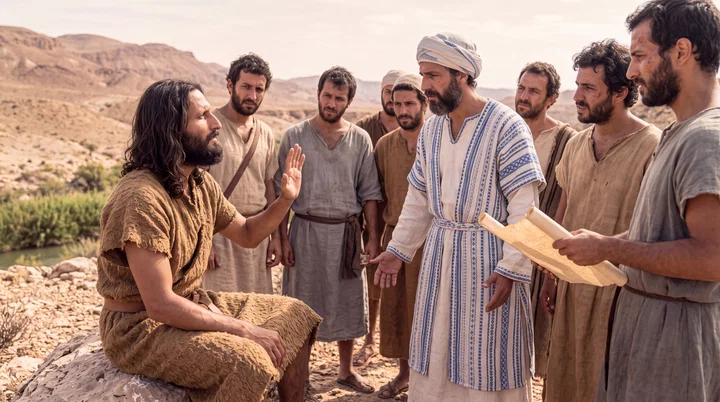
Cross-references 20 of 35
- Isaiah 40:3
The voice of him that crieth in the wilderness, Prepare ye the way of the LORD, make straight in the desert a highway for our God.
John identifies himself as the voice preparing the Lord’s way.
- John 1:27
He it is, who coming after me is preferred before me, whose shoe’s latchet I am not worthy to unloose.
John contrasts himself with the greater Christ and says he is unworthy to unloose His sandals.
- John 1:29
The next day John seeth Jesus coming unto him, and saith, Behold the Lamb of God, which taketh away the sin of the world.
John identifies Jesus as the Lamb of God who takes away the world’s sin.
- John 3:28
Ye yourselves bear me witness, that I said, I am not the Christ, but that I am sent before him.
John repeats that he is not the Christ and distinguishes his role from Christ’s.
- Luke 3:15
And as the people were in expectation, and all men mused in their hearts of John, whether he were the Christ, or not;
The people wonder whether John is the Christ, and he denies it.
- Malachi 4:5
Behold, I will send you Elijah the prophet before the coming of the great and dreadful day of the LORD:
Elijah’s promised coming prompts the question of whether John is Elijah.
- Matthew 11:11
Verily I say unto you, Among them that are born of women there hath not risen a greater than John the Baptist: notwithstanding he that is least in the kingdom of heaven is greater than he.
Jesus declares John exceptionally great, while John humbly denies being the Christ.
- Matthew 3:1-6
In those days came John the Baptist, preaching in the wilderness of Judaea,
John’s public ministry and growing influence explain the inquiry about his identity.
- Mark 1:4-5
John did baptize in the wilderness, and preach the baptism of repentance for the remission of sins.
John’s preaching and baptism drew public attention as he prepared the way for Christ.
- Luke 1:16-17
And many of the children of Israel shall he turn to the Lord their God.
John is foretold to turn people to God and prepare them for the Lord in Elijah’s spirit.
- Matthew 11:14
And if ye will receive it, this is Elias, which was for to come.
Jesus identifies John as the promised Elijah in his prophetic mission.
- Deuteronomy 18:15
The LORD thy God will raise up unto thee a Prophet from the midst of thee, of thy brethren, like unto me; unto him ye shall hearken;
John denies being the prophet Moses foretold, who is identified with Christ.
- Malachi 3:1
Behold, I will send my messenger, and he shall prepare the way before me: and the Lord, whom ye seek, shall suddenly come to his temple, even the messenger of the covenant, whom ye delight in: behold, he shall come, saith the LORD of hosts.
John identifies himself as distinct from the Christ, the Lord whose way the messenger prepares.
- Matthew 17:12-13
But I say unto you, That Elias is come already, and they knew him not, but have done unto him whatsoever they listed. Likewise shall also the Son of man suffer of them.
Jesus explains that Elijah had already come in John’s work.
- Matthew 11:10
For this is he, of whom it is written, Behold, I send my messenger before thy face, which shall prepare thy way before thee.
Jesus identifies John as the messenger sent to prepare his way.
- John 5:33-35
Ye sent unto John, and he bare witness unto the truth.
Jesus cited John’s testimony and described him as a shining light.
- Matthew 3:11
I indeed baptize you with water unto repentance: but he that cometh after me is mightier than I, whose shoes I am not worthy to bear: he shall baptize you with the Holy Ghost, and with fire:
John identifies the coming one as mightier than himself and declares his unworthiness to serve him.
- John 1:34
And I saw, and bare record that this is the Son of God.
John testifies that Jesus is the Son of God.
- John 1:7-8
The same came for a witness, to bear witness of the Light, that all men through him might believe.
John bears witness to the Light, while confessing he is not the Christ.
- Luke 7:26-28
But what went ye out for to see? A prophet? Yea, I say unto you, and much more than a prophet.
Jesus commends John’s faithful witness and mission.
Commentary
Each commentary is drawn from primary sources: the writings of Ellen G. White and Adventist pioneers and periodicals. Each commentary is separate. Its own words are not a quotation; follow the references to read the source passages.
Ellen G. White
20 sources
He plainly, firmly and emphatically confessed that he was not the Messiah, refusing to claim an identity and honor belonging to Christ.LC1 42.32SP 62.1–2Ms 113, 1907, par. 13–14 He spoke when questioned by priests and Levites sent from Jerusalem by the highest authority to challenge his authority for stirring the people and baptizing.1RED 42.2–43.1RH Jan 21, 1873DA 231.2 His confession revealed humility, for though the greatest of prophets he would not take honor not his own or seek favor, applause or worldly dignity.2SP 62.1–2ST Oct 25, 18772SP 57.1 He knew himself to be only the forerunner and the voice sent to prepare the way of the Lord and to testify of the Light, for Christ and not John was the Teacher, Redeemer and Son of God.Ms 63, 1910, par. 4ST Oct 25, 1877GW 143.3 He used his denial to turn attention from himself to One mightier than himself, already standing unknown among them and coming after him yet preferred before him, whose sandal strap he was unworthy even to stoop to loosen.RH Nov 28, 19071RED 42.2–43.1RH Jan 21, 1873
Setting and Confession
John confessed plainly, firmly, truthfully and emphatically that he was not the Messiah, refusing to claim an identity and honor belonging to Christ.LC1 42.32SP 62.1–2Ms 113, 1907, par. 13–14RH Nov 28, 1907DA 133.4–134.7 He did not allow the people to mistake him for the promised One, but directed attention away from himself to the Messiah.LC1 42.3RH Nov 28, 1907DA 132.1DA 133.4–134.7 He made his denial by stating what he was not, making clear that the title of Christ was not his.2SP 62.1–2Ms 113, 1907, par. 13–14DA 133.4–134.7
He spoke when questioned by priests and Levites sent from Jerusalem by the Jews, from the highest authority and the Sanhedrin.1RED 42.2–43.1RH Jan 21, 1873DA 231.2 His testimony was heard in Judea by the deputation from the Sanhedrin and by the multitude, as part of the early proclamation of the Messiah.RH Jan 21, 1873DA 231.2 The messengers came to challenge his authority for stirring the people, for creating agitation and calling cities and towns to listen, and for baptizing.RH Jan 21, 1873
His denial led to further questioning about whether he was Elijah or that prophet, meaning Moses.RH Jan 21, 1873 They also questioned his authority for baptizing and agitating the people while he claimed none of those identities.RH Jan 21, 1873
The scene was at Bethabara where John preached and baptized.DA 132.1 There memories of Israel's crossing of the Jordan and the fall of Jericho stirred hopes that God would again deliver Israel.DA 132.1 The messengers from Jerusalem looked for a Messiah who would come as a great conqueror, and they turned from Jesus when His mission proved different from what they expected.DA 132.1COS 54.7–55.1
Multitudes, including kings and nobles of the earth, followed John and fixed their attention on him.1RED 42.2–43.1RH Jan 14, 1873 His unselfish, humble, self-denying life, with fervent, sincere and courageous teaching, exhortation and reproof, led people to think he might be the promised Coming One.2SP 57.1ST Oct 18, 18772SP 57.2–3RH Jan 14, 1873 Because of this he cut off that hope at every opportunity, plainly assuring his followers he was not the Messiah and using each occasion to direct them to another.1RED 42.2–43.12SP 57.1ST Oct 18, 18772SP 57.2–3RH Jan 14, 1873
Humility and Witness
John's "I am not the Christ" reveals humility, for though he was the greatest of the prophets he refused to take to himself honor that belonged to another when he might easily have done so.2SP 62.1–2ST Oct 25, 18772SP 57.1GW 143.3RH Jan 21, 1873 He did not turn aside to court favor or applause, did not aspire to worldly honor or dignity, but remained humble in heart and life and would not assume what was not his.ST Oct 25, 18772SP 57.1RH Jan 14, 1873 When his disciples complained that all were turning to the new Teacher, he reminded them that he knew himself to be only the forerunner of the Coming One.GW 143.3
He understood himself to be only the voice sent to prepare the way of the Lord and to bear witness concerning the Light.Ms 63, 1910, par. 4ST Oct 25, 1877GW 143.3 Christ, not John, was that Light and Teacher, the Redeemer of the world and the Son of God, and John's mission was to prepare the way for Jesus and testify that Jesus was the Christ.Ms 63, 1910, par. 42SP 169.3–170.1ST Feb 15, 1877 As God's representative joining the law and the prophets to the Christian dispensation, he pointed back to them and forward to Christ as Saviour of the world, seeking every opportunity to do so.RH Jan 14, 1873
His denial was used to turn attention from himself to One mightier than himself, to whom his ministry pointed and to whom he directed his followers away from himself.1RED 42.2–43.12SP 57.1ST Oct 18, 18772SP 57.2–3 That One was already among them yet stood unknown in the crowd, coming after John yet preferred before him.RH Nov 28, 1907RH Jan 21, 1873 So exalted was His work and mission that John was unworthy even to stoop to loosen His sandal strap.1RED 42.2–43.1GW 143.3RH Jan 21, 18735T 223.2–224.1
That testimony belonged to the early proclamation of the Messiah in Judea, heard by the deputation from the Sanhedrin and by the multitude, preparing the way before Him and declaring Jesus to be the Christ.2SP 169.3–170.1DA 231.2ST Feb 15, 1877 He gave Christ as bridegroom first place in the affections of the people, rejoiced in Christ's work, and taught that Christ must increase while he himself decreased.5T 223.2–224.1
Sources
Pioneers and periodicals
61 sources
When priests and Levites sent from Jerusalem challenged his authority for stirring the people and baptizing, John answered with a plain, firm and repeated confession that left no room for mistake: he was not the Anointed One, the Messiah.RH Apr 21, 1868ST May 28, 1894ST Jul 23, 1894ST May 17, 1905ST Jan 17, 1906 He likewise denied that he was Elijah in person or that prophet, declaring that he was the voice crying in the wilderness to make straight the way of the Lord in fulfillment of Isaiah 40:3-5.ST May 28, 1894ST Jul 23, 1894ST Sep 16, 1913ST Dec 12, 1916RH Oct 29, 1901 His denial that he was Elijah does not contradict his identification as Elijah, for he was not Elijah personally but came in Elijah's spirit and power to do a similar work of reformation and prepare a people for the Lord.ST Dec 12, 1916RH Jul 9, 1867 His denial expresses true humility learned in the wilderness, refusing greatness, titles, applause and worldly honor belonging to Another, and using every opportunity when multitudes looked to him as the Coming One to direct attention away from himself to Christ.ST Oct 25, 1877ST Mar 15, 1905ST Dec 18, 1901RH Oct 29, 1861RH Jul 22, 1909 His appointed role was to be only the immediate herald preparing Israel for the Lord's first coming by preaching repentance and turning from sin to God, to clear the way and point to One standing among them whom they did not know, who was greater and preferred before him, the Lamb of God and Son of God.RH Nov 28, 1907ST Jan 16, 1912ST Jan 17, 1906ST Apr 25, 1906ST Jan 25, 1910
Setting and Wording
John's denial was his answer when priests and Levites sent from Jerusalem by the Pharisees came to the Jordan to ask, Who art thou.ST Jul 23, 1894ST May 17, 1905ST Jan 17, 1906ST Jun 25, 1896ST Sep 3, 1912 The delegation came from the Sanhedrin and the highest authority, challenging his authority for stirring the people, creating agitation and baptizing.ST Sep 3, 1912RH Oct 7, 1902RH Dec 10, 1908 When questioned he plainly and firmly denied being the Christ, openly confessing without denial and refusing any claim to the Messiah's identity or to a title and distinction belonging to Jesus.ST Jul 23, 1894ST May 17, 1905ST Jan 17, 1906ST Jun 25, 1896ST Sep 3, 1912 He knew his role was to fulfill Isaiah's prophecy as the voice calling in the wilderness preparing the way for the Lord, the messenger preparing the way for the Son of God, with definite knowledge of his time and work enlightened by the Holy Spirit.ST Jul 23, 1894ST May 17, 1905ST Sep 3, 1912RH Oct 7, 1902 His confident denial grounded in definite prophecy carried such authority that it confused the professed interpreters of God's word who had misapplied the prophecies concerning the Messiah.RH Oct 7, 1902
The questioning belonged to a time of strong general expectation that the Messiah's coming was near and that His time had arrived, so that the Messiah was the chief subject of conversation and people in Israel were looking for Him and expecting His arrival.RH Apr 21, 1868RH Nov 18, 1862RH Aug 17, 1876ST Jun 25, 1896 The prophecy of the seventy weeks was nearly fulfilled, and John had mightily stirred backslidden Jews, with Jerusalem and all Judea and all the region round about Jordan going out to hear him.RH Dec 10, 1908 Amid that expectancy his testimony formally announced that the Messiah had come and was present among them, though no one but John recognized Him.RH Dec 10, 1908ST Jun 25, 1896 His denial was part of his clear knowledge of who he was and the work given him to do as the forerunner of Christ's first advent, just as the preaching of the nearness of the second coming announced the second advent.RH Dec 10, 1908
The wording is an emphatic, plain, firm and repeated confession — he confessed and denied not — that clearly and emphatically denied he was the great personage some thought him to be.RH Apr 21, 1868RH Nov 18, 1862ST Oct 11, 1899ST Jun 25, 1896ST Mar 13, 1907 It left no room for mistake and was not ambiguous or guesswork, but open, firm and definite.ST May 28, 1894RH Nov 18, 1862ST Oct 11, 1899ST Jun 25, 1896 He was a voice preparing the way for the Lord, sent before Christ and not the center of the message, fulfilling Isaiah's prophecy at the appointed time in his surrounding exchange identifying himself as the voice sent to prepare the Lord's way.ST May 28, 1894ST Mar 13, 1907 Rejecting the message he carried puts hearers at their peril.ST May 28, 1894
Christ in the denial means the Anointed One, the Messiah.RH Feb 6, 1913 The hearers held mistaken ideas that distorted the prophecies, for some thought Moses' promised prophet was someone distinct from Christ who would come before or at the same time as Christ.ST Feb 22, 1905 Many hoped the Messiah would free them from Roman rule, but the true Messiah came to bring spiritual deliverance.RH Jul 22, 1909 Because false ideas about the Messiah's identity and mission had distorted the prophecies, his testimony did not prepare the church to receive Jesus.ST May 25, 1904
The Jews had recognized John's greatness and wondered whether he might be the Christ, Elijah or one of the prophets, though he had no worldly wealth, learning, power or position.RH Mar 3, 1903
Forerunner Identity Declared
When asked who he was he gave three plain denials, that he was not the Christ, that he was not Elijah in person, and that he was not that prophet, and then declared himself to be the voice of one crying in the wilderness to make straight the way of the Lord.ST Oct 25, 1877ST Sep 16, 1913RH Oct 29, 1901ST Sep 3, 1912RH Apr 22, 1902 He refused a title and distinction belonging to another and would not claim to be the Christ or preach his own opinions, but identified himself as a voice for the Lord's word and as the messenger preparing the way for the Son of God.ST Oct 25, 1877RH Oct 29, 1901ST Sep 3, 1912RH Apr 22, 1902 He pointed to Jesus as the Messiah and testified of Him as One whose shoes he was not worthy to unloose.ST Oct 25, 1877RH Oct 29, 1901
His denial that he was Elijah does not contradict his identification as Elijah, for he was not Elijah personally but came in Elijah's spirit and power.ST Dec 12, 1916RH Jul 9, 1867 In that spirit and power he did a similar work of reformation and prepared a people for the Lord, and so fulfilled the Elijah prophecy while remaining distinct from the Messiah.ST Dec 12, 1916RH Jul 9, 1867
He answered with dogmatic certainty, with no suggestion of doubt and no questioning of his own position regarding the great pillars of faith.ST Sep 16, 1913 He knew the work God had raised him up to do as the one specially raised up to prepare the people for Christ's first coming, and he could give the very prophecy that predicted his preparing work.ST Sep 16, 1913RH Oct 22, 1908RH Dec 10, 1908 His mind was enlightened by the Holy Spirit to see his own time pictured in the prophets and to recognize his place as the prophet of the Highest, and his confident denial grounded in definite prophecy carried such authority that it confused the professed interpreters of God's word who had misapplied the prophecies concerning the Messiah.ST Sep 16, 1913RH Oct 7, 1902 His certainty rebukes the idea that it is commendable to be undogmatic, for God chooses men who know their mission and message to make prophecies that lay seemingly dormant for nearly seven centuries a living message to the world.ST Sep 16, 1913
His appointed role was to be Christ's immediate herald preparing the way for Christ's first advent by preaching repentance and conversion and calling people to turn from sin to God.ST Jan 16, 1912ST Jan 25, 1910 He was content to be only a voice for God to a needy world in fulfillment of prophecy, to be a voice crying in the wilderness rather than claim title or status for himself, and he accepted that his own fame would fade as Jesus' work and influence increased.ST Jan 16, 1912ST Apr 25, 1906ST Apr 28, 1898 He refused to claim honor from being of the tribe of Levi and son of Zacharias the priest with authority to speak, having learned meekness in the wilderness of Judea by seeing God's greatness in nature and His Word and his own smallness.ST Apr 28, 1898 His preaching and call to repentance belong to the new epoch in which shadows and types give way to their substance and fulfillment.RH Feb 8, 1915 As God's representative he joined the law and the prophets to the Christian dispensation by pointing back to them and forward to Christ as the Saviour of the world.RH Jan 14, 1873RH Feb 8, 1915
Fulfillment of Prophecy
His denial that he was the Christ belongs to his identification of himself as the voice sent to prepare the Lord's way, fulfilling Isaiah 40:3-5 at the appointed time.ST May 28, 1894ST Jul 23, 1894 That prophecy had lain seemingly dormant for nearly seven centuries until it was heard again in the desert waste of a backsliding church, after seven centuries of silence, as a living message to the world.ST Sep 16, 1913ST Mar 23, 1915ST May 24, 1899 Its fulfillment seven centuries after it was spoken, as though a present fact, shows that the time of the giving of a prophecy is different from the time to which it applies.ST Mar 23, 1915 His answer was definite and not guesswork, plain and firm, and rejecting the message he carried puts hearers at their peril.ST May 28, 1894ST Jul 23, 1894ST Sep 16, 1913
The fulfillment of God's word through Isaiah in his message and work is strong evidence that a message and movement come from God.RH Nov 17, 1910 Accepting his message justified God.ST May 24, 1899
His confident denial was grounded in definite prophecy and carried such authority that it confused the professed interpreters of God's word.ST Sep 16, 1913RH Oct 7, 1902 Those scribes and Pharisees and Sadducees had built up systems of tradition and higher criticism, had misapplied the prophecies concerning the Messiah, and wondered at the prophet preaching in the wilderness who mightily stirred the people, so that instead of going themselves they sent a committee to interview him.ST Sep 16, 1913RH Oct 7, 1902 His definite knowledge of his time and work came from a mind enlightened by the Holy Spirit to see his own time pictured in the prophets and to recognize his place as the prophet of the Highest, and the whole dialogue proves his message rested on fulfillment of definite prophecy.RH Oct 7, 1902
His definite message grounded in Isaiah called people not to trust in ancestry or birth but to depend on God and recognize His righteousness in Jesus.RH Jun 24, 1909
Witness Pointing to Jesus
His denial cleared the way to point to Another standing among them whom they did not know, for his role was to point people to the Messiah who was already among them.RH Nov 28, 1907ST Jan 17, 1906 When challenged, he plainly and firmly denied being the Christ, openly confessing without denial and refusing any claim to that identity.RH Nov 28, 1907ST Jan 17, 1906ST Jun 25, 1896 His testimony formally announced that the Messiah had come and was present among them, though no one but John recognized Him.RH Jan 21, 1873ST Jun 25, 1896 While answering he discovered Jesus standing unknown in the crowd and pointed to Him as the Messiah coming after him, declaring he had come to prepare the way before Him.RH Jan 21, 1873
He testified that the One coming after him was greater and preferred before him, worthy of honor beyond what John could offer.RH Jan 21, 1873ST May 17, 1905ST May 17, 1905 He declared himself unworthy to unloose the latchet of His shoes, directing people instead to Jesus.RH Jan 21, 1873RH Oct 29, 1901ST May 17, 1905 That Coming One is the Lamb of God who takes away and bears the sin of the world, the redeemer of the world.ST Jan 17, 1906ST May 17, 1905 He is the Christ and the Son of God, confirmed by the Spirit descending and abiding upon Him.ST Feb 15, 1877ST Jan 17, 1906
Only the Coming One could do the work of renewing people through the power of His Spirit.ST Oct 22, 1912 He baptizes with the Holy Ghost those who acknowledge Him and receive His Spirit.RH Oct 29, 1901 He will baptize with fire and burn up with unquenchable fire those who prove at last to be chaff.RH Oct 29, 1901 John knew his role was to point people to that Coming One, not to claim that identity for himself, but to be the prophetic voice preparing the way of the Lord.RH Oct 29, 1901ST Oct 22, 1912
He was only the Messiah's forerunner, content to be a voice for God bearing an important message for his own generation.ST Jan 16, 1912 His own fame would fade as Jesus' work and influence increased, for the Messiah's fame must increase while his own decreased.ST Jan 16, 1912 The Jews who sent priests and Levites to question him had judged him a credible, upright witness. They therefore had reason to accept his testimony about the Messiah rather than accept one part of it and reject another, for his witness confirmed that Jesus came from God and was not acting on His own authority.ST Nov 17, 1881
Humility and Present Application
His denial is an expression of true humility and meekness learned in the wilderness of Judea, where seeing God's greatness in nature and in His Word showed him his own smallness.RH Jul 22, 1909ST Apr 28, 1898 When questioned he plainly, openly, firmly and truthfully denied being the Christ rather than claiming a greatness, honor, title or status that belonged to the One coming after him.ST Oct 25, 1877RH Oct 29, 1861RH Jul 22, 1909ST Apr 25, 1906RH May 13, 1915 He did not court favor or applause, did not aspire to worldly honor, and did not claim honors belonging to another, refusing even to claim honor from being of the tribe of Levi and the son of Zacharias the priest with authority to speak.ST Oct 25, 1877ST Apr 28, 1898 He knew his mission and was content to be only a voice crying in the wilderness in fulfillment of prophecy, with his role to introduce Jesus rather than to claim the Redeemer's place.ST Apr 25, 1906ST Apr 28, 1898RH May 13, 1915
People and their leaders were ready to identify him as the Christ, and his unselfishness, humility, self-denial and courageous teaching led many to wonder whether he might be.ST Oct 18, 1877ST Feb 1, 1905RH Jul 22, 1909 He remained faithful to his mission rather than claiming the Messiah's place to gain the brief following and honor he could have gained, plainly, firmly, fearlessly and repeatedly assuring his followers that he was not.ST Oct 18, 1877ST Mar 15, 1905ST Feb 1, 1905RH Jul 22, 1909 At every opportunity, when multitudes, kings and nobles looked to him as the Coming One, he used it to direct attention away from himself toward Christ the Saviour of the world and to give Christ the first place, for the true messenger gives no credit to himself but points others to Jesus whom he heralds.ST Oct 18, 1877ST Jul 7, 1887ST Dec 18, 1901 They hoped the Messiah would free them from Roman rule, but the true Messiah came to bring spiritual deliverance.RH Jul 22, 1909
His answer exemplifies a true prophet and servant of God, making no claim to be the Messiah and drawing no attention to himself.RH May 17, 1906ST Feb 7, 1911RH Apr 22, 1902 His authority came not from being the Christ or from personal status but from bearing the message God had given him for his time.ST Feb 7, 1911ST Jul 11, 1911 He was a voice for the Lord's word rather than a preacher of his own opinions, and his importance lay not in himself but in bearing God's message as the voice crying in the wilderness.RH Apr 22, 1902ST Jul 11, 1911
His example calls for more than profession, requiring God's messengers to speak plainly and to live in sincere obedience.ST Sep 16, 1913RH Jul 30, 1914 He answered with dogmatic certainty, with no suggestion of doubt and no questioning of his own position regarding the great pillars of faith, proving that he knew his mission and knew his message.ST Sep 16, 1913 The scribes and Pharisees and Sadducees had built up systems of tradition and higher criticism, wondered at the prophet preaching in the wilderness who mightily stirred the people, and instead of going themselves sent a committee to interview him; to their question he plainly denied that he was the Christ, and his further denials that he was Elijah or that prophet with his declaration that he was the voice crying in the wilderness to make straight the way of the Lord complete the same certain testimony.ST Sep 16, 1913 His certainty rebukes ministers who think it commendable to be undogmatic, showing that God chooses men who know their mission and message to make prophecies that lay seemingly dormant for nearly seven centuries a living message to the world, and his greatness lay not in claiming the Messiah's place but in serving as God's voice embodying the prophecy that called for the Lord's way to be prepared.ST Sep 16, 1913RH Mar 3, 1903 Like him, later messengers will not claim to be Christ, John, Elijah, or that prophet.ST Jan 17, 1906
Though the Messiah was expected and he could have pursued that ambition, he testified to the truth and fulfilled his mission to prepare the way for the Lord, a pattern applied to the work of preparing the way for Christ's second coming.RH Oct 15, 1901 He refused to compare himself with the priests and Levites of his day, setting the pattern that God's workers must no more compare themselves with other denominations.RH Oct 8, 1908 The self-sacrificing spirit seen in him is needed in the last days to go into the highways of a soon-to-be-doomed world, crying mightily to prepare to meet God because the hour of judgment has come.RH Oct 8, 1908
His announcement of the Saviour's first coming to the Jewish church mightily stirred backslidden Jews, so that Jerusalem and all Judea and all the region round about Jordan went out to hear him, because there was much expectancy of the coming of the Messiah as the prophecy of the seventy weeks was nearly fulfilled.RH Dec 10, 1908 When messengers sent by the Pharisees and leading men asked him who he was, his denial was part of his clear knowledge of who he was and the work given him to do as the forerunner of Christ's first advent, just as the preaching of the nearness of the second coming announced the second advent, with God witnessing to his work in mighty power even though the great men of the nation never accepted his mission.RH Dec 10, 1908 Multitudes heard, and some received it with gladness and were blessed by it, but the great, the rich, those in high stations, the rulers, the religious teachers, and the masses generally rejected it.RH Dec 10, 1908RH Nov 19, 1908 The same reception was given to the worldwide advent announcement ending in 1844, as in Noah's time and ever since.RH Nov 19, 1908
His Gospel testimony belongs to the New Testament as the culmination of the revelation begun in the Old Testament, part of the Bible's unified Christian revelation of God through Jesus Christ.ST Jul 12, 1899
Sources