John 1:29
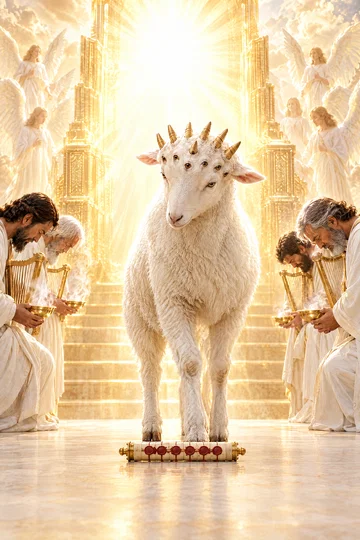
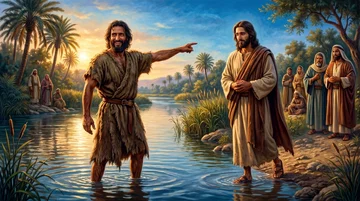
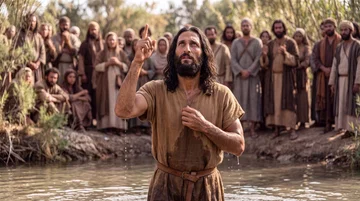
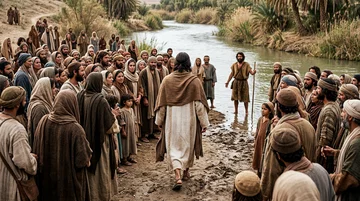
The next day John seeth Jesus coming unto him, and saith, Behold the Lamb of God, which taketh away the sin of the world.
Translations
The next day John sees Jesus coming to him, and says, Behold the Lamb of God, which takes away the sin of the world.
King James Version, KJV Cambridge Paragraph Bible
The next day John seeth Jesus coming unto him, and saith, Behold the Lamb of God, which taketh away the sin of the world.
The next day John seeth Jesus coming to him, and saith, Behold the Lamb of God, who taketh away the sin of the world.
On the morrow he seeth Jesus coming unto him, and saith, Behold, the Lamb of God, which taketh away the sin of the world!
On the morrow he seeth Jesus coming unto him, and saith, Behold, the Lamb of God, that taketh away the sin of the world!
on the morrow John seeth Jesus coming unto him, and saith, 'Lo, the Lamb of God, who is taking away the sin of the world;
On the morrow he sees Jesus coming to him, and says, Behold the Lamb of God, who takes away the sin of the world.
On the morrow, he beholdeth Jesus, coming unto him, and saith—See! the Lamb of God, who taketh away the sin of the world.
Berean Standard Bible, Majority Standard Bible
The next day John saw Jesus coming toward him and said, “ Look, the Lamb of God, who takes away the sin of the world!
The next day, he saw Jesus coming to him, and said, “ Behold, the Lamb of God, who takes away the sin of the world!
The day after, John sees Jesus coming to him and says, See, here is the Lamb of God who takes away the sin of the world!
The next day Iohn, seeth Iesus comming vnto him, and saith, Beholde that Lambe of God, which taketh away the sinne of the world.
Douay-Rheims (Challoner revision)
The next day, John saw Jesus coming to him, and he saith: Behold the Lamb of God, behold him who taketh away the sin of the world.
Pictures



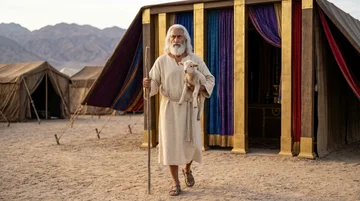
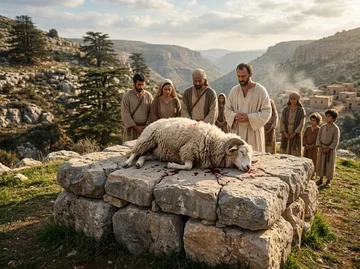
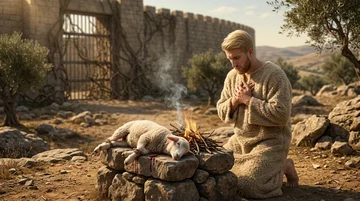
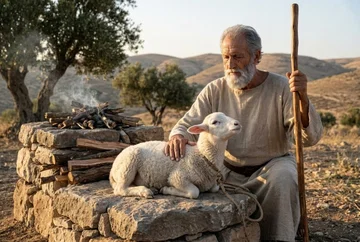

Cross-references 20 of 275
- Isaiah 53:7
He was oppressed, and he was afflicted, yet he opened not his mouth: he is brought as a lamb to the slaughter, and as a sheep before her shearers is dumb, so he openeth not his mouth.
The servant is likened to a lamb led to slaughter and bears sin.
- John 3:16
For God so loved the world, that he gave his only begotten Son, that whosoever believeth in him should not perish, but have everlasting life.
God gives his Son for the world so believers may have everlasting life.
- 1 Peter 1:18-19
Forasmuch as ye know that ye were not redeemed with corruptible things, as silver and gold, from your vain conversation received by tradition from your fathers;
Christ’s precious blood redeems as the blood of a spotless Lamb.
- Hebrews 10:1-4
For the law having a shadow of good things to come, and not the very image of the things, can never with those sacrifices which they offered year by year continually make the comers thereunto perfect.
Animal sacrifices foreshadowed Christ’s once-for-all offering but could not take away sins.
- Isaiah 53:6
All we like sheep have gone astray; we have turned every one to his own way; and the LORD hath laid on him the iniquity of us all.
The Lord lays the iniquity of all upon him.
- 1 Peter 2:24
Who his own self bare our sins in his own body on the tree, that we, being dead to sins, should live unto righteousness: by whose stripes ye were healed.
Christ bears human sins in his body on the tree.
- Genesis 4:4
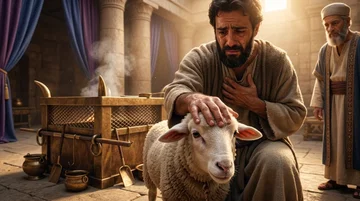
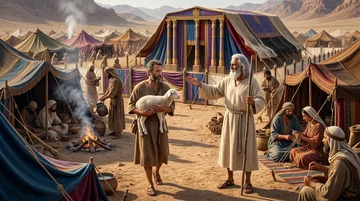
And Abel, he also brought of the firstlings of his flock and of the fat thereof. And the LORD had respect unto Abel and to his offering:
Abel’s slain lamb foreshadows the Lamb of God.
- Revelation 13:8
And all that dwell upon the earth shall worship him, whose names are not written in the book of life of the Lamb slain from the foundation of the world.
Both texts identify Jesus as the Lamb whose sacrificial death was central to God’s plan.
- 1 Corinthians 5:7
Purge out therefore the old leaven, that ye may be a new lump, as ye are unleavened. For even Christ our passover is sacrificed for us:
Christ is identified as the Passover Lamb sacrificed for us.
- Genesis 3:15
And I will put enmity between thee and the woman, and between thy seed and her seed; it shall bruise thy head, and thou shalt bruise his heel.
The promised Seed is identified as the Redeemer who defeats the serpent and bears sin.
- 2 Corinthians 5:21
For he hath made him to be sin for us, who knew no sin; that we might be made the righteousness of God in him.
Christ bears sin so sinners may receive God’s righteousness in him.
- 1 John 2:2
And he is the propitiation for our sins: and not for ours only, but also for the sins of the whole world.
Both identify Christ as the propitiation for the sins of the whole world.
- Exodus 12:5-13
Your lamb shall be without blemish, a male of the first year: ye shall take it out from the sheep, or from the goats:
The Passover lamb and its blood prefigure Christ’s saving sacrifice.
- Numbers 21:8-9
And the LORD said unto Moses, Make thee a fiery serpent, and set it upon a pole: and it shall come to pass, that every one that is bitten, when he looketh upon it, shall live.
The bitten Israelites lived by looking at the lifted serpent, a type of Christ.
- Matthew 3:16-17
And Jesus, when he was baptized, went up straightway out of the water: and, lo, the heavens were opened unto him, and he saw the Spirit of God descending like a dove, and lighting upon him:
The Spirit descends and the Father declares Jesus his beloved Son before John proclaims him the Lamb.
- 1 John 1:7
But if we walk in the light, as he is in the light, we have fellowship one with another, and the blood of Jesus Christ his Son cleanseth us from all sin.
Jesus’ blood cleanses from all sin.
- John 3:14-15
And as Moses lifted up the serpent in the wilderness, even so must the Son of man be lifted up:
Jesus' being lifted up brings eternal life to those who believe in him.
- Hebrews 9:22
And almost all things are by the law purged with blood; and without shedding of blood is no remission.
Remission of sins requires the shedding of blood.
- Isaiah 53:5
But he was wounded for our transgressions, he was bruised for our iniquities: the chastisement of our peace was upon him; and with his stripes we are healed.
Christ is wounded for transgressions, bearing sin and bringing healing.
- Hebrews 9:11-14
But Christ being come an high priest of good things to come, by a greater and more perfect tabernacle, not made with hands, that is to say, not of this building;
Christ’s sacrifice accomplishes what sanctuary sacrifices prefigured.
Commentary part 1 of 8
Each commentary is drawn from primary sources: the writings of Ellen G. White and Adventist pioneers and periodicals. Each commentary is separate. Its own words are not a quotation; follow the references to read the source passages.
Ellen G. White
823 sources
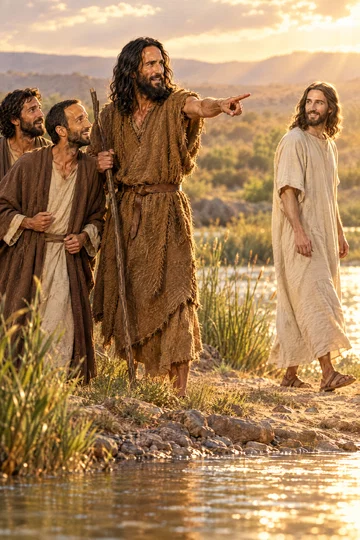
At the Jordan John pointed to Jesus coming toward him as the promised Messiah and Son of God, the Lamb sent by God to take away the sin of the world.LC1 43.16T 54.12SP 63.22SP 61.1 Every sacrificial lamb, from Abel's offering and the Passover to the morning and evening lambs, pointed forward to Him, and when He died type met antitype and that system ended forever.12MR 416.2–3ST Nov 18, 1889Lt 43, 1892, par. 16–17DA 136.3–137.1COS 106.6–7 He removes sin not by covering it while it remains but by standing as innocent substitute and Sin-bearer, laying down His life under its penalty to lift guilt and give His righteousness to every repentant believer.Ms 31, 1911, par. 24–26Ms 27, 1894, par. 1–3Lt 81, 1901, par. 18–198MR 323.2Lt 41, 1890, par. 46–48 Sinners receive this by looking away from self to Him in repentance, confession and faith, beholding Him until the heart is cleansed, renewed and changed into His likeness.Ms 143, 1905, par. 15–16Lt 56, 1902, par. 16ST Jun 28, 1905DA 175.3–176.1 To behold Him is to proclaim Him, for lifting up the crucified and risen Saviour as the only hope is the center of all preaching and the work of every believer to a perishing world.6T 54.1GW 56.3Ms 113, 1907, par. 26RH Aug 28, 1900Ms 107, 1898, par. 5–7
John's Witness at Jordan
The verse identifies Jesus as the Lamb of God who takes away the sin of the world, that is the Messiah, Redeemer, Saviour, promised deliverer, divine provision, remedy, ransom and sole Saviour sent by God.LC1 43.16T 54.12SP 63.2Lt 135, 1898, par. 2SC 19.1 He is the sin-pardoning Saviour and the one and only answer for every burdened heart in all lands and in all ages, whom sinners are called to contemplate with the cross of Calvary.6T 54.1Lt 135, 1898, par. 2SC 19.1 Perceiving God's loving-kindness and discerning His law as wise, just, holy, good and founded on love is not enough while the person remains carnal, sold under sin and powerless for purity, crying for deliverance.SC 19.1
The words were spoken by John as testimony that Jesus is the promised one he had announced, the preexistent Messiah greater than himself who baptizes with the Holy Spirit, and the Son of God and Prince of life and Redeemer entering Jerusalem to be received as Saviour.LC1 43.12SP 63.2Ms 127, 1899, par. 21–23DA 578.2–579.54RED 103.2–104.1 The Spirit's descent and remaining on Jesus confirmed His identity and His authority to baptize with the Holy Spirit.LC1 43.12SP 63.2 Peter heard the forerunner's proclamation of Jesus as Messiah and believed this testimony.4RED 103.2–104.1
The words were spoken at the Jordan at the baptism as Jesus came toward John from a distance with lighted face and outstretched hand before the multitude, after John saw the promised token of the dove resting on Jesus, and from that time John had no doubt Jesus was the true Messiah.2SP 61.1Ms 127, 1899, par. 21–23RH Jan 21, 1873 John spoke with assurance before the multitude, declaring Jesus to be the Lamb of God who takes away the sin of the world.2SP 61.1 The identification is connected with the sign seen at His baptism, and Jesus' victory over appetite in the wilderness is part of His work on behalf of the whole world giving every person His example.Ms 38, 1897, par. 3–7COS 54.1–6
The confirming sign was the glory of God descending on Jesus in dove form like burnished gold with angels hovering and a voice declaring Him the beloved Son in whom delight is found, promised beforehand to point out the Promised One, by which John then knew Jesus was the Christ, and to which Christ afterward appealed as testimony the priests and Pharisees had heard and rejected.Ms 127, 1899, par. 21–23ST Feb 10, 1898 A distinct sign from God was to reveal Jesus to John so John could present Him to the world as the long-expected One.ST Jul 7, 1887 At the Jordan Jesus fulfilled what was required of the sinner, not because He needed repentance, and God confirmed John's testimony to His divinity and Messiahship by the Spirit descending like a dove and declaring Him the beloved Son.RH Feb 13, 1900
The declaration was made in connection with Jesus' baptism when God's voice acknowledged Jesus as Son, was told to Mary as evidence joining what she had treasured for thirty years, and confirmed John's testimony to His divinity and Messiahship though He Himself needed no repentance.Ms 88, 1899, par. 8–143RED 3.2–4.22SP 99.2–100.1 The testimony pointed to Jesus as Messiah and attested His divine identity, the very testimony the Jewish rulers could not deny after witnessing John's baptism and hearing the heavenly declaration.Ms 88, 1899, par. 8–14 The declaration confirmed the evidence Mary had treasured that Jesus was the Messiah and promised Saviour.2SP 99.2–100.1
After the declaration two disciples followed Jesus, the announcement was repeated the next day before John's disciples, and it led Nathanael to consider Messianic prophecies, withdraw alone to meditate and pray for certainty, and seek confirmation until convinced by the Spirit, while John and Andrew sought to learn from the one who could take away sin until time with Him confirmed His divine character and mission.2SP 63.2Ms 9, 1890, par. 8–9ST Oct 25, 1877RH Jan 21, 1873ST Jan 8, 1885 John directs the people to Christ rather than letting human feelings or jealousy turn attention toward himself, and two disciples follow Jesus after hearing him.Ms 9, 1890, par. 8–9 Hearing the announcement convicted hearers and stirred hope that the long-waited Messiah had come, and Nathanael reflected on the prophecies of the Messiah and his mission until the Spirit rested on him and convinced him Christ was the Messiah and promised deliverer.ST Oct 25, 1877RH Jan 21, 1873
When John called Jesus the Lamb of God it stirred the first disciples but they did not understand its meaning because John had not explained it, and neither the hearers nor even John fully understood at the time, for John did not yet clearly see both suffering sacrifice and conquering king.DA 136.3–137.1DA 112.5–113.1DA 138.4–8 The Lamb points to Christ as suffering sacrifice as foretold in Isaiah's image of a lamb led to slaughter, with a deeper meaning than the people had recognized.DA 136.3–137.1 The lamb offered in place of Isaac on Mount Moriah pointed to Jesus, and Isaiah's image foretold His suffering with the Lord laying human iniquity on Him, while Israel often treated sacrifices as gifts to win favor though they were meant to teach that God's love provides the gift that reconciles.DA 112.5–113.1
The setting was John's popular ministry at Bethabara beyond the Jordan, where memories of crossing the Jordan and the fall of Jericho stirred hope of deliverance, and where John as public teacher drew the attention of the Jewish authorities and was considered under the Sanhedrin's jurisdiction though he had not sought its approval.DA 132.1DA 132.2–133.1 At Bethabara the memories of Israel crossing the Jordan and Jericho's fall stirred the people to hope God would again deliver Israel.DA 132.1
John proclaimed Him at the Jordan while preaching at the banks of the Jordan; Jews scattered in all civilized lands were expecting the Messiah, many who came to Jerusalem for the annual feasts went out to hear John, heard Him proclaimed as the promised one, and on returning carried tidings to all parts of the world, providentially preparing the way for the apostles' labors in fields like Corinth and Ephesus and helping Peter recognize Him as Son of God.ST Apr 3, 1884RH Aug 31, 19112SP 290.2–291.1SLP 129.1AA 281.3 By this spreading of John's witness Providence prepared the way for the labors of the apostles in missionary fields like Corinth and Ephesus.ST Apr 3, 1884 John's proclamation helped Peter recognize Jesus as the Son of God and remain faithful even when others doubted or expected a different kind of Messiah.2SP 290.2–291.1
John spoke as God's prophet joining the law and prophets to the Christian dispensation, looking back to them and forward to Christ, standing as God's representative to join them while pointing forward to Christ as Saviour, turning multitudes who thought he might be the Coming One away from himself to one mightier whose mission is far greater.1RED 42.1LC1 42.11RED 42.2–43.12SP 57.2–3ST Oct 18, 1877 His ministry connected the law and the prophets with the Christian dispensation, pointing back to them and forward to Christ.ST Oct 18, 1877 The title Lamb of God marks Jesus as the one who removes the world's sin.1RED 42.2–43.1
John spoke openly and loudly from a humble, self-denying, unselfish life that did not court favor, seek worldly honor or take unearned honor, assured multitudes who thought he might be Messiah that he was not the Christ, rose to self-abnegation as only a voice in the wilderness gladly welcoming Christ and joyfully accepting obscurity, silence and decrease, and did the work he had to do without entering controversy.RH Jan 14, 1873DA 179.1–180.18T 333.2–4GW 55.5–56.2RH Nov 28, 1907 He did not turn aside to court favor or applause, did not seek worldly honor or dignity, and did not take honor that did not belong to him.RH Jan 14, 1873 He sought not to attract men to himself but to lift their thoughts higher and still higher until they rested upon the Lamb of God, and with joy he accepted silence and obscurity and decrease that eyes might be turned from him to Jesus as light of life.RH Nov 28, 1907 It identifies the work Jesus had to do in the world, which He did without entering into controversy with any man.ST May 5, 1898
John pointed to Jesus, directed disciples to look to and follow Him as teacher, opened the plan of salvation, and his testimony is inseparable from his divinely sent mission so that accepting him as sent requires acknowledging Jesus as Messiah, while his witness is evidence of Messiahship so that belief that his baptism was from heaven requires acceptance of Jesus and denial of Jesus proves rejection of John.ST Feb 10, 1898COL 274.3–4DA 593.1–594.2RH Jun 13, 1912ST Apr 11, 1878 John's recognition of Jesus directs the disciples to Him, where Jesus opens to them the great plan of salvation.RH Jun 13, 1912 The priests' refusal to acknowledge John as prophet would have required them to deny this testimony to Jesus as Messiah and Son of God.COL 274.3–4 His declaration marks Jesus' return to the Jordan and the beginning of His great work.2SP 98.2
John's role to direct people to Christ as the True Light and not take His place or claim His glory shows ministers must keep attention on Christ and make Behold the Lamb the constant watchword in word, manner, spirit and calm self-possession so hearers' eyes are drawn to Him as the mightier Shepherd and fountain of light.11MR 347.1–316MR 297.2 The words Behold the Lamb of God point hearers to Jesus, the True Light, and show the minister's duty to keep attention on Christ.11MR 347.1–3 Jesus is mightier than any human worker, the greater Shepherd and fountain of light, to be kept in view and told to others.16MR 297.2
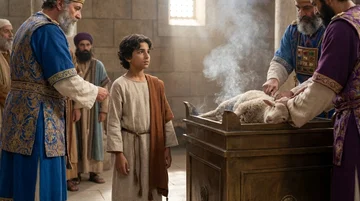
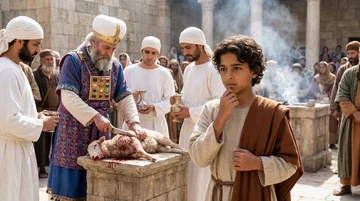
At twelve He explained to the rabbis that Isaiah's prophecies of the Messiah's humiliation, suffering and death referred to Himself, thereby giving light about the Lamb and the plan of salvation.
Religious leaders should have pointed people to Him but followed evil, persuaded the people to reject Him and sought His death, failing to recognize that the promised Redeemer to whom daily sacrifices pointed was near, clinging to forms though He fulfilled prophecies they professed because He did not match expectation of temporal power and glory.Ms 40, 1897, par. 11–15RH Jan 23, 1900ST Mar 30, 1888DA 43.2–44.1 The daily morning and evening sacrifices in the temple pointed to Him, yet priests and teachers failed to recognize the promised Redeemer was near.DA 43.2–44.1 Jesus fulfilled the prophecies they professed to believe, though He did not match their expectation of a Messiah who would bring temporal power and glory.ST Mar 30, 1888
He stood in the very midst of the Jews as the world's Redeemer prefigured in all typical sacrifices who alone can make atonement and give efficiency to faith, yet the Jews kept the altar and presented slain beasts while He stood among them unacknowledged, refused to know Him in whom hopes of eternal life centered and crucified Him, fastening on themselves guilt for crucifying the foundation of their service, leaving service unfinished like an uncompleted tower in ruins.Ms 197, 1898, par. 9–11ST Jul 28, 1898 Without accepting Him by faith and confession of sin salvation stays incomplete and there is no cleansing from unrighteousness, and the Jews refused Him and found Him a stone of stumbling and rock of offense.Ms 197, 1898, par. 9–11
Like Cain who brought firstfruits with no faith in Christ and whose offering was refused, they kept form, altar and sacrifice but lacked the Lamb, so faith became as salt without savor, for leaders professed belief in sacrifices but rejected the reality they represented, and the Jewish leaders kept ceremonial law to avoid defilement from the judgment hall so they could eat the Passover while murderous hatred truly defiled them, emptying the feast of significance.DA 723.1–724.1ST Jul 28, 1898 The shedding of blood in sacrifice was to represent His death, and the slain Lamb was the only thing by which an offering could express faith in God's promise.ST Jul 28, 1898 The Jewish sacrificial system pointed forward to Christ, in Him its types met fulfillment and shadows found substance, yet leaders professed belief in those sacrifices but rejected Christ the reality.
As the Lamb sent to remove the world's sin He was met not with faith but with united bitter hatred stirred by Satan through priests, elders and learned men, who mocked His lowly birth and humble life and His claim to be Son of God with oaths, jests, sneers and abuse on His way to death, which He meekly bore.Ms 45, 1892, par. 28–31 The mob, rulers and priests mocked His lowly birth and humble life, made sport of His claim to be Son of God, and poured coarse oaths, vulgar jests, insulting sneers and cruel abuse while He meekly bore insult and shame.Ms 45, 1892, par. 28–31
He was offered to the Jews through the gospel and proclaimed to them by God's messengers at His advent, and He Himself is God's greatest gift and the provision of the gospel feast.COL 222.3–223.1ST May 4, 1915 Calling Jesus the Lamb of God means that He takes away the sin of the world; He is Himself the great gift and provision offered through the gospel.ST May 4, 1915
Lamb Foretold in Sacrifice
The sacrificial lambs and all the offerings, including those of the Jewish dispensation, prefigured him and pointed forward to him, and when he died type met antitype and the sacrificial system reached its end.12MR 416.2–3ST Nov 18, 1889 Unlike the yearly remembrance of sins among the Jews, forgiveness in him does not call for a fresh sacrifice, for sinners who come in repentance are accepted with sins forgiven and remembered no more.Lt 43, 1892, par. 16–17 He came to uncover gems of truth and set them in a new framework, bringing things new and old from the treasure-house so the links in the great plan of salvation can be traced, to fight the enemy on earth in sight of the universe where Satan, once an exalted angel who drew angels into revolt by claiming they should not be under law and then caused the fall by the same temptation, claimed to work out rebellion so all worlds could see the nature and results of disobedience, and to correct the false representation of the Father as arbitrary and delighting in punishment by revealing his true character.ST Nov 18, 1889
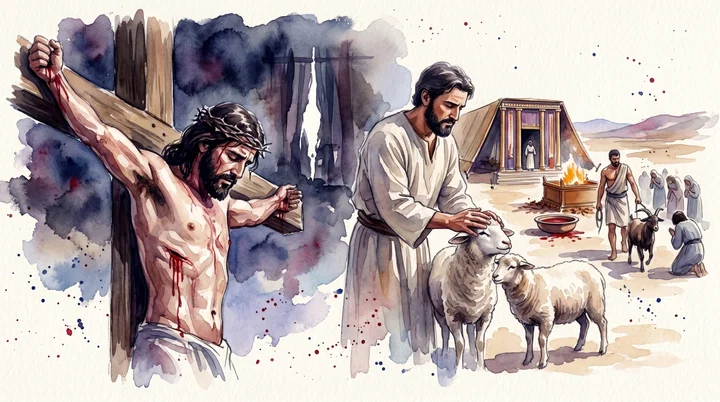
The name Lamb points to him as suffering sacrifice foretold in Isaiah's image of a lamb led to slaughter, and his coming therefore has a deeper meaning than the people had recognized.DA 136.3–137.1DA 112.5–113.1 The lamb offered in place of Isaac on Mount Moriah pointed to him, and the lamb offered on the altar each morning and evening represented his death, which he himself understood he was to die for human sin.DA 112.5–113.1COS 32.1–2 He is the antitype of all the sacrificial ceremonies and the one great sacrifice for sin, those shadows of good things to come pointing to him as the only source of life and hope for fallen man.AA 424.2–425.2 He is the Passover lamb without blemish whose blood prefigured his atoning blood, on whose merits sinners continually depend for safety from Satan's power and final redemption, with his death fulfilling the Passover type and the Lord's Supper commemorating his crucifixion.COS 106.6–71SP 201.1
He is the central object and antitype of the whole Mosaic system, types and shadows, and sacred history, which faith grasps through studying that history and tracing God's footsteps in past events.ST Jun 22, 1882RH Oct 30, 1900PP 593.4 The great truths set forth by the types and shadows of the Mosaic law bring him to view, and learning the will of God and the duties of his people through the law given to Moses means laying hold on him as the one to whom all that system points.FE 97.2RH Oct 30, 1900 The sacrifices under the law illustrated his great atonement and were given to prove and test faith and obedience, and holy men of old were saved by faith in his blood looking across the ages to him as they saw the dying agonies of victims.AA 424.2–425.2LC1 60.1SG4 118.1 The temple sacrifices and services pointed forward to his death as perfect final offering, and when he was crucified their purpose was fulfilled and they became valueless because type had met antitype.LC1 81.2–82.1
The offerings, sacrifices, rites and ceremonies of the Jewish system pointed forward to him and gained significance from him, including the slain lamb typifying him as sin-pardoning Saviour and propitiation for transgression of law, whose perfection is placed in man's behalf and who took the law's curse.Ms 111, 1897, par. 12–13Ms 58, 1900, par. 9–13RH Apr 22, 1902 Israel's sacrificial services at the holy convocations kept the people mindful of him, and the daily morning and evening temple sacrifices pointed to him, yet priests and teachers failed to recognize the promised Redeemer was near.6T 39.3–40.1DA 43.2–44.1 The daily lambs provided mediation, the bleeding altar sacrifices testified to guilt, and Abel's blood offering pointed to him, while the offerings and rites of the past were his great antitype though the Jews clung to forms and refused him because he did not match expectation of temporal power and glory.ST Mar 30, 1888
The animals slain daily at the tabernacle foreshadowed him slain for the world's sin, not to leave sinners in sin but to save them from sin and lead them to loyalty to law.18MR 135.5Ms 51, 1902, par. 11 The daily offerings of slain lambs foreshadowed his sacrifice and mediation for guilty people and pointed forward to the Saviour's sacrifice.GC 18.2 Abel's lamb slain as offering according to God's direction represented him and his sacrifice, while Cain's offering left out this meaning, and an offering made as God directed would have represented him, though Cain worshipers despised those offerings.Lt 71, 1896, par. 2–9Ms 136, 1899, par. 3–4Ms 86, 1886, par. 1–4
The unblemished lamb offered as innocent substitute prefigured him, its blood represented his blood, and through faith people looked forward to his atonement for the world's sins.ST Mar 14, 1878 The victim's death taught that sin brings death penalty, the offering acknowledged guilt and expressed faith in his coming sacrifice, and only the death of the Son of God could atone and save the guilty as the great and perfect offering to which animal sacrifices pointed.ST Jan 30, 1879 An innocent lamb without blemish was chosen to represent him, for he was the sinless spotless perfect offering for humanity, and the lamb without blemish and shedding of blood represented that sin requires shedding of blood for forgiveness.Ms 78, 1901, par. 3–11Lt 85, 1886, par. 4–5 The slain Lamb was the only thing by which an offering could express faith in God's promise, and his sufferings for humanity make forgiveness available through faith for least and greatest sins.Lt 85, 1886, par. 4–5ST Jul 28, 1898
The slain lamb in the sin offering represented him, the offering acknowledged and confessed sin, and he saved the fallen race by becoming the great Sacrifice himself.21MR 416.1–3 The sacrificial lamb and typical sacrifices and blood offerings established after the fall pointed forward to him, and in him types met fulfillment and shadows found substance, though Jewish leaders professed belief in sacrifices but rejected the reality they represented.PP 333.3 When Israelites in Egypt were prevented from presenting those offerings, their minds were not directed to him as great Sacrifice and their faith was weakened.PP 333.3
The Passover lamb and the blood on the doorposts symbolized his death and atoning blood shed for the world, prefiguring his blood on whose merits sinful people continually depend for safety from Satan's power and final redemption.ST Mar 25, 1880ST Mar 15, 1877 That blood cleanses the believing sinner and shelters the believer from coming wrath for those who act in faith, a sign of safety when the firstborn were slain causing the destroying angel to pass over homes.ST Dec 9, 1880ST Mar 15, 18774RED 91.1–2 Eating its flesh recalled that representation, and by faith believers partake of him as spiritual food with hope he will raise them to immortal life, while his blood brings protection from sin.4RED 91.1–2 In offering life for the world's sins he would be separated and lost for three days and then reveal himself again as redeemer and advocate with the Father, and only as faith is shown by doing the work left to do is his blood efficacious to cleanse and shelter from wrath coming on the impenitent as wrath fell on Egyptians.
He is the true Passover Lamb prefigured by the innocent lamb slain in Egypt whose blood on the doorposts caused the destroying angel to pass over, without blemish slain on the cross for redemption.5RED 48.1ST Jul 4, 1878SG3 225.1 With his death the Passover type reached its antitype, and the feast both commemorative and typical gave way to the Lord's Supper as memorial of his crucifixion, which he connected to the Passover in obedience to Jewish law as the great antitype identifying himself with the paschal lamb.5RED 48.1ST Jul 4, 1878SG3 225.1 His merits alone avert judgment and condemnation, while rejecting him defiles the soul and makes keeping the feast of no value.5RED 48.1ST Jul 4, 1878 He is the real Passover lamb to whom the feast pointed, slain for the world's sins on the very day the Passover lamb had been slain for centuries, sharing the Passover with disciples and instituting a feast commemorating his own death and bringing the observance to fulfillment.5RED 4.2–5.1GC 399.1–4Ms 54, 1897, par. 3 The lamb offered at Passover in Egypt points to his sacrifice on the cross, and as pure spotless Lamb presenting himself as sin-offering his sacrifice brings the long series of offerings to its end at the Passover meal.Ms 43, 1897, par. 24
The peace-offerings were a type of his great sacrifice, and their abuse turned attention away from the penitence and faith they were meant to direct toward him.ST Oct 14, 1913 They expressed thanksgiving with only fat burned on the altar, a portion to priests and most returned for a sacrificial meal to direct hearts in gratitude and faith to the coming Redeemer, to be brought in penitence and faith with sacredness and sense of importance of sanctuary services.PP 576.1–2ST Dec 1, 1881 The sacrificial victims symbolized him but repeated slaughter could lose solemn meaning when treated as routine or profitable trade, and he knew priests and elders would value his coming sacrifice no more than the animals' blood they continually shed.ST Mar 28, 18783SP 21.1–2 The Jews had become familiar with blood and lost sight of sin and what symbols meant, multiplying heartless offerings without repentance, with rulers hardened by selfishness and avarice making symbols gain and rites display and destroying sacredness in the people's eyes.DA 589.1–590.2 Priests and teachers who offered morning and evening sacrifice pointing to him performed meaningless prayers and rites to be seen by men, and in strife for riches and honor made no preparation to receive him though Israel was preserved as witness he would be born of Abraham and David's line.ST Dec 9, 1913
The full significance of typical offerings pointing to him as slain-lamb antitype was unfolded to Moses, death came by sin which is transgression of law, he is the propitiation whose perfection is placed in man's behalf and who took the law's curse.10MR 329.1–2 The righteousness in the law shone on Moses' face because he saw to the end of what would be abolished when type met antitype, and types were glorious because they revealed the sin-pardoning Saviour.10MR 329.1–2 His death was the true, perfect and only valuable offering and atonement to which temple and tabernacle sacrifices pointed, and after his death those offerings had no moral efficacy, virtue to expiate sin or use.Ms 72, 1901, par. 13ST Jun 28, 1899ST May 9, 1878 Those offerings were given to teach true meaning and were to continue only until he, their great Antitype, was slain, for God gave definite directions because people had confused ideas and mixed heathen traditions with ceremonial worship.SG3 304.1
By dying as sacrifice for the world's sins his death made temple offering blood worthless and ended the former sacred role of the earthly sanctuary, with the blood of Old Testament sacrifices pointing forward and all typical offerings fulfilled in him.COS 106.6–7COS 165.2–3COL 126.2–127.1 The Lord's Supper commemorates his crucifixion, and once he was slain there was no longer need to sacrifice a lamb to represent it.COS 106.6–71SP 201.1 His death was the perfect, final, voluntary offering that fulfilled and ended the sacrificial system, animal blood became valueless, temple services were no longer of use, a new and living way was opened for Jews and Gentiles, and he thereafter officiates as priest and advocate in heaven.5RED 87.1ST Oct 7, 1886ST Jul 25, 1878LC1 81.2–82.13SP 71.1 The tearing of the inner temple veil when he gave his life signified that the sacrificial system had ended forever because the one final sacrifice had been made, type meeting fulfillment in perfect offering.ST Jan 4, 18771RED 81.2–82.1 His death fulfilled the sacrificial type and made the only sacrifice of value, completing atonement, with him now interceding as great High Priest so no further sacrifice or human intercession can add.Ms 128, 1897, par. 7–9
At his crucifixion in A.D. 31 the sacrifice foreshadowed for four thousand years met its antitype, and his death on Calvary fulfilled and ended that typical system, so ceremonial sacrifices ceased while the precepts of the Decalogue remain unchanging.GC88 327.3GC 327.1–328.2PP 365.1–3 Standing at transition between two economies and their two great festivals, his death as spotless sin-offering brings to an end the system of types and ceremonies that for four thousand years pointed to it, and as he ate the Passover he set aside the national festival forever and instituted the memorial of his great sacrifice to be observed in all lands and ages.DA 652.1–2 His death is the great antitype and perfect offering where type met fulfillment, which all ceremonial sacrifices from Adam and Abel onward pointed to and were appointed to teach, to continue only until he was slain, so further animal sacrifices became forever valueless, including daily lambs, morning and evening, peace-offerings, Passover and offerings from Adam and Abel.1SP 268.2
Ceremonial sacrifices have no value unless people recognize in them the Lamb they point to, and the Jewish nation was not saved because it did not behold and receive him by faith, for religious forms cannot save without it, nor can Abrahamic ancestry or ceremonies impart holiness or pure principles.Lt 19a, 1897, par. 11Lt 19a, 1897, par. 7Ms 121c, 1898, par. 9–10 John set forth this truth calling Pharisees and Sadducees to repentance and flight from wrath, telling them turning from God's requirements to perverted ideas loses Abraham's children's characteristics and claiming Abraham as father is of no value.Lt 19a, 1897, par. 7 The yearly sin offerings expressed faith in the promised substitute but their blood only transferred sin to the sanctuary without fully releasing from condemnation, while the Day of Atonement portrayed fuller atonement in which the high priest presented blood before the law then placed Israel's sins upon the scapegoat which carried them away as forever separated.PP 355.5 The Levitical sacrifices and ceremonies were meant to help see his work but became empty outward observances when replacing inward heart work, and when outward rites replace a changed heart they lose purpose though meant to help Israel see him in advance.7MR 333.3Ms 122, 1897, par. 1–5
He is the Lamb to whom all sacrifices pointed, whose death ends temple sacrifices, whose torn veil opens the way into the Holiest to all so people no longer need await the high priest to make atonement, and who is the Lamb slain from the foundation of the world.Ms 111, 1897, par. 50–52
Sin Removed by Substitute
He takes away sin as substitute, surety, Sin-bearer and Burden-bearer, though innocent and knowing no sin being made sin for humanity, bearing guilt and paying the debt incurred by transgression through every temptation, suffering and stroke, suffering the full penalty to satisfy justice and maintain the law's authority, drawing sinners so none comes unless drawn, so that the repentant believing sinner is forgiven, has guilt removed and debt canceled despite unworthiness, and receives His righteousness and becomes the righteousness of God in Him.Ms 31, 1911, par. 24–26Ms 27, 1894, par. 1–3Lt 81, 1901, par. 18–19Lt 45, 1892, par. 18–19Ms 43, 1894, par. 14–16
He who was equal with God and knew no sin was made sin, bowed in Gethsemane under that burden, then mocked and dying on the cross, with the whole debt for transgression demanded from Him as Mediator and divine-human Substitute, suffering without abatement the extreme penalty to make full atonement, satisfying justice while maintaining the law's immutability.Ms 159, 1903, par. 24–2618MR 335.2–337.3
He was treated as a sinner forsaken by God so that believing sinners may be treated as righteous, a measureless gift in which God spared not His Son but delivered Him for all, giving everything though humanity had no goodness.18MR 335.2–337.3
Though innocent, holy and undefiled, He stood in sinners' place and endured punishment so they could stand innocent clothed in righteousness, and seeing His compassion and love moves the heart to accept Him as sin-pardoning Saviour.Ms 1, 1894, par. 1514MR 74.2
Though innocent, holy and undefiled, He stood as guilty, bore the world's sins in His own body, and endured sinners' punishment so they could stand free clothed in righteousness, while the innocent offering kept His death before the guilty to show sin's nature, the worth of God's offering and the unchanging law, leading sinners to confess and rely on merits.ST Feb 20, 1893ST Apr 6, 1888ST May 23, 1911
As one equal with God, He takes the sinner's place and bears punishment, and His death provides through merit for every person without exception so all can be saved, bearing the world's sins in His body on the tree, with only He as God's Son equal with the Father able to atone, His life required to destroy sin's curse, offering peace to every repentant sin-sick person but not the impenitent.Ms 192, 1903, par. 5–6Ms 25, 1898, par. 18–19
As representative, head and substitute He takes His people's sins, has guilt imputed, numbers with transgressors, fulfills every requirement of law in perfect obedience, and became substitute and surety so salvation is gift received through faith in righteousness not earned.Lt 8a, 1890, par. 19–22RH Jan 21, 1873
He volunteered to stand at the head of fallen beings, heirs of guilt under eternal death sentence, bearing guilt and God's wrath so they need not perish, and receiving Him as personal Saviour pardons sin and receives sinners as sons and daughters.Lt 257, 1903, par. 11–13
No person can bear his own sin, but the sins of the whole world were laid on Him so man might have another trial now, giving everlasting life to whoever believes and lays hold of the merits of the crucified and risen Saviour.8MR 323.2Ms 10, 1894, par. 26–27
He alone is able to bear the guilt of the world and serve as sin-offering, for no human can be accepted in that role and no person can carry even his own sins, since they are laid upon the Son of God, and He alone takes away the world's sin and no human can do this work, so the helpless are to come for salvation.Lt 26, 1895, par. 5–7ST May 3, 1899Lt 35, 1893, par. 2–46MR 222.4–223.1Lt 100, 1895, par. 15–17
He alone is bearer of the sins of the whole world and only one with power to take them away, and no human can bear another's guilt, and since He bore sins people should look to Him rather than accusing others.Lt 23a, 1893, par. 50–56Lt 91, 1895, par. 4Ms 45, 1902, par. 97MR 377.2–3Lt 52, 1906, par. 11–19
He bears the guilt of the world's sin, taking responsibility as humanity's substitute and surety, bearing punishment, penalty and curse of disobedience, and placing perfect character on humanity's behalf, and He is the one complete, priceless offering paying infinite price of blood for souls and bodies.Ms 111, 1897, par. 12–13Lt 68, 1895, par. 17–19Ms 58, 1900, par. 9–13RH Apr 22, 1902
He is the divine-human bearer who was tempted in every way yet never sinned, and though He took humanity remained sinless, standing at humanity's head as Saviour, sanctification, righteousness and surety, enabling Him to help the tempted, take away sins, and place believers in right standing.Lt 47, 1903, par. 5–6Ms 144, 1901, par. 8
He was tempted in human nature where Adam fell and could have yielded as Adam did, but did not yield in even smallest point, having no sinful corrupt fallen disloyalty, and His sinlessness made Him perfect offering worthy of adoration.6MR 111.3–112.2Ms 94, 1893, par. 6–8
He had to be unblemished sinless offering, and perfect humanity had to endure test without sin or failure, for even one stain would make redemption fail, and though able to summon angels or use divine power to escape, He meekly endured abuse without retaliation.3SP 139.1
His suffering tested human life, and had He failed or sinned He would have been imperfect offering and redemption would have failed, yet though He could have used divine power to escape tormentors He endured abuse with meekness and patience.5RED 59.1
The plan required the offering to remain perfect, so while bearing human nature He had to endure mocking, scourging and abuse without stain, murmur, retaliation or failure to submit to the Father, and Satan led abuse to provoke retaliation or use of divine power which would have made Him imperfect and redemption a failure, but He submitted with calmness and Godlike fortitude, His meekness proving kinship to God, and His abasement and blood were pledge of exaltation and anointing as great high priest.DA 734.1–5
He is sinless, and because He had no sin He could bear human sins and offer Himself for the race, making people members of God's royal family and heirs with Christ.Ms 28, 1901, par. 9
His blood takes away sin and cleanses, purifies and sanctifies as better sacrifice than Abel's, offered once for all the fallen race to make salvation possible, giving redemption and forgiveness, and now is the time for robes of character to be cleansed in it with thankfulness, with each person to mark the door of the heart with its virtue and make calling and election sure.Ms 15, 1894, par. 10Ms 21, 1903, par. 12Ms 74, 1900, par. 13
Only the blood of God's only begotten Son makes propitiation for sin, and through the crucified and risen Saviour people may draw near to God, represented by incense offered with prayers of saints, and as both High Priest and Victim He offers His own blood reconciling humanity to God.Ms 15, 1897, par. 19–2012MR 396.2–397.1
His sacrifice at Calvary alone atones for transgression and reconciles people to God, and those who accept Him in faith receive remission of sins that are past, with forgiveness resting on God alone not on any man, priest or pope.Ms 149, 1897, par. 16–17GC 461.1–2
Nothing but the death of God's dear Son could pay for human sin, and this infinite sacrifice was revealed to Adam as ransom and star of hope, with sacrifice set up to keep His death before guilty people so they would understand sin, result of breaking law and worth of divine offering, for without sin there would have been no death, and when the sinner killed the innocent offering he saw fruit of sin and death of the Son in his place, saw unchangeable law broken, confessed and trusted in Lamb's merits.ST Dec 22, 1914
The sacrifice taught Adam that sin brings death and only the Son's death could expiate guilt, pointing forward to perfect sacrifice as ransom that saves guilty and gives hope, and the promised innocent Lamb's death answers for sin showing God's goodness in providing ransom.1SP 53.1–2PP 68.1
His blood had to be shed because of human sin since death results from sin and transgression of law, no other death can expiate but only His, He is ransom given by infinite goodness to save guilty, and faith in Him brings star of hope into dark future of sin and death.ST Nov 25, 1913
He is the spotless Lamb who did no sin and died to save erring faulty people, and salvation is through Him rather than human merit, with His righteousness imputed to those who trust Him.GW92 427.3
By lifting guilt from sinner and Himself standing under condemnation of Lawgiver, living law in humanity and keeping it perfectly so none could convict Him of sin, He proved false Satan's charge that man cannot keep law and revealed to heavenly universe, unfallen worlds and sinful men that God has made every provision.ST Apr 7, 1898
He lifts guilt by standing under Lawgiver's condemnation, lived God's law in human nature showing Satan's claim false, and through imputed righteousness those who receive Him by faith can show loyalty by keeping law, the repentant sinner taking hold as personal Saviour sharing divine nature.ST Apr 7, 1898Ms 63, 1897, par. 25–28
On the cross as spotless Lamb yielding life to take away sin, His death was in oppressive gloom with flesh lacerated by stripes, hands that relieved suffering fastened by nails, feet that taught salvation spiked, head wounded by thorns, and lips crying why forsaken, and as spotless Lamb He suffered and gave up life with wounded body and nailed hands and feet amid darkness and cry of abandonment.ST Jul 25, 18785RED 85.1–2
He is the glorious beautiful Redeemer who left glory for this dark world to die the just for unjust, bearing world's sins, suffering mocking, scourging, thorns and bloody sweat in garden to redeem people by blood.EW 40.3
In taking away sin He bore crushing weight of world's sin, and this burden and sense of separation from Father's love, not fear or physical pain, caused anguish and brought death so soon, and He was slain by sin of world and died of broken heart from mental anguish in bearing sin, not from spear or pain, as declared by loud cry and blood and water from pierced side.COS 161.1DA 772.1–2
His taking of sin to reconcile people to the Father led to Gethsemane and the cross, where He faced cup of suffering and separation, was strengthened to drink it and died, then rose as resurrection and life with saints raised as witnesses to victory over death.Ms 81, 1909, par. 23–24
He gave His life on Calvary as means of redemption, with blood making atonement as sin offering for whole race, meeting weakness with compassion to rescue discouraged and despairing, and through death and atonement paid redemption price and now intercedes at Father's right hand, having died, risen and now interceding, able to keep from falling those who obey so they will live because He lives.Ms 73, 1910, par. 21–22Lt 101, 1896, par. 8–912MR 62.214MR 131.2–3
In sympathy and compassion He took upon divine soul guilt of sin and became sin for all the world, pleased not Himself but endured cross despising shame and poured out soul unto death, refusing to save Himself when taunted, so that in dying all who believe might come into possession of life measuring with God's life and become sons of God, and this provision must not be in vain.Lt 71, 1901, par. 7
He voluntarily laid down life to give life and bring immortality to light, bearing penalty for world's sins, and though mortal as human He was divine Fountain of Life, divine life-giving power present in human nature, and He could have resisted death but chose to die to save humanity.17MR 339.2
His death was voluntary to save world and fulfill what all offerings symbolized, and though He could have resisted death and by command could have brought heavenly host or driven mob away, He laid down life and endured penalty so humanity would not die eternally.ST Dec 9, 1897
He voluntarily gave up life as sacrifice and endured sin's penalty so humanity would not die eternally, and through death brought life and immortality to light, and He gave Himself as great sacrifice, left heaven's royal courts, took human nature, bore sin and results, and in humanity overcame temptations, making it possible to escape corruption by laying hold of merits of crucified and risen life.ST Feb 27, 1893Ms 144, 1906, par. 4–7
He gave Himself as living gift and voluntarily offered Himself, enduring humiliation, neglect, shame and reproach to rescue fallen, and His sacrifice was crowning act of mission to remain central study in every age, with entry into Jerusalem at Passover drawing public attention to coming sacrifice and role as Redeemer.Ms 42, 1898, par. 32–333SP 71.1ST Apr 1, 1889ST Jul 22, 1886
He is the antitypical Lamb whose mission was crowned by sacrifice, giving life for life of world, and at Passover triumphal entry voluntarily presented Himself as Redeemer and oblation to call attention to coming sacrifice and direct all eyes to follow Him to final scene.DA 571.2–4
At His triumphal entry just before crucifixion He was about to go through the sheep gate through which victims had for centuries been led, to be taken by wicked hands and slain for world's sins, and His entry drew public attention to approaching crowning sacrifice so people would follow events leading to death and in later ages study and verify facts.2SP 385.2–386.2ST Aug 15, 1878
Facts of His death would be verified, His church would study it, hearers would later search prophecy and be convinced He was Messiah, and converts would multiply, while He remained humble, refusing angelic display and bearing humanity's burden until life was given.DA 571.2–4
Lifted up on cross in sight of all nations to call attention to Him, His death by crucifixion rather than stoning was ensured through Roman power preserving public witness, so lifting up required for world's salvation would take place, and God planned for Him to be lifted on Calvary in open sight, with Roman rule making crucifixion instead of stoning possible because Jews had lost capital power, fulfilling prophecy that He be lifted as serpent in wilderness.DA 840.2–4ST Aug 1, 18783SP 180.1–181.2
His death on the cross struck Satan a death blow to take away sin of every believing soul and destroy him who had power of death, and by bearing sin and law's curse and suffering separation He vindicated God's justice and unchanging law, settling controversy between Satan and heaven's Prince, and He gave life as offering embracing whole world, dying to give Satan death-stroke and take away sin of every believing soul.ST Jun 21, 1905ST Dec 9, 1897RH May 16, 1907Ms 61, 1903, par. 8
By bearing sin and dying He exalted God's law and demonstrated its moral character changeless, for He came not to make sin permissible but to save people from sin and bring them to victory through faith.ST Feb 24, 1898
He is the surety and substitute who paid ransom, to whom sacrifices pointed until type met fulfillment at cross, making it possible to put away sin, calling people to give Him sins and receive righteousness.Ms 147, 1897, par. 34–35
He is the great atoning sacrifice that reveals God's law in sacred dignity and impresses hearts with binding claims, set as great center of world, and as captain of salvation clothed divinity with humanity, took field to teach how to fight Lord's battles, and makes human beings laborers together with God.16MR 95.2–96.2
The cross is the expedient by which God's love and justice are harmonized and is sinner's only means of salvation, saved by accepting Christ by faith as personal Saviour, with love stamped on mind as evidently crucified, becoming partaker of suffering, whose mystery is love.Lt 123, 1901, par. 2–4
The Jewish sacrificial ordinances represented Christ as one great sacrifice whose offering satisfies requirements of divine justice on behalf of transgressor, and He is the one complete offering for world's sins to which Jewish offerings pointed, revealing infinite cost.12MR 403.2–3Lt 26, 1894, par. 12–13
He acts as Advocate and propitiation to remove sin not for believers only but for whole world, gathering whole world into embrace, and by offering Himself as propitiation makes salvation possible for all who accept Him and brings them into harmony with God.ST Mar 26, 191220MR 61.3Lt 48, 1898, par. 3Ms 41, 1887, par. 22–23ST Jun 21, 1905
His death makes propitiation for human sin bringing all who accept Him into harmony with God and restoring humanity, and the proclamation of His sin-removing work is heard among all peoples with kingdom extending bringing life and fruit.ST Jul 1, 1897
After His death He serves as Priest and Advocate in heaven and opened new and living way for Jews and Gentiles to take away sin of every believing soul.3SP 166.2–167.1Lt 48, 1898, par. 3Ms 41, 1887, par. 22–23ST Jun 21, 1905RH May 16, 1907
His death was necessary but like grain of wheat dying and living again He rises and kingdom extends, pointing to future proclamation as world's Saviour among all peoples.ST Mar 26, 1912
As the One slain for world's sins, earthly kings and rulers were powerless to carry out will upon Him, and prince of darkness with army could not keep tomb shut, for heavenly host guarded it after unseenly witnessing and recording every action and taunt of mock trial.Ms 203, 1898, par. 10
In offering life for world's sins He would be separated and lost for three days then reveal Himself again as Redeemer and advocate with Father, and as antitypical Passover Lamb slain by wicked hands and laid in tomb His death fulfilled prophecy and showed He was world's Redeemer.3SP 186.3–187.1
He gives broken body and spilled blood to take away sin, and bodily present at sacramental table gave emblems representing them to all disciples including betrayer and told them to eat and drink in remembrance, yet Judas sat in that presence and received emblems and heard words while brooding over betrayal with dark sullen revengeful thoughts.Ms 106, 1903, par. 53DA 653.4–5
The words taketh away mean real removal rather than continuing in sin as if overcoming were impossible, but overcoming as Christ overcame by prayer, with every spot discerned and trusted to blood to wash away, and victory when tempted by refusing to surrender will to evil, believing He saves today to cleanse from all unrighteousness, and cooperating with divine power to be conqueror.Ms 83, 1891, par. 9–10
The words taketh away mean sin is actually removed so believers need not keep sinning as if overcoming were impossible, and overcoming comes only as He overcame, by prayer, cooperating with divine power, refusing to surrender will to Satan when tempted, and by grace becoming conquerors through faith.6MR 10.1–2
He takes sin away and does not merely cover it while it remains, for righteousness never covers polluted soul, and His work is not to be covered by false charity but taken away, clothing His people in His own righteousness.8MR 323.2Lt 41, 1890, par. 46–48ST Apr 23, 1894ST Apr 23, 1894
He takes away sin rather than cloaking, excusing, hiding or covering it, and genuine heavenly love hates sin but loves sinner, warns faithfully and points to Jesus, and He does not merely cover world with righteousness but takes sin away as sinners repent and wash characters white in blood.STA 58.1STBk 57.1–58.1STOM 45.3–46.1Ms 35, 1891, par. 28–31
He takes away sin rather than merely covering or cloaking it, and genuine charity loves sinner but hates sin, faithfully warns and points to Jesus, and He removes sin by taking sinner's burden of guilt upon Himself with all power to save completely, so burdened sinners should lay guilt on Him.1MR 216.2Ms 35, 1891, par. 28–31Ms 76, 1903, par. 23–24
He takes away every sin, and through suffering removes sin and covers sinner with heavenly-woven robe of righteousness which has no human thread, and His blood was shed for each person, and sinner comes without plea answering invitation.Ms 17, 1893, par. 19–21Lt 99, 1903, par. 11–13
Sin is transgression of God's law, and He died so sin may be removed, and repentant believer receives robe of righteousness which is perfect obedience to law, rather than human efforts to cover sin.21MR 193.5–6
He came to take away sin and not to save people while they remain in sin or leave them in sins, and His death brings people back to loyalty rather than leaving them in sin, depending on law's continuing authority since sin is transgression and His work does not destroy pure holy law which remains standard.Ms 6, 1894, par. 9–13Ms 2, 1893, par. 17–19Lt 75, 1899, par. 16–17Ms 5, 1895, par. 6–8
He takes away sin so as to remove it and bring people back to loyalty, not to save them in sins while continuing in sin, and this is through obedience to truth, and He was slain not to leave sinners in sin but to save them from sin and lead them to loyalty to law.18MR 135.5Ms 87, 1893, par. 29–3021MR 281.3–282.4
He came to save people from sins and not in sins, and even most guilty sinner can become child of God by believing on Jesus as Son of God.Ms 19, 1897, par. 6–96MR 157.1Lt 106a, 1896, par. 35
He removes sin by enduring affliction, insult, abuse and temptation without sinning, presenting perfect obedience that removes every excuse for not keeping law and shows how to obey amid iniquity by laying hold of divine power, giving life so man may partake of divine nature and overcome lust's corruption, and He is Redeemer, Child born and Son given with government upon shoulder whose name is Wonderful, Counsellor, mighty God, everlasting Father, Prince of Peace.Ms 29, 1899, par. 15
Sources