John 1:21
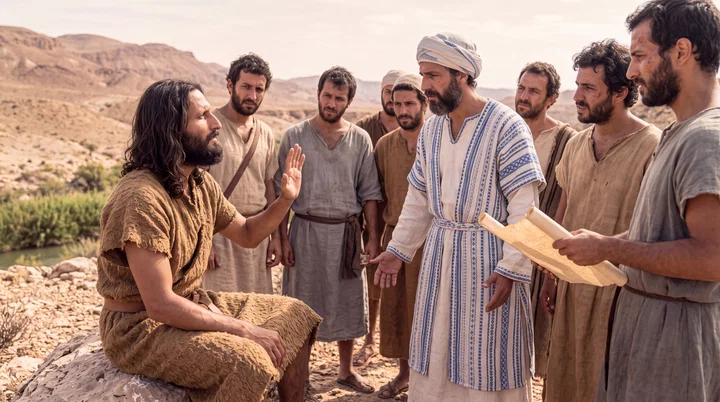
And they asked him, What then? Art thou Elias? And he saith, I am not. Art thou that prophet? And he answered, No.
Translations
And they asked him, What then? Are you Elias? And he says, I am not. Are you that prophet? And he answered, No.
King James Version, KJV Cambridge Paragraph Bible
And they asked him, What then? Art thou Elias? And he saith, I am not. Art thou that prophet? And he answered, No.
And they asked him, What then? Art thou Elijah? and he saith, I am not. Art thou that prophet? And he answered, No.
Revised Version, American Standard Version
And they asked him, What then? Art thou Elijah? And he saith, I am not. Art thou the prophet? And he answered, No.
And they questioned him, 'What then? Elijah art thou?' and he saith, 'I am not.' — 'The prophet art thou?' and he answered, 'No.'
And they asked him, What then? Art thou Elias? And he says, I am not. Art thou the prophet? And he answered, No.
and they questioned him—What then? Art, thou, Elijah? and he saith—I am not; The prophet, art, thou? and he answered—No!
Berean Standard Bible, Majority Standard Bible
“ Then who are you?” they inquired. “ Are you Elijah?”He said, “ I am not.”“ Are you the Prophet?”He answered, “ No.”
They asked him, “ What then? Are you Elijah?”He said, “ I am not.”“ Are you the prophet?”He answered, “ No.”
And they said to him, What then? Are you Elijah? And he said, I am not. Are you the prophet? And his answer was, I am not.
And they asked him, What then? Art thou Elias? And he said, I am not. Art thou that Prophet? And he answered, No.
Douay-Rheims (Challoner revision)
And they asked him: What then? Art thou Elias? And he said: I am not. Art thou the prophet? And he answered: No.
Pictures
Cross-references 20 of 30
- Malachi 4:5
Behold, I will send you Elijah the prophet before the coming of the great and dreadful day of the LORD:
The question asks whether John is the promised Elijah.
- Isaiah 40:3
The voice of him that crieth in the wilderness, Prepare ye the way of the LORD, make straight in the desert a highway for our God.
John identifies himself as the foretold wilderness voice preparing the Lord’s way.
- Luke 1:17
And he shall go before him in the spirit and power of Elias, to turn the hearts of the fathers to the children, and the disobedient to the wisdom of the just; to make ready a people prepared for the Lord.
John was foretold to go before Christ in Elijah’s spirit and power.
- Matthew 11:14
And if ye will receive it, this is Elias, which was for to come.
calls John Elijah, contrasting his denial
- Deuteronomy 18:15
The LORD thy God will raise up unto thee a Prophet from the midst of thee, of thy brethren, like unto me; unto him ye shall hearken;
“That prophet” echoes the promised prophet like Moses.
- Matthew 17:12-13
But I say unto you, That Elias is come already, and they knew him not, but have done unto him whatsoever they listed. Likewise shall also the Son of man suffer of them.
Jesus identifies John as the one who came in Elijah’s role.
- John 1:27
He it is, who coming after me is preferred before me, whose shoe’s latchet I am not worthy to unloose.
John points to the Messiah and declares himself unworthy to unfasten his sandals.
- Malachi 3:1
Behold, I will send my messenger, and he shall prepare the way before me: and the Lord, whom ye seek, shall suddenly come to his temple, even the messenger of the covenant, whom ye delight in: behold, he shall come, saith the LORD of hosts.
Foretells the messenger who prepares the way for the Lord, fulfilled in John.
- Mark 1:2-4
As it is written in the prophets, Behold, I send my messenger before thy face, which shall prepare thy way before thee.
John is the messenger preparing the way, identified with Elijah’s forerunner role.
- Matthew 3:1-3
In those days came John the Baptist, preaching in the wilderness of Judaea,
John is identified as the wilderness voice preparing the way for the Lord.
- John 1:29-34
The next day John seeth Jesus coming unto him, and saith, Behold the Lamb of God, which taketh away the sin of the world.
John’s prior testimony leads to his declaration that Jesus is the Son of God.
- Matthew 11:10
For this is he, of whom it is written, Behold, I send my messenger before thy face, which shall prepare thy way before thee.
Identifies John as the promised forerunner and Malachi’s messenger.
- Luke 7:28
For I say unto you, Among those that are born of women there is not a greater prophet than John the Baptist: but he that is least in the kingdom of God is greater than he.
Jesus calls John the Baptist the greatest prophet.
- Matthew 11:9
But what went ye out for to see? A prophet? yea, I say unto you, and more than a prophet.
Jesus calls John a prophet and more than a prophet.
- John 3:28-30
Ye yourselves bear me witness, that I said, I am not the Christ, but that I am sent before him.
John says he was sent before Christ and rejoices as Christ increases.
- Matthew 11:11
Verily I say unto you, Among them that are born of women there hath not risen a greater than John the Baptist: notwithstanding he that is least in the kingdom of heaven is greater than he.
John is honored as the greatest among those born of women.
- Luke 3:15
And as the people were in expectation, and all men mused in their hearts of John, whether he were the Christ, or not;
Records people wondering whether John was the Christ.
- Deuteronomy 18:18
I will raise them up a Prophet from among their brethren, like unto thee, and will put my words in his mouth; and he shall speak unto them all that I shall command him.
identifies 'that prophet' John denied being
- Matthew 17:10-11
And his disciples asked him, saying, Why then say the scribes that Elias must first come?
Jesus explains the prophecy of Elijah coming to restore all things.
- John 1:25
And they asked him, and said unto him, Why baptizest thou then, if thou be not that Christ, nor Elias, neither that prophet?
They challenge John’s authority to baptize because he denies being the Christ, Elias, or that prophet.
Commentary
Each commentary is drawn from primary sources: the writings of Ellen G. White and Adventist pioneers and periodicals. Each commentary is separate. Its own words are not a quotation; follow the references to read the source passages.
Ellen G. White
12 sources
The questioning came from a delegation sent from Jerusalem by the highest authority and the Jewish rulers, made up of priests and Levites, who demanded that John tell who he was so they could answer those who sent them and who challenged his authority to stir agitation, draw whole cities and towns to listen, and teach and baptize.2SP 62.1–2RH Nov 28, 19071RED 42.2–43.1COS 53.1–4 After John had confessed he was not the Christ, they asked if he was Elias and then if he was that prophet, and to both he answered that he was not, refusing any claim to be the Christ or either of those expected figures.2SP 62.1–2LC1 42.3Ms 113, 1907, par. 13–14RH Nov 28, 19071RED 42.2–43.1 That prophet in the questioning means Moses.2SP 62.1–2ST Oct 25, 1877RH Jan 21, 1873COS 53.1–4 The Jews expected Moses to be raised from the dead and taken to heaven, without knowing that Moses had already been resurrected.2SP 62.1–2ST Oct 25, 1877RH Jan 21, 1873
They wondered whether John was Moses returned because he showed thorough knowledge of the prophecies and of Hebrew history, including the wilderness wanderings through murmuring and rebellion.2SP 62.1–2ST Oct 25, 1877RH Jan 21, 1873 They also connected John with Moses risen from the dead because he baptized with water and because his miraculous birth was called to mind after being measurably forgotten for thirty years, including the angel visit to Zacharias in the temple and Zacharias losing speech for unbelief and regaining it at John's birth.2SP 62.1–2 The questioning arose because multitudes, including kings and nobles, followed John and people wondered whether he might be the Coming One.1RED 42.2–43.12SP 57.2–3
Although John denied being Elias, his authoritative proclamation and his manner as the messenger of the coming One made the listening people think he might be Elijah and aroused great expectation in their hearts.RH Nov 28, 1907 John cut off that hope by refusing exalted titles for himself and using every opportunity to direct attention away from himself to One mightier than himself whose shoes he was unworthy to unloose.1RED 42.2–43.12SP 57.2–3 Instead John identified himself as the voice preparing the way for the Lord, whose mission was solely to prepare the way for Jesus.Ms 113, 1907, par. 13–14COS 53.1–4ST Feb 15, 18772SP 169.3–170.1 In that preparatory mission John testified that Jesus was the Christ, the Redeemer of the world, and the Son of God.ST Feb 15, 18772SP 169.3–170.1
His denials led to the demand why he baptized and to his unequivocal answer to carry back to Jerusalem that the long-promised Christ already stood unknown among them.RH Nov 28, 1907 The questions show the Jews were looking for the Christ, Elias, and that prophet, but had studied only one side and expected the Messiah as a mighty prince and great conqueror who would work powerfully in their behalf, and they turned from Jesus in disappointment because his mission did not match that expectation.RH Nov 28, 1907COS 54.7–55.1 Through this deputy sent to John the Jewish leaders were not left in ignorance of John's evidence, because their messenger brought back John's statement about the baptism of Jesus and the wonderful manifestations of God at that time, and for a season they accepted John as a prophet of God and rejoiced in his message, so that in rejecting Jesus they rejected John whom they had received with joy.ST Feb 15, 1877
Sources
Pioneers and periodicals
54 sources
When priests and Levites sent from Jerusalem asked John if he was the Christ, Elijah, or that prophet, he gave a definite and certain No to each.RH Nov 28, 1907RH Apr 21, 1868ST Jun 25, 1896ST Jul 23, 1894ST Sep 16, 1913 They were asking amid widespread expectancy of the Messiah with the seventy weeks nearly fulfilled, looking for three coming figures but expecting a mighty political deliverer from Rome.RH Nov 28, 1907RH Nov 18, 1862ST Feb 22, 1905RH Dec 10, 1908RH Mar 3, 1903 His denial that he was Elijah meant he was not Elijah himself in person returned from heaven, for Elijah and Elias are two forms of the same name, yet he still fulfilled Malachi's prophecy by going before the Lord in Elijah's spirit and power with reproof, repentance and reformation to prepare the way for Christ's first coming.ST Apr 28, 1914RH Apr 21, 1868RH Apr 5, 1870 That prophet they asked about was the Prophet Moses foretold in Deuteronomy 18:15-18, whom they expected as another besides Christ, but the promise referred to Christ himself, for John was a great prophet and more than a prophet yet only sent to prepare the people for Him.ST Jun 6, 1906ST Feb 22, 1905RH Apr 22, 1902RH Dec 10, 1908 His refusal to claim any great title shows the humility of a true servant who calls himself only a voice and decreases that Christ may increase, and it defines the last-day messengers who prepare the world for Christ's second coming in Elijah's spirit and power without exalting themselves.RH May 17, 1906ST Dec 12, 1916ST Dec 18, 1901ST May 8, 1907RH Jun 28, 1906
Questioners and Expectations
A delegation was sent from Jerusalem by the Jewish rulers to ask John who he was so they could answer those who sent them.RH Nov 28, 1907ST Jan 17, 1906RH Oct 7, 1902 They were priests and Levites, Pharisees and leading men, scribes and Sadducees, acting as a committee to question his identity and authority and why he baptizes.RH Nov 28, 1907ST Sep 16, 1913RH Aug 17, 1876ST Jan 17, 1906RH Oct 7, 1902 After he confessed he was not the Christ they pressed him whether he was Elias and whether he was that prophet, and he answered No to both.RH Nov 28, 1907ST Sep 16, 1913ST Jan 17, 1906 When pressed further to tell who he was, he said he was the voice crying in the wilderness to make straight the way of the Lord as Isaiah said, and when asked why he baptized if he was none of those he said he baptized in water.RH Nov 28, 1907ST Jan 17, 1906RH Oct 7, 1902
The questioning happened amid widespread expectancy that the Messiah's time had come, because the seventy weeks were nearly fulfilled.RH Nov 18, 1862RH Dec 10, 1908ST Jun 25, 1896 Jerusalem and all Judea and all the region round about Jordan had been mightily stirred by John's preaching, with multitudes going out to hear him as he proclaimed the coming Messiah and appeared to introduce Him to the world.RH Dec 10, 1908RH Jul 22, 1909RH May 13, 1915 In that stirring the people were uncertain whether he might be the Christ, Elijah, or one of the prophets, so impressed that they were willing to call him the Messiah.RH Nov 18, 1862RH Mar 3, 1903RH Jul 22, 1909 His authoritative proclamation and his manner as the messenger of the coming One made him look to the listening people as if he might be the prophet Elijah and aroused great expectation in their hearts.RH Nov 28, 1907
The questions show the Jews were looking for three expected figures, the Christ, Elias, and that prophet.RH Nov 28, 1907RH Mar 3, 1903 They understood that prophet as a great prophet expected to precede or appear at the same time as Christ, but did not recognize that Moses' promise in Deuteronomy 18:15-18 referred to Christ Himself.RH Nov 28, 1907ST Feb 22, 1905 They had studied only one side and were confused by their own misapplication of the prophecies concerning the Messiah, forming false ideas of Him and of what He would do.RH Nov 28, 1907RH Oct 7, 1902ST May 25, 1904 They expected the Messiah as a mighty prince who would work powerfully in their behalf and as a political deliverer from Roman rule, missing their need for the spiritual deliverance the true Messiah came to bring.RH Nov 28, 1907RH Jul 22, 1909
John's denials lead to the demand why he baptizes and to his unequivocal answer to carry back to Jerusalem that the long-promised Christ already stands unknown among them.RH Nov 28, 1907ST Jan 17, 1906ST Jun 25, 1896 Though unknown to all but John, the Messiah had come and was present among them, One who came after him yet was so much greater that he was not worthy to untie His shoe.ST Jan 17, 1906ST Jun 25, 1896 This testimony when questioned about his identity gives the setting and earlier words that stand behind his public exclamation about Jesus in John 1:29.ST Feb 8, 1899 It also stands behind the later question about where John's baptism came from, for as Christ's forerunner his heaven-sent mission left the authorities no excuse for rejecting Christ, and they avoided answering because they feared the people, even though their messenger had brought back John's statement about the baptism of Jesus and the wonderful manifestations of God at that time.ST Feb 15, 1877ST Oct 11, 1899
Meaning of the Denials
When asked whether he was Elijah and whether he was that prophet, John answered No to both, having also confessed that he was not the Christ.RH Apr 21, 1868ST Jun 25, 1896ST Jul 23, 1894ST May 28, 1894ST Mar 15, 1905 His answer was definite, certain and dogmatic, not a guess, and he remained faithful to his own mission rather than claiming to be the Messiah.ST May 28, 1894ST Mar 15, 1905ST Sep 16, 1913 Though he was God's messenger and more than a prophet, he did not claim that prophetic identity the questioners expected.ST Jul 23, 1894ST Jun 6, 1906
The denial that he was Elijah meant he was not Elijah himself in person, not the same literal person returned from heaven or returned to earth.ST Apr 28, 1914RH Apr 5, 1870RH Feb 23, 1864 Elias and Elijah are two forms of the same name, and John answered according to the questioners' expectation of a literal personal return promised before the Messiah.ST Feb 14, 1911 This does not mean that Elijah's soul was reincarnated in him, nor does it mean he failed to fulfill the prophecy of Elijah's coming.ST Apr 28, 1914RH Apr 5, 1870RH Feb 23, 1864 He was Elijah in the work he did and in spirit and power, going to an apostate nation with reproof, warning, reformation and restoration of all things to correct worldly and erroneous views of the advent and prepare the people to receive the Messiah.ST Apr 28, 1914RH Feb 23, 1864ST Feb 14, 1911
His definite denials were joined to his positive confession that he was the voice crying in the wilderness to make straight the way of the Lord.ST Jul 23, 1894ST May 28, 1894ST Sep 16, 1913 He knew his calling was instead to fulfill Isaiah's prophecy, given seven centuries before yet written as a present fact in Isaiah's day, which illustrates the difference between the time a prophecy is given and the time to which it applies.ST Jul 23, 1894RH Nov 17, 1910ST Mar 23, 1915 He was specially raised up to prepare the people for Christ's first coming, knew well the time, place and work he was to do, and could point to the very prophecy that predicted it.ST Jul 23, 1894ST May 28, 1894RH Oct 22, 1908 His clear No shows he knew his mission and his message amid a committee sent by scribes, Pharisees and Sadducees who had built up systems of tradition and wondered who was stirring the people in the wilderness.ST May 28, 1894ST Sep 16, 1913 That fulfillment of God's word through Isaiah made his message and work genuine, for fulfillment of prophecy is evidence of a message's divine origin and gave confidence and authority to his preaching.ST Sep 16, 1913RH Nov 17, 1910RH Oct 22, 1908
That Prophet Identified
That prophet is the Prophet Moses foretold, whom God would raise up like Moses in Deuteronomy 18:15-18.ST Feb 22, 1905RH Dec 10, 1908 Those who questioned John understood that figure as a great prophet expected to precede Christ or to appear at the same time as Christ, and the power of John's message made them wonder whether he was its fulfillment.ST Feb 22, 1905RH Dec 10, 1908 They did not recognize that Moses' promise referred to Christ himself.ST Feb 22, 1905
In that expectation some supposed John might be Moses, because of his prophetic knowledge and understanding of Israel's history.ST Oct 25, 1877RH Jan 21, 1873 The Jews thought Moses would be raised from the dead and taken to heaven.ST Oct 25, 1877RH Jan 21, 1873 They did not know that Moses had already been resurrected.ST Oct 25, 1877RH Jan 21, 1873
John was a prophet, and a great prophet, God's messenger and more than a prophet, yet he was not that Prophet.ST Jun 6, 1906RH Apr 22, 1902 He did not claim that prophetic identity, but answered only that he was the voice crying in the wilderness sounding forth the word of the Lord.ST Jun 6, 1906RH Apr 22, 1902 His work was only to prepare the people for the coming of that Prophet, Jesus Christ, who is mighty in deed and word and brings the message of life directly from God, even from the throne of God to a dying world.RH Apr 22, 1902 Of John himself the Lord testified that among those born of women there is not a greater prophet.RH Apr 22, 1902
Elijah Prophecy Fulfilled
The denial does not mean the prophecy of Elijah's coming failed, for the Baptist was Elijah in the work he did and in the message he bore.ST Apr 28, 1914RH Apr 21, 1868ST Nov 1, 1905RH Jul 9, 1867 He was not Elijah himself in person, not the same literal person returned from heaven as the questioners expected from Malachi, and not a reincarnation of Elijah's soul.ST Apr 28, 1914RH Apr 21, 1868RH Jul 9, 1867 What constitutes the Elijah of the promise is going before the Lord in Elijah's spirit and power, and in that sense John fulfilled it by going to an apostate nation with reproof and warning, repentance and reformation, to make ready a people prepared for the Lord at Christ's first coming.ST Apr 28, 1914ST Nov 1, 1905ST Dec 12, 1916RH Jul 9, 1867 His No to being Elijah in person therefore stands true together with Jesus' identification of him as the Elijah that was to come, and immediately after the denial he affirmed that he was the one sent to prepare the way for the Lord.ST Nov 1, 1905ST Dec 12, 1916ST May 8, 1907ST Dec 3, 1912
That Elijah work was the restoring of all things by bringing reformation, correcting worldly and erroneous and distorted views of the advent, stripping away burdensome traditions, humbling self-righteousness, and encouraging humility and trust in God.RH Oct 29, 1901ST Oct 22, 1912 It was stalwart reformation, faithful character, and direct preaching adapted to his own time and way to herald Christ, proclaiming truth and pointing to Jesus as far greater, whose shoe latchet he was not worthy to unloose, who baptizes those who receive Him with the Holy Spirit and at last burns the chaff with unquenchable fire.ST Dec 3, 1912RH Oct 29, 1901ST Oct 22, 1912 Elijah was his prototype and he was Elijah's antitype to the same people in wilderness training alone with God, fearlessness toward man from fear of God, bold denunciation of sin high and low, mighty preaching, calling to deep repentance and return to obedience to God's law, and even persecution under weak kings and strong unscrupulous queens.ST Dec 3, 1912ST Aug 7, 1901RH Oct 29, 1901
John fulfilled Malachi's Elijah prophecy in part at the first advent, but not fully.ST Dec 12, 1916ST May 8, 1907RH Dec 6, 1864ST Jun 13, 1900 The promise to send Elijah before the coming of the great and dreadful day of the Lord, when God is about to smite the earth with a curse, did not meet its complete fulfillment in his day, for that great and terrible day came then only upon Israel as a nation.RH Dec 6, 1864RH Oct 29, 1901ST Mar 20, 1901 Elijah, John, and that day were types of the final day upon the whole world, so the prophecy has a wider and fuller fulfillment in God's messengers preparing people for Christ's second advent.ST May 8, 1907ST Jun 13, 1900ST Mar 20, 1901 That fuller Elijah work belongs to a great last-day movement and to all God's true people to the world, not through one person to one country nor to any single person claiming to be Elijah's antitype, though none of them is Elijah himself; they fulfill it by giving a message in Elijah's spirit and power to reprove sin, preach God's downtrodden truth, be zealous for His law, and reprove the sun-worshipers of Baal.ST May 8, 1907ST Jun 13, 1900RH Oct 29, 1901ST Mar 20, 1901
Humility and Last-Day Application
John's denial that he was Elijah or that prophet shows the humility of a true servant of God, who makes no claims for himself and draws no attention to himself.RH May 17, 1906ST Dec 18, 1901RH Jun 28, 1906RH Oct 29, 1861RH Jul 22, 1909 Though the greatest of all prophets, he refused all credit to himself and hid himself so that seekers would see Christ and must look not to him but to Christ.RH May 17, 1906ST Dec 18, 1901RH Jun 28, 1906ST Jan 16, 1912RH Oct 29, 1861 He boasted nothing of nationality, tribe, family, or work, denied being the Christ, Elijah, or that prophet, and called himself only the voice crying in the wilderness to make straight the way of the Lord as Isaiah said.RH May 17, 1906ST Dec 18, 1901RH Jun 28, 1906RH Oct 29, 1861RH Jul 22, 1909 He declared himself not worthy to unloose the shoe latchet of the One he heralded, who was greater than he, and he was content to serve as God's voice and let his own influence decrease as Christ's increased.ST Dec 18, 1901ST Jan 16, 1912RH Oct 29, 1861RH Jul 22, 1909 When asked whether he was Elijah or the expected prophet, his answer was definite humility that claimed no greatness for itself.RH May 17, 1906ST Dec 18, 1901ST Jan 16, 1912RH Oct 29, 1861RH Jul 22, 1909
His denial, even though he could have persuaded many that he was that Prophet foretold by Moses, was refusal to yield to temptation to exalt himself and draw disciples to himself.RH May 17, 1906ST Dec 18, 1901RH Jun 28, 1906 Though sent from God, he never said he was a prophet but identified himself only as a messenger preparing the way of the Lord, proving that to be a prophet it is not necessary to proclaim oneself a prophet.ST Dec 18, 1901RH Jun 28, 1906ST Dec 10, 1902 Loud self-heralding gives no evidence of the gift, for false prophets herald themselves while true prophets are known by speaking according to the law and the testimony.RH May 17, 1906RH Jun 28, 1906ST Apr 25, 1906 In contrast to John, who was content to be a voice crying in the wilderness, Alexander Dowie wrongly claimed to be Elijah and exalted himself.RH May 17, 1906RH Jun 28, 1906ST Apr 25, 1906ST Dec 10, 1902 The pattern of the true messenger of God is to be modest about his own claims, to proclaim no great personage for himself, to set forth his Master and not himself, and to show credentials by works of goodness and philanthropy.RH May 17, 1906RH Jun 28, 1906ST Apr 25, 1906ST Dec 10, 1902
John was not Elijah himself even though Jesus said Elijah had come in him, for Elijah in his work of reform was a type of John, and John went before Christ in the spirit and power of Elijah, not as literal Elijah.RH May 17, 1906RH Jun 28, 1906ST Mar 20, 1901 His denial leaves the promised sending of Elijah still future, because the great and terrible day of the Lord did not come in John's day except to Israel as a nation, while Elijah, John, and that day were types of the final day upon the whole world.ST Mar 20, 1901ST Jan 17, 1906 In that final fulfillment the spirit and power of Elijah will be manifest not through one person to one country but through all God's true people to the world, to reprove sin, preach God's downtrodden truth, be zealous for His law, and reprove the sun-worshipers of Baal.ST Mar 20, 1901RH Oct 8, 1908ST Jan 17, 1906 That refusal to claim to be Elijah or that prophet, and by extension the names John and Christ, defines the messengers who prepare the world for Christ's second coming, who claim no great title for themselves.ST Mar 20, 1901ST Apr 25, 1906ST Dec 10, 1902ST Jan 17, 1906 As John alone went to one nation at the first advent, thousands like him go to every land and tongue and people at the second, proclaiming the gospel of the kingdom, warning that the hour of judgment is come and the day of the Lord is nigh at hand, and calling people to prepare to meet God by turning from tradition to the law of God, from dead formalism to the living Christ, and from the power of wealth and position to the power of God.ST Mar 20, 1901RH Oct 8, 1908ST Jan 17, 1906
Believers are to answer without comparing themselves with others, as John answered the priests and Levites without comparing himself with them, and no more compare themselves with other denominations.ST Dec 18, 1901RH Oct 8, 1908ST Jan 17, 1906 His self-sacrificing spirit is needed in the last days to go into the highways of a soon-to-be-doomed world crying mightily for men to prepare to meet God because the hour of His judgment is come.ST Mar 20, 1901RH Oct 8, 1908ST Jan 17, 1906 His announcement to the Jewish church of the Saviour's first coming at first greatly stirred the Jewish church and multitudes heard it, and some received it with gladness and were blessed by it.RH Nov 19, 1908 But the great, the rich, those in high stations, the rulers, the religious teachers, and the masses generally rejected it.RH Nov 19, 1908 That same pattern of stirring followed by general rejection was repeated when the worldwide advent movement announced the ending of the twenty-three hundred year-days in 1844.RH Nov 19, 1908
Sources