Matthew 3:1
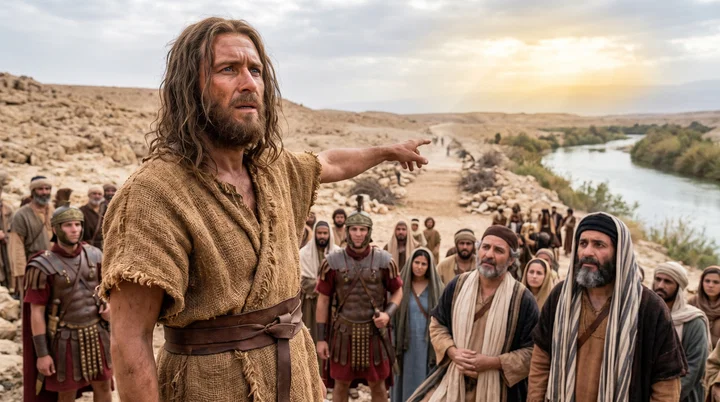
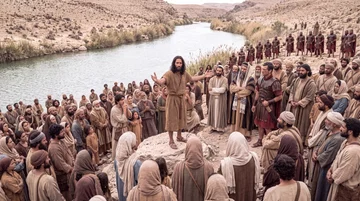
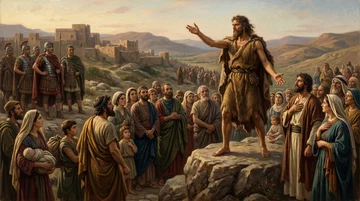
In those days came John the Baptist, preaching in the wilderness of Judaea,
Translations
American King James Version, King James Version
In those days came John the Baptist, preaching in the wilderness of Judaea,
KJV Cambridge Paragraph Bible, Webster Bible
In those days came John the Baptist, preaching in the wilderness of Judea,
And in those days cometh John the Baptist, preaching in the wilderness of Judaea,
And in those days cometh John the Baptist, preaching in the wilderness of Judæa, saying,
And in those days cometh John the Baptist, proclaiming in the wilderness of Judea,
Now in those days comes John the baptist, preaching in the wilderness of Judaea,
Now, in those days, came John the Immerser, proclaiming in the wilderness of Judaea;
Berean Standard Bible, Majority Standard Bible
In those days John the Baptist came, preaching in the wilderness of Judea
In those days, John the Baptizer came, preaching in the wilderness of Judea, saying,
And in those days John the Baptist came preaching in the waste land of Judaea,
And in those dayes, Iohn the Baptist came and preached in the wildernes of Iudea,
Douay-Rheims (Challoner revision)
And in those days cometh John the Baptist preaching in the desert of Judea.
Pictures

Cross-references 20 of 47
- Isaiah 40:3
The voice of him that crieth in the wilderness, Prepare ye the way of the LORD, make straight in the desert a highway for our God.
Foretells John as the wilderness voice preparing the Lord’s way.
- Luke 3:1-18
Now in the fifteenth year of the reign of Tiberius Cæsar, Pontius Pilate being governor of Judæa, and Herod being tetrarch of Galilee, and his brother Philip tetrarch of Ituraea and of the region of Trachonitis, and Lysanias the tetrarch of Abilene,
A parallel account of John’s ministry and message.
- Mark 1:4-5
John did baptize in the wilderness, and preach the baptism of repentance for the remission of sins.
John preaches repentance and baptizes people in the wilderness.
- Luke 1:17
And he shall go before him in the spirit and power of Elias, to turn the hearts of the fathers to the children, and the disobedient to the wisdom of the just; to make ready a people prepared for the Lord.
John goes before the Lord in Elijah’s spirit and power to prepare a people.
- John 1:29
The next day John seeth Jesus coming unto him, and saith, Behold the Lamb of God, which taketh away the sin of the world.
John identifies Jesus as the Lamb of God who takes away the world’s sin.
- Luke 1:80
And the child grew, and waxed strong in spirit, and was in the deserts till the day of his shewing unto Israel.
John grew up in the wilderness before his public appearance.
- Malachi 3:1
Behold, I will send my messenger, and he shall prepare the way before me: and the Lord, whom ye seek, shall suddenly come to his temple, even the messenger of the covenant, whom ye delight in: behold, he shall come, saith the LORD of hosts.
Foretells a messenger preparing the way before the Lord.
- Mark 1:15
And saying, The time is fulfilled, and the kingdom of God is at hand: repent ye, and believe the gospel.
Jesus proclaims the kingdom at hand and calls for repentance, echoing John’s message.
- Matthew 14:3-4
For Herod had laid hold on John, and bound him, and put him in prison for Herodias’ sake, his brother Philip’s wife.
John’s rebuke of Herod’s unlawful marriage led to his imprisonment and execution.
- Matthew 3:7-12
But when he saw many of the Pharisees and Sadducees come to his baptism, he said unto them, O generation of vipers, who hath warned you to flee from the wrath to come?
John rebukes his hearers and warns of judgment for failing to bear good fruit.
- Matthew 3:6
And were baptized of him in Jordan, confessing their sins.
The people respond to John’s preaching by confessing their sins and being baptized in the Jordan.
- John 1:23
He said, I am the voice of one crying in the wilderness, Make straight the way of the Lord, as said the prophet Esaias.
John identifies himself as the voice preparing the Lord’s way.
- Malachi 4:5-6
Behold, I will send you Elijah the prophet before the coming of the great and dreadful day of the LORD:
John’s ministry carries Elijah’s spirit and turns people back before the day of the Lord.
- Matthew 3:11
I indeed baptize you with water unto repentance: but he that cometh after me is mightier than I, whose shoes I am not worthy to bear: he shall baptize you with the Holy Ghost, and with fire:
John describes the mightier One he announces and His baptism with the Holy Spirit.
- 2 Kings 1:8
And they answered him, He was an hairy man, and girt with a girdle of leather about his loins. And he said, It is Elijah the Tishbite.
John’s coarse apparel resembled Elijah’s.
- Mark 6:17-29
For Herod himself had sent forth and laid hold upon John, and bound him in prison for Herodias’ sake, his brother Philip’s wife: for he had married her.
John’s rebuke of Herod leads to his imprisonment and death.
- Luke 3:3
And he came into all the country about Jordan, preaching the baptism of repentance for the remission of sins;
Luke describes John’s preaching of repentance and baptism around the Jordan.
- Acts 19:4
Then said Paul, John verily baptized with the baptism of repentance, saying unto the people, that they should believe on him which should come after him, that is, on Christ Jesus.
John’s baptism called people to repent and believe in the coming Christ.
- Luke 3:19-20
But Herod the tetrarch, being reproved by him for Herodias his brother Philip’s wife, and for all the evils which Herod had done,
John rebukes Herod for his unlawful marriage and is imprisoned.
- Luke 7:29-30
And all the people that heard him, and the publicans, justified God, being baptized with the baptism of John.
Those baptized by John accepted God’s counsel, while the Pharisees and lawyers rejected it.
Commentary
Each commentary is drawn from primary sources: the writings of Ellen G. White and Adventist pioneers and periodicals. Each commentary is separate. Its own words are not a quotation; follow the references to read the source passages.
Ellen G. White
59 sources
In those days marks the beginning of John's public preaching in the wilderness of Judea by the banks of the Jordan at the start of the events leading to his imprisonment.Ms 115, 1909, par. 2–3DA 93DA 97.2 He arose as the messenger sent to announce Christ's coming and prepare the way for the Messiah, coming in the spirit and power of Elijah as the connecting link between the two dispensations.Lt 104, 1902, par. 8–1512MR 99.4–100.1DA 97.12SP 83.32SP 48.3 His proclamation was to repent because the kingdom of heaven, the kingdom of the Messiah, was near, in which none could have part without repentance and thorough conversion.8T 9.1–10.1Lt 199, 1903, par. 1–4Ms 147, 1906, par. 16–20RH Jan 7, 1873 His preaching in the wilderness is the striking, literal fulfillment of Isaiah's prophecy of a voice crying in the wilderness to prepare the way of the Lord.8T 9.1–10.1Ms 147, 1906, par. 16–20Ms 112, 1901, par. 7–9 His work of preparing the way by a clear message of repentance is the model for God's last-day workers to prepare the way for a revival of God's work.8T 9.1–10.1Lt 199, 1903, par. 1–4RH Oct 1, 1903
Time, Place, and Voice
In those days was a time when public affairs were unsettled, with prevailing discord and insurrection stirring the people.2SP 47.3–48.1RH Jan 7, 1873 It was into that unrest that John began his preaching in the wilderness of Judaea, calling to repentance because the kingdom of heaven was near.2SP 47.3–48.1RH Jan 7, 1873
It was also a time when dispersed Jews in all civilized lands were expecting the speedy coming of the Messiah.ST Apr 3, 1884 Many of those Jews came to Jerusalem for the annual feasts, went out to the Jordan, heard from John the proclamation of Christ as the Promised One, and carried those tidings home to all parts of the world.ST Apr 3, 1884AA 281.3 This spreading of the message by Providence prepared the way for the labors of the apostles.ST Apr 3, 1884AA 281.3
The verse marks the beginning of John's public preaching in the wilderness of Judea, by the banks of the Jordan.Ms 115, 1909, par. 2–3ST Apr 3, 1884 It stands at the start of the events leading from his public ministry to his imprisonment.DA 93 It belongs to the longer account of the forerunner in Matthew 3:1-12, where his message calls people to repent because heaven's kingdom is near and his baptism is joined with confession of sins.Ms 115, 1909, par. 2–3DA 97.2
He preached with a loud, open voice, not a whisper.Ms 142, 1906, par. 8–11 His voice was first lifted up from the wilderness like the sound of a trumpet, thrilling the hearts of all who heard with a new and strange power.RH Jan 7, 1873 His purpose was to startle and arouse the people and cause them to tremble because of their great wickedness.RH Jan 7, 1873 There was something in his message that brought the people out to hear him.Ms 142, 1906, par. 8–11
Forerunner Identity and Calling
In those days John the Baptist arose from faithful Israel as the messenger sent to announce Christ's coming and prepare the way for the Messiah, preaching in the wilderness of Judea.Lt 104, 1902, par. 8–1512MR 99.4–100.1DA 97.1RH Sep 16, 1902 His message was a call to repent because heaven's kingdom is near, and he proclaimed the One coming after him as mightier than himself, who baptizes with the Holy Spirit and with fire and separates the wheat from the chaff.Lt 104, 1902, par. 8–15RH Sep 16, 1902 He was the connecting link between the two dispensations, a lesser light who prepared the way for Christ the greater light.2SP 83.3 His inspired preaching challenged confidence in tradition, brought sins to mind, removed superstition and spiritual darkness built up by false teaching over generations, and led people to repentance so they could appreciate Christ's work.2SP 83.3
He came in the spirit and with the power of Elijah, openly reproving the people's sins and denouncing corruptions with plain, pointed and convincing preaching that called them to repentance.2SP 48.3RH Jan 7, 1873 Many showed that repentance by being baptized in the Jordan, and this was the preparatory work for the ministry of Christ.2SP 48.3RH Jan 7, 1873 He was sent ahead of Christ to prepare the way for His mission by that call to repentance, so that Christ's words could find a place in hearts.Ms 13, 1894, par. 13–15 In this he heralded the first advent of Jesus and prepared the way for His coming.EW 192.2–193.1
His special mission as a herald announcing a new era was paralleled later when Wycliffe was raised up in a similar way to announce a new era.GC 93.2 That heralding of the first advent and preparing the way is the pattern for William Miller and those who joined him in proclaiming the second advent of the Son of God.EW 192.2–193.1
Wilderness Training and Lifestyle
The wilderness of Judea was the home where John lived, the place where he received from God the message he was to proclaim, and the ground where he prepared the way for the Coming One.GW92 286.2HSFM 282.4GW 77.1–2 He had chosen its solitude over the luxuries of city life, and there found simplicity and self-denial with a setting to study nature, Scripture, and providence apart from the clamor of the world.CT 445.3–446.1 That separation was his preparation for the calling of Christ's forerunner, away from the nation's leading men and schools so that human customs and doctrines would not shape his mind and he could commune freely with God.STE 50.2–3FE 423.2–3 No earthly school was fit to train him for that great work of preparing the way of the Lord.Ms 131, 1901, par. 3
His study books were the Old Testament Scriptures, God Himself, and the nature God had created, and his food of locusts and wild honey belonged to that wilderness fitting.Ms 131, 1901, par. 3 Customs and practices of men were not to be his education, worldly engrossment was to have no part in forming his character, and God Himself fitted him for preaching.Ms 131, 1901, par. 3 The wilderness of Judea was therefore where he learned the message he was to bear, proving that a worker must become thoroughly established through communion with God and close searching of the Scriptures before regularly teaching others.FE 109.2 From childhood he knew and accepted his mission to prepare people for the Lord, having been taught it by his parents.CT 445.3–446.1RH Dec 17, 1903
The greater part of his life spent in the wilderness kept him apart from corrupt religious influence and helped form habits of simplicity and self-denial.RH Dec 17, 1903 He withdrew in part to guard against temptation and preserve his sense of sin.CT 445.3–446.1 Yet his life there was not idle nor cut off from people, for he observed events and human character so that he could bring heaven's message to hearts, studying nature, revelation, and providence and learning how to reach hearts.CT 445.3–446.1RH Dec 17, 1903 The wilderness also drew his hearers away from the distractions and confusion of city life, where they could attend to the things of God in nature.Ms 86, 1894, par. 8 There God's Holy Spirit gave him a warning message to prepare people for the Messiah's coming and a message of mercy for the world.Ms 86, 1894, par. 8
He lived simply, wearing coarse camel's hair clothing like Elijah, with no outward display in dress to attract or awaken admiration.Lt 145, 1904, par. 1–42SP 75.2–3RH Jan 7, 1873RH Mar 11, 1873 His diet was the locusts and wild honey afforded by the wilderness, with pure water flowing from the hills.Lt 145, 1904, par. 1–42SP 75.2–3RH Mar 11, 1873 His singular dress and appearance reminded people of the ancient seers, so that the opinion prevailed that he was one of the prophets risen from the dead.2SP 47.3–48.1RH Jan 7, 1873
Message and Manner of Preaching
His proclamation was to repent because the kingdom of heaven was near.8T 9.1–10.1Lt 199, 1903, par. 1–4Ms 147, 1906, par. 16–20Lt 145, 1904, par. 1–4Ms 127, 1899, par. 15–20 That kingdom was the kingdom of the Messiah whose coming he announced, in which no one could enjoy God's favor and have part without repentance of sins and thorough conversion, however righteous they claimed to be.RH Jan 7, 1873 He directly announced the Messiah and proclaimed the One coming after him as mightier than himself, who would baptize with the Holy Spirit and fire and separate the wheat from the chaff.Lt 104, 1902, par. 8–15RH Sep 16, 19022SP 126.2–127.2DA 133.2–3
He gathered Jerusalem and Judea and the region round about Jordan to baptism in the Jordan with confession of sins, and his baptism symbolized cleansing from sin.Lt 145, 1904, par. 1–4Ms 115, 1909, par. 2–32SP 47.3–48.1RH Jan 7, 1873Lt 160, 1910, par. 3–6 That baptism showed that even those claiming to be God's chosen people were defiled by sin and needed purification of heart and life to have part in the Messiah's kingdom.DA 104.5 Identifying with Jesus requires forsaking sin and being baptized in the name of the Father, the Son, and the Holy Spirit.Ms 115, 1909, par. 2–3
His preaching was plain, direct, earnest, and powerful, with appeals, warnings, exhortations, and reproofs that stirred consciences, spread his fame, and drew people from towns, cities, and villages.Ms 142, 1906, par. 8–112SP 75.2–3RH Mar 11, 1873RH Jan 7, 1873Lt 48, 1902, par. 3 A power attended his words that none could resist, and he flattered none and received no flattery.RH Jan 7, 1873 He made no compromise with sin, but fearlessly denounced sins and pointed out errors and crimes in simplicity and plainness.RH Jan 7, 1873COL 278.2RH Jan 7, 1873 He openly reproved the people's sins, rebuked the sins of priests and rulers and exposed their refusal to obey the Father's authority and do the appointed work of God's kingdom, urged Herod to reform his life, and warned that those not bearing good fruit would face judgment.2SP 48.3COL 278.2GW92 89.4–90.12SP 80.2RH Jan 7, 1873
His inspired preaching challenged confidence in tradition, brought sins to mind, and removed the superstition and spiritual darkness that false teaching had built up among the Jews over generations, so people could appreciate Christ's work.2SP 83.3 His work was the preparatory work for Christ's ministry, calling people to repent, be converted, and be baptized so Christ's words could find place.Ms 13, 1894, par. 13–15RH Jan 7, 1873SPBC 137.6–7 His reformation called people to confess sins.DA 133.2–3
Prophecy Fulfilled in John
John's preaching in the wilderness of Judea is the striking, literal fulfillment of Isaiah's prophecy of a voice crying in the wilderness to prepare the way of the Lord and make straight a highway for God.8T 9.1–10.1Ms 147, 1906, par. 16–20Ms 112, 1901, par. 7–9Lt 145, 1904, par. 1–4Ms 127, 1899, par. 15–20 In those days he came as the forerunner of Christ, laboring as a Spirit-empowered preacher to prepare the way of the Lord, calling people to repent because the kingdom of heaven was near.8T 9.1–10.1Ms 147, 1906, par. 16–20Lt 145, 1904, par. 1–4Ms 127, 1899, par. 15–20 Jerusalem and Judea and the region round Jordan gathered to him, and many turned from unrighteousness, while the Pharisees and rulers refused his testimony, though genuine repentance would have led them to recognize and accept Christ as the Messiah to whom the sacrificial offerings pointed.Lt 145, 1904, par. 1–4Ms 127, 1899, par. 15–20
He came in fulfillment of his mapped-out mission to turn many of the children of Israel to the Lord their God.Ms 112, 1901, par. 7–9 His coming shows the fulfillment of the Word of God, which all human efforts to prevent are unavailing to stop.Ms 117, 1901, par. 6–8Ms 112, 1901, par. 7–9
The prophecies of the second coming of Christ are being fulfilled just as surely as the prophecies fulfilled in John's coming.Ms 147, 1906, par. 16–20
Hearers Response and Influence
John's voice stirred the people, and multitudes answered it and flocked to the wilderness from towns, cities, and villages, including Jerusalem, Judea, and the region round about Jordan.Lt 145, 1904, par. 1–42SP 47.3–48.12SP 75.2–3RH Jan 7, 1873RH Mar 11, 1873 His earnest appeals, warnings, exhortations, and reproofs drew them with a power none could resist, stirred their consciences, and spread his fame throughout the land.2SP 75.2–3RH Jan 7, 1873RH Mar 11, 1873 They saw in his singular dress and appearance a resemblance to the ancient seers, and the opinion prevailed that he was one of the prophets risen from the dead.2SP 47.3–48.1RH Jan 7, 1873 Even kings and rulers came to the wilderness and were interested and deeply convicted as he fearlessly pointed out their particular sins and read their purposes and hearts.RH Jan 7, 1873
Many turned from unrighteousness, repented, confessed their sins, and were baptized by him in the Jordan.Ms 127, 1899, par. 15–202SP 47.3–48.1RH Jan 7, 1873Lt 160, 1910, par. 3–6COL 278.2 They came with common consent repenting and confessing, and were willing to accept what he taught as necessary for an inheritance in that kingdom.RH Jan 7, 1873Lt 160, 1910, par. 3–6 Yet the Pharisees and rulers refused his testimony, though genuine repentance would have led them to recognize and accept Christ as the Messiah to whom the sacrificial offerings pointed.Ms 127, 1899, par. 15–20 Those who rejected the truth he proclaimed were left enshrouded in deeper darkness and thus made fully ready to turn from the evidences that Jesus was the true Messiah.2SP 48.3RH Jan 7, 1873
His work came in an unexpected way that did not glorify the Jews as a nation as they expected, showing how the Holy Spirit works through a human agent God chooses to reprove sin without asking men how it shall operate.SPBC 137.6–7 Many Jews who heard him at the Jordan learned that Christ was the Promised One, and the preaching stirred public excitement as the expected time of the Messiah's advent approached.ST Apr 3, 1884SLP 129.1DA 133.2–3 Dispersed Jews in all civilized lands were expecting the speedy coming of the Messiah, and many who came to Jerusalem for the annual feasts went out to hear John and then carried those tidings home to all parts of the world.ST Apr 3, 1884AA 281.3 This spreading of the message was Providence preparing the way for the labors of the apostles and for Paul's work.ST Apr 3, 1884SLP 129.1AA 281.3
Pattern for Last Days
John's work of preparing the way of the Lord by a clear call to repentance is the pattern for God's workers in the last days, who are likewise to bear a plain message of repentance and prepare the way for a revival of God's work.8T 9.1–10.1Lt 199, 1903, par. 1–4RH Oct 1, 1903 He preached in the wilderness of Judea that people should repent because the kingdom of heaven was near, in fulfillment of Isaiah's prophecy of a voice preparing the Lord's way.8T 9.1–10.1Lt 199, 1903, par. 1–4Ms 147, 1906, par. 16–20 That same message of repentance is the message for today, for the prophecies of the second coming of Christ are being fulfilled just as surely as those fulfilled in John's coming.Ms 147, 1906, par. 16–20 Every person now faces a life-and-death decision to accept Christ's infinite sacrifice and believe in Him for everlasting life rather than reject Him and refuse to come for life.Ms 147, 1906, par. 16–20
Men moved by the Holy Spirit are now to meet crowds who have never heard the truth with the same straight message and call to repentance.Lt 145, 1904, par. 1–4 This applies even to tourists visiting places like San Diego and Los Angeles, as the last message of mercy to a perishing world, in contrast to false prophets and false doctrines that lead men and women in forbidden paths.Lt 145, 1904, par. 1–4 His preaching in the wilderness is the model for an urgent warning message in the present crisis, calling people to heed the truth and its urgent issues and prepare for what is coming rather than be diverted by human influence.RH Aug 9, 1906Ms 61, 1906, par. 7–9Ms 61a, 1906, par. 30
Like his plain, direct preaching that told the truth of the situation with a strong impression that cut to hearts, the message now is no smooth message but tells the truth.Ms 142, 1906, par. 8–11Lt 48, 1902, par. 3 Truth is to be presented solemnly, without worldly display, to awaken people from self-indulgence and sin, distinct from fanciful preaching designed merely to attract a crowd.Lt 48, 1902, par. 3Lt 79, 1893, par. 8–9 His plain message from the Word calls people to serve God with full purpose of a renewed heart, sanctified and made holy by the cleansing blood of Jesus Christ.21MR 421.3–5 It calls them to live in this world the life that prepares for the future life which measures with the life of God, rather than turning aside to side issues and questions brought in as all-important.21MR 421.3–5
His message became more and more pointed even at the cost of life, as an example of pointed warning so people will not be deceived.MWISDAP 34.2MOPP 14.3–4STB 55.4 His heralding of the first advent and preparing the way for Christ's coming is the pattern for William Miller and those who joined him in proclaiming the second advent of the Son of God.EW 192.2–193.1 His ministry exemplifies the sacred ministry of preaching God's Word.Ms 170, 1897, par. 14–16 His self-denial is a pattern for those preparing for the last days to control desires, reject baseness and worldly ambition, and live by a higher sense of mission from God, and his call summons those who have backslidden to turn from backslidings.Lt 272, 1906, par. 5–8Lt 36, 1888, par. 14
Sources
Pioneers and periodicals
130 sources
In those days John the Baptist came preaching in the wilderness of Judea, with the time, place, person and work all identified as a definite historical event.RH Mar 5, 1867 That wilderness was a wild, thinly inhabited hill country west of the Dead Sea and the lower Jordan, where he preached by the river and crowds gathered to him.ST Jan 18, 1899ST Jul 23, 1894RH Feb 11, 1873 He came as God's appointed herald sent before the Anointed One to announce His coming and make His people ready to receive Him.ST Mar 13, 1907ST Mar 16, 1904RH Oct 19, 1916 His preaching proclaimed that the kingdom of heaven was near and called every class to repent, turn from transgression of God's law, and be prepared.ST Dec 30, 1903ST Mar 13, 1907ST Nov 17, 1881 His coming so preaching fulfilled Isaiah's prophecy of a voice crying in the wilderness to prepare the way of the Lord, and stands as the pattern for God's last-day workers who call to repent and prepare for Christ's return.RH Oct 1, 1903GSAM 106.4–107.1RH May 30, 1854ST Oct 15, 1902
Time and Wilderness Setting
Matthew 3:1 records a definite historical event with its time, place, person, and action identified, and with the following verses it gives both the message proclaimed and the response it received.RH Mar 5, 1867 The wilderness of Judea where John the Baptist came preaching was a wild, mountainous, thinly inhabited region west of the Dead Sea and the lower Jordan, near the Jordan River, not a desert in the modern sense.ST Jan 18, 1899ST Jul 23, 1894 He preached by the river and on its banks, where crowds gathered, with people coming out from Jerusalem to be baptized in the Jordan.ST Apr 3, 1884RH Feb 11, 1873RH Oct 23, 1866
He began this preaching in the spring of A.D. 27, about six months before the baptism of Jesus.ST Jan 18, 1899ST Dec 30, 1903ST Dec 30, 1903 While Jesus was still with His parents in Nazareth, John began in the wilderness, and Jesus left Nazareth and departed when He heard that John was baptizing.ST Jan 18, 1899ST Aug 16, 1910 John began six months before Jesus entered His ministry and was anointed as Messiah at His baptism in A.D. 27.RH Oct 27, 1904
His appearance ended about four hundred years without a prophetic voice and came shortly before Jesus began His public ministry.RH Apr 15, 1909 It came in the fifteenth year of Tiberius Caesar, when the word of God came to John in the wilderness.ST Jan 17, 1906 Public affairs were then unsettled, with prevailing discord and insurrection.RH Jan 7, 1873
The word for day in the verse denotes a period of twenty-four hours including both night and daylight.RH Dec 12, 1871 The title Baptist can legitimately be rendered Immerser, because the Greek word for baptizing can mean immersing.ST Mar 23, 1882ST Nov 13, 1879 The literal wilderness also faintly typified a spiritual condition, the doubt and darkness in which rabbinic tradition had obscured truth, picturing Judea's spiritual barrenness and famine in which the people were famishing and dying.ST Mar 30, 1915ST That hiding of truth by tradition is compared with the Middle Ages, when tradition hid spiritual truth.ST Mar 30, 1915
The wilderness was also the place of solitude with God, where John withdrew from corrupting influences, was alone with God, and prepared for his life's work.ST Nov 21, 1892ST Apr 24, 1893 That his preaching there was a public fact with known numbers baptized meant it could easily have been disproved and exposed if untrue.RH Feb 11, 1862 No ancient Jewish or heathen writer ever denied or contradicted it, though enemies used every means to put Christianity down and would certainly have contradicted it if able, and their leaving it uncontradicted testifies in its behalf and proves the New Testament narratives true as matters of fact.RH Feb 11, 1862
John the Appointed Forerunner
John was God's appointed messenger, herald and forerunner sent before the Anointed One to announce His coming, prepare the way of the Lord, and call the chosen people to be ready to receive Him.ST Mar 13, 1907ST Mar 16, 1904ST Dec 11, 1879RH Jan 19, 1905ST Jul 25, 1911 He was a man of the hour specially called and fitted for that place in God's work, one of the men the Lord has always raised up both in the church and in the world to fill a certain important place in His great plan, including as a young man.RH Oct 19, 1916 As Jesus' first advent approached he was sent ahead with a special message for that time, the human messenger chosen to prepare the people of Judea for the coming Messiah by delivering God's message.RH Jan 19, 1905ST Jul 25, 1911 His preaching and baptism prepared people for the Saviour's coming, announcing that Christ was about to be revealed and calling every class to repent of sins so they would be ready to receive Him, for the kingdom of heaven was near.ST Mar 13, 1907ST Mar 16, 1904ST Dec 11, 1879
He came in the spirit and with the power of Elijah to do Elijah's work of restoration in a different setting, preparing the Jews for Christ's advent, bearing witness to Christ, and gathering many disciples who treated him with respect.RH Nov 18, 1862ST Aug 28, 1901 His wilderness preaching fulfilled the prophecy that a messenger would prepare the way for the Messiah and prepare the people for His coming.RH Nov 18, 1862 He was the herald of Christ's first coming, the literal fulfillment of Isaiah's prophecy of a voice crying in the wilderness to prepare the Lord's way, but he was not Elijah himself.ST Oct 15, 1902
The circumstances of his birth had become known throughout Judea's hill country, drawing people to him and preparing them to receive him as a prophet from God when he preached repentance because the kingdom of heaven was near, though their joy in his light lasted only for a season. He was the son of Zacharias, a Jewish priest, and Elizabeth his mother, called the Baptist because he baptized people.ST Jun 12, 1907 Zacharias from studying Daniel's prophecies understood that the foretold time for the Messiah's appearance was near and prayed for His coming, whereupon an angel told him he would have a son named John who would go before the Messiah to prepare His way.ST Jun 12, 1907
His parents taught him of his mission from childhood, and the greater part of his life in the wilderness kept him apart from corrupt religious influence and formed habits of simplicity and self-denial.RH Dec 17, 1903 The wilderness was also the setting where he withdrew from corrupting social influences, made his home, received from God the message to prepare the way for the coming One, and prepared himself through hardship and prayer for his work of calling people to repentance and a holier life.RH Jan 9, 1908RH Jul 2, 1908 It was not idle isolation, for he studied nature, revelation and providence, watched events and people, and learned how to reach hearts with heaven's message.RH Dec 17, 1903
He lived on locusts and wild honey afforded by the wilderness with pure water flowing from the hills, and dressed plainly like Elijah and the ancient seers in coarseness of apparel and plainness of diet, with no outward display in dress to attract admiration or awaken admiration.ST Mar 8, 1883RH Mar 11, 1873 His earnest appeals, warnings, reproofs, denunciations, fervent exhortations and courageous warnings stirred consciences and aroused intense interest everywhere, so that people flocked from towns, cities and villages to hear preaching unlike anything they had heard before.ST Mar 8, 1883RH Mar 11, 1873 His manner of life and preaching did not conform to the world, and this calling had God's approval, yet his particular dress or speech is not made a pattern others must imitate.
Led by the Spirit and sent with a definite message, he came from the deserts of Jordan unbidden by men after solitude with God rather than time among men studying men, with his heart open to light.ST Dec 30, 1903ST Oct 29, 1902ST Dec 30, 1903 Knowing God gave him knowledge of men's utter weakness and boldness before rulers, so that he went even to King Herod's court, discerned that many hearers were in character offspring of vipers, and swayed multitudes with the power of a living message from God without the pretensions of the schools and without the soft raiment and effeminate manners of courts.ST Oct 29, 1902 People came from Jerusalem and elsewhere to hear him, drawn by the power of his preaching and by the Spirit rather than by any device to attract an audience or by the preacher's efforts to attract a crowd, showing that a clear pointed message from God can stir people.ST Dec 30, 1903RH Jun 2, 1903ST Dec 30, 1903
Trained with God in the wilderness of Judaea, he was prepared to challenge even great evil, as when he came to confront King Herod.RH Dec 17, 1903 Filled with the Holy Ghost even from his mother's womb, he grew and waxed strong in spirit, sent from God to bear witness of the Light that all men through Him might believe, though he was not that Light himself. His preaching in the wilderness was witnessing that called the people to repent of sins and thus prepare the way of the Lord that He might be properly received, pointing to Jesus as the Lamb of God which taketh away the sin of the world and as the Son of God upon whom he saw the Spirit descending from heaven like a dove and abiding.
He was a prophet and preacher of righteousness whose powerful message draws and holds the attention of multitudes, a blameless prophet of God whose powerful discourses drew people from long distances.ST Dec 15, 1887 He was a good man, a great reformer and necessary leader whose ministry of heralding Christ's first advent was a necessary work of leadership in preparing for Christ.ST Jun 12, 1907RH Jun 25, 1914 His life and mission begins the account of Christ's first advent, introducing the first advent of Christ and leading into Christ's life and mission as shown in His miracles and teachings and the nature and necessity of His life-work.
He labored as one of the greatest workers for God, having the spirit of labor in unfavorable circumstances and laboring against seeming impossibility, raising his warning voice in the solitary wilderness where little audience could be expected.RH Aug 5, 1873 Yet he spoke words so full of power that all Jerusalem and Judea came to hear him, his preaching called people to repentance and conversion urging them to turn from sin to God, many were moved by it, and he remained faithful unto death.ST Jan 25, 1910RH Aug 5, 1873 Before Jesus was publicly manifested as Messiah at His baptism, John preached in the wilderness announcing that the long-promised One was about to appear and calling the people to repent and prepare.ST Sep 2, 1875 His message called people to repentance and proclaimed the heavenly kingdom near, with people coming out from Jerusalem to be baptized in the Jordan, marking the setting for Jesus' baptism and the beginning of His public appearance, for while John was preaching the Messiah came and was baptized by him.ST Mar 11, 1886RH Feb 11, 1873
His ministry serves as a model for a forerunner, as John Huss was called the John Baptist of the Reformation because he preceded Luther by about a century and anticipated the Reformation.ST May 6, 1875 He is an example of a messenger God sent to bring light and life and counter the work of evil, and of a religious witness who stood apart from the majority when the majority was generally wrong in matters of religion.RH Sep 10, 1872ST Mar 15, 1910
Kingdom and Repentance Message
John came preaching that the kingdom of heaven, the heavenly kingdom, the kingdom of God, the kingdom of the Messiah whose coming he announced, was near, and calling people of every class to repent, turn from sin, and prepare.ST Dec 30, 1903ST Mar 13, 1907ST Nov 17, 1881RH Feb 11, 1873ST Nov 15, 1905 At hand means approaching or drawing near, not that the kingdom of grace was then being instituted nor that the eternal immortal kingdom of glory was about to be established at Christ's first advent.RH Feb 10, 1874 The kingdom of heaven is either God's plan of salvation by grace, established soon after the Fall and soon to be manifested in power through Christ's ministry and the apostles, or the future reward of the saved.ST Apr 19, 1877ST Jul 9, 1874 The divine power and grace soon to be shown through Christ and the apostles was what was approaching, while the kingdom of grace had already been instituted after the fall and the immortal kingdom of glory was not established then.RH Feb 10, 1874ST Apr 19, 1877ST Jul 9, 1874
The call to repent is a call to turn from sin, which is transgression of God's law, and therefore includes reform in obedience to that law, thorough conversion, believing in the coming Christ, receiving forgiveness through Him, and showing faith by baptism representing Christ's death, burial, and resurrection and the believer's death to sin and new life.RH Jan 7, 1873ST Dec 11, 1879ST Nov 1, 1905 No one, however righteous he claimed to be, could enjoy God's favor and have part in that kingdom of the Messiah without repentance of sins and thorough conversion.RH Jan 7, 1873 The prophets had preached the gospel and called to repentance before John, and Christ later announced it fully to His disciples.ST Aug 26, 1897
His message warned that the ax is laid to the root of the trees so that every tree without good fruit is cut down and cast into fire, contrasting his own baptism with water unto repentance with the mightier One coming after him who will baptize with the Holy Ghost and with fire, purge His floor, gather wheat into the garner, and burn chaff with unquenchable fire.RH Sep 16, 1902ST Mar 11, 1886 He urged the Jews to practice righteousness toward one another and piety toward God and to come to baptism in water.RH Sep 5, 1865 His baptism occurred while he and those baptized still kept the ceremonial law, within the same covenant under which Jews had baptized heathen proselytes, showing baptism could be repeated under that dispensation.RH Jan 24, 1856
His preaching was a restoration of truth that exalted God and brought human pride low: he called people back to God's law, urged faith in the coming Christ, rejected trust in man, and made truth a path of holiness on which people could walk in God's light and be saved.ST Aug 28, 1901 He prophesied the kingdom as a principal motive to move saint and sinner to holy life, repentance, and faith, showing the whole Word is for instruction, reproof, and correction and that prophecies give the strongest evidences of the Bible's divinity and the strongest motives for holy living.RH Apr 15, 1873 He preached the everlasting gospel in a new setting to a Jewish church sunk in formalism and tradition, confronting apostasy and impending judgment, calling for true repentance, announcing the Deliverer present among them, and pointing to faith in Jesus of Nazareth as the world's Saviour and each person's personal Saviour. Human life and glory are frail and passing, while God's word and glory endure and are supreme.
His preaching was a direct call to repentance, not a softened promise that salvation can safely be put off.ST Jul 22, 1886 It was not a call to overthrow political or physical oppression by force, but taught that necessary reforms would follow from repentance and preparation for the kingdom.ST Nov 15, 1905 His voice was first lifted from the wilderness like a trumpet with new strange power to startle, arouse, and cause trembling for great wickedness, fearlessly denouncing sins and pointing out errors and crimes in simplicity and plainness, flattering none and receiving no flattery, with a power none could resist.RH Jan 7, 1873RH Mar 11, 1873 He hurled the thunders of truth especially against crimes of the professed church and those in high places, with sharpest reproof for hypocrites in Moses' seat, expounders of the law, scribes, Pharisees, priests and Levites whitewashed with sanctity, calling leaders a generation of vipers and rebuking King Herod, which gave great offense and cost him his life.RH Jan 7, 1873ST Sep 20, 1883RH Nov 11, 1858
Prophecy Fulfilled and Sign
John's coming preaching in the wilderness was the fulfillment of Isaiah's prophecy of a voice crying in the wilderness to prepare the way of the Lord and make His way ready, together with what Malachi had spoken.GSAM 106.4–107.1RH May 30, 1854ST Oct 15, 1902RH Sep 9, 1902ST Jan 17, 1906 He was the foretold messenger and herald of Christ's first coming who appeared in the wilderness of Judea, in the fifteenth year of Tiberius Caesar when the word of God came to him there, preaching repentance and baptism for forgiveness of sins and announcing that the kingdom of heaven was near.ST Oct 15, 1902RH Sep 9, 1902ST Jan 17, 1906ST Mar 3, 1909 Those who accepted that fulfillment were approved, while those who rejected it rejected the counsel of God.ST Mar 11, 1886
His wilderness preaching fulfilled the prophecy that a messenger would prepare the way for the Messiah and prepare the people for His coming.RH Nov 18, 1862RH Apr 10, 1916 He was sent to prepare the Jews for Christ's advent, bore witness to Christ, gathered many disciples and was treated with respect by his countrymen, carrying out his work in the spirit of Elijah though he was not Elijah himself.RH Nov 18, 1862ST Oct 15, 1902RH Apr 10, 1916 His preaching prepared God's people for the close of the Jewish dispensation and the opening of a new one, in which Christ's sacrifice would bring the sacrificial types to an end and access to God would be through Christ's ministry as High Priest in the heavenly sanctuary.RH May 30, 1854
He knew his work and that the time for fulfillment had come.ST Mar 11, 1886 He called himself the voice of one crying in the wilderness to make straight the way of the Lord, and he and his message were living evidence that the Messiah was at hand, so that while he was preaching the Messiah came and was baptized by him.ST Mar 11, 1886 He knew his mission and that he was fulfilling prophecy.
His ministry as promised forerunner was a public sign of Christ's first advent, witnessed when people from Judea and Jerusalem went out to him to be baptized.ST Jan 9, 1879RH Jan 11, 1870RH Apr 17, 1855ST Jan 8, 1880RH Aug 11, 1853 His preaching in the wilderness fulfilled the sign of the voice calling people to prepare the Lord's way, and it was evidence given to the Jews that Jesus was the true Messiah.RH Jan 11, 1870RH Apr 17, 1855RH Mar 17, 1859 His work was confined to Judea and lasted six months.GSAM 106.4–107.1 At that time dispersed Jews in all civilized lands were expecting the speedy coming of the Messiah, and many who came to Jerusalem for the annual feasts went out to hear John proclaim Christ as the Promised One and carried those tidings home to all parts of the world, which was Providence preparing the way for the labors of the apostles.ST Apr 3, 1884
Hearing and Rejecting John
Multitudes answered his voice and flocked to the wilderness from towns, cities, villages, Jerusalem, Judea, and the regions around the Jordan, seeing in his singular dress and appearance a resemblance to the ancient seers, with the opinion prevailing that he was one of the prophets risen from the dead.RH Jan 7, 1873 The circumstances of his birth had become known throughout Judea's hill country, drawing people to him and preparing them to receive him as a prophet from God when he preached repentance because the kingdom of heaven was near, yet their joy in the light he brought lasted only for a season.
With common consent the people came repenting and confessing their sins and were baptized in Jordan.RH Jan 7, 1873 Kings and rulers also came to the wilderness and were interested and deeply convicted as he fearlessly pointed out their particular sins and read their purposes and hearts.RH Jan 7, 1873 Even proud and royal Herod humbled himself and listened reverently alongside people of every rank.ST Feb 7, 1911
The common people received him as a prophet of God, but the religious leaders rejected him, claiming he was not from God and had a devil.RH Mar 31, 1863 The Pharisees and scribes rejected God's counsel by refusing his baptism, while those who accepted his message acknowledged God's justice and were baptized. Many were convicted by his plain truths and brought to repentance with baptism as evidence of it, but those who rejected that light became enshrouded in deeper darkness and were thus fully prepared to turn from the evidences that Jesus was the true Messiah.RH Jan 7, 1873 His ministry is therefore the basis for the later judgment that the religious leaders rejected a messenger who came in the way of righteousness, while tax collectors and sinners believed him.ST Oct 11, 1899
His preaching convicted Herod Antipas of sin for taking Herodias, daughter of Aretas, to replace his lawful wife, challenging him over taking his lawful wife's place and over taking his brother's wife.ST Feb 7, 1911ST Feb 7, 1911 John reproved Herod for marrying his brother Philip's wife, and Herod's response led to John losing his life.RH Mar 10, 1868 Those who accepted John's message were prepared to accept the Messiah he announced before Christ appeared.ST Mar 11, 1886 Yet comparatively few who heard it were truly prepared by it to accept Christ when He came, and few believed that Jesus was the Messiah though many were zealous in religion, so that those who rejected the warning were not prepared for death in the scriptural sense.RH Dec 23, 1909RH Apr 29, 1875
His message stirred multitudes with divided response: some received it gladly and were blessed, while the religious leaders and the masses generally rejected it.RH Nov 19, 1908 The preaching was given to ripen the harvest, to make ready those who would receive it, and to leave the impenitent without excuse, and the masses did not receive it, but some did receive it and were saved by it.RH Oct 29, 1908 The verse means his preaching centered on the offensive word repent, which stumbled his hearers.RH Nov 11, 1858 That same offensive word remains the stone of stumbling over which corrupt churches, false prophets, lying teachers, thoughtless nations and reckless rulers stumble and fall when reprovers are raised up to preach repent, turn from idolatrous pagan rites, repair the breach, restore the ancient paths, and prepare for the coming of the Lord.ST Sep 20, 1883RH Nov 11, 1858
Pattern for Final Warning
John's preaching was a time message based on prophecy announcing that the kingdom of heaven was near, and from his time the kingdom of God began to be preached, marking the point from which the gospel message began to be proclaimed for Christ and the apostles to carry to the nations.ST Nov 1, 1905ST Sep 20, 1899ST Aug 13, 1874RH Sep 29, 1874 While he preached, that message was present truth that had to be heeded, and those who rejected or neglected it forfeited favor and could not do so with impunity.ST Nov 4, 1880RH Jul 7, 1874ST Feb 22, 1877ST Nov 4, 1880RH Jun 10, 1873 Their rejection showed they did not truly love God or His truth and were not walking in the light, and hearers could not safely postpone belief until they saw the Messiah.ST Nov 4, 1880RH Jun 10, 1873 Merely receiving baptism or claiming to love God and merely professing was no substitute for believing and obeying God's message, for hearing required response.ST Feb 22, 1877ST Nov 4, 1880
Its importance belonged to that time and would have been out of place before the Messiah was near or after His coming.RH Jul 7, 1874 Likewise God sends special saving messages for each generation, as with Noah and Jonah and the Reformers, leading to the great threefold message as God's remedy for present ills.ST May 13, 1903ST Mar 11, 1903 In the years before Christ appeared, preaching that the Messiah was soon coming was present truth for that time.STST Jan 8, 1880 Receiving the message meant life while rejecting it meant death, and as with other divine judgments those who heeded could be saved while those who rejected faced destruction.STST Oct 7, 1875
His preaching repentance in the wilderness and preparing the way of the Lord is the pattern for God's last-day workers, who are to bear a clear message calling people to repent and prepare for a revival of God's work, for Christ's return, and for the end of time.RH Oct 1, 1903 His proclamation that heralded Christ's coming precedes the end as his preaching preceded Christ's ministry. As forerunner of the first advent with a definite message, he is a type of those who proclaim the second coming.ST Dec 5, 1911RH Apr 8, 1909RH Dec 20, 1870 His clear understanding of his work shows God's people must understand their mission to focus effort, and his warning before a great event shows God in love warns before judgments as with the Flood and Sodom, sending warning before manifesting love in Christ so no judgment finds men unwarned.RH Apr 8, 1909RH Dec 20, 1870RH Nov 6, 1916
Like Noah warning the antediluvians, his preaching was given to ripen the harvest of the earth, to make ready those who would receive it, and to leave the impenitent without excuse.RH Oct 29, 1908 The masses did not receive it, but some did and were saved by it, and like Noah's message it is a warning to its generation and a forerunner to the great threefold message now to be given worldwide, which will also be rejected by the masses yet save some who receive it.RH Oct 29, 1908ST Jul 20, 1904 God did not begin the first-advent work with the great and mighty, with institutions of learning, or with the popular ministry, but with a man of comparative obscurity outside them when the people had sunk into dead formalism.ST Dec 17, 1912RH Feb 19, 1861 The popular current was against him and the professed church opposed him, yet God sends timely messages through humble, teachable, truth-seeking servants rather than relying on the great, learned, or popular.ST Dec 17, 1912RH Feb 19, 1861 So the first angel's message rose through Miller and the third through humble instruments that an exalted people will not readily acknowledge, for he that humbles himself shall be exalted and the self-conceited shall be abased.RH Feb 19, 1861
With his heart open to the light of God he stood against the strong current of religious sentiment, rejected the traditional views of the recognized leaders ambitious for place and power, and became the voice to proclaim present truth, sacrificing himself on the altar of zeal for the Messiah's cause.RH Jun 18, 1908 Despised and rejected of men, he accomplished the work required to fulfill the divine program and obtained heaven's approval, and his self-effacement and exaltation of God and His truth, with faith in the fulfillment of prophecy, is the same condition and opportunity again offered now at the same cost.RH Jun 18, 1908 His work proves truth is not decided by custom or by the majority even when the majority are professed Christians, and reverence for God is measured only by obedience and not by profession.ST Nov 5, 1885 Like Elijah, Ezekiel, and Isaiah before him, he was sent with warning to God's own people when they were wrong though they would not listen, and stands as one example of a religious witness who stood apart when the majority was wrong in religion.ST Nov 5, 1885RH Sep 10, 1872
His example shows a clear, pointed message from God can stir people and draw attention.RH Jun 2, 1903 His wilderness call to repentance stirred his generation, paralleling the latter-day message which began obscurely and is now reaching people of many ranks and nations.RH Jul 5, 1906 His wilderness preaching drawing thousands away from the usual cares of life exemplifies people gathering to worship God, with crowds assembling on the riverbanks.ST Oct 13, 1881 He is the model for a warning message needed in present crisis calling people to heed truth and its urgent issues rather than be diverted by human influence.RH Aug 9, 1906 As one who confronted people with sins and called to repent, his work is applied to the need for one who will expose harmful habits and lead toward healing, since the Lamb of God saves from both spiritual and physical harm.ST Mar 1, 1899 His preaching met spiritual despair after understanding of the gospel had been distorted, to restore the true gospel and through turning to God and His provision for sin restore hope, joy, and power to resist sin.RH Jun 29, 1905
His message was first delivered to the Jews, God's recognized people, though salvation was for all.ST Jan 3, 1884 His cry on the banks of the Jordan that the Lord is coming and the people are not ready is needed now for all communities as an awakening, reviving message connecting religion with life and demonstrating God's power to save.ST Sep 19, 1900 His first-advent message models preaching Christ's near coming as a timely worldwide call to prepare to meet Him, not a sectarian effort to build a party.RH May 19, 1874 God raised him when the appointed time had come and His purpose could no longer be deferred, stirring Jerusalem, Judea, and the regions around the Jordan to fulfill Isaiah's prophecy of a voice calling in the wilderness to prepare the Lord's way.RH Aug 11, 1903RH Jun 10, 1873 When delivered, his wilderness proclamation called out a people who took a new stand, and God will likewise raise messengers to give warning about the approaching day of the Lord.RH Jun 10, 1873RH Feb 21, 1871
He bore the everlasting gospel in a new setting, calling a Jewish church sunk in formalism and tradition to repentance and living faith in the soon-appearing Saviour, for human life and glory are frail while God's word and glory endure. His message was a special warning and call suited to the needs of that time, just as God sends a special message in the last days, and his ministry was a necessary work of leadership in preparing for Christ.RH Oct 12, 1916RH Jun 25, 1914 His work stands among the great reform movements studied in light of Revelation 14. Those who hold that one must purify himself before telling good news appeal to his life, which is presented as a fault because it delays sharing that message.RH Jul 27, 1905 God raised him to go before Christ with a solemn message announcing the Messiah near, to warn the people and prepare them for the first advent, giving the Jews notice and opportunity to prepare, showing God gives notice and opportunity before momentous events.ST Mar 8, 1883ST Sep 19, 1878RH Apr 8, 1909RH Jan 1, 1867RH Aug 27, 1872
He preached a message from heaven as Christ's forerunner, preaching repentance and baptism for remission of sins to prepare the Lord's way.RH Nov 24, 1868RH Mar 10, 1868 He reproved Herod for marrying his brother Philip's wife, and Herod's response led to John losing his life.RH Mar 10, 1868 His work reproduced Elijah's mission in a different setting, confronting apostasy including Pharisaical formalism and Sadducean liberalism, warning of approaching judgment, and calling to repent and obey to be prepared to receive Christ.ST Aug 7, 1901 His ministry serves as a pattern for God's servants in the last days who call to faithfulness and prepare for Christ's coming.ST Aug 7, 1901 Knowing his mission and that he fulfilled prophecy, his warning provides a pattern for a special warning before the second coming whose messengers will know from inspired evidence they give the final warning to fallen humanity.
His preaching repentance before the first advent, like Noah calling loudly before the deluge, hurled thunders of truth especially against crimes of the professed church and those in high places, with sharpest reproof for hypocrites in Moses' seat, expounders of the law, scribes, Pharisees, priests and Levites whitewashed with sanctity, calling leaders a generation of vipers and rebuking King Herod at cost of his life.ST Sep 20, 1883 This illustrates God's pattern that whenever the church departs from purity and becomes corrupt He raises faithful reprovers beginning with elevated sinners, and when such reproof is rejected judgments immediately follow.ST Sep 20, 1883 The offensive word repent becomes a stone of stumbling over which corrupt churches, false prophets, lying teachers, nations and rulers stumble and fall when reprovers call to turn from idolatrous rites, repair the breach, restore ancient paths, and prepare for the Lord.ST Sep 20, 1883 His preaching by the river drew every social group, with people coming from Jerusalem to be baptized in the Jordan, marking the setting for Jesus' baptism and public appearance and announcing the heavenly kingdom near.RH Feb 11, 1873RH Oct 23, 1866
His opening of the first-advent work sets the pattern for understanding present mission through clear comprehension of the work before God's people.RH Dec 20, 1870 His announcement of the Saviour stirred multitudes, some receiving gladly and being blessed while leaders and masses generally rejected it, serving as a pattern for rejection of the Advent message.RH Nov 19, 1908 His call to repentance and conversion turning from sin to God moved many, and he remained faithful unto death.ST Jan 25, 1910 Raising his warning voice in solitary wilderness where little audience could be expected, yet speaking with such power that all Jerusalem and Judea came, he shows labor in unfavorable circumstances against seeming impossibility and the condition for receiving present truth through holiness and self-denial.ST Jan 25, 1910RH Aug 5, 1873 Preaching truth as he did can appear singular like an unusual backwoods orator, yet refusing such warning has consequence.ST Nov 4, 1880RH Nov 7, 1865
Sources