Translations
If you know these things, happy are you if you do them.
King James Version, KJV Cambridge Paragraph Bible, Webster Bible
If ye know these things, happy are ye if ye do them.
Revised Version, American Standard Version, Darby Translation
If ye know these things, blessed are ye if ye do them.
if these things ye have known, happy are ye, if ye may do them;
If, these things, ye know, happy, are ye, if ye be doing them.
Berean Standard Bible, Majority Standard Bible
If you know these things, you will be blessed if you do them.
If you know these things, blessed are you if you do them.
If these things are clear to you, happy are you if you do them.
If ye know these things, blessed are ye, if ye doe them.
Douay-Rheims (Challoner revision)
If you know these things, you shall be blessed if you do them.
Pictures

Cross-references 20 of 32
- John 13:8
Peter saith unto him, Thou shalt never wash my feet. Jesus answered him, If I wash thee not, thou hast no part with me.
Jesus teaches that receiving his cleansing gives a person a part with him.
- 1 Timothy 5:10
Well reported of for good works; if she have brought up children, if she have lodged strangers, if she have washed the saints’ feet, if she have relieved the afflicted, if she have diligently followed every good work.
Foot washing is named among acts of service practiced in the early church.
- John 13:4-5
He riseth from supper, and laid aside his garments; and took a towel, and girded himself.
Jesus washes the disciples’ feet as an example for them to follow.
- James 1:22
But be ye doers of the word, and not hearers only, deceiving your own selves.
Hearing the Word must lead to doing it.
- Revelation 22:14
Blessed are they that do his commandments, that they may have right to the tree of life, and may enter in through the gates into the city.
Both texts link blessedness with doing God’s commandments.
- Matthew 7:21
Not every one that saith unto me, Lord, Lord, shall enter into the kingdom of heaven; but he that doeth the will of my Father which is in heaven.
Both connect entering God's kingdom with doing the Father's will, not merely saying the right words.
- Luke 6:46
And why call ye me, Lord, Lord, and do not the things which I say?
Calling Christ Lord is joined to doing what he says.
- John 14:21
He that hath my commandments, and keepeth them, he it is that loveth me: and he that loveth me shall be loved of my Father, and I will love him, and will manifest myself to him.
Keeping Jesus’ commandments shows love for him.
- John 15:10
If ye keep my commandments, ye shall abide in my love; even as I have kept my Father’s commandments, and abide in his love.
Keeping Christ’s commandments means abiding in his love.
- 1 John 2:3
And hereby we do know that we know him, if we keep his commandments.
Keeping God’s commandments shows that one knows God.
- John 13:7
Jesus answered and said unto him, What I do thou knowest not now; but thou shalt know hereafter.
Christ says the disciples will understand the foot-washing later.
- 1 Peter 4:14
If ye be reproached for the name of Christ, happy are ye; for the spirit of glory and of God resteth upon you: on their part he is evil spoken of, but on your part he is glorified.
Both describe happiness associated with following Jesus, including when reproached for his name.
- Philippians 2:3
Let nothing be done through strife or vainglory; but in lowliness of mind let each esteem other better than themselves.
Esteeming others above oneself reflects the lesson of foot washing.
- Romans 2:13
( For not the hearers of the law are just before God, but the doers of the law shall be justified.
Doers, not hearers alone, are justified in the judgment.
- James 4:17
Therefore to him that knoweth to do good, and doeth it not, to him it is sin.
Both connect knowing what is good with the responsibility to do it.
- Luke 12:47
And that servant, which knew his lord’s will, and prepared not himself, neither did according to his will, shall be beaten with many stripes.
A servant who knows the master’s will is punished for failing to do it.
- John 15:14
Ye are my friends, if ye do whatsoever I command you.
Both connect blessedness and friendship with Christ to doing what he commands.
- James 2:17
Even so faith, if it hath not works, is dead, being alone.
The passage likewise presents deeds as evidence that faith is genuine.
- John 13:1
Now before the feast of the passover, when Jesus knew that his hour was come that he should depart out of this world unto the Father, having loved his own which were in the world, he loved them unto the end.
gives motive and timing of washing
- Luke 11:28
But he said, Yea rather, blessed are they that hear the word of God, and keep it.
Both connect blessing with hearing and keeping God’s word.
Commentary
Each commentary is drawn from primary sources: the writings of Ellen G. White and Adventist pioneers and periodicals. Each commentary is separate. Its own words are not a quotation; follow the references to read the source passages.
Ellen G. White
58 sources
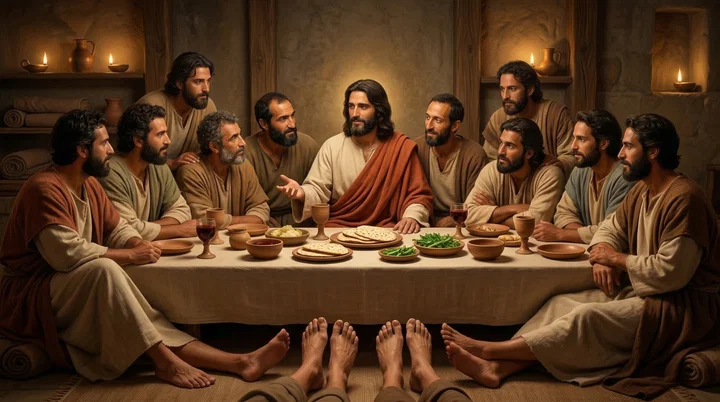
On the last evening before His death, in the upper chamber at the Passover supper, after laying aside His outer garment as Lord and Master to wash the disciples' feet, Jesus taught that happiness follows acting on what is known.Ms 2, 1859, par. 2–46MR 24.2–3 By these things He meant His example of humble, foot-washing service and the lessons of humility in John 13, more broadly the teachings of John 13-17 and the plainly expressed will of God.1SP 201.2–202.1Ms 102, 1904, par. 4–72MR 59.1–3 The happiness He promised belongs not to merely knowing, hearing, speaking or believing the truth in theory, but only to those who do it.1SP 201.2–202.1Ms 102, 1904, par. 4–72MR 59.1–3Ms 19, 1897, par. 10Ms 141, 1899, par. 4 To do it is to actually practice foot washing as an ordinance of worship together with the Lord's Supper, and beyond the single act to repeat His example in a whole life of humble, unselfish ministry to one another and to all in need.2MR 59.1–3Ms 43, 1897, par. 1–4Ms 14, 1895, par. 1–2SG3 225.2EW 95.2–96.1 Whenever it is celebrated as commanded, Christ is present by His Holy Spirit with angels and messengers from the throne, quickening minds, bringing sins to remembrance for confession and forgiveness, sweeping away selfishness and disunion, and molding doers in love, humility, unity and fitness for communion.Ms 19, 1897, par. 64–65Ms 35, 1897, par. 9–10Ms 2, 1859, par. 2–4RH Nov 4, 1902RH Nov 4, 1902
Words and Historical Setting
The saying was given on the night of betrayal at the last Passover supper held with the disciples, in the upper chamber on the last evening before death, after Jesus as Lord and Master had washed the disciples' feet.Ms 2, 1859, par. 2–46MR 24.2–3Ms 113, 1897, par. 17 It belongs to that final gathering before the crucifixion, in the last hours before He offered Himself as a sacrifice for the world.6MR 24.2–3 It presents foot washing as an example believers ought to follow by washing one another's feet, promising happiness and blessing not from knowing this duty but from doing it.Ms 2, 1859, par. 2–4
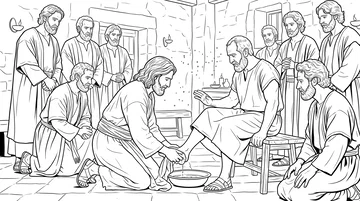
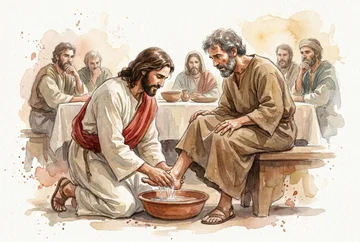
The disciples came to that supper selfish and heated with strife and contention over who should be greatest, which Satan made a determined effort to stir up.6MR 24.2–3 Their whisperings, flushed faces, and self-seeking filled Christ with sorrow, yet in the right frame of mind their knowing would have brought great blessing.6MR 24.2–3 Without a word of rebuke He laid aside His outer garment, girded Himself with a towel as a servant, and washed their feet.6MR 24.2–3 That doing opened their eyes, filled them with astonishment, bitter shame and humiliation, showed them themselves in a new light, and gave a lesson in humility and loving service to be remembered as long as life lasted, calling followers to copy His example and become less inclined to honor or exalt themselves as character grows more like His.6MR 24.2–3
These things are Christ's example of humble foot-washing service and His lesson of humility in John 13, calling followers to humility, obedience, and humbly serving and blessing one another as Christ served the disciples.1SP 201.2–202.1Ms 102, 1904, par. 4–72MR 59.1–3Lt 189, 1897, par. 15 The lesson extends beyond the outward act to a whole life of humble, faithful ministry.2MR 59.1–3 More broadly they are the teachings in John 13-17 to be believed and lived out before fellow ministers, and God's will plainly expressed in John 13 to be lived out in practical life, bringing unity with one another and with Christ, strength against the enemy, and readiness to stand the test.18MR 168.1–169.1Lt 131, 1900, par. 1–3
Even the betrayer was included, for Christ humbly washed Judas's feet with the others and gave him a tender final appeal of love.Ms 8, 1897, par. 8–920MR 149.2–4Ms 120, 1897, par. 9 Judas did not respond to that love but rejected it and went out to betray Him.DA 720.2DA 655.4Ms 120, 1897, par. 9 The account thus contrasts merely receiving the lesson with acting on it, showing that happiness belongs to those who put into practice what they know, which Judas did not follow and therefore did not receive.DA 720.220MR 149.2–4Ms 120, 1897, par. 9 His faults did not stop Christ from serving him, and while all but Judas were brought to repentance, Judas stands as the one who knew yet did not do.DA 720.2DA 655.4
Knowing Requires Doing
Happiness does not belong to knowing Christ's lessons alone but to doing them, for knowledge is only part of duty and eternal interests require action.1SP 201.2–202.1Ms 102, 1904, par. 4–72MR 59.1–3Ms 115, 1902, par. 1–4RH Jun 18, 1901 The lesson to be put into practice is Christ's example of humble foot-washing service, which calls for humility, obedience, and serving and blessing one another, and this extends beyond the outward act to a whole life of humble, faithful ministry to be studied and lived out before others.1SP 201.2–202.1Ms 102, 1904, par. 4–72MR 59.1–3Ms 115, 1902, par. 1–4Ms 103, 1903, par. 19–21 No servant is greater than the Lord who serves, so knowing His teaching and His example is not enough.Ms 115, 1902, par. 1–4RH Jun 18, 1901
Doing means conforming the human will to the will of God.Ms 72, 1902, par. 30 That will is revealed in Scripture and is not to be ignored, and believers are to follow Christ rather than submit to humanly devised authority.18MR 98.1–99.1 Obedience to known truth is a source of consolation and joy, not a yoke of bondage.Lt 8, 1873, par. 18–21
Truth brought before the mind must be comprehended, received, confessed, and obeyed.Ms 141, 1899, par. 4 Actions are the index of character, as a tree is valued by the fruit it bears, and deeds rather than words are the test of sincerity.Ms 141, 1899, par. 4Ms 120, 1899, par. 1–2COL 272.1–2RH Jun 23, 1910 Words, belief in theory, and profession of faith have no value unless accompanied by appropriate deeds, and the talent of speech becomes effective and valuable only when joined with fitting actions.Ms 120, 1899, par. 1–2COL 272.1–2RH Jun 23, 1910 Christ measures people more by what they do for others than by what they say, and those who see truth and yield themselves body, soul, and spirit to God will act out their belief in service, which is of vital consequence to every soul.Ms 120, 1899, par. 1–2 Such doing means keeping God's commandments, doing the will of the Father in heaven, and revealing Christ in works of righteousness as the genuine evidence of conversion by which all will be judged.RH Jun 23, 1910
The blessing is promised only to doers, not to those who only know, hear, speak, preach, or believe in theory.Ms 19, 1897, par. 10Ms 141, 1899, par. 4Ms 120, 1899, par. 1–2Lt 169, 1904, par. 12–14Ms 68, 1904, par. 9 Knowing that Christ as Master and Lord washed feet to give an example must lead to the same humble service, and the doing must not be mechanical or a mere form.Ms 19, 1897, par. 10 Happiness and entrance into heaven depend on practical Christianity: wearing Christ's yoke, learning His meekness and lowliness, disciplining and denying self, lifting the cross, controlling temper and feelings, putting away evil thinking, evil speaking, hasty words and cruel thoughts, keeping words sweet and pure, and loving as brethren.Lt 169, 1904, par. 12–14Ms 68, 1904, par. 9 Those who truly love God do the things that please Him, in contrast to those who receive great privileges and claim to be Abraham's children yet become self-exalted and refuse Abraham's works.Ms 141, 1899, par. 4
Foot-Washing Ordinance Practice
Christ gave foot washing as an ordinance and duty for His disciples and for all believers to actually practice in church worship, and it belongs with the supper to be celebrated together with the Lord's Supper as part of the church ordinances.Ms 14, 1895, par. 1–2SG3 225.22MR 116.2 It is a religious service preceding the emblems of His death, not merely hospitality toward travelers, and it tests loyalty, humility and faithfulness.SG3 225.2Ms 8, 1897, par. 10 Knowing brings blessing only through doing what He did, which means learning humility, engaging in self-examination to know the true feelings of the heart toward God and one another, letting pride, selfishness and hatred be discovered through the humble duty, making mutual confessions, increasing forbearance and forgiveness of one another's errors, and growing in true love in preparation for commemorating His sufferings and death even to the point of loving one another as He loved.Ms 14, 1895, par. 1–2SG3 225.2 It was observed together with the Lord's Supper as part of practical godliness.Lt 164, 1897, par. 4–52MR 116.2
The ordinance is for the largest number of believers to engage in together, and it is to be practiced more frequently and followed as exactly as possible.EW 95.2–96.1Lt 79, 1874, par. 7 Men are to wash men's feet and women women's feet, with men and women taking part separately after leaders first show the way, even where the practice has never been done before.Ms 19, 1897, par. 107MR 218.15MR 192.1–3 It must be done understandingly and not as a tedious ceremony or mechanical mere form, because its real object is to teach humility.Ms 19, 1897, par. 10EW 95.2–96.1 When so done it makes a very impressive, solemn, profitable and memorable meeting that settles believers into the work of revival, marked by humbling before God with weeping and rejoicing together and by fitting teaching at the breaking of bread that deeply moves those present.7MR 218.1Lt 79, 1874, par. 7
Gospel order provides for sisters to wash brethren's feet, as Mary washed Jesus' feet with tears and wiped them with her hair, but gives no example for brethren to wash sisters' feet.EW 95.2–96.1 Washing between men and women was practiced at first but was not the right thing to do, and a man has no business washing a woman's feet.5MR 192.1–3 Where people are uninformed or prejudiced against this plain duty through former teachers and unwise practice, it is to be introduced with carefulness and wisdom at a proper time and manner.EW 95.2–96.1
Believers must withdraw alone by themselves, separate entirely from unbelievers and the wicked, because their presence pollutes the atmosphere and doing the washing of saints' feet and the communion before them only brings reproach and dishonor on the cause.Ms 14, 1850, par. 4–6 Done rightly, the feet are first washed and then the broken bread is given to represent His broken body and the juice of the vine is given to represent His spilled blood.Ms 14, 1850, par. 4–6 Shepherds must be careful and move understandingly in these things, and even when done privately a Judas may from time to time appear to be with believers and eat and drink to his own damnation, but God will quickly make him manifest and he will be purged out.Ms 14, 1850, par. 4–6
No one is to defer the ordinance because some are considered unworthy, nor refuse to attend because of who else is present, nor decide who shall present themselves.Ms 35, 1897, par. 11–12 Human beings cannot tell who is worthy and who is not and cannot read the secrets of the soul.Ms 35, 1897, par. 11–1220MR 149.2–4 Christ washed the feet of Judas and did not refuse him a place at the table although He knew he would leave to betray Him, showing that those who take part should not be excluded on the basis of human judgments about their hearts, while unseen heavenly and evil witnesses are present at the service.Ms 35, 1897, par. 11–1220MR 149.2–4
Doing is not only the single outward act of cleansing but the whole scene and its intent.Ms 43, 1897, par. 1–4 Christ, though infinitely superior and rightly called Master and Lord, humbly washed His disciples' feet, even the betrayer's, and His humility did not lessen His dignity.Ms 8, 1897, par. 8–9Ms 54, 1897, par. 20–21 His followers are not above their Lord and are not greater than the Lord who serves, so they are to repeat His example in unselfish ministry and in a whole life of humble, faithful ministry in their intercourse with each other, pledging to serve one another and to minister to all in need, which kindles love, helps and blesses each other, brings into holy relationship, and helps understand His teaching.2MR 59.1–3Ms 43, 1897, par. 1–4Ms 115, 1902, par. 1–4Ms 54, 1897, par. 20–21Ms 43, 1897, par. 24
Blessings Promised to Doers
The happiness promised is tied to actually celebrating the ordinance as commanded, for then Christ is present by His Holy Spirit as witness to impress hearts, God is sacredly near, angels watch, messengers from the throne are present, and the atmosphere of heaven surrounds with holy solemnity and solemn awareness of His presence.Ms 19, 1897, par. 64–65Ms 35, 1897, par. 9–10Ms 2, 1859, par. 2–42MR 346.1–3RH Nov 4, 1902 This doing is the humble service of washing one another's feet given to recover man from sin, and it brings blessing and holy solemnity with the felt presence of the Lord rather than mere knowledge of duty.Ms 19, 1897, par. 64–65Ms 35, 1897, par. 9–10Ms 2, 1859, par. 2–42MR 346.1–3 The words were spoken by the Lord of life and glory and are to be brought to remembrance on every such occasion.Ms 35, 1897, par. 9–10
The Holy Spirit uses the ceremony to quicken sensibilities, turn thoughts into spiritual channels, convict hearts, energize the mind, bring committed sins to remembrance with new distinctness for confession and forgiveness, break up the fountains of the soul, sweep away selfishness, and break down every barrier of disunion and alienation.RH Nov 4, 1902RH Nov 4, 1902 The promise of happiness in doing is clothed with new power as believers behold the suffering by which reconciliation with God was obtained.RH Nov 4, 1902 As at the first celebration all were convicted except Judas, so now all who submit will be convicted.RH Nov 4, 1902
Doing calls for close examination of the heart and self-examination to know the true feelings of the heart toward God and one another, with conviction of sin, revived memory and penitential offering under Christ's presence.Ms 8, 1897, par. 11–13SG3 225.2Ms 19, 1897, par. 18–19 Pride, selfishness, hatred, bitterness, strife, unfair dealings and wrong are discovered through the humble duty and washed away by repentance, confession, mutual confession, increased forbearance, forgiveness of one another's errors and humiliation of soul before God.Ms 8, 1897, par. 11–13Ms 8, 1897, par. 15–17SG3 225.2 This fosters repentance, true love, unity and oneness with Christ, clearing away selfishness and bitterness and drawing believers together in love as they love one another as He loved them even to death.SG3 225.2DA 650.4–651.1RH Nov 4, 1902 Participants are to put away bitterness, strife and unfair dealings, love their brethren, and serve one another rather than seek the highest place.Ms 8, 1897, par. 11–13
The ceremony educates and molds character to have the same love for one another that Christ showed, teaching that brother is not to exalt himself above brother.Ms 19, 1897, par. 10Ms 8, 1897, par. 15–17Ms 19, 1897, par. 18–19 It tests humility, faithfulness and loyalty, keeps God's people humble and separate from the world and from backsliding, guards the health and holy activity of the soul against disunion and strife, and keeps fresh in remembrance that redemption is received upon conditions of humility and continual obedience.SG3 225.2EW 95.2–96.1Ms 8, 1897, par. 10Ms 19, 1897, par. 18–19 The doing must not be mechanical or a mere form or tedious ceremony, because the real object is humility, and it is to be done understandingly.Ms 19, 1897, par. 10EW 95.2–96.1 His life as light from above guides every soul who comes to Him into all truth as an unfolding of His love and a revelation of the character of God.Ms 19, 1897, par. 64–65
Doing prepares for partaking of communion in remembrance of Christ's sufferings for sin, melting the heart with gratitude and love for the dear price paid to ransom sinners from the power of Satan and hopeless misery.Ms 2, 1859, par. 2–4SG3 225.2 It moves to earnest prayer to run in the way of God's commandments, travel the whole Christian road, lay off the armor at the Redeemer's feet, and stand on Mount Zion.Ms 2, 1859, par. 2–4 It speaks to the heart more than to the intellect, disentangles from ancient Jewish rites and ceremonies whose virtue ended when type met antitype in Christ as the only efficacious offering, and calls to receive His Word and daily partake of Him as the bread of life to satisfy soul-hunger, not merely eat His body and drink His blood at the sacramental service.Ms 19, 1897, par. 18–19 Humble confession followed by washing and supper brings gratification, revival and a memorable, solemn, profitable meeting, marked at times by humbling before God with weeping and rejoicing together and by fitting teaching that deeply moves those present, making a very impressive meeting that settles believers into the work when God is waiting to be gracious and ready to bless His people in revival.7MR 218.1Lt 79, 1874, par. 7
The one who humbles himself in such service has the Spirit of Christ, stands in Christ's place, enters close relationship with the Lord who is present on the occasion to impress hearts, and is placed where the Lord can safely honor him.Ms 19, 1897, par. 64–65RH Nov 4, 1902
Wider Christian Application
Those who bear Christ's name are to recognize that He suffered and died for their sins and to do His will openly before fellow ministers and others.RH Nov 4, 1902 Happiness comes from doing the truths one knows, for God's will is to be believed and lived out before fellow ministers.Ms 139, 1902, par. 118MR 168.1–169.1 Christ's instruction brings happiness when put into practice, and the teachings of John 13-17 are to be studied and lived before others.Ms 103, 1903, par. 19–2118MR 168.1–169.1 Living out Christ's prayer brings unity with one another and with Christ, strength against the enemy, and readiness to stand the test, for John 13 plainly expresses God's will for His people in practical life.Lt 131, 1900, par. 1–3
Doing is practical Christianity learned from Christ's meekness and lowliness.Lt 169, 1904, par. 12–14Ms 68, 1904, par. 9 It means wearing His yoke, disciplining self, denying self, lifting the cross, controlling temper and feelings, putting away forever evil thinking, evil speaking, hasty words, and cruel thoughts and feelings, keeping words sweet and pure, and loving as brethren.Lt 169, 1904, par. 12–14 Happiness and entrance into heaven depend on doing known truth, not merely knowing, hearing, or preaching the gospel.Lt 169, 1904, par. 12–14Ms 68, 1904, par. 9 Words, theoretical belief, and profession have no value unless joined with fitting deeds, for deeds test sincerity and reveal character as fruit reveals a tree.RH Jun 23, 1910 Keeping God's commandments, doing the will of the Father in heaven, and revealing Christ in works of righteousness is the genuine evidence of conversion, and by deeds all will be judged, a matter of vital consequence to every soul.RH Jun 23, 1910
Following Christ's example with His disciples means patient, loving treatment even of those who are faulty, erring, or false-hearted.MH 493.3–4DA 655.4 Though Judas was counted among the apostles, Jesus patiently bore with him, even washing his feet knowing he would betray Him.DA 655.4ST Feb 9, 1915 Christians are therefore to bear patiently with false brethren rather than become disheartened by them, and not to separate from the erring and leave them exposed to temptation but to treat them with patience and mercy.DA 655.4ST Feb 9, 1915 The disciples' faults did not stop Christ from serving them, and His service brought all but Judas to repentance.DA 655.4 Doing requires laying aside selfishness and disputes over who should be greatest, feeling shame for self-seeking, and rejecting desire for higher place.Lt 117, 1897, par. 8–10RH Nov 4, 1902 Keeping the words means becoming humble, pure, and consecrated in thought, spirit, and conduct, yielding the heart to Christ for humble loving service and good work for brethren instead of scheming, faultfinding, and criticizing.Lt 117, 1897, par. 8–10Ms 75, 1898, par. 30–32 Where pride, self-sufficiency, contention, and strife remain, the words have been little regarded, for the Holy Spirit uses the ceremony to impress hearts and sweep away selfishness.RH Nov 4, 1902Ms 75, 1898, par. 30–32
Keeping the words requires putting away the defilement of unkind talk, gossip, passing judgment, and self-assured conversation that hurts souls and spoils God's work.Lt 264, 1902, par. 11 To continue in such talk is to handle strange fire and to leave His words unheeded.Lt 264, 1902, par. 11 Until the Holy Spirit cleanses the lips and removes that defilement, counsels do harm and become a savor of death rather than a savor of life.Lt 264, 1902, par. 11 Doing means loving one another as Christ loved even to death.Ms 8, 1897, par. 18SG3 225.2 At every celebration each one is to ask whether anything stands between self and a brother that keeps from loving him as Christ loved, putting away bitterness, strife, unfair dealings, supremacy, and self-complacency that would put a poor brother in a lowly place.Ms 8, 1897, par. 11–13Ms 8, 1897, par. 18 Close examination of the heart, discovery of pride, selfishness, and hatred through the humble duty, mutual confession, forbearance, forgiveness of one another's errors, and true love prepare for commemorating Christ's sufferings and death and keep fresh the remembrance that redemption comes on conditions of humility and continual obedience.Ms 8, 1897, par. 11–13SG3 225.2
Sources
Pioneers and periodicals
116 sources
Spoken after He had washed His disciples' feet to rebuke their strife over greatness, the promise means that knowing His example and command brings no happiness unless it is obeyed.ST Mar 30, 1904ST Jun 13, 1900CO 43.6–7RH Feb 24, 1859RH May 3, 1864 These things are what He had just done and taught, that they should wash one another's feet as He washed theirs, for the servant is not greater than his Lord.RH Jan 20, 1853ST Jul 26, 1883RH May 3, 1864ST Aug 5, 1886ST Feb 11, 1897 The doing is literal imitation in the way He did it, not mental assent or a merely spiritual observance, and no other helpful act takes its place.ST Aug 5, 1886RH Jan 20, 1853RH Feb 24, 1859ST Aug 5, 1886RH Apr 22, 1862 It is a binding church ordinance instituted by His example and command with the same authority as baptism and the Supper, set as the preparatory service of humility before communion to be kept until His return.CO 43.4–5ST Jul 15, 1886ST Jul 30, 1885RH Feb 2, 1860 Rightly done it cleanses the heart from pride, jealousy and alienation, brings sins to remembrance and leads to confession and forgiveness, and opens the way to unity, the presence of Christ by the Holy Spirit, and fitness for communion.RH Jun 23, 1910RH Jul 7, 1863RH Jan 14, 1858RH Aug 4, 1868RH Jun 23, 1910
Setting and Wording
The saying belongs to the night Jesus ate the Jewish Passover with his disciples and instituted the Lord's Supper to be kept until he comes again, before going to Gethsemane.ST Nov 4, 1897ST Nov 19, 1912ST Nov 15, 1883 It was spoken as part of his final instruction on the night before his arrest, after Judas had left, in the few quiet hours between himself and Gethsemane just before he received his full baptism of suffering.ST May 19, 1898ST Aug 12, 1886 That last Passover supper was virtually the last Passover ever celebrated, because type was to meet antitype in the slaying of the Lamb of God for the sins of the world.ST Aug 12, 1886 Though meetings with his disciples were usually seasons of calm joy and Passover suppers had been scenes of special interest, on this occasion he was troubled in spirit and his disciples sympathized with his grief although they knew not its cause, and the hours were spent for their benefit.ST Aug 12, 1886 The account deserves careful study so its moral truths can be understood more fully.ST Nov 15, 1883
It was given at their last gathering before the crucifixion, when they were arguing over who was greatest and contesting precedence at the table.ST Mar 30, 1904ST Nov 15, 1883 Surrounding circumstances called for such an exhibition, just as taking a little child and setting him in their midst enforced humility and equality when they had disputed about who would be greatest in the kingdom of heaven and taught that conversion to childlikeness is necessary to inherit it.RH Feb 24, 1859 His washing of their feet answered that dispute over honor and taught that greatness in his kingdom means serving others in humility rather than seeking rank.ST Mar 30, 1904RH Feb 10, 1916ST Nov 15, 1883 All believers are equal as brothers and sisters under one Master, and rivalry over who is greatest violates love for one another.ST Mar 30, 1904RH May 3, 1864RH May 3, 1864 To read the act as ordinary hospitality makes it a strange digression from the events then transpiring, for the disciples showed no inhospitality and stood in no need of hospitality.RH Feb 24, 1859
He who spoke was Lord and Master, greater than they, Lord of all whom all creatures should serve and obey, the King and glorious Son of God clothed with humanity.RH Jan 20, 1853ST May 21, 1896RH Jan 4, 1906 Yet he emptied himself of his rights and power, did not seek a high estate, took the form of a servant, and on the last night before his crucifixion stooped in the humble act of a servant.ST May 21, 1896RH Jan 4, 1906 He performed it from love for his disciples when about to depart out of this world, even while facing betrayal and suffering, showing self-forgetful love.RH Jan 20, 1853ST Aug 28, 1879 He washed the feet of all his disciples, and the ordinance was not limited to a particular class. His love reached even Judas, whose feet he washed despite his treachery, demonstrating that love and kindness are not limited to intimate friends.RH Jan 4, 1906ST
These things are what he had just taught and done: that the Lord and Master washed the disciples' feet and gave an example that they should wash one another's feet, since a servant is not greater than his lord.RH May 3, 1864ST Feb 11, 1897ST Feb 11, 1897 Doing them means following his example of humility and love rather than competing for greatness, and doing God's will expressed in his word is the obedience that leads to happiness.RH May 3, 1864ST Apr 24, 1893 Those who hold that the phrase reaches further include in it the Lord's Supper and foot-washing together, including the bread and wine.ST Jul 26, 1883
The washing and its command came before the bread and wine were blessed and given.CO 45.1–2 Foot-washing came first in the celebration of the ordinances, before the breaking of the bread and the blessing of the cup that instituted the Lord's Supper.ST Feb 4, 1903 Placed at the beginning of the meal, it answered the contest over precedence at the table by showing that seeking the chief place was wrong, connecting knowing this lesson with doing it.ST Nov 15, 1883
Literal Humble Service
Doing means literally doing what Jesus did, washing one another's feet as he washed his disciples' feet and in the way he did it, not doing something else in its place and not treating outward action as if it could be imitated by mental or verbal assent.RH Jan 20, 1853ST Aug 5, 1886RH Apr 22, 1862ST Jan 3, 1884ST Mar 29, 1899 Knowing the teaching, professing it to be right, or saying one is humble enough brings no happiness by itself; happiness belongs to those who both know and put the instruction into practice by faith in his word.RH Jan 20, 1853ST Aug 5, 1886RH Apr 22, 1862ST Jan 3, 1884ST Mar 29, 1899 The act he performed was a real transaction, and the call of his example is for literal obedience rather than merely a spiritual or symbolic observance, a figurative reading, or a substitute observance such as bread and cheese.RH Jan 20, 1853ST Jan 3, 1884RH Jun 13, 1865ST Mar 29, 1899 Failure to do is failure to believe, since doing is the only proof of faith and of knowing God, and such doing is reasonable because a servant cannot refuse what his Master has done but should count it a great honor to do it.ST Mar 29, 1899 The duty remains because believers owe it to one another by his precept and example to follow him without hesitation whenever his word commands, with the final honor of Christian service being likeness to Christ.ST Mar 29, 1899
The washing was not ordinary hospitality or bodily cleansing for physical uncleanness.RH Feb 24, 1859RH Jun 16, 1868RH Apr 22, 1862ST Feb 7, 1884RH Feb 24, 1859 Unlike hosts who provided water for guests to wash their own feet, Jesus himself washed feet to enforce a moral lesson, just as taking a little child and setting him in the midst enforced humility and equality when there had been dispute about who would be greatest and taught that conversion to childlikeness is necessary to inherit the kingdom.RH Feb 24, 1859RH Jun 16, 1868 To read the chapter as hospitality makes it a strange digression from the course of events then transpiring, for the disciples showed no inhospitality and stood in no need of hospitality, and the surrounding circumstances called for such an exhibition.RH Feb 24, 1859 Visiting the sick and helping the poor are duties too, but they do not replace this one, and the foot-washing was not merely an example of hospitality but an act of Christian fellowship calling believers to serve one another and to give one another all the service that this act represents.ST Aug 5, 1886RH Apr 22, 1862ST Mar 9, 1888ST Feb 7, 1884 Its meaning is measured by the act and the circumstances in which he performed it, and Christ's example and command make it a duty for his followers, so that refusing its instruction separates a person from him.RH Jun 16, 1868ST Feb 7, 1884
The example was designed for his disciples to follow in all coming time, not limited by time or place or to a particular class, with all his disciples washed and told to follow his example.ST Mar 30, 1904RH Feb 24, 1859 The practice obligates them to wash one another's feet, and blessing comes not merely from knowing the instruction but from obeying it.ST Mar 30, 1904 The rite reminds them of his humility in taking human nature and serving in the work of salvation, and was to be observed until his return.ST May 21, 1896
The things to be known and done are self-giving, ministering acts in the spirit of the towel and basin and cool water, like Christ washing feet and like Mary breaking her box of ointment in love for him, and doing them is the test of every action and of sonship in the kingdom.ST May 13, 1889ST Mar 10, 1909ST Aug 5, 1886RH Jun 27, 1878 Doing as he did means setting aside pride and self-exaltation, selfishness and disputes over greatness, and serving one another humbly without considering oneself above the Lord or free from his example and obligation.ST May 13, 1889ST Aug 5, 1886RH Jun 27, 1878ST Jul 30, 1885 Humility is not merely an inward feeling and cannot be proved by words or inward claims while refusing that act of service, but is shown by carrying out the humble act he taught.ST Jul 17, 1879RH Jun 27, 1878ST Jul 30, 1885 The lesson condemns pride and teaches human brotherhood and mutual service, and the foot-washing puts that humility into practice.RH Jun 27, 1878 God credits only self-bestowment in giving, and doing humble service opens the heart to comprehend truth and brings the Holy Spirit's inspiration, subtle inward growth, blessed exaltation, comfort, infinite renewing of life, and the secret of divine, immortal youth, because the glory of the deed is in the doing.ST Mar 10, 1909
The true spirit of the ordinance also requires willing daily lowly service with love that overcomes selfish pride, expressing itself not only in taking part in the church's foot-washing rite but in ordinary, lowly acts of service in daily life, in a life of humility and self-denial, and in tender care and compassion toward one another.RH May 30, 1912ST Oct 24, 1900RH Mar 24, 1910 Serving others as Christ did expresses the true spirit of the ordinance of humility, and no one should refuse to humble himself to serve others even in lowly or difficult service, including serving as a doorkeeper, speaking to a child about Jesus, and washing the saints' feet.RH May 30, 1912ST Oct 25, 1883 Serving others is an act of humility when done willingly, but becomes humiliation when pride or compulsion makes service feel degrading; Jesus acted from humility while Judas experienced the act as humiliation.RH May 30, 1912 Happiness comes not from performing the single act to display humility but from the humble life that makes true appreciation of the ordinance possible and from obeying a command however insignificant it appears, as Naaman the Syrian was healed when he obeyed the direction to dip seven times in the Jordan.ST Oct 24, 1900 Such humility prepares a person for greater duties, for learning to be little and to submit is part of learning to serve and lead.ST Oct 25, 1883
Binding Church Ordinance
Foot-washing is a plain and binding ordinance of the Christian church, instituted by example and explicit command and plainly enjoined as a duty for disciples to follow.ST Jul 15, 1886ST Jul 30, 1885ST Dec 30, 1889ST Mar 6, 1884RH Apr 19, 1870 The account describes it minutely and teaches humility, and obedience means observing it just as the Lord's Supper and baptism are observed.ST Jul 15, 1886ST Jul 30, 1885ST Dec 30, 1889 It stands on New Testament authority as clear as that for the Supper, for baptism, and for the seventh-day Sabbath, and it belongs among the commanded ordinances by which the true church is recognized, though generally neglected and perverted or ignored by Babylon churches.ST Jul 15, 1886RH Feb 2, 1860ST Dec 30, 1889ST Mar 6, 1884 That it is mentioned only once does not weaken it, for what was done and said is just as valid as if repeated fifty times, and it supplies as strong a case as supporters of Sunday-keeping or infant baptism would accept for those practices.ST Jul 15, 1886 Rejection comes because it is a humiliating ordinance and because unpalatable words are rejected, not because evidence is lacking, and knowing the teaching without practicing it leaves the blessing unreceived.ST Jul 15, 1886RH Apr 19, 1870
It was instituted in connection with communion immediately before the Lord's Supper, and its history establishes it as an ordinance to be kept in that connection and still continued in the church.CO 43.4–5RH May 19, 1859 It is the preparatory ordinance of humility before the sacrament, integral to the Supper as sharing the cup belongs with breaking the bread, so that knowing is completed only by doing.CO 43.4–5RH May 19, 1859 Fully organized churches ought to celebrate these ordinances regularly, commonly gathering quarterly with brethren and sisters apart, with baptism at times at the beginning of the service before partaking of the emblems of the infinite sacrifice, and happiness and profit come from doing these things.ST Nov 21, 1906 Following the example exactly connects feet-washing with every celebration of the Lord's Supper.ST Nov 21, 1906
It is a memorial of the humility of Christ as Lord and Master, the Prince of glory, in becoming Son of man from Son of God and taking the place of a servant, just as the bread and wine memorialize his death and baptism represents his burial and resurrection.RH Jun 16, 1868ST Feb 7, 1884RH Jan 8, 1867RH Jul 21, 1868 Understandingly and lovingly observing it in imitation of his example and copy, not merely as a general lesson in humility, humbles the heart, brings nearer sympathy with him, and makes willing to bear reproach and suffering for his sake.RH Jan 8, 1867RH Jul 21, 1868RH May 4, 1869 It was kept in the earlier and purer age of the church until Rome laid polluting hands on the ordinances and abolished, obscured, altered, or perverted them into a mixture of Christianity and heathenism.RH Jun 16, 1868ST Feb 7, 1884 In the closing of the age the pure gospel must be restored with this link in its appropriate place in the golden chain, celebrated instead of the Passover which has served its time or Easter which is a heathen institution, together with the Lord's Supper, with doing acceptably requiring living obedience to God and peace with the brethren.RH Jun 16, 1868ST Feb 7, 1884ST Mar 3, 1909
Doing means obeying the command to wash one another's feet as a congregational act to be literally done and continued along with commemorating the sufferings and death of Christ, and happiness belongs to those who so know and do with a refreshing season attending.RH Jul 28, 1863RH Aug 19, 1858RH Feb 24, 1863 It is not to be treated as mere custom, voluntary practice left to personal conviction, hospitality rather than a standing ordinance, or a nonessential, but as a commanded ordinance.RH Jul 28, 1863RH Aug 19, 1858RH Mar 1, 1860 New converts are to receive full instruction in the faith including this ordinance rather than having it withheld because they are young in faith, and all believers are to take part with readiness that joins knowing with practicing.ST Mar 4, 1886ST Mar 4, 1886
Blessing in Doing
Happiness does not come from knowing the teaching, example and command of Christ alone, but from both knowing and doing what is known.ST Jun 13, 1900CO 43.6–7ST Mar 29, 1899ST Feb 7, 1884RH Jan 8, 1867 The blessing lies in obedient action by faith, in humbly serving one another as Jesus did when He washed the disciples' feet, and not in merely knowing, professing the ordinance to be right, saying one is humble enough to do it, or giving mental or verbal assent.RH Jun 23, 1910RH Jun 23, 1910ST Mar 29, 1899ST Jul 24, 1907ST Feb 11, 1897 Outward form without heart obedience is not enough, and the meaning of the act is measured by what Jesus did and the circumstances in which He did it.ST Feb 7, 1884ST Jul 24, 1907ST Feb 11, 1897
Repeating the humble service keeps His condescension vivid in the mind, commemorates His humility, and brings its benefits and blessing to each participant who imitates and continues what He showed.ST Oct 31, 1878RH Jun 27, 1878RH Jun 27, 1878 The doing recalls what Christ did and forms humility and contrition, expressing willingness to regard another as an equal or even to take the place of a servant.RH Jun 27, 1878RH Jun 27, 1878ST Oct 31, 1878 By practicing it disciples learn the Master's self-abasement and deepen their sense of His goodness, His self-giving love, their own unworthiness and need, and their need of God's goodness.ST Oct 31, 1878RH Jun 27, 1878ST Oct 31, 1878
Rightly done in its true spirit the ordinance is soul-cleansing and heart-melting, humbling the heart, striking at pride and worldly ambition, and cleansing away desire for supremacy so that pure love can flow in.RH Jun 23, 1910ST May 13, 1875RH Jun 23, 1910 It checks pride, worldliness, jealousy, faultfinding and division, removes distant feeling, alienation and dissension between brethren, restores meekness, humility, love and unity, and prepares participants for communion and for further service.RH Jun 23, 1910RH Jul 7, 1863RH Nov 20, 1913ST May 13, 1875RH Jun 23, 1910 As Jesus served His erring disciples, all but Judas were brought to repentance and became meek, teachable and loving toward one another, and many blessings and joys are lost when the ordinance is not observed more generally.RH Jul 7, 1863RH Jun 23, 1910RH Nov 20, 1913
The doing makes a season of close self-examination before communion, where each becomes acquainted with the true feelings of the heart toward God and one another, brings committed sins to remembrance with new distinctness, and discovers pride, selfishness and hatred in those honestly erring.ST Mar 25, 1880RH Nov 4, 1902RH Jan 14, 1858 The Holy Spirit uses the ceremony to impress hearts, quicken sensibilities, turn thoughts into spiritual channels, convict hearts, break up the fountains of the soul, energize the mind, and sweep away selfishness and disputes over who should be greatest.RH Nov 4, 1902ST Mar 25, 1880RH Nov 4, 1902 This leads to laying aside self-seeking with shame for it, to mutual confession, increased forbearance, forgiveness of one another's errors with true love like Christ's love that died for His disciples, and puts members under obligation to settle difficulties before communion.RH Nov 4, 1902ST Mar 25, 1880RH Jul 7, 1863RH Jan 14, 1858 Whenever the ordinance is celebrated as commanded, Christ is present by His Holy Spirit with messengers from the throne, the presence of the Lord's Spirit and the ministry of angels to supply needs, breaking down every barrier of disunion and alienation, reviving the spirit and strengthening faith and hope.RH Nov 4, 1902RH Aug 4, 1868RH Jun 23, 1910
The rite signifies cleansing from sin through Christ and restoration to communion with Him, representing unity with His holy life and with one another, including cleansing from the sins and defilements that follow baptism in preparation to share the communion emblems.RH Apr 2, 1908RH Jun 23, 1910ST Jun 3, 1913 Its primary blessing is for the one cleansed, not merely for the one who washes, though serving one another also follows Christ's example.RH Apr 2, 1908RH Jun 23, 1910 It commemorates not one humble act only but His whole life of humility and self-sacrifice, from His descent from heaven to His death for humanity, and is an example of His care for His people and of the oneness between Christ and the church.ST Oct 24, 1900RH Jun 23, 1910ST Jun 3, 1913
Doing is the only proof of faith and of knowing God, so that failure to do is failure to believe, and obedience expresses simple faith in His word and meets a need He knew His people have.ST Mar 29, 1899ST Jul 24, 1907ST Feb 11, 1897 Knowledge of the gospel without obedience adds to condemnation and brings woe, while knowledge leading to action is blessed.ST May 8, 1901ST Mar 29, 1899ST Feb 11, 1897 Such doing is reasonable because a servant cannot refuse what his Master has done but should count it a great honor to be content to be as the Master, with the final honor of Christian service being likeness to Christ through following His example without hesitation whenever His word commands.ST Mar 29, 1899ST Jul 24, 1907ST Feb 11, 1897
Wider Obedience and Witness
Happiness belongs not to knowing what is right but to doing it, for knowing duty is not enough and blessing comes only with willingness to act on knowledge in carrying out ordinances and practical duties.RH Jun 10, 1873RH Sep 2, 1858ST Feb 5, 1880 Words, theoretical belief and profession of faith have no value unless accompanied by fitting deeds, and character is revealed by what is done rather than what is said.RH Jun 23, 1910ST Feb 3, 1909 The test of sincerity is deeds, not words, and doing means keeping God's commandments, doing the will of the Father in heaven, revealing Christ in works of righteousness, repenting, trusting Christ, praying, living the virtues of the Sermon on the Mount, and actively working for the good of others to bless and save them.RH Jun 23, 1910RH Sep 2, 1858ST Feb 5, 1880 Such obedience is the genuine evidence of conversion, and by deeds all will be judged.RH Jun 23, 1910
Knowing truth about the Sabbath is not enough; happiness comes from putting that knowledge into practice by observing it. Knowing Christ's instructions does not itself bring happiness, but happiness belongs to those who keep God's law including the Ten Commandments and the seventh-day Sabbath, honoring it as Jesus honored it.RH Dec 31, 1857RH Mar 1, 1906 Knowing the seventh-day Sabbath is required while knowingly keeping the first day instead is not sincere obedience, and sincerity cannot excuse withholding from God the time He reserved for Himself.RH Dec 26, 1865 Knowing what God requires brings happiness and blessing only in doing it, which calls believers to act on what they know about tithing and the support and spread of the gospel rather than being careless or indifferent.RH Oct 1, 1901 Obeying the prompting to affirm God's message with a sincere Amen helps receive its blessing and strengthens speaker and hearers.RH Nov 30, 1905
Knowing Christ's instruction brings happiness when put into practice by accepting the ordinances He instituted rather than staying away from a sense of unworthiness, since obedience rests on His worthiness and not one's own, though one unwilling to repent of wrongdoing should stay away while those willing to obey should receive the privilege gladly.RH Oct 9, 1866 Happiness comes from doing what is known, applied to trust in God as part of faith, for knowing that God trusts a person makes it simple to trust God, and the only way to be sure of trusting Him is to keep constantly in the attitude where He can trust him.RH Jan 1, 1901 Knowing truth about diet and the liquor habit brings duty to act on it with blessing only through doing, requiring good judgment and use of light given on diet as on every other subject.ST May 28, 1902 To claim the gospel alone should remove thirst while continuing a diet that creates thirst is presumptuous and unreasonable, like eating salt and then expecting God to prevent thirst, for what is sown in diet is reaped in craving, so tables must be cleared of thirst-creating foods and eating must be for strength and not for drunkenness, though God is able to rescue from drink apart from diet reform.ST May 28, 1902
Putting into practice what is known in foot washing means serving one another with humility and brotherly love, and blessing comes not merely from knowing instruction but from following the example of humble service including washing one another's feet.ST Feb 20, 1901 Had the ordinance been consistently practiced in its true spirit, caste and orders would have had no place among believers, for that obedience fosters holy equal fellowship and care instead of class divisions and religious hierarchy.ST Feb 20, 1901 Christ washed His disciples' feet to show true greatness means humbly serving others even those who have acted wrongly, and His followers are to continue this service.RH Nov 6, 1900 His love reached even Judas, whose feet He washed despite treachery, showing love and kindness are not limited to intimate friends, and His patient bearing with Judas as a counted apostle teaches bearing patiently with false brethren rather than becoming disheartened.ST Feb 9, 1915ST His example enforcing that followers serve rather than seek supremacy stands opposite enslaving others and treating them as property.RH Oct 8, 1861
Happiness and blessing come not from knowing about humble service but from doing self-giving ministering acts in the spirit of towel and basin and cool water, like washing feet and like breaking ointment in love, and doing them is the test of every action and of sonship in the kingdom, for God credits only self-bestowment in giving.ST Mar 10, 1909 Doing humble service opens the heart to comprehend truth and brings the Holy Spirit's inspiration, subtle inward growth, blessed exaltation, comfort, infinite renewing of life and the secret of divine immortal youth, because the glory of the deed is in the doing.ST Mar 10, 1909 This mind of serving though greater, emptying self of rights and power, not seeking high estate and taking the form of a servant, is Christianity itself which all followers in all ages are to have, and this course overcomes the world.ST May 21, 1896 For those who continue in this way a kingdom and a table therein are prepared, so the end rewards the temporary hardness of the way.ST May 21, 1896 Knowing means understanding that Christ endured cross and shame for the joy of seeing souls saved, and doing means putting feet in His footprints in self-denying labor, sharing His sufferings, enduring reproach and persecution, serving with humility and tears, earnestly working, and taking pleasure in infirmities, reproaches, necessities, persecutions and distresses, with promised happiness of entering the joy of the Lord at the welcome of the good and faithful servant and sharing His joy of seeing souls eternally saved.RH Feb 8, 1912 Faithful ones of every tribe and people who do what the Master taught look forward to sitting at the Lord's table in heaven served by Jesus, and doing all God's will in humility brings His Holy Spirit in power with the blessing presence of the Comforter in full consecration in readiness for the soon coming.RH Aug 21, 1913RH Aug 22, 1871RH Oct 25, 1870
Sources