John 13:16
Verily, verily, I say unto you, The servant is not greater than his lord; neither he that is sent greater than he that sent him.
Translations
Truly, truly, I say to you, The servant is not greater than his lord; neither he that is sent greater than he that sent him.
King James Version, KJV Cambridge Paragraph Bible
Verily, verily, I say unto you, The servant is not greater than his lord; neither he that is sent greater than he that sent him.
Verily, verily, I say to you, The servant is not greater than his lord; neither he that is sent greater than he that sent him.
Revised Version, American Standard Version
Verily, verily, I say unto you, A servant is not greater than his lord; neither one that is sent greater than he that sent him.
verily, verily, I say to you, a servant is not greater than his lord, nor an apostle greater than he who sent him;
Verily, verily, I say to you, The bondman is not greater than his lord, nor the sent greater than he who has sent him.
Verily, verily, I say unto you—A servant is not greater than his lord, neither one sent forth greater than he that sent him.
Berean Standard Bible, Majority Standard Bible
Truly, truly, I tell you, no servant is greater than his master, nor is a messenger greater than the one who sent him.
Most certainly I tell you, a servant is not greater than his lord, neither is one who is sent greater than he who sent him.
Truly I say to you, A servant is not greater than his lord; and he who is sent is not greater than the one who sent him.
Verely, verely I say vnto you, The seruant is not greater then his master, neither the ambassadour greater then he that sent him.
Douay-Rheims (Challoner revision)
Amen, amen I say to you: The servant is not greater than his lord; neither is the apostle greater than he that sent him.
Pictures
Cross-references 20 of 41
- Matthew 20:26-28
But it shall not be so among you: but whosoever will be great among you, let him be your minister;
Jesus teaches greatness through serving, following his example of giving his life.
- Philippians 2:7
But made himself of no reputation, and took upon him the form of a servant, and was made in the likeness of men:
Christ took the form of a servant, exemplifying humble service.
- Luke 22:24-27
And there was also a strife among them, which of them should be accounted the greatest.
Jesus answers the disciples’ dispute over greatness by teaching that the greatest must serve.
- Matthew 10:24
The disciple is not above his master, nor the servant above his lord.
A disciple is not above his teacher.
- John 13:4-5
He riseth from supper, and laid aside his garments; and took a towel, and girded himself.
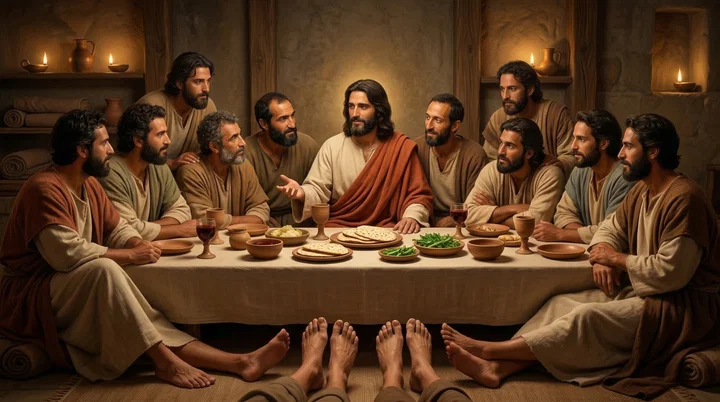
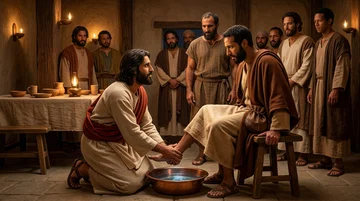
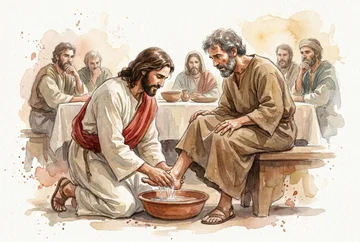
Jesus washes his disciples’ feet in an act of humble service.
- Luke 22:27
For whether is greater, he that sitteth at meat, or he that serveth? is not he that sitteth at meat? but I am among you as he that serveth.
Jesus presents himself as one who serves.
- Luke 14:10
But when thou art bidden, go and sit down in the lowest room; that when he that bade thee cometh, he may say unto thee, Friend, go up higher: then shalt thou have worship in the presence of them that sit at meat with thee.
Christ teaches against seeking places of honor by choosing the lowest place.
- Mark 9:35
And he sat down, and called the twelve, and saith unto them, If any man desire to be first, the same shall be last of all, and servant of all.
Both teach that greatness is expressed through serving rather than rank.
- John 13:7-8
Jesus answered and said unto him, What I do thou knowest not now; but thou shalt know hereafter.
Peter does not understand Jesus’ act, yet must accept it to remain with him.
- Matthew 16:24
Then said Jesus unto his disciples, If any man will come after me, let him deny himself, and take up his cross, and follow me.
Jesus calls his followers to deny themselves and follow him.
- Romans 15:1-3
We then that are strong ought to bear the infirmities of the weak, and not to please ourselves.
The strong bear the weak’s infirmities, following Christ’s example of self-denial.
- Mark 10:42-45
But Jesus called them to him, and saith unto them, Ye know that they which are accounted to rule over the Gentiles exercise lordship over them; and their great ones exercise authority upon them.
Jesus teaches that greatness is expressed through serving others, as he did.
- Matthew 20:26
But it shall not be so among you: but whosoever will be great among you, let him be your minister;
Greatness among Christ’s followers means serving others.
- Matthew 18:1-4
At the same time came the disciples unto Jesus, saying, Who is the greatest in the kingdom of heaven?
Jesus teaches that greatness comes through humility, not seeking the highest place.
- 1 Peter 5:5
Likewise, ye younger, submit yourselves unto the elder. Yea, all of you be subject one to another, and be clothed with humility: for God resisteth the proud, and giveth grace to the humble.
Believers are urged to clothe themselves with humility toward one another.
- Matthew 28:20
Teaching them to observe all things whatsoever I have commanded you: and, lo, I am with you alway, even unto the end of the world. Amen.
Jesus commands his disciples to teach others to observe all he commanded.
- Matthew 23:6
And love the uppermost rooms at feasts, and the chief seats in the synagogues,
Jesus rebukes those seeking the chief places at meals.
- John 13:11
For he knew who should betray him; therefore said he, Ye are not all clean.
Jesus washed Judas’s feet knowing he would betray him, yet identified him as unclean.
- John 15:20
Remember the word that I said unto you, The servant is not greater than his lord. If they have persecuted me, they will also persecute you; if they have kept my saying, they will keep yours also.
The servant shares the Lord’s treatment, including persecution.
- Matthew 10:25
It is enough for the disciple that he be as his master, and the servant as his lord. If they have called the master of the house Beelzebub, how much more shall they call them of his household?
Christ’s servants may face the same hostility as their Master.
Commentary
Each commentary is drawn from primary sources: the writings of Ellen G. White and Adventist pioneers and periodicals. Each commentary is separate. Its own words are not a quotation; follow the references to read the source passages.
Ellen G. White
63 sources
At the last supper, while His disciples disputed over who should be greatest, Christ laid aside His garment and washed their feet, even the feet of Judas who would betray Him, to show that since He as Lord and Master served, His servants must serve one another in humility.1SP 201.2–202.1Ms 115, 1902, par. 1–4Ms 8, 1897, par. 8–9DA 720.2DA 655.4 No follower stands above Christ, so none is exempt from lowly work or may seek the highest place, esteem self above a brother, or work for self.2MR 59.1–3Ms 102, 1904, par. 4–7Ms 35, 1897, par. 9–102MR 346.1–3Lt 117, 1897, par. 8–10 The lesson reaches beyond the single outward act to a whole life of humble ministry in Christ's place, recovering man from selfishness to purity, consecration and loving help to others.2MR 59.1–3Ms 19, 1897, par. 64–65Ms 43, 1897, par. 1–4Lt 117, 1897, par. 8–10Ms 8, 1897, par. 15–17 For this reason He left foot-washing as a binding ordinance to be kept before partaking of the bread and cup, a season of heart-searching, confession, forgiveness and putting away pride and strife rather than a mere form.2MR 346.1–3Ms 8, 1897, par. 15–17DA 650.2–3DA 649.2SG3 225.2 Ministers especially must come not to be ministered unto but to minister with tenderness to the weak and needy, and all who know these things are happy only as they do them with grateful love toward the Saviour who ransomed them.Ms 102, 1904, par. 4–7Ms 19, 1897, par. 64–65GW92 277.2–3GW 190.1Lt 29, 1872, par. 6
Setting and Wording
The saying was given at the last Passover supper in the last hours before Christ offered Himself as a sacrifice for the world, when the disciples came with selfish hearts and tempers heated by contention, yielding to strife and disputing which of them should be greatest and should have the highest place.Ms 115, 1902, par. 1–4Ms 8, 1897, par. 8–96MR 24.2–3 Their contention filled His heart with sorrow and kept them from the blessing they would have received in a right frame of mind.6MR 24.2–3 Hearing their whisperings and seeing their flushed faces, He said nothing about their strife but without a word laid aside His outer garment and girded Himself with a towel as if He had been a servant.Ms 115, 1902, par. 1–4RH Nov 4, 19026MR 24.2–3 Right then, while the dispute about who should be greatest was still fresh, He washed their feet.Ms 115, 1902, par. 1–4RH Nov 4, 19026MR 24.2–3 That act opened their eyes and filled them with bitter shame and humiliation as they saw themselves in altogether a new light, a lesson against self-sufficiency, selfishness and strife that they remembered as long as life lasted.Ms 115, 1902, par. 1–46MR 24.2–3
Calling Himself Master and Lord, though equal with God and infinitely superior, He took the servant's place Himself and performed this menial service.2MR 59.1–3Ms 115, 1902, par. 1–4Ms 43, 1897, par. 1–4Ms 54, 1897, par. 20–21DA 649.2 His stooping did not lessen His dignity but gave grace and significance to humble service and made Him one with people of every rank.Ms 54, 1897, par. 20–21DA 649.2 He washed erring and faulty disciples, including Judas and even the betrayer, though He knew Judas would betray Him and go out to do it.Ms 8, 1897, par. 8–9DA 720.2DA 655.4MH 493.3–420MR 149.2–4 That tender ministry was not withheld from one claiming to be a disciple, since hearts cannot be read to distinguish tares from wheat.20MR 149.2–4
The saying belongs to the instruction in John 13-17 that sets out God's will and Christ's final instruction to prepare and comfort the disciples for the coming trial, their separation from Him, and the suffering they would see Him endure.Ms 139, 1902, par. 1Lt 336, 1906, par. 5–9 It requires careful study and earnest living out before others rather than neglect, with ministers believing it and living it out before fellow ministers.Ms 139, 1902, par. 1Lt 16j, 1892, par. 3 Those who minister must work humbly in unity and love rather than relying on self.18MR 168.1–169.1
Humble Service Taught
The servant is not greater than his lord, and he that is sent is not greater than he that sent him, so since Jesus as Lord and Master washed His disciples' feet His servants and messengers and all who believe in Him must do as He did to them and serve one another in humility and obedience.1SP 201.2–202.12MR 59.1–3Ms 102, 1904, par. 4–7Ms 2, 1859, par. 2–4DA 650.4–651.1 Though equal with God He took the lowest place to serve them, and following His example calls for humility and obedience, with happiness coming to those who know these things only when they put them into practice.1SP 201.2–202.12MR 59.1–3Ms 102, 1904, par. 4–7 The lesson does not refer merely to the single outward act of cleansing but to the whole scene, extending beyond that act to a whole life of humble, faithful ministry.2MR 59.1–3Ms 43, 1897, par. 1–4Ms 8, 1897, par. 15–17 In that life believers stand in Christ's place and are brought by grace into holy relationship with each other to help and bless each other in their intercourse with one another, for ministry is the special work given by the Lord and the only true service for a selfish human family.Ms 43, 1897, par. 1–4Ms 8, 1897, par. 15–17 The ordinance that embodies it educates and molds character to give the same love for one another that Christ has shown.Ms 8, 1897, par. 15–17
No servant stands above his lord, so none is exempt or excused from this lowly service, and no follower can claim to be above humble work his Lord did.Ms 35, 1897, par. 9–102MR 346.1–3Ms 35, 1897, par. 11–12 No follower stands above Christ to seek the highest place, to strive to be first or wrestle for a higher position, to esteem self more highly than a brother, to work for self, or to seek to humble one another, but must come down from self-exaltation to humility of spirit that washes a brother's feet.Lt 117, 1897, par. 8–1021MR 346.1–3Lt 131, 1900, par. 1–3Ms 35, 1897, par. 11–12 Doing so brings unity with one another and with Christ.21MR 346.1–3Lt 131, 1900, par. 1–3 This humble service is given to recover man from sin and to bring him out of selfishness, countering the selfishness dwelling in the natural heart.Ms 19, 1897, par. 64–65Ms 43, 1897, par. 1–4Ms 35, 1897, par. 11–12 A worker for God under it is to seek to be pure, consecrated, and faithful in thought, spirit, and practice.Lt 117, 1897, par. 8–10
True humility is loving service and not merely profession of discipleship; it kindles love and helps disciples understand Christ's teaching.Ms 54, 1897, par. 8–9 Selfish ambition, pride, and self-sufficiency hinder that understanding, and Peter's refusal to let Jesus wash his feet shows the difficulty of accepting this lesson in humble obedience and how pride must be exposed and set aside.Ms 50, 1890, par. 12–13Ms 54, 1897, par. 8–9 Heeding the words calls for the Holy Spirit to cleanse away defiling, unkind talk and passing judgment, with self-assured conversation that hurts souls and spoils God's work to be cleansed away.Lt 264, 1902, par. 11 It calls for putting away self-exaltation, selfishness in dealings with one another, offense over place, evil speaking and evil thinking, contention and strife, and planning without the Lord, through searching the heart, confessing cherished sins, self-censure and humiliation.RH Nov 4, 1902Ms 75, 1898, par. 30–32 The one who thus humbles himself to serve has the Spirit of Christ and is placed where the Lord can safely honor him, for the greatest is servant.RH Nov 4, 1902
Foot-Washing Ordinance
Because their Lord did it, followers are bound to wash one another's feet, for He left a binding example to be copied by doing as He did to them, with no servant excused from following his Lord.2MR 346.1–3DA 650.2–3DA 649.2SG3 225.2Ms 8, 1897, par. 10 His washing of the disciples' feet established foot washing as a religious ordinance and not merely an act of hospitality, to keep His lessons of humility and service before them and to test loyalty, humility, and faithfulness.DA 650.2–3DA 649.2SG3 225.2Ms 8, 1897, par. 10 Those who know these things are happy only if they do them, receiving blessing and a solemn sense of the Lord's presence, with hearts melted in gratitude and love toward the Saviour who paid the price to ransom them from the power of Satan and hopeless misery, and being prepared then to partake of communion in remembrance of His sufferings for sins.2MR 346.1–3SG3 225.2
Its real object is to teach humility, and it must not be treated in a mechanical way or as merely a form or tedious ceremony.Ms 19, 1897, par. 10EW 95.2–96.1Ms 19, 1897, par. 18–19 It speaks not so largely to intellectual capacity as to the heart, involving the moral and spiritual nature and the health and holy activity of the soul against disunion and strife.Ms 19, 1897, par. 18–19 It is a duty to be practiced understandingly to help keep God's people humble and separate from the world, and to be introduced with care and wisdom.EW 95.2–96.1 Christ gave it as a special season when He Himself is always present to lead those who take part to feel the pulse of their own conscience, to awaken them to the lessons symbolized, to revive memory, to convict of sin, and to receive penitential offerings.Ms 19, 1897, par. 18–19
The ordinance is a season of self-examination, heart-searching, self-censure, and a test of character that educates and molds character to give the same love for one another that Christ has shown.Ms 8, 1897, par. 15–17SG3 225.2RH Nov 4, 1902 It requires searching the heart, confessing cherished sins, repentance, mutual confession, forbearance, and forgiveness of errors with true love before commemorating Christ's sufferings and death.Ms 8, 1897, par. 15–17SG3 225.2RH Nov 4, 1902 Pride, selfishness, conflict, desire for supremacy, self-exaltation, selfishness in dealings, offense over place, evil speaking and evil thinking, misunderstandings, evil surmisings, and bitterness of spirit over trifles and hatred toward God and one another are to be put away and washed away by repentance, confession, and humiliation of soul before God.Ms 8, 1897, par. 15–17DA 650.2–3SG3 225.2RH Nov 4, 1902Ms 35, 1897, par. 11–12 This humility is kept in mind by laying aside the disposition to esteem self more highly than a brother, to work for self and seek the highest place, and coming down from self-exaltation to humility of spirit that washes a brother's feet, which brings man out of selfishness.Ms 35, 1897, par. 11–12 The one who humbles himself to serve has the Spirit of Christ and is placed where the Lord can safely honor him, for the greatest is servant.RH Nov 4, 1902
These words of the Lord of life and glory are to be brought to remembrance at every foot-washing service, when God is sacredly near.Ms 35, 1897, par. 9–10 Believers doing just what Christ charged stand in Christ's place and are brought into close relationship with their Lord, with Christ as witness and present on the occasion to impress hearts, lead conscience, convict of sin, and receive penitential offerings.Ms 19, 1897, par. 64–65Ms 35, 1897, par. 9–10Ms 19, 1897, par. 18–19 Angels are watching, the atmosphere of heaven surrounds them, and unseen heavenly and evil messengers witness the service.Ms 19, 1897, par. 64–6520MR 149.2–4 This humble service is to recover man from sin.Ms 19, 1897, par. 64–65
The washing precedes partaking of the emblems of the Lord's death and is joined with breaking bread and the cup representing His broken body and spilled blood.Ms 43, 1897, par. 24Ms 8, 1897, par. 10Ms 14, 1850, par. 4–612MR 247.1–27MR 218.1 Together with the sacramental supper it is a memorial service in place of the Passover national festival, put in place as the pure spotless Lamb of God presented Himself as a sin-offering ending four thousand years of sacrificial offerings, to be repeated by followers through all time and in every country.Ms 43, 1897, par. 24 Jesus took His disciples away alone, separate from the wicked and from unbelievers, first washed their feet and then gave them broken bread and juice of the vine, and they are to follow His example by washing one another's feet together apart from unbelievers and before sharing the communion bread and drink.Ms 14, 1850, par. 4–612MR 247.1–2 The foot-washing is joined with breaking bread as one observance, with humble confessions and appropriate speaking, and the foot-washing and the Lord's Supper were administered together as ordinances accompanying a hoped-for spiritual renewal.7MR 218.1Lt 73, 1888, par. 8
It is to be done together by believers apart from unbelievers, since holding it among unbelievers brings reproach and dishonor on God's cause, and leaders must be careful and move understandingly in these things.Ms 14, 1850, par. 4–612MR 247.1–2Lt 189, 1897, par. 15Lt 164, 1897, par. 4–5 It is not to be deferred because someone present is considered unworthy, for Christ washed the feet of Judas and gave him a place at the table knowing he would leave to betray Him.Ms 35, 1897, par. 11–1220MR 149.2–4 Human beings cannot read hearts or distinguish the tares from the wheat to tell who is worthy, so the service was not to be withheld from anyone claiming to be a Christian.Ms 35, 1897, par. 11–1220MR 149.2–4Ms 14, 1850, par. 4–6 Even if a Judas is present among believers and eats and drinks to his own damnation, God will quickly make him manifest and purge him out from among Israel.Ms 14, 1850, par. 4–6
It is appointed as an ordinance to be administered in the church as part of Sabbath worship and as an expression of practical godliness.2MR 116.2 It was given to teach a lesson of humility and to bring followers together in unity, joining their hearts in oneness with Him, rebuking pride, self-sufficiency, evil thinking, evil speaking, contention and strife, and planning without the Lord, and calling for opening the heart to Christ so He will renew and sanctify the energies to do good for brethren and to manifest love to one another.Ms 75, 1898, par. 30–32 It is to be introduced even where never practiced before, with leaders setting the example for the men and for the women and then all engaging heartily, leaders beginning by serving and all taking part in the humbling act.Ms 6, 1859, par. 347MR 218.1 Doing it brings solemnity, humbling before God, weeping and rejoicing, and a season long remembered, with interesting and appropriate speaking that moves the congregation to sobs and groans.Ms 6, 1859, par. 347MR 218.1Lt 73, 1888, par. 8
Ministry and Shepherding
The minister is a servant sent by his Lord and is not greater than Him, so gospel ministers and under-shepherds must do as Christ did and come not to be ministered unto but to minister.GW92 277.2–3GW 190.1Lt 29, 1872, par. 6Lt 29a, 1872, par. 4–73T 228.3–229.1 Because Christ came to serve and gave Himself for others, those who serve under Him are to serve others with humility, tenderness, and compassion rather than lording authority over God's people.GW92 277.2–3GW 190.1GW92 276.2–277.13T 228.3–229.1 He must therefore follow Christ's example in accepting responsibility and bearing burdens rather than choosing only convenient work.GW92 276.2–277.1
The true shepherd must feed, guide, and defend the flock with wisdom and tender, courteous compassion.Lt 29, 1872, par. 6 He is to give sympathy to the tempted, afflicted, discouraged, and desponding according to their infirmities, bearing the infirmities of the weak for good to edification.GW 190.1Lt 29, 1872, par. 6Lt 29a, 1872, par. 4–7 He is not to please himself or draw sympathy to himself or shun the needy, but in lowliness to take the form of a servant even to giving his life as Christ gave His life.Lt 29, 1872, par. 6Lt 29a, 1872, par. 4–7
Since Christ the Lord humbled Himself to help the afflicted, poor, distressed, needy, helpless, and despised, His servants must follow His example rather than hold themselves above such humble work.2T 467.1SA 37.3 Though He was the Majesty of heaven, rich in honor, splendor, and glory, He did not hold Himself aloof from the unfortunate but labored among the despised and needy to save the lost, leaving an example His followers are commanded to copy.SA 37.3 Even when the work is disagreeable and unpleasant, duty requires uniting with the Master as co-workers in helping those who most need help, for to count such help beneath refined taste and high calling is to take a position higher than Christ, and those who do so will in the end be found even lower than the class they shunned.2T 467.1SA 37.3
The verse belongs among the instruction in John 13-17 that sets out God's will, and ministers are to believe it and live it out before their fellow ministers.Ms 139, 1902, par. 1 Those who minister must live out that teaching and work humbly in unity and love, rather than relying on self.Ms 139, 1902, par. 118MR 168.1–169.1
Discipleship and Blessing
The servant is not greater than the Master who leads him, and Christ the Lord practiced self-denial and sacrifice for His followers, requiring no sacrifice of them that He did not first model in His own life.ST Oct 2, 1879RH Aug 25, 1874 Because Jesus lived an unselfish life marked by humility and sacrifice, His followers must follow His example rather than indulge themselves, and cannot claim exemption from what their Lord endured for them.ST Oct 2, 1879RH Aug 25, 18743T 387.3–388.1 Self-denial is an essential condition of discipleship.RH Aug 25, 18743T 387.3–388.1
Christ's servants should not expect to be treated as greater than their Lord.2T 424.3–426.22T 495.1 Though exalted above all and worshiped by angels, He humbled Himself to serve others and lived without display or grandeur, so following Him may require accepting humble work and the world's contempt rather than seeking status or honor.2T 424.3–426.22T 495.1 His life is the pattern of humility and selfless service, and His followers dishonor Him when they resent slights or injuries and defend their own dignity rather than bear wrong without retaliation.2T 424.3–426.2
Jesus washed the feet of disciples who were erring and faulty, including Judas whom He knew would betray Him, and this humble service teaches His followers not to withdraw carelessly from someone they believe is in sin.DA 655.4MH 493.3–4 They are to avoid leaving such a person exposed to temptation and to encourage repentance and cleansing, bearing patiently with perverse human nature as He bore patiently with Judas.DA 655.4ST Feb 9, 1915 The presence of false-hearted workers should not cause surprise or discouragement, for false brethren will remain in the church until the close of time, and His followers must bear patiently with them rather than become disheartened or try to remove people by their own judgment, leaving judgment alone.MH 493.3–4ST Feb 9, 1915
Since Christ came to perfect a Christian character for fallen humanity, God requires His followers, who are not greater than their Lord, to follow the example of their Substitute and Surety and keep their characters free from stain.20MR 282.3Lt 113, 1893, par. 1–10 They are to overcome through Him.Lt 113, 1893, par. 1–10
If they know these things, happy are they if they do them, for knowing brings happiness and blessing only when put into practice.Ms 102, 1904, par. 4–7Ms 115, 1902, par. 1–4Ms 8, 1897, par. 8–9Ms 19, 1897, par. 10Ms 35, 1897, par. 9–10 Because Jesus as Master and Lord took the lowest place to serve them and washed their feet, His servants and messengers are not above Him or above the One who sent them, and must humbly serve one another and do what He taught and charged, standing in Christ's place and brought into close relationship with their Lord.Ms 102, 1904, par. 4–7Ms 19, 1897, par. 64–65Ms 8, 1897, par. 8–9Ms 19, 1897, par. 10Ms 35, 1897, par. 9–10 In doing it with a solemn sense of the Lord's presence, with hearts melted in gratitude and love toward the Saviour who paid the price to ransom them from Satan's power and hopeless misery, the Spirit of Christ is in the one who humbles himself to serve, bringing him to a place where the Lord can safely honor him, preparing him to partake of communion in remembrance of Christ's sufferings for sins, and joining him in unity with one another and with Christ, with Christ as witness, angels watching, and the atmosphere of heaven surrounding them.Ms 102, 1904, par. 4–7Ms 19, 1897, par. 64–65Ms 115, 1902, par. 1–4
Sources
Pioneers and periodicals
125 sources
The saying states the true relation of followers to Jesus, that as servants and sent ones they are not greater than him as their Lord and Sender.ST Jul 26, 1883ST Jan 10, 1900RH Jan 13, 1859 He spoke it after rising from supper, laying aside his garments, girding himself with a towel, and washing and wiping the disciples' feet.RH Nov 4, 1902RH Nov 4, 1902ST Feb 11, 1897 Because their Lord and Master washed them, they ought literally to wash one another's feet, and no follower can claim exemption from what his Lord did.ST Sep 9, 1886ST Sep 9, 1886ST Jun 13, 1900RH Jul 28, 1863RH Jul 7, 1863 It is not fulfilled by other good works or by merely feeling humble, but calls for putting away striving for greatness and serving one another in lowly, loving service.ST Sep 9, 1886ST Aug 5, 1886ST Mar 30, 1904ST Aug 5, 1886ST Jul 30, 1885 Knowing these things brings happiness only in doing them, bringing humbled hearts, unity, love, and nearness to him.ST Jul 26, 1883ST Aug 5, 1886RH Apr 22, 1862
Words and Immediate Setting
The servant is not greater than his lord, and the one sent is not greater than the one who sent him, for disciples stand to Jesus as servants to Lord and Master and as sent ones to Sender, and the word for one sent means an apostle.ST Jul 26, 1883ST Jan 10, 1900RH Jan 13, 1859ST Oct 19, 1904ST Feb 11, 1897
Disciples sent into the world as he was sent by the Father must not consider themselves greater than their Lord.ST Jul 26, 1883ST Jan 10, 1900ST Oct 19, 1904
It was spoken after he rose from supper, laid aside his garments, girded himself with a towel, poured water into a basin, and washed and wiped the disciples' feet, then sat down again and explained the act.RH Nov 4, 1902RH Nov 4, 1902ST Feb 11, 1897RH Aug 22, 1871
As Lord and Master he gave an example his followers must copy by washing one another's feet and doing lowly service, because a follower cannot claim to be above humble work his Lord did.RH Nov 4, 1902RH Nov 4, 1902ST Feb 11, 1897
Those who know these things are happy if they do them, and doing all his will brings his Holy Spirit with them in power.RH Nov 4, 1902RH Aug 22, 1871
It belongs to the last Passover supper, his last meeting with the disciples before his death, before they left the upper chamber.ST Mar 25, 1880ST Jul 30, 1885ST Mar 18, 1897
The foot-washing came at the beginning of the meal before the Lord's Supper was instituted, and that order matters for its meaning.ST Jul 30, 1885ST Feb 4, 1903ST Nov 15, 1883
It is part of the account of the disciples' feet-washing, which followed the Passover supper and their dispute at the table over who should be greatest, and the disciples had bathed before coming to the foot-washing.ST Jul 30, 1885ST Jul 12, 1905
Its immediate occasion was strife over who should be counted greatest and have the most honorable places, with jealousy, criticism, desire for supremacy, and refusal of the humble duty.ST Nov 15, 1883RH Feb 10, 1916ST Oct 24, 1900ST Nov 15, 1883RH Aug 3, 1916
Men who had lived with him and seen his meekness still needed this correction at that solemn moment.ST Oct 24, 1900RH Aug 3, 1916
The washing was not hospitality or cleansing from physical uncleanness and had no connection with the customs of the time.RH Feb 24, 1859RH Feb 24, 1859RH Feb 24, 1859
Guests were generally given water to wash their own feet, whereas Jesus himself washed the disciples' feet.RH Feb 24, 1859RH Apr 22, 1862
To read it as hospitality makes it a strange digression on the eve of the paschal sacrifice, for the disciples showed no inhospitality and had no need of hospitality to call such a lesson forth.RH Feb 24, 1859RH Feb 24, 1859
It is not merely an act of hospitality, but an enforced moral lesson called for by the surrounding circumstances, teaching humility and equality and humble, loving service and true fellowship.RH Feb 24, 1859RH Feb 24, 1859ST Feb 20, 1901
Jesus did this though he was Lord and Master, Lord of all by right whom all should serve and obey, knowing the Father had given all things into his hands and that he came from God and went to God.ST Feb 11, 1897RH Aug 19, 1902ST May 21, 1896
From birth through death he taught humility by emptying himself of rights and power and taking the form of a servant, not seeking a high estate.RH Aug 19, 1902ST May 21, 1896ST Aug 20, 1894
This is the mind his followers in every age are to have in them, and this course of humble service is what overcomes the world.ST May 21, 1896ST Aug 20, 1894
He washed all the disciples without limiting the act to a class, including Judas the traitor.RH Nov 20, 1913RH Jan 4, 1906ST
Judas was the first whose feet he washed, and the account also points out the betrayer.ST May 26, 1909RH Nov 20, 1913RH Jan 4, 1906
The chapter gives the account of Jesus instituting the feet-washing ceremony, commonly called the ordinance of humility.STRH Jun 16, 1868RH May 18, 1869
His example defines what the disciples are to do and gives the act its meaning, which they took part in without then fully understanding it.STRH Jun 16, 1868RH May 18, 1869
Foot-Washing as Binding Ordinance
Foot-washing is a literal, binding ordinance to be actually performed, not merely a figurative lesson in humility.ST Jul 15, 1886RH Jan 20, 1853ST Jan 3, 1884RH Jul 30, 1867RH May 16, 1854 The precept is explicit, strict, and plain in its literal sense, minutely described as a literal transaction instituted just before departing out of the world, with having part with him made to depend on receiving it.RH Jan 20, 1853ST Jan 3, 1884RH Jul 30, 1867 Its single record is just as valid as if repeated fifty times.ST Jul 15, 1886 To turn the command into inward lowliness learned without ever washing another's feet sets aside plain testimony.RH May 16, 1854RH May 16, 1854
Because the servant is not above his master nor the messenger above the sender, followers cannot refuse what their Lord did, claim exemption, or set the command aside as unnecessary or as mere parable.ST Sep 9, 1886ST Sep 9, 1886ST Sep 9, 1886ST Feb 7, 1884ST Aug 5, 1886 Exalting tradition and pride above obedience is forbidden, and humility requires practicing the ordinance rather than considering oneself exempt from it.ST Feb 7, 1884ST Aug 5, 1886ST Jul 30, 1885 Refusing to do what he commanded shows the lesson has not been learned, for humility is not merely to be understood but to be obeyed.ST Jul 30, 1885
Since their Lord and Master washed them, they ought to wash one another's feet and do as he did to them.ST Jun 13, 1900RH Jul 28, 1863RH Jul 7, 1863 Men are to wash the feet of their brothers and women the feet of their sisters, this reciprocal act to be done literally and congregationally, and it cannot be done in any but a literal manner.ST Jun 13, 1900ST Jan 3, 1884RH Jul 7, 1863RH May 8, 1913 Washing feet at home for cleanliness does not remove the need for the congregational washing, just as eating a meal at home for hunger does not remove the need for the supper instituted on that occasion.RH Jul 28, 1863 Keeping it is not voluntary humility or will-worship, for voluntary means done from one's own will and not from divine command, and will-worship means worship invented by men.RH Jul 28, 1863
The command is not fulfilled by other good works, by another form of service to the weak, or by merely feeling humble inwardly.ST Sep 9, 1886ST Aug 5, 1886ST Aug 5, 1886ST Jul 17, 1879 Replacing it with another form of service or turning it into a lesson never performed explains away the specific command.ST Sep 9, 1886ST Aug 5, 1886RH May 16, 1854 Outward acts alone do not constitute love, but obedience must be joined with the spirit of love.ST Sep 9, 1886ST Sep 9, 1886
It was instituted in connection with communion, immediately before the Lord's Supper, as a preparatory service before the sacrament.CO 43.4–5RH Jan 8, 1867 It was commanded as expressly as eating the bread and drinking the cup and is an inseparable part of the ordinance when the supper is spoken of as breaking bread.ST Mar 3, 1909RH Feb 24, 1859 Through it believers express humility toward one another, remember his humiliation in taking the servant's place before becoming obedient to death, and prepare for sharing the emblems of his suffering and death, which requires living in obedience and being at peace with the brethren.RH Jan 8, 1867ST Mar 3, 1909
It rests on plain Scripture rather than church custom, with the same explicit authority as the command to observe the supper in remembrance of him.ST Jul 17, 1901RH Nov 29, 1906 Like the seventh-day Sabbath it must be obeyed regardless of common custom, with blessing to those who know and do it.RH Nov 29, 1906 It gives a stronger argument than exists for Sunday-keeping, infant baptism, or baptism for the dead, for which no such instruction or example is recorded.ST Jul 15, 1886ST Jul 17, 1901 Rejection comes not from lack of evidence but because it is humiliating and unpalatable, and the natural man resists literal memorializing of humility.ST Jul 15, 1886ST Jan 3, 1884
It was practiced in the earlier and purer years of this dispensation and in the early church and was expected to continue.RH Jun 16, 1868ST Aug 5, 1886 Until Rome laid polluting hands on the ordinances of the church and abolished or perverted them, and Babylon perverted or ignored them, it held its place among his commanded ordinances.RH Jun 16, 1868ST Mar 6, 1884 It must now be restored at the close of the age so the gospel is as pure as at the beginning, taking its appropriate place as a link in the golden chain, and the church's reception of this long-neglected duty shows following his pattern.RH Jun 16, 1868RH Dec 25, 1856
It is an example for all his followers in every age, not a ceremony reserved for prelates, beggars, penitents, or another selected group, for he washed all his disciples without limiting the act to a particular class. New churches and new believers are to be instructed in it and join heartily even the first time they witness it.ST Aug 21, 1907 Faithful observance inculcates humility and brotherly love and holy, equal fellowship, leaving no place for caste, classes, orders, or separating ranks of clergy, since all are brethren under one Master.ST Feb 20, 1901ST Aug 21, 1907
Since Christ though Lord and Master humbled himself to do a servant's work they had refused, his servants and messengers must humble themselves, accept the lowly service, and serve one another as he did rather than compete to be greatest or seek precedence.CO 43.6–7ST May 13, 1889RH Jun 23, 1910ST Oct 31, 1878 His act was more than ordinary hospitality and carried deep significance as an example for practice in the church in all coming time.ST Jul 30, 1885ST May 13, 1889RH Apr 22, 1862
The act memorializes his humility and his whole humble life from lowly birth through taking the servant's place and becoming obedient to death on the cross.ST Feb 7, 1884ST Oct 24, 1900RH Jan 8, 1867 Foot-washing is not a display of humility in the simple act itself but a memorial of that life that requires a humble life in observers, makes his example vivid, and teaches self-abnegation.ST Oct 31, 1878RH Jul 21, 1868ST Oct 24, 1900 It is even more necessary because professed Christians as a rule are more willing to follow his example in dying for religion than to imitate his humility in living it, and kept with understanding and love it humbles the heart, brings nearer sympathy with him, and brings happiness to those who do it.ST Oct 24, 1900RH Jul 21, 1868
Humility and Mutual Service
True greatness in the kingdom is measured by loving service and humility, not by claiming honored places, and those sent are not above the one who sent them nor servants above their master.ST Mar 30, 1904ST Jul 30, 1885ST Nov 15, 1883ST Jun 7, 1899ST May 21, 1896 Since the Lord took the lowliest place and served, followers must be willing to serve one another, esteem others above themselves, set aside jealousy and claims to honor, and reject ambition to be greatest or seek precedence.ST Mar 30, 1904ST Nov 15, 1883ST Jun 7, 1899ST May 18, 1904ST May 21, 1896 The washing near the beginning of the Passover meal before the Supper was instituted gave this rebuke to strife over who should be greatest, teaching the same lesson as Luke 22:25-27 that they must serve rather than strive for greatness.ST Jul 30, 1885ST Nov 15, 1883ST May 18, 1904
No one in the church is to claim supremacy over another or despise labor, for all are brethren under one Master without caste or orders.ST Feb 20, 1901RH Oct 8, 1861ST Oct 31, 1878RH Jun 27, 1878 The ordinance inculcates humility, brotherly love, holy equal fellowship, brotherhood, and mutual service, establishing service rather than domination.ST Feb 20, 1901RH Oct 8, 1861ST Oct 31, 1878RH Jun 27, 1878 That principle opposes chattel slavery and exposes pride, requiring Christians in every age to humble themselves as their Lord humbly performed a servant's work.RH Oct 8, 1861ST Oct 31, 1878RH Jun 27, 1878
The service calls for putting away self-exaltation, selfishness in dealings, offense over place, evil speaking and evil thinking, pride, worldliness, jealousy, faultfinding, division, arrogance, and desire for supremacy.RH Nov 4, 1902ST Mar 25, 1880RH Jun 23, 1910 It calls for searching the heart, confessing cherished sins and differences fully, self-censure and humiliation, mutual confession, forbearance, freely granting forgiveness for errors, and true love even to death as he loved.RH Nov 4, 1902ST Mar 25, 1880CO 43.8–44.3 So practiced with its meaning in mind, humble service restores meekness, love, unity, and peace, prepares by close self-examination before sharing the emblems of broken body and shed blood, and prepares for a home marked by love, harmony, joy, and peace.RH Nov 4, 1902ST Mar 25, 1880RH Jan 14, 1858RH Jun 23, 1910CO 43.8–44.3
It tests humility and faithfulness and keeps fresh in memory that redemption is received on condition of humility and continual obedience, bringing happiness to those who know and do these things.ST Mar 25, 1880RH Jul 21, 1868 The foot-washing was ordinary work usually left to a servant, and the lesson of humility is tested in everyday duties others may consider beneath them.RH May 30, 1912ST Nov 17, 1881ST Oct 25, 1883 Serving willingly in such tasks out of love reflects humility, while doing them only from force or obligation is humiliation, and clinging to pride of position or worth makes a servant's duty seem a degrading badge.RH May 30, 1912RH May 30, 1912RH Jul 21, 1868 Because the Lord and Teacher humbled himself to wash feet, followers cannot refuse menial work as beneath dignity or shrink from the rite as humiliating, but are to be willing to do any honest and necessary work within strength, learn to fill a low place first as the way to be fit for a higher one, copy the literal pattern with understanding and love, and thereby gain nearer sympathy with him and willingness to bear reproach and suffering.ST Nov 17, 1881ST Oct 25, 1883RH Jul 21, 1868
The pattern with towel and basin and cool, refreshing water sets the serving spirit to copy, shown also by the broken box of ointment poured out for love.ST Mar 10, 1909 Self-bestowing service is the test of every action, trust, and token of sonship, and only self-giving is credited, not giving through another hand, for forgetting this forfeits inspiration, growth, and the blessed exaltation of service.ST Mar 10, 1909 Calm endurance, self-forgetfulness, love, and tender care amid sorrow and approaching betrayal inspire bearing hardship without self-pity or resentment, and all who learn the lesson gain an open heart that comprehends truth, with the glory of the deed in the doing and the comfort of the kingdom through serving.ST Aug 28, 1879ST Mar 10, 1909
He washed disciples because they were still erring and faulty, and the act brought all but Judas to repentance, uniting hearts in love and making them meek, teachable, loving, and willing to give others the highest place.RH Nov 20, 1913 His patience, including washing the betrayer first, forbids excluding or abandoning others because of faults, judging or forbidding those who may be unworthy at the Supper, staying away merely because such are present, becoming disheartened, or trying to remove people by human judgment, though it does not permit open sin.ST Feb 9, 1915RH Nov 20, 1913RH Jul 23, 1901 False brethren will remain until the close of time and must be borne with patiently rather than removed by private judgment.ST Feb 9, 1915
Church Observance and Blessing
The ordinance is kept when the church meets to attend to the ordinances, after baptism and the receiving of new members, together with commemorating Christ's sufferings and death.CO 43.4–5RH May 19, 1859RH Feb 24, 1863 It is a preparatory service before the sacrament, observed before sharing the emblems of his broken body and shed blood and before coming around the table of the Lord.CO 43.4–5RH Jul 7, 1863RH Jan 14, 1858RH Jan 8, 1867 There it expresses fellowship and the humble service and duty owed to one another and to Christ, memorializing his humiliation in taking the servant's place before becoming obedient to death.ST Aug 5, 1886CO 43.4–5RH Jan 8, 1867 It prepares by close self-examination in which pride, selfishness and hatred are discovered, by settling difficulties, mutual confession, forbearance, forgiveness of errors and true love even to death, in order to commemorate his sufferings and death in love as he loved.ST Mar 25, 1880RH Jul 7, 1863RH Jan 14, 1858 It is celebrated alongside communion with the brethren apart from the sisters.RH Jul 30, 1867RH May 8, 1913
Knowing these things brings happiness only when they are done, for those who know the teaching are blessed when they practice it literally and humbly.ST Jul 26, 1883RH Apr 22, 1862ST Mar 30, 1904RH Jul 7, 1863ST Sep 17, 1874 Doing brings blessing, a sweet heavenly spirit, a refreshing season, fuller knowledge of the lesson, the Holy Spirit in power, humbled hearts, nearer sympathy with him, willingness to bear reproach, union, removal of distant feeling and alienation between brethren, and prosperity.ST Jul 26, 1883RH Jul 7, 1863ST Sep 17, 1874RH May 19, 1859 The washing is a duty that cannot be replaced by other good works, must be attended to regularly, and lays members under obligation to settle difficulties before the supper, unless done as a hypocrite.ST Aug 5, 1886ST Mar 30, 1904RH Jul 7, 1863 Knowledge without obedience brings woe and mocks God.ST Jul 26, 1883
Its keeping has brought general embracing of brother with brother, tears, and great spiritual advancement by which believers mark time from that occasion.RH Jul 7, 1863RH May 8, 1913 In new places where it was new to them it has drawn believers into tender love for one another, and new churches and new believers are to be instructed in it and expected to join in it heartily even the first time they witness it.ST Aug 21, 1907RH May 22, 1913RH May 8, 1913 Nearly all the students where it was practiced took part, putting the lesson of humble service into practice, even ministering to the wants of sick friends and relatives at cost to themselves in strong faith.ST Aug 21, 1907RH Oct 18, 1906RH Apr 1, 1909
As the Lord's Supper shows his death till he comes, foot-washing commemorates his humility of life until that time.ST Oct 24, 1900ST Oct 24, 1900 It recalls not only his humble act toward the disciples but his whole humble life, from his choice to come to earth and his lowly birth through taking the form of a servant, bearing the world's sins, and accepting death on the cross.ST Oct 24, 1900ST Oct 24, 1900 It is not a display of humility in the simple act itself but a memorial of that humble life that requires a humble life in observers and obedience even when the commanded act appears insignificant in itself.ST Oct 24, 1900ST Oct 24, 1900 Its immediate need continues for those coming into the church afterward, especially at the falling away in the last days, and it is even more necessary because professed Christians are more willing to follow his example in dying for religion than to imitate his humility in living it.ST Oct 24, 1900
Following the example means walking in his footsteps, keeping the Sabbath he kept and observing the ordinances he instituted the night before his death.RH Jul 30, 1867ST Oct 3, 1895 Keeping this instruction is part of loving obedience to Christ and keeping his Father's commandments.RH Jul 30, 1867ST Oct 3, 1895 It belongs to the faithful people whom he, after his sufferings in the judgment hall and on the cross and his resurrection and glorious ascension and triumphant entry into heaven, will soon come again to gather with the saints who now sleep in the grave to the mansions above.RH Jul 30, 1867
Discipleship Beyond Foot-Washing
The servant must expect the lot of the Lord who was despised and rejected, and not look to escape scorn, cold treatment, rejection, or hardship.RH Aug 18, 1863RH Mar 6, 1900ST Oct 7, 1886 Coldness endured for plain dress is comforted by this rule, and taunts are no reason to shrink from spreading the truth.RH Aug 18, 1863ST Oct 7, 1886 Since the Master was called Beelzebub, His household must look for rejection in warning and preaching, yet bear persecution and the world's disapproval as a privilege without discouragement, continuing to labor and pray.ST Aug 21, 1879 As He entered Jerusalem, preached, and gave His life, so His followers must enter the cities to preach the gospel and be willing to sacrifice themselves even if the city is not saved.
As He lived in self-denial and sacrifice and put His Father's work first, accepting only meager necessities, followers must practice self-denial and cannot refuse His example through self-indulgence.ST Oct 2, 1879RH Aug 25, 1874ST Mar 18, 1886RH Oct 5, 1911 Self-denial is an essential condition of discipleship, and He requires no sacrifice He did not first model, while the same power that sustained Him will sustain them.ST Oct 2, 1879RH Aug 25, 1874RH Oct 5, 1911 The servant must be as the Master especially in denial of self, for one who lives in splendid houses with costly furniture, luxurious comforts, and lavish spending chiefly for selfish gratification utterly fails to imitate a Lord so poor He had nowhere to lay His head and stands rebuked by selfish prodigality.ST Aug 19, 1880
They are not better than Jesus nor too good to go among the poor, degraded, or shunned, but must follow Him in reaching them.RH Jun 22, 1905ST Jan 22, 1885 He did not seek comfort or keep the poor at a distance, but welcomed children brought to Him and fed the hungry, calling His followers to care for orphaned and needy children.RH Jun 22, 1905 Because He washed His disciples' feet, no menial work can be refused as beneath dignity, and Christians must be willing to do any honest and necessary work within strength and ability, learning to fill a low place first as the way to be fit for a higher one.ST Nov 17, 1881
Those sent to serve must follow His example in washing feet by teaching the word and administering bread and wine in remembrance of Him until He comes again.RH Jun 26, 1856 Ministers who are servants and messengers not greater than their Lord and the One who sent them must live out the principles they teach in serving, sacrifice, self-denial, and humility, even expecting rejection as His household did.ST Aug 21, 1879 Servants must not claim greater authority than Christ by judging or compelling others in religion, for He came to save the world, not to judge the hearer who does not believe, and His example forbids coercing consciences that differ.ST Jan 25, 1905
No one can expect greater favor than Christ or enter the kingdom through profession, ancestry, or membership in an influential church, but entry requires humble self-denial and a godly life.ST Jul 7, 1887 Christ receives His kingdom from the Father and admits those who build virtue, knowledge, temperance, patience, godliness, brotherly kindness, and love upon faith.ST Jul 7, 1887 Although He was everything He emptied Himself so God's work could be done, so followers must humble themselves rather than exalt themselves, acknowledging their nothingness before God that His Spirit may fill and work through them.ST May 3, 1899 His patience with Judas shows that servants not above their Lord must bear patiently with false brethren and perverse human nature rather than become disheartened or remove them by human judgment, for false brethren will remain until the close of time.ST Feb 9, 1915
The lowly ministry shows how He lived among His people and became one with them, and kneeling to wash displays love and humility in following His example.ST Aug 5, 1886 While the disciples argued who was greatest at their last gathering before the crucifixion, He performed menial service to teach humility and loving service, showing followers not to seek to honor or exalt themselves. As He humbled Himself to wash His disciples' feet and served them with tender care, they are to follow in loving service and consideration for one another, a lesson tested in everyday duties.RH Mar 24, 1910 The ordinance of humility was explained and practiced as part of the Lord's service, belonging to the teaching connected with the Lord's ordinances and the humble service He gave as example.RH Jul 4, 1912RH Aug 13, 1908
Some have not regarded foot-washing as an essential standing practice for church fellowship, though some members have taken part in it as they felt duty required.RH Mar 1, 1860
Sources