John 13:18
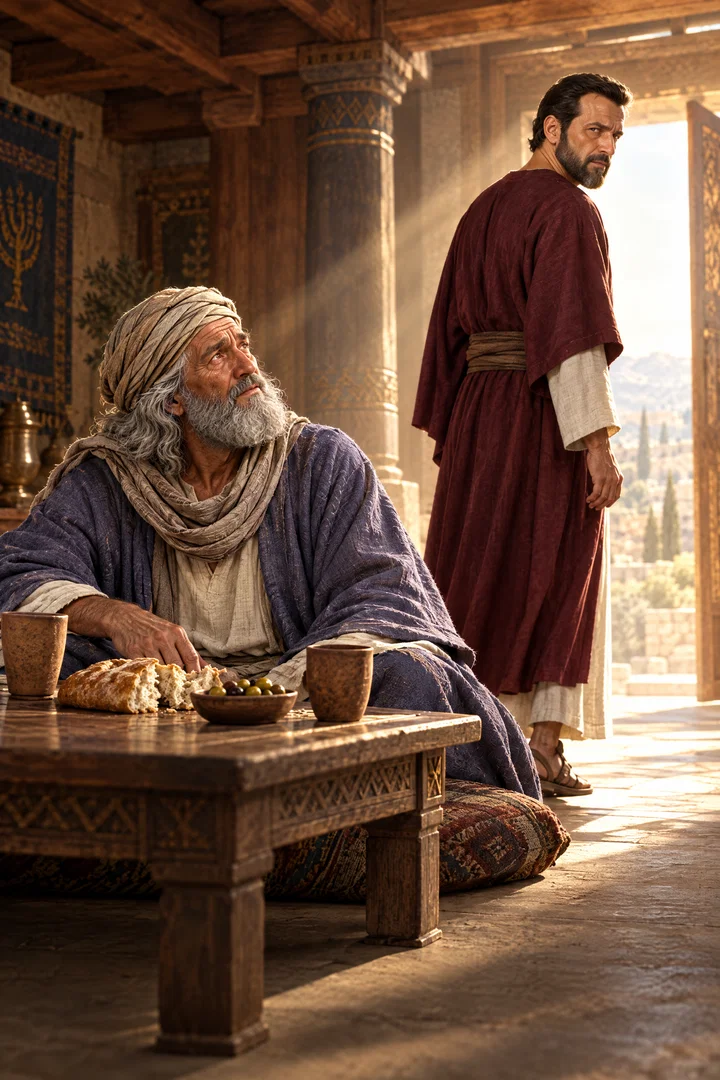
I speak not of you all: I know whom I have chosen: but that the scripture may be fulfilled, He that eateth bread with me hath lifted up his heel against me.
Translations
I speak not of you all: I know whom I have chosen: but that the scripture may be fulfilled, He that eats bread with me has lifted up his heel against me.
I speak not of you all: I know whom I have chosen: but that the scripture may be fulfilled, He that eateth bread with me hath lifted up his heel against me.
I speak not of you all: I know whom I have chosen: but that the scripture may be fulfilled, He that eateth bread with me hath lift up his heel against me.
I speak not of you all; I know whom I have chosen: but that the scripture may be fulfilled, He that eateth bread with me, hath lifted up his heel against me.
Revised Version, American Standard Version
I speak not of you all: I know whom I have chosen: but that the scripture may be fulfilled, He that eateth my bread lifted up his heel against me.
not concerning you all do I speak; I have known whom I chose for myself; but that the Writing may be fulfilled: He who is eating the bread with me, did lift up against me his heel.
I speak not of you all. I know those whom I have chosen; but that the scripture might be fulfilled, He that eats bread with me has lifted up his heel against me.
Not, concerning you all, am I speaking,—for, I, know of whom I made choice; but…that, the Scripture, might be fulfilled: He that feedeth on my bread, hath lifted up against me, his heel.
I am not speaking about all of you; I know whom I have chosen. But this is to fulfill the Scripture: ‘ The one who shares My bread has lifted up his heel against Me.’
I am not speaking about all of you; I know whom I have chosen. But this is to fulfill the Scripture: ‘ The one who shares bread with Me has lifted up his heel against Me.’
I don’ t speak concerning all of you. I know whom I have chosen; but that the Scripture may be fulfilled, ‘ He who eats bread with me has lifted up his heel against me.’
I am not talking of you all: I have knowledge of my true disciples, but things are as they are, so that the Writings may come true, The foot of him who takes bread with me is lifted up against me.
I speake not of you all: I know whom I haue chosen: but it is that the Scripture might be fulfilled, He that eateth bread with me, hath lift vp his heele against me.
Douay-Rheims (Challoner revision)
I speak not of you all: I know whom I have chosen. But that the scripture may be fulfilled: He that eateth bread with me, shall lift up his heel against me.
Pictures
Cross-references 20 of 25
- Psalms 41:9
Yea, mine own familiar friend, in whom I trusted, which did eat of my bread, hath lifted up his heel against me.
A trusted companion who shared bread turns against Jesus in Judas’s betrayal.
- Matthew 26:21
And as they did eat, he said, Verily I say unto you, that one of you shall betray me.
Jesus announces a betrayer while eating with the disciples.
- John 13:10-11
Jesus saith to him, He that is washed needeth not save to wash his feet, but is clean every whit: and ye are clean, but not all.
Jesus identifies Judas as unclean among the disciples.
- Luke 22:21
But, behold, the hand of him that betrayeth me is with me on the table.
Jesus identifies the betrayer as sharing the table with him.
- Mark 14:18
And as they sat and did eat, Jesus said, Verily I say unto you, One of you which eateth with me shall betray me.
Jesus announces that one of those eating with him will betray him.
- John 13:26
Jesus answered, He it is, to whom I shall give a sop, when I have dipped it. And when he had dipped the sop, he gave it to Judas Iscariot, the son of Simon.
Jesus identifies Judas as the betrayer by giving him the dipped sop.
- John 6:70
Jesus answered them, Have not I chosen you twelve, and one of you is a devil?
Jesus had already said that one of the twelve he chose was a devil.
- John 13:11
For he knew who should betray him; therefore said he, Ye are not all clean.
Jesus knew Judas would betray him and said the disciples were not all clean.
- John 17:12
While I was with them in the world, I kept them in thy name: those that thou gavest me I have kept, and none of them is lost, but the son of perdition; that the scripture might be fulfilled.
Judas’s loss fulfills Scripture, as Jesus’ betrayal does.
- John 13:30
He then having received the sop went immediately out: and it was night.
Judas leaves immediately after Jesus identifies him as the betrayer.
- John 13:2
And supper being ended, the devil having now put into the heart of Judas Iscariot, Simon’s son, to betray him;
Judas’s betrayal is already at work at the supper.
- Luke 22:14-20
And when the hour was come, he sat down, and the twelve apostles with him.
Describes the Passover meal Jesus shared with his disciples before his betrayal.
- Luke 22:3-6
Then entered Satan into Judas surnamed Iscariot, being of the number of the twelve.
Judas had agreed with the chief priests to betray Jesus.
- Matthew 26:14-16
Then one of the twelve, called Judas Iscariot, went unto the chief priests,
Judas agrees with the priests to betray Jesus.
- Matthew 26:24
The Son of man goeth as it is written of him: but woe unto that man by whom the Son of man is betrayed! it had been good for that man if he had not been born.
listed together as Jesus resting on prophecy under shadow of cross
- John 18:1-3
When Jesus had spoken these words, he went forth with his disciples over the brook Cedron, where was a garden, into the which he entered, and his disciples.
Judas, who betrayed Jesus, leads the group to arrest him.
- Psalms 41:4-7
I said, LORD, be merciful unto me: heal my soul; for I have sinned against thee.
Describes enemies’ schemes and hostile reports, linked to plots against Christ.
- Mark 14:49
I was daily with you in the temple teaching, and ye took me not: but the scriptures must be fulfilled.
grouped as sayings Scripture must be fulfilled
- Matthew 26:47-50
And while he yet spake, lo, Judas, one of the twelve, came, and with him a great multitude with swords and staves, from the chief priests and elders of the people.
Judas betrays Jesus and identifies him to the arresting crowd.
- Matthew 26:54-56
But how then shall the scriptures be fulfilled, that thus it must be?
grouped as sayings Scripture must be fulfilled
Commentary
Each commentary is drawn from primary sources: the writings of Ellen G. White and Adventist pioneers and periodicals. Each commentary is separate. Its own words are not a quotation; follow the references to read the source passages.
Ellen G. White
22 sources
Jesus knew whom He had chosen, and knew that one who was eating bread with Him at the table would turn against Him and betray Him.Ms 102, 1904, par. 4–720MR 149.1Ms 106, 1903, par. 29–30ST Dec 23, 1908Lt 131, 1900, par. 1–3 He said this at the foot-washing and last supper while Judas was still present with the twelve, when He was troubled in spirit and under painful restraint, and the other disciples did not yet recognize the traitor.Ms 19, 1897, par. 64–65DA 655.2–3ST Dec 23, 1908Ms 19, 1897, par. 11–13RH Nov 4, 1902 He told of the betrayal beforehand so that when it came to pass they would believe that He is He, showing He was not surprised or deceived but foresaw it as Messiah to strengthen them for His suffering.Ms 19, 1897, par. 64–6520MR 149.1Ms 47, 1897, par. 14–173SP 87.1–25RED 6.2–7.2 Though Judas was outwardly a disciple yet inwardly unconverted and corrupted by covetousness, Jesus still washed his feet and let him partake as a final act of patient mercy to bring him to repentance, which love could not compel.DA 655.2–3Ms 47, 1897, par. 14–17Ms 35, 1897, par. 3–4Ms 19, 1897, par. 11–1320MR 149.2–4 Therefore known unworthiness does not bar any from the foot-washing and the supper, for hearts cannot be read, so none are to be excluded and none should stay away because an unworthy one is present, but the erring are to be sought and restored while all beware of betraying the Lord and live in unity.Lt 117, 1897, par. 8–1021MR 346.1–3Ms 19, 1897, par. 11–13Ms 35, 1897, par. 11–1220MR 149.2–4
Meaning and Setting
Jesus knew whom He had chosen, and He knew that one of them would betray Him while sharing bread with Him.Ms 102, 1904, par. 4–7Ms 106, 1903, par. 29–30ST Dec 23, 19085RED 6.2–7.2ST May 23, 1878 That betrayal fulfilled Scripture, in that a trusted companion who shared bread with Him turned against Him.Ms 102, 1904, par. 4–7Ms 106, 1903, par. 29–30ST Dec 23, 19085RED 6.2–7.2Ms 120, 1897, par. 9 He understood the character and secret purpose of Judas perfectly, even as Judas shared the Passover meal and was included in His tender ministry.Ms 106, 1903, par. 29–30ST May 23, 1878Ms 120, 1897, par. 9 He revealed the traitor's purpose in advance as proof of divine foresight, so that His faithful disciples could believe when it happened and remember that He had not been surprised or deceived, and so that its fulfillment would serve as evidence of His Messiahship.5RED 6.2–7.2ST May 23, 1878Ms 120, 1897, par. 9
The words not of all mean that the truly chosen are those who render obedience to His lessons and believe in Him as a personal Saviour, and in that sense Judas was not one of the chosen.Ms 47, 1897, par. 14–1720MR 148.5–7 Though he acted as a disciple, showed interest, in a sense believed, and had valuable qualities, he was inwardly unconverted, corrupted by covetousness, unwilling to yield his will and way, to be born again of incorruptible seed, and to receive transforming grace.Ms 47, 1897, par. 14–1720MR 148.5–7 He was given every opportunity to receive Christ but refused, never received Him, never experienced soul cleansing and change of character, never was converted or a true son of God, and lost nothing once possessed because he never possessed it.Ms 47, 1897, par. 14–17 Because he would not believe, he fulfilled the Scripture by lifting up his heel against Christ while eating bread with Him.20MR 149.1Ms 47, 1897, par. 14–17
That fulfilled Scripture means the one who shared bread with Jesus at the Passover and sacramental supper turned against Him.20MR 149.1Lt 131, 1900, par. 1–3Ms 35, 1897, par. 3–420MR 149.2–4 Judas partook with the rest of the disciples of the bread and wine symbolizing Christ's body and blood at the sacramental table, Christ's last gift to His disciples, and this was the last time Judas would be present with the twelve.Ms 35, 1897, par. 3–4 That the Scripture might be fulfilled he left that table to complete his work of betrayal.Ms 35, 1897, par. 3–4 At that solemn service he had not yet passed the boundary of God's mercy and love and could still have recognized his awful pledged work and thrown himself penitent at Jesus' feet, but when his decision was made to carry out his purpose and he left the presence of his Lord and fellow disciples, that barrier was passed.Ms 35, 1897, par. 3–4 His outward participation did not prove him united in heart with Christ.20MR 149.2–4
The verse was spoken at the foot-washing and last supper as part of the words to be remembered in keeping the ordinance.Ms 19, 1897, par. 64–65 In giving the example that His followers should wash one another's feet, He declared that He was not speaking of all the disciples, for He knew whom He had chosen, and He announced beforehand that the Scripture about betrayal by a close companion would be fulfilled, so that when it came to pass the disciples would believe that He is He.Ms 19, 1897, par. 64–65DA 655.2–3 Jesus stated this plainly while Judas was still present at the table with the twelve, though the other disciples did not yet recognize the traitor or understand the warning.DA 655.2–3ST Dec 23, 1908 Afterward its fulfillment helped them see that Jesus had known what was coming.DA 655.2–3
When He testified that one of them would betray Him He was troubled in spirit.Ms 19, 1897, par. 11–13 The traitor's presence placed Him under painful restraint during His sacred last meeting with His disciples, so He could not freely express His feelings, and His words excluding some of them revealed that restraint.Ms 19, 1897, par. 11–13RH Nov 4, 1902 Only after Judas went out to do Satan's work in Jerusalem, no longer favored by God but abandoned, was the restraint removed, and Jesus became cheerful and radiant and spoke to the remaining disciples with tenderest affection.RH Nov 4, 1902
Foretold Betrayal and Mercy
Jesus spoke of the betrayal beforehand at the foot-washing, as part of words to be remembered in keeping the ordinance, declaring that He was not speaking of all because He knew whom He had chosen and that Scripture about a close companion sharing bread with Him would be fulfilled, so that when it came to pass the disciples would believe that He is He.Ms 19, 1897, par. 64–6520MR 149.1Ms 47, 1897, par. 14–17Ms 19, 1897, par. 11–13 That foretelling pointed to the sacramental supper where the one eating bread with Him lifted up his heel against Him, and because Judas would not believe he fulfilled that Scripture.20MR 149.1Ms 47, 1897, par. 14–17
The advance revelation and its fulfillment were evidence of Messiahship and divine foresight, revealing hidden treachery to the others and showing He had not been surprised or deceived.3SP 87.1–25RED 6.2–7.2ST May 23, 1878 By telling them beforehand He strengthened their faith for His coming humiliation, betrayal, rejection and suffering, so that after Judas's end they would remember His warning and believe when it happened.3SP 87.1–2ST May 23, 1878 Though He knew exactly whom He had chosen and understood Judas's character perfectly, knowing he was working to betray Him into the hands of His enemies, He did not withhold His ministry from him.DA 655.2–3Ms 19, 1897, par. 11–13 He washed his feet and let him partake of the sacrament, showing God's patience and mercy toward even the most grievously erring and long patience with perverse human nature, while outward participation did not prove a heart united with Christ.DA 655.2–3Ms 19, 1897, par. 11–1320MR 149.2–4ST Feb 9, 1915
That washing and warning were convincing proof of foreknowledge and the last act of love He could show to bring Judas to repentance and save him from that fatal step and from Satan's snare, with every opportunity granted and nothing left undone that could be done.Ms 19, 1897, par. 11–133SP 87.1–2Ms 120, 1897, par. 9 At that solemn service, the last time Judas would be present with the twelve at Christ's last gift of bread and wine symbolizing body and blood, he had not yet passed the boundary of mercy and love and could still have recognized his pledged work, thrown himself penitent at Jesus' feet, and turned back after the tender ministry and final appeal of love.Ms 35, 1897, par. 3–43SP 87.1–2Ms 120, 1897, par. 9 He rejected it, made his decision to carry out his purpose, and left that table and the presence of his Lord and fellow disciples to complete his work of betrayal, passing the barrier, for infinite love could not compel him to repent, confess his sin, and be saved.Ms 35, 1897, par. 3–4Ms 19, 1897, par. 11–13Ms 120, 1897, par. 9
Though he acted as a disciple with interest and in a sense believed, and had valuable qualities, he was inwardly unconverted and never a true son of God.Ms 47, 1897, par. 14–17 Given every opportunity to receive Christ, he refused and never received Him, never experienced soul cleansing and change of character, never was converted, and lost nothing once possessed because he never possessed it.Ms 47, 1897, par. 14–17 Corrupted by covetousness, he was unwilling to yield his will and way, unwilling to be born again of incorruptible seed and to receive transforming grace.Ms 47, 1897, par. 14–17 The verse belongs to Christ's preparation of the disciples for the coming trial and separation in which, betrayed by Judas into the hands of wicked men, He would be rejected and made to suffer, events that would test them as they witnessed them.Lt 336, 1906, par. 5–9
Ordinance and Present Application
Known unworthiness does not bar a person from foot-washing and the supper, for though He knew Judas would leave the table to betray Him He still washed his feet and did not refuse him a place at the table.Ms 19, 1897, par. 11–13Ms 35, 1897, par. 11–1220MR 149.2–4 Outward sharing of bread and fellowship does not prove a person is united in heart with Christ, yet human beings cannot read the secrets of the soul and cannot tell who is worthy and who is not.Ms 35, 1897, par. 11–1220MR 149.2–4 Therefore the service is not to be deferred because some professed believers present are not cleansed from sin, no one is to be excluded and no one may decide who shall take part, and no one may refuse to attend because an unworthy person is present.Ms 19, 1897, par. 11–13Ms 35, 1897, par. 11–1220MR 149.2–4
One supposed to be in error and sin is not to be refused association and left exposed to Satan but is to be sought in order to restore him.Ms 19, 1897, par. 11–13 Even the humblest service is to be done to make sinners heirs of eternal treasure.Ms 19, 1897, par. 11–13 The verse also warns against acting the part of Judas and betraying the Lord, and for that reason the chapter should be studied carefully with prayer.Lt 117, 1897, par. 8–10
The chapter containing the verse expresses God's will for His people.21MR 346.1–3Lt 131, 1900, par. 1–3 Its instruction is a remedy for dissension and a call to unity with one another and with Christ.21MR 346.1–3Lt 131, 1900, par. 1–3 That call to unity, given especially in Christ's prayer for unity, is to be applied in resisting dissension and Satan's attacks.21MR 346.1–3Lt 131, 1900, par. 1–3
Sources
Pioneers and periodicals
49 sources
At the Passover supper on the night before His death, while they were eating and before He instituted the memorial supper, Jesus said His words of blessing did not apply to all present because a betrayer was among His chosen disciples.ST Jan 10, 1900ST Jan 10, 1900ST Nov 22, 1883ST Apr 2, 1912ST Aug 12, 1886
He knew beforehand which one would betray Him, that Judas whom He had chosen among the twelve would turn against Him, and He made it known while Judas was still at the table.ST Feb 9, 1915ST Aug 12, 1886ST Oct 5, 1882PGGC 83.2–3ST Jun 3, 1897
The treachery fulfilled Scripture, that a trusted familiar friend who shared bread and confidence with Him would lift up his heel against Him.ST Jul 26, 1883ST Dec 7, 1882RH Sep 9, 1902ST May 12, 1898
He told it beforehand so that when it came to pass the disciples would believe in His divine foresight and Messiahship and know He had not been surprised or deceived.ST May 23, 1878ST Aug 12, 1886ST Oct 5, 1882PGGC 83.2–3ST Feb 11, 1897
His warning gave Judas a final opportunity to turn back, yet even while sorrowful and restrained by the traitor's presence Jesus faced it with calm, loving self-command and humble service.ST Aug 12, 1886ST Aug 28, 1879ST Sep 26, 1906ST Jun 3, 1897
Supper Setting and Sequence
The words were spoken at the Passover supper on the night before His death, while they were eating together.ST Nov 22, 1883ST Apr 2, 1912 That supper was the last Passover before the Lamb of God was slain for the sins of the world.ST Aug 12, 1886 The betrayal named in the verse was identified while they were eating the Passover meal, before He instituted the memorial supper.ST Nov 22, 1883
When He told them that one of them would betray Him, the disciples were troubled and each asked whether it was himself, without suspecting Judas.RH May 18, 1869 He Himself was troubled in spirit, and they sensed His grief without knowing its cause.ST Aug 12, 1886
Those at the table were divided by pride and jealousy over who would have the highest place.ST May 18, 1904 Judas, who had already agreed to betray Him, was present among them, and He knew his purpose.ST Jul 12, 1905ST May 18, 1904 That alienation was the occasion for the humble service of foot-washing.ST May 18, 1904
The order was the Passover meal, the dispute over who was greatest, the washing of feet, and then the Lord's Supper.ST Jul 12, 1905 The foot-washing came before the blessing and sharing of the bread and wine, after He had washed their feet and on the same night He instituted the Lord's Supper.CO 45.1–2RH Aug 19, 1858 After the breaking of bread He said that one of those present would betray Him, with Judas still remaining with Him and the disciples through these events.ST Jul 12, 1905ST Feb 4, 1903
While they were eating He identified Judas by giving him the sop, making clear the treachery was known.ST Oct 5, 1882 He stated plainly while Judas was still present at the table that a betrayer was there, though the other disciples did not yet recognize the traitor.ST Dec 23, 1908 Judas then went out, ending his presence among Him and the loyal disciples.ST Oct 5, 1882 The discourse recorded in John 13:31 through 17 followed Judas's departure, belonging to the events on the night of the Lord's supper before Judas left the company.ST May 19, 1898
The verse belongs to the upper-room discourse extending through John 13-17, which presents His divine glories.ST Mar 9, 1888 In sequence it comes after the resurrection of Lazarus, the last public discourse and the acknowledgment from heaven, and before the farewell discourse to the disciples.ST May 26, 1909 It is part of the instruction given at the Passover supper about humility, service, blessing for obedience, and the institution of the Lord's Supper and the rite of humility, the washing of feet, to remind followers of His humiliation, humble service in salvation, and sacrifice for the world.ST May 21, 1896ST Mar 18, 1897 The order of these events connected with His last supper and death repays study because Christian hope depends on His death.ST Nov 15, 1883
After He had instructed the disciples and prayed for them that night, Judas came with a mob and He was handed over to His enemies.ST Nov 4, 1897
Chosen Disciples and Betrayer
When He says He speaks not of all and knows whom He has chosen, He means His words of blessing for humility, service and obedience do not apply to all of them, for He knows His chosen disciples and knows a traitor is present among them at the Passover supper after the washing of feet.ST Jan 10, 1900ST Jan 10, 1900ST Feb 11, 1897ST Oct 10, 1911ST Nov 15, 1883 He knew which of His chosen would betray Him, and foretold that one who shared bread with Him would turn against Him, fulfilling Scripture concerning a trusted companion.ST Jan 10, 1900ST Jan 10, 1900ST Oct 10, 1911ST Nov 15, 1883RH Apr 1, 1858
Not all who were chosen were inwardly clean, for Judas's work that night showed he was not clean, and one who shared bread with Him would betray Him in fulfillment of Scripture about a trusted companion turning against Him.ST Jul 26, 1883ST May 12, 1898ST Feb 11, 1897 Judas was chosen among the twelve and numbered among the apostles, yet would betray Him and became a false brother.ST Feb 9, 1915ST Aug 12, 1886ST Jun 3, 1897 Though chosen and given opportunity to become a disciple, with help given him, he remained responsible because he refused instruction and chose greed and theft, and his experience shows long patience with perverse human nature.ST Feb 9, 1915ST Aug 12, 1886ST Jun 3, 1897
Jesus knew Judas was not faithful among those He had chosen and knew his hidden purpose to betray Him, speaking plainly of it while Judas was still at the table.RH Nov 20, 1913 In this sense Judas was not among those He had chosen.RH Nov 20, 1913 The betrayer was a familiar friend who had lived with Him and shared His confidence and bread, one of His chosen disciples, and the act was by someone close to Him, not an enemy.ST Dec 7, 1882RH Sep 9, 1902
Prophecy Fulfilled in Scripture
The betrayal fulfills the Scripture that one who eats bread with the speaker has lifted up his heel against him, spoken in Psalm 41:9 about a trusted companion turning against him.ST Dec 7, 1882RH Sep 9, 1902 It was fulfilled in Jesus by a disciple who had lived with Him and shared His confidence and bread.ST Dec 7, 1882RH Sep 9, 1902 Judas was one of His chosen disciples and a familiar friend, so the act was by someone close to Him, not an enemy.RH Sep 9, 1902 That prophecy first applied to David and also referred to future events concerning Christ.ST Dec 7, 1882
By applying that Old Testament Scripture to Himself as fulfilled in His own experience, Jesus shows the whole Old Testament — Moses, the prophets and the Psalms — is an organic whole with one common prophetic intent centered on Christ and bearing witness of Him.ST Feb 15, 1883 By declaring that the Scripture must be fulfilled, He teaches that the Old Testament Scriptures are infallible and that no part of them is to be treated as unimportant.ST Feb 15, 1883
In the last six months before His crucifixion, as He entered the shadow of the cross, He rested His heart on Old Testament prophecy and promise amid His greatest trials and crowning sorrows.ST Feb 15, 1883 He used it to encourage and teach His disciples and to answer opponents.ST Feb 15, 1883 This shows His teaching about the Old Testament came from His heart and deepest convictions.ST Feb 15, 1883
Foresight, Character and Love
Jesus knew beforehand which of His disciples would betray Him and made that treachery known before it came to pass, foretelling as fulfilled Scripture that the one who shared bread with Him would turn against Him.ST Aug 12, 1886ST Oct 5, 1882PGGC 83.2–3 While they were eating He identified Judas by giving him the sop, and Judas then went out, ending his presence among Jesus and the loyal disciples.ST Oct 5, 1882 The fulfillment of the prediction when it came to pass shows a true prophet's word coming to pass.PGGC 83.2–3
He spoke of the betrayal in advance so that when it happened the disciples would believe that He is He, recognizing His divine foresight and Messiahship.ST May 23, 1878ST Aug 12, 1886ST Feb 11, 1897 They would thus remember that He had not been surprised or deceived.ST May 23, 1878 This stands together with the declared order that he who receives whomever Christ sends receives Christ, and he who receives Christ receives the Father who sent Him.ST Feb 11, 1897
His disclosure also gave Judas a final opportunity to turn back from the fate of a betrayer.ST Aug 12, 1886 Judas refused instruction and chose greed and theft despite the help and opportunity given him to become a disciple, and so he remained responsible.ST Jun 3, 1897 Even while sorrowful and knowing the suffering ahead, Jesus met betrayal by one of His own with calm, loving self-command, humbly serving His disciples and treating them with tenderness.ST Aug 28, 1879 His unselfish heart felt for human weakness and He prayed for forgiveness even for those who murdered Him, so the betrayal did not deter Him from loving and serving others.ST Sep 26, 1906
While Judas was still present, the traitor's presence laid painful restraint upon Him at His sacred last meeting, so that He could not freely express His feelings, and His words excluding some of them revealed that restraint.RH Nov 4, 1902 Only after Judas went out to do Satan's work in Jerusalem, no longer favored by God but abandoned, was the restraint removed, and Jesus became cheerful and radiant and spoke to the remaining disciples with tenderest affection.RH Nov 4, 1902 The turning of cherished friends against Him and denying Him was a sorrow He endured, and the experience of a traitorous companion who shared daily life with Him gave Him experience of wavering friends.ST Apr 9, 1912RH Jan 27, 1863 By God's providence His lot was cast at a degenerate time that brought Him into close contact with the greatest variety of depraved character and the highest degrees of human vileness, gaining experience of the peculiar vices and miseries of all ranks from lowest to highest.RH Jan 27, 1863 Judas, though numbered among the apostles, became a false brother, showing Christ's long patience with perverse human nature, and His sorrow under rejection means He knows and loves those who suffer rejection and betrayal.ST Feb 9, 1915ST Apr 9, 1912
Ordinance, Example and Warning
John 13 stands as plain instruction that washing of feet is an ordinance to be practiced, a memorial of the humility of the Lord and Master, the Prince of glory, just as the bread and wine memorialize His death and baptism memorializes His resurrection.RH Jun 16, 1868 The proceedings are minutely described as a very literal transaction, and Christ's example enjoins literal obedience by doing as He did.ST Jan 3, 1884 The ordinance was kept in the earlier and purer ages of this dispensation until Rome laid polluting hands on the ordinances of the church and abolished or perverted them, and at the close of this age when the gospel is to be as pure as at the beginning the perverted or neglected ordinances must be restored, with foot-washing occupying its appropriate place as a link in the golden chain.RH Jun 16, 1868
The chapter belongs to the supper on the night He instituted the Lord's Supper, when He washed the disciples' feet and instituted the rite of humility, and therefore supports practicing foot-washing alongside communion.RH Aug 19, 1858ST May 21, 1896 These observances were appointed to remind His followers of His humiliation, His humble service in the work of salvation, and His sacrifice for the world.ST May 21, 1896 In this setting Christ is the example to follow, and that example leads to close self-examination before taking the emblems of His broken body and shed blood.RH Jan 14, 1858
He enforces by example that disciples are not to claim supremacy over one another, but that service rather than domination is the rule in His church, which is the opposite of enslaving another or despising labor and the laborer.RH Oct 8, 1861 The instruction in humility was given when the disciples were divided by pride and alienation, with Judas among them, and the account afterward shows Judas resisting Jesus' humility and love and giving himself over to Satan.RH Jun 23, 1910 To lift up the heel means to turn to oppose former brethren after having been among them, as one who becomes offended and leaves the truth when persecution comes because of the word, finding the truth too strait and the road too narrow.ST May 6, 1880 The verse thus belongs to the pointing out of the betrayer in connection with the institution of the ordinance of humility, part of the events of His last supper and death presented as especially important, coming after the resurrection of Lazarus, the last public discourse and the acknowledgment from heaven, and before the farewell discourse to the disciples.ST May 26, 1909
Sources