Translations
American King James Version, King James Version, KJV Cambridge Paragraph Bible, Revised Version, American Standard Version
Pilate answered, What I have written I have written.
Webster Bible, Darby Translation
Pilate answered, What I have written, I have written.
Pilate answered, 'What I have written, I have written.'
Pilate answered—What I have written, I have written!
Berean Standard Bible, Majority Standard Bible, World English Bible
Pilate answered, “ What I have written, I have written.”
But Pilate made answer, What I have put in writing will not be changed.
Pilate answered, What I haue written, I haue written.
Douay-Rheims (Challoner revision)
Pilate answered: What I have written, I have written.
Pictures
Cross-references
- John 19:15
But they cried out, Away with him, away with him, crucify him. Pilate saith unto them, Shall I crucify your King? The chief priests answered, We have no king but Cæsar.
The leaders reject Jesus as king and declare allegiance to Caesar.
- Matthew 27:37
And set up over his head his accusation written, THIS IS JESUS THE KING OF THE JEWS.
Both record the title written and placed above Jesus on the cross.
- Luke 23:38
And a superscription also was written over him in letters of Greek, and Latin, and Hebrew, THIS IS THE KING OF THE JEWS.
Records the inscription identifying Jesus as King of the Jews.
- Mark 15:26
And the superscription of his accusation was written over, THE KING OF THE JEWS.
Gives the charge written above Jesus.
- Luke 23:13-25
And Pilate, when he had called together the chief priests and the rulers and the people,
Pilate condemns Jesus and releases Barabbas despite finding Jesus innocent.
- John 18:28-40
Then led they Jesus from Caiaphas unto the hall of judgment: and it was early; and they themselves went not into the judgment hall, lest they should be defiled; but that they might eat the passover.
Records the trial that precedes the crucifixion.
Commentary
Each commentary is drawn from primary sources: the writings of Ellen G. White and Adventist pioneers and periodicals. Each commentary is separate. Its own words are not a quotation; follow the references to read the source passages.
Ellen G. White
13 sources
It is Pilate's refusal to change the inscription set above Jesus on the cross naming Him King of the Jews, though the priests and rulers asked him to alter it.Ms 95, 1897, par. 15COS 158.6–159.2ST Jul 18, 1878 He stood firm because he was angry at his own weakness and despised their jealousy and scheming.COS 158.6–159.2ST Jul 18, 18785RED 74.2–75.1 The title stood in Hebrew, Greek, and Latin above His head near the city as the only offense charged against Him.Ms 95, 1897, par. 15ST Oct 7, 18863SP 154.2–155.1 What they wanted was wording that He merely claimed to be king, to distance themselves from the title.5RED 74.2–75.1ST Oct 7, 1886 By leaving it standing, the refusal exposed their rejection of a king from their own nation and their hypocrisy in professing loyalty to Caesar to destroy Him, while God's hand guided the writing so that this public naming of the Messiah would awaken thought and lead many to search the Scriptures.Ms 95, 1897, par. 15ST Jul 18, 1878DA 745.2–4ST Oct 7, 1886
Surrounding Sufferings and Setting
What has been written belongs to Jesus passing out of Pilate's court toward Calvary with the cross prepared for Barabbas laid upon His bruised and bleeding shoulders.DA 741.4–742.1 He was weak and suffering, having taken neither food nor drink since the Passover supper, worn by the agony in Gethsemane, betrayal and desertion by the disciples, the examinations before Annas, Caiaphas, Pilate and Herod, and insult, mockery and two scourgings through the night.DA 741.4–742.1 When the burden was laid on Him He fell fainting beneath it, taunted by the crowd while none would bear it for Him.DA 741.4–742.1 He was then taken to the place called Calvary and there crucified outside the gate of Jerusalem where felons and murderers were executed.DA 741.1–2 Dying outside the boundaries as substitute for Adam and Eve banished from Eden for transgression of the law of God, He sanctified the people with His own blood and redeemed them from the curse of the law by being made a curse for them.DA 741.1–2
The cross scene followed a night of prayer as He faced the agony of the judgment hall and the cross.ST Aug 31, 1915 In this setting He was mocked and insulted, crowned with thorns, and nailed to the cross.Lt 1a, 1861, par. 2–5 His sacrifice shows that the way of self-denial is not too difficult when compared with what He gave up.Lt 1a, 1861, par. 2–5 It belongs to the time when the Bridegroom is taken away from the disciples, as Christ approaches the cross and descends into humiliation in the hands of wicked men.ST Jul 7, 1898 His own nation clamored for His blood, Herod and his soldiers plaited the crown of thorns for His brow, He was clad in the purple robe and mocked and struck with the reed, and He was scourged as the worst of criminals while the murderous Barabbas was chosen in His place.ST Jul 7, 1898
Lifted up on the cross and dying as a malefactor in whom their hopes of eternal life were centered, faith was tried and hope and courage failed, so that the disciples had cause to mourn and fast.ST Jul 7, 1898 It belongs to the beholding of the Son of God dying upon the cross in a terrible, trying hour of gloom and darkness.Ms 126, 1907, par. 9–10 The disciples failed to endure the proving of that hour and lost their faith as they beheld it.Ms 126, 1907, par. 9–10 Had they watched and received the knowledge of His sufferings and the glory that should follow, some rays of hope from that knowledge would have lighted up the darkness and sustained their faith.Ms 126, 1907, par. 9–10
Pilate's Refusal and Purpose
“What I have written I have written” is Pilate’s refusal to change the inscription above Jesus on the cross identifying Him as King of the Jews, despite the request of the priests, chief priests and rulers.Ms 95, 1897, par. 15COS 158.6–159.2ST Jul 18, 18785RED 74.2–75.1DA 745.2–4 He coldly and firmly stood by what he had written and insisted the words remain unchanged.COS 158.6–159.2ST Jul 18, 18785RED 74.2–75.1ST Oct 7, 1886 He refused because he was angry with himself for his earlier weakness in yielding, and because he thoroughly despised the jealous and artful priests and rulers.COS 158.6–159.2ST Jul 18, 18785RED 74.2–75.1ST Oct 7, 1886 Contempt for them and anger at his own former weakness made him unyielding.ST Jul 18, 18785RED 74.2–75.1ST Oct 7, 1886
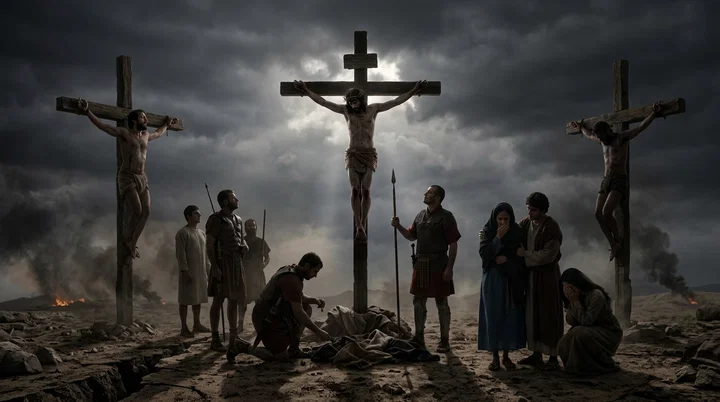
The inscription he had written in three different languages — Hebrew, Greek, and Latin — was placed upon the cross above His head near the city.Ms 95, 1897, par. 15ST Oct 7, 1886 It read that Jesus was the King of the Jews and named no other offense, kingship being the only charge stated.ST Oct 7, 18863SP 154.2–155.1 The priests and chief priests asked him to change it to say only that Jesus claimed to be king, seeking by that wording to distance themselves from the title.5RED 74.2–75.1ST Oct 7, 1886 They wanted the claim made His alone rather than left standing as a declaration concerning them.5RED 74.2–75.1ST Oct 7, 1886
By leaving the words standing, the refusal made conspicuous the leaders’ rejection of a king from their own nation.ST Jul 18, 18785RED 74.2–75.1DA 745.2–4 It exposed their hypocrisy in claiming loyalty to Caesar and Rome while sacrificing their nation’s existence to destroy Jesus.DA 745.2–4ST Oct 7, 18863SP 154.2–155.1 It was understood by all as a virtual public declaration that the Jews, by crying for crucifixion and disclaiming any king of their own nation in favor of Caesar, judged any man who aspired to be King of the Jews, however innocent otherwise, worthy of death.ST Oct 7, 18863SP 154.2–155.1 They had made allegiance to Rome their reason for condemning anyone who aspired to that kingship.ST Oct 7, 18863SP 154.2–155.1
The placement was directed by God, with His hand guiding the writing as living truth providentially set to awaken thought.Ms 95, 1897, par. 15DA 745.2–4 The public declaration of Jesus as Messiah, visible near the city to people from many lands, was meant to lead to investigation of the Old Testament Scriptures.Ms 95, 1897, par. 15DA 745.2–4
Sources
Pioneers and periodicals
28 sources
Pilate refused the chief priests' demand to change the title he had placed over Jesus on the cross and left it standing exactly as he had written it.ST May 17, 1899ST May 20, 1897ST May 17, 1899 The title named Jesus of Nazareth as King of the Jews, written in three languages and set above His head according to the Roman custom of stating the condemned man's crime, charging Him with no other offense than a kingship not granted by Rome.ST Mar 15, 1877ST May 17, 1899ST May 20, 1897 It was meant as a sneer at the Jewish leaders and a protest that he had not freely consented to the condemnation, a final stubborn act of conscience and independence after he had cowardly yielded to the crowd and delivered an innocent man to scourging and crucifixion.ST Jul 18, 1878ST Oct 12, 1876ST Mar 15, 1877ST Oct 12, 1876 Though written in sarcasm, it unwittingly and providentially declared the truth that Jesus holds Judah's scepter as the promised Shiloh, who on that Passover day gave His life on the cross as the sin-atoning sacrifice for fallen humanity.ST May 17, 1899ST Oct 13, 1881RH Nov 10, 1863 What is written stands and cannot be recalled or revised, so a person remains responsible for his words and deeds and should write nothing without forethought and prayer for divine help to keep the record free from error.ST May 9, 1878RH Sep 27, 1870RH Nov 12, 1872
Pilate's Unchanged Inscription
Pilate refused the request of the chief priests and rulers to alter the title he had placed on the cross of Jesus, and firmly stood by what he had written so that it would remain as written.ST May 17, 1899ST May 20, 1897ST May 17, 1899ST May 28, 1896ST May 20, 1897 He would not change its wording, “The King of the Jews,” but left that declaration unchanged despite their objection.ST May 17, 1899ST May 28, 1896ST May 20, 1897ST Jan 24, 1906 The inscription identified Jesus as Jesus of Nazareth, the King of the Jews, following the Roman custom of stating the condemned person’s alleged crime.ST Mar 15, 1877ST May 17, 1899ST May 20, 1897 It was written and placed above His head on the cross in three different languages, and it named no other offense.ST Oct 7, 1886ST May 20, 1897 By that form it presented kingship without Roman appointment as a crime, and intimated the fate awaiting a king who might deliver the Jews from Roman rule.ST May 17, 1905
The wording was a deliberate Roman protest against the injustice and an explicit sneer at the Jewish leaders.ST Oct 12, 1876ST Mar 15, 1877 It was meant to show that Pilate had not freely approved the condemnation.ST Oct 12, 1876ST Oct 12, 1876 The refusal was a final, belated act of independence and conscience after he had yielded to pressure and consented to the crucifixion of an innocent man to please the crowd.ST Oct 12, 1876ST Oct 12, 1876 Angry with himself for his earlier weakness and contemptuous of the jealous and artful priests and rulers, he would not change this last inscription.ST Jul 18, 1878ST Oct 7, 1886 It could not undo his choice or restore his lost peace of mind.ST Oct 12, 1876ST Oct 12, 1876
His firmness on the inscription contrasts with his weakness at the trial, where although he declared Jesus innocent, self-interest and cowardice led him to hand Jesus over to scourging and crucifixion.ST May 17, 1899 His efforts to stir the crowd’s pity failed, and the test exposed his cowardice and the Jews’ disloyalty. The same chapter also records Jesus’ care for His mother, Nicodemus’s courage, and lessons that give life to every believer. The refusal left standing what all understood as a virtual declaration that the Jews had rejected having a king of their own nation, had claimed allegiance to Caesar and Rome, yet judged any man who aspired to be King of the Jews, however innocent otherwise, worthy of death, making their rejection conspicuous.ST Jul 18, 1878ST Oct 7, 1886ST May 20, 1897
Prophecy and Atonement Fulfilled
Though written perhaps in sarcasm, the unaltered title over the cross declared the truth, for unwittingly and providentially it publicly proclaimed Jesus as holder of Judah's scepter and the promised king of Shiloh's coming.ST May 17, 1899ST Oct 13, 1881 His refusal to change it stood firm even though he had failed before to stand by his own judgment that Jesus was innocent and to prevent His death.ST May 17, 1899
The crucifixion to which this belongs fulfilled Scripture, though Israel's learned teachers failed to recognize it.ST Jun 7, 1899 John 19:16-42 gives the account of Jesus crucified and buried in parallel with Matthew 27:31-66, Mark 15:21-47, and Luke 23:35-53, showing that Christ died for sins according to the Scriptures.ST Mar 20, 1901 In that account Christ our passover, the Lamb of God and antitype of the Passover, was sacrificed on the fourteenth day of the first month, the very day the Passover lamb was slain.RH Oct 30, 1855RH Dec 15, 1868 That timing fulfilled the Passover type exactly as to time, showing that the grand event noted by a typical day meets its antitype on the very day of the type, which mere preliminary and circumstantial offerings do not prevent.RH Oct 30, 1855
His death shows that sin brought the Christ who came from heaven to suffer and die on the cross as a sin-atoning sacrifice.RH Nov 10, 1863 As King of the Jews He journeyed to the cross and was crucified, and His death was the culmination of the steps of sacrifice by which He gave His life for fallen humanity.
The cross scene followed a night of prayer as He faced the agony of the judgment hall and the cross.ST Aug 31, 1915 That setting of trial before Pilate illustrates merely partial willingness to follow Him, for going with Him to Gethsemane and to Pilate's judgment hall without giving one's life at Calvary is like an offering bruised but released, lacking complete consecration.ST Sep 12, 1900 It belongs to the time when the Bridegroom is taken away, when Christ approached the cross and descended into humiliation in the hands of wicked men, with His own nation clamoring for His blood.ST Jul 7, 1898 Mocked in purple robe with plaited crown of thorns upon His brow and struck with the reed, scourged as the worst of criminals while the murderous Barabbas was chosen in His place, He was lifted up to die as a malefactor in whom the disciples' hopes of eternal life were centered, so that faith was tried and hope and courage failed and the disciples had cause to mourn and fast.ST Jul 7, 1898 Even when He hung dead upon a Roman cross and lay dead in the tomb, power remained in His Name to wield mighty influence over large numbers of followers and to win believers to the truth, to the astonishment of His crucifiers.ST May 25, 1904 Calvary together with Gethsemane gives the greatest showing of His compassion and affection, the same sleepless watchcare and tender gaze that will make His coming transcendently joyous to those watching for Him.RH Dec 23, 1873
Enduring Record and Application
What is written stands and cannot be recalled or revised, for Pilate's answer expresses the permanence of a written record.ST May 9, 1878RH Sep 27, 1870RH Nov 12, 1872 Once done it is beyond reach and becomes part of one's own history, like a letter sent away, like words spoken and deeds done.ST May 9, 1878RH Sep 27, 1870 A person remains responsible for what is written even if it was written carelessly or without meaning, and should not write what is not meant.RH Nov 12, 1872 Life has no proof-sheet on which to correct its errors, so forethought and fervent prayer for divine help are needed to keep that record from errors.ST May 9, 1878RH Sep 27, 1870
The inscription remained in place despite objections, for Pilate firmly refused to change what he had written above Jesus on the cross.ST Jan 24, 1906 It was the inscribing of a magnificent title over the cross on which Christ was fixed to perish in ignominy and pain.ST Jan 24, 1906 That image applies to Christianity when political power gives her apparent honors while also wounding and corrupting her.ST Jan 24, 1906 Those who thrust temporal sovereignty upon her treat her as Christ was treated, inscribing magnificent titles over her while fixing her to the same ignominy and pain.
Sources