John 19:21
Then said the chief priests of the Jews to Pilate, Write not, The King of the Jews; but that he said, I am King of the Jews.
Translations
American King James Version, King James Version, KJV Cambridge Paragraph Bible, Webster Bible
Then said the chief priests of the Jews to Pilate, Write not, The King of the Jews; but that he said, I am King of the Jews.
Revised Version, American Standard Version
The chief priests of the Jews therefore said to Pilate, Write not, The King of the Jews; but, that he said, I am King of the Jews.
The chief priests of the Jews said, therefore, to Pilate, 'Write not — The king of the Jews, but that one said, I am king of the Jews;'
The chief priests of the Jews therefore said to Pilate, Do not write, The king of the Jews, but that he said, I am king of the Jews.
The High-priests of the Jews, therefore, were saying unto Pilate—Do not be writing, The King of the Jews; but that, he, said: King of the Jews, I am.
Berean Standard Bible, Majority Standard Bible
So the chief priests of the Jews said to Pilate, “ Do not write, ‘ The King of the Jews,’ but only that He said, ‘ I am the King of the Jews.’”
The chief priests of the Jews therefore said to Pilate, “Don’ t write, ‘ The King of the Jews,’ but, ‘ he said, “ I am King of the Jews.”’”
Then the chief priests of the Jews said to Pilate, Do not put, The King of the Jews, but, He said, I am the King of the Jews.
Then saide the hie Priests of the Iewes to Pilate, Write not, The King of the Iewes, but that he sayd, I am King of the Iewes.
Douay-Rheims (Challoner revision)
Then the chief priests of the Jews said to Pilate: Write not, The King of the Jews; but that he said, I am the King of the Jews.
Pictures
Cross-references
- Mark 15:26
And the superscription of his accusation was written over, THE KING OF THE JEWS.
Mark records the charge written above Jesus.
- Matthew 27:27-31
Then the soldiers of the governor took Jesus into the common hall, and gathered unto him the whole band of soldiers.
The passage echoes the soldiers’ mock homage and humiliation of Jesus.
- Matthew 27:37
And set up over his head his accusation written, THIS IS JESUS THE KING OF THE JEWS.
The title placed over Jesus on the cross identifies him as King of the Jews.
- Luke 23:38
And a superscription also was written over him in letters of Greek, and Latin, and Hebrew, THIS IS THE KING OF THE JEWS.
Luke records the inscription over Jesus identifying him as King of the Jews.
- John 19:1-3
Then Pilate therefore took Jesus, and scourged him.
Jesus is scourged and mocked with the title King of the Jews.
- John 19:15
But they cried out, Away with him, away with him, crucify him. Pilate saith unto them, Shall I crucify your King? The chief priests answered, We have no king but Cæsar.
The priests disown their king and claim allegiance to Caesar.
- Mark 15:17-19
And they clothed him with purple, and platted a crown of thorns, and put it about his head,
The purple robe, crown of thorns, and mock salutation portray Jesus as King of the Jews.
- John 19:12
And from thenceforth Pilate sought to release him: but the Jews cried out, saying, If thou let this man go, thou art not Cæsar’s friend: whosoever maketh himself a king speaketh against Cæsar.
priests' treason charge Pilate echoed
- Matthew 27:41-42
Likewise also the chief priests mocking him, with the scribes and elders, said,
The chief priests mock Jesus by challenging his claim to be King.
- John 18:33-37
Then Pilate entered into the judgment hall again, and called Jesus, and said unto him, Art thou the King of the Jews?
Jesus is questioned about his kingship during the trial.
- Genesis 49:10
The sceptre shall not depart from Judah, nor a lawgiver from between his feet, until Shiloh come; and unto him shall the gathering of the people be.
Judah’s scepter and Shiloh’s coming point to Jesus as King of the Jews.
Commentary
Each commentary is drawn from primary sources: the writings of Ellen G. White and Adventist pioneers and periodicals. Each commentary is separate. Its own words are not a quotation; follow the references to read the source passages.
Ellen G. White
15 sources
The chief priests asked Pilate to change the inscription from declaring Jesus to be King of the Jews to saying He had only claimed it, but Pilate refused to alter what he had written.Ms 95, 1897, par. 15COS 158.6–159.2DA 741
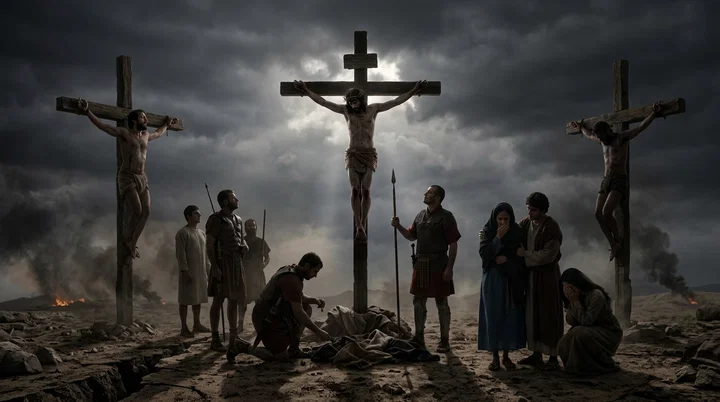
It stood above His head on the cross at Calvary outside Jerusalem, written in Hebrew, Greek, and Latin where thousands coming to the city could see and read it, placed there by a higher power than Pilate or the Jews as a public testimony that Jesus of Nazareth is the Messiah.Ms 95, 1897, par. 15DA 741.1–2DA 745.2–4
Their objection exposed their own rejection, for in demanding the change and professing loyalty to Caesar they declared they wanted no king of their own nation, while the unaltered wording turned their cry for crucifixion back upon them as the public charge on which an innocent man was condemned to death.ST Jul 18, 1878DA 745.2–45RED 74.2–75.13SP 154.2–155.1ST Oct 7, 1886
Pilate coldly refused to change it because he was angry at his own weakness in condemning Jesus and thoroughly despised their jealousy and craft.DA 745.2–4ST Oct 7, 1886
The scene belongs to the taking away of the Bridegroom when hope failed as He was mocked as king and lifted up as a malefactor, yet His self-denial on the cross is the great sacrifice and costly price of salvation for soul and body.ST Jul 7, 1898Lt 1a, 1861, par. 2–5Ms 8, 1886, par. 8Lt 122, 1901, par. 15Ms 56, 1901, par. 8
Wording, Setting, and Providence
The chief priests asked Pilate to change the wording on the cross from declaring Jesus to be King of the Jews to saying only that he had claimed to be king, but Pilate refused to alter it and it remained as he had written it.Ms 95, 1897, par. 15COS 158.6–159.2DA 741ST Jul 18, 1878DA 745.2–4 Their demand was to soften a declaration into a mere claim of Jesus' own making.COS 158.6–159.2DA 741ST Jul 18, 18785RED 74.2–75.1 The refusal left the inscription standing exactly in its original form.Ms 95, 1897, par. 15COS 158.6–159.2ST Jul 18, 18785RED 74.2–75.1
The request belongs to John's record of Jesus being led out and crucified at the place called Calvary outside the boundaries of Jerusalem.Ms 95, 1897, par. 15DA 741.1–2DA 745.2–4 The inscription was set conspicuously above His head in Hebrew, Greek, and Latin, visible near the city to all who could read it.Ms 95, 1897, par. 15DA 745.2–4ST Oct 7, 1886 Placed there, it would be noticed by thousands from all lands gathered at Jerusalem.Ms 95, 1897, par. 15DA 745.2–4ST Oct 7, 1886 A higher power than Pilate or the Jews directed the inscription, and by God's providence its wording was preserved and placed there as if transcribed by a hand God guided.Ms 95, 1897, par. 15DA 745.2–4 It stood as a public testimony to the truth about Christ that Jesus of Nazareth is the Messiah, meant to awaken thought and investigation of the Old Testament Scriptures as living truth.Ms 95, 1897, par. 15DA 745.2–4
Rejection Exposed by Objection
The request to soften the wording was itself a rejection of Jesus as king, an insistence on Roman authority, a declaration of allegiance to Caesar, and a disclaiming of any desire for a king of their own nation.ST Jul 18, 18785RED 74.2–75.13SP 154.2–155.1ST Oct 7, 1886 The inscription irritated the priests because it turned their own words back upon them.DA 745.2–4ST Oct 7, 1886 It exposed what they had done in crying for crucifixion and in declaring that they had no king but Caesar and that whoever claimed another king was a traitor.DA 745.2–4ST Oct 7, 1886
Pilate's wording laid bare their position in a declaration understood by all, that from allegiance to Rome the Jews judged any man who aspired to be King of the Jews, however innocent otherwise, worthy of death.DA 745.2–4ST Oct 7, 1886 No other offense was named against Jesus, and the inscription publicly expressed the charge on which He was condemned, that He aspired to be king.DA 745.2–45RED 74.2–75.1ST Oct 7, 1886 In plotting to save the nation by killing Christ they overreached themselves, becoming ready to sacrifice even their national existence.DA 745.2–4ST Oct 7, 1886 That readiness revealed their hypocrisy.DA 745.2–4
Pilate coldly refused to change what he had written.DA 745.2–4ST Oct 7, 1886 He did so because he was angry with himself for his weakness in condemning Jesus.DA 745.2–4ST Oct 7, 1886 He did so also because he thoroughly despised the jealous and artful priests and rulers.DA 745.2–4ST Oct 7, 1886
Trial and Grace at the Cross
John 19:21 belongs to the taking away of the Bridegroom, when the disciples had cause to mourn and fast.ST Jul 7, 1898 His own nation clamored for His blood and gave Him into the hands of wicked men, and Herod and his soldiers set the crown of thorns upon His sacred brow.ST Jul 7, 1898 He was clothed in the purple robe, mocked with bowing before Him, and struck with the reed placed in His hand as He was derided and treated with contempt as a king.ST Jul 7, 1898Lt 1a, 1861, par. 2–5 He who was expected to take His place on David's throne was scourged as the worst of criminals, rejected while the murderous Barabbas was chosen in His place, and lifted up on the cross to die as a malefactor.ST Jul 7, 1898 Seeing Him in whom their hopes of eternal life were centered brought trial to their faith and failure to their hope and courage.ST Jul 7, 1898
That scene of suffering before and during the crucifixion displays the self-denial Christ endured for humanity.Lt 1a, 1861, par. 2–5 The cross in this account stands for the great sacrifice made for humanity at Calvary.Lt 1a, 1861, par. 2–5Ms 56, 1901, par. 8
The verse belongs to the terrible, trying hour of gloom when the Son of God was dying on the cross.Ms 126, 1907, par. 9–10 Christ had foretold this ground of test and trial, yet the disciples failed to endure the proving and lost their faith as they beheld Him dying.Ms 126, 1907, par. 9–10 Because they were overcome with sleep and failed to watch and pray, they did not receive the light God desired to give them in a knowledge of the sufferings of Christ and the glory that should follow, and they lost the blessing of sharing His self-sacrifice.Ms 126, 1907, par. 9–10 Had they remained watching, rays of hope would have lighted that darkness at the cross and sustained their faith, and Peter would not have denied his Lord before his enemies.Ms 126, 1907, par. 9–10
The verse is joined to the account of Jesus' crucifixion and to His death on the cross as the basis for the grace and power He gives and as evidence that He is present to help.Ms 8, 1886, par. 8 At Calvary His death is the costly ground of salvation for soul and body, and His blood is the price by which people are bought.Lt 122, 1901, par. 15 They are therefore called to bring their lives into conformity with His will.Ms 8, 1886, par. 8Lt 122, 1901, par. 15
Sources
Pioneers and periodicals
27 sources
The verse records that the chief priests of the Jews objected to the title Pilate placed over Jesus on the cross and asked him to change it from declaring him to be their king to saying only that he had claimed to be so.ST May 20, 1897ST May 17, 1899ST May 17, 1905 That title identified Jesus of Nazareth as the Jews' king, set conspicuously above his head in Hebrew and Latin and Greek, and it was read by many because the crucifixion place was near the city.ST Oct 7, 1886ST May 20, 1897 It stated the charge for which he was executed, as condemned persons were labeled with their crime, thus treating kingship without Roman appointment as a capital offense and warning of the fate of any Jewish king who would free the people from Rome.ST Mar 15, 1877ST May 17, 1905 Pilate's wording was a deliberate taunt that turned the leaders' own cries back upon them, exposing that from allegiance to Rome they judged any aspirant to that kingship worthy of death however innocent otherwise, and he coldly refused to alter or qualify what he had written.ST Jul 18, 1878ST Oct 7, 1886ST May 20, 1897ST Mar 15, 1877ST Oct 12, 1876 His firmness was a small belated protest against condemning an innocent man, born of resentment at dictation, anger at his own weakness, and contempt for the priests, in contrast with his earlier failure to protect one he judged innocent.ST Jul 18, 1878ST Oct 12, 1876ST May 17, 1899 Though meant in sarcasm, the unaltered title providentially declared to the world the truth that Jesus is King of the Jews and heir to Judah's scepter.ST May 17, 1899ST Oct 13, 1881
Inscription and Priests' Objection
The chief priests of the Jews objected to the title Pilate placed on the cross of Jesus and asked him to change its wording from declaring Jesus to be King of the Jews to saying only that he said he was King of the Jews.ST May 20, 1897ST May 17, 1899ST May 17, 1905ST May 17, 1899ST Mar 15, 1877 They wanted the inscription worded as a claim Jesus had made about himself, rather than as a declaration that he was king, and their request distinguished the charge they wanted attached to him from Pilate's title.ST May 17, 1899ST May 17, 1905ST May 17, 1899ST Mar 15, 1877ST Oct 12, 1876 The title Pilate wrote and put on the cross was JESUS OF NAZARETH, THE KING OF THE JEWS, written in Hebrew and Latin and Greek and read by many of the Jews because the place of crucifixion was near the city.ST May 20, 1897 It was set conspicuously above his head in three languages.ST Oct 7, 1886ST May 20, 1897
The inscription stated the charge for which Jesus was crucified, since condemned people were customarily labeled with the crime for which they were executed.ST Mar 15, 1877ST May 17, 1905 It thus portrayed kingship without Roman appointment as a crime and warned that this would be the fate of a Jewish king who sought to free the people from Roman rule.ST May 17, 1905 Pilate's wording was a deliberate, explicit taunt at the Jewish leaders that turned their own words back on them and irritated them.ST Oct 7, 1886ST Mar 15, 1877 In his court they had cried for crucifixion and declared they had no king but Caesar and that whoever claimed another king was a traitor, thereby disclaiming any desire for a king of their own nation and overreaching themselves.ST Oct 7, 1886 His wording exposed that position as meaning that from allegiance to Rome they judged any man who aspired to be King of the Jews, however innocent otherwise, worthy of death, and it named no other offense against Jesus.ST Oct 7, 1886ST May 20, 1897
Pilate coldly refused to alter what he had written and would not qualify the proclamation.ST Jul 18, 1878ST Oct 7, 1886ST Oct 12, 1876ST Oct 13, 1881 His refusal was a small, belated protest against the injustice of condemning an innocent man and a sign that he resented the priests' attempt to dictate the wording.ST Oct 12, 1876 It came from anger with himself for his weakness in condemning Jesus, whom he had judged innocent, and from thorough contempt for the jealous and artful priests and rulers.ST Oct 7, 1886 His firmness in keeping it contrasts with his earlier failure to resist the priests and protect Jesus.ST May 17, 1899 Although Pilate may have intended sarcasm, he providentially declared the truth to the world, that Jesus is King of the Jews and heir to Judah's scepter.ST May 17, 1899ST Oct 13, 1881
The priests' demand reflected their rejection of Jesus as king and their insistence on Roman authority.ST Jul 18, 1878 The chapter reveals Pilate's weakness and the Jews' disloyalty, whose declaration that they had no king but Caesar marked their rejection of God as king. The inscription over Jesus' head at the cross is compared with a later inscription placed over a picture of him.RH Jan 24, 1871
Crucifixion Meaning and Application
The verse belongs to the detailed account of Jesus bearing his cross to crucifixion on the preparation day, the day before the Sabbath commonly called Friday, fulfilling what Scripture had foretold though Israel's learned teachers failed to recognize that fulfillment.ST Apr 21, 1914ST Jun 7, 1899 That crucifixion was the sacrifice Christ made for the sins of the whole world, yet only those who believe in him and obey the gospel receive its benefit.ST Jun 14, 1905 The cross affirms that the Son of God himself, who came from heaven, was nailed to the cross and died as a sin-atoning sacrifice, against the claim that only his human nature died.RH Nov 10, 1863
Hanging on the cross is the central event in the divine plan of redemption, the point from which the history leading to Calvary can be traced back to Eden.ST Apr 3, 1884 His journey to the cross and death culminated the many steps of self-giving that together formed God's sacrifice for fallen humanity, the mountain where his sorrow for sinners was revealed and his sacrificial love for the world reached its climax.ST Sep 10, 1902 His ignominious death upon the cross took place under gloomy and most foreboding circumstances at the founding of the glorious kingdom of God's dear Son, when even his most ardent disciple had denied him with cursing and swearing.
The taking away of the Bridegroom gave the disciples cause to mourn and fast, for his own nation clamored for his blood and gave him into wicked hands.ST Jul 7, 1898 Herod and his soldiers put the crown of thorns on his brow, clad him in the purple robe, mocked him by bowing before him, and struck him with the reed placed in his hand.ST Jul 7, 1898 He who was expected to take his place on David's throne was scourged as the worst of criminals, rejected while the murderous Barabbas was chosen in his place, and lifted up on the cross to die as a malefactor, and seeing him in whom their hopes of eternal life were centered brought trial to their faith and failure to their hope and courage.ST Jul 7, 1898 The inspired account of that crucifixion is the saddest tragedy since creation, recording Jesus as a man of sorrows who suffered bitter depths of human woe in pitying love to share every burden and care, bearing the heavy cross, wearing the piercing crown of thorns, and enduring the nails, the spear, and the shedding of blood at the hands of a bloodthirsty, hardened mob, yet though mocked and condemned he died in the triumph of eternal righteousness.ST Apr 8, 1903
The dispute over the kingly title shows mock honor joined to cruelty, one act with bowing the knee and spitting, crying Hail and smiting the cheek, putting a fragile reed as scepter in the hand, crowning with thorns, and covering inflicted wounds with purple while fixing Jesus to perish in shame and pain. Its setting pictures how temporal powers treat Christianity when temporal sovereignty is thrust upon her, giving grand titles and outward honors while abusing and humiliating her, where alliance with power with its wounding and destruction corrupts her more than opposition crushes her.ST Jan 24, 1906 On the cross Jesus endured the crowd's taunts and jeers without answering, teaching submission and patience in suffering, so his followers should take burdens to the Lord and bear them quietly.RH Jun 28, 1870 In light of his suffering there is no ground for murmuring in grief and pain, no place for asking a life of ease or living to please self, and pain becomes sweet as it brings the sufferer lower at his feet in closer sympathy with him.
Christ reached the throne for a redeemed world by way of Calvary, bearing pierced hands and feet and a crown of thorns, and the way to God's throne is likewise the way of self-denial and the cross.RH Feb 4, 1904 Following him only as far as the judgment hall shows some consecration, but complete consecration means being willing in his strength to follow him to Calvary, the sacrificial offering's death with its blood given as life representing full surrender and the consecrated flesh consumed on the altar as a sweet savor signifying it.ST Sep 12, 1900 Even after his crucifiers had seen Christ hanging dead upon a Roman cross and lying dead in the tomb, power remained in his name to wield mighty influence over many followers and win believers to the truth.ST May 25, 1904 Calvary displays his unutterable compassion and affection for his people, the same compassion with which he will gaze upon those watching for him at his coming.RH Dec 23, 1873
Sources