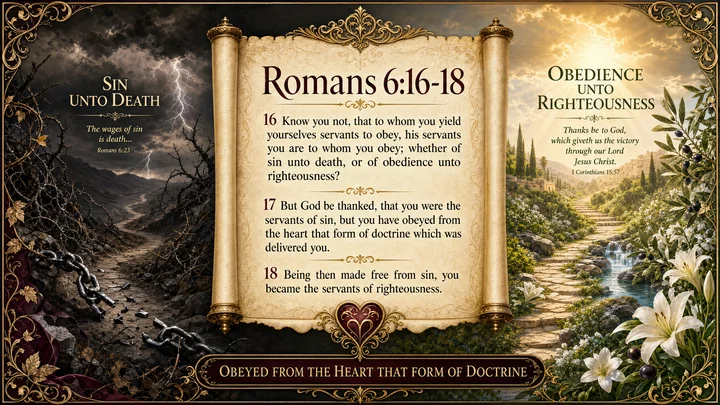
Romans 6:23
For the wages of sin is death; but the gift of God is eternal life through Jesus Christ our Lord.
Translations
American King James Version, King James Version, KJV Cambridge Paragraph Bible
For the wages of sin is death; but the gift of God is eternal life through Jesus Christ our Lord.
For the wages of sin is death: but the gift of God is eternal life, through Jesus Christ our Lord.
Revised Version, American Standard Version
For the wages of sin is death; but the free gift of God is eternal life in Christ Jesus our Lord.
for the wages of the sin [is] death, and the gift of God [is] life age-during in Christ Jesus our Lord.
For the wages of sin [ is] death; but the act of favour of God, eternal life in Christ Jesus our Lord.
For, the wages of sin, is death; but, God’s gift of favour, is life age-abiding, in Christ Jesus our Lord.
Berean Standard Bible, Majority Standard Bible
For the wages of sin is death, but the gift of God is eternal life in Christ Jesus our Lord.
For the wages of sin is death, but the free gift of God is eternal life in Christ Jesus our Lord.
For the reward of sin is death; but what God freely gives is eternal life in Jesus Christ our Lord.
For the wages of sinne is death: but the gift of God is eternall life, through Iesus Christ our Lord.
Douay-Rheims (Challoner revision)
For the wages of sin is death. But the grace of God, life everlasting, in Christ Jesus our Lord.
Pictures
Cross-references 20 of 298
- John 3:16
For God so loved the world, that he gave his only begotten Son, that whosoever believeth in him should not perish, but have everlasting life.
God gives his Son so believers may have everlasting life.
- Ezekiel 18:4
Behold, all souls are mine; as the soul of the father, so also the soul of the son is mine: the soul that sinneth, it shall die.
Both state that the soul who sins faces death.
- James 1:15
Then when lust hath conceived, it bringeth forth sin: and sin, when it is finished, bringeth forth death.
Sin, when complete, brings forth death.
- Romans 5:12
Wherefore, as by one man sin entered into the world, and death by sin; and so death passed upon all men, for that all have sinned:
Sin entered through one man, and death passed to all because all sinned.
- Genesis 2:17
But of the tree of the knowledge of good and evil, thou shalt not eat of it: for in the day that thou eatest thereof thou shalt surely die.
God warned Adam that disobedience would bring death.
- Revelation 20:14-15
And death and hell were cast into the lake of fire. This is the second death.
The lake of fire is the second death and the wicked are cast into it.
- Romans 3:23
For all have sinned, and come short of the glory of God;
all have sinned so all face death
- John 3:36
He that believeth on the Son hath everlasting life: and he that believeth not the Son shall not see life; but the wrath of God abideth on him.
Belief in the Son brings everlasting life; unbelief leaves one under God’s wrath.
- 2 Thessalonians 1:9
Who shall be punished with everlasting destruction from the presence of the Lord, and from the glory of his power;
Everlasting destruction describes the death that sin earns.
- 1 John 5:11-12
And this is the record, that God hath given to us eternal life, and this life is in his Son.
Eternal life is God’s gift, found in his Son; without him there is no life.
- 1 Corinthians 15:51-54
Behold, I shew you a mystery; We shall not all sleep, but we shall all be changed,
Places the gift of immortality at Christ’s coming.
- Matthew 25:46
And these shall go away into everlasting punishment: but the righteous into life eternal.
Contrasts the wicked’s everlasting punishment with the righteous’ eternal life.
- 2 Corinthians 5:21
For he hath made him to be sin for us, who knew no sin; that we might be made the righteousness of God in him.
Christ bears sinners’ sin so they may become righteous in him.
- 1 Corinthians 15:22
For as in Adam all die, even so in Christ shall all be made alive.
Death comes through Adam, while life comes through Christ.
- 1 John 3:4
Whosoever committeth sin transgresseth also the law: for sin is the transgression of the law.
Defines sin as transgression of the law, connecting sin to death’s wage.
- Ezekiel 18:20
The soul that sinneth, it shall die. The son shall not bear the iniquity of the father, neither shall the father bear the iniquity of the son: the righteousness of the righteous shall be upon him, and the wickedness of the wicked shall be upon him.
Both state that sin brings death as the sinner’s penalty.
- Genesis 3:4
And the serpent said unto the woman, Ye shall not surely die:
The serpent’s denial of death is identified as the origin of the contrary teaching.
- 2 Timothy 1:10
But is now made manifest by the appearing of our Saviour Jesus Christ, who hath abolished death, and hath brought life and immortality to light through the gospel:
Christ abolishes death and brings life and immortality to light through the gospel.
- Galatians 3:13
Christ hath redeemed us from the curse of the law, being made a curse for us: for it is written, Cursed is every one that hangeth on a tree:
Christ bears the law’s curse to redeem sinners from it.
- Genesis 3:19
In the sweat of thy face shalt thou eat bread, till thou return unto the ground; for out of it wast thou taken: for dust thou art, and unto dust shalt thou return.
Adam’s transgression brought the sentence of death, returning humanity to the dust.
Commentary part 1 of 3
Each commentary is drawn from primary sources: the writings of Ellen G. White and Adventist pioneers and periodicals. Each commentary is separate. Its own words are not a quotation; follow the references to read the source passages.
Ellen G. White
152 sources
The death that is paid as wages for sin is the second death set over against everlasting life, not the temporal death that lays all alike in the grave.ST Apr 16, 1885GC88 543.2–545.1GC 544.1–545.1 It is justly earned by every violation of God's law, and it means eternal death at the end — forever cut off from the presence of Jesus with happiness and glory lost — ending in utter extinction as though the lost had never been, not endless life in torment.GC88 543.2–545.1GC 544.1–545.12T 210.1EW 184.1ST Aug 28, 1879 Over against it stands eternal life as God's free gift through Jesus Christ our Lord, never earned by service, wealth or intellect and never purchasable, but secured at infinite cost by His sacrifice, blood and suffering.ST Apr 16, 1885GC88 543.2–545.1GC 544.1–545.1ST Jan 5, 1915Lt 2, 1861, par. 5–6 In that sacrifice the spotless Christ took the sinner's place as substitute, bore the guilt of the whole world with the hiding of the Father's face and the wrath against sin, and by His death magnified the unchangeable law while breaking Satan's power and opening probation for return to loyalty.Ms 71, 1896, par. 17–18GC 539.3ST Jul 29, 1886GC88 539.3–540.1 There are therefore two sides and two payments: to remain under sin is to serve a cruel master whose fruit ends in death, while to be freed from sin and yield to God in obedience brings holiness now whose end is everlasting life.Ms 2, 1900, par. 1–2Ms 68, 1898, par. 10–11Lt 20, 1892, par. 8–9Lt 18, 1872, par. 23–2519MR 90.3
Meaning of Wages and Death
The death that is the wages of sin is the second death placed in contrast with everlasting life, not the temporal death pronounced upon Adam that brings all alike down into the grave.ST Apr 16, 1885GC88 543.2–545.1GC 544.1–545.1 Because of Adam's sin death came to all, yet through the plan of salvation all are brought forth from their graves in a resurrection of both just and unjust.ST Apr 16, 1885GC 544.1–545.14SP 364.1–2 A distinction is then made between the resurrection of life for those accounted worthy, blessed and holy, who have through repentance and faith secured pardon and over whom the second death has no power, and the resurrection of damnation for those who have done evil and remain unpardoned.GC88 543.2–545.1GC 544.1–545.14SP 364.1–2 Eternal life is the inheritance of the righteous, while death is the portion of the wicked.GC88 543.2–545.1GC 544.1–545.14SP 364.1–2
That death is eternal death, the wrath of God received at the end by personal choice.2T 210.1ST Aug 28, 1879ST Feb 15, 1883 Those who refuse salvation and choose the pleasures and deceitfulness of sin for a season lose a life of happiness and sacrifice eternal glory, and will be forever separated from the presence of Jesus whose sacrifice they despised.2T 210.1ST Aug 28, 1879ST Feb 15, 1883 They will then realize to the fullest extent the sinfulness of sin, with black despair like a pall of death gathering about guilty souls.2T 210.1ST Aug 28, 1879 It is not endless life in torment; to make sin earn immortal life in horrible torments distorts the verse, magnifies the horrors of hell, makes the Bible appear cruel, turns fearful sinners toward despair and gives opponents grounds for reproach.EW 184.1SG1 116.2 Disobedience brings that eternal death through forbidden knowledge, and obedience to God in the strength of Jesus avoids it.RH Aug 4, 1910
Death is the earned due, just and certain penalty and retribution for every violation of God's law.Ms 68, 1898, par. 10–11GC 539.3GC88 539.3–540.1 God as Governor has a law with penalties and will not abolish or alter it to meet the sinner in his fallen state, nor save by passing over sin, and there is no excuse for trifling with His plain words in indifference.Ms 71, 1896, par. 17–18GC 539.3ST Jan 6, 1888 Even the least disregard incurs it, heeding the commandments is of great moment because the awful and unavoidable sentence will be enforced when the great books of judgment are opened and motives laid bare, while in contrast the righteous who do His commandments enter into life with right to the tree of life and entrance through the gates into the city.ST Jan 6, 1888 Those once enslaved to sin were free from righteousness with only shameful fruit ending in death, but those freed from sin and serving God bear fruit in holiness whose end is everlasting life.Ms 2, 1900, par. 1–2Ms 68, 1898, par. 10–11 Loyalty brings blessing while disloyalty and unrepented presumption bring death, each person rewarded or punished according to works, and earnest effort toward the crown of life is called for rather than a useless life.Ms 2, 1900, par. 1–2Ms 71, 1896, par. 17–18
The decisive evidence that God will punish transgression and is not too merciful to execute justice is the cross of Calvary, where the spotless, sinless Christ took the sinner's place as substitute and surety, became sin, bore the guilt of the whole world and of transgression, endured the hiding of the Father's face and the wrath of an offended God until His heart broke and His life was crushed out.Ms 71, 1896, par. 17–18GC 539.3GC88 539.3–540.1 That sacrifice was made to redeem sinners and is the only way to be freed from the penalty, with the price of forgiveness being the punishment of Jesus Christ who was equal with God and became a sin-bearer, so eternal life comes only through Him received by repentance toward God and faith in the Lord Jesus Christ.Ms 71, 1896, par. 17–18GC 539.3GC88 539.3–540.1 Every soul who refuses to share in the atonement provided at such cost must bear guilt and punishment in his own person.GC 539.3GC88 539.3–540.1
The unpardoned must receive the wages in punishment varying in duration and intensity according to their works, finally ending in the second death.GC88 543.2–545.1GC 544.1–545.14SP 364.1–2 Since God cannot consistently with justice and mercy save the sinner in his sins, He deprives them of the existence their transgressions forfeited and of which they proved unworthy.GC88 543.2–545.1GC 544.1–545.1 They sink into hopeless eternal oblivion and become as though they had not been, making a complete end of sin with all its woe and ruin, with no lost souls in never-ending torment to mingle shrieks with the universal anthem of praise.GC88 543.2–545.1GC 544.1–545.14SP 364.1–2
What sin pays is not noble independence and eternal life but slavery, ruin, misery and death, though its promises flatter as seen when Ahithophel's wisdom and power could not save him from the end of the rebellion and crimes he helped bring about.PP 741.14SP 483.2–484.1GC88 668.3GC 668.2–4 At the final reckoning and final coronation this becomes evident to all, and the wicked see what rebellion forfeited: the peace, happiness, honor and far more exceeding and eternal weight of glory offered and despised but now appearing most desirable, exchanged for wretchedness, infamy and despair.GC88 668.3GC 668.2–4ST Jun 11, 1902 Their exclusion from heaven is just, because by their lives they declared they would not have Jesus to reign over them.4SP 483.2–484.1GC88 668.3GC 668.2–4ST Jun 11, 1902
Death is the sure result of sin itself working through character and circumstance.Ms 135, 1899, par. 6Lt 96, 1896, par. 6PP 522.2–3 Every act of transgression reacts upon the sinner, works a change of character and makes further transgression easier, and by choosing to sin men separate themselves from God and cut themselves off from the channel of blessing, so ruin and death follow.Lt 96, 1896, par. 6 God's laws were ordained to give life, but sin broke the order established for life, bringing discord, misery, desolation, suffering and danger of death, and while sin exists these results are inevitable.HSFM 187.2Ms 135, 1899, par. 6PP 522.2–3 Disobedience opposes the well-being of God's government and its consequences follow those persisting in wrongdoing, and day by day disloyalty and choosing the way of the transgressor surely secures death as loss of future immortal life.RH Jun 22, 1911Lt 1, 1893, par. 27–30 Its execution is only delayed because God's kindness and longsuffering prolong mercy and patience to spare the sinner, and people can hope to escape only because the Redeemer bore sin's curse on their behalf, with mercy shown to thousands who love Him and keep His commandments and favor, forgiveness and healing for those who repent and turn to His service.RH Jun 22, 1911Lt 1, 1893, par. 27–30Ms 135, 1899, par. 6PP 522.2–3
At the bar of God the whole wicked world stands arraigned for high treason against the government of heaven with none to plead their cause and no excuse, and the sentence pronounced against them is eternal death.GC88 668.2GC 668.2–4 That sentence of eternal death upon rebels against heaven's government is applied at the final judgment and final coronation when every case is decided, where transgression brings death while obedience is associated with life measured by the life of God.GC 668.2–4ST Jun 11, 1902RH Apr 17, 1900
Gift of Eternal Life
Eternal life is the inheritance of the righteous and the crowning blessing of redemption and salvation.ST Apr 16, 1885GC88 543.2–545.1RH Oct 22, 1908RH Jul 25, 1912AA 518.2–519.2 It is God's free gift through Jesus Christ our Lord, set in contrast with death as the portion and wages of sin.ST Apr 16, 1885GC88 543.2–545.1GC 544.1–545.1 That death is not the temporal death pronounced upon Adam which brings all alike down into the grave, but the second death placed in contrast with everlasting life.ST Apr 16, 1885GC88 543.2–545.1GC 544.1–545.1 Through the plan of salvation all are brought forth from their graves in a resurrection of both just and unjust, yet with distinction between the resurrection of life for those accounted worthy, blessed and holy over whom the second death has no power, and the resurrection of damnation for those who have not through repentance and faith secured pardon.ST Apr 16, 1885GC88 543.2–545.1GC 544.1–545.1 The unpardoned must receive the wages in punishment varying in duration and intensity according to works, finally ending in the second death in which God deprives them of the existence their transgressions forfeited and of which they proved unworthy, so they sink into hopeless eternal oblivion as though they had not been and there are no lost souls in never-ending torment.GC88 543.2–545.1GC 544.1–545.1
The gift cannot be earned by years of service nor purchased with earthly wealth or corruptible things such as silver and gold, nor by intellect or education, and it gives no ground for selfish boasting or selfish claim.RH Jul 25, 1912AA 518.2–519.2Ms 87, 1899, par. 17Ms 36, 1885, par. 31–32Lt 88, 1902, par. 9 It rests on redemption by the precious blood of the Son of God, laid in sacrifice when Christ gave Himself and became poor that through His poverty believers might be made rich and be redeemed from all iniquity.RH Oct 22, 1908RH Jul 25, 1912AA 518.2–519.2 It was secured by Christ's sacrifice by which He redeems from sin.RH Oct 22, 1908RH Jul 25, 1912AA 518.2–519.2
The gift comes only through Jesus Christ, purchased at infinite cost by His suffering, death, blood and sacrifice.ST Jan 5, 1915Lt 2, 1861, par. 5–6ST Feb 27, 1893Ms 86, 1894, par. 28–30 Jesus Himself holds it out and invites people to come to Him in humility and faith, to receive Him as personal Saviour, putting the hand in His hand to be led and followed, yielding the will to Him.ST Jan 5, 1915ST Feb 27, 1893Lt 9a, 1891, par. 11 He paid the price for every person, opened the way, broke the tomb, possesses life to give to those who receive Him, and will lead His followers to perfect joy and glory until He sees the travail of His soul and is satisfied.ST Jan 5, 1915Lt 2, 1861, par. 5–6ST Feb 27, 1893 Refusing Him is refusing life, yet refusal does not lessen the value of the gift nor remove responsibility and the call to respond.ST Jan 5, 1915ST Feb 27, 1893 That life held out is an immortal inheritance and an undefiled, unfading treasure, the reward for a life of obedience.ST Jan 5, 1915Lt 2, 1861, par. 5–6
Immortality was promised on condition of obedience and was forfeited by disobedience, so Adam became subject to death and could not transmit to his posterity what he no longer possessed, leaving the fallen race without hope.4SP 352.3 By the sacrifice of the Son immortality was brought within reach.4SP 352.3 It can be obtained in no other way except through Jesus Christ, yet every person may possess it by complying with the conditions, by patient continuance in well-doing seeking glory and honor and immortality.4SP 352.3
The gift is received by trusting God's unchanging word and believing on Christ, by entire surrender to God and to Christ, by cooperation of the human with the divine, and by conversion and transformation through sanctification in union with Christ that Satan cannot break.STB 194.4–195.1Lt 9a, 1891, par. 11Ms 36, 1885, par. 31–32Ms 12b, 1896, par. 35Lt 97, 1905, par. 8 Faith and works go together and each is dead alone, for works do not save but are the fruit of faith, and living faith will show itself in action in patient humble keeping of His law.3MR 416.2Lt 9a, 1891, par. 11 The Bible makes the gift apparent and the pathway of life plain, so even a simple inquiring person without extra helps can find the path to heaven without erring.Lt 9a, 1891, par. 11Ms 12b, 1896, par. 35 Because it is a gift, self-exaltation is entirely out of place, for where faith in Christ is exercised selfishness cannot live.Ms 36, 1885, par. 31–32Lt 88, 1902, par. 9 Time, talents and abilities belong to God and are entrusted for use in His service and return to Him, not as a reason for selfishness or a claim that service earns salvation.Ms 86, 1894, par. 28–30Ms 87, 1899, par. 17
The gift means life, health, friends, reason and happiness now, with peace and rest and assurance in this life, God going before and the glory of the Lord as rearward, and immortal glory hereafter.Lt 11, 1893, par. 5–7Ms 86, 1894, par. 28–30Lt 97, 1895, par. 56–61Lt 97, 1905, par. 8 It is dwelling in His presence and seeing the King in His beauty, coming forth victorious over death and the grave in the morning of the resurrection when the gates open, to appear with Christ in glory, partake of the divine nature having escaped corruption through lust, and praise Him with an immortal tongue.Lt 11, 1893, par. 5–7Ms 86, 1894, par. 28–30Lt 97, 1905, par. 8 It is an immortal inheritance as heirs of God and joint-heirs with Christ that makes worldly wealth worthless by comparison.Lt 2, 1861, par. 5–6Lt 88, 1902, par. 9 It is won by overcoming the world, the flesh and the devil in warfare where Christ helps at every step, angels surround, and the divine nature is laid hold of by faith through His merits, giving the whole life with mental, moral and physical powers laid at His feet and used in His service to win souls in return for His giving His life, until Christ is formed within as the hope of glory.Lt 11, 1893, par. 5–7Ms 86, 1894, par. 28–30Lt 97, 1905, par. 8
Servants Sin and Holiness
Those once enslaved to sin were free from righteousness, gaining only shameful fruit that ends in death, but those freed from sin and made servants of God bear fruit in holiness whose end is everlasting life.Ms 2, 1900, par. 1–2Ms 68, 1898, par. 10–11Lt 73, 1901, par. 22–25ST Oct 1, 189413MR 221.1–222.1 Death is what sin pays as its due, while eternal life is God's gift through Jesus Christ and never sin's wage.Ms 2, 1900, par. 1–2Ms 68, 1898, par. 10–11ST Oct 1, 189413MR 221.1–222.17MR 172.1 Holiness grows as the freed submit to the Holy Spirit and depend on God's power.Lt 73, 1901, par. 22–25 The contrast calls for obedience to God, avoidance of His judgments, and earnest effort toward the crown of life rather than a useless life.Ms 2, 1900, par. 1–2 Those who take the side of the great rebel receive sin's wage, while those who take the side of Christ and belong to Him receive God's gift.7MR 172.1
Those joined to Christ by baptism into His death are buried with Him and raised to walk in newness of life, with the old self crucified so that the sinful body is destroyed and sin is no longer served.Ms 8, 1902, par. 32–33 Being dead with Christ brings freedom from sin and life with Him, for Christ died to sin once and now lives to God with death having no more rule over Him.Ms 8, 1902, par. 32–33 Such must reckon themselves dead to sin and alive to God through Jesus Christ, and must not continue in sin that grace may abound.Lt 106a, 1896, par. 28Ms 8, 1902, par. 32–33 They must not let sin reign in the mortal body to obey its lusts, nor yield their members as instruments of unrighteousness to sin, but must yield themselves to God as alive from the dead and their members as instruments of righteousness to God.Lt 106a, 1896, par. 28Ms 8, 1902, par. 32–33 The one obeyed becomes master, whether sin ending in death or obedience ending in righteousness, and sin shall not rule over those who are under grace and not under law.Lt 106a, 1896, par. 28Ms 8, 1902, par. 32–33 Those who have put on Christ by baptism in separation from the world and covenant to walk in newness of life, yet unite with the foes of Christ, reject the perfect righteousness Jesus offers and choose ways He condemned, earning guilt and punishment proportionate to light and privileges received more severe than those who never knew God or His law.3T 365.3
Sin is darkness from separation from God and transgression of the law, and it cannot be turned or changed into righteousness.12MR 140.2Ms 20, 1892, par. 30–32 It must be taken away and replaced by the righteousness of Christ, who was manifested to remove sin and in whom all fullness dwells.12MR 140.2Ms 20, 1892, par. 30–32 That life and healing come only through His righteousness, received by coming to Him and walking in Him, and trusting in own righteousness as the Pharisees did cannot bring entrance into the kingdom of heaven.12MR 140.2Ms 20, 1892, par. 30–32 Practicing the virtues of Christ's character by receiving His grace in the name of Jesus is life, eternal life, to impart to young and old, while clinging to sins is eternal death.Lt 106a, 1896, par. 17 This is especially true of sins that give youth the apples of Sodom and oppose Christ's work of saving sinners from their sins.Lt 106a, 1896, par. 17
Choosing a course of disobedience to God's law decides future destiny, sowing to the flesh and earning as wages eternal destruction, the opposite of life eternal.FE 376.1STE 220.1Lt 67, 1894, par. 20–21 Submission to God and obedience to His holy law bring the sure opposite result, the gift of eternal life.FE 376.1STE 220.1Lt 67, 1894, par. 20–21 That eternal life is knowing the only true God and Jesus Christ whom He has sent.STE 220.1Lt 67, 1894, par. 20–21
Adam Fall and Sacrifices
Romans 6:23 declares the penalty of sin to be death, and God gave Adam that warning beforehand that disobedience would bring sure death.8MR 38.3–4Ms 99, 1903, par. 13–14 By breaking the divine command Adam forfeited his life and fell from his high and holy estate, though before the fall he had been created perfect in thought and action and free from the results of the curse and from any effect of sin when assailed by the tempter.8MR 38.3–4Ms 99, 1903, par. 13–14 Having believed Satan's word that God would lie, Adam and Eve transgressed and fell from innocence to guilt, gaining no strength but great weakness, with far less strength to remain true in conscious guilt than to keep integrity in holy happy innocence.1SP 44.1 They forfeited all right to Eden and opened a way for Satan to gain readier access to them, and because it was not safe in sin for them to reach the tree of life and perpetuate a life of sin they faced loss of their Eden home and understood with keenest anguish and remorse that death was their due punishment.1SP 44.1 That transgression brought the sentence of death, wretchedness and curse upon humanity, demonstrating that God's law cannot be transgressed without consequence and was binding then just as now, yet God's goodness and mercy kept its consequences from plunging humanity into hopeless despair.RH Mar 3, 1874LC1 125.1PP 61.3
Adam learned the penalty when God directed him to make an offering for sin and he witnessed death for the first time in the bleeding victim writhing in agony.1SP 53.1–2 Taking that life gave him a deeper sense of his transgression of God's holy law and showed that nothing less than the death of God's dear Son could pay for sin, for had he remained steadfast and true to the holy law there would have been no death of beast nor of man.1SP 53.1–2 The sacrificial offerings reminded people of sin and expressed repentance and faith in the promised Redeemer, and Adam's first sacrifice made him feel the cost of his sin because the innocent victim's death pointed to the death of God's spotless Son as the only sacrifice that could expiate sin.ST Nov 25, 1913ST May 23, 1911 Without sin humanity would not have known death, and the innocent victim's death represented the death of God's Son on behalf of sinners, through whose ransom and divine offering salvation is provided as the sinner recognizes the law's unchanging character, confesses sin, and relies on the Lamb of God to take away sin.ST Nov 25, 1913ST May 23, 1911 In that great and perfect offering pointed forward to by faith there appeared a star of hope to relieve utter hopelessness and ruin, revealing infinite goodness and matchless love giving such a ransom to save the guilty.1SP 53.1–2
The death of the sacrificial victim made sin's penalty evident, while the sinner's offering acknowledged guilt and expressed faith in the Son of God's perfect sacrifice which the animal offering prefigured, for without Christ's atonement there could be no blessing or salvation from God.1SP 53.3ST Feb 6, 1879 Abel saw in the slain victim's death the result of transgression which had separated humanity from its Creator, understanding that the sacrifice of a life met the claims of the broken law and pointed by faith to the Son of God dying for the guilty, since no human offering or achievement could atone for sin.1SP 53.3ST Feb 6, 1879 Those offerings pointed forward to a Redeemer and served as a typical atonement for fallen humanity at that time, opening a door of hope even as death entered through disobedience letting Satan plant his rule in the first family.RH Mar 3, 1874LC1 125.1 Death was not only threatened but experienced as the result of transgression, yet God gave hope of life through a coming Redeemer foreshadowed by those offerings as a temporary atonement.LC1 125.1 God's law could not be changed or set aside to remove the consequence Adam and Eve's transgression brought upon humanity, so Christ gave His life to bear the punishment due sinners and open a way to live through faith in His atonement, and through His sacrifice life and immortality are brought to light.1SP 49.1–50.2 A substitute had to bear the sentence of death, and the sacrificial animals represented Christ whose death for human sin would uphold God's law, for animal blood had no power to save but pointed forward to Christ the sinless Redeemer whose blood alone could atone.RH Mar 3, 1874
Disregard of God's commands brings death as the reward of transgression, illustrated by lightly regarding the seventh day which God sanctified, blessed, and commanded to be kept holy.SG3 53.1ST Feb 6, 18791SP 59.2 All the precepts of His law are sacred, so transgression of His commands brings death as its penalty.SG3 53.1ST Feb 6, 1879 Although God may not now punish violations of His law with temporal penalties, the final judgment will bring death to those who violate His sacred precepts, and deliberate violation of the Sabbath commandment illustrates this consequence.PP 408.4–409.3
Cross Law and Atonement
The spotless Christ took the sinner's place as substitute and surety, becoming sin and bearing the guilt of the whole world with the hiding of the Father's face and the wrath of an offended God and the curse until His heart broke and His life was crushed out in agony in Gethsemane and on Calvary.Ms 71, 1896, par. 17–18GC 539.3GC88 539.3–540.1Ms 35, 1895, par. 14–16 The horror and extent of that retribution are measured by what He bore, a suffering no finite being could endure or atone because in Him humanity existed in divinity with greater capacity to suffer what the sins of a lost world brought, and His agony came from the weight and evil of sin itself and not merely from fear of dying, for death is the consequence of sin and not an angel of mercy.Ms 35, 1895, par. 14–165RED 81.2–82.1Lt 23, 1873, par. 7 His death fulfilled the covenant made before the world began and ended not in defeat but in glorious eternal victory, and it is the only way any can be freed from the penalty, so that every transgressor who continues in sin must die and every soul refusing to share in the atonement provided at such cost must bear guilt and punishment in his own person.GC 539.3GC88 539.3–540.1DA 799.3 God will not abolish or alter His law to meet the sinner in his fallen state, for as Governor of the universe He has a law with penalties for transgression and does not save by passing over sin.Ms 71, 1896, par. 17–18ST Jul 29, 1886
The cross of Calvary is decisive evidence that God will punish transgression and declares the law unchangeable, for Christ died as the sinner's substitute to bear that penalty and His death shows both love for sinners and the unchanging claims of the law that could not be abolished or altered to save transgressors.GC 539.3ST Jul 29, 1886GC88 539.3–540.1GC 503.2–504.1 By bearing the penalty Christ magnified and honored the law and showed God both righteous and merciful, maintaining justice while giving mercy so that justice and mercy unite in His government.PP 69.3–70.1RH May 7, 1901ST His death broke Satan's power and sounded his death-knell, deciding the long controversy over evil and making certain its final eradication with all who cling to sin, announcing that penalty to the whole universe.GC 503.2–504.1 Breaking the law places the sinner under its condemnation, and the law has no power to pardon the transgressor but points him to Christ, with guiltiness to be felt or there will never be repentance.Ms 27, 1899, par. 17RH May 7, 1901ST Dec 15, 1887
By accepting Christ as Substitute and Surety the sinner has sin borne by Him and His righteousness imputed, restoring allegiance and bringing obedience, loyalty and completeness in Him, justified freely by grace through faith and not by works or anything giving ground to boast.Ms 27, 1899, par. 17RH May 7, 1901RH Mar 2, 1916 The way back to life is repentance for sin and faith in Christ's sacrifice, with the repentant accepted through Him and salvation joined with obedience to the commandments, for His blood avails for the repentant but does not excuse continued disregard of the law, and pardon comes by turning from transgression to obedience through His propitiation.ST Dec 15, 188710MR 329.1–2Lt 138, 1910, par. 7 By bearing the penalty Christ secured a period of probation and second probation, postponing the day of arraignment for trial and giving opportunity in this present life to prove loyalty, return to allegiance and gain back life, with no escape from ruin apart from redemption.RH May 7, 1901Ms 8, 1914, par. 5Ms 198, 1903, par. 1Ms 8, 1902, par. 28 He volunteered as substitute and surety and propitiation, bearing the curse and condemnation for sin in which He had no share, numbered with transgressors and treated as a transgressor in agony on the cross, paying the penalty for every soul desiring freedom from Satan's power that repentant sinners might be clothed with His righteousness and justified by a righteousness in which they had no part, so even guilty sinners have every reason to hope in His mercy.Ms 8, 1914, par. 5Lt 97, 1895, par. 56–61Ms 8, 1902, par. 28Ms 48, 1886, par. 3
Only Christ because equal with God could meet the law's claim and exhaust the penalty, for the broken law demands the sinner's life and no finite being could make atonement, with only Deity able to exhaust sin's curse.PP 63.2Lt 23, 1873, par. 7 An angel coming to pass over the ground where Adam stumbled could not have removed one stain of sin or brought one hour of probation, and there was no other way to remove dishonor, satisfy justice and restore what Adam forfeited except by the humiliation of the Prince of heaven.Ms 196, 1903, par. 2 Justice requires the penalty be executed and not merely pardoned or unconditionally excused, for it was the righteousness of God to maintain His law by inflicting that penalty as the only way the law could be maintained and pronounced holy and just and good, sin made to appear exceeding sinful, and the honor and majesty of divine authority maintained.Ms 131, 1897, par. 3–4PP 522.2–3Ms 135, 1899, par. 5Ms 50, 1900, par. 1 As the Good Shepherd He gave His life a ransom for many and laid down His life for the sheep, voluntarily divesting Himself of glory and assuming human nature that could suffer, sustained by divinity without one taint of disloyalty or sin and triumphing in man's behalf, and by dying in man's stead He fully exhausted the penalty due for sin and at the same time provided a pardon, exalting the law and making it honorable while securing eternal life.Ms 131, 1897, par. 3–4Ms 50, 1900, par. 1
Resurrection and Final End
Through the plan of salvation all are brought forth from their graves in a resurrection of both the just and the unjust, for Adam's sin brought death upon all mankind yet provision is made for all to be raised.ST Apr 16, 1885GC88 543.2–545.1GC 544.1–545.14SP 364.1–2 A distinction is made between those who have done good and are accounted worthy, blessed and holy unto the resurrection of life over whom the second death has no power, and those who have done evil and have not through repentance and faith secured pardon unto the resurrection of damnation.GC88 543.2–545.1GC 544.1–545.14SP 364.1–2 Eternal life is the inheritance of the righteous as God's gift through Jesus Christ, given to the righteous nation that has kept God's law, who are brought through the gates of the holy city to be crowned with immortal life and joy in the presence of God and the Lamb.ST Apr 16, 1885GC 544.1–545.1Ms 99, 1902, par. 67–68 Those who remain without pardon then receive the penalty for their sins, which is not the first temporal death pronounced upon Adam that passes upon the whole race and brings all alike down into the grave, but the second death placed in contrast with everlasting life.ST Apr 16, 1885GC88 543.2–545.1GC 544.1–545.14SP 364.1–2
Every soul who refuses to share in the atonement provided at such cost must bear in his own person the guilt and punishment of transgression, for the spotless Christ's death on Calvary to redeem sinners is the only way to be freed from the penalty of sin.GC 539.3GC88 539.3–540.1 Guilt and punishment are proportionate to light and privileges received, so those who have known forgiveness, tasted a Saviour's love and covenanted to walk in newness of life, then unite with the foes of Christ and choose ways He condemned, are more severely judged than the heathen who never knew God or His law.3T 365.3 Those who hear the warning message yet refuse to repent and keep God's commandments must themselves bear the penalty of transgression, even eternal death, for breaking God's law brings eternal death and His law is immutable and must be obeyed by all who would be saved.Ms 28, 1900, par. 15–17
At the second resurrection and final confrontation outside the holy city the wicked recognize the contrast between their end and the reward of the just.EW 252.1SG1 215.2–216.1 The redeemed are inside the City, clothed with glory, honor, immortality and eternal life as God's gift, while the wicked are outside, having lost that glory and eternal life and that exceeding weight of glory offered and despised, with death as their own end as sin's wage.EW 252.1SG1 215.2–216.1
Satan and all who choose to follow him are finally cut off, so that sin with all its woe, suffering and ruin is ended.PP 341.1GC 503.2–504.1 Christ's death on Calvary announces sin's penalty of death to the whole universe while declaring God's law unchangeable, decides the long controversy over evil, sounds Satan's death-knell and condemns sin's originator to eternal death, making certain the final eradication and utter extermination of evil and of all who cling to sin.GC 503.2–504.1GC88 503.3–504.1Ms 159, 1899, par. 8–10 When this is accomplished evil will never manifest again, and the whole universe becomes witness to the nature and results of sin, vindicating God's love and honor before beings who delight to do His will.GC88 503.3–504.1
Since God cannot consistently with justice and mercy save the sinner in his sins, He deprives those proving unworthy of the existence their transgressions have forfeited and of which they have proved themselves unworthy.GC88 543.2–545.1GC 544.1–545.1 They become as though they had not been and sink into hopeless eternal oblivion, making a complete end of sin and woe.GC88 543.2–545.1GC 544.1–545.14SP 364.1–2
Choice Obedience and Warning
There are two sides with two different payments, and every person by voluntary choice comes under the control of one or the other, which decides eternity.19MR 90.37MR 172.1Ms 80, 1903, par. 16 Those who take the side of the great rebel, living for self and serving sin, Satan and the flesh, receive death as the earned wage of sin, which is great loss and no profit, the loss of life and Heaven, grace and glory and everlasting life bought at a dear price.19MR 90.32T 289.1–22T 285.2–286.2 Those who take the side of Christ, living for God and heaven and belonging to Him, receive eternal life as the free gift of God, which is the payment to want from the Lord, ample reward for the obedient.Lt 20, 1892, par. 8–9Lt 18, 1872, par. 23–2519MR 90.3 Apostates on the rebel side may flourish briefly in childish toys, meager unsatisfactory pleasures of earth, foolish sports and exciting pleasures that separate from God, but their happy days are almost over and they will soon come to the length of their chain, leaving them miserable and to be pitied because they have enough misery to bear.Lt 20, 1892, par. 8–919MR 90.32T 289.1–2 Unconverted youth who think they are Christians turn from that precious promise because they do not know its value and have not meditated on the precious things of Heaven, and so choose death instead of life, failing to reason about the future because the eternity they are entering will be death rather than life.2T 289.1–2Ms 80, 1903, par. 16
Sin brings death as its penalty by God's decree, and this solemn warning of danger must be told plainly to a brother continuing in wrongdoing so he may turn from it and live, and must not be withheld to let him go on unwarned.Lt 43, 1886, par. 1–517MR 99.2Lt 124, 1893, par. 19–22 Seeing the end of the transgressor would awaken alarm and turn a person from sin, for indulging in sin is no advantage however pleasant it may seem, and sin is to be feared and not done.4T 362.3–363.2Lt 67, 1902, par. 12–16 The warning is to be given to youth in gentleness and love, to lead them for their eternal good to follow the path marked out and to do their whole duty to God and fellow men, alongside the warning that sin grieves the heart of the Redeemer.Lt 67, 1902, par. 12–16 A person must stand in awe before God and stop sinning, turning thoughts inward in diligent, critical self-examination through all past years to see whether every action will bear the test of the grand and solemn review, and it is best to bow in allegiance to heaven and keep God's standard and stand His test even if in the minority.Lt 124, 1893, par. 19–22Ms 17, 1893, par. 18
Choosing sin means choosing death instead of the eternal happiness held out to those who inhabit heaven, while heeding God's commandments is of great moment because death is the awful and unavoidable sentence decreed upon the transgressor.SCE 5.1ST Jan 6, 1888 That sentence will be enforced when the great books of judgment are opened and the motives of every heart are laid bare, with no excuse for those who trifle with plain words in indifference, while in contrast the righteous shall enter into life with right to the tree of life and entrance through the gates into the city by doing His commandments.ST Jan 6, 1888 Sin is transgression of the law; disobedience has brought misery, while obedience to God brings peace and joy, and everlasting life and eternal glory are promised to those who do His will, whereas God's wrath hangs over those who defy His law.ST Nov 16, 1882BS 64.1–2 Eternal life is God's gift, not a wage earned by years of service or a claim to greater reward, yet it is given on condition of entire obedience, patiently and humbly accepting it and keeping His law, for all time, talents and abilities belong to God and give no ground for selfish boasting or murmuring over the reward.RH Jul 31, 19003MR 416.2
To the obedient Christ makes it possible to perfect Christian character through His name and to overcome as He overcame, leaving His own life as an example of how to overcome, with immortal glory and eternal life as the reward; Jesus has paid for sinners with His life and offers salvation, and those who obey Him can develop Christian character and overcome following His example.3T 365.1STSE 34.3–35.1 His victory over temptation, beginning where Adam fell, makes it possible for people to overcome in His name through cooperation with divine influence, and the gift set before everyone against the road to perdition is won by overcoming the world, the flesh and the devil in warfare where Christ helps at every step, angels surround, and divine nature is laid hold of by faith through His merits.Ms 86, 1894, par. 28–30Ms 25, 1887, par. 15–16 Receiving it requires giving Jesus the whole life, mental, moral and physical powers laid at His feet and used in His service to win souls, in return for His giving His life, and then Christ is formed within as the hope of glory with peace here and the eternal reward when this life closes in the morning of the resurrection.Ms 86, 1894, par. 28–30 To receive the gift men must imitate the perfect Overcomer, learn of Him, endure hardness as good soldiers, come off conqueror over all defects of character becoming perfect and entire wanting nothing without spot or blemish, which costs strong effort, constant watchfulness and persevering prayer, with increased happiness on earth through consciousness of duty performed; disobedience like Adam and Eve's, and sinful habits if not conquered, destroy those ruled by them.ST Jul 1, 18804T 38.3–39.1
Death is the wage of a course that professes to serve God while indulging appetite and passion and corrupting the ways despite clear light of truth, and persisting in sin for depraved appetite ends in death while everlasting life stands before the person as hope calling for overcoming sinful habits.3T 474.3Lt 1, 1861, par. 9 Indulging perverted appetite pays in unhappiness, degradation and death, selling godlike manhood for momentary gratification as Esau sold his birthright for a mess of pottage, for no one can serve God while indulging appetite, but yields to temptation, is overcome, backslides and yields the truth.4T 31.2–32.1 Wavering between denying appetite and indulging it ends in defeat by the enemy, and covering that defeat with false excuses shows lack of moral courage to renounce hurtful habits.4T 31.2–32.1 Indulgence of corrupt animal passions even inside marriage is sin earning dreaded wages that the marriage covenant does not cover or excuse, bringing suffering by one's own indulgence, health and life sacrificed on base passion, higher powers brought under animal propensities, a miserable existence making death seem preferable, and many premature deaths from excessive indulgence.2T 472.3SA 42.3 Sacrificing love, benevolence and integrity to love of money is a life of sin and error, and it does not pay.Ms 1, 1868, par. 4–6
Satan contends for souls by casting his hellish shadow across the path so they do not behold the light, catch a glimpse of honor and glory, or taste even now a foretaste of heaven's happiness, and so choose sin and its death instead of heaven, though future honor and eternal glories are set before the mind to inspire hope, awaken desire and spur to effort.FE 234.2 All he offers as pleasure, liberty, freedom, profit and success is a delusive snare ending in ruin and eternal ruin, hidden under transformation as an angel of light who bewilders minds with ideas of following inclination as the only path for happiness and worldly visions as the height of thought.20MR 52.1Lt 1, 1893, par. 4–7 Those who yield to the prince of darkness are led on blindfolded from step to step, with passions stirred to depravity and appetites clamoring for indulgence, until sin made attractive draws them farther from God and transgression proves their ruin.Lt 1, 1893, par. 4–7 Those who are tempted then become tempters themselves, acting as agents of the tempter to solicit others into unsafe and forbidden paths that break the law of God.20MR 52.1Lt 1, 1893, par. 4–7 Sin serves a hard master and pays death as its sure wages, so lovers of pleasure more than lovers of God stand in Satan's ranks and cannot afford to keep sinning, because sin is expensive business ending in eternal loss.2T 285.2–286.2
Salvation from death was purchased by the suffering and death of the Son of God and might belong to sinners if they would accept it willingly and gladly, for none are compelled to yield obedience to the law of God.2T 210.1ST Aug 28, 1879ST Feb 15, 1883 Those who refuse the heavenly benefit and choose the pleasures and deceitfulness of sin have their own choice, losing a life of happiness and sacrificing eternal glory for sin's passing pleasures, losing happiness, mansions Jesus has gone to prepare for those who love Him, and that life which measures with the life of God.2T 210.1ST Aug 28, 18792T 285.2–286.2 They will then realize to the fullest extent the sinfulness of sin, with black despair like a pall of death gathering about guilty souls, much as Christ felt on the cross when the vials of wrath are poured out, and will be forever separated from the presence of Jesus whose sacrifice they despised.2T 210.1ST Aug 28, 1879 Refusing the freely offered salvation, remaining in sin and bold transgression, serving self, devoting time and strength and talents to Satan, and remaining enemies to God and the self-sacrificing Redeemer does not release obligation or lessen guilt but earns death, and to neglect salvation and sow to the flesh is to reap corruption; Jesus suffered an agonizing death on Calvary to save from death, His blood cleanses, and those rejecting His offered mercy choose death and lose the immortal inheritance after persistently grieving His Spirit.STSE 34.3–35.1SG4 168.3–169.1 Those who choose the service of sin receive its wages of death and eternal loss, for sin's pleasures cannot prepare the soul for heaven, and delaying response to the gospel leaves people in sin's grasp.ST Aug 13, 1912
Serving God is not slavery; sin is slavery to a cruel master, the prince of darkness.Lt 11, 1893, par. 5–7 God owns every person by creation and by redemption, because Jesus paid the ransom with His precious blood, and through that inestimable gift all blessings come — life, health, friends, reason, happiness — only through Christ.Lt 11, 1893, par. 5–7 Therefore no one should rob God of what is His own, but glorify God in body and spirit with willing heart service as a faithful soldier, working while time lasts and living an imperishable life hid with Christ in God, to appear with Christ in glory and partake of His divine nature having escaped corruption through lust.Lt 11, 1893, par. 5–7 Eternal life is the saints' immortal inheritance and reward after their last trial in the last days, costing the agony and blood of the Son of God, and those enduring suffering and reproach for truth will count heaven cheap because present sufferings are not worthy to be compared with the glory to be revealed.RH Jan 19, 1864 Laying hold on everlasting life means putting abilities to work in His service rather than burying them in worldly pursuits, awaking from deception, resisting the Devil, standing at post and fighting manfully, refusing evil angels with their whisperings and lying dreams, and then laying off the armor for a victorious crown; it is God's great gift firmly based on Jehovah's promises, to be taken, sung, prayed and praised with thanksgiving welling up and spoken, putting silence upon lips to make no complaint, for complaining shows unsanctified lips and heart.RH Jan 19, 1864ST Nov 20, 1884Ms 134, 1909, par. 12 A person's choices and influence affect whether others are led toward salvation or lost, and the joy of eternal life includes seeing souls redeemed through one's efforts, which is urgent because probationary time passes and cannot be recalled.Lt 6, 1869, par. 14–16
Receiving the gift comes by trusting God's unchanging word rather than feelings, for no sorrow, suffering or burden brought to God gives relief, and a person's own estimate of sin is worthless; God's estimate must be accepted, that sin is heavy and its guilt would crush the bearer.Lt 98, 1893, par. 30 A sinless One takes the sinner's place and bears guilt He does not deserve, and by accepting the provision made the sinner stands free before God in the merits and virtue of the Substitute, with godly sorrow taking the place of hopeless discouragement, turning from sin with hatred and grief to go to God for help in true scriptural repentance.Lt 98, 1893, par. 30 Against the wages of serving sin and the flesh and the devil, which bring poor wages with no real profit and end in death and being cut off, God is ready to accept, pardon all transgressions, cleanse from sin and give life to all who come to Christ, even the prodigal long separated, for He meets and invites such to come now without further neglect.2T 295.1 Working for Satan earns wages tasted in falling into sin, learning personal weakness apart from Christ and learning what Satan is, yet those wages leave the sinner fallen but not hopelessly fallen, for coming to Jesus with contrite heart brings pardon, strength, fortitude and courage to lift up the fallen and work for Jesus as earnestly as for Satan, making a different record in heaven's books.Lt 18f, 1890, par. 8 All are sinners under sentence of death with no right to anything possessed or hoped for except through the Saviour's sacrifice, and only through Christ as Atonement is pardon and rightful claim to present blessings and future hope possible; when He takes away sin the heart is transformed and the robe of His righteousness is placed upon the person, whom He then acknowledges as His representative and bids do a work for Him, filling the submitted soul with repentance followed by pardon and pure holy joy, for He pities the sinner and is not willing that he should perish.Ms 110, 1904, par. 33–3521MR 159.1–2
Day by day disloyalty to God and choosing the way of the transgressor surely secures death as the wages of sin, which is loss of the future immortal life, earned by disobedience and transgression, while present life is continued only because the kindness and longsuffering of God prolong mercy and patience to spare the sinner.Lt 1, 1893, par. 27–3020MR 56.5 Sin is a mortal disease whose wage is death, while God's gift in saving the soul is eternal life, and each person carries a soul of more worth than worlds can buy, with a soul to save or a soul to lose, so that if the soul perishes through unbelief it were better had that soul never been born.Lt 2, 1893, par. 8–10 Jesus paid the ransom money for the soul with His own life and made every provision that those who come to Him and believe on Him as personal Saviour shall not perish but have life, which calls for immediate individual decision to cut loose from Satan, cease robbing God, and give heart and soul to Jesus as Owner in love and service.Lt 2, 1893, par. 8–10 Sin is an expensive business that cannot be afforded because it pays death, and those believing in Jesus as personal Saviour have love flow from God's heart to theirs, turning them to serve God and keep His commandments so they will not be found as Adam and Eve were after transgression.Ms 20, 1894, par. 23 Now is the opportunity to decide between eternal life and eternal death: eternal death comes from refusing transformation, looking to men of the world, cherishing worldly ambition, turning from God to human beings and continuing in sin until becoming an instrument of deception with no power to break the snare; eternal life comes when the sinner repents with full purpose of heart, takes hold of saving grace and lets Christ do a thorough work forming character after His, for God has thoughts of mercy and will abundantly pardon, though choosing life requires tremendous struggle of thorough repentance against flattery that would establish in sin.Lt 265, 1903, par. 22–23
Sources