Isaiah 53:5
But he was wounded for our transgressions, he was bruised for our iniquities: the chastisement of our peace was upon him; and with his stripes we are healed.
Translations
But he was wounded for our transgressions, he was bruised for our iniquities: the chastisement of our peace was on him; and with his stripes we are healed.
King James Version, Revised Version
But he was wounded for our transgressions, he was bruised for our iniquities: the chastisement of our peace was upon him; and with his stripes we are healed.
But he was wounded for our transgressions,
He was bruised for our iniquities:
The chastisement of our peace was upon him;
And with his stripes we are healed.But he was wounded for our transgression, he was bruised for our iniquities: the chastisement of our peace was upon him; and with his stripes we are healed.
But he was wounded for our transgressions, he was bruised for our iniquities; the chastisement of our peace was upon him; and with his stripes we are healed.
And he is pierced for our transgressions, Bruised for our iniquities, The chastisement of our peace [is] on him, And by his bruise there is healing to us.
But he was wounded for our transgressions, he was bruised for our iniquities; the chastisement of our peace was upon him, and with his stripes we are healed.
Yet, he, was pierced for transgressions that were ours, was crushed for iniquities that were ours,—the chastisement for our well-being, was upon him, And by his stripes, there is healing for us.
Berean Standard Bible, Majority Standard Bible
But He was pierced for our transgressions,
He was crushed for our iniquities;
the punishment that brought us peace was upon Him,
and by His stripes we are healed.But he was pierced for our transgressions.
He was crushed for our iniquities.
The punishment that brought our peace was on him;
and by his wounds we are healed.But it was for our sins he was wounded, and for our evil doings he was crushed: he took the punishment by which we have peace, and by his wounds we are made well.
But hee was wounded for our transgressions, hee was broken for our iniquities: the chastisement of our peace was vpon him, and with his stripes we are healed.
Douay-Rheims (Challoner revision)
But he was wounded for our iniquities, he was bruised for our sins: the chastisement of our peace was upon him, and by his bruises we are healed.
Pictures
Cross-references 20 of 205
- 1 Peter 2:24
Who his own self bare our sins in his own body on the tree, that we, being dead to sins, should live unto righteousness: by whose stripes ye were healed.
Christ bears our sins, and his wounds bring healing.
- 2 Corinthians 5:21
For he hath made him to be sin for us, who knew no sin; that we might be made the righteousness of God in him.
Christ bears sin for us so that we may receive righteousness in him.
- John 3:16
For God so loved the world, that he gave his only begotten Son, that whosoever believeth in him should not perish, but have everlasting life.
God gives his Son so believers may be saved and have everlasting life.
- John 1:29
The next day John seeth Jesus coming unto him, and saith, Behold the Lamb of God, which taketh away the sin of the world.
Both identify Christ as the Lamb who takes away the world’s sin.
- Romans 5:1
Therefore being justified by faith, we have peace with God through our Lord Jesus Christ:
Justification through Christ brings peace with God.
- Galatians 3:13
Christ hath redeemed us from the curse of the law, being made a curse for us: for it is written, Cursed is every one that hangeth on a tree:
Christ bears the law’s curse in our place to redeem us.
- Philippians 2:8
And being found in fashion as a man, he humbled himself, and became obedient unto death, even the death of the cross.
Christ humbled Himself and became obedient unto death on the cross.
- Isaiah 53:11
He shall see of the travail of his soul, and shall be satisfied: by his knowledge shall my righteous servant justify many; for he shall bear their iniquities.
same prophecy that he bore our sins
- 1 Peter 3:18
For Christ also hath once suffered for sins, the just for the unjust, that he might bring us to God, being put to death in the flesh, but quickened by the Spirit:
The innocent Christ suffers for the guilty, bearing their sins.
- Romans 3:25-26
Whom God hath set forth to be a propitiation through faith in his blood, to declare his righteousness for the remission of sins that are past, through the forbearance of God;
Christ’s sacrifice bears sin and enables God to justify believers justly.
- Matthew 27:46
And about the ninth hour Jesus cried with a loud voice, saying, Eli, Eli, lama sabachthani? that is to say, My God, my God, why hast thou forsaken me?
Jesus’ cry of abandonment expresses the anguish of bearing sin.
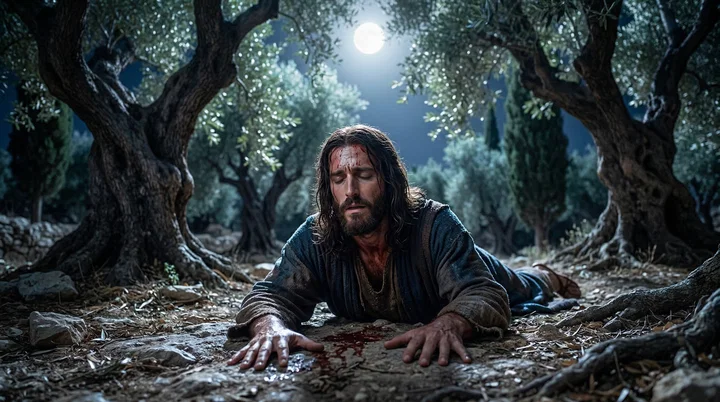
- Matthew 26:39
And he went a little further, and fell on his face, and prayed, saying, O my Father, if it be possible, let this cup pass from me: nevertheless not as I will, but as thou wilt.
Jesus submits to the Father’s will while facing the suffering described by Isaiah.
- Romans 5:8
But God commendeth his love toward us, in that, while we were yet sinners, Christ died for us.
Christ died for sinners, displaying God’s love and bearing their sin.
- Romans 6:23
For the wages of sin is death; but the gift of God is eternal life through Jesus Christ our Lord.
Sin’s wage is death, which Christ bore for sinners.
- Genesis 3:15
And I will put enmity between thee and the woman, and between thy seed and her seed; it shall bruise thy head, and thou shalt bruise his heel.
The promised Seed is wounded by Satan, yet his suffering secures victory over the serpent.
- Psalms 22:16
For dogs have compassed me: the assembly of the wicked have inclosed me: they pierced my hands and my feet.
Both foretell the Messiah’s suffering, with Psalm 22 specifying crucifixion.
- Daniel 9:26
And after threescore and two weeks shall Messiah be cut off, but not for himself: and the people of the prince that shall come shall destroy the city and the sanctuary; and the end thereof shall be with a flood, and unto the end of the war desolations are determined.
The Messiah is cut off, not for himself, for others.
- Hebrews 12:2
Looking unto Jesus the author and finisher of our faith; who for the joy that was set before him endured the cross, despising the shame, and is set down at the right hand of the throne of God.
Christ endured the cross and its shame for the joy set before him.
- Isaiah 53:10
Yet it pleased the LORD to bruise him; he hath put him to grief: when thou shalt make his soul an offering for sin, he shall see his seed, he shall prolong his days, and the pleasure of the LORD shall prosper in his hand.
The suffering servant’s soul is made an offering for sin.
- Romans 4:25
Who was delivered for our offences, and was raised again for our justification.
Christ was delivered for our offenses and raised for our justification.
Commentary part 1 of 4
Each commentary is drawn from primary sources: the writings of Ellen G. White and Adventist pioneers and periodicals. Each commentary is separate. Its own words are not a quotation; follow the references to read the source passages.
Ellen G. White
378 sources
He was pierced and crushed for the wrongs of others, bearing in body and soul the punishment and curse that brings peace, and by his suffering brings forgiveness and healing to sinners in their place.AA 225.2–226.2DA 681MH 124.5ST Aug 18, 1909Ms 106, 1897, par. 16–17 Though sinless, he was charged with the guilt of the whole world and treated as a sinner, becoming sin that the guilty might be treated as innocent and made righteous.ST Aug 9, 1905Lt 147, 1903, par. 30–32ST Feb 3, 1898Lt 208a, 1902, par. 15ST Jun 27, 1911 He bore this as willing Substitute and Surety, laying aside heaven's glory to clothe divinity with humanity and exhaust God's wrath against sin without changing the law.18MR 335.2–337.3RH Oct 2, 19005MR 423.1Ms 106, 1897, par. 16–17 His wounding included real human agony from Gethsemane to Calvary — scourging, mocking, the crown of thorns, and the cross — yet his deepest anguish was bearing the world's sin under the hiding of his Father's face.Ms 75, 1886, par. 19ST Aug 21, 1879ST Aug 14, 1879Ms 106, 1897, par. 16–1716MR 31.1 The healing he gives is full salvation from sin, pardoning, cleansing and clothing believers with his righteousness to live in obedience, received by repentance, faith and looking to him.Lt 13, 1893, par. 42–446MR 157.12MR 12.1–4Lt 2, 1893, par. 11–13ST Dec 8, 1898
Wording and Plain Sense
The verse means he was wounded for transgressions, bruised for iniquities, bore the chastisement or punishment that brings peace, and by his stripes or suffering brings healing and salvation, suffering and dying in the place of sinners for human sin.AA 225.2–226.2DA 681MH 124.5STB 24.2 It is unmistakably plain prophecy that Christ must suffer and die, showing that his griefs, sorrows, wounds, bruising, chastisement and stripes were borne for others, pierced and crushed because of human transgressions and iniquities, stricken and afflicted under God while bringing peace and healing to sinners.AA 225.2–226.2 His suffering from Gethsemane to Calvary was for human transgressions and iniquities, with chastisement bringing peace and wounds bringing healing.DA 681 He himself took human infirmities and bore human sicknesses in that suffering.MH 124.5
As Creator he came into the world and stood among created beings as a man of sorrows acquainted with grief.STB 24.2 His death was caused by sin and reveals the heinous character of sin as transgression of the law, suffered in sinners' place, and when the sinner realizes he died to impute righteousness, God's love in the plan of salvation is magnified. His suffering was the atoning sacrifice by which sinners can be justified by his righteousness and receive his life.8T 208.3
As innocent Substitute, Surety, Sin-bearer and advocate he bore in body and soul the penalty, curse, condemnation, griefs, sorrows and weight of the world's sins to save sinners from perishing and eternal ruin.Ms 106, 1897, par. 16–17Lt 2, 1893, par. 11–13ST Dec 8, 189812MR 397.2–398.1Lt 93, 1893, par. 15–17 Through his humiliation they receive pardon, peace, happiness and everlasting life, an outcome he saw beforehand in his hour of betrayal and trial when he caught a view of eternity and heard the redeemed singing the song of Moses and the Lamb.ST Aug 18, 1909 He willingly gave his body to be wounded and bruised for the world's transgression, bearing suffering due sinners so they could be saved from eternal ruin.12MR 397.2–398.1 As Substitute and Surety he bore sin's curse while upholding the law rather than abolishing or weakening it, making conversion and cooperation with God possible through his power.Ms 106, 1897, par. 16–17
The chastisement of peace and healing by stripes is spiritual healing from sin: pardon, forgiveness, justification, peace and everlasting assurance, covering with imputed righteousness, moral power and freedom to live righteously and return to allegiance.2MR 12.1–4ST Dec 8, 189810MR 290.1–2Lt 75, 1903, par. 5RH Dec 17, 1901 Nothing but his perfect sacrifice meets the need of sinful erring men, for as Sin-bearer he covers the repenting sinner and clothes him with perfection of righteousness, hiding sin from sight.2MR 12.1–4 His sacrifice satisfies the law's claims without diminishing or abolishing the law, making forgiveness possible for offenders against God.Lt 2, 1893, par. 11–13 Through his atoning sacrifice God can pardon and justify the coming sinner by counting Christ's righteousness to the believer.ST Dec 8, 1898 It opened the way for repentant sinners to be brought into loyalty to God and to return to allegiance rather than perish.10MR 290.1–2RH Dec 17, 1901
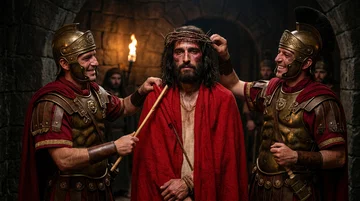
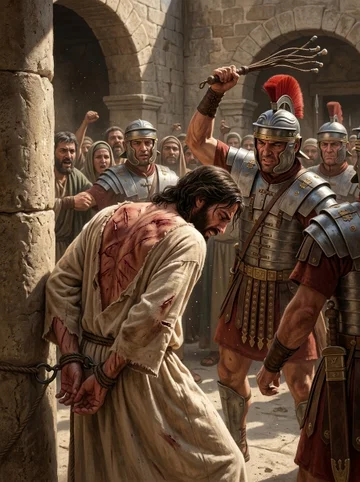
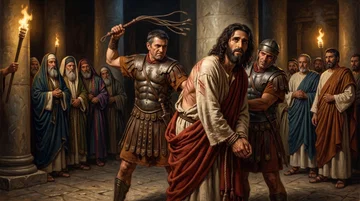
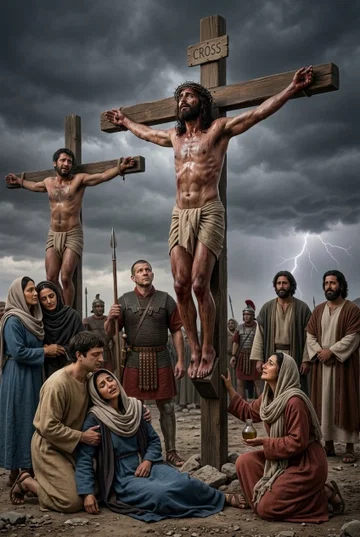
The wounding and bruising included physical cruelty: temptation and human agony, contradiction of sinners, the lash and scourging with lacerated stripes, mocking, the crown of thorns, hands pierced with nails and feet pierced with lacerated flesh on the cross.Ms 75, 1886, par. 19Ms 106, 1897, par. 16–1716MR 31.118MR 74.25RED 85.1–2 His divine soul was convulsed by human agony, his life made one dark series of afflictions and sadness, with cruel scourgings lacerating him, temples crowned with thorns, and friends denying, forsaking and betraying him as Maker of the world whom the world knew not.Ms 75, 1886, par. 19 The bruising was done by Satan nerving human agents to cruelty, yet in compassing his death Satan demolished his own throne.Ms 75, 1886, par. 19 His wounded body on the cross bore lacerated flesh by stripes and wounds for human transgressions and iniquities.5RED 85.1–2Ms 101, 1897, par. 35–36
His suffering was the atoning sacrifice by which sinners can be justified by his righteousness and receive his life, though they had no share in it, restoring God's image and lifting men from the dust.8T 208.3Lt 255, 1903, par. 12DA 25.1–2RH Feb 25, 1915 Though he had no share in sin, his condemnation and death in humanity's place make justification by his righteousness possible.Lt 255, 1903, par. 12DA 25.1–2 Through his humiliation the pardoned receive everlasting life, with his chastisement giving peace and his stripes healing by restoring God's image, lifting men from the dust and reshaping character beautiful with his glory.MH 504.1–3
Studying this prophecy about his work is a help and blessing to his people.Lt 21, 1905, par. 10–11 It describes the wonderful sacrifice made in behalf of each person, and when an honest heart reads, marks, learns and inwardly digests it and prays, conviction and power come and the Spirit shows its meaning, spreading truth like blood to bring the submitted being into obedience.Lt 200, 1907, par. 12 Then the reader sees himself under condemnation, feels truth's power in the soul, receives light on the Word as never before, and where the heart is submitted Christ perfects the whole being with thoughts, affections and powers brought into obedience.Lt 200, 1907, par. 12
Suffering in History
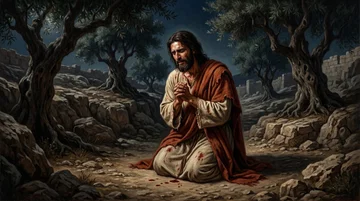
His suffering stretched from Gethsemane to Calvary for human transgressions and iniquities, with chastisement bringing peace and wounds bringing healing.DA 681 In Gethsemane the burden of sin brought anguish and a sense of separation from the Father, and He endured God's wrath as a man under sin's consequences rather than using divine power to escape.Ms 52, 1904, par. 4
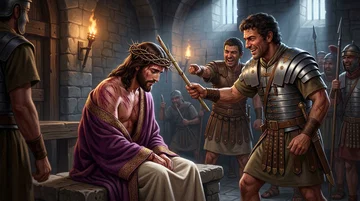
The verse foretells shameful humiliation on the cross, when priests and rulers scoffed and mocked as He hung there, challenging Him to save Himself and come down to prove He was King of Israel and Son of God.Lt 8, 1907, par. 5–6 His being despised, rejected, stricken and afflicted was borne for others, carrying human griefs and sorrows and suffering punishment for human wrongdoing to bring peace and healing.Lt 8, 1907, par. 5–6 His humiliation and physical suffering at trial illustrate the wounding, bruising, punishment and scourging for human sin, including the crown of thorns driven into His brow.Lt 115, 1903, par. 13–14 The same wounding and bruising appeared when under Pilate His flesh was battered and covered with wounds under chastisement though no charge could be proved.5RED 62.3
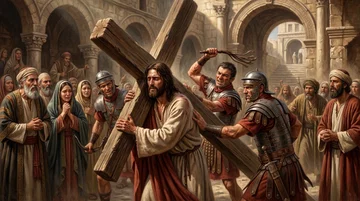
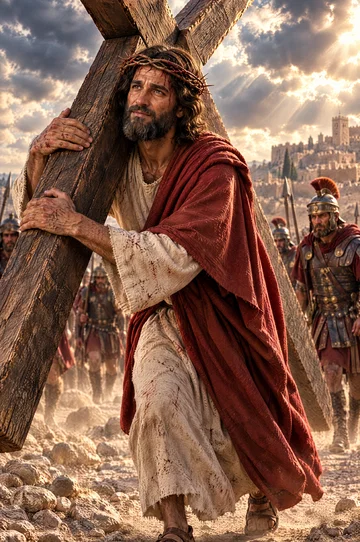
The Majesty of heaven, Saviour of the world and Son of God, was wounded for transgressions and bruised for iniquities by submitting to insult, mockery and shameful abuse.Ms 41, 1887, par. 11–14 That meant a vast multitude enclosing Him with mocking and jeering mingled with coarse oaths of blasphemy, unfeeling comments on His lowly birth and humble life, ridicule of His claim to be Son of God by chief priests and elders, and vulgar jest and insulting sneer passed from lip to lip.Ms 41, 1887, par. 11–14 It was fulfilled when He was delivered to be crucified and led toward Calvary bearing the cross upon bruised and bleeding shoulders until from loss of blood and excessive weariness and pain He fell fainting to the ground.Ms 41, 1887, par. 11–14
His wounds, scourging, mockery, crown of thorns and giving of life as the just for the unjust show how He was wounded, bruised and afflicted for human sin to bring pardon and healing.1T 27.1–4CET 25.2–3EW 40.3 The lamb tied to the pillar in the temple represents the One who bore the people's sins, torn and bruised on their account, before whom those who come confess sins and receive pardon.1T 27.1–4CET 25.2–3LSEGW 33.1–34.2ST Apr 18, 1878EW 68.1–69.1 Those who came before Him confessed, received pardon and praised God while awaiting a joyful event in glad expectation.CET 25.2–3LSEGW 33.1–34.2
He left heaven's glory, purity, peace, joy and immortal life to stand between the Father's wrath and guilty man to bear iniquity and scorn, and to come into contact with earth's degradation and stand between the sinner and sin's penalty with the guilt and weight of the whole world's sins upon Him.SG1 23.1PP 64.2 Appearing as a man He humbled Himself and became acquainted by experience with human temptation so He could succor the tempted, yet few received Him as Son of God and nearly all hated and rejected Him.SG1 23.1 After His mission as teacher ended He was delivered into men's hands to endure almost every cruelty and suffering, every insult and torture, that Satan and his angels inspired wicked men to inflict.SG1 23.1PP 64.2 He died the cruelest death hung between heaven and earth as a guilty sinner, lifted up between heaven and earth, with dreadful hours of agony that even angels could not look upon but veiled their faces from, not merely bodily agony but mental agony with which bodily suffering could not compare, including anguish of soul under the hiding of His Father's face.SG1 23.1PP 64.2 He died and rose the third day and ascended to His Father to intercede for wayward guilty man.SG1 23.1
His thirty-three years were sorrow and grief in which the world disowned, scorned, condemned Him in the judgment hall and put Him to death through men acting as agents of the prince of darkness, the worst humanity could do, while unrequited love broke the heart of the Son of God.Ms 21, 1888, par. 2–6 Even His twelve failed Him, with Judas betraying Him to His enemies and Peter denying Him in the hour of humiliation, leaving Jesus disappointed in His disciples.Ms 21, 1888, par. 2–6 The same rejection, spiritual blindness and disappointment are repeated today by professed followers, so disappointment in brethren who claim present truth should not cause loss of courage with Christ's experience and example before the mind.Ms 21, 1888, par. 2–6
His agony came from bearing the penalty and burden of transgression as substitute for a sinful world, not from Satan or human insults.ST Dec 2, 1897 The anguish of mind was so intense that the physical pain of the cross was hardly felt.COS 161.3 He was slain by the sin of the world, with death coming from anguish of bearing the world's sin rather than from spear thrust or crucifixion pain.DA 772.1–2
His anguish included the Father's displeasure toward sin and loss of the Father's sustaining presence, with the weight of sin and penalty of death pressing upon Him and bringing the cry of abandonment from the cross.ST Aug 21, 1879 In Gethsemane His anguish reflected the burden of sin and sense of separation from the Father as He bore the world's sins and the wrath that would otherwise fall on sinners.ST Aug 14, 1879 In garden and on cross His soul was bruised as He carried the world's guilt, bore the hiding of His Father's face, and endured God's wrath and punishment for breaking God's law.Ms 75, 1886, par. 25–26 At the crucifixion He took whole responsibility for sin upon Himself and endured God's wrath against sin as humanity's substitute and surety, bearing guilt and punishment so peace could be made and people healed, a complete sacrifice.Ms 44, 1898, par. 6–8 His wounding, bruising and agony in the terrible conflict ended in complete triumph, making it possible to be conquerors through the merits of the blood of a crucified and risen Saviour, not to give freedom to keep breaking the changeless law but calling to stop transgression, come under His loyal banner and obey, since His pure sinless perfect character was made an offering and His righteousness imputed, saving not in sins but from sins.Ms 75, 1886, par. 25–26
The weight of sin and the Father's wrath against it made His suffering bitter and broke His heart, bearing guilt and consequences as substitute.ST Jan 27, 1914 He felt the anguish a sinner will feel when mercy no longer pleads for the guilty.ST Jan 27, 1914 The punishment due sin fell upon Him, bringing the Father's wrath and anguish of separation as He bore sin's guilt and its judicial punishment to redeem humanity.5RED 81.2–82.1
Substitute Bearing Sin
His humiliation and pain were not for himself but belonged to his work as sacrificial offering and Sin-bearer to save others from eternal ruin, fulfilling the divine purpose as substitute and surety under divine justice, meekly enduring mockery, abuse, scourging and death.Ms 112, 1897, par. 20–21PK 689.2Ms 45, 1892, par. 28–31 Though sinless he bore the sins of the whole world, was treated as a sinner so that sinful people could be treated as innocent, punished as a transgressor while his sinless life was lived on humanity's behalf to make atonement.ST Aug 9, 1905Lt 147, 1903, par. 30–32Ms 134, 1905, par. 3 The sins of every person were charged to the innocent Christ who suffered and died in the sinner's place, gathering to his soul the sins of the whole world though hating sin with perfect hatred.ST Feb 3, 1898Lt 208a, 1902, par. 15ST Jun 27, 1911ST Jul 22, 1913 Guiltless he bore the punishment of the guilty and innocent offered himself as substitute for the transgressor, with guilt of every evil thought, word and deed of every son and daughter of Adam pressing its weight on his divine soul and calling for retribution upon him, so his spirit was torn and bruised, he who knew no sin becoming sin that people might be made the righteousness of God in him.ST Jun 27, 1911ST Jul 22, 1913
Because after Adam plunged the race into hopeless misery he became bone of bone and flesh of flesh with fallen men, clothing divinity with humanity and coming still nearer to sinners instead of cutting loose from them or treating them as they deserved, to draw them close to God and demonstrate before the heavenly universe, the unfallen worlds and the fallen world how much God loves the human race.Ms 165, 1899, par. 7–9 He stands before his redeemed as their sin-burdened, sin-stained surety bearing their sins, made sin though he knew no sin, which he could do only because personally spotless, pure and perfect from birth in Bethlehem to death on Calvary, so only he could be at once Sin-bearer and Sin-pardoner, offering himself without spot to God.Ms 165, 1899, par. 7–9 As Substitute and Surety he gave himself as complete sacrifice, first surveying all that redeeming sinners would require, then summing up and gathering the whole guilt to be canceled upon his own heart, clothing divinity with humanity and giving his whole being to bear God's wrath against sin and exhaust its punishment, willingly preparing to be smitten in transgressors' place so peace and healing come through his suffering.RH Oct 2, 19005MR 423.1ST Dec 5, 1892CE 112.1 His endurance of insult and pain both paid the penalty and gave deep sympathy for human need, meeting the sinner's need for a surety and righteousness that the law, which reveals sin but cannot pardon, cannot provide, and delivering from ruin those who take hold by faith to receive power to overcome through his merits.RH Oct 2, 1900ST Dec 5, 1892CE 112.1
He bore punishment as Substitute and Surety to make sinners alive to God and give light and life together, taking responsibility for guilt to be canceled and paying penalty and ransom, suffering in the flesh so that suffering for truth is not itself evidence of guilt.Lt 102, 1905, par. 18Lt 264, 1903, par. 11 He alone is the sin-bearer for the whole human family, bearing the world's sins and carrying human sorrows, wounded for transgressions, bruised for iniquities, chastised to give peace and striped to give healing.Lt 116, 1894, par. 7–8Lt 23, 1901, par. 1–2Lt 317a, 1904, par. 14–17 No person can bear another's sins or even his own, for they are laid on the Son alone who takes them away by faith and provides redemption people cannot accomplish for themselves, so each is to clear his own soul before God and leave others with Christ rather than take their temporal and spiritual burden, trusting him as personal Saviour to need not bear it themselves.Lt 116, 1894, par. 7–8Lt 23, 1901, par. 1–2Lt 29, 1902, par. 6–76MR 222.4–223.1Lt 317a, 1904, par. 14–17 He cannot take away the sins of those who refuse to put away perverse spirit, unchristlike words and dishonest conduct.Lt 29, 1902, par. 6–7
As Redeemer he stands before the Father with pierced, uplifted hands asking that transgressors' sins be laid on him, declaring himself responsible and that he will bear them, having graven them on the palms of his hands, giving his own life so the transgressor of the law would not suffer the law's penalty.Ms 66, 1899, par. 20 He bears the sinner's transgressions and offers his wounded hands as ground for mercy, so even when a person has sinned gravely he pleads before the Father, takes the sin and offers righteousness so Satan will not triumph, with pardon on the one condition of accepting Christ as personal Saviour and the robe of his righteousness for eternal life.Ms 66, 1899, par. 20Lt 47, 1891, par. 10–13 He became man's sin-bearer that he might become man's sin-pardoning Saviour, treated as sinners deserve by coming and taking human sins that sinners might take his righteousness.Ms 24, 1888, par. 41–44 That entire sacrifice in man's behalf with faith in his ability to save amply, fully and entirely is the faith of Jesus belonging to the third angel's message, law and gospel going hand in hand, showing salvation in the blood of Jesus alone cleansing from all sin, without which even a man of cultivated intellect, vast knowledge and honor among men is lost, saved by his blood being the only hope for time and the song through eternity.Ms 24, 1888, par. 41–44
His death fulfilled the Good Shepherd's giving life for the sheep, the Lord laying all sins on him, and the Shepherd's search for the lost sheep cost suffering with wounds and pierced hands marking the price to bring the wanderer back.COS 88.1–3COS 89.1–5 His crucifixion was the true offering to which ceremonial sacrifices pointed, fulfilling predictions of the Messiah's treatment and death as the promised Redeemer's work.SLP 103.2–104.1 The worshiper's sin was symbolically transferred to the offering and the victim's suffering represented Christ giving himself and his blood for sinners to remove guilt, the slain victim's blood signifying atonement and showing death as sin's sentence would be borne by a substitute in full vindication of God's law.2SP 85.3ST Jul 15, 1880 In heaven's council the Son undertook to redeem man from the curse and disgrace of Adam's failure and to conquer Satan, proposing through love, pity and wonderful condescension to become substitute and surety by bearing guilt and taking the Father's wrath that otherwise would have fallen for disobedience.2RED 13.2 The suffering heaped on him was part of that plan of salvation and the very purpose for which he came.SG1 39.1
He voluntarily bore the punishment due transgressors of Jehovah's law, moved by love alone with no obligation, enduring without murmur every pang and indignity, descending step by step in humiliation and laying down life for enemies under bitter opposition and reproach from his own nation, to grant fallen man probation of test and trial and impute spotless righteousness to every repenting believing sinner.ST May 3, 1910Lt 48, 1901, par. 6–7 Humbling himself to lowest depths to lift them to purity, holiness and completeness, he pours fullness and riches into poverty-stricken souls to give peace, rest, joy and share of throne glories, calling for eager self-denial in lifting the cross to follow him.Lt 48, 1901, par. 6–7 Satan and his angels plotted through his own nation moving them to cry eagerly for his blood and invent cruelty and scorn, hoping he would resent treatment and give up humility and meekness, but cunning and hatred did not break up the plan as its accomplishment drew near.SG1 39.1 As substitute he passed over the ground where Adam failed to redeem Adam's failure and fall, consenting to take sin upon himself and suffer for transgression and iniquity.Ms 25, 1887, par. 10–12
Through perfect obedience he gives opportunity to return to allegiance, moral power and strength to gain victory over sin and walk in humble obedience to law, imputing righteousness without which perfect obedience is impossible, and bringing peace, healing and elevation to all taking hold of his merits, revealing love for souls and that holy God hates sin and will not tolerate it.Ms 25, 1887, par. 10–12 As Sin-bearer he passed over the ground where Adam fell and redeemed the disgraceful fall by bearing the test of temptation on appetite in weakened humanity on behalf of the race, standing before God bearing condemnation undeserved so receivers as personal Saviour stand justified with imputed righteousness though unworthy.Ms 177, 1897, par. 89–912RED 62.2–63.1ST Jun 11, 1874 He bore sins and infirmities in fallen weakened condition, stood against Satan's temptations where Adam failed, and his victory over temptation won on their behalf belongs to the great sacrifice bringing salvation within reach, suffering death so sinners could be justified and delivered.2RED 62.2–63.1ST Jun 11, 1874Lt 196, 1902, par. 8–9 Taking humanity's place in sin and shame, his success in forming a righteous character answered Adam's failure, and as second Adam taking human nature he met temptations and trials yet lived without sin and worked out a perfect character for humanity.ST Aug 9, 1905CTBH 209.3
Those who follow by faith in self-denial and self-control receive his righteousness as imputed gift, in him losing shame and standing purified, clothed with divine righteousness and eternal glory.CTBH 209.3 His heel was bruised through suffering, yet Satan could not corrupt him with even one evil thought or action, and his uncorrupted character made redemption possible while his victory struck at Satan's power, paying the debt people could not pay to free themselves from bondage.Ms 75, 1886, par. 21–22 As substitute and surety he faced the powers of darkness alone and won the victory on humanity's behalf, and in compassing his death Satan demolished his own throne.MYP 263.2–3CE 37.1–38.1
Peace Healing Salvation
To redeem humanity he bore the burden of sin and endured the separation from God that sin brings, bringing peace with God and healing from sin's harm, through which people can be redeemed, changed to his divine image, become sons of God and share the joy of holiness.SC 13.1Ms 41, 1892, par. 13–16ST Apr 6, 1915 His suffering makes that peace and healing possible for those who receive and believe in him, his stripes being the suffering he endured to save from eternal death and give opportunity for eternal life.Lt 200, 1902, par. 11–13Ms 70, 1897, par. 1Ms 174, 1897, par. 90–92 That healing becomes effective when sinners look in faith with repentance, confession, forsaking of sin and obedience, receiving him by faith as personal Saviour, for eternal welfare is decided by obedience or disobedience to God's commandments.Ms 70, 1897, par. 1Ms 174, 1897, par. 90–9210MR 290.1–2 His sacrifice did not annul or relax God's law but made pardon possible for repentant sinners and opened the way to be brought into loyalty to God.10MR 290.1–2ST Dec 5, 1892 Those who repent and accept him by faith receive everlasting peace and assurance rather than bearing the curse their sins deserve, and seeing his suffering reveals both God's abhorrence of sin and his love, leading to repentance for breaking the law and trust for forgiveness and peace.ST Dec 5, 1892
His wounds and bruises paid the debt incurred by transgression, bringing healing from sin, peace, elevation and bringing humanity to God, lifting sinners from degradation.Ms 43, 1894, par. 14–16CE 111.2 The healing he gives is not permission to remain in sin, for genuine faith receives pardon and relies on his strength to resist temptation, and is not compatible with knowingly continuing in sin.Lt 13, 1893, par. 42–446MR 157.1Ms 56, 1900, par. 8 Helpless, penitent, humble souls who come to him in repentance and faith are rescued from sin and changed to live righteously, saved from sin not in sin, taken from a diseased spiritual condition and restored to a pure holy atmosphere with a new heart and changed life, so that dead to sin they live unto righteousness.6MR 157.1Ms 56, 1900, par. 8LC1 140.3 His suffering paid the debt created by breaking God's law to awaken sorrow for sin and lead to repentance and obedience, imputing his righteousness to make efforts to keep the law acceptable, reconciling people to God through his human nature and God to them through his divine nature.LC1 140.3FE 429.3ST Nov 17, 1881 Those who repent and believe may receive his righteousness and stand uncondemned, called to leave sin and obey God rather than be saved in sins.FE 429.3ST Nov 17, 1881
His stripes heal both body and soul, curing diseases and restoring people to God, for he took infirmities and bore sicknesses, bore the punishment that brings peace, and healing comes through his suffering.MH 124.5Ms 44, 1902, par. 215MR 31.1 He is the great Physician whose work physicians follow, bruised so healing could flow to cure human diseases of body and soul, restoring the soul from its dead earthly sensual state to spiritual soundness reflecting his image when looked to in faith.15MR 31.15T 267.2FE 179.4 As great Physician he restores soul and body under transgression's curse at infinite sacrifice, with healing properties flowing from his bruising to cure all diseases, making him healer of soul as well as body who restores man to God.7MR 376.2Ms 63, 1899, par. 7–8Ms 98a, 1905, par. 13 Physicians are to act in his stead, every physician planted upon the Rock drawing restoring power from him to carry out his plans, and those who receive him are healed by his stripes, made his co-workers, and presented to the Father as his own bought through his humiliation.Lt 219, 1905, par. 12–13Ms 63, 1899, par. 7–8Lt 68, 1895, par. 23–25 He alone can successfully combat disease, including disease brought on by imprudent sinful course, being both Saviour and healer.7MR 376.2Lt 68, 1895, par. 23–25Ms 102, 1901, par. 41
He offers more than partial relief as great Physician and Redeemer, saving completely all who come to him, bearing grief and sorrow for transgressions and iniquities to bring peace and healing.Ms 43, 1902, par. 11–12Ms 118, 1903, par. 11 As mighty Medical Missionary he takes away sin and disease from body, mind and soul of all who accept him as Teacher and Physician-in-chief.Ms 43, 1902, par. 11–12Ms 118, 1903, par. 11 Applied to the sick, healing of soul and body is found in him as Sin-bearer and great Physician through prayer, and he has power to heal every disease so people should trust God's life-giving power rather than satanic agencies.CTBH 113.2Ms 102, 1901, par. 41Ms 81, 1893, par. 33–36 His sacrifice followed by resurrection and mediation makes peace and joy possible and delivers from hopelessness and misery, giving ground for gratitude and for accepting trials without resentment.ST Sep 27, 18835T 316.1ST Aug 8, 1906 Through his death and resurrection he opened hope's door rescuing humanity from darkness and ruin, with human sympathy lifting people up, and his suffering and humiliation brought salvation calling the saved to share hardship rather than seek comfort or an easier way.5T 316.1ST Aug 8, 1906ST Aug 8, 1906SG4 272.2
Through his merits sinners receive pardon and peace, are washed from sin, cleansed from moral defilement, clothed with his righteousness and prepared for heaven, his death being an atoning sacrifice that redeems and restores.ST Aug 8, 1906ST Aug 8, 1906ST Jan 5, 1915ST Feb 27, 1893 He takes sin and gives peace in return, and guilt of the past and sense of sinfulness that poisons life's springs are to be laid at the cross where he speaks pardon and removes remorse, having bought sinners with his blood so they must no longer destroy self-respect.ST Jan 5, 1915Lt 38, 1887, par. 7–119MR 305.3 He strengthens the weakened will, accepts the broken contrite heart with free pardon, adopts into God's family with grace to help weakness, and leads on step by step as the hand is put in his to be guided.Lt 38, 1887, par. 7–119MR 305.3 His suffering makes healing possible by cleansing accepters as atoning sacrifice and restoring to favor, and because innocent and wholly holy his sacrifice alone could meet justice and law, so law-obeyers are forgiven and clothed in his righteousness.Lt 6, 1903, par. 25–26ST Feb 27, 1893 He takes sins and gives his righteousness as sanctification, becoming healer and personal Saviour and ground of trust when accepted, with those purchased by his blood receiving guardianship of grace and being clothed in his righteousness.Ms 174, 1897, par. 90–92Lt 77, 1895, par. 12–14Lt 25, 1892, par. 11Ms 43, 1895, par. 5
He bore punishment so repentant believers may receive his righteousness and stand uncondemned, his perfect obedience credited while they cooperate with divine power to subdue sin and stand complete, with salvation resting on imputed merits not human effort.STE 25.4Lt 26, 1895, par. 5–7Ms 123, 1897, par. 7 When permitted he takes away sins and imputes righteousness, accepting, cleansing, purifying and sanctifying, restoring God's moral image, hating sin but loving the sinner, ever ready to take sins of all who come for pardon.Lt 255, 1899, par. 5–8CEv 27.1Ms 123, 1897, par. 7 His sacrifice meets the sinner's need for surety and righteousness that the law, which reveals sin and defects but cannot pardon, cannot provide.ST Dec 5, 1892ST Jun 27, 1911Ms 16, 1897, par. 13–15 The sin-bearing Saviour dies under the world's weight while the law only reveals guilt, so the sinner must look beyond repentance to Christ, through whose death the Spirit shows God's love, a costlier plan chosen in great love instead of cutting off the sinner by giving the only-begotten Son to bear world sins to provide hope, withholding no needed aid so the sinner may take salvation and become heir joint with Christ.ST Dec 5, 1892ST Jun 27, 1911Ms 16, 1897, par. 13–15 His suffering purchased opportunity to return to God, securing probation at infinite cost with nothing less than his life atoning and bearing death's penalty, his death being life to believers and death to the disobedient, calling from continual transgression to obedience to prove loyalty and placing every believer on vantage ground.Ms 77, 1899, par. 37–38Ms 198, 1903, par. 1
His wounds and agony blot out sin's record, purchase life, make another trial possible bringing sinners into the Father's favor, and shelter by faith those who make his life their own.SG2 16.2–17.1LC1 98.1Ms 99, 1897, par. 2 All who would be saved when time closes must come before the lamb, confess sins, and take place among the redeemed, as seen in the lamb tied, mangled and bleeding in the temple, torn and bruised for human sins.SG2 16.2–17.1Ms 99, 1897, par. 2 He suffered and died as sacrifice making way for guilty to escape penalty, receive pardon and live, displaying condescension and love giving reason for gratitude, praise and testimony.SCEV 36.1ST Sep 28, 1915 Bearing the curse as willing sacrifice, his suffering and death make it possible not to die eternally, and his willingness to die made salvation possible so had he come down from the cross humanity could not have been saved.DA 483.6COS 160.6–7 He was wounded and bruised on the cross bearing sin's cost so people could be saved from death, making cleansing through blood and hope of resurrection and eternal life possible, opening a way for the lost to be restored to the garden and tree of life with obedience.EW 104.1–21T 123.3–124.1 He bears sins and takes death's sentence, giving life so sinners may receive pardon through blood, suffering in guilty people's place to purchase redemption at immeasurable love, making worldly riches seem small and awakening praise and humility at Calvary.EW 104.1–2ST Dec 21, 1888
Prophecy Fulfillment Rejection
Isaiah 53 identifies Jesus of Nazareth as the promised Messiah, and its fulfillment in him has convinced seekers such as Wolff that Jesus is the Son of God.GC 357.2–358.1 It foretells his innocent suffering and death by crucifixion at the hands of Jews who killed him when innocent as they slew the prophets of old, perfectly fulfilled in Jesus as real Messiah and Son of God.GC88 357.1–2
The verse belongs to prophecy showing the Messiah would suffer rather than appear in the worldly glory expected by priests and rabbis, contrary to expectation of a mighty earthly ruler, and failure to read prophecy rightly led to rejecting him as the foretold man of sorrow and grief.DA 458.2–4Ms 7a, 1886, par. 14–15 It foretells a suffering Messiah who would suffer and die at his first coming, not appear as temporal prince to overthrow Rome and exalt the Jews.7MR 200.1–202.1Lt 65, 1894, par. 4–6 Teachers misled the people by applying descriptions of his glorious second coming to his first advent, so he was rejected for lacking display though he met every specification of Scripture in life, works and character, and will yet shine before the ancients gloriously and reign from sea to sea and from the river to the ends of the earth.7MR 200.1–202.1ST Aug 22, 1900ST Sep 26, 1911 The prophecy presents Christ as humble and suffering on account of transgressions and iniquities, wounded and bruised and bearing the chastisement that brings peace and healing by stripes, not a temporal ruler conquering nations; Jewish leaders rejected him because he came in humiliation with no visible conquering armies and without form or comeliness to them, lacking outward display and not matching their imagined illustrious conquering King.ST Aug 22, 1900ST Sep 26, 1911
It is messianic prophecy that the Saviour would come in humility and poverty, be rejected and despised, and be wounded, bruised and slain for transgressions and iniquities, bearing chastisement to give peace and healing.8RED 45.1–46.1SLP 83.1–23SP 389.1–2 Its agreement with Jesus' life, suffering, death and teachings proves he is Messiah and gives inspired proof of his mission, suffering and death, correcting expectation of only earthly power and of a Messiah coming in earthly power or bringing only wonderful elevation to the Jewish nation.8RED 45.1–46.13SP 389.1–2 It is part of the testimony of Moses and the prophets spoken by the voice of Christ from the days of Adam, unlocked by Christ as key to the rich treasures of the Old Testament without whom religious services and ceremonies are valueless, and Christ's lowly self-denying life accorded with the prophetic vision portraying his experience in advance.8RED 45.1–46.1Ms 64, 1895, par. 8 His crucifixion was the work of the promised Redeemer, the true offering to which sacrifices of the ceremonial law pointed.SLP 103.2–104.1
It belongs to prophecies foretelling the Redeemer would be rejected and slain by those who should have been first to recognize him as the Promised One.WAJP 2.1–2 It belongs to Isaiah's testimony of the first coming which the Jews fulfilled by what they did to Christ while misreading Scripture and failing to recognize the time and manner of his appearance.Ms 41a, 1896, par. 33 The passage foretells a suffering Saviour and Lamb of God who takes away sin and makes holy by cleansing people from sin, not a political prince to bring nations under Israel's rule. All the prophets testified of Jesus in this character as God's great remedy for sin, the guiltless One to bear the sins of the guilty, as Moses pointed Israel forward to Christ as the Prophet to hear, and this Old Testament testimony was used to persuade concerning Jesus and convince honest seekers of truth.AA 451.4SLP 276.1–277.1
It holds deep truths long obscured yet vital to salvation, correcting expectation of only Jewish elevation by showing he must suffer and die as Lamb of God.DA 78.3–5 At twelve on his first temple feast at Jerusalem the veil on his mission lifted, showing Isaiah 53 was to be fulfilled in himself, and he received the Father's communication to proclaim the acceptable year as Prophet of the Most High, knowing he must be about his Father's business.Ms 183, 1903, par. 1–2 There he set this prophecy of humiliation, suffering and death before rabbis and teachers and asked its meaning, identifying himself as the Lamb that takes away sin and making the plan of salvation clear light shining in a dark place to darkened minds, using questions that gave a divine lesson, placed truth in a new aspect, and exposed how narrow and superficial was the wisdom of the wise men.DA 78.3–5
His kingdom is spiritual, not temporal reign on David's throne; his being refused and rejected, his humiliation, suffering, death and rising on the third day were ordained in the councils between Father and Son and foretold by prophets and men inspired by the Holy Ghost, and every specification was fulfilled as he opened the Scriptures step by step.Ms 138, 1897, par. 15–16 The Old Testament representations of what he suffered in his own person are remarkably vivid and are to be sacredly cherished, because by that suffering salvation was secured.Ms 138, 1897, par. 15–16 The verse belongs to the prophecies of the suffering Saviour that he would suffer at Calvary and be offered up for the sins of the world, then rise after three days, with his return pointing to his Redeemer and advocate work before the Father.DA 82.3–42SP 36.2 His blood saves those who by faith make his life their own, as the Passover lamb's blood sheltering Israel pointed to him as personal Saviour received by faith.DA 82.3–4 It is part of prophecy foretelling his life and death, that he came in poverty and humiliation and was crucified as foretold, bearing suffering on behalf of humanity as his mission though no one on earth fully understood the burden he carried.ST May 2, 1878DA 326.4
Though he suffered and was punished for transgressions and iniquities to provide peace and healing, the world would not receive and acknowledge him as Redeemer.Ms 75, 1886, par. 15 The blindness of the impenitent is because Satan has controlling power over them, and they choose his service before the service of Prince Immanuel.Ms 75, 1886, par. 15 He was wounded for the transgressions of the very ones who despised and rejected him, in a self-denying sorrowful mission to save people who rejected and misunderstood him.Ms 126, 1909, par. 6–8Ms 20, 1897, par. 12–13 The verse belongs to the account of a Christ rejected and not desired by those not recognizing his worth, while those who repent and seek God's glory see in his suffering their only hope though the world fails to discern it.Ms 49, 1897, par. 1–4Lt 30, 1893, par. 9–11
His suffering to bring peace was foreshadowed when his three-day separation from his parents pointed to his death for world sins and his being found again, after which faith could rest on him as Redeemer and advocate with the Father.ST Dec 9, 1880 As Israel's invisible leader he would bear the people's iniquities and suffer more intensely than Moses, because they sinned against him and offended him, not Moses.Ms 69, 1912, par. 24–2910MR 151.3 The sacrificial offerings pointed forward to his crucifixion and suffering for salvation, and the smitten rock typified him wounded for transgressions so that the stream of salvation might flow to all.Ms 69, 1912, par. 24–29SLP 168.1–2AA 315.2–316.1 Smitten by God and suffering for transgressions and iniquities, from him salvation flows for a lost race as life-giving water flowed from the smitten rock in the desert.PP 411.3 As the rock was smitten once, Christ was to be offered once to bear the sins of many and was not to be sacrificed a second time, and seekers receive grace by asking in Jesus' name in penitential prayer which brings his wounds before the Lord of hosts, so that life-giving blood flows forth afresh as symbolized by living water for Israel.PP 411.3
Sources