John 4:6
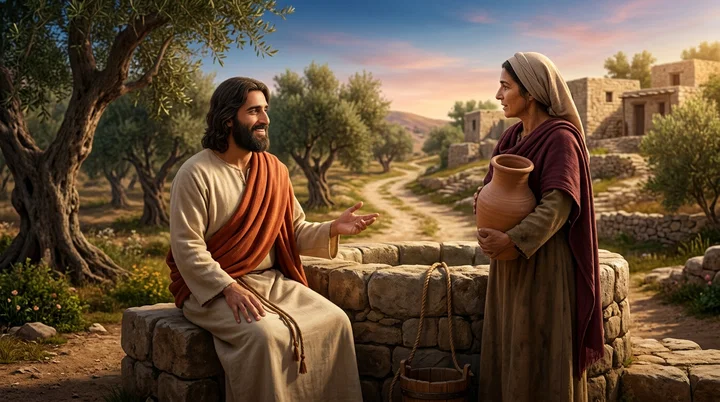
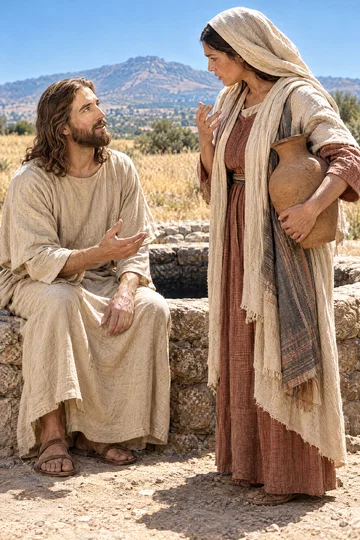
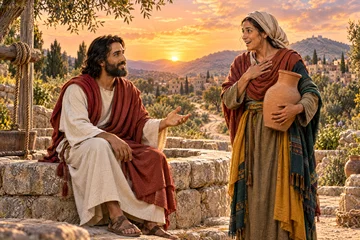
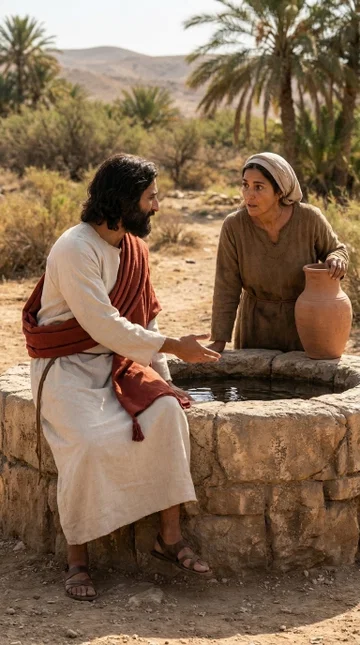
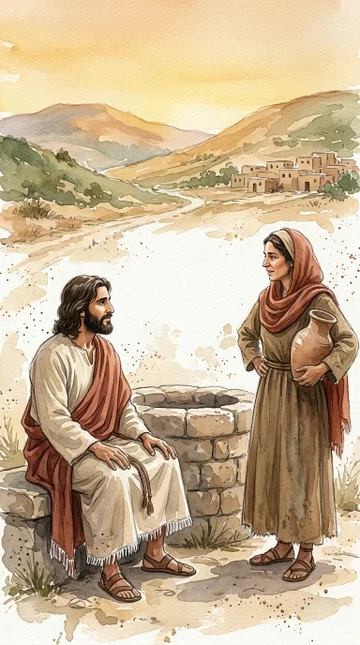
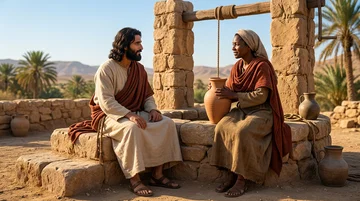
Now Jacob’s well was there. Jesus therefore, being wearied with his journey, sat thus on the well: and it was about the sixth hour.
Translations
American King James Version, King James Version, KJV Cambridge Paragraph Bible
Now Jacob’s well was there. Jesus therefore, being wearied with his journey, sat thus on the well: and it was about the sixth hour.
Now Jacob's well was there. Jesus therefore being wearied with his journey, sat thus on the well: and it was about the sixth hour.
Revised Version, American Standard Version
and Jacob’s well was there. Jesus therefore, being wearied with his journey, sat thus by the well. It was about the sixth hour.
and there was there a well of Jacob. Jesus therefore having been weary from the journeying, was sitting thus on the well; it was as it were the sixth hour;
Now a fountain of Jacob's was there; Jesus therefore, being wearied with the way he had come, sat just as he was at the fountain. It was about the sixth hour.
Now Jacob’s fountain was there. Jesus, therefore, having become toil-worn with the journey, was sitting thus, upon the fountain. It was about the sixth hour.
Berean Standard Bible, Majority Standard Bible
Since Jacob’s well was there, Jesus, weary from His journey, sat down by the well. It was about the sixth hour.
Jacob’s well was there. Jesus therefore, being tired from his journey, sat down by the well. It was about the sixth hour.
Now Jacob's fountain was there. Jesus, being tired after his journey, was resting by the fountain. It was about the sixth hour.
And there was Iacobs well. Iesus then wearied in the iourney, sate thus on the well: it was about the sixt houre.
Douay-Rheims (Challoner revision)
Now Jacob’s well was there. Jesus therefore being wearied with his journey, sat thus on the well. It was about the sixth hour.
Pictures
Cross-references
- John 4:10-14
Jesus answered and said unto her, If thou knewest the gift of God, and who it is that saith to thee, Give me to drink; thou wouldest have asked of him, and he would have given thee living water.
Jesus contrasts well water with the living water he offers, which brings everlasting life.
- John 4:39-42
And many of the Samaritans of that city believed on him for the saying of the woman, which testified, He told me all that ever I did.
The woman’s testimony prompts belief, and many Samaritans believe after hearing Jesus.
- John 4:28-30
The woman then left her waterpot, and went her way into the city, and saith to the men,
The woman leaves her pitcher and calls the city to Jesus.
- Genesis 33:19
And he bought a parcel of a field, where he had spread his tent, at the hand of the children of Hamor, Shechem’s father, for an hundred pieces of money.
Jacob bought the parcel of ground containing the well.
- Revelation 22:17
And the Spirit and the bride say, Come. And let him that heareth say, Come. And let him that is athirst come. And whosoever will, let him take the water of life freely.
Both texts connect Jesus’ invitation to the thirsty with receiving living water.
- John 7:37-38
In the last day, that great day of the feast, Jesus stood and cried, saying, If any man thirst, let him come unto me, and drink.
Jesus invites the thirsty to receive living water, which flows from within believers.
- Isaiah 55:1
Ho, every one that thirsteth, come ye to the waters, and he that hath no money; come ye, buy, and eat; yea, come, buy wine and milk without money and without price.
The invitation to come freely for water connects with Jesus’ offer of water.
- John 4:10
Jesus answered and said unto her, If thou knewest the gift of God, and who it is that saith to thee, Give me to drink; thou wouldest have asked of him, and he would have given thee living water.
Jesus turns the well-side conversation to the gift of living water.
- Genesis 48:22
Moreover I have given to thee one portion above thy brethren, which I took out of the hand of the Amorite with my sword and with my bow.
Jacob gives Joseph a portion of land.
- Joshua 24:32
And the bones of Joseph, which the children of Israel brought up out of Egypt, buried they in Shechem, in a parcel of ground which Jacob bought of the sons of Hamor the father of Shechem for an hundred pieces of silver: and it became the inheritance of the children of Joseph.
Identifies the nearby tomb as Joseph’s burial place.
- Genesis 29:2-3
And he looked, and behold a well in the field, and, lo, there were three flocks of sheep lying by it; for out of that well they watered the flocks: and a great stone was upon the well’s mouth.
Both texts place a weary traveler at a well where flocks are watered.
- Isaiah 12:3
Therefore with joy shall ye draw water out of the wells of salvation.
The lesson describes drawing from the wells of salvation.
- 1 Kings 16:23-24
In the thirty and first year of Asa king of Judah began Omri to reign over Israel, twelve years: six years reigned he in Tirzah.
Identifies Samaria’s origin as Israel’s capital.
- John 4:17-18
The woman answered and said, I have no husband. Jesus said unto her, Thou hast well said, I have no husband:
Jesus reveals the woman’s hidden life and shows he knows her secrets.
- John 4:25-26
The woman saith unto him, I know that Messias cometh, which is called Christ: when he is come, he will tell us all things.
The conversation at the well ends with Jesus identifying himself as the Messiah.
- Genesis 32:24
And Jacob was left alone; and there wrestled a man with him until the breaking of the day.
both given as blessed meetings while alone
- John 4:31-33
In the mean while his disciples prayed him, saying, Master, eat.
The disciples urge the tired Jesus to eat.
- Acts 8:4-25
Therefore they that were scattered abroad went every where preaching the word.
The disciples later preach in Samaria and gather converts.
- John 6:35
And Jesus said unto them, I am the bread of life: he that cometh to me shall never hunger; and he that believeth on me shall never thirst.
same daily spiritual supply in Christ
Commentary
Each commentary is drawn from primary sources: the writings of Ellen G. White and Adventist pioneers and periodicals. Each commentary is separate. Its own words are not a quotation; follow the references to read the source passages.
Ellen G. White
29 sources
About noon under the hot sun, worn, hungry and thirsty from a morning journey on foot from Judea toward Galilee through Samaria, Jesus sat to rest alone on Jacob's well near Sychar while His disciples had gone away to buy food.DA 183.1–3ST Apr 22, 1897ST Aug 11, 1914DA 194.3–195.1ST Feb 20, 1912 The well was deep and its cool water lay near yet beyond His reach, for He had nothing with which to draw and would not work a miracle to supply His own need.DA 183.1–3ST Apr 22, 1897ST Feb 20, 1912 In that weariness He truly shared human weakness and limits, veiling His divinity with humanity to meet the poor, the oppressed and the suffering in their own experience.Ms 18, 1895, par. 4–5Ms 18, 1895, par. 1–3ST Apr 22, 1897 Yet weary as He was He remained heaven's Commander, the divine Son and Creator who had emptied Himself of glory and throne to become poor that the fallen might be made rich.Ms 18, 1895, par. 1–3ST Feb 20, 1912 Faint and thirsty, He did not pass by the work at hand but broke through Jewish prejudice to ask a sinful Samaritan stranger for a drink, and by that meeting opened His richest teaching to one despised soul so that she and many of her town believed.DA 194.3–195.13T 217.3–46MR 323.3GW92 338.1ED 231.2–232.1
Setting at Jacob's Well
The well is Jacob's well near Sychar at Shechem, dug by Jacob himself and standing as a landmark at the place chosen for Israel's covenant ceremony.PP 499.4–500.1 It lies in rural, rocky hill country with sparse vegetation, rough stone walls, terraces, steps and a descending path where robed women come with large upright water jars.DA 195
Jesus had come from Judea, where His ministry had met little response, and was journeying toward Galilee through Samaria.DA 194.3–195.1DA 181.2–182.1 That journey had been begun that morning on foot, bringing Him to the well after a long morning's travel.DA 183.1–3 He was weary with labor and travel on the way from Judea to Galilee.ST Feb 20, 1912
It was about the sixth hour, about noon under the hot sun.DA 183.1–3DA 181.2–182.1 His sitting by the well at about the sixth hour comes just before He speaks with the Samaritan woman.Ms 12, 1901, par. 1–3 His resting there around the sixth hour shows His experience of human weariness after His journey.Ms 18, 1895, par. 4–5
Wearied, faint, hungry and thirsty from labor and travel, He sat thus on the well to rest.DA 183.1–3ST Apr 22, 1897ST Feb 20, 1912 He rested there alone while His disciples went away to buy food and to find food.ST Apr 22, 18972SP 140.1ST Feb 20, 1912 It was there, sitting after becoming tired from His journey, that He spoke with the Samaritan woman.ST Aug 11, 1914 Sitting there weary and hungry, His work with her led to a blessing that spread to many in her town.GW92 338.1
The well was deep and the cool water was near yet inaccessible to Him and increased His thirst.DA 183.1–3ST Apr 22, 1897ST Feb 20, 1912 He had no rope or water jar, no rope or bucket, with which to draw.DA 183.1–3ST Apr 22, 1897ST Feb 20, 1912 He therefore depended on a stranger coming to draw for a drink, waiting for someone to come to draw, in the account where a Samaritan woman came to draw water and He asked her for a drink.DA 183.1–3ST Feb 20, 1912Ms 61, 1896, par. 5–7 He refused to work a miracle to satisfy His thirst and would not set aside the ordinary conditions of human life.ST Apr 22, 1897ST Feb 20, 1912
Humanity Veiling Divinity
Wearied by His journey He sat at the well in real human weakness, having freely taken humanity upon Himself and accepted its ordinary limits and conditions without setting them aside.Ms 18, 1895, par. 4–5Ms 18, 1895, par. 1–3ST Apr 22, 1897 He veiled His divinity with humanity and subjected Himself to human frailties, entering fully into the lot of humanity He had voluntarily assumed in order to share the experiences of the poor, the oppressed and the suffering.ST Apr 22, 1897ST Feb 20, 1912 Worn with labor and travel, hungry and thirsty, He would not work a miracle to satisfy His thirst, though the cool water lay near yet inaccessible to Him without rope or jar.ST Apr 22, 1897ST Feb 20, 1912 His tasting of human weakness, sorrows and temptations fitted Him to plead for humanity as its representative and Intercessor.ST Oct 31, 1878
Even in that weariness He was heaven's Commander, the divine Son, the Majesty of Heaven and Creator of every good and perfect gift.Ms 18, 1895, par. 1–3ST Feb 20, 1912 His divinity remained joined to God's throne on behalf of those He came to save.Ms 18, 1895, par. 1–3 In redeeming the world He gave Himself as a living sacrifice, emptied Himself of high prerogatives, left glory and throne and command, and became poor that through His poverty the fallen might be made rich.ST Feb 20, 1912
Physical weariness itself is not harmful, and His weariness proves He knows the necessities of every oppressed and languid soul.ST Apr 22, 1897CT 295.3–296.1 He supplies spiritual refreshment, for He is the daily bread of life to be eaten daily and the water of life to the parched soul, the inexhaustible wellspring of truth and fountain of living water since the fall of Adam.ST Apr 22, 1897 His weariness also bore a deeper sorrow as He sought to dispel the world's moral darkness and ignorance, grieved that men did not know or value Him and the light He brought.Ms 18, 1895, par. 1–3 It revealed His hunger and thirst for recognition, sympathy and love in return for His great love, which many withhold as the woman at first withheld water, at the peril of their souls.Ms 18, 1895, par. 1–3ST Apr 22, 1897
Unlike the well's water, which leaves the drinker thirsty again, the water He gives satisfies the cravings of mind and heart and brings the joy and hope of the gospel and everlasting life.Ms 12, 1901, par. 1–3 At the well He carried forward the Eden promise that the Seed of the woman would bruise the serpent's head, a work He continues until every soul has been tested and tried.ST Apr 22, 1897 The fountain of living water was within Him, refreshing those who came under His influence, and its supply is never exhausted no matter how much is drawn and given to others.ST Apr 22, 18973T 322.2–3 His example teaches that His followers may become weary but should not give up, faint or be discouraged, because rest and peace are found in Him.Ms 18, 1895, par. 4–5Ms 18, 1895, par. 1–3
Ministry to the Samaritans
Though a Jew, He deliberately crossed Jewish social and religious barriers in Samaria, mingling freely with the Samaritans and setting at naught the Pharisaic customs of His nation and its prejudice.6MR 323.3Ms 87, 1907, par. 32MR 109.1 His work was not to create separating barriers or to constantly thrust upon people that they were wrong, but He accepted the hospitality of this despised people, slept with them under their roofs, ate with them at their tables partaking of food prepared and served by their hands, and taught in their streets.6MR 323.3Ms 87, 1907, par. 32MR 109.1 He treated them with the utmost kindness and courtesy, with sympathy and social kindliness that recognized the dignity of humanity.6MR 323.3Ms 87, 1907, par. 32MR 109.1 While He drew their hearts to Him by the tie of human sympathy, His divine grace brought to them the salvation which the Jews rejected, and His words fell with blessed, life-giving power on thirsty souls, awakening new impulses and opening to outcasts of society the possibility of a new life.6MR 323.32MR 109.1
His willingness to preach at Sychar showed He did not share Jewish intolerance, and that His grace and salvation are not limited by race or nation or by the division between Jews and Samaritans.6MR 323.3AA 19.2–20.1DA 402.2 It showed that people regarded as unworthy could hunger for truth.AA 19.2–20.1 Though rejected by Samaritans, His love for them remained unchanged, and this prepared His disciples to carry the gospel to them.DA 488.4–6
Faint and weary from a ministry in Judea that had met little response, He did not pass up the chance to work when the Samaritan woman, a stranger to Israel living in open sin, came to draw water and He asked her for a drink.DA 194.3–195.1GW92 186.2–3Ms 61, 1896, par. 5–7 Even in His weariness He used the meeting to teach spiritual truths about His spiritual kingdom, for the fountain of living water was within Him refreshing those who came under His influence.3T 217.3–43T 322.2–3GW92 186.2–3 He opened His richest teaching personally to one despised person because He discerned her receptive heart.ED 231.2–232.1 Through that conversation the woman found the Saviour, and by her report brought her countrymen to hear Him, so that the blessing spread to her town and many Samaritans came, heard and believed.ST Aug 11, 19143T 217.3–4GW92 338.1GW92 186.2–3 Hungry as well as weary as He sat there, His work with her led to that wider blessing.GW92 338.1
The incident reveals how Christ works, for though the learned Jews did not receive Him, He revealed Himself more plainly to the humble Samaritan woman.Lt 55, 1897, par. 12–15 It shows how His followers are to sow and reap by bringing the gospel to people waiting for light, and by traveling from place to place to help suffering and needy people even when weary.Lt 55, 1897, par. 12–15Lt 30, 1870, par. 21–22
Sources
Pioneers and periodicals
82 sources
About noon Jesus, footsore from walking from Judea toward Galilee through Samaria, sat to rest on the curb of Jacob's well near Sychar in the valley between Gerizim and Ebal while His disciples went to buy food.ST Jan 11, 1899ST Jan 17, 1900ST Jun 16, 1898ST Sep 8, 1898 His weariness was real bodily tiredness with hunger and thirst, not mere appearance, for though He was the Majesty of Heaven and Creator He had veiled divinity with humanity and subjected Himself to human frailty without sin.ST Apr 22, 1897ST Feb 20, 1912ST Feb 7, 1900ST Jan 11, 1899ST Dec 24, 1894 Weary and thirsty with no rope to draw, He asked a despised Samaritan woman who came to draw for a drink, setting aside Jewish hostility toward Samaritans to open personal talk with one soul.ST Mar 8, 1899ST Jan 17, 1900ST May 12, 1914RH Nov 11, 1873ST May 24, 1910 In that ordinary pause He forgot His own need in doing His Father's will, offering her living water that becomes an inward fountain of grace and eternal life and leading her to know Him as Messiah and bring her city to believe.RH Oct 10, 1907RH Nov 28, 1912RH Sep 25, 1913 His rest thus became labor for spiritually thirsty sinners, showing that no fatigue excuses from mission and that winning even one soul in everyday life is great work.ST Mar 8, 1899ST Mar 26, 1885RH May 13, 1873RH Feb 9, 1911RH Apr 27, 1916
Place, Journey, and Hour
Jesus came on the road from Judea to Galilee through Samaria to Sychar, where Jacob's well stood near the parcel of ground Jacob gave to Joseph.ST Feb 7, 1900ST Jan 11, 1899ST Jun 16, 1898 The place is also called Shechem, Sychar near modern Nablous and Askar, in the valley between Mount Gerizim and Mount Ebal about a mile and a half from ancient Shechem.ST Sep 8, 1898ST Jul 17, 1901 Jacob's well was the noted feature of the place, and the meeting with the Samaritan woman is located by its place, bodily weariness, posture of rest, and time of day.ST Feb 7, 1900ST Jan 11, 1899
The well was real, with a circular mouth carved in a large slab of stone, a ledge or curb around it where Jesus sat resting wearied from His journey, and grooves in the stone worn by the ropes used to draw up water pots.ST May 22, 1884ST May 22, 1884 It lay in a vaulted chamber beneath the surface of the ground amid ruins near Nablous.ST May 22, 1884 The site near modern Askar is described as dry despite abundant nearby water.RH Jul 28, 1904
About the sixth hour is about noon by Jewish reckoning, and noon is favored over a Roman reckoning that would make it evening.ST Feb 7, 1900 It was burning noon and the heat of the day.ST Sep 8, 1898RH Nov 11, 1873 Travelers in the East commonly began walking early, so a journey would naturally leave a person tired by that hour.ST Jan 25, 1905ST Jan 25, 1905
Being wearied with His journey He sat thus on or by the well, on its curb or brink, to rest.ST Jun 16, 1898ST May 22, 1884ST May 22, 1884 He had come on foot, and His disciples had gone into the city to buy food.ST Apr 22, 1897ST Jan 27, 1881ST Jun 16, 1898RH Sep 25, 1913 A Samaritan woman came there to draw water and found Him sitting nearby.ST Jan 17, 1900ST Jul 17, 1901
Human Weariness Explained
Jesus was truly tired in body from walking, hungry and thirsty from travel, and sat down at the well to rest because His fatigue was real and not only seeming so.ST Apr 22, 1897ST Jan 27, 1881ST Feb 7, 1900ST Jan 11, 1899ST Mar 8, 1899 He had come on foot from Judea toward Galilee to Sychar near the parcel of ground Jacob gave to Joseph, and while His disciples had gone away to buy food He remained sitting by Jacob's well.ST Apr 22, 1897ST Jan 27, 1881ST Feb 20, 1912ST Feb 7, 1900ST Jan 11, 1899
Though He is the Majesty of Heaven and Creator of every good and perfect gift, He freely took human nature upon Himself, veiled divinity with humanity, emptied Himself of high prerogatives, left glory and throne and command, became poor that the fallen through His poverty might be made rich, gave Himself as a living sacrifice, and subjected Himself to human frailties to share the lot of the poor, the oppressed, and the suffering.ST Apr 22, 1897ST Feb 20, 1912 The cool water of the well lay near Him yet beyond His reach, increasing His thirst, for He had no rope or bucket and waited for someone to come to draw.ST Apr 22, 1897ST Feb 20, 1912 He could have worked a miracle to supply His thirst, but He refused to set aside the ordinary conditions of human life, lest anything separate Him from the humanity He had voluntarily assumed.ST Apr 22, 1897ST Feb 20, 1912
His weariness came not from the road alone but was increased by the weight of His spiritual burden, by nights spent in prayer, and by constant labor during the day.ST Jan 25, 1905ST Jan 25, 1905 Hence He sat with sore thirst, with worn feet and weary heart and hands, in travel-worn garments, worn out from labor and travel.ST Apr 22, 1897ST Feb 20, 1912RH Jun 5, 1866 Since travelers in the East commonly began walking early, the midday hour itself explains why the journey had left Him tired.ST Jan 25, 1905ST Jan 25, 1905
Such fatigue was a condition of the body, not a sign of sin or of deficient faith, for even He knew weariness before His resurrection.ST Dec 24, 1894 In His humanity He shared human life and bodily needs and ordinary human weakness, yet without sin.ST Mar 30, 1888ST Dec 22, 1887 His acquaintance with human weakness, sorrow, and temptation makes Him familiar with human weariness and able to sympathize, and fitted Him to plead for humanity as its representative and Intercessor.ST Oct 31, 1878ST Mar 30, 1888ST Dec 22, 1887
Living Water Promised
Weary from travel He rested at Jacob's well, and there He offered divine grace as living water that purifies, refreshes, and strengthens the soul.ST Apr 22, 1897ST Oct 19, 1888ST Apr 15, 1897 The water He gives becomes an inward, living fountain, supplying strength and grace for every need and springing up in good works unto eternal life.ST Apr 22, 1897 There He refreshed a poor sinner by revealing the fountain of living waters, and though He Himself needed water He gave the woman who came to the well the water of life.ST Apr 22, 1897ST Oct 19, 1888ST Apr 15, 1897
He remains since the fall of Adam the inexhaustible wellspring of truth, the bread of life to be eaten daily and the water of life to the parched soul, whose supply is never exhausted no matter how much is drawn and given to others.ST Apr 22, 1897 His meeting with the Samaritan woman at the well leads to teaching about salvation through Christ, receiving God's truth whatever source He sends it through, and worshiping God in spirit and truth.ST Sep 17, 1894ST Dec 13, 1905RH Apr 8, 1909 He used her request for ordinary water as an opening to offer her the water of life and bring spiritual peace and blessing.ST Dec 13, 1905RH Apr 8, 1909
At the well He carried forward the Eden promise that the Seed of the woman would bruise the serpent's head by offering the water of life to the woman of Samaria, a work He continues until every soul has been tested and tried.ST Apr 22, 1897 His weariness and request reveal His hunger and thirst for recognition, sympathy, and love in return for His great love, and the woman's withholding pictures many who withhold that response at peril of their souls.ST Apr 22, 1897 His presence proves He knows the necessities of every oppressed and languid soul.ST Apr 22, 1897 Like the deep water of Jacob's well, God's living water and richest truths require patient, searching effort to reach.ST Nov 8, 1910
The well has become a place of pilgrimage sought by thousands, but visiting it and drawing its water gives no more spiritual benefit than centuries of drawing its water has given, apart from knowing Jesus and His lesson.ST Jul 17, 1901 Many in that land know that lesson only in glossed and perverted form.ST Jul 17, 1901
Mission to One Soul
Weary from His journey He rested at Jacob's well at burning noon, with no crowd gathered and no public wonder to be done there, yet He used the hour to teach one Samaritan woman and move her heart so that she went to call others to hear Him.RH Nov 11, 1873ST May 16, 1878 Sitting at the wellside He kindly labored for the salvation of one poor, despised and wicked woman, bringing the gospel into direct contact with her heart, individualizing her and working with direct personal effort until the heart is renewed by the Holy Spirit and salvation becomes a personal concern.ST May 16, 1878RH May 13, 1873RH Jun 12, 1856 His sermon to the woman of Samaria stands with His sermon to Nicodemus by night as one of the most prominent sermons to audiences of one in the Gospel of John, showing Him as the Discoverer of the individual, doing God's work by personal effort with individuals one by one, lavishing love wherever He found need and gathering salvation to individuals from every nation, kindred, tongue and people.RH Oct 5, 1905 His speaking to her as one person shows the value of reaching a single soul and makes personal effort for an individual a lesson from His example.ST May 16, 1878ST Jul 8, 1886
His personal approach opened a conversation that led to her conversion, discipleship and recognition of Him as Messiah, the Christ, the Saviour of the world.RH Nov 28, 1912ST Jul 29, 1913 She heard the message of life, found the Saviour, took her stand and followed Him, then went to call others and bring her countrymen to hear Him.ST Aug 11, 1914ST Jul 29, 1913 Through her testimony many associates, neighbors and a whole city came to hear and believe, so that the encounter at Jacob's well near Sychar became the setting through which a woman helped bring many people to believe in Him.RH Oct 10, 1907RH Nov 28, 1912ST Jul 29, 1913 His teaching and sympathy for one person were as earnest as when He spoke to crowds, and through her He saw many come to accept the truth despite the national prejudice that would otherwise have kept Him from addressing her.ST May 12, 1914
His preaching to one person was great work, showing that winning a single soul for Christ is not a small thing and that a small audience does not make the work of ministry insignificant.RH May 13, 1873RH Feb 9, 1911 Sharing the gospel with one poor and despised listener was worthwhile, and His earnest conversation with one person shows the value of personal effort in winning souls.RH May 13, 1873RH Sep 16, 1902 A seemingly small individual encounter can have far-reaching influence.RH Sep 16, 1902
His time with the woman was a private interview, and His public sermons often grew out of such private interviews.RH Aug 26, 1902 The account teaches workers for Christ to bring individuals to Him through personal labor, to know where the wells of salvation are and draw from them for others, and to give an individual the same care and instruction they would give a great audience.ST Sep 10, 1896 His example there sets the pattern for those preparing for ministry to meet people personally at their homes and to take up systematic personal work with periodicals and small books.RH Aug 26, 1902 As far as the record shows, the journey and work there resulted in one soul acknowledging Him as Master, and His care for that individual teaches teachers to seek out and lovingly encourage the shy, lonely, homesick or disheartened pupil.RH Oct 8, 1908 His encounter is an example of personal ministry through which He spoke truths that brought light to Samaria and, through the Gospel of John, to the world.RH Jun 20, 1912RH Jul 4, 1907
Breaking Human Prejudice
Weary from His journey He sat at the well and asked a Samaritan woman for water, placing Himself in apparent dependence on one whom prejudice would have kept Him from speaking with.ST Mar 8, 1899ST Jan 17, 1900ST May 12, 1914 His weariness and need set the scene for reaching her despite the hostile custom separating Jews and Samaritans.ST Mar 8, 1899ST Jan 17, 1900 He was not the source of that hostility and did not follow it.ST Jan 17, 1900 The Creator of water humbly asked her for a drink, using the request to begin a conversation leading her to recognize Him as Messiah.ST Jan 17, 1900 His teaching and sympathy for that one person were as earnest as when He spoke to crowds, and through her He saw many come to accept the truth.ST May 12, 1914
His willing interaction with her challenged that hostility and began to break down the wall between peoples, showing that salvation is offered to all.ST May 24, 1910 It proves God is no respecter of persons and His grace flows freely for all, whether to the woman of Samaria, or the woman of Sidon, or the Samaritan leper.ST Mar 17, 1898 The message was carried beyond the Jews, as first fruits of His later work among the Gentile nations.RH Dec 7, 1905ST May 1, 1907 His willingness to go among people of every station and background makes the encounter an example for sharing care and faith with others.ST Jul 9, 1894
He ministered with loving kindness to the Samaritan woman at the well despite her sin and the prejudices surrounding her.RH Mar 24, 1910 The words He spoke to her reached her conscience.ST Oct 28, 1889
Prophecy History and Proof
The name Sychar endures on a mosaic map of Palestine made between the third and sixth centuries, confirming the existence of the place where Jesus taught the woman at the well.RH Sep 3, 1908 The sitting at the well belongs to an earlier visit to Samaria, proving He had already gone there before sending the twelve on a mission that for a time excluded Samaritan towns.ST Aug 4, 1881 The later hosting of Him by the Samaritans for two days is dated from this conversation at Jacob's well where He spoke with the Samaritan woman.ST Jan 18, 1899
Jacob's well stands as a lasting blessing to Jacob's descendants, showing that manual labor can serve God and benefit others for generations.ST Dec 3, 1894 For that reason the well planned at Mukti bears the name Jacob's well, because like the ancient well where Jesus stopped to rest on His journey it will offer water to passers-by and give opportunity to hear the gospel.ST Dec 3, 1894RH Feb 16, 1911 Public wells where villagers gathered to carry water set the scene, recalling Jacob weary and thirsty at a spring near Haran and people coming to draw at Samaria's well.ST Mar 27, 1907
Sitting by the well of Samaria is one of the remembered earthly scenes to which believing souls look for peace and joy in believing.RH Aug 1, 1854 It belongs to looking to Christ upon the earth and not only to where Jesus now is at the right hand of God, for to be whole believers must look to a whole Christ, the same Saviour on earth and on the throne yesterday, today, and forever.RH Aug 1, 1854 The well was one of the places on earth where He lived and carried out His work while sitting weary from His journey, and it will remain where visitors can look back on the story of redemption when the purified earth abides forever.RH Aug 1, 1854RH Jan 12, 1864
The well is a natural image through which people can remember and meet Jesus, with no need to visit the actual well because Christ's image remains present in the natural world.ST Jan 30, 1879 Jacob's well near Sychar, where Jesus rested tired from His journey, is kept in memory by the Samaritan presence at Sychar as a living reminder of the account.ST Jan 30, 1879
Example for Believers
Even weary from travel and resting at the well, Jesus turned an ordinary pause into winning a soul and beginning a testimony that stirred a city and led many to believe.ST Mar 26, 1885RH Apr 27, 1916 The stop to lead a soul to God shows that opportunities to serve and speak for Christ and to help others can arise in the midst of everyday life and ordinary journeys.ST Mar 26, 1885RH Apr 27, 1916 That small, ordinary encounter by the well stands as an example of useful service, set within a life lived for others on the way to Galilee.RH Jun 2, 1903RH Feb 20, 1908
His weariness became a means of bringing the gospel to spiritually thirsty sinners, so that no circumstance prevented Him from working for His mission.ST Mar 8, 1899 His brief rest at noon in the heat of the day shows One who labored tirelessly in preaching and healing, yet knew real physical fatigue and welcomed moments of relief.RH Jul 11, 1871ST Feb 17, 1888 That weariness and need for rest belonged to His toil.RH Jul 11, 1871
Weary, hungry, and with sore thirst, He forgot His own need, fatigue, and hunger in offering living drink to another.ST Jun 16, 1898 He set aside ordinary bodily comfort to do His Father's work at the well. Doing the will of God and finishing His work was food to Him, satisfying hunger and thirst and lifting Him above the need for eating and drinking, so that He was physically refreshed and received new strength and vigor.RH Sep 25, 1913 Ministering to a soul hungering and thirsting for truth was more grateful and comforting to Him than food, because benevolence was the life of His soul.RH Sep 25, 1913ST Jun 16, 1898 This proves God gives food to sustain life yet designs a far superior and more abundant life than food alone can give, since life obtained only by food differs in no respect from the life of animals.RH Mar 25, 1902 It teaches the mystery of ministry, that personal needs, cares, and miseries shrink to nothing when filling a neighbor's life with love and giving good to those who have it not, and that who gives most blessing gains the greatest bliss. Doing the Father's will as meat and drink means love for Christ leads believers to speak of Him and eternal truths.RH May 26, 1863
In forgetting His fatigue to serve and bless another He showed self-renunciation, benevolence, forbearance, magnanimity, and loveliness of character formed by perfect conformity to the moral law.ST Sep 11, 1884ST Aug 28, 1884 He never went a hair's breadth beyond its requirements but stayed exactly within the circle it had drawn.ST Sep 11, 1884ST Aug 28, 1884 He lived only for the good of those around Him and for His Father's glory.ST Sep 11, 1884 Thereby He magnified the law and made it honorable as law perfectly observed in living character, proving the excellency of the law because the law comprehends every imaginable excellence.ST Sep 11, 1884ST Aug 28, 1884RH Sep 18, 1860
The setting at the well of Samaria shows Him laboring among people even when physically tired.RH Mar 2, 1905 That encounter is a model for showing care to neglected travelers with concern for their salvation.ST Feb 15, 1905 The solitary meeting alone at the well was a blessed privilege for her, proving that being alone does not cut a believer off from Christ and His teaching, so isolated believers should not be uneasy about being alone.RH Mar 25, 1902 At Samaria He taught as a missionary to the city, speaking truths that brought light to Samaria and through the Gospel of John to the world.ST Jun 14, 1905
Sources