John 6:35
And Jesus said unto them, I am the bread of life: he that cometh to me shall never hunger; and he that believeth on me shall never thirst.
Translations
And Jesus said to them, I am the bread of life: he that comes to me shall never hunger; and he that believes on me shall never thirst.
King James Version, KJV Cambridge Paragraph Bible
And Jesus said unto them, I am the bread of life: he that cometh to me shall never hunger; and he that believeth on me shall never thirst.
And Jesus said to them, I am the bread of life: he that cometh to me, shall never hunger; and he that believeth on me, shall never thirst.
Revised Version, American Standard Version
Jesus said unto them, I am the bread of life: he that cometh to me shall not hunger, and he that believeth on me shall never thirst.
And Jesus said to them, 'I am the bread of the life; he who is coming unto me may not hunger, and he who is believing in me may not thirst — at any time;
[ And] Jesus said to them, I am the bread of life: he that comes to me shall never hunger, and he that believes on me shall never thirst at any time.
Jesus said unto them—I, am the bread of life: he that cometh unto me, in nowise shall hunger, and, he that believeth on me, in nowise shall thirst, any more.
Berean Standard Bible, Majority Standard Bible
Jesus answered, “ I am the bread of life. Whoever comes to Me will never hunger, and whoever believes in Me will never thirst.
Jesus said to them, “ I am the bread of life. Whoever comes to me will not be hungry, and whoever believes in me will never be thirsty.
And this was the answer of Jesus: I am the bread of life. He who comes to me will never be in need of food, and he who has faith in me will never be in need of drink.
And Iesus saide vnto them, I am that bread of life: he that commeth to me, shall not hunger, and he that beleeueth in me, shall neuer thirst.
Douay-Rheims (Challoner revision)
And Jesus said to them: I am the bread of life: he that cometh to me shall not hunger: and he that believeth in me shall never thirst.
Pictures

Cross-references 20 of 102
- John 4:14
But whosoever drinketh of the water that I shall give him shall never thirst; but the water that I shall give him shall be in him a well of water springing up into everlasting life.
Christ’s living water satisfies spiritual thirst and springs up to everlasting life.
- John 6:53-56
Then Jesus said unto them, Verily, verily, I say unto you, Except ye eat the flesh of the Son of man, and drink his blood, ye have no life in you.
Eating Christ’s flesh and drinking his blood signify receiving life through him and abiding in him.
- John 6:63
It is the spirit that quickeneth; the flesh profiteth nothing: the words that I speak unto you, they are spirit, and they are life.
Christ’s words are spirit and life, explaining the bread imagery as figurative.
- John 6:51
I am the living bread which came down from heaven: if any man eat of this bread, he shall live for ever: and the bread that I will give is my flesh, which I will give for the life of the world.
Christ is the living bread from heaven, given for the world’s life.
- John 6:11-13
And Jesus took the loaves; and when he had given thanks, he distributed to the disciples, and the disciples to them that were set down; and likewise of the fishes as much as they would.
Jesus multiplies bread until the crowd is satisfied and has the disciples distribute it.
- Exodus 16:4
Then said the LORD unto Moses, Behold, I will rain bread from heaven for you; and the people shall go out and gather a certain rate every day, that I may prove them, whether they will walk in my law, or no.
Israel’s manna from heaven foreshadows Christ, the bread that gives eternal life.
- Matthew 4:4
But he answered and said, It is written, Man shall not live by bread alone, but by every word that proceedeth out of the mouth of God.
God’s word sustains life as bread does.
- Isaiah 55:1-2
Ho, every one that thirsteth, come ye to the waters, and he that hath no money; come ye, buy, and eat; yea, come, buy wine and milk without money and without price.
Invites the thirsty and hungry to receive freely what truly satisfies.
- John 7:37-38
In the last day, that great day of the feast, Jesus stood and cried, saying, If any man thirst, let him come unto me, and drink.
Jesus invites the thirsty to come to him and drink, connecting belief with living water.
- Matthew 11:28
Come unto me, all ye that labour and are heavy laden, and I will give you rest.
Jesus invites the weary to come to him for rest.
- Exodus 16:15
And when the children of Israel saw it, they said one to another, It is manna: for they wist not what it was. And Moses said unto them, This is the bread which the LORD hath given you to eat.
Israel’s manna contrasts with Christ, the true bread from heaven.
- John 6:27
Labour not for the meat which perisheth, but for that meat which endureth unto everlasting life, which the Son of man shall give unto you: for him hath God the Father sealed.
Contrasts perishable food with food that endures to eternal life.
- John 6:47-48
Verily, verily, I say unto you, He that believeth on me hath everlasting life.
Believing in Christ brings everlasting life, and Jesus identifies himself as the bread of life.
- John 6:57
As the living Father hath sent me, and I live by the Father: so he that eateth me, even he shall live by me.
Those who eat Christ live by Him.
- John 15:5
I am the vine, ye are the branches: He that abideth in me, and I in him, the same bringeth forth much fruit: for without me ye can do nothing.
Both show Christ sustaining spiritual life and fruitfulness.
- John 8:12
Then spake Jesus again unto them, saying, I am the light of the world: he that followeth me shall not walk in darkness, but shall have the light of life.
Both describe what Jesus provides to those who come to or follow him.
- Matthew 6:11
Give us this day our daily bread.
The prayer for daily bread points to Christ as the soul’s Bread of Life.
- Matthew 14:19-21
And he commanded the multitude to sit down on the grass, and took the five loaves, and the two fishes, and looking up to heaven, he blessed, and brake, and gave the loaves to his disciples, and the disciples to the multitude.
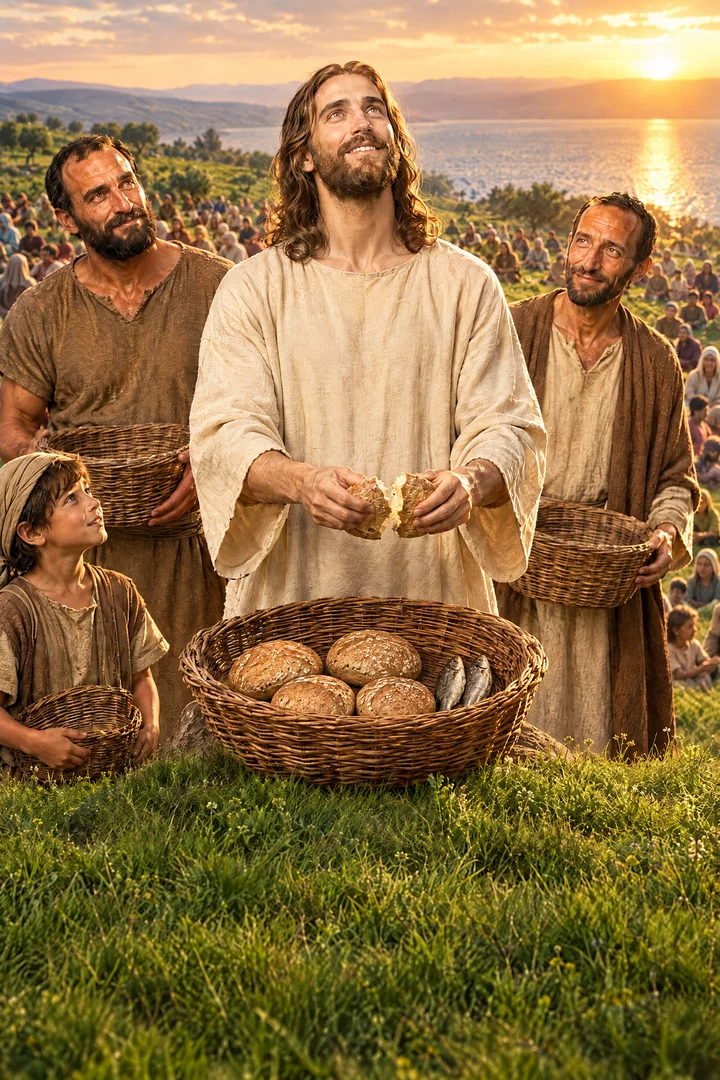
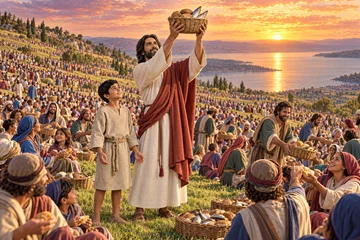
Jesus multiplies the loaves and fishes, feeding the multitude before teaching that he is the bread of life.
- Revelation 22:17
And the Spirit and the bride say, Come. And let him that heareth say, Come. And let him that is athirst come. And whosoever will, let him take the water of life freely.
Both freely invite the thirsty to come and receive life.
- John 6:40
And this is the will of him that sent me, that every one which seeth the Son, and believeth on him, may have everlasting life: and I will raise him up at the last day.
Believing in the Son brings everlasting life and resurrection at the last day.
Commentary part 1 of 5
Each commentary is drawn from primary sources: the writings of Ellen G. White and Adventist pioneers and periodicals. Each commentary is separate. Its own words are not a quotation; follow the references to read the source passages.
Ellen G. White
628 sources
Jesus himself is the true bread come down from heaven, given by the Father to give life to the world, and coming to him ends hunger and believing on him ends thirst forever.ST Mar 15, 1877FE 455.3–456.1Lt 6, 1910, par. 5–9FE 339.1–340.1 The eating and drinking is figurative, not literal flesh, meaning to receive him by living faith as personal Saviour and to take his life-giving words into heart and life until they govern character and action.Lt 208, 1906, par. 17–27Ms 11, 1901, par. 21–22Lt 82, 1895, par. 18ST May 20, 1897ST Mar 5, 1912 This receiving must be direct and daily, by hearing, believing, remembering, obeying and practicing the Scriptures through prayer and the Spirit, not by depending on other people or by mere hearing and outward membership.Ms 133, 1907, par. 11–13Lt 9, 1902, par. 1–7Ms 18, 1897, par. 14Lt 18, 1894, par. 12–14Ms 57, 1898, par. 22–25 So received he sustains the soul as bread sustains the body, giving forgiveness, rest, joy, holiness, power to overcome, and eternal life now with resurrection at the last day.ST Mar 15, 1877Ms 11, 1901, par. 21–22Ms 79, 1906, par. 6–8Lt 16, 1896, par. 10 Those who are fed must pass the bread on, for he entrusted this life-giving truth to his disciples to share with a starving world by word, mercy, healing and missionary labor, while feeding on worldly amusements, false teaching and selfish gain leaves the soul starving.11MR 340.3Ms 138, 1906, par. 15–19MH 49.1RH Aug 11, 1910DA 369.2–4
Setting and First Hearers
The declaration was made in the synagogue at Capernaum on the day after the feeding of the multitude with loaves and fishes and after coming to the disciples walking on the sea.Ms 5, 1901, par. 13–15Lt 47, 1891, par. 17–22 The minds of the hearers were fixed on the feeding of the five thousand with five loaves and two fishes, and the words were spoken to lead them to higher truth, laying down the conditions of eternal life and entrance into the kingdom.Lt 150, 1903, par. 22–27Lt 17, 1897, par. 6–8 Its words are clear, definite and positive, repeated over and over to teach the lesson of the bread of life.Lt 150, 1903, par. 22–27
The crowd had witnessed the miracle yet did not believe He was the Son of God, but crossed the sea because they had eaten the loaves and were filled and wanted Him to keep sustaining physical life.Ms 5, 1901, par. 13–15Lt 73, 1901, par. 16–18 They wanted continued physical provision and even another display of how the food was multiplied, hoping to learn a method of multiplying food for their own benefit.Lt 73, 1901, par. 16–18 Many followed only for the temporal advantage of being filled with food, and when they heard conditions requiring dying to self and practicing self-denial they went back and walked no more with Him.Lt 17, 1897, par. 6–8
When they cited the manna their fathers ate and demanded a sign, and when they asked that the heavenly bread be given to them always, He answered that Moses did not give the bread from heaven but the Father gives the true bread from heaven.Ms 5, 1901, par. 13–15Ms 68, 1897, par. 8Ms 156, 1901, par. 23–27 That true bread of God is He who comes down from heaven and gives life to the world, the same One who gave angels' food to Israel in the wilderness, and He was standing unrecognized in their midst.Ms 48, 1895, par. 2–4Ms 68, 1897, par. 8Ms 156, 1901, par. 23–27 He Himself is that bread of life, so that coming to Him ends hunger and believing on Him ends thirst, meeting the soul's deepest need for salvation as food and drink meet bodily hunger and thirst.Ms 5, 1901, par. 13–15Lt 6, 1903, par. 14–22 The bread is not merely material food, but Christ Himself and His life-giving words, which are spirit and life, received through faith unto eternal life and resurrection at the last day, not by relying on the flesh.Lt 6, 1903, par. 14–22Lt 47, 1891, par. 17–22
The first hearers thought only of temporal food and did not understand the spiritual instruction He was giving.Ms 22, 1898, par. 7 Seeing Him and His work is not believing, for people may see His work and still lack His light and life and still fail to believe.Lt 6, 1903, par. 14–22Ms 112, 1898, par. 3–4 Hearing precious instruction profits nothing without mixing heard truth with faith and appropriating it to the soul as bread and water of life, and belief means more than a claim to believe, being the faith by which a person receives everlasting life and becomes one with Him as branch with vine.Lt 18, 1894, par. 12–14Lt 6, 1903, par. 14–22 This seeing yet not believing, as when the crowd sought Him only because they ate the loaves and demanded a sign like the manna, remains the condition of many who claim to be children of God without understanding what personal reception of Christ means, like His own at His advent not receiving Him and darkness not comprehending the light.Ms 151, 1902, par. 18–23
His plain testimony presented a spiritual kingdom and work rather than earthly kingship and a temporal throne, for after feeding the five thousand He refused to become king and taught of His spiritual kingdom.Lt 47, 1891, par. 17–22Ms 9, 1898, par. 31–32 That presentation tested professed disciples and led hearers to decide for or against Him, revealing the real sentiments of their hearts.Lt 146, 1900, par. 14–15Lt 49a, 1896, par. 13 The truth offended many, and they turned away rather than accept its rebuke and reform their lives, showing they preferred human praise to God's admonition and were unwilling to die to self.Lt 146, 1900, par. 14–15Lt 17, 1897, par. 6–8 Many followers were offended and walked no more with Him, some joining the Pharisees who watched His movements for grounds to condemn Him to death, while the twelve remained and Peter affirmed loyalty.2SP 337.1LC1 83.11RED 83.1
In that setting the message also helped people receive the truth and make a public confession of faith.Lt 23, 1899, par. 1–6 He gave the Word to the multitude as a field preacher, sitting with authority as teacher to feed the people with His spoken Word rather than by handing them the written Scriptures.21MR 138.2–3 He joined that instruction with the miracle enlarging a small substance of temporal food, and the mercy of supplying temporal food to the hungry opened the way to place Him in the chair of instruction and opened a door for His disciples to be recognized as working as He worked.21MR 138.2–3
Bread Is Christ Himself
Jesus himself is the true bread of life come down from heaven, given by the Father to give life to the world, the living source of mercy and love.ST Mar 15, 1877Ms 48, 1895, par. 2–4Lt 9, 1898, par. 4–6Lt 268, 1903, par. 21–24 Coming to him ends hunger and believing on him ends thirst, meeting the soul's deepest need for salvation.ST Mar 15, 1877FE 455.3–456.1Lt 208, 1906, par. 17–27Ms 133, 1907, par. 11–13 As physical bread sustains the body, his Spirit gives life, satisfies the heart, strengthens the moral powers, and brings continual refreshment, freedom from uncertainty, and release from the feverish desire for wealth and honor and from hunger for higher enjoyment.ST Mar 15, 1877Lt 208, 1906, par. 17–27 The manna that preserved Israel in the wilderness foreshadowed this gift of the Son, through whom people may receive life leading to immortality, and he can live as an abiding guest in the soul bringing joy, comfort and sobriety as the center of life.ST Mar 15, 1877FE 455.3–456.1 Those who truly receive him are joined to him in spiritual union, made his dependence and only hope, trusting him as Saviour rather than depending on human guidance or approval.ST Mar 15, 1877Ms 11, 1901, par. 21–22Ms 133, 1907, par. 11–13
The bread language is figurative and not literal flesh which profits nothing.Lt 208, 1906, par. 17–27Lt 82, 1895, par. 18 To eat his flesh and drink his blood is to receive him by earnest belief as personal Saviour and to take his life-giving words, which are spirit and life, into heart and life.Lt 208, 1906, par. 17–27Ms 11, 1901, par. 21–22Lt 82, 1895, par. 18Lt 150, 1903, par. 22–27Ms 48, 1895, par. 2–4 That eating is keeping his Word and truth continually before the mind, studying and practicing the Word, looking to Jesus and living by faith rather than sight, with the Spirit giving life.Lt 82, 1895, par. 18Lt 150, 1903, par. 22–27Lt 18, 1894, par. 12–14 It means mixing heard truth with faith and appropriating it to the soul as bread and water of life, hearing and searching his Word and then giving the Word entrance into life and character by becoming a doer of the Word.Lt 150, 1903, par. 22–27Ms 48, 1895, par. 2–4Lt 18, 1894, par. 12–14 Seeing him and hearing precious instruction profits nothing without that faith, leaving the soul without the blessings and light intended, whereas believing gives everlasting life because his life becomes the believer's life, spirit made one with his as branch is one with the vine and nourished by its sap.Ms 11, 1901, par. 21–22Lt 18, 1894, par. 12–14 So received in daily, hourly faith working by love and purifying the soul, he gives nourishment sufficient for every need, forgiveness, sanctification unto eternal life, growth to full stature, mutual dwelling of him in the believer and the believer in him, eternal life now, and resurrection at the last day.Ms 11, 1901, par. 21–22Lt 150, 1903, par. 22–27Ms 48, 1895, par. 2–4
His work as substitute, surety and representative is bound to this bread.21MR 44.1–2Ms 21, 1891, par. 7–8Lt 268, 1903, par. 21–24Ms 13, 1892, par. 37–39 In love he willingly laid aside his honor and high command in heaven, clothed divinity with humanity, took human guilt and its penalty, and offered in man's behalf a complete sacrifice to God.Ms 13, 1892, par. 37–39 By virtue of that atonement he has power to offer perfect righteousness and full salvation, so that whoever believes on him as personal Saviour shall not perish but have everlasting life.Lt 9, 1898, par. 4–6Ms 13, 1892, par. 37–39 He is the Word of God whose life and works testify he is the true life, giving his flesh for the life of the world and giving what temporal blessings and merely physical food could not provide, for his words are spirit and life.Lt 9, 1898, par. 4–6Ms 21, 1891, par. 7–8Lt 268, 1903, par. 21–24 The chapter's teaching about eating the bread has special reference to this spiritual nourishment in the Word, whose living oracles are his flesh and blood, and his work as substitute for sin was the only hope of ancient Israel.21MR 44.1–2Lt 40, 1899, par. 17–18
The verse defines the righteousness of Christ as Christ himself accepted by coming and believing.Ms 13, 1899, par. 1–2 This acceptance is the putting on of the wedding garment and the marriage of humanity with divinity, the standard of character required to be counted a fit guest for the wedding.Ms 13, 1899, par. 1–2 It requires a firm stand for Christ and surrender to God of what is already his, not measuring character by human ideas nor continuing in sin in presumption while expecting God to fulfill his promise.Ms 13, 1899, par. 1–2
The provision was made possible because as Prince of Life he laid aside royal robe, crown and high command in glory and joined humanity and divinity to become a steppingstone to vantage ground with God.Ms 43d, 1901, par. 21Ms 43a, 1901, par. 23Ms 43c, 1901, par. 8–9Ms 43, 1901, par. 24–25 The eternal Word appeared in human form in the fullness of time to re-create humanity in whom God's image was obliterated by sin and temptation and to reveal perfection amid a corrupted world, bringing all grace, all healing and all efficiency as appointed Instructor and Prophet who must be heard.Ms 15, 1898, par. 7–8 Everyone who eats this bread by taking his Word and practicing it and drinking the water of salvation is imbued with the perfume of the sanctified and holy character of God, stands on vantage ground, has eternal life in him because he is in Christ and Christ is in him, making the Bible food and meat and drink and the elements of character.Ms 43d, 1901, par. 21Ms 43a, 1901, par. 23Ms 43c, 1901, par. 8–9Ms 43, 1901, par. 24–25 The verse therefore forbids living on human sayings and requires living by Thus saith the Lord, doing what God does.Ms 43c, 1901, par. 8–9
He himself is the provision offered through the gospel, pictured by the great supper and the costly banquet furnished by God at infinite cost through his death.ST May 4, 1915Ms 75, 1895, par. 2Ms 22, 1889, par. 60–63 God in love provided inexhaustible resources and unsearchable riches, offering the greatest gift heaven can bestow, from whom the streams of salvation flow.ST May 4, 1915Ms 75, 1895, par. 2 To receive this bread is to receive him and his righteousness, making worldly interests subordinate to that one purpose, placing his service above every earthly and selfish consideration, accepting the invitation with an undivided heart because God gave all and cannot accept a divided heart absorbed in earthly affections.ST May 4, 1915Ms 22, 1889, par. 60–63 Faith in him alone destroys selfishness and self-idolatry, while refusal leaves spiritual hunger though heaven's food is set before them and grieves heaven, as the universe looks with amazement and angels listen with grief at excuses.Ms 75, 1895, par. 2Ms 22, 1889, par. 60–63 This gospel feast was first invited to the Jewish people, with rich provision in the grace of God, the Holy Spirit and open treasures of truth; the king who provides is God, the son is the Lord Jesus Christ, and his marriage represents close union with his church, for whom he gave himself to redeem from all iniquity and purify a peculiar people zealous of good works, expected as the Bride, the Lamb's wife, to be at the marriage feast.Ms 46, 1896, par. 10
Coming and Believing Explained
Coming means direct, living, experimental dependence on Christ himself and clinging to his promises, not dependence on human beings, human guidance, approval, ideas, fellow believers, resources, or historical and theological writings, for no human agent can supply what satisfies hunger and thirst of soul but Jesus alone coming in and sharing fellowship satisfies it forever as a fountain quenches a weary traveler.Ms 133, 1907, par. 11–13Lt 9, 1902, par. 1–7Ms 18, 1897, par. 14Lt 98, 1896, par. 30–32 This truth in his words nourishes faith and gives what human writings cannot, for he is the Bread of Life given by God himself, the only hope and source of spiritual life, the same compassionate Saviour today who also provides for bodily wants in various places yet calls chief labor to secure living bread enduring to eternal life rather than perishable provision.Ms 133, 1907, par. 11–13Lt 9, 1902, par. 1–7MH 441.1
Coming is going directly to him in need, casting the helpless soul upon him instead of turning to human friends who may lead into harm, trusting the loving compassionate Redeemer who knows how to assist poor trembling souls and who receives, strengthens, comforts and heals all maladies.Lt 8, 1891, par. 3Ms 5, 1901, par. 16–17 Abiding in him and clinging to him as the only hope is required, and turning instead to what is like husks abandons the Bread of Life.Lt 8, 1891, par. 3Ms 5, 1901, par. 16–17
Coming and believing means mixing heard truth with faith and appropriating it to the soul as bread and water of life, for seeing and hearing precious instruction profits nothing without that faith and leaves the soul without blessings and light.Lt 18, 1894, par. 12–14Ms 57, 1898, par. 22–25 The Word must be brought home to the understanding by thorough searching of the Scriptures until mind and soul are filled with its greatness and power, committed to memory and made part of daily life by becoming a doer of the Word.Lt 18, 1894, par. 12–14Ms 57, 1898, par. 22–25Lt 343, 1905, par. 9 Believing thus gives everlasting life because his life becomes the believer's life, spirit made one with his as branch is one with vine and nourished by its sap, putting pride and selfishness to death and producing kind words, unselfish actions, compassion and love.Lt 18, 1894, par. 12–14Ms 72, 1895, par. 13–15
Each person must personally receive Christ and his word into the heart by faith, drinking it in, believing, practicing, obeying and being taught of God, not merely reading, hearing, tasting occasionally, or receiving through another's mind, but taking it in so fully that it shapes every action and trait of character.RH Jun 11, 1908ST Jun 25, 1902Lt 76, 1900, par. 413MR 199.2–200.118MR 221.2 As bodily food cannot nourish unless eaten and digested, the bread will not profit unless received as a message from God into willing obedient hearts and obeyed, its reception depending not on learned testimonies, eloquent speeches or deep arguments but on simplicity and adaptation to souls hungering to know what they must do to be saved.RH Jun 11, 1908ST Jun 25, 1902Ms 43a, 1898, par. 42–45 So received daily it becomes bread of life, giving strength from God, immortal vigor, perfected experience, enduring joy, holiness and eternal life because life is in Christ.RH Jun 11, 1908ST Jun 25, 190213MR 199.2–200.118MR 221.2
Believing on Christ is the work of God that must be understood or heaven will be missed, for the price of heaven is the only begotten Son and the way to heaven is by faith in Jesus whom God sent, the divine Teacher come down clothed in humanity who is the Way, the Truth and the Life.Ms 25a, 1895, par. 27Lt 88, 1900, par. 15–16 Faith comes first and work comes next, so students must be taught to believe and then they will work the works of God, making the Bible the great educating Book above all others and being doers of the Word, while understanding these truths requires God's teaching.Ms 25a, 1895, par. 27Lt 88, 1900, par. 15–16
True coming is not mere theoretical knowledge but experimental knowledge of him as abiding personal Saviour and as Lamb of God that takes away sin of the world, placing the believer on vantage ground unto life and peace.Lt 23, 1896, par. 2–3Ms 46, 1898, par. 5–9 Before coming self must be expelled from the soul and crucified, for many who ask for the bread find it unpalatable when offered because they want self and not Christ.Lt 23, 1896, par. 2–3Ms 46, 1898, par. 5–9 The mind must therefore be educated aright, vain thoughts put away, the heart guarded as a faithful sentinel against pride and common subjects, Christ dwelt upon in meditation and drawn near in prayer, until the Holy Spirit molds the mind to recognize him in his true character and love appears in life as partaking with him and dwelling in him.Lt 23, 1896, par. 2–3Ms 46, 1898, par. 5–9
His life-giving truth is received by faith, not by unbelieving or selfish reasoning, for his words are spirit and life and those who receive them live through him.Ms 95, 1898, par. 17–228MR 162.1–2 Understanding requires God to teach the heart, and those willing to do God's will see doctrines clearly and receive truth, while those rejecting light grow increasingly blind.Ms 95, 1898, par. 17–22Lt 88, 1900, par. 15–168MR 162.1–2Ms 71, 1897, par. 33–34
Eating does not wait until translation but happens now when the believer in fellowship of the Spirit lays hold upon truth itself and appropriates it, entering into his life and appreciating the great sacrifice made for the sinful race.Ms 57, 1898, par. 27–28Ms 103, 1902, par. 1–3Lt 93, 1901, par. 11 To eat him is to be joined to him by genuine faith as food is incorporated into flesh and blood, so that his flesh and blood become spiritual life, he dwells in the believer and the believer in him, and Christ is formed within as hope of glory, which is the mystery of godliness and the science of redemption understood by the teachable soul under divine guidance.Ms 57, 1898, par. 27–28Ms 103, 1902, par. 1–3Lt 93, 1901, par. 11 That knowledge is the bread of life and the leaves of the tree of life for healing, and as his words are believed and practiced the current of spiritual life thrills the soul, making weak experience strong, cleansing from impurity, bringing continual growth in grace through daily schooling in Christ and intelligent knowledge of God and Christ whom he sent.Ms 103, 1902, par. 1–3Lt 93, 1901, par. 11Lt 48, 1899, par. 35–398MR 162.3–163.1Ms 19, 1897, par. 18–19
Tasting that the Lord is gracious is actual personal experience of conversion and new birth, discerning the requirements of the spiritual kingdom and seeing the kingdom of God.FE 458.2–459.2Ms 68, 1897, par. 19 It is learned as newborn babes desiring the sincere milk of the word that they may grow thereby, by opening the mind to the entrance of God's word with determination to practice it, which gives light and understanding to the simple.FE 458.2–459.2Lt 74, 1897, par. 3 When obtained it changes the frivolous life, transforms character, forsakes the common level, places the feet on Christ as the first round of the ladder and leads step by step heavenward with Christ revealed in spirit, words and actions, quickening the believer, revealing power of the world to come, renewing in holiness and producing fruit to God's glory.FE 458.2–459.2Ms 68, 1897, par. 19Lt 74, 1897, par. 3
Coming to him and believing in him are connected respectively with never hungering and never thirsting for heavenly manna and waters of life, in contrast to perishing food of very little value, and this satisfies forever and gives spiritual and eternal life.Lt 6, 1910, par. 5–9FE 339.1–340.1CT 352.4LSEGW 239.2STMW10 15.1 In him are found the waters of salvation, awareness of his presence brings holy joy and relish for holy things, and feeding on him turns people from trust in own worthiness to his worthiness.Lt 6, 1910, par. 5–9SPBC 149.4CT 352.4STMW10 15.1
Coming and believing nourish spiritual strength as Bible truths are received into the heart and practiced daily, so those who come and believe receive what souls need and no longer hunger or thirst.CT 352.4Lt 61, 1898, par. 15–17 The spiritually starving are nourished when the Word finds a home in hearts longing for truth.CT 352.4Lt 61, 1898, par. 15–17
Sinners find satisfying life by coming to him and trusting him and turning attention from guilt to the Saviour, bringing the victory of forgiveness and salvation as he gives bread and water to the spiritually parched.RH Jun 2, 19034SP 78.1–2 Coming and trusting means relying on his merits not human works, the only nourishment for souls starved by guilt and false hopes of earning pardon, giving hope and peace by union with him by faith.RH Jun 2, 19034SP 78.1–2
Hungering is eagerness for the word about the saints' inheritance, and thirst is longing for God himself and his salvation at Jesus' feet claiming promises, while wanting the bread is earnest longing desire to learn truth.Lt 49, 1899, par. 2Lt 20, 1900, par. 19–20Lt 36, 1896, par. 19Ms 5, 1899, par. 29Lt 45, 1880, par. 5 This image of starving describes deep spiritual need for the spiritual life, nourishment, truth and pure gospel found in Christ, met by coming through the simple gospel, and souls hungry for this Bread are more receptive than habitual hearers who do not act, with soul-hunger awakened when education and experience lead to seek Christ.Lt 49, 1899, par. 2Lt 36, 1896, par. 19Ms 5, 1899, par. 29Lt 45, 1880, par. 5Lt 89, 1897, par. 24–29
Seeking this bread through Scripture and humble prayer brings greater spiritual strength with less attention to appetite and temporal wants, and its hunger is expressed through earnest heartfelt prayer asking God for what is needed.ST Mar 7, 1906ST Apr 26, 1883GW92 425.2–3 Hungering and thirsting means drawing nearer to God with full assurance of faith, seeking him in private prayer and public worship, casting the helpless soul upon him in belief, beholding his glory, confessing, and receiving the Spirit.Lt 180, 1903, par. 17–20Ms 144, 1905, par. 1–3ST Sep 5, 1895 Those who come and believe in this way receive grace sufficient, power to become children of God and live in most intimate relationship with Christ, passage from darkness into light of the gospel with peace, hope and joy, and fullness which is the glory he gave disciples, a character fashioned after the divine likeness, for the Lord alone fills those hungering after righteousness and earnest prayerful struggles are not in vain.Lt 180, 1903, par. 17–20Ms 144, 1905, par. 1–3ST Sep 5, 1895
Those who receive Christ and accept him as Saviour and Redeemer never hunger or thirst because no joy is greater than joy found in him.Ms 56, 1899, par. 5–67MR 29.3–30.2 He gives life to fallen humanity, those accepting him are acknowledged as his special treasure, his presence brings light, peace and joy abundantly satisfying hunger and thirst, and Jesus and the word of his grace with precious promises satisfy the hungering soul as manna nourished Israel.Lt 29, 1880, par. 13–14Ms 56, 1899, par. 5–67MR 29.3–30.2
People need living, abiding faith turning to him in penitence and faith rather than trying to revive an old experience.GW92 105.1–2Lt 117, 1894, par. 2–3 Those asking for the Scriptures as bread seek the Word that leads to him, to be presented simply and lovingly, with help to the needy opening the way for them to receive life unto eternal life.GW92 105.1–2Lt 231, 1899, par. 10–14Lt 117, 1894, par. 2–3
The Scriptures reveal him and teach where hope of eternal life is centered, so accepting him as Saviour satisfies deepest need and brings promise of eternal life.STE 237.1–2Ms 82, 1896, par. 1–2 The verse prompts whether he is the soul's nourishment and satisfaction, and those recognizing spiritual poverty and looking to Jesus find in him what they need, contemplating his glory making other interests fade and awakening humble confidence, love and gratitude.STE 237.1–2Ms 82, 1896, par. 1–2
Mere outward connection with any church will not save, though God calls the church his body and the bride, the Lamb's wife, and is Father of the family and Shepherd of the flock.Ms 121, 1899, par. 41–4316MR 277.1 Only personal faith in a personal Saviour brings the soul into spiritual union with Christ in which hunger and thirst are satisfied forever, and gives the eternal life that belongs to it.Ms 121, 1899, par. 41–4316MR 277.1
Life and Satisfaction Promised
As physical bread sustains the body, so Christ by His Spirit sustains the soul, satisfies the heart, strengthens the moral powers, and gives health, vigor, comfort, encouragement and continual refreshment, becoming within the believer a well springing up to everlasting life and immortality, just as manna preserved Israel in the wilderness and as the tree of life sustained Eden.ST Mar 15, 1877Lt 125, 1901, par. 20–214RED 89.1–22SP 276.2 Coming to Him ends hunger and believing on Him ends thirst because His words are spirit and life, and that daily feeding by studying the Word, breathing His Spirit, sitting at His feet to learn meekness, and abiding in Him gives sustaining power to do all that must be done, infuses immortal vigor, perfects experience, brings abiding joys, feeds the mind, surrounds the soul with heaven's atmosphere, gives spiritual health and fitness for missionary work, and dispels faint-heartedness.Lt 150, 1903, par. 22–27Lt 16, 1896, par. 10Ms 50, 1901, par. 14–16Lt 125, 1901, par. 20–21Ms 71, 1898, par. 9–12 Coming and believing ends the feverish desire for wealth and honor, the hunger for higher enjoyment, and the desire for any higher or more satisfying good, for the restless chase after pleasure, vanity and variety ends in disappointment and all uncertainty is gone, while partaking gives lasting satisfaction unlike worldly gains which increase desire.ST Mar 15, 1877Lt 208, 1906, par. 17–27Ms 81, 1906, par. 9–122SP 276.2 Those who truly receive His word do not hunger and do not thirst spiritually, but find continual refreshment, freedom from uncertainty, and release from the feverish thirst, receiving and believing in Christ and joining Him in works of mercy that teach sinners and backsliders the way of life, without which the soul remains unsatisfied.Lt 208, 1906, par. 17–27Ms 81, 1906, par. 9–124RED 89.1–22SP 276.2
Receiving Him establishes a vital saving union of mutual dwelling, He in the believer and the believer in Him, as the branch lives by the vine nourished by its sap, and only through it is eternal life.Ms 11, 1901, par. 21–22Lt 18, 1894, par. 12–14Lt 37, 1899, par. 13–17Lt 253, 1904, par. 6–8Ms 57, 1898, par. 27–28 This union puts pride and selfishness to death and produces love for God and others, His Spirit, holy aspirations toward God, kind words, unselfish actions and Christlike character, for eating His flesh and drinking His blood is depending on Him, hearing and searching His Word and becoming a doer of the Word so that His life becomes the believer's life.Ms 11, 1901, par. 21–22Lt 18, 1894, par. 12–14Lt 117, 1899, par. 31Lt 37, 1899, par. 13–17Ms 57, 1898, par. 27–28 Those who so receive obtain forgiveness of sins, sanctification unto eternal life, growth up into the full stature of men and women in Christ, power to become children of God, and present eternal life with resurrection at the last day, and those faithful through trial will be raised and live forever, unlike those who ate manna and died.Ms 11, 1901, par. 21–22Ms 79, 1906, par. 6–8RH Jun 18, 1901Ms 28, 1901, par. 7Lt 9, 1898, par. 4–6 Even if a believer dies as Christ died, His life is in him and hid with Christ in God, for Christ came to give more abundant life, carrying on a process that makes believers one with Him in this present life to be one with Him through all eternity.RH Jun 18, 1901 Those who eat have eternal life now, become partakers of the divine nature having escaped the corruption in the world through lust, and are formed to represent His character through sanctified obedience to His words and practice of His teachings.Ms 28, 1901, par. 7Ms 106, 1905, par. 9–14Lt 42, 1892, par. 10–1118MR 221.2Ms 223, 1902, par. 15
Receiving and assimilating His words brings deep fervent piety and leaves less room for self in one's work.Lt 270, 1903, par. 28–30 Jesus alone satisfies by coming in and sharing fellowship with those who open, as a fountain found by a weary traveler in the desert quenches burning thirst, for no human agent can supply what satisfies the hunger and thirst of the soul.ST Feb 20, 1912SG2 199.1–201.2CET 153.1–2LSEGW 158.1–3 He is a full storehouse of bread and a fountain to drink from, rich and free, giving uninterrupted communion with God, fullness of joy, feasting on His love and glory, daily heavenly joys, and light dispersing gloom, with inexhaustible supply of refreshment and grace for all.ST Feb 20, 1912SG2 199.1–201.2CET 153.1–2LSEGW 158.1–3 His words comfort, encourage, strengthen, bring settled assurance and meet the deepest needs of those who seek God's will, yet people may desire these blessings and still reject Christ if they cling to human traditions and ideas.Ms 67, 1897, par. 22–26
The verse plainly states the way to obtain and inherit eternal life, making the Bible precious and fitting for students, for its words are clear, definite and positive, repeated over and over to teach the lesson of the bread of life and setting out the conditions of eternal life.Lt 150, 1903, par. 22–27Ms 54, 1898, par. 1–2Ms 96, 1899, par. 2Ms 161, 1903, par. 213MR 260.2–3 Thoroughly understanding and living by the chapter leads to a life that measures with the life of God, gives spiritual strength, health, growth and soundness, brings connection with Christ who knew no sin as stronghold and defense against last-day deceptions and darkness, and contains the divine antidote for the sin of the whole world.Lt 150, 1903, par. 22–27Ms 54, 1898, par. 1–2RH Jun 18, 1901Ms 96, 1899, par. 2Ms 161, 1903, par. 2 The verse identifies Christ as giving life to those dead in sin and assurance of peace, pardon and salvation to those who come and believe, cleansing from sin, redeeming through His blood, and giving peace and rest under His yoke to rich and poor, high and low.ST Oct 10, 1900ST Oct 21, 1880STB 601.2 This abundant life comes as people die to self and live to Christ with entire self-renunciation so that Christ may live in them and the Spirit empower their efforts, and receiving Him as bread gives the pledge of eternal life and the fullness God breathes into those who die to self.Ms 9, 1899, par. 10CT 429.3ST Oct 11, 1899 Receiving His words and obeying them leads to eternal life for the deepest need, and faith in the Son of God and the saving power of His blood keeps a person from Satan's power.Lt 263, 1903, par. 27–28
He can live as an abiding guest in the soul bringing joy, comfort and sobriety, the center of life whose words are spirit and life for students in practical life.FE 455.3–456.1 Partaking forms character like His through the Holy Spirit, restoring God's obliterated moral image, purifying the life, and changing people into unselfishness, integrity, kindness and love, giving power to become in character what one professes to be.Lt 16, 1902, par. 16–18Lt 82, 1907, par. 10–17ST Oct 3, 1900ST May 20, 1897ST Mar 5, 1912 As they take in His Word as spiritual food they grow like Him, show the fruits of the Spirit, have Christ abiding in them, show His character in words and actions, and become channels through which living water flows, revealing whether Christ's attributes or Satan's are shaping them.Lt 82, 1907, par. 10–17ST Oct 3, 1900ST May 20, 1897ST Mar 5, 1912Lt 92, 1900, par. 13–14 When received He is sanctification and righteousness, inexhaustible fullness in whom the mind rests with peace and assurance, and daily learning from Him, partaking of His nature, following Him in obedience and self-denial, and depending on Him by faith rather than on human beings belong to life in Him.Ms 42, 1902, par. 6–9Ms 11, 1899, par. 19–20RH Apr 24, 1900 His life-giving grace springs up within believers into everlasting life and cannot remain hidden but refreshes those around them with softening, subduing influence, meekness, purification by grace, and power by the Holy Spirit to do His works.Ms 6, 1893, par. 3–4ST Oct 3, 1900
Christ satisfies the deepest longing, giving peace and rest to all who come, accept His yoke and bear His burden, with relief from weariness, loneliness and dissatisfaction, and renewed strength of mind and body and joy which exciting amusements cannot fill, for the soul continues to hunger and thirst when it seeks satisfaction in them.SC 46.3STB 862.1–2SPBC 205.1–2Ms 10a, 1895, par. 19STE 115.2–116.1 He alone satisfies hunger just as the water of life alone quenches thirst, turning the mind from needless curiosity about things unnecessary for the work toward practical godliness.SC 46.3STB 862.1–2SPBC 205.1–2Ms 10a, 1895, par. 19STE 115.2–116.1 Eating Him means living by Him and receiving His words which are spirit and life, the same life-giving fruit as the Tree of Life in Eden whose fruit was the antidote of death and whose leaves sustained life and immortality, lost by disobedience and now transplanted to the paradise above with branches reaching to the lower world, so that through redemption by His blood those who come and believe may eat and live forever, with the full eating given to him that overcomes in paradise.ST Mar 31, 1909 The life-giving sustenance represented by that tree is found in Christ the world's Lifegiver and source of everlasting life, and eating this bread is like eating from the tree and taking its healing leaves for the nations, restoring the moral image of God when self is lost in Him through daily eating, receiving and believing in Him and His atoning gift, laying hold upon truth in fellowship of the Spirit, entering into His life, appreciating His sacrifice, and having His words believed and practiced until spiritual life is perfected.Ms 41, 1902, par. 12–15Ms 71, 1896, par. 19–20Ms 172, 1897, par. 18–24Ms 103, 1902, par. 1–3Ms 29, 1901, par. 19
He was empowered to breathe the breath of life into fallen humanity, and all who receive Him never hunger and never thirst because no greater joy exists than what is found in Him.2MR 13.1–4 He holds all sufficiency with all fullness of God in Him and satisfies every craving belonging to perfection of Christian character, and any craving He does not fill is not needed for that perfection, while the meek, merciful, pure in heart and peacemakers who hunger and thirst after righteousness will be filled, and those remaining defective while He is among them to take away sin show they do not value His character enough to hunger and thirst.Ms 19, 1897, par. 42–45 Those coming and believing are satisfied as hungry children are satisfied by bread, with spiritual life sustained as physical food sustains the body, for He provides the bread and water of life and the gospel in Christ suited to the necessities of the soul for all hungering and thirsting for spiritual life.STPW 14.1STPW91 14.3TBC1872 20.1Lt 237, 1899, par. 1–2Ms 43a, 1898, par. 42–45 Its reception does not depend on learned testimonies, eloquent speeches or deep arguments but upon simplicity and adaptation to souls wanting to know what they must do to be saved, received as a message from God into willing obedient hearts and obeyed as bodily food must be eaten and digested, and those who know Bible truth are to feed hungry souls wherever found.STPW 14.1STPW91 14.3Lt 237, 1899, par. 1–2Ms 43a, 1898, par. 42–45Lt 419, 1907, par. 8–17
He Himself is the everlasting sustenance holding the element that imparts life-giving virtue, the great center of individual life, and for all being educated in schools the verse holds most precious and important lessons for an education enduring through time and eternity, learned by bringing its truths into practical life, taking in His words and eating them to understand privileges and what He is to each person, though the whole chapter is very instructive and only faintly understood.Ms 57, 1898, par. 27–28Ms 68, 1897, par. 9 Receiving Christ gives holiness and eternal life because life is in Him, forming Him within as the hope of glory, joining His life to the believer's, filling with holy character, and bringing pardon and sanctification, with His Holy Spirit becoming an abiding principle of righteousness revealed by works, growing to full stature with power to co-work with God and use talents to bring souls to Him.13MR 199.2–200.1Ms 103, 1902, par. 4–5Lt 8, 1891, par. 7–9Ms 92, 1903, par. 20Lt 16, 1896, par. 7 Believing and practicing His words thrills the soul with spiritual life, makes a weak feeble experience strong and healthy, cleanses from all impurity and inherited evil, prepares for His presence, and holds eternal life for those holding the beginning of confidence firm unto the end, with truth enthroned in the heart as savor of the whole man.13MR 199.2–200.1Ms 66, 1898, par. 43Ms 103, 1902, par. 4–5Lt 8, 1891, par. 7–9Lt 130, 1901, par. 1–3 Daily receiving fills with His righteousness, frees from craving fame or esteem, breaks down harshness, coldness and selfishness, brings sympathy, subdues hasty temper, expels pride, and gives spiritual sinew and muscle sustaining integrity and fidelity, with truth enthroned shaping the whole person.Ms 66, 1898, par. 43Lt 130, 1901, par. 1–3Lt 2a, 1896, par. 1–3Lt 2, 1900, par. 11Lt 109, 1896, par. 14–15
He as bread is ever set before believers as the Lord's banquet, and all need much more of Him and His love, with taking Him requiring first giving up self, feeling entire dependence without whom nothing can be done, keeping the soul in God's love, and trusting implicitly as kept by His power.Lt 121, 1898, par. 14–15 Those who keep themselves in their own hand and carry and sustain self flounder in misery with little heavenly joy and become troublesome with hurt bruised souls, while those imbued with His Spirit and ever receiving under the life-giving power of the Holy Spirit live in Him and ever impart to others.Lt 121, 1898, par. 14–15 Feeding on Him means receiving His presence and instruction, bringing holy joy, a relish for holy things, and strength for future work, for He walks beside followers calling them to reconversion, sustains newly converted souls like manna and spiritual dew, and is wholly free from darkness.SPBC 149.4CT 342.1–2Lt 57, 1895, par. 34ST Aug 5, 1897Lt 376, 1906, par. 20–23 Individual partaking revives and strengthens soul, body and mind to make a person more like Christ, requiring personal hunger and thirst for righteousness rather than dependence on others, with the grace of the message outweighing defects in grammar, pronunciation or eloquence, and those receiving life able to nourish the spiritually hungry and share the water of life.STMW9 49.1–2CT 509.3–510.1
Sources