Genesis 29:2
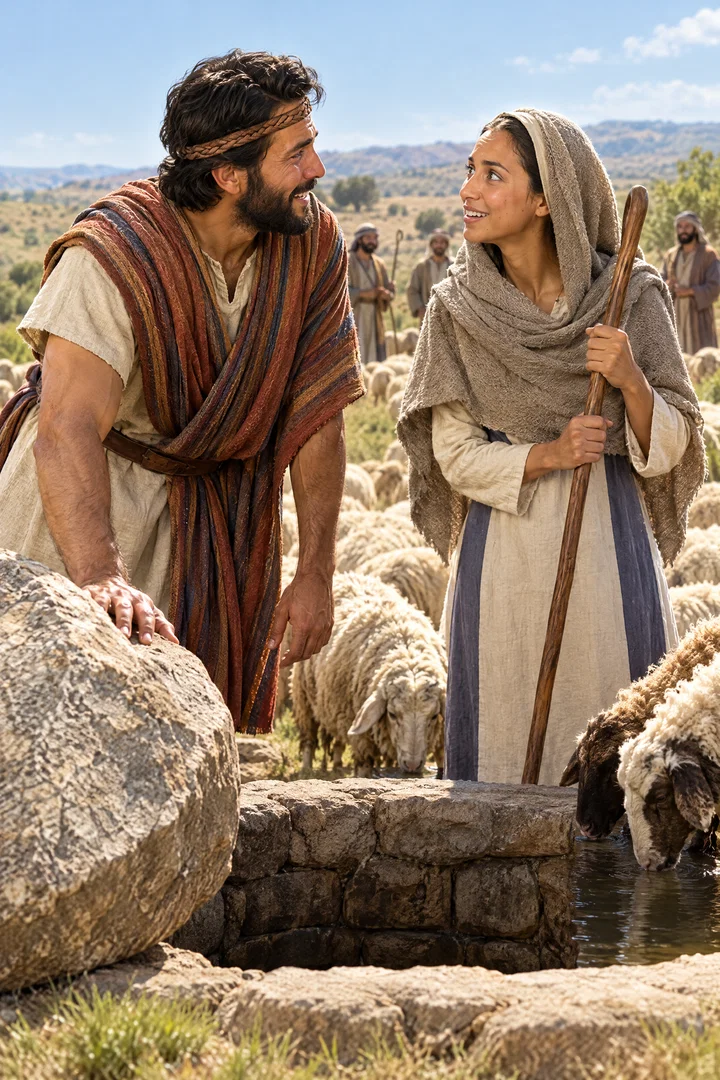
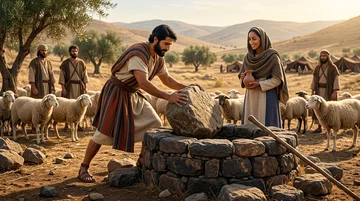
And he looked, and behold a well in the field, and, lo, there were three flocks of sheep lying by it; for out of that well they watered the flocks: and a great stone was upon the well’s mouth.
Translations
And he looked, and behold a well in the field, and, see, there were three flocks of sheep lying by it; for out of that well they watered the flocks: and a great stone was on the well’s mouth.
And he looked, and behold a well in the field, and, lo, there were three flocks of sheep lying by it; for out of that well they watered the flocks: and a great stone was upon the well’s mouth.
And he looked, and behold a well in the field, and lo, there were three flocks of sheep lying by it; for out of that well they watered the flocks: and a great stone was upon the well’s mouth.
And he looked, and behold, a well in the field, and lo, there were three flocks of sheep lying by it; for out of that well they watered the flocks: and a great stone was upon the well's mouth.
And he looked, and behold a well in the field, and, lo, three flocks of sheep lying there by it; for out of that well they watered the flocks: and the stone upon the well’s mouth was great.
And he looked, and, behold, a well in the field, and, lo, three flocks of sheep lying there by it; for out of that well they watered the flocks: and the stone upon the well’s mouth was great.
and he looketh, and lo, a well in the field, and lo, there three droves of a flock crouching by it, for from that well they water the droves, and the great stone [is] on the mouth of the well.
And he looked, and behold, there was a well in the fields, and behold there, three flocks of sheep were lying by it; for out of that well they watered the flocks, and a great stone was at the mouth of the well.
And he looked, and lo! a well, in the field and lo! there, three flocks of sheep, lying down near it, for out of that well, do they water the flocks, but, the stone, is great, on the mouth of the well:
Berean Standard Bible, Majority Standard Bible
He looked and saw a well in the field, and near it lay three flocks of sheep, because the sheep were watered from this well. And a large stone covered the mouth of the well.
He looked, and saw a well in the field, and saw three flocks of sheep lying there by it. For out of that well they watered the flocks. The stone on the well’s mouth was large.
And there he saw a water-hole in a field, and by the side of it three flocks of sheep, for there they got water for the sheep: and on the mouth of the water-hole there was a great stone.
And as he looked about, behold there was a well in the field, and lo, three flocks of sheepe lay thereby (for at that well were the flockes watered) and there was a great stone vpon the welles mouth.
Douay-Rheims (Challoner revision)
And he saw a well in the field, and three flocks of sheep lying by it: for the beasts were watered out of it, and the mouth thereof was closed with a great stone.
Pictures
Cross-references
- Genesis 28:10-11
And Jacob went out from Beer-sheba, and went toward Haran.
Begins Jacob’s journey and the account of his trials.
- John 4:6-7
Now Jacob’s well was there. Jesus therefore, being wearied with his journey, sat thus on the well: and it was about the sixth hour.
Both texts describe a well where people come to draw water.
- Exodus 2:15
Now when Pharaoh heard this thing, he sought to slay Moses. But Moses fled from the face of Pharaoh, and dwelt in the land of Midian: and he sat down by a well.
both show going to a fountain when seeking refuge and contact
- Genesis 24:11
And he made his camels to kneel down without the city by a well of water at the time of the evening, even the time that women go out to draw water.
both show going to a fountain to find people
Commentary
Each commentary is drawn from primary sources: the writings of Ellen G. White and Adventist pioneers and periodicals. Each commentary is separate. Its own words are not a quotation; follow the references to read the source passages.
Ellen G. White
1 source
Jacob came to a well out in the field with three flocks of sheep lying beside it.PP 188.2 The flocks were resting there together because that well was the place from which they were watered.PP 188.2 A large stone lay over the opening of the well and covered its mouth.PP 188.2
Jacob himself rolled that stone away and watered the flocks, putting himself to helpful service for others.PP 188.2 It was at this well, in the act of this service, that he met Rachel.PP 188.2
Sources
Pioneers and periodicals
11 sources
Jacob arrives as a weary and thirsty fugitive at a well or spring in the field near Haran in the land of the children of the East.ST Oct 6, 1898ST Mar 27, 1907 There three flocks of sheep with their shepherds are lying by it, because the custom was to keep the great stone upon the well's mouth and leave it closed until all the flocks were gathered, then open it to water them together as at public wells.ST Oct 6, 1898ST Mar 27, 1907 The village well or fountain served as a sort of bureau of information where the news of the day was passed about and where a stranger could meet people and learn what he needed to know.ST May 19, 1898 During the wait Jacob asks where the shepherds live and whether they know Laban the son of Nahor, and learns they are of Haran, that Laban is well, and that Rachel will soon come with her flock.ST Oct 6, 1898ST May 19, 1898
The wait leads directly to Rachel coming with Laban's flock, Jacob watering her flock and telling her who he is, and Laban receiving him warmly for a month's visit.ST Oct 6, 1898 That meeting is followed by Jacob's years in Laban's household and his marriages to Leah and Rachel.ST Jan 3, 1911ST Oct 6, 1898 He serves fourteen years for his two daughters, and the account goes on to the birth of his sons and to God prospering his flocks and herds despite Laban's efforts to deprive him of his due.ST Jan 3, 1911ST Mar 19, 1894
In its larger setting the verse belongs to Jacob's visit to Laban and unsatisfactory experience in Haran.ST Jan 3, 1911ST Jan 14, 1913 It falls within his trials and victories in Genesis 28-32 and the checkered and unsatisfactory experiences of Esau and Jacob in Genesis 27-31, as part of the story of the family through which the Seed was to come as the promise passed from Abraham to Isaac to Jacob.STST Jan 9, 1912ST Jan 14, 1913 Morally it shows Jacob in the course of selfish plotting, living out the name supplanter through material overreaching.ST Jan 9, 1912ST Jan 14, 1913 He comes from a divided home where an overfond aged father favored Esau and the mother favored Jacob because she knew God's promise would be manifest through him, yet kept the importance of the Seed before him in a material way without the fullest appreciation of the spiritual blessings.ST Jan 14, 1913 His overreaching and supplanting brought consequent suffering and he met overreaching in return, so that God's providence, though seeming slow, brings retribution sooner or later, and better earlier experience would have saved him much later trouble.ST Jan 9, 1912ST Jan 14, 1913 Despite Jacob's selfishness and unfaithfulness, the account shows God caring for him and in mercy bringing a change that culminates in a complete change of heart.ST Jan 3, 1911STST Jan 14, 1913
The verse stands in the record of Jacob's family life, in which the patriarchs plainly violated the marriage institution by polygamy in taking more than one wife.RH Feb 3, 1852ST Jun 10, 1875RH Mar 1, 1870 That record proves that polygamy caused very great unhappiness in every family where it entered and was never anything but evil and wrong.RH Mar 1, 1870 That violation does not destroy the sacred character of marriage, which was made for man before the fall, just as a violation of the Sabbath in the patriarchal age would not destroy the Sabbath.RH Feb 3, 1852ST Jun 10, 1875 The sanctity of marriage is not derived from the Decalogue, but the seventh commandment guards its sacredness.RH Feb 3, 1852
Sources