John 6:31
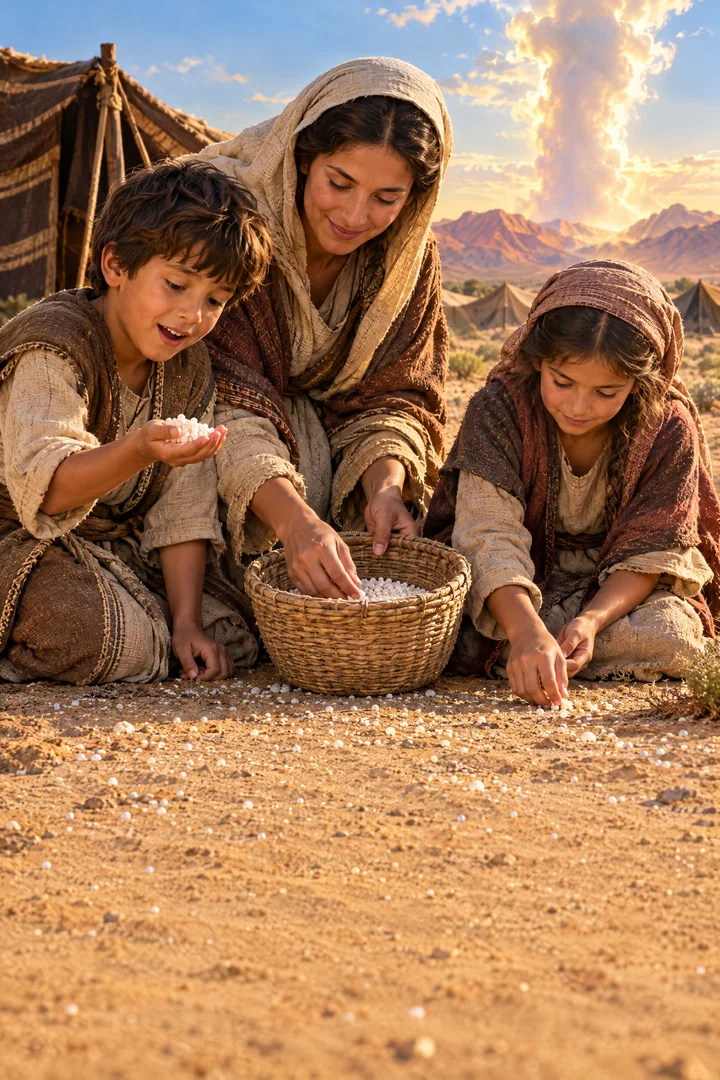
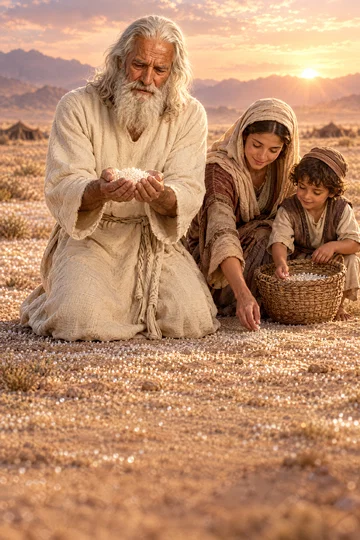
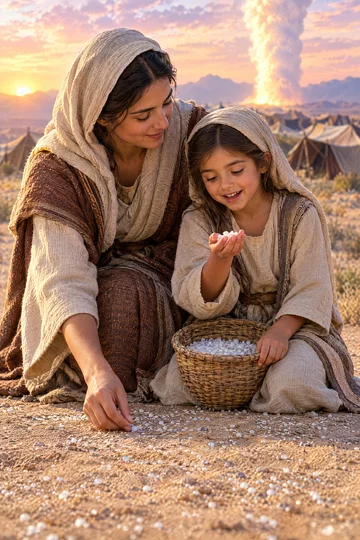
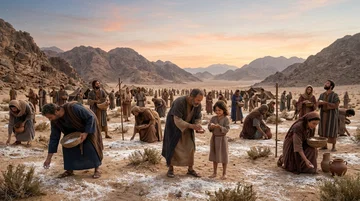
Our fathers did eat manna in the desert; as it is written, He gave them bread from heaven to eat.
Translations
American King James Version, King James Version, KJV Cambridge Paragraph Bible
Our fathers did eat manna in the desert; as it is written, He gave them bread from heaven to eat.
Our fathers ate manna in the desert; as it is written, He gave them bread from heaven to eat.
Revised Version, American Standard Version
Our fathers ate the manna in the wilderness; as it is written, He gave them bread out of heaven to eat.
our fathers the manna did eat in the wilderness, according as it is having been written, Bread out of the heaven He gave them to eat.'
Our fathers ate the manna in the wilderness, as it is written, He gave them bread out of heaven to eat.
Our fathers, did eat, the manna, in the desert,—just as it is written: Bread out of heaven, he gave them to eat.
Berean Standard Bible, Majority Standard Bible
Our fathers ate the manna in the wilderness, as it is written: ‘ He gave them bread from heaven to eat.’”
Our fathers ate the manna in the wilderness. As it is written, ‘ He gave them bread out of heaven to eat.’”
Our fathers had the manna in the waste land, as the Writings say, He gave them bread from heaven.
Our fathers did eate Manna in the desart, as it is written, Hee gaue them bread from heauen to eate.
Douay-Rheims (Challoner revision)
Our fathers did eat manna in the desert, as it is written: He gave them bread from heaven to eat.
Pictures
Cross-references 20 of 26
- Exodus 16:4
Then said the LORD unto Moses, Behold, I will rain bread from heaven for you; and the people shall go out and gather a certain rate every day, that I may prove them, whether they will walk in my law, or no.
God provides bread from heaven for Israel in the wilderness.
- John 6:35
And Jesus said unto them, I am the bread of life: he that cometh to me shall never hunger; and he that believeth on me shall never thirst.
Jesus identifies himself as the bread of life who satisfies spiritual hunger.
- John 6:53-58
Then Jesus said unto them, Verily, verily, I say unto you, Except ye eat the flesh of the Son of man, and drink his blood, ye have no life in you.
Manna eaters died, but those who receive Christ live forever and are raised at the last day.
- Psalms 78:24
And had rained down manna upon them to eat, and had given them of the corn of heaven.
Describes God giving Israel manna, the bread from heaven.
- Deuteronomy 8:3
And he humbled thee, and suffered thee to hunger, and fed thee with manna, which thou knewest not, neither did thy fathers know; that he might make thee know that man doth not live by bread only, but by every word that proceedeth out of the mouth of the LORD doth man live.
Manna teaches Israel that life depends on what comes from God.
- John 6:1-14
After these things Jesus went over the sea of Galilee, which is the sea of Tiberias.
The feeding miracle leads into the bread-of-life teaching.
- Exodus 16:15
And when the children of Israel saw it, they said one to another, It is manna: for they wist not what it was. And Moses said unto them, This is the bread which the LORD hath given you to eat.
Israel identifies manna as the bread God gave them in the wilderness.
- John 6:51
I am the living bread which came down from heaven: if any man eat of this bread, he shall live for ever: and the bread that I will give is my flesh, which I will give for the life of the world.
Christ is the living bread from heaven, given for the life of the world.
- 1 Corinthians 10:4
And did all drink the same spiritual drink: for they drank of that spiritual Rock that followed them: and that Rock was Christ.
Identifies Christ with Israel’s wilderness journey.
- John 6:27
Labour not for the meat which perisheth, but for that meat which endureth unto everlasting life, which the Son of man shall give unto you: for him hath God the Father sealed.
Contrasts perishing food with food that endures to everlasting life.
- Matthew 6:11
Give us this day our daily bread.
Daily bread petition pictures daily feeding on Christ, the Bread of Life.
- Matthew 4:4
But he answered and said, It is written, Man shall not live by bread alone, but by every word that proceedeth out of the mouth of God.
God’s word sustains life like bread.
- John 6:63
It is the spirit that quickeneth; the flesh profiteth nothing: the words that I speak unto you, they are spirit, and they are life.
Christ’s words are spirit and life, not fleshly food.
- John 6:50
This is the bread which cometh down from heaven, that a man may eat thereof, and not die.
Contrasts the manna with the bread from heaven that gives life.
- Psalms 78:25
Man did eat angels’ food: he sent them meat to the full.
Both describe the manna as food from heaven.
- Luke 9:16-17
Then he took the five loaves and the two fishes, and looking up to heaven, he blessed them, and brake, and gave to the disciples to set before the multitude.
Jesus feeds the multitude, recalling God’s provision of bread in the wilderness.
- Exodus 16:11-12
And the LORD spake unto Moses, saying,
Promises bread from heaven to Israel in the wilderness.
- Exodus 16:19-21
And Moses said, Let no man leave of it till the morning.
old manna spoiled, fresh morning by morning
- John 6:58
This is that bread which came down from heaven: not as your fathers did eat manna, and are dead: he that eateth of this bread shall live for ever.
Contrasts manna with the bread that gives eternal life.
- 1 Corinthians 10:3
And did all eat the same spiritual meat;
Israel’s wilderness food is described as spiritual meat.
Commentary
Each commentary is drawn from primary sources: the writings of Ellen G. White and Adventist pioneers and periodicals. Each commentary is separate. Its own words are not a quotation; follow the references to read the source passages.
Ellen G. White
67 sources
After the feeding of the five thousand the crowd appealed to the wilderness feeding to demand a greater sign from Jesus so they might see and believe.Lt 9, 1902, par. 1–7Ms 18, 1895, par. 25Ms 5, 1901, par. 13–15 Moses did not give that bread from heaven, but God the Father gives the true bread, and Christ Himself was the one who led Israel and daily fed them.2SP 276.1Ms 133, 1907, par. 11–13Ms 18, 1895, par. 25Ms 5, 1901, par. 13–15 That manna was real food from heaven that sustained bodily life through the wandering, yet those who ate it still died.2SP 276.1Lt 9, 1902, par. 1–7Ms 106, 1905, par. 9–1417MR 252.4–254.2 The true bread is Christ Himself come down from heaven to give life to the world, so that whoever comes to Him and believes on Him never hungers or thirsts but receives eternal life and immortality.2SP 276.1ST Mar 15, 1877Ms 18, 1895, par. 25Ms 5, 1901, par. 13–15Ms 156, 1901, par. 23–27 To eat His flesh and drink His blood is to receive Him by faith in spiritual union, to take in and live by His words and keep them in daily life.Lt 82, 1895, par. 18CH 400.4–401.116MR 277.1Lt 47, 1891, par. 17–22Lt 270, 1903, par. 28–30
Crowd's Demand for Sign
After the feeding of the five thousand the crowd quoted that the fathers ate manna in the desert as bread from heaven to eat, pressing for a sign that they might see and believe and for a work like the wilderness miracle.Lt 9, 1902, par. 1–7Ms 18, 1895, par. 25Ms 5, 1901, par. 13–15Ms 156, 1901, par. 23–27Ms 21, 1897, par. 4–6 They held up that standing miracle in which Israel ate angels' food and asked whether He would continue to provide His followers with plenty of palatable food as God had provided for Israel.Lt 9, 1902, par. 1–7Ms 146, 1903, par. 9–13 Their appeal to that sign was pressure on Him to work a miracle similar to that worked for the children of Israel in the wilderness, yet it did not lead them to believe that He was the Son of God.Ms 146, 1903, par. 9–13Ms 151, 1902, par. 18–23
The demand was made in blind, caviling unbelief, without recognizing that He Himself had conducted the Hebrews through the wilderness and had daily fed them manna from heaven.2SP 276.1ST Mar 15, 18774RED 89.1–2 Their eyes were fixed on Moses instead of Christ, sitting in Moses' seat and supposing they were giving the people light and truth.Ms 18, 1895, par. 25 Even after He had fed the multitude with five loaves and two fishes and twelve baskets of fragments remained, which was sufficient evidence, they closed their eyes to the light already given and still cried for a sign.Ms 107, 1897, par. 7–8
They sought Him not because they saw the miracle but because they ate of the loaves and were filled, making temporal provision their chief anxiety rather than the living bread that endures to everlasting life.Lt 9, 1902, par. 1–7Ms 5, 1901, par. 13–15Ms 151, 1902, par. 18–23 The demand reveals they wanted Him to provide what would sustain physical life and to give greater material blessings than Moses gave, with plenty of palatable food continually supplied.Lt 9, 1902, par. 1–7Ms 5, 1901, par. 13–1517MR 252.4–254.2 Little anxiety should be given to temporal food while the food from heaven is of the highest consequence, yet they made temporal filling and a temporal kingdom their aim instead of faith and wholehearted spiritual service.Ms 151, 1902, par. 18–23Ms 67, 1897, par. 38–39Ms 9, 1898, par. 31–32 When He made clear His work was spiritual and not a political reign, rejecting hopes of a temporal kingdom, many turned away.Ms 67, 1897, par. 38–39Ms 9, 1898, par. 31–32
Giver of True Bread
Moses did not give that bread from heaven; the Father is its giver, and He now gives the true bread from heaven that comes down from heaven and gives life to the world.Ms 133, 1907, par. 11–13Ms 18, 1895, par. 25Ms 5, 1901, par. 13–15Ms 156, 1901, par. 23–27Ms 106, 1905, par. 9–14 The crowd appealed to the wilderness manna as a sign to see and believe, but with eyes fixed on Moses they overlooked God as the giver and supposed themselves to sit in Moses' seat giving light and truth.Ms 133, 1907, par. 11–13Ms 18, 1895, par. 25Lt 47, 1891, par. 17–22 The same One who gave that manna to Israel will give knowledge to His children today, for the life-giving bread is not merely food such as manna, but Christ Himself received through faith.Ms 156, 1901, par. 23–27Lt 47, 1891, par. 17–22
Christ Himself was the one who conducted the Hebrews through the wilderness and daily fed them, the kind friend who cared for Israel in its wanderings and is the same today.2SP 276.1ST Mar 15, 1877Ms 18, 1895, par. 254RED 89.1–2 The appeal for bread from heaven overlooked God as the giver and failed to recognize that He who was invoked in unbelief had Himself led and fed their ancestors.2SP 276.1ST Mar 15, 18774RED 89.1–2DA 385.3–5 As God gave manna to preserve temporal lives, so God has now sent the gift of His Son.2SP 276.1ST Mar 15, 1877
The wilderness manna was angels' food and a standing, daily miracle, a real gift from heaven that provided physical food during Israel's forty years of wandering and sustained bodily strength.Lt 9, 1902, par. 1–7Ms 106, 1905, par. 9–1417MR 252.4–254.24RED 94.1 It was cited as a reason Christ should continue to provide His followers with plenty of palatable food, yet Christ meets bodily needs while the spiritual bread received through Him is more important than perishable food and endures to eternal life.Lt 9, 1902, par. 1–717MR 252.4–254.2 That manna was a temporal gift that sustained life but did not prevent death or give immortality, a lesser gift than the eternal life Jesus offers as the bread of life.2SP 280.2–281.24RED 94.1
The bread of God is He who comes down from heaven and gives life to the world, and Jesus declares Himself to be that bread of life, so that he who comes to Him will never hunger and he who believes on Him will never thirst.Ms 18, 1895, par. 25Ms 5, 1901, par. 13–15Ms 156, 1901, par. 23–27Ms 21, 1897, par. 4–6 This is a love beyond knowledge to be spoken of every day, realized in its effects though never fully explained, only begun now and requiring eternity to reveal fully.Ms 18, 1895, par. 25 It must be understood by experience as spiritual nourishment far more essential than concern over temporal food, not meaning temporal eating and drinking but understanding His words and doing them, on which spiritual life depends.Ms 21, 1897, par. 4–6
The manna was a type of the true bread from heaven, the life-giving Spirit flowing from God.DA 385.3–5 The chapter sets physical manna against the life received by accepting Christ's words and obeying them, for His flesh gives life to the world.Lt 263, 1903, par. 27–28DA 385.3–5
Manna Contrasted with Christ
As God gave manna to preserve temporal, physical life, so God has sent the gift of His Son.2SP 276.1ST Mar 15, 18774RED 89.1–2 That manna was a real gift from heaven that sustained bodily strength and physical life during the wandering, yet those who ate it died.SW 68.22SP 280.2–281.24RED 94.1 It did not prevent death or give immortality, and it was a lesser gift than eternal life.SW 68.22SP 280.2–281.24RED 94.1 The temporary food that sustained life is thus set against the life received through the Son.SW 68.22SP 280.2–281.24RED 94.1
Through the Son men may eat of the bread of life and become immortal.2SP 276.1ST Mar 15, 18774RED 89.1–2 Receiving that bread brings eternal life now, and in the end immortal life to the body.2SP 276.14RED 94.1 The true bread from heaven gives life, in contrast to the manna that only preserved physical life.ST Mar 15, 18774RED 89.1–2
The Bread of life comes to satisfy the highest spiritual demands and the hunger of the soul, while little anxiety should be given to temporal food to satisfy temporal hunger.Ms 67, 1897, par. 38–39 That Bread is God's truth confronting the devil's lie, and it requires true wholehearted spiritual service and not looking for a temporal kingdom.Ms 67, 1897, par. 38–39 When men accept Christ as the Way, the Truth, and the Life, all their hungering of soul is satisfied.Ms 67, 1897, par. 38–39 The whole chapter presents Christ as the Bread of Life who gives life to the world, and receiving Him and His words brings enduring spiritual satisfaction and life, for His words are spirit and life.FE 455.3–456.1Ms 186, 1898, par. 17Lt 88, 1900, par. 2
Eating Means Believing Word
To eat the flesh and drink the blood of the Son is not temporal eating and drinking, nor is it mere outward connection with any church, but receiving Christ Himself through faith, coming to Him and believing in Him as a personal Saviour into spiritual union with Him, crucifying self, making continual growth in grace, praying for it as for every blessing, bringing truth into daily experience, being taught daily in the school of Christ, and understanding His words and doing them, on which spiritual life depends, unto eternal life and resurrection at the last day.16MR 277.1Lt 47, 1891, par. 17–22Lt 93, 1901, par. 11Ms 21, 1897, par. 4–6Ms 68, 1897, par. 19 The life-giving bread is not merely food such as manna, but Christ received through faith, and this must be understood by experience as spiritual nourishment far more essential than concern over temporal food.Lt 47, 1891, par. 17–22Lt 270, 1903, par. 28–30Ms 21, 1897, par. 4–6
This eating and drinking is keeping His Word and truth continually before the mind, receiving and assimilating His words so they become part of the self, studying and practicing its teachings, keeping its precepts, bringing its principles and truths into daily life, being doers of the Word, and living by faith and by every word God has revealed.Lt 82, 1895, par. 18CH 400.4–401.1Ms 25a, 1895, par. 27Lt 241, 1903, par. 9–10 The bread from heaven is the Word of God to be eaten by study, not departing from its precepts, grasping the mysteries of godliness, praying and communing with God to prove His mind and will, for God has revealed all that is necessary for salvation and His word is not to be left for the suppositions of men.Lt 82, 1895, par. 18CH 400.4–401.1Lt 241, 1903, par. 9–10 Believing comes first and working follows, so those who believe will work the works of God.Ms 25a, 1895, par. 27Lt 47, 1891, par. 17–22Lt 270, 1903, par. 28–30
The lesson is explained by the saying that the Spirit gives life while the flesh profits nothing, for His words are spirit and life and must be brought into the life.FE 455.3–456.1Lt 82, 1895, par. 18Lt 253, 1904, par. 6–8Lt 47, 1891, par. 17–22Lt 270, 1903, par. 28–30 His directions in the Old Testament were Israel's spiritual nourishment and His work as substitute for sin was ancient Israel's hope, and receiving Him and His words brings enduring spiritual satisfaction and life.FE 455.3–456.1Lt 82, 1895, par. 18Ms 68, 1897, par. 9 The chapter centers life on receiving His words to advantage.Lt 253, 1904, par. 6–8Ms 68, 1897, par. 9
The heavenly manna, the bread from heaven, is Christ Himself, His instruction in the gospel, His life-giving words, His grace and promises, the Scriptures and God's Word as living bread and food for the soul, to be fed upon for spiritual strength and comfort.11MR 340.3Lt 58a, 1898, par. 17–20CT 422.2Lt 77, 1889, par. 3–4Lt 40a, 1894, par. 4–5 It must be taken into one's own life and not merely read, understood and received so its nourishment benefits the hearer, gathering every fragment so none is lost.MYP 271.3Lt 40a, 1894, par. 4–5 Feeding on it nourishes hunger for God, gives spiritual strength, power and influence through Jesus Christ, comfort, peace, light, joy and abundant satisfaction, guides believers, guards against trial and temptation, and supplies lasting treasures for present and future need, while feeding the mind on worldly entertainments and neglecting it leaves hunger unsatisfied, the mind weak, without relish for heavenly bread and less able to study the truths of Christ's mission and work.11MR 340.3Lt 58a, 1898, par. 17–20CT 422.2MYP 271.3Lt 77, 1889, par. 3–4
The chapter is the great lesson answering what to do to work the works of God in John 6:28-71, which must be understood by experience or heaven will be missed.Ms 133, 1907, par. 11–13Ms 25a, 1895, par. 27Ms 78, 1902, par. 5–7 The work God requires is to believe on Him whom He sent, with the price of heaven the only begotten Son and the way to heaven by faith in Jesus, defining the righteousness of Christ that puts on the wedding garment to meet God's standard of character for a fit guest, joining humanity with divinity, requiring firm stand for Christ, surrender to God what is already His, ceasing continuance in sin, and refusing to measure character by human ideas, since presumption where eternal interests are involved brings loss of soul while God will fulfill every specification of His promise.Ms 25a, 1895, par. 27Ms 13, 1899, par. 1–2 It affirms the sufficiency of the Old Testament Scriptures leading to belief in the New, teaches dependence on God rather than on human beings or human guides for wisdom, strength, guidance or salvation, and shows Christ as the source of sufficiency and strength, the divine Teacher come down from heaven clothed in humanity as the Way, the Truth, and the Life, with the Bible as the great educating Book above all others in schools and with feeding upon His words as His very flesh and blood joined to instruction in the law and its penalty and to God's acceptance of the Saviour's ransom for the obedient.Ms 133, 1907, par. 11–13Ms 25a, 1895, par. 27Ms 78, 1902, par. 5–7Ms 68, 1897, par. 9Ms 202, 1898, par. 2
Life, Response, and Sharing
Partaking of His flesh and drinking His blood brings eternal life and resurrection at the last day, for unlike the fathers who ate manna and are dead, he who eats this bread which came down from heaven will live forever.RH Jun 18, 1901Lt 47, 1891, par. 17–22Lt 270, 1903, par. 28–30Ms 21, 1897, par. 4–6SW 68.2 A believer may die as Christ died, yet the Saviour's life is in him and his life is hid with Christ in God, made one with Him in this present life to be one with Him throughout eternity, with life more abundantly.RH Jun 18, 1901Lt 47, 1891, par. 17–22Lt 270, 1903, par. 28–30 This eating is not temporal eating and drinking but receiving Christ Himself through faith, receiving and assimilating His words which are spirit and life, understanding them and doing them, on which spiritual life depends, and it must be understood by experience as spiritual nourishment far more essential than temporal food.Lt 47, 1891, par. 17–22Lt 270, 1903, par. 28–30Ms 21, 1897, par. 4–6Lt 95, 1901, par. 18–19SW 68.2 So gained, eternal life comes by receiving Christ and His life, and the truth works by love and purifies the soul.RH Jun 18, 1901Lt 95, 1901, par. 18–19SW 68.2
The plain testimony tested those claiming to be disciples, exposed the real sentiments of hearers, and set them to decide for or against Him.Lt 146, 1900, par. 14–15Lt 49a, 1896, par. 1314MR 335.1–3 When He made clear His work was spiritual and not a political reign or temporal kingdom, the truth offended many who turned away rather than accept its reproof and reform their lives.Lt 146, 1900, par. 14–15Ms 9, 1898, par. 31–329MR 242.1Lt 13, 1876, par. 1–3 Many, including religious leaders and disciples, did not understand His teaching, and those not wholly with Him would oppose Him at His trial.Lt 146, 1900, par. 14–15Lt 49a, 1896, par. 13Ms 9, 1898, par. 31–32 After the feeding with loaves and fishes, walking on the water, and telling hearers He was the bread of life, some of His disciples turned from Him.14MR 335.1–3Ms 9, 1898, par. 31–329MR 242.1Lt 13, 1876, par. 1–3
By His sermon on the bread from heaven He opened to the disciples their work as His representatives to give the bread of life to the people.RH Aug 11, 1910Ms 11, 1892, par. 1–3Lt 23c, 1892, par. 16–18 Those possessing knowledge of the truth as heavenly manna and light, the Bread of Life, must give it to souls perishing without Christ so they may be saved and carry the gospel to all, rather than hiding it or burying resources and withholding them from the work.RH Aug 11, 1910Ms 11, 1892, par. 1–3Lt 23c, 1892, par. 16–18 It must be brought from under bed and bushel and put on a candlestick to shine to all in the house.Ms 11, 1892, par. 1–3Ms 115a, 1897, par. 7 God gives fresh manna to the hungry sheep through human agents who let the Lord lead and guide them and are molded by the Holy Spirit to represent Christ's character, and then the truth keeps its divine power rather than man placing himself in God's place in self-sufficiency, and each person receives fresh spiritual nourishment to share with others.RH Aug 11, 1910Lt 2a, 1896, par. 25–27Ms 115a, 1897, par. 7 The heavenly manna starving souls need now is spiritual food — living experience, Bible studies, plain simple earnest appeals, preaching the Word, and present truth — and those in responsibility as householders must fill every printed page with spiritual food in due season, for common things, war news and daily news, selections from worldly papers and books, and words elevating, praising and exalting men are cheap stale food, chaff to the wheat, with no bearing on the times or spiritual interests.RH Aug 11, 1910Ms 11, 1892, par. 1–3Ms 95, 1898, par. 2–7Lt 23c, 1892, par. 16–18
Learning these lessons, which older persons as well as younger all need, means reading and studying the chapter, meditating upon its truths, committing it to memory, and eating the bread of life.Lt 343, 1905, par. 9Lt 43, 1905, par. 4MYP 271.3 It means reading the sixth chapter asking God for clearness of understanding to comprehend its important statements, praying and communing with God to prove His mind and will, bringing truth into the inner sanctuary until digested into living reality and spiritual muscle, and receiving it inwardly and not merely speaking about it.Lt 343, 1905, par. 9Lt 43, 1905, par. 4ST May 9, 1906CEv 75.2 It means loving and practicing its principles, opening the mind to the entrance of God's word with determination to practice it, and making it part of life.Lt 343, 1905, par. 9ST May 9, 1906CEv 75.2 The bread from heaven is the Bible given to feed the mind, and men and women are built up spiritually by the food they give the mind, found by searching the Scriptures.Lt 43, 1905, par. 4MYP 271.36MR 272.1–273.2CEv 75.2 This requires putting aside unprofitable reading matter and using means for God's cause instead, avoiding books and magazines that lead the mind astray and hinder growth, putting aside frivolous and exciting tales and love stories that enfeeble the mind, leave an unreal life, unfit for duty, weaken study of Christ's mission and the plan of salvation, and take away hunger for heavenly manna, and avoiding worldly entertainments, business cares, cheap stale food of common news and words exalting men, and teachings of no value dressed as new light that cannot nourish and leave souls starving.Lt 343, 1905, par. 9Lt 43, 1905, par. 4MYP 271.36MR 272.1–273.2Ms 95, 1898, par. 2–7
When this feeding is obtained it is a real personal experience of tasting that the Lord is gracious through conversion and the new birth.FE 458.2–459.27MR 272.2–273.1Ms 62, 1890, par. 7 The frivolous life is changed, character is transformed, feet are placed upon Christ as the first round of the ladder heavenward, and step by step heavenward Christ is revealed in spirit, words and actions, building believers as living stones into a spiritual house to offer spiritual sacrifices acceptable to God.FE 458.2–459.27MR 272.2–273.1Ms 62, 1890, par. 7 Drinking of Him and feeding on Him every day changes the experience, giving true religion with sympathy and tenderness and love, and belongs to being converted anew, with spiritual strength sought through prayer and the means of grace to grow in grace and knowledge.FE 458.2–459.27MR 272.2–273.1Ms 62, 1890, par. 7 Those fed from Scripture here, searching its pages and knowing what it says, grow beyond babes into mature relation to God, with right to the tree of life and preparation to be translated.FE 458.2–459.2Ms 62, 1890, par. 7Ms 111, 1909, par. 6–9 The account of feeding the multitude shows He cared for physical hunger as well as need for spiritual life, meeting bodily needs, yet the spiritual bread received through Him, enduring to eternal life, is more important than perishable food.17MR 252.117MR 252.4–254.2
Sources
Pioneers and periodicals
48 sources
The crowd answers Jesus' call to believe by demanding a sign they may see, asking what work He does and holding up their fathers eating manna in the desert as the miracle He must match, in unbelief that dismisses feeding the five thousand as no great work.ST Aug 25, 1881ST Mar 15, 1877 Moses was not the giver; the Father gives the true bread from heaven.ST Jun 27, 1900ST Oct 11, 1899ST Nov 21, 1892 The manna met Israel's physical needs and preserved temporal life, but it was not the true bread that gives life to the world, for the true bread is Christ Himself, sent by the Father and come out of heaven that men through Him may become immortal.ST Aug 25, 1881ST Mar 15, 1877ST Jun 27, 1900ST Oct 11, 1899 To eat His flesh and drink His blood is by faith to accept Him clothed in humanity as Redeemer, and gives eternal life and resurrection at the last day.RH Jun 18, 1901ST Sep 1, 1881 The bread from heaven must be received fresh every day in order to live, for as physical food gives strength, feeding upon Christ in communion gives strength to the spiritual nature.ST Nov 3, 1898ST Sep 17, 1912ST May 12, 1909RH Feb 25, 1915
Setting and Demand
The verse records the crowd answering Jesus' call to believe on him by demanding a sign that they might see and believe, asking what work he does and holding up their fathers eating manna in the desert as the miracle he must match.ST Aug 25, 1881ST Mar 15, 1877ST Sep 24, 1896ST Jun 27, 1900 They cited the history of Israel eating manna in the wilderness and quoted what is written, that he gave them bread from heaven to eat, using history and Scripture to press their demand for a sign.ST Sep 19, 1900ST Jun 27, 1900ST Sep 24, 1896 The demand was made in caviling unbelief, dismissing the feeding of the five thousand as no great work and calling for a greater sign.ST Aug 25, 1881ST Mar 15, 1877ST Sep 24, 1896ST Jun 27, 1900
That unbelief overlooked that his life was one continual miracle they did not recognize.ST Sep 24, 1896 It overlooked that it was Christ himself who had conducted the Hebrews through the wilderness and daily fed them manna from heaven.ST Aug 25, 1881ST Mar 15, 1877 Their appeal assumed that if Jesus was sent from God he must rival Moses, since the rabbis taught that the Messiah would renew the gift of manna when he came.ST Sep 24, 1896
The teaching belongs to Jesus' wonderful teaching in Capernaum after the people had been fed by a miracle, given in the synagogue there.ST Jun 2, 1898ST Jul 7, 1898 It was spoken at Passover, when eating the flesh of the lamb remembered the Lamb of God and the protection when Egypt's firstborn were slain.ST Sep 1, 1881 The blood on the doorposts as a sign of safety represented the blood of Christ shed for the sins of the world.ST Sep 1, 1881
The crowd stated the historical fact that their fathers ate manna in the wilderness and quoted Scripture, He gave them bread from heaven to eat.ST Sep 19, 1900ST Sep 24, 1896 In doing so they treated Moses as the giver, whereas Psalm 78 makes clear that God gave it. The verse places the manna in the desert wilderness and not in Canaan, showing that Sabbath rules tied to the manna and wilderness conditions applied only while the manna fell and were no longer needed after Israel entered Canaan.RH May 3, 1860
True Bread Explained
Moses was not the giver of the bread from heaven; the Father gives the true bread from heaven.ST Sep 24, 1896ST Jun 27, 1900ST Oct 11, 1899ST Nov 21, 1892 The manna met Israel's physical needs and showed that God was their support, preserving temporal and physical life.ST Aug 25, 1881ST Mar 15, 1877ST Nov 21, 1892 Yet it was not the true bread that gives life to the world.ST Jun 27, 1900ST Oct 11, 1899ST Nov 21, 1892
The true bread from heaven is Christ himself, sent by the Father and come out of heaven bringing a new source of life into the world.ST Sep 24, 1896ST Jun 27, 1900ST Oct 11, 1899ST Nov 21, 1892 In him God gives himself, so that by his life people may live, and those who receive him are satisfied.ST Sep 24, 1896 As God gave manna to preserve temporal life, God has now sent His Son, that through eating the bread of life men may receive life and become immortal.ST Aug 25, 1881ST Mar 15, 1877 The manna points to Christ who was given to Israel, and receiving the bread by faith means receiving Christ.ST Oct 11, 1899RH Nov 21, 1907
The feeding of the multitude in the wilderness recalls how God fed Israel there with manna.ST Jul 26, 1905 It shows Jesus as the provider for both spiritual and physical need, for his words are heavenly food and the bread he blesses multiplies until the crowd is filled.ST Jul 26, 1905 By creative power he multiplied a small amount of food until thousands were fed.ST Jul 26, 1905 That food, like the manna, was plain, substantial nourishment rather than luxuries, and Jesus shared the same food provided for himself and his disciples.
Eating unto Life
The bread he will give is his flesh given for the life of the world, meaning his future sacrifice, set at Passover when eating the flesh of the lamb remembered the Lamb of God and protection when Egypt's firstborn were slain, and when the blood on the doorposts as a sign of safety represented his blood shed for the sins of the world.ST Sep 1, 1881 To eat his flesh and drink his blood is by faith to accept him clothed in humanity as Redeemer, having access to the Father and invested with divine authority, and he offers salvation to all who will accept him.ST Sep 1, 1881 Such eating and drinking gives eternal life and resurrection at the last day, a well-founded hope of resurrection to immortal life in the kingdom of God, for the Saviour has power to finally raise from the dead all who so eat and drink by faith.RH Jun 18, 1901ST Sep 1, 1881 A believer may die as Christ died, yet the Saviour's life is in him and his life is hid with Christ in God, made one with him in this present life to be one with him throughout eternity, with life more abundantly.RH Jun 18, 1901
The eternal life God gives through Jesus Christ in response to faith is the life of righteousness possessed now by faith, while immortality is distinct and will be bestowed on Christ's people at the resurrection. Every promise of eternal life in the chapter is conditional, stated no less than six times.RH Dec 2, 1858 Christ's promise to raise up at the last day those meeting its stated conditions distinguishes the resurrection of the just from the resurrection of the rest of the dead.RH Jun 13, 1854RH Dec 2, 1858
The teaching contrasts the meat that perishes with the meat that endures to everlasting life.RH Oct 18, 1853 Toiling only for earthly gain, treasure, money, and worldly advancement for self and children is laboring for meat that can be kept only a few days or years and soon does no good, a dreadfully mistaken wrong road, while the one thing needful of everlasting life and glory through Christ's blood and righteousness is given by the Son of man as the bread of life to those who labor for it.RH Oct 18, 1853 Many believed he could feed them with loaves and fishes but rejected him when he offered the bread giving spiritual life, seeing only material food and with faith reaching only to physical provision, so they did not receive the salvation and eternal life offered.ST Oct 11, 1899ST Oct 31, 1906 Israel's unbelief in the true bread kept them from the life God offered.ST Oct 11, 1899
Manna and Scriptures
The manna given to Israel in the wilderness points beyond bodily food to the heavenly bread that sustains the soul.ST Aug 26, 1897 Earthly food is a sign of God's care and of this greater provision, given day by day through the holy Scriptures which nourish the soul renewed and cleansed from sin, to be trusted and gathered.ST Aug 26, 1897 Manna is food given from heaven for the hungry, and a picture of the spiritual food needed to feed those who hunger.ST Oct 7, 1886
The manna God gave Israel in the wilderness for forty years was a daily object lesson written for believers' learning.ST Nov 21, 1892 As the people received physical life from bread supplied directly from heaven, they were to receive life from Christ, since no human power can provide the righteousness God's law requires.ST Nov 21, 1892 As people know bread gives life and strength without understanding the mystery of how it does so, they can know that God's word gives life even when they cannot explain how.ST Nov 21, 1892
As God fed ancient Israel in the desert, Christ as the blessed bread imparts spiritual bread to sustain His people through the moral wilderness.RH Oct 15, 1857 In comparison with Moses, manna from heaven represents Christ's provision, feeding His people with spiritual life as they journey through the wilderness toward the heavenly Canaan and the promised rest.RH Oct 15, 1857RH Feb 19, 1861 The remnant are thus sustained on their journey toward that rest.RH Oct 15, 1857
Bread from heaven is God's word, pure and sublime truth given to hungry souls seeking light.ST Mar 24, 1909 It remains abundant as it is shared, and tasting the heavenly manna means receiving its spiritual instruction and life and its life-giving nourishment. Such truth is manna that satisfies spiritual hunger and nourishes those searching for light.ST Mar 24, 1909 Yet many who profess belief in the Bible fail to receive its light, value it, and make it part of life through practice.ST May 9, 1906
The spiritual bread that came down from heaven keeps the soul so that whoever eats shall never hunger.ST Nov 3, 1898 The manna the fathers ate turned to corruption when kept, so this eating must be fresh morning by morning as a daily living experience asked for in Give us this day our daily bread.ST Nov 3, 1898
Daily Spiritual Feeding
The verse shows the necessity of receiving the bread from heaven in order to live, for life comes from Christ the living, eternal Word and not from merely material food.ST Sep 17, 1912 The Bread of Life provides spiritual nourishment for the soul that desires to be fed.ST May 12, 1909 Spiritual life comes through believing in Christ and living in harmony with God's law of life, which opens the channel between the soul and God.ST Oct 6, 1909 This spiritual life is distinct from the natural life received from parents and sustained by food, air, and sunshine, and Christ came to give it.ST Oct 6, 1909
The bread from heaven given fresh to Israel every day was meant to teach debt to the Father above for every good and perfect gift.RH Feb 25, 1915 As partaking of physical food gave strength and nourishment, so feeding upon Christ in communion with Him gives strength to the spiritual nature.RH Feb 25, 1915 That feeding requires a continual fresh supply of spiritual manna for daily need from heaven's open storehouse, rather than looking to yesterday's supply or trusting past experiences, but looking to God daily for fresh unction, new power, and daily infilling.RH Feb 25, 1915 The bread from heaven is manna from God's throne that feeds the soul, to be prayed for and received each day in the same way daily bread for the body is asked for each day.RH Jan 18, 1906 Thinking and planning for daily bread takes time, and heavenly manna also requires time given to it as part of the never-ending business of salvation and the service of God rather than the service of self and the world.ST May 28, 1902
In the sermon on the bread from heaven Christ opened to the disciples their work as His representatives to give the bread of life to the people.RH Aug 11, 1910 Feeding on Christ means receiving the life and grace He gives, and those who receive them are to carry that life to others through faithful service, godly words and deeds, and winning souls.ST Nov 14, 1895 The manna as bread from heaven that feeds the hungry is applied to feeding spiritually hungry people with God's nourishment, even as manna sweet.ST Jan 2, 1907ST Jan 5, 1882 As the hungry person longs for food, the devoted Christian hungers and thirsts after righteousness and pines when this manna is denied.RH Jul 17, 1860 Through private devotion and communion with heaven the Christian receives real and pure joys that are a foretaste of future bliss.RH Dec 27, 1855
In distress God refreshes the soul and sustains it by His grace.RH Aug 20, 1903 God's scattered saints feast on the bread from heaven as spiritual food when they hear the word preached with clearness in perfect order and silence.RH Sep 20, 1853 The manna points to heavenly food still in sight today, yet sinners starve while that food is near, remain poor and blind and naked in rags while white robes are near, and grope blindly while heaven's Healer is beside them because their sins have made them so.RH Mar 7, 1912 Prayer is the golden key that unlocks the heavenly treasure to bring raiment and food and wealth, and only by receiving this provision can a person be made ready to be ushered to the wedding of the King.RH Mar 7, 1912 God cares for people journeying out of sin by feeding them day by day with spiritual nourishment from His storehouse, just as He sustained Israel in the wilderness.
Heavenly manna contrasts spiritual nourishment with worldly gain and the pursuit of material rewards.RH Apr 30, 1914 The heaven-sent character of the desert manna is recalled by simple wheat flakes, showing God still provides the most perfect nourishment in plain grain and fruit of the vine.RH Feb 4, 1915 That provision is to be enjoyed on a frugal, self-denying, natural diet that preserves health and frees means for giving.RH Feb 4, 1915 The manna compared with bread from heaven pictures the good things found in a life separated from worldliness, like good apples growing in the center of the orchard.ST May 29, 1901 Christ is manna and spiritual dew to newly converted souls, sustaining them spiritually.RH Feb 14, 1907
Sources