John 6:32
Then Jesus said unto them, Verily, verily, I say unto you, Moses gave you not that bread from heaven; but my Father giveth you the true bread from heaven.
Translations
Then Jesus said to them, Truly, truly, I say to you, Moses gave you not that bread from heaven; but my Father gives you the true bread from heaven.
King James Version, KJV Cambridge Paragraph Bible
Then Jesus said unto them, Verily, verily, I say unto you, Moses gave you not that bread from heaven; but my Father giveth you the true bread from heaven.
Then Jesus said to them, Verily, verily, I say to you, Moses gave you not that bread from heaven; but my Father giveth you the true bread from heaven.
Revised Version, American Standard Version
Jesus therefore said unto them, Verily, verily, I say unto you, It was not Moses that gave you the bread out of heaven; but my Father giveth you the true bread out of heaven.
Jesus, therefore, said to them, 'Verily, verily, I say to you, Moses did not give you the bread out of the heaven; but my Father doth give you the true bread out of the heaven;
Jesus therefore said to them, Verily, verily, I say to you, [ It is] not Moses that has given you the bread out of heaven; but my Father gives you the true bread out of heaven.
Jesus said unto them—Verily, verily, I say unto you: Not Moses, gave you the bread out of heaven; but, my Father, giveth you the real bread out of heaven.
Berean Standard Bible, Majority Standard Bible
Jesus said to them, “Truly, truly, I tell you, it was not Moses who gave you the bread from heaven, but it is My Father who gives you the true bread from heaven.
Jesus therefore said to them, “ Most certainly, I tell you, it wasn’ t Moses who gave you the bread out of heaven, but my Father gives you the true bread out of heaven.
Jesus then said to them, Truly I say to you, What Moses gave you was not the bread from heaven; it is my Father who gives you the true bread from heaven.
Then Iesus said vnto them, Verely, verely I say vnto you, Moses gaue you not that bread from heauen, but my Father giueth you that true bread from heauen.
Douay-Rheims (Challoner revision)
Then Jesus said to them: Amen, amen I say to you; Moses gave you not bread from heaven, but my Father giveth you the true bread from heaven.
Pictures
Cross-references 20 of 43
- Exodus 16:4
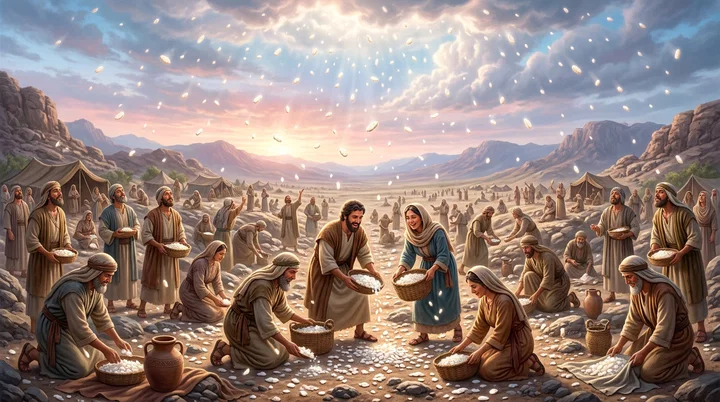
Then said the LORD unto Moses, Behold, I will rain bread from heaven for you; and the people shall go out and gather a certain rate every day, that I may prove them, whether they will walk in my law, or no.
God, not Moses, provided bread from heaven in the wilderness.
- John 6:53-56
Then Jesus said unto them, Verily, verily, I say unto you, Except ye eat the flesh of the Son of man, and drink his blood, ye have no life in you.
Receiving Christ as spiritual nourishment brings eternal life and abiding in him.
- John 6:63
It is the spirit that quickeneth; the flesh profiteth nothing: the words that I speak unto you, they are spirit, and they are life.
Christ’s words are spirit and life, explaining the life given through the bread from heaven.
- John 6:51
I am the living bread which came down from heaven: if any man eat of this bread, he shall live for ever: and the bread that I will give is my flesh, which I will give for the life of the world.
Christ is the living bread from heaven whose flesh gives life to the world.
- Exodus 16:15
And when the children of Israel saw it, they said one to another, It is manna: for they wist not what it was. And Moses said unto them, This is the bread which the LORD hath given you to eat.
The heavenly manna recalls the bread given to Israel in the wilderness.
- Deuteronomy 8:3
And he humbled thee, and suffered thee to hunger, and fed thee with manna, which thou knewest not, neither did thy fathers know; that he might make thee know that man doth not live by bread only, but by every word that proceedeth out of the mouth of the LORD doth man live.
Manna teaches that life depends on God’s word, not bread alone.
- John 6:11
And Jesus took the loaves; and when he had given thanks, he distributed to the disciples, and the disciples to them that were set down; and likewise of the fishes as much as they would.
Jesus feeds the crowd with loaves and fishes before teaching that he is the true bread.
- John 6:27
Labour not for the meat which perisheth, but for that meat which endureth unto everlasting life, which the Son of man shall give unto you: for him hath God the Father sealed.
Jesus contrasts perishable food with food that endures to eternal life.
- Psalms 78:24
And had rained down manna upon them to eat, and had given them of the corn of heaven.
Describes God giving Israel manna as bread from heaven.
- John 4:14
But whosoever drinketh of the water that I shall give him shall never thirst; but the water that I shall give him shall be in him a well of water springing up into everlasting life.
Christ’s living water satisfies and springs up to everlasting life.
- Matthew 4:4
But he answered and said, It is written, Man shall not live by bread alone, but by every word that proceedeth out of the mouth of God.
Both texts contrast ordinary bread with life sustained by what God gives.
- 1 Corinthians 10:3-4
And did all eat the same spiritual meat;
Israel’s wilderness food and drink are linked to Christ as spiritual sustenance.
- John 6:54
Whoso eateth my flesh, and drinketh my blood, hath eternal life; and I will raise him up at the last day.
Eating Christ gives eternal life and resurrection hope.
- Matthew 6:11
Give us this day our daily bread.
The daily bread petition points to God’s sustaining provision and the true bread from heaven.
- John 6:26
Jesus answered them and said, Verily, verily, I say unto you, Ye seek me, not because ye saw the miracles, but because ye did eat of the loaves, and were filled.
The crowd sought Jesus for the loaves, prompting his teaching about the true bread.
- Exodus 16:22-26
And it came to pass, that on the sixth day they gathered twice as much bread, two omers for one man: and all the rulers of the congregation came and told Moses.
The manna was supplied in a double portion before the Sabbath.
- Exodus 16:20
Notwithstanding they hearkened not unto Moses; but some of them left of it until the morning, and it bred worms, and stank: and Moses was wroth with them.
Manna kept overnight corrupted, unlike the true bread given by the Father.
- Luke 9:16-17
Then he took the five loaves and the two fishes, and looking up to heaven, he blessed them, and brake, and gave to the disciples to set before the multitude.
Jesus feeds the multitude with bread in a wilderness place.
- Leviticus 24:5-9
And thou shalt take fine flour, and bake twelve cakes thereof: two tenth deals shall be in one cake.
The continual showbread pictured the true Bread from heaven.
- John 6:40
And this is the will of him that sent me, that every one which seeth the Son, and believeth on him, may have everlasting life: and I will raise him up at the last day.
Belief in the Son brings everlasting life and resurrection at the last day.
Commentary part 1 of 2
Each commentary is drawn from primary sources: the writings of Ellen G. White and Adventist pioneers and periodicals. Each commentary is separate. Its own words are not a quotation; follow the references to read the source passages.
Ellen G. White
132 sources
Moses did not give the bread from heaven, he was only the instrument through whom God worked, and the Father now gives the true bread in the present gift of His Son.ST Mar 15, 1877FE 455.3–456.1 The true bread is Christ Himself, come down from heaven to give life to the world, the Bread of life and living Saviour full of grace and righteousness.FE 455.3–456.1Ms 133, 1907, par. 11–13Lt 82, 1895, par. 18 The manna preserved physical life for a time but those who ate it died, for it was only a type and sign pointing to the living bread that satisfies the heart and strengthens the moral powers.ST Mar 15, 1877Ms 21, 1897, par. 4–62SP 276.2 Receiving that bread is coming to Christ and believing on Him, eating His flesh and drinking His blood by taking His life-giving words into mind and heart and living them out until they become part of the life.FE 455.3–456.1Ms 133, 1907, par. 11–13Lt 82, 1895, par. 18Ms 5, 1901, par. 13–15CH 400.4–401.1 Whoever so comes will never hunger and whoever so believes will never thirst, but dwells in Christ and Christ in him with eternal life now and resurrection to live forever.ST Mar 15, 1877FE 455.3–456.1Ms 5, 1901, par. 13–15Ms 48, 1895, par. 2–4RH Jun 18, 1901
Setting and Hearers
Jesus spoke these words after feeding the multitude and crossing the sea, when He taught in the synagogue those who had searched for Him and were surprised that He and His disciples had arrived before them.9MR 242.19MR 31.1–2 The saying belongs to the spiritual teaching connected with the miracle of the loaves, together with His walking on the water, a teaching about the loaves the people had not yet understood.DA 383.19MR 242.19MR 31.1–2 It came in answer to the Jews' demand for a sign that He was the Son of God.9MR 242.19MR 31.1–2 The feeding of the hungry multitude shows His care for physical need as well as for words of life.17MR 252.1
He spoke to His disciples and the thronging multitude who followed Him not from faith in His miracles but because they ate of the loaves and were filled.Ms 5, 1901, par. 13–15Ms 48, 1895, par. 2–4 They wanted Him to keep supplying plenty of tasty physical food as in the wilderness manna, with their eyes fixed on Moses.Lt 9, 1902, par. 1–7Ms 5, 1901, par. 13–15Ms 18, 1895, par. 25 Their demand for a sign after five loaves and two fishes and twelve baskets of fragments showed closed eyes to sufficient evidence.Ms 107, 1897, par. 7–8 The feeding of the five thousand with physical food prepared the way for the gospel message, and the bread given represents the Word of life that nourishes hungry souls.Ms 81, 1906, par. 2–8 The sermon on the bread of life preached on that occasion sets forth the conditions of eternal life and entrance into the kingdom, demanding death to self, self-denial, and practice.Ms 151, 1902, par. 18–23Lt 17, 1897, par. 6–8 Those who sought only temporal advantage rejected these demands and went back and walked no more with Him.Ms 81, 1906, par. 2–8Lt 17, 1897, par. 6–8
The saying rebukes over-anxiety for temporal food that perishes and calls for labor for the food that endures to everlasting life which the Son of man sealed by the Father gives.Lt 9, 1902, par. 1–7Ms 48, 1895, par. 2–4 Temporal food to satisfy temporal hunger deserves comparatively little anxiety, while the food from heaven is of highest consequence and demands special, not casual, attention.Lt 9, 1902, par. 1–7Ms 67, 1897, par. 38–39 Yet God is not unmindful of bodily needs and will provide food for physical necessity.Lt 9, 1902, par. 1–7 The same God who gave manna gives knowledge, skill and understanding about food today, not to one man or company alone but to many in different places and countries.Ms 156, 1901, par. 23–27 He teaches use of fruits, grains and roots where they live to prepare simple, inexpensive, wholesome health foods and to spread a table in the wilderness for poor as well as rich.Ms 156, 1901, par. 23–27 Giving wholesome meals alone is not enough without the truth that leads to salvation.Lt 153, 1902, par. 5
The plain testimony about the true bread tested the hearers and revealed whether they were for or against Him and the real sentiments of their hearts.Lt 49a, 1896, par. 13Lt 146, 1900, par. 14–15 It made clear His work as spiritual rather than temporal, and people who expected a temporal reign turned away when the distinction between His spiritual kingdom and their hope became plain.Ms 9, 1898, par. 31–32 Some disciples went back and walked no more with Him.14MR 335.1–3Lt 17, 1897, par. 6–8Lt 13, 1876, par. 1–3 Those not wholly with Christ would oppose Him at His trial.Lt 49a, 1896, par. 13 Though they saw Him feed the crowd they still did not believe Him as Son of God.Ms 146, 1903, par. 9–13
Moses, Father, and Manna
Moses did not give the bread from heaven and was not its source; he was only the instrument through whom God worked, and the people were to look beyond him to God, for the Father gives the true bread from heaven, now in the present gift of His Son.ST Mar 15, 1877Ms 133, 1907, par. 11–13Ms 5, 1901, par. 13–15Lt 81, 1901, par. 11–12 That true bread is not temporal food for sustaining physical life but He who comes down from heaven and gives life to the world, which is Jesus Himself as the Bread of life, so that whoever comes to Him shall never hunger and whoever believes on Him shall never thirst.FE 455.3–456.1Ms 133, 1907, par. 11–13Ms 5, 1901, par. 13–15Lt 81, 1901, par. 11–12Ms 21, 1897, par. 4–6 Jesus spoke this because He knew the people sought Him not from faith in His miracles but because they wanted Him to sustain physical life after eating the loaves and being filled.Ms 5, 1901, par. 13–15Ms 48, 1895, par. 2–4 Receiving Him and taking His words into life brings spiritual nourishment, lasting satisfaction, joy, and life, for His words are spirit and life, and by coming to Him and believing in Him people receive life and can depend on Him.FE 455.3–456.1Ms 133, 1907, par. 11–13
Christ Himself was the beneficent friend of the children of Israel through their wanderings, leading the Hebrews through the wilderness and daily feeding them angels' food and manna to preserve physical life, and He is the same friend today and must be regarded as such.Ms 18, 1895, par. 25Ms 48, 1895, par. 2–4DA 385.3–52SP 276.1 Had they known who was addressing them their attitude toward Him would have been changed, yet in caviling unbelief they pointed Him back to that miracle done for their fathers.Ms 48, 1895, par. 2–42SP 276.1 The Jews who asked for a sign had their eyes fixed upon Moses instead of upon Christ, sitting in Moses' seat and supposing they were giving the people light and truth.Ms 18, 1895, par. 25 The true bread is a person who comes down from heaven and gives life to the world, loving with a love beyond knowledge whose effects can be realized and spoken of every day, a love whose fullness will take all eternity to reveal.Ms 18, 1895, par. 25Ms 48, 1895, par. 2–4
The manna preserved physical life, but the fathers who ate it died, whereas Christ is the Bread of life who gives life to the world, eternal life and immortality, unlike that temporal provision.ST Mar 15, 1877Ms 21, 1897, par. 4–6SW 68.22SP 276.1 As manna sustained temporal life, eating Christ as the Bread of life makes people immortal.ST Mar 15, 18772SP 276.1 Only those who so partake by eating His flesh and drinking His blood — not by temporal eating and drinking but by understanding His words and doing them, because He gives His flesh for the life of the world — have life in them, dwell in Him and He in them, live by Him, have eternal life, will be raised at the last day, and will live forever.Ms 21, 1897, par. 4–6SW 68.2
The manna given to Israel was a sign and type pointing beyond provision for bodily needs to the living bread God gives through Christ.4RED 89.1–217MR 252.4–254.2DA 385.3–5 Bread is a figure for Christ's life-giving power: physical bread sustains the body, while the Spirit satisfies the heart and strengthens the moral powers.ST Mar 15, 18772SP 276.24RED 89.1–2 The true manna is the life-giving Spirit flowing from God's fullness, which gives life to the world.ST Mar 15, 1877DA 385.3–5 This spiritual food matters more than perishable food, cannot be obtained from a human agent, and gives life to the world, and knowing this spiritual nourishment is far more essential than perplexity over temporal food.Ms 21, 1897, par. 4–617MR 252.4–254.2
Christ the True Bread
The true bread from heaven is not manna but God's present gift, Christ Himself come down from heaven to give life to the world.FE 455.3–456.1Ms 133, 1907, par. 11–13Lt 81, 1901, par. 11–12 He is the Bread of life and the living bread, the only hope and Saviour, to be received by coming to Him and believing on Him and depending on Him.FE 455.3–456.1Ms 133, 1907, par. 11–13Lt 82, 1895, par. 18 He is the divine Teacher clothed in humanity, revealing Himself as the Way, the Truth, and the Life, the Teacher sent from God, the true Light, the sin-pardoning Saviour who welcomes the poor and ignorant, full of grace and righteousness with unfailing supply.FE 455.3–456.1Ms 25a, 1895, par. 27 He loves with a love beyond knowledge whose fullness will take eternity to reveal, and those who eat His flesh and drink His blood are made one with Him now and through eternity, with His life in them and their life hid with Christ in God, having eternal and more abundant life now and resurrection at the last day though they die as He died.RH Jun 18, 1901 To feed on Him is to receive Him and take His words into life, for His words are spirit and life, bringing spiritual nourishment, lasting satisfaction, joy and life, by keeping God's Word and truth before the soul, studying and practicing its teachings in a life of faith where faith in Jesus comes first and then working the works of God, since the price of heaven is the only begotten Son and the way to heaven is faith in Him.FE 455.3–456.1Lt 82, 1895, par. 18Ms 25a, 1895, par. 27
The bread from heaven is God's Word, Christ's words, the living oracles and living manna from the Father.Lt 241, 1903, par. 9–1021MR 44.1–2Lt 40, 1899, par. 17–18 His living words are the bread of life and the flesh and blood of the Son of God, which are spirit and life and the truth which is eternal life, sustaining the soul when received, assimilated until they become part of the self, and lived by.CH 400.4–401.1Lt 241, 1903, par. 9–1021MR 44.1–2 To eat is to bring the principles revealed in Scripture home to the soul, not departing from its precepts but bringing its truths into daily life and grasping the mystery of godliness, living by every word that proceeds from God's mouth in what He has revealed, all that is necessary for salvation, found through prayer, communion with Him and striving for eternal life and knowledge of His will, with truth revealed only as known in Christ and never left to human supposition.CH 400.4–401.1Lt 241, 1903, par. 9–10 This bread reaches beyond intellect to heart and moral nature, taking possession of the will and bringing thought into obedience to Christ.Lt 5, 1898, par. 13–15 Christ affirmed the sufficiency of the Old Testament Scriptures, teaching from them to save people in His own age, and His word in both Old and New Testaments nourishes with the knowledge of God, so that those who truly believe the Old will also believe the New, and this nourishment was Israel's hope even before His crucifixion because His work as substitute for sin was central to God's plan.Lt 40, 1899, par. 17–18Ms 32, 1900, par. 30–32
Human teachings and religious maxims are not this bread, for God's living Word and Christ are the bread of life that nourishes spiritually.21MR 346.1–3 Christ's word in both Testaments nourishes with knowledge of God, while human-invented teachings called science are like adulterated food, not the true manna.6T 132.1 The Jewish rabbis set up maxims of men as the bread of heaven, and the same is done when self-exalting workers present a tissue of nonsensical falsehoods as testing truths, giving sayings of no value as meat in due season while sheep starve for the bread of life, with burning desire to bring something fictitious as new light weaving lies into the web as important truths, a fanciful mixture causing spiritual consumption, decline and death.7MR 182.1–2 Human sayings and invented teachings offered as spiritual food leave God's people starving and lead to decline and death, whereas receiving God's Word as it reads without twisting Scripture means building on Christ the eternal Rock.Lt 131, 1900, par. 4–5 The Word of God is heavenly food to be received and lived by, and merely speaking truth without loving or practicing its principles is not feeding on it.17MR 233.3
The living manna is the truth which is eternal life, the message of salvation to be communicated through human agencies for the salvation of the world.DA 35.1–36.2 Kept as a monopoly and shut up to themselves and hoarded, it turned to corruption and became an offense, a counterfeit of the gospel robbing God of glory and defrauding the world.DA 35.1–36.2
The chapter sets out the conditions and terms of eternal life, and understanding and living by its teaching is essential to a life measured by the life of God.Ms 54, 1898, par. 1–2Ms 90, 1897, par. 17 It reveals Christ as the Bread of life, and eating His flesh and drinking His blood means clinging to the truth of His Word.Lt 88, 1900, par. 2Ms 90, 1897, par. 17 It defines the righteousness of Christ that must be accepted to have the wedding garment, the standard of character to be reached to be counted a fit guest where humanity is married with divinity, requiring a firm stand for Christ and surrender to God of what is already His, not continuing in sin and not measuring character by human ideas, lest presumption hinder God from fulfilling His promise and cause loss of the soul.Ms 13, 1899, par. 1–2
The instruction in the chapter is the mystery of godliness, to be studied together with John 5 and made part of life by bringing its teachings into daily experience.Lt 57, 1904, par. 6Lt 275, 1903, par. 9–13 That study gives the knowledge needed in days of peril to distinguish the true from the false.Lt 57, 1904, par. 6Lt 275, 1903, par. 9–13 It plainly states the way to obtain eternal life by taking hold by faith on the light shining beyond satanic deceptions in the last days, holding the Word of God as stronghold and defense, following God out of the world away from its maxims and fashions and principles, practicing the truth He has given and receiving the principles of the Word into daily life, which brings connection with Christ who knew no sin and in whose mouth no guile was found.Ms 161, 1903, par. 2
Receiving the Bread
Receiving the bread is coming to Christ and believing on Him whom God sent, depending on Him and looking to and following Him rather than walking in darkness or making man a trust.Ms 133, 1907, par. 11–13Ms 5, 1901, par. 13–15Ms 78, 1902, par. 5–7 It is personal faith in a personal Saviour that brings the soul into spiritual union with Christ, not mere outward connection with a church, and each person accountable by creation and redemption must so receive Him to become sons of God.16MR 277.1Ms 151, 1902, par. 18–23 When received by faith He becomes sanctification and righteousness and reward, the source of strength and wisdom.Ms 78, 1902, par. 5–7Ms 151, 1902, par. 18–23 Coming to Him and believing in Him satisfies spiritual hunger and thirst, for He is the Bread of life and the only hope and Saviour who came from heaven to give life to the world, and those who believe receive everlasting life.Ms 133, 1907, par. 11–13Ms 5, 1901, par. 13–15Lt 270, 1903, par. 28–30 Failure to understand and receive Him personally is bound up with seeking only material food and signs and with not crucifying self, while receiving and assimilating His words deepens piety and calls for the heart to be emptied of selfishness.Ms 151, 1902, par. 18–23Lt 270, 1903, par. 28–30
Eating His flesh and drinking His blood is receiving and assimilating His life-giving words until they become part of the life, taking them into mind and heart.CH 400.4–401.1Lt 241, 1903, par. 9–10Ms 146, 1903, par. 32 It is keeping God's Word and truth before the mind, studying and understanding them, meditating upon them, bringing their principles home to the soul, practicing and doing them and not departing from their precepts.Lt 82, 1895, par. 18CH 400.4–401.1Lt 241, 1903, par. 9–10 To eat is to live by every word that proceeds from the mouth of God in what He has revealed, all that is necessary for salvation, found through prayer and communion with Him and striving for eternal life and knowledge of His will.Lt 241, 1903, par. 9–10 It is being doers of the Word with the Bible standing first as the educating Book, clinging to truth, for faith in Jesus comes first and then working the works of God, and truth is revealed only as it is known in Christ and His word is never left for the suppositions of men.Ms 25a, 1895, par. 27Lt 241, 1903, par. 9–10 So received, His words, which are spirit and life, bring spiritual nourishment with lasting satisfaction, joy, and life.FE 455.3–456.1Lt 82, 1895, par. 18
The Father's gift is to be eaten by reading and studying the sixth chapter of John, meditating upon its truths, eating the bread of life, and committing the chapter to memory, a direction for becoming acquainted with the Word that older persons as well as younger ones must learn.Lt 343, 1905, par. 9 Doing this puts unprofitable reading matter and magazines aside, with dimes and dollars saved put in self-denial boxes to help the work in the southern field.Lt 343, 1905, par. 9 Those ministering in word and doctrine must not be dull of understanding nor spend time reading books and magazines that lead the mind astray and hinder spiritual growth, but must read that chapter and pray for clearness of understanding to comprehend its important statements, for men and women spiritually are built up from the food given to the mind.Lt 43, 1905, par. 4
Eating must be daily, like taking the leaves of the tree of life each day and like daily manna supplying the soul for present and future times of need.Ms 29, 1901, par. 19Lt 343, 1905, par. 10–11Lt 31, 1891, par. 52–56 By it self is lost in Christ, with heaven in coming and going, and the moral image of God which has been obliterated is restored in man.Ms 29, 1901, par. 19 Living on that bread through earnest, diligent exercise in spiritual things gives spiritual strength to sinew and muscle, enables endurance in seeing Him who is invisible, makes the presence of Christ more and more a certainty, gives intensity of thought to words, causes the life-blood of Christ to circulate through the soul, and forms Christ within as the hope of glory with spiritual strength and knowledge to bear powerful testimony.Ms 36, 1901, par. 7 So received daily as God's Word is taken in and its principles made part of life, the bread of heaven refreshes and strengthens the soul and prepares for immortal life.Lt 343, 1905, par. 10–11RH Feb 23, 1905 Both those who serve and those who are served continually need this bread, supplied when the message of present truth about salvation is spoken.Ms 122, 1902, par. 6–7
Eating is cherishing in the heart the truth that works by love and purifies the soul, and this is how eternal life is gained.Lt 95, 1901, par. 18–19 Received and made part of the life, the Word produces faith that works through love and purifies the soul, removing inherited evil tendencies and wrong traits strengthened by habit lest they corrupt the whole person and destroy influence for good.ST Mar 5, 1912 God gives this bread as part of His dealing to make people holy, having chosen them from eternity to be holy and given Christ and His Word for redemption and sanctification, so that through faith in His power to save from sin they are made complete in Him.Lt 153, 1902, par. 244MR 351.4 To eat Christ's flesh and drink His blood is to receive this bread, and those who do so receive eternal life, a truth to be dwelt upon and made easily understood.Lt 153, 1902, par. 244MR 351.4 Sanctification is the progressive work of a lifetime by this bread, bringing desires and inclinations into conformity to the divine will.4MR 351.4
Eating is done by praying in faith for wisdom from God and by meditating and holding converse with God as a privilege, which enables obedience to the Word and decided, firm holding to principle pressing heavenward against corrupting worldly influence.Ms 1, 1888, par. 4 It means seeking the means of grace and making time for communion with God rather than allowing business cares to crowd it out, learning at the feet of Jesus the simplicity of true godliness, putting aside ponderous volumes and much other reading for His simple lessons and doing all He told believers to do.Ms 62, 1890, par. 7Ms 40a, 1890, par. 68–72Lt 164, 1899, par. 25–26 So fed, believers grow in grace and in the knowledge of Christ, and the bread sustains piety and spiritual energy so rich and poor meet together over it in sweet counsel.Ms 62, 1890, par. 7Lt 164, 1899, par. 25–26 The bread must be eaten and digested by studying the Bible and bringing its sacred, elevating treasures into the soul-temple and practicing its unchangeable heavenly principles, for only as its teachings are practiced is it the life of the soul, furnishing intellectual and spiritual feasts.Ms 16, 1901, par. 36–37 Long neglect causes loss of all relish for this celestial food until depraved appetite clamors for gratification of unholy practices and conformity to worldly policy and selfish principles, repeating the complaint of loathing this light bread, while even excessive physical eating can weaken the mind against receiving and understanding the Word with the Lord's messages.Lt 137, 1896, par. 3–6Ms 16, 1901, par. 36–37
The verse is very instructive yet only faintly understood, one of the wonderful truths giving an education enduring through time and eternity when brought into practical life.Ms 68, 1897, par. 9 Taking in Christ's words shows privileges in Him, what He is to each person and the individual advantage of eating His words, realizing He Himself is the great center of life, for His words are spirit and life.Ms 68, 1897, par. 9 The true bread must be received and understood as precious, life-giving nourishment and life-giving truth, like manna, taken in in its essential truth in a retainable measure rather than in overwhelming excess beyond what can be retained.Lt 40a, 1894, par. 4–5
Life the Bread Gives
Whoever comes to Him will never hunger and whoever believes on Him will never thirst, for the true bread from heaven is not temporal food but He who comes down from heaven and gives life to the world.Ms 5, 1901, par. 13–15Ms 48, 1895, par. 2–4Lt 270, 1903, par. 28–30 Those who eat His flesh and drink His blood are made one with Him in this present life and will be one with Him through all eternity, dwelling in Him and He in them and living by Him.Ms 48, 1895, par. 2–4RH Jun 18, 1901 Their life is hid with Christ in God with the Saviour's life in them, so they have eternal life and more abundant life now, and though they may die as Christ died He will raise them up at the last day to live forever.RH Jun 18, 1901Lt 47, 1891, par. 17–22Lt 270, 1903, par. 28–30 Receiving Him through faith and taking His Spirit-given words into the mind is feeding on Him, and His words are spirit and life, deepening piety as the heart is emptied of selfishness.Lt 47, 1891, par. 17–22Lt 270, 1903, par. 28–30
This bread pictures life-giving power flowing from God's fullness, which satisfies the heart and strengthens the moral powers as physical bread sustains the body.ST Mar 15, 1877 Taking it into the life brings spiritual nourishment with lasting satisfaction, joy and fullness of joy, continual refreshment, comfort, strength and peace.FE 455.3–456.111MR 340.3 It ends the soul's hunger for higher enjoyment and its feverish thirst for wealth and honor, and it refreshes newly converted souls like manna and dew.ST Mar 15, 1877FE 455.3–456.1 Worldly attractions, pleasure, vanity, variety, praise and entertainment cannot satisfy that hunger, and feeding the mind on them destroys appetite and relish for heavenly instruction and leaves the heart without hunger for God and weakened in love for Bible religion.11MR 340.3Lt 58a, 1898, par. 17–20
Partaking is real personal experience of tasting that the Lord is gracious, represented as eating the flesh and drinking the blood of the Son of God.FE 458.2–459.2 It means being truly converted and born again, learning as newborn babes to desire the sincere milk of the word that growth may come, opening the mind to the entrance of God's word with determination to practice it so that light and understanding come to the simple.FE 458.2–459.2 When this education is obtained the frivolous life is changed and the character is transformed, the feet are placed upon Christ as the first round of the ladder, and Christ is revealed in spirit, words and actions in step-by-step ascent heavenward.FE 458.2–459.2ST Oct 3, 1900 Beholding Him changes disciples into His likeness, to grow like Him and reveal His character through unselfishness, integrity, kindness and love.ST Oct 3, 19006T 165.1–166.2
Eating and drinking in this way is necessary to comprehend and appreciate the truth as it is in Jesus, bringing continual growth in grace by bringing truth into daily experience.Lt 93, 1901, par. 11 That growth with every other blessing is sought by prayer ascending to God, asking as taught for daily bread and being taught daily in the school of Christ.Lt 93, 1901, par. 11 This daily eating of heavenly manna and drinking from the Spiritual Rock sustains spiritual life and binds with Christ in God, nourishing the soul with spiritual and heavenly truth and fresh manna to the hungry soul.HCSSP 24.3FE 236.3Ms 66, 1897, par. 18–21 Eating His flesh and drinking His blood is having Christ formed within the soul, without which there is no life in a person, while to whoever does so His presence becomes a well of water springing up unto everlasting life, refreshing and strengthening the soul daily to prepare for immortal life and the tree of life.7MR 272.2–273.1Ms 66, 1897, par. 18–21RH Feb 23, 1905
Christ's gracious word and promises nourish the believing soul as manna nourished the hungry, and Jesus becomes precious to those who receive this food.Lt 29, 1880, par. 13–14 Through the Spirit God brings peace and joy to the heart that receives it.Lt 29, 1880, par. 13–14Ms 40, 1892, par. 6–8 His love, His tender compassion, and the lessons He gave become clear and full of meaning in affliction, giving comfort and reviving power in wakefulness and pain.Ms 40, 1892, par. 6–8
Sharing and Daily Practice
Those united to Christ receive the true bread from heaven from Him and share it with others, just as the loaves were supplied by Christ and passed through the disciples to the multitude.RH Aug 11, 1910DA 369.2–4COL 140.4–5ST Mar 16, 1915 Christ's representatives must first receive spiritual food from God as the source of supply in order to have something to impart for the bread of life, for they cannot supply it from themselves.RH Aug 11, 1910DA 369.2–4COL 140.4–5ST Mar 16, 1915 Often their faith is tried when souls hungering for the bread of life come to them while they feel destitute and helpless and humanly insufficient, and then they must receive spiritual food rather than turn one soul away unfed, trusting that God who sent His servants to feed the hungry will supply their need for His own work.RH Aug 11, 1910COL 140.4–5ST Mar 16, 1915 As they impart what they have received from Christ they continue to receive, and those who receive this soul-satisfying bread are to share what they have learned of God, letting no word concerning eternal salvation go to waste.DA 369.2–4DA 368.1ST Dec 15, 1909
Having this heavenly manna, which is knowledge of the truth and light, creates responsibility to give it to perishing souls out of Christ so they may be saved, by bringing the light from under cover into the open and going to represent the truth to others.Ms 11, 1892, par. 1–3 Each person is to gather a fresh portion in due season from God's table, from the word of God, to share through personal labor and private words that win souls, especially the young, rather than by sermonizing alone, speaking present truth about salvation.SBAWP 27.2–3 Those who have eaten this bread can share nourishing experiences that strengthen others in faith, for the truth Christ presented was to the common people like bread from heaven, and His grace and promises nourish the believing soul and satisfy the spiritually hungry.Ms 80, 1899, par. 1–6Ms 62, 1905, par. 1–27MR 29.3–30.2
The bread of heaven and water of life are spiritual gifts God offers to save people, given by the Father to rich and poor, high and low, and needed continually by both those who serve and those who are served.CH 515.17T 116.4–117.2STB 601.2Ms 122, 1902, par. 6–7Ms 59, 1908, par. 27 Sanitariums of His own planting, established at much expense, are meant to help people find this spiritual bread and the water of life while receiving instruction in healthy living, so that souls are saved as well as bodies cured.STB 601.2Ms 59, 1908, par. 27CH 502.3 There the sick are separated for a time from harmful associations and surroundings, educated in right habits of living, spiritual and physical, and given health-restoring treatments and wise instruction and care from Christian nurses and physicians, so that people from all churches are reached with present truth for this time and many souls are saved.STB 601.2Ms 59, 1908, par. 27 As people receive temporal food they also need the bread of heaven supplied constantly through the message of present truth about salvation spoken to those who do not know it, with workers watching for opportunities to share it, for work that feeds bodies without proclaiming truth does not glorify God.CH 515.17T 116.4–117.2Ms 122, 1902, par. 6–7
Feeding on this heavenly manna means seeking the Scriptures and the great truths about Christ's mission and work and the plan of salvation, which nourish the mind, strengthen and fortify it, awaken desire to overcome as Christ overcame, and fit for duties and real life.7T 203.46MR 281.4–282.1MYP 271.3ST Jun 13, 1906 The mind is built from the food given it, and what the soul feeds on determines experience, so Bible study increases spiritual appetite and sustains spiritual life.6MR 281.4–282.1ST Jun 13, 1906 Feeding the mind instead on frivolous exciting tales, improper literature, light reading, theatrical seeing and hearing, and worldly entertainment weakens love for Bible religion, destroys appetite and relish for heavenly instruction, dulls interest in the words of life and truths concerning eternal welfare, draws away from Christ and salvation, and leaves enfeebled minds living unreal lives unfitted for duty.11MR 340.3Lt 58a, 1898, par. 17–207T 203.4ST Jun 13, 1906 Those hungering for Christ are filled with His fullness and find spiritual strength and comfort in this true bread from heaven given by the Father, not by Moses.11MR 340.3Lt 58a, 1898, par. 17–207T 203.4
Ministers must first feed on the bread themselves, eating Christ's flesh and drinking His blood by feeding on the Bible, the Word of God that satisfies every hunger of the soul, and communing with God before preaching to others, coming into Christ's likeness divested of self.Lt 29, 1896, par. 21–23 This eating puts the element of eternal life into the ministry, gives fresh perception of truth on every side, keeps preaching from becoming stale oft-repeated ideas, and gives a word that touches the case of all without worldly confusing ideas.Lt 29, 1896, par. 21–23 The heavenly manna is given to God's people through preaching the word, with the Holy Spirit bearing witness and working through the teacher, and it is to nourish believers with pure sustaining truth rather than a mixture with distracting material, even when preaching does not please natural feelings.STMW7 44.1–2Lt 94, 1896, par. 5–8Lt 244, 1908, par. 10 Believers are therefore to receive Christ's spiritual instruction through His appointed means rather than turning from it to criticize those who preach the Word.Lt 244, 1908, par. 10Lt 242, 1908, par. 8
Those appointed as householders must give people starving for heavenly manna the spiritual food of living experience, Bible studies, plain simple earnest appeals and preaching the Word, filling every page with it.Ms 95, 1898, par. 2–7 Common worldly matter, daily news and long accounts of war are chaff to the wheat, cheap stale food with no bearing on present spiritual interests, and must not fill their work.Ms 95, 1898, par. 2–7 God's words are like manna feeding the soul and giving spiritual strength, defining right and wrong, making clear what sin and holiness are, safeguarding in trial and temptation, and teaching contemplation of Christ's love.CT 422.2Lt 3, 1892, par. 22–23
The church is fed with this heavenly manna and kept by God's grace, and rich and poor alike meet together over it in sweet counsel, sustained in piety and spiritual energy when fed upon by learning at the feet of Jesus the simplicity of true godliness.Lt 2d, 1892, par. 16–17Lt 164, 1899, par. 25–26 He leads and guides human agents and continues to work through them when they consent to be guided and are molded by the Holy Spirit, so they represent the character of Christ and the truth keeps its divine power, with constant danger of man in self-sufficiency placing himself in God's place.Ms 115a, 1897, par. 7 Christ Himself supplies this manna to carefully nourish the weak, tempted and tried ones of the flock, and those in trust must educate believers to depend on Christ and look to Him rather than look to or trust in men whatever their calling.RCOC 46.2Ms 43, 1895, par. 4
Asking for and receiving this bread is necessary for growth in grace just as food is necessary for physical life, giving strength for duty and peace, and God answers sincere prayers for what is ultimately good even when the answer differs in timing from what was wanted.ST Jan 29, 1902 Evil speaking, nonsense, folly and backbiting are distinct from this spiritual food from God, being the devil's food because the devil accuses believers.Ms 68, 1897, par. 16 Feeding instead on human praise is feeding on husks rather than on Christ sent by God, who gave His life so the world could have another opportunity to return to loyalty, and those living for self rather than Christ are not feeding on this bread but seeking worldly satisfaction.Lt 58a, 1898, par. 2111MR 341.1–3Lt 97, 1896, par. 37–41
This true bread from heaven is God's provision set before people starving for the light of life, who must receive and partake of it, for people are perishing needing Christ and Him crucified rather than instruction that does not meet their need.Ms 20, 1891, par. 35–36Ms 22, 1889, par. 60–63 Awakened hearers are like hungry children seeking bread, and their need is met by the Bread come down from heaven.Lt 237, 1899, par. 1–2 Christ as the spiritual manna sustains newly converted souls and the weak, tempted and tried of the flock.Ms 105, 1906, par. 25Ms 43, 1895, par. 4
Sources