Jonah 1:3
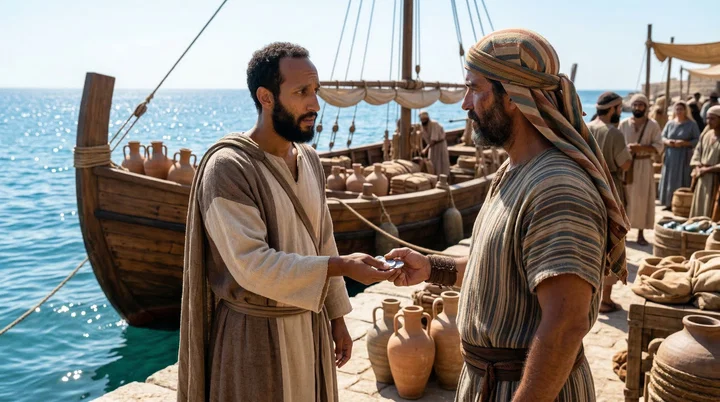
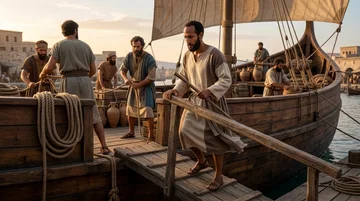
But Jonah rose up to flee unto Tarshish from the presence of the LORD, and went down to Joppa; and he found a ship going to Tarshish: so he paid the fare thereof, and went down into it, to go with them unto Tarshish from the presence of the LORD.
Translations
But Jonah rose up to flee to Tarshish from the presence of the LORD, and went down to Joppa; and he found a ship going to Tarshish: so he paid the fare thereof, and went down into it, to go with them to Tarshish from the presence of the LORD.
But Jonah rose up to flee unto Tarshish from the presence of the LORD, and went down to Joppa; and he found a ship going to Tarshish: so he paid the fare thereof, and went down into it, to go with them unto Tarshish from the presence of the LORD.
But Jonah rose up to flee unto Tarshish from the presence of the Lord, and went down to Joppa; and he found a ship going to Tarshish: so he paid the fare thereof, and went down into it, to go with them unto Tarshish from the presence of the Lord.
But Jonah arose to flee to Tarshish from the presence of the LORD, and went down to Joppa; and he found a ship going to Tarshish: so he paid the fare of it, and went down into it, to go with them to Tarshish from the presence of the LORD.
But Jonah rose up to flee unto Tarshish from the presence of the LORD; and he went down to Joppa, and found a ship going to Tarshish: so he paid the fare thereof, and went down into it, to go with them unto Tarshish from the presence of the LORD.
But Jonah rose up to flee unto Tarshish from the presence of Jehovah; and he went down to Joppa, and found a ship going to Tarshish: so he paid the fare thereof, and went down into it, to go with them unto Tarshish from the presence of Jehovah.
And Jonah riseth to flee to Tarshish from the face of Jehovah, and goeth down [to] Joppa, and findeth a ship going [to] Tarshish, and he giveth its fare, and goeth down into it, to go with them to Tarshish from the face of Jehovah.
But Jonah rose up to flee unto Tarshish from the presence of Jehovah; and he went down to Joppa, and found a ship going to Tarshish; so he paid the fare thereof, and went down into it, to go with them unto Tarshish, from the presence of Jehovah.
But Jonah arose to flee unto Tarshish, away from the presence of Yahweh,—and went down to Joppa, and found a ship going to Tarshish, so he paid the fare thereof, and went down into it, to go with them to Tarshish, away from the presence of Yahweh.
Berean Standard Bible, Majority Standard Bible
Jonah, however, got up to flee to Tarshish, away from the presence of the LORD. He went down to Joppa and found a ship bound for Tarshish. So he paid the fare and went aboard to sail for Tarshish, away from the presence of the LORD.
But Jonah rose up to flee to Tarshish from the presence of the LORD. He went down to Joppa, and found a ship going to Tarshish; so he paid its fare, and went down into it, to go with them to Tarshish from the presence of the LORD.
And Jonah got up to go in flight to Tarshish, away from the Lord; and he went down to Joppa, and saw there a ship going to Tarshish: so he gave them the price of the journey and went down into it to go with them to Tarshish, away from the Lord.
But Ionah rose vp to flee into Tarshish from the presence of the Lord, and went downe to Iapho: and he founde a ship going to Tarshish: so he payed the fare thereof, and went downe into it, that he might go with them vnto Tarshish, from the presence of the Lord.
Douay-Rheims (Challoner revision)
And Jonas rose up to flee into Tharsis from the face of the Lord, and he went down to Joppe, and found a ship going to Tharsis: and he paid the fare thereof, and went down into it, to go with them to Tharsis from the face of the Lord.
Pictures


Cross-references
- Jonah 4:1-2
But it displeased Jonah exceedingly, and he was very angry.
Jonah explains that he fled because he expected God to spare Nineveh.
- Jonah 3
And the word of the LORD came unto Jonah the second time, saying,
Jonah later obeys and Nineveh repents, averting judgment.
- Jonah 2:10
And the LORD spake unto the fish, and it vomited out Jonah upon the dry land.
God delivers Jonah from the sea and returns him to land to resume his commission.
- Jonah 1:17
Now the LORD had prepared a great fish to swallow up Jonah. And Jonah was in the belly of the fish three days and three nights.
God provides a great fish to preserve Jonah after his flight.
- 2 Kings 14:25
He restored the coast of Israel from the entering of Hamath unto the sea of the plain, according to the word of the LORD God of Israel, which he spake by the hand of his servant Jonah, the son of Amittai, the prophet, which was of Gath-hepher.
Identifies Jonah as the prophet and son of Amittai.
- Matthew 12:41
The men of Nineveh shall rise in judgment with this generation, and shall condemn it: because they repented at the preaching of Jonas; and, behold, a greater than Jonas is here.
Nineveh repented at Jonah’s preaching, contrasting with those who rejected Christ’s message.
- Jonah 1:12
And he said unto them, Take me up, and cast me forth into the sea; so shall the sea be calm unto you: for I know that for my sake this great tempest is upon you.
Jonah takes blame for the storm and tells the sailors to cast him into the sea.
- Acts 9:36-42
Now there was at Joppa a certain disciple named Tabitha, which by interpretation is called Dorcas: this woman was full of good works and almsdeeds which she did.
Both events are located at Joppa.
- 2 Chronicles 2:16
And we will cut wood out of Lebanon, as much as thou shalt need: and we will bring it to thee in floats by sea to Joppa; and thou shalt carry it up to Jerusalem.
Both texts locate events at Joppa.
- Acts 10:9-16
On the morrow, as they went on their journey, and drew nigh unto the city, Peter went up upon the housetop to pray about the sixth hour:
Both events take place at Joppa.
- Jonah 2:1
Then Jonah prayed unto the LORD his God out of the fish’s belly,
Jonah calls on God after his flight and disobedience.
- Psalms 139:7-10
Whither shall I go from thy spirit? or whither shall I flee from thy presence?
both teach none can flee God's presence
- Joshua 19:46
And Me-jarkon, and Rakkon, with the border before Japho.
both locate events at Joppa
- Acts 9:43
And it came to pass, that he tarried many days in Joppa with one Simon a tanner.
both locate events at Joppa
- Acts 10:5
And now send men to Joppa, and call for one Simon, whose surname is Peter:
both locate events at Joppa
- Isaiah 66:19
And I will set a sign among them, and I will send those that escape of them unto the nations, to Tarshish, Pul, and Lud, that draw the bow, to Tubal, and Javan, to the isles afar off, that have not heard my fame, neither have seen my glory; and they shall declare my glory among the Gentiles.
Tarshish is one of its listed nations
- Matthew 12:39
But he answered and said unto them, An evil and adulterous generation seeketh after a sign; and there shall no sign be given to it, but the sign of the prophet Jonas:
Jesus confirms Jonah’s book as Scripture by naming the prophet Jonah.
- Jonah 3:4
And Jonah began to enter into the city a day’s journey, and he cried, and said, Yet forty days, and Nineveh shall be overthrown.
Jonah delivers the warning he had fled to avoid delivering.
Commentary
Each commentary is drawn from primary sources: the writings of Ellen G. White and Adventist pioneers and periodicals. Each commentary is separate. Its own words are not a quotation; follow the references to read the source passages.
Ellen G. White
17 sources
Jonah was commanded to carry God's message of warning to great, populous and proud Nineveh, but instead he fled in the opposite direction toward Tarshish, going down to Joppa, finding a ship, paying his fare and boarding to escape from the Lord's presence.PK 268.6–269.1PK 266.2RH Dec 4, 1913 He fled from fear, discouragement and dread at a seemingly impossible commission, doubting any good could come from the proud city and forgetting God's all-wise power, and also because he knew God is gracious, merciful and ready to spare a repentant people, so overwhelmed by the stern message and valuing his own reputation above perishing souls he feared he would seem a false prophet if Nineveh was spared.PK 266.2RH Dec 4, 1913RH Oct 18, 190616MR 113.3–114.1PK 271.1 His flight did not prosper but brought peril at sea and severe affliction by which God obstructed his course, and through repentance and learning that salvation is of the Lord he was delivered, so that when commanded again he obeyed without hesitation and fulfilled God's purpose.PK 268.6–269.1RH Oct 18, 19062T 422.1–423.1 The record stands as a faithful warning that even those favored and entrusted by God can waver, fall into unbelief and disobedience, and learn that the wages of sin is death and retributive justice never fails, kept for the instruction of later generations that they may avoid the evil and imitate only righteousness, yet also to encourage desponding sinners that by pardoning mercy they can rise, recover ground and overcome.ST May 31, 19104T 12.1–3 It is the pattern of fleeing present duty by resisting God's appointed place and task and turning energy and resources to another place or selfish work, which does not prosper but hinders the work and dishonors God until providence brings submission and repentance, teaching that when God directs to a particular duty and message it means something and must be declared without reservation and carried where help is needed despite forbidding obstacles.SW 112.1MH 472.4–473.1RH Dec 29, 19102T 422.1–423.1
Jonah's Flight to Tarshish
Jonah was commanded to go to Nineveh, that great, ancient, populous and proud city, to cry against it and preach God's message to it, but he rose up to flee from the presence of the Lord unto Tarshish.PK 268.6–269.1PK 266.2RH Dec 4, 1913RH Oct 18, 1906Ms 61a, 1906, par. 1–8 He went down to Joppa and found a ship going to Tarshish, and he paid the fare thereof and went down into it to go with them unto Tarshish from the presence of the Lord.PK 268.6–269.1PK 266.2RH Dec 4, 1913RH Oct 18, 1906Ms 61a, 1906, par. 1–8 Though bidden to bear that message he was averse to bearing it and disobeyed, refusing for a time to speak the words given him.RH Oct 18, 1906Ms 61a, 1906, par. 1–816MR 113.3–114.1
His flight was driven by fear, discouragement and dread when the difficult commission to warn Nineveh seemed impossible.PK 266.2RH Dec 4, 1913 Doubting that anything could be gained by proclaiming the message in that proud city, he questioned its wisdom and doubted whether to obey.PK 266.2RH Dec 4, 1913 He forgot that God is all-wise and all-powerful, and as he hesitated he was overcome.PK 266.2RH Dec 4, 1913
He also fled before he preached because he knew God is gracious and merciful, slow to anger, of great kindness, and ready to turn from threatened evil if Nineveh repented.PK 271.1RH Oct 18, 1906 Fainting with fear and overwhelmed by the awful message committed to him, he hurried away from the place where he was sent.16MR 113.3–114.1 He feared he would be regarded as a false prophet if the city was spared, and in valuing his own reputation above the souls in that wretched city he lost sight of the greater value of their lives.PK 271.1RH Oct 18, 1906
His journey by sea from the duty God had given him was not prosperous but brought peril at sea and severe affliction.PK 268.6–269.1RH Oct 18, 19062T 422.1–423.1Lt 16a, 1891, par. 13–15Lt 16, 1891, par. 9–10 God in providence obstructed his course and taught him through that affliction the lesson of obedience that enabled him to fulfill God's purpose for the inhabitants of Nineveh.RH Oct 18, 19062T 422.1–423.1 Jonah repented, recognized that salvation comes from the Lord, and was delivered, so that when commissioned again he obeyed without hesitation.PK 268.6–269.1 Turning from appointed work to direct devotion, energy and resources elsewhere in selfish projects does not succeed but hinders the work, dishonors God and frustrates plans directed elsewhere.Lt 16a, 1891, par. 13–15Lt 16, 1891, par. 9–10
Warning and Present Duty
Jonah's flight to Tarshish stands as a faithful record of sin by a man favored of God and entrusted with great responsibility.ST May 31, 1910 It shows that even such men, even believers, are overcome by temptation and strive, waver, and fall into error as people do today.ST May 31, 19104T 12.1–3 The record is kept for the benefit, warning, and instruction of all later generations who read it.ST May 31, 19104T 12.1–3 It is kept that they may avoid unbelief and disobedience, know that the wages of sin is death and that God's retributive justice never fails, avoid the evil recorded, and imitate only righteousness.ST May 31, 1910 The same record is given to encourage desponding hearts by showing where Jonah struggled and fell.ST May 31, 19104T 12.1–3 It teaches sinners their need of pardoning mercy, and that through God's grace they can gain fresh vigor to rise above their evil nature, recover their ground, renew the conflict, and be blessed and overcome in the name of Jesus.ST May 31, 19104T 12.1–3
The verse is a pattern for fleeing present duty and resisting the place and task God appoints.MH 472.4–473.1RH Dec 29, 19102T 422.1–423.1 Instead of going to Nineveh with God's message, Jonah went to Joppa and boarded a ship for Tarshish, seeking a change of place or work and choosing another place instead, which is not pleasing to Him.MH 472.4–473.1RH Dec 29, 19102T 422.1–423.1 Turning from appointed work to direct devotion, energy, and resources elsewhere does not prosper but hinders the work, dishonors God, and frustrates plans directed elsewhere.Lt 16a, 1891, par. 13–15Lt 16, 1891, par. 9–10 Selfish projects do not succeed when they take the place of the duty God has given.Lt 16a, 1891, par. 13–15Lt 16, 1891, par. 9–10 God in providence may obstruct that course and bring the fugitive to submit and repent.2T 422.1–423.1Lt 16a, 1891, par. 13–15Lt 16, 1891, par. 9–10
When God directs a person to a particular place and duty and speaks commanding him to bear His message, it means something.RH Dec 29, 191016MR 113.3–114.1 Those commanded must declare without reservation the words given them of God.RH Dec 29, 191016MR 113.3–114.1 They must move out to where others need their help, although obstacles of a forbidding character are in the way.MH 472.4–473.116MR 113.3–114.1 In its setting in the history of Nineveh, the verse calls readers to recognize that people who are ignorant and spiritually defiled need help and to fulfill their duty toward them, including those in the Southern States.SW 112.1 It also describes the course of those who had been very confident that Jesus would come and then suffered bitter disappointment when the time passed with mortality still clinging to them and the curse still around them, who in wounded pride complain against God, flee from the world, choose death rather than life, and renounce faith rather than take up again the vexing cares of life.ST Mar 30, 1876
Sources
Pioneers and periodicals
90 sources
Jonah was commanded to go east to Nineveh to cry against its wickedness, but he rose to flee west to Tarshish from the Lord's presence, going down to Joppa, finding a ship, paying its fare, and boarding it to sail away from God.RH Dec 4, 1913RH Oct 18, 1906ST Oct 29, 1885ST Mar 18, 1913RH May 9, 1912
He fled because he knew God is gracious and merciful and would spare Nineveh if it repented, and he feared the shame of seeming a false prophet, valuing his own reputation more than the souls of that hated city.RH Oct 18, 1906RH Aug 3, 1876ST Mar 18, 1913ST Mar 18, 1913ST Mar 23, 1904
His flight was deliberate, knowing disobedience, for Tarshish was not wrong in itself but was wrong for him because God had called him elsewhere, and going anywhere other than where God directs is fleeing from His presence.RH Dec 29, 1910ST Nov 12, 1885ST Oct 29, 1885ST Oct 29, 1885ST Dec 10, 1894
No one can hide from the Lord or sail beyond His reach, so Jonah did not reach his intended port but was met by tempest, cast into the sea, preserved through the great fish, and after affliction taught obedience, so that he heard the call again and went to Nineveh.RH Oct 18, 1906ST Mar 23, 1904ST Mar 23, 1904ST Sep 17, 1896RH Jun 9, 1903
The verse warns God's messengers not to evade the duty of warning a wicked world, to abandon a hard field for easier work, or to think trouble can be escaped by running from duty, for flight brings trouble and leaves the unwarned in sin.ST Nov 19, 1902ST Sep 28, 1882RH Jul 15, 1873RH Nov 25, 1858
Place Time and Journey
Jonah rose to flee to Tarshish from the Lord's presence instead of obeying the command to cry against Nineveh, and he went down to Joppa, found a ship going to Tarshish, paid its fare, and boarded it to go with them to Tarshish from the Lord's presence.RH Dec 4, 1913RH Oct 18, 1906RH May 9, 1912ST Feb 6, 1879 When the difficult commission to warn Nineveh seemed impossible he hesitated in discouragement and dread, was averse to bearing the message, and made a deliberate attempt to avoid the work God had given him, believing he could escape the Lord's presence.RH Dec 4, 1913RH Oct 18, 1906RH May 9, 1912 His refusal to preach in Nineveh brought punishment and became an example of a preacher refusing an appointment, yet God in providence taught him through severe affliction the lesson of obedience that enabled him to fulfill God's purpose for Nineveh.RH Oct 18, 1906ST Feb 6, 1879
Joppa, later called Jaffa, was the Mediterranean seaport where Jonah boarded the ship while fleeing from the Lord after being told to go to Nineveh.RH Aug 6, 1908ST Oct 30, 1879ST Nov 24, 1898 Since Joppa lies on the Mediterranean shore, his voyage and the storm took place on the Mediterranean, and he was thrown into that sea when the lot identified him as responsible for the danger.ST Feb 2, 1915 It was the port where he embarked in his foolish attempt to flee from the Lord.ST Oct 30, 1879ST Nov 24, 1898
He had received his commission to go to Nineveh at Gath-Hepher near Nazareth, and on his way to Joppa to board a ship for Tarshish he would pass by Nazareth, cross the plain of Jezreel, go over Mount Carmel, and follow the Mediterranean shore, a route of about three days.ST Jun 2, 1898 Tarshish lay far in the opposite direction from Nineveh, for Nineveh was east while Jonah hurried alone at daybreak westward toward the Great Sea and Joppa to sail to Tarshish.ST Oct 29, 1885ST Mar 18, 1913ST Mar 25, 1913 That Tarshish is identified with Spain, near Gibraltar at the west entrance of the Mediterranean, and his open departure west instead of east makes clear he intended disobedience, not obedience.ST Oct 29, 1885RH Mar 5, 1914ST Oct 19, 1915 His westward flight to the Mediterranean ended in being swallowed by a mighty monster of the deep and then cast alive from its jaws onto the shore, from which he afterward came to Nineveh from the west as a mysterious man of the sea to cry the doom he had first refused to carry.ST Mar 25, 1913 Those who held the other account located Tarshish as the southeastern part of Asia Minor, the district containing the city of Tarsus.ST Dec 3, 1896
Jonah was Jonah the son of Amittai, a true prophet of God whose book was written about 862 years before Christ.ST Sep 9, 1913ST May 24, 1910 He lived and prophesied in the earlier years of Jeroboam II, around 827-810 B.C., and predicted Jeroboam's victories over the Assyrians.ST Oct 29, 1885ST Dec 15, 1909 His disobedience marks him at first as a disagreeable servant, in contrast with his later honesty in the storm when he admitted fault and told the sailors to throw him overboard, and with his endurance under great tests despite complaining when the little gourd withered and left him in the hot sun.ST Sep 9, 1913 God sent him to Nineveh, that great, ancient and populous city, then the greatest city on earth.RH Oct 18, 1906ST Dec 15, 1909 It was a wicked foreign city, capital of a corrupt Assyria that had turned away from God, whose inhabitants were very wicked and faced destruction, and he was told to go and cry against its sins and call it to repentance.RH Oct 18, 1906ST Dec 29, 1887ST Dec 15, 1909RH Feb 13, 1900ST Feb 2, 1915 The account shows that God cared for other nations as well as Israel and that Israel was meant to carry His message to them, for the Ninevites repented when Jonah preached even though he objected to the mission and was troubled that God forgave them.RH Feb 13, 1900
Its downward journey — going down to Joppa and going down into the ship — illustrates that the road away from God leads downward.ST Nov 4, 1930
Motives for Jonah's Flight
When the difficult commission to warn Nineveh seemed impossible, Jonah questioned its wisdom, forgot that God is all-wise and all-powerful, hesitated, and was overcome by discouragement and dread.RH Dec 4, 1913 He refused prompt obedience to a positive, unconditional command to warn Nineveh of approaching ruin, because difficulties looked like mountains and he delayed in unbelief.RH Aug 3, 1876 He fled because he knew God is gracious and merciful, slow to anger, of great kindness, long-suffering and forbearing even toward Israel's enemies, and ready to turn from threatened evil if Nineveh repented.RH Oct 18, 1906ST Mar 18, 1913ST Mar 18, 1913
He feared the humiliation of proclaiming a judgment God would not carry out, for he would not bear an evil message that might never be confirmed, lest he be regarded as a false prophet in Israel and become a byword and derision among the heathen, valuing his prophetic reputation and his word more than the lives and souls in that wretched city.RH Oct 18, 1906RH Aug 3, 1876ST Mar 18, 1913ST Mar 23, 1904ST Nov 5, 1885 He did not flee because he feared the ignorance or wickedness of the Ninevites, but because he feared the Lord would repent of the threatened judgment.RH Dec 20, 1906 His flight was driven by rebellion and pride, hatred of the hated Assyrians and lack of love for the Ninevites.ST Mar 18, 1913ST Jun 13, 1906 He was proud and easily irritated, displeased because he would get no glory from the mission.ST Dec 11, 1901
After being misrepresented and taunted by maligners when threatened destruction did not come, he partly lost sight of the purpose that the warned might repent and live, and desired vengeance to vindicate himself.ST Dec 10, 1894 He reasoned that going to Tarshish to do missionary work there could take the place of the work commanded at Nineveh, since Tarshish also needed work, the sea journey was more convenient and easier because he could board, sleep and ride across, the work would be less embarrassing, and the Lord would consent to the change.ST Feb 2, 1915 His flight is not to be explained as an old heathen territorial view that the Lord had power only in one country; as a prophet with Israel's Scriptures he did not think he could get beyond God's jurisdiction.RH Sep 22, 1910RH Apr 29, 1873
In contrast, other accounts present him as imagining that by sailing leagues away across the Mediterranean he could ride away from the presence of the Lord, the God of Israel, and escape His angel, reflecting the mistaken belief that God's jurisdiction did not extend everywhere.ST Mar 18, 1913ST Mar 18, 1913RH Mar 25, 1873
Nature of Disobedience
Jonah's action was deliberate, knowing, open disobedience: commanded to go east to Nineveh, he rose to flee west to Tarshish, far in the opposite direction, making clear he intended disobedience and not obedience.ST Oct 29, 1885ST Oct 29, 1885RH May 9, 1912RH Oct 15, 1857 He had decided to give no more messages and went down to Joppa, found a ship going to Tarshish, paid the fare and boarded it, believing he could escape the Lord's presence and avoid the work given him.ST Dec 10, 1894RH May 9, 1912RH Oct 15, 1857 Doing something contrary to God's command cannot be treated as obedience, as resting on the first day of the week while working on the seventh does not fulfill the command to keep the Sabbath.ST Oct 29, 1885 His careless disobedience brought trial and distress upon innocent people aboard the ship.ST Oct 29, 1885
Tarshish was not wrong in itself; it was wrong for Jonah because God had called him elsewhere.ST Nov 12, 1885 The right choice is not simply the better of two places or actions, but the one God directs.ST Nov 12, 1885 Going somewhere good can still be fleeing from duty when it takes a person away from the task God has given, and going anywhere other than where God directs is like fleeing from His presence and is not pleasing to Him.RH Dec 29, 1910ST Dec 8, 1914ST Nov 12, 1885 The fact that a ship was ready at Joppa to take him to Tarshish did not make that course right, for an easy or available course does not show agreement with God's will.ST Jul 12, 1899
Fleeing from the Lord's presence means evading responsibilities and shirking the plain duties that lie before a person in community, church, or home.ST Nov 19, 1902 It is hesitation, questioning and delay in duty when difficulties look like mountains, and choosing one's own way instead of God's way.RH Aug 3, 1876RH Jan 27, 1874 He refused prompt obedience to a positive, unconditional command to warn Nineveh of approaching ruin, partly from fear that if Nineveh repented and judgment was stayed his reputation as a man of his word would be ruined and he could not bear reproach, and his effort to escape expresses his effort to evade the duty given him.RH Aug 3, 1876ST Mar 23, 1904 Such flight leaves the Nineveh that might have been saved by warning unwarned and more deeply steeped in sin, and leads to being swallowed up by something ready to swallow, some wretched entanglement or scheme or device out of which there is no deliverance until sincere repentance.ST Nov 19, 1902 His self-chosen course sent him overboard into the raging sea, but when he left his own way and took God's way it led him to Nineveh on a mission of love, picturing the real conflict of life between following the path that seems more pleasant to self and walking with God step by step in obedient trust.RH Jan 27, 1874
Refusing to do what the Lord tells and shrinking from appointed labor and begging off from it is terrible disobedience and sin, and such refusal is not humility but pride or stubbornness.ST Dec 21, 1888RH Apr 28, 1868 His unwillingness to go where God sent him matches Moses' unwillingness in outward act but not in motive.ST Dec 21, 1888 God strongly sets duty before a person while leaving the choice free, as Jonah could have refused just as Moses and Paul could have refused, and refusing to give an entrusted message believed to be from God would be as sinful as Jonah's flight.RH Apr 28, 1868ST Oct 19, 1904
The name Jonah means dove, yet in fleeing from the hard mission to go to a strange people whose capital was then the greatest city on earth and rebuke them for their sins, he showed a fiery disposition unlike a dove.ST Dec 15, 1909 His disobedience marks him at first as a disagreeable servant.ST Sep 9, 1913 This is seen in contrast with his later honesty in the storm at sea when he admits he is at fault and tells the sailors to throw him overboard, and with his endurance under the great tests of life despite complaining when the little gourd withers and leaves him in the hot sun.ST Sep 9, 1913
Though he petulantly refused God's command to go to Nineveh and tried to escape from God, he did not deny God.STST Feb 4, 1903 His outward disobedience in fleeing hid a heart still true to God.ST Feb 4, 1903 When the ship was endangered and imperiled on his account, he came forward nobly, honestly acknowledged his fault and told the sailors to cast him overboard, willingly and bravely facing what to him meant certain death.STST Feb 4, 1903 His response under this great test where moral principle was involved showed that his heart was true, which God knew all the time, and God acted strongly and showed Himself strong on his behalf.STST Feb 4, 1903
Judgment Deliverance and Sign
No one can hide from the Lord or flee beyond His presence and knowledge, which reach even the depths.ST Mar 23, 1904ST Sep 11, 1893 Jonah chose to flee from the mission God gave him, going down to Joppa, paying for passage and boarding a ship bound for Tarshish, believing he had escaped the duty he disliked.ST Mar 23, 1904ST Sep 17, 1896 That attempt to avoid the mission was a wrong course, and the Lord did not leave him undisturbed in it.ST Mar 23, 1904ST Mar 23, 1904 Though he paid the fare, he did not reach his intended destination.ST Sep 17, 1896
His knowing flight toward Tarshish and neglect of duty brought trial, distress and danger upon innocent fellow passengers, including the heathen crew.ST Oct 29, 1885RH Apr 1, 1902 While the ship was threatened by a great tempest he was carelessly asleep below deck, feeling safe enough in disobedience though not ready to die.ST Oct 29, 1885RH Jul 1, 1862 He had to be roused by the shipmaster's call to recognize the danger.RH Apr 1, 1902 Neglecting the work God gave him likewise leads to careless sleep and indifference to surrounding dangers.RH Sep 17, 1901
God sent a tempest upon that Mediterranean voyage from Joppa, and Jonah was identified by lot as responsible for the danger and thrown into that sea.ST Sep 17, 1896ST Feb 2, 1915 Cast into the sea and into the depths, he could not get beyond God's presence, for God preserved him there through a great fish and heard his prayer.ST Sep 17, 1896ST Aug 27, 1896 The Lord moved the prepared great fish to turn into the Mediterranean to come along just in time to pick him up as he was cast from the ship sailing toward Tarshish near Gibraltar at the west entrance to the Mediterranean.ST Oct 19, 1915 His westward flight to the Mediterranean thus ended in being swallowed by a mighty monster of the deep and then cast alive out of its gaping jaws onto the shore.ST Mar 25, 1913
Through severe affliction God in providence taught him the lesson of obedience that enabled him to fulfill God's purpose for the inhabitants of Nineveh, that great ancient and populous city.RH Oct 18, 1906 After hard experience and deliverance from the sea he heard the same call again, went to Nineveh carrying God's Spirit, and Nineveh was saved.RH Jun 9, 1903RH May 13, 1915 So his punishment for running away became a blessing to himself and to the city, showing that punishment for sin may benefit both the sinner and others.RH Jun 9, 1903 From the shore he afterward came to Nineveh from the west as a mysterious man of the sea to cry against the city the doom he had first refused to carry.ST Mar 25, 1913
His flight begins the events that form the sign of Jonah, which Christ fulfilled through His death and resurrection.ST Dec 11, 1893 That experience serves as an imperfect figure of Christ's suffering and death, in that Jonah was delivered into human hands and consigned to the grave for three days and nights.ST Dec 11, 1893 He was running away from Nineveh by ship from Joppa toward Tarshish, not traveling there by sea, and only after the fish cast him onto land did the Lord speak to him again and he went to Nineveh.ST Jul 8, 1886 The verse therefore gives no basis for saying that the fish carried Jonah up a river to Nineveh.ST Jul 8, 1886
Truth of Scripture Record
The account to which this flight belongs is true literal history to be believed exactly as written, standing together with the rest of Scripture which Christ and the apostles treated as truthful and important.ST May 6, 1897ST Mar 9, 1888ST Jan 30, 1901 To dismiss it as an absurd story in an age of modern science and learning puts man himself on the throne as possessed of all needful knowledge and wisdom and exalts self instead of God, which is the character of heathenism and all false religion.ST May 6, 1897 To call the book of Jonah an allegory is unbelief and infidelity from so-called new learning and higher criticism.ST Jan 30, 1901
What was once taught as history was later dismissed as legend under scientific criticism, showing how rejecting the historical truth of one part of Scripture leads to rejecting other scriptural narratives.ST Oct 15, 1912 That same unbelief calls Genesis a myth and questions the miracles of the Son of God, and it produces loss of faith.ST Jan 30, 1901
The rising up to flee to Tarshish from the presence of the LORD instead of obeying is a faithful record of sin by a man favored of God and entrusted with great responsibility, showing that even such men are overcome by temptation and strive, waver and fall into error as people do today.ST May 31, 1910 The record is kept for the benefit and warning of all who read it, that they may avoid unbelief and disobedience, know that the wages of sin is death and that God's retributive justice never fails, avoid the evil recorded and imitate only righteousness.ST May 31, 1910 It is also given to encourage desponding hearts, showing where Jonah struggled and fell so that sinners may know their need of pardoning mercy and that through God's grace they can gain fresh vigor to rise above their evil nature, recover their ground, renew the conflict, and be blessed and overcome in the name of Jesus.ST May 31, 1910
His unwillingness to carry out God's commission and his attempt to flee instead make clear that the prophetic message came from God, not from the prophet's own thoughts.RH Dec 28, 1905 The account belongs to his miraculous preservation in the fish, which is a real work of God that must be believed and shows that God's power is not limited by the ordinary course of nature.RH Feb 10, 1903 Faith in that miraculous power is necessary because salvation and the new birth are themselves miracles.RH Feb 10, 1903 The account of his attempt to flee from the Lord's presence by traveling toward Tarshish is reasonable in light of Assyrian life and history.ST Dec 5, 1892
Call to Faithful Duty
God's messengers must not evade responsibility to warn a wicked world and a wicked city of its sins and impending judgment, and neglecting that duty brings God's heavy hand upon the neglecter.RH Nov 25, 1858ST Dec 16, 1886 Fleeing from the presence of the Lord is evading responsibilities and shirking the plain duties that lie before a person in community, church, or home, and such flight leads to being swallowed up by something ready to swallow, some wretched entanglement or scheme or device out of which there is no deliverance until sincere repentance.ST Nov 19, 1902 Meanwhile the Nineveh that might have been saved by warning is left unwarned and becomes more deeply steeped in sin.ST Nov 19, 1902 The commission is to preach what God commands, not to choose a safer or more popular message or to compromise with sin, and turning to easier work to avoid an unpleasant call to repentance is flight from duty.RH Nov 25, 1858
The flight illustrates how a minister may be tempted to abandon difficult work because people are indifferent and ministry is discouraging, turning to easier work or refusing an appointment.ST Sep 28, 1882ST Feb 6, 1879 Those very difficulties are a reason to continue the work, not to resign, and disobedience in refusing to preach where appointed brings punishment.ST Sep 28, 1882ST Feb 6, 1879 It is impossible to escape trouble by running away from duty, for the flight was an experiment in avoiding the difficulties and trials belonging to the post assigned by God's providence.RH Jul 15, 1873RH Jun 12, 1879RH Dec 3, 1867 It brought Jonah into trouble where all his imitators will in the end find themselves, so the difficulties of one's assigned place must be manfully met and overcome rather than fled.RH Dec 3, 1867
The verse warns the Jonahs of the last days against unbelief, contempt for God's word, excuses and objections toward warning a world of approaching ruin.RH Aug 3, 1876 Refusing prompt obedience to a positive, unconditional command to warn of approaching ruin comes from hesitation, questioning, and delay when difficulties look like mountains, especially fear that if the warned repent and judgment is stayed the messenger's reputation as a man of his word will be ruined and he cannot bear reproach, whereas prompt obedience without questioning or delay would have been far nobler and would have made unnecessary the great miracle needed to drive the timorous prophet to his work.RH Aug 3, 1876 Unlike Jonah's conditional errand, the present warning work has no condition of delay, for time is short and the end must certainly come and some will be warned.RH Aug 3, 1876 Duty therefore requires cheerful and hopeful giving of means, talent, time, and labor now instead of hesitating till the last moment and then awaiting the result in despondency and gloom, with reward soon to come.RH Aug 3, 1876
Fleeing from a duty God has given is sin, and refusing to proclaim a time message believed to be commanded by God is as sinful as Jonah's flight from the Lord.RH Apr 28, 1868RH Jun 9, 1851RH Dec 1850 His example is compared with refusing to give the Midnight Cry, while preaching the warning was obedience even though Nineveh was spared and the announced event did not occur as expected.RH Jun 9, 1851RH Dec 1850RH Dec 1850 Those who had acknowledged that withholding the message would have been sin were likewise sinning when they later opposed it, and the lecturers' own comparison treats refusal to give the Midnight Cry as sin against God as serious as Jonah's flight.RH Dec 1850RH Dec 1850
Jonah's mission to Nineveh was part of God's effort to bring the gospel to the Gentiles, showing that God cared for other nations as well as Israel and that Israel was meant to carry God's message to them.RH Feb 13, 1900RH Nov 11, 1902 God sent Jonah on a long journey to a wicked foreign city facing destruction, Jonah objected to the mission, but the Ninevites repented when he preached, and Jonah was troubled that God forgave them.RH Feb 13, 1900 His refusing God's call to go and fleeing instead is an example of refusal to answer a missionary call and of resisting God's call to carry His message to the city.ST Nov 18, 1889RH Nov 11, 1902 The verse warns against those called to labor for God who fail to respond or turn instead toward another course, going in the opposite direction by ship to Tarshish after refusing the Lord's call.RH May 21, 1901
It warns against fleeing from the place where God wants a person to serve by withdrawing to a place with few opportunities to reach others, and against obstructing through church territory arrangements the duty to carry God's message after determining not to proclaim coming destruction. Instead of refusing the call to labor, believers should willingly serve and help proclaim the message, venturing at their own cost to carry the last warning message to a neglected field lying right at hand instead of being afraid to go.RH Dec 20, 1906ST Sep 16, 1875 Jonah paid his own fare, even extra fare, to go to his field of labor, not because he feared the ignorance or wickedness of the Ninevites but because he feared the Lord would repent of the threatened judgment.RH Dec 20, 1906 His prophetic mission was needed by Nineveh, showing that people need prophetic warning about events with grave and lasting consequences.RH Jun 8, 1911
Refusing the work God gives leads into careless sleep and indifference to surrounding dangers, putting both the refuser and fellow travelers in danger, and disobedience stands in the way of praying with faith until the sin is given up.RH Sep 17, 1901RH Jan 29, 1857 Choosing his own way instead of God's way sent him overboard into the raging sea, but leaving his own way for God's way led him to Nineveh on a mission of love, picturing the real conflict of life between following the path that seems more pleasant to self and walking with God step by step in obedient trust, by which Christians are still tempted to be wilful and wayward.RH Jan 27, 1874 Fleeing in wounded pride, complaining against God and choosing death rather than life, marks the course of those who had been very confident that Jesus would come, then suffered bitter disappointment when the time passed unheralded by His advent with mortality still clinging to them and the effects of the curse all around them, and who renounced their faith rather than take up again the vexing cares of life they thought had been laid down forever.ST Mar 30, 1876
Like Jonah going down into the ship and sleeping instead of confronting duty, theologians avoid using Scripture against Spiritualism because they fear being identified as Adventists, leaving Satan free to gather followers.ST Nov 16, 1882 The phrase about paying the fare and going describes immediate departure in the opposite direction from commission, and is applied to a student enrolling and beginning his studies.RH Sep 8, 1910 Jonah was sent that old Nineveh might repent, but instead of going there he set sail to Tarshish, a reluctant witness nevertheless obligated to carry God's warning to a sinful people who might repent, who could not be excused from bearing testimony and will be vindicated in the judgment before those who mocked his experience.ST May 24, 1905RH Jul 15, 1909 His route toward Tarshish instead of Nineveh as directed could not take him to the place he was meant to reach, illustrating how people turn from the right path onto false shortcuts, where moral hesitation comes from lacking a definite purpose rather than lacking guidance.ST Jul 15, 1880
Sources