Joshua 20:4
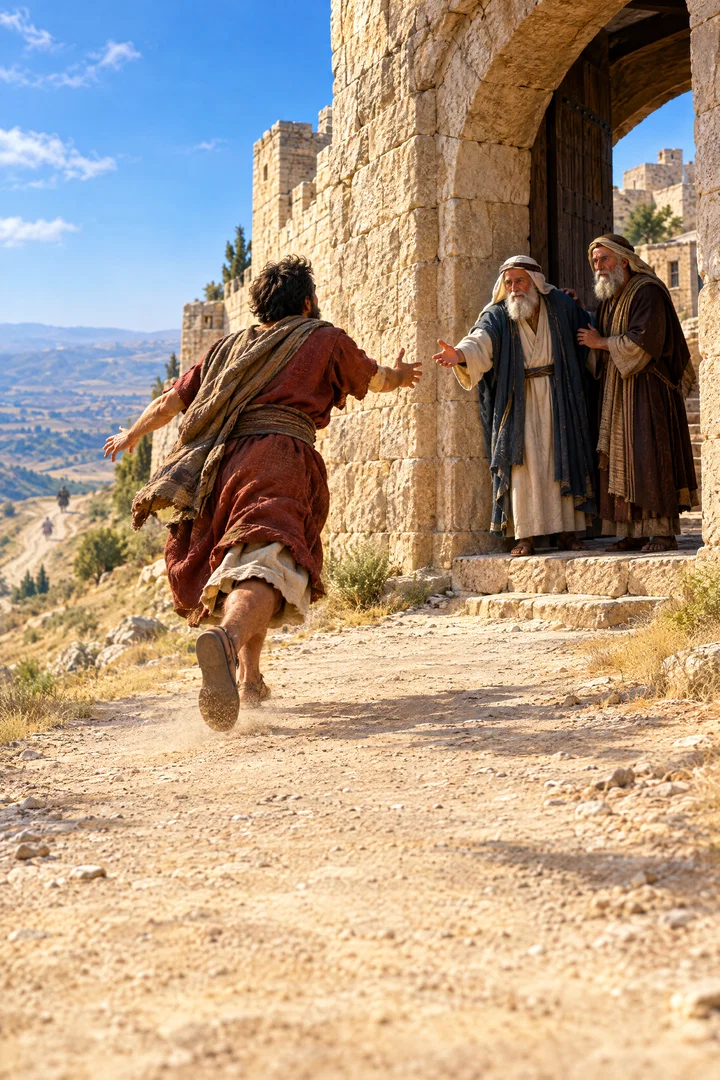
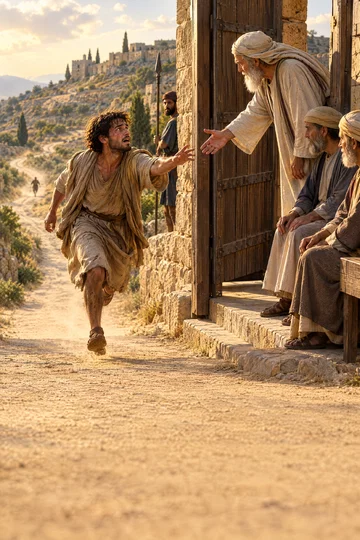
And when he that doth flee unto one of those cities shall stand at the entering of the gate of the city, and shall declare his cause in the ears of the elders of that city, they shall take him into the city unto them, and give him a place, that he may dwell among them.
Translations
And when he that does flee to one of those cities shall stand at the entering of the gate of the city, and shall declare his cause in the ears of the elders of that city, they shall take him into the city to them, and give him a place, that he may dwell among them.
King James Version, KJV Cambridge Paragraph Bible
And when he that doth flee unto one of those cities shall stand at the entering of the gate of the city, and shall declare his cause in the ears of the elders of that city, they shall take him into the city unto them, and give him a place, that he may dwell among them.
And when he that doth flee to one of those cities shall stand at the entering of the gate of the city, and shall declare his cause in the ears of the elders of that city, they shall take him into the city to them, and give him a place, that he may dwell among them.
And he shall flee unto one of those cities, and shall stand at the entering of the gate of the city, and declare his cause in the ears of the elders of that city; and they shall take him into the city unto them, and give him a place, that he may dwell among them.
And he shall flee unto one of those cities, and shall stand at the entrance of the gate of the city, and declare his cause in the ears of the elders of that city; and they shall take him into the city unto them, and give him a place, that he may dwell among them.
'When [one] hath fled unto one of these cities, and hath stood [at] the opening of the gate of the city, and hath spoken in the ears of the elders of that city his matter, then they have gathered him into the city unto them, and have given to him a place, and he hath dwelt with them.
And he shall flee unto one of those cities and stand at the entrance of the city-gate, and shall declare his matter in the ears of the elders of that city; and they shall take him into the city unto them, and give him a place, that he may dwell among them.
and he shall flee unto one of these cities and present himself at the entrance of the gate of the city, and shall speak, in the ears of the elders of that city, his defence,—and they shall take him for protection into the city unto them, and shall give him a place, so shall he dwell with them.
Berean Standard Bible, Majority Standard Bible
When someone flees to one of these cities, stands at the entrance of the city gate, and states his case before its elders, they are to bring him into the city and give him a place to live among them.
He shall flee to one of those cities, and shall stand at the entrance of the gate of the city, and declare his case in the ears of the elders of that city. They shall take him into the city with them, and give him a place, that he may live among them.
And if anyone goes in flight to one of those towns, and comes into the public place of the town, and puts his cause before the responsible men of the town, they will take him into the town and give him a place among them where he may be safe.
And he that doeth flee vnto one of those cities, shall stand at the entring of the gate of the citie, and shall shewe his cause to the Elders of the citie: and they shall receiue him into the citie vnto them, and giue him a place, that hee may dwell with them.
Douay-Rheims (Challoner revision)
And when he shall flee to one of these cities: he shall stand before the gate of the city, and shall speak to the ancients of that city, such things as prove him innocent: and so shall they receive him, and give him a place to dwell in.
Pictures
Cross-references
- Numbers 35:11-34
Then ye shall appoint you cities to be cities of refuge for you; that the slayer may flee thither, which killeth any person at unawares.
Gives the laws governing refuge for an unwitting slayer.
- Deuteronomy 19:2-13
Thou shalt separate three cities for thee in the midst of thy land, which the LORD thy God giveth thee to possess it.
Sets out refuge-city protection and distinguishes accidental from deliberate killing.
- Hebrews 6:18
That by two immutable things, in which it was impossible for God to lie, we might have a strong consolation, who have fled for refuge to lay hold upon the hope set before us:
Fleeing for refuge is an image of laying hold of hope.
- Deuteronomy 4:41-43
Then Moses severed three cities on this side Jordan toward the sunrising;
Both texts describe cities of refuge for manslayers who flee there.
- Exodus 21:13
And if a man lie not in wait, but God deliver him into his hand; then I will appoint thee a place whither he shall flee.
Both provide refuge for someone who kills unintentionally.
- Numbers 35:12
And they shall be unto you cities for refuge from the avenger; that the manslayer die not, until he stand before the congregation in judgment.
Both describe refuge for the manslayer while his case awaits judgment.
Commentary
Each commentary is drawn from primary sources: the writings of Ellen G. White and Adventist pioneers and periodicals. Each commentary is separate. Its own words are not a quotation; follow the references to read the source passages.
Ellen G. White
1 source
Under the former Jewish order the procedure for reaching safety was laid out without ambiguity, the one fleeing presenting himself at the entrance of the gate of refuge.PK 179.1–2 There he was to state his case openly before the elders of the town, and upon that hearing they were to receive him inside and assign him a dwelling place among themselves.PK 179.1–2 The distinctness of that appointed path mirrors the distinctness with which the way to true happiness and life has been marked out in willing obedience to the Creator.PK 179.1–2 Set opposite to it stands the way of disobedience, whose end is misery and death, so that the two courses are left plainly contrasted.PK 179.1–2
Sources
Pioneers and periodicals
8 sources
Joshua stands first among the twelve historical books tracing the chosen people from their first national occupation of Canaan to the return from captivity, named for its leading character Joshua by whom part was written, and this verse falls in chapters 13 to 22 giving the distribution of the land from written documents accurately describing the property.RH Mar 2, 1916
The fugitive reaching one of those cities was to stand at the entering of the gate and declare his cause in the ears of the elders of the city, and they were to take him into the city to themselves and give him a place that he might dwell among them.ST Sep 12, 1895ST Jun 9, 1914ST Aug 29, 1895RH Apr 16, 1908 The same reception is described as welcoming him and providing where he may live and remain with them.
The provision made a way of escape for one who had taken life accidentally and unintentionally, without planning murder, and thereby distinguished him from an intentional murderer.ST Aug 29, 1895ST Oct 22, 1902
The cities were appointed by God among His own people of old as true cities of safety, safer than the thoroughly fortified cities men call safe, and this world now has no such cities.ST Aug 25, 1914
As part of the Levitical system teaching the truths of the gospel, the cities pictured Christ as shelter and sure protection for every sin-burdened soul fleeing from the condemnation inherited through sin, while the avenger of blood pictured God's law demanding the sinner's life.ST Sep 12, 1895ST Jun 9, 1914 The sight of such a city was meant to remind an Israelite of Christ the stronghold, and God gives the sinner power to flee to Him.ST Sep 12, 1895ST Jun 9, 1914
A sinner who flees to Christ and abides in Him is safe from the law's condemnation, and unlike the manslayer whose safety lasted only until the death of the high priest, those who remain in Christ are eternally safe because Christ as the true High Priest dies no more but ever lives to intercede, so the law's demand is satisfied.
The principle of receiving the fugitive and giving him a place to live among them applies to providing a place of safety and work for Jews persecuted after accepting Christ.RH Apr 16, 1908 The image of welcoming the fugitive and giving him a place to live also applies to schools as places of refuge where young people can gather and be trained for service.
Sources