Joshua 20:6
And he shall dwell in that city, until he stand before the congregation for judgment, and until the death of the high priest that shall be in those days: then shall the slayer return, and come unto his own city, and unto his own house, unto the city from whence he fled.
Translations
And he shall dwell in that city, until he stand before the congregation for judgment, and until the death of the high priest that shall be in those days: then shall the slayer return, and come to his own city, and to his own house, to the city from where he fled.
King James Version, KJV Cambridge Paragraph Bible
And he shall dwell in that city, until he stand before the congregation for judgment, and until the death of the high priest that shall be in those days: then shall the slayer return, and come unto his own city, and unto his own house, unto the city from whence he fled.
And he shall dwell in that city, until he shall stand before the congregation for judgment, and until the death of the high-priest that shall be in those days: then shall the slayer return, and come to his own city, and to his own house, to the city from whence he fled.
Revised Version, American Standard Version
And he shall dwell in that city, until he stand before the congregation for judgment, until the death of the high priest that shall be in those days: then shall the manslayer return, and come unto his own city, and unto his own house, unto the city from whence he fled.
and he hath dwelt in that city till his standing before the company for judgment, till the death of the chief priest who is in those days — then doth the man-slayer turn back and hath come unto his city, and unto his house, unto the city whence he fled.'
And he shall dwell in that city, until he have stood before the assembly in judgment, until the death of the high-priest that shall be in those days; then shall the slayer return, and come unto his own city, and unto his own house, unto the city from whence he fled.
so shall he remain in that city, until he standeth before the assembly, for judgment, until the death of the high-priest who shall be in those days,—then, shall the manslayer return, and enter into his own city, and into his own house, within the city from whence he fled.
Berean Standard Bible, Majority Standard Bible
He is to stay in that city until he stands trial before the assembly and until the death of the high priest serving at that time. Then the manslayer may return to his own home in the city from which he fled.”
He shall dwell in that city until he stands before the congregation for judgment, until the death of the high priest that shall be in those days. Then the man slayer shall return, and come to his own city, and to his own house, to the city he fled from.’”
And he is to go on living in that town till he has to come before the meeting of the people to be judged; ( till the death of him who is high priest at that time:) then the taker of life may come back to his town and to his house, to the town from which he had gone in flight.
But hee shall dwell in that citie vntill hee stande before the Congregation in iudgement, or vntill the death of the hie Priest that shall be in those daies: then shall the slaier returne, and come vnto his owne citie, and vnto his owne house, euen vnto the citie from whence he fled.
Douay-Rheims (Challoner revision)
And he shall dwell in that city, till he stand before judgment to give an account of his fact, and till the death of the high priest, who shall be at that time: then shall the manslayer return, and go into his own city and house from whence he fled.
Pictures
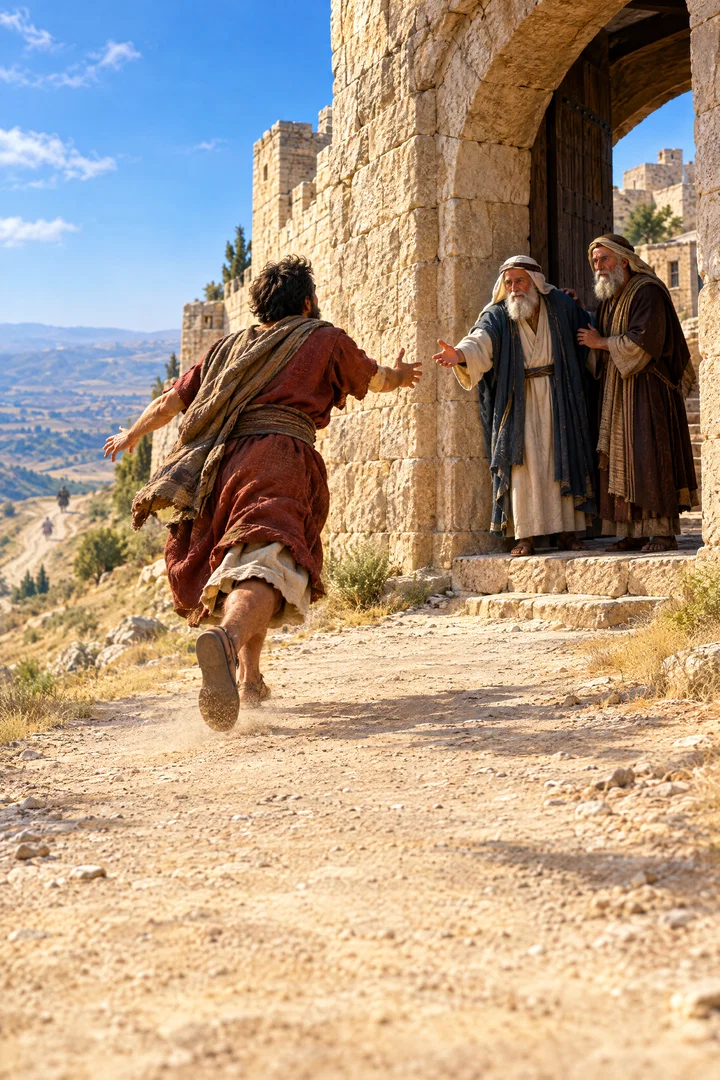
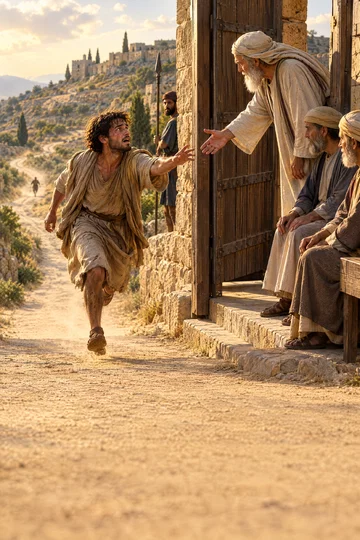
Cross-references
- Numbers 35
And the LORD spake unto Moses in the plains of Moab by Jordan near Jericho, saying,
Sets out the refuge system and the slayer’s trial.
- Deuteronomy 19:2-13
Thou shalt separate three cities for thee in the midst of thy land, which the LORD thy God giveth thee to possess it.
Sets out refuge for an unwitting slayer and judgment for a deliberate killer.
- Hebrews 6:18
That by two immutable things, in which it was impossible for God to lie, we might have a strong consolation, who have fled for refuge to lay hold upon the hope set before us:
Fleeing for refuge pictures laying hold of the hope set before believers.
- Numbers 35:12
And they shall be unto you cities for refuge from the avenger; that the manslayer die not, until he stand before the congregation in judgment.
The refuge kept the slayer safe from the avenger until judgment.
- Numbers 35:28
Because he should have remained in the city of his refuge until the death of the high priest: but after the death of the high priest the slayer shall return into the land of his possession.
The slayer could return home after the high priest’s death.
- Deuteronomy 4:42
That the slayer might flee thither, which should kill his neighbour unawares, and hated him not in times past; and that fleeing unto one of these cities he might live:
Both describe refuge for a slayer who killed unintentionally.
- Exodus 21:13
And if a man lie not in wait, but God deliver him into his hand; then I will appoint thee a place whither he shall flee.
Both provide refuge for an unintentional killer while distinguishing cases liable to punishment.
Commentary
Each commentary is drawn from primary sources: the writings of Ellen G. White and Adventist pioneers and periodicals. Each commentary is separate. Its own words are not a quotation; follow the references to read the source passages.
Ellen G. White
1 source
Under the Jewish dispensation the way to the city of refuge was clearly defined, so that no fleeing slayer need mistake the road to safety.PK 179.1–2 The provision set before him was as plain as a signpost, leaving the path to shelter open and unmistakable.PK 179.1–2 In the same way the journey through this world has its course plainly marked by God.PK 179.1–2 Willing obedience to the Creator stands marked as the road to felicity and life, and disobedience stands marked as the path to misery and death.PK 179.1–2
Sources
Pioneers and periodicals
9 sources
One who killed unintentionally was required to dwell in the city of refuge until standing before the congregation for judgment and until the death of the high priest then in office, and only then to return to his own city and house.ST Aug 29, 1895ST Sep 12, 1895ST Jun 9, 1914ST Jun 9, 1914 Even when willful murder was not involved, there was no early departure before these conditions were met, and the stay remained under the protection of the law.ST Aug 29, 1895ST Sep 12, 1895 The provision was for one who unwittingly slew another to flee to one of six cities and dwell there safe from the avenger of blood until judgment and until the high priest's death, then returning home.RH Apr 16, 1908 Leaving the city before that time exposed him to death at the hand of the victim's avenger.ST Jun 9, 1914
Admission to the city by the elders came before the regular trial before a higher court, which took place later after witnesses were summoned and the accusers had time to appear.ST Aug 29, 1895 The trial gave the manslayer opportunity to state his case and then decided whether he could remain in refuge or be handed over for punishment.ST Oct 22, 1902 It examined whether the killing was intentional through hatred, lying in wait, presumption, guile, or secrecy, with no release by money and no favoritism between rich and poor.ST Oct 22, 1902
The refuge protected only one who had killed without enmity.ST Jun 9, 1914 Leaving before the appointed time exposed him to death at the hand of the avenger.ST Jun 9, 1914 Its Levitical setting placed the manslayer among religious teachers, with opportunities to reform and develop righteous character.ST Jun 9, 1914
God appointed the cities of refuge among His own people of old as true cities of safety, unlike strongly fortified human cities such as Babylon that are only thought to be safe but fall.ST Aug 25, 1914 As part of the laws and ceremonies that taught the gospel, the cities teach sinners to flee from the condemnation brought by sin to Christ as their sure protection and shelter, and the Lord gives them power to flee to this refuge.ST Sep 12, 1895ST Jun 9, 1914 The refuge-city system pointed to Christ as shelter for every sin-burdened soul.ST Jun 9, 1914
The avenger of blood represents God's law, which relentlessly pursues the sinner demanding his life, so the sinner who flees to Christ for refuge is safe while remaining in Him. The requirement to remain until the death of the high priest means eternally abiding safety, because Christ dieth no more but is alive forevermore and ever liveth to make intercession. Therefore the sinner abiding in Christ never must leave, the law is satisfied to have him there, and He is able to save to the uttermost all who come unto God by Him.
The city of refuge applies as a place of safety for Jewish converts facing persecution, where they can find work and be trained to help others.RH Apr 16, 1908 It pictures the schools, so that young people not yet in the schools are described as not yet gathered into that refuge. The idea is illustrated by Shi Bao Dzai, described as originally one of the cities where people could hide from danger threatening the community.RH Sep 3, 1914
Sources