Leviticus 12:2
Speak unto the children of Israel, saying, If a woman have conceived seed, and born a man child: then she shall be unclean seven days; according to the days of the separation for her infirmity shall she be unclean.
Translations
Speak to the children of Israel, saying, If a woman have conceived seed, and born a man child: then she shall be unclean seven days; according to the days of the separation for her infirmity shall she be unclean.
King James Version, KJV Cambridge Paragraph Bible
Speak unto the children of Israel, saying, If a woman have conceived seed, and born a man child: then she shall be unclean seven days; according to the days of the separation for her infirmity shall she be unclean.
Speak to the children of Israel, saying, If a woman hath conceived seed, and borne a male-child; then she shall be unclean seven days; according to the days of the separation for her infirmity shall she be unclean.
Speak unto the children of Israel, saying, If a woman conceive seed, and bear a man child, then she shall be unclean seven days; as in the days of the impurity of her sickness shall she be unclean.
Speak unto the children of Israel, saying, If a woman conceive seed, and bear a man-child, then she shall be unclean seven days; as in the days of the impurity of her sickness shall she be unclean.
'Speak unto the sons of Israel, saying, A woman when she giveth seed, and hath born a male, then she hath been unclean seven days, according to the days of separation for her sickness she is unclean;
Speak unto the children of Israel, saying, If a woman conceive seed, and bear a male, then she shall be unclean seven days; as in the days of the separation of her infirmity shall she be unclean.
Speak unto the sons of Israel, saying, A woman when she conceiveth seed and giveth birth to a male child, then shall she be unclean seven days, according to the days of her removal in her sickness shall she be unclean.
Berean Standard Bible, Majority Standard Bible
“ Say to the Israelites, ‘ A woman who becomes pregnant and gives birth to a son will be unclean for seven days, as she is during the days of her menstruation.
“ Speak to the children of Israel, saying, ‘ If a woman conceives, and bears a male child, then she shall be unclean seven days; as in the days of her monthly period she shall be unclean.
Say to the children of Israel, If a woman is with child and gives birth to a male child, she will be unclean for seven days, as when she is unwell.
Speake vnto the children of Israel, and say, When a woman hath brought forth seede, and borne a manchilde, shee shalbe vncleane seuen dayes, like as she is vncleane when she is put apart for her disease.
Douay-Rheims (Challoner revision)
Speak to the children of Israel, and thou shalt say to them: If a woman having received seed shall bear a man child, she shall be unclean seven days, according to the days of the separation of her flowers.
Pictures
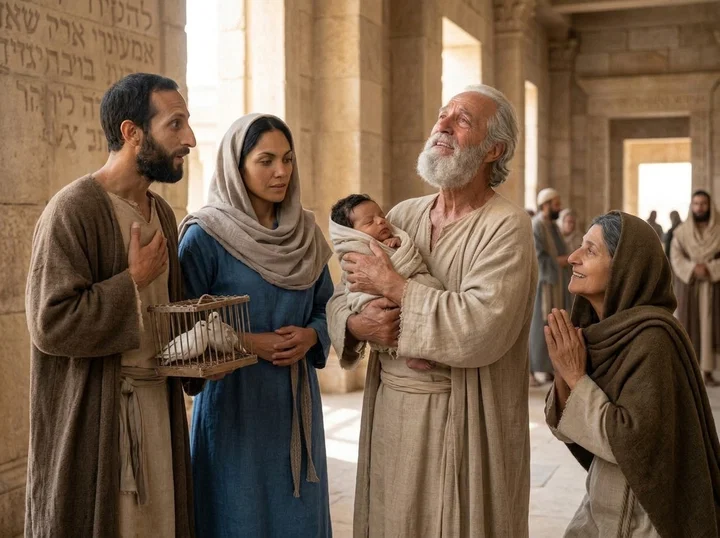
Cross-references
- Luke 2:22
And when the days of her purification according to the law of Moses were accomplished, they brought him to Jerusalem, to present him to the Lord;
Jesus is presented after the days of Mary’s purification.
- Luke 1:59
And it came to pass, that on the eighth day they came to circumcise the child; and they called him Zacharias, after the name of his father.
Records a male child’s circumcision on the eighth day.
- Luke 2:21
And when eight days were accomplished for the circumcising of the child, his name was called JESUS, which was so named of the angel before he was conceived in the womb.
The passage also notes Jesus’ circumcision as His conformity to the law.
- Luke 2:39
And when they had performed all things according to the law of the Lord, they returned into Galilee, to their own city Nazareth.
Jesus’ family returned home after completing the purification requirements.
Commentary
Each commentary is drawn from primary sources: the writings of Ellen G. White and Adventist pioneers and periodicals. Each commentary is separate. Its own words are not a quotation; follow the references to read the source passages.
Ellen G. White
2 sources
Leviticus 12:2 belongs to the Jewish law requiring a mother's purification after childbirth.DA 50.1 After bearing a son, the mother is ceremonially unclean seven days, according to the days of separation for her infirmity as during her monthly separation.COS 15.1–16.1 About forty days after Jesus' birth, Mary and Joseph brought Him to Jerusalem in obedience to that law.DA 50.1 As humanity's substitute, Jesus conformed to the law in every particular.DA 50.1
Sources
Pioneers and periodicals
17 sources
The verse declares that a woman who bears a male child is unclean seven days, reckoned as the days of separation for her infirmity.ST Dec 22, 1898 It belongs to the laws regulating uncleanness and cleansing, set alongside regulations concerning leprosy and other contagious conditions as sanitary instruction concerning childbirth and ceremonial uncleanness.RH Oct 14, 1852ST Feb 3, 1909 It places the circumcision of the male child on the eighth day after birth, so that a boy born on the Sabbath was to be circumcised on the following Sabbath as required religious service rather than ordinary labor, and therefore without violating the Sabbath commandment.RH May 19, 1851RH Oct 21, 1851RH Nov 25, 1852 It begins a purification period that holds the mother's offering until forty days after a son's birth are passed, with seven days of uncleanness, circumcision on the eighth day, and thirty-three further days.ST Feb 2, 1915ST Aug 17, 1904ST Dec 22, 1898 Forty days after His birth Jesus was taken by His parents to Jerusalem to fulfil the law of Moses, the purification being one of the two ceremonies performed at that presentation, and the offering of two birds allowed for a mother who could not afford a lamb shows that Mary and Joseph were very poor.ST Jun 25, 1894ST Aug 17, 1904ST Dec 22, 1898ST Dec 22, 1898
Law's Wording and Setting
A woman who has conceived seed and borne a male child is unclean seven days, reckoned according to the days of the separation for her infirmity.ST Dec 22, 1898 The rule belongs to the laws regulating uncleanness and to the law of cleansing in Leviticus 12-15.RH Oct 14, 1852ST Feb 3, 1909ST Feb 3, 1909 Those chapters are sanitary instruction concerning childbirth and ceremonial uncleanness, set alongside regulations concerning leprosy and other contagious or infectious conditions.ST Feb 3, 1909ST Feb 3, 1909 Leprosy in that setting is a fitting type of sin. The childbirth law distinguished temporary, visible physical uncleanness that had to be removed before the sanctuary's cleansing by blood from the sanctuary's deeper defilement by sin.RH Oct 14, 1852
It belongs to the complete round of service carried out every year in the earthly sanctuary built by Moses in the wilderness and later replaced by the temple.ST Nov 28, 1895 That sanctuary in its building, appointments, priesthood, and service was typical of Christ and His priesthood in the heavenly sanctuary begun when He ascended.ST Nov 28, 1895 Each yearly round typified the service of Christ performed once for all.ST Nov 28, 1895
The passage incorporates circumcision among the institutions of the law of Moses, even though the practice had begun before Moses.RH Oct 15, 1872RH Nov 12, 1872 The laws given through Moses came from the Lord speaking to Israel through him.ST Feb 27, 1879RH Dec 1, 1874 The order for circumcision that follows illustrates that Moses was the instrument and not an independent lawgiver, and that Jehovah was the one Lawgiver.ST Feb 27, 1879RH Dec 1, 1874
Circumcision and Sabbath Observance
The law sets the circumcision of a male child for the eighth day after birth, so that a boy born on the Sabbath comes to be circumcised on the following Sabbath.RH May 19, 1851RH Oct 21, 1851RH Nov 25, 1852RH Oct 15, 1872 The eighth-day timing is fixed by the same law that declares the seven days of uncleanness after the birth of a man child.RH May 19, 1851RH Oct 21, 1851RH Nov 25, 1852 Counting forward from a Sabbath birth therefore brings the required rite round to the next Sabbath.RH May 19, 1851RH Oct 21, 1851RH Nov 25, 1852
Performing that prescribed circumcision on the Sabbath is required religious service rather than ordinary labor, and for that reason it does not violate the Sabbath commandment or the fourth commandment.RH May 19, 1851RH Oct 21, 1851RH Nov 25, 1852 The prohibition of work in the fourth commandment concerns ordinary labor for a livelihood, not every action that may be done on the Sabbath.RH Nov 25, 1852
Fulfilment in Christ's Infancy
The seven days of uncleanness after the birth of a male child begin a purification period that holds the mother's offering until forty days have passed, with circumcision on the eighth day followed by thirty-three further days before the offering can be made.ST Feb 2, 1915ST Aug 17, 1904ST Dec 22, 1898RH Apr 16, 1908 The purification ceremony required two offerings, and where a mother could not afford a lamb the law accepted two birds instead.ST Jun 25, 1894ST Dec 22, 1898 Forty days after His birth Jesus was taken by His parents to Jerusalem to fulfil the law of Moses, the forty days being fulfilled before His presentation in the temple, and the purification was one of the two ceremonies performed at that presentation.ST Jun 25, 1894ST Aug 17, 1904ST Dec 22, 1898RH Apr 16, 1908
Mary made the purification offering in the temple forty days after Jesus was born at the same visit when Jesus was ransomed according to the law, and the offering of two birds by Mary and Joseph shows that they were very poor.ST Aug 17, 1904ST Dec 22, 1898 Joseph and Mary remained near Jerusalem, probably at Bethlehem, for over a month until the time was accomplished, and when it was accomplished they returned home to Nazareth, three days' journey to the north, arriving when Jesus was about six weeks old.ST Aug 17, 1904 The wise men's visit preceded the offering and therefore occurred when Jesus was at least forty days old.ST Feb 2, 1915
Sources