Leviticus 12:3
And in the eighth day the flesh of his foreskin shall be circumcised.
Translations
American King James Version, King James Version, KJV Cambridge Paragraph Bible, Webster Bible, Revised Version, American Standard Version
And in the eighth day the flesh of his foreskin shall be circumcised.
and in the eighth day is the flesh of his foreskin circumcised;
And on the eighth day shall the flesh of his foreskin be circumcised.
And, on the eighth day, shall the flesh of his foreskin be circumcised.
Berean Standard Bible, Majority Standard Bible
And on the eighth day the flesh of the boy’s foreskin is to be circumcised.
In the eighth day the flesh of his foreskin shall be circumcised.
And on the eighth day let him be given circumcision.
(And in the eight day, the foreskin of the childes flesh shalbe circumcised)
Douay-Rheims (Challoner revision)
And on the eighth day the infant shall be circumcised:
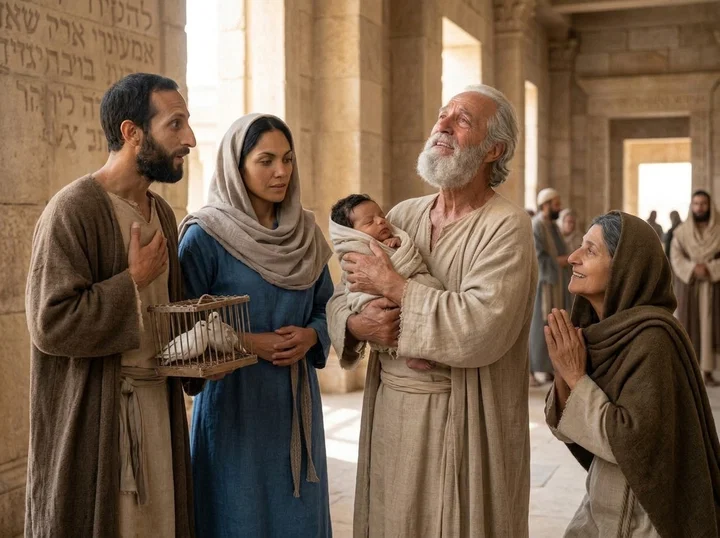
Pictures
Cross-references
- Genesis 17:9-14
And God said unto Abraham, Thou shalt keep my covenant therefore, thou, and thy seed after thee in their generations.
Gives the covenant command for circumcision.
- John 7:23
If a man on the sabbath day receive circumcision, that the law of Moses should not be broken; are ye angry at me, because I have made a man every whit whole on the sabbath day?
Jesus appeals to eighth-day circumcision to explain circumcising on the Sabbath.
- Colossians 2:11
In whom also ye are circumcised with the circumcision made without hands, in putting off the body of the sins of the flesh by the circumcision of Christ:
Physical circumcision is contrasted with circumcision in Christ without hands.
- Luke 1:59
And it came to pass, that on the eighth day they came to circumcise the child; and they called him Zacharias, after the name of his father.
Both texts describe circumcision on the eighth day.
- Joshua 5:7
And their children, whom he raised up in their stead, them Joshua circumcised: for they were uncircumcised, because they had not circumcised them by the way.
The children born during the wilderness journey were uncircumcised and were circumcised under Joshua.
- Romans 2:29
But he is a Jew, which is one inwardly; and circumcision is that of the heart, in the spirit, and not in the letter; whose praise is not of men, but of God.
Circumcision is applied inwardly, to deceit and iniquity.
- Luke 2:22-24
And when the days of her purification according to the law of Moses were accomplished, they brought him to Jerusalem, to present him to the Lord;
Jesus’ parents fulfill the purification law and present him at the temple.
- Genesis 17:14
And the uncircumcised man child whose flesh of his foreskin is not circumcised, that soul shall be cut off from his people; he hath broken my covenant.
States the covenant requirement concerning circumcision.
- Genesis 17:10
This is my covenant, which ye shall keep, between me and you and thy seed after thee; Every man child among you shall be circumcised.
cited together as the same patriarchal institution
- Luke 2:21
And when eight days were accomplished for the circumcising of the child, his name was called JESUS, which was so named of the angel before he was conceived in the womb.
Jesus was circumcised on the eighth day.
- 1 Corinthians 7:19
Circumcision is nothing, and uncircumcision is nothing, but the keeping of the commandments of God.
Circumcision is contrasted with keeping God's commandments.
- Exodus 4:24-26
And it came to pass by the way in the inn, that the LORD met him, and sought to kill him.
Shows circumcision in the account of Moses before the exodus.
- Deuteronomy 30:6
And the LORD thy God will circumcise thine heart, and the heart of thy seed, to love the LORD thy God with all thine heart, and with all thy soul, that thou mayest live.
Describes circumcision of the heart.
- Acts 15:5
But there rose up certain of the sect of the Pharisees which believed, saying, That it was needful to circumcise them, and to command them to keep the law of Moses.
The assembly debates whether Gentile believers must be circumcised.
- Acts 15:1-2
And certain men which came down from Judæa taught the brethren, and said, Except ye be circumcised after the manner of Moses, ye cannot be saved.
The Jerusalem assembly considers whether Gentile believers must be circumcised.
- Exodus 12:44
But every man’s servant that is bought for money, when thou hast circumcised him, then shall he eat thereof.
Both prescribe circumcision as a covenant institution.
- Luke 2:39
And when they had performed all things according to the law of the Lord, they returned into Galilee, to their own city Nazareth.
return to Nazareth after rites completed
Commentary
Each commentary is drawn from primary sources: the writings of Ellen G. White and Adventist pioneers and periodicals. Each commentary is separate. Its own words are not a quotation; follow the references to read the source passages.
Ellen G. White
3 sources
The law requires every male child to have the flesh of his foreskin circumcised on the eighth day.DA 50.1DA 456.2–4 It belongs to the law governing the birth of a son, which was kept when Joseph and Mary brought Jesus to the temple at six weeks old.COS 15.1–16.1 Jesus Himself underwent this rite as a pledge of obedience to the law and, as humanity's substitute, conformed to the law in every particular.DA 50.1 His obedience to this law teaches that people should obey God.COS 15.1–16.1
If the eighth day falls on the Sabbath the circumcision is still performed, which shows that healing a whole person on the Sabbath is also in harmony with the spirit of the law.DA 456.2–4
Sources
Pioneers and periodicals
35 sources
The law required every male child to be circumcised on the eighth day after birth, counting any part of the birth day as a whole day.RH Feb 12, 1914 It stands within the purification law after childbirth among the laws of uncleanness, a ceremonial uncleanness distinct from moral defilement by sin that barred approach to holy things until the days were complete.RH Oct 14, 1852ST Feb 3, 1909ST Nov 28, 1895RH Nov 3, 1868 Circumcision did not originate with Moses but was instituted in patriarchal times and incorporated through him into the Mosaic code, belonging to the law of circumcision and not to the Ten Commandments.ST Feb 27, 1879RH Oct 8, 1857RH Dec 1, 1874 It was kept for Jesus at eight days old, followed by the thirty-three days completing at least forty days to the temple offering for purification and ransoming, where the offering of birds showed poverty.ST Feb 2, 1915ST Jan 27, 1890ST Aug 17, 1904 When the eighth day fell on the Sabbath the child was still to be circumcised without breaking the Sabbath, since the Sabbath forbids ordinary work for livelihood and not religious service required by God, a practice Jesus used to defend making a person wholly well on the Sabbath; the eighth day is a type of true spiritual circumcision from deceit and iniquity through Christ who rose on the first day, yet because it is counted from birth and falls on any weekday it does not make Sunday holy nor fix the time for baptism, which requires repentance and faith.RH May 19, 1851RH Oct 21, 1851RH Nov 25, 1852ST Oct 21, 1880ST Oct 22, 1896
Context Command and Timing
Leviticus 12:3 stands within the law of purification after childbirth, grouped with chapters 13-15 on uncleanness, leprosy and contagious or infectious disease.ST Feb 3, 1909ST Feb 25, 1913 It is classed among sanitary instructions and ecclesiastical laws and ceremonies, distinct from the greater essentials of the yearly sabbaths and feast days, the day of atonement and its sacrifices, the jubilee year, the solemn warnings of calamities for rejecting God, and the law of tithing.ST Feb 3, 1909ST Feb 25, 1913 It belongs to Leviticus 1-16 as the complete round of service performed every year in the sanctuary built by Moses in the wilderness, later giving way to the temple.ST Nov 28, 1895 That sanctuary in its building, appointments, priesthood and service was typical of Christ and His priesthood in the heavenly sanctuary begun at His ascension, typifying in each year a service of Christ that was once for all.ST Nov 28, 1895 Its sacrifices and regulations were object lessons about sin, types pointing to Jesus Christ as the Lamb of God who takes away the sin of the world, with leprosy itself a fitting type of sin.
The law barred an unclean person from touching any holy thing or entering the sanctuary until the appointed days of purification were complete.RH Oct 14, 1852 The required visible purification removed physical uncleanness before the sanctuary's later cleansing with blood.RH Oct 14, 1852 This was a ceremonial uncleanness distinct from the moral defilement caused by sin.RH Oct 14, 1852 The cleansing work illustrates turning from defiling practices and obeying given light, applied to health reform and preparation to receive God's Spirit.RH Nov 3, 1868
Circumcision on the eighth day was ordered by the Lord to Israel through Moses, with Moses as instrument conveying it rather than an independent lawgiver acting on his own authority.ST Feb 27, 1879RH Dec 1, 1874 It is identified as a requirement of the law of circumcision belonging to the Mosaic legal dispensation and distinguished from the enduring commandments of God.RH Oct 8, 1857 Yet it did not originate with Moses but was given by the fathers in patriarchal times, incorporated into Moses' law as an already existing institution.RH Oct 15, 1872ST Dec 17, 1902RH Nov 12, 1872 So continued in germ and in special form into the Mosaic code, it proves that the so-called Mosaic laws, both ceremonial and moral, existed before Moses.ST Dec 17, 1902
A male child was to be circumcised on the eighth day after birth by Jewish reckoning in which any part of a day counted as a whole day.RH Feb 12, 1914 If an infant was born in the last hour of a day, that hour was counted as a full day.RH Feb 12, 1914 The same inclusive reckoning explains how the resurrection could be both on the third day and after three days.RH Feb 12, 1914 The remainder of Friday counted as the first day, Saturday as the second, and the part of Sunday before the resurrection as the third.RH Feb 12, 1914
Circumcision on the eighth day came before the mother's following thirty-three days, making at least forty days from the birth of a son until the temple offering.ST Feb 2, 1915ST Aug 17, 1904 This was kept for Jesus, circumcised at eight days old and carried to the temple forty days after birth for Mary's purification and His ransoming according to the law, after which the family returned home to Nazareth when He was about six weeks old.ST Aug 17, 1904ST Dec 22, 1898ST Dec 22, 1898 The purification law required a lamb for a burnt offering and a bird, a pigeon or dove, for a sin offering.ST Jan 27, 1890ST Dec 22, 1898 A poor family unable to afford a lamb could offer a second bird in place of the lamb, a pair of pigeons or doves, and Mary's offering of pigeons or doves showed modest means and deep poverty.ST Jan 27, 1890ST Dec 22, 1898
Circumcision was a divinely enforced ordinance, solemnly enforced by God.RH Feb 3, 1852RH May 6, 1852 It was nevertheless neglected during Israel's wilderness sojourn and forty years of wilderness travel under Moses.RH Feb 3, 1852RH May 6, 1852RH Aug 20, 1872 It was renewed under Joshua.RH Feb 3, 1852
Sabbath and Religious Duty
A male child was to be circumcised on the eighth day after birth, and when that day fell on the Sabbath the circumcision was still to be carried out.RH May 19, 1851RH Oct 21, 1851RH Nov 25, 1852RH Oct 15, 1872 Doing so fulfilled the law of Moses rather than breaking it, and the required work did not violate the Sabbath commandment.RH May 19, 1851RH Oct 21, 1851RH Nov 25, 1852RH Oct 15, 1872 The Sabbath's prohibition of labor concerns ordinary work for livelihood, not acts of religious service required by God nor every kind of activity.RH May 19, 1851RH Oct 21, 1851RH Nov 25, 1852RH Aug 19, 1873 The requirement for the eighth day stands alongside the law permitting circumcision on the Sabbath, and the command to perform this religious duty on the Sabbath does not conflict with the Sabbath command, which forbids ordinary work rather than religious duties.RH Aug 19, 1873 The eighth-day rite was used to argue that the first day had special honor, yet that use does not change that the verse commands a religious duty even on the Sabbath.RH Aug 19, 1873
Circumcision came from the patriarchs, not first from Moses, and the Jews performed it on the Sabbath when the eighth day fell then without treating it as a violation of the law.ST Oct 22, 1896 Jesus appealed to this practice to show that making a person completely well on the Sabbath was no proper cause for anger.ST Oct 22, 1896
Typology and Erroneous Uses
The eighth day carries a mysterious significance beyond the seventh, and is a type of the true spiritual circumcision.ST Oct 21, 1880RH Aug 19, 1873RH May 13, 1873 Through Christ, who rose on the first day after the Sabbath, people are circumcised from deceit and iniquity.ST Oct 21, 1880RH Aug 19, 1873 Through Jesus Christ people are circumcised from error and evil, and that first day after the Sabbath on which he rose is the chief of all days.ST Oct 21, 1880RH Aug 19, 1873RH May 13, 1873
The eighth day is counted from the child's birth and does not mean the first day of the week.ST Oct 21, 1880RH Aug 19, 1873RH May 20, 1873 Since it could fall on any weekday including the Sabbath, and since male children are born every day so that circumcision took place every day, the timing does not fix a weekday.ST Oct 21, 1880RH Aug 19, 1873RH May 20, 1873RH Jan 13, 1874 It therefore does not by itself establish Sunday as holy or as a weekly Sabbath, abrogate the Sabbath, or prove that circumcision prefigures the first day.ST Oct 21, 1880RH Aug 19, 1873RH May 20, 1873RH Jan 13, 1874 Nor does it show that the patriarchs kept Sunday, for to treat it as evidence for Sunday would imply that all male children were born on Sunday.ST Nov 8, 1883
Circumcision was performed when a male child was eight days old, requiring no repentance, faith, or understanding by the Jewish child.ST Jun 10, 1880ST Nov 17, 1881 That rule for circumcision does not establish when baptism should be administered.ST Jun 10, 1880 Baptism is tied to receiving the preached word and repenting of sin rather than to a stated age.ST Jun 10, 1880
Sources