Leviticus 23:39
Also in the fifteenth day of the seventh month, when ye have gathered in the fruit of the land, ye shall keep a feast unto the LORD seven days: on the first day shall be a sabbath, and on the eighth day shall be a sabbath.
Translations
Also in the fifteenth day of the seventh month, when you have gathered in the fruit of the land, you shall keep a feast to the LORD seven days: on the first day shall be a sabbath, and on the eighth day shall be a sabbath.
Also in the fifteenth day of the seventh month, when ye have gathered in the fruit of the land, ye shall keep a feast unto the LORD seven days: on the first day shall be a sabbath, and on the eighth day shall be a sabbath.
Also in the fifteenth day of the seventh month, when ye have gathered in the fruit of the land, ye shall keep a feast unto the Lord seven days: on the first day shall be a sabbath, and on the eighth day shall be a sabbath.
Also in the fifteenth day of the seventh month, when ye have gathered in the fruit of the land, ye shall keep a feast to the LORD seven days: on the first day shall be a sabbath, and on the eighth day shall be a sabbath.
Howbeit on the fifteenth day of the seventh month, when ye have gathered in the fruits of the land, ye shall keep the feast of the LORD seven days: on the first day shall be a solemn rest, and on the eighth day shall be a solemn rest.
Howbeit on the fifteenth day of the seventh month, when ye have gathered in the fruits of the land, ye shall keep the feast of Jehovah seven days: on the first day shall be a solemn rest, and on the eighth day shall be a solemn rest.
'Only — in the fifteenth day of the seventh month, in your gathering the increase of the land, ye do keep the feast of Jehovah seven days; on the first day [is] a sabbath, and on the eighth day a sabbath;
But on the fifteenth day of the seventh month, when ye have gathered in the produce of the land, ye shall celebrate the feast of Jehovah seven days: on the first day there shall be rest, and on the eighth day there shall be rest.
Surely, on the fifteenth day of the seventh month, when ye have gathered in the yield of the land, shall ye celebrate the festival of Yahweh seven days,—on the first day, a sacred rest, and, on the eighth day, a sacred rest.
Berean Standard Bible, Majority Standard Bible
On the fifteenth day of the seventh month, after you have gathered the produce of the land, you are to celebrate a feast to the LORD for seven days. There shall be complete rest on the first day and also on the eighth day.
“‘So on the fifteenth day of the seventh month, when you have gathered in the fruits of the land, you shall keep the feast of the LORD seven days. On the first day shall be a solemn rest, and on the eighth day shall be a solemn rest.
But on the fifteenth day of the seventh month, when you have got in all the fruits of the land, you will keep the feast of the Lord for seven days: the first day will be a Sabbath, and the eighth day the same.
But in the fifteenth day of the seueth moneth, when ye haue gathered in the fruite of the land, ye shall keepe an holie feast vnto the Lord seuen daies: in the first day shalbe a Sabbath: likewise in the eight day shalbe a Sabbath.
Douay-Rheims (Challoner revision)
So from the fifteenth day of the seventh month, when you shall have gathered in all the fruits of your land, you shall celebrate the feast of the Lord seven days: on the first day and the eighth shall be a sabbath, that is a day of rest.
Pictures
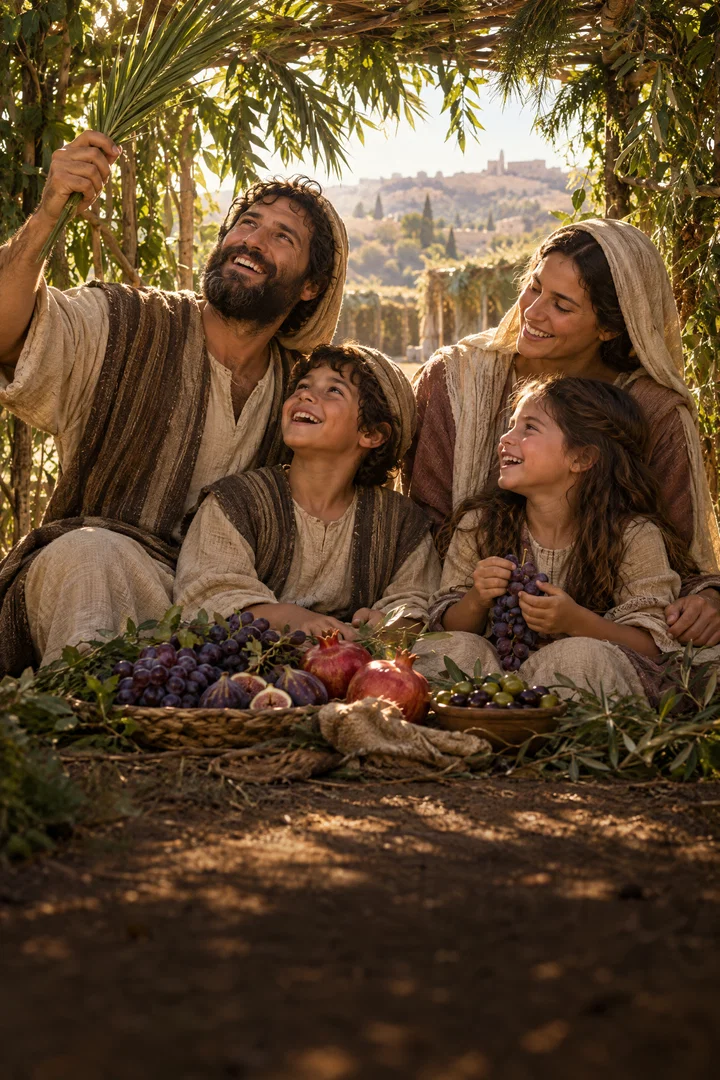
Cross-references 20 of 57
- Colossians 2:14-17
Blotting out the handwriting of ordinances that was against us, which was contrary to us, and took it out of the way, nailing it to his cross;
Connects festival sabbaths with the shadows fulfilled in Christ.
- Exodus 20:10
But the seventh day is the sabbath of the LORD thy God: in it thou shalt not do any work, thou, nor thy son, nor thy daughter, thy manservant, nor thy maidservant, nor thy cattle, nor thy stranger that is within thy gates:
Contrasts the Lord’s weekly Sabbath with feast-day sabbaths.
- Leviticus 23:24
Speak unto the children of Israel, saying, In the seventh month, in the first day of the month, shall ye have a sabbath, a memorial of blowing of trumpets, an holy convocation.
Both texts classify seventh-month feast days as annual sabbaths.
- Leviticus 23:32
It shall be unto you a sabbath of rest, and ye shall afflict your souls: in the ninth day of the month at even, from even unto even, shall ye celebrate your sabbath.
Both texts describe annual sabbaths within the seventh-month festivals.
- Deuteronomy 16:13-15
Thou shalt observe the feast of tabernacles seven days, after that thou hast gathered in thy corn and thy wine:
Both command the harvest feast for seven days, with rejoicing before the Lord.
- Exodus 23:14-17
Three times thou shalt keep a feast unto me in the year.
The passage recalls the command to appear before the Lord three times a year.
- Leviticus 23:3
Six days shall work be done: but the seventh day is the sabbath of rest, an holy convocation; ye shall do no work therein: it is the sabbath of the LORD in all your dwellings.
Sets the weekly Sabbath apart from the annual festival sabbaths.
- Genesis 2:2-3
And on the seventh day God ended his work which he had made; and he rested on the seventh day from all his work which he had made.
The weekly Sabbath is grounded in creation, unlike the annual feast-day Sabbaths.
- Hosea 2:11
I will also cause all her mirth to cease, her feast days, her new moons, and her sabbaths, and all her solemn feasts.
Foretells the cessation of Israel’s appointed feasts and feast-related Sabbaths.
- Nehemiah 8:14-18
And they found written in the law which the LORD had commanded by Moses, that the children of Israel should dwell in booths in the feast of the seventh month:
The people make booths and keep the seven-day feast, ending with an eighth-day assembly.
- Leviticus 23:34-35
Speak unto the children of Israel, saying, The fifteenth day of this seventh month shall be the feast of tabernacles for seven days unto the LORD.
Fixes the Feast of Tabernacles to the seventh month and marks its first day as a holy convocation.
- Zechariah 14:16-19
And it shall come to pass, that every one that is left of all the nations which came against Jerusalem shall even go up from year to year to worship the King, the LORD of hosts, and to keep the feast of tabernacles.
The nations’ yearly worship at the Feast of Tabernacles foretells its fulfillment.
- Leviticus 23:15-21
And ye shall count unto you from the morrow after the sabbath, from the day that ye brought the sheaf of the wave offering; seven sabbaths shall be complete:
Describes another feast with Sabbath observance.
- Numbers 29:12
And on the fifteenth day of the seventh month ye shall have an holy convocation; ye shall do no servile work, and ye shall keep a feast unto the LORD seven days:
Gives instructions for the same seven-day feast.
- John 7:2
Now the Jews’ feast of tabernacles was at hand.
Names the Feast of Tabernacles celebrated in Jerusalem.
- John 7:37
In the last day, that great day of the feast, Jesus stood and cried, saying, If any man thirst, let him come unto me, and drink.
Places Jesus’ words on the feast’s final day.
- Acts 2:1-4
And when the day of Pentecost was fully come, they were all with one accord in one place.
The Spirit’s descent fulfills the feast of Pentecost.
- 1 Kings 8:2
And all the men of Israel assembled themselves unto king Solomon at the feast in the month Ethanim, which is the seventh month.
Israel gathered for the feast in the seventh month.
- Leviticus 23:4
These are the feasts of the LORD, even holy convocations, which ye shall proclaim in their seasons.
Introduces the Lord’s appointed annual feasts listed in the chapter.
- Colossians 2:17
Which are a shadow of things to come; but the body is of Christ.
The feast sabbaths are shadows pointing to Christ, their substance.
Commentary
Each commentary is drawn from primary sources: the writings of Ellen G. White and Adventist pioneers and periodicals. Each commentary is separate. Its own words are not a quotation; follow the references to read the source passages.
Ellen G. White
17 sources
Also on the fifteenth day of the seventh month, when the fruit of the land has been gathered in, a feast to the Lord is kept seven days, from the fifteenth through the twenty-second, with sacred rest as a sabbath on the first day and on the eighth day, the eighth day being added to the seven and kept in the same manner.ST Sep 23, 1897ST Sep 23, 1897PK 665.2 For that week the people leave their houses and dwell in booths made of green branches, including pine, myrtle, and palm, set up on rooftops, in streets, and about Jerusalem, often beyond the walls in valleys and on hillsides.1RED 89.3ST Sep 23, 1897DA 448.1 They assemble at Jerusalem from different parts of the land and from other lands, bringing gifts and offerings from orchard and field after the harvests are stored, and celebrate free from harvest labor with sacred songs and music, waving of branches, great gladness, and daily reading of the law.ST Sep 23, 1897ED 42.3–43.1PK 665.2 It is the crowning and closing festal gathering of the year, a harvest thanksgiving for God's bounty in bringing the harvest to maturity, and a commemoration of tent life in the wilderness and His protecting care and deliverance, kept with pre-eminent rejoicing because it follows the Day of Atonement when confessed sin is remembered no more and the people are at peace with God.DA 448.1ST Sep 23, 1897ED 42.3–43.1PP 540.2–3DA 448.2 It gives the pattern for God's people at the present time to assemble together for worship, gratefully recalling how He has brought them out from the world and from darkness into light, strengthening ties to God and to one another in sacred remembrance, education, and fellowship.ED 42.3–43.1ST Nov 2, 1915PP 540.6Lt 8a, 1893, par. 4–511MR 7.4–9.3
Timing and Observance
The feast begins on the fifteenth day of the seventh month, when the fruit of the land has been gathered in, and continues seven days, from the fifteenth through the twenty-second, with a sabbath of sacred rest on the first day and on the eighth day.ST Sep 23, 1897ST Sep 23, 1897PK 665.2DA 447.1–2ST Nov 2, 1915 The eighth day is added to the seven and is kept in the same manner as the seven.PP 540.4–5 The timing places the observance after the harvests have been gathered into granaries and the fruits, oil, and wine stored and the firstfruits reserved.PP 540.2–3
During the feast the people leave their houses and live in booths made of green branches, including pine, myrtle, and palm.1RED 89.3ST Sep 23, 1897DA 448.1PP 540.4–5 The booths are set up on rooftops, in streets, and around Jerusalem, often beyond the city walls in valleys and on hillsides.1RED 89.3ST Sep 23, 1897DA 448.1 The people assemble at Jerusalem from different parts of the land, from Palestine and other lands.ST Sep 23, 1897 They bring gifts and tributes of thanksgiving and offerings from orchard and field.ST Sep 23, 1897ED 42.3–43.1ST Nov 2, 1915PK 37.3PP 540.2–3
They celebrate with sacred songs and music, waving branches, great gladness, daily reading of the law, and freedom from harvest labor.ST Sep 23, 1897PK 665.2PK 37.3 Though only fathers and sons are commanded to appear, so far as possible the whole household attends.PP 540.2–3 Servants, Levites, strangers, and the poor are welcomed with generous hospitality.ED 42.3–43.1ST Nov 2, 1915PP 540.2–3MH 281.3–4 The week in booths is thus an occasion for outdoor recreation, social life, fellowship, and rejoicing.ED 42.3–43.1ST Nov 2, 1915MH 281.3–4
Meaning and Joy
The feast is also called the Feast of Ingathering, the crowning and closing festal gathering of the year, kept as a harvest thanksgiving acknowledging God's bounty in orchard, olive grove, and vineyard.ST Sep 23, 1897DA 447.1–2PP 540.2–3 It comes when the land has yielded its increase and the fruit of the land has been gathered in, with harvests in granaries and fruits, oil, and wine stored, and it remembers His goodness, mercy, and care in providing the harvest and bringing it to maturity.ST Sep 23, 1897ED 42.3–43.1DA 447.1–2ST Nov 2, 1915PP 540.2–3 It is kept with offerings and tributes of thanksgiving from orchard and field, giving thanks to God for the year's abundance and goodness and for rich blessing.ED 42.3–43.1ST Nov 2, 1915PP 540.2–3 Like the Passover it is commemorative, remembering the pilgrim tent life in the wilderness when the people left their houses to dwell in booths.1RED 89.3DA 448.1PP 540.4–5 It remembers God's protecting care, the deliverance wrought for the fathers, and His miraculous preservation of Israel during the journeyings from Egypt.1RED 89.3DA 448.1PP 540.6
It is pre-eminently an occasion of rejoicing because it comes just after the Day of Atonement, when sins have been confessed and the people are assured that iniquity will be remembered no more and are declared at peace with God and with Heaven.PP 540.2–3DA 448.2 At that time the labors of harvest have ended and the toils of the new year have not yet begun, so the people are free from care to give themselves to sacred, joyous influences with sacred songs and thanksgiving, acknowledging His goodness and praising Him for His mercy.PP 540.2–3DA 448.2 As a yearly assembly of old and young from different quarters of the land, it encourages hearts in the service of God, and association together strengthens ties to God and to one another.PP 540.6 It is devoted to sacred remembrance, education, and fellowship, with social gatherings and a sacred memorial service joining gratitude with instruction.ED 42.3–43.1ST Nov 2, 1915PP 540.6
History and Present Pattern
The feast stands among Israel's yearly religious gatherings at Jerusalem, resumed after the return from captivity to remind the people of God, yet priests and leaders lost sight of that purpose and perverted its observance.ST Sep 23, 1897 It was established as a yearly assembly where the hearts of old and young are encouraged in the service of God, and where association of people from different quarters strengthens ties to God and to one another.PP 540.6 It is a joyous commemoration of the blessings of God, celebrating the deliverance wrought for the fathers and miraculous preservation during the journeyings from Egypt.PP 540.6
It gives a pattern for God's people at the present time to keep a Feast of Tabernacles by gratefully recalling how He has brought them out from the world and from the darkness of error into the precious light of His grace and truth.PP 540.6 That pattern is for assembling believers together for worship after the harvest in a seven-day feast with sabbath rest on the first and eighth days.Lt 8a, 1893, par. 4–5 Camp meetings are urged as such gatherings, with the Wellington camp meeting named as an example to be attended.Lt 8a, 1893, par. 4–511MR 7.4–9.3 The camp meeting is an important opportunity for worship, spiritual benefit, and united support of God's work, and believers are urged to attend with their families and to make sacrifices to come.11MR 7.4–9.3
Sources
Pioneers and periodicals
99 sources
The verse commands the Feast of Tabernacles, also called the Feast of Ingathering, to begin on the fifteenth day of the seventh month when the fruit of the land has been gathered in, to be kept to the Lord seven days with an added eighth day.RH Jan 15, 1914ST May 27, 1908RH Aug 4, 1874 During those days the people were to dwell in booths of green branches and rejoice with thanksgiving for the completed harvest, commemorating their pilgrim life in tents in the wilderness and deliverance from Egypt.RH Jan 15, 1914RH Aug 4, 1874RH Oct 31, 1912 Its first day and its eighth day were holy convocations and sabbaths on which no servile work was to be done, with special offerings brought on those days and on the days between.RH Feb 19, 1914RH Jan 22, 1914RH Mar 18, 1862 Those first-day and eighth-day sabbaths are annual, yearly, ceremonial feast-day sabbaths, fixed by the date of the month and distinct from and besides the weekly seventh-day Sabbath in constant succession.ST Jul 3, 1879ST Oct 2, 1884ST Jun 4, 1902 The feast points to the final harvest of the earth and the gathering of the redeemed into God's kingdom, but as a shadow fulfilled in Christ it was taken out of the way and nailed to the cross when the sacrificial system ended, while the weekly creation Sabbath remains in full force.RH Jan 15, 1914ST May 27, 1908ST Oct 2, 1884ST May 7, 1912RH May 13, 1862
Feast Time and Observance
The verse commands the Feast of Tabernacles, also called the Feast of Ingathering, as the third annual feast.RH Jan 15, 1914RH May 13, 1862RH Jan 14, 1862 It is to begin on the fifteenth day of the seventh month, Tisri, when the fruit of the land has been gathered in, and to be kept to the Lord seven days, from the fifteenth to the twenty-first.ST May 27, 1908RH Aug 4, 1874RH Jul 14, 1868ST May 7, 1912ST Jun 4, 1902 An eighth day is added on the twenty-second, so the feast with its added day continues eight days in total.RH Jan 15, 1914RH Oct 31, 1912RH Jan 14, 1862 Its daily offerings are prescribed in Numbers 29.RH Jan 15, 1914
During the seven days the people were to dwell in booths or tents, leaving their houses to live in them in remembrance.RH Jan 15, 1914RH Aug 4, 1874ST May 28, 1902 The booths were made of green branches of goodly trees, palm branches and leaves, boughs of thick trees, myrtle, and willows of the brook, set up in streets, on housetops, in courts and in the courts of the house of God.RH Jan 15, 1914RH Oct 31, 1912 They commemorated pilgrim life in tents in the wilderness and deliverance from Egypt.RH Jan 15, 1914ST May 7, 1912RH Jan 14, 1862 The keeping was with rejoicing, sacred songs and music, thanksgiving for the completed harvest of orchards, vineyards, fields and olive groves, and religious worship.RH Aug 4, 1874RH Jan 14, 1862ST Nov 17, 1898 At this yearly assembly the hearts of old and young were encouraged in the service of God, and association of people from different parts of the land strengthened the ties binding them to God and to one another.RH Jan 15, 1914
The first day and the eighth day were holy convocations and sabbaths, set apart from ordinary days.RH Feb 19, 1914RH Jan 22, 1914ST Sep 9, 1913 On them no servile work was to be done, with rest from labor.RH Jan 22, 1914RH Aug 12, 1858ST Sep 9, 1913 Special offerings, sacrifices, and meat and drink offerings were brought on those days and on the intervening days.RH Feb 19, 1914RH Jan 22, 1914RH Jan 22, 1914 The days between the two sabbaths were feast days or holidays but not sabbaths.ST May 27, 1908ST Jun 4, 1902
The feast is the third annual feast, the last of the three gatherings when all males were to appear before the Lord at the sanctuary at Jerusalem.RH Jan 15, 1914RH Aug 3, 1916RH Jan 14, 1862ST Apr 23, 1912 It was held at the year's end or revolution of the year, in autumn after harvest and vintage.RH May 13, 1862RH Oct 31, 1912RH Jan 14, 1862 It thus closed the year's gatherings and the round of sanctuary service.RH Oct 31, 1912RH Jan 14, 1862 The sacred year began in spring and the civil year ended in autumn, and the first new year began in autumn because at creation time began with fruit trees laden with fruit ready for food.RH Oct 31, 1912
Sabbath Days Described
Both the opening day and the closing day of the feast are called a sabbath, the fifteenth and the twenty-second days of the seventh month standing at the beginning and end of the seven-day Feast of Tabernacles.ST Jul 3, 1879ST Jul 17, 1879ST Jul 3, 1879ST Jun 24, 1886 The eighth day is the eighth day of the feast, the twenty-second of the month, its final day called the Octave and Shemini Atseret, not an eighth day counted on the cycle of the week and not Sunday.ST Jul 3, 1879RH Apr 19, 1870ST Jun 24, 1886 To take that eighth day as meaning a weekday, and then to argue from it for keeping the first day of the week, assumes without warrant what the text does not state, and with that assumption removed the argument falls.RH Apr 19, 1870 Counted from the feast's beginning, that eighth day does not always mean the first day of the week, but falls on a different weekday in different years, as with New Year's Day and the Fourth of July, and it does not prefigure the exaltation of the first day of the week under the gospel.RH Jan 13, 1874
The word sabbath is not confined to the weekly seventh day but is applied to these yearly holy convocation days, so that both the first day and the eighth day of the feast are called sabbaths.RH Nov 8, 1853ST Dec 23, 1903ST Aug 25, 1881 The verse uses the Hebrew word shabbathon, a different word from that used in verses 24 and 32, occurring eleven times in the Old Testament and translated rest eight times, including in Exodus 16:23, Exodus 31:15, Exodus 35:2, and Leviticus 23:3.RH Nov 17, 1868 Therefore sabbath days elsewhere, as in the New Testament, can denote these annual feast sabbaths rather than the weekly Sabbath of the Lord.RH Nov 8, 1853 Those who held otherwise taught that the yearly observance is designated by the word translated feast, the same word translated holy day in Colossians 2:16, the only word rendered feast in Leviticus 23 and used there for every one of the seven yearly sabbaths, so that the holy day in Colossians 2:16 includes the seven annual sabbaths and leaves the sabbath days there to refer exclusively to the weekly Sabbath.RH Oct 15, 1872
The fifteenth and twenty-second days are fixed by the date of the month counted from the new moon, not by the weekly cycle.ST Jul 3, 1879ST Jul 17, 1879ST Nov 24, 1881 Hence they could fall on different days of the week in different years, did not regularly fall on the weekly Sabbath though either could coincide with it in a given year, and did not fix the weekday of the weekly Sabbath.ST Jul 3, 1879ST Jul 17, 1879ST Nov 24, 1881 The feast began on the fifteenth day of the seventh month, and its festival sabbaths were days of holy convocation and restraint without thereby becoming the weekly Sabbath, whose claim to its name rests on God's creation of heaven and earth rather than on these annual ceremonies.ST Nov 24, 1881 The dated feast sabbaths are distinct in nature from the Lord's weekly Sabbath, falling on specified dates regardless of weekday and belonging with the ceremonial order of sacrifices, offerings, feasts, and shadows rather than with the Ten Commandments, and one annual Sabbath could fall between two weekly Sabbaths.ST Jul 17, 1879ST Sep 9, 1880RH Dec 5, 1871
The feast with its added day continued eight days in all, beginning on the fifteenth day of the seventh month after the produce of the land had been gathered and lasting seven days with an additional eighth-day observance, the people remaining seven days in tents.RH Nov 18, 1862ST Oct 4, 1883ST Apr 3, 1879 On the first and last days there was a holy convocation with no servile work and solemn cessation from labor, while the days between them were feast days or holidays called heorte but were not sabbaths, the same distinction applying to the seven-day Passover festival.ST Oct 4, 1883ST Apr 3, 1879 In the later calendar reckoning Tisri 21 is the seventh day Hoshana Rabba, Tisri 22 the eighth-day festival, with Tisri 23 Simhath Tora listed as a ninth calendar day.ST Jun 24, 1886ST Oct 4, 1883 Like every Sabbath, the day is reckoned as beginning at evening, at sunset.ST Mar 8, 1883
Different From Weekly Sabbath
The first-day and eighth-day rests are annual, yearly, ceremonial feast-day sabbaths observed once a year, fixed by the fifteenth and twenty-second days of the seventh month at the beginning and end of the seven-day Feast of Tabernacles after harvest.ST Jul 3, 1879ST Oct 2, 1884ST Jun 4, 1902ST Jun 10, 1886 They are distinct from and besides the Sabbaths of the Lord, the weekly seventh-day Sabbath in constant succession, and neither annual sabbath is the weekly Sabbath by definition though either could fall upon it in a given year.ST Jul 3, 1879ST Jun 4, 1902ST Jun 17, 1903ST Jul 17, 1879 They stand among the yearly feast-day sabbaths connected with Passover, Firstfruits, Trumpets and Atonement, coming in because of sin as types pointing forward to Christ and meeting fulfillment in Him.ST Oct 2, 1884ST Jun 17, 1903 Their dates are fixed by the month counted from the new moon rather than by the weekly cycle, so they could fall on any weekday and did not regularly coincide with the weekly Sabbath.ST Jul 3, 1879ST Jun 17, 1903ST Jul 17, 1879
The weekly Sabbath was instituted at creation before sin and the fall for the whole human race, while these annual sabbaths originated this side of the fall because of sin, instituted in the wilderness at Sinai at the exodus more than twenty-five hundred years after creation.RH Jan 22, 1914ST Feb 25, 1875ST Jan 1, 1885RH Oct 21, 1851ST Nov 10, 1914 They were given to Israel as a peculiar people and designed especially for dwellers in Canaan and residents of Palestine, not kept until settlement in the land and affected by dispersion.ST Feb 25, 1875RH Oct 14, 1873RH Apr 9, 1872 Unlike the seventh-day weekly Sabbath, God did not rest upon them nor bless and sanctify them as He did the weekly Sabbath in Genesis 2:2, 3.RH Jan 22, 1914ST Feb 25, 1875 They arose within the typical system introduced because of sin as shadows of things to come, whereas the weekly Sabbath would have existed even if sin and the typical system had never existed.ST Jan 1, 1885RH Jul 22, 1852ST Nov 10, 1914
The weekly Sabbath is moral, fundamental, permanent, universal and unchangeable, growing out of God's own holy act in creation before types and shadows, while these sabbaths are ceremonial, positive, local, temporal, movable and typical, growing out of man's actions as a sinner after types were introduced.ST Feb 25, 1875RH Oct 21, 1851RH Oct 14, 1873 They belong with meats, drinks, new moons, sacrifices and offerings in the handwriting of ordinances and the book of Moses placed beside the ark, showing they would pass away.ST Feb 25, 1875RH Jul 22, 1852RH Oct 21, 1851 They stood for sin as shadows pointing forward to Christ, and when Christ came those types expired by limitation as shadow ceases at the substance.ST Nov 4, 1897ST Nov 10, 1914 They are entirely distinct from the seventh-day Sabbath, which is a memorial pointing back to creation rather than a type pointing forward, is eternal, and will continue in the new earth when all types and shadows have vanished.ST Nov 4, 1897ST Oct 10, 1906RH Oct 14, 1873
Unlike the weekly Sabbath commanded by God's voice, twice written by God's finger on stone, engraven and placed in the moral law in the ark in the most holy place in the midst of the ten commandments, the feast sabbaths were written by men on parchment and placed in a book beside the ark.ST Feb 25, 1875RH Jul 22, 1852RH Oct 21, 1851 The weekly Sabbath is based on God's six-day work and seventh-day rest, is God's own rest day, blessed and sanctified, called My holy day and the Sabbath of the Lord, while the annual sabbaths were never sanctified and hallowed by Him and are called your sabbaths and her sabbaths.RH Jan 22, 1914ST Feb 25, 1875RH Jun 24, 1862 The weekly Sabbath can be kept by uncircumcised Gentiles wherever they are and returns weekly in constant succession, showing it is unchangeable, perpetual and for all people, while the feast sabbaths required circumcision and going up to Jerusalem three times a year with sacrifices and returned yearly, sometimes only four or nine days apart.ST Feb 25, 1875RH Oct 21, 1851RH Apr 9, 1872 Like the fifteenth of Abib they forbade servile work but allowed preparation of food, whereas the weekly seventh day forbids all work and forbids preparation of food, proving the annual and weekly Sabbaths are distinct days.RH Jan 22, 1914ST Jul 17, 1879 The annual sabbaths were appointed as yearly memorials of events connected with deliverance from Egypt, distinct from the weekly Sabbath which commemorates the Lord's rest from creation.RH Jun 24, 1862RH Oct 14, 1873
The word sabbath is not limited to the seventh day, for Leviticus 23 applies Sabbath language to Jewish feast days and holy days, calling both the first day and the eighth day of the feast a sabbath.RH Mar 18, 1862RH Nov 8, 1853ST Dec 23, 1903 A holy convocation for worship without servile work does not by itself make a day the rest-day or Sabbath, since the people of God for ages held holy convocations on days besides the seventh day.RH Mar 18, 1862RH Dec 17, 1857ST Sep 24, 1894 A day devoted to worship and assembly did not cancel the command to work on the other days of the week.RH Mar 18, 1862RH Dec 17, 1857 Appointed feasts lasting several days with sabbath rest on first and eighth days show God did not intend people to labor to the point of harming their health.RH Dec 17, 1857RH Aug 21, 1860 The inspired name Sabbath belongs to the seventh day in both Old and New Testament as the Sabbath of all times and all places, while the yearly Sabbaths and fast days belong to a yearly observance with no day of the weekly cycle ever mentioned in connection with them.RH Nov 8, 1853ST Sep 24, 1894
Types and Prophetic Fulfillment
The yearly feasts and their sabbaths are types and shadows of coming realities whose substance is Christ, with their fuller sense found in his sacrifice, life, death and priestly work.ST May 27, 1908ST Oct 2, 1884ST Jun 17, 1903ST Feb 7, 1911RH Aug 12, 1858 The earthly sanctuary and its round of service form a pattern and object-lesson of the heavenly temple and Christ's ministry there, and every ceremonial sabbath of Leviticus 23 depends on the feast to which it belongs and is inseparably joined to something typical that meets its antitype in his work.RH May 13, 1862ST Feb 7, 1911RH Aug 12, 1858 Taken together the typical feasts foreshadow the good things of the gospel, having come in because of sin as type and prophecy pointing forward and meeting fulfillment in Jesus, distinct from the Sabbath of the Lord written on stone.ST Oct 2, 1884ST Jun 17, 1903RH May 13, 1862 While awaiting complete fulfillment there is no need to keep them year by year, since their meaning is met in Christ's ministry and in a life that continually celebrates him.ST May 27, 1908
The Feast of Ingathering points to the final harvest of the earth and the final homecoming, the gathering of the redeemed from the four winds and of all God's people into his kingdom.ST May 27, 1908RH Jan 14, 1862ST Nov 17, 1898ST Jun 1, 1882 It typifies the immortal state, the saints' rest, and great rejoicing after wandering ends, celebrated at the New Jerusalem on the renewed earth when pilgrims to Zion will wander no more.ST May 7, 1912RH May 13, 1862RH Jan 14, 1862ST Nov 17, 1898 It commemorated deliverance from Egypt as a type of the final deliverance from sin and death, kept as a festival of rejoicing before the Lord in booths in memory of the wilderness sojourn.ST May 7, 1912RH Jan 14, 1862 Its antitypical observance comes after the thousand years.ST May 27, 1908
The autumn festivals point to events connected with Christ's second advent and are to be fulfilled in their appointed season.RH Mar 31, 1868 The Day of Atonement on the tenth day of the seventh month was the yearly judgment-day and last day of the yearly round, when cases of the days before were brought in final review before God.RH Jun 11, 1857RH Oct 30, 1855 For 359 days sins had been borne by sprinkled blood into the holy place before the veil behind which was the ark containing the law, and then the high priest in person brought those remembered sins into the most holy, confessed them before the ark, sprinkled there the blood of the atonement-goat, then brought the sins out and placed them upon the goat for Satan to be led by a fit man into a land of oblivion and destroyed. All who afflicted their souls, confessed and put away their sins stood clear before God, while those who did not were cut off from the congregation. The Feast of Tabernacles five days later, the last appointed observance in the type, was the joyful celebration of assured pardon, deliverance from the bondage of sin, and a new year with songs of gladness, patterning the cleansing of the heavenly sanctuary understood as the judgment that blots out the sins of God's people and not the removal of physical uncleanness.RH Jun 11, 1857RH Sep 2, 1851ST Sep 11, 1884
Each grand type met its antitype on the very day of the type, the slaying of the paschal lamb on the fourteenth of the first month in the death of the Lamb of God, the waving of the sheaf of firstfruits on the sixteenth in Christ risen as firstfruit of them that slept, and the feast of weeks on the fiftieth day from firstfruits in the outpouring of the Holy Spirit in Acts 2.RH Oct 30, 1855RH Mar 31, 1874 Mere preliminary and circumstantial offerings did not prevent the grand event of the day from meeting its antitype at the pointed time, and the antitype commences on the day of the type but extends far forward, as believers still feed on Christ the Passover, still keep the feast of unleavened bread, and the Spirit given at Pentecost still abides with the church.RH Oct 30, 1855 By the same rule the grand work of the tenth day of the seventh month performed in the holiest must commence its antitype at that point and then occupy a space corresponding to its magnitude and importance.RH Oct 30, 1855 Bible memorials begin with what they remember, so the Sabbath commemorating creation began at creation and not in the wilderness, and the stated time of instituting an ordinance does not fix its observance time, as the Lord's Supper was given with no such specific statement of time for its keeping.RH Feb 3, 1852RH Jun 17, 1873 The fifty days to Pentecost are counted from the day after the annual Passover sabbath, not from after a weekly Sabbath, so Pentecost could fall on any weekday and its observance honors the antitype of the feast rather than the first day of the week and says nothing about changing the Sabbath.RH Nov 1850ST Jul 3, 1879RH Mar 31, 1874
The feast's history confirms its binding force and timing, for when the returned exiles found the command to dwell in booths they promptly gathered branches, made booths and celebrated with great gladness, reading Scripture through the seven days with a solemn assembly on the eighth, although Israel had not so kept it since the days of Joshua.ST May 28, 1902ST Feb 12, 1885 A command plainly found in God's word is therefore binding even when earlier generations have not followed it.ST Feb 12, 1885 Jeroboam perverted the Lord's seventh-month appointment by setting up a feast in the eighth month of his own devising out of his own heart, in deliberate opposition to God's appointment, condemning his whole system as unbelief in God's word and making Israel to sin.ST Jun 29, 1904 The feast's autumn setting after harvest and vintage, in the latter part of the seventh month, also helps identify the time of year when Nehemiah ordered Jerusalem's gates shut as it grew dark before the Sabbath.RH Jun 2, 1851
Ceremonial Law Ended
The first-day and eighth-day sabbaths of the feast beginning on the fifteenth day of the seventh month, Tisri, and ending on the eighth day following, the twenty-second of Tisri, belonged to the ceremonial law of Moses, the typical system and handwriting of ordinances.RH Jan 15, 1914RH Aug 31, 1905RH Feb 19, 1914RH Dec 29, 1859RH Oct 31, 1854 They were the third annual feast of the Jews, kept after the harvest was gathered, commemorating pilgrim life in the wilderness when the people left their houses to dwell in booths made from green branches of goodly trees, palm branches, boughs of thick trees, and willows of the brook, with daily offerings as prescribed in Numbers 29, encouraging old and young in the service of God and strengthening their ties to God and to one another.RH Jan 15, 1914ST Oct 2, 1884RH Oct 31, 1854 These feast-day sabbaths were yearly, local, and ceremonial shadows of things to come, instituted in the wilderness, grouped with Israel's festival ordinances, distinct from the Lord's seventh-day Sabbath commanded in the law written on stone, deriving their force from the ceremonial law.ST Oct 2, 1884RH Aug 31, 1905RH Dec 29, 1859RH Oct 31, 1854RH Jul 22, 1852 As shadows they were fulfilled when Christ the reality came, and were taken out of the way, blotted out, nailed to the cross, ceasing to be obligatory when the sacrificial system ended at Christ's death and the crucifixion, as predicted in Hosea 2:11 and fulfilled in Colossians 2:14-16.RH Jan 15, 1914ST Oct 2, 1884RH Feb 19, 1914RH Dec 29, 1859RH Oct 31, 1854
The weekly seventh-day Sabbath is not shadowy or typical, but a creation memorial of God's creative, sustaining and sanctifying power, made for man before sin and sacrifice.ST Oct 2, 1884ST Feb 25, 1875ST Jun 5, 1884ST Jan 1, 1885RH Jul 22, 1852 It grew out of God's own holy act in creation before sin and before types and shadows were introduced, whereas the seven-day feast with sabbaths on the first and eighth days grew out of man's actions as a sinner and originated this side of the fall after types were introduced.ST Feb 25, 1875ST Jun 5, 1884ST Jan 1, 1885 It rests on its own commandment and on God's creation claim rather than on the feasts, based on God's six-day work and seventh-day rest, commanded by God's voice from heaven, twice written by God's finger, engraven on stone, placed in the moral law in the ark in the most holy place, sanctified and hallowed by Him in the midst of the nine other precepts, blessed by God's rest, pointing back as a memorial.ST Feb 25, 1875ST Jun 5, 1884ST Jan 1, 1885RH Jul 22, 1852 The festival laws by contrast were written by men on parchment and placed in a book beside the ark, never sanctified and hallowed by Him, placed with the feasts and new moons of the handwriting of ordinances regulating meats, drinks, new moons, festivals and plural sabbaths, arising within the typical system introduced because of sin, which would have existed even if sin and the typical system had never existed for the weekly day.ST Feb 25, 1875ST Jan 1, 1885RH Jul 22, 1852 Unlike the yearly feast which could not be kept by uncircumcised Gentiles and required going up to Jerusalem and returns yearly rather than weekly, the Sabbath could be kept by Gentiles without circumcision wherever they were, returns weekly in constant succession, and is moral, unchangeable, perpetual, universal and for all people, remaining in full force and untouched and eternal when the ceremonial sabbaths passed and giving no proof that the fourth commandment is abolished.ST Feb 25, 1875ST Feb 1, 1905RH Jul 22, 1852ST Nov 4, 1897
The sabbaths, holy day or feast, and new moons of Colossians 2:16, the shadows of Hosea 2:11 and Colossians 2:14-17, the enmity of Ephesians 2:14-15, and the esteemed days of Romans 14 refer to these yearly festival sabbaths and their meats and drinks, not to the weekly Sabbath of the fourth commandment.RH Dec 29, 1859ST Feb 1, 1905ST Jul 29, 1875ST Mar 25, 1875 The fifteenth day of the seventh month beginning a seven-day feast with sabbaths on its first and eighth days is evidence that the ceremonial law appointed annual sabbaths distinct from the Lord's weekly Sabbath, fitting Paul's reference to sabbaths that were shadows of things to come.ST Feb 1, 1905RH Aug 13, 1857 The seven-day feast with its first-day and eighth-day sabbaths is among the plural feast days and sabbaths that expired with the Jewish ritual, where holy day means feast or festival and the feast is an example of the festival days called a feast or festival.ST Jul 29, 1875ST Mar 25, 1875RH Aug 13, 1857 These ceremonial sabbaths stood beside the weekly Sabbath and belonged to the typical services that foreshadowed Christ, becoming a yoke of bondage and against the people because trusted in for righteousness, and were nailed to the cross and ceased when the Antitype came, leaving the weekly Sabbath established before sin untouched.RH Dec 29, 1859ST Feb 1, 1905
There is now no condemnation of any kind for not observing these types, which expired by limitation as shadow is lost in substance and shadow ceases at the substance.ST May 27, 1908ST Nov 4, 1897 Their institution, observance and command are plainly set out in Scripture, but only their underlying principles of giving, thank-offering of first and best, and liberality remain.ST Aug 14, 1879RH Mar 9, 1905RH Oct 2, 1913 God requires the heart's supreme affection and does not accept labor or sacrifice without it, commanding acknowledgment of God as giver of all temporal blessings by a wave sheaf of first-fruits before the sickle gathers the grain and after harvest the first loaf from the first threshed and ground corn, with the land's produce and labor, pledges or vows and freewill offerings brought at the harvest ingathering about the middle of the seventh month.ST Aug 14, 1879RH Oct 2, 1913 The annual feasts celebrated by Israel were types fulfilled in Christ, and the Feast of Tabernacles points to the final homecoming in the New Jerusalem, met in Christ's ministry and in a life that consistently celebrates him, so it need not be celebrated year by year while awaiting that complete fulfillment, has an antitypical fulfillment and is not simply to be reinstated, and teaching that it must still be literally observed is error.ST May 27, 1908 These observances are displeasing to God when the people keep them in sin.RH Apr 28, 1874
Those who held divergent readings taught that all the chapter's feasts including the weekly Sabbath were abolished together, placing the seventh-day Sabbath among the feast days and holy convocations beginning with the first feast.RH Mar 8, 1864 They taught that Israel had six different kinds of Sabbaths and feasts regulated by the moon and the sheaf of firstfruits of the barley harvest, so the sacred year began irregularly as harvest was early or late, and the fifteenth day kept as a feast Sabbath was the annual or first weekly Sabbath of that year by which cycles of sevens for the next year were governed, so the weekly Sabbath fell on a different weekday in different years and continued seventh-day cycles were not kept.RH Feb 6, 1879 They treated both yearly and weekly days as sabbaths while arguing the Sabbath was a type and therefore a positive rather than a moral institution.RH Oct 29, 1872 They argued that observance tied to fixed dates changes the weekday as many times as there are years it is kept, showing a sliding-scale week rather than a fixed weekly day, so that while Christ kept the true Sabbath of the law the Sabbaths named in the Gospels fell twenty-eight times on a day not Saturday but more probably Thursday, once on Friday, and a number of times on Saturday during the last year of His public teaching, proving that no one now keeps the Sabbath as Christ kept it and that Christians keeping time by unvarying solar reckoning have the lunar shadow done away.RH Feb 6, 1879ST Apr 15, 1897 They held from annual sabbaths appointed on various days of the week that God can make any day a Sabbath.RH Apr 24, 1879
Pattern for Worship Gatherings
The seven-day autumn gathering held after the fruit of the land has been gathered gives warrant for week-long general gatherings where believers from all parts come together to worship.RH Jul 14, 1868ST Sep 1, 1881ST Oct 13, 1881ST Sep 16, 1875RH Jul 30, 1872 Such gatherings are yearly feasts of tabernacles kept with tents and bedding, where all Israel once came to appear before God and set up tents to worship, and where believers now gather to hear preaching, receive life and strength, renew spiritual good, and bring friends to truth.RH Jul 14, 1868RH Jul 16, 1872ST Oct 13, 1881ST Sep 16, 1875RH Jul 30, 1872 The pattern is an annual gathering in booths amid the natural setting, with shared interest and blessing in worship like a camp meeting or conference.ST Oct 13, 1881RH Jul 30, 1872RH Oct 19, 1905 Its harvest setting shows the ripening time of the harvest of the earth is near.ST Sep 1, 1881
Keeping such a gathering means coming prepared beforehand to work for the Lord and beginning beforehand to prepare the heart to seek God.RH Jul 14, 1868ST Sep 1, 1881RH Jul 16, 1872 It requires putting away idols, humbling before God, making special effort to come up from all parts, staying until the close, and making provision for the temporal wants of both man and beast.ST Sep 1, 1881RH Jul 16, 1872 None are to appear empty but to give to every good work, acknowledging God as giver by offerings of produce, pledges, vows and freewill gifts, and seeking the influence of the power and Spirit of God to overcome tendencies to wrongdoing, to have the graces of the Spirit more fully matured, and to be perfected by the latter rain soon to be poured out.ST Aug 14, 1879RH Oct 2, 1913ST Sep 1, 1881 The Lord Himself makes the terms and defines the conditions for receiving blessing, and anyone refusing to comply with the way He chooses will not receive the blessing, while departing from prescribed details in the ordered yearly system of religious services with its appointed feast and sabbath days is blameworthy.ST Aug 12, 1889ST Mar 24, 1887
The week-long feast commemorated an important event in history and fostered devotion and gratitude for providential blessings, with rejoicing, thanksgiving, sacred worship, and fellowship shared with the poor, the stranger, and the Levites.RH Aug 4, 1874RH Oct 31, 1912ST Nov 17, 1898ST Nov 21, 1906 It is a time of thanksgiving to God for the land's produce, kept by coming together for the ingathering with harvest produce and sacrificial animals and giving thanks before partaking of the blessings.ST Nov 17, 1898RH Oct 2, 1913ST Nov 21, 1906 God requires the heart's supreme affection and does not accept labor or sacrifice without it, but requires acknowledging Him as giver of all temporal blessings by a thank-offering of the first and best received, as in the wave sheaf of firstfruits before the sickle is put to gather the grain and the first loaf from the first threshed and ground corn after harvest.ST Aug 14, 1879RH Oct 2, 1913ST Nov 21, 1906 Its autumn timing agrees with late-November thanksgiving, unlike a purely civil thanksgiving which does not continue it, and it also points to the final harvest when pilgrims to Zion will wander no more and God's people will be gathered in.RH Oct 31, 1912ST Nov 17, 1898ST Nov 21, 1906
The feast was resumed after the return from captivity and was intended to remind the people of God, but priests and leaders lost sight of that purpose and perverted the observance.ST Sep 23, 1897 Teaching that this feast must still be literally observed as the former Levitical observance is error, for it has an antitypical fulfillment and is not simply to be reinstated.RH Mar 10, 1903RH Feb 16, 1860
Sources