Exodus 20:10
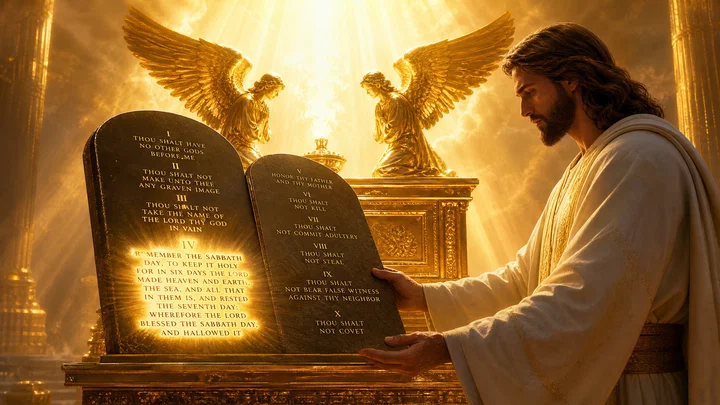
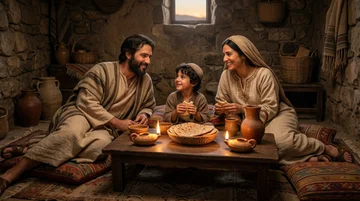
But the seventh day is the sabbath of the LORD thy God: in it thou shalt not do any work, thou, nor thy son, nor thy daughter, thy manservant, nor thy maidservant, nor thy cattle, nor thy stranger that is within thy gates:
Translations
But the seventh day is the sabbath of the LORD your God: in it you shall not do any work, you, nor your son, nor your daughter, your manservant, nor your maidservant, nor your cattle, nor your stranger that is within your gates:
But the seventh day is the sabbath of the LORD thy God: in it thou shalt not do any work, thou, nor thy son, nor thy daughter, thy manservant, nor thy maidservant, nor thy cattle, nor thy stranger that is within thy gates:
but the seventh day is the sabbath of the Lord thy God: in it thou shalt not do any work, thou, nor thy son, nor thy daughter, thy manservant, nor thy maidservant, nor thy cattle, nor thy stranger that is within thy gates:
But the seventh day is the sabbath of the LORD thy God: in it thou shalt not do any work, thou, nor thy son, nor thy daughter, thy man-servant, nor thy maid-servant, nor thy cattle, nor thy stranger that is within thy gates:
but the seventh day is a sabbath unto the LORD thy God: in it thou shalt not do any work, thou, nor thy son, nor thy daughter, thy manservant, nor thy maidservant, nor thy cattle, nor thy stranger that is within thy gates:
but the seventh day is a sabbath unto Jehovah thy God: in it thou shalt not do any work, thou, nor thy son, nor thy daughter, thy man-servant, nor thy maid-servant, nor thy cattle, nor thy stranger that is within thy gates:
and the seventh day [is] a Sabbath to Jehovah thy God; thou dost not do any work, thou, and thy son, and thy daughter, thy man-servant, and thy handmaid, and thy cattle, and thy sojourner who is within thy gates, —
but the seventh day is the sabbath of Jehovah thy God: thou shalt not do any work, thou, nor thy son, nor thy daughter, thy bondman, nor thy handmaid, nor thy cattle, nor thy stranger that is within thy gates.
but, the seventh day, is a sabbath unto Yahweh thy God,—thou shalt do no work, thou nor thy son nor thy daughter nor thy servant, nor thy handmaid, nor thy beast, nor thy sojourner who is within thy gates,
but the seventh day is a Sabbath to the LORD your God, on which you must not do any work—neither you, nor your son or daughter, nor your manservant or maidservant or livestock, nor the foreigner within your gates.
but the seventh day is a Sabbath to the LORD your God, on which you must not do any work— neither you, nor your son or daughter, nor your manservant or maidservant or livestock, nor the foreigner within your gates.
but the seventh day is a Sabbath to the LORD your God. You shall not do any work in it, you, nor your son, nor your daughter, your male servant, nor your female servant, nor your livestock, nor your stranger who is within your gates;
But the seventh day is a Sabbath to the Lord your God; on that day you are to do no work, you or your son or your daughter, your man-servant or your woman-servant, your cattle or the man from a strange country who is living among you:
But the seuenth day is the Sabbath of the Lord thy God: in it thou shalt not do any worke, thou, nor thy sonne, nor thy daughter, thy man seruant, nor thy mayde, nor thy beast, nor thy stranger that is within thy gates.
Douay-Rheims (Challoner revision)
But on the seventh day is the sabbath of the Lord thy God: thou shalt do no work on it, thou nor thy son, nor thy daughter, nor thy manservant, nor thy maidservant, nor thy beast, nor the stranger that is within thy gates.
Pictures

Cross-references 20 of 196
- Genesis 2:2-3
And on the seventh day God ended his work which he had made; and he rested on the seventh day from all his work which he had made.
God rested on the seventh day and blessed and sanctified it.
- Mark 2:27
And he said unto them, The sabbath was made for man, and not man for the sabbath:
Jesus says the Sabbath was made for humanity’s benefit.
- Isaiah 58:13
If thou turn away thy foot from the sabbath, from doing thy pleasure on my holy day; and call the sabbath a delight, the holy of the LORD, honourable; and shalt honour him, not doing thine own ways, nor finding thine own pleasure, nor speaking thine own words:
Calls the Sabbath the Lord’s holy day.
- Matthew 5:17
Think not that I am come to destroy the law, or the prophets: I am not come to destroy, but to fulfil.
Jesus says he came not to destroy the law but to fulfill it.
- Exodus 16:22-30
And it came to pass, that on the sixth day they gathered twice as much bread, two omers for one man: and all the rulers of the congregation came and told Moses.
Israel gathers twice as much manna before the Sabbath and rests on the seventh day.
- Luke 23:56
And they returned, and prepared spices and ointments; and rested the sabbath day according to the commandment.
The women rested on the Sabbath according to the commandment.
- Exodus 31:13
Speak thou also unto the children of Israel, saying, Verily my sabbaths ye shall keep: for it is a sign between me and you throughout your generations; that ye may know that I am the LORD that doth sanctify you.
The Sabbath is a sign between God and his people.
- Mark 2:28
Therefore the Son of man is Lord also of the sabbath.
Jesus declares himself Lord of the Sabbath.
- Ezekiel 20:12
Moreover also I gave them my sabbaths, to be a sign between me and them, that they might know that I am the LORD that sanctify them.
The Sabbath is a sign between God and his people.
- Ezekiel 20:20
And hallow my sabbaths; and they shall be a sign between me and you, that ye may know that I am the LORD your God.
The Sabbath is a sign between God and his people, by which they know him.
- Isaiah 66:23
And it shall come to pass, that from one new moon to another, and from one sabbath to another, shall all flesh come to worship before me, saith the LORD.
All flesh worships the Lord from Sabbath to Sabbath in the new earth.
- Colossians 2:16-17
Let no man therefore judge you in meat, or in drink, or in respect of an holyday, or of the new moon, or of the sabbath days:
Ceremonial sabbaths are shadows of things to come, distinct from the Lord’s Sabbath.
- Luke 4:16
And he came to Nazareth, where he had been brought up: and, as his custom was, he went into the synagogue on the sabbath day, and stood up for to read.
Jesus customarily attended the synagogue on the Sabbath.
- Deuteronomy 5:14-15
But the seventh day is the sabbath of the LORD thy God: in it thou shalt not do any work, thou, nor thy son, nor thy daughter, nor thy manservant, nor thy maidservant, nor thine ox, nor thine ass, nor any of thy cattle, nor thy stranger that is within thy gates; that thy manservant and thy maidservant may rest as well as thou.
The Sabbath command includes rest for servants and recalls Israel’s deliverance from Egypt.
- Matthew 28:1
In the end of the sabbath, as it began to dawn toward the first day of the week, came Mary Magdalene and the other Mary to see the sepulchre.
The Sabbath ends as the first day of the week begins.
- Revelation 14:12
Here is the patience of the saints: here are they that keep the commandments of God, and the faith of Jesus.
The saints keep God’s commandments and have the faith of Jesus.
- Mark 16:1-2
And when the sabbath was past, Mary Magdalene, and Mary the mother of James, and Salome, had bought sweet spices, that they might come and anoint him.
Places the first day of the week after the Sabbath.
- Matthew 12:11-12
And he said unto them, What man shall there be among you, that shall have one sheep, and if it fall into a pit on the sabbath day, will he not lay hold on it, and lift it out?
Jesus teaches that doing good and showing mercy is lawful on the Sabbath.
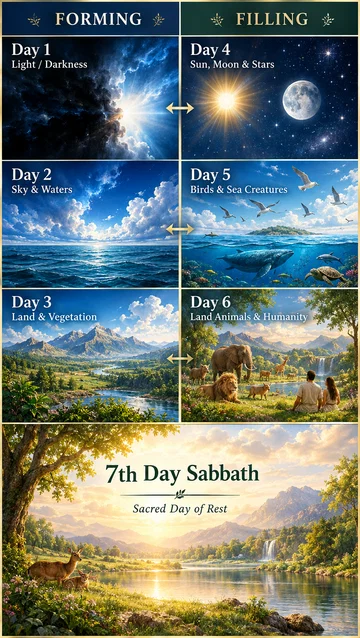
- Genesis 1
In the beginning God created the heaven and the earth.
Creation week, culminating in God’s rest, grounds the seventh-day Sabbath commandment.
- Exodus 16:4-5
Then said the LORD unto Moses, Behold, I will rain bread from heaven for you; and the people shall go out and gather a certain rate every day, that I may prove them, whether they will walk in my law, or no.
Manna instructions distinguish the Sabbath and test Israel’s obedience to God’s law.
Commentary part 1 of 4
Each commentary is drawn from primary sources: the writings of Ellen G. White and Adventist pioneers and periodicals. Each commentary is separate. Its own words are not a quotation; follow the references to read the source passages.
Ellen G. White
788 sources
The seventh day is Saturday, a definite day and not merely a portion of time or any chosen day, and it is the Sabbath of the Lord, holy, blessed, sanctified and set apart by God, while six days are given for human labor and ordinary business.ST Jun 11, 1894CE 190.1–2ST Sep 16, 191321MR 88.1Lt 138, 1910, par. 9 It is grounded in creation because in six days the Lord made heaven, earth, sea and all in them, then rested the seventh day, was refreshed, and blessed and hallowed it as His memorial of creative power distinguishing the true Creator.SG3 266.1ST May 6, 1880ST Jan 31, 1911GC 436.2–437.2Ms 17, 1906, par. 29–40 It stands as the fourth commandment of the moral law spoken by God at Sinai, written by His finger on stone and kept in the ark, unchangeable and binding on all people, and alone containing His name and title as Maker it is His seal, sign and test of loyalty.ST Jun 11, 1894ST Sep 16, 1913EW 216.2WLF 18.5–19.1ST Jan 31, 1911 It forbids all ordinary work, trade, business and worldly pleasure for the whole household including son, daughter, servants, cattle and stranger within the gates, requiring preparation and laying aside secular labor, yet works of mercy and necessity such as healing, relief of suffering and care for animals are lawful and honor the day.ST Jun 11, 1894CE 190.1–2ST Sep 16, 1913ST Nov 19, 1912PP 307.1–3 Changing it to Sunday the first day, a common working day without divine sanctity, was done by human and papal authority without Scripture and forms a spurious counterfeit sabbath, so keeping the true seventh day holy by worship, rest and doing good brings blessing while its final enforcement as Sunday law makes it the decisive test between God's commandments and human commandments.WLF 18.5–19.1DA 839.3–4Ms 51, 1899, par. 10–135T 450.2GC88 449.1
Day Plainly Specified
The seventh day is Saturday, not Sunday the first day, which is a common working day without divine sanctity ST Jun 11, 1894CE 190.1–2ST Sep 16, 1913EW 216.2WLF 18.5–19.1. The commandment stands unchanged with the same force as when spoken amid lightnings and thunder and written on stone, with nothing abolishing it or moving it to the first day EW 216.2WLF 18.5–19.1ST Nov 19, 1912. It still reads the same on the tables in the ark in the Most Holy Place of the heavenly temple as when delivered at Sinai, shining with brighter light than the other nine with a halo of glory around it EW 216.2WLF 18.5–19.1. Breaking it by keeping a day handed down from heathen and papists instead of the day God sanctified is trampling God's law calling for humbling and mourning over past sin EW 216.2WLF 18.5–19.1. Christ did not change it but taught its sacred obligation by precept and example, setting aside human traditions and false charges of Sabbath-breaking, keeping it throughout His earthly life and providing that its claims should be remembered after His death and resurrection while His followers rested according to the commandment ST Nov 19, 1912.
The command requires a definite seventh day, not merely a seventh part of time or a chosen day, and teaching interchangeability removes its sacredness Ms 69, 1912, par. 68ST Feb 7, 1911ST Aug 27, 1885GC 445.2–446.2. God rested on that definite day and blessed and sanctified that definite day, and He requires the human family to observe that definite day and has never changed it to another day Ms 69, 1912, par. 68ST Feb 7, 1911. The teaching that God only set apart a seventh part of time is a deception that makes people regard His holy rest day as having no special sacredness, so they feel free to set the Bible Sabbath aside and choose a day suiting their own convenience ST Feb 7, 1911. Replacing it with another day disregards God's law and sets human will against the Word, and its deliberate change to authorize Sunday observance has no authority beyond the church and sets human authority above God GC 445.2–446.2GW 148.3–4. Obedience to the Sabbath command is a test of loyalty to Him who sanctified that day GW 148.3–4.
Its requirement is plain, complete and definite, meaning just as it reads with no uncertainty about the day, to be learned from the Bible alone by earnest prayerful searching, not from fathers or human sayings Lt 105, 1903, par. 8–10Ms 146, 1906, par. 3–9Lt 94, 1910, par. 6–10Ms 131, 1909, par. 2417MR 346.1–3. God Himself spoke about what day to keep, so there is no uncertainty about which day it is, and He has put His own holiness upon that Sabbath and gives it to those who observe it Lt 105, 1903, par. 8–10Ms 131, 1909, par. 24. Its explanation is complete and leaves no one without guidance, and choosing not to see its meaning is choosing darkness Ms 78, 1897, par. 49. The word Remember particularly enjoins this duty on everyone because cares and worldly business tempt people to forget its importance, and while the world neglects it only a remnant keep it and urge its importance on others Ms 146, 1906, par. 3–9. Placing the first day where the seventh should be and making laws compelling its observance dishonors the Creator, reverences the false in place of the true, tramples God's Sabbath underfoot and brings His condemnation Lt 105, 1903, par. 8–10Lt 94, 1910, par. 6–1017MR 346.1–3.
Six days are given for human labor and ordinary business, while the seventh is holy time belonging to the Lord for rest, worship and spiritual service CE 190.1–24T 251.3PP 307.1–3Lt 258, 1907, par. 22–25Lt 105, 1903, par. 8–10. Work is to be done during the six working days, while on the seventh people are to set aside their own interests and pleasures for worship and willing service PP 307.1–3Lt 258, 1907, par. 22–25. The Sabbath command is not set aside for worldly profit or because keeping it is inconvenient, and it applies equally rather than allowing exceptions for individual circumstances 4T 251.3. Unnecessary labor, worldly business, business planning, worldly conversation and dwelling on worldly concerns are to be avoided, and everyone in the household is to lay aside worldly business and join in honoring God PP 307.1–3.
The verse identifies the seventh day as the Sabbath of the Lord, holy, sanctified, blessed and set apart by God as a day of rest on which no work is to be done 21MR 88.1Lt 138, 1910, par. 9Lt 26, 1893, par. 10–123MR 39.1–3ST Feb 27, 1912. Its observance commemorates God as Creator: He made the world in six days, rested on the seventh, was refreshed, and sanctified that day because He rested on it 21MR 88.1Lt 138, 1910, par. 9ST Feb 27, 1912. It was given to man to be set apart as holy and kept to the glory of His name, as a sign between God and His people throughout their generations forever 3MR 39.1–3. No earthly king or ruler is above the Ruler who owns the world, and when human laws conflict with a plain Thus saith the Lord, God's law must be obeyed 3MR 39.1–3PK 677.2–678.2. The work of restoring the Sabbath commandment after its change by human authority is a continuing safeguard and a matter of obedience to God PK 677.2–678.2.
Taking the Bible as it reads identifies the seventh day plainly as Jehovah's rest day and true Sabbath by divine authority, where God gave six days for labor and set apart the seventh, and keeping the very day He rested preserves the true memorial 6T 38.2EW 58.2–3SG4 258.1RH May 13, 1862Ms 18, 1888, par. 6. Those who observe the Sabbath of the Bible are united in their views of Bible truth, while those who oppose it are disunited and contradictory, taking opposite positions to get around the Sabbath, change it, abolish it, or do anything with the fourth commandment rather than observe it EW 58.2–3. Refusal to accept the verse as it stands shows the carnal mind not subject to the holy law, laboring with inferences to wrest the Scriptures and make a breach in God's law EW 58.2–3. The seventh day alone is the Sabbath because Jehovah blessed and sanctified that day, and the first day is not that blessed and sanctified day Ms 18, 1888, par. 6Ms 7, 1886, par. 13–14. Disregarding the Sabbath hardens the conscience and dishonors God, and money gained through work transgressing His commandments is offensive to Him Ms 7, 1886, par. 13–14.
Sunday is not the Bible Sabbath and does not meet the commandment; the seventh day, not the first day, is the Sabbath, and Sunday is not to be given the honor due the divine day 9T 235.1SW 98.1–99.1Ms 21, 1898, par. 7–8Ms 127, 1897, par. 20–21Lt 29, 1900, par. 20. Sunday is not to be honored as God's Sabbath, and it may be used for work that advances Christ's cause without defying Sunday laws in ways that create bitter prejudice and hinder truth, but with meekness and lowliness 9T 235.1SW 98.1–99.1. Keeping Sunday for the Sabbath in its place is disobedience which the Word directly condemns and which fastens souls in chains of eternal bondage, setting life against death Ms 21, 1898, par. 7–8. Long keeping and keeping by all the world and hoary age give Sunday no sanctity and do not excuse it, any more than the smallness of the test excused Adam when he ate and lost Eden Ms 21, 1898, par. 7–8. Replacing God's memorial with a humanly instituted day makes the common stand in place of the sacred and tramples His law, while to take the feet off the Sabbath is to acknowledge the truth Ms 127, 1897, par. 20–21Lt 29, 1900, par. 20Lt 60, 1898, par. 8–13.
The seventh day as the Lord's Sabbath is part of the fourth commandment that must be kept exactly as commanded and taught as it reads, in contrast to a false counterfeit sabbath STA 38.2STOM 30.22MR 228.1Ms 196, 1899, par. 16–17Lt 126, 1903, par. 9–11. The genuine Sabbath has been obscured by deceptive teaching, leading the world to reject it and accept a counterfeit instead Ms 196, 1899, par. 16–17Lt 123, 1894, par. 10–11. Replacing the seventh-day Sabbath with a different rest day tramples God's law under foot, and the Protestant world has accepted a spurious rest day in its place Lt 126, 1903, par. 9–11. Faithful witness must stand as a memorial for God, testifying against this substitution and upholding the seventh day as the true Sabbath, with Scripture rather than church tradition establishing the day of observance Lt 126, 1903, par. 9–11Lt 123, 1894, par. 10–11.
The seventh day is God's day because He sanctified it, and its sanctity requires keeping it, with the evidence in God's Word calling for acceptance and full conversion STB 369.2RH Nov 5, 1908STB 382.3. To lightly regard the Sabbath is to lightly regard God Himself STB 382.3. The Sabbath is a pillar doctrine and fundamental principle of truth given to the remnant church that has sustained the work for fifty years, and giving it up discards truth, changes religion, and builds on sand that storm and tempest will sweep away STB 382.3. Every soul must bow under the power and authority of the law proclaimed from Sinai in humility and contrition, and departing from it while claiming to do heaven's will leaves the disobedient on the very brink of ruin STB 369.2.
The fourth precept plainly requires God's holy Sabbath and forbids accepting a common working day, it is part of the royal law proclaimed by the third angel, and accepting Sunday as sacred serves Satan 19MR 183.1–2. The command is part of God's royal law, which the Creator has always required and will always require obedience to, and its principles are made known by the third angel's message 19MR 183.1–2. Refusing this Word and accepting Sunday, a child of the papacy bearing not a vestige of sanctity yet set up to be regarded as sacred like Nebuchadnezzar's golden image, is doing what Satan wishes and showing respect to a day exalted by God's enemy 19MR 183.1–2. Though the man of sin has thought to change this law, not one jot or tittle of it can be changed while God holds the throne 19MR 183.1–2.
The Sabbath is truth made clear through searching Scripture LSEGW 214.3Ms 76, 1886, par. 7Lt 276, 1908, par. 5–6Lt 11, 1878, par. 2Ms 33, 1900, par. 17. Scriptural light identifies the seventh day as God's holy day, exposing the previously kept day as a common substituted day and showing the Sabbath was kept wrongly without knowledge Ms 76, 1886, par. 7. The day they had been keeping was a common day substituted for it, and accepting the Sabbath meant recognizing that wrong without knowing it, with truth clear through Scripture and the convictions coming with searching it Ms 76, 1886, par. 7. Laying prejudice aside and searching the Bible with sincere desire to receive light brings answer to prayer and reward in seeing this, and receiving God's words about the Sabbath makes believers lights shining amid moral darkness Ms 33, 1900, par. 17Lt 119, 1896, par. 15–16. The sanctified seventh-day rest must be kept as found by searching God's Word rather than human opinions or Sunday observance, keeping it brings blessing and leads toward the city of God Lt 276, 1908, par. 5–6Lt 194, 1899, par. 10. Keeping that sanctified day brings a blessing not found in Sunday observance and leads toward entrance into the city, requiring sanctifying the Lord in the heart, standing on God's platform, and using all powers in missionary labor Lt 276, 1908, par. 5–6. In keeping it the law discarded and trampled is rescued from dust and uplifted, linking keepers with the divine and opening eternal realities as if standing in the open portals of the city surveying the glories within Lt 194, 1899, par. 10.
The seventh day is the Lord's Sabbath set apart by God, and keeping it holy honors God and shows love for Christ 8MR 99.24MR 403.111MR 224.3–226.1. Keeping this precept is a way of showing love for Christ 8MR 99.2. Keeping it holy gives special honor to God, and the commandment unites the Mosaic and Christian dispensations 4MR 403.1. The Sabbath of the fourth commandment is kept by those who believe the truth 11MR 224.3–226.1.
Creation Memorial Origin
The command is grounded in creation because in six days the Lord made heaven and earth, the sea and all that is in them, and then rested on the seventh day, was refreshed, and blessed and sanctified and hallowed it.SG3 266.1ST Jan 31, 1911Ms 17, 1906, par. 29–40Ms 4a, 1898, par. 12–13Ms 93, 1908, par. 11–15 The blessing then placed has never been removed, and the six days given for labor with the seventh for rest tie the weekly rest directly to that work and rest of God.COS 71.1–3Ms 4a, 1898, par. 12–13Ms 93, 1908, par. 11–15 The seventh day is therefore God's memorial of creation and of creative power, distinguishing the true Creator from false gods, guarding against idolatry and unbelief, and binding people to their Creator as owner and preserver.ST May 6, 1880GC 436.2–437.2Ms 82, 1893, par. 15PP 307.1–3Lt 258, 1907, par. 22–25 Keeping it shows loyalty to the true God and worship of Him as Maker, while replacing it with a day chosen by human authority destroys its sacredness and obscures the memorial.GC 436.2–437.2Ms 82, 1893, par. 15Lt 258, 1907, par. 22–25 Resting directs thoughts to the One who brought all wonderful and beautiful things into existence, so that looking on earth beneath and heaven above fills the heart with love and reverence at tangible proofs of infinite wisdom and goodness.ST Jan 31, 1911
The Sabbath was instituted, ordained, sanctified and blessed in Eden at creation for all mankind and for human benefit, not as a uniquely Jewish observance, when the morning stars sang together and the sons of God shouted for joy, and it bears the mark of God's government.ST Jan 31, 1911Lt 258, 1907, par. 22–25Ms 176, 1903, par. 3Lt 26, 1899, par. 2–3Ms 99, 1902, par. 61 It was made specially prominent when the law was given, carrying forward its Eden institution as a memorial of God's work for rest and worship, and its sacredness rests on God's creation and rest.ST Jan 31, 1911RH Oct 28, 1902Ms 19, 1894, par. 10–12 The creation days and God's rest are literal days, not vast indefinite periods, and the weekly cycle by the sun's course is tied to God's creation week so the very day on which God rested must be kept as the true memorial, as the fourth of July is kept for independence.CE 190.31SP 87.1 Otherwise the command would call people to observe a week of literal days in memory of indefinite ages, making its meaning obscure and senseless and weakening its claim.CE 190.31SP 87.1
Keeping the true Sabbath keeps the knowledge of God alive so there would never be an infidel or atheist, and its observance preserves the world from idolatry.LSEGW 96.1ST Mar 18, 1897 Every tree, shrub and flower testifies to six-day work and seventh-day rest.Ms 26, 1894, par. 20–21 The Sabbath was made after human creation as reasonable and merciful to meet human need, giving rest from toil, care and anxiety to protect health and life, calling for love and reverence toward the Maker and contemplation of His works, not to enslave nor as useless idleness.ST May 11, 18762T 582.31SP 59.2ST Mar 11, 1880 Man was not made to fit the Sabbath, and God gave His own rest as the example for man made in His image to follow by putting by labor and engaging in no secular pursuits but worshiping Him.ST May 11, 18762T 582.3 Its purpose includes turning people to behold the Creator's glory in nature, especially studying God's messages in nature on that day, and it honors God while benefiting humanity.COL 25.11SP 236.9–237.1
The Sabbath was honored before the fall and continued after Eden by loyal children of Adam from Abel to Jacob, while Cain and his descendants disregarded God's rest day and chose their own times for work and rest against His express command.1SP 60.1Lt 17, 1904, par. 2 The seventh day was set apart in Eden to be observed as holy and sanctified as the Lord's day of rest, given as His memorial of creation to be held sacred through all time.Lt 17, 1904, par. 2 Israel had largely lost knowledge of the Sabbath and Creator in Egyptian bondage and through heathen customs and mixing precepts with heathen traditions, and God gave the law in the wilderness and brought them out to restore that knowledge and to keep the Sabbath.Ms 77, 1900, par. 4PP 334.3ST Feb 17, 18985MR 41.2–42.1 He Himself ruled over them for this purpose, and the command was made clear to a people whose understanding had been confused through association with idolaters.ST Oct 15, 1896ST Feb 17, 1898
The Sabbath was kept before Sinai by the manna with a double portion on the sixth day and none on the seventh, repeatedly reminding and testing Israel despite laxness and polluting of His Sabbaths that excluded the first generation and scattered their children.PP 408.4–409.3PK 180.2Ms 3, 1885, par. 12–13ST Mar 31, 1898 Gathering on the seventh brought rebuke for refusing His commandments and laws, and great laxness without open bold transgression led God to declare that His Sabbaths were greatly polluted.PP 408.4–409.3Ms 3, 1885, par. 12–13 The seventh-day Sabbath given in Eden is kept in obedience and loyalty to God, while a spurious rival promoted and protected by human rulers brings persecution when given divine honors, and human commands clothed with sacred authority do not replace God's commandment.STA 39.213MR 69.3–70.1Lt 154, 1906, par. 29–33 To set aside the memorial commemorating holy work of creating the world in six days and resting the seventh, and put in its place a common working day marking the beginning of the week for ordinary business without divine approval, is defiance meeting the Lawgiver over His broken law.Lt 154, 1906, par. 29–33
Marriage was also made in Eden as a divine ordinance from creation when the foundations of the world were laid, and marriage is to stand as firm as the Sabbath.Lt 8, 1888, par. 5–6 Keeping the seventh honors God's law as creation's memorial while resting the first instead bears false witness, and the Spirit is given to enable obedience against self-gratification and the pull of pleasure.RH May 28, 1901 The Lord's day is the seventh day instituted at creation when God rested and was refreshed, and John kept this day on Patmos with Christ honoring his obedience by appearing to him on the Sabbath and showing by His angel the things to come before the close of history.ST Feb 27, 19126T 128.2 The commandment is uniquely prefaced with a warning to remember and keep the day holy, recalling that after finishing creation the Lord rested and sanctified it for worship, and it asserts divine authority that must be obeyed without substituting another day or exalting the word of man.Ms 4a, 1898, par. 12–135MR 81.1–35MR 84.3–85.2 God gave six days to labor but set apart the one day on which He rested after creating all things by Jesus Christ especially for rest and worship of Him as Creator of heaven and earth, while the first day remains a common working day.5MR 81.1–35MR 84.3–85.2
The Sabbath of the fourth commandment is a witness and constant reminder of God to draw attention and prompt investigation directing minds to the Creator.7T 139.1–2Ms 51, 1909, par. 7–9Ms 122, 1906, par. 1 It is a lasting reminder of obligation to Him as Creator, whose claims are to be upheld, investigated and exalted to prepare a people for Christ's second coming.Ms 51, 1909, par. 7–9Ms 122, 1906, par. 1Lt 246, 1908, par. 2 Those who know its binding light must not become lax or indifferent but let work correspond with faith.16MR 39.3–40.1
Given at Sinai Preserved
The verse is the fourth commandment of the Ten Commandments, part of God's moral law binding on people of every age and country, spoken by God at Sinai, written by His finger on stone, kept in the ark, revealing sin and leading to repentance and obedience.ST Jun 11, 1894ST Sep 16, 1913EW 216.2GC 434.2–3ST Jul 29, 1897 It stands unchanged with the same force as when spoken amid lightnings and thunder, with the blessing that hallowed the seventh day never removed, with nothing abolishing it or moving it to the first day, and disregard of it to observe the first day is transgression calling for sorrow and keeping His Sabbath holy.EW 216.2GC 434.2–34SP 273.3–274.1 The fourth commandment is made specially significant by its place in the very bosom and center of the Decalogue, shining with brighter light and a halo of glory, placed close beside God and overshadowed and protected by His holiness.ST Sep 16, 1913EW 216.2GC 434.2–3ST Jul 29, 1897GC88 434.2 It is a creation memorial introduced by the charge to Remember, proclaimed amid smoke, flame, thunder, trumpet, earthquake and glory that made the people fear and seek a mediator.ST Sep 16, 1913EW 216.21SP 235.2–236.8
The law was spoken by Christ at Sinai, who led Israel in the cloudy pillar, not as a cold rigid code of exactions but as holy, just and good with full and far-reaching claims made clear by Christ.2SP 254.1–255.1FE 237.1PP 365.4–366.3 Its wilderness record is direct communication from heaven teaching morality, justice and reverence, containing principles of heavenly origin to govern life, a safe guide and standard for judgment requiring planting the feet on It is written.Lt 107, 1903, par. 3–5 The Ten Commandments were first given in Eden and given again to the people delivered from bondage in Egypt when God stood on Sinai in awful grandeur with a voice that made the mountain tremble, speaking audibly and writing them to preserve them from heathen traditions, with Moses later recapitulating them for the new generation.Ms 52, 1900, par. 30–321MR 106.2–3Ms 64, 1903, par. 8–9 The verse belongs to God's divine, moral, eternal law which is an expression of truth and transcript of His character, distinguished from ceremonial sacrifices, types and social-political laws delivered secretly to Moses in council on the mount for Israel that met antitype and passed away.Lt 35a, 1877, par. 21–23ST May 14, 1902Ms 119, 1903, par. 19ST Nov 14, 1895
Because minds were impaired by slavery Israel could not fully comprehend the law as first given, so additional religious precepts explaining and applying its obligations were given privately through Moses to illustrate the Ten Commandments which formed the foundation of national law.Ms 65, 1906, par. 16ST Apr 15, 1875Ms 119, 1903, par. 10Lt 69, 1904, par. 19–20 Had they been obedient from love those added ceremonies and ordinances to stir up forgetful minds would not have been required.5T 666.3–667.1 The law was entrusted to Israel to preserve, pass on and make known to every nation, not given exclusively to them nor meant only spiritually, forming a hedge around God's vineyard distinguishing His people, yet remaining God's standard of character for all.ST Apr 8, 1875Ms 62, 1886, par. 54–56Ms 39, 1898, par. 17–20 It was proclaimed after Israel pledged by solemn covenant to obey, and is to be proclaimed together with the truth that God created heaven and earth.6T 395.2–3RH Aug 16, 1906
The true Sabbath remained binding and knowable through the long gloom of papal supremacy with witnesses in every age hallowing it, kept by the Waldenses through persecution, by primitive Christians in uncorrupted Britain and Iona, and by churches in Central Africa and Armenia, though branded as heretics and forced to flee Rome's power.GC88 63.14SP 69.2ST Jun 25, 1885 The African churches observed the seventh day by abstaining from labor while Sunday abstention was only church custom, and when Rome gained control and forced them to set aside the true Sabbath they returned to obedience to the fourth commandment after regaining independence.GC88 577.3–578.2GC 577.3–578.24SP 395.2–396.1 The ancient Sabbath all Christians once observed was pressed down while the heathen venerable day of the sun was exalted, first as festival then as joyous day, until councils pressed the Sabbath down and exalted Sunday, burdening the Sabbath with rigorous exactions and turning it into a gloomy fast.GC 53.1–23MR 39.1–3 God-fearing Christians in the early fourth century still held the true Sabbath as the holy of the Lord even while Sunday was made a public festival and gradually regarded as possessing sacredness, until the pagan festival was honored as a divine institution while the Bible Sabbath was pronounced a relic of Judaism and its observers declared accursed.GC 53.1–2
The Sabbath light was seen after Jesus opened the most holy place, testing God's people on the law as Israel was tested, especially the disappointed ones after 1844 under the third angel, when the door opened in 1844 as Jesus passed within the second veil to stand by the ark.EW 216.15MR 94.1–2Ms 1, 1849, par. 2–4 Since that opening the commandments have been shining out and God has been testing His people on the holy Sabbath, which cannot be separated from the shut door.EW 34.1–25MR 94.1–2 The word Remember means do not forget, given because cares, perplexities and worldly business tempt people to forget its sacred importance or excuse obedience.Ms 4a, 1898, par. 12–13ST Jul 29, 1897ST Sep 16, 1913 The very day God specified is to be kept, while the world neglects it only a remnant keep it and urge its importance on others.Ms 146, 1906, par. 3–9
It was remembered on Patmos, where rest from work on the seventh day as the Lord's day was observed as sacredly on the lonely island as while worshiping with the churches.ST Feb 5, 1885 The Sinai precepts were given for the people's good, and disregarding the work prohibition on the seventh-day Sabbath weakened and hindered them.RH Feb 20, 1908 The seventh-day Sabbath as part of the moral unchanging Sinai commandments applies to the historical shift to first-day observance and to efforts to obey even requiring separation from Sunday churches.4SP 183.2 The seventh-day Sabbath in heaven's ark is the special test after 1844 when Jesus entered the most holy, with violation calling for enlightenment, repentance and proof of allegiance, while those who died before light upon the law and the claims of the fourth commandment were not guilty and rest in hope.2T 693.2–3ExVEGW 24.2–25.1GC 435.1EW 34.1–2
The binding seventh-day Sabbath was taught by the Son of God through Moses at Sinai and instituted in Eden, and ministers must present Old and New Testaments as an inseparable whole, the one depending upon and illuminating the other, not throwing aside old treasures nor rejecting new treasures in the personal teachings of Jesus.2SP 254.1–255.1ST May 17, 1877Ms 39, 1892, par. 27–28 Its commands forbid common work but do not forbid bestowing the blessing of healing, and charges that healing breaks the Sabbath come from heaping traditions upon it and misapplying its principles.ST Oct 23, 1893 The truth of the law proclaimed from Sinai's mount carries weight as the plain principles of heaven, every soul must bow under its power in humility and contrition, and Jesus Christ calls those for whom He gave His life to come where His blood cleanses from all sin.STB 369.2RH Nov 5, 1908ST Mar 4, 1897 The claim of the seventh-day Sabbath was made plain after the disappointment in 1844 by earnest reading and rereading of the commandments exposing working contrary to them and by diligent study of Revelation 14 showing the patience of the saints who keep the commandments of God and the faith of Jesus.Lt 105, 1903, par. 6–7Lt 102, 1908, par. 5
Christ spoke the law at Sinai, revealed it in its true light, kept the Father's commandments as man's example passing over Adam's ground with perfect obedience, and proved through His merits that man can keep the law and be an overcomer, and breaking it or teaching others to lessen it makes one least with no place in the kingdom while doing and teaching it makes one great.SCE 7.1ST Jul 18, 1878ST Dec 12, 1911Ms 19, 1900, par. 17 The fourth commandment stands at the center of the Decalogue, and obedience to it as duty to God fits people for eternal life, fashions character in the divine likeness, and must be walked just as written by determined choice to gain heaven and enter the city where no one enters who is not an overcomer.Ms 39, 1886, par. 4Lt 58, 1906, par. 6–9Ms 130, 1909, par. 34–38Ms 79a, 1910, par. 42–44 The fourth commandment unites the Mosaic and Christian dispensations, applies to Christians as well as Israel, was continued by Paul in letter and spirit after conversion, and obedience was intended to make Israel an example of true righteousness and a model for God's church.4MR 403.1Ms 98a, 1905, par. 8–9Ms 114, 1902, par. 22SLP 63.3–65.1
The commandments were spoken by Jehovah descending in a cloud of glory before the Hebrews at Sinai, requiring prior sanctification and washing of clothes to impress His purity and to show His care for physical as well as moral well-being.CTBH 181.3 The verse belongs to the written word recorded by Moses as historian of creation and law, beginning after twenty-five hundred years with no written revelation when those taught of God handed knowledge from father to son, as inspired revelation continuing sixteen hundred years from Moses to John the recorder of the most sublime truths of the gospel.GC v.2
Who Must Rest Forbidden Work
No work is to be done on the seventh day by the entire household, including son, daughter, manservant, maidservant, cattle and livestock including horses, and the stranger within the gates on the household premises, setting a standard that includes everyone under one's care.ST Jun 11, 1894CE 190.1–2ST Sep 16, 1913ST Nov 19, 1912SG3 266.1 The seventh day is the Sabbath belonging to the Lord God, standing in the very bosom and heart of the Decalogue as part of the fourth commandment first proclaimed and part of God's moral, immutable law binding upon men of every age and country.ST Sep 16, 1913ST Nov 19, 1912GC 434.2–3 Its requirement commemorates the Creator's rest after six literal days of making the world, when He rested, blessed and hallowed that day, and the blessing that first hallowed it has never been removed.CE 190.1–2SG3 266.1GC 434.2–3 Christ did not change it but taught its sacred obligation by precept and example, setting aside human traditions and false charges, showing works of mercy and necessity lawful, keeping it throughout His earthly life and providing for its remembrance after death and resurrection, with His followers resting according to the commandment and continuing to preach on that day.ST Nov 19, 1912 Disregarding it to observe the first day instead is ignorant transgression with no scriptural evidence for abolition or change, requiring sorrow and holy keeping in loyalty to God.GC 434.2–3
The prohibition reaches beyond one's own labor to forbid business plans, amusement, trade, transporting goods, operating through partners, employing others, and Sabbath school labor even in harvest and in the busiest seasons of plowing and harvest.BS 56.1–57.1SG3 292.1–293.1ST Apr 8, 18861SP 87.14MR 288.1–3 Joining in business with partners who continue ordinary work violates the command and is not guiltless, and such partnership must be ended even at loss, for apparent gain from Sabbath work becomes loss when God's withdrawn blessing diminishes possessions.SG3 292.1–293.1ST Apr 8, 1886 Serving restaurant meals violates the law whether few or many are served, workers must not be required to work instead of resting, and closing honors the day as a memorial declaring no unnecessary work is to be done while giving opportunity to explain its principles.4MR 288.1–3 Using its sacred time for work that should have been done beforehand robs God of time reserved for Him, and God is no less particular now, requiring heart service and obedience despite social pressure, fear of seeming different, or claims of mercy, since genuine sanctification cannot be separated from keeping all His commandments.BS 56.1–57.1SG3 292.1–293.1 Desecration comes especially through love of worldly gain, yet probationary time must not be squandered in worldly pursuits, pleasure and sin, and God can break chains, remove obstacles, and give strength to conquer every difficulty to those who earnestly beseech Him and go forward without delay, doubt, partial obedience or compromise with self, even at cost of life.ST Jan 20, 1887 Treating creation days and God's rest as indefinite ages makes the definite-day commandment senseless and weakens its claim.1SP 87.1
Ordinary trade and business for a living on Saturday is forbidden even when a large family depends and obedience costs sustenance and the bare bread that sustains life.Lt 80, 1900, par. 14Lt 22, 1885, par. 5–817MR 79.2–4 Keeping it requires refusing even employment requiring Sabbath labor, trusting the case in the Lord's hands, valuing His sign above money or earthly consequences, and believing God honors such obedience and controls circumstances to provide even at great loss.Lt 80, 1900, par. 14Lt 22, 1885, par. 5–8 It may require closing business on the busiest and most profitable day and giving up income, and choosing profit instead is disobedience and yielding to Satan's temptation.17MR 79.2–4 Forbidden business includes collecting debts, paying workmen, settling accounts, opening a store or mill, cooking, and treating the day as sacred only when convenient, and keeping it only when convenient while breaking it for personal interest transgresses and dishonors God, showing no true sense of holy things.17MR 98.2–99.1Lt 118, 1894, par. 3 Time lost by refusal can be made up during the week, and the Sabbath is to be kept as a full day of rest even at cost of losing a job, with no excuse in drought and debt or feeling there is no other way to provide.Lt 18, 1898, par. 10–12Lt 118, 1894, par. 3
All secular work must be laid aside before sunset Friday, with Friday used to complete every preparation including clothing in readiness, cooking, baking, boiling, blacking boots, taking baths, putting secular papers out of sight, and children's help with parents explaining purpose.6T 355.35MR 301.2–302.1ST Feb 7, 1911 Any work neglected until holy time starts must remain undone until the Sabbath is past, and leaving it undone teaches thoughtlessness to be more careful beforehand.ST Feb 7, 1911 No manner of own work for livelihood or gain is to be done by self or suffered in children, nor anything that could have been done in the six days, with thinking, doing and conversing on necessary things finished beforehand so nothing is left to say or do.5MR 301.2–302.1 The command requires not only refraining from physical labor but disciplining the mind to dwell on sacred themes, and it is virtually transgressed by worldly business transactions, common topics such as losses and gains, stock, provisions, crops and cattle, and light trifling talk, which is speaking own words revealing a mind running on worldly business and bringing bondage and condemnation.5MR 301.2–302.1 Only warming of food already cooked in winter, hot water or hot gruel in cold, and simpler smaller meals are allowed to aid devotion and avoid dullness from heavy meals when labor and exercise cease, while caring for the sick and suffering with warm food and drink when needed is mercy and no violation, for the Lawgiver is compassionate as well as just.SG3 254.1ST May 25, 1882SG3 253.2
Cooking on the Sabbath violates the commandment, with baking and boiling required on the sixth day and self-denial to eat food prepared beforehand even if less palatable.ST Apr 26, 18831SP 225.2SG3 253.2 The prohibition guards against gluttony so the day can be devoted to sacred meditation and worship, with simpler lighter meals keeping the mind clear.1SP 225.2ST Apr 15, 1880 On a cool morning hot gruel may be provided but other cooking avoided, and necessary preparation to care for the sick and suffering is permitted because God is compassionate as well as just.ST Apr 26, 1883ST Apr 15, 18801SP 226.1 Eating more simply and in smaller amounts than on workdays through self-denial helps enjoy the Sabbath blessing with clear devotion.1SP 226.1
Requiring those under one's direction to work during Sabbath hours is forbidden, including extending Friday service into that time and ordering Sabbath labor, so Friday's work must be planned to end before it begins.Ms 39, 1891, par. 18–19Ms 23, 1894, par. 7–9 Noisy commercial labor such as hammering in blacksmith and marble shops, blacksmith work, making tombstones with hammering and chiseling, and settling accounts or conducting business dishonor God when carried on within the church's control, even with prayer and profession, and business interests must be brought into line with the Bible standard.Lt 113, 1886, par. 2–6Ms 7, 1886, par. 1–3Ms 57, 1886, par. 15–16 The father enforces restraint by requiring family and horses to refrain from labor, and children are not to be sent to school to study or work on that day.Ms 23, 1894, par. 7–9Ms 27, 1885, par. 9–15 Sabbath observance is God's test distinguishing loyal from disloyal, not a human test, and must not be loosened for convenience or social pressure but kept strictly when no arrangement preserves it, without belittling by leaders whose example encourages disregard.Ms 27, 1885, par. 9–15 Work sounds during worship show disrespect and prevent blessing.Ms 7, 1886, par. 1–3
The command forbids real work such as treading winepresses, bringing in sheaves, loading asses, bringing wine, grapes, figs and burdens into Jerusalem, selling food, bearing or carrying burdens through gates or out of houses, carrying on ordinary commerce and transporting goods, and providing restaurant meals that increase helpers' work and confuse understanding of the fourth commandment.2SP 194.1–2Ms 122, 1902, par. 1–24RED 46.1–2 Holy service to God does not break it, so increased labor of priests with sacrificial offerings is lawful.2SP 194.1–24RED 46.1–2 It sanctions no meaningless usages, senseless restrictions, clumsy exactions or petty human rules that make the day almost unendurable bondage, and prohibitions such as not kindling a fire or lighting a candle leaving people dependent on others for allowed service are human traditions and misconceptions hedged around the day, not part of the just command which all can consistently keep.ST May 13, 1886DA 397.3 Parents allowing children to break it by playing themselves transgress and are regarded as commandment breakers.9MR 323.2 Christ defended its great precepts against such traditions and exalted its dignity rather than lessening it.ST May 13, 1886DA 397.3
Going out to gather sticks and kindling fires on the seventh day in the wilderness where fire was not needed for warmth was open willful deliberate presumptuous contempt for God's authority equal to blasphemy, not thoughtlessness or ignorance.PP 408.4–409.3 It was punishable by death by stoning without the camp by all the congregation, yet this does not make the Sabbath a Jewish institution to be rejected, since the same punishment applied to blasphemy and nearly all the ten precepts.PP 408.4–409.3 Though transgression may not now meet temporal penalty, the wages of sin is death and in final judgment death will be the portion of violators.PP 408.4–409.3 The fire prohibition was strictly for the wilderness sojourn and did not extend to Canaan where severity of climate would often render fires a necessity.PP 408.4–409.3 The weekly manna reminded Israel of sacred obligation, yet great laxness without open bold transgression polluted His Sabbaths, helping exclude the first generation from the promised land and scattering children who did not learn among the heathen after settlement.PP 408.4–409.3
Even urgent work for God's house did not justify Sabbath work, as completing the tabernacle quickly did not take precedence over sacred observance, for God is jealous for the honor of His creation memorial.Ms 77, 1900, par. 7–8 The stranger within the gates is included in its shelter, so no sharp, selfish, narrow or grasping dealing is to be exercised toward outsiders, strangers, or one trying to serve God and bringing tithe to sustain the ministry.Ms 43c, 1901, par. 5–7 By rest commanded for everyone and everything within the gates, the earth itself as distinct from those dwelling on it rests, commemorating creation of heavens and earth so earth and inhabitants might glorify the Creator.4SP 503.1–2 A law compelling rest on Sunday in place of the seventh annuls the commandment, and resting on Sunday causes earth and dwellers to do homage to the power originating Sunday.4SP 503.1–2
Honoring the true Sabbath by precept and example forbids work such as physicians making appointments or traveling on it, for God blessed the seventh day, made it holy, placed it at the heart of the Ten Commandments, and made it lasting evidence of six-day creation to be sacredly observed.Ms 25, 1900, par. 17 The hours beginning Friday evening are God's sacred time not to be infringed by secular labor even to save entrusted property such as a sailboat from rocks, requiring forethought not to enter positions requiring Sabbath work.Ms 3, 1873, par. 51–52 No work is to be done, which applies to the surrounding community where Sabbath-breaking neighbors working set a troubling example while Sabbath-keeping neighbors bless believers.Ms 11, 1912, par. 3–6 The Sabbath as seventh day with no work leads to keeping land under control of those who will not permit it to be worked that day rather than allowing Sabbath-disregarding people to work there.1MR 328.1–4 Work done nearby can tempt God's people and children, informing choices about neighbors and land to avoid allowing work close by where children see it, for the Sabbath is the Lord's day of rest.Ms 11, 1912, par. 20Ms 9, 1873, par. 5
Obedience takes precedence over supposed human necessities and convenience even when it inconveniences others, and personal work in its hours violates the command and dishonors God without adjustment for convenience.Ms 26, 1886, par. 18–19Ms 114, 1902, par. 18 Even burying the dead does not justify doing Sabbath business, and continuing ordinary business after learning the Sabbath denies faith, makes one a transgressor, and is judged by unbelievers as a business matter.Lt 70, 1893, par. 10 Institutional land must be secured fully and remain under the institution's control rather than be shared with people who would work it on the Sabbath, since rest extends to workers under its care and sharing would place the school in conflict with observance.1MR 333.3–336.11MR 330.2–331.3
Sources