Leviticus 4:3
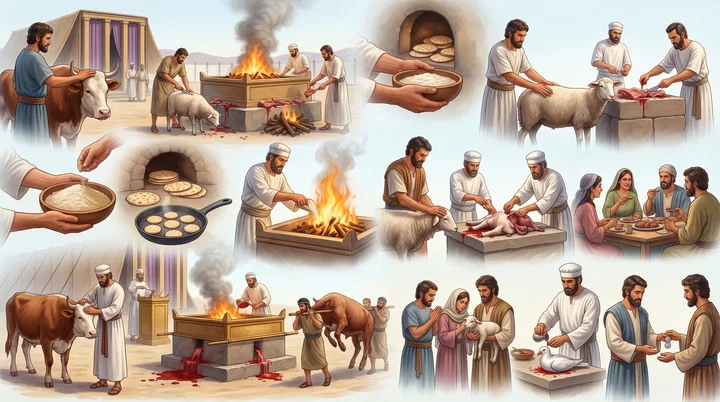
If the priest that is anointed do sin according to the sin of the people; then let him bring for his sin, which he hath sinned, a young bullock without blemish unto the LORD for a sin offering.
Translations
If the priest that is anointed do sin according to the sin of the people; then let him bring for his sin, which he has sinned, a young bullock without blemish to the LORD for a sin offering.
If the priest that is anointed do sin according to the sin of the people; then let him bring for his sin, which he hath sinned, a young bullock without blemish unto the LORD for a sin offering.
if the priest that is anointed do sin according to the sin of the people; then let him bring for his sin, which he hath sinned, a young bullock without blemish unto the Lord for a sin offering.
If the priest that is anointed shall sin according to the sin of the people; then let him bring, for his sin which he hath sinned, a young bullock without blemish to the LORD for a sin-offering.
if the anointed priest shall sin so as to bring guilt on the people; then let him offer for his sin, which he hath sinned, a young bullock without blemish unto the LORD for a sin offering.
if the anointed priest shall sin so as to bring guilt on the people, then let him offer for his sin, which he hath sinned, a young bullock without blemish unto Jehovah for a sin-offering.
'If the priest who is anointed doth sin according to the guilt of the people, then he hath brought near for his sin which he hath sinned a bullock, a son of the herd, a perfect one, to Jehovah, for a sin-offering,
if the priest that is anointed sin according to the trespass of the people; then for his sin which he hath sinned shall he present a young bullock without blemish to Jehovah for a sin-offering.
If, the anointed priest, shall sin, so as to bring guilt upon the people, then shall he bring near for his sin which he hath committed a choice young bullock without defect, unto Yahweh as a sin-bearer.
Berean Standard Bible, Majority Standard Bible
If the anointed priest sins, bringing guilt on the people, he must bring to the LORD a young bull without blemish as a sin offering for the sin he has committed.
if the anointed priest sins so as to bring guilt on the people, then let him offer for his sin which he has sinned a young bull without defect to the LORD for a sin offering.
If the chief priest by doing wrong becomes a cause of sin to the people, then let him give to the Lord for the sin which he has done, an ox, without any mark, for a sin-offering.
If the Priest that is anointed doe sinne (according to the sinne of the people) then shall he offer, for his sinne which hee hath sinned, a yong bullocke without blemish vnto the Lord for a sinne offring,
Douay-Rheims (Challoner revision)
If the priest that is anointed shall sin, making the people to offend, he shall offer to the Lord for his sin a calf without blemish.
Pictures
Cross-references 20 of 52
- Leviticus 16
And the LORD spake unto Moses after the death of the two sons of Aaron, when they offered before the LORD, and died;
removes sins Lev 4 moved to sanctuary
- Leviticus 4:22-26
When a ruler hath sinned, and done somewhat through ignorance against any of the commandments of the LORD his God concerning things which should not be done, and is guilty;
Sets out the ruler’s sin offering, contrasting it with the anointed priest’s offering.
- Hebrews 13:11-12
For the bodies of those beasts, whose blood is brought into the sanctuary by the high priest for sin, are burned without the camp.
The sin offering’s blood entered the sanctuary and its body was burned outside the camp, foreshadowing Jesus’ sacrifice.
- Leviticus 6:30
And no sin offering, whereof any of the blood is brought into the tabernacle of the congregation to reconcile withal in the holy place, shall be eaten: it shall be burnt in the fire.
Sin offerings whose blood enters the sanctuary are burned rather than eaten.
- Leviticus 17:11
For the life of the flesh is in the blood: and I have given it to you upon the altar to make an atonement for your souls: for it is the blood that maketh an atonement for the soul.
Blood represents the victim’s life and makes atonement for sin.
- Leviticus 4:13-14
And if the whole congregation of Israel sin through ignorance, and the thing be hid from the eyes of the assembly, and they have done somewhat against any of the commandments of the LORD concerning things which should not be done, and are guilty;
Extends the sin-offering provision from the anointed priest to the whole congregation.
- Hebrews 10:4
For it is not possible that the blood of bulls and of goats should take away sins.
Bull and goat blood cannot take away sins.
- Leviticus 10:17
Wherefore have ye not eaten the sin offering in the holy place, seeing it is most holy, and God hath given it you to bear the iniquity of the congregation, to make atonement for them before the LORD?
Priests eat the sin offering to bear the congregation’s iniquity and make atonement.
- Numbers 15:22-29
And if ye have erred, and not observed all these commandments, which the LORD hath spoken unto Moses,
Both prescribe offerings and atonement for sins committed in ignorance.
- Leviticus 4:27-31
And if any one of the common people sin through ignorance, while he doeth somewhat against any of the commandments of the LORD concerning things which ought not to be done, and be guilty;
An ordinary person brings a sin offering, whose blood ritual brings atonement and forgiveness.
- John 1:29
The next day John seeth Jesus coming unto him, and saith, Behold the Lamb of God, which taketh away the sin of the world.
The sin-offering bullock points to Jesus, the Lamb who takes away the world’s sin.
- Hebrews 9:26
For then must he often have suffered since the foundation of the world: but now once in the end of the world hath he appeared to put away sin by the sacrifice of himself.
Christ offered himself once to put away sin, fulfilling the priestly sin offering.
- Hebrews 9:7
But into the second went the high priest alone once every year, not without blood, which he offered for himself, and for the errors of the people:
The high priest offers blood for himself and for the people’s errors.
- Hebrews 10:1
For the law having a shadow of good things to come, and not the very image of the things, can never with those sacrifices which they offered year by year continually make the comers thereunto perfect.
The law’s sacrifices are a shadow of the good things to come.
- Hebrews 8:3-5
For every high priest is ordained to offer gifts and sacrifices: wherefore it is of necessity that this man have somewhat also to offer.
Earthly priests offered sacrifices as a pattern of Christ’s heavenly priestly ministry.
- 2 Corinthians 5:21
For he hath made him to be sin for us, who knew no sin; that we might be made the righteousness of God in him.
The sin offering prefigures Christ, who bore sin despite knowing no sin.
- Isaiah 53:10
Yet it pleased the LORD to bruise him; he hath put him to grief: when thou shalt make his soul an offering for sin, he shall see his seed, he shall prolong his days, and the pleasure of the LORD shall prosper in his hand.
His soul is made an offering for sin.
- Leviticus 4:20
And he shall do with the bullock as he did with the bullock for a sin offering, so shall he do with this: and the priest shall make an atonement for them, and it shall be forgiven them.
Atonement is made and forgiveness granted when the sin offering’s requirements are met.
- Ephesians 5:2
And walk in love, as Christ also hath loved us, and hath given himself for us an offering and a sacrifice to God for a sweetsmelling savour.
Christ gave himself as an offering for sin.
- Isaiah 53:6
All we like sheep have gone astray; we have turned every one to his own way; and the LORD hath laid on him the iniquity of us all.
The LORD lays the people’s iniquity on the substitute.
Commentary
Each commentary is drawn from primary sources: the writings of Ellen G. White and Adventist pioneers and periodicals. Each commentary is separate. Its own words are not a quotation; follow the references to read the source passages.
Ellen G. White
3 sources
The sin of the anointed priest falls under the sin offering appointed for a priest or for the whole congregation.PP 761.5 Its blood was carried into the holy place, sprinkled before the veil, and put upon the horns of the golden altar.PP 761.5 Its fat was burned on the altar of burnt offering in the court, and the body of the victim was burned outside the camp.PP 761.5
In the Mosaic dispensation sin offerings were required in addition to a tenth of all increase.ST May 6, 18754T 467.1–2 The tithe was therefore not the standard of giving.4T 467.1–2 The Levitical system was distinguished by the sanctification of property through many required returns to God.4T 467.1–2
Those divine claims were kept paramount in almost every article.4T 467.1–2 They included ransom for the first-born son, first-fruits of flocks, and the first gathering of the harvest.4T 467.1–2 They included the corners of harvest fields left for the destitute, what dropped in reaping left for the poor, and lands left to produce spontaneously for the needy once in seven years.4T 467.1–2 They included sacrificial offerings, trespass offerings, and sin offerings, remission of all debts every seventh year, expenses for hospitalities and gifts to the poor, and assessments upon property.4T 467.1–2
The requirement rested on all in proportion to possession rather than on a particular class, and the amount required grew with the amount bestowed.4T 467.1–2 One entrusted with ten or twenty thousand dollars must give not only the tithing proportion but also present sin offerings and thank offerings, the larger the capital entrusted the more valuable the gift required.4T 467.1–2 At stated periods the people were questioned whether they had faithfully performed their vows.4T 467.1–2 The conscientious returned about one-third of all income for religious interests and the poor, besides freewill offerings for special objects such as the tabernacle in the wilderness and the temple at Jerusalem, which were required for their own good and to sustain divine service.4T 467.1–2
Sources
Pioneers and periodicals
73 sources
When the anointed priest sins unwittingly in a way that brings guilt upon the people, he must bring a young bull without blemish to the Lord for a sin offering, as costly as that required when the whole congregation sins.ST Aug 5, 1889ST Jan 18, 1883RH Feb 3, 1916ST Apr 20, 1904ST Aug 24, 1888 He lays his hand on its head while confessing his sin and slays it himself at the door of the tabernacle, transferring his guilt to the innocent victim that dies in his place.ST Nov 20, 1879RH Dec 8, 1915RH Sep 16, 1852ST Jan 14, 1886ST May 22, 1901 The priest then carries its blood into the sanctuary, sprinkles it seven times before the veil and puts it on the horns of the incense altar, making atonement in God's presence while the body is burned outside the camp.RH Sep 16, 1852ST Jul 8, 1930ST Jul 2, 1885ST Aug 8, 1916RH Feb 19, 1901 The spotless victim points to Christ, without blemish and without spot, who was made sin and a curse for us and now ministers His own blood in the heavenly sanctuary.ST Jun 27, 1911RH Jun 27, 1912ST May 22, 1901ST Mar 13, 1901RH Nov 13, 1900 His sin is treated so seriously because his example leads the people to stumble, showing that even unwitting sin in a teacher brings guilt requiring confession, repentance and forsaking when known.ST Feb 20, 1893ST Apr 26, 1883ST May 22, 1901RH Jun 27, 1912ST Sep 5, 1900
Offering Prescribed and Performed
When the anointed priest sins so as to bring guilt upon the people, he must bring a young bull without blemish to the Lord for a sin offering.ST Aug 5, 1889ST Jan 18, 1883RH Feb 3, 1916RH Feb 25, 1858ST Aug 15, 1878 It is the same costly offering required when the whole congregation sins, with an offering required when the sin becomes known and atonement made for those meeting the stated requirements.ST Aug 5, 1889ST Jul 8, 1930ST May 22, 1901 The offering addresses an individual sin that comes to the sinner's knowledge.ST Jul 8, 1930
He brings the bull to the door of the tabernacle of the congregation at the entrance, on the north side of the altar of burnt offering in the court.RH Sep 16, 1852ST Jan 14, 1886 He lays his hand upon its head while confessing his sin, signifying transfer of guilt to the substitute.ST Jan 18, 1883ST Aug 15, 1878ST Jul 8, 1930ST Jan 14, 1886ST May 22, 1901 He kills it himself before the Lord, publicly acknowledging his guilt and liability to death, showing that sin brings death rather than death being arbitrarily demanded.RH Sep 16, 1852ST May 22, 1901ST Sep 5, 1900 Confession of the sin and restitution of the trespass with the principle plus the fifth part must come before atonement can be made.RH Sep 16, 1852
The priest takes its blood, representing its life, into the Holy into the sanctuary into God's presence.ST Jan 18, 1883RH Sep 16, 1852RH Feb 25, 1858ST Aug 15, 1878 He sprinkles it seven times before the veil before the Lord, before the inner veil.RH Sep 16, 1852ST Jul 8, 1930ST Sep 5, 1900 He puts some of the blood on the horns of the altar of sweet incense, where sins are covered by incense continually offered, showing acceptance requires the priest's ministry as well as the sinner's offering.RH Sep 16, 1852RH Feb 19, 1901ST Sep 5, 1900 He pours out the rest at the bottom, at the foot, of the altar of burnt offering, and burns the fat on the altar.RH Sep 16, 1852ST Sep 5, 1900
The rest of the bullock is treated as unclean and carried without the camp and burned in a clean place rather than eaten.RH Sep 16, 1852ST May 22, 1901ST Sep 5, 1900 This is different from the sin offering of a ruler or one of the common people, whose flesh is holy and eaten by the priest in the holy place that the priest might bear the iniquity, because where the priest himself was concerned in the sin he was not permitted to eat of the offering.ST May 22, 1901ST Sep 5, 1900 The offerings cost the maker something, with cost varying with wealth or position, as with the priest bringing a young bullock without blemish, alongside peace offerings and thank offerings whose names describe them as special offerings required in addition to tithes.ST Aug 16, 1883 The Hebrew word chattath means sin, not merely sin offering, so the spotless young bull is literally called sin, standing identified with sin when the sinner confesses himself worthy of death and yields up his sins to it.ST Mar 13, 1901
Sanctuary Setting and Order
Leviticus 4:3 belongs to the first great division of the earthly ministration, the daily continual service in the first apartment performed throughout the year by the Levitical priesthood.RH Mar 10, 1874ST Oct 22, 1874RH Mar 8, 1870RH Mar 8, 1870 It gives part of the special work done for individuals as they presented their particular offerings during the year, alongside the regular morning and evening burnt offering, the burning of sweet incense on the golden altar, and the offerings on the Lord's Sabbaths, annual sabbaths, new moons and feasts.RH Mar 10, 1874RH Mar 8, 1870RH Mar 8, 1870 It is distinct from the second division, the yearly work in the most holy place for the sins of the people and for the cleansing of the sanctuary, with the exception of one day devoted to work in the second apartment to close up that first-apartment work.RH Mar 10, 1874RH Mar 8, 1870 When a man repented he brought his sin offering to the door of the sanctuary, confessed his sin and put his hand upon the head of his offering to transfer his guilt from himself to his offering.RH Mar 10, 1874ST Oct 22, 1874RH Mar 8, 1870 The victim was then slain because of that guilt transferred to it, and the blood, representing the life of the victim offered in place of the lawbreaker's life, was taken by the priest and carried into the sanctuary and sprinkled there before God, conveying confessed sins in figure into the holy place and leaving the forgiven sin there.RH Mar 10, 1874ST Oct 22, 1874RH Mar 8, 1870 Through the year this work went forward continually, so the sins of the people were transferred from themselves to the sacrificial victims and through the blood to the sanctuary itself, which transference was the most important feature of the work in the first apartment.RH Mar 10, 1874ST Oct 22, 1874RH Mar 8, 1870
It shows one part of the complete round of service performed every year in the sanctuary built by Moses in the wilderness, later giving way to the temple, the yearly round set forth in Leviticus 1-16.ST Nov 28, 1895 It belongs to the ceremonial law, which was instituted because of sin, and to the ordinances of divine service connected with the first covenant and its worldly sanctuary.RH Jan 10, 1916ST Aug 5, 1889 That earthly ministration with its building, appointments, priesthood, and service was the example and shadow of Christ's more excellent ministry in the true tabernacle, typical of Christ and His priesthood in the heavenly sanctuary, which Jesus began when He ascended on high.RH Mar 8, 1870ST Nov 28, 1895 The yearly round typified in each year the service of Christ, which was once for all.ST Nov 28, 1895
It provides for individual sins as they come to knowledge, the sinner bringing an offering, confessing over it, placing a hand on its head in confession and accepting it as a substitute, with the victim accepted in the sinner's place and its life paying the penalty.ST Feb 17, 1890ST Nov 28, 1892 The prescribed offering was a clean animal without blemish, and its death acknowledged that the sinner deserved death, while the blood represented life and the offering transferred the sin figuratively to the sanctuary through the blood of the sacrifice or the person of the priest.ST Feb 17, 1890ST The sin offering for the sin of ignorance by the anointed high priest is grouped with the offering for the whole congregation and dealt with differently from the offering for a ruler or one of the common people.ST May 22, 1901 In the offerings for a priest or the whole congregation the priest took the blood into the sanctuary, and the high priest could offer these offerings for priest or congregation.ST May 22, 1901ST Dec 10, 1912 Where the priest himself was concerned in the sin he was not permitted to eat of the offering, so its blood is brought by the high priest into the holy place and its body is burned without the camp rather than eaten, which is fulfilled when Jesus sanctified the people through His own blood by suffering without the gate.ST May 22, 1901
The daily blood ministry in the sanctuary's first apartment offered the blood of a sin offering to make reconciliation and begin the work of atonement, but this work was unfinished.RH Jan 11, 1870ST Jun 6, 1878RH Apr 6, 1869 Through this ministry the people's sins were transferred to the sanctuary by the blood of the offering, the sinner then pardoned and free, but the sin not finally disposed of; it was left in the hands of the ministers and accumulated in the sanctuary in figure to be cleansed afterward.RH Jan 11, 1870RH Apr 6, 1869ST Nov 28, 1892ST This transfer went on daily through the year, with forgiven sins accumulating in the sanctuary when the priest sprinkled the blood upon the altar before the ark, until the tenth day of the seventh month.RH Apr 6, 1869ST Then the high priest completed the atonement on the Day of Atonement and removed the sins from the sanctuary, completing a round of service typical of Christ's entire priesthood.RH Jan 11, 1870ST Jun 6, 1878ST On that day the priest made atonement over the broken law kept in the ark, sprinkling blood on the mercy seat above it, for the law of the Ten Commandments was the rule of righteousness by which breaking any precept was sin requiring an offering and by which people are judged, and the sanctuary was thereby cleansed.ST Sep 9, 1930
Nature of Sin Unveiled
Sin is sin against the commandments of the Lord and transgression of the law, and by the law is the knowledge of sin, for without the law lust and guilt would not be known and what the law says stops every mouth and makes all the world guilty before God.RH Jun 18, 1914RH Apr 10, 1900RH May 19, 1863 The Ten Commandments were the rule of righteousness, breaking any precept was sin requiring an offering, and on the Day of Atonement atonement was made over that broken law kept in the ark by whose standard people are judged.ST Sep 9, 1930 The law of God enshrined in the ark was the great sin detector, so that when a person was awakened to consciousness of guilt for breaking any commandment he was to bring an offering for the sin committed, a bullock or a lamb as the case might be.RH Jun 18, 1914 The very provision of an atonement shows that actual sin had violated a real law and required atonement, which the old-covenant sacrifices could not themselves effect, so a greater atonement was needed.RH May 19, 1863
The sins in view are committed through ignorance, unwillingly or unwittingly, when the sinner does not intend wrong but is temporarily misled into thinking wrong is right.ST Apr 20, 1904 They include sins that arise from not knowing or misunderstanding one's circumstances.ST Aug 24, 1888ST Oct 30, 1884 When the sin is brought to attention it should be confessed, for the Holy Spirit brings sin to the transgressor's notice, as when Paul persecuting the saints later recognized he had done it in ignorance and in good conscience.ST Apr 20, 1904
Even the anointed priest is not infallible and can sin, and his unwitting sin still counts as sin, brings guilt and deserves death, and is not passed by as of no consequence.ST Apr 20, 1904ST Feb 20, 1893RH Nov 10, 1863 Saying I thought it was right is no excuse, for lack of knowledge brings destruction and ignorance itself is sin, and when the sin became known a sin offering had to be brought and atonement had to be made for it.ST Feb 20, 1893 A person may sin and be ignorant of it, yet when the sin becomes known to him he is deemed guilty, and he must bring the required sin offering, a young bullock without blemish unto the Lord, in order to be forgiven.ST Apr 26, 1883 Sin is sin even when committed in ignorance and atonement must be made or the sin remains, for ignorance does not make wrongdoing righteous.ST Apr 26, 1883RH Apr 28, 1910 No one is saved from sin because he feels saved or has pure intentions, but only as far as he has light on God's word about duty and follows it.ST Mar 22, 1883
Guilt remains even when conscience feels no guilt, so sins of ignorance must be confessed and a sin offering brought just as for known sins.ST Jan 8, 1885 Being free from consciousness of guilt is good but does not justify, because that quiet may be the dullness of an unenlightened conscience, the insensibility of a conscience perverted by willfulness, or the stupor of a conscience benumbed by self-righteousness and seared by long wrongdoing, which is wholly different from the peace of a conscience purged with blood and void of offense toward God and men.ST Jan 8, 1885 Ignorance may lessen blame, but it does not make sin right or remove the need for forgiveness and cleansing, and such sins still stain the soul and need cleansing.ST Aug 24, 1888ST Oct 30, 1884 Such sins are less heinous in the Lord's sight than sins of presumption, and less obnoxious to God than sins of weakness and sins of presumption, yet they are truly sinful, as seen in that different offerings were required for them and in that they were among the things that made the death of Christ necessary.ST Mar 22, 1883ST Nov 25, 1886RH Mar 3, 1874
When ignorance is removed the sin must be confessed, repented of, reformed and put away, and that same duty to repent and reform when light comes remains.RH Mar 3, 1874RH Apr 28, 1910 Confession of the sin and restitution of the trespass with the principle plus the fifth part must come before atonement can be made.RH Sep 16, 1852 If refused or neglected when it comes to knowledge, the sin is endorsed and becomes a sin of presumption.ST Mar 22, 1883
Sin brings death and must be confessed and forsaken, and the guilt incurred by transgression demanded the sacrifice and death of the Son of God for its expiation, with nothing less able to pay the debt.RH Jun 18, 1914ST Nov 23, 1904 Sinners were represented in the sanctuary service by animals that were slain, and the slain animals pointed to death as sin's consequence, rather than death being arbitrarily demanded by divine anger.ST Apr 19, 1905ST Sep 5, 1900 The victim's blood symbolized the sinner's forfeited life demanded by the law, the victim's life paying the penalty, while God mercifully accepted the victim's death in place of the offender's and the blood as a symbol of life showed death was due for sin.ST Nov 23, 1904RH Aug 3, 1876
Guilt Transferred, Atonement Made
The repentant sinner confessed over the offering and laid a hand upon its head, and by that act guilt was transferred from himself to the innocent victim accepted as his substitute.ST Nov 20, 1879RH Dec 8, 1915ST Jan 18, 1883RH Mar 10, 1874ST Jun 4, 1885 The victim was then slain because of that transferred guilt, dying in the sinner's stead while the sinner who deserved death went free and forgiven, the victim being treated as guilty and accursed.RH Dec 8, 1915ST Jan 18, 1883RH Mar 10, 1874RH Feb 25, 1858 The sinner slew with his own hand at the door, acknowledging liability to death, and the offering was accepted in his place to take his sins away.ST Nov 20, 1879RH Dec 8, 1915ST Jun 4, 1885RH Feb 25, 1858
The blood represents the life of the victim offered in place of the lawbreaker's life, and the priest carried it into the sanctuary and sprinkled it before God before the veil.ST Nov 20, 1879RH Dec 8, 1915ST Jan 18, 1883RH Mar 10, 1874RH Feb 25, 1858 By that sprinkling confessed sins were conveyed in figure into the holy place and left there, making a record where they remained through the year.RH Dec 8, 1915ST Jun 4, 1885RH Feb 25, 1858ST Mar 11, 1886 So sin was in figure brought into the sanctuary by the blood and the worldly sanctuary was figuratively polluted and defiled.ST Mar 11, 1886ST Apr 1, 1886
The slaughter itself is not the atonement but only preparatory to it; atonement is made afterward with the blood in the sanctuary in God's presence.ST Jul 2, 1885RH Sep 30, 1852ST Mar 29, 1883RH Jul 6, 1869 The making of atonement is the work of a priest, not of the one who slays the sacrifice, for the priest does not slay the victim and is not himself the sin offering, but ministers the blood.ST Aug 8, 1916RH Sep 30, 1852ST Mar 29, 1883 As a type this shows Christ makes atonement not by dying as the offering slain by others on Calvary, but in His office as Priest after ascension when by His own blood He entered the heavenly sanctuary and presented it before God, so that salvation was made possible by His death and certain by His priestly life.ST Aug 8, 1916RH Sep 30, 1852ST Mar 29, 1883
Acceptance and forgiveness require both the sinner's offering and the priest's ministry, for the sinner brought the sacrifice but the priest offered the ministry that applied it.ST Aug 5, 1889RH Feb 19, 1901 This is seen when the priest puts blood on the horns of the altar of incense, where the blood representing the sinner's sinful life and sins is covered by the incense continually offered before God.RH Dec 8, 1915RH Feb 19, 1901 When the sin becomes known and the stated requirements are met, atonement is made and the penitent is forgiven.ST Aug 5, 1889ST Apr 15, 1886RH Feb 19, 1901ST Jan 27, 1890
The animals' blood did not itself remove even one sin, though forgiveness was associated with the prescribed offerings.ST Apr 15, 1886ST Jan 27, 1890ST Jul 8, 1886RH May 19, 1863 Pardon came through Christ's promised sacrifice, the offerings showing faith in Him, and in every sacrifice the sin laid wholly on the substitute was entirely consumed.ST Apr 15, 1886ST Jan 27, 1890RH Apr 10, 1900 The blood of bulls and goats could not really take away sins, so a greater atonement was needed, fulfilled when Christ the Lamb of God appeared once to put away sin by the sacrifice of Himself, bearing sins in His own body on the tree, after which these typical offerings were abolished in His flesh and are not to be continued.ST Apr 15, 1886ST Jul 8, 1886RH Apr 10, 1900RH May 19, 1863
Type of Christ's Work
The unblemished young bull required of the anointed priest points to Christ, who was without blemish and without spot, the spotless Lamb of God whose blood is presented as the atoning sacrifice for the penitent.RH Jun 27, 1912ST Mar 13, 1901RH Nov 13, 1900 The Hebrew word chattath means sin, so the spotless beast is literally called sin, and all the offerings with their rules point beyond themselves to Jesus Christ, the great reality foreshadowed by the sacrificial types.ST Mar 13, 1901ST Feb 3, 1909 The chapter's blood sacrifice therefore points to Christ and His work.RH Nov 13, 1900ST Feb 3, 1909
The priest laid hands on the victim and acknowledged guilt while confessing himself a sinner worthy of death, yielding up sins and transferring them to the offering which stood in his place identified with sin and counted as sin.ST Jun 27, 1911ST Mar 13, 1901 The innocent victim was then treated as accursed and burned outside the camp while the sinner went free, representing Christ who though sinless was made a curse for us and made sin, suffering for sins so that sinners could be brought to God.ST Jun 27, 1911ST Sep 5, 1900 Where the priest himself was concerned in the sin he was not permitted to eat of the offering, so its body was burned without the camp rather than eaten, and this is fulfilled when Jesus sanctified the people through His own blood by suffering without the gate as the offering and sacrifice provided for sin.ST May 22, 1901ST Sep 5, 1900 The consumption of that offering is the taking away of sin, so the sinner is counted righteous, and the innocent victim's death helps the sinner understand how the innocent Lamb of God would give His life for the sins of the world.ST Mar 13, 1901RH Jun 27, 1912
The daily service in which the sinner brought the offering to the door, placed the hand upon its head while confessing, slew it with his own hand as deserving death yet accepting the substitute, and the priest took the blood into the sanctuary and sprinkled it before the veil behind which was the ark containing the ten commandments with the mercy seat above, acknowledging broken law and seeking mercy and pardon day by day through the year, is typical of the service of the great High Priest in the temple of God above.RH Dec 8, 1915 As their blood was brought into the sanctuary for sin and their bodies burned outside the camp, Christ suffered outside the gate and sanctified the people with His blood, and through His blood ministered in the heavenly sanctuary sins are transferred to that sanctuary.RH Aug 3, 1876 The priestly work served as a type of Christ's work, for that sanctuary in building, appointments, priesthood and service was typical of Christ and His priesthood in the heavenly sanctuary which Jesus began when He ascended on high, the yearly round in Leviticus 1-16 typifying in each year the service of Christ which was once for all.ST Dec 10, 1912ST Nov 28, 1895 The individual sin offering was one by which a sinner in faith transferred sin in figure to the sanctuary through the blood or the person of the priest, the forgiven sin left there in figure when sprinkled before the ark, accumulating through the year until the tenth day of the seventh month when the high priest cleansed it, completing a round typical of Christ's entire priesthood.ST
The slaying of the victim did not make atonement but was only preparatory to it, for atonement is made afterward when the priest takes the blood into the sanctuary and presents it before God, and is the work of a priest, not of the one who slays the sacrifice.RH Sep 30, 1852ST Mar 29, 1883 The priest does not slay the sacrifice and is not himself the sin offering, but his atoning work is ministering the blood in the sanctuary, sprinkling it upon the altar and thereby making atonement for sin.ST Aug 8, 1916 As a type this proves Christ makes atonement not by dying as the sin offering but in His office as Priest in the heavenly sanctuary, for the death on Calvary where Roman soldiers and wicked Jews slew the victim was the slaying, not the priestly making of atonement which Christ as appointed High Priest did not begin until after His ascension when by His own blood He entered His heavenly sanctuary.ST Aug 8, 1916RH Sep 30, 1852 Christ is therefore both sacrifice and priest, yet He was not acting as priest when He died on the cross, but makes atonement afterward as priest in heaven by presenting His blood, making salvation possible by His death and certain by His priestly life.ST Mar 29, 1883
In every sacrifice for sin the sin was laid wholly upon the substitute and it was entirely consumed, either its flesh or its blood being carried within the sanctuary, and the sinner forgiven, yet these sacrifices did not actually atone for even one sin but were typical offerings abolished in Christ's flesh, since only Christ the Lamb of God removes sin by the sacrifice of Himself.ST Apr 15, 1886 The blood of bulls and goats offered under the instruction given through Moses having reference to flesh could not really take away sins, but only Jesus takes away the sin of the world, appearing once to put away sin by the sacrifice of Himself, bearing sins in His own body on the tree, and eternal life requires eating the flesh of the Son of man and drinking His blood.ST Jul 8, 1886 These sacrifices were not to be continued after Christ suffered, but were abolished in His flesh, finding fulfillment in the body of Christ.ST Apr 15, 1886ST Jul 8, 1886
The law enshrined in the ark was the great sin detector, and when awakened to guilt for breaking any commandment the person brought a bullock or lamb as the case might be, a type of Christ the Lamb of God who takes away the sin of the world, slaying the victim with his own hand thereby acknowledging his sin demanded Christ's death, so that as confession was then made in type confession is now necessary for pardon.RH Jun 18, 1914 Individual offerings for sin expressed faith in the Redeemer who was to come, and the types point to the work of Jesus Christ.ST Apr 2, 1912ST Feb 13, 1912 A sin offering was available to remedy wrongdoing, connected with the unblemished lamb Cain should have offered as a type of the coming Saviour, whose bringing would have made his gift complete.RH Feb 16, 1869
Responsibility and Present Application
When the anointed priest sinned he was to bring a young bull without blemish, equal in value to the offering required when the whole nation sinned, because his wrongdoing was treated as seriously as the people's collective wrongdoing.ST May 22, 1901RH Jun 27, 1912 His offering was more costly than the kid or lamb brought by a ruler or common person, because he represented the people before God and his example could influence the nation and lead many others to stumble.ST May 22, 1901RH Jun 27, 1912 He brought the bull to the door of the tabernacle, laid his hand on its head to signify transfer of his guilt to the substitute, and killed it himself, publicly acknowledging his guilt and liability to death.ST May 22, 1901 Unlike the sin offering of a ruler or common person sinning through ignorance, whose flesh was holy and eaten by the priest in the holy place that the priest might bear the iniquity, the priest's sin offering was not eaten as holy but its flesh was carried without the camp and burned as unholy.ST Sep 5, 1900 This shows God holds the teacher professing to teach in His name in large degree responsible for sins committed in ignorance by those under his charge, and that sin was upon the priest and was carried without the camp in the flesh of his own sin offering.ST Sep 5, 1900
The law of God enshrined in the ark was the great sin detector for Israel as it is now, for by the law is the knowledge of sin and without the law lust and guilt would not be known.RH Jun 18, 1914RH Jun 18, 1914 What the law says stops every mouth and makes all the world guilty before God, and the guilt incurred demanded nothing less than the sacrifice and death of the Son of God for its expiation.RH Jun 18, 1914 Through the broken law the Spirit brings the sinner a sense of guilt and conviction that leads to sincere repentance, confession of sin, and acceptance of the salvation offered through Christ, without which the benefit provided in the sacrifice cannot be realized.RH Jun 18, 1914 When awakened to consciousness of guilt for breaking any commandment, the person was to bring the appointed offering, a bullock or lamb as the case might be, as a type of Christ the Lamb of God who takes away the sin of the world.RH Jun 18, 1914 The sinner slew the victim with his own hand, thereby acknowledging his own sin demanded the death of Christ, and as confession was then made in type so confession of sin is now necessary for pardon.RH Jun 18, 1914
The sin offering taught that sin brings death and that sin must be confessed and forsaken, for the victim's blood symbolized the sinner's forfeited life demanded by the law.ST Nov 23, 1904 Sin remains sin even when a person does not recognize it or meant well, and ignorance does not make wrongdoing righteous, so it must be confessed, repented of, reformed and put away when recognized, with cases distinguished according to responsibility and awareness.RH Apr 28, 1910 When the people discovered they had sinned unwillingly or through ignorance by transgressing the commandments, they were to repent, proving pardon at conversion requires turning away from every known sin.ST May 31, 1905 Retaining pardon and divine grace requires continuing to turn away from every known sin after conversion by advancing in sanctification, including keeping the Sabbath once its obligation is known, lest knowingly and voluntarily continuing in transgression be wilful sin.ST May 31, 1905
Sins of ignorance are real sins and not mere mistakes, even when a person has no consciousness of sin, since God provides a sin offering even for the anointed priest when he sins.ST Mar 22, 1883ST Jan 8, 1885 Guilt remains even when conscience feels no guilt, so sins of ignorance must be confessed and atoned for just as known sins, and when they come to knowledge they must be repented of, for if refused or neglected they are endorsed and become sins of presumption.ST Mar 22, 1883ST Jan 8, 1885 Being free from consciousness of guilt is good but does not justify, for that quiet may be the dullness of an unenlightened conscience, the insensibility of a conscience perverted by willfulness, or the stupor of a conscience benumbed by self-righteousness and seared by long wrongdoing.ST Jan 8, 1885 This is wholly different from the peace of a conscience purged with blood and void of offense toward God and men.ST Jan 8, 1885 No one is saved from sin because he feels saved or has pure intentions, but only as far as he has light on God's word about duty and follows it, though sins of ignorance are less heinous than sins of presumption.ST Mar 22, 1883
In the Mosaic dispensation God required sin offerings in addition to the tenth of all increase.ST May 6, 1875ST Aug 16, 1883 They were one kind of special offerings alongside peace offerings and thank offerings whose names describe them, and they cost the offerer something, with the cost varying with the wealth or position of the offerer, as in the priest bringing a young bullock without blemish for his sin.ST Aug 16, 1883 The law of the sin offering applies to the sinner coming to God in repentance for what he is by nature, which means yielding the sinful nature and placing one's life in God's keeping.ST Sep 5, 1900
Sources