Isaiah 53:6
All we like sheep have gone astray; we have turned every one to his own way; and the LORD hath laid on him the iniquity of us all.
Translations
All we like sheep have gone astray; we have turned every one to his own way; and the LORD has laid on him the iniquity of us all.
King James Version, Webster Bible, Revised Version
All we like sheep have gone astray; we have turned every one to his own way; and the LORD hath laid on him the iniquity of us all.
All we like sheep have gone astray;
We have turned every one to his own way;
And the Lord hath laid on him the iniquity of us all.All we like sheep have gone astray; we have turned every one to his own way; and Jehovah hath laid on him the iniquity of us all.
All of us like sheep have wandered, Each to his own way we have turned, And Jehovah hath caused to meet on him, The punishment of us all.
All we like sheep have gone astray, we have turned every one to his own way; and Jehovah hath laid upon him the iniquity of us all.
We all, like sheep, had gone astray, Every man—to his way, had we burned,—And Yahweh! caused to light upon him The guilt of, us all!
Berean Standard Bible, Majority Standard Bible
We all like sheep have gone astray,
each one has turned to his own way;
and the LORD has laid upon Him
the iniquity of us all.All we like sheep have gone astray.
Everyone has turned to his own way;
and the LORD has laid on him the iniquity of us all.We all went wandering like sheep; going every one of us after his desire; and the Lord put on him the punishment of us all.
All we like sheepe haue gone astraye: wee haue turned euery one to his owne way, and the Lord hath layed vpon him the iniquitie of vs all.
Douay-Rheims (Challoner revision)
All we like sheep have gone astray, every one hath turned aside into his own way: and the Lord hath laid on him the iniquity of us all.
Pictures


Cross-references 20 of 220
- 1 Peter 2:24
Who his own self bare our sins in his own body on the tree, that we, being dead to sins, should live unto righteousness: by whose stripes ye were healed.
Christ bore our sins in his body on the tree.
- 2 Corinthians 5:21
For he hath made him to be sin for us, who knew no sin; that we might be made the righteousness of God in him.
Our sin is laid on the sinless Christ so that we may become righteous in him.
- John 1:29
The next day John seeth Jesus coming unto him, and saith, Behold the Lamb of God, which taketh away the sin of the world.
Jesus is the Lamb who bears away the world’s sin.
- John 3:16
For God so loved the world, that he gave his only begotten Son, that whosoever believeth in him should not perish, but have everlasting life.
Christ’s suffering for sin is expressed in God’s gift of his Son for fallen humanity.
- 1 Peter 3:18
For Christ also hath once suffered for sins, the just for the unjust, that he might bring us to God, being put to death in the flesh, but quickened by the Spirit:
Christ, the just, suffered for the unjust to bring sinners to God.
- Galatians 3:13
Christ hath redeemed us from the curse of the law, being made a curse for us: for it is written, Cursed is every one that hangeth on a tree:
Christ bears the curse belonging to sinners, redeeming them in their place.
- Romans 6:23
For the wages of sin is death; but the gift of God is eternal life through Jesus Christ our Lord.
Sin brings death, which Christ bore for sinners.
- Isaiah 53:12
Therefore will I divide him a portion with the great, and he shall divide the spoil with the strong; because he hath poured out his soul unto death: and he was numbered with the transgressors; and he bare the sin of many, and made intercession for the transgressors.
He bears the sin of many and intercedes for transgressors.
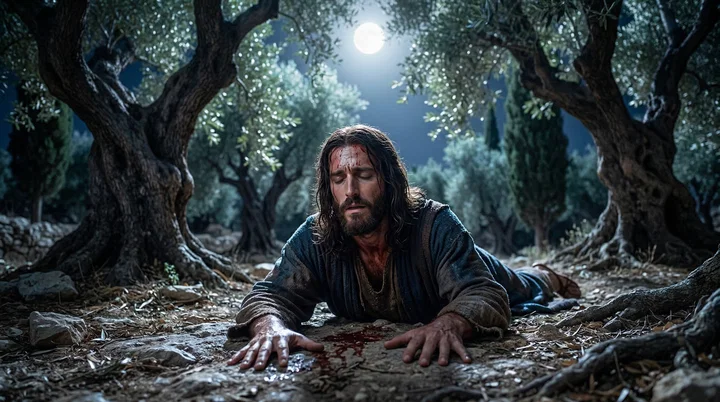
- Matthew 26:39
And he went a little further, and fell on his face, and prayed, saying, O my Father, if it be possible, let this cup pass from me: nevertheless not as I will, but as thou wilt.
Christ submits to the Father’s will as he faces the cup of suffering for human sin.
- Philippians 2:7-8
But made himself of no reputation, and took upon him the form of a servant, and was made in the likeness of men:
Christ humbled himself, took human form, and obeyed unto death on the cross.
- Romans 3:25-26
Whom God hath set forth to be a propitiation through faith in his blood, to declare his righteousness for the remission of sins that are past, through the forbearance of God;
Christ’s sacrifice provides remission of sins while demonstrating God’s justice in justifying sinners.
- Matthew 27:46
And about the ninth hour Jesus cried with a loud voice, saying, Eli, Eli, lama sabachthani? that is to say, My God, my God, why hast thou forsaken me?
Jesus cries out in abandonment while bearing sinners’ penalty.
- Luke 22:44
And being in an agony he prayed more earnestly: and his sweat was as it were great drops of blood falling down to the ground.
Jesus’ agony in Gethsemane reflects his suffering while bearing sin.
- Hebrews 9:28
So Christ was once offered to bear the sins of many; and unto them that look for him shall he appear the second time without sin unto salvation.
Christ was once offered to bear the sins of many.
- John 10:11
I am the good shepherd: the good shepherd giveth his life for the sheep.
The Good Shepherd gives his life for the sheep whose iniquity he bears.
- Romans 5:8
But God commendeth his love toward us, in that, while we were yet sinners, Christ died for us.
Christ died for sinners who had turned from God, demonstrating God’s love.
- Galatians 4:4-5
But when the fulness of the time was come, God sent forth his Son, made of a woman, made under the law,
Christ came under the law to redeem sinners by bearing their iniquity.
- Hebrews 2:17
Wherefore in all things it behoved him to be made like unto his brethren, that he might be a merciful and faithful high priest in things pertaining to God, to make reconciliation for the sins of the people.
Christ became like his brethren to make reconciliation for sin.
- 1 John 2:2
And he is the propitiation for our sins: and not for ours only, but also for the sins of the whole world.
Christ is the propitiation for the sins of the whole world.
- Isaiah 53:10-11
Yet it pleased the LORD to bruise him; he hath put him to grief: when thou shalt make his soul an offering for sin, he shall see his seed, he shall prolong his days, and the pleasure of the LORD shall prosper in his hand.
His soul is an offering for sin, and he bears iniquities to justify many.
Commentary part 1 of 2
Each commentary is drawn from primary sources: the writings of Ellen G. White and Adventist pioneers and periodicals. Each commentary is separate. Its own words are not a quotation; follow the references to read the source passages.
Ellen G. White
70 sources
All people have wandered from God like helpless sheep lost on wild mountains, unable to find the way back unless the Shepherd seeks and carries them home.AA 225.2–226.2Ms 112, 1897, par. 20–21 Turning to one's own way is choosing self-will and human wisdom instead of God's way, a stubborn selfishness that bars the heart to His Spirit and puts the soul in peril.Lt 31, 1889, par. 13–16ST Jan 6, 1881ST Jun 18, 1912 The verse is a plain prophecy of a suffering Messiah who would come in humility and poverty as a man of sorrows, rejected and slain like a lamb, not as a temporal ruler bringing only national elevation.AA 225.2–226.2DA 458.2–47MR 200.1–202.1 God Himself laid upon Christ, though pure and sinless and one with God, the guilt, penalty and curse due to all sinners of every generation, making Him the Substitute and Sin-bearer in the sinner's place.Ms 112, 1897, par. 20–21PK 689.2Ms 126, 1909, par. 6–8Lt 147, 1903, par. 30–32Lt 97, 1895, par. 56–61 By His wounding and bruising He takes the crushing load from weary shoulders to give pardon, peace, righteousness and everlasting life, so the sinner must believe, confess and lay sins upon Him, forsake sin and obey, and then seek the lost with the same compassion that sought him.COS 88.1–310MR 149.1–3Lt 200, 1907, par. 12DA 328.5
Sheep Gone Astray
All like sheep have gone astray from God, each turning to his own way.AA 225.2–226.2Ms 112, 1897, par. 20–21Ms 29, 1900, par. 2–4PK 689.2 The straying sheep pictures the sinner as helpless, lost on wild mountains, fainting and ready to die, unable to find the way back unless the Shepherd seeks, rescues, carries back, and brings into the fold.AA 225.2–226.2Ms 19, 1899, par. 16–17 The verse is an unmistakably plain prophecy of Christ's sufferings and death, meaning the Lord laid the iniquity of all upon Christ, who bore human guilt in their place.AA 225.2–226.2Ms 112, 1897, par. 20–21Ms 29, 1900, par. 2–4PK 689.2 This measures how much God loved the human race, seen at Calvary in Jesus upon the cross, and it exposes the heinous character of sin, for sin caused the death of God's dear Son, sin being the transgression of the law.Ms 19, 1899, par. 16–17 Christ bore this burden as the suffering substitute for sinful humanity, enduring suffering to fulfill God's purpose, bearing human griefs and sorrows, wounded for transgressions, bruised for iniquities, bearing the chastisement of peace and giving healing by His stripes, and when His soul is made an offering for sin He justifies many.Ms 29, 1900, par. 2–4Ms 19, 1899, par. 16–17
Turning every one to his own way means choosing a self-chosen way and human wisdom instead of God's way.Lt 31, 1889, par. 13–16ST Jan 6, 1881CE 95.3–96.1ST Apr 18, 1878STE 25.4 It is saying we do not want God's ways, instruction, reproof and duties but our own.ST Jun 18, 1912ST Apr 18, 1878STE 25.4 It is self-will rooted in selfishness and stubbornness that confuses judgment, bars the heart to God's Spirit, and puts the soul in peril.Lt 31, 1889, par. 13–16ST Jun 18, 1912STE 25.4 This is seen when amusements erase good impressions, when Solomon refused counsel, and in the religion of apostate Israel.CE 95.3–96.1ST Apr 18, 1878STE 25.4 All people have thus turned from God to their own sinful ways, strayed into sin and followed their own course.Lt 31, 1889, par. 13–16ST Jan 6, 1881CE 95.3–96.1
The Lord hath laid on him the iniquity of us all means God Himself placed the guilt, transgression, penalty and curse due to all sinners upon Christ.Lt 147, 1903, par. 30–32Lt 97, 1895, par. 56–61Ms 84a, 1897, par. 2DA 112.5–113.1Ms 114, 1897, par. 5–6 The innocent sufferer, though sinless, suffered as one bearing the guilt of transgressors and gathered the sins of the whole world to His soul and bore them as Sin-bearer.Ms 126, 1909, par. 6–8Lt 147, 1903, par. 30–32Ms 84a, 1897, par. 2Ms 114, 1897, par. 5–6 He freely became humanity's substitute and surety, taking the bitter cup of sin and bearing the punishment of the world's sins so that He could offer people the blessings of salvation.Lt 97, 1895, par. 56–61Lt 31, 1889, par. 13–16CE 95.3–96.1STE 25.4 He suffered for the transgression of the very ones who despised and rejected Him, to save the souls of mankind, a work of such intensity that none of His followers understood it.Ms 126, 1909, par. 6–8DA 112.5–113.1 Through faith in Christ as a personal Redeemer the transgressor's guilt is transferred to Him, and His sacrifice makes repentance and pardon possible, but God saves people from their sins, not in their sins.Ms 84a, 1897, par. 2Ms 114, 1897, par. 5–6
Prophecy of Suffering Messiah
Isaiah 53 is an unmistakably plain prophecy of Christ's sufferings and death, belonging to a chapter that sets forth His rejection and sufferings in the world.AA 225.2–226.2DA 458.2–4 It foretells a Messiah who would come in humility and poverty, as a man of sorrows and acquainted with grief, rejected, despised and slain, brought like a lamb to the slaughter, wounded, bruised, smitten and afflicted.GC88 358.2–359.18RED 45.1–46.1 He was not to come as a temporal ruler who would defeat enemies or bring only wonderful elevation to the Jewish nation.7MR 200.1–202.1DA 78.3–5 When presented in the temple to the leading rabbis with questions asking its meaning, Isaiah 53:1-12 points to the suffering and death of the Messiah as the Lamb of God for the salvation of souls, and its truths, long obscured yet vital, give a divine lesson with every question, expose the narrow and superficial wisdom of the wise men, and place truth in a new aspect.DA 78.3–5
The prophecy distinguishes His first coming in humiliation as a sacrifice for the sins of men after the scepter was taken from Judah and the legislative power from between his feet, from His second coming with power and glory in the clouds of heaven with the trump of the archangel as King and Deliverer.GC88 358.2–359.1 His first coming was foretold as the coming of a suffering Messiah, contrary to the people's expectation of a temporal ruler who would defeat their enemies, and their mistaken expectation led them to reject His words about being condemned and put to death.7MR 200.1–202.1Lt 65, 1894, par. 4–6 In that humiliation He stands between the wrath of the Father and guilty man to bear iniquity and scorn, with the weight of the sins of the whole world laid upon Him, bringing dreadful mental agony beyond all bodily suffering which even angels veil their faces from.1SP 45.2–46.1SG1 23.1 He leaves all His glory in heaven, appears on earth as a man and humbles Himself, becoming acquainted by His own experience with the temptations besetting man so He can succor those who are tempted, and few receive Him as the Son of God while nearly all hate and reject Him.1SP 45.2–46.1SG1 23.1 After His mission as teacher He is delivered into the hands of men to endure almost every cruelty Satan inspires, dying the cruelest death hung between heaven and earth as a guilty sinner, then rising the third day and ascending to the Father to intercede for wayward, guilty man, and every specification ordained in the councils of Father and Son was thus fulfilled.SG1 23.1
Jesus of Nazareth is the innocent Messiah and Son of God in whom the verse is perfectly fulfilled, sentenced to death by the Jewish tribunal and crucified by His own people as they had slain the prophets of old.GC 357.2–358.1GC88 357.1–2 When He was twelve years old on His first visit to the temple at Jerusalem for the feast, what He saw and heard there lifted the veil on His mission and work foretold in Isaiah 53 as the great sacrifice for sin, and with quick perception He knew He Himself was the fulfillment, receiving in the temple courts the communication from His Father appointing His message and work as Prophet of the Most High God.Ms 183, 1903, par. 1–2 He is the lamb God provides, whose sacrifice is a gift of God's own love that reconciles people to Him, the life-giving Savior and only hope of a life that measures with God's life, who gave Himself for fallen, sinful humanity, became Mediator between God and humanity, and at infinite cost redeemed the human family to help and bless His people.Lt 180, 1902, par. 33–35DA 112.5–113.1Lt 21, 1905, par. 10–11 He is the Passover antitype whose blood saves, separated three days then risen, God's great remedy proclaimed by all prophets, Moses, and the apostles to persuade concerning Jesus and the kingdom, and its fulfillment in Jesus convinced Wolff that Jesus was the Son of God.GC 357.2–358.1
Sinless Substitute Bearing Sin
Though pure, holy, sinless and one with God, Christ voluntarily became man's Substitute, Surety and Sin-bearer, taking the sinner's place and having the guilt, transgression and penalty due to all sinners laid upon Him by God Himself.Ms 112, 1897, par. 20–21PK 689.2Lt 147, 1903, par. 30–32Lt 97, 1895, par. 56–61Ms 84a, 1897, par. 2 He was counted a transgressor and numbered among the unholy, condemned as a criminal though He did no sin, bearing the treatment sinners deserve so that they may be treated as He deserves.Ms 126, 1909, par. 6–8Lt 147, 1903, par. 30–32Lt 97, 1895, par. 56–61Ms 84a, 1897, par. 2Lt 61, 1891, par. 10–12 He gathered the sins of the whole world to His soul and suffered for the very ones who despised and rejected Him, a work of such intensity that none of His followers understood it.Ms 112, 1897, par. 20–21PK 689.2Ms 126, 1909, par. 6–8
He alone bears the iniquity of the whole world, of every descendant of Adam in every generation, Jew and Gentile, not Israel alone but every nation.ST Jul 15, 1880ST Aug 9, 1905LC1 118.3RH Feb 24, 1874Lt 116, 1894, par. 7–8 No finite person can be a sin offering, carry even his own sins, or bear another's, and no parent may offer a child, for the Son of God alone can remove sin.LC1 118.3Ms 177, 1897, par. 89–91Lt 116, 1894, par. 7–8 Those who take Him by faith as personal Savior need not bear their own sins, but stand justified with His imputed righteousness although unworthy and undeserving.LC1 118.3RH Feb 24, 1874Ms 177, 1897, par. 89–91Lt 116, 1894, par. 7–8
Bearing sin brought Him divine wrath, standing between the Father's wrath and sinners with the weight of the sins of the whole world laid upon Him.1SP 45.2–46.1EW 120.2SG1 23.1ST Jan 20, 1914 It brought the hiding of His Father's face, felt separation and seeming abandonment and darkness, with dreadful mental agony beyond all bodily suffering that even angels cannot look upon but veil their faces from.1SP 45.2–46.1SG1 23.12T 214.1–3ST Aug 28, 1879 Though innocent He felt the separation sin makes between God and man, making His suffering more dreadful than the martyrs', for His anguish came not chiefly from bodily pain but from bearing sin, experiencing the Father's displeasure and hatred of sin with perfect hatred.Lt 147, 1903, par. 30–322T 214.1–3ST Aug 28, 1879 The weight broke His heart and crushed His life on the cross, with the guilt of the world's sin and God's wrath against sin weighing on Him.EW 120.2SG1 23.1ST Jan 20, 1914 It pressed on Him in Gethsemane with curse and anguish, in the wilderness of temptation with unutterable sorrow, and already at His baptism while bearing fallen nature, not from fear of death or human insult but from the guilt itself.SG1 23.12T 214.1–3ST Aug 28, 1879
God could not alter or abolish His unchangeable law to save man, for it could not yield the smallest part of its claim nor be set aside to meet man in his fallen state.STE 227.1ST Aug 13, 1894RH Feb 24, 1874 So Christ made Himself answerable to divine justice, enduring its penalty, curse and condemnation as ransom, sacrifice and propitiation, carrying the weight as the ransom paid on the cross to make repentance and pardon possible.Ms 114, 1897, par. 5–6STE 227.1ST Aug 13, 1894RH Nov 28, 1912FE 429.2 This was decided in a heavenly council out of love and pity for man's wretched, helpless condition under Satan and the prince of darkness, where without a mightier being than Satan to take the field Satan would have unlimited control over the race.RH Feb 24, 1874 His death magnifies the law as holy, just and good, upholds its justice and honor, pays the vast debt man could never pay, and fully satisfies God's justice while retaining His divinity and taking humanity and obeying the law on behalf of the human family.STE 227.1ST Aug 13, 1894FE 429.2 It opens probation and another trial, placing man again on probation and opening a new way to the Father as High Priest who now pleads for humanity, with type meeting antitype so old ceremonies lose force.Ms 114, 1897, par. 5–6STE 227.1RH Feb 24, 1874
Before man was created God and Christ covenanted that Christ would bear the penalty if man fell, He being one with and equal to the Father and above all law, alone of sufficient value where angels could not atone.Lt 61, 1891, par. 10–12ST Apr 2, 1912RH Feb 24, 1874 Of His own free will and love He left His honor, kingly authority and glory with the Father, clothed divinity with humanity to provide a sinless offering and become man's substitute and surety.ST Jan 21, 1897ST Apr 2, 1912RH Feb 24, 1874ST Jul 8, 1897 He humbled Himself to poverty, privation, a life of sorrow, insult and the cruelest death hung between heaven and earth, identifying Himself with the weaknesses of the fallen race.ST Jan 21, 1897SG1 23.1RH Feb 24, 1874ST Jul 8, 1897 He passed over the ground where Adam fell and stumbled, taking fallen nature and the bitter cup apportioned to humanity, meeting a test almost infinitely more severe than Adam's, treading temptation alone forty days emaciated, overcoming the tempter through perfect obedience, purity, steadfast integrity and righteousness where Adam failed.ST Aug 9, 1905LC1 118.3RH Feb 24, 1874Ms 177, 1897, par. 89–91 By firm obedience He redeemed Adam's disgraceful failure, conquered Satan, and worked out a perfect character to impute His spotless righteousness to man, so man may overcome the foe through His name and fallen man be given value, with healing by His stripes unto life measuring with the life of God for those who follow His footsteps.Lt 61, 1891, par. 10–12Ms 140, 1908, par. 45–47ST Aug 9, 1905LC1 118.3RH Feb 24, 1874
Salvation Offered Through Him
All have gone astray each to his own way, and the guilt of all laid upon the sinless One who took the sinner's place, takes the crushing load from weary shoulders to give rest, for the heaviest burden is sin which left to be borne would crush the bearer.COS 88.1–3DA 328.5MH 71.3–4Lt 30, 1893, par. 9–11 Wounded for transgressions, bruised for iniquities, bearing the chastisement that brings peace and healing by stripes, He removes guilt to give pardon, cleansing, justification, peace, righteousness counted as theirs, adoption, spiritual life, moral power to obey, and everlasting life, bearing care and sorrow as well for all who cast care upon Him.COS 88.1–3DA 328.5MH 71.3–4 Every blessing comes from Him alone, and His Word cures those dead in trespasses, so the penitent see in His suffering the healing and peace provided for sin while the world fails to recognize Him as its only hope.COS 88.1–3Lt 30, 1893, par. 9–11
He is the life-giving Savior and only hope of a life measuring with God's life, who gave Himself for fallen humanity at infinite cost to become Mediator between God and man and redeem the human family.Lt 180, 1902, par. 33–35AA 451.4SLP 276.1–277.1RH Dec 7, 1911 As God's great remedy for sin the guiltless One bears the sins of the guilty, to which all the prophets and Moses testified to persuade concerning Jesus and the kingdom, and His sacrifice is for the whole world not Israel alone, opening salvation to every nation.AA 451.4SLP 276.1–277.1ST Jul 15, 1880RH Dec 7, 1911 As second Adam He took human nature, met its temptations and trials without sin, redeemed Adam's failure and worked out a perfect character for us, securing another trial and ransom from death.Lt 180, 1902, par. 33–35ST Jul 15, 1880ST Aug 9, 1905 Sins laid on Him for those who receive salvation will at last roll back on Satan as originator, while those refusing the atonement must bear in their own person the guilt and punishment of transgression.Lt 180, 1902, par. 33–35AA 451.4GC88 539.3–540.1
The laying of iniquity on Him measures how much God loved the race, seen at Calvary in Jesus upon the cross, and exposes the heinous, offensive character of sin, for sin which is transgression of the law caused the death of God's dear Son.10MR 149.1–3ST Feb 27, 1893 His suffering beneath the burden reveals together God's abhorrence of evil in the death of the cross and His love for fallen man, showing the cost borne with future joy in view and proving that the wages of sin is death and every violation must receive just retribution, in no other way could man be freed.ST Feb 27, 1893ST Sep 12, 1911GC88 539.3–540.1 Seeing the sacrifice brings conviction of condemnation and the power of truth in the heart, leading the sinner to repentance toward God for transgression of the law which is holy and just and good and to faith in Christ, through whom God gives repentance and remission, mercy and truth, forgiveness and love, and imputed righteousness to him who realizes Christ died for him.10MR 149.1–3ST Feb 27, 1893ST Sep 12, 1911 At the judgment the cross will expose rebellion and leave sinners without excuse, while those nearest Jesus discern frailty and hope only in His merit.ST Sep 12, 1911GC88 539.3–540.1
Faith Obedience and Compassion
The guilt of all has been placed upon the suffering one, whose wounding, bruising, chastisement and stripes were borne on behalf of every sinner, and it is the sinner's privilege to believe that his own sins have been borne, to confess them and lay them upon the Sin-bearer, to look away from self to the Lamb and live, to receive Him as personal Savior and to be left with Him.Lt 200, 1907, par. 12ST Apr 9, 1894CET 25.2–3LSEGW 33.1–34.2ST Apr 18, 1878 When a person honest in heart reads, marks, learns and inwardly digests this truth and comes to God in prayer, it brings conviction to the heart and trouble because he sees he is under condemnation, and he feels the power of the truth in the soul.10MR 149.1–3Lt 200, 1907, par. 12 No legalism and no self-inflicted sorrow and woe can give relief, for no one can rightly estimate sin apart from accepting God's estimate, and human guilt borne alone would crush the sinner.ST Apr 9, 1894 By accepting the provision God has made the sinner stands free before God in the merit and virtue of his Substitute, gains a true estimate of sin, and receives godly sorrow of true repentance in place of hopeless discouragement and grief, turning from sin with grief and abhorrence instead of making feelings an idol to worship and serve.ST Apr 9, 1894 Then the Spirit sheds light on the convicted mind so he sees the meaning of the Word as never before, and like blood propelled from the heart circulating through the body carrying life and vigor, the truth received into the heart diffuses through the inner man to bring thoughts and affections and powers into obedience, so that if the heart is submitted to the will of Christ the whole being is in due time perfected, bringing free pardon, cleansing, peace, strength and guidance step by step, with those who come before Him confessing receiving pardon and waiting in glad expectation.Lt 200, 1907, par. 12CET 25.2–3LSEGW 33.1–34.2ST Apr 18, 1878
Pardon does not cancel the claims of the law nor permit continued sin, for the suspension of the penalty is meant to draw people to holiness and obedience, and repentance is the first step toward obedience.Ms 114, 1897, par. 5–6ST Aug 13, 1894 God saves people from their sins, not in their sins, and Christ became Substitute and Sin-bearer, though undeserving taking the punishment sinners deserved and paying the ransom on the cross, so that through faith sins may be pardoned and sinners may return to loyalty to God.Ms 114, 1897, par. 5–6STE 227.1FE 369.1 His perfect obedience is credited to repentant believers so they stand before God uncondemned, His righteousness making their obedience acceptable, yet they must cooperate with divine power to overcome sin and live complete in Him.STE 227.1STE 25.4 This calls every reader to make a covenant by self-denial, to surrender to walk in His footsteps and willingly partake of His humiliation and sufferings, rebuking shunning of the cross and refusal of risk, and warning not through timidity or fear of human reproach to take the side of transgressors of the law and imperil the soul by refusing Him, for each proves fidelity in this probationary life where destiny is decided.Ms 29, 1900, par. 2–4
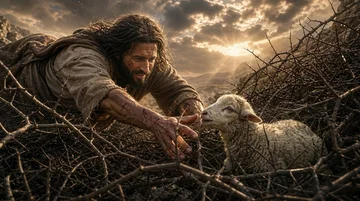
Beholding this infinite sacrifice measures God's right to service, so no sacrifice, patience or self-denial required in serving God is too great and none is cause for complaint, for He lived a life of sorrow and privation for salvation though pure and holy.ST Jan 21, 1897 His suffering is the pattern for followers, who are called to deny self, take up the cross, follow His steps even when suffering wrongfully, and show vigor in the closing warfare.Ms 29, 1900, par. 2–4EW 92.2–93.1 All like sheep have gone astray each to a self-chosen way and brought guilt upon themselves, becoming fainting and helpless and ready to die out on wild and bare mountains away from the tender Shepherd's care, and the Lord shed His blood along the mountain track and suffered torn hands to find and bring the stray sheep back, with rejoicing at the gate of heaven when He succeeds.CT 268.2–269.1MH 505 This revelation of God's love grounds the call to treat erring people with Christlike patience and compassion, for under-shepherds and believers must seek the lost at cost, carry them back without reproach, encourage not condemn, treat the unpromising as Christ treats them to save a soul, and remember shared liability to stray in order to be kind and forgiving, since the Sinless One laid off glory, accepted human weakness, trod the path alone bearing every sin and discord and defiling lust as torture to His spirit with no one on earth understanding Him, yet with steadfast purpose on whom redemption rests.CT 268.2–269.1MH 505DA 111.3–5
Sources
Pioneers and periodicals
174 sources
All people have wandered from God like lost sheep, each turning to his own self-chosen way of sin and disobedience and standing guilty, helpless and under sentence of death.ST May 5, 1914RH Aug 7, 1900ST Aug 8, 1906ST Aug 28, 1901ST Apr 29, 1903 The Lord laid the iniquity of all upon Christ, who as sinless substitute and sacrifice bore their guilt, curse and punishment to make pardon, healing and peace possible.ST Jul 4, 1905RH Jan 20, 1910RH Aug 8, 1907ST Apr 30, 1894ST Jul 17, 1884 In bearing it he suffered the demand of divine justice against broken law, chiefly in spiritual anguish under separation from God, culminating in Gethsemane and Calvary where sin broke his heart and put him to death.ST Jul 14, 1881ST Feb 14, 1906ST Apr 30, 1894RH Dec 26, 1907 This great sacrifice was foretold centuries before as the lowly, rejected, suffering Messiah, and Jesus of Nazareth fulfilled it literally from Bethlehem to Golgotha in his trial, crucifixion and death.RH Aug 8, 1907RH Jul 6, 1916ST Sep 13, 1905ST Apr 23, 1912RH Jan 15, 1875 Its healing is received not by merit but by repentant faith that yields sin to him and trusts his merits, bringing forgiveness and cleansing now and power to obey henceforth.ST Apr 9, 1894ST Jul 1, 1886STST Jan 27, 1909RH Jun 9, 1863
Language of Straying Sheep
All like sheep have gone astray, each turning away from God and the right way to a self-chosen way of sin and disobedience, which means all have sinned and stand lost, guilty, and under sentence of death.ST Aug 8, 1916ST May 5, 1914ST Aug 8, 1906RH Oct 13, 1863ST Jan 9, 1896 The straying is universal, with every person departing to his own way and bearing a burden of sin that would crush him if left to bear it himself.ST Aug 8, 1916ST May 5, 1914ST Aug 8, 1906RH Oct 13, 1863RH Jun 3, 1862 That guilt was laid by the Lord upon Christ, who stood under the judgment of the law in the place of the guilty and suffered and died as substitute because sin earns death.ST Aug 8, 1916ST May 5, 1914ST Aug 8, 1906RH Oct 13, 1863RH Jun 3, 1862 Read aloud as God's own word without human reproach, with kindness and with prayer that places reader beside hearer as equally needing mercy, this truth disarms even a proud hardened sinner, convicts him of being a sinner, breaks resistance, and brings him to confession, conversion, and victory through the blood of the Lamb.ST Aug 8, 1916RH Aug 7, 1900RH Jun 3, 1862
Turning to his own way is the very essence of sin, the rejection of the authority of God's will and the setting up of human will and human way in opposition to it.ST May 5, 1914RH Jul 15, 1909RH May 13, 1862RH Oct 1, 1903RH Jun 9, 1863 That desire to choose our own way is a rebellious spirit inherited from Adam, a fall from the high way of holiness after Paradise by transgressing His covenant of commandments.ST May 5, 1914RH Jul 15, 1909RH May 13, 1862RH Jun 3, 1902 The particular sinful act is only incidental, decided by temperament and circumstance, while sin itself lies deeper than outward manifestation in the rebellious will, which explains why people take to different forms of transgression.ST May 5, 1914RH Oct 1, 1903 This universal departure creates a pitiable and hopeless state of transgression in heart and life, with none seeking God and none doing good, forming a moral hindrance that prevents reunion between God and man and makes justification necessary.RH Jul 15, 1909RH Oct 1, 1903RH Jun 9, 1863 It therefore demands turning back to God, giving up one's own will to yield to His, surrendering the will to receive pardon for rebellion, and entering the new covenant in which God's law is put in the heart and sins are remembered no more, as though never transgressed.ST May 5, 1914RH May 13, 1862RH Jun 9, 1863 That self-devised departure includes false worship of human devising, and its remedy requires renewal of mind, training and guidance, and new birth.RH May 13, 1862RH Jun 9, 1863RH Jun 3, 1902
Like lost sheep people are helplessly confused and do not know how to find the way home, so humanity cannot find its own way back to God or save itself.RH Aug 7, 1900ST Aug 28, 1901ST Apr 29, 1903RH Apr 24, 1879 Wandering until bewildered and lost, they are naturally lost and wild, liable to go farther from home and become easy prey, with mind and will and way out of harmony with God bringing disease, unrest, condemnation, and death.RH Aug 7, 1900ST Aug 28, 1901RH Apr 24, 1879ST Even after six thousand years of wandering God still recognizes and owns them as His sheep, so there is hope that under the good Shepherd's care they can be brought back to the heavenly fold.ST Aug 28, 1901ST Apr 29, 1903RH Apr 24, 1879 Christ the Great Shepherd gives His life for the flock, cares for the wandering and lost, cherishes and saves even the weakest who might stray, and came to find and save the lost by bearing the sins of all and suffering as victim for their offenses to secure peace, healing, and freedom.ST Aug 28, 1901ST Apr 29, 1903RH Apr 24, 1879ST Because all share the same need for a Saviour, no one can rightly despise another.RH Aug 7, 1900ST Aug 28, 1901ST Jan 9, 1896
The straying belongs to all hearts and is seen from the beginning, for children inherit evil passions and dispositions and are born with unregulated impulses, so that left unguided they go astray from the start toward ruin and need training, education, guidance, and renewing of mind.RH Jun 3, 1902 The same image applies to youth lost to the church and wandering in unbelief, who are to be rescued with gentle, wise, loving care rather than driven or frightened, and held before God in persistent prayer trusting Him to hear and save.ST Jun 6, 1906ST May 27, 1880 It applies to Christians who quarrel and divide instead of doing loving deeds, each going his own direction, leaving the narrow way untrod while the broad way is worn and exposing the little ones they love to the ravening wolf. Such a personal wrong course calls for turning inward, owning fault and sin as one's own and not another's, feeling its fearful load, and then going to confess to a brother, while all frailty and proneness to wander calls for treating the erring with kindness rather than reproach. It embraces prisoners, homeless children, souls in dark places, and peoples in heathen darkness needing the Gospel and release, as well as professed believers whether backslidden or not, and any individual like a straying sheep who has left the right path toward ruin and must be sought as by a shepherd.RH Jun 3, 1902ST Jun 6, 1906ST May 27, 1880
Since all have sinned and gone astray, no one can rightly condemn the sins of others while claiming personal perfection.RH Mar 13, 1879 This holds for Bible characters as well as people today, whose failures must be weighed alongside the moral conditions and opportunities of their times, so that their faults do not mark them as uniquely sinful.RH Mar 13, 1879
Prophecy and Fulfillment Context
Isaiah 53:6 stands inside Isaiah's vivid prophecy of Christ's life, suffering and death, foretelling the leading particulars of his career and work as Saviour.RH Jul 6, 1916ST Dec 3, 1885 It belongs to his vision of deliverance from sin and error through the Messiah, connected with the promised return from Babylonian exile, the two deliverances appearing separately or intertwined.RH Jul 6, 1916 It runs through Isaiah 53 to 59 and onward through gospel triumphs, calling of the Gentiles, apostasy, recovery, judgment and new heavens and earth, and it concerns God's comfort for His backsliding sinful people and His pledge of power to save them.RH Nov 15, 1853 It is identified as prophecy of Christ's first advent and as pointing clearly to Jesus' death.ST Oct 11, 1905ST May 20, 1908
It was spoken more than five centuries before Jesus appeared, over five hundred years before He appeared on earth.ST May 6, 1880ST Nov 18, 1889 It speaks prophetically of the Messiah's sufferings and death as though already past, describing as accomplished what God will certainly fulfill.ST May 6, 1880ST Nov 18, 1889RH Jun 22, 1869 Its past-tense language for future events must be read as still future when given, and it presents the suffering with such force and detail that it reads more like history than prophecy.RH Jan 15, 1875ST Feb 19, 1880RH Feb 16, 1860 Compared with the history of Jesus it can convince the mind and change the heart.RH Jan 15, 1875ST Feb 19, 1880
It foretells the Messiah's lowly life, rejection, unjust trial, death among malefactors, burial with the rich, and agony in bearing sin.RH Aug 8, 1907RH Nov 18, 1862 That includes being despised and rejected, a man of sorrows acquainted with grief, oppressed and afflicted yet opening not His mouth as a lamb to the slaughter and as a sheep dumb before shearers, wounded for transgressions and bruised for iniquities, bearing griefs and carrying sorrows, esteemed stricken and smitten of God, suffering the chastisement of peace, crowned with thorns and put to shameful death.RH Aug 8, 1907RH Nov 18, 1862 Jesus of Nazareth fulfilled it literally at His first advent from Bethlehem to Golgotha, from the manger to the cross, in His betrayal, condemnation, crucifixion, wounds, words on the cross and pouring out His soul unto death.RH Aug 8, 1907ST Sep 13, 1905ST Apr 23, 1912ST Nov 16, 1882RH Jun 8, 1911 One claiming to be Christ without suffering in this way could not be the Messiah for whom Israel waited, and these sufferings belong to the first coming, distinct from prophecies of His second advent to judge, triumph and reign in glory.ST Jul 1, 1897ST Oct 11, 1905
Read together with the twenty-second psalm and compared with the Gospel record and with 1 Peter 2:24-25, it gives evidence of the divinity of its Author and the unfailing character of His Word.RH Jun 8, 1911RH Jun 24, 1858 It confirms Jesus' divine mission and Messiahship, proves God fulfills prophecy literally, and supports expecting unfulfilled prophecy to be fulfilled literally.RH Jun 8, 1911ST Jan 9, 1912 That convergence of myriad lines of prophecy in Christ sets God's seal on Him more unmistakably than any miracle and furnishes colossal proof of the divine origin of the prophetic Scriptures, so mighty that unbelievers invent impossible theories to evade its force, saying Jesus brought on His own crucifixion by pre-concerted measures to give His disciples an appeal to old prophecies.ST Jan 9, 1912 It was expounded by Jesus after His resurrection and by Philip to the Ethiopian eunuch, who finds Christ there.ST Jul 20, 1882ST Jan 9, 1912 Its difficulty from a rabbinic standpoint and the Jews' desire for a worldly conqueror led to rejection, and if they had fully understood it before Christ was crucified they might have been kept from taking the life of the Lord of glory.ST Jan 9, 1912RH May 7, 1872
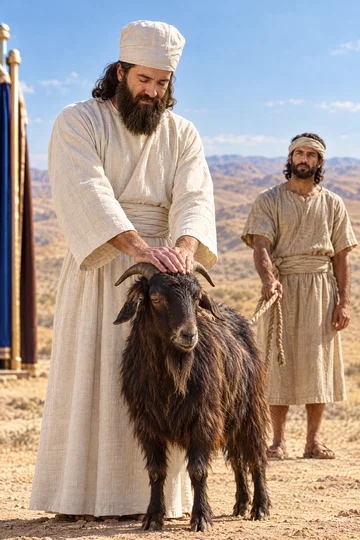
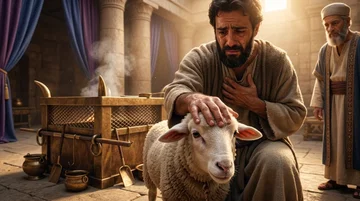
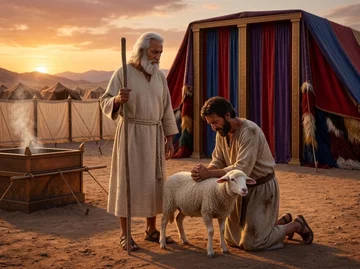
Every sacrifice from Abel's altar until the last Passover of the passion week, the Passover lamb, the lambs and sin-offerings, pointed to that cross on Calvary at Golgotha.RH Apr 7, 1874ST Jan 9, 1912 The sin offering pictured the transfer: the sinner confessed over a lamb, hands were laid on the victim, it died in the sinner's place, its blood or life taken for his, so sin was forgiven to the sinner and laid upon another who suffered its penalty.ST Jun 30, 1914RH Apr 7, 1874 The chapter unlocks the meaning of that system of worship, including its sacrifices and sin offerings.ST Jul 20, 1882 The blood of bulls and goats could not make real atonement because a goat is not worth as much as a man, so it could only illustrate the principle in figure and teach the desert of sin; a more dignified offering and more perfect sacrifice had to come, who was wounded for transgressions, bruised for iniquities, chastised for peace, healed by stripes, stricken for the transgression of the people, pouring out His soul unto death, numbered with transgressors, bearing the sin of many and making intercession for transgressors, the Anointed Messiah cut off but not for Himself.ST Nov 27, 1884ST Apr 15, 1886
Sources