Hebrews 9:7
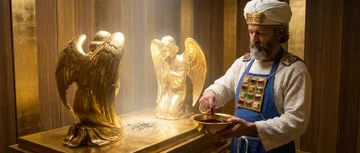
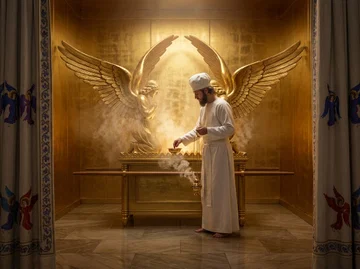
But into the second went the high priest alone once every year, not without blood, which he offered for himself, and for the errors of the people:
Translations
American King James Version, King James Version, KJV Cambridge Paragraph Bible, Webster Bible
But into the second went the high priest alone once every year, not without blood, which he offered for himself, and for the errors of the people:
Revised Version, American Standard Version
but into the second the high priest alone, once in the year, not without blood, which he offereth for himself, and for the errors of the people:
and into the second, once in the year, only the chief priest, not apart from blood, which he doth offer for himself and the errors of the people,
but into the second, the high priest only, once a year, not without blood, which he offers for himself and for the errors of the people:
But, into the second, once for all in the year, only the high-priest, not without blood, which he offered for himself and the ignorances of the people:
Berean Standard Bible, Majority Standard Bible
But only the high priest entered the second room, and then only once a year, and never without blood, which he offered for himself and for the sins the people had committed in ignorance.
but into the second the high priest alone, once in the year, not without blood, which he offers for himself and for the errors of the people.
But only the high priest went into the second, once a year, not without making an offering of blood for himself and for the errors of the people:
But into the second went the hie Priest alone, once euery yere, not without blood which hee offered for himselfe, and for the ignorances of the people.
Douay-Rheims (Challoner revision)
But into the second, the high priest alone, once a year: not without blood, which he offereth for his own, and the people’s ignorance:
Pictures
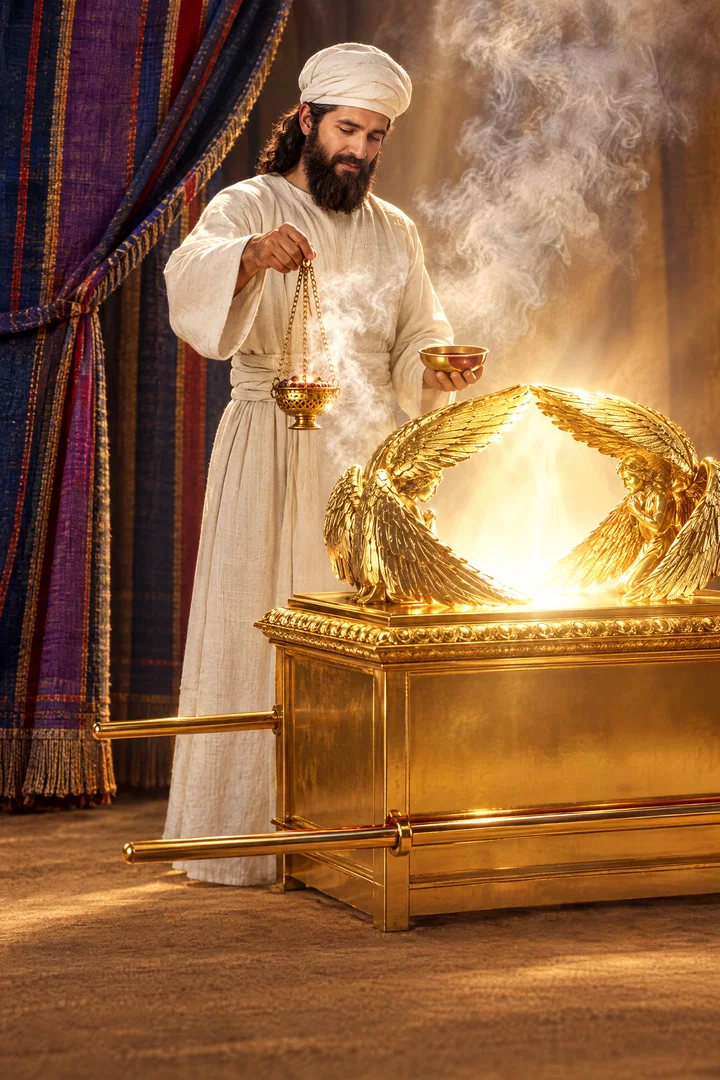
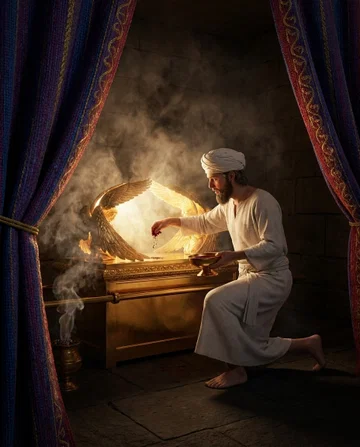
Cross-references 20 of 107
- Leviticus 16
And the LORD spake unto Moses after the death of the two sons of Aaron, when they offered before the LORD, and died;
Describes the yearly high-priestly service that Hebrews 9:7 reflects.
- Hebrews 8:5
Who serve unto the example and shadow of heavenly things, as Moses was admonished of God when he was about to make the tabernacle: for, See, saith he, that thou make all things according to the pattern shewed to thee in the mount.
Calls the earthly priestly service a pattern of heavenly things.
- Hebrews 9:23-24
It was therefore necessary that the patterns of things in the heavens should be purified with these; but the heavenly things themselves with better sacrifices than these.
Connects earthly sanctuary cleansing with Christ’s ministry in the heavenly sanctuary.
- Hebrews 9:12
Neither by the blood of goats and calves, but by his own blood he entered in once into the holy place, having obtained eternal redemption for us.
Christ enters the holy place once by his own blood, obtaining eternal redemption.
- Hebrews 8:1-2
Now of the things which we have spoken this is the sum: We have such an high priest, who is set on the right hand of the throne of the Majesty in the heavens;
Christ ministers as High Priest in the true tabernacle in heaven.
- Hebrews 10:1-4
For the law having a shadow of good things to come, and not the very image of the things, can never with those sacrifices which they offered year by year continually make the comers thereunto perfect.
The yearly sacrifices were shadows, unable to perfect those who offered them.
- Exodus 25:21-22
And thou shalt put the mercy seat above upon the ark; and in the ark thou shalt put the testimony that I shall give thee.
The mercy seat is where God meets above the ark, the setting for the atoning blood.
- Leviticus 16:30
For on that day shall the priest make an atonement for you, to cleanse you, that ye may be clean from all your sins before the LORD.
The priest makes atonement to cleanse the people from their sins.
- Leviticus 16:2
And the LORD said unto Moses, Speak unto Aaron thy brother, that he come not at all times into the holy place within the vail before the mercy seat, which is upon the ark; that he die not: for I will appear in the cloud upon the mercy seat.
God restricts the high priest’s entry behind the veil to the appointed time.
- Hebrews 9:24-26
For Christ is not entered into the holy places made with hands, which are the figures of the true; but into heaven itself, now to appear in the presence of God for us:
Christ enters heaven for us, contrasting his once-for-all sacrifice with the yearly sanctuary service.
- Revelation 11:19
And the temple of God was opened in heaven, and there was seen in his temple the ark of his testament: and there were lightnings, and voices, and thunderings, and an earthquake, and great hail.
The heavenly temple reveals the ark of God’s testament in the Most Holy place.
- Leviticus 23:27-29
Also on the tenth day of this seventh month there shall be a day of atonement: it shall be an holy convocation unto you; and ye shall afflict your souls, and offer an offering made by fire unto the LORD.
The Day of Atonement required self-affliction; those who refused were cut off.
- Hebrews 7:27
Who needeth not daily, as those high priests, to offer up sacrifice, first for his own sins, and then for the people’s: for this he did once, when he offered up himself.
Contrasts the yearly sacrifices for priest and people with Christ’s once-for-all self-offering.
- Hebrews 10:19-20
Having therefore, brethren, boldness to enter into the holiest by the blood of Jesus,
Jesus’ blood opens the new and living way into the holiest.
- Matthew 27:51
And, behold, the veil of the temple was rent in twain from the top to the bottom; and the earth did quake, and the rocks rent;
The veil’s tearing at Jesus’ death marked the end of earthly sanctuary services.
- Exodus 25:40
And look that thou make them after their pattern, which was shewed thee in the mount.
The earthly sanctuary followed the pattern shown to Moses.
- Exodus 25:8-9
And let them make me a sanctuary; that I may dwell among them.
The earthly sanctuary was built as a pattern of God’s dwelling.
- Leviticus 16:20-22
And when he hath made an end of reconciling the holy place, and the tabernacle of the congregation, and the altar, he shall bring the live goat:
Israel’s confessed sins are placed on the live goat and carried away after the sanctuary service.
- Hebrews 9:26
For then must he often have suffered since the foundation of the world: but now once in the end of the world hath he appeared to put away sin by the sacrifice of himself.
Christ puts away sin through his once-for-all sacrifice, unlike repeated offerings.
- Leviticus 16:34
And this shall be an everlasting statute unto you, to make an atonement for the children of Israel for all their sins once a year. And he did as the LORD commanded Moses.
Establishes the yearly atonement for Israel’s sins.
Commentary
Each commentary is drawn from primary sources: the writings of Ellen G. White and Adventist pioneers and periodicals. Each commentary is separate. Its own words are not a quotation; follow the references to read the source passages.
Ellen G. White
29 sources
But into the second refers to the inner apartment behind the second veil, the Most Holy Place containing the ark and mercy-seat where God's glory dwells, entered in contrast to the daily ministry in the Holy Place and at the altar of burnt offering.WLF 18.3–4SG4 8.3PP 351.4 Into it the high priest alone was permitted to go only once a year, on the tenth day of the seventh month, the Day of Atonement, after solemn preparation and carrying the blood of bulls and goats to offer for his own sins and for the errors of all the people as their mediator.SG1 160.1EW 214.2–215.1GC 433.1–434.1 The place was most sacredly guarded in solitude under penalty of death for unbidden intrusion, and while he made atonement before the mercy-seat amid incense and hushed courts the people waited outside in awe and prayer until he came out to bless them.1SP 274.28T 284.3–285.1MH 437.1Ms 111, 1897, par. 53–55 That yearly entrance with blood was a type of the work of Jesus as great High Priest, who ministers His own shed blood in the true heavenly tabernacle where animal sacrifices no longer have value.SG1 160.1EW 214.2–215.1LS 116.1SG1 161.1DA 755.1–756.4 At His death the temple veil was torn open and the earthly most holy was no longer recognized by God's presence, and in 1844 at the end of the 2300 days of Daniel 8 Christ entered the heavenly Most Holy to make final atonement and cleanse the sanctuary from sin by His blood before He comes forth to bless His waiting people.EW 214.2–215.1LS 116.13SP 166.2–167.15RED 86.2ST Oct 7, 1886
Earthly Sanctuary Service
The verse belongs to the sanctuary of two apartments divided by a second veil, which marks the entrance into the Holiest, the Holy of Holies, the second part or inner section.WLF 18.3–4SG4 8.3PP 351.4Lt 253, 1903, par. 17 Behind that veil stand the ark and mercy-seat with their mysteries, and the service connected with them is the great Day of Atonement.SG4 8.3PP 351.4Lt 253, 1903, par. 17 Before the veil in the first apartment stands the golden altar of incense, and the yearly ministry in the Most Holy Place stands in contrast to the daily service performed at the altar of burnt offering and in the Holy Place.SG4 8.3PP 351.4 Only the high priest enters that inner apartment, alone, once a year on the appointed day, the tenth day of the seventh month, the Day of Atonement.SG1 160.1EW 214.2–215.1GC 433.1–434.14SP 262.1–263.1PP 426.1–2 He enters after careful and solemn preparation, carrying blood of bulls and goats offered for his own errors and sins and for the errors of the people and of all Israel, acting as mediator.SG1 160.1EW 214.2–215.14SP 262.1–263.1PP 426.1–212MR 417.1–418.1 That annual service cleansed the sanctuary from the sins symbolically conveyed there during the year and removed what had been transferred to it.SG1 160.1EW 214.2–215.14SP 262.1–263.1
The Most Holy Place is most sacredly guarded in sacred solitude and kept as God's sacred audience chamber where Jehovah meets the priest to communicate His glory.8T 284.3–285.1MH 437.1Ms 111, 1897, par. 53–55 Its entrance veil inwrought with cherubim is to be lifted by no other hand than the high priest's, and to intrude unbidden into its sacred mystery is death.8T 284.3–285.1MH 437.1Ms 111, 1897, par. 53–55 It is sacred to God's presence, for above the mercy-seat and the bowed, worshiping angels dwells the glory of the Holiest, glory upon which no man may look and live.8T 284.3–285.1MH 437.1 The high priest approaches that awful presence with reverence and trembling to make atonement before the mercy-seat, where God meets him in the cloud of glory.1SP 274.28T 284.3–285.1MH 437.1ST Mar 4, 1903PP 352.1 Clouds of incense veil the glory from his sight as he ministers before the ark in the awful presence of God.1SP 274.28T 284.3–285.1MH 437.1
While he is within, every sound throughout the courts of the temple is hushed and no other priests minister at the altars.1SP 274.28T 284.3–285.1 The people wait outside in silent awe and prayer for blessing and mercy, sending up petitions for God's mercy.1SP 274.28T 284.3–285.1MH 437.1ST Mar 4, 1903PP 352.1 If he stays longer than expected they fear that their sins or a sin of the priest has led the glory of the Lord to slay him, and that a prolonged stay or delay in return means he has been struck down because of his own sins or theirs.1SP 274.2ST Mar 4, 1903PP 352.1 The bells on his garments reassure them when they hear him moving, and when he comes out he blesses them.1SP 274.2ST Mar 4, 1903 Within the Most Holy before the ark the high priest inquires of God and God converses with him, often answering with an audible voice.1SP 274.21SP 398.2–399.1SG4 102.2 When God does not answer by voice He answers by a sign upon the cherubim over the ark and upon the precious stones of the breastplate, with sacred beams of light and glory resting on the right meaning approbation and favor and a cloud resting on the left meaning refusal and disapproval.1SP 398.2–399.1SG4 102.2ST Oct 7, 1886
In Eli's time this restriction still held: Eli alone had permission to enter the most holy place once a year alone, while his sons ministered only at the door of the tabernacle in slaying the beasts and at the altar of sacrifice.1SP 400.1–401.1
Christ's Heavenly Ministry
The once-a-year entrance alone with blood to cleanse the sanctuary from the sins symbolically carried into it through the year is the pattern for the work of Jesus as great High Priest, and Aaron's yearly ministry represented that work of Christ.SG1 160.1EW 214.2–215.1LS 116.1SG1 161.1GC 433.1–434.1 The cleansing begun at the end of the 2300 days of Daniel 8 is not a removal of physical impurity but a cleansing from sin by Christ's blood, taking away sins symbolically transferred to the heavenly sanctuary.EW 214.2–215.1SG1 161.14SP 262.1–263.1
Jesus entered the heavenly sanctuary by the offering of His own blood and ministers there as minister of the true tabernacle pitched by the Lord and not by man, continually standing at the altar and officiating in God's presence, moment by moment presenting His shed blood as a lamb slain for the sins of the world, the oblation for every offense and every shortcoming of the sinner.SG1 160.1SG1 161.1Ms 50, 1900, par. 15 Unlike the earthly priests who died, He remains a priest forever, and He has become priest and advocate in heaven by His own blood.SG1 160.1DA 755.1–756.4 The daily and yearly typical atonement shadows no longer possess virtue and are no longer to be made, and animal sacrifices for sin no longer have value, because the Lamb of God has died for the world's sins and constant commission of sin now makes the atoning sacrifice through a mediator essential.3SP 166.2–167.1DA 755.1–756.4Ms 50, 1900, par. 15
At Christ's death, while priests were ministering in the temple before the veil separating the holy from the most holy, the earth trembled and the heavy veil of tapestry was torn in two from top to bottom, exposing to the common gaze and to curious eyes the most holy place that human feet had entered only once a year.3SP 166.2–167.15RED 86.2ST Oct 7, 1886DA 755.1–756.4 From that time God's presence no longer overshadowed the earthly mercy-seat, nor did the light of His glory flash upon or the cloud of His disapproval shadow the precious stones in the breastplate, and the apartment lay open to every eye and was no longer recognized by the Lord.5RED 86.2ST Oct 7, 1886Ms 111, 1897, par. 53–55 The tearing showed that the old separation had ended, that the way into the holiest was open, that the earthly most holy was no longer set apart as before, and that type had met antitype in an infinite sacrifice offered for the sin of the world, ending the earthly service the yearly entrance represented.3SP 166.2–167.1DA 755.1–756.412MR 417.1–418.1Ms 111, 1897, par. 53–55 The temple service nevertheless continued for a time until the temple was destroyed, performed by those who kept offering the old sacrifices without consciousness of the change, with conflicting feelings and a sense of strangeness.12MR 417.1–418.1Ms 111, 1897, par. 53–55
In 1844, at the end of the 2300 days, Christ entered the heavenly most holy place to make a final atonement and cleanse the sanctuary, pleading His blood for sinners in the closing work of atonement for those who can benefit from His mediation.EW 214.2–215.1SG1 161.1GC 433.1–434.14SP 262.1–263.1 On the appointed day He accomplished all that the type justified expecting, even though the nature of the event was mistaken.LS 116.1 When that work of atonement is finished He will come forth to bless His waiting people, as Aaron's yearly mediation for all Israel foreshadowed.LS 116.1PP 426.1–2
Faith and Final Preparation
The sanctuary is arranged in two apartments, with the ark and mercy-seat behind the second veil and the golden altar of incense standing before it, and the priest's prayer offered in the first apartment directed by faith toward the unseen mercy-seat portrays God's people directing their prayers by faith to Christ as Mediator before the mercy-seat in the heavenly sanctuary.SG4 8.3 Though they cannot see Him with natural eyes they see Him by faith and confidently claim the benefits of His mediation.SG4 8.3 This ministry is portrayed by the incense and the glory of God filling the sanctuary, at times filling both apartments so completely that the priest could not officiate.SG4 8.3
While Jesus remains in the heavenly sanctuary He accepts prayers, confessions, and sacrifices and pardons sin.EW 39.2 Before He leaves the most holy place the sins of those who have turned to Him will be blotted out and they will be sealed.EW 39.2 His ministry there was nearing its close, with very short time left for that work and for preparation for the sealing.EW 39.2EW 48.3–49.1 The work of rescuing people must therefore be done before He leaves.EW 39.2 After He leaves there will be no Priest to present further prayers or confessions, and each person's character will remain unchanged.EW 39.2
When disappointed believers after the passing of the time in 1844 enter the heavenly most holy place by faith they find Jesus there and their hope and joy return.EW 216.1 The sanctuary light explains their disappointment and gives certainty that God has led them.EW 216.1 Only the high priest could enter the second apartment sacred to God's presence, and only on the one day of the year appointed for ministry in the most holy place.8T 284.3–285.1 The veil inwrought with cherubim at its entrance was to be lifted by no other hand, and to intrude unbidden into its sacred mystery was death, because above the mercy-seat and the bowed, worshiping angels dwelt the glory of the Holiest, glory upon which no one might look and live.8T 284.3–285.1 The high priest entered God's presence with trembling while clouds of incense veiled the glory from his sight, and throughout the courts every sound was hushed with no priests ministering at the altars while the hosts of worshipers bowed in silent awe sent up their petitions for God's mercy.8T 284.3–285.1 These things happened by way of example and were written for admonition upon those on whom the ends of the ages are come.8T 284.3–285.1 The daily and yearly typical atonement were shadows that no longer possess virtue and are no longer to be made, for Christ is now minister of the true tabernacle which the Lord pitched and not man, continually standing at the altar and officiating in the presence of God, offering His shed blood as a lamb slain for the sins of the world and presenting the oblation for every offense and every shortcoming of the sinner, because constant commission of sin makes the atoning sacrifice through a mediator essential.Ms 50, 1900, par. 15
Sources
Pioneers and periodicals
167 sources
The verse describes the first-covenant sanctuary with its twofold service, where common priests ministered continually in the first apartment while the high priest alone entered the second apartment once every year with blood offered for himself and for the errors of the people.RH Dec 1, 1910RH Sep 16, 1852RH May 14, 1867ST Jun 26, 1901RH Mar 10, 1874 Into the second means into the most holy place behind the second veil on the tenth day of the seventh month, entered not with the blood in his own veins but with the blood of a sin offering slain outside, for the ignorance and national guilt transferred through the daily ministry.ST Jan 27, 1890RH Sep 16, 1852RH Aug 31, 1916ST Oct 21, 1880RH Jan 6, 1916 The earthly tabernacle with its vessels and yearly repetition was a figure and shadow of the true tabernacle in heaven, and its order shows Christ ministering successively first in the holy place and then in the most holy place, once for all by His own blood to obtain eternal redemption.LDT 179.2ST Jan 13, 1914ST Dec 3, 1912RH Aug 28, 1853RH Aug 3, 1916 He ministered in the holy place from Pentecost in A.D. 31 until the end of the 2,300 days on October 22, 1844, when He passed within the second veil to begin the cleansing of the heavenly sanctuary as the antitypical Day of Atonement, blotting out confessed sins in investigative judgment and laying them finally upon Satan.ST Dec 12, 1916ST May 20, 1875RH Sep 2, 1851RH Mar 22, 1870RH Aug 19, 1851 Animal blood could never take away sin but pointed by faith to His sacrifice, for the cross was the offering while atonement is His final priestly work of pleading and blotting out sin, so the present Day of Atonement calls every person to afflict the soul, follow Him by faith into the most holy, and be ready for His return.RH Jul 18, 1854RH Oct 2, 1856ST Sep 18, 1884RH Nov 24, 1874RH Dec 3, 1903
Earthly Sanctuary Setting
The verse describes the worldly sanctuary of the first covenant with its two apartments and its two grand divisions of service, the priests going continually into the first apartment to accomplish the daily service and the high priest alone going once every year into the second apartment with blood offered for himself and for the errors of the people.RH Sep 16, 1852RH May 14, 1867ST Jun 26, 1901RH Feb 3, 1853RH Mar 8, 1870 The daily service in the holy place was the regular morning and evening burnt offering, the burning of sweet incense on the golden altar when the lamps were lighted morning and evening, the special work on the Lord's Sabbaths and on the annual sabbaths, new moons and feasts, and the special work for individuals as they presented their particular offerings through the year, by which sins were transferred from the sinner to the victim and through its blood into the sanctuary itself.RH Feb 3, 1853RH Mar 8, 1870 The yearly work was the work in the most holy place for the sins of the people and for the cleansing of the sanctuary, distinguished from the priests' daily service in the first apartment and at the altar in the court.RH Sep 16, 1852ST Jun 26, 1901RH Feb 3, 1853RH Mar 8, 1870 That earthly ministration performed by the Levitical priesthood after the anointing of the two holy places and vessels was the example and shadow of the more excellent ministry in the true tabernacle of God in heaven, a copy and shadow of Christ's ministry as High Priest in the heavenly sanctuary and a system of types and shadows with an important place among the means provided for humanity's salvation.RH May 14, 1867ST Jun 26, 1901RH Feb 3, 1853RH Mar 8, 1870
Into the second means into the second apartment, the holy of holies, the most holy place behind the second veil, entered only on the Day of Atonement.ST Oct 21, 1880ST Apr 26, 1883ST Mar 25, 1897ST Nov 1, 1877 Once every year marks that single annual occasion when the high priest alone entered, after daily service had been carried out in the first apartment throughout the year, to put away sin and cleanse the sanctuary and close the annual round of service.ST Jan 27, 1890ST Oct 21, 1880ST Mar 25, 1897 The holy place named elsewhere in this connection is the same most holy place, where the high priest entered alone once a year with blood to intercede for Israel's sins.ST Apr 26, 1883ST Nov 1, 1877 On that day of atonement, also called the cleansing of the sanctuary, the sins confessed during the year were carried out of the sanctuary and laid on the head of the scapegoat.ST Mar 25, 1897
The high priest alone entered the second apartment once a year not without blood offered for himself and for the errors of the people, and access to that inner sanctuary and its ministry required blood.RH Dec 1, 1910RH Mar 10, 1874ST Dec 10, 1912RH Aug 15, 1865ST Dec 30, 1889 Only the high priest served in the second apartment, while the reference to priests serving continually in the first apartment includes both the common priests and the high priest, so the high priest also officiated in the first apartment where the common priests served as well.RH Dec 1, 1910ST Dec 10, 1912 Unlike the common priests, he also served in the court and in the first apartment, and his work in every part of the sanctuary represented priestly work, with the common priests serving only in the first apartment under his direction.ST Dec 10, 1912RH Aug 15, 1865ST Mar 20, 1879 This identifies Aaron's entry into the most holy place as high-priestly work and supports the distinction between the high priest's duties and those of the other priests, even though the high priest also served in the daily offerings and wore the breastplate of judgment continually, so its presence on the Day of Atonement did not make that day its only use.ST Dec 10, 1912RH Aug 15, 1865
Not without blood means he could enter only with the blood of a sin offering slain outside the sanctuary, not the blood in his own veins, and that blood was the offering he presented.RH Aug 25, 1874RH Oct 27, 1863 Errors means ignorance, the sins of the nation, including the people's sins brought to the sanctuary through the daily sacrifices and priestly ministry.RH Sep 16, 1852RH Aug 31, 1916RH Aug 10, 1916 The yearly service was therefore a national atonement, distinct from the daily ministry in the holy place which dealt with forgiveness of individual sins, and the complete cleansing from sin under the earthly typical system was not accomplished until the year's end when the high priest went into the most holy place where the mercy-seat was, because the under-priests were not permitted to serve before the mercy-seat in the second apartment.RH Sep 16, 1852RH Aug 31, 1916RH Aug 10, 1916 The figurative atonement required two sets of ceremonies performed by two different degrees of priestly service, the daily work of the regular priests in the first apartment in behalf of sinners and then the yearly entry, with the blood of the general offering sprinkled on and before the mercy seat, releasing from the sanctuary the sins that had accumulated there through the year and making satisfaction to the law.RH Aug 10, 1916
The sanctuary where these ministrations were performed consisted of two apartments.RH Sep 21, 1905RH Jun 9, 1851ST May 11, 1876 The first contained three special pieces of furniture, the golden candlestick with seven branches, the table for the showbread, and the altar of incense, with its candlestick, table, shewbread and golden censer made according to the pattern shown in the mount.RH Sep 21, 1905RH Jun 9, 1851 In the second apartment was the ark of the covenant, a chest overlaid with gold, holding the two tables of stone on which were engraved the ten commandments, the standard of righteousness, with the mercy-seat and cherubim above it, and the high priest stood by those covenant tables and made the yearly atonement for the people.RH Sep 21, 1905RH Jun 9, 1851ST May 11, 1876RH May 26, 1853 The holy of holies was twenty cubits square and no one entered it except the high priest alone once a year on the great day of atonement, separated from the holy place by a double veil entered through a veil that barred ordinary priests, and the inner holy place was entered only with blood offered for his own errors and those of the people.RH Nov 10, 1863ST Aug 18, 1881RH May 26, 1853
The first or old covenant extends from the time of Moses to the death of Christ, and its sanctuary was the tabernacle erected by Moses, comprising the temple of Solomon and its rebuilt form under Zerubbabel together as that sanctuary, which served as a figure or pattern of the true sanctuary.ST Aug 15, 1878RH Jan 20, 1853ST Aug 8, 1878 Its divine service with ordinances of divine service implies a second covenant with a sanctuary and ordinances of divine service also, and its services pertained only to the first covenant, made only as the pattern of the sanctuary in heaven.ST Aug 15, 1878ST May 27, 1880 While the first tabernacle stood the way into the holy places of the heavenly temple was not opened, but its divinely appointed earthly tabernacle services ended on earth when Jesus the true Sacrifice died on the cross, and afterward priestly ministry is carried on in heaven by Jesus in the tabernacle not made by human hands, which is an exact pattern of it.ST Aug 15, 1878 Only 490 years of the 2300 years were allotted to the first covenant, the worldly sanctuary, and the Jewish church, ending with the finished confirmation of the covenant, the passing of the old covenant, the introduction of the new, and the forever ceasing of the worldly services, leaving 1810 years remaining, and with the new covenant came the real sanctuary of God, the tabernacle which the Lord pitched and not man.ST Aug 15, 1878ST May 27, 1880 The yearly service belonged to the earthly sanctuary and is contrasted with the new covenant's antitypical work in heaven which provides pardon for sin, for when Christ ascended on high He became a great High Priest and by His own blood entered the temple of God, His priesthood not being fulfilled on earth at the first advent, and the order of His ministration is indicated by the service in the two apartments of the earthly sanctuary.ST Aug 15, 1878RH Jun 9, 1851RH Aug 13, 1857
Under the former dispensation the people did not each approach God directly through the sanctuary service, but only the high priest entered the second tabernacle chamber once a year, bringing blood offered for himself and for the people's errors.RH Jun 28, 1864 The old sanctuary service shows that the people did not themselves approach the mercy seat, for only the high priest entered the inner sanctuary, once a year, carrying blood offered for his own sins and the people's errors.RH Jun 14, 1864 The holy of holies where the high priest entered was a place of sacred mystery in which Christ's glory was represented, belonging to a sanctuary service whose types and symbols pointed to Christ's atoning work.RH Nov 8, 1915
Day of Atonement Ritual
The yearly service fell invariably on the tenth day of the seventh month, when ministration was changed from the holy place to the holiest of all.RH Jan 6, 1916RH Jan 10, 1907RH Feb 26, 1867RH Feb 3, 1853 On that Day of Atonement the high priest alone entered the second apartment, the most holy place before the ark where God's glory was manifested, once every year with blood offered for himself and for the errors of the people.RH Jan 6, 1916RH Jan 10, 1907RH Feb 26, 1867RH May 11, 1869 Through all the year that apartment was closed to man on pain of death, but for this work it was solemnly laid open and the ministry of the high priest was transferred to it.RH May 11, 1869RH Feb 3, 1853 When this was accomplished a complete round of service had been completed, the most holy place was closed again to mortal presence for another year, and the work in the first apartment went on as before until the next tenth day of the seventh month.RH Jan 6, 1916RH Feb 3, 1853
Through the year sins were transferred from confessing sinners by confession over victims into the sanctuary through sacrificial blood ministered by priests.RH Sep 21, 1905ST Jul 4, 1911RH Jan 9, 1855ST Aug 26, 1913ST Mar 25, 1889 On the Day of Atonement the high priest carried the Lord's goat's blood within the veil and sprinkled it seven times on and before the mercy-seat and on the altar.RH Sep 21, 1905ST Jul 4, 1911RH Jan 9, 1855ST Aug 26, 1913RH Jan 6, 1916 He entered with a cloud of incense from his burning censer covering the mercy-seat so he would not die before the Shekinah glory.RH Jan 9, 1855ST Mar 11, 1886ST Apr 8, 1913 By this he made atonement for the holy sanctuary, for the tabernacle of the congregation, for the altar, for the priests, and for all the people because of their uncleanness and transgressions in all their sins, to cleanse them.ST Apr 29, 1913ST Jul 4, 1911RH Jan 9, 1855ST Aug 26, 1913ST Mar 25, 1889 This yearly service reversed the daily service by showing how sins borne into the sanctuary were borne out, since they were still in existence as hateful things and not yet blotted out.RH Sep 21, 1905ST Jul 4, 1911RH Jan 9, 1855ST Aug 26, 1913
When he had made an end of reconciling, all the sins borne into the sanctuary through the year were confessed over the live scapegoat.ST Apr 29, 1913RH Sep 21, 1905RH Jan 9, 1855ST Aug 26, 1913ST The scapegoat then bore them out of the assembly into an uninhabited wilderness, into a land of forgetfulness outside the camp.ST Apr 29, 1913RH Sep 21, 1905RH Jan 9, 1855ST Aug 26, 1913ST Nov 23, 1904 Thus the sanctuary was cleansed and the camp cleansed, and the people who sought the provision in faith stood free from guilt.ST Apr 29, 1913RH Jan 9, 1855ST Aug 26, 1913STST Nov 23, 1904
Only those who had confessed their sins and had them transferred to the sanctuary during the year and who afflicted their souls in faith shared in this atonement.ST Apr 29, 1913ST Aug 26, 1913RH Jan 10, 1907ST Those who did not humble themselves were cut off from Israel, with probation ended and destiny fixed.ST Apr 29, 1913ST Aug 26, 1913RH Jan 10, 1907ST That service was therefore the yearly judgment day of Israel, coming on the very last day of the yearly ministration and typifying the final judgment when the heavenly sanctuary is cleansed.RH Jan 10, 1907STST Oct 25, 1905ST Sep 21, 1915
The high priest as central figure first bathed and put on the holy white linen garments belonging to that day's service.ST Apr 8, 1913 He offered a young bullock as a sin offering to make atonement for himself and his house, and after killing it took a censer full of burning coals from the golden altar with hands full of sweet incense within the veil.ST Apr 8, 1913RH Sep 29, 1868 He put the incense on the coals so that a cloud of smoke covered the mercy-seat and hid the glory from him so he would not die, then sprinkled the bullock's blood with his finger on the mercy-seat seven times, which cleansing prepared him to make atonement for the whole people.ST Mar 11, 1886ST Apr 8, 1913RH Sep 29, 1868 He represented all the sins for which he had ministered during the year, so his offering there had reference to them all, and the same priest could serve in the holy place through the year and then represent those sins in the most holy place.ST May 17, 1877 The inner sanctuary held the visible manifestation of God's glory where no one else could enter the awful divine presence and live, so that not even Solomon nor others outside the priesthood were permitted to enter, and the rest of the people could not enter without dying.ST Mar 11, 1886RH Sep 29, 1868ST Nov 21, 1892RH Apr 13, 1876
At the moment Christ died priests were ministering in the temple before the veil separating the holy from the most holy place, a strong rich drapery, when the earth trembled and the veil was rent in twain from top to bottom.ST Oct 7, 1886ST Jul 25, 1878ST May 28, 1896RH Jan 8, 1861 This revealed the most holy place to common gaze and exposed its sacred mysteries to curious eyes.ST Oct 7, 1886ST Jul 25, 1878 From that time the presence of God no longer overshadowed the earthly mercy-seat, and the light of His glory no longer flashed upon nor the cloud of His disapproval shadowed the precious stones in the breastplate of the high priest.ST Oct 7, 1886ST Jul 25, 1878 Its rites had reached their fulfillment in Christ, the blood then shed was to be ministered in the heavenly sanctuary, and animal blood continued year by year with open temple and thronging service became unavailing sacrifice.ST May 28, 1896RH Jan 8, 1861RH Aug 18, 1874
After the sanctuary is cleansed the priest comes out and places the sins on the scapegoat, which represents Satan rather than Christ, while the slain goat's blood used in the sanctuary's ministry typifies Christ's blood.RH May 9, 1871
Type of Heavenly Ministry
The earthly tabernacle with its two holy places, vessels, priesthood, and daily and yearly services was made after the pattern shown in the mount as a figure, shadow, copy, and object-lesson of the true tabernacle in heaven which the Lord pitched and not man, to direct faith to Christ's effectual offering and to teach by illustration.LDT 179.2ST Feb 7, 1906RH Sep 20, 1864ST Oct 22, 1874RH Jun 9, 1851 The yearly ministry in the second apartment described here was part of that shadow, pointing beyond its ceremonies to Christ the real High Priest and the substance of good things to come, which spiritually minded Israelites could recognize through the pattern and the prophecies.LDT 179.2ST Jan 13, 1914ST Oct 22, 1874 Under the first covenant the high priest entered the inner room alone once a year carrying blood, and this was a figure of Christ's greater priestly ministry in the heavenly sanctuary where Jesus now intercedes for those who come to God through Him.ST Feb 7, 1906RH Sep 20, 1864RH Jun 9, 1851 Because the 2,300 days reach into the gospel dispensation, the sanctuary to be cleansed at their end is that true heavenly tabernacle which has taken the place of the earthly and alone can properly be called God's sanctuary in the gospel dispensation, where Christ ministers as High Priest at the right hand of the throne of the Majesty after His ascension, His priesthood not being fulfilled on earth at the first advent.LDT 179.2RH Jun 9, 1851
The order of the earthly service indicates the order of Christ's ministry: as priests ministered daily in the first apartment through the year until the Day of Atonement and then the high priest entered the second, so Christ ministers successively first in the holy place and then in the most holy place to finish His priestly work, once for all in each apartment without repetition.ST Dec 3, 1912RH Aug 28, 1853ST Nov 8, 1899ST Jul 9, 1896 This yearly service followed the priests' ministry in the first holy place and ended with the sanctuary's cleansing, and its order is the pattern of Christ's ministry in the heavenly sanctuary which begins in the first holy place and ends with the cleansing of the sanctuary in the most holy place.ST Dec 3, 1912RH Aug 28, 1853ST Nov 28, 1895 In the antitype Christ first died as the Passover sacrifice, began His ministry in the first apartment at Pentecost, and entered the most holy place after a period of time, for the annual service followed Passover and Pentecost after an interval and marked the culmination of the sanctuary's progressive service.RH Aug 3, 1916ST Nov 8, 1899 The yearly cycles represented Christ's one great ministry for the world: He first ministers in the holy place, then transfers His ministry to the most holy place to complete the atonement, after which His intercession for the world ends, when sins that had been forgiven are blotted out.ST Nov 8, 1899ST Jul 9, 1896ST Nov 28, 1895 The yearly repetition in each year typified the service of Christ which was once for all, culminating on the last day of the year in the cleansing of the sanctuary and the blotting out of sin, a judgment work fulfilled in the close of Christ's ministry when the heavenly sanctuary is cleansed from all remembrance of sins.ST Jul 9, 1896ST Nov 28, 1895
The yearly repetition with calves and goats typified Christ's once-for-all entrance into heaven itself by His own blood to put away sin, obtain eternal redemption, and cleanse heavenly things with a better sacrifice, in contrast to repeated suffering and offering.ST Feb 7, 1906RH Feb 7, 1856 The copies of heavenly things were cleansed with animal sacrifices, but Christ entered heaven itself to appear before God for humanity, offering Himself once to put away sin rather than suffering and offering Himself repeatedly.ST Oct 1, 1896RH Feb 21, 1856 The blood shed in the sanctuary's sin offerings pointed to Christ's death which occurred once for all, and does not require Christ to die again for the different sacrifices offered on the Day of Atonement, for Christ entered the true sanctuary in heaven and consecrated it with His own blood.ST Feb 7, 1906RH Jan 20, 1853RH Feb 21, 1856 The sanctuary offerings were for their own time and foreshadowed Christ's one effective offering, so the sacrifices cannot be renewed without making Christ's once-for-all offering of no effect and returning from the reality to its shadow.ST Oct 1, 1896RH Feb 7, 1856
Those who held that earth is the antitypical first apartment taught that Christ offered Himself once for all on earth in the first room and has gone within the veil into heaven itself as the antitypical second apartment to present His blood before the mercy-seat.RH Jan 24, 1856 By this teaching the second room beyond the veil called the holy of holies, where the high priest entered alone only once a year with sacrificial blood to sprinkle before the mercy-seat, stands opposite the first room called the sanctuary where he ministered every day, with earth as the first room and heaven as the second with a veil between.RH Jan 24, 1856 Against placing the antitype of the yearly second-apartment service at the first advent, at the ascension, or through the whole gospel dispensation, the weight of teaching holds that then the daily first-apartment atonement for forgiveness would have no place, for the yearly service was distinct from the daily service and its antitype did not begin then.RH Sep 30, 1852RH Nov 10, 1910RH Jul 7, 1853 The anointing of both apartments did not mean ministry began in the most holy, since after the entire earthly sanctuary with holy place and holiest of all and vessels was anointed the Levitical ministration began in the first apartment, and so the anointing of the most holy of the true tabernacle at the commencement of Christ's ministration does not prove He ministers only in the second apartment.RH Mar 15, 1870RH Feb 3, 1853 Placing that entrance at the ascension would disrupt the order shown by the type from Passover to Pentecost to Day of Atonement, and the yearly service in both apartments as a type does not mean Christ began His ministry in the most holy place at His ascension, for the first-apartment service also had an antitype and was not without meaning.RH Nov 10, 1910RH May 8, 1856RH Aug 3, 1916RH Jul 7, 1853
Those who held a different position taught that Christ cleanses the heavenly sanctuary at the very commencement of His ministry in the holiest of all, preparatory to intercession, so that since His first act as High Priest there is no heavenly sanctuary left to purify. By this contrasting teaching the earthly high priest cleansed the sanctuary at the close of his ministration because sins had been borne there, whereas Christ commenced His ministration in the holiest of all in heaven when the type ceased and commenced it with the cleansing act. Those who held another position taught that Christ performs the holy-place service in this age and the most-holy-place service will occupy the next age, leaving no room in that age for another distinct service in a sanctuary yet to be built with hands.RH Mar 17, 1853 In that teaching the service of the most holy place is the antitype of the service of the ancient tenth day of the seventh month, distinguished from the service of the holy place performed in the heavenly sanctuary in this age.RH Mar 17, 1853 The chapter's language explaining the tabernacle and its furnishings as copies of heavenly things is explicit and literal.ST Oct 23, 1884 The distinction of two places in the sanctuary applied to the antitypical sanctuary is presented as disputed.RH Feb 21, 1854
Prophetic Cleansing in 1844
The sanctuary to be cleansed at the end of the 2,300 days is the true tabernacle in heaven which the Lord pitched and not man, where Christ ministers as High Priest at the right hand of the throne of the Majesty in the heavens, and not the earth, not the people of God as the church, and not the earthly Jewish sanctuary destroyed long before.LDT 179.2RH Apr 5, 1864RH Jun 9, 1851RH Dec 11, 1855 The first covenant had a worldly sanctuary with two divisions and two kinds of service, the priests going always into the first tabernacle and the high priest alone going once every year into the second behind the second veil, the holiest of all, with its candlestick, table, shewbread, golden censer, ark of the covenant, mercy-seat and cherubim made according to the pattern shown in the mount, so that pattern is the heavenly sanctuary which has taken the place of the earthly and alone can properly be called God's sanctuary in the gospel dispensation.RH Jun 9, 1851ST May 27, 1880RH Feb 18, 1858 Only 490 years of the 2,300 years were allotted to the first covenant, the worldly sanctuary, and the Jewish church, ending with the finished confirmation of the covenant, the passing of the old covenant, the forever ceasing of the worldly services, and the loss of pre-eminence of the Jewish church, leaving 1,810 years remaining, therefore the sanctuary to be cleansed at the termination of the 2,300 days is the sanctuary of the second covenant in the gospel dispensation.ST May 27, 1880RH Feb 18, 1858 Its cleansing is effected by the better sacrifice, the blood of the Lamb slain at Calvary, and this cleansing also purifies the worshipers, preparing them for the second advent.RH Apr 5, 1864
Christ's ministration in the holy place of the heavenly temple began after the typical system ended at the close of the sixty-nine and a half weeks, from the day of Pentecost in A.D. 31 as Mediator for all the world, until the end of the 2,300 days in the autumn of 1844.RH Mar 22, 1870RH Aug 19, 1851RH Feb 3, 1853 When that appointed time came on the tenth day of the seventh month, October 22, He fulfilled the type by shutting the door, passing within the second veil in a cloudy chariot to the Father and Ancient of Days, and beginning to cleanse the heavenly sanctuary as the antitypical Day of Atonement, changing the ministration from the holy place to the holiest of all.RH Sep 2, 1851RH Mar 22, 1870RH Aug 19, 1851ST Dec 21, 1915 The yearly entering of the high priest alone with blood into the second apartment marks that cleansing work in the holiest, so that cleansing the sanctuary and making atonement are the same work, identified with the beginning of the judgment work.RH Feb 3, 1853ST Dec 21, 1915 That work is for the twofold purpose of the forgiveness of iniquity and the cleansing of the sanctuary, and Christ accomplishes it with His own blood.RH Mar 22, 1870RH Feb 3, 1853
The earthly high priest's service with sacrificial blood was a type of Christ's work as High Priest in the heavenly sanctuary, for the blood of bulls and goats could not take away sin yet the high priest bore the people's sins into God's dwelling place, making the sanctuary in need of cleansing, while the heavenly things themselves are purified with better sacrifices by Christ who appeared once in the end of the world to put away sin by the sacrifice of Himself.ST Dec 12, 1916ST May 1, 1879RH Feb 15, 1870 The cleansing is the brief, solemn, concluding work of Christ's ministry for sinners and closing period of His work of salvation, after which He comes forth to His people, ending His sanctuary service and completing the plan of salvation.ST May 20, 1875RH Jul 28, 1868RH Feb 15, 1870 It is the final blotting out of the confessed sins of those in all ages who by confession, repentance, and faith placed the burden of their sins upon the sanctuary and its atoning blood and maintained confidence steadfast unto the end, sealing their enjoyment of the blessings beyond loss, distinct from the disposal of unconfessed sins.ST Dec 12, 1916 When the High Priest completed the work and came out, Israel's sanctuary service was finished, and so the great atonement and judgment must take place within the heavenly sanctuary, acquitting the righteous for the first resurrection and exemption from the second death, separating righteous and wicked, and laying all iniquities on Satan as Azazel the scapegoat to bear into the desolate earth during the thousand years.RH May 18, 1869
The sanctuary's cleansing is a High Priest's work performed with blood concerned with sin and iniquity, not the removal of physical uncleanness, not by fire for the earth, and not an act of a king taking vengeance, but the priest's concluding service in God's sanctuary.RH Dec 5, 1854RH Feb 21, 1856RH Apr 28, 1853RH Apr 30, 1857 It must be completed before the second advent and before Christ's priestly work in the heavenly sanctuary closes and probation closes, for until then Christ's intercession restrains God's wrath, and when the cleansing is complete the sins of the church are transferred to the antitypical scapegoat, God's people are sealed, and wrath is poured out without mercy.RH Dec 5, 1854RH Apr 28, 1853 The question at issue is its timing, whether at the commencement of Christ's ministration or at its conclusion, and the whole chapter teaches purification of the heavenly sanctuary by the blood of Christ as the closing work in fulfillment of Daniel 8:14. The cleansing associated with the end of the 2,300 days therefore did not mean the earth would be renewed by fire in 1844, but marked the heavenly High Priest's transition from the holy to the most holy apartment to complete His mediation for the world, disproving the expectation that Christ would then descend to purify the earth by fire.RH Sep 8, 1863
The work in the holiest on the Day of Atonement was for the sins of the people as much as for the high priest himself, with blood offered for his own sins and for the people's errors, so cleansing the sanctuary was only part of that work and atonement for transgressions in all their sins was the other part.RH Dec 15, 1868RH Oct 30, 1855 This twofold offering typifies the twofold work of Christ in the most holy place of the heavenly tabernacle, where the sins of the whole church through 6,000 years are disposed of as individual cases while the blood of Jesus still avails for believers in the presence of God, with just as much mercy in the sin offering in the holiest as in the other offerings, so probation does not close when Christ enters within the second veil.RH Dec 15, 1868RH Oct 30, 1855 Attired in priestly garments with the breastplate of judgment bearing the names of all the true Israel of God over His heart, He passes into the Holiest of all and appears before the Ancient of Days to confess the names of all Israel before His Father and His angels, and the opening of the door into the Holiest to make that presentation is the foundation of the third angel's message.RH Aug 19, 1851 The change from ministry in the holy place to ministry in the most holy place is a real, historical feature of the gospel, not merely a spiritual lesson or general description, and knowing and teaching this specific ministry belongs to the third angel's message and the midnight cry.RH Dec 3, 1903 These heavenly events are represented by the bridegroom's coming and the shutting of the door in the parable of the ten virgins, taking place before Christ's second coming when He returns from the wedding.RH Nov 12, 1857
Atonement Doctrine Clarified
Animal blood and the offerings of the Levitical system could not take away sin and could not in themselves bring remission, for the earthly high priest who entered the inner room alone once a year had to carry blood for his own sins as well as for the errors of the people, showing the imperfection of that priesthood.RH Jul 18, 1854RH Oct 2, 1856RH Jan 20, 1853ST May 1, 1879 Their power to perform depended on human ability and belonged only to the temporary worldly sanctuary, so they served merely as types pointing forward to the promised sacrifice, to be received by faith, and cannot be revived after the true priesthood has come.RH Jul 18, 1854RH Jan 20, 1853ST Oct 10, 1906 The blood of bulls and goats borne into God's dwelling place foreshadowed Christ's work as High Priest in the heavenly sanctuary with his own blood, where the sacrifice offered at the cross is followed by priestly atonement in heaven.RH Oct 2, 1856ST May 1, 1879ST Jun 4, 1874
The cross was the offering of the sacrifice, while atonement is the very last portion of priestly work now carried on in heaven, where Christ ascended as the only Mediator to make atonement for sins with his own blood.RH Nov 24, 1874ST Jun 4, 1874ST Feb 21, 1878 That heavenly ministry includes pleading for those for whom he died, ministering in the true sanctuary, remitting sins and their penalty, securing pardon for all who come to him, and finally blotting out sins and bearing them away from the sanctuary before his second coming to save his people.ST Sep 18, 1884RH Aug 22, 1912RH Nov 21, 1854 Death alone and reconciliation alone do not complete remission without this heavenly mediation with shed blood.RH Nov 24, 1874ST Feb 21, 1878RH Aug 22, 1912
Unlike the earthly high priest, Christ is separate from sinners and needs no offering for himself, yet as representative and substitute he pleads the merits of his own blood for penitent breakers of the law, bears sin, takes his saints' judgment, and carries their sins into the heavenly sanctuary.RH Aug 22, 1854ST Jan 6, 1881RH May 19, 1874 Blood was required because the law kept in the ark beneath the mercy-seat had been broken and sin required an offering, and the sprinkling on the mercy-seat above the broken law showed how pardon is extended without erasing the law or lessening obligation to obey it.RH Aug 22, 1854ST Jan 6, 1881 The cleansing of the sanctuary is therefore not removal of physical dirt or impurity but the ceremonial removal and bearing away of sins transferred there and represented there by the people seeking pardon through Jesus.RH Mar 11, 1858RH Aug 10, 1876
Redemption and blotting out of sins are effected only through Christ's priestly work by means of his blood, beginning when he presented himself before the Father at his ascension as Advocate and continuing through intercession and bearing of sin to the final blotting out.RH Dec 21, 1869RH Nov 21, 1854ST Apr 18, 1878 This covers even those who lived under the Old Testament period, whose cases are acted upon by Christ as High Priest, and it embraces an immense number of individual cases in which overcoming is shown to be completed, terminating in the investigative judgment at the close of probation when human probation is finished.ST Dec 12, 1916RH Dec 21, 1869ST Apr 18, 1878 The heavenly things themselves are purified with better sacrifices, which is Christ who appeared once in the end of the world to put away sin from the heavenly sanctuary and cleanse it by the sacrifice of himself, and this final blotting out seals forever the enjoyment of sanctuary blessings for those who by confession, repentance, faith, and steadfast confidence to the end placed the burden of their sins upon the sanctuary and its atoning blood, distinct from the disposal of unconfessed sins upon the scapegoat representing Satan and from the blotting out of all God's people both dead and living at the appointed time of the 2300 days.ST Dec 12, 1916ST Mar 30, 1876RH Jun 4, 1857
The shedding of blood in sacrificial offerings presupposes sin and came after sin entered, while the principles of the Ten Commandments antedate sin and were laid in the foundations of eternity to govern moral conduct only, having no direct bearing on sacrifices, ceremonies, and carnal ordinances.ST Apr 6, 1915 The tabernacle and later the temple with their round of services were a continual object lesson to Israel, preserved in minute detail not so that the same ritual should be performed but so that the same benefit Israel received from visible forms may be received from the written word, and the Holy Spirit signifies by them a parable for the time now present in which gifts and sacrifices are offered.RH May 20, 1902 Those old-covenant types and shadows of good things to come find their antitype in Christ, and the ceremonial law associated with them was abolished at the cross when the true Priest came.RH Jul 4, 1854RH May 20, 1902ST Apr 6, 1915
Law Covenant Connections
The blood of the yearly entry was sprinkled on the mercy-seat above the broken law in the ark, so that pardon was extended to the penitent lawbreaker through blood presented where the law was kept.ST Aug 10, 1882RH Aug 22, 1854ST Sep 21, 1876RH Dec 31, 1861 The ark holding God's moral law stood in the most holy place, the sanctuary's second apartment, with the mercy-seat covering it, and the high priest entered there alone once every year with blood offered for himself and for the errors of the people.ST Aug 10, 1882RH Aug 22, 1854ST Sep 21, 1876ST Oct 29, 1902 That arrangement showed mercy dispensed from above the law to those who had violated it, with mercy and justice meeting as Christ as mercy-seat stands between sinners and the broken law to pay the penalty, heal the conscience, and bring peace with God.ST Aug 10, 1882ST Oct 29, 1902 Access to God's presence in the most holy depended on a sacrificial victim's blood, not the blood in the priest's own veins, teaching that blood provides the way to deal with sin, as the blood of the Passover lamb taught Israel that safety came through the lamb's blood. Unlike the earthly high priest who needed to offer for himself, Christ as the heavenly High Priest needs no offering for himself, yet the ceremonial system taught how the sinner could approach the law and portrayed the pardoned returning to their inheritance and the impenitent being destroyed.ST Aug 10, 1882RH Aug 22, 1854
The blood was required because the law had been broken and sin required an offering, and the atonement answers the law's demand without abolishing the perfect law, removing the transgressor's guilt and not the law itself.RH Aug 22, 1854ST Aug 10, 1882RH Dec 31, 1861 The law kept in the ark demanded atonement, while the ceremonial law prescribed the priesthood and sacrifices that taught how atonement was made, providing only a shadow of the real atonement still needed and pointing forward to Christ's death and to Christ pleading the merits of his own blood for penitent people.RH Aug 22, 1854ST Aug 10, 1882RH Dec 31, 1861 The ark held the Ten Commandments beneath the mercy-seat, showing the close connection between God's holy law and the atonement, and the change from the typical sanctuary service to its fulfillment in Christ the High Priest offering his own blood as the real atonement does not abolish or change God's law nor lessen obligation to obey it.RH Aug 22, 1854ST Aug 10, 1882RH Nov 18, 1858 The fourth commandment is one of the immutable principles of that law, whose transgression made Christ's death necessary before pardon could be given, and the blood offered for Sabbath-breaking and other violations could not itself remove sin but pointed to Christ, whose blood is the true sin-offering offered for his people throughout history.RH Dec 31, 1861RH Nov 18, 1858RH Feb 21, 1871
The yearly blood rites belong to the ministration or service of the first covenant performed by the Levitical priesthood with its ordinances of divine service, not the words written and engraven in stones themselves, and the covenant was dedicated with blood since blood must be shed to give validity to a covenant.RH Jun 26, 1900RH Mar 8, 1906ST Jan 23, 1879 That typical service or ministration of condemnation meets its antitype in Christ's more excellent ministry, and is abolished and done away in Christ, its glory being swallowed up in the glory that excelleth.RH Mar 8, 1906 While that ministration is abolished, the law of God given as the basis of the first covenant remains distinct from its ministration and continues as the foundation of the divine government, with the ark of God's testament in the heavenly tabernacle where Christ ministers.RH Mar 8, 1906 The shedding of Christ's blood and the pouring out of his soul unto death is what gives validity to the new covenant.ST Jan 23, 1879ST Feb 22, 1883
The sanctuary is the dwelling place of God to be reverenced as a real object of faith, and those who deny that the heavenly sanctuary exists cannot reverence it.RH Jan 12, 1864 The sanctuary typified the heavenly sanctuary where God and Christ dwell among the cherubim and seraphim, with only priests permitted to enter its sacred precincts, while work in the court represented work on earth.RH Sep 19, 1912 The wilderness sanctuary had its round of priestly service in preparation for God dwelling among his people in loving fellowship, which is the essence of atonement, with priests going always into the first apartment accomplishing the service of God and the high priest alone into the second once every year not without blood offered for himself and for the errors of the people.RH Jul 27, 1916 The earthly high priest entered the inner sanctuary alone to make atonement while the people remained outside, unable to see the place where he ministered or the glory of God there, and under the new covenant the church corresponds to the people waiting in the court, looking toward the place Christ has entered and awaiting his appearing, for the church is not itself the sanctuary.RH Sep 19, 1912ST Oct 23, 1884 The mercy-seat was a place in the Jewish tabernacle, not the high priest himself, and those tabernacle services with their offering of blood pointed to the great plan of atonement work to be accomplished through the Lord Jesus, tendered in behalf of the sinner's need.RH Jul 27, 1916ST Aug 12, 1875
Call to Present Response
Pardon under the present dispensation is obtained on condition of repentance toward God and faith in the Lord Jesus Christ as great High Priest, who gave His life a ransom for the sins of the world and by grace tasted death for every man so that all may be saved.RH Jan 8, 1861 His priesthood began when He presented Himself before the Father at His ascension as Advocate and continues in presenting the merits of His blood, bearing sin, making intercession, and finally obtaining the blotting out of sins, including for the people of God who lived during the Old Testament period.RH Dec 21, 1869 In the type the sacrificial blood removed sin from the penitent but the sin remained in the sanctuary until the day of atonement, and likewise Christ's blood releases the penitent from the law's condemnation while the sin remains recorded in the sanctuary until the antitypical day of atonement, so that pardon and acceptance are secured before the sin is finally canceled.ST Apr 29, 1913 That final blotting out is secured for an immense number of individual cases on showing they have completed overcoming, and terminates in the investigative judgment at the close of this dispensation when human probation is finished, when forgiven sins are blotted out and unconfessed sins are disposed of separately.RH Dec 21, 1869ST Apr 29, 1913
The yearly service points to the present great day of atonement, when Christ the Lamb of God offers blood that cleanses from sin and will soon finish His pleading, and each person's attention is fixed on his own case as it was when the high priest entered the Most Holy Place alone once a year with blood while the people's cases were pending there.RH Jun 28, 1864 It calls people to attend to their own standing before God and to put on the whole armor against the Devil rather than be distracted by surrounding events, to afflict the soul and learn whether they are accepted through the High Priest's performance of the service and the outcome represented by the live goat.RH Jun 28, 1864 Christ's heavenly high-priestly ministry has a definite place and work, and the change from ministry in the holy place to ministry in the most holy place in 1844 with the judgment message is a real, historical feature of the gospel, not merely a spiritual lesson or a general description of His ministry.RH Dec 3, 1903ST Jun 28, 1905 Knowing what Christ is doing there is what makes worship intelligent worship of God in spirit and in truth, while ignorance of it misses the object of worship and lowers worship into man-made traditions containing no salvation, and knowing and teaching this specific ministry matters to Christians in this generation and is bound up with the third angel's message.RH Dec 3, 1903ST Jun 28, 1905
Under the New Covenant the church corresponds to the people waiting in the court outside, unable to see the place where the earthly high priest ministered or the glory of God there, looking toward the place Christ the greater High Priest has entered in the heavenly sanctuary and awaiting His appearing, for the church is not itself the sanctuary.ST Oct 23, 1884 His ministry represented by Aaron entering the most holy place on the Day of Atonement with blood as mediator for all Israel will end when He comes forth to bless His waiting people when His work of atonement for them is finished.ST Oct 14, 1880 Before He goes to the Father who sits in the second apartment, the holiest, borne there in a cloudy chariot with wheels like flaming fire surrounded by angels to receive the kingdom, He tells His people to wait, to keep their garments spotless, and promises that in a little while He will return from the wedding and receive them unto Himself.GSAM 215.2 His change of ministry in 1844 was announced by the midnight cry, which prepared believers to follow Him by faith into the most holy place, and the praying believers looked to Jesus there and asked the Father for the Spirit, and Jesus imparted the Holy Spirit to them, bringing light, power, love, joy, and peace.
Entering alone into the divine presence, as the high priest entered the holiest place alone once a year when the Lord appeared in a cloud over the mercy seat, brings the soul the brightness of God's glory.RH Aug 19, 1873 Blood is connected with access to the mercy-seat, which is pictured as a refuge where the troubled soul finds peace, help against temptation, and cleansing.RH Nov 11, 1873 The father's private prayer in the cottage closet is compared to this solemn entry within the veil with blood offered for himself and the people's errors, in that his children understood that he was pleading to God for them, and his life showed the reflected joy of living in God's presence.RH Feb 26, 1914
The tabernacle ceremonies witnessed to Christ, and the Israelites were empowered to bear faithful witness while they obeyed God. The yearly service in which the high priest alone entered the second apartment once a year, and only with blood offered for himself and the people's errors, signified a heavenly work that would make it possible for people to approach God in a more perfect way, and Christ's death and ascension fulfilled what the inner sanctuary represented.RH Jul 7, 1853 The holy of holies was twenty cubits square and no one entered it except the high priest alone once a year on the great day of atonement, but the double veil that separated the holy place from the holy of holies was torn at Christ's crucifixion, showing the separation between Jews and Gentiles abolished and the high priest's exclusive privilege of access communicated to all mankind, who may now have access to the throne of grace through the one great Mediator Jesus Christ.RH Nov 10, 1863 The Scriptures' teaching about the sanctuary and its services provides a divine correction to the claim that Christ's presence in a church tabernacle is controlled by a priest, for the Christian service is the new service to which the ancient service pointed, and Jesus' grace makes even a humble house of prayer a sanctuary.RH May 21, 1908RH May 30, 1912
The annual entry of the high priest into the most holy place alone with blood supplies the type against which the question of Jesus' stay in the most holy place for more than a year is measured.RH Apr 28, 1853 Only the high priest entered the Most Holy Place, and he did so once a year to make atonement, and he could not enter without blood, which he offered for himself and for the people's errors, in a yearly service corresponding to the second part of Christ's ministry in the heavenly temple, distinct from the ministry corresponding to the priests' daily service.RH Feb 2, 1911ST Mar 30, 1876 The earthly sanctuary's ark was hidden from view and seen when he entered to cleanse the sanctuary, pointing to the heavenly temple, where the opened temple reveals the ark and God's law and marks the time for judging the dead at the seventh trumpet.RH Apr 14, 1853 This distinction was to become clear at the time of the end, when knowledge would increase and the temple of God in heaven would be opened, and the fact that the Day of Atonement's observance is not recorded does not prove it was never observed.RH Apr 17, 1879ST Mar 30, 1876 The temple's blood rites and ceremonies impressed Jesus with the sense that He was connected to them and that their lessons had great importance for the world's destiny.ST May 17, 1910
Sources