Luke 1:24
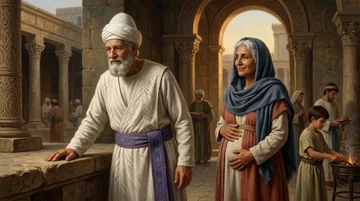
And after those days his wife Elisabeth conceived, and hid herself five months, saying,
Translations
American King James Version, King James Version, KJV Cambridge Paragraph Bible
And after those days his wife Elisabeth conceived, and hid herself five months, saying,
And after those days his wife Elisabeth conceived, and secluded herself five months, saying,
Revised Version, American Standard Version
And after these days Elisabeth his wife conceived; and she hid herself five months, saying,
and after those days, his wife Elisabeth conceived, and hid herself five months, saying —
Now after these days, Elizabeth his wife conceived, and hid herself five months, saying,
And, after these days, Elizabeth his wife conceived, and she disguised herself five months, saying—
Berean Standard Bible, Majority Standard Bible
After these days, his wife Elizabeth became pregnant and for five months remained in seclusion. She declared,
After these days Elizabeth his wife conceived, and she hid herself five months, saying,
After that time, Elisabeth, being certain that she was to become a mother, kept herself from men's eyes for five months, saying,
And after those daies, his wife Elisabet conceiued, and hid her selfe fiue moneths, saying,
Douay-Rheims (Challoner revision)
And after those days, Elizabeth his wife conceived, and hid herself five months, saying:
Pictures

Cross-references
- Luke 1:13-19
But the angel said unto him, Fear not, Zacharias: for thy prayer is heard; and thy wife Elisabeth shall bear thee a son, and thou shalt call his name John.
Gabriel reveals that Elisabeth will bear John and identifies himself as God’s messenger.
- Luke 1:36
And, behold, thy cousin Elisabeth, she hath also conceived a son in her old age: and this is the sixth month with her, who was called barren.
Elizabeth’s conception confirms the angel’s announcement to Mary.
- Luke 1:57
Now Elisabeth’s full time came that she should be delivered; and she brought forth a son.
Listed as another reference to John’s birth.
- Luke 1:39-41
And Mary arose in those days, and went into the hill country with haste, into a city of Juda;
shows Mary visiting Elizabeth afterward
Commentary
Each commentary is drawn from primary sources: the writings of Ellen G. White and Adventist pioneers and periodicals. Each commentary is separate. Its own words are not a quotation; follow the references to read the source passages.
Pioneers and periodicals
4 sources
The phrase after those days places the conception after the events connected with Zacharias carrying out his service in the temple.ST Jan 1, 1894 The term days denotes complete periods of twenty-four hours, not merely the daylight portion.RH Dec 12, 1871 After those days Elisabeth conceived John and remained out of public view for five months, speaking the words recorded immediately afterward.ST Jan 1, 1894ST Jan 1, 1894
The verse opens the sequence that leads six months later to Gabriel being sent from God to Mary at Nazareth to announce that she would conceive Jesus.ST Jan 1, 1894ST Jan 1, 1894 Elisabeth's pregnancy in her old age, then in its sixth month, was presented to Mary as evidence that nothing God speaks lacks power, after which Mary went to visit Elisabeth.ST Jan 1, 1894 The child conceived is the forerunner who prepares the Lord's ways, announces salvation through forgiveness made possible by God's merciful visitation, brings light to those in darkness and the shadow of death, and guides feet into peace.
The child grew and became strong in spirit and remained in desert places until the time of his public manifestation to Israel, around the time Christ was born. The verse belongs to the history of Christ's birth that fulfills the prediction that a child would be born on behalf of humanity.RH Nov 14, 1854 That history, from his birth to his resurrection, demonstrates that Christ was a real human being.RH Nov 14, 1854 The same birth account shows that he was conceived by the power of the Highest and was born to Mary at Bethlehem in Judea during the reign of Augustus Caesar.RH Nov 14, 1854
Sources