Luke 14:19
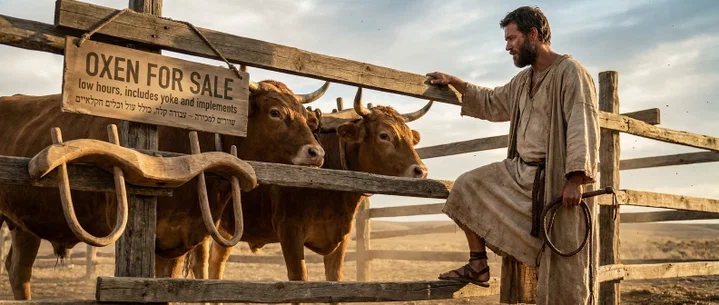
And another said, I have bought five yoke of oxen, and I go to prove them: I pray thee have me excused.
Translations
And another said, I have bought five yoke of oxen, and I go to prove them: I pray you have me excused.
King James Version, KJV Cambridge Paragraph Bible, Webster Bible, Revised Version
And another said, I have bought five yoke of oxen, and I go to prove them: I pray thee have me excused.
And another said, I have bought five yoke of oxen, and I go to prove them; I pray thee have me excused.
'And another said, Five yoke of oxen I bought, and I go on to prove them; I beg of thee, have me excused:
And another said, I have bought five yoke of oxen, and I go to prove them; I pray thee hold me for excused.
And, another, said—Five yoke of oxen, have I bought, and am going my way to prove them; I request thee, hold me excused.
Berean Standard Bible, Majority Standard Bible
Another said, ‘ I have bought five yoke of oxen, and I am going to try them out. Please excuse me.’
“ Another said, ‘ I have bought five yoke of oxen, and I must go try them out. Please have me excused.’
And another said, I have got some cattle, and I am going to make a test of them: I am full of regret that I am unable to come.
And another said, I haue bought fiue yoke of oxen, and I goe to proue them: I pray thee, haue me excused.
Douay-Rheims (Challoner revision)
And another said: I have bought five yoke of oxen, and I go to try them: I pray thee, hold me excused.
Pictures
Cross-references
- Matthew 22:5
But they made light of it, and went their ways, one to his farm, another to his merchandise:
Invited guests turn to their own affairs instead of accepting the feast invitation.
- Luke 14:23
And the lord said unto the servant, Go out into the highways and hedges, and compel them to come in, that my house may be filled.
After the invited guests decline, the servants are urged to bring others to the feast.
- Luke 14:24
For I say unto you, That none of those men which were bidden shall taste of my supper.
Those who refuse the invitation do not taste the supper.
- Luke 14:33
So likewise, whosoever he be of you that forsaketh not all that he hath, he cannot be my disciple.
Following Christ requires forsaking possessions and surrendering all.
- Matthew 22:9-10
Go ye therefore into the highways, and as many as ye shall find, bid to the marriage.
The servants gather guests after the invited guests refuse.
- Revelation 19:9
And he saith unto me, Write, Blessed are they which are called unto the marriage supper of the Lamb. And he saith unto me, These are the true sayings of God.
The refused invitation is to the Lamb’s marriage supper.
- Matthew 22:1-3
And Jesus answered and spake unto them again by parables, and said,
Both parables describe invited guests refusing a royal feast invitation.
- Luke 14:15
And when one of them that sat at meat with him heard these things, he said unto him, Blessed is he that shall eat bread in the kingdom of God.
The remark about eating bread in God’s kingdom prompts the supper parable.
- Matthew 11:30
For my yoke is easy, and my burden is light.
Christ’s easy yoke contrasts with the oxen yoke chosen as an excuse.
- Matthew 22:4
Again, he sent forth other servants, saying, Tell them which are bidden, Behold, I have prepared my dinner: my oxen and my fatlings are killed, and all things are ready: come unto the marriage.
The prepared feast and invitation parallel the great supper.
- Luke 14:7-11
And he put forth a parable to those which were bidden, when he marked how they chose out the chief rooms; saying unto them,
Christ taught both lessons at the same feast.
- Matthew 22:11-12
And when the king came in to see the guests, he saw there a man which had not on a wedding garment:
Both describe a guest at the marriage feast and a question put to him.
- Matthew 25:18-30
But he that had received one went and digged in the earth, and hid his lord’s money.
Both depict servants making excuses instead of faithfully using what was entrusted to them.
Commentary part 1 of 2
Each commentary is drawn from primary sources: the writings of Ellen G. White and Adventist pioneers and periodicals. Each commentary is separate. Its own words are not a quotation; follow the references to read the source passages.
Ellen G. White
108 sources
The excuse belongs to the second guest in the parable of the great supper, standing with the one who bought ground and the one who married a wife, and it was no real necessity since the oxen were already bought and going to prove them served only his own interest in the purchase.ST May 4, 1915Lt 54a, 1898, par. 2–4Ms 149, 1898, par. 1–2Ms 11b, 1894, par. 16–18COL 221.1–222.2
It was foolish and frivolous, for oxen should have been proved before buying, and treating the privilege lightly while absorbed in other things insulted the great condescension of the one who prepared the supper and stirred his anger.Lt 54, 1898, par. 8–10Ms 75, 1895, par. 1STMW11 15.3–16.2Ms 184, 1898, par. 50–51Lt 7, 1869, par. 3–5
The five yoke and going to prove them stand for cattle, farms, home interests, worldly possessions and business cares treated as more important than Christ's call, heavenly treasure and obedience, the fault lying not in owning them but in giving them greater importance than service to Christ.Ms 24, 1891, par. 38–4119MR 245.4–246.1Ms 46, 1896, par. 3–4Ms 16, 1894, par. 22–23RH Aug 25, 1874
Those who so refuse shall not taste of the supper but lose the blessings offered and heaven itself, while the invitation is sent instead to the poor and despised in the highways and hedges until God's house is filled.Ms 149, 1898, par. 1–2Ms 6, 1897, par. 1–4Ms 12, 1895, par. 22–242T 39.1–40.12T 40.2
Those first invited were the Jewish people, the princes and priests and elders who professed to look for the Messiah yet knew Him not when He came, and the same invitation is now given near the close of earth's history as the last gospel call to the marriage supper of the Lamb.Ms 18, 1899, par. 1–4Ms 81, 1899, par. 146T 412.2Ms 18, 1899, par. 8ST Feb 10, 1898
The words have me excused are still repeated by professed believers who excuse themselves from building up the cause, from missionary labor and speaking the word of life, letting talents rust while minds are engrossed with personal interests, and the opportunity may not come again.Lt 143, 1895, par. 2Lt 5, 1877, par. 9–10Lt 34, 1892, par. 1515MR 307.1–3CH 551.1
Parable Setting and Sequence
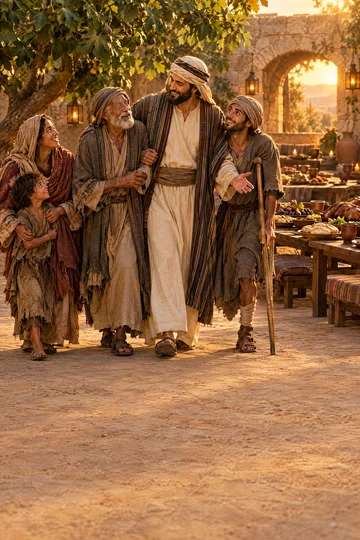
The five yoke of oxen belong to the parable of the great supper told at a feast, where the table talk was controlled to give precious lessons adapted to the needs of the hearers and to teach by example how to conduct oneself among the religious and the irreligious at public gatherings.Ms 19, 1899, par. 10–13RH Oct 2, 1900 The supper follows teaching to take the lowest room so that the host may call to go up higher, for whoever exalts himself shall be abased and whoever humbles himself shall be exalted.Lt 54a, 1898, par. 2–4 It follows also teaching to invite the poor, the maimed, the lame and the blind, with recompense at the resurrection of the just.Lt 54a, 1898, par. 2–4 After the saying about eating bread in the kingdom of God, a man makes a great supper and sends his servant at supper time to tell those already bidden that all things are now ready.Lt 54a, 1898, par. 2–4
With one consent those bidden begin to make excuse, and this plea of business with a new purchase is the second excuse given to the call.Lt 54a, 1898, par. 2–4Ms 149, 1898, par. 1–2Ms 11b, 1894, par. 16–18 It stands alongside the guest who bought ground and the guest who married a wife, as one of the united excuses for refusing the invitation.Lt 54a, 1898, par. 2–4Ms 11b, 1894, par. 16–18Lt 96, 1898, par. 10–12 The guest claims that five yoke of newly bought oxen and the need to prove or test them prevent attendance at the prepared supper, making attention to ordinary affairs the reason for refusal.Ms 149, 1898, par. 1–2Ms 11b, 1894, par. 16–18Ms 103, 1900, par. 1–4Lt 77, 1893, par. 48–52 His response is part of the shared refusal after which the invitation is extended to the poor and to others, while his excuse leads to exclusion from the feast.Ms 149, 1898, par. 1–2Ms 11b, 1894, par. 16–18 The servant comes and shows these things to his lord.Lt 54a, 1898, par. 2–4
Sense of the Excuse
The plea about going to prove five yoke of oxen was no real necessity, for the animals had already been bought and the proving served only the buyer's own interest in his purchase.ST May 4, 1915COL 221.1–222.2 Attention absorbed by the purchase displaced the invitation that had already been promised, and the excuse concealed an indifference to coming.ST May 4, 1915COL 221.1–222.2 The plea was foolish, for oxen ought to have been proved before they were bought, and it shows how ordinary concerns are put forward to avoid preparing for the kingdom of heaven and accepting its invitation.Lt 7, 1869, par. 3–5
The excuse was frivolous and trifling, made because other things absorbed attention, while the privilege of accepting the invitation and serving in the present was treated lightly.Lt 54, 1898, par. 8–10Ms 75, 1895, par. 1 Such refusals disclose the sentiments of the heart and a person's relation to God by the fruit shown in spirit, words and actions.Ms 75, 1895, par. 1 The excuses of those who refused the marriage supper were foolish, and those who treated the message lightly would not taste of the supper while the invitation went to all classes so that anyone who received it could become a guest.Lt 19a, 1895, par. 1–2 The trifling excuses turn away from the heavenly entertainment prepared for special benefit toward slight inducements thought to serve self better, which is slothfulness in the enterprise of everlasting life, doing the work for heaven by halves and neglecting thorough preparation for the trying day while easing the conscience with resolves to be diligent at some future time.Lt 7, 1869, par. 6–7 Those who make such excuses remain unready and by influence keep others in the same unreadiness, until the door is shut and they seek admittance too late and realize too late their loss, having failed to bear fruit and to secure the wedding garment which is the righteousness of Christ.Lt 7, 1869, par. 6–7
No flat refusal was made, yet to answer the supper invitation with a frivolous excuse insulted the great condescension of the one who prepared the supper and invited the guest.STMW11 15.3–16.2Lt 54a, 1898, par. 5–6 Refusing the gospel feast, even by excuse, rejects the good God offers and shows contempt for Him, leaving spiritual needs unmet, and such influence can keep many others from accepting.Ms 184, 1898, par. 50–51 The gracious invitation of the Lord Jesus as great Teacher calls finite, fallen men in need of pardon and peace to come to the bountifully spread table and make peace with God, but men meet the kindness and love of a long-forbearing God with contempt, absolute rejection, frivolous excuses, jesting and scorn, unable to see the importance of accepting the call.Lt 89, 1898, par. 12–13 That refusal continues today among those who claim to be Christians, who are asleep while the devil works with attractive allurements to persuade men to close their ears so they will not hear, and while thousands who ought to give the testing message hide their talents and make no use of their powers to draw souls, proving unfaithful, slothful servants whom God will call to account, though faithful voices feel their responsibility and work with every means to compel men to come in.Lt 89, 1898, par. 12–13 Because the invitation was gracious and a great condescension to give, letting other business take attention insults the master and stirs his anger.Lt 54a, 1898, par. 5–6
The oxen plea can mean refusing to come for fear of being thought foolish and having to bear ridicule, and from unwillingness to displease neighbors and be out of harmony with neighbors who do not love God with the whole heart but selfishly serve their own interests.Ms 9, 1898, par. 39–41 It can mean farm business that leads a man to attend to his farm, to work on the Sabbath and to hire men to work for him on the Sabbath rather than keep the commandments of God.Ms 9, 1898, par. 39–41 The invitation was purchased at the cost of the life of the Son of God, and to slight it brings the sentence that those who despised the offer shall not taste of the supper.Ms 9, 1898, par. 39–41 The proving of oxen means holding to farms and merchandise and the things of this life for fear of losing worldly interests and becoming poor and suffering want, while saying there is no danger and tomorrow shall be as this day and much more abundant and there is no need to be disturbed.Ms 8, 1874, par. 11 It forgets that He who cares for the little sparrows and clothes the lilies of the field cares for the humble trusting soul and will guide and direct all who are ready to do His will and bestow on His dear children such things as they need, and to all who through patience and perseverance overcome this refusal He has promised a crown of never-fading glory, a robe of righteousness, and an entrance into the beautiful city of God.Ms 8, 1874, par. 11
Preferring Temporal to Eternal
The five yoke of oxen and the going to prove them stand for cattle, farms, home interests, worldly possessions and business cares that are counted of greater value than heavenly treasure and that overpower every divine attraction.Ms 16, 1894, par. 22–23RH Aug 25, 18742T 39.1–40.1ST Apr 22, 18753T 383.1–3 They are temporal enterprises treated as more important than serving God, than Christ's call and obedience to it, and than eternal riches.Ms 46, 1896, par. 3–4Ms 16, 1894, par. 22–23RH Aug 25, 18742T 39.1–40.13T 383.1–3 Those who plead them fear that heeding the gospel will put worldly interests at risk, so they grasp their earthly treasures as their own that must be cared for, saying they cannot follow and asking to be excused.Ms 46, 1896, par. 3–4ST Apr 22, 1875 In this way the invitation prepared at great cost becomes a test of what character will be developed, whether selfish interests will be prized above the supper.ST Apr 22, 1875
Attention to earthly possessions can so engross the mind that a person does not value Christ's goodness and mercy nor the honor of being invited to the gospel feast.Ms 24, 1891, par. 38–4119MR 245.4–246.119MR 246.2 The fault lies not in owning or managing property, but in giving it greater importance than service to Christ.Ms 24, 1891, par. 38–41 The very blessings God gave to prove men, to see if they will render unto God the things that are God's, are thus turned into an excuse for disobedience to the command to come, for all things are now ready.RH Aug 25, 1874ST Apr 22, 1875 Those blessings become barriers between them and God, and between them and their Creator and Redeemer.COL 223.2–225.1ST May 4, 1915 Hearts close like the beaten highway, unimpressible and overgrown with thorns and the cares of this life, shutting out the heavenly messenger and leaving Him knocking in vain, while those who refuse remain under the galling yoke of selfishness and covetousness as slaves to mammon instead of taking Christ's easy yoke and light burden of self-denial and sacrifice for others.RH Aug 25, 1874ST Apr 22, 1875COL 223.2–225.1
Those first invited were wholly intent on securing worldly gain, absorbed in buying and selling, planting and building.Ms 18, 1899, par. 1–4 Thinking their own wisdom sufficient and turned back from seeking and inquiring for the Lord, they did not feel sufficient respect for the master of the feast to respond to his invitation, while eternity was left out of the reckoning.Ms 18, 1899, par. 1–4 So ordinary affairs, property, business and even relationships are allowed to take priority, and temporal concerns are placed above the eternal and the call of the gospel.Ms 29, 1898, par. 1–3Lt 89, 1898, par. 6–9Ms 11, 1894, par. 16–17Ms 69a, 1896, par. 42–44Ms 59, 1895, par. 63–65 The farm and the oxen picture absorbing selfish concerns that lead to neglecting and slighting the freely offered invitation and dishonoring Him who gave it, with indifference that fails to express love for the fallen race.Lt 89, 1898, par. 6–9Ms 11, 1894, par. 16–17Ms 69a, 1896, par. 42–44 Such refusal declares eternal things of secondary importance, to be neglected when they conflict with other interests, and it will be considered when people are judged according to their deeds.Ms 29, 1898, par. 1–3Ms 59, 1895, par. 63–65OEWP 36.1–37.1
Rejection and Final Exclusion
The guest who pleads the five yoke of oxen closes his ears to the call, Come for all things are now ready, and turns away on a trivial business pretext ranked with merchandise and marriage.Ms 12, 1895, par. 22–24Ms 9, 1898, par. 39–41Ms 16, 1894, par. 22–23 His excuse, like the other united excuses, brings the sentence that those bidden men who refuse shall not taste of the supper, losing the blessings offered to them.Ms 149, 1898, par. 1–2Ms 12, 1895, par. 22–24Ms 9, 1898, par. 39–41Ms 16, 1894, par. 22–23COL 219.1 The invitation of mercy purchased at the cost of the life of the Son of God is thus slighted, and it is sent instead to others who have not heard it, even to people in the highways and hedges whom the first guests despise.Ms 6, 1897, par. 1–4Ms 9, 1898, par. 39–41COL 219.1 Refusal can spring from fear of being thought foolish and bearing ridicule, from unwillingness to displease neighbors and be out of harmony with neighbors who selfishly serve their own interests, and from farm business that leads a man to attend to his farm, to work on the Sabbath and to hire men to work for him on the Sabbath rather than keep God's commandments.Ms 9, 1898, par. 39–41 The compelling power that brings others in after such refusal is the Holy Spirit working with the human agent.Ms 12, 1895, par. 22–24
The oxen and the need to prove them stand for possessions and business interests valued above Christ's gracious invitation, for slight inducements thought to serve self better than the heavenly entertainment prepared for special benefit.2T 39.1–40.12T 40.2Lt 7, 1869, par. 6–7 Choosing the world over Christ in this way means rejecting the heavenly inheritance and His gracious offer, so that those who refuse will not share His glory and the invitation will go to others.2T 39.1–40.12T 40.2 It means slothfulness in the enterprise of everlasting life, doing the work for heaven by halves and neglecting thorough preparation for the trying day while easing the conscience with resolves to be diligent at some future time.Lt 7, 1869, par. 6–7 Those who make such excuses remain unready and un fruitful, failing to bear fruit and to secure the wedding garment which is the righteousness of Christ.Lt 7, 1869, par. 6–7 By influence they keep others in the same unreadiness until the door is shut against them, so that they seek admittance too late and realize too late the loss they have sustained.Lt 7, 1869, par. 6–7
It is not enough to accept the privileges of the gospel supper provided through the only begotten Son; those bidden who have had the light of truth must put on the righteousness of Christ, the wedding garment, and strip off all miserable inherited and cultivated traits of character that dishonor God.Lt 96, 1898, par. 10–12 All who retain traits that dishonor God make Christ ashamed of them, having laid the foundation of the tower without counting the cost.Lt 96, 1898, par. 10–12 The call is to be clothed with the robe of righteousness and to be ready when the Bridegroom comes to enter the marriage supper, yet many hear it and refuse while continuing to excuse themselves and feasting upon the pleasures of this world as the masses do at the present time.Ms 8, 1874, par. 9–10 Those who keep excusing themselves will not be accepted but will be found speechless without the garment, denied admittance into the Master's house, under the sentence that none which were bidden shall taste of His supper.Ms 8, 1874, par. 9–10
Christ has prepared a bountiful repast, a banquet of truth, and bids His servants give the call to rich and poor, bring them in, seat them at His table, and He Himself will serve them.Lt 141, 1901, par. 16–18 The wealthy, honorable, worldly wise and monied men are not to be passed by as hopeless, but must be taken hold of, labored for, urged with all possible persuasion and compelled to come in.Lt 141, 1901, par. 16–18 Heaven will give them rest and peace and repose from all trifling and ambition to secure the highest place, with the peace and happiness and joy Christ longs to bestow.Lt 141, 1901, par. 16–18 He proffers for acceptance a wedding garment pure and white, spotless as the pure white lily, the robe of His righteousness and the heaven-made garment of a life joined to Christ, without which those who give the Lord less than full service cannot expect a place at His great supper.Lt 141, 1901, par. 16–18Lt 55, 1897, par. 26–29 If they accept Christ they receive the very highest honor which the world can neither give nor take away, the life which measures with the life of God, even a more exceeding and eternal weight of glory, with great reward in keeping the commandments.Lt 141, 1901, par. 16–18 As fruit, men and women will be crowned as overcomers in the kingdom of heaven to sing the triumphant song of the conqueror, to walk with Christ in white as worthy who have not defiled their garments, to be clothed in white raiment with names kept in the book of life and confessed before the Father and before His angels, while those who are contentious and do not obey the truth but obey unrighteousness receive indignation and wrath, tribulation and anguish.Lt 141, 1901, par. 16–18 By contrast, those who choose to live for self rather than for God, who refuse the invitation to the marriage supper of the Lamb and do not seek to know God, are classed with unbelievers who have no right to the tree of life because they refuse God's commandments, and who could not serve or be content in God's presence.Ms 81, 1898, par. 38
The plea that oxen and business require attention shows how temporal concerns are placed above the eternal and the call of the gospel, and it is among the refusals that will be considered when people are judged according to their deeds.Ms 29, 1898, par. 1–3 Business, family or social obligations will not excuse disobedience to God's law, including failure to keep the fourth commandment, and will not withstand the judgment.ST Sep 30, 1889 The refusal of the invitation to salvation on a flimsy pretext leaves a person exposed when probation closes, for those who have received the warning and offer of pardon but refused them will receive no second call to the heavenly feast.15MR 222.3Ms 59, 1895, par. 40–44 It is like children who dismissed their parents' urgent appeal to obey God's instructions for the Passover and would not be spared the judgment that came upon the Egyptians.15MR 224.3–225.2 It applies to children of the Hebrews in Egypt who might treat the Passover directions as a whim and altogether unnecessary and refuse their parents' entreaties to gather with the family inside the house with blood on the lintels and doorposts, so that God's judgment in death falls as surely on the firstborn of disobedient Hebrews as on the firstborn of the Egyptians.Ms 59, 1895, par. 40–44
Historic and Prophetic Fulfillment
Those first bidden to the supper stand for the Jewish people, the chosen people, the higher classes and princes of the land.Ms 18, 1899, par. 1–4Ms 18, 1899, par. 8COL 307.2–308.1 To them God sent all His servants the prophets, rising up early and daily since their fathers came out of Egypt, yet they heard not.Ms 18, 1899, par. 8 Wholly intent on securing worldly gain, absorbed in buying and selling, planting and building, they sent back with one consent the plea to be excused, showing they did not feel sufficient respect for the master of the feast to respond, deeming their own wisdom sufficient and never seeking the Lord nor inquiring for Him.Ms 18, 1899, par. 1–4 Had they heeded a call that meant so much to them they could have united with the messengers in carrying the invitation to others, and the blessing of truth must still be set before them to give them opportunity to heed, while those afterward called from the highways are not so absorbed in business that eternity is left out of the reckoning.Ms 18, 1899, par. 1–4Ms 18, 1899, par. 8 Their indifference and slighting brought the householder's decree that none of those bidden men should taste of his supper, and the feast was then furnished with guests by the call of mercy to the Gentiles, distinct from the king's invitation whose rejection with insult and murder brings destruction.COL 307.2–308.1
The invited guests picture in particular the Jewish priests and elders.ST Feb 10, 1898 They made great professions of piety and claimed to be looking eagerly for the promised Messiah, waiting with anxious expectancy for the call to the great supper so they would immediately go in, proclaiming everywhere the coming of the King of the Jews and boasting constantly that He would conquer their enemies and set up His own kingdom.ST Feb 10, 1898 But they applied to His first advent the prophecies relating to His second coming, and when He did come they knew Him not and refused the invitation.ST Feb 10, 1898 They claimed also to be obeying the holy, just and good law of God, yet by exacting requirements they made it impossible for anyone to keep it, while they themselves constantly disobeyed it and rendered only a false obedience.ST Feb 10, 1898
That same refusal is continued by religious teachers who follow in the steps of the Jewish rulers.Ms 23, 1900, par. 15 They do not see their peril and are unwilling to make candid investigation of the Scriptures, and by closing the eyes against evidence they prepare for continued opposition, the first step of refusal making the second easier.Ms 23, 1900, par. 15 To continue in refusal shows hatred for the principles of Christ's character just as the Jews hated them, and many who were convicted and wondered whether to accept the feast were kept from doing so by fear of provoking the scribes, Pharisees and Sadducees and the leaders.Ms 23, 1900, par. 15Ms 197, 1898, par. 12–13 In application the invitation is given near the close of earth's history as the last gospel invitation, the last call to the gospel feast and to the marriage supper of the Lamb.Ms 81, 1899, par. 146T 412.2GW 64.3 That call is the message of Christ's soon coming to be given to the world, with thousands of places yet to hear it and many yet needed to proclaim it, and when the highly favored first invitees refuse with excuses the call goes to the poor and then to the most degraded and helpless, so that God's house may be filled, a final call now being given that warns against refusing.Ms 81, 1899, par. 14GW 64.3Lt 11, 1899, par. 4
The parable of the supper is a lesson reaching to the close of probation, and its meaning is perverted when misapplied to support unrelated theories it does not sustain.15MR 14.3–5Lt 11, 1890, par. 7 The sacred feast set before men represents the blessings of eternal life and the abundant gifts of the gospel.ST May 4, 1915Ms 29, 1898, par. 16–18 Those gifts include Christ's righteousness, justification by faith, God's promises, access to the Father through Christ, the comfort of the Holy Spirit, and assurance of eternal life.Ms 29, 1898, par. 16–18 Having received such great light and privilege brings responsibility to live the truth received and to invite others to share it.Ms 29, 1898, par. 16–18
Carrying the Invitation Outward
The refusal of those first bidden does not end the supper but turns the invitation outward as the last urgent call to bring people in, for when they make excuse the call goes next to the poor and then to the most degraded and helpless in the highways and byways so that the house may be filled.Ms 6, 1897, par. 1–4LS 366.1Ms 81, 1899, par. 14 That outward call is a message for those now blessed with hearing mercy, summoning them to come to the gospel feast because all things are now ready.Ms 54, 1895, par. 1–7Ms 59, 1895, par. 60–62 Those who hear it need a work done in the heart and a reformation of character that gives close connection with God, and when preached as a present message it makes a deep impression upon minds.2MR 259.3–260.4Ms 54, 1895, par. 1–7
The supper to which they are called is the banquet of truth prepared at infinite cost and at great cost to Himself, the bread of life and the great and wonderful offering made to the world.1MR 226.3–4Lt 177, 1903, par. 8STMW10 15.1 He who gave His precious life seats guests at His own table and serves them Himself.GW 350.1 Those called are to come themselves and then go out and present that offering to others in simplicity and love, giving needy souls spiritual truth and words of comfort joined with practical care for physical needs.Lt 177, 1903, par. 8STMW10 15.1Lt 5, 1897, par. 41–44
The call is for rich and poor alike without exception or limitation, and servants are to go out with persevering, determined effort to compel even worldly moneyed men to come in.GW 350.1Lt 188, 1899, par. 8 People of the world are not to be passed by as hopeless but urged with all persuasion to accept Christ's peace and joy and to give whole attention to securing the spotless garment of His righteousness, and the wealthy, honorable and honored are to be brought in by persistent labor.GW 350.1Ms 109, 1901, par. 9Lt 141, 1901, par. 14–15 The invitation must reach every field, including the hardest mission fields, retired places of the country, great wicked centers such as San Francisco and New York City where the message Come, for all things are now ready is to be given, and the Southern field among white and colored people.Lt 132, 1901, par. 4–6Lt 188, 1899, par. 8Ms 65, 1908, par. 2 Wealthy men who hold the Lord's money will be moved by the Spirit to open doors for truth in large cities and use entrusted means to prepare the way of the Lord.Lt 132, 1901, par. 4–6
The invitation is to be carried clearly to all where they are, through messengers who bring it to them in house-to-house work and into the highways and byways, by opening the Scriptures and by personal work joined with public meetings.6T 294.1–2Ms 65, 1908, par. 2Lt 164, 1899, par. 18 It draws rather than coerces, letting the light shine clearly so that Christ Himself may draw souls.5MR 41.2–42.1Ms 11, 1894, par. 16–17 Even those who feel unworthy are to be invited and urged to come, and those who come in humility receive the white garment of Christ's righteousness.Ms 143, 1898, par. 216T 279.4–280.2
The final invitation is connected with medical missionary work and meeting physical needs, for caring for suffering people carries the invitation to them.8T 71.2Ms 183, 1898, par. 28 Sanitariums are one means by which truth is brought to those who know it not, where those enslaved by intemperate habits destroying soul and body learn a better way of living.1MR 226.3–4 The call to the banquet is thus to reach all people, including those encountered through sanitariums, and unbelievers brought under the influence of Bible truth have their hearts impressed by angels of God so that many will be won to Christ.1MR 226.3–4Lt 305, 1904, par. 8–9 Those who put their hearts into this work in retired country places and elsewhere are assured grace and power and efficiency, with ministering angels helping their labors and the Spirit of God going before them to impress hearts to respond.Ms 65, 1908, par. 2
The medical missionary workers are giving this last call of the supper, and the church is under duty to answer the command and work to save those who will believe rather than stand apart from or criticize that effort.8T 72.28T 71.2Lt 51b, 1898, par. 7–8 Indifference, criticism and withdrawal hinder the work of reaching sinners, yet efforts to save those who will believe are worth making even when only a few accept grace, and even outcasts who accept are not to be dismissed.STMW11 24.2–25.1Lt 51, 1898, par. 10–14 The refusal of the church in Battle Creek to accept the work offered left it to be carried forward by others.Lt 51, 1898, par. 4–6 The compelling power that brings others in after such refusal is the Holy Spirit working with the human agent.Ms 12, 1895, par. 22–24
Practical Duties and Warnings
The plea to be excused is the plea of professed believers who turn away from building up the cause of present truth, from missionary labor, and from speaking the word of life to another soul.Lt 5, 1877, par. 9–10Lt 34, 1892, par. 15Ms 70, 1896, par. 38–39STE 147.1–149.1STMW10 4.2–5.1 Their minds are engrossed with personal interests and pleasure, and the talents committed to them rust through inaction so they cannot engage in the labor that is suffering to be done.Lt 5, 1877, par. 9–1015MR 307.1–3STMW10 4.2–5.1 The man held back by newly bought oxen shows how other concerns keep hearers from the invitation, and how neglect of the work forfeits the opportunity God desired to give them to help save souls.Lt 77, 1893, par. 48–5215MR 307.1–3STE 147.1–149.1 The chance to speak may not come again, so no one should decline it with an excuse, for love of ease and selfish indulgence keep some from faithfully answering the call to go out and bring others to the feast.Ms 70, 1896, par. 38–39STE 147.1–149.1STMW10 4.2–5.1
Many who claim to believe the truth for this time repeat the oxen excuse when there is a call to labor, putting personal business and interests ahead of God's call.Lt 34, 1892, par. 15CH 551.1 Instead of doing active missionary work, with a hundred missionaries where there is now one, they show they are not stirred by the truth and not vitalized by the Holy Spirit.CH 551.1 Their refusal reveals the lack of heart work and vital connection with God needed to establish and exalt the standard of truth through workers in higher as well as humble positions.CH 551.1
The excuse exposes the heart pleading to be excused from duty, growing weary of self-denial and restraint and seeking an easier path requiring less effort.ST Oct 21, 1880 It is doing God's work in a half-hearted, careless way, attempting to unite with Christ without denying self and trying to serve Christ and self at the same time.ST Oct 21, 1880Ms 75, 1895, par. 3 Such conformity to the world is like Israel turning back toward Egypt, dissatisfied with religious life, and Jesus does not call for such adherents nor has His cause need of them.ST Oct 21, 1880 Accepting the invitation breaks former harmony with worldly pleasures, pride, ambition, and disobedience, so following Christ involves an experience like crucifixion to the world.Ms 75, 1895, par. 3
The refusal is slothfulness in the enterprise of everlasting life, doing the work for heaven by halves and neglecting thorough preparation for the trying day while resolving to be diligent at some future time.Lt 7, 1869, par. 6–7 It turns aside from God's message to slight inducements thought to serve self better, to worldly concerns with no care for warnings of coming judgment.Lt 77, 1893, par. 48–52Lt 7, 1869, par. 6–7ST Feb 16, 1882 Those who make such excuses remain unready, keep others in the same unreadiness by influence, fail to bear fruit and to secure the wedding garment which is the righteousness of Christ, and at last find the door shut so they seek admittance too late and realize too late the loss sustained.Lt 7, 1869, par. 6–7
The same refusal continues today among those who claim to be Christians, meeting the gracious invitation of the great Teacher to pardon and peace at a bountifully spread table with contempt, absolute rejection, frivolous excuses, jesting and scorn.Lt 89, 1898, par. 12–13 They are asleep to the situation while the devil works with attractive allurements to persuade men to close their ears so they will not hear.Lt 89, 1898, par. 12–13 Thousands who ought to be giving this testing message hide their talents in the earth and make no use of their powers to draw souls, proving unfaithful, slothful servants whom God will call to account, though faithful voices feel their responsibility and work with every means to compel men to come in.Lt 89, 1898, par. 12–13
Neither earthly business nor marriage must become such an excuse, for the oxen and their proving represent an earthly concern used as a reason not to respond.Lt 31, 1902, par. 1–2 Family opposition and the division that may follow obedience do not excuse refusing salvation, for Christ's claim comes before the wishes of even the closest relatives.Ms 75, 1895, par. 9–10 By contrast, accepting the invitation means leaving former ties and devoting abilities to His work.Ms 75, 1895, par. 3Lt 99, 1895, par. 3–4
Those whose hearts are fully consecrated never offer this excuse but with earnest endeavor seek to build up the church, strengthen and build up its members, enlighten those in darkness, and exert the saving influence upon other souls for which each will be held accountable.Lt 5, 1877, par. 9–10ST Apr 13, 1882 Absorbing interest in farm and merchandise declares eternal things of secondary importance and fails that individual responsibility.ST Apr 13, 1882 Even a person of very small talent becomes a leading mind when fully consecrated, following thoroughly and carrying others by sheer momentum, for godliness and heart power have a telling influence, and such individual effort by working members accomplishes more than pulpit effort without this necessary labor.Lt 5, 1877, par. 9–10 The place of the supper in the call supports the appeal to decide fully for the Lord and keep all His commandments.Lt 143, 1895, par. 2
The call to support God's work in a new field is a call to come to the feast and serve the Master, and neglecting that work to invest in other enterprises repeats the refusal.Lt 4, 1899, par. 27–28 The words of excuse belong to those who avoid mission work because it costs them something.5T 369.2 Those who refuse duty in this way should beware lest they thereby forfeit their place for time and eternity.5T 369.2Lt 4, 1899, par. 27–28
Sources