Luke 18:35
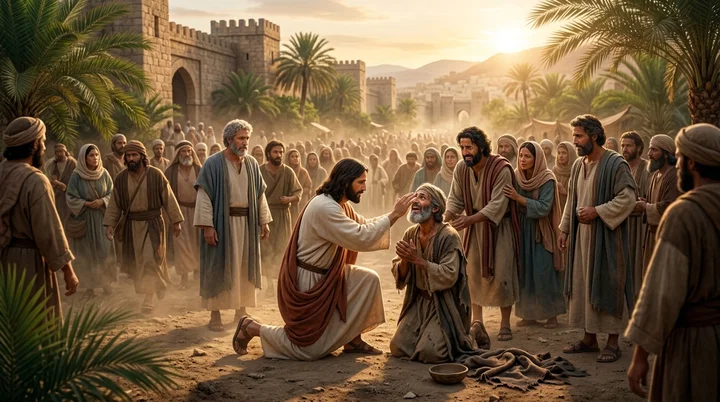
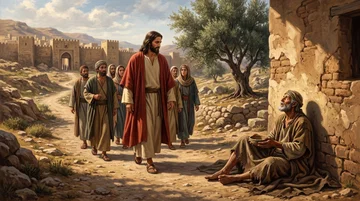
And it came to pass, that as he was come nigh unto Jericho, a certain blind man sat by the way side begging:
Translations
And it came to pass, that as he was come near to Jericho, a certain blind man sat by the way side begging:
King James Version, KJV Cambridge Paragraph Bible
And it came to pass, that as he was come nigh unto Jericho, a certain blind man sat by the way side begging:
And it came to pass, that as he had come nigh to Jericho, a certain blind man sat by the way side begging;
Revised Version, American Standard Version
And it came to pass, as he drew nigh unto Jericho, a certain blind man sat by the way side begging:
And it came to pass, in his coming nigh to Jericho, a certain blind man was sitting beside the way begging,
And it came to pass when he came into the neighbourhood of Jericho, a certain blind man sat by the wayside begging.
And it came to pass, as he was drawing near unto Jericho, a certain blind man, was sitting beside the road, begging.
Berean Standard Bible, Majority Standard Bible
As Jesus drew near to Jericho, a blind man was sitting beside the road, begging.
As he came near Jericho, a certain blind man sat by the road, begging.
And it came about that when he got near Jericho, a certain blind man was seated by the side of the road, making requests for money from those who went by.
And it came to passe, that as he was come neere vnto Iericho, a certaine blinde man sate by the way side, begging.
Douay-Rheims (Challoner revision)
Now it came to pass, when he drew nigh to Jericho, that a certain blind man sat by the way side, begging.
Pictures
Cross-references
- Mark 10:46-52
And they came to Jericho: and as he went out of Jericho with his disciples and a great number of people, blind Bartimæus, the son of Timæus, sat by the highway side begging.
Parallel account of the blind beggar’s healing at Jericho.
- Matthew 20:29-34
And as they departed from Jericho, a great multitude followed him.
A parallel account of Jesus healing blind men near Jericho.
- John 9:1-7
And as Jesus passed by, he saw a man which was blind from his birth.
Jesus heals a blind man and gives sight.
- Matthew 20:30-34
And, behold, two blind men sitting by the way side, when they heard that Jesus passed by, cried out, saying, Have mercy on us, O Lord, thou Son of David.
Jesus heals blind beggars near Jericho.
- Matthew 9:27-30
And when Jesus departed thence, two blind men followed him, crying, and saying, Thou Son of David, have mercy on us.
Jesus heals blind men and restores their sight.
- Isaiah 35:5
Then the eyes of the blind shall be opened, and the ears of the deaf shall be unstopped.
The prophecy says the blind will see, connecting with Jesus restoring sight.
- Mark 8:22-26
And he cometh to Bethsaida; and they bring a blind man unto him, and besought him to touch him.
Another recorded healing of a blind man.
- Matthew 12:22
Then was brought unto him one possessed with a devil, blind, and dumb: and he healed him, insomuch that the blind and dumb both spake and saw.
Jesus heals a blind man and restores his sight.
- Luke 19:1-10
And Jesus entered and passed through Jericho.
Christ’s encounter with Zacchaeus opens his spiritual eyes.
Commentary
Each commentary is drawn from primary sources: the writings of Ellen G. White and Adventist pioneers and periodicals. Each commentary is separate. Its own words are not a quotation; follow the references to read the source passages.
Ellen G. White
2 sources
As Jesus came near Jericho, a certain blind man sat beside the road begging.19MR 18.2 The blind man was Bartimeus, who cried to Jesus as the Son of David for mercy.SG2 202.1–2 His appeal stands as an example of faith in Jesus as the great Physician and of trusting Him for healing.SG2 202.1–2 When Jesus passes by, people should earnestly call to Him for mercy.19MR 18.2 Through God's grace they can receive clearer spiritual sight, which is more valuable than gold and silver and precious stones.19MR 18.2
Sources
Pioneers and periodicals
15 sources
As Jesus drew near to and entered Jericho, a blind man sat beside the road begging for alms.ST Sep 3, 1894ST Nov 21, 1900ST Nov 21, 1900 He was Bartimaeus, who received his sight and followed Jesus.ST Mar 18, 1889ST Jan 3, 1911ST Jul 29, 1897 His poverty, blindness, and helplessness picture the spiritual poverty, blindness, and lack of righteousness of humanity, showing that sinners must call upon the Lord for mercy.ST Sep 3, 1894ST Aug 30, 1905 Learning that Jesus was passing by, he cried out urgently to Him as the Son of David for mercy, and though told to be quiet he cried out all the more, giving an example of earnest, persistent petition and continually growing faith that grasps God's promises until they are fulfilled.RH Dec 16, 1909ST Jan 3, 1911RH Jul 21, 1863 Jesus stopped to serve the poor beggar by restoring his sight, showing His readiness to receive and heal, to give spiritual light and life, so that faith brings sight and those who receive it see Jesus in love and follow Him.ST Sep 3, 1894ST Jul 29, 1897ST Aug 30, 1905ST Jun 14, 1905
Narrative Setting and Details
As Jesus came nigh unto Jericho, approaching and entering the city, a certain blind man sat by the wayside begging for alms.ST Sep 3, 1894ST Nov 21, 1900ST Jan 3, 1911ST Jul 29, 1897 The roadside begging took place as he approached Jericho.ST Nov 21, 1900 The man is Bartimaeus, who received his sight and followed Jesus.ST Mar 18, 1889ST Jan 3, 1911ST Jul 29, 1897 Luke and Mark name one blind beggar while Matthew mentions two, and Bartimaeus may have been the more conspicuous because of his persistence and may have spoken for himself and his companion.ST Mar 18, 1889
The account is the parallel to the healing of Bartimaeus that Matthew and Mark place as Jesus left Jericho.ST Nov 21, 1900 It records one of two healings of blind men at Jericho specially noted among Jesus' healings of the blind.ST Mar 8, 1905 The difference between approaching in Luke and leaving in Matthew and Mark is explained by two Jerichos, the ancient city and the more modern Roman town; the beggar sat between them, Matthew and Mark refer to leaving the old city while Luke refers to approaching the Roman town, with the healing occurring between the two shortly before Jesus entered the newer city.ST Nov 21, 1900ST Nov 21, 1900 The accounts can also be reconciled by the man first calling to Jesus at the entrance and then waiting at the opposite gate and calling again, with Luke recording the first appeal and the later healing while leaving the interval unmentioned.ST Mar 18, 1889
Spiritual Meaning and Application
The blind beggar sitting by the wayside near Jericho in his poverty and inability to help himself is a picture of humanity's spiritual need, for people are poor and blind and lacking in righteousness and must call upon the Lord for mercy.ST Sep 3, 1894ST Aug 30, 1905 When he learns that Jesus is passing by he cries out urgently for mercy, addressing Him as the Son of David, and when others tell him to be quiet he cries out all the more.ST Jan 3, 1911
The healing that follows shows Jesus' readiness to receive and to heal, for He serves the poor beggar by restoring his sight and stopping to help him as He passes by Jericho.ST Sep 3, 1894ST Jun 14, 1905RH Feb 2, 1905 He gives sight to the blind and brings spiritual light and life to the soul, and this work is an example of His mission to the poor.ST Aug 30, 1905ST Jun 14, 1905 Faith in Him brings sight, and the miracle teaches how spiritual sight and riches are received.ST Sep 3, 1894 Receiving sight means seeing Jesus in love and being led to follow Him, and in Christ the needy find rest and sight and health and life and robes of righteousness.ST Jul 29, 1897ST Aug 30, 1905
His appeal is an example of earnest, persistent petition to the Saviour, set in contrast with prayers that lack similar effort and intensity.RH Jul 21, 1863 It calls for faith that is intelligent and constant and continually growing in order to develop Christian experience, faith that grasps the promises of God so that those promises are fulfilled in its behalf.RH Dec 16, 1909 Those who seek righteousness will have divine help, they will ask and God will hear them even if they do not at once feel what they expect, God will care for them and Jesus will deliver them in peril, and His praying, believing people are kept under His special care while heavenly intelligences look upon the world with interest.RH Dec 16, 1909 The chapter to which the verse belongs is connected with the oppressed people of God raising a united, persistent cry to heaven for deliverance in the closing scenes of the church's history.RH Feb 25, 1862 The blind man as one in need appealing to Jesus urges others to stop and help those who call for the gospel.RH Feb 2, 1905
Sources