Luke 19:7
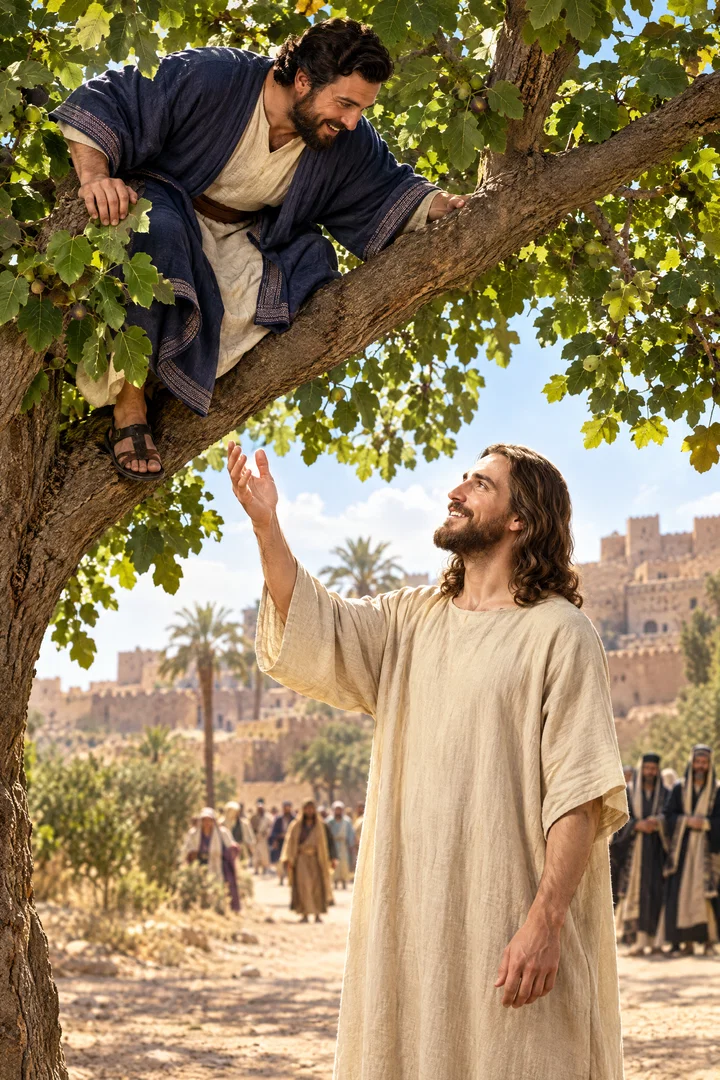
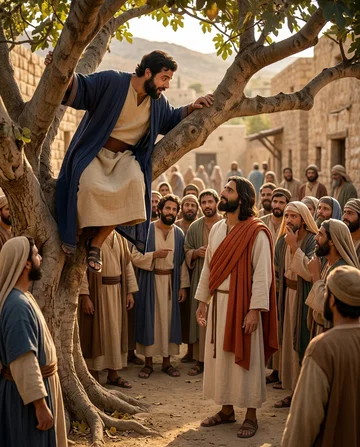
And when they saw it, they all murmured, saying, That he was gone to be guest with a man that is a sinner.
Translations
American King James Version, King James Version, KJV Cambridge Paragraph Bible, Webster Bible
And when they saw it, they all murmured, saying, That he was gone to be guest with a man that is a sinner.
Revised Version, American Standard Version
And when they saw it, they all murmured, saying, He is gone in to lodge with a man that is a sinner.
and having seen [it], they were all murmuring, saying — 'With a sinful man he went in to lodge!'
And all murmured when they saw [ it], saying, He has turned in to lodge with a sinful man.
And all, when they beheld, began to murmur, saying—With a sinful man, hath he gone in to lodge!
Berean Standard Bible, Majority Standard Bible
And all who saw this began to grumble, saying, “ He has gone to be the guest of a sinful man!”
When they saw it, they all murmured, saying, “ He has gone in to lodge with a man who is a sinner.”
And when they saw it, they were all angry, saying, He has gone into the house of a sinner.
And when all they sawe it, they murmured, saying, that hee was gone in to lodge with a sinfull man.
Douay-Rheims (Challoner revision)
And when all saw it, they murmured, saying, that he was gone to be a guest with a man that was a sinner.
Pictures



Cross-references
- Luke 15:2
And the Pharisees and scribes murmured, saying, This man receiveth sinners, and eateth with them.
Both recount the charge that Jesus receives sinners and eats with them.
- Matthew 9:10-13
And it came to pass, as Jesus sat at meat in the house, behold, many publicans and sinners came and sat down with him and his disciples.
Jesus is criticized for eating with sinners and explains his mission to call them to repentance.
- Luke 5:32
I came not to call the righteous, but sinners to repentance.
Jesus came to call sinners to repentance.
- Matthew 11:19
The Son of man came eating and drinking, and they say, Behold a man gluttonous, and a winebibber, a friend of publicans and sinners. But wisdom is justified of her children.
Jesus is charged with being a friend of sinners.
- Matthew 21:31
Whether of them twain did the will of his father? They say unto him, The first. Jesus saith unto them, Verily I say unto you, That the publicans and the harlots go into the kingdom of God before you.
Publicans and harlots enter the kingdom before the leaders who judged them.
- Revelation 3:20
Behold, I stand at the door, and knock: if any man hear my voice, and open the door, I will come in to him, and will sup with him, and he with me.
Jesus offers to enter and share a meal with anyone who welcomes him.
- Luke 5:30
But their scribes and Pharisees murmured against his disciples, saying, Why do ye eat and drink with publicans and sinners?
The Pharisees question Jesus for eating with publicans and sinners.
- Matthew 18:13-14
And if so be that he find it, verily I say unto you, he rejoiceth more of that sheep, than of the ninety and nine which went not astray.
same call not to cut off the straying
- Luke 15:8-10
Either what woman having ten pieces of silver, if she lose one piece, doth not light a candle, and sweep the house, and seek diligently till she find it?
listed as Luke's instruction on the human Saviour
- Matthew 25:14-30
For the kingdom of heaven is as a man travelling into a far country, who called his own servants, and delivered unto them his goods.
The parable of the talents parallels Luke’s parable of the pounds.
- Luke 15:3-7
And he spake this parable unto them, saying,
listed as Luke's instruction on the human Saviour
- Luke 15:11-32
And he said, A certain man had two sons:
Both texts show Jesus welcoming sinners, prompting criticism and illustrating repentance and salvation.
- John 8:3-11
And the scribes and Pharisees brought unto him a woman taken in adultery; and when they had set her in the midst,
Jesus dealt mercifully with a woman accused of sin.
Commentary
Each commentary is drawn from primary sources: the writings of Ellen G. White and Adventist pioneers and periodicals. Each commentary is separate. Its own words are not a quotation; follow the references to read the source passages.
Ellen G. White
11 sources
Luke 19:7 belongs to Jesus' visit to Jericho, when crowds were eager to honor Him after hearing that He had raised Lazarus.DA 552.2–3 Jericho itself held priests, Roman officials and soldiers, travelers passing through, and many tax collectors.DA 552.2–3
Those who saw murmured in objection because He had gone to be guest and to stay in the home of a man they judged to be a sinner.DA 552.4Ms 72, 1895, par. 4Ms 102, 1894, par. 12–14ST Jun 11, 1896DA 553.3–554.1 The murmurers were the people and the crowd, including its leaders, identified as the scribes and Pharisees, and their response expressed discontent and scorn.DA 552.4Ms 72, 1895, par. 4Ms 102, 1894, par. 12–14ST Jun 11, 1896DA 553.3–554.1 The man was Zacchaeus, a rich chief tax collector whose occupation was associated with injustice, extortion, and unjust taxes.DA 552.4Ms 72, 1895, par. 4Ms 8a, 1891, par. 17–20 The Pharisees counted him not only a sinner but a hopeless one.Ms 8a, 1891, par. 17–20
Before Jesus entered Jericho, Zacchaeus had already begun responding to conviction and correcting his wrongs, longing to see Jesus whose words had given him hope.DA 552.4ST Jun 11, 1896DA 553.1 His effort to change was difficult because he was met with suspicion and distrust, yet he desired repentance and restitution and had not yet met Christ.Ms 72, 1895, par. 4ST Jun 11, 1896DA 553.1 Jesus' willingness to associate with him and show him favor shows that He looked beyond outward appearance and called people others might reject, seeing in them the possibility of becoming fit for God's kingdom.Ms 102, 1894, par. 12–14 He was tender and merciful toward objectionable characters as sick people needing extra help, and His going to Zacchaeus shows what He does with one going astray: He does not cut him off and leave him in the hands of Satan or build barriers between God and the soul, but brings him with cords of love where he can be prayed for and led and guided, to seek and save that which was lost.Ms 8a, 1891, par. 17–20
In contrast to the crowd's condemnation, Christ's acceptance recognized Zacchaeus as a son of Abraham, and Zacchaeus rejoiced at the welcome.DA 556.3–4ST Jun 11, 1896 Receiving Jesus as a personal Saviour brings salvation, and Zacchaeus's response showed Christ had entered his heart: he abandoned dishonest practices, gave to the poor, and restored fourfold anything taken through false accusation.Ms 72, 1895, par. 4DA 556.3–4DA 556.1 His change demonstrated that sincere conversion transforms conduct including business dealings.DA 556.1 The verse teaches mercy and a sympathetic approach rather than hasty condemnation as the way to help rescue those in sin.Ms 102, 1894, par. 12–14 The lesson is to melt hard hearts, put away harshness and arbitrary rule, and deal tenderly with sinners and youth instead of driving them to discouragement and stubbornness.Ms 8a, 1891, par. 17–20
Sources
Pioneers and periodicals
51 sources
When Jesus went to lodge and dine at the house of Zacchaeus in Jericho, all who saw it murmured because He showed favor to a man they counted a sinner.ST Jun 11, 1896ST Nov 21, 1900ST Sep 13, 1899RH Jul 16, 1857ST Feb 20, 1912 Zacchaeus was chief among the tax collectors, rich and despised as a collaborator defiled by oppression and dishonest gain.ST May 18, 1882 He deliberately chose to abide with him, facing prejudice without being swerved, because He came to seek the lost, call sinners to repentance, and save those in need through loving association.ST May 14, 1902RH Nov 4, 1873 Their complaint that He willingly became guest with a sinner was to His highest honor and praise, while exposing their selfish division of men into the holy and the hopeless.ST May 14, 1902ST Apr 23, 1896ST Oct 28, 1897ST Mar 6, 1907 Zacchaeus joyfully received Him, and his changed conduct proved true repentance, giving half his goods to the poor and restoring fourfold what he had taken, as the fruit of faith and not the purchase of freely given salvation.ST Jun 11, 1896ST Sep 10, 1894ST Apr 13, 1882ST Aug 24, 1904RH Nov 4, 1873
Words and Setting
The word rendered to be guest means to lodge or stay as a guest, for Jesus had gone to stay with a man whom the people regarded as a sinner.RH Jul 16, 1857 He went in to lodge and dine at the house of Zacchaeus in Jericho, whom the crowd all murmured against as a sinner for his doing so.ST Nov 21, 1900ST Apr 30, 1896 The visit brought the gospel into a person's home, where Zacchaeus received Him joyfully.ST Jun 17, 1903 The event took place in A.D. 30, just a few days before the crucifixion.ST Nov 21, 1900 It belongs to what He did during the six days before the Passover on the journey from Jericho toward Jerusalem with a stop at Bethany at the home of Lazarus where a supper was made for Him, the first of those six days being the day of His arrival at Bethany, which could not have been the Sabbath because He and His disciples had traveled many miles from Jericho, and could not have been the first day of the week because that would have made the Passover fall on the following Sabbath. It belongs to the call of Zacchaeus as one of the principal events in the section from Luke 18:24 through Luke 21.ST Apr 21, 1909
Zacchaeus was chief of the publicans, a rich tax collector who became a disciple of Jesus.RH Aug 24, 1905 His name means pure or innocent, which was regarded as inappropriate for one who as chief of the publicans was a despised sinner who had sacrificed spiritual privileges and religious character to love of gain, with sin degrading him and gaining power over him. Being small of stature and unable to see Jesus for the crowd, he climbed a sycamore tree so he could see Him, and Jesus called him to hurry down and receive Him as a guest.ST Mar 19, 1912ST Aug 26, 1913 His climbing was more than curiosity, for he was very desirous of seeing the Man Jesus of whom he had heard so much, and his seeking Jesus revealed a heart desire to know Him personally, which Jesus answered by seeking him and going to be guest at his house.ST Aug 26, 1913
Tax collectors were despised and ostracized as collaborators with oppressors and as defiled by association with Gentiles, and Zacchaeus as chief publican was regarded as especially disreputable.ST May 18, 1882 He was a worldly man counted as a sinner and as rubbish to be thrown away, whose wealth also invited suspicion that he had gained it dishonestly.ST Mar 22, 1899 The crowd saw Jesus' choice to lodge with him and enter his home as defying the law, public opinion, and patriotic duty, and as crossing the threshold that a respectable Jew should not cross and the ceremonial boundaries that judgment imposed.ST May 18, 1882ST May 18, 1882 When they saw it, all the people who saw it murmured against Him for going into the house of the tax-gatherer to lodge there.ST Sep 13, 1899ST Feb 20, 1912RH Apr 3, 1900 Scribes, Pharisees, and enemies murmured because He had shown favor to Zacchaeus and chosen to stay at his house, while Zacchaeus rejoiced at the welcome.ST Jun 11, 1896
The wider setting in Luke 19 corrects the expectation that the kingdom of God would appear immediately by the parable of the nobleman, yet the later welcome of Jesus as king in Jerusalem shows they still did not understand that He was going to suffer and be condemned.ST Sep 16, 1889 The story presents Jesus as the human Son of Man, in keeping with Luke's dwelling more than any other writer on the human side of the Saviour and tracing Him back to Adam the first man, while Matthew traces His genealogy to Abraham and John shows His divine genealogy as the Word who was God.ST Aug 26, 1913 The same instruction is given in Luke in the parables of the good Samaritan, the lost sheep, the lost piece of silver, the prodigal son, the penitent thief, the penitent publican, and Zacchaeus in the tree.ST Aug 26, 1913
Jesus Friend of Sinners
The murmuring arose because Jesus chose to stay with Zacchaeus, a publican regarded as a sinner, and His willingness to make Himself at home with one just met shows He comes to help and save those in need.RH Nov 4, 1873 He is the Friend of sinners who came to seek and save the lost and to call sinners to repentance, drawing near to people because they needed Him, not because they were rich or righteous.ST May 14, 1902 His purpose was to reach sinners through association and bring them to repentance, so that those afflicted by sin are not to be cast off as hopeless.RH Nov 4, 1873ST May 26, 1914
Jesus deliberately chose to stay with Zacchaeus though the crowd murmured and despised him as chief among the dishonest rich, facing their prejudice without being swerved. Zacchaeus climbing the sycamore tree to see Jesus was more than curiosity, revealing a heart desire to know Him personally, and Jesus going to be guest at his house was His response to that desire. Christ answered Zacchaeus's faith that he must see Jesus with love that must abide in his house, and by that choice touched him in his inmost heart with love and pity. The visit had the definite object to reprove the pride of those who despised Zacchaeus and to prove that Christ had come to seek and to save the lost, winning this lost son of Abraham to penitence, restitution, and service as an earnest of the fruit of His coming agony and death.
He welcomes sinners while hating sin, loving the sinner even as His willingness to enter sinners' homes and share their lives drew reproach from His enemies.ST May 27, 1897ST Oct 6, 1909 He truly receives sinners as the Friend of publicans and sinners who came to take away sin, and the complaint that He associated with them reflects that welcome.ST Oct 28, 1897ST Feb 3, 1898 He still comes to stay with any sinner whose heart is opened to receive Him, entering a sinner's heart when invited to seek and save those who receive Him.ST Oct 28, 1897ST Jul 28, 1909 Even when father and mother forsake, the Lord takes up the forsaken.ST Oct 28, 1897
He freely approached people of every class and worked to save them without favoring the rich over the poor or the respectable over the outcast.RH Jan 8, 1914 He saw and loved the good in Zacchaeus, looking beyond faults to seek what is good in the soul.RH Jun 2, 1904 His ministry opened Zacchaeus's spiritual eyes, reaching the rich as well as the poor.ST Jun 14, 1905ST Feb 21, 1906 With the rest of the story of Zacchaeus, the lodging in Jericho in A.D. 30 just a few days before the crucifixion explains how a rich man can be saved.ST Nov 21, 1900
Zacchaeus was rich and had been a grasping, dishonest tax collector, yet Jesus saved him so that covetousness was banished from his heart and he resolved to give half his wealth to the poor and repay fourfold those he had defrauded.ST Aug 24, 1904 His gift of half his goods freed him from the bondage of avarice, of which Jesus required no more, for riches were not rebuked unless they hindered the growth of noble character.ST Sep 22, 1914 His story shows that a rich sinner can be saved and that genuine change affects how wealth is used.ST Aug 24, 1904 The murmuring against Jesus for willingly becoming a guest with a sinner was to His highest honor while exposing the selfishness of His accusers, for their charge was actually to His praise.ST May 14, 1902ST Oct 28, 1897
The accusers divided people into the holy as incapable of wrongdoing and the sinful as incapable of doing right, and unable to answer His teaching with truth they tried to prejudice others by His association with publicans and sinners.ST Mar 6, 1907 Their disapproval does not determine what is right, as the Pharisees' disapproval of Jesus associating with sinners shows.ST Apr 23, 1896 Another person's approval or company does not make a good principle wrong.ST Mar 6, 1907 Their complaint contrasts with Zacchaeus's joyful welcome of Jesus and the salvation that came to his house.ST Sep 10, 1894RH Nov 4, 1873
Jesus noticed and called Zacchaeus and brought salvation to his home, household, heart, and heart when he obeyed and welcomed Him.ST Mar 25, 1903ST Feb 20, 1912 The scribes and Pharisees murmured because Jesus had shown favor to Zacchaeus and chosen to stay at his house, objecting to His welcoming a man they regarded as a sinner, while Zacchaeus rejoiced at the welcome.ST Jun 11, 1896 Their objection contrasts with Zacchaeus's need for repentance and his desire to make restitution for unjust taxes.ST Jun 11, 1896 The criticism missed the salvation Jesus brought to his house, since his joyful welcome led to repentance, restitution, and generosity.RH Nov 4, 1873
Repentance Proved by Works
The murmuring over entering the house of one regarded as a sinner frames a change of life that proves repentance by what a person does.ST Apr 7, 1881 The tax collector becomes a disciple, a lost son of Abraham won to penitence, restitution and service, a businessman once greedy for gold gathered into the gospel net.RH Aug 24, 1905ST Oct 31, 1916 Covetousness is banished from his heart when he resolves to give half his wealth to the poor and to repay fourfold those he had defrauded, showing that genuine change governs the use of wealth.ST Apr 13, 1882ST Aug 24, 1904
His giving of half his goods to the poor is the fruit of faith and true repentance, not a purchase of salvation, which is freely given.ST Apr 13, 1882 His determination to make reparation to those he had wronged and to restore what he had taken displays the proper fruits of repentance and brings the salvation of God, though others may not be able to go as far as he did.RH Feb 22, 1870RH Jul 30, 1908 As with him, one who has dealt dishonestly should try to make matters right by seeking forgiveness and straightening the past by restitution, rather than attempting to cover unjust gain with good works.RH Jul 30, 1872ST Mar 11, 1913 Such gain may come by transgressions that are legal under the law of the land yet immoral under the law of God, exacted from the blood and sweat and toil of weak brothers and sisters, and no giving to missions and charities, no mere emotion, and no sporadic deed of goodness can minister to a diseased soul or bribe God.ST Mar 11, 1913 Changed conduct in business can convince others that religion is real and lead them to keep God's commandments and the faith of Jesus.RH Jul 30, 1872
Though counted as rubbish to be thrown away, this worldly man is made a saint, proving that God takes men and women the world would discard and makes apostles and saints of them in the first century and today.ST Mar 22, 1899 His love for the gospel shown in action calls believers to support the cause faithfully with tithes, pledges, and means.ST Jul 19, 1883
Model for Personal Ministry
Going to Zacchaeus's home in Jericho brought the gospel into a person's house, where joyful reception turned into salvation for his household.ST Jun 17, 1903ST Jul 29, 1913ST Jul 29, 1913 That visit to a home regarded as a sinner's home shows how personal ministry reaches people counted sinful and leads them to Christ.ST Jul 29, 1913RH May 4, 1911ST Jul 29, 1913 Personal visits and close contact draw near to people, and a kindly approach that seeks a person out helps him become acquainted with Christ and love Him.ST Jun 17, 1903RH May 4, 1911ST Jul 29, 1913 Such house-to-house work reaches even those who might not attend a church or religious meeting.ST Jun 17, 1903
Entering the home of a publican to speak salvation there shows Christ seeking and helping people lost in sin despite others treating the host as a sinner, and those who follow Him are to go where such people are and do as He did.ST Feb 17, 1898 His taking time to visit Zacchaeus amid demanding work shows He made time to encourage people.ST Nov 9, 1915 Willingness to enter that home and be guest there, even under public criticism, exemplifies His welcome of sinners and His concern for ordinary people.ST Nov 9, 1915ST Jul 21, 1898 Receiving Him despite the people's objection because He chose to stay with one regarded as a sinner shows that welcoming the Lord may require facing others' objections and public criticism.
He had already helped and welcomed people when He went to the publican's house and ate there.ST Aug 5, 1886 That general service to people was not the specific example He gave in washing His disciples' feet.ST Aug 5, 1886 The example on that occasion was washing the feet of fellow disciples.ST Aug 5, 1886
Sources