Luke 3:12
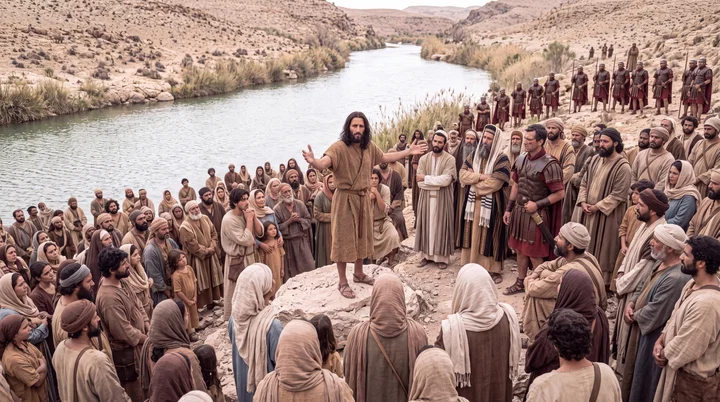
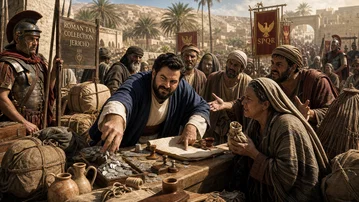
Then came also publicans to be baptized, and said unto him, Master, what shall we do?
Translations
American King James Version, Webster Bible
Then came also publicans to be baptized, and said to him, Master, what shall we do?
King James Version, KJV Cambridge Paragraph Bible
Then came also publicans to be baptized, and said unto him, Master, what shall we do?
And there came also publicans to be baptized, and they said unto him, Master, what must we do?
And there came also publicans to be baptized, and they said unto him, Teacher, what must we do?
And there came also tax-gatherers to be baptised, and they said unto him, 'Teacher, what shall we do?'
And tax-gatherers came also to be baptised, and they said to him, Teacher, what should we do?
And there came, even tax-collectors, to be immersed; and they said unto him—Teacher! what, shall we, do?
Berean Standard Bible, Majority Standard Bible
Even tax collectors came to be baptized. “ Teacher,” they asked, “ what should we do?”
Tax collectors also came to be baptized, and they said to him, “ Teacher, what must we do?”
Then tax-farmers came to him for baptism and said to him, Master, what have we to do?
Then came there Publicanes also to bee baptized, and saide vnto him, Master, what shall we doe?
Douay-Rheims (Challoner revision)
And the publicans also came to be baptized, and said to him: Master, what shall we do?
Pictures
Cross-references
- Matthew 3:1-12
In those days came John the Baptist, preaching in the wilderness of Judaea,
parallel account of John's preaching and baptizing
- Mark 1:5
And there went out unto him all the land of Judæa, and they of Jerusalem, and were all baptized of him in the river of Jordan, confessing their sins.
Both describe people coming to John for baptism and confessing their sins.
- Luke 7:29
And all the people that heard him, and the publicans, justified God, being baptized with the baptism of John.
Publicans accepted John’s message and were baptized.
- Luke 3:3
And he came into all the country about Jordan, preaching the baptism of repentance for the remission of sins;
John preached baptism of repentance for the remission of sins.
- Isaiah 40:3-5
The voice of him that crieth in the wilderness, Prepare ye the way of the LORD, make straight in the desert a highway for our God.
John prepares the way of the Lord as foretold.
- Luke 19:2
And, behold, there was a man named Zacchæus, which was the chief among the publicans, and he was rich.
Zacchaeus, a chief publican, is another tax collector.
- Matthew 21:32
For John came unto you in the way of righteousness, and ye believed him not: but the publicans and the harlots believed him: and ye, when ye had seen it, repented not afterward, that ye might believe him.
Publicans believed John, unlike the leaders who rejected him.
- Matthew 3:7
But when he saw many of the Pharisees and Sadducees come to his baptism, he said unto them, O generation of vipers, who hath warned you to flee from the wrath to come?
scribes and Pharisees also came confessing and seeking baptism
- Luke 1:16-17
And many of the children of Israel shall he turn to the Lord their God.
John turns people to God and prepares them for the Lord.
- Luke 19:8
And Zacchæus stood, and said unto the Lord; Behold, Lord, the half of my goods I give to the poor; and if I have taken any thing from any man by false accusation, I restore him fourfold.
Zacchaeus, a chief publican, pledges repayment.
Commentary
Each commentary is drawn from primary sources: the writings of Ellen G. White and Adventist pioneers and periodicals. Each commentary is separate. Its own words are not a quotation; follow the references to read the source passages.
Ellen G. White
15 sources
Tax collectors came to John the Baptist while he was proclaiming the baptism of repentance for the remission of sins to prepare the way of the Lord.Lt 270, 1907, par. 8–13DA 93 They came with princes, rabbis, soldiers and peasants to the Jordan, alarmed by the solemn warning and cut to the heart by his heart-searching preaching, and many were brought to repentance and baptized to share in the kingdom he announced.ST Jun 11, 1896DA 105.1–2DA 107.2–3 Their question expresses sincere desire for practical direction and definite instruction for conversion.Ms 43, 1891, par. 19–20ApM 58.1–59.2 He answered them to collect no more than the amount appointed to them, practicing no extortion, injustice or oppression, and he did not bid them abandon tax collecting but to remain in their occupation and prove repentance by dealing honestly and justly where God had called them.Lt 270, 1907, par. 8–13Ms 121c, 1898, par. 7Lt 19a, 1897, par. 8–10DA 150.3 Becoming subjects of Christ's kingdom requires such evidence of faith and repentance in daily conduct and daily work, bearing good fruit in justice, honesty, mercy and love by the transforming power of the Holy Spirit, as Zaccheus did when he made restitution fourfold for extortion, and this message is to be studied by present workers as a call to conversion and fruit-bearing.Lt 270, 1907, par. 8–13RH Jan 14, 1873ST Jun 11, 1896ST Oct 18, 1877
John's Ministry and Question
Luke 3:12 belongs to the ministry of John the Baptist in the period from his announcement to his imprisonment, when he proclaimed the baptism of repentance for the remission of sins to prepare the way of the Lord for the people of his day.Lt 270, 1907, par. 8–13DA 93 Tax collectors came with princes, rabbis, soldiers, and peasants to hear John at the Jordan.ST Jun 11, 1896DA 105.1–2 The solemn warning from God alarmed them for a time, and with the other listeners they were cut to the heart by heart-searching preaching with a sense of their sins.DA 105.1–2DA 107.2–3Ms 121c, 1898, par. 4 Many were brought to repentance and received baptism, since persons of all ranks submitted to John's requirement of baptism in order to participate in the kingdom he announced.ST Jun 11, 1896DA 105.1–2
Their inquiry, What shall we do, expresses sincere desire for practical direction.Ms 43, 1891, par. 19–20ApM 58.1–59.2 It presents them as seeking definite instruction for conversion within John's call to repentance and to bearing fruit.Ms 43, 1891, par. 19–20ApM 58.1–59.2
Repentance in Daily Work
To the tax collectors who came for baptism asking what to do, John answered to exact and demand only the tax appointed to them, collecting no more than the amount appointed or assigned to them.Lt 270, 1907, par. 8–13Ms 121c, 1898, par. 7RH Jan 14, 1873Lt 19a, 1897, par. 8–10 That answer forbade all extortion, injustice and oppression in gathering taxes.Lt 270, 1907, par. 8–13RH Jan 14, 1873ST Jun 11, 1896 He did not tell them or his other hearers to abandon tax collecting or to forsake their former duties and occupations.Ms 121c, 1898, par. 7Lt 19a, 1897, par. 8–10DA 150.3 He bade them remain in their occupation and give evidence of repentance by faithfulness to God in the place where God had called them, dealing honestly and justly while rejecting dishonesty and oppression.Ms 121c, 1898, par. 7Lt 19a, 1897, par. 8–10DA 150.3
Becoming subjects of Christ's kingdom requires evidence of faith and repentance in daily conduct and daily work.RH Jan 14, 1873ST Oct 18, 18772SP 55.2–56.21RED 40.1–41.1DA 107.2–3 That evidence is bearing good fruit rather than exploiting position, showing justice, honesty and fidelity, with mercy, benevolence and loving generosity.RH Jan 14, 1873ST Oct 18, 18772SP 55.2–56.21RED 40.1–41.1 It is kindness, virtue, compassion and the love of God seen in life by the transforming power of the Holy Spirit, including ministering to the needy, bringing offerings to God and shielding the defenseless.RH Jan 14, 1873DA 107.2–3 Without such fruit they are like chaff given to the fire.DA 107.2–3
Zaccheus lived out that command when convicted that his tax gathering oppressed people and broke the Old Testament Scriptures.ST Jun 11, 1896 He made restitution to those he had robbed and repaid fourfold for extortion, and this obedience evidenced genuine conversion and sincere repentance that brought salvation to his house.ST Jun 11, 1896 John's own dwelling in the wilderness and his austere, isolated life were by God's direction to shield him from the influence of the priests and rabbis and to prepare him for a special mission.DA 150.3 That life was not an example for the people to follow.DA 150.3
Call to Present Readers
The tax collectors came to John to be baptized and asked, Master, what shall we do, and he answered them to exact no more than what was appointed to them.Lt 270, 1907, par. 8–13 That exchange belongs to John's message of the baptism of repentance for the remission of sins to prepare the way of the Lord, given to the people of his day.Lt 270, 1907, par. 8–13 That message is to be studied to advantage by present workers.Lt 270, 1907, par. 8–13 Within John's call to repentance the coming of the tax collectors shows them seeking practical direction.Ms 43, 1891, par. 19–20
Its application is a call to conversion and to bearing fruit, with a warning against continuing to disappoint Christ's expectation.Ms 43, 1891, par. 19–20 The inquiry, what shall we do, expresses sincere desire for practical direction and is the right language for all readers in view of the claims of moral purity and the cure of unchastity.ApM 58.1–59.2 Those who sincerely ask it are to receive definite directions.ApM 58.1–59.2 The directions begin by supposing the inquirer to be a parent, directing parents in guarding, warning, and instructing children early and faithfully.ApM 58.1–59.2
Sources
Pioneers and periodicals
18 sources
Tax collectors despised as collaborators with Rome who profited by extortion came to John at the Jordan confessing their sins and asking for practical guidance on living out repentance, which is asking how to have a part in God's kingdom and what to do to be saved.ST Jan 18, 1899ST Apr 10, 1907ST Jan 18, 1899
With the people in general and the soldiers they each received a direct reply suited to their duty, and to the tax collectors he commanded that they collect no more than was appointed and practice no extortion or oppression.ST Jan 18, 1899ST Apr 10, 1907ST Jun 3, 1875
In this way genuine repentance and faith are made practical moral reform in daily work, shown by honest financial dealings with justice, honesty, mercy and benevolence, and by generosity toward the needy in sharing clothing and food and loosening the hold on possessions.RH Jan 14, 1873ST Jun 3, 1875ST Apr 13, 1882
Their coming in belief contrasts with the religious leaders who rejected John, and Zaccheus lived out the command when convicted of oppression by making restitution to those he had robbed and repaying fourfold, which evidenced sincere repentance that brought salvation to his house.ST Jun 11, 1896ST Oct 11, 1899
John's Heaven-appointed wilderness work in preparing for Christ's impending coming typifies with Elijah the work and character of God's servants in the last days, and God still answers the same sincere question today by revealing besetting sins and giving will and strength to forsake all unrighteousness and do known duty.ST Apr 10, 1907RH Jan 9, 1908ST Aug 7, 1901ST Oct 22, 1912
Setting and Question
The publicans who came were tax collectors, despised as collaborators with Rome who often enriched themselves through extortion.ST Jan 18, 1899 They came to John at the Jordan to be baptized, and among sinners of every class they bowed before him in the wilderness, confessed their sins, and were baptized by him in the Jordan.ST Oct 22, 1912 Their coming was in response to his call to repentance, seeking practical guidance on how to live that repentance out.ST Jan 18, 1899ST Dec 26, 1892
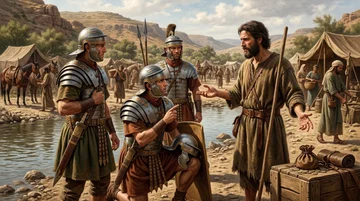
Their question belongs together with the same question asked by the people in general and by the soldiers, and to each group John gave a direct reply instructing them in the duty suited to their case.ST Apr 10, 1907 To ask what shall we do meant how to have a part in God's kingdom, what to do to be saved.ST Apr 10, 1907
It was asked within John's call to repentance and reform before Christ's first advent, a message that also rebuked religious leaders and rulers for sin.ST Sep 20, 1883 That preaching called people to turn to God's law, to have faith in the coming One, and to stop trusting in man.ST Aug 28, 1901 All this preaching and teaching took place before the baptism of Jesus. The surrounding chapter records that baptism of Jesus, dated to A.D. 27, which places the beginning of Jesus' ministry and supports the chronology of the seventy weeks.RH Oct 27, 1904
John's Practical Answer
John met each inquiring group with counsel fitted precisely to its own condition, for he discerned the besetting faults of each class and pressed those faults upon the conscience so as to lay bare the heart and test the motives.ST Apr 10, 1907ST Jan 18, 1899 To the tax collectors he gave a charge that struck directly at their characteristic wrong, bidding them gather only what had been assigned and take nothing beyond it.RH Jan 14, 1873ST Jan 18, 1899ST Jun 3, 1875 That charge forbade all over-exaction, extortion, and oppression in the levying of taxes.ST Jun 11, 1896
So understood, repentance is not mere feeling but practical moral reformation carried into daily labor through upright conduct and honest handling of money.ST Jun 3, 1875 For those entering the kingdom it must appear as the loving, merciful, and generous fruit of genuine repentance and faith, expressed in justice, honesty, mercy, and benevolence.RH Jan 14, 1873ST Oct 18, 1877 The same demand to bring forth fruits worthy of repentance required openhanded care for the needy, as in dividing clothing and food with those who have none.ST Apr 13, 1882 Such generosity loosens the grasp on possessions and reaches beyond a fixed tenth.ST Apr 13, 1882
The tax collectors were baptized by John along with the other classes who came to him, without being made to observe the additional religious ceremonies associated with his work.ST Jun 3, 1875
Response and Last-Day Meaning
The publicans who came to be baptized believed John's preaching, while the religious leaders rejected him, and this fulfills Jesus' judgment that the publicans believed John and did the Father's will.ST Oct 11, 1899 Their coming to the Jordan to confess their sins and be baptized shows the fruit of John's Heaven-appointed work in the wilderness.ST Oct 22, 1912 His clear, strong reproof pierced hard hearts and produced regenerated hearts and renewed lives among sinners of every class.ST Oct 22, 1912 His wilderness preparation fitted him to call the people to repentance and to a higher, holier life.RH Jan 9, 1908
John's message demanded a practical response, and it was the special truth for his generation to prepare them for Christ's impending coming.RH Jul 7, 1874ST Aug 7, 1901 He heralded that coming in mighty power as the messenger of Christ, calling men to repent and turn to obedience to God.ST Aug 7, 1901 That call was given in a time of apostasy different in form from Elijah's day but no less evil: cold, self-righteous, ceremonial, hypocritical formalism seen in Pharisaism, infidel, critical, loose liberalism seen in Sadduceeism, a low condition of business morals, gross commercialism invading even the temple precincts, and the nominal local ruler bewitched by Herodias.ST Aug 7, 1901 If His own people had received Him with all the heart, the destruction of people and city would have been averted.ST Aug 7, 1901 The times of both Elijah and John together typify the last days, and both Elijah and John typify the work and character of God's servants in the last days.ST Aug 7, 1901
Zaccheus lived out John's command to the tax collectors to demand only the appointed tax and practice no extortion or oppression.ST Jun 11, 1896 Convicted that his tax gathering oppressed the people and broke the Old Testament Scriptures, he made restitution to those he had robbed and repaid fourfold for extortion.ST Jun 11, 1896 That obedience evidenced genuine conversion and sincere repentance that brought salvation to his house.ST Jun 11, 1896 God still answers the same sincere question today by revealing besetting sins and promising help to overcome sin, to forsake all unrighteousness, and to give will and strength to do known duty in the fear of God when trusted and believed with the whole heart.ST Apr 10, 1907
Sources