Luke 19:27
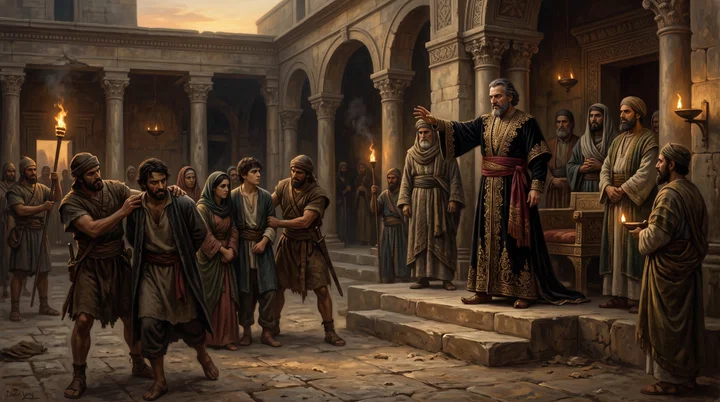
But those mine enemies, which would not that I should reign over them, bring hither, and slay them before me.
Translations
But those my enemies, which would not that I should reign over them, bring here, and slay them before me.
King James Version, KJV Cambridge Paragraph Bible
But those mine enemies, which would not that I should reign over them, bring hither, and slay them before me.
But those my enemies, who would not that I should reign over them, bring hither, and slay them before me.
Howbeit these mine enemies, which would not that I should reign over them, bring hither, and slay them before me.
But these mine enemies, that would not that I should reign over them, bring hither, and slay them before me.
but those my enemies, who did not wish me to reign over them, bring hither and slay before me.'
Moreover those mine enemies, who would not [ have] me to reign over them, bring them here and slay [ them] before me.
But, these mine enemies who desired not that I should be made king over them, bring ye here, and slay them outright before me.
Berean Standard Bible, Majority Standard Bible
And these enemies of mine who were unwilling for me to rule over them, bring them here and slay them in front of me.’”
But bring those enemies of mine who didn’ t want me to reign over them here, and kill them before me.’”
And as for those who were against me, who would not have me for their ruler, let them come here, and be put to death before me.
Moreouer, those mine enemies, which would not that I should reigne ouer them, bring hither, and slay them before me.
Douay-Rheims (Challoner revision)
But as for those my enemies, who would not have me reign over them, bring them hither, and kill them before me.
Pictures
Cross-references 20 of 30
- Matthew 25:14-30
For the kingdom of heaven is as a man travelling into a far country, who called his own servants, and delivered unto them his goods.
A parallel parable holds servants accountable for how they use what their master entrusts to them.
- Daniel 7:13-14
I saw in the night visions, and, behold, one like the Son of man came with the clouds of heaven, and came to the Ancient of days, and they brought him near before him.
The Son of man receives everlasting dominion and a kingdom from the Father.
- Matthew 25:31-34
When the Son of man shall come in his glory, and all the holy angels with him, then shall he sit upon the throne of his glory:
At his coming, Christ judges and welcomes the blessed into the prepared kingdom.
- Revelation 11:15-18
And the seventh angel sounded; and there were great voices in heaven, saying, The kingdoms of this world are become the kingdoms of our Lord, and of his Christ; and he shall reign for ever and ever.
Christ’s reign is joined with the judgment of his enemies.
- Luke 19:12
He said therefore, A certain nobleman went into a far country to receive for himself a kingdom, and to return.
The rejected ruler returns to reign and judges his enemies.
- Psalms 2:8-9
Ask of me, and I shall give thee the heathen for thine inheritance, and the uttermost parts of the earth for thy possession.
The nations are given to the king, who breaks his enemies.
- Revelation 19:15
And out of his mouth goeth a sharp sword, that with it he should smite the nations: and he shall rule them with a rod of iron: and he treadeth the winepress of the fierceness and wrath of Almighty God.
Christ returns as King to strike the nations and rule them with a rod of iron.
- 1 Corinthians 15:24-25
Then cometh the end, when he shall have delivered up the kingdom to God, even the Father; when he shall have put down all rule and all authority and power.
Christ reigns until every enemy is subdued.
- Luke 19:13
And he called his ten servants, and delivered them ten pounds, and said unto them, Occupy till I come.
Servants are charged to use what was entrusted to them until their master returns.
- 2 Thessalonians 1:8
In flaming fire taking vengeance on them that know not God, and that obey not the gospel of our Lord Jesus Christ:
Christ is revealed taking vengeance on his enemies.
- Psalms 110:1
The LORD said unto my Lord, Sit thou at my right hand, until I make thine enemies thy footstool.
Christ reigns until his enemies are subdued beneath his feet.
- Matthew 13:41-42
The Son of man shall send forth his angels, and they shall gather out of his kingdom all things that offend, and them which do iniquity;
Offenders and evildoers are gathered and cast into the fiery furnace.
- Luke 19:15
And it came to pass, that when he was returned, having received the kingdom, then he commanded these servants to be called unto him, to whom he had given the money, that he might know how much every man had gained by trading.
Christ returns with the kingdom and calls his servants to account.
- Hebrews 10:13
From henceforth expecting till his enemies be made his footstool.
Christ awaits the subjection of his enemies beneath his feet.
- Luke 19:11
And as they heard these things, he added and spake a parable, because he was nigh to Jerusalem, and because they thought that the kingdom of God should immediately appear.
The parable addresses expectations that God’s kingdom would appear immediately.
- Luke 19:14
But his citizens hated him, and sent a message after him, saying, We will not have this man to reign over us.
The citizens reject the nobleman’s rule.
- Psalms 2:9
Thou shalt break them with a rod of iron; thou shalt dash them in pieces like a potter’s vessel.
Christ breaks his rebellious enemies with an iron rod.
- Revelation 19:20-21
And the beast was taken, and with him the false prophet that wrought miracles before him, with which he deceived them that had received the mark of the beast, and them that worshipped his image. These both were cast alive into a lake of fire burning with brimstone.
Christ’s enemies are destroyed at his victorious coming as king.
- Luke 1:32-33
He shall be great, and shall be called the Son of the Highest: and the Lord God shall give unto him the throne of his father David:
Both teach the setting up of Christ’s kingdom and his endless reign.
- Hebrews 1:13
But to which of the angels said he at any time, Sit on my right hand, until I make thine enemies thy footstool?
Christ reigns at God’s right hand until his enemies are subdued.
Commentary
Each commentary is drawn from primary sources: the writings of Ellen G. White and Adventist pioneers and periodicals. Each commentary is separate. Its own words are not a quotation; follow the references to read the source passages.
Ellen G. White
28 sources
The command closes the parable of the entrusted money, where a man goes to a far country to receive a kingdom and on his return calls his servants to account for what was put in their hands, and orders those who would not have him reign over them to be destroyed before him.3T 123.1ST Oct 22, 18949T 245.3Ms 9, 1898, par. 9–10 What was entrusted is capital advanced by the Lord to every servant according to capability, including money, property, mind, body, time, gifts, offerings, and all light and spiritual advantage, which remains his own.Ms 57, 1901, par. 152T 667.3–668.2Ms 81, 1893, par. 69–72 Faithful stewardship is to put it diligently to work for his interests and glory, trading and increasing it day by day to advance his kingdom and save souls, which itself enlarges capability, character, and fitness for greater trust.Ms 57, 1901, par. 15Ms 76, 1900, par. 9Ms 81, 1893, par. 69–72TCBMP 159.1Ms 151, 1897, par. 28–29 At his coming he will scrutinize every talent to see whether it was improved so he receives his own with increase, justifying his servants by faith but judging them by works of love, with reward corresponding to faithful use.2T 667.3–668.24SP 311.2Ms 81, 1893, par. 69–72ST Oct 22, 1894ST Nov 21, 1906 There is no second probation after the time of trust is ended, so burying the talent in slothful neglect and refusing his reign brings loss of what was given, loss of heaven, and eternal separation from God.Ms 57, 1901, par. 152T 667.3–668.2Ms 81, 1893, par. 69–72ST Oct 22, 1894MC 67.1
Parable Setting and Faithful Stewardship
This command closes the parable of the pounds, the parable of the entrusted money, about a man who goes into a far country to receive a kingdom and then returns.3T 123.1Ms 8, 1859, par. 25Ms 150, 1898, par. 23–24 At the ruler's return he calls his servants to account for how they used what he entrusted to them, and the reckoning applies to the use of God's goods, with the faithful receiving reward.3T 123.1Ms 150, 1898, par. 23–24 The parable calls all to answer for faithful service and development of Christian character, since church membership alone does not secure entrance into the kingdom, while some presentations of its stewardship lesson that what the king entrusts must be used faithfully to advance his kingdom and to manage abilities and means in his work leave the judgment of the enemies unexplained.9T 245.3Lt 43, 1899, par. 34–36
The pound is capital advanced by the Lord to each servant to be traded diligently for him, and no gain could be made without the first deposit and no interest without the principal.Ms 57, 1901, par. 152T 667.3–668.2Ms 81, 1893, par. 69–72 Christ entrusts to each servant gifts and responsibilities to use in his service until he returns, with talents in trust and work given to every man from the lowliest to those in highest trust, proportioned to varied capabilities, so none is excused and there can be no idlers in his vineyard.2T 667.3–668.2Ms 81, 1893, par. 69–72Lt 59, 1893, par. 11–13 What is entrusted includes money, houses, lands, property, mind, soul, body, spirit, strength, time, gifts, offerings, the light of truth and all spiritual advantages, all held as a loan from Christ who purchased them, and the property remains his own.Ms 81, 1893, par. 69–72Lt 20, 1897, par. 20–23Lt 59, 1893, par. 11–13RH Mar 19, 1901 Even those given little are responsible, and the lowliest talent and humblest service becomes a consecrated gift when employed to do the master's service and promote his glory, while greater learning, talents and money only increase and intensify responsibility.Ms 81, 1893, par. 69–72Lt 59, 1893, par. 11–13 Success in trading comes from him and all praise and glory belongs to him, with the faithful servant taking no credit but acknowledging what was delivered to him.Ms 57, 1901, par. 15Ms 81, 1893, par. 69–72
A steward represents his master and must take responsibility for the master's interests, acting as the master would, handling not his own goods but the master's entrusted capital as custodian of the master's goods and steward of his grace.Ms 81, 1893, par. 69–72Lt 59, 1893, par. 11–13Ms 33, 1907, par. 6 The trust and position are dignified, but using what was entrusted for selfish advantage perverts that trust, and refusing his charge makes one an unfaithful steward.Ms 26, 1896, par. 27–28Ms 33, 1907, par. 6 There is to be no control by human inclination and desire, no selfish extravagance, and no misuse or misapplication for selfish use or self-glorification and indulgence of impulse, with houses, land and money to be used for God's work and the good of others rather than buried or spent for selfish ends.Lt 20, 1897, par. 20–23Lt 59, 1893, par. 11–13Ms 150, 1898, par. 19 Wisdom is to be sought from God in prayer, and money, houses and lands are to be used as his goods to advance his work and build his kingdom without using them to glorify self or indulge impulse.Ms 150, 1898, par. 19
Faithful stewardship requires working while responsible, putting what is given to work, trading on the Lord's money and investing and increasing it day by day and hour by hour according to ability to carry forward his interests.Ms 57, 1901, par. 15MC 67.1Lt 34a, 1886, par. 28–29 Every gift of God is an entrusted talent to be appreciated and put to the very best use, with mind, soul and strength connected with God and controlled by the Holy Spirit so that men and women become laborers together with God in molding human character after the divine similitude.Ms 81, 1893, par. 69–72Ms 1, 1899, par. 7–8 The more the talents are exercised the greater will be the increase of capability, in mental and moral improvement and growing in grace and knowledge of Jesus Christ, improving in character and ability according to privileges and opportunities to become more and better qualified, complete workers.Ms 76, 1900, par. 9Ms 81, 1893, par. 69–72 By this individual work of earnest effort in trading upon them and thus increasing them, disciples who cannot remain slothful obtain power and peace in Christ, watching their opportunity to represent the truth to others and win souls, since unless the seed sown struggles above the soil springing up into life it will lose all its power to germinate.Ms 76, 1900, par. 9Ms 1, 1899, par. 7–8
To bind the talent in a napkin and bury it in the earth is to do nothing, to idle in the marketplace and let souls die as a slothful church member, while hoarding the Lord's goods, trifling with time, privileges and opportunities, slothfulness and selfishly withholding what belongs to him retards his work.2T 667.3–668.2Ms 81, 1893, par. 69–72Ms 151, 1897, par. 28–29Ms 57, 1901, par. 7 Those entrusted with spiritual advantages must use them faithfully and answer to God, and those who have neglected their gifts and sacrificed their spirituality, as well as those who refuse his charge, will be called to answer as unfaithful stewards.2T 667.3–668.2Ms 10, 1892, par. 18Ms 26, 1896, par. 27–28
What is entrusted must be used to advance his kingdom by ministering effectually to others in making Christ known to a world where souls are perishing out of Christ, which work of enlightening others and winning souls belongs not to ministers alone but to all who profess the truth.Ms 151, 1897, par. 28–29Lt 59, 1893, par. 11–13 To unearth the talent and put it out to the exchangers is to educate doing-nothing church members to become diligent laborers in the harvest field, whose use develops men for positions of trust and influence and accomplishes great good for the master.Ms 151, 1897, par. 28–29 Faithful stewards use their means for God's cause while they are responsible for them so they can return what was lent with its increase when called to account, bringing tithes to his treasury and making willing and abundant offerings according as God has prospered.Ms 57, 1901, par. 15TCBMP 159.1 Property is his own and is to be returned to him at once with usury for his glory by cooperating with him in helping suffering institutions and doing good to others, since placing money for afflicted brethren places it in his own hands and gifts large or small are accepted.Lt 59, 1893, par. 11–13RH Mar 19, 1901 Talents must also be traded according to ability to carry forward his interests in mission fields to be entered that require means, including the ability to write given in wise providence so that means come into the hands of his stewards to be used wisely and unrestrictedly when and where the Spirit indicates, without shifting stewardship upon any man or set of men.Lt 34a, 1886, par. 28–29
Final Reckoning and Judgment
At his coming the Lord will scrutinize the use made of every talent to see whether the capital entrusted by God was improved so that he receives his own with usury.4SP 311.2Ms 81, 1893, par. 69–72 The Chief Shepherd himself will be judge, illustrating the great principles that regulate the reckoning, in which his servants are justified by faith and judged by their works.Ms 81, 1893, par. 69–72 Mere profession of faith in Christ has no value, and nothing counts as genuine except love shown by works.4SP 311.2Ms 81, 1893, par. 69–72 Faith works by love and purifies the soul of moral defilement that it may become a temple for the Lord.Ms 81, 1893, par. 69–72
There is no second probation, and to expect another opportunity is a fatal delusion.MC 67.1 The time before the master returns is a solemn privilege and sacred trust when destiny is decided for life or for death, and an opportunity for service in trading diligently on the Lord's money.Ms 57, 1901, par. 152T 667.3–668.2MC 67.1 Probation may end and the account be fixed, when at his coming he reckons with his servants and they must give an account of what they have done with his goods.2T 667.3–668.2MC 67.1 Day by day and hour by hour people are building for the last great day, and as responsible beings working for time and for eternity they are making their records in the books of heaven and preparing their reward or punishment.MC 67.1
Each person is judged according to what was entrusted and how it was used, with the owner investigating stewardship and requiring interest according to entrusted capital and the measure of the gift.2T 667.3–668.2ST Oct 22, 1894Lt 59, 1893, par. 11–13 Faithful improvement and doubling what was put out are commended, reward corresponds to faithful work and is proportionate to work, and he expects results from everyone.2T 667.3–668.2MC 67.1Lt 59, 1893, par. 11–13 The faithful receive a reward and crowns of immortal glory.2T 667.3–668.2ST Nov 21, 1906RH Nov 24, 1904 Christ gives every man according as his work shall be.MC 67.1
Neglect or abuse brings punishment.2T 667.3–668.2ST Oct 22, 1894 The slothful servant who did nothing with his pound lost his soul.Ms 81, 1893, par. 69–72 Refusing to use God-given abilities faithfully leads to loss of what was entrusted, loss of heaven, and eternal separation from God.Ms 9, 1898, par. 9–10Lt 20, 1897, par. 20–23 Those who would not have Christ reign over them and refused his leading are destroyed before him.Ms 81, 1893, par. 69–72Lt 20, 1897, par. 20–23
Those who refused his reign will face him on his coronation day when he appears in glory surrounded by the redeemed.ST Nov 21, 1906RH Nov 24, 1904Ms 168, 1902, par. 25 They will see his glory and the once thorn-crowned head crowned with a diadem of glory.ST Nov 21, 1906RH Nov 24, 1904Ms 168, 1902, par. 25 His faithful people will bear the name declaring the Lord as their righteousness.RH Nov 24, 1904Ms 168, 1902, par. 25
Sources
Pioneers and periodicals
84 sources
It closes the parable of the pounds spoken because the disciples thought the kingdom would appear immediately, in which the nobleman is Christ going to heaven to receive the kingdom and returning at his second advent after a long absence.ST Sep 14, 1882ST Dec 11, 1879ST Aug 19, 1889RH Oct 31, 1854 The citizens who would not have him reign are his enemies, and at his return as king he has them brought before him and slain, which is the judgment of all who reject his authority by disobeying his commands.ST Apr 30, 1896RH Oct 18, 1853RH Sep 2, 1852 He first receives his kingdom in heaven when his priestly work is finished, then returns with judgment, first reckoning with and rewarding his servants and gathering his people, and only then destroying his enemies before the thousand years.ST Oct 13, 1898RH May 11, 1869RH May 30, 1854ST Aug 5, 1889ST Jul 7, 1914 That slaying is their final complete destruction and ceasing to be, not their conversion nor continued life in torment, leaving nothing out of harmony with his rule when his kingdom fills the whole earth.RH Apr 15, 1858ST Aug 19, 1880 The same reckoning requires faithful use until he comes of all entrusted goods and spiritual gifts, for what is employed increases and is rewarded with proportionate authority, while what is hidden is taken away and its holder condemned.ST Sep 14, 1882RH Sep 9, 1858RH Sep 28, 1869ST Jul 19, 1883ST Jul 8, 1889
Parable Setting and Purpose
This closing sentence brings to an end the parable of the pounds in Luke 19:11-27, spoken on the last journey to Jerusalem a few days before the crucifixion because the disciples thought God's kingdom would appear immediately.RH Oct 31, 1854RH Dec 23, 1852ST Sep 16, 1889ST Nov 27, 1879 It corrects that mistaken expectation about timing and order by showing the king first goes away and returns, and only then rewards faithful servants and orders the destruction of those who refused his reign.RH Oct 31, 1854RH Dec 23, 1852ST Sep 16, 1889 The disciples proclaimed the message at the right time yet wrongly expected the immediate appearance, and even their later welcome of Jesus as king showed they still did not understand that suffering and death must come before entering glory, a correction made clear only after the disappointment.ST Sep 16, 1889ST Nov 20, 1884ST Nov 27, 1879 Christ's coming and kingdom are not an outward display as anticipated by the unbelieving world, for when he returns his glory becomes unmistakable and his enemies face judgment.RH Oct 31, 1854
The nobleman is Christ, his going to a far country which is heaven is his ascension to the Father after his resurrection to receive a kingdom, and his return after a long time and long absence is the second advent.ST Sep 14, 1882ST Dec 11, 1879ST Aug 19, 1889ST May 13, 1897RH Sep 25, 1866 The place of the verse in the parable fits that he receives his kingdom in the Father's presence at the close of the present dispensation before returning, while the servants are dealt with individually.ST Dec 11, 1879ST May 13, 1897RH Sep 25, 1866 The kingdom is not prepared by human effort but is received by him for himself and then established on his return.ST Sep 12, 1895
Its application spans the whole time of the Christian era from his departure to his return, with his church occupying till he comes again.ST Oct 13, 1898ST Aug 19, 1889RH Sep 22, 1863 Opposition to his rule continues without essential change until he returns to judge his enemies and bring the present order to its end, giving no indication of an intervening millennium of holiness.RH Sep 23, 1862 Its practical importance increases as the second advent draws near.ST Aug 19, 1889
The parable of the pounds is the parallel of the parable of the talents in Matthew 25:14-46, illustrating the same spiritual gifts bestowed at the same time by the same Lord upon the same ones for the same purpose and for the same period, to be used for God until he returns.ST Sep 13, 1899ST Jul 8, 1889ST Oct 13, 1898ST Jul 1, 1889ST Sep 13, 1899 The gifts are pictured by the highest money values, pound in Roman money and talent in Jewish money, and he who does not use what is given for God buries the gift in the earth and will lose all.ST Sep 13, 1899ST Sep 13, 1899 They are spiritual gifts and gifts of the Spirit fitting his body for service until he returns and the church is complete, showing Christ's special fitting of his church for work and each individual for service, so that the church as founded possessed every gift and every needed member; this teaches the same great lesson as the gift lists in 1 Corinthians 12, Romans 12, and Ephesians 4, each with additional detail.ST Jul 8, 1889ST Oct 13, 1898ST Jul 1, 1889 They do not represent natural ability or inherited faculties, since the servants already had ability before receiving them, and what is employed increases and brings spiritual interest.ST Jul 8, 1889ST Jul 1, 1889 God's kingdom was still future when Jesus spoke, and his servants must faithfully and diligently use what has been entrusted to them until he returns.ST Jun 11, 1896
The nobleman going into a far country to receive a kingdom and to return means Christ receives the kingdom during his absence and establishes it on his return, so a definite personal coming results in the establishment of his kingdom.RH Jun 7, 1915 That kingdom is not an indirect spiritual rule in individual hearts leaving human government in the hands of ordinary men, but a direct and definite rule manifested in the person of Christ that destroys and displaces human governments.RH Jun 7, 1915 He does not take the kingdom at his first advent but receives it when his mediatorial work is finished, and its subjects are not determined by natural descent from Abraham but enter when Christ comes again with the holy angels.ST Jul 13, 1904 He preached a coming kingdom on earth, which the repentant thief hoped to share when Christ came into his kingdom.
Receiving Kingdom and Returning
Christ does not take the kingdom at his first advent but goes away to receive it in the Father's presence.ST Dec 11, 1879ST Jul 13, 1904RH Apr 15, 1858 The nobleman's going to receive a kingdom is his coming to the Ancient of Days to receive dominion and authority, his own kingdom and throne in the heavenly Jerusalem.ST Dec 11, 1879RH Apr 15, 1858RH Apr 15, 1858 The kingdom would not appear immediately, for he must first go away and then return.ST Dec 11, 1879RH May 11, 1869RH Apr 9, 1857
He now sits as priest on his Father's throne waiting for his enemies to be subdued, because the kingdom is not given in rebellion.ST Oct 13, 1898RH May 11, 1869 He receives his own kingdom at the close of the present dispensation, at the time of the judgment when his priestly and mediatorial work is finished.ST Oct 13, 1898ST Aug 5, 1889ST May 22, 1879ST Aug 19, 1880ST Jul 13, 1904 That receiving is the closing event of his priestly ministry, and it takes place while probation still continues and decisions about people are made before his return.RH Apr 15, 1858ST May 22, 1879
His return as king follows the receiving of the kingdom.RH May 11, 1869RH Sep 25, 1866 That return is the second advent with its accompanying judgments.RH Apr 15, 1858ST Aug 19, 1880 After his priesthood is over he comes forth in wrath against a guilty world to execute judgment on those who refused his reign.RH May 11, 1869ST Aug 5, 1889ST Aug 19, 1880
At his return he first reckons with and rewards his servants.RH May 30, 1854RH Dec 23, 1852RH Apr 9, 1857 The just are raised, his own people are gathered to himself, and the subjects of his kingdom are gathered.RH Apr 15, 1858 With his enemies removed he takes possession of his kingdom, and then it is set up and his eternal reign is established in peace and blessedness forever.RH May 30, 1854ST Jul 7, 1914ST Jul 1, 1889
Only then, and not till then, are his enemies destroyed.ST Oct 13, 1898 The judgment of the citizens belongs before the thousand years at the last day, following the reckoning with the servants and before the kingdom is set up.ST Oct 13, 1898RH May 30, 1854 The final settlement with the wicked takes a thousand years, after which Christ, the angels, and the saints shine forth in the Father's kingdom, when he gathers out of his kingdom everything that offends and those who do evil are consigned to the fiery furnace after mercy is no longer available at the end of probation.RH Jul 15, 1873
This order proves the kingdom was not to appear immediately in his earthly ministry but at his return.RH Dec 23, 1852RH Apr 9, 1857 It is not yet set up while his enemies still rule and oppress his people.RH May 9, 1854 It was not set up when the kingdom of grace began at the crucifixion, but takes place when the faithful enter the kingdom prepared for them at his coming to establish his kingdom.ST Jul 7, 1914RH Dec 10, 1857ST Feb 19, 1880
Punishment of Rejecting Enemies
The citizens who would not have the nobleman reign over them are his enemies, and when he returns as king he commands them to be brought before him and slain.ST Apr 30, 1896ST Feb 19, 1880RH Feb 25, 1875 This is the judgment of all who reject his authority, with final and complete destruction that leaves nothing in the universe out of harmony with his rule.ST Apr 30, 1896 Those not prepared to meet him lose even what they seem to possess, for the sentence sets forth the fate of the wicked living at his coming.ST Feb 19, 1880RH Feb 25, 1875
Refusal to have him reign is shown by disobeying his commands even without openly saying rejection.RH Oct 18, 1853 It includes those who deny God, who contemptuously reject Jesus and his authority, and who break God's commandments and teach others to do so, as those who cannot serve God while keeping the Pope's sabbath.RH Oct 18, 1853RH Sep 2, 1852RH Mar 7, 1854
The execution takes place in his presence and sight when he comes as conqueror and king to reign on the planet that rejected him.RH Feb 19, 1861RH May 27, 1875ST Jun 26, 1884ST Jul 29, 1886 It is his coronation day in glory surrounded by the redeemed, when the faithful receive crowns of immortal glory and the former rejecters see the once thorn-crowned head crowned with a diadem of glory.ST Nov 21, 1906RH Nov 24, 1904 The redeemed bear the sign THE LORD OUR RIGHTEOUSNESS as they behold his glory.RH Nov 24, 1904
For the wicked living at his coming that day is dreadful.ST Feb 19, 1880RH Feb 25, 1875RH Jul 18, 1865 Those not prepared lose even what they seem to possess, and there is no later opportunity for those who put off accepting him to gain salvation after his return.ST Jan 21, 1903 Christ takes his kingdom after the gospel work closes, and his enemies who reject his rule are judged when he returns as king.ST Jan 21, 1903
Being brought forth and slain is the dashing of the heathen in pieces like a potter's vessel and ruling them with a rod of iron, not their conversion.RH Apr 15, 1858 When the enemies are given into his power he has them slain before him, and being subdued under his feet does not mean they are converted.RH Apr 15, 1858ST Aug 19, 1880ST Sep 30, 1889 After receiving his kingdom and returning at the second advent with its accompanying judgments, when his priestly work is finished, the enemies are not all converted.RH Apr 15, 1858ST Aug 19, 1880
Their end is final, complete destruction leaving nothing in the universe out of harmony with his rule. The being slain means destruction and death, coming to an end and ceasing to be, not continued life in misery. It is plain language teaching that rebellious subjects who are slain and irreclaimable sinners will be destroyed, not kept alive for endless torment nor preserved alive as indestructible and immortal living sufferers.ST Feb 1, 1883
The wicked are burned up and reduced to ashes while those who fear God receive healing and go forth in joy.ST Jul 29, 1886 Those who refuse his reformation remain outside the completed temple of God and cannot continue in life with it, though his scepter of righteousness offers repentant sinners peace and transformation and those who reject that reformation remain in rebellion and face death.ST Apr 10, 1901ST Jul 29, 1886
No rival kingdom will offer refuge from this judgment, because his kingdom will fill the whole earth.ST Sep 8, 1881RH Mar 23, 1869 He gathers out of his kingdom everything that offends and those who do evil, and they are consigned to the fiery furnace.RH Jul 15, 1873 The final settlement with the wicked takes a thousand years before Christ, the angels, and the saints shine forth in the Father's kingdom.RH Jul 15, 1873
Their destruction at his coming does not show that God's provision of salvation has failed.ST Oct 9, 1879 Mercy was offered while he pleaded as priest, and while he pleads for sinners mercy remains available, but after he leaves the mediatorial seat there is no further hope for the sinner at the end of probation.ST Oct 9, 1879RH Jul 15, 1873
Stewardship and Accountability Required
The goods put into the servants' hands are all the temporal and spiritual blessings given by God, including abilities, health, strength, influence, property, time, opportunities, the word of God, truth received, and the Spirit.ST Sep 14, 1882RH Sep 28, 1869ST Feb 13, 1879 They are entrusted in differing measures, while the word and Spirit are open to all who ask in faith, and each person will render an account for what was entrusted and must put gifts and opportunities for doing good to right use until the return.ST Sep 14, 1882RH Sep 28, 1869RH Mar 26, 1861ST Feb 13, 1879 Each is judged according to what was entrusted and how it was used, with faithful use bringing proportionate reward and neglect or abuse bringing punishment.ST Oct 22, 1894
The pounds are more specifically spiritual gifts given by Christ to His servants and church at His going away as capital for His work, to fit His body for service until He returns and the church is complete.ST Oct 13, 1898ST Mar 15, 1910 They are the same gifts as the talents in Matthew 25, bestowed at the same time by the same Lord for the same purpose and period, pictured by the highest money values, and taught also with the gift lists in 1 Corinthians 12, Romans 12, and Ephesians 4.ST Jul 8, 1889ST Oct 13, 1898ST Jul 1, 1889 They are not natural abilities or inherited faculties, since the servants already had ability before receiving them, but gifts of the Holy Spirit given to each according to ability for the good of others throughout the gospel age.ST Mar 15, 1910ST Jul 1, 1889ST Jul 1, 1889
The call to occupy till He comes is not a command to accumulate farms, stores, stocks, or other worldly property, for He did not give His disciples such possessions, and it does not mean multiplying wealth or serving mammon.RH Jul 31, 1856ST Jul 19, 1883 It means using what is entrusted — abilities, opportunities, and means — to serve the gospel and build up His cause, and gifts increase through faithful use.ST Jul 19, 1883 Using them for selfishness and worldliness turns them into curses, and serving mammon does not lead to exaltation in His kingdom, leaving the poor no less a place in the promised blessing.RH Jul 31, 1856ST Jul 19, 1883
What is employed increases and brings spiritual interest, while what is hidden away is useless and its hiding brings condemnation.ST Jul 19, 1883ST Jul 29, 1897 Consecrated servants must put gifts to work in love for God and for precious souls, trying ministering and doing helpful little things and watching for opportunities where teaching offends, until grace working through that service opens hearts and adds further gifts such as exhortation.ST Jul 8, 1889 Christian character and experience grow through such active effort, learning by mistakes and successes and seeking God's help.ST Jul 29, 1897
God is the one original and inalienable owner of all, including money and every gift, and man is not owner but trustee managing another's goods and estates.RH Oct 25, 1906 The Lord does not require the same amount from everyone, but requires each to improve what was given and demands its return with increase, with talents to be presented with the increase gained and with His own received with usury at His coming.RH Mar 26, 1861RH Nov 3, 1910ST Jan 29, 1885 No excuse avails in the day of reckoning, including pleas based on sex, for the gifts bear God's image and ownership and must be developed and used for Him, binding both sexes alike to be more than grown children.RH Mar 26, 1861ST Jan 29, 1885
Faithful use brings reward proportioned to gain, as the servant who gained ten pounds is given authority over ten cities and the servant who gained five pounds over five cities.RH Sep 9, 1858 The Master entrusts greater work only to those proved faithful in least things, heeding duty without consulting pleasure, speaking kindness, doing deeds of love to the poor, carrying comfort to desolate homes, and showing an unselfish spirit beginning at home.ST Oct 22, 1894ST Dec 12, 1878 Those so proved will be called to make sacrifices to carry truth to those in darkness, and wise improvement of bestowed talents makes the faithful doer great in His sight.ST Dec 12, 1878
The servant who returns the pound without gain has it taken away and is condemned, and is reckoned as an enemy of the king.RH Sep 9, 1858ST Jul 8, 1889 That awful reckoning falls not only on wasters but on hoarders, for condemnation comes for not having used so as to increase what was entrusted, requiring stewards to be faithful and wise so gifts are not perverted to self-indulgence but converted into as large gains as possible.RH Oct 25, 1906 Even the lowest gift, pictured not by pence or shekels or other inferior coins but by pounds and talents of highest value, is of inestimable value to him who uses it rightly, but becomes a weighty cross to him who slights divinely given opportunities.ST Jul 8, 1889
Such right use must be in love for God and souls rather than burying the talent, and knowing the gifts come from God forbids exalting self and requires sober thought of self according to the measure of faith, since nothing possessed was not received.ST Jul 8, 1889ST Jul 8, 1889 The reckoning after the return is the final judgment and great day of account for stewards.RH Oct 25, 1906ST Aug 15, 1916 Church membership alone does not secure entrance into the kingdom, but faithful service and developed Christian character matter, and rightly employing property and means for His cause and suffering institutions has eternal consequences, with gifts large or small accepted as placed in His own hands and with heavenly help commissioned when His people do their part.RH Mar 19, 1901RH Oct 25, 1906
The sentence on the enemies stands as the close of the parable explaining that the kingdom would not appear immediately, with the nobleman going away to receive a kingdom in the Father's presence at the close of the present dispensation before returning, while the servants are dealt with individually.ST Dec 11, 1879ST May 13, 1897 In passages centered on the bestowal and use of the talents and pounds, the focus is the servants' stewardship of gifts of the Spirit until the Master returns, and the specific judgment on the enemies is not separately explained.ST Jul 8, 1889ST May 13, 1897ST Mar 15, 1910ST Mar 15, 1910ST Apr 21, 1909
Warning and Right Use
Those who will not have him to reign over them will meet him as Judge instead of Savior, for mercy is offered now and justice will enforce his authority at his coming.RH Nov 10, 1859RH Nov 15, 1853 The coming destruction of his enemies makes it urgent to accept the peace God freely offers, to be reconciled to him and made righteous in Christ before that day.RH Nov 10, 1859ST Jun 10, 1875RH Nov 15, 1853ST Jul 14, 1887 Servants are sent now to urge that reconciliation, since he bore sin that people might receive God's righteousness.ST Jun 10, 1875ST Jul 14, 1887 Past sin need not keep anyone away, because his blood cleanses from all sin.ST Jul 14, 1887
Those who love him look forward to his appearing, while the wicked do not want him to come because he will destroy them.RH Oct 18, 1853 Disobedience to his commands shows refusal of his reign even without open words of rejection.RH Oct 18, 1853 The dying malefactor set his hope on sharing a coming earthly kingdom when Christ comes into his kingdom exalted above his enemies, trusting his request would be fulfilled then and not immediately.ST Apr 25, 1900
While he pleads as priest mercy remains open, but when he leaves the mediatorial seat at the end of probation there is no further hope for the sinner.RH Jul 15, 1873 He will then gather out of his kingdom everything that offends and those who do evil for the fiery furnace, with the final settlement with the wicked taking a thousand years before he with angels and saints shines forth in the Father's kingdom.RH Jul 15, 1873 The sentence belongs to the Lord's own judgment at the last day, when his priesthood is over and he returns as king, and his gospel mission till then is to save and not to condemn.ST Oct 13, 1898 It therefore gives no ground for religious prosecution or persecution.ST Oct 13, 1898 To use it as a threat that rejecters of his rule must accept his reign or be slain, and so to justify coercion by church-state union, denies liberty and returns to inquisitorial persecution.ST Oct 14, 1889
Human beings may have their day, but God will have his day of reckoning.RH Jul 4, 1865
Sources