Matthew 25:14
For the kingdom of heaven is as a man travelling into a far country, who called his own servants, and delivered unto them his goods.
Translations
American King James Version, Webster Bible
For the kingdom of heaven is as a man traveling into a far country, who called his own servants, and delivered to them his goods.
King James Version, KJV Cambridge Paragraph Bible
For the kingdom of heaven is as a man travelling into a far country, who called his own servants, and delivered unto them his goods.
Revised Version, American Standard Version
For it is as when a man, going into another country, called his own servants, and delivered unto them his goods.
'For — as a man going abroad did call his own servants, and did deliver to them his substance,
For [ it is] as [ if] a man going away out of a country called his own bondmen and delivered to them his substance.
For it is, just as a man, who, going from home, called his own servants, and delivered up to them his substance;
Berean Standard Bible, Majority Standard Bible
For it is just like a man going on a journey, who called his servants and entrusted them with his possessions.
“ For it is like a man going into another country, who called his own servants and entrusted his goods to them.
For it is as when a man, about to take a journey, got his servants together, and gave them his property.
For the kingdome of heauen is as a man that going into a strange countrey, called his seruants, and deliuered to them his goods.
Douay-Rheims (Challoner revision)
For even as a man going into a far country, called his servants, and delivered to them his goods;
Pictures
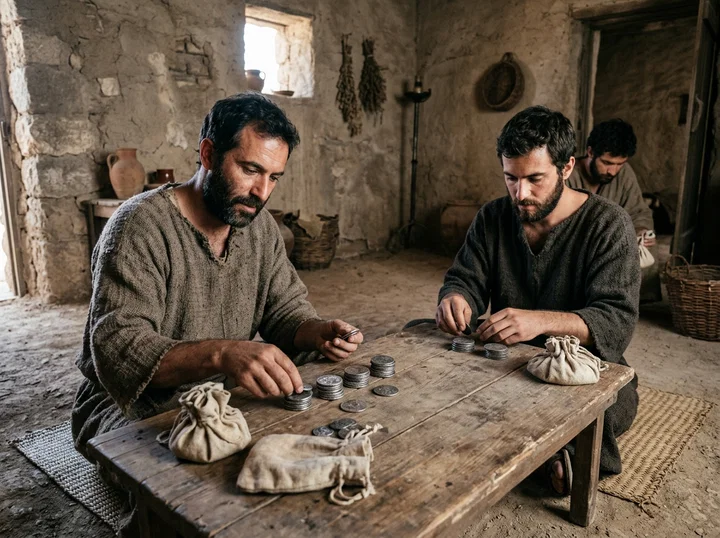
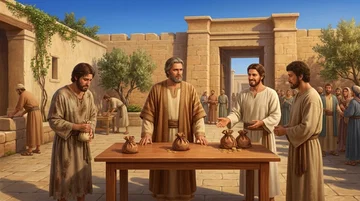
Cross-references 20 of 57
- Matthew 25:19-23
After a long time the lord of those servants cometh, and reckoneth with them.
The servants answer for their entrusted talents, and the faithful receive the master’s commendation and reward.
- Luke 19:12-26
He said therefore, A certain nobleman went into a far country to receive for himself a kingdom, and to return.
A parallel parable describes servants entrusted with resources and held accountable.
- 1 Peter 4:10
As every man hath received the gift, even so minister the same one to another, as good stewards of the manifold grace of God.
Servants are entrusted with gifts to use in serving others as stewards of God’s grace.
- Matthew 25:27
Thou oughtest therefore to have put my money to the exchangers, and then at my coming I should have received mine own with usury.
The master requires his entrusted property to be put to use and returned with increase.
- 1 Corinthians 4:2
Moreover it is required in stewards, that a man be found faithful.
Entrusted servants are required to be faithful.
- Luke 12:48
But he that knew not, and did commit things worthy of stripes, shall be beaten with few stripes. For unto whomsoever much is given, of him shall be much required: and to whom men have committed much, of him they will ask the more.
Both connect what a servant receives with what is required of him.
- Mark 13:34
For the Son of man is as a man taking a far journey, who left his house, and gave authority to his servants, and to every man his work, and commanded the porter to watch.
A departing master entrusts servants with work until he returns.
- Romans 14:12
So then every one of us shall give account of himself to God.
Both teach that each person must give an account to God.
- Revelation 22:12
And, behold, I come quickly; and my reward is with me, to give every man according as his work shall be.
Christ brings a reward at his coming according to each person’s work.
- 2 Corinthians 5:10
For we must all appear before the judgment seat of Christ; that every one may receive the things done in his body, according to that he hath done, whether it be good or bad.
Each person answers before Christ and receives according to their deeds.
- Matthew 25:18
But he that had received one went and digged in the earth, and hid his lord’s money.
The servant buries his entrusted talent instead of putting it to use.
- Luke 16:10-12
He that is faithful in that which is least is faithful also in much: and he that is unjust in the least is unjust also in much.
Faithfulness in small entrusted things shows readiness for greater trust and true riches.
- Matthew 25:19
After a long time the lord of those servants cometh, and reckoneth with them.
The master returns and calls his servants to account for what he entrusted.
- Matthew 25:23
His lord said unto him, Well done, good and faithful servant; thou hast been faithful over a few things, I will make thee ruler over many things: enter thou into the joy of thy lord.
The faithful servant is commended and welcomed into the Lord’s joy.
- Matthew 25:30
And cast ye the unprofitable servant into outer darkness: there shall be weeping and gnashing of teeth.
The servant who left his talent unused is cast into outer darkness.
- Matthew 25:25
And I was afraid, and went and hid thy talent in the earth: lo, there thou hast that is thine.
The servant hides his entrusted talent in the ground, claiming fear of his master.
- Luke 16:2
And he called him, and said unto him, How is it that I hear this of thee? give an account of thy stewardship; for thou mayest be no longer steward.
A steward is called to account for the use of entrusted goods.
- Matthew 6:19-21
Lay not up for yourselves treasures upon earth, where moth and rust doth corrupt, and where thieves break through and steal:
Faithful use of entrusted goods lays up heavenly treasure and directs the heart toward God.
- Luke 19:20
And another came, saying, Lord, behold, here is thy pound, which I have kept laid up in a napkin:
Both parables portray a servant hiding entrusted money instead of using it.
- Matthew 25:26
His lord answered and said unto him, Thou wicked and slothful servant, thou knewest that I reap where I sowed not, and gather where I have not strawed:
The master condemns the servant for failing to use his entrusted talent.
Commentary part 1 of 5
Each commentary is drawn from primary sources: the writings of Ellen G. White and Adventist pioneers and periodicals. Each commentary is separate. Its own words are not a quotation; follow the references to read the source passages.
Ellen G. White
151 sources
The kingdom is pictured as Christ the Master leaving earth for heaven and placing his own property in the hands of his own followers to trade with and improve for him during his absence.COL 325.1–2RH Dec 17, 1901SPBC 145.1Lt 5, 1877, par. 21–23Lt 8, 1890, par. 35 What is placed with them remains his by creation and by redemption, not their own, and it covers every endowment of body, mind, time, influence, means and spiritual light.ST Apr 22, 1875Ms 9, 1891, par. 1–319MR 389.2–4Ms 73, 1900, par. 3–4Lt 108, 1896, par. 13–15 Each receives according to known ability, and obligation and reckoning are in exact proportion to what was given, yet faithful improvement of great or small is honored equally.COL 325.1–2Ms 81, 1899, par. 1–7Lt 122, 1902, par. 13–14Lt 77, 1896, par. 19–21Lt 29, 1897, par. 14–15 Active unselfish use under divine power multiplies the trust into character, souls won and fitness for eternity, while burying it through idleness, selfishness and fear robs God and meets loss and condemnation when the Master returns to reckon.Lt 11, 1865, par. 2–3Ms 114, 1905, par. 6–13Ms 9, 1891, par. 45–46SPBC 128.3–4Ms 138, 1903, par. 9
Traveller Servants And Setting
The man travelling into a far country is Christ the Master and Householder, soon to leave earth for heaven, who called His own servants and delivered unto them His goods to care for what belongs to Him during His absence.COL 325.1–2COL 325.3–326.2RH Oct 2, 1900 Those servants are His followers, His professed people, His church, and all responsible agents, specifically those who profess to have accepted His service, including those in positions of trust who are answerable for influence committed to them.COL 325.1–2RH Dec 17, 1901SPBC 145.1COL 325.3–326.2 All people are the Lord's property by purchase at infinite cost, and the goods are not their own but only lent as sacred trust to be consecrated and wisely employed to do His will and to be required again at their hands.RH Dec 17, 1901COL 325.3–326.2STMW9 38.1 That charge gave definite instruction to prepare the disciples for their work and still binds servants now to earnest vigilant work to prepare the way for the second coming by waiting, watching, praying and working with personal heart-holiness, no spiritual declension, and continual striving to increase capability with every facility provided for intelligent labor.RH Oct 2, 1900STMW9 38.1
The verse begins the parable of the talents as part of the discourse recorded in Matthew 24 and 25, given shortly before entering Gethsemane when weary from the day's work and from speaking at length in answer to the Pharisees' questions, yet continuing in warnings and predictions.ST Nov 20, 1884 It is the last of the many public parables to the disciples, spoken early in the morning after crossing the mount as a warning about the second appearing in the clouds of heaven.19MR 385.2–386.1Lt 108, 1896, par. 2–9 In sequence it follows the parable of the ten virgins where five were wise and five foolish for taking lamps with no oil, teaching vigilant sanctified watching with no slackening of effort, since mere profession of belief in the Scriptures does not save.Ms 9, 1891, par. 10–12 Its lesson is to work faithfully and persistently rather than yield to idleness or depend on others, for people learn to use talents by using them in practical service, and acceptance is known not by feelings but by taking up the burdens lying next to them as laborers together with God, building character daily for time and eternity by grace from Christ.Ms 9, 1891, par. 10–121T 452.3–453.1FE 365.1–366.1
The instruction beginning in this verse through Matthew 25:46 is to be studied by every man and compared with his own life record, condemning boasting and exposing self-sufficiency as fearfully dangerous because it makes the words of Christ of no effect, calling each to yield himself in obedience as a servant to the one he obeys.Lt 214, 1906, par. 13RH Aug 2, 1906Ms 166, 1905, par. 9–10 The parable is given for study with great profit to the soul, for heaven bestows very large gifts in opportunities, time as a precious gift and speech as an entrusted talent to be traded with the Lord's goods in close connection with Christ as those vitalized by His divine nature work in His lines.Lt 76, 1894, par. 23 Opportunities are appreciated only when small advantages are eagerly seized and improved, while always desiring greater opportunities shows failure to appreciate what is given.Lt 76, 1894, par. 23 Its bearing is upon each person individually and of highest individual importance, requiring reverence as the beginning of wisdom, filling the mind with serious thought and driving to the Bible as the Word of the living God which can be understood by diligent study, and to most earnest supplication to be led into all truth.Lt 76, 1894, par. 23Ms 92a, 1898, par. 20ST Jul 8, 1913
The verse pictures the kingdom as the Master delivering His own goods as talents or gifts differing according to ability, including means, influence, physical strength, mental gifts, power, intellect and money, to be actively improved for God's glory and wholly subservient to Him with no divided sacrifice, demanding workers in the vineyard with no idlers.Lt 5, 1877, par. 21–23Lt 8, 1890, par. 35Lt 109, 1899, par. 36–37 Today is a day of trust and probationary opportunity in which all are required to use what is entrusted to advantage for saving souls, letting heaven's light shine through one soul to others so the salvation of one means the saving of many, and to work while it is day rather than hide talents in business tending to peril of the soul.Lt 8, 1890, par. 35Lt 109, 1899, par. 36–37ST Jul 24, 1901 The servant is only steward and not owner of means, must not claim money as his own nor set affections on earthly treasure nor neglect duty through world-love, for faith is made perfect by works in using means for God.2T 688.4 Talents represent God-given abilities and influence not created by personal character or effort, to be guarded, improved and returned with increase, tested until the reckoning at His coming when books are called for, interest is expected in proportion to capital, the smaller vessel not expected to hold as much as the larger, each responsible for use or abuse according to ability and opportunity, with no second probation.Lt 8, 1890, par. 35Lt 26, 1897, par. 17–18ST Jul 24, 1901
Goods Belong To Master
The goods delivered remain the Master's own property, lent in trust and not belonging to the servants, who are themselves not their own but His by creation of body, mind and powers and by redemption purchased with His own blood, sufferings and life to secure willing obedience and entire service.ST Apr 22, 1875Ms 9, 1891, par. 1–3Ms 73, 1900, par. 3–4ST Oct 23, 1901Lt 108, 1896, par. 13–15 As a steward entrusts property to those under his care, Christ entrusts what is His to His servants to be used to advance His work and build up the cause of truth according to His Word, not to be used merely as they choose for selfish ends or worldly ambition.ST Apr 22, 1875Ms 73, 1900, par. 3–4ST Oct 23, 1901 They are a loan to be invested for Him to advance His glory, to be put to active use and increased until His return when account must be given, with faithful use equally commended and rewarded and hiding condemned.Ms 9, 1891, par. 1–3Ms 73, 1900, par. 3–4Lt 108, 1896, par. 13–15 Burying them in earthly possessions, in worldly enterprises, or in needless things instead of investing them for His cause brings condemnation, for skill to accumulate gives no ground for satisfaction unless turned to account for Him who bestowed the talents.ST Apr 22, 1875Lt 108, 1896, par. 13–15 Body, spirit, time and money must therefore be consecrated to Him, and even the humblest service becomes a consecrated gift when done in doing the Master's bidding and promoting His glory, with eternal interests involved and eternity in view.RH Dec 17, 1901Lt 108, 1896, par. 13–15
The goods mean more than earthly temporal employment and worldly goods, embracing all gifts and abilities possessed whether natural or spiritual, original or acquired, entrusted to every person for Christ's service and a share in the burdens of His cause.19MR 389.2–4Lt 108, 1896, par. 13–15Ms 26, 1899, par. 4–8 They are talents of soul, body and spirit, life itself with every hour and moment, health and strength, and physical, mental and moral powers only lent by God to be sacredly employed to do His will and required again at human hands.RH Dec 17, 1901Ms 26, 1899, par. 4–8ST Nov 20, 1884 They include reason, intellect, mind, judgment, tact, wisdom, knowledge, education and skill, with voice, speech, influence, affections, sympathy and conscience.RH Dec 17, 1901ST Nov 20, 1884 They include also opportunities, privileges, grace, light and truth, time, possessions and other abilities for which people as borrowers and not ultimate owners must render an account, to be used faithfully, improved through use, and returned increased.19MR 389.2–4ST Nov 20, 1884
The talents do not mean merely ability to preach and instruct from the Word, but in temporal things they mean means, substance, property, houses, lands, income, revenue, business, money and worldly treasure as the Lord's money lent to His people.Lt 305, 1904, par. 10–111T 197.1SG4 196.1 Those who have possessions are required to put money out to usury for Him by putting it into the cause to spread the truth, trading and doubling what was committed so that through their efforts, influence and means other souls embrace the truth and then also give their substance and work for God.Ms 114, 1905, par. 6–131T 197.1SG4 196.1 This requires wise handling, active circulation and increase for His cause to carry the warning message and win souls, letting power, influence and means flow in the missionary channel to warn the world, convict and convert honest hearts, and gather souls so stewards may present talents doubled in souls ingathered.Ms 114, 1905, par. 6–13ST Feb 24, 1887 Hiding the talent in the earth is keeping possessions and means from doing good to God's cause, claiming them as one's own with a right to do as one pleases, hoarding, burying, hiding, locking in land or banks, tying up in risky speculation, mining stock and uncertain enterprises, or spending on self, show, indulgence, enriched farms and building added to building, which exalts the earthly above the eternal, fixes heart and anxiety on earth, and leaves no souls saved by judicious use of the Lord's money.Ms 114, 1905, par. 6–13SG4 196.1ST Feb 24, 1887
In a special sense the goods are heaven's gifts, with every converted soul appointed to witness and every talent of light, ability and influence to be traded upon for the Lord and not used for self-pleasing.19MR 172.2–4Lt 35, 1898, par. 6–8ST Jan 23, 1893 The truth, privileges, present light, treasures of the Word, jewels of truth, the Sabbath and the third angel's message, and hereditary light from patriarchs, prophets and apostles are talents to be received, lived, developed, diffused and let shine in good works that penetrate the darkness of error to win souls, not hidden through slothfulness.19MR 172.2–4ST Jan 23, 18938T 55.2 After the ascension this includes especially the Holy Spirit, by whom God presents truths anew to minds and makes His Word a living powerful influence through human effort, so power comes from God working with man and all praise belongs to God.8T 55.26T 434.1 Ability to speak a word in season, to write a book and to invent are likewise to be put out to the exchangers by going to work for the Master, for knowing the Master's will without corresponding works is like the servant who knew his will but did it not, and talents that might have been put out will be required again with the improvements required.19MR 172.2–4Lt 35, 1898, par. 6–86T 434.1
Distribution According To Ability
The distribution is to every servant according to his several ability and known capacity, wisely apportioned and not capriciously, five to the one able to use five, two to the one able to improve two, and one to the one able wisely to use only one.COL 325.1–2Ms 81, 1899, par. 1–7Ms 73, 1900, par. 3–4Ms 19, 1899, par. 5–7ST Jul 2, 1902 Every human being receives some talent, differing as stars differ, with work suited to each including wealth, position and intellect, and no one is excused, left without duty or work, or to remain in idleness.COL 325.1–2Ms 81, 1899, par. 1–7Ms 13, 1895, par. 12–15 The goods are a trust to be put to active use and increased for the master until his return, when servants must account for what was done with them, with practice enabling best use of abilities and investments made to accomplish the greatest good and increase revenue.Ms 73, 1900, par. 3–4Ms 13, 1895, par. 12–15 The worker's destiny is determined by faithful improvement or lack of improvement according to the amount returned, for people are justified by faith but judged by the character of their works.Ms 13, 1895, par. 12–15Lt 93, 1892, par. 38
Obligation, accountability, expected return and judgment are in exact proportion to what each has, and the greater the talents, means, light and opportunity lent the greater the returns required and the heavier the obligation rests.Lt 77, 1896, par. 19–21Lt 29, 1897, par. 14–15Lt 93, 1892, par. 38Lt 1, 1883, par. 60–63Lt 8, 1890, par. 35 God requires interest in proportion to capital and expects each to consult His expressed will and diligently use what is lent to gain other talents, consecrated through grace so that they may increase.Lt 77, 1896, par. 19–21Lt 29, 1897, par. 14–15Lt 8, 1890, par. 35 He does not require five from one given one nor alms from poverty nor active energies from the feeble, sick and suffering, does not expect the lowly uneducated to fight like the champion of faith nor the smaller vessel to hold as much as the larger, and no one is accountable for talents never received.Lt 93, 1892, par. 38Lt 1, 1883, par. 60–63Lt 8, 1890, par. 35 Treating life and its endowments as a sacred trust not to be used as one pleases warns especially the young against wasting strength, talent, means and opportunity in dissipation and crime, for today is a day of trust with no idlers and by and by will come the day of reckoning when accounts are shown.Lt 8, 1890, par. 35CT 300.2
Faithful improvement of great or small trusts is honored equally, for God is equally honored by improvement of each trust whether great or small and reward depends on faithfulness not size of endowment.ST Jul 2, 1902Lt 122, 1902, par. 13–14Lt 41, 1899, par. 22–23 Service is accepted according to what a person has and not according to what he has not, faithful use of one is as truly rewarded as faithful use of five, and even faithful use of the least talent receives commendation, entrance into the joy of the Lord and eternal life.Lt 122, 1902, par. 13–14Lt 41, 1899, par. 22–23Lt 1, 1883, par. 60–63ST Nov 15, 1910 Equal returns are not required, no gift is unnecessary, and one small talent faithfully used can accomplish the work intended, strengthen the weak, and lead to growth in a richer, holier life.Lt 41, 1899, par. 22–23Ms 198, 1899, par. 45–46ST Nov 15, 1910 The faithful servant treats his gift as sacred, does not disparage the gifts of others but encourages wise use, lives in humility loving God supremely and neighbor as self, and receives more as means are used to advance the cause and bless others.Ms 198, 1899, par. 45–46ST Nov 15, 1910
Each stewardship is strictly individual and cannot be shifted, surrendered, bought, sold, merged into conference, council, publishing house or institution, or controlled by another mind.Lt 55, 1895, par. 35–41SPBC 183.1–217MR 201.3–202.2Lt 54, 1895, par. 31–33SPBC 184.3–4 Each must manage, develop and trade personally with own judgment, appreciate what was given, work where he can to do best service, pray for wisdom, and give where need is seen without depending on ministers or a single mind to plan all, for accountability cannot be transferred to another.Lt 55, 1895, par. 35–4117MR 201.3–202.2Lt 54, 1895, par. 31–33 No man or council may take over stewardship, weigh talents by human judgment, make gifts small, merge individuality, be made steward, purchase or control talent or its product, or take work out of God's hands into finite hands, since such domination dishonors God, separates the agent from God, destroys faith, and turns profits unjustly from heaven-inspired use.Lt 55, 1895, par. 35–41SPBC 183.1–2Lt 54, 1895, par. 31–33 A person entrusted with one or two talents should not aspire to trade with five never given, should not complain of small gifts, and must not be controlled to express and act another man's mind but sanctify varied talents to the Master's use without using them to glorify self.SPBC 183.1–217MR 201.3–202.2 Worth does not come from number of talents but from the way they are appreciated and employed, so the man with a few pence serving faithfully is judged as faithful as the one who improved five, and all faithful and humble in dependence will be blessed with wisdom and made trusted servants.Lt 55, 1895, par. 35–4117MR 201.3–202.2Lt 54, 1895, par. 31–33
Small duties test faithfulness so doing them readily and well prepares for greater responsibilities and true riches, with faithfulness in least things through thoroughness fitting for heavier burdens.2T 250.1ST Jun 15, 1882RH Mar 12, 1872CH 288.2CH 286.2 Two talents represent the little things and lower rounds of the ladder, and right use means wisely improving what is entrusted, thinking deeply, mastering duties, being thorough in everything, and climbing round after round.CH 288.2CH 286.2 Those with less ability are also to impart what they have and have opportunities to do so, and faithful use proves wise stewardship and readiness to receive everlasting life with increase and corresponding return.Ms 184, 1907, par. 1–52T 250.1ST Jun 15, 1882RH Mar 12, 1872 Grasping for the highest without climbing step by step, feeling capable of handling five when entrusted with two, skimming the surface, or wanting position without diligence produces defect, remissness, superficial gloss and lack of solidity and shows unfitness, and to the unfaithful and superficial the approval over few things and rulership over many cannot be spoken.CH 288.2CH 286.2
Faithful Use Brings Increase
Trading is unselfish, unwearied diligence that unfolds the napkin and puts every entrusted power to active use to benefit others, putting means into circulation without delay to warn the world, convert hearts and gather souls, and this requires conversion of body, soul and spirit with consecration, self-denial and entire surrender.Ms 114, 1905, par. 6–13ST Jan 23, 1893RH Aug 21, 1900 The goods delivered are the Lord's own resources to be traded upon and not buried in the earth, and everyone who hears the truth is to help enlighten others, using intellect, affections, influence and the talents of speech and mind as accountable trusts in the sight of heaven.Ms 114, 1905, par. 6–13Ms 9, 1891, par. 45–46ST Jan 23, 1893 Faithful taking up of this responsibility brings increased strength and power for soul-winning, and God blesses the diligence so that even one talent and a small investment becomes fruitful in results.Ms 114, 1905, par. 6–13ST Jan 23, 1893 Using even one talent to lead someone to God may help that person lead others, spreading the influence outward, so each person brought to the truth can in turn help save others and the talents increase by their fruits.Ms 9, 1891, par. 45–46ST Jul 23, 1894 When the Master returns the faithful servant can show the increase and return both the original trust and what it has gained, and the Master rewards each according to his work.ST Jul 23, 1894 Reckless trifling, cheap light words and cheap conversation waste opportunities, belittle the talents, bring minds down to a low level and mould companions to what is low and ignoble, and by that influence the entrusted talents are corrupted and buried in the earth and the confederacy of evil is strengthened.ST Jan 23, 1893 Entrusted means should advance God's work rather than be tied up in risky worldly speculation.Ms 114, 1905, par. 6–13
Faithful, wise and earnest use through exercise, cultivation, practice and the Spirit's help develops and multiplies talents, even one talent gaining another and doubling to two, bringing increased ability, tact, knowledge, grace, efficiency and power.Ms 138, 1903, par. 9Ms 9, 1898, par. 9–10Lt 77, 1896, par. 19–21 Having but one talent still means having a real work given just as verily as having five, and it requires all the more earnest effort and wise trading, with faithful use bringing increased ability from God to use a larger number.Ms 138, 1903, par. 9Lt 111, 1903, par. 21–22 Every gift including the smallest is to be valued and used, no gift is too small to serve His cause, and diligent use can increase capabilities and multiply usefulness, with different gifts needed for God's work to be exercised together in harmony rather than in a uniform way.6MR 107.3–108.1Lt 111, 1903, par. 21–22 The talent is a trust loaned by God to be improved by faithful work, and opposition and a small beginning do not excuse neglect, for even service with little can bring a large return.3MR 7.1–8.1 Gifts are lent not capriciously but according to God-given ability to use them, and the greater the talents lent the greater the returns required, yet no one can safely remain idle and even one with few talents must trade on them.Ms 9, 1898, par. 9–10Lt 77, 1896, par. 19–21 In proportion as integrity toward God and fellow men is shown God will bless the effort, and faithful trading forms the character that decides destiny and fitness to live through the eternal ages.Lt 77, 1896, par. 19–21 These gifts are to be put faithfully to work for the saving of souls and God's glory and not left unused through self-indulgence, refusal to act or indolence which misrepresents the Lord, for faithful use brings increase and blessing while neglect causes loss of what could have grown and persistent refusal leads to eternal separation.3MR 7.1–8.1Ms 9, 1898, par. 9–10
Human effort must cooperate with divine power, for right trading cannot be done without close connection with Christ as those vitalized by His divine nature work in Christ's lines.SPBC 128.3–4Lt 76, 1894, par. 23 The Holy Spirit quickens and uses even small abilities to present God's truth, and as people exercise their abilities for God He works with them to strengthen those abilities, awaken dormant powers, strengthen faculties, help overcome old inclinations and form new habits.COL 353.1SPBC 128.3–4ST Sep 30, 1886 The divine power and not human skill deserves the credit, and God works with those who faithfully use what they have.COL 353.1SPBC 128.3–4 Heaven bestows very large gifts by giving opportunities, with time a precious gift and speech a talent to be wisely used in trading, and opportunities are appreciated only when small advantages are eagerly seized and improved, while those always desiring greater opportunities show they do not appreciate what they have.Lt 76, 1894, par. 23 Jesus gives instruction in a measure that can be put to work, and pursuing knowledge beyond what is needed for the Lord's work can hinder practical usefulness, whereas as people share what they have received they receive more richly.STE 114.2–115.1FE 338.2–3 Jesus calls people to trade upon their talents and promises grace as they work and impart to others what they have received.FE 338.2–3 Those who trade with and increase their talents receive ministry from heavenly angels who increase their ability, and draw freely, steadily, continually from the fullness of God's love with Christ in them as a well of water springing up unto everlasting life, keeping vessels filled with the oil of grace, trimmed and burning brighter, while the careless, indifferent and lacking integrity slumber like the foolish virgins and let vessels burn dim and flicker out in darkness and cannot expect blessing while feeling no burden to use what is entrusted.Ms 82, 1896, par. 6
Right use advances God's work and the salvation of others, for servants are accountable for using what is given to advance His work, and burying it in earthly possessions or spending it on needless things instead of investing it in His cause brings condemnation, while faithful use to save souls brings the Master's approval.ST Apr 22, 18752T 658.1–659.1 The amount entrusted may be five, two or one, but everyone rich or poor is responsible for improving what he has, and the talents of means are to advance God's work and not to serve pride, selfishness or love of riches.2T 658.1–659.1ST Jul 23, 1894 God provides for that work by placing ample means in human hands rather than sending them directly from heaven, and the way people use those means reveals whether they love the Giver more than the gift and whether they love the gifts more than the Giver.2T 658.1–659.1ST Jul 23, 1894 The trust is not limited to a favored few, for every person is accountable for spiritual, mental and physical abilities, influence, position, possessions, affections and sympathies, all to be used in Christ's service for the salvation of souls, putting powers and interests to work with eternal life as the reward for faithful service.ST Nov 20, 1884RH Oct 26, 1911 Talents are to be used, not abused, and invested for the salvation of fellow men, for relieving the widow and fatherless, the poor, sick, hungry, homeless, afflicted and destitute, and advancing God's cause, which glorifies God, while abused talents for pride, extravagance, vain show, ambition and selfishness bring a terrible curse.ST Oct 22, 1894 This is done by personal, house-to-house, city, medical missionary, canvassing, Sabbath-school and preaching labor to spread light and truth, and probation may end tomorrow with the account forever fixed, so talents must be occupied till He comes by trading today.ST Oct 22, 1894 At the reaping time faithful, unselfish use brings the inexpressible joy of gathered sheaves as the recompense of fidelity, laying up treasure in heaven with commendation, greater responsibility and joy, and they must use what is entrusted so that when the Master comes He receives an increase.2T 658.1–659.1ST Oct 22, 1894
Faithful stewardship uses talents as He has directed with His name's honor ever in view to glorify Him and build up His kingdom, not placing entrusted means in a bag with holes, and faith, obedience and love should grow in keeping with light and grace received.Lt 56, 1893, par. 3–4Lt 23, 1885, par. 23–25 The talents belong to the Master who purchased them with His own blood, and fear and distrust can lead to hiding or misusing them, while neglect causes them to dwindle and ultimately be taken away.Ms 9, 1891, par. 1–3 Every talent including light, ability and influence is to be put to work for the Lord in useful witnessing work rather than merely talk, using gifts for others and not for self-pleasing, for those who know the Master's will but do not serve fail, and the talents will be required back with the increase expected.Lt 35, 1898, par. 6–8 God calls some to the ministry of the Word and also calls those whose experience and ability qualify them to take charge of the business part of His cause, and He enjoins upon every man the duty of being a faithful steward of ability, means and influence.Lt 56, 1893, par. 3–4 Failure to improve God-given talents brings condemnation in proportion to truth and grace entrusted, and God expects every one to improve and use every talent faithfully.Lt 23, 1885, par. 23–256MR 262.1
The true object of life is ministry to God and fellow men, and by living to minister for others man is brought into connection with Christ, with the law of service becoming the link that binds to God and to fellow men.ST Jul 2, 1902 Every follower is redeemed for service and given his own work, with each person having his place in the eternal plan of heaven to work in cooperation with Christ for the salvation of souls, with a special place designated on earth where to work for God as surely as a place is prepared in the heavenly mansions.ST Jul 2, 1902 God is equally honored by improvement of each trust whether great or small, expecting returns according to what a man has and not according to what he has not.ST Jul 2, 1902
Those who thus work as stewards of the grace of Christ receive the cooperation of the angels of God, carrying the burden for souls by personal labor, by means and by earnest prayer for laborers, not depending on ministers but acting with every believer and every new convert having a work to lead souls into truth and save those near him.Ms 21a, 1894, par. 4–5 They gain a valuable experience that increases faith and gives a strong hold on God, while their prayers follow the ministers as sharp sickles into the harvest field and send them to carry the truth to others in error.Ms 21a, 1894, par. 4–5
Life itself is a most solemn, sacred trust delivered by God to each person as a costly talent bought by the sacrifice of His Son, expressing His ownership by creation and redemption, and every individual with reasoning ability will be called to give an account in the judgment with no excuse for neglecting to return to God His own.Lt 164, 1900, par. 6–7 The goods entrusted are to be improved by use and doubled by using them in God's service, thereby revealing a character in accordance with the character of God to a world sunken in sin, while those who do not live the life of Christ fail of reaching the mark of the prize of high calling.Lt 164, 1900, par. 6–7 God has made every provision through Christ's death for men to be partakers of the divine nature and escape corruption in the world, so that by constant onward and upward progressive religion the standard He has placed before them can be reached.Lt 164, 1900, par. 6–7
Neglect Brings Judgment Loss
To hide or bury the talent in the earth is to leave entrusted ability idle through neglect and failure to trade, centering capability on self in selfishness, covetousness, worldliness, love of money and ease, fear and distrust of God.Ms 9, 1891, par. 1–3Lt 59, 1892, par. 4–75T 282.2Ms 26, 1899, par. 33–34Lt 23a, 1893, par. 5–9 Such hiding wastes opportunity and hinders growth, causing the gift to dwindle until it is taken away, while robbing God, retarding His work, burdening others, and leaving the church weak and unfruitful.Ms 9, 1891, par. 1–35T 282.2Lt 21, 1897, par. 10–13 It includes withholding means, tithe, gifts and offerings that belong to God and should send preachers to those in darkness, despising heaven's trusts, making light of natural and entrusted capabilities, trifling with moral responsibility, and refusing the Lord opportunity to cooperate in greatly increasing what was lent.Ms 150, 1899, par. 57–59MYP 308.2–3Ms 26, 1899, par. 33–34 The parable was given to correct this evil of dishonoring God by complaint and blame, warning against fear, neglect and resentment and calling instead for faithful service.Ms 26, 1899, par. 33–34Lt 23a, 1893, par. 5–9
The unfaithful servant excuses sloth by wrongly calling the master hard, exacting, harsh and unjust, reaping where he has not sown and gathering where he has not strawed.Lt 11, 1865, par. 2–3Lt 59, 1892, par. 4–7Lt 23a, 1893, par. 5–9Ms 62, 1890, par. 36–38 He blames God for his own neglect, tries to make the Lord responsible for deficiencies and failure to improve, and fears that improved gain would have to be given back to the owner, remaining only a consumer when he might have been a provider by putting the money to the exchangers.Lt 11, 1865, par. 2–3Ms 150, 1899, par. 57–59Ms 26, 1899, par. 33–34 That charge exposes a false view of character, for the Master is a rich giver, rich provider and fountain of love, not a harsh judge and exacting creditor, placing men where they can trade upon His goods and lay up a good foundation for the time to come.Ms 150, 1899, par. 57–59Ms 62, 1890, par. 36–38 Hiding the gift through idleness reveals lack of faith and love, and the slothful servant not only misses his appointed work but becomes a hindrance to others and a channel of darkness, while faith that works by love would use the Lord's goods actively to win souls.Lt 21, 1897, par. 10–13Lt 143, 1899, par. 12–13
The servants who received five and two put them to use and each doubled what had been received, and they receive approval, entrance into the joy of the Lord, and rulership over many things.Lt 11, 1865, par. 2–3STB 685.1–5COL 329.1 Even one talent wisely used and increased fulfills its purpose, and the final commendation of Well done belongs to those who have used their trust faithfully to lay up treasure in heaven.MYP 301.2Lt 76, 1898, par. 1–2 The wicked, slothful, unprofitable servant who dug in the earth and hid his lord's money, leaving undone even the least that could have been done in putting money to the exchangers to gain usury, has his talent taken and given to him who has ten talents.Lt 11, 1865, par. 2–3STB 685.1–5 For to everyone that has shall be given and he shall have abundance, but from him that has not shall be taken away even that which he has, and the unprofitable servant is cast into outer darkness with weeping and gnashing of teeth.Lt 11, 1865, par. 2–3STB 685.1–5
After a long time the lord comes to reckon, pointing to the last general, investigative and final judgment when books and secret thoughts are opened.STB 685.1–5ST Apr 21, 1898ST Nov 20, 1884 Every human being receives some talent and none is excused from idleness, but each has work to do for the Lord, is required to do his best in consecrated service, and must render a strict account of improvement made by practice, with returns proportionate to ability and destiny determined by faithful improvement or lack of it.Ms 13, 1895, par. 12–15ST Nov 20, 1884STB 542.1 The examination covers use of time, strength, money, influence, capabilities, opportunities and the light of truth, whether it benefited Christ and others, with special reference to good that might have been done, souls lost, and what one could have become.GC88 487.2–3GC 487.2Ms 53, 1902, par. 14–19 People are justified by faith but judged and rewarded according to works, profession alone having no value apart from genuine love expressed in works, while even small acts done from love are accepted and rewarded, and because Christ paid the penalty and shed His blood to redeem from eternal ruin there is no excuse for remaining in ignorance.Ms 13, 1895, par. 12–15GC88 487.2–3GC 487.2ST Nov 20, 1884
Neglect to use what God gave is sinful robbery of God and reproach against Maker and Redeemer who owns both servants and goods by creation and redemption, misusing time, influence, capabilities, powers, business, income and opportunities that were lent to be traded to the uttermost and devoted to doing good.Ms 53, 1902, par. 14–19Ms 6, 1895, par. 9–106T 190.3 God is not satisfied with mere return of what was received, and in the day of judgment reference will be made not especially to revolting transgressions but to neglect of doing what might have been done, with condemnation proportionate to grace, light and opportunities bestowed.Ms 53, 1902, par. 14–19ST Jul 24, 1901ST Apr 8, 1913 Whoever lives for self, fails to watch and pray and make the Lord his counsellor, withholds means and neglects people in need, is held accountable for talents he might have possessed and good Christ died to make possible, is responsible for souls lost, disappoints the Master, and is unworthy of admittance to the heavenly courts.Ms 53, 1902, par. 14–19ST Jul 24, 1901 Such unfaithfulness brings loss of ability, crown and eternal life, makes the servant untrustworthy and a channel of darkness, while the way entrusted capabilities are used decides future destiny and whether greater gifts, even eternal riches, will be given, so that every hour of careless inaction and every unimproved opportunity is eternal loss, felt even by the saved.Ms 53, 1902, par. 14–19Lt 180, 1902, par. 8–12Ms 6, 1895, par. 9–10
Stewardship In Daily Practice
Time is a precious talent entrusted in this verse, including life itself and every probationary moment and large opportunity, with mind, eyes, ears, knees, feet, thought and effort to be used in sincere wholehearted labor in cooperation with God for the Master.Ms 110, 1898, par. 13–14Lt 76, 1894, par. 233T 146.36T 297.4Lt 79, 1897, par. 21–22 The mind is to be cultivated to understand how to work and accomplish good rather than remain purposeless, the eyes kept keen to discern opportunities and do no shiftless work, the ears open to commands, the knees bowed in heartfelt prayer, the feet run in the way of the commandments, and means invested to save souls.Ms 110, 1898, par. 13–146T 297.4 Mothers especially hold an important life-work in training youthful minds and forming children's characters, and must cultivate their own minds, keep hearts pure, improve every means for intellectual and moral improvement, and cannot afford to waste time in unprofitable company, visiting, worldly excitement and love of pleasure while neglecting self-examination, self-discipline and sacred home duties.3T 146.3 Hours spent in selfish pleasure, idleness, company, visiting and amusements are lost for eternity, for idleness taking the place of labor wastes the Master's goods, and the reward depends on diligent rather than half-hearted self-pleasing service with every action in view of the account.Ms 110, 1898, par. 13–146T 297.4Lt 79, 1897, par. 21–22RP 48.1
Influence, speech, voice, sympathy, affections and mind are accountable goods delivered to be traded upon and not buried, and trading means unselfish unwearied diligence that makes even one talent and a small investment fruitful.ST Jan 23, 1893ST Aug 1, 1911Lt 26, 1897, par. 17–18 Helpful uplifting words, sympathy, and a word in season watched for as a golden privilege are talents to strengthen faith, comfort, bless, bring people to Christ and enlarge the work, to be sanctified and used in the church where needed, with a thousandfold increase when rightly used in work that glorifies God with care and excellence.ST Oct 23, 1901Lt 26, 1897, par. 17–18CH 339.3Lt 82, 1892, par. 1–3 Reckless trifling, cheap light words, cheap conversation, criticism and suspicion waste opportunities, belittle talents, bring minds down to a low level, mould companions to what is low and ignoble, corrupt the entrusted talents, bury them in the earth and strengthen evil.ST Jan 23, 1893ST Aug 1, 1911
Means, substance, possessions and temporal resources are the Master's property entrusted as stewardship capital to be improved and increased for Him, whether five, two or one, rich or poor, and all are required to put self and capital to work to advance the kingdom, save souls and help others embrace truth.Lt 305, 1904, par. 10–11Ms 156, 1904, par. 47–51Lt 31a, 1893, par. 13–142T 658.1–659.11T 197.1 They are to relieve suffering by feeding the hungry, clothing the naked and helping the widow, fatherless, poor, homeless and afflicted, with reaping proportionate to sowing, and faithful use brings the Master's approval while burying in earthly possessions, spending on needless things, pride, selfishness, extravagance, vain show, ambition, display, self-indulgence and harmful gratification dries the soul, disappoints the Master, turns blessing to curse and brings condemnation.ST Apr 22, 1875Ms 156, 1904, par. 47–512T 658.1–659.1 Withholding means for self acts like burying the talent, and at judgment what was entrusted is taken away while faithful servants receive reward, even crowns with stars from souls helped to save.1T 197.1
Entrusted money is the Lord's money to trade with until His return by tithes, offerings, wills, legacies and self-denying circulation, promptly sustaining preaching, meetinghouses, sanitariums, schools that train workers, publishing, city and foreign missions and new fields, including the Washington work, Australia, Nashville as a center with schools, sanitariums, food factories and trades taught to youth, Madison School, Southern California sanitariums, the Huntsville farm, New York centers, England and the unworked South teaching the colored people.OFWP 5.2MYP 308.2–3Lt 21, 1898, par. 12–13STB 743.5 It must be used wisely to carry the warning message and win souls rather than tied up, consumed or lost in mining stock and other very uncertain enterprises, duplicate schools dividing resources, needless houses, costly furnishings or worldly display, for such investment is contrary to His will, a snare crippling His work.Ms 114, 1905, par. 6–13STB 684.2–6 Hiding the Lord's money withholds what belongs to God, and the unused talent is brought into account as much as talents used and increased, with denial of idol self, lifting the cross of self-sacrifice, and use of every dollar for truth and medical missionary work required.MYP 308.2–3Lt 21, 1898, par. 12–13
The trust applies personally to every man, woman, child and youth, lowliest to mightiest, rich and poor, with no one excused and none to remain idle, each given appointed place and work according to several ability to do best service where he is without envy, complaint or waiting for greater opportunities.Ms 13, 1895, par. 12–15RH Oct 26, 1911MYP 301.1STBk 87.1 Parents training children, ministers and their wives, physicians, teachers, business men, farmers, mechanics, merchants and lawyers becoming servants of Christ, and those with ability to write a book or other moral and spiritual capital, all hold talents of ability, means and influence as faithful stewards to glorify Him, build His kingdom, donate gifts, increase the treasury's revenue and double the amount by intelligent practice.Ms 13, 1895, par. 12–15Lt 56, 1893, par. 3–4Lt 55, 1895, par. 35–41ST Jan 29, 1880 No one is accountable for talents never had, none should complain of small gifts, and no man, council, conference, publishing house or other mind may take over, merge, weigh by human judgment, make small, or control the profits of another's individual stewardship.Lt 55, 1895, par. 35–41
Having only one talent gives no excuse for doing nothing, for fear, covetousness, unbelief, feeling unqualified or unfitted, pleading care of children or lack of confidence do not remove responsibility to take hold of one line of work after another, keep spiritual senses awake to wants of the cause, and give self and means.Lt 31a, 1893, par. 13–14ST Oct 1, 18942T 666.1–2 Hiding the one talent means being afraid to render to God what He entrusted, putting effort into worldly enterprises while investing little or nothing in His cause, expecting those with large talents to bear the burden, and leaving the trust useless to God and others and depriving self of heavenly treasure.ST Jul 23, 1894ST Oct 1, 18942T 666.1–2 Even the poor and feeble are not required to give alms as the rich, strength as the healthy, or ten talents from one, but the one talent used to the best account is accepted, while capital left dormant or buried, even if only one, is called to account with His own required with usury, reward proportionate to improvement and punishment according to abuse.ST Oct 22, 18942T 665.1–3
The time to work is now while the heavenly Master is on His journey and has left goods as talents for the present gracious opportunity, requiring earnest vigilant preparation for the second coming by waiting, watching, praying, working, personal consecration and cherished heart-holiness with no spiritual declension and continual striving to increase capabilities.RH Oct 2, 1900ST Oct 22, 18942T 667.3–668.2 Each must ask what of the Lord's is in hand and how to use it to His glory, occupy till He comes by trading today for salvation of fellow men, relieving the widow and fatherless and advancing the cause, for probation may end tomorrow and the account be forever fixed.ST Oct 22, 18942T 667.3–668.2 Church membership alone does not secure entrance into heaven, each must examine faithfulness in use of gifts and opportunities, for the Master's return brings reckoning, business men, farmers, mechanics and all must give account, and the servant feeling least responsibility because of least gift and making no use of it faces outer darkness.Ms 25, 1908, par. 16STA 87.1–88.1ST Jan 29, 1880
The church must help each member find practical suited work to enlighten and bless those around them, train members, youth and children to use talents to enlighten the world, identify those able to serve and give responsibility, share burdens and not let one man gather all, correct errors without discouraging, and seek strength and wisdom from the Lord with divine aid for the work.RH Dec 14, 1916RH May 13, 1909 Members hiding talents instead of serving are slothful servants whose failure leaves the church weak and unfruitful, complaining about dealings while expecting others to care for them, and mere membership without obeying God's will, serving others, daily purification, refining and sanctification does not secure entrance into the kingdom.6T 434.2 Constant improvement by practical work to bless humanity remains required, nearness of the coming does not excuse idleness, no idler is guiltless, and the unfaithful may be replaced by loyal workers.STB 743.5
Abilities, wisdom and success give no grounds for pride, strife for supremacy or exalting self, for whatever power is held is not manufactured by self but is sacred trust and entrusted capital from God the Source of wisdom, to be wisely employed to His glory with Jesus alone exalted.STMW9 40.2HSFM 285.5RH Sep 4, 1900 Servants must not take credit or praise but use, improve and return gifts to the Giver with increase, surrender self-esteem, let the Spirit work, unite varied gifts in harmony rather than criticize fellow servants, and youth balanced by religious principle may lawfully strain every nerve to climb to any height God designs to become strong in principle and scatter blessing.MYP 37.1–2ST Mar 8, 1899 Hiding gifts in the world, giving them even partly to Satan's service, perverting them to do evil and spread ruin, or folding them in a napkin unused robs God, misuses trust affecting eternal destiny, and casts away the crown of life.5T 115.3HSFM 285.5MYP 37.1–2
Sources