Luke 19:14
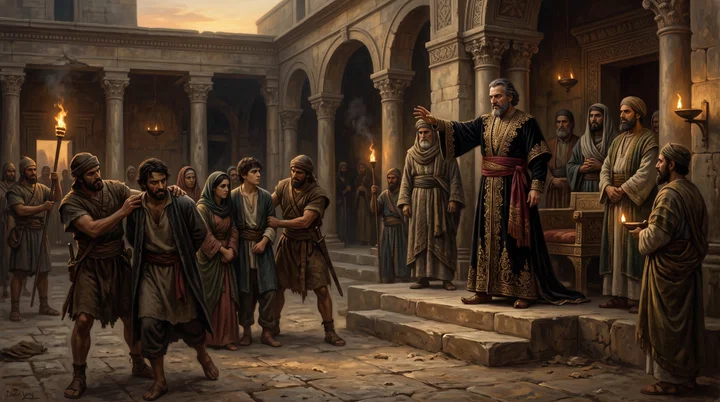
But his citizens hated him, and sent a message after him, saying, We will not have this man to reign over us.
Translations
American King James Version, King James Version, KJV Cambridge Paragraph Bible, Webster Bible
But his citizens hated him, and sent a message after him, saying, We will not have this man to reign over us.
Revised Version, American Standard Version
But his citizens hated him, and sent an ambassage after him, saying, We will not that this man reign over us.
and his citizens were hating him, and did send an embassy after him, saying, We do not wish this one to reign over us.
But his citizens hated him, and sent an embassy after him, saying, We will not that this [ man] should reign over us.
But, his citizens, hated him, and sent off an embassy after him, saying—We desire not, this, man, to be made king over us!
Berean Standard Bible, Majority Standard Bible
But his subjects hated him and sent a delegation after him to say, ‘ We do not want this man to rule over us.’
But his citizens hated him, and sent an envoy after him, saying, ‘ We don’ t want this man to reign over us.’
But his people had no love for him, and sent representatives after him, saying, We will not have this man for our ruler.
Nowe his citizens hated him, and sent an ambassage after him, saying, We will not haue this man to reigne ouer vs.
Douay-Rheims (Challoner revision)
But his citizens hated him: and they sent an embassage after him, saying: We will not have this man to reign over us.
Pictures
Cross-references 20 of 23
- Matthew 25:14-30
For the kingdom of heaven is as a man travelling into a far country, who called his own servants, and delivered unto them his goods.
Both parables teach accountability for using what the master entrusts to his servants.
- Luke 19:27
But those mine enemies, which would not that I should reign over them, bring hither, and slay them before me.
The king pronounces judgment on those who rejected his rule.
- Daniel 7:13-14
I saw in the night visions, and, behold, one like the Son of man came with the clouds of heaven, and came to the Ancient of days, and they brought him near before him.
The Son of man receives an everlasting kingdom and dominion.
- John 19:15
But they cried out, Away with him, away with him, crucify him. Pilate saith unto them, Shall I crucify your King? The chief priests answered, We have no king but Cæsar.
Both show refusal of Christ as king and choosing another ruler.
- Psalms 2:8-9
Ask of me, and I shall give thee the heathen for thine inheritance, and the uttermost parts of the earth for thy possession.
The Son receives the nations and breaks his enemies.
- Revelation 11:15
And the seventh angel sounded; and there were great voices in heaven, saying, The kingdoms of this world are become the kingdoms of our Lord, and of his Christ; and he shall reign for ever and ever.
The kingdoms of the world become Christ’s kingdom, though some reject his reign.
- John 1:11
He came unto his own, and his own received him not.
His own people refused to receive Him as King.
- Revelation 19:16
And he hath on his vesture and on his thigh a name written, KING OF KINGS, AND LORD OF LORDS.
Christ returns as King of kings to destroy his enemies.
- Luke 23:18
And they cried out all at once, saying, Away with this man, and release unto us Barabbas:
The crowd chose Barabbas over Jesus.
- Philippians 2:10-11
That at the name of Jesus every knee should bow, of things in heaven, and things in earth, and things under the earth;
Those who refused his reign now bow and confess him as Lord.
- Luke 1:32-33
He shall be great, and shall be called the Son of the Highest: and the Lord God shall give unto him the throne of his father David:
Jesus is promised David’s throne and an everlasting kingdom.
- Psalms 2:6
Yet have I set my king upon my holy hill of Zion.
God counters the rejection of his king by setting him on his throne.
- Psalms 2:1-2
Why do the heathen rage, and the people imagine a vain thing?
Rulers’ opposition to God’s Anointed is applied to Christ’s rejection.
- Luke 20:13-15
Then said the lord of the vineyard, What shall I do? I will send my beloved son: it may be they will reverence him when they see him.
The rulers’ response fulfills the parable’s account of the husbandmen rejecting the owner’s son.
- Luke 19:41-42
And when he was come near, he beheld the city, and wept over it,
Christ weeps over Jerusalem for rejecting what would bring peace.
- Luke 23:21
But they cried, saying, Crucify him, crucify him.
same hatred cried for crucifixion
- Isaiah 53:3
He is despised and rejected of men; a man of sorrows, and acquainted with grief: and we hid as it were our faces from him; he was despised, and we esteemed him not.
The Messiah is despised and rejected.
- Matthew 25:19
After a long time the lord of those servants cometh, and reckoneth with them.
The parallel parable’s master returning is identified with Christ’s second advent.
- Acts 2:23-24
Him, being delivered by the determinate counsel and foreknowledge of God, ye have taken, and by wicked hands have crucified and slain:
Christ is cast out and slain, but God raises him from the dead.
- Luke 13:34
O Jerusalem, Jerusalem, which killest the prophets, and stonest them that are sent unto thee; how often would I have gathered thy children together, as a hen doth gather her brood under her wings, and ye would not!
Jerusalem rejected Christ’s desire to gather and protect its people.
Commentary
Each commentary is drawn from primary sources: the writings of Ellen G. White and Adventist pioneers and periodicals. Each commentary is separate. Its own words are not a quotation; follow the references to read the source passages.
Ellen G. White
63 sources
In the parable of the pounds the nobleman entrusts his own capital to his servants to trade with until he returns to reckon with them, and the citizens who hated him and refused his rule represent rejection of Christ's authority as ruler and owner.ST Oct 22, 1894Lt 29, 1897, par. 14–15Ms 150, 1898, par. 23–24 That refusal was made by the Jewish nation and its rulers in rejecting Jesus as Prince and King, made plain when they chose Barabbas and demanded Christ's crucifixion, declaring Caesar their king rather than obeying God's final appeal through His Son.Ms 76, 1900, par. 6Ms 23, 1900, par. 7–9COL 293.1–3 The same cry describes every unregenerate heart that will not let Christ reign, a deliberate choice made in response to light that is recorded in heaven as the decision for eternity.Ms 10a, 1898, par. 17–19Ms 23b, 1896, par. 1–3Ms 17, 1898, par. 10 It means choosing one's own way instead of the Lord's way, rejecting God's commandments for human laws and teachings, and thereby placing oneself under Satan's rule as a bond slave in rebellion.Ms 61, 1890, par. 31Ms 174, 1897, par. 90–92Ms 67, 1900, par. 7–8ST Mar 26, 1894Ms 8, 1889, par. 10–11 By such lives of rebellion the wicked commit high treason against the government of heaven so their exclusion is just, and at His coronation and final judgment they will see what they forfeited and confess they exchanged peace, happiness and honor for wretchedness, ruin and death.GC88 668.34SP 483.2–484.1GC 668.2–4
Parable Setting and Meaning
Luke 19:14 belongs to the parable of the pounds, in which a nobleman entrusts resources to his servants and afterward returns to require an account of how they have used them.Lt 29, 1897, par. 14–15Lt 59, 1893, par. 11–13Lt 34a, 1886, par. 28–29Lt 93, 1901, par. 13 The episode of the citizens who reject his rule is part of that setting of entrusted gifts, personal responsibility, and reckoning for stewardship.Lt 29, 1897, par. 14–15Lt 59, 1893, par. 11–13Lt 34a, 1886, par. 28–29 Some expositions of the parable draw no lesson from the citizens' hatred and refusal itself, applying the parable only to the faithful use of entrusted talents and goods to advance God's work.Lt 29, 1897, par. 14–15Lt 59, 1893, par. 11–13Lt 34a, 1886, par. 28–29Lt 93, 1901, par. 13
The pound is the Lord's own capital and deposit advanced to His servants to trade diligently for Him, not the servant's own property to monopolize as he pleases.RH Dec 10, 1901Lt 192, 1903, par. 29 No gain could be made without the first deposit and no interest without the principal, so success in trading comes from Him and to Him belongs all praise and glory.RH Dec 10, 1901Lt 192, 1903, par. 29 The time of service is therefore a day of solemn privilege, sacred trust, and destiny decided for life or for death, followed by a day of reckoning, yet faithful returns do not buy heaven or earn personal merit.RH Dec 10, 1901Lt 192, 1903, par. 29 The faithful servant takes no credit to himself but returns the increase to the Lord, bringing tithes and abundant willing offerings according as God has prospered him, while selfishly appropriating what God has lent is covetousness, which is idolatry bringing a curse for robbing God.RH Dec 10, 1901
The citizens' hatred and refusal to accept the nobleman's rule represents rejection of Christ's authority as ruler and as the owner's representative.ST Oct 22, 1894Ms 150, 1898, par. 23–24 Luke 19:12-27 presents people entrusted with their Lord's goods for a time and tested by how faithfully they use them, with what is returned and the reward or punishment corresponding to each person's use of what was entrusted.ST Oct 22, 1894Ms 150, 1898, par. 23–24 That call to trade faithfully applies to using opportunities for service, obeying God's will, developing Christian character, and helping others, and diverting entrusted riches to self-gratification and display while human need and God's work lack support is unfaithful service.Ms 150, 1898, par. 23–24 When the Owner comes He investigates how His goods were used and rewards those who prove faithful, and each servant must personally answer to the Master, since church membership alone without such obedient service does not secure entrance into the kingdom.ST Oct 22, 1894Ms 150, 1898, par. 23–24
Jewish Rejection of Christ
The verse shows the Jewish nation and its rulers refusing Jesus as their Prince and King, bringing a curse upon themselves by that refusal.Ms 76, 1900, par. 6 Their hatred arose from envy of His character and success, from fear that His teaching would expose their selfishness and hypocrisy, and from hatred of the righteousness and piety His life embodied.Ms 23, 1900, par. 7–9COL 293.1–3 In this they rejected His authority as ruler and as the owner's representative, refusing to have Him rule over them.Ms 23, 1900, par. 7–9COL 293.1–3 Their choice was made plain when they demanded that Barabbas be released and Jesus be crucified, thereby rejecting God's final appeal through His Son and declaring Caesar their king rather than obeying Him and choosing the way that leads to life.Ms 23, 1900, par. 7–9COL 293.1–3
The Pharisees' rejection became settled rebellion hardened in hatred, envy, prejudice and unbelief.4RED 107.1–108.12SP 374.2 He became a stumbling block to them until they plotted murder and even sought the death of Lazarus.4RED 107.1–108.12SP 374.2 That course left them beyond the reach of further help, as having sinned against the Holy Spirit.4RED 107.1–108.1 The Jews rejected Him because they prized earthly power and national greatness over His humble mission.RH Jul 6, 1911 Prejudice and refusal to test their hopes by Scripture kept them from recognizing the evidence of His Messiahship and the time of His visitation.RH Jul 6, 1911 Accepting His teaching would have required repentance and surrender of cherished hopes, but recognizing Him could have spared Jerusalem's destruction.RH Jul 6, 1911
Heart Rebellion Against Christ
The verse describes the refusal of unregenerate hearts to let Christ reign over them, the same hatred that cried for His crucifixion and rejected Him.Ms 23b, 1896, par. 1–3 It is a satanic spirit at war with Jesus, the spirit that sent His followers to prison, exile, torture, the inquisition, massacre and burning, and it still works with malignant energy in the children of disobedience today as in past ages.Ms 23b, 1896, par. 1–3 Rejection is a deliberate choice made in response to the light God gives, determining which side a person takes, for by choosing rebellion over obedience to God's word people declare they will not have Him reign over them.Ms 10a, 1898, par. 17–19Ms 17, 1898, par. 10 When people in probation choose not to let Christ rule them, that choice is recorded in heaven as their decision for eternity.Ms 10a, 1898, par. 17–19Ms 17, 1898, par. 10
It describes those who have light in the Word of God and through His messengers but do not heed it because it does not coincide with their own temperament, disposition, ideas, appetites and character.Lt 52, 1891, par. 38–41 When their errors and wrongs are presented they do not put them away and reform, but say in heart and mind, if not in speech, that they will not have Jesus to rule over them, claiming independent judgment and refusing to be controlled by any man's mind or ideas.Lt 52, 1891, par. 38–41 They misuse mercies, reject warnings and despise entreaties because natural temperament and inclinations predominate, they do not keep the way of the Lord to do justice and judgment, and their judgment will be proportionate to the light given and the talents entrusted.Lt 52, 1891, par. 38–41 People say they will not have Christ rule over them when they reject God's commandments in favor of human laws and teachings, enforce human requirements on conscience, and teach human commandments as God's commandments.Ms 174, 1897, par. 90–92Ms 70, 1897, par. 2–3 This puts the human above the divine and joins them with the first great apostate, deciding their future destiny.Ms 174, 1897, par. 90–92Ms 70, 1897, par. 2–3
The cry, We will not have this man to reign over us, means departing from God and from Christ, choosing one's own way instead of the Lord's way and forsaking His way, like apostate Israel's choice of Baal.Ms 61, 1890, par. 31Lt 92, 1891, par. 8STA 118.1STBk 118.1ST2 10.1 That departure is departure from God into infidelity and giving place to skepticism.8MR 284.2Ms 40, 1890, par. 105–106LSEGW 326.2 It means neglecting and rejecting the true and only Bible religion of forgiveness solely through the merits of a crucified and risen Saviour, righteousness by faith in the Son of God, faith in the blood of the Lamb, the life of Jesus in the soul, and the active principle of love imparted by the Holy Spirit that alone makes the soul fruitful unto good works.Ms 40, 1890, par. 105–106ST2 10.1LSEGW 326.2 That religion is slighted, spoken against, ridiculed and denounced as enthusiasm and fanaticism.LSEGW 326.2
Refusing to acknowledge Jesus as the divine Son of God, the world's Redeemer and the channel through whom all blessings come, is refusing to have Him rule, for rejecting Him rejects His authority and the blessings He brings.ST Sep 3, 1894 It belongs to those who are self-willed and puffed up with pride and self-importance, who will not yield their wills to be in harmony with God's will, yet accept the delusions of false prophets and are led to deny Christ as the Son of God. Even while professing to be doing good work they are greatly deceived, trampling upon the blood of the covenant and counting as an unholy thing that which should have sanctified them. Those who reject Christ's rule take their position under the banner of rebellion as bond slaves under Satan's rule to serve him, a large number of God's subjects in rebellion against Christ as their ruler.Ms 67, 1900, par. 7–8ST Mar 26, 1894 Impenitent sinners rebel despite receiving God's mercy and love, resist the Holy Spirit's pleading, choose darkness by turning from Christ, and by influence draw others away from Him.ST Mar 26, 1894Ms 8, 1889, par. 10–11
Refusing or delaying acceptance of salvation continues that same rejection, for resisting God's transforming grace and refusing to yield the will hardens the heart, reduces openness to the Spirit's appeals, and leaves a person to the choice made.Lt 9, 1893, par. 20–22 Thousands now speak its language, for grievous sins have separated people from God, infidelity is fast becoming fashionable, and opposition to the gospel and God's commandments expresses refusal to have Him reign.PK 140.2RH Oct 22, 1901GW 149.1RH Sep 11, 1913 Therefore God's people must lift up the voice like a trumpet and show the people their transgressions, preaching the plain, sharp truths of God's word that cut to the heart instead of smooth sermons that make no lasting impression, making plain, stern rebuke necessary.PK 140.2RH Oct 22, 1901RH Sep 11, 1913
Judgment and Eternal Loss
By lives of rebellion the wicked declare they will not have Jesus to reign over them, and their exclusion from heaven is therefore just.GC88 668.34SP 483.2–484.1GC 668.2–4ST Jun 11, 1902 In rejecting Jesus as King they commit high treason against the government of heaven, so at the bar of God they are without excuse and under sentence of eternal death.4SP 483.2–484.1ST Jun 11, 1902 Refusal is made by actions, and those who so refuse will lose the privilege of remaining under His rule when He sits on the throne of judgment.Ms 137, 1897, par. 14 He will no longer stand accused before Pilate and Herod, but will sit as Judge, with Pilate and Herod and the priests and rulers who demanded their Messiah's death standing before Him whom they scourged and handed over, struck and mocked, facing the wrath of the Lamb.Ms 137, 1897, par. 14
At His coronation and final judgment they will see Him surrounded by the redeemed, who bear the sign The Lord our Righteousness, while His faithful ones receive crowns of immortal glory.RH May 5, 1903ST Jun 11, 1902 With the cross and the whole plan of redemption laid open before them, they see what they forfeited by rebellion.4SP 483.2–484.1GC 668.2–4ST Jun 11, 1902 They confess they might have had peace, happiness, honor and a far more exceeding and eternal weight of glory, but put them far away.4SP 483.2–484.1ST Jun 11, 1902 They learn that what rebellion promised as noble independence and eternal life is in fact slavery, ruin and death.4SP 483.2–484.1GC 668.2–4ST Jun 11, 1902 They admit they exchanged peace, happiness and honor for wretchedness, infamy and despair, acknowledge that none can plead their cause, and see that their exclusion is just.4SP 483.2–484.1ST Jun 11, 1902
Though such refusal deserves punishment, God does not treat rebels as they deserve, but keeps His hand of love stretched out still, entreating them to leave rebellion and enlist in His army.Ms 67, 1900, par. 7–8 Christ gave His life for them on Calvary even though in rejecting His rule they chose to place themselves under Satan's rule as bond slaves.ST Mar 26, 1894 When human beings take hold of His divinity its power helps them overcome bad temper, sinful disposition and unbelief, for this is a battle and victory comes through Christ.Ms 123, 1909, par. 19–20 The heart-cry of refusal is departure from God and from Christ giving place to skepticism and infidelity, and restoration to God requires zealous repentance, returning to first love, and regeneration of heart.8MR 284.2LSEGW 326.2
Stewardship and Final Reckoning
The parable teaches that disciples cannot remain slothful servants but must work, watching for opportunity to represent truth to others and win souls to Christ.Ms 76, 1900, par. 9 The more talents are exercised the greater the increase of capability, and the lesson is the necessity of mental and moral improvement, of growing in grace and in knowledge of Christ.Ms 76, 1900, par. 9 Unless seed sown struggles above the soil and springs up into life, it loses all power to germinate.Ms 76, 1900, par. 9
Mere profession of faith in Christ has no value as proof of genuine faith, for those justified by faith are judged by works.4SP 311.2Ms 81, 1893, par. 69–72 Genuine love is shown by works, and faith works by love and purifies the soul of moral defilement so that it may become a temple for the Lord.4SP 311.2Ms 81, 1893, par. 69–72 When the master returns the servants' use of what was entrusted will be examined, and he expects increase of what was received.4SP 311.2 United with Christ by living faith, His chosen servants as workers bearing cares, burdens and responsibilities are laborers together with God.Ms 81, 1893, par. 69–72
God has given to every person talents in trust and his own work, so there can be no idlers in His vineyard.Ms 81, 1893, par. 69–72 The entrusted gifts, from the light of truth to all spiritual advantages, are proportioned to varied capabilities from the lowliest and most obscure to those in highest positions of trust.Ms 81, 1893, par. 69–72 The talents are abilities entrusted for saving souls perishing out of Christ and making Christ known to the world, given to every one and to all who profess truth, not to ministers alone.Ms 151, 1897, par. 28–29
Servants are expected to increase entrusted talents and return them to their lord with gain and usury, growing more and better qualified by trading and use.Ms 81, 1893, par. 69–72Ms 10, 1892, par. 18 They handle not their own goods but the Master's capital to invest and increase as wise stewards, to return corresponding increase with usury.Ms 81, 1893, par. 69–72 To bind the talent in a napkin and bury it in the earth is to do nothing, to let souls die, to be an idler in the marketplace and a slothful church member.Ms 151, 1897, par. 28–29 Hoarding the Lord's goods and doing nothing brings loss of soul, as with the slothful servant and his one pound.Ms 81, 1893, par. 69–72 To unearth the talent and put it out to the exchangers is to minister to others and to teach and educate church members to become diligent laborers in the harvest field, furnishing hundreds whose use develops men for positions of trust and influence and accomplishes great good for the Master.Ms 151, 1897, par. 28–29 Those who have received spiritual advantages should develop and use those gifts for the Lord rather than let abilities and spirituality decline.Ms 10, 1892, par. 18 Every one must improve in character and ability according to privileges and opportunities to make a complete worker.Ms 81, 1893, par. 69–72
Accountability is measured by capacity given, for a servant is not required to produce three pounds from one but must use the one faithfully rather than return it unimproved.Lt 26, 1894, par. 21 Using entrusted gifts can increase them, and each person is responsible both for gifts received and for further gifts gained through use.Lt 26, 1894, par. 21 Christ entrusts people with means and influence and requires faithful use of these gifts until He comes, rather than leaving the responsibility to children.3T 123.1Lt 1a, 1872, par. 17–19 All are accountable according to abilities, and at the reckoning each receives reward in proportion to zeal, faithfulness and success shown in using what was entrusted.Lt 1a, 1872, par. 17–19
Refusing Christ to reign includes refusing to connect with the Maker, refusing to give self to His service, and refusing to trade upon His entrusted gifts.Ms 26, 1896, par. 27–28 God gives every person work and entrusts tithes, gifts, offerings, means and ability, and calls for them to be put into His treasury and used with frugality and self-denial to give the message of truth not only at home but in regions beyond.Ms 26, 1896, par. 27–28 No one is compelled to give, but God will surely require His own with usury from every human being.Ms 26, 1896, par. 27–28 Those unfaithful in rendering to God His own and disregarding His charge lose the blessing of what was entrusted to them and are unfaithful stewards.Ms 26, 1896, par. 27–28
Entrusted money, gifts and possessions in varying amounts are held in trust to advance God's work and build His kingdom, not for self-glorification, self-indulgence, self-gratification or display.Ms 150, 1898, par. 19Ms 150, 1898, par. 23–24 Even those given little can use what they have faithfully, while those who put gifts and opportunities to good use gain and those who fail to use them lose what could have increased.Ms 9, 1898, par. 9–10Ms 150, 1898, par. 19 Diverting entrusted riches to self-gratification and display while people need help and the work of God lacks support is unfaithful service.Ms 150, 1898, par. 23–24 When the Owner comes He investigates how His goods were used, and those who prove faithful receive His reward.Ms 150, 1898, par. 23–24
Neglecting the Lord's goods and selfishly withholding the Lord's portion retards His work.Ms 57, 1901, par. 7 Using the master's goods for personal gain perverts the trust placed in the steward, for a steward represents his master and must act in his master's interests.Ms 33, 1907, par. 6 God is robbed when men and women fail to connect with Him so that mind, soul and strength are controlled by the Holy Spirit.Ms 1, 1899, par. 7–8 A faithful steward acts in partnership with God, does all he possibly can in His service, and through love of the truth and sanctification banishes avarice, overreaching and every dishonesty.Ms 26, 1896, par. 27–28
There is no second probation, and day by day and hour by hour people are building for the last great day by trading on the Lord's money.MC 67.1 As responsible beings they are working for time and for eternity, making records in the books of heaven and preparing reward or punishment.MC 67.1 At His coming the Lord will reckon with every responsible being and require an account of what was done with His goods, expecting results from everyone with reward proportionate to work.MC 67.1
The time of service is a day of solemn privilege, sacred trust and destiny decided for life or for death, followed by a day of trust and then reckoning and reward.RH Dec 10, 1901Lt 192, 1903, par. 29 The pound is the Lord's own capital and deposit, not the servant's own property to monopolize, so no gain could be made without the first deposit and no interest without the principal.RH Dec 10, 1901 Success in trading comes from Him, and to Him belongs all praise and glory.RH Dec 10, 1901 Faithful returns do not buy heaven or earn personal merit, and the faithful servant takes no credit to himself but returns increase to the Lord, bringing tithes and abundant willing offerings according as God has prospered him.RH Dec 10, 1901Lt 192, 1903, par. 29 Selfishly appropriating what God has lent is covetousness, which is idolatry, and places men under the curse for robbing God.RH Dec 10, 1901
Each person is responsible for faithfully using what God has entrusted, and those given fewer gifts are no less accountable or able to serve faithfully than those given more.SPBC 183.1–2 The work and accountability cannot be transferred to another person or taken over by human judgment.SPBC 183.1–2 Church membership alone without using opportunities for service, obeying God's will, developing Christian character and helping others does not secure entrance into the kingdom.
Faithful trading means the Lord is soon to come and every talent entrusted must be returned with increase, and all property lent must be used for His glory.RH Mar 19, 1901 Those who have means must at once return to the Lord His own to help His suffering institutions out of embarrassment, without a day or hour of delay looking over affairs and bringing offerings of His own freely given.RH Mar 19, 1901 Those in responsible positions must set a right example by planning and working for their relief with greater earnestness than for their own property.RH Mar 19, 1901 Money so given is placed in the hands of Christ in the person of His afflicted brethren, and if men do their part heavenly angels will be commissioned to help in time of special need.RH Mar 19, 1901 That same faithful use applies to supporting sanitariums and gospel work and links to the day of reward.Ms 136, 1908, par. 10–11
The call to trade faithfully is a call to use abilities and responsibilities to serve others and save souls.GW 202.1 It applies to using opportunities for service, obeying God's will, developing Christian character and helping others. Each member of God's family is to use aright what is entrusted, doing this as individual earnest work with effort to find peace in Christ.Ms 1, 1899, par. 7–8 So done, he places himself as a laborer together with God in most perfect harmony with God's appointed agencies in molding human character after the divine similitude.Ms 1, 1899, par. 7–8
Sources
Pioneers and periodicals
114 sources
The verse belongs to the parable of the pounds, spoken because the hearers thought the kingdom of God should immediately appear as Jesus went toward Jerusalem, in which the nobleman is Christ going to the far country of heaven to receive the kingdom from the Father and returning at the second advent after the whole Christian dispensation.ST Dec 11, 1879GSAM 67.2–68.1ST Nov 10, 1881RH Dec 11, 1866ST Jun 11, 1896 Its plain meaning is that while He is away to receive that kingdom His own citizens hate Him and send a message after Him refusing His authority to rule over them.ST Apr 30, 1896RH May 11, 1869RH Feb 25, 1875ST Jul 1, 1889RH May 26, 1868 That refusal was made by the Jewish nation and His professed people who rejected Him at the first advent, and it represents all the wicked and finally impenitent in every age who will not let Him rule in their hearts but weigh Him against the world and choose the world.ST Oct 9, 1879ST May 6, 1889RH Oct 29, 1901 Having received the kingdom in heaven while men are still on probation and while He sits as priest on His Father's throne, He returns already possessing it to reckon with His servants as individuals, rewarding the faithful and bringing forth those who would not have Him reign to be slain before Him at the second advent.RH May 30, 1854ST Feb 19, 1880ST Oct 13, 1898ST Oct 4, 1905ST May 22, 1879 By refusing His loving rule men choose Satan's rule and bondage rather than God's kingdom and freedom, so the verse stands as the testing choice between the two kingdoms and the command to occupy faithfully with entrusted gifts until He comes.ST Mar 26, 1894ST Jul 23, 1912ST Sep 14, 1882RH Oct 29, 1901
Parable Setting and Symbols
Luke 19:14 belongs to the parable of the pounds in Luke 19:11-27, spoken as Jesus went toward Jerusalem because the hearers thought the kingdom of God should immediately appear.ST Dec 11, 1879ST Jun 11, 1896RH Oct 31, 1854RH Dec 23, 1852ST Nov 27, 1879 The parable was given to correct mistaken ideas about the time and order of future events, showing that the kingdom was still future when spoken and would not immediately appear.ST Dec 11, 1879ST Jun 11, 1896RH Oct 31, 1854ST Nov 27, 1879ST Nov 20, 1884 The disciples proclaimed the right time yet misunderstood the event, expecting an immediate appearing, and only after disappointment learned that suffering had to come before coming in the kingdom.ST Nov 27, 1879ST Nov 20, 1884
The nobleman is Christ, who goes to the Father to receive the kingdom before returning to reign and exercise authority over it.GSAM 67.2–68.1ST Nov 10, 1881RH Dec 11, 1866ST Nov 19, 1894 The far or distant country is heaven where the Father dwells, the going away covers the whole Christian dispensation through the ascension after the resurrection, and the return is the second advent.GSAM 67.2–68.1ST Nov 10, 1881RH Dec 11, 1866ST Nov 19, 1894ST Aug 19, 1889 Christ therefore receives his kingdom in heaven before returning, and his kingdom is not established on earth until after he returns.ST Dec 11, 1879RH Dec 11, 1866RH Apr 10, 1856 The return follows the receiving, so the kingdom is not first given at the coming itself.RH Oct 31, 1854RH Dec 23, 1852RH Apr 10, 1856
The citizens hated the nobleman and sent a message after him refusing his rule, saying they would not have him reign over them.ST Apr 30, 1896ST Jul 1, 1889RH May 26, 1868 Their hatred and refusal is rejection of his authority to rule and opposition to his return to reign over them.ST Apr 30, 1896ST Jul 1, 1889RH May 26, 1868 That refusal identifies the opposition he faces while away receiving the kingdom.RH May 11, 1869RH Feb 25, 1875ST Jan 12, 1882
In sequence the nobleman first goes away to receive the kingdom and later returns after receiving it.RH May 11, 1869RH Feb 25, 1875ST Jan 12, 1882RH Apr 15, 1858ST Aug 19, 1880 On his return he reckons with his servants, rewards the faithful, and brings forth his enemies who would not have him reign to be slain before him.RH May 11, 1869RH Feb 25, 1875RH Apr 15, 1858RH Sep 23, 1862ST Aug 19, 1880 This judgment takes place at the second advent after his priestly work is finished, showing that evil continues without essential change until then with no intervening millennium of holiness, and that the kingdom is established with the King's coming, not before it.ST Jan 12, 1882RH Apr 15, 1858RH Sep 23, 1862ST Aug 19, 1880
In its Gospel setting the parable stands after the foretelling of His death, the healing of the blind man, and salvation coming to the house of Zacchaeus, and before the riding into Jerusalem, the weeping over the city, the parable of the husbandman, the questions of the Pharisees and Sadducees, and the discourse on the destruction of Jerusalem and the second coming.ST Sep 13, 1899ST Apr 21, 1909 The travel moves from Jericho toward Jerusalem with a stop at Bethany at the home of Lazarus where a supper was made for Him, and that arrival at Bethany was the first of the six days before the Passover. The chapter gives the fullest account of the final visit to Jerusalem, where He was rejected, and the sorrow of that rejection applies also to human life.ST That day was a travel day of many miles from Jericho and so could not have been the Sabbath, nor could it have been the first day of the week, for that would have made the Passover fall on the following Sabbath.
The parable of the pounds in Luke 19:11-27 is the parallel of the parable of the talents in Matthew 25:14-30, again representing the kingdom of heaven and teaching the same lesson.ST Sep 13, 1899ST Aug 21, 1893ST Feb 19, 1902 Both teach about goods entrusted by the same Lord to the same ones at the same time for the same purpose of profit and for the same period till He returns, with distribution according to ability, faithfulness in use, reckoning and reward on return, and judgment on the unfaithful.ST Sep 13, 1899ST Aug 21, 1893ST Feb 19, 1902 The pounds illustrate the most precious spiritual gifts and heavenly endowments by the highest money denomination, given to use for God to build the church, and he who does not use them for God buries the gift and will lose all.ST Sep 13, 1899ST Aug 21, 1893 The condition described is that which will exist in the church just before the coming of the Lord, when servants are expected to work faithfully and diligently with what has been entrusted to them until He returns.ST Jun 11, 1896ST Feb 19, 1902
Timing and Nature of Kingdom
The parable was spoken to correct the thought that the kingdom of God should immediately appear, and it proves the kingdom was still future when spoken.ST Nov 27, 1879ST Sep 16, 1889ST Jul 13, 1904RH Apr 18, 1871 Christ's literal reign begins at or about His coming, not during His earthly ministry, not at Pentecost, and not by a merely spiritual rule in hearts that leaves human government in ordinary hands.RH Jun 7, 1915ST Jul 13, 1904RH Apr 9, 1872RH Apr 18, 1871 It is a direct and definite rule manifested in the person of Christ, established on His return, so His coming is personal and premillennial and results in the establishment of His kingdom.ST Jan 12, 1882RH Jun 7, 1915 He is not yet known as King in that sense, but will for the first time be known as a King coming in His kingdom at His second coming, which is still future, and right understanding and preparation for that glorious time is of great value.RH Dec 16, 1858RH Jul 23, 1872
He goes as nobleman into a far country, which is heaven to the Ancient of Days, to receive dominion and a kingdom from the Father.ST Oct 4, 1905RH May 13, 1858ST May 22, 1879 The rejection by His citizens does not give earthly authorities power to grant or deny His kingship, and human legislation cannot establish God's kingdom on earth.ST Oct 4, 1905RH Jul 24, 1913 He is crowned and given the kingdom in heaven before His second coming, and returns already possessing the kingdom to call His servants to account, then to destroy the rebels and set up the kingdom of God in the days of earthly kings.ST Oct 4, 1905RH May 13, 1858RH Jul 24, 1913
While away He sits as priest on His Father's throne and His church is to occupy till He comes again.ST Oct 13, 1898ST Feb 21, 1878 The receiving of the kingdom takes place in heaven during the investigative judgment while men on earth are still on probation and while His priesthood continues.ST Oct 13, 1898ST May 22, 1879 Coronation and reception precede the advent, when He comes as King seated on His throne, and at His return the judgment takes place, with faithful servants then rewarded and enemies then and not till then destroyed.ST Oct 13, 1898ST May 22, 1879ST Feb 21, 1878
A further teaching places the reception at the return itself rather than at the ascension, holding that He has received it when He returns.ST Another teaching holds that He receives the kingdom from His Father while still in the far country of heaven and begins His eternal reign at the beginning of the time of trouble such as never was, then descends with golden crown and the name King of kings and Lord of lords, seated upon the throne of His glory, to deliver His waiting children.ST Nov 3, 1914
The kingdom is established with the King's coming, not before it, destroying and displacing human governments, and the opposition of the citizens represents evil continuing without essential change until He returns after receiving the kingdom and judges all.ST Jan 12, 1882RH Sep 23, 1862RH Jun 7, 1915 No intervening millennium of holiness is shown before that coming.RH Sep 23, 1862 His return and the reward of servants take place before the thousand years of Revelation 20, since servants are rewarded at the resurrection of the just. Their authority over cities is appointed beforehand but not yet possessed in fact, with one given ten cities and another five.RH Sep 18, 1856RH Jun 12, 1860 That authority is not exercised at the second coming when earthly cities are destroyed and saints reign with Him in heaven a thousand years, but belongs to the new earth where they receive everlasting inheritance.RH Sep 18, 1856
The disciples labored under mistakes about the time and order of future events, so their joining the overthrow of the city with the coming of Christ and the end of the world does not prove those events occur at the same time.ST Nov 27, 1879ST Sep 16, 1889 The Jews overlooked the humiliation and sufferings that had to come before the glory, expecting the glorious kingdom at the first coming, yet Christ and His apostles taught it could not be set up until those sufferings were fulfilled.ST Sep 16, 1889RH Jul 23, 1872 At the cross His claim to have a kingdom appeared to have failed amid mocking enemies and forsaking disciples, yet the thief believed He would come into possession of His kingdom, having heard His preaching of a coming kingdom on earth when oppressors would be gone and God's people would have peace and happiness.RH Sep 25, 1913 Unlike earthly rulers He cannot be defeated and no human council can overturn God's decree, His inauguration is near, His return is soon and immediate, and the true explanation of the sanctuary removes obscurity and gives double force to that doctrine.RH Apr 22, 1858RH Jul 10, 1856
Identity of Rejecting Citizens
The citizens are inhabitants of this world, not angels in heaven, for hatred of Christ and refusal to have Him reign could only come from earth.RH May 13, 1858 While He goes into the far country, which is heaven to the Ancient of Days, to receive for Himself dominion and a kingdom, wicked men on earth oppose Him and reject His kingship.RH May 13, 1858 He is therefore crowned and given the kingdom in heaven before the second coming, and returns already possessing it to call His servants to account, then to destroy the rebels and set up the kingdom of God in the days of earthly kings.RH May 13, 1858
The rejection was made by the natural descendants of Abraham, the Jewish nation and His professed people, who had the Messianic prophecies read to them though they were fulfilled in His life, death, resurrection and ascension.ST Jul 30, 1912 Their envy and prejudice deepened into hatred and unbelief, leading them to seek the death of Jesus and even of Lazarus whom He had raised, until settled rebellion left them in spiritual darkness beyond further power to change their case.ST Oct 9, 1879ST May 6, 1889ST May 25, 1882 Standing before Pilate they said they would not have this man to reign over them and formally condemned Him by saying they had no king but Caesar, though His life was wholly righteous and His enemies could find no fault.RH Oct 29, 1901 They were in bondage to sin and their nation and city in bondage to a heathen power, and He had come to make them free, yet by their own choice they chose the kingdom of man, the kingdom of bondage, rather than to be born into the kingdom of God, the kingdom of freedom.RH Oct 29, 1901 Had they received the truth they rejected it would have made them free by translating them into the kingdom of His dear Son, making them children of the heavenly Canaan, the Jerusalem above which is free and mother of all that are free, with Christ the King enthroned in the heart, but they accepted Jerusalem which now is and is in bondage with her children as their portion.RH Oct 29, 1901
The citizens represent all who refuse Christ's rule: the wicked, the finally impenitent, and His enemies, whose hatred is expressed in the message rejecting His reign and who remain identified with sin.ST Feb 19, 1880ST Feb 19, 1880ST Jan 24, 1911 Their refusal to have Him reign over them identifies them as His enemies, seeking to prevent Him from receiving the kingdom.ST Feb 19, 1880 Their rejection is answered at His return after receiving the kingdom, when He brings them forth and slays them before Him, which has not yet happened.RH May 30, 1854ST Feb 19, 1880ST Feb 19, 1880 That end in God's judgment and final destruction is tied to the future establishment of Christ's kingdom.ST Feb 19, 1880
That refusal continues today in those who will not let Him rule in their hearts and want no part in His company.RH Jan 26, 1860ST Feb 3, 1898 They are spiritually deaf, blind and dead, unable to see the worth of His presence, yet the day will come when even one smile from Him will be worth more than all treasures of worlds.RH Jan 26, 1860 People convinced of the truth may still oppose God and refuse to obey from prejudice, error and self-will, and those who turn away from the path begun show by their actions they do not want Christ to rule over them.RH Sep 13, 1853RH Feb 3, 1859 While He offers forgiveness for sin men still reject Him, and the world is not to be expected to be reconciled to Christ, for the present deluge of sin comes not from lack of saving power in Christianity, which is as potent as two thousand years ago, but from men rejecting Christ as the only source of salvation.ST Feb 3, 1898ST Apr 3, 1928 In modern form this is ridiculing and abandoning the old faith as superstition, shouting away with it, putting faith out of sight as if dead, laying it in a new tomb and sealing it with scientific-looking seals to keep it buried, as Voltaire boasted he would undo in a few years what Jesus and His word had accomplished.ST Dec 11, 1928
Specific forms include rationalism in every form centering on refusing to have Christ reign over it, and skepticism and infidelity refusing Him as the divine Son through whom blessings come, thereby rejecting His authority and the blessings He brings.ST Sep 3, 1894RH Nov 3, 1874 It includes rejecting the Jewish King rather than accepting rule on the new earth, and rejecting what He is connected with such as the law He fulfilled, by those who shut eyes and ears to God's law and testimony and persist in blasphemy and wrongdoing, whose defiance will not continue forever till wrongs against God's law and government are set right and the Lord alone is exalted.RH Sep 26, 1854 It includes arguing that Christ as Lord abolished the Sabbath, an argument requiring either denial that He is Lord or admission of rejecting His reign, and crucifying His Sabbath by putting Sunday in its place, saying in effect they have no Sabbath but Sunday just as the Jews said they had no king but Caesar.RH Sep 23, 1858RH Jan 24, 1865 The ancient Jews rejected Christ Jesus as King and crucified the Lord of the Sabbath because they would not be ruled by Him, and the same refusal to come under restraint leads professed people to plead the law nailed to the cross, condemning themselves out of their own mouth and witnessing they are children of those who slew the Saviour.RH Sep 23, 1858 It includes treating renouncing the world as nothing more than refusing to preserve wealth through dishonesty, thereby rejecting the fuller call to be dead to the world and wholly devoted to God.RH Jul 10, 1856
Inwardly the refusal is weighing Christ against the world and choosing the world. Like the rich young ruler men turn from the Saviour, saying in their hearts they will not have Him as leader, desiring eternal life and heavenly treasure but also temporal advantage, and when receiving the love of God requires surrendering supreme love of self and giving up earthly treasure that is seen for heavenly treasure that is unseen, the cost seems too great.ST Oct 28, 1908 They love God's gifts more than the Giver, value reputation and possessions above fellowship with Christ, prove riches an idol, refuse fellowship and leadership, and go away sorrowful to worship the world.ST Oct 28, 1908 They have served the mammon of unrighteousness, gaining riches and worldly honors that are corrupted as the wages of sin and the price of oppression, useless then and witnessing against them, having despised His Word and slighted every offer of mercy till probation ends in fearful judgment and fiery indignation.ST May 29, 1901 So the antediluvians decided they would not have Christ rule over them, refused to repent and know God when they could have chosen life as Noah did, rejected light, and having gone down into the tomb under condemnation must remain under it forever with no other opportunity to change.RH Jan 17, 1907
Judgment on the Rejecters
After receiving the kingdom the nobleman returns and has those who refused his reign brought before him and slain, and this slaying has not yet taken place, which shows the kingdom has not yet been received or set up.RH May 30, 1854ST Feb 19, 1880RH Feb 25, 1875RH Apr 15, 1858ST Aug 19, 1880 That reckoning belongs to the second advent, after priestly work is finished and the kingdom is received in heaven, when the righteous are taken and the wicked meet consuming fire.RH Dec 10, 1857RH Apr 15, 1858ST Aug 19, 1880 The refusal to have him reign marks them as enemies, and their fate is death before him at his return.ST Feb 19, 1880RH Feb 25, 1875RH Dec 10, 1857
Eternal decisions are made before the second coming, so that at his return faithful servants are rewarded and rebels are destroyed.ST May 22, 1879 The receiving of the kingdom takes place in heaven during the investigative judgment while men on earth are still on probation.ST May 22, 1879 He now sits on His Father's throne until His enemies are made His footstool, waiting until the last soul that can by any possibility be induced to accept salvation has accepted Him.ST Mar 1, 1899 Then He comes with ten thousands of His saints to execute judgment and slay the refusers, and the Seed is complete and the promise to Abraham and his seed is fulfilled.ST Mar 1, 1899
For the wicked His coming to give every man according to his work brings terror and not joy, because though His rule is loving and merciful they hate righteousness and love sin and cannot endure His presence.ST Mar 22, 1899 Their refusal is widespread unbelief in God and in His return, enmity and defiance even among those claiming His name, with love grown cold and the earth become a region of enmity instead of faith and love.RH Sep 24, 1872RH Aug 13, 1872 His own church will be found not watching nor longing for His arrival nor desiring it.RH Sep 24, 1872RH Aug 13, 1872 The cry of peace and safety is used to stifle apprehension about the judgment, until the kindreds of the earth realize too late that they trifled with the warning and wail because of Him.RH Mar 21, 1854
At the final coronation the lost by lives of rebellion declare they will not have Jesus to reign, and with the cross and the whole plan of redemption laid open they see what they forfeited.RH May 5, 1903ST Jun 11, 1902 They see that the wages of sin is not noble independence and eternal life but slavery, ruin and death, and that the far more exceeding and eternal weight of glory they despised is now desirable but lost.ST Jun 11, 1902 They cry that they might have had peace, happiness and honor but put them far away and exchanged them for wretchedness, infamy and despair.ST Jun 11, 1902 All see that exclusion from heaven is just, that they have none to plead their cause and are without excuse, and that the sentence of eternal death for high treason is right, while those who refuse His gift of love and choose separation from God face everlasting destruction from the Lord's presence and final complete destruction leaves nothing in the universe out of harmony with His rule.ST Jun 11, 1902ST Mar 6, 1901 At that coronation the refusers who will not acknowledge Him as King behold Him surrounded by the redeemed bearing the sign The Lord our Righteousness, while His faithful receive crowns of immortal glory.RH May 5, 1903
By refusing His rule men choose to place themselves under Satan's rule to do his work as his bond-slaves, choosing the kingdom of man and bondage rather than the kingdom of God and freedom.ST Mar 26, 1894ST Jul 23, 1912RH Oct 29, 1901 They chose, as in saying We have no king but Caesar, one they professed to hate to rule over them, accepting present Jerusalem in bondage with her children as their portion instead of being translated by truth into the kingdom of His dear Son as children of the heavenly Jerusalem which is free.RH Oct 29, 1901 Had they received the truth they rejected it would have made them free with Christ the King enthroned in the heart.RH Oct 29, 1901 After the gospel of the kingdom is fully made known through all the world every person will either yield as an obedient servant and inherit the kingdom or persist in allegiance to the god of this world as chosen king and perish with him in the downfall of his kingdom.RH Feb 13, 1900 Punishment and death for rejecting His reign are not arbitrary infliction because God delights to punish, for His character and government are all goodness, righteousness, blessing and life, and all outside that is evil, sin, cursing and death; when men refuse His reign He gives them their choice, while Infinite Love pleads with the sinner to accept His yoke and weeps over folly as He wept over the Jews, knowing they reject all righteousness and life.ST Sep 5, 1895
Yet He yielded up His life on Calvary even for those who refuse His reign, showing what the human heart is capable of when under Satan's influence as seen at the judgment-hall and at Calvary.ST Mar 26, 1894ST Jul 23, 1912
Stewardship While He Is Away
The command to occupy till return means faithfully using every entrusted gift, blessing, time, property, influence and opportunity for God's glory and gospel work while waiting, with each servant to give strict account at the return for what was laid out for the Master.ST Sep 14, 1882RH Sep 28, 1869ST Nov 20, 1884RH Jun 2, 1868 All blessings and possessions come from God and all are His agents, left with His trading business in His absence, and unfaithfulness with what is entrusted shows unworthiness of further trust and of eternal life.RH Sep 28, 1869ST Nov 20, 1884ST May 27, 1880 Faithfulness is required according to what each received, so small ability is no excuse.ST Sep 14, 1882
The pound, the largest denomination in Roman money as the talent is the largest in Hebrew money, pictures the worth and preciousness of the most precious spiritual gifts and heavenly endowments, even the humblest and most ordinary.ST Oct 13, 1898ST Aug 19, 1889ST Mar 15, 1910ST Sep 13, 1899ST Oct 13, 1898 They are not natural, fleshly, inherited talents or faculties or natural abilities, but are bestowed when Christ ascended upon His own servants, those yielded to Him and consecrated by His Spirit, those baptized into His Spirit who have received the Holy Ghost.ST Mar 15, 1910ST Oct 13, 1898 The pounds are identical with the talents and with the gifts, given by the same Lord to the same ones for the same purpose of profit for use for God, at the same time and for the same period till the Nobleman returns and till His church is made complete.ST Mar 15, 1910ST Sep 13, 1899ST Jul 1, 1889 In right understanding and employment of them lies the usefulness of the church, fitting His body for service and each individual for service so that with all gifts and powers and members and functions retained in use it can do acceptable service, to rule and regulate the abundant life for building up the church and heralding God's message of life to others.ST Oct 13, 1898ST Oct 13, 1898
What is put to use increases through active effort in love, for Christian life is learned by living it even through mistakes, and God adds to talents used in love for Him and for souls, including ministering by thoughtful helpful acts that open hearts where doctrinal talk offends, even adding the gift of exhortation to the gift of ministering.ST Jul 19, 1883ST Jul 29, 1897ST Jul 8, 1889 Even one pound could have gained ten, and these gifts are not for accumulating farms, stores or stocks for worldly gain but for use in His glory and gospel work, where when serving worldliness and selfishness they become curses rather than blessings.ST Aug 19, 1889ST Jul 19, 1883 What is hidden in earthly concerns or buried in the world and in the earth is useless, brings no increase and brings condemnation, and will be taken away and lost, with him who might have shared Christ's joy cast out.ST Aug 19, 1889ST Mar 15, 1910ST Jul 29, 1897ST Sep 13, 1899 Spiritual discouragement must not lead to burying the talents entrusted instead of working for the Master.ST Jul 21, 1909
God rewards each according to work, so faithful trading and use of what is entrusted brings more, even authority to reign over cities with one given ten cities and another five, received in appointment beforehand though not yet possessed in fact.RH Jun 12, 1860 What is entrusted to one who does not use it is taken away, and returning only what was given with no addition is condemned.ST Jan 29, 1885 God endows women as well as men with gifts stamped with His image and both must increase them, and at the bar of judgment the plea of femininity will not avail.ST Jan 29, 1885
The pound is the Lord's own capital and deposit advanced to trade diligently for Him in this time of solemn privilege and sacred trust when destiny is decided for life or death, not the servant's own property to monopolize as he pleases, so no gain could be made without the first deposit and no interest without the principal.RH Dec 10, 1901 Success in trading comes from Him and to Him belongs all praise and glory, and the faithful servant takes no credit but returns the increase, bringing tithes and abundant willing offerings according as God has prospered him.RH Dec 10, 1901 Selfishly appropriating what God has lent is covetousness which is idolatry and places men under the curse for robbing God.RH Dec 10, 1901 Every talent entrusted must be returned with increase and all property lent must be used for His glory, with means at once returned to help suffering institutions out of embarrassment, those in responsible positions setting right example by planning and working for their relief with greater earnestness than for their own property, all without a day or hour of delay looking over affairs and freely giving God of His own, which is placed in Christ's hands in the person of His afflicted brethren, and if men do their part heavenly angels will be commissioned to help in special need.RH Mar 19, 1901
Church membership alone does not secure entrance into the kingdom, for the call to trade faithfully with the Lord's goods applies to using opportunities for service, obeying God's will, developing Christian character and helping others.RH Jan 9, 1913 Refusing to cooperate with God's purpose by letting Him use one as a human channel to reach fallen humanity with saving truth and bring lost sinners back, or failing to use abilities in service and in helping others know Christ, is itself a rejection of Christ's reign over oneself and invites the wrath of God.RH Jan 9, 1913RH Sep 17, 1903 It is the opposite of offering oneself willingly in the day of God's power near final victory when the Spirit is poured out abundantly, and those who so refuse fail to recognize the day of visitation.RH Sep 17, 1903
Present Warning and Choice
The refusal to have him reign gives no warrant for religious prosecution or persecution, for the parable covers the whole Christian era in which he sits as priest on his Father's throne while his church occupies till he comes again.ST Oct 13, 1898 He receives his own kingdom at the time of the judgment when his priesthood is over, and at his return the judgment takes place, and then and not till then are his enemies who hated him destroyed.ST Oct 13, 1898 The gospel mission is to save, not to condemn, and the judgment will be the Lord's and will not take place till the last day.ST Oct 13, 1898
That refusal is ancient enmity to his authority directed against the gospel by people and institutions, including the press, the legislature, and even the pulpit.RH Mar 10, 1874 It is spoken by those who deny his literal return and instead expect a spiritual reign before the second advent, and in 1844 leaders of nominal Christianity in rejecting the advent doctrine repeated what the Jewish church did in rejecting Jesus at his first advent.ST Jan 13, 1881 It is the rejection of the Lord, his word, his Spirit, his grace and his government by a mature and powerful nation, marking widespread unbelief, enmity and defiance even among professed followers, and such rejection is a sign that the great day of his power will come soon.RH Mar 10, 1874ST Nov 27, 1879
In this day thousands speak its language, for grievous sins have separated the people from God and infidelity is fast becoming fashionable.RH Oct 22, 1901RH Sep 11, 1913 Therefore God's people must lift up the voice like a trumpet and show the people their transgressions, preaching the plain, sharp truths of God's word that cut men to the heart instead of smooth sermons that make no lasting impression.RH Oct 22, 1901RH Sep 11, 1913 To refuse to acknowledge Jesus as the divine Son of God, the world's Redeemer and the channel through whom all blessings come, is to refuse to have him rule and to reject his authority and the blessings he brings.ST Sep 3, 1894 Such refusal belongs to those who are self-willed, puffed up with pride and self-importance, who will not give up their wills to be in harmony with God's will, yet accept the delusions of false prophets and are led to deny Christ as the Son of God; skeptics and infidels who do this may profess to be doing good work, but they are greatly deceived, trampling upon the blood of the covenant and counting as an unholy thing that which should have sanctified them, so the spirits must be tried and he must be confessed rather than denied.ST Sep 3, 1894
The refusal is shown by turning him out of worship, prayers, teaching, books, and family life.RH Jan 5, 1860 A person may finally refuse his rule despite the Spirit's pleadings to turn from sin to his service, and the rejection is the person's, not God's, for the Spirit departs only when the soul finally refuses to have him reign over it.ST By contrast, those who willingly acknowledge him as Lord and Master accept his rule while recognizing that his kingdom is not of this world and awaiting the future kingdom given to the saints, and therefore live as pilgrims and strangers on earth.RH Jul 10, 1856
The choice stands as the special testing lesson between two kingdoms for all who must choose.RH Oct 29, 1901 When he stood before Pilate as King of kings come to make free those in bondage to sin whose nation and city were in bondage to a heathen power, the refusal joined with saying we have no king but Caesar chose by its own choice the kingdom of man, the kingdom of bondage, rather than to be born into the kingdom of God, the kingdom of freedom, choosing one professed to be hated and accepting Jerusalem which now is and is in bondage with her children as its portion.RH Oct 29, 1901 Had the truth rejected been received and known, it would have made free by translating into the kingdom of his dear Son, making children of the heavenly Canaan, the Jerusalem which is above coming down from God out of heaven, which is free and the mother of all that are free, whose children are made free by the truth with Christ the King enthroned in the heart.RH Oct 29, 1901 After the truth of the gospel of the kingdom has been fully made known throughout all the world, every person will either yield as an obedient servant to him as the rightful King and inherit the kingdom, or reject him and persist in allegiance to the god of this world as chosen king and perish with him in the downfall of his kingdom.RH Feb 13, 1900 He will reign when he comes over those willing to have him reign, and then war will cease forever.ST May 27, 1897
His going away to receive a kingdom and then returning places his return after he receives his kingdom, and the message announcing that he is about to take the kingdom and return is a testing truth for this generation.ST Mar 17, 1909 While he as the Nobleman is away, the third angel's message makes plain the duty of those awaiting him.RH Jan 1851
Sources