Luke 19:37
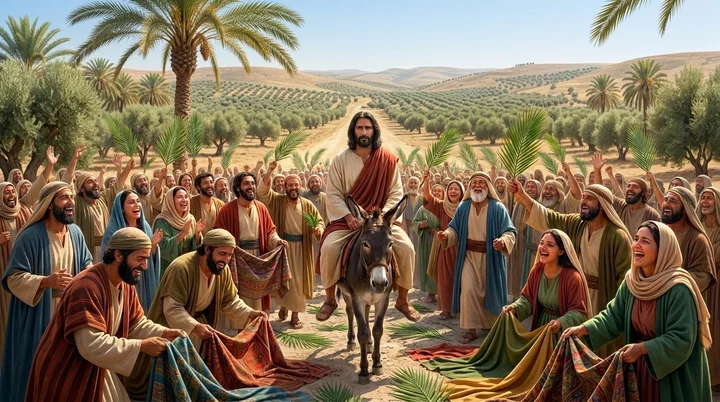
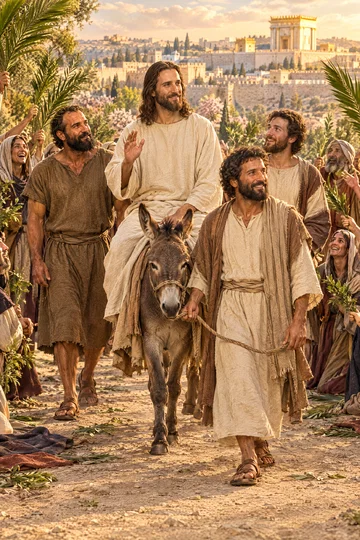
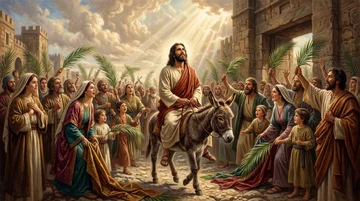
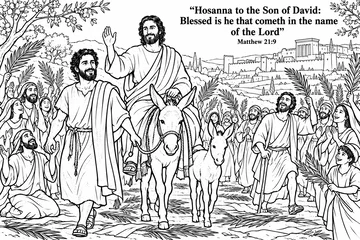
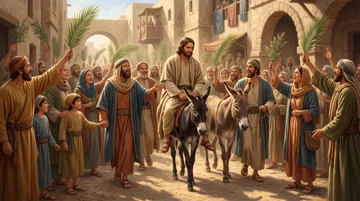
And when he was come nigh, even now at the descent of the mount of Olives, the whole multitude of the disciples began to rejoice and praise God with a loud voice for all the mighty works that they had seen;
Translations
And when he was come near, even now at the descent of the mount of Olives, the whole multitude of the disciples began to rejoice and praise God with a loud voice for all the mighty works that they had seen;
King James Version, KJV Cambridge Paragraph Bible
And when he was come nigh, even now at the descent of the mount of Olives, the whole multitude of the disciples began to rejoice and praise God with a loud voice for all the mighty works that they had seen;
And when he had come nigh, even now at the descent of the mount of Olives, the whole multitude of the disciples began to rejoice and praise God with a loud voice, for all the mighty works that they had seen.
Revised Version, American Standard Version
And as he was now drawing nigh, even at the descent of the mount of Olives, the whole multitude of the disciples began to rejoice and praise God with a loud voice for all the mighty works which they had seen;
and as he is coming nigh now, at the descent of the mount of the Olives, the whole multitude of the disciples began rejoicing to praise God with a great voice for all the mighty works they had seen,
And as he drew near, already at the descent of the mount of Olives, all the multitude of the disciples began, rejoicing, to praise God with a loud voice for all the works of power which they had seen,
And, when he was drawing near, already, unto the descent of the Mount of Olives, one-and-all the throng of the disciples began joyfully to be praising God with a loud voice, concerning all the mighty works which they had seen;
Berean Standard Bible, Majority Standard Bible
And as He approached the descent from the Mount of Olives, the whole multitude of disciples began to praise God joyfully in a loud voice for all the miracles they had seen:
As he was now getting near, at the descent of the Mount of Olives, the whole multitude of the disciples began to rejoice and praise God with a loud voice for all the mighty works which they had seen,
And when he came near the foot of the Mountain of Olives, all the disciples with loud voices gave praise to God with joy, because of all the great works which they had seen;
And when he was nowe come neere to the going downe of the mount of Oliues, the whole multitude of the disciples began to reioyce, and to prayse God with a loude voyce, for all the great workes that they had seene,
Douay-Rheims (Challoner revision)
And when he was now coming near the descent of mount Olivet, the whole multitude of his disciples began with joy to praise God with a loud voice, for all the mighty works they had seen,
Pictures
Cross-references
- Zechariah 9:9
Rejoice greatly, O daughter of Zion; shout, O daughter of Jerusalem: behold, thy King cometh unto thee: he is just, and having salvation; lowly, and riding upon an ass, and upon a colt the foal of an ass.
The humble King’s arrival on a colt is fulfilled in Jesus’ entry into Jerusalem.
- Matthew 21:1-11
And when they drew nigh unto Jerusalem, and were come to Bethphage, unto the mount of Olives, then sent Jesus two disciples,
Parallel account of Jesus’ entry into Jerusalem.
- John 12:12-13
On the next day much people that were come to the feast, when they heard that Jesus was coming to Jerusalem,
The crowd welcomes Jesus into Jerusalem with palm branches and royal praise.
- Mark 11:9-10
And they that went before, and they that followed, cried, saying, Hosanna; Blessed is he that cometh in the name of the Lord:
The crowd welcomes Jesus with praise as he enters Jerusalem.
- Psalms 118:26
Blessed be he that cometh in the name of the LORD: we have blessed you out of the house of the LORD.
The crowd’s blessing echoes the welcome of the one coming in the Lord’s name.
- Luke 19:41-44
And when he was come near, he beheld the city, and wept over it,
Jesus weeps over Jerusalem after the disciples’ rejoicing and foretells its destruction.
- John 12:17-18
The people therefore that was with him when he called Lazarus out of his grave, and raised him from the dead, bare record.
The crowd welcomes Jesus and testifies after he raises Lazarus.
- John 12:19
The Pharisees therefore said among themselves, Perceive ye how ye prevail nothing? behold, the world is gone after him.
The Pharisees lament that the world is following Jesus.
- Psalms 8:2
Out of the mouth of babes and sucklings hast thou ordained strength because of thine enemies, that thou mightest still the enemy and the avenger.
Jesus applies the words about children’s praise to the rejoicing multitude.
- Isaiah 40:9
O Zion, that bringest good tidings, get thee up into the high mountain; O Jerusalem, that bringest good tidings, lift up thy voice with strength; lift it up, be not afraid; say unto the cities of Judah, Behold your God!
The disciples’ public praise proclaims, “Behold your God.”
- Matthew 21:8
And a very great multitude spread their garments in the way; others cut down branches from the trees, and strawed them in the way.
Describes the crowd spreading garments and branches before Jesus.
- John 12:16
These things understood not his disciples at the first: but when Jesus was glorified, then remembered they that these things were written of him, and that they had done these things unto him.
understood only after glorification
- Acts 1:9-11
And when he had spoken these things, while they beheld, he was taken up; and a cloud received him out of their sight.
Jesus ascends from the Mount of Olives and is promised to return.
- 1 Kings 1:38-40
So Zadok the priest, and Nathan the prophet, and Benaiah the son of Jehoiada, and the Cherethites, and the Pelethites, went down, and caused Solomon to ride upon king David’s mule, and brought him to Gihon.
Solomon’s royal procession and the people’s rejoicing echo Jesus’ entry.
- Isaiah 62:11
Behold, the LORD hath proclaimed unto the end of the world, Say ye to the daughter of Zion, Behold, thy salvation cometh; behold, his reward is with him, and his work before him.
Is cited alongside the prophecy of the King’s arrival.
- Mark 11:11
And Jesus entered into Jerusalem, and into the temple: and when he had looked round about upon all things, and now the eventide was come, he went out unto Bethany with the twelve.
Records Jesus entering Jerusalem and the temple after the procession.
- Habakkuk 2:11
For the stone shall cry out of the wall, and the beam out of the timber shall answer it.
The image of stones crying out echoes the disciples’ loud praise.
Commentary
Each commentary is drawn from primary sources: the writings of Ellen G. White and Adventist pioneers and periodicals. Each commentary is separate. Its own words are not a quotation; follow the references to read the source passages.
Ellen G. White
36 sources
At the descent of the Mount of Olives on His triumphal ride into Jerusalem for the Passover, the whole multitude of the disciples, swelled by crowds going to the feast and coming out from the city, began to rejoice and praise God with a loud voice for all the mighty works they had seen.COS 91.1–52SP 384.1–385.1DA 546 They spread their garments in His path and waved olive and palm branches while hailing Him as King and Son of David coming in the name of the Lord, recounting His healings, deliverances, cleansings, and raisings of the dead.Ms 123, 1909, par. 21–22RH Jun 10, 18524RED 120.2EW 206.4 They expected Him to take David's earthly throne and free Israel from Rome, not understanding that He was going to judgment and death and that His kingdom was not of this world.DA 569.3–44SP 496.1EW 206.41T 57.3–58.1 Yet their mistaken homage fulfilled prophecy given more than five hundred years before of Zion's lowly King coming on a colt, and could not be silenced, for if they held their peace the very stones would cry out.Ms 36, 1897, par. 9–114SP 496.1DA 569.1–2ST Dec 23, 1897 Their open, loud praise is an example to believers whose redemption is secured, who have still greater reason to praise God aloud for His coming again in glory and must not be forbidden or silenced as fanaticism.RH Jun 10, 1852EW 88.2–3SCEV 28.1–29.2RH Jun 10, 1852EW 89.1–90.1
Entry Setting and Praise
The verse belongs to Christ's triumphal entry as He came nigh to Jerusalem for the Passover, even at the descent of the Mount of Olives.DA 569COS 91.1–5DA 546COS 90Lt 30, 1880, par. 1 He rode on a donkey, on an ass's colt brought by two disciples at His command with their garments spread on the beast for Him to sit on.COS 91.1–5DA 546COS 90 As soon as He was seated the whole rapidly increasing throng broke into a loud shout of triumph.COS 91.1–5
The Mount of Olives was hallowed by His prayers and tears.ST Oct 31, 1895 Bethany lay on its descent and Gethsemane at its foot.ST Oct 31, 1895 Shortly before His trial its slopes echoed with joyful shouts as He approached the city.3SP 250.3ST Oct 31, 1895
The whole multitude of the disciples began to rejoice and praise God with a loud voice, with glad enthusiasm and happy excited hearts.2SP 384.1–385.1DA 546 Their number rapidly increased with those going to the feast and with thousands coming out from Jerusalem to meet Him and conduct Him to the city.COS 91.1–52SP 384.1–385.1 Their loud acclamations and hosannas were repeated again and again and echoed from the hills and valleys.2SP 384.1–385.1
Their homage was worship of happy hearts without outward pomp and splendor, without royal standards or costly gifts.RH Jun 10, 18522SP 384.1–385.1 Unable to offer costly gifts, they spread their outer garments as a carpet in His path.COS 91.1–52SP 384.1–385.1ST Jul 22, 1886 They strewed cut olive and palm branches in the way and waved them, nature's emblems of victory.COS 91.1–52SP 384.1–385.1ST Jul 22, 1886 While doing so they cried Hosanna to the Son of David and Blessed be the King that cometh in the name of the Lord, hailing Him as Messiah their King.EW 206.4SCEV 28.1–29.21T 57.3–58.12SP 384.1–385.1ST Jul 22, 1886
They praised for all the mighty works they had seen.Ms 123, 1909, par. 21–224RED 120.2DA 546 They were repeating the good works of healing, the deliverances from Satan's power, the cleansings, the raising of the dead, and all the works they could remind themselves of.Ms 123, 1909, par. 21–224RED 120.2 Great blessing was coming from their lips as they did so.Ms 123, 1909, par. 21–22
The praisers were themselves living signs of His works of mercy, people He had delivered, healed, cleansed, and raised from the dead, not trophies of conquest.4RED 120.2 The gathering was drawn especially by the powerful effect of His raising Lazarus, and many had come to see Him on that account.Ms 128, 1899, par. 1
Mistaken Kingship Yet Prophecy
The shout that rose at the descent of the Mount of Olives hailed Him as Messiah and King, as the Son of David coming in the name of the Lord.ST Jun 8, 18824RED 116.1–117.2ST Jul 22, 1886 He accepted public homage He had never before permitted, and the disciples took that acceptance as proof that their glad hope of His recognition as Israel's King would be fulfilled.ST Jun 8, 18824RED 116.1–117.2ST Jul 22, 1886 Their joy was heightened by the hope that He was entering the city to establish His kingdom and reign as King.DA 569.3–4DA 570.1–571.1 They believed they were escorting Him to take possession of David's throne in Jerusalem, to take an earthly, temporal kingdom and reign as a temporal prince.EW 206.4COS 91.1–54SP 253.2 They looked for Him to free Israel from Roman rule and from its oppressors, not understanding that His kingdom was not of this world.DA 570.1–571.14SP 253.2
They were utterly mistaken, not realizing He was going to judgment and to death.4SP 496.1 Within days their high hopes were shattered and disappointed when they saw their beloved Master stretched upon the cruel cross above the mocking, taunting Pharisees, and the darkness of death closed about them.1T 57.3–58.1ST May 9, 18784SP 253.2 Only after He rose from the dead did they understand that prophecy had foretold His suffering and resurrection.4SP 253.2 Yet He remained true to His promises, giving sweet consolation to His people and rich reward to the true and faithful.1T 57.3–58.1ST May 9, 1878
It was no error in them to act according to their belief, for their action fulfilled what had been foretold more than five hundred years before that Zion's King would come lowly and riding on a colt.4SP 496.1DA 569.1–2COS 91.1–5 Their triumphant welcome of Jesus as the Son of David fulfilled prophecy.HSFM 206.4GC88 367.2 It also fulfilled the prophetic call to Zion that bringest good tidings to lift up her voice and say to the cities of Judah, Behold your God, with praise belonging to Christ as King coming in the name of the Lord.Ms 36, 1897, par. 9–11ST Dec 23, 1897 Prophecy had to be fulfilled, so that if the people held their peace God would put a voice in the stones and the proclamation Behold your God would still be made in Christ's behalf.Ms 36, 1897, par. 9–114SP 496.1ST Dec 23, 1897 Their loud praise could not be silenced, for if they held their peace even the stones would cry out.1T 57.3–58.1HSFM 206.4ST May 9, 1878GC88 367.2
In the same way William Miller and his associates, though mistaken about the event, fulfilled prophecy by giving the proclamation of Revelation 14:6-7.4SP 496.1 They would not have given it had they understood that yet other proclamations of Revelation 14:8-14 were to be made before the Lord should come.4SP 496.1 That later disappointment of those who looked for the coming of the Lord was less, was not greater, than the disappointment of the disciples at the cross.1T 57.3–58.1 On the crest of Olivet the triumph turned to weeping, for as the disciples stood and saw Jerusalem in its glory and their praise grew more fervent, Jesus saw the nation's coming rejection of Him and the desolation that would follow.Ms 7a, 1886, par. 3Ms 54, 1886, par. 4–7 His riding toward Jerusalem amid rejoicing was an act of mercy and love in coming to die for sinful man so he might not perish in his sins, followed by His weeping over the doomed city because that mercy and love were rejected.Ms 54, 1886, par. 4–7Ms 85, 1893, par. 3 He saw beyond the destruction of Jerusalem to an impenitent world doomed to destruction.Ms 85, 1893, par. 3 Jerusalem had been blessed with every advantage, yet rejected the only One who could give it peace, hope, rest, liberation, and victory, and His purity exposed its sin so that they put away the blessing He offered.Ms 7a, 1886, par. 3
Unsilenced Praise for Believers
When priests, elders, rulers and Pharisees besought Him to still the multitude, He answered that if these were quiet the stones would cry out.Ms 36, 1897, par. 9–11RH Jun 10, 1852EW 88.2–3HSFM 206.4GC88 367.2 After the people fell quiet, children continued the praise in the temple, showing God can use children to proclaim Christ.HSFM 206.4GC88 367.2 His message and the praise of the Saviour cannot be stopped by threats.GC88 367.2 Their praise proclaimed Jesus as the coming King and fulfilled the prophetic call to announce, Behold your God.Ms 36, 1897, par. 9–11ST Dec 23, 1897
God will have a people on earth who are not cold and dead but who praise and glorify Him loudly.EW 88.2–3SCEV 28.1–29.2RH Jun 10, 1852 He will receive glory and praise from some people, including those who keep His commandments.EW 88.2–3SCEV 28.1–29.2 If His chosen people should hold their peace the very stones would cry out.RH Jun 10, 1852SCEV 28.1–29.2RH Jun 10, 1852
Opposition to such loud praise, calling it fanaticism and mesmerism and extravagant and wild or extravagance and seeking to silence it, repeats the part of the Pharisees who told Jesus to rebuke His disciples.RH Jun 10, 1852SCEV 28.1–29.2 The priests, elders and Pharisees who tried to silence it and rob Jesus of this adoration manifested the same hatred shown through all ages by those claiming to believe present truth toward the messengers God sends to reprove them.ST Dec 23, 1897 People hostile to such praise would call wholehearted honor for Jesus fanaticism or extravagance.RH Jun 10, 1852
Their open praise is an example for believers because of the hope and redemption Christ has secured.RH Jun 10, 1852EW 89.1–90.1 That hope is far more glorious than what those disciples saw, full of immortality and glory.SCEV 28.1–29.2RH Jun 10, 1852 He comes again not as a babe in Bethlehem nor as He rode into Jerusalem, but in the glory of the Father with all the holy angels.SCEV 28.1–29.2 Waiting saints who have tasted the powers of the world to come must not hold their peace but must praise God even with a loud voice, and no one may forbid them.SCEV 28.1–29.2EW 89.1–90.1 Their response calls each reader to consider whether he has seen God's works, come into right relation with Him, and become humble and a light to the world.Ms 122, 1909, par. 24–26
Sources
Pioneers and periodicals
42 sources
As He rode down the descent of the Mount of Olives toward Jerusalem on the first day of the last week of His life, the whole multitude of His disciples loudly rejoiced and praised God for all the mighty works they had seen.ST Oct 31, 1895STRH Jan 29, 1914ST Nov 3, 1898 Those works were His healings of the sick, lepers and blind, His mercy to sufferers, His raising of the dead and especially Lazarus, with His teaching and pure life, giving ample proof that He was the Messiah, the Son of God and Israel's King.ST Jan 21, 1897ST Nov 8, 1883ST Apr 23, 1902 Their shouting welcome of Him as King coming in the name of the Lord fulfilled Zechariah 9:9 concerning Zion's lowly King coming on a colt, and though they did not understand that they were fulfilling prophecy, the praise had to be given in its season so that even the stones would have cried out if they had held their peace.ST Dec 23, 1897ST Sep 27, 1899RH May 16, 1912ST Jun 5, 1879RH Sep 18, 1855 They hoped He would then take David's throne, free them from Rome and reign as a temporal king, not realizing He must first suffer and be crucified before His coronation, so within days their hope died with Him until His resurrection and glorification taught them what had been written of Him.ST Jun 5, 1879ST Nov 20, 1884ST Sep 16, 1889ST Nov 27, 1879ST Feb 11, 1903 Their open praise is not to be silenced but is required of God's people, and it stands against the priests who would stop it and the nation's rejection that withdrew its protection, for while His love still pleaded the city could repent, yet its mercy was nearly over and His hosannas pass at once into His weeping over its coming judgment.RH Jun 10, 1852ST Nov 8, 1883ST Feb 14, 1878RH Sep 18, 1855ST
Setting and Entry
The praise arose as he drew near Jerusalem at the descent of the Mount of Olives.ST Oct 31, 1895RH Jan 29, 1914ST Nov 17, 1898 He rode from Bethany over the mount, down through the valley and up to the gate and into the city with the city in view, while the crowd moved with him loudly praising God.ST Nov 3, 1898 Bethany lay on the descent of the mount and Gethsemane at its foot, and the mount itself was hallowed by his prayers and tears, its slopes echoing with the triumphant shouts.ST Oct 31, 1895ST Nov 3, 1898
It was the triumphal entry on the first day of the week, called Palm Sunday, in the last week of his life on earth only a few days before his suffering and death.RH Jan 29, 1914ST Apr 14, 1898 It came shortly before his crucifixion and trial, and led into his entrance into the temple and driving out of the traders and money changers.ST Oct 31, 1895ST Feb 14, 1878ST Nov 3, 1898 It follows the parable of the pounds and comes before the weeping over the city, within the section from Luke 18:24 through Luke 21.STST Feb 14, 1878 Luke gives the fullest detail of the approach, while Matthew, Mark and John also record the scene.ST
The whole multitude of the disciples began to rejoice and praise God with a loud voice, and children also joined in praising God for his power shown in helping sufferers.ST Sep 27, 1899ST Sep 17, 1894 They spread their garments in the way and waved palm and olive branches, the palms serving as emblems of victory, in wholehearted honor for him as Messiah and King.RH Jun 10, 1852ST Jul 22, 1886 Their praise was the public welcome of Jesus as King, acclaimed as the Son of David and the one coming in the Lord's name with shouts of hosanna.ST Jul 22, 1886ST Sep 27, 1899ST He came meekly on a colt and accepted this public homage, allowing the crowds to express this honor to him.RH Jun 10, 1852ST Jul 22, 1886
That triumphal entry, with the disciples rejoicing and praising God loudly for the mighty works they had witnessed, provides the comparison for the emperor's passage through the German colonies in Palestine.ST Jan 18, 1899
Mighty Works Praised
The mighty works praised were extraordinary works of power, distinct from the ordinary operations of nature, and standing as signs of divine mission.ST Apr 23, 1902 They were the works the disciples themselves had seen: healing the sick and lepers, restoring sight to the blind, giving restored sight and speech, showing mercy and helping sufferers, and raising the dead.ST Jan 21, 1897ST Nov 8, 1883 Most recent among them was the raising of Lazarus, and together with fulfilled prophecies, pure life and teaching these gave ample proof that he was the Messiah, the Son of God and Israel's king.ST Nov 8, 1883
The sight of those works moved the multitude to rejoice and praise God with a loud voice.ST Apr 23, 1902 The procession itself displayed the people he had rescued and healed, so that their praise for deliverance, healing, mercy and even raising the dead made those works of love and deliverance visible as evidence of his saving power.ST Jan 21, 1897
Prophecy Fulfilled
The loud rejoicing and praise at the descent of the Mount of Olives accompanied Jesus presenting himself as king and being publicly welcomed as King, and testified to his mission.ST Sep 27, 1899RH May 16, 1912 In that welcome the disciples and great multitude fulfilled Zechariah 9:9 concerning Zion's promised King coming to Jerusalem just and having salvation, lowly and riding on an ass and on a colt.ST Jun 5, 1879ST Nov 20, 1884ST May 9, 1878RH Jun 10, 1858 They rejoiced and praised God loudly for all the mighty works they had seen because they recognized him as that promised King.ST Sep 27, 1899ST Jun 5, 1879ST Nov 8, 1883 Their joy stood in contrast to the nation's rejection of his lowly character, and the people's refusal to receive him meant the promised protection of the city and nation was withdrawn.ST Nov 8, 1883
The ancient command to rejoice greatly and shout, written in the imperative mood long beforehand, was a prediction that at its set season such rejoicing and shouting would be done.RH Jul 4, 1871 That predicted shouting was brought to pass in its season in the loud rejoicing and praise for all the mighty works seen.RH Jul 4, 1871 The same praise also fulfilled the prophecy to Zion that bringeth good tidings to lift up her voice and say to the cities of Judah, Behold your God.ST Dec 23, 1897 That proclamation, Behold your God, belonged to Christ as King coming in the name of the Lord.ST Dec 23, 1897
The prophecy had to be fulfilled at the right time, so that if the people had held their peace God would have put a voice in the stones and the proclamation would still have been made on Christ's behalf.ST Dec 23, 1897ST Jun 5, 1879RH Jun 10, 1858 If they had held their peace the stones would immediately have cried out.ST May 9, 1878ST Jun 5, 1879RH Sep 18, 1855RH Jun 10, 1858 The people did not know at the time that they were fulfilling prophecy, and their praise and its fulfillment did not depend on their understanding what would happen next.RH Mar 17, 1859RH Jun 10, 1858 They obeyed the prophetic command to shout by divine impulse, and the Spirit moved them to respond even though they misunderstood what was about to happen.ST Jun 5, 1879
They wrongly thought he would then begin his reign in Jerusalem and dwell with them forever, expecting the kingdom of God to appear immediately and Jesus to take David's throne and reign as king.ST May 9, 1878ST Jun 5, 1879ST Nov 20, 1884RH Mar 17, 1859RH Jun 10, 1858 Their rejoicing was right even though they expected the Messiah's kingdom to be established then.RH Sep 18, 1855 Only the part of Zechariah's prophecy describing the humble coming on a donkey was then fulfilled.RH Dec 11, 1866 Its promise of dominion over the whole earth and the end of war was still future, connected with his final glorious triumph when he enters his kingdom to reign.RH Dec 11, 1866ST Apr 14, 1898
Mistaken Expectation Corrected
The disciples welcomed him as king because they gladly hoped he would then be acknowledged as Israel's King, taking his acceptance of their homage as proof that the kingdom of God should immediately appear.ST Jun 5, 1879ST Nov 20, 1884ST Sep 16, 1889ST Nov 27, 1879ST Feb 11, 1903 They thought he would then begin his reign in Jerusalem on David's throne and dwell with them forever, reigning as a temporal king and freeing them from Roman rule.ST May 9, 1878ST Jun 5, 1879RH Jan 22, 1857RH Jun 10, 1858ST Oct 5, 1904 Their joy accompanied the expectation that Jesus would take the throne then, and their disappointment when he did not was itself a fulfillment of prophecy.ST Mar 3, 1890ST Feb 11, 1903ST Apr 8, 1903 They did not realize he was going into the city to be condemned and crucified as a malefactor, for such triumph would not attend the steps of the lowly and condemned.ST Sep 16, 1889ST Nov 27, 1879ST Apr 8, 1903 He had to suffer before coming in his kingdom and be crucified before his coronation, entering Jerusalem not to take a throne but to die.ST Nov 20, 1884ST Sep 16, 1889ST Mar 3, 1890ST Apr 8, 1903 Had they known he was soon to be crucified they would not have shouted in triumph, and their joy rested on outward appearances rather than genuine faith, so outward celebration did not ensure faithful or loving hearts.ST Nov 27, 1879ST Oct 5, 1904RH Feb 18, 1875
Within a few days he was crucified instead of enthroned and their hope died with their Master, leaving them woefully disappointed and shattered.ST May 9, 1878ST Jun 5, 1879ST Feb 11, 1903RH Jun 10, 1858 Only when he rose, was glorified in heaven and sent the Comforter did they remember and understand that these things were written of him and done to him, and they were begotten again to a lively hope, though he remained true to his promises.ST May 9, 1878ST Jun 5, 1879RH Jun 10, 1858 Their error and disappointment did not void the fulfillment, for God fulfills his word through mistaken people and overrules their errors.ST Jun 5, 1879RH Jun 10, 1858 This left them as disappointed as those who expected the Second Advent in 1844, proving the same pattern as the Advent proclamation of 1844.ST Jun 5, 1879RH Jun 10, 1858
That mistaken expectation of an at-once kingdom was corrected by the parable of the nobleman spoken to correct that impression, even though they still thought the kingdom should immediately appear after it was spoken.ST Nov 20, 1884ST Nov 27, 1879RH Jan 22, 1857 It was corrected by the truth that Christ had to suffer first before coming in his kingdom, and by the teaching that people must be born again before they can enter the kingdom rather than Christ reigning at once as a temporal king.ST Nov 20, 1884ST Nov 27, 1879RH Jan 22, 1857 As shown in Luke 19, the nobleman first goes to a far country to receive the kingdom and afterward returns.RH Apr 15, 1858 The receiving of the kingdom is the closing event of Christ's priestly ministry when he enters before the Father, and at his return after receiving the kingdom he gathers his people to an everlasting kingdom.RH Apr 15, 1858 He then causes his enemies who would not have him reign over them to be brought forth and slain in his presence by his second advent and its accompanying judgments, when the nations given him for an inheritance are dashed in pieces like a potter's vessel rather than converted.RH Apr 15, 1858
Praise Required and Applied
The open praise of the disciples is not to be silenced, for God's people are not to be cold or silent in glorifying Him, and if they keep silent even the stones would cry out.RH Jun 10, 1852RH Jun 10, 1852RH Sep 18, 1855 Believers may give the same open praise because of the hope and redemption Christ has secured, which is more glorious than the disciples' prospect then, since it is full of immortality and glory.RH Jun 10, 1852 Their rejoicing was right even though they expected the Messiah's kingdom to be established then and were disappointed, and the praise could not be silenced.RH Sep 18, 1855
Jesus accepted this public homage, with garments spread in His path and waving palm and olive branches honoring Him as Messiah and King, the palms serving as emblems of victory and showing wholehearted honor.RH Jun 10, 1852ST Jul 22, 1886 The disciples took His acceptance as proof that their hopes of His recognition as Israel's king would be fulfilled.ST Jul 22, 1886 As He accepted the branches offered to show Him honor, so He notices and accepts with pleasure acts of kindness, faithful service, and temptations resisted out of love for Him, which also honor Him, and the palms carried in remembrance of this entry can remind believers of this.ST Jun 19, 1884
Those hostile to such praise would call it fanaticism or extravagance.RH Jun 10, 1852 The priests, elders and Pharisees who tried to silence it and rob Jesus of this adoration manifested the same hatred shown through all ages by those claiming to believe present truth toward the messengers God sends to reprove them.ST Dec 23, 1897
The disciples' joy contrasts with the nation's rejection of His lowly character, and the joyful welcome of Jesus as the one coming in the Lord's name, acclaimed as the Son of David, is soon set against Jerusalem's rejection and the crowd's later cry to crucify Him.ST Nov 8, 1883ST The people's refusal to receive Him meant the promised protection of the city and nation was withdrawn.ST Nov 8, 1883 At the moment when the procession paused near Jerusalem on the descent of the Mount of Olives, with the city standing clearly in view, Jerusalem could still repent and be saved while Christ's love continued to plead with it, even as its time of mercy was nearly over and judgment approached.ST Jun 22, 1882ST Nov 3, 1898 Their hosannas accompany His approach to the city where He weeps over the lost and grieves for the judgment to come upon them, so that His hosannas are set against His weeping over the lost and the coming judgment.ST Mar 23, 1882ST Nov 3, 1898 The scene is the triumphant entry shortly before His crucifixion, coming from Bethany over the mount down through the valley and up the slope to the gate and into the city, leading into His entrance into the temple and expulsion of the traders and money changers, and Jerusalem's failure to heed its privileges and God's warning is applied as a warning that people's time of probation is passing.ST Feb 14, 1878ST Nov 3, 1898
Sources