Matthew 21:8
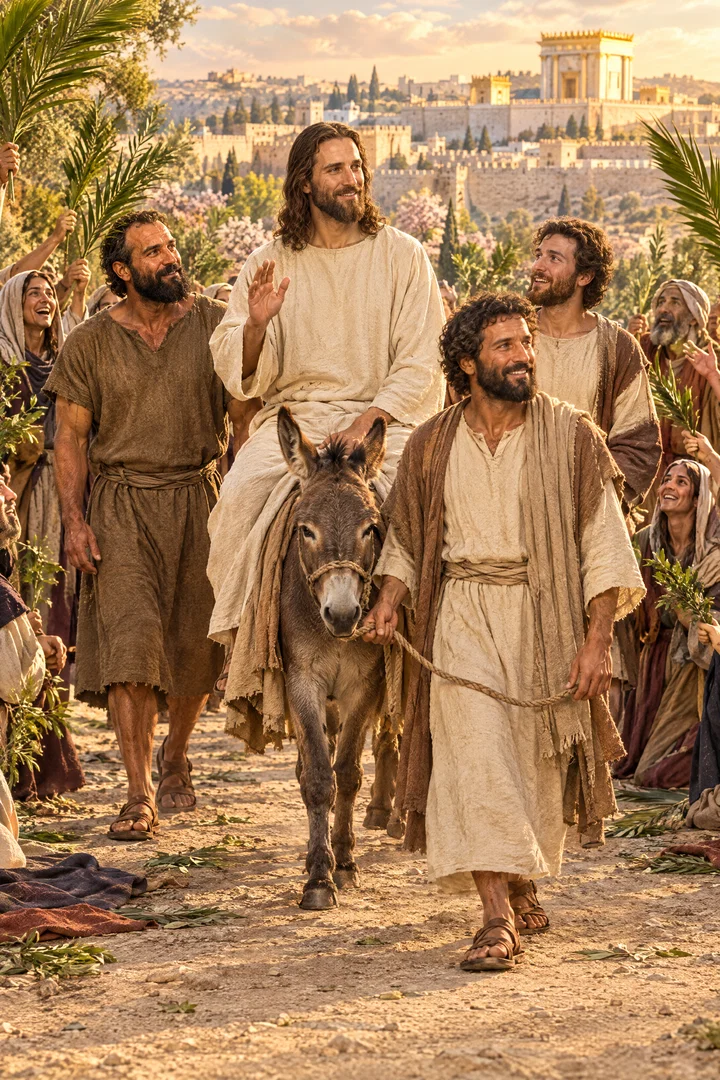
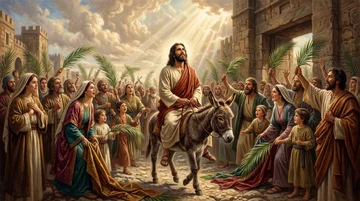
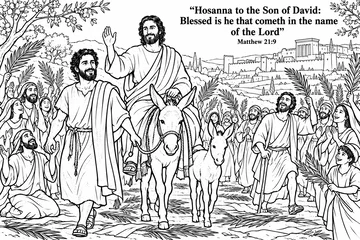
And a very great multitude spread their garments in the way; others cut down branches from the trees, and strawed them in the way.
Translations
American King James Version, Webster Bible
And a very great multitude spread their garments in the way; others cut down branches from the trees, and strewed them in the way.
King James Version, KJV Cambridge Paragraph Bible
And a very great multitude spread their garments in the way; others cut down branches from the trees, and strawed them in the way.
Revised Version, American Standard Version
And the most part of the multitude spread their garments in the way; and others cut branches from the trees, and spread them in the way.
and the very great multitude spread their own garments in the way, and others were cutting branches from the trees, and were strewing in the way,
But a very great crowd strewed their own garments on the way, and others kept cutting down branches from the trees and strewing them on the way.
And, the chief multitude, spread their own mantles in the way, and, others, were cutting off young branches from the trees, and spreading them in the way;
Berean Standard Bible, Majority Standard Bible
A massive crowd spread their cloaks on the road, while others cut branches from the trees and spread them on the road.
A very great multitude spread their clothes on the road. Others cut branches from the trees and spread them on the road.
And all the people put their clothing down in the way; and others got branches from the trees, and put them down in the way.
And a great multitude spred their garments in the way: and other cut downe branches from the trees, and strawed them in the way.
Douay-Rheims (Challoner revision)
And a very great multitude spread their garments in the way: and others cut boughs from the trees, and strewed them in the way:
Pictures
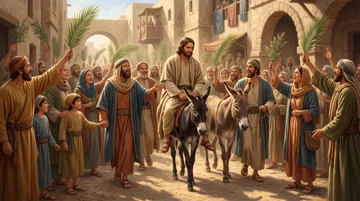
Cross-references
- Zechariah 9:9
Rejoice greatly, O daughter of Zion; shout, O daughter of Jerusalem: behold, thy King cometh unto thee: he is just, and having salvation; lowly, and riding upon an ass, and upon a colt the foal of an ass.
Foretells the humble King’s entry into Jerusalem, fulfilled by Christ.
- John 12:12-13
On the next day much people that were come to the feast, when they heard that Jesus was coming to Jerusalem,
The crowd welcomes Jesus with palm branches and cries Hosanna as he enters Jerusalem.
- Mark 11:8-10
And many spread their garments in the way: and others cut down branches off the trees, and strawed them in the way.
The crowd spreads garments and branches along Jesus’ way and acclaims his coming.
- Luke 19:36
And as he went, they spread their clothes in the way.
Parallel account of people spreading garments along the road.
- Luke 19:39-40
And some of the Pharisees from among the multitude said unto him, Master, rebuke thy disciples.
The Pharisees object to the disciples’ praise, and Jesus says the stones would cry out.
- Psalms 118:26
Blessed be he that cometh in the name of the LORD: we have blessed you out of the house of the LORD.
The crowd’s welcome echoes the blessing of the one who comes in the Lord’s name.
- Luke 19:37-38
And when he was come nigh, even now at the descent of the mount of Olives, the whole multitude of the disciples began to rejoice and praise God with a loud voice for all the mighty works that they had seen;
The crowd rejoices and praises Jesus as he approaches Jerusalem.
- Luke 19:41
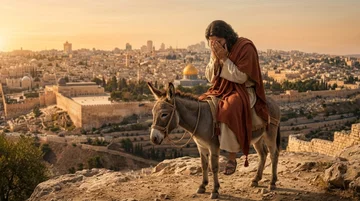
And when he was come near, he beheld the city, and wept over it,
Jesus wept over Jerusalem during the entry.
- John 12:17-18
The people therefore that was with him when he called Lazarus out of his grave, and raised him from the dead, bare record.
The crowd welcomed Jesus after hearing that he had raised Lazarus.
- 2 Kings 9:13
Then they hasted, and took every man his garment, and put it under him on the top of the stairs, and blew with trumpets, saying, Jehu is king.
Garments spread before Jehu as he was proclaimed king.
- John 12:16
These things understood not his disciples at the first: but when Jesus was glorified, then remembered they that these things were written of him, and that they had done these things unto him.
The disciples understood the event’s fulfillment only after Jesus was glorified.
- Isaiah 40:9-10
O Zion, that bringest good tidings, get thee up into the high mountain; O Jerusalem, that bringest good tidings, lift up thy voice with strength; lift it up, be not afraid; say unto the cities of Judah, Behold your God!
The prophecy announces the Lord’s coming, linked to Christ’s entry into Jerusalem.
- Matthew 27:20-23
But the chief priests and elders persuaded the multitude that they should ask Barabbas, and destroy Jesus.
The multitude's welcome contrasts with its later demand to crucify Jesus and release Barabbas.
- John 6:15
When Jesus therefore perceived that they would come and take him by force, to make him a king, he departed again into a mountain himself alone.
The people sought to make Jesus king, reflecting the royal expectation at his entry.
- Matthew 21:15-16
And when the chief priests and scribes saw the wonderful things that he did, and the children crying in the temple, and saying, Hosanna to the Son of David; they were sore displeased,
Children praise Jesus in the temple, fulfilling the praise of the young.
- Matthew 27:35
And they crucified him, and parted his garments, casting lots: that it might be fulfilled which was spoken by the prophet, They parted my garments among them, and upon my vesture did they cast lots.
The disciples’ disappointment followed Jesus’ crucifixion.
Commentary
Each commentary is drawn from primary sources: the writings of Ellen G. White and Adventist pioneers and periodicals. Each commentary is separate. Its own words are not a quotation; follow the references to read the source passages.
Ellen G. White
44 sources
A very great multitude honored Jesus on His triumphal entry into Jerusalem by spreading their outer garments in the way as a carpet and strewing and waving leafy branches of palm and olive as emblems of victory and triumph.ST Jun 8, 1882EW 206.42SP 384.1–385.1DA 570.1–571.1ST Jul 22, 1886 It was a public, joyful acclamation of Him as King, Messiah, and Son of David, offered especially by glad hearts He had healed and delivered.Ms 7a, 1886, par. 1–2DA 569.1–24RED 120.2ST Jun 8, 1882COS 91.1–5 The crowd unknowingly fulfilled prophecy, and the conspicuous welcome was meant to direct all eyes to His coming sacrifice as the antitypical Passover Lamb.Ms 7a, 1886, par. 1–21T 57.3–58.14SP 253.2ST Jun 8, 1882DA 571.2–4 Within days many who shouted hosanna joined the cry for His crucifixion, and amid the praise Jesus wept over blind, impenitent Jerusalem facing doom.ST Nov 16, 1882ST Oct 7, 18863SP 20.1ST Jan 10, 18783SP 152.1–2 The account still exalts Jesus as salvation through Him rather than by law and calls hearers to follow Him, walk in His example, and advance the triumphs of His cross.Lt 27, 1880, par. 8Ms 5, 1882, par. 11
Entry Setting and Actions
Matthew 21:8 belongs to Jesus' triumphal entry into Jerusalem as He rode, with the disciples spreading their garments on the colt for Him to ride.DA 569.3–4DA 569 The hopes of the people for a new kingdom were rising as He came, and they expected Him to enter the capital as King and assert His royal power.DA 569.3–4 As He rode in, the multitude greeted Him with joyous shouts on the slopes of the Mount of Olives, and the Mount echoed with their welcome.6RED 88.13SP 250.3 It was a joyful yet humble triumph.DA 569
A very great multitude honored Him by spreading their outer garments in the way as a carpet for His path.EW 206.4DA 570.1–571.1ST Jul 22, 1886Lt 113, 1886, par. 16–18COS 90 Others cut down leafy branches from the trees, including olive and palm, and strewed them in the way to lay before Him.EW 206.4DA 570.1–571.1ST Jul 22, 1886Lt 113, 1886, par. 16–18COS 90 The disciples spread their garments and palm branches in His path and joined in this welcome.EW 206.4EW 143.3 The garments served as a carpet, while the palm branches were waved aloft as emblems of victory and nature's sign and emblem of triumph.ST Jun 8, 18822SP 384.1–385.14RED 116.1–117.2DA 570.1–571.1ST Jul 22, 1886
The people had no costly gifts or royal display to offer, so they honored Him humbly with what they had.2SP 384.1–385.14RED 116.1–117.2ST Apr 1, 1889 Unable to furnish royal standards and splendor, they gave Him the homage of glad hearts in this humble display in place of costly gifts.4RED 116.1–117.2DA 570.1–571.1ST Apr 1, 1889 The entry took place shortly before His trial, only a few days before His crucifixion, when He was attended with joyful hosannas and the waving of palm branches.6RED 88.15RED 72.1–2 It was in the beautiful feast season when a large, enthusiastic multitude had gathered, many drawn to Jesus because He had raised Lazarus from the dead.5RED 72.1–2Ms 128, 1899, par. 1
Royal Honor and Expectation
The spreading of garments and leafy branches in the road was a public, triumphal welcome acclaiming Jesus as King, Messiah, and Son of David, with thousands declaring Him king.DA 569.1–2ST Jun 8, 1882COS 91.1–51T 57.3–58.1ST Jul 22, 1886 The outer garments laid down served as a carpet in His path, while palm boughs waved aloft were nature's emblems of victory.DA 569.1–2ST Jun 8, 1882ST Jul 22, 1886 This honor belonged to His entry into Jerusalem and expressed the people's hope for a new kingdom.DA 569.1–21T 57.3–58.1DA 394.2–3 They thought they were escorting Him to take possession of David's throne in Jerusalem.COS 91.1–5
The homage was given with glad hearts, for no costly gifts or royal display were offered, only what humble love could bring.4RED 120.24RED 116.1–117.2 It was especially a tribute from those He had healed and delivered from suffering, whose praise made the procession memorable.Ms 7a, 1886, par. 1–24RED 120.2 The garments of cleansed lepers spread in the way and the palm branches waved by the healed turned the scene into a public testimony to His works of mercy.Ms 7a, 1886, par. 1–24RED 120.2 Those delivered from affliction praised Him as King because mercy, not conquest, was being honored.4RED 120.24RED 116.1–117.2
The crowd expected Him to enter the capital and assert royal power.DA 569.3–4COS 91.1–5DA 570.1–571.1 They welcomed Him as their King in joyful expectation that He would take David's throne in Jerusalem and deliver Israel from its oppressors and from Roman rule.COS 91.1–5DA 570.1–571.14SP 253.2GC88 404.2–405.2 That national hope rose high as the humble display took the place of costly gifts and royal splendor.DA 569.3–4DA 570.1–571.1 Though prophecy was thereby fulfilled, those hopes were soon shattered when He suffered and died instead of reigning as they expected.4SP 253.2GC88 404.2–405.2
The welcome was therefore a tribute to mercy, not a display of conquest.4RED 120.2 The disciples shared fully in these high temporal hopes, joining the welcome because they believed He was about to establish an earthly, temporal kingdom and reign as prince over Israel.EW 206.4SG1 149.2SG1 57.2EW 143.3 The entry raised them to the highest pitch of expectation and made them feel highly honored to be connected with Him.5RED 72.1–2 Their expectation was not fulfilled as they expected, for within days they saw Him humiliated, crucified, and laid in the tomb, and their joy collapsed into fear, despair, grief, and disappointed hopes as they followed at a distance to Calvary.EW 206.4SG1 149.2SG1 57.2EW 143.35RED 72.1–2
Prophecy and Redemptive Purpose
The spreading of garments and branches was the unknowing fulfillment of prophecy, for the prophecy concerning this entry had to be fulfilled.Ms 7a, 1886, par. 1–21T 57.3–58.14SP 253.2 Among those who strewed the way were people He had healed, including cleansed lepers, whose grateful actions made the welcome a memorable occasion even as they did not understand what they were fulfilling.Ms 7a, 1886, par. 1–2 They honored Him as King and Son of David with high royal hopes, expecting Him to take David's throne and deliver Israel from its oppressors, yet within days those hopes were shattered when they saw Him crucified instead of crowned.1T 57.3–58.14SP 253.2
The entry was public and conspicuous by design, presenting Him as Redeemer and directing the attention of all to the sacrifice that would complete His mission.ST Jun 8, 1882DA 571.2–4 That sacrifice was His coming death as the antitypical Passover Lamb.ST Jun 8, 1882 By making the welcome widely known, the demonstration ensured that the people would follow His progress to the cross and afterward connect His entry with His trial and death.ST Jun 8, 1882DA 571.2–4 They would then search the prophecies and recognize Him as the Messiah.ST Jun 8, 1882
The ride was also a dim foreshadowing of His coming in the clouds with power and glory, when angels and the saints will rejoice and the words Blessed is he that cometh in the name of the Lord will be fulfilled.3SP 9.1 It fulfills Isaiah's prophetic vision of Christ's coming amid public rejoicing.Ms 151, 1899, par. 5 In that same vision He is portrayed as a shepherd who gathers and tenderly carries His flock.Ms 151, 1899, par. 5
The rejoicing crowds and their hosannas accompanied His final appeal of love and compassion to Jerusalem, an appeal the city rejected, so that the triumph pointed to the city's coming doom.3SP 20.1 This entry immediately preceded His second cleansing of the temple and set the scene for His warning about Jerusalem through the leafy but fruitless fig tree.ST Feb 15, 1899 That tree symbolized the Jewish nation, whose pride and apostasy left it unable to recognize its Redeemer, and its withering represented God's righteous judgment in Jerusalem's destruction.ST Feb 15, 1899
From Praise to Rejection
The entry was marked by joyful public praise as the rejoicing crowds welcomed Jesus approaching Jerusalem by spreading their garments and branches in His path.GC88 367.2GC 367.1–23SP 152.1–2GC 17.2–18.1 Their shouts and waving of palm branches proclaimed Him as the Son of David and hailed Him as king.GC88 367.2GC 17.2–18.1 When priests and rulers by threats intimidated the people into silence, children in the temple courts took up the praise.GC88 367.2GC 367.1–2 They waved palm branches and repeated the hosannas shouted the day before, acclaiming Him as the coming King and the Son of David, showing that opposition could not prevent the message about Jesus from being proclaimed.GC88 367.2GC 367.1–2ST Mar 28, 1878
Only a few days separated the triumphal ride with its joyful hosannas and waving of palm branches from the crucifixion.ST Nov 16, 18825RED 72.1–2ST Jul 18, 1878 Many who shouted His praise then did so because it was popular to do so.ST Oct 7, 18863SP 152.1–25RED 72.1–2 Those same people soon swelled the cry of Crucify him, Crucify him on the way to Calvary and joined the cry for His crucifixion.ST Nov 16, 1882ST Oct 7, 18863SP 152.1–25RED 72.1–2ST Jul 18, 1878 The crowd that had honored Him as their king would later hiss at and revile Him when He was condemned.DA 394.2–3
The disciples joined the welcome with high hopes because they believed He was about to establish a temporal, earthly kingdom and reign as prince over Israel, taking David's throne and delivering the nation from its oppressors.EW 206.4SG1 149.2SG1 57.2GC88 404.2–405.2 The entry raised them to the highest pitch of expectation and made them feel highly honored to be connected with Him.5RED 72.1–2 Their expectation was not fulfilled as they expected, for within days they saw Him crucified instead of crowned, saw Him die and laid Him in the tomb.EW 206.4SG1 149.2GC88 404.2–405.2 Their joy and high hopes collapsed into fear, despair, grief and disappointed hopes, and in His humiliation they followed at a distance to Calvary, until His resurrection revived them and their hopes that had seemed to die with Him.EW 206.4SG1 149.2SG1 57.2EW 143.35RED 72.1–2
Amid this acclaim Jesus was overwhelmed with sorrow and tears because Jerusalem's people were blind and impenitent.GC88 17.1–2 The rejoicing crowds and their hosannas accompanied His final appeal of love and compassion to Jerusalem, His last pleadings of rejected love.3SP 20.1ST Jan 10, 1878 That triumphal entrance pointed to the city's coming doom and destruction, which He grieved over even as palm branches waved and thousands declared Him king, because the city rejected His love.3SP 20.1ST Jan 10, 1878GC 17.2–18.1GC88 17.1–2
Preaching Christ and Following
Preaching the account of Jesus riding into Jerusalem, to which the spreading of garments and branches belongs, exalts and lifts up Jesus, showing salvation through Him rather than by law.Lt 27, 1880, par. 8 That same account calls hearers to follow Him in baptism and to unite with the church, for it shows that the Son of God came to this world to draw all men unto Him.Lt 27, 1880, par. 8Ms 5, 1882, par. 11 His followers must therefore walk in the light of His glorious example without questioning the cost in labor and trial and suffering.Ms 5, 1882, par. 11 Each and all have a work to maintain the truth in its purity and to push the triumphs of His cross and extend His kingdom.Ms 5, 1882, par. 11 This urgency stands because His coming brings not peace but a sword.Ms 5, 1882, par. 11
Sources
Pioneers and periodicals
71 sources
The verse describes the great multitude welcoming Jesus on His humble ride into Jerusalem only days before His crucifixion, when most spread their outer garments in the road as a carpet while others cut branches from the trees and strewed them in the way.ST Apr 14, 1898ST Apr 14, 1898RH Nov 18, 1862ST Sep 27, 1899 By laying down garments and leafy palm and olive branches they gave Him customary royal tribute and hailed Him as Messiah and King, the Son of David who comes in the Lord's name.ST Apr 14, 1898ST Oct 5, 1904ST Jun 9, 1898ST Mar 27, 1901ST Sep 27, 1899 In doing so they fulfilled Zechariah 9:9 of the humble King coming to Zion riding on a donkey, moved by divine impulse to shout even though many did not fully understand what they were doing.RH Nov 18, 1862ST Jun 5, 1879ST Mar 27, 1901RH Jul 4, 1871RH Sep 18, 1855 They expected Him to take David's throne at once and establish a temporal kingdom, not understanding that He had come to die, so their joy soon turned to bitter disappointment when He went to the cross rather than a palace.RH Dec 1, 1874ST Apr 8, 1903ST Aug 13, 1902RH Jul 25, 1865 Their error did not void the fulfillment, for God uses human misapprehension to fulfill His word, just as the Advent people in 1844 proclaimed the prophetic time correctly while misunderstanding the event.ST Jun 5, 1879RH Jun 10, 1858ST Jul 27, 1882RH Aug 24, 1869 The demonstration was meant to direct all eyes to His coming sacrifice as the antitypical Passover Lamb, and laying garments and branches in His path still represents believers giving up all that is precious to serve Him and spread the gospel.ST Jun 8, 1882ST Jun 19, 1884ST Jul 9, 1894ST Jun 19, 1884
Entry and Circumstances
Matthew 21:8 belongs to Jesus' triumphal entry into Jerusalem as He rode humbly and meekly on a donkey and colt toward the city shortly before His sufferings and death.RH Nov 18, 1862ST Feb 14, 1878RH Mar 17, 1859RH Jun 10, 1858 Their joyful honoring followed the mighty works they had witnessed, including healing the sick and lepers, giving sight to the blind, and raising the dead. The welcome accompanied the fulfillment of the prediction of the Messiah's humble entry as King coming humbly on a donkey, even though the people expected Him to take David's throne at once and did not understand the meaning of what they were doing.RH Nov 18, 1862RH Mar 17, 1859RH Jun 10, 1858RH Feb 16, 1869
The entrance as Israel's King took place near the end of Christ's ministry, during the last week of His life on earth, only a few days before His crucifixion.ST Jul 18, 1878ST Nov 8, 1883ST Apr 14, 1898 It was His final visit to Galilee and Jerusalem before His enemies seized Him, when He would not leave the city again, and just a few days later many who had praised Him in the popular procession joined the cry for His crucifixion.ST Jul 18, 1878ST Jan 15, 1885 Their error in some of their views did not justify rejecting the gospel they preached.RH Feb 14, 1871
The route is to be traced from Bethany and over Olivet toward Jerusalem, moving to the very spot walked before, with One of majestic mien and benign countenance seated on an ass in the midst of a mighty host thirty-three years after Christ's birth.RH Nov 25, 1873ST Apr 14, 1898 The whole city was moved to ask Who is this, with the answer that this is Jesus of Nazareth whom prophets foretold, whom angels worshiped, whom God has anointed.RH Nov 25, 1873 The associated event is identified as Jesus entering the temple with a multitude carrying palm branches, and the lesson connects this procession with Christ's final glorious triumph when He enters His kingdom to reign.RH Sep 3, 1857ST Apr 14, 1898
A very great multitude took part: most or many spread their outer garments in the road as a carpet, while others cut branches from the trees and strawed them in the way.ST Jun 8, 1882ST Apr 14, 1898ST Apr 14, 1898ST Sep 27, 1899ST Aug 13, 1902 They led the way or followed Him, waving palm boughs aloft as emblems of victory and shouting, forming a triumphal procession and public demonstration proclaiming Him king.ST Jun 8, 1882ST Jul 22, 1886ST Sep 27, 1899ST Jan 15, 1885ST Sep 16, 1889 It was a customary royal tribute, laying cloth along the way for a ruler's passage, and a full demonstration that Jesus allowed them to make full, making the event widely known with the actions and shouts of a king's triumph.ST Jun 8, 1882ST Apr 14, 1898ST Jul 22, 1886ST Sep 16, 1889 The great public welcome shortly before His arrest displayed Jesus' influence among the people and stirred the envy of the leaders who later delivered Him to Pilate.ST Jun 16, 1898
The same entry is also recorded in Mark 11 and John 12 and most fully in Luke 19.ST It stands in the New Testament sequence from the sending out of the twelve disciples to the week of the Lord's passion and the Lord's last Passover, which connects the Old Testament and the New and shows their intimate relation.RH Jan 6, 1910 It marks the close of the account of His first advent.
Royal Honor Given
Spreading garments and branches in the way was a customary royal tribute, laying cloth along the road for a ruler's passage, and spreading their garments was an initial act of proclaiming Him king as the people expected the long-awaited Messianic reign to begin.ST Apr 14, 1898ST Sep 27, 1899 Having no costly gifts or royal standards to offer, the people used what they had, spreading their outer garments as a carpet in His path and strewing leafy branches, including olive and palm, along the way, both laid down and waved aloft.ST Jun 8, 1882ST Jul 22, 1886ST Apr 1, 1889 The palm boughs waved aloft were nature's emblem of victory, and garments serving as a carpet with branches waved as emblems of victory made the whole a triumphal procession.ST Jun 8, 1882ST Jul 22, 1886ST Apr 1, 1889
By these acts the crowd welcomed Jesus on His route into Jerusalem as Messiah and King.ST Jun 8, 1882ST Oct 5, 1904ST Jun 9, 1898 This public honor accompanied His humble entry as the Prince of peace in fulfillment of Zechariah's prophecy of the coming King, and it was part of the people's public demonstration proclaiming Him king.ST Mar 27, 1901ST Sep 27, 1899 The disciples hailed Him as King entering in fulfillment of prophecy, acclaiming Him as the Son of David who comes in the Lord's name, the Prince of peace and King of Zion.ST Jun 8, 1882ST Mar 27, 1901ST Apr 8, 1903
Their joyful response followed the mighty works they had witnessed, including healing the sick and lepers, giving sight to the blind, and raising the dead. Unlike the victories of earthly conquerors, whose displays included captive trophies, He was surrounded instead by people He had delivered from suffering and death.ST Jan 21, 1897 The healed and rescued praised God, and those who had received mercy honored Him as king.ST Jan 21, 1897 Children afterward took up the same honor, waving palm branches and repeating the hosannas shouted the day before, acclaiming Him as the coming King and the Son of David.ST Mar 28, 1878
Mistaken Hopes Dashed
The disciples and the very great multitude hailed Him on that road as their immediately expected King who would redeem Israel, take David's throne at once, establish a temporal kingdom, begin the long-awaited Messianic reign, and dwell with them forever.RH Dec 1, 1874ST Apr 8, 1903RH Mar 17, 1859RH Sep 18, 1855 They spread garments and branches before Him and shouted hosanna to the Son of David because they thought He was riding to Jerusalem to take possession of the kingdom and throne of David, and their joyful praise was fitting even in their misunderstanding, for if they had been silent the stones would have cried out.RH Mar 17, 1859RH Sep 18, 1855ST Dec 3, 1874 The entry fulfilled God's word of the King arriving humbly riding on a donkey, yet their hopes were not realized as they expected.RH Mar 17, 1859
They accepted Him as the promised Messiah but did not yet understand that He must be crucified and rise again, did not understand the meaning of what they were doing, and were guided by sight rather than faith.RH Dec 1, 1874RH Jun 10, 1858ST Mar 27, 1901ST Sep 16, 1889 Their celebration with the actions and shouts of a king's triumph reflected the mistaken expectation that the kingdom of God would appear immediately, since they did not understand that He was going to be condemned and crucified.RH Dec 1, 1874ST Mar 27, 1901ST Sep 16, 1889 Only after Jesus was glorified did the disciples remember that the events had fulfilled Scripture.RH Jun 10, 1858
He entered Jerusalem not to take a throne and reign but to die, escorted as if to a throne while on His way to the cross rather than a royal palace, and laid lifeless in Joseph's tomb.ST Apr 8, 1903ST Jul 27, 1882RH Oct 11, 1915 His followers rejoiced in hope that He would be crowned king, so His crucifixion a few days later rather than enthronement on Israel's throne shattered that hope and turned joy to sadness, grief, and profound and bitter disappointment.ST Aug 13, 1902RH Jul 25, 1865ST Mar 24, 1887 That disappointment tested whether hearts were steadfast, yet mistaken expectations about a divine message do not prove the message is not from God, and those disappointed were still blessed by receiving the truths they had heard.ST Jul 27, 1882RH Oct 11, 1915
The rulers nevertheless rejected Him, and the crowd's faith weakened when He did not meet their expectations.ST Mar 27, 1901 The eager welcome and praise quickly turned to rejection, illustrating how fickle human favor is both in the experience of Christ and in ordinary life.ST Nov 16, 1882STST Oct 11, 1899 Many who had praised Him with joyful praise and waving palm branches only a few days before, many who had praised Him because it was popular and in the popular procession, soon joined the cry for His crucifixion and changed into a frenzied mob, and when He was arrested Peter was afraid to be known as His disciple.ST Nov 16, 1882ST Oct 7, 1886ST Jul 18, 1878ST Oct 11, 1899 The people who cried hosanna and honored Him one day later demanded His rejection, showing how truth may be celebrated by the multitude briefly and then despised while its worth remains grounded in God rather than popular approval.STRH Jul 3, 1879
Prophecy Fulfilled Despite Error
The spreading of garments and cut branches in the way with shouts of honor belonged to the humble entry of Jesus into Jerusalem riding on a donkey, which fulfilled Zechariah 9:9 of the King coming to Zion.RH Nov 18, 1862ST Jun 5, 1879ST May 9, 1878ST Nov 8, 1883RH Mar 17, 1859 It occurred near the end of His ministry only a few days before His crucifixion, at its appointed place in the sequence of events, as the Prince of peace and promised King of Zion.ST Jun 5, 1879ST Mar 27, 1901ST Nov 8, 1883 The disciples and a very great multitude recognized and proclaimed Him as King in that rejoicing, even while the rulers rejected Him.RH Nov 18, 1862ST Jun 5, 1879ST Mar 27, 1901 The shouting itself was obedience by divine impulse to the prophetic command to shout, for the Spirit moved the people to joyful hosannas and put the shout into them as commanded long before, so that if they had held their peace the stones would have cried out.ST Jun 5, 1879RH Jul 4, 1871RH Sep 18, 1855ST Feb 4, 1903 Some understood what they were doing while others were swept up in the praise without fully understanding it, yet the praise was fitting.RH Jul 4, 1871RH Sep 18, 1855 The rejoicing procession moving over Olivet toward Jerusalem thirty-three years after Christ's birth, on the very spot walked before, with the whole city moved to ask who He is, proves that what Zechariah foretold was intended by the Holy Spirit to be understood literally.RH Nov 25, 1873
Their error and bitter disappointment when He went to the cross instead of a throne did not void the fulfillment, for God uses human misapprehension to fulfill His word.ST Jun 5, 1879RH Jun 10, 1858 They welcomed Him as their immediately expected King and thought they were escorting Him to take David's throne at once, but did not understand the meaning of what they were doing or that He must be crucified.RH Mar 17, 1859RH Jun 10, 1858RH Oct 11, 1915 After Jesus was glorified the disciples remembered that the events had fulfilled Scripture, and after Christ rose and sent the Comforter they understood these things better and were begotten again to a lively hope.ST Jun 5, 1879RH Jun 10, 1858 Mistaken expectations about a divine message do not prove that the message is not from God, do not prevent delivering the message appointed for that time, and do not justify rejecting the gospel preached.RH Oct 11, 1915RH Jun 29, 1911RH Feb 14, 1871
The same principle proves the 1844 proclamation of the hour of His judgment was a true fulfillment despite error and disappointment.ST Jun 5, 1879RH Aug 24, 1869 Like the disciples spreading garments and branches and shouting because they expected Him then to take the kingdom, the Advent people proclaimed the prophetic time correctly and fulfilled Scripture while misunderstanding how the event would occur.ST Jun 5, 1879RH Aug 24, 1869ST Sep 30, 1880 Their joy turned to sadness when the expectation was disappointed, and the disciples' disappointment was in tenfold degree greater, for the only throne to which He then went was the cross and instead of being hailed as king in a royal palace He was laid lifeless in Joseph's new tomb.ST Jul 27, 1882RH Aug 24, 1869ST Sep 30, 1880 Nevertheless they were blessed by receiving the new and glorious truths they had heard, proving that receiving such truth is a blessing even when joined with disappointed expectations about the kingdom, and the disciples' loyalty during the entry stands in contrast to those who rejected the message.ST Jul 27, 1882RH Feb 26, 1867RH Jul 18, 1871ST Sep 30, 1880
Matthew 21:1-12 fulfills the prophecy that the stone the builders rejected has become the head of the corner and that this is the Lord's doing, and the day the Lord has made in that prophecy is the resurrection day, prophesying the change of the Sabbath from the seventh to the first day of the week by divine appointment in connection with the resurrection.RH May 10, 1860 Those who hold the opposite teach that the account of the prophecy's fulfillment does not identify a resurrection day or the seventh day, mention the Sabbath, or teach that the Sabbath was changed.RH May 10, 1860
Doctrinal Significance
The entry with garments spread and branches strewn was a public demonstration to fix the attention of all upon His approaching sacrifice as the antitypical Passover Lamb.ST Jun 8, 1882 By making the welcome so open and widely known, it ensured that after His crucifixion men would join His entry together with His trial and death and would be led to search the prophecies and recognize Him as Messiah.ST Jun 8, 1882
Though it was accompanied by rejoicing and hosannas acclaiming Him as the Son of David who comes in the Lord's name, that entrance pointed to Jerusalem's coming doom.ST Jan 10, 1878ST It stands in contrast with His sorrow over the city and its coming destruction, and His tears over it were His last pleadings of rejected love and compassion.ST Jan 10, 1878ST His death soon afterward seemed to crush hope, but by that death He destroyed the devil's power over death and delivered those desiring freedom from bondage, so that His humility and suffering led to exaltation and glory.ST Apr 25, 1906 What looked like defeat, because He was not then made King but was crucified by His bitterest enemies, was in truth His real coronation and His triumph over the powers of darkness on Calvary's cross.ST Apr 25, 1906ST Feb 4, 1903
The same entry is joined to His teaching that the kingdom would be taken from Jews who did not keep God's law and given to a nation that would keep it.RH Mar 29, 1864 It immediately preceded His second cleansing of the temple and set the scene for His warning about Jerusalem, in which the leafy but fruitless fig tree symbolized the Jewish nation.ST Feb 15, 1899 That nation's pride and apostasy had left it unable to recognize its Redeemer, and the withering of the tree represented God's righteous judgment in Jerusalem's destruction.ST Feb 15, 1899 The Palm Sunday account to which the spreading of garments and branches belongs is the only occasion on which Jesus is recorded riding.
Christian Application
The palms and olive branches laid in the way are reminders of love for Christ, for acts of kindness, faithful service, and resisting temptation for His sake are offerings He notices and accepts with pleasure.ST Jun 19, 1884ST Jun 19, 1884 Works of mercy and charity are like olive boughs, victory over temptation is like a palm branch, and laying down one's life for love of Christ is like spreading garments beneath His feet.ST Jun 19, 1884ST Jun 19, 1884 Laying garments in His path represents believers making a covenant with Jesus through sacrifice, that they will give up anything, however good or precious, to spread the everlasting gospel with a loud cry to the ends of the earth.ST Jul 9, 1894
The crowd's short-lived praise shows how truth may be celebrated by the multitude briefly and then despised, while its worth remains grounded in God rather than popular approval.RH Jul 3, 1879 Their joyful welcome did not prove lasting love or faith, since those who cried Hosanna and honored Him one day soon forsook Him and demanded His rejection, warning that joy and strong feelings are not sure grounds for assurance of acceptance with God.RH Jul 3, 1879RH Apr 23, 1867 That public welcome did not guarantee lasting loyalty, for the crowd's favor could quickly turn, so worldly friendship is dangerous.ST Jul 30, 1894 The disciples' loyalty to Christ during this entry, in contrast to those who rejected the message, is the pattern of believers' loyalty to the Advent message despite later disappointment.RH Feb 26, 1867 The triumphal entry stands as a token of self-denying love, in contrast with public celebrations grounded in force.ST Feb 6, 1901 By contrast, an emperor's passage through the Palestine colonies was welcomed enthusiastically as a step toward the literal restoration of Palestine and the rebuilding of the temple.ST Jan 18, 1899
The entry is called Palm Sunday and is commemorated by a march with palm and olive branches in hand to the Church of the Holy Sepulcher.ST Mar 16, 1915 It is celebrated as the Fiesta of Ramos on April 5, beginning a holy week that continues through Holy Thursday on the 9th, Holy Friday on the 10th, Holy Saturday on the 11th, and Easter Sunday on the 12th.ST Feb 11, 1903 This procession is connected with Christ's final glorious triumph when He enters His kingdom to reign.ST Apr 14, 1898 The great public welcome, when people spread garments and branches along His way, displayed His influence among the people and stirred the envy of the leaders who later delivered Him to Pilate.ST Mar 14, 1906ST Jun 16, 1898 A few days later, when He was arrested and the welcome had given way to hostility, Peter was afraid to be known as His disciple, showing the danger of following afar off.ST Mar 14, 1906ST Mar 14, 1906
Sources