Translations
American King James Version, King James Version, KJV Cambridge Paragraph Bible
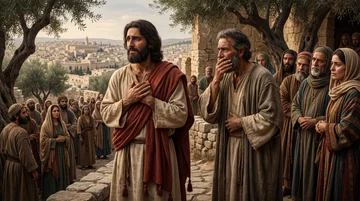
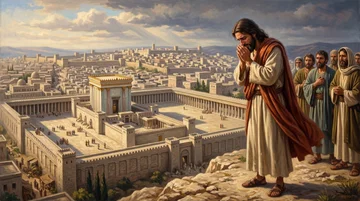
And when he was come near, he beheld the city, and wept over it,
And when he had come near, he beheld the city, and wept over it,
Revised Version, American Standard Version
And when he drew nigh, he saw the city and wept over it,
And when he came nigh, having seen the city, he wept over it,
And as he drew near, seeing the city, he wept over it,
And, when he drew near, beholding the city, he wept over it, saying—
Berean Standard Bible, Majority Standard Bible
As Jesus approached Jerusalem and saw the city, He wept over it
When he came near, he saw the city and wept over it,
And when he got near and saw the town, he was overcome with weeping for it,
And when he was come neere, he behelde the Citie, and wept for it,
Douay-Rheims (Challoner revision)
And when he drew near, seeing the city, he wept over it, saying:
Pictures





Cross-references 20 of 40
- Matthew 23:37-38
O Jerusalem, Jerusalem, thou that killest the prophets, and stonest them which are sent unto thee, how often would I have gathered thy children together, even as a hen gathereth her chickens under her wings, and ye would not!
Jesus mourns Jerusalem’s refusal of his care and foretells its desolation.
- Luke 13:34-35
O Jerusalem, Jerusalem, which killest the prophets, and stonest them that are sent unto thee; how often would I have gathered thy children together, as a hen doth gather her brood under her wings, and ye would not!
Jesus laments Jerusalem’s refusal of his care and foretells its desolation.
- John 11:35
Jesus wept.
Both texts show Jesus weeping over human sorrow.
- John 12:12-15
On the next day much people that were come to the feast, when they heard that Jesus was coming to Jerusalem,
Both recount Jesus’ entry into Jerusalem and the crowd’s welcome.
- Luke 21:20-24
And when ye shall see Jerusalem compassed with armies, then know that the desolation thereof is nigh.
Jesus foretells Jerusalem’s siege, destruction, and the people’s suffering and dispersion.
- Mark 11:1-10
And when they came nigh to Jerusalem, unto Bethphage and Bethany, at the mount of Olives, he sendeth forth two of his disciples,
A parallel account of Jesus’ entry into Jerusalem and the crowd’s welcome.
- Daniel 9:26
And after threescore and two weeks shall Messiah be cut off, but not for himself: and the people of the prince that shall come shall destroy the city and the sanctuary; and the end thereof shall be with a flood, and unto the end of the war desolations are determined.
Foretells Jerusalem’s destruction after the Messiah is rejected.
- Matthew 21:1-11
And when they drew nigh unto Jerusalem, and were come to Bethphage, unto the mount of Olives, then sent Jesus two disciples,
Parallel account of Jesus’ entry into Jerusalem.
- Zechariah 9:9
Rejoice greatly, O daughter of Zion; shout, O daughter of Jerusalem: behold, thy King cometh unto thee: he is just, and having salvation; lowly, and riding upon an ass, and upon a colt the foal of an ass.
Foretells the Messiah’s humble royal entry into Jerusalem.
- Matthew 23:38
Behold, your house is left unto you desolate.
Jerusalem’s rejection brings Jesus’ sentence that its house will be desolate.
- Jeremiah 9:1
Oh that my head were waters, and mine eyes a fountain of tears, that I might weep day and night for the slain of the daughter of my people!
Jeremiah’s lament over his people parallels Christ’s grief over Jerusalem.
- Psalms 48:2
Beautiful for situation, the joy of the whole earth, is mount Zion, on the sides of the north, the city of the great King.
Celebrates the beauty of the city Jesus beholds.
- Matthew 24:1-2
And Jesus went out, and departed from the temple: and his disciples came to him for to shew him the buildings of the temple.
Jesus weeps over Jerusalem and foretells the temple’s destruction.
- Luke 13:35
Behold, your house is left unto you desolate: and verily I say unto you, Ye shall not see me, until the time come when ye shall say, Blessed is he that cometh in the name of the Lord.
Jesus’ warning that Jerusalem’s house would be left desolate explains his lament.
- Acts 13:27
For they that dwell at Jerusalem, and their rulers, because they knew him not, nor yet the voices of the prophets which are read every sabbath day, they have fulfilled them in condemning him.
Jerusalem’s rulers failed to recognize Christ and fulfilled prophecy by condemning him.
- Matthew 22:7
But when the king heard thereof, he was wroth: and he sent forth his armies, and destroyed those murderers, and burned up their city.
The city’s destruction follows rejection of the king’s messengers.
- Zechariah 12:1-9
The burden of the word of the LORD for Israel, saith the LORD, which stretcheth forth the heavens, and layeth the foundation of the earth, and formeth the spirit of man within him.
Promises Jerusalem’s defense and preservation from attacking nations.
- Luke 19:37
And when he was come nigh, even now at the descent of the mount of Olives, the whole multitude of the disciples began to rejoice and praise God with a loud voice for all the mighty works that they had seen;
The disciples praise Jesus for his mighty works as he approaches the city.
- Luke 19:45-46
And he went into the temple, and began to cast out them that sold therein, and them that bought;
The temple’s desecration parallels the sinful heart made a den of thieves.
- Isaiah 5:4
What could have been done more to my vineyard, that I have not done in it? wherefore, when I looked that it should bring forth grapes, brought it forth wild grapes?
Jesus weeps over Jerusalem as God asks why his vineyard yielded wild grapes.
Commentary
Each commentary is drawn from primary sources: the writings of Ellen G. White and Adventist pioneers and periodicals. Each commentary is separate. Its own words are not a quotation; follow the references to read the source passages.
Ellen G. White
117 sources
At His triumphal entry as the lowly King bringing salvation, with hosannas at their height, He halted on Olivet overlooking the city in glory and suddenly broke into anguished weeping that silenced the triumph.Ms 49, 1890, par. 12Ms 36, 1897, par. 9–11DA 569.1–2ST Jul 22, 1886ST Jun 8, 1882 His tears were not for His approaching betrayal, suffering and crucifixion lying before Him, but the irrepressible agony of a broken heart of deep love and pitying tenderness over a people He came to bless and could not easily give up.4SP 17.1–2GC88 17.1–2Ms 13, 1892, par. 26–28GC 17.2–18.1ST Dec 22, 1887 He grieved because Jerusalem rejected its Redeemer, scorned His love and miracles, and in spiritual blindness did not know in its day the things belonging to its peace and the time of its visitation.4SP 17.1–2Lt 84a, 1896, par. 3–4Ms 123, 1909, par. 21–224RED 122.2–123.2ST Jun 8, 1882 With omniscient eye He foresaw its certain doom by besieging armies, temple burned and nation scattered about forty years later, a ruin brought by the people upon themselves that foreshadowed the destruction of the impenitent world by fire at His second advent.Ms 134, 1902, par. 2–3COS 95.3–6ST Feb 15, 189921MR 166.3–5Ms 85, 1893, par. 3 His tears reach beyond the Jews to every age, warning that rejecting present light, mercy and entreaties hardens the heart until truth is hidden, and calling those who have received great light to share His sorrow and labor with tears to warn and reclaim the lost.Lt 16, 1875, par. 19–205MR 232.2–3ST Aug 15, 1878STGC 68.18T 32.2
Setting and Occasion
The weeping belongs to the ride into Jerusalem, the triumphal entry of the promised King who comes lowly and bringing salvation in fulfillment of Zechariah's prophecy.Ms 49, 1890, par. 12DA 569.1–2Lt 27, 1880, par. 1 It took place as He drew near the city while the shouting of hosannas was at its height, yet He felt no joy but deep emotion over the doom soon to involve thousands upon thousands.RH Dec 3, 1901ST Dec 23, 1897 The multitude that poured out from Jerusalem to join His company fulfilled prophecy without knowing it.Ms 7a, 1886, par. 1–2 That crowd included those who had felt His healing power in their bodies, cripples made whole, blind whose eyes were opened, lepers cleansed, and dead raised to life, who spread their garments in the way and cried Hosanna to the Lord with new zeal for His mighty works.Ms 7a, 1886, par. 1–2Ms 7a, 1886, par. 3
He halted on the crest of Olivet, on the hill above the city, and beheld the devoted city in glory before Him.ST Jun 8, 18825T 258.1Ms 54, 1886, par. 4–7RH Oct 8, 1901ST Jan 10, 1878 At sunset the western sun gilded its towers, and when that sun set the day of Jerusalem was ended.Ms 7a, 1886, par. 5 Kidron lay at the foot of Olivet and Calvary stood in sight, where the cross would be placed and He would be stretched upon it.Ms 7a, 1886, par. 5 He stopped there on the mount overlooking Jerusalem and looked upon what the city had become and what it might have been.ST Jun 8, 1882ST Jan 10, 1878
Amid the general acclamation of triumph and rejoicing He suddenly broke into tears and groans of irrepressible agony.Ms 36, 1897, par. 9–112SP 390.2–391.23SP 20.1 The wail from His quivering lips and the rocking of His body silenced the multitude and interrupted the grand triumphal chorus, filling many with sympathetic tears.2SP 390.2–391.2 The celebrating crowd could not understand His grief or why He lamented in the hour of homage.ST Jul 22, 18862SP 390.2–391.2ST Jul 22, 1886 His sorrow was unlike silent tears of gladness and unlike His grief at the grave of Lazarus, coming as a note of wailing amid praise.2SP 390.2–391.2
Nature of His Weeping
His tears were not for Himself, though all that lay before Him was open to His sight — betrayal and trial and rejection, the horror of great darkness at Gethsemane, the sheep gate opening for Him as the great Antitype of the sacrificial offerings, and Calvary with its cross and approaching agony.4RED 122.2–123.2ST Jun 8, 18822SP 390.2–391.2 They were no selfish sorrow and no fear of pain or of physical suffering and death, not weeping in anticipation of His own coming humiliation and shame and crucifixion.4SP 17.1–2GC88 17.1–2GC 17.2–18.14RED 122.2–123.22SP 390.2–391.2 They were for the doomed people of the city, for the thousands facing destruction, for Jerusalem in its guilt and coming ruin, because in blindness and impenitence it did not know the time of its visitation and the things belonging to its peace.4SP 17.1–2GC88 17.1–2GC 17.2–18.14RED 122.2–123.2ST Jun 8, 1882
His sorrow was intense grief and insuppressible, irrepressible agony from the depths of a broken heart, suddenly breaking forth in tears and groans amid triumphal shouting.4SP 17.1–2GC88 17.1–22SP 390.2–391.2 A wail burst from His quivering lips and His body rocked to and fro like a tree before the tempest, silencing the multitude, an agony of pity that bedewed the palm branches strewn in the way.2SP 390.2–391.2Ms 7a, 1886, par. 3Ms 7a, 1886, par. 5 It was not silent tears of gladness, and unlike His God-like grief in harmony with the occasion at the grave of Lazarus, it came like a note of wailing in a grand triumphal chorus while all paid Him homage.2SP 390.2–391.2 That same human sorrow and suffering seen over Jerusalem was reflected afterward in Gethsemane.Lt 147, 1903, par. 21–24
His weeping reveals deep love and sympathy for a people who had received light and opportunities, pitying tenderness toward the city He loved, and fatherly yearning over the child of His care whom He had come to bless and save and could not easily give up.Ms 13, 1892, par. 26–28ST Dec 22, 1887COS 95.3–6ST Jun 8, 1882GW92 391.3 He grieved because they rejected Him as Redeemer and as the way, the truth, and the life, refusing the love that could shelter them and the teaching that could keep Jerusalem secure and make it a source of peace to all nations.ST Dec 22, 1887COS 95.3–6GW92 391.3ST May 10, 1883 Even as He fearlessly rebuked wrongdoing His truth was never cruel, for He regarded them as precious, fallen souls He came to save.GW92 391.3
The tears show His mercy and love in coming to this world to die for sinful man so that he might not perish in his sins, God giving His only begotten Son because souls are very precious in His sight.Ms 54, 1886, par. 4–7Ms 62, 1886, par. 19–23Ms 139, 1898, par. 37RH Aug 5, 1902 Doing good to men was the joy of His soul, yet many times He sighed in spirit and was very sorrowful, with tears flowing from anguish of soul at the unbelief, ingratitude, and hatred of those He came to bless and save.Lt 5, 1880, par. 2011MR 26.3 That same grief continues in heaven over the insensibility of souls upon whom His richest favors are poured without effect, whom He made and endowed with wondrous faculties of mind and noble affections of heart which they use against the Giver, with ears not inclined to hear His voice and tongues not speaking His praise, even among His professed followers who daily receive His mercies yet keep hearts empty of His praise.Lt 5, 1880, par. 2011MR 26.3
Cause of His Sorrow
He wept because Jerusalem rejected Him, its only hope, the Son of God and Redeemer and Saviour, the Way, Truth and Life, scorning His love, refusing the evidence of His miracles, refusing to come to Him for life and healing, and about to take His life and crucify its King.4RED 122.2–123.2ST Jun 8, 1882DA 575.3–576.1ST Jun 8, 18823SP 11.1 His tears were not for the physical suffering and death awaiting Him but for the guilt and coming ruin of the city and for the salvation and healing it could have received through Him.Ms 123, 1909, par. 21–224RED 122.2–123.2ST Jun 8, 1882DA 575.3–576.1ST Jun 8, 1882 He grieved over what the city had become and what it might have been if it had accepted the One who could save it, and He could not easily give up the people He had come to save.Ms 123, 1909, par. 21–22ST Jun 8, 1882DA 575.3–576.1ST Jun 8, 1882 He wished to free them from heathen rule and give them rest, freedom and happiness, but they rejected the only help that could release them from captivity, though they had received His blessings and invitation, and were about to seal their doom by putting Him to death.4RED 122.2–123.23SP 11.1
They were spiritually blind, hardened and impenitent, ignorant of God and their Redeemer, and did not know in their day the things belonging to their peace and the time of their visitation, though Scripture had made His ministry plain, and those things were now hidden from their eyes.4SP 17.1–2GC88 17.1–2Lt 84a, 1896, par. 3–4Ms 36, 1897, par. 9–11GC 17.2–18.1 His tears were for the doomed people of the city and for the thousands facing destruction, whose blindness and impenitence kept them from recognizing the One who came to bless and save them.4SP 17.1–2GC88 17.1–2GC 17.2–18.1 The city’s day was nearly ended and its coming judgment irrevocable, and applied to God’s people the same weeping warns that rejecting present blessings and warnings means missing the things that bring peace.Ms 36, 1897, par. 9–11Lt 16, 1875, par. 19–20 The weeping also expresses righteous indignation against unholy mixture and bartering in the earthly temple, which then needed cleansing as does every place where dishonest practices are covered while claiming to be the temple of the Lord.Lt 84a, 1896, par. 3–4
They did not realize their privilege in having the Majesty of heaven among them, did not appreciate God’s gift of His Son, and would not let Him gain entrance to their hearts when He saw their stubbornness.Ms 41, 1886, par. 5–63MR 76.2–3 He had left His seat in glory to bring blessing and peace and to lift fallen humanity and give eternal life, yet few knew who was in their midst.Ms 41, 1886, par. 5–63MR 76.2–3 They rejected Him because customs and practices had more weight with them than the precious gift He came to bring, leaving the things of peace hidden, and the same rejection is acted over today whenever light sent from heaven is refused instead of received.Ms 41, 1886, par. 5–63MR 76.2–3 Jerusalem could have received the world’s Redeemer, been healed, and shared truth and peace with the nations despite the spiritual and temporal advantages it had received, but it put away the only One who could give peace, rest and victory because His purity pressed upon its sin.ST Feb 15, 18993SP 11.1
All the history of ages lay distinctly before Him — centuries of grace resisted, privileges abused, opportunities slighted, warnings and reproofs unheeded, prophets put to death and servants abused, His vineyard trodden under foot, with ages of ingratitude, formalism, hypocritical insincerity, pharisaic pride, national apostasy and human traditions displacing honor for God’s law.Lt 20, 1892, par. 31–32Ms 56, 1902, par. 10–1319MR 97.2–99.2Ms 134, 1902, par. 7 He scanned Israel’s years of impenitence and murmuring, the murder of prophets sent to reprove sin and give truth, and His own long effort to turn them from their self-ruinous course, and His tears asked what more could have been done for His vineyard.Lt 20, 1892, par. 31–32Ms 56, 1902, par. 10–13Ms 134, 1902, par. 7 He foresaw the city’s guilt reaching its climax in His coming crucifixion, the last act causing the nation’s downfall, and grieved over the doom that would follow, with the cloud of vengeance loading for a thousand years about to burst upon the city.ST Aug 15, 1878Lt 20, 1892, par. 31–32Ms 65, 1912, par. 29–30 He wept not for His betrayal, trial, rejection, delivery into enemies’ hands, nor the cruel death appointed though no fault was found in Him, but for those placing themselves beyond long-suffering mercy, pierced by the thought that all He would endure to win His people back would seem in vain.Ms 65, 1912, par. 29–30Ms 56, 1902, par. 10–13 His forbearance is the pattern for meeting presumptuous, high-headed, hard-hearted souls who irritate and provoke, and His tears were not for Jerusalem alone, for in its fate He beheld the destruction of the world and wept for the sins of all time.Lt 20, 1892, par. 31–32Ms 56, 1902, par. 10–13
Their sin included desecrating the temple courts with unholy traffic and bartering for gain and the desecration of the temple for unlawful gain, which with refusal of His repeated invitations to repent and receive the only One who could give life would bring destruction of Jerusalem and its temple.Lt 84a, 1896, par. 3–43SP 12.13SP 9.2Ms 32, 1898, par. 4–8 As unholy traffic then desecrated the courts, the temple of the heart where Christ should dwell is defiled by selfishness, love of the world and money and worldly honor, malice, envy, and unholy passions, and many professing godliness remain unsanctified, receiving warnings and calls to repentance as idle tales.3SP 12.13SP 9.2 His counsel and mercies are despised whenever selfishness and love of money possess the heart, and His denunciation of self-righteous Jews condemns in every age those professing to represent Him while their lives continually deny Him.3SP 12.13SP 9.2 With infinite sight reaching beyond that city He saw the same influences corrupting the cause at the heart of the work, compliance in business with maxims based on false principles which Spirit-filled men will never do, and people professing godliness yet practicing injustice, greed and oppression, kept by spiritual blindness from seeing these evils until convicted and converted.Lt 84a, 1896, par. 3–4Ms 26, 1899, par. 11–12Lt 25, 1894, par. 4–6
Foreseen Judgment and Prophecy
With omniscient eye He saw the certain doom of the city close at hand, besieged by armies with its people starving and suffering and its temple and buildings burned and destroyed.Ms 134, 1902, par. 2–3COS 95.3–6ST Feb 15, 1899 The nation would be scattered, dispossessed and driven from place to place, with descendants denied protection or a lasting home.RH Nov 13, 1900ST Feb 27, 1896 That desolation came about forty years later, when the Roman army utterly destroyed and burned Jerusalem because its people had not heeded His teaching nor received Him as Saviour.COS 95.3–6COS 96.1 He had cared for the city, and had it received the world's Redeemer it could have been healed, remained secure, and become a source of peace to all nations with its spiritual and temporal advantages shared abroad.COS 95.3–6ST Feb 15, 1899 The blighted fig tree stands as the emblem of that national ruin, whose sight filled Him with deep sorrow.ST Feb 15, 1899
Though city and nation had been God's chosen people, they were about to lose their favored status when He was crucified.Ms 7a, 1886, par. 54SP 20.2 Their day was nearly ended, their time of grace passing and at last ended, with coming judgment irrevocable and no other means left by which they could be delivered after rejecting the warnings of God's Spirit.Ms 36, 1897, par. 9–11Ms 7a, 1886, par. 5ST Jul 21, 1909 Punishment for that rejection would be measured exactly according to the light that had shone upon them and that they had turned away from.Ms 7a, 1886, par. 5
The ruin was not inevitable, nor was the city left to its doom because He wished to abandon it.21MR 166.3–5Lt 195, 1899, par. 6 The people brought the calamity upon themselves by rejecting God and His Word and Christ the provision made to save them, resisting repeated calls to repent and obey and resisting even the Roman power they were bound to obey.21MR 166.3–5RH Nov 13, 1900Ms 119, 1898, par. 6–7 Had they been loyal to God, searched the Scriptures and tested their expectations and hopes of earthly power by them, recognized the plain testimony and evidence of His Messiahship and time of visitation, repented, obeyed His teachings and commandments, and accepted His teaching and protection, heaven would have defended them and the calamity that left their city in ruins might have been averted.RH Nov 13, 1900RH Jul 6, 1911Ms 119, 1898, par. 6–7DA 241.4Lt 195, 1899, par. 6 Their disobedience brought ruin on themselves and their children, for continued resistance fixes consequences until truth is hidden from sight, while the present day remains an opportunity to accept correction.21MR 166.3–5Ms 119, 1898, par. 6–7
Jerusalem's destruction foreshadowed and symbolized the destruction of the impenitent world at His second advent.Ms 134, 1902, par. 2–3Ms 85, 1893, par. 3COL 302.3–6 In Jerusalem's fate He beheld the destruction of the world, and His tears were for more than the chosen city.COL 302.3–6Ms 56, 1902, par. 10–13 Looking beyond the coming destruction of Jerusalem to an impenitent world doomed to destruction, He wept for the sins of all time and the retribution awaiting an unrepentant world.Ms 85, 1893, par. 3RH Dec 3, 1901Ms 56, 1902, par. 10–13 As the flood and Sodom had shown judgment before, so the end would come by fire rather than flood, and His grief is connected with the warning that similar scenes will take place in the last great day.Ms 122, 1909, par. 24–26Ms 56, 1902, par. 10–13 The Jewish nation was a symbol of the people of all ages who scorn the pleadings of infinite Love, and looking down the ages He saw the apostasy of the present time when the Protestant world departs from the principles of true Protestantism and the churches whose spiritual declension is foretold in prophecy.Ms 56, 1902, par. 10–13 His tears reveal His patient, loving work for sinners' salvation and His continuing appeal for them to receive grace.RH Dec 3, 1901
His grief therefore warns those living before His second advent not to reject the light and opportunities and message of salvation sent from heaven.6T 145.3Lt 16, 1875, par. 25 The day of visitation was a time of opportunity and privilege that would not last, for privileges abused or rejected would be hidden, so the time to do God's work must be used while it remains.21MR 166.3–5Lt 16, 1875, par. 25 Transgression of God's holy law brings retributive judgment on those who reject His warnings and messages, despise truth, persist in wrongdoing and sin, and disregard His law.7RED 51.3Ms 108, 1897, par. 21–25Ms 161, 1897, par. 8–124MR 90.5–91.3 When Paul entered the city he viewed it differently, knowing that judgment was hanging over it.7RED 51.3 Cities may be spared for a time if people heed warning and repent, but continued wrongdoing brings calamities and destruction, as when the warning went unheeded at Jerusalem and as applied to those in Battle Creek who despised warnings and acted wickedly.Ms 108, 1897, par. 21–25Ms 161, 1897, par. 8–124MR 90.5–91.3
Warning to All Ages
His tears over Jerusalem reach beyond the Jews through the centuries even to the close of time, for present impenitence in every age.ST Aug 15, 1878ST Mar 9, 1876DA 587.1–3 The great sin of the city was rejecting its present blessings and present warnings, spurning love and despising mercy, and not knowing in its day the things belonging to its peace until they were hidden from its eyes.Lt 16, 1875, par. 19–205MR 232.2–3ST Aug 15, 1878 From an anguished, breaking heart He had labored untiringly to save His chosen people from the fate they were bringing on themselves, but they returned His love with ingratitude, selfishness and neglect, refused His mercy, and knew not that their time of visitation and day of privilege was ending.4T 191.3–192.1ST Mar 9, 1876 He foresaw their guilt reaching its climax in His coming crucifixion and the doom that would follow, with the dark clouds of retribution gathering because, blinded by sin, they knew it not.ST Aug 15, 1878ST Mar 9, 1876 To all who in like manner repay His love and admonitions with selfishness and neglect is addressed the same solemn declaration that they know not the time of their visitation.4T 191.3–192.1ST Mar 9, 1876
Neglect of mercies and blessings in the day of opportunity brings impenetrable darkness and makes men candidates for wrath, and many today draw that wrath upon themselves by unheeded opportunities, scorned counsels and love, and despised servants who speak the truth.4T 191.3–192.1ST Mar 9, 1876 The city had rejected warnings and the Spirit's pleadings until its time of mercy had ended and no other means of deliverance remained, and its judgment warns that those who reject the Spirit's reproofs and warnings bring condemnation upon themselves.DA 587.1–3 His tears therefore express grief not for Jerusalem only but for the sins of all ages, and persistent unbelief and disobedience in rejecting Christ's mercy, present opportunities and warnings brings spiritual ruin.ST Aug 15, 1878DA 587.1–3 Rejecting present blessings, warnings, mercies, counsel and messengers means missing the things that bring peace.Lt 16, 1875, par. 19–205MR 232.2–3
The same great light given to the Jews has been sent now, with reproofs, entreaties, warnings and yearning love, yet it is rejected by thousands because it involves a cross and does not harmonize with their practices and natural inclinations.3SP 12.1 His words from the mount reach to the present time, for His tears were for present impenitence, and He grieves for those who fail to recognize what would bring them peace even when they do not grieve for themselves.3SP 12.1DA 588.1 Grace and light either soften and subdue the heart or confirm it in hardened impenitence, and by resisting repeated calls to repent and obey men bring doom upon themselves rather than being abandoned at His wish.21MR 166.3–5DA 588.1 The present day is opportunity to accept correction, but continued resistance can bring a point when consequences are fixed and truth is hidden from sight.21MR 166.3–5 As unholy traffic then desecrated the temple courts, the heart-temple where Christ should dwell is defiled by selfishness, love of the world, love of money, malice, envy and unholy passions, and many professing godliness remain unsanctified, receiving warnings and calls to repentance as idle tales, and if they refuse the light offered in their own time they may likewise be given over to evil.3SP 12.13MR 78.3–79.1
Jerusalem stands as a symbol of the people of all ages who scorn the pleadings of infinite love, and His denunciation of the self-righteous Jews condemns in every age those who profess to represent Christ while their lives continually deny Him.3SP 9.2 He wept not for Himself but for a hard-hearted, impenitent people who despised His mercy, patience and forbearance and were blinded by unbelief to their visitation, and their response is compared with churches and individuals who disregard His requirements and repeated warnings while keeping only outward forms of worship without softened heart and spiritual power.5T 258.1 His grief over the city warns churches and institutions that have received great light but reject warnings, light, entreaties and counsel and fail to meet His demands, for continued departure from just and righteous principles leaves them unable to discern light, truth, justice or mercy and leads to spiritual ruin.8T 68.1STGC 38.2–39.18T 67.2–3 Whenever selfishness and love of money and worldly honor possess the heart, counsel is rejected and mercies despised.3SP 9.2
The same was true of Paris, which did not know its visitation nor the things belonging to its peace.GC 222.2–223.1GC88 222.2–223.1 For two years the gospel was preached there openly to all classes, and thousands were moved to temperance, purity, order and industry, with many accepting it.GC 222.2–223.1 Yielding blindly to false teachers and stirred by fear, prejudice and fanaticism, the majority rejected the invitation, the king's show of toleration served only his own purposes, the papists regained ascendancy, the churches were closed and the stake was set up.GC 222.2–223.1 Despite hearing the message, most refused it and lost the opportunity to receive its blessings.GC88 222.2–223.1
The sorrowful, displeased regard with which He looked upon impenitent Israel, ignorant of God and of Christ their Redeemer, falls also upon Battle Creek in its peril.STBk 108.2STA 108.2Ms 40a, 1890, par. 14–16 Unbelief and refusal to repent had blinded leaders who relied on human wisdom instead of seeking His will and counsel, leaving them unaware of the danger before them though facing judgment for despising warnings and persisting in wrongdoing.Ms 108, 1897, par. 21–25STBk 108.2STA 108.2ST2 2.1 They had not truly repented or valued the salvation offered, and like Jerusalem of old, a concentrated center, they centered means and responsibilities in one place while neglecting other cities.Ms 108, 1897, par. 21–25STBk 108.2 His weeping over a people unaware of peril because they know not God and their Redeemer warns all who are likewise blinded by unbelief and impenitence.Ms 40a, 1890, par. 14–16Ms 61, 1890, par. 4–6ST2 2.1
Call to Share His Burden
The weeping over Jerusalem was for its guilt and stubbornness as God's chosen people, and those who have received great light and rich gifts and have witnessed His power, goodness and mercy are to share their Saviour's grief over sin and over people who remain unresponsive.STGC 68.1Ms 150, 1902, par. 18–19Ms 106, 1902, par. 27Lt 173, 1902, par. 17 That grief is also over hard-hearted professed workers who claim to labor with Him yet do nothing for souls, and over wicked cities given to idolatry whose destruction is impending.8T 32.2Ms 150, 1902, par. 18–19STGC 91.3–92.2 Those who know the value of souls share Christ's burden of sorrow and tears for such spiritually neglected cities, warning and helping them rather than remaining inactive, knowing neglect now brings accountability at the final reckoning.8T 32.2Ms 150, 1902, par. 18–19STGC 91.3–92.2 His tears call for unreserved consecration to service, for hearts to break for the lost and mingle with His tears, and for gatherings to become penitent, humble seeking of the Lord for His Spirit for work for souls.Lt 173, 1902, par. 17
Seeing people and their needs with His Spirit moves the heart to practical effort to save them, so that sorrow has a purpose in awakening a burden for souls and leading to earnest work rather than fruitless lamentation.Lt 44, 1892, par. 6–8Ms 122, 1898, par. 16 His followers are to share His concern and plead for people who will not plead for themselves and weep over those who will not weep for themselves.Lt 159, 1902, par. 7Ms 24, 1903, par. 11 True laborers feel as He felt, care-worn and oppressed in spirit at crookedness, impenitence and refusal to listen to the Word, and in God's great day of preparation, with the last message of mercy going to the world and the Lord coming, they must not sleep or be indifferent but work with all their might with zeal, living interest and intensity in action for precious souls around them.6MR 73.1–2 That work is to warn old and young and lead them to Him as Redeemer, to reclaim the wanderer, edify the believer and turn thoughts to divine realities in a work for time and eternity, especially for those in medical institutions to lose no opportunity to bring patients to Him as the great Healer of body and soul.Lt 159, 1902, par. 713MR 169.4–5
His tears express deep sorrow for those hardened and in spiritual peril and in darkness, and stand as a model of concern for their salvation and a call to committed missionary service.Ms 136, 1903, par. 4RH Sep 10, 1903 His response to those who err from the truth and stray is compassionate grief and sorrow, not condemnation, setting the example to love and pray for them.5T 345.2Lt 66, 1884, par. 11–13 Love for souls mourns when people resist God's grace, abuse privileges and slight mercy, for His grief was over hardness of heart toward resisted grace.Lt 48, 1893, par. 38–40 His sorrow for the doomed city was the same deep concern He felt for Judas, longing for him to turn from sin and be saved.DA 645.1 A mother's bitter tears over a rebellious child's wrongdoing show the same day-and-night burden He carried and will rise in condemning power in the day of judgment.Lt 58, 1880, par. 4
His sorrow over Jerusalem when He stood on Olivet grieving that the people had become estranged from God also shows His present grief and pleading with sinners in the final moments of time to turn and live.RH Oct 8, 1901 He weeps over the impenitence of men and pleads with deep compassion for sinners to turn to Him, and rejoices when they turn asking what they must do to be saved.Lt 159, 1902, par. 713MR 169.4–5 His mournful appeal is that people recognize the things that bring them peace while opportunity remains, for the sentence that these things are hidden from their eyes has not yet become irrevocable.Lt 110, 1899, par. 2–6 His tears reveal compassion for those facing judgment and the terrible retribution awaiting an unrepentant world, and declare the urgency of the present day as a time of healing and opportunity in which His people are to testify by showing the sinless character of the Redeemer.Ms 57, 1901, par. 9
That same weeping from tender, longing love continues over individuals now who leave cheerful trust and a humble, happy walk with Jesus in duty and peace for a worldly-wise life of thoughtless gaiety and social excitement.Lt 34, 1898, par. 16–18 Such a course drives heavenly graces, elevated tenderness and sympathy from the heart and lets selfishness, suspicion, vanity and indulgence take their place, and His tears call them to give their hearts to Jesus and return to Him.Lt 34, 1898, par. 16–18 His weeping over an impenitent nation that claimed to be His people and to be God's people declares that ungodliness and ungodliness can have no part and no place in the kingdom of God.Lt 244, 1906, par. 9–10Ms 63a, 1906, par. 13–16
His life was an example of good works as a man of sorrows and acquainted with grief, and His self-denying sacrifice and earnest prayer stand as the pattern against which professed followers must compare a self-pleasing, frivolous course.1T 504.2–505.2 He wept because the people would not be saved by accepting the redemption He offered and would not come to Him that they might have life, and His sorrowful love was for those who reject salvation.1T 504.2–505.2 His sorrow over the city's impenitence added to its guilt, for God's chosen people had received great privileges and the light of truth through His teaching yet had not responded, but acted against the light and righteous principles He had given as He taught those He came to save.Lt 58, 1880, par. 4Ms 15, 1909, par. 11–13Lt 51, 1887, par. 15 Jerusalem faced God's retributive judgment, and when Paul entered the city he viewed it differently, knowing that judgment was hanging over it.7RED 51.3
Sources
Pioneers and periodicals
117 sources
As He rode toward Jerusalem at His triumphal entry, He stopped on the Mount of Olives where the city and temple suddenly came into full view, and beholding it He wept openly in anguish and tender pity.ST Jul 22, 1886ST Jun 3, 1897RH Aug 20, 1901ST Apr 23, 1902ST Jun 22, 1882 He wept not for His own approaching trial and cross but for the city itself, for its rejection of Him as Messiah and King and for the siege, suffering and utter destruction He foresaw coming upon it.ST Jun 8, 1882ST Jun 3, 1897ST Oct 5, 1904ST Mar 23, 1882 His tears reveal a compassionate Saviour whose purpose is to save and not condemn, longing to pardon, shelter and gather sinners yet refusing to compel them, and unveiling God as tender, loving and long-suffering toward all.ST Feb 11, 1913ST Feb 10, 1898RH Aug 27, 1914ST Aug 21, 1884RH Jan 10, 1871 What He foretold in Luke 19:41-44 was literally fulfilled a generation later when the Romans compassed and destroyed the city and temple, because by rejecting Him the people forfeited His protection and chose their own ruin.ST May 31, 1910RH Jan 24, 1856ST Jun 17, 1913ST Nov 8, 1883ST Nov 8, 1883 His sorrow therefore warns every hearer not to neglect the day of visitation lest peace be hidden, for as Jerusalem's probation closed, so decisive opportunity now rapidly passes and a like rejection of Christ and His law will bring final judgment.RH Oct 8, 1901ST Jun 24, 1875ST Sep 13, 1910ST Dec 3, 1912ST Feb 14, 1878
Entry Setting and View
Luke 19:41 belongs to the triumphal entry into Jerusalem in Luke 19:28-48, which sets forth God's plan for the salvation of the race working out in and through history from Christ's birth onward.ST Sep 17, 1894 Luke 19 gives the fullest account of this scene, also found in Matthew 21, Mark 11 and John 12, and the next event of importance after it was the institution of the Lord's Supper.ST It was in the setting of this approach to Jerusalem that He taught about His coming kingdom on earth.
As He came near He stopped on the hill above the city on the road from Bethany over the Mount of Olives.ST Jun 8, 1882ST Jun 3, 1897ST Feb 14, 1878 The place was a sharp turn where Jerusalem and its magnificent temple suddenly came into full view, then appearing in splendor unlike its later ruined state.RH Aug 20, 1901ST Apr 23, 1902 It is the same mountain of His tears and of His ascension in triumph over sin, and where His feet will first rest when He comes again as King of kings.RH Aug 20, 1901
The scene occurred near the close of His ministry, as He approached Jerusalem shortly before His sufferings and death and only a few days before His crucifixion, looking upon the city with prophetic knowledge.ST Jun 17, 1913ST Nov 8, 1883 His sorrow then accompanied His departure across the Kidron toward Gethsemane and on to Calvary where He would die for sin.ST Mar 16, 1915 He wept openly in anguish as He beheld the impenitent city He cared for, grieving not for His approaching death but for Jerusalem which had rejected Him and scorned His love, for what it had become and what it might have been.ST Jun 8, 1882ST Jun 17, 1913ST Mar 16, 1915
The approach was marked by the multitude rejoicing and praising God with loud hosannas for the mighty works they had witnessed, including healings, cleansing of lepers, sight given to the blind, raising of the dead, and the raising of the decaying Lazarus. They acclaimed Him as King and long-expected Messiah, three and a half years after His anointing, in formal proclamation in the capital. The disciples welcomed Him as King because they expected God's kingdom to appear at once and to be set up with temporal power, still not understanding that He was going to suffer, be condemned and crucified, a misunderstanding He corrected by the parable of the nobleman.ST Nov 20, 1884ST Sep 16, 1889ST Nov 27, 1879 The shouts of praise soon turned to rejection when many joined the cry for crucifixion, the chief priests and scribes rejected Him and the nation as a whole remained unconverted, so that the fate of the Jewish nation was then sealed, though saving mercy remained for faithful individuals.STST Nov 8, 1883
Meaning of His Tears
When he came in sight of the city he broke into open weeping in anguish, with tears and groans and outstretched hands and every feature expressing pain and sorrow and anxious longing, while the celebrating crowd around him could not understand his grief.ST Jul 22, 1886ST Jul 22, 1886ST Jun 22, 1882 His tears were tender pity and affectionate love and fatherly care for a wayward child, for a loved city he had tenderly cared for and prayed and worked in and died in, a final plea of compassion as his love was rejected and pointing to its coming doom.ST Jan 10, 1878ST Feb 27, 1896ST Jun 22, 1882ST Jun 22, 1882 His day of grace was nearly over because warnings and mercies had been rejected, yet his yearning to save remained even after mercy had been resisted, for he knew the calamity that would come upon it.ST Jan 10, 1878ST Feb 27, 1896ST Jun 22, 1882
His sorrow was not for his approaching trial and physical suffering and cross but for Jerusalem itself, for what it had become and what it might have been if it had accepted the one who alone could save it.ST Jun 8, 1882ST Jun 8, 1882ST Oct 5, 1904 He grieved over its guilt and its lost chance to be healed, over its failure to recognize the day of visitation and the things belonging to its peace, and above all over the judgment coming upon it rather than over what the people would do to him.ST Jun 8, 1882ST Oct 5, 1904ST Apr 30, 1902 Their refusal to be reconciled caused him greater agony than the prospect of the cross, and he could not easily give up the people he had come to save.ST Jun 8, 1882ST Apr 30, 1902 Unlike David he had done nothing to cause their downfall but had done all he could to instruct and correct his favored people, yet they rebelled against his rightful authority, and his tears reveal loving care and pity and grace and love extended to everyone.ST Nov 11, 1889 Even as he approached his own trial his grief for sinners outweighed attention to his coming suffering, for he knew the human heart and saw the future of a people who would reject their Saviour and suffer the consequences.ST Oct 5, 1904ST Mar 23, 1882
He wept with foreknowledge of betrayal and arrest and trial and crucifixion where guilt would reach its climax, and of the city's coming siege with starving and suffering people and destroyed temple and buildings, with death and enslavement and scattering and exile.ST Aug 15, 1878ST Feb 15, 1899ST Jun 3, 1897 He looked from the Mount of Olives upon the city that rejected him and his message and foresaw its destruction by Roman armies, seeing the ruin awaiting the doomed city, besieged and laid waste with thousands and thousands involved.RH Dec 3, 1901ST Feb 15, 1899ST Jun 3, 1897 He foresaw its awful destiny down the future years, its cup of wrath almost filled and not to be turned away after stoning and killing prophets and denying servants and seeking to take his life.RH Dec 3, 1901ST Aug 15, 1878ST Dec 3, 1912 He was consecrated to human woe for human welfare, with longing to pardon and release and desire to shelter and gather those whose refusal to repent left them exposed to disaster.ST Jun 3, 1897ST Dec 3, 1912
His open weeping over the woes of a single city, where feeling would most be restrained, revealed a tenderness over human suffering not limited to Judea or to those who loved him, proving still greater weeping in secret over the woes of the whole world.ST Aug 21, 1884RH Jan 10, 1871RH Oct 24, 1871 That same compassion had been shown in solitary hours as a workman at Nazareth, in forty days of fasting and prayer in the wilderness, and in vigils on the mountain and in the desert full of prayers and intercessions and tears and heavenly sympathy.RH Jan 10, 1871 It reached the sick and the dying and the bereaved and the distressed, the deranged, all broken-hearted widows and orphans from the beginning of the world, and the great congregation of the dead of a hundred and thirty generations past.ST Aug 21, 1884RH Jan 10, 1871RH Oct 24, 1871 It drove his restless work to console and comfort and bind up broken hearts, to heal and restore health and sight and hearing and reason and to raise the dead, even without gratitude or belief.ST Aug 21, 1884RH Jan 10, 1871RH Oct 24, 1871 So unveiled, God in Christ is tender and gentle and kind and loving and long-suffering, full of pity even for the guilty, wishing good to all and evil to none, loving disobedient children with fatherly divine love and inviting even bitterest enemies to look and live and be saved.ST Feb 5, 1880 His tears were for people as he walked a weary sorrowful path, and his weeping in agony over this world reveals a heart moved because souls are very precious, a love that led to the cross in giving the only begotten Son to save sinners.RH Aug 5, 1902RH Jun 5, 1866
He wept over Palestine and over lost souls in sorrow for its people, and that same compassionate eye still looks on sinners and invites them to come for forgiveness and salvation.RH Dec 30, 1862RH Apr 12, 1864RH Aug 12, 1858 His pity and mercy toward those he sees in danger proves he is willing to receive sinners just as they are, holding out mercy and having died to make atonement and being able to save to the uttermost, calling each one today for repentance and faith and a new heart and forgiveness and light without waiting.RH Apr 12, 1864RH Jul 1, 1862RH Aug 12, 1858 His love and pity are unchanged still, the same love and pity that brought him to earth to bear human sins and to save sinners from sinking beneath them, and he is still ready to redeem from all iniquity and to purify a peculiar people zealous of good works.RH Nov 13, 1860RH Mar 10, 1859 As a loving teacher he showed tender care for his pupils, his great heart yearning over Jerusalem even while he prophesied its destruction.ST Sep 1, 1898
Reason for His Sorrow
He wept because Jerusalem rejected the peace and healing offered through Him, refusing in bad faith the mercy He held out to save rather than condemn.ST Feb 11, 1913ST Sep 24, 1896RH Aug 27, 1914ST Oct 30, 1901 Coming as Desire of All Nations to the second temple to fill it with glory, He was slighted, despised and rejected, with His own people fleeing from Him and not receiving Him, His hands outstretched in agony and every feature expressing pain, sorrow and anxious longing.ST Sep 17, 1902 The people had rejected Him as Messiah and failed to recognize the time of their visitation and the things belonging to their peace, now hidden from their eyes, and their rejection blinded them to the warning of coming destruction.ST Sep 17, 1894ST Sep 27, 1899RH Dec 3, 1867 He grieved over those who spurned His love, despised His mercy, scorned His life-giving word, teaching, warnings, leadership and grace, denied His servants, opposed their Redeemer, plotted to destroy Him and would crucify Him, after stoning and killing His prophets.ST Sep 17, 1902RH Dec 3, 1867ST Sep 24, 1896 They were hardened, obstinate, perverse, impenitent and ungrateful, bound by sin and estranged from God, with religion become mere form loving earthly pomp, rejecting Him as Redeemer, King, and the Way, the Truth and the Life.ST Sep 17, 1902RH Aug 27, 1914ST Oct 30, 1901
The city knew not in its day of opportunity the things belonging to its peace, and knew not the time of its visitation when God visited it, and its rejection would lead to enemy siege and destruction.ST Sep 17, 1894ST Sep 27, 1899RH Dec 3, 1867 It had not recognized the prophetic signs of His visitation, and had it known and heeded the prophets it could have recognized and accepted Him as Messiah and escaped condemnation.ST Jan 2, 1879 That failure to know was bound up with failure to believe; had the Jews known they would have repented, prepared and been saved, but unbelief left them unaware of peace and liable to judgment.ST Jan 24, 1906 Jerusalem was destroyed because its people failed to recognize the time of their visitation, rejecting God's way of revealing His will, including the Spirit of prophecy, and making His commandments void by tradition.ST They failed to heed John the Baptist's call to repentance, Christ's lowly testimony and fulfilled prophecies with accompanying power plain even to children, and the light, warnings and appeals of mercy, being blinded by sin, unbelief, prejudice, hopes of earthly power and national greatness, self-righteousness, expectation of exaltation, and conflict over true Sabbath keeping.ST Sep 27, 1899ST Jan 2, 1879STST Jan 24, 1906
In rejecting Christ the people acted against themselves and hid from their own eyes the things of righteousness belonging to their peace.ST Oct 25, 1899 Their rejection of Christ, of whom John the Baptist was forerunner, was rejection of eternal principle and eternal life, making them in the end the worst sufferers and the greater losers.ST Oct 25, 1899 Refusing Christ in their hearts and refusing to have Him reign over Jerusalem, they died cruel deaths in the siege reaping the fruit of their own choosing, choosing death instead of life and bringing self-chosen destruction.ST Dec 25, 1901ST Sep 5, 1895 He gave them their choice to reject His rule and wept over their folly, knowing that in rejecting Him they rejected all righteousness and life, and that the death following is not arbitrary punishment from a God who delights to punish but the result of leaving all goodness, righteousness, blessing and life in His character and government.ST Sep 5, 1895 Their feared calamities came upon them because they rejected His counsel, showing that supposed dangers used as excuses for refusing Christ and disobeying God's commandment lead to the very harm obedience would have avoided.ST May 17, 1905 Jerusalem's rejection of the Prince of Peace shows that peace cannot be secured by opposing Christ or by devising human solutions, but must be sought from the One who can establish it.
By rejecting Him as King the Jews forfeited the promised protection of Jerusalem and the nation, and He withdrew His protection and gave the city over to destruction.ST Nov 8, 1883ST Nov 8, 1883ST Nov 8, 1883 Zechariah's broken staff Beauty represented the promise that Jerusalem would be protected if the Jews received Christ as King; their rejection led to that promise being withdrawn.ST Nov 8, 1883ST Nov 8, 1883 The choice set before them was plain: if they received Him as King, God would protect the city and the temple would be a house of prayer for all nations, but because they rejected and crucified Him the temple would be burned and the city destroyed by the Romans whom God used to punish them.ST Nov 8, 1883ST Apr 19, 1883 By receiving Him the people could have had His protection and their city and nation preserved, but by rejecting Him and delivering Him to death they brought Jerusalem's destruction by the Roman army and the nation's reproach.ST Nov 8, 1883 Though His death for human sin was necessary, the Jews need not have taken His life, for He had power to lay it down Himself.ST Nov 8, 1883
Prophecy of Destruction Fulfilled
In verses 41-44 He foretold siege and utter ruin for Jerusalem because its people did not recognize the time of their visitation, that enemies would cast a trench about the city, compass it round and keep it in, lay it even with the ground with its children within it, lay it low and leave not one stone upon another.ST May 31, 1910RH Jan 24, 1856ST Dec 11, 1928ST Sep 17, 1902 He saw the city besieged with its people starving and suffering, its temple and buildings destroyed and burned, its people killed and led captive into all nations, the nation scattered, dispossessed and driven without lasting home, and Jerusalem trodden down by Gentile nations until their time should end.ST Feb 15, 1899RH Nov 13, 1900ST Dec 11, 1928ST Sep 17, 1902 His weeping grieved that Jerusalem knew not the things belonging to her peace, now hid from her eyes, even as the Desire of All Nations had come to the second temple to fill it with glory only to be slighted, despised and rejected, and it announced her desolation followed by His cleansing of the defiled temple courts.ST Jun 17, 1913ST Sep 17, 1902 If they had received Him when He came their history would have been different, for Jerusalem could have received the world's Redeemer, been healed, and shared truth and peace with the nations.ST Feb 15, 1899ST Dec 11, 1928
The prophecy was literally fulfilled a generation later in less than forty years, when the Romans under Titus captured and destroyed the city and sanctuary in A.D. 70.ST May 31, 1910ST Dec 3, 1894ST Sep 27, 1899 The Roman army encamped on the very spot from which the words were spoken and laid in ashes all the splendor the city had on the day of entry, when much people were present and everything favored making Him the long-expected King.ST Sep 27, 1899ST Feb 11, 1913 That later destruction by the Romans for sin was a darker calamity than the earlier fall to Chaldea and Babylon, including the razing of the temple in fulfillment of His warning.ST Apr 19, 1883ST Feb 11, 1913 Julian the Apostate's attempt to frustrate the prophecy failed, so Jerusalem became a witness to the reliability of God's word, and its ruin stands as an example of sin's penalty and among judgments following widespread injustice.ST May 31, 1910ST Jun 17, 1913
The destruction came because the people failed to recognize visitation and the things that could bring them peace, though they could have known of the coming judgment and their failure to know was bound up with their failure to believe.RH Jan 24, 1856ST Jan 24, 1906ST Jul 27, 1882 Jerusalem might have averted that judgment by accepting Jesus' offers of mercy and being gathered to Him, by repenting, preparing and being saved, by searching Scripture and testing expectations.RH Jan 24, 1856ST Jan 24, 1906 If they had received Him as King, God would have protected the city and the temple would have been a house of prayer for all nations, but because they rejected and crucified Him the temple would be burned and the city destroyed.ST Jun 17, 1913ST Apr 19, 1883 Had they been loyal to God heaven would have defended them, and had they heeded warnings and resisted not the Roman power they had to obey they could have escaped, but they brought calamity on themselves and the city was virtually destroyed and they were rejected as a nation.RH Nov 13, 1900ST Jul 27, 1882ST Apr 19, 1883
The warning marked the loss of their place as Messiah's people at the end of Daniel's seventy weeks after the Jews rejected Him as their promised Messiah.RH Nov 13, 1856 His drawing near and weeping over the city when He looked upon it fulfilled the prophecy that Messiah would be a man of sorrows and acquainted with grief.RH Sep 9, 1902 He also declared that the city would be destroyed and would no longer be the capital of a Jewish nation, and would cease to be the nation's center of worship and seat of authority.ST Jun 17, 1913RH May 1, 1913 Jerusalem's destruction demonstrates that God's promises to overthrow nations and restore dominion are certain of fulfilment, and though it perished in just retribution for its sins it serves as a type of the final destruction of the great city.RH May 1, 1913ST Feb 4, 1913 The desolation is connected with the Jewish religious leaders' turn from the Lord to Caesar and the resulting loss of their place and kingdom.ST Nov 7, 1895
That sorrow and destruction came upon the nation after His murderers used Scripture to justify themselves.RH Mar 3, 1874
Divine Character and Government
The weeping shows the purpose toward the city was to save, not to condemn, for love looked on Jerusalem offering peace and healing and grieved because it would reject that offer and bring its own destruction.ST Feb 11, 1913ST Feb 10, 1898RH Aug 27, 1914 The warnings of judgment joined to the tears were meant to lead people to seek God's kingdom and righteousness, while opportunity still remained though the time of visitation would not be recognized.ST Feb 11, 1913ST Feb 10, 1898 Amid the triumphal entry when the multitude's hosannas were at their height He felt no joy but deep emotion, looking ahead to terrible destruction soon to involve thousands and thousands in the doomed city.RH Dec 3, 1901 In love He had again and again averted the bolts of justice and waited for penitence and repentance, bearing with the people as a father bears with his own serving son, yet they defiantly resisted all pleadings, forged their own fetters, sealed their own doom, gathered about themselves the cloud of wrath, and would not come that they might have life.RH Dec 3, 1901 His tears expressed strong tender love for sinful and weak people, longing to pardon, release, shelter and gather them, longing for them to choose righteousness and life and to turn and accept the life offered by the long-awaited Messiah as King.RH May 4, 1911ST Dec 4, 1893 They chose death instead of life, and He did not force them to accept Him, because coercion would violate heaven's plan for redemption.RH May 4, 1911ST Dec 4, 1893
Jerusalem can also stand for more than the city, for God's people over whom Christ reigns as King giving righteousness and peace and for whom as Advocate He pleads the merits of His blood.ST Dec 10, 1894 What is true of an individual is true of a nation, since the fortunes of a nation depend on the character of those who shape its affairs.RH Jun 5, 1900 By its own act the Jewish nation cut off all possibility of salvation so that the things belonging to peace were hid from its eyes, reaching the point of no hope by persisting in rejecting mercy.RH Jun 5, 1900 Judgment in this comes not by arbitrary decree but by conduct, when each one has fully made choice for or against God.RH Jun 5, 1900
His sorrow was for the people and their spiritual condition, not for the loss of the costly building, because unbelief had shut God's presence out of the temple and though beautiful it had become an empty structure desecrated by selfishness and no longer precious to God. The city's beauty, fame, and continued religious services could not spare it once its accepted time had passed because its people had persistently refused God.RH Aug 18, 1874RH Aug 18, 1874 Its outward life continued for a time while its moral life was already over, like a barren fig tree destined to be cut down.RH Aug 18, 1874 A person too may reach that point when life continues outwardly but the chance to accept mercy is gone, not because God has lost mercy or turned away, but because repeated willing resistance has destroyed the ability to turn back.RH Aug 18, 1874RH Aug 18, 1874
He wept while bearing sinful flesh with all its susceptibilities to sin, wrestling with the discouragement of discouragements, yet He was not discouraged, did not become fainthearted or sentimental, and did not yield.RH Mar 1, 1906 In human nature He was tempted in all points as humans are yet sinned not, meeting the foe at every turn and conquering him and every tendency to yield to temptation or discouragement, unfurling a banner of victory that still waves over His children and calls them to stand bravely under it.RH Mar 1, 1906 His tears belonged to His loving work of mercy, continued under the burden of the world's sins until He finished the work His Father had given Him on earth, expressing grief over sin and the suffering and ruin of those turning from God from a heart in harmony with God.RH Mar 30, 1869ST Sep 25, 1901 Though filled with the Spirit and having perfect faith in His loving Father He still sorrowed over sin and human misery.ST Oct 27, 1909 Firm loyalty to the principles of the moral law joined with melting tenderness shows the union of justice and mercy, of Sinai and Calvary, which keeps zeal for the law from becoming harsh, indignant, and extreme.RH Sep 6, 1870
He pitied those who opposed and rejected Him rather than resenting them, and near the close of faithful ministry His plain preaching, rebukes, and reproofs were joined with pity despite neglect and insult.RH Jan 27, 1863RH Jan 2, 1866 He wept in tenderness over rebellious Jerusalem even as its people plotted to destroy Him and to shed His blood, and over inhabitants plotting an alliance with Rome that would lead to His crucifixion, providing a pattern for grieving over rulers and pastors delivering a people into the power of Rome and union of church and state.RH Aug 18, 1868ST Dec 18, 1893 He did not call down wrath upon wrongdoers but returned blessing for cursing, good for evil, love for hate, and tears for sneers, even toward impious blasphemers and those who oppose and sneer at the truth, inviting even the bitterest enemies to look and live.RH Sep 6, 1870 Even in exaltation He retains a compassionate heart and feels sorrow for those facing judgment as He considered the city's impending doom.RH Jan 29, 1861
Pattern and Warning for Readers
His tears are the measure for His followers, who are to grieve before God over sin, oppression, suffering, declining piety, and the judgments coming upon a guilty world.ST Feb 2, 1882RH Oct 29, 1861RH Jul 3, 1860 That grief is spiritual sensitivity itself, the burden for lost sinners that belongs to abundant spiritual life, and it should rest especially on ministers lest they neglect souls.ST Jun 21, 1883ST Apr 22, 1875 It mourns the desolation of the church when it ceases to be the light of the world, and it refuses frivolous amusement when souls are perishing.ST Feb 2, 1882 It pities the ungodly, sorrows when any sin and especially when believers sin, and speaks tenderly of the lost, for God takes no satisfaction in misery.RH Oct 29, 1861ST Jun 21, 1883
The same tenderness is the pattern for preaching, which is to join fiery law with affectionate love that sweetly warns and awfully persuades.RH Jan 24, 1871ST Jan 23, 1879 Reproof and counsel are to be given with loving care, compassion and humility rather than harsh accusation, by those who know when and how to reprove so as not to do harm.RH Jan 24, 1871RH Nov 15, 1870 To the truly penitent are to be spoken precious promises, with beseeching to be reconciled and to flee from wrath, calling those out of favor with God, those who never professed faith, and backsliders to come forward, seek God with the whole heart, ask prayer, confess wrong and make sure work for eternal life.RH Jan 24, 1871 Weeping, prayer and singing open hearts, and the laborer is to yearn and work for salvation rather than rest in ease and indifference without spiritual power.RH Nov 30, 1911 The great Missionary was moved and not merely touched by the lost as a multitude without a shepherd, and that deep compassion is to take possession of His followers to stir earnest effort that accomplishes a great work in reaching souls, speaking of Jesus, His coming and kingdom until salvation comes.RH Nov 30, 1911RH Sep 21, 1911
His burden over impenitent Jerusalem whose probation was near its close calls followers to more than feeling, to enter sinful modern cities to preach the gospel, heal the sick and serve others even at great personal cost.RH Jul 7, 1910 They are to grieve over cities given to idolatry, hate, bigotry and persecution and ask what harvest shall be reaped from such soil after such tears and toil, even to love that bore hate's sharp crown on Calvary.ST Dec 20, 1899RH Jul 7, 1910 Such work may not save the city, as His work did not save Jerusalem from its doom, yet mercy and present truth are still to be proclaimed in America including the South and among foreigners.RH Jul 7, 1910 The last warning is to be given with special power because crisis is now and destruction impends, for His Spirit grieves over a doomed world and a fallen church facing vengeance and ruin.RH Aug 15, 1865RH Sep 21, 1911
The warning in verses 41-42 is addressed directly to present hearers not to neglect their day of visitation lest the things belonging to peace become hidden as they did for the Jews.ST Jun 24, 1875ST Feb 14, 1878 A decisive opportunity may come in a single day on which happiness depends, and once lost it cannot be recovered.ST Jun 24, 1875ST Sep 13, 1910 Probation rapidly ends while privileges are undervalued and warnings unheeded, and the same danger rests on people now.ST Sep 13, 1910ST Feb 14, 1878
Jerusalem's failure to recognize the time of its visitation warns the careless, lukewarm and self-deceived now, including Christendom that praises the Bible yet knows not visitation.RH Jul 25, 1854ST Nov 28, 1895 Those who do not know that Christ is near even at the doors will perish like those who knew not visitation, and the last generation will suffer likewise if it does not heed God's word.RH May 14, 1901ST Nov 28, 1895 National judgment may become irrevocable while individuals may still escape by accepting the Saviour, yet many now draw wrath upon themselves by unheeded opportunities, scorned counsels and love, and despised servants.ST Aug 15, 1878ST Mar 9, 1876 Persistent unbelief and disobedience bring spiritual ruin and a fitting measure of retribution, with neglect of mercies in the day of opportunity bringing impenetrable darkness and making men candidates for wrath.ST Aug 15, 1878ST Mar 9, 1876ST Jan 10, 1878
Looking down to the last generation He saw a deception like that which destroyed Jerusalem.RH Feb 16, 1905RH Aug 15, 1865 As the great sin of the Jews was rejection of Christ unto the second great crisis when Rome took place and nation, so the great sin of the Christian world in the last generation is rejection of the law of God, the foundation of His government in heaven and earth, unto the third and final crisis and climax of rebellion.RH Feb 16, 1905RH Aug 15, 1865 His weeping reaches through the centuries to the close of time, showing present grief and pleading with sinners in the final moments.RH Oct 8, 1901ST Dec 3, 1912 The same voice still pleads for His people to come away from worldly pleasures, worldly strife and things the world holds dear, to love and follow Him rather than the world that gave Him scoffs and sneers and death on Calvary, for fields are white for harvest, evening has come, earth's sun is almost set, and the Judge will soon appear to glad hearts or vain regret.RH Oct 8, 1901ST Dec 3, 1912
The prospect of lost souls is cause for deep sorrow, showing His saving mission is serious and not reason for lightheartedness in ministry.RH Jan 23, 1872
Sources