Translations
American King James Version, Webster Bible
And they understood not the saying which he spoke to them.
King James Version, KJV Cambridge Paragraph Bible, Revised Version, American Standard Version
And they understood not the saying which he spake unto them.
and they did not understand the saying that he spake to them,
And they understood not the thing that he said to them.
And, they, understood not the thing which he spake to them.
Berean Standard Bible, Majority Standard Bible
But they did not understand the statement He was making to them.
They didn’ t understand the saying which he spoke to them.
And his words seemed strange to them.
But they vnderstoode not the word that he spake to them.
Douay-Rheims (Challoner revision)
And they understood not the word that he spoke unto them.
Pictures
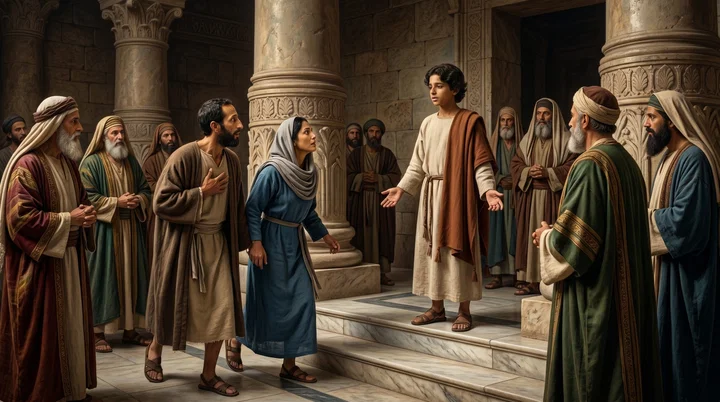
Cross-references
- Luke 9:45
But they understood not this saying, and it was hid from them, that they perceived it not: and they feared to ask him of that saying.
The disciples did not understand Jesus’ saying.
- Luke 18:34
And they understood none of these things: and this saying was hid from them, neither knew they the things which were spoken.
Both texts describe failure to understand Jesus’ words.
- Luke 2:41
Now his parents went to Jerusalem every year at the feast of the passover.
Jesus’ parents went to Jerusalem for the yearly feast.
- Luke 2:44
But they, supposing him to have been in the company, went a day’s journey; and they sought him among their kinsfolk and acquaintance.
The family discovers Jesus is missing during the journey.
Commentary
Each commentary is drawn from primary sources: the writings of Ellen G. White and Adventist pioneers and periodicals. Each commentary is separate. Its own words are not a quotation; follow the references to read the source passages.
Ellen G. White
20 sources
At the Passover when He was twelve, the age for taking part in the sacred feasts, Jesus remained in the temple among the teachers and answered His sorrowing parents by declaring He must be occupied with the business of His heavenly Father, not Joseph, thus revealing for the first time His understanding of His Sonship to God and the special work He had come to do.DA 75.1Ms 37, 1898, par. 6Ms 22, 1898, par. 13–14IRCUP 10.1 Joseph and Mary did not grasp His meaning, being only amazed, because they lacked deep insight into the prophecies and the solemn significance of the Passover and found it difficult to keep His divine mission before them while viewing Him in ordinary life as their child.LC1 26.1–27.2Ms 37, 1898, par. 6Ms 78, 1893, par. 40–452SP 35.1Ms 79, 1909, par. 15 Even so, Mary in great measure understood much of His import, knowing He meant Jehovah and was beginning to realize His relation to His heavenly Father, and she kept His sayings and pondered their meaning for the future although it was not yet clear to her.LC1 26.1–27.2Ms 37, 1898, par. 6Ms 145, 1906, par. 28–311RED 26.1–28.1 He then returned with them to Nazareth and remained subject and obedient to them for years, and His life of filial obedience stands as the pattern for every soul, showing that lack of understanding does not excuse disobedience and that any lowly post of duty can be made honorable by fidelity.Ms 37, 1898, par. 6Ms 145, 1906, par. 28–31Ms 22, 1898, par. 13–14Ms 181, 1897, par. 8–11Ms 79, 1909, par. 15
Setting and Saying
The saying belongs to Jesus' Passover visit to Jerusalem at twelve years old, the age when Hebrew boys became sons of the law and sons of God and were expected to take part in the sacred feasts.DA 75.1IRCUP 10.1 In the temple He sat among the doctors and learned teachers, listening to them and asking questions that threw great light into their minds.Ms 22, 1898, par. 13–14Ms 73, 1895, par. 6 Even as a child He was already doing the work He had come to do, revealing God, explaining God's word to Israel's leaders, and showing a new significance in the sacrifices and offerings.STE 67.2Ms 73, 1895, par. 6
The meaning of the feast was profound to Him while many observed it as a mere formality.DA 77.2 The temple rites were helping the mystery of His mission and the work He would do for the heirs of the covenant promises dawn upon Him.IRCUP 10.1 On that visit He realized He was indeed the Son of God with a special work before Him, and though God's Son He already felt the burden of His mission.Ms 22, 1898, par. 13–14
By saying He must be occupied with His Father's business He meant His heavenly Father Jehovah, not Joseph His earthly father.1RED 26.1–28.1 He pointed upward to show this, declaring His Sonship to God and the work He had come to do.IRCUP 10.3–4STE 67.2 As He spoke, divinity was revealed through His human appearance, divinity flashing through humanity, with the light and glory of heaven and the light of divinity shining from His face in a most solemn manner.Ms 37, 1898, par. 6Ms 22, 1898, par. 13–14 His answer showed for the first time that He understood His relation to God and was beginning to realize His relationship to His heavenly Father.Ms 145, 1906, par. 28–31IRCUP 10.3–4
Why They Misunderstood
Joseph and Mary did not, or at least did not fully, understand the saying He spoke to them in answer to Mary's sorrowful question why He had dealt so with them while they sought Him sorrowing.LC1 26.1–27.2Ms 37, 1898, par. 6Ms 145, 1906, par. 28–311RED 26.1–28.1 Though He pointed upward as He spoke of being occupied with His Father's business, they did not grasp that He was declaring His Sonship to God and the work He had come to do, and were only amazed at His answer.Ms 37, 1898, par. 6IRCUP 10.3–45MR 103.2–104.1 His answer showed for the first time that He understood His relation to God, yet Mary, though she believed He was Israel's Messiah, did not comprehend His mission.LC1 26.1–27.2Ms 37, 1898, par. 6IRCUP 10.3–4
They lacked a deep insight into the prophecies and into the solemn significance of the Passover, which would have helped them recognize the mission of the child entrusted to them.Ms 78, 1893, par. 40–45 Their ordinary view of Him as their own child made it difficult to keep His divine mission before them, and His stay in Jerusalem served as a gentle reminder of their duty and of the special trust God had placed in their care.2SP 35.1 Christ's own parents could not understand His life of perfect obedience as One who had laid off His royal robe and kingly crown to labor as the son of a poor family without offending in a single instance.Ms 79, 1909, par. 15 The Passover-visit account itself does not explain why His parents did not understand His saying.DA 77.2
Even so, Mary in a great measure understood much of the import of His words and profited by them, although their meaning was not yet clear to her.Ms 145, 1906, par. 28–311RED 26.1–28.12SP 33.2–34.1 She knew He did not mean Joseph His earthly father but Jehovah His heavenly Father.1RED 26.1–28.1 She recognized that He was beginning to realize His relationship to His heavenly Father.Ms 145, 1906, par. 28–31 Though divinity flashed through humanity and the light and glory of heaven illuminated His countenance, they were only amazed and did not grasp His meaning.5MR 103.2–104.1
Mary laid those words away in her heart, kept all these sayings, and pondered and reflected on their meaning for the future.LC1 26.1–27.2Ms 37, 1898, par. 6Ms 145, 1906, par. 28–311RED 26.1–28.1 She marked His words, His spirit, and His willing obedience to all their requirements.5MR 103.2–104.1 Joseph and especially Mary already kept ever before them the realization of His divine Fatherhood and instructed Him in accordance with the sacred character of His mission, yet understanding did not come then.5MR 103.2–104.1 Though Jesus was God's Son and already felt the burden of His mission, Mary kept His words in her heart although their meaning was not yet clear to her.1RED 26.1–28.1
What Followed After
Though His parents did not grasp His words about His Father's business, He went down with them to Nazareth and lived subject and obedient to them.Ms 37, 1898, par. 6Ms 145, 1906, par. 28–31Ms 22, 1898, par. 13–145MR 103.2–104.1 There He worked with His father as a carpenter and helped support His family.Ms 73, 1895, par. 6 He made His home in Nazareth for thirty years, unhonored and unknown among people proverbial for wickedness and considered the worst in Palestine, in a town of bad reputation from which no good was thought possible.Ms 181, 1897, par. 8–11
Even while subject to them He never lost the realization of His future work and the knowledge that He must labor to save the lost.Ms 22, 1898, par. 13–14 He kept faithful watch over every faculty lest Satan gain advantage, living in every action as the Son of God to represent the Father and to make others sons of God, losing no opportunity to work so that youth and adults would see the need to become intellectually qualified to be co-workers with God.Ms 22, 1898, par. 13–14 He waited eighteen years before entering public ministry while constantly ministering to others and speaking words of comfort and tenderness even in childhood, not like all children but with a constant inclination to the right that gratified His parents.5MR 103.2–104.1 He went from infancy to manhood without committing sin because the God of salvation protected Him, doing everything with all faithfulness and taking great pains, even breaking into songs of heaven until the children around Him were singing.Ms 77, 1910, par. 29
Their separation from Him for three days after the Passover prepared them for the later sorrow of His death, when He would be lost to them for three days.1RED 30.2 Afterward He would reveal Himself and be found by them, and their faith would rest on Him as the Redeemer of fallen humanity and their Advocate with the Father.1RED 30.2
His life of filial obedience was given as an example and was to be a pattern for every human soul, calling all to the same consecration to the will of God in order to see His salvation.Ms 145, 1906, par. 28–31Ms 79, 1909, par. 15 Lack of understanding did not excuse disobedience, for having laid off His royal robe and kingly crown to labor as the son of a poor family He lived without offending in a single instance.Ms 79, 1909, par. 15 By becoming a citizen of that lowly place and setting His feet on the paths the poor and neglected must tread, He as the Light of the world pours contempt on human pride of place, station, honor, and fame.Ms 181, 1897, par. 8–11 Though He might have made His home in places of renown, He who left the courts of heaven to live out a pure human character made His abode among those far down in popularity and morality, to demonstrate that any hard and lowly place, if it is the post of duty, can be made honorable by fidelity, leaving His followers who are compelled to live in lowly places no excuse for sin and for rough, hard, discourteous character.Ms 181, 1897, par. 8–11
Because He shared childhood and was once a little child, mothers should deal gently with little ones and for His sake honor them as a sacred charge belonging to God and loved by Him.Ms 34, 1899, par. 5 They are not to be indulged, petted, and idolized but to be taught to live a pure, noble life, with parents co-operating with God in helping them to form perfect characters.Ms 34, 1899, par. 5 His childhood teaches parents not to rule with an iron rod and unjust rule, but to want Christ who bore much, to sing the songs of heaven with pleasurable notes in the voice, and to have salvation every day.Ms 77, 1910, par. 29
Sources
Pioneers and periodicals
21 sources
The verse belongs to the youth of Jesus, when at twelve years old he went with his family to his first Passover at Jerusalem, was lost and found after three days in the temple listening to the teachers and astonishing them with his knowledge, and told his parents that he must be in his Father's house about his Father's business, which saying they did not understand.ST Jan 11, 1899ST Jan 29, 1894ST Dec 23, 1903ST Jun 17, 1913ST Aug 17, 1904 Mary knew he meant Jehovah and not Joseph his earthly father, and in great measure she grasped the import of his words and laid them away in her heart to ponder, though their meaning was not yet clear to her. They did not understand because they held a narrow mistaken idea of what that business involved, whereas at twelve years old he understood better than most men that his heavenly Father's work concerns both everyday needs and eternal welfare.ST Jun 15, 1904ST Mar 16, 1904 The account is evidence that he was truly human, passing through childhood and youth and growing in wisdom as a real human being who can sympathize with children in their trials.ST Sep 17, 1894RH Nov 14, 1854ST Jan 5, 1882ST Mar 12, 1896ST May 15, 1907 Though he already felt the burden of his mission as God's Son, he returned with them to Nazareth and remained subject and obedient to his parents, standing as a divine example of obedience for every youth and child.ST Sep 17, 1894ST Jun 17, 1913ST Mar 12, 1896ST Aug 27, 1912
Setting and Meaning
Luke 2:50 belongs to the youth of Jesus, whose central event is the visit to the temple when he was twelve years old.ST Sep 17, 1894ST Mar 16, 1904ST Jun 17, 1913 The record that he was twelve when found in the temple, alongside the age of thirty-three when he finished his mission on earth, gives definite ages for those events and shows that Scripture states his ages at those points even without recording the calendar date of his birth. At that age he understood better than most men what it meant to be about his heavenly Father's business.ST Mar 16, 1904
He had gone with his family from Nazareth to Jerusalem for the Passover, his first Passover.ST May 3, 1910 Under the Jewish custom and system a male at twelve could attend the festival, enter the privileges of manhood, and become a son of the law responsible to God.ST Jun 17, 1913ST May 3, 1910 After being lost by his parents, he was found after three days in the temple, listening to the teachers of the law and asking them questions and speaking with the learned teachers, while his mother had been searching anxiously for him.ST Aug 17, 1904ST May 24, 1910ST May 15, 1907 His knowledge of the prophets astonished the teachers.ST May 24, 1910
His saying was that he must be in his Father's house and about his Father's business, occupied with his Father's business.ST Jan 11, 1899ST Jan 29, 1894ST Dec 23, 1903ST Jan 11, 1899ST Jun 15, 1904 Mary and Joseph, his parents, did not understand the saying, reply, words, and meaning which he spoke to them in the temple as a boy when at twelve years old he so answered his mother.ST Jan 11, 1899ST Jan 29, 1894ST Dec 23, 1903ST Jan 11, 1899ST Jan 29, 1894 Mary knew he did not mean Joseph his earthly father but Jehovah, and in a great measure she understood the import of his words. She laid them away in her heart to ponder over in the future and profited by them, keeping his words although their meaning was not yet clear to her.
His parents did not understand because they held a narrow, mistaken idea of what that business involved, whereas God's work in the world concerns both people's everyday needs and their eternal welfare.ST Jun 15, 1904 Beyond his parents, as a child living among people he was not understood in what he said, and his words and teaching in the temple were not understood by those around him.ST May 24, 1910ST Apr 9, 1902 The passage does not further explain why his parents did not understand.ST Mar 16, 1904 The verse's setting also belongs to Nazareth, where Jesus spent his childhood and viewed the surrounding country during much of his life on earth.ST May 19, 1898
Humanity and Obedience
The birth and early life told here, with this saying they did not grasp, stands as proof that he was truly human.RH Nov 14, 1854 It belongs to the revealing of grace in the Lord becoming man, with the angels' jubilee song given to awaken the heart.ST Jan 5, 1882 He passed through every year of childhood and youth, growing through childhood and youth as a real human being, a child living among people who did not understand what he said.ST May 15, 1907ST Apr 9, 1902 In that passing through, he knows how to sympathize with children in their trials and difficulties.ST May 15, 1907
The account shows his development and increase in wisdom.ST Sep 17, 1894ST Mar 12, 1896 That growth joins with subjection and obedience to parents to teach that submission to God is the truest way to progress and true wisdom.ST Sep 17, 1894 The Boy Jesus in Luke 2:40-52 is to be studied with the whole connection from the annunciation to Mary to the permanent residence at Nazareth and with parallel passages, showing his development, his obedience to his parents, and his example to children.ST Mar 12, 1896
Though he was God's Son and already felt the burden of his mission and spoke of being occupied with his Father's business, he returned with them to Nazareth and lived with them subject and obedient to them.ST Aug 27, 1912 At twelve years old he had gone to Jerusalem and under the Jewish system become a son of the law responsible to God, yet although his parents did not understand what he had said he afterward remained subject to them.ST Jun 17, 1913 Until God called him to a wider field, his work was at home.ST Aug 27, 1912 That obedience to his parents was consistent with serving God because they were godly parents.ST Jun 17, 1913 Mary kept his words in her heart although their meaning was not yet clear to her.
That subjection stands as an example of obedience to parents for every youth and a divine example for children.ST Sep 17, 1894ST Aug 27, 1912 His life could also cover the failures of those who come to him.ST Aug 27, 1912 By the account of Jesus as a child, children should give service to God and obey him even when they do not understand what he says.RH Nov 21, 1907
The chapter must not be taught by taking every sentence alone apart from the general subject to draw a separate passing moral.ST Jan 5, 1882 Luke 2:41-52 records that he was twelve years old when found in the temple by his parents, giving a definite age for that event alongside the age of thirty-three when he finished his mission on earth, showing that Scripture states his ages at those points even without recording the calendar date of his birth.
Sources