Luke 2:51
And he went down with them, and came to Nazareth, and was subject unto them: but his mother kept all these sayings in her heart.
Translations
American King James Version, Webster Bible
And he went down with them, and came to Nazareth, and was subject to them: but his mother kept all these sayings in her heart.
King James Version, KJV Cambridge Paragraph Bible
And he went down with them, and came to Nazareth, and was subject unto them: but his mother kept all these sayings in her heart.
Revised Version, American Standard Version
And he went down with them, and came to Nazareth; and he was subject unto them: and his mother kept all these sayings in her heart.
and he went down with them, and came to Nazareth, and he was subject to them, and his mother was keeping all these sayings in her heart,
And he went down with them and came to Nazareth, and he was in subjection to them. And his mother kept all these things in her heart.
And he went down with them, and came to Nazareth, and was submitting himself unto them. And, his mother, was closely observing all these things in her heart.
Berean Standard Bible, Majority Standard Bible
Then He went down to Nazareth with them and was obedient to them. But His mother treasured up all these things in her heart.
And he went down with them and came to Nazareth. He was subject to them, and his mother kept all these sayings in her heart.
And he went down with them and came to Nazareth; and did as he was ordered: and his mother kept all these words in her heart.
Then hee went downe with them, and came to Nazareth, and was subiect to them: and his mother kept all these sayings in her heart.
Douay-Rheims (Challoner revision)
And he went down with them, and came to Nazareth, and was subject to them. And his mother kept all these words in her heart.
Pictures

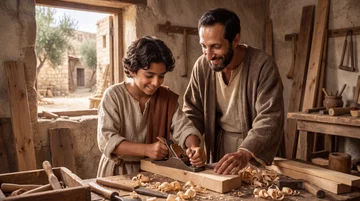




Cross-references 20 of 21
- Luke 2:40
And the child grew, and waxed strong in spirit, filled with wisdom: and the grace of God was upon him.
Both describe Jesus’ growth in wisdom and grace during his childhood.
- Mark 6:3
Is not this the carpenter, the son of Mary, the brother of James, and Joses, and of Juda, and Simon? and are not his sisters here with us? And they were offended at him.
Identifies Jesus as a carpenter, reflecting His work in Nazareth.
- Exodus 20:12
Honour thy father and thy mother: that thy days may be long upon the land which the LORD thy God giveth thee.
Jesus’ submission illustrates the command to honor parents.
- Ephesians 6:1
Children, obey your parents in the Lord: for this is right.
Jesus’ example illustrates children obeying their parents in the Lord.
- Luke 2:42
And when he was twelve years old, they went up to Jerusalem after the custom of the feast.
Marks Jesus’ Passover visit to Jerusalem at age twelve before his return to Nazareth.
- Luke 2:41
Now his parents went to Jerusalem every year at the feast of the passover.
Jesus’ parents went to Jerusalem for the yearly Passover feast.
- John 19:26-27
When Jesus therefore saw his mother, and the disciple standing by, whom he loved, he saith unto his mother, Woman, behold thy son!
Jesus’ tender care for his mother shows his regard for family.
- Philippians 2:7
But made himself of no reputation, and took upon him the form of a servant, and was made in the likeness of men:
Christ took a servant’s form, humbling himself in obedience.
- Luke 2:46-47
And it came to pass, that after three days they found him in the temple, sitting in the midst of the doctors, both hearing them, and asking them questions.
temple visit at twelve before return home
- John 1:46
And Nathanael said unto him, Can there any good thing come out of Nazareth? Philip saith unto him, Come and see.
Nathanael questions whether anything good could come from Nazareth.
- John 1:45
Philip findeth Nathanael, and saith unto him, We have found him, of whom Moses in the law, and the prophets, did write, Jesus of Nazareth, the son of Joseph.
Jesus was so little known at Nazareth during his years of humble subjection.
- Matthew 2:23
And he came and dwelt in a city called Nazareth: that it might be fulfilled which was spoken by the prophets, He shall be called a Nazarene.
Brief account of Jesus’ youth in Nazareth.
- Luke 2:19
But Mary kept all these things, and pondered them in her heart.
Mary pondered and treasured Jesus’ words in her heart.
- Luke 2:43-45
And when they had fulfilled the days, as they returned, the child Jesus tarried behind in Jerusalem; and Joseph and his mother knew not of it.
Jesus is missing from the family’s return journey after the Passover visit.
- 1 Peter 5:5
Likewise, ye younger, submit yourselves unto the elder. Yea, all of you be subject one to another, and be clothed with humility: for God resisteth the proud, and giveth grace to the humble.
Compared in explaining the meaning of subjection.
- Colossians 3:20
Children, obey your parents in all things: for this is well pleasing unto the Lord.
Both describe a child’s obedience to parents.
- Luke 2:1-7
And it came to pass in those days, that there went out a decree from Cæsar Augustus, that all the world should be taxed.
Records Jesus’ birth in Bethlehem under Augustus.
- Hebrews 13:17
Obey them that have the rule over you, and submit yourselves: for they watch for your souls, as they that must give account, that they may do it with joy, and not with grief: for that is unprofitable for you.
Compared in explaining the meaning of subjection.
- Hebrews 5:8
Though he were a Son, yet learned he obedience by the things which he suffered;
Jesus’ human life included obedience.
- 1 Peter 2:13-18
Submit yourselves to every ordinance of man for the Lord’s sake: whether it be to the king, as supreme;
Uses submission in the same sense as obedience.
Commentary
Each commentary is drawn from primary sources: the writings of Ellen G. White and Adventist pioneers and periodicals. Each commentary is separate. Its own words are not a quotation; follow the references to read the source passages.
Ellen G. White
57 sources
After His first Passover visit to Jerusalem at twelve years old and His talk with the doctors in the temple, He went down with Joseph and Mary and made His home with them at Nazareth.DA 75.1Ms 93, 1899, par. 17–18Ms 181, 1897, par. 8–11 There He was subject unto them in willing obedience to all their requirements, not seeking to control His own time or follow His own will.LC1 26.1–27.2Ms 37, 1898, par. 6 He rendered this obedience although He knew He was the Son of God, equal with God and Commander of heaven, whose divine power remained hidden and veiled in humanity.Ms 37, 1898, par. 6Ms 93, 1899, par. 17–18Lt 47, 1893, par. 26–27 He remained in that obscurity and subjection for the eighteen years until He was thirty, growing in wisdom and favor with God and men while faithfully working with His hands as a carpenter to help bear the burdens of His poor humble household.Ms 11, 1898, par. 9–11ST Aug 27, 1896RH Jul 2, 1908COS 36.1–2DA 82.2 His mother kept all these sayings in her heart, carefully treasuring His words and spirit and the events of the visit to ponder in the future, knowing that when He spoke of His Father He meant Jehovah.LC1 26.1–27.2Ms 93, 1899, par. 17–18STE 67.3
Passover Visit and Return
Luke 2:51 belongs to the boyhood Passover visit, when at twelve years old Jesus made His first visit to Jerusalem in keeping with the custom of taking a Hebrew boy to the feast when he reached the required age.DA 75.1Ms 93, 1899, par. 17–18 There He talked with the doctors in the temple, and afterward He went back down with Mary and Joseph to Nazareth and lived subject to them.DA 75.1Ms 93, 1899, par. 17–18 He worked with Joseph and learned the trade of a carpenter, a builder, and His earthly trade was significant because He was a character-builder and all His labors were perfect.Ms 93, 1899, par. 17–18 His answer about being about His Father's business flashed divinity through humanity with a lighted countenance, yet neither His parents nor the doctors understood those words, solemn awe fell upon them, and His mother kept all these sayings in her heart.Ms 93, 1899, par. 17–18
On the journey home Joseph and Mary halted for rest and discovered that Jesus was missing from their company.Ms 78, 1893, par. 40–45DA 80 His absence had brought them sorrow and made them feel their responsibility for Him.Ms 78, 1893, par. 40–45ST Oct 4, 1877 His question about being occupied with His Father's business mildly reproved them for losing sight of His mission, although His divine mission was already His first concern even as He returned and remained respectfully subject to their parental care.Ms 78, 1893, par. 40–45ST Oct 4, 1877 His time away and separation from them gently reminded them not to regard Him merely as their own child and not to take for granted the sacred trust of raising the Son of God, but to remember His sacred mission and the great responsibility and blessing of caring for Him.2SP 35.1ST Oct 4, 1877 His divinity was veiled in humanity and in an ordinary human life.2SP 35.1ST Oct 4, 1877 Mary did not fully comprehend His words, but she understood much of their meaning and kept them in her heart to ponder later.ST Oct 4, 1877
The feast held deep significance for the Son of God and was more than empty ceremony to Him.Ms 78, 1893, par. 40–45DA 77.2 The Passover was meant to lead His parents to consider its solemn meaning and the prophecies concerning Jesus.Ms 78, 1893, par. 40–45 For many, however, it had become mere form and ceremony.Ms 78, 1893, par. 40–45
He went down with them and made His home in Nazareth for thirty years, living there unhonored and unknown.Ms 181, 1897, par. 8–114T 109.2ST Feb 3, 1887 His early life there was quiet and unrecognized as He walked in retirement among ordinary peasants and laborers and ordinary people.4T 109.2ST Feb 3, 1887 Nazareth was among a people proverbial for wickedness and counted the worst in Palestine, a town thought unable to produce any good thing.Ms 181, 1897, par. 8–11 He began His great work of uplifting and regenerating the human soul there amid moral darkness and misery, setting His feet on the paths the poor and neglected must tread.Ms 181, 1897, par. 8–11 He chose that lowly place over places of renown to pour contempt on human pride of place, station, honor and fame, to live out a pure human character as one who left heaven and took humanity.Ms 181, 1897, par. 8–11 He thereby took away excuse for sin and for rough, hard, discourteous character from followers compelled to live in lowly places, and demonstrated that any hard and lowly place, when it is the post of duty, can be made honorable by fidelity.Ms 181, 1897, par. 8–11 His quiet life is an example of avoiding evil influences and the company of those who do not live rightly, and of guarding oneself humbly from harmful surroundings rather than assuming one is too strong to be affected.4T 109.2ST Feb 3, 1887
Submission to His Parents
After the teaching in the temple He went down with Mary and Joseph to Nazareth and was subject unto them in willing obedience to all their requirements.LC1 26.1–27.2Ms 37, 1898, par. 6Ms 145, 1906, par. 28–31Lt 47, 1893, par. 26–27 He did not seek to control His own time or follow His own will, and He obeyed even when a task did not suit His feelings.Ms 37, 1898, par. 6Ms 145, 1906, par. 28–31Lt 17, 1883, par. 2–8 His mother laid away His words, His spirit, His obedience, and the events to ponder over in the future.LC1 26.1–27.2Ms 37, 1898, par. 6
His subjection was rendered although He knew He was the Son of God with a special relation to His heavenly Father and His Father's work.Ms 145, 1906, par. 28–31Lt 47, 1893, par. 26–27COS 36.1–2 He who obeyed was the Commander of heaven, equal with God and Lord of the commandments.COS 36.1–2CE 179.2–3 When He spoke of being about His Father's business divinity flashed through humanity with light and glory on His countenance, and solemn awe fell upon those who heard.Ms 37, 1898, par. 6Ms 93, 1899, par. 17–18 Yet His divine power remained hidden and veiled in humanity as He accepted the ordinary duties of family life and helped bear its burdens.Lt 47, 1893, par. 26–272SP 35.12SP 101.2–102.2
He remained subject to parental control in obscurity and humiliation until thirty years of age, for the eighteen years before His public ministry.COS 36.1–22SP 101.2–102.2CTBH 78.2CE 179.2–33RED 5.1–6.1 He faithfully carried out a son's duties, hiding in His heart the great things brought to His mind by the temple service.COS 36.1–2DA 82.2 He waited submissively without haste for the appointed time to begin His work.COS 36.1–2DA 82.22SP 101.2–102.2
That earthly relation as a submissive son ended when the time came to go about His Father's business and begin His public work.2SP 101.2–102.23RED 5.1–6.1 He who had been submissive became her divine Lord.2SP 101.2–102.2 Mary then had no special claim, no special rights, and no elevation to His level by motherhood, and her only hope in common with all mankind was to believe Him as Redeemer of the world and yield Him implicit obedience, with no assurance of her future from relationship alone.2SP 101.2–102.2 Human love for family is sacred but must not become idolatrous love that lets ties of relationship draw hearts from God and from service, and no personal consideration or human sympathy was to direct His divine mission.2SP 101.2–102.2
His submission was consistent with real growth from the manger to Calvary, growing in wisdom and favor with God and people.Ms 11, 1898, par. 9–11ST Aug 27, 1896ED 106.3 At each stage of His development He was perfect, living with the natural grace of a sinless life, kept free from sin.Ms 11, 1898, par. 9–11Ms 110, 1905, par. 11STE 72.3 In childhood He did only the works of an obedient child, obeying the will and wishes of His parents in all things corresponding to the ability of a child, honoring them and carrying out their wishes in helpful ways.Ms 12, 1898, par. 12–14ED 106.3STE 72.3 This subjection to His parents was His missionary work in the home life, and through this right course of action His wisdom and ability constantly increased.Ms 11, 1898, par. 9–11Ms 12, 1898, par. 12–14
Mary Treasuring His Words
His mother kept all these sayings in her heart, carefully marking and treasuring His words, His spirit, His obedience, and the events surrounding the temple visit.LC1 26.1–27.2Ms 37, 1898, par. 61RED 26.1–28.15MR 103.2–104.1 She laid them away to remember and reflect on and to ponder over in the future, though she did not yet fully understand them.LC1 26.1–27.21RED 26.1–28.1RH Mar 13, 1900 After He went down with them to Nazareth and was subject unto them, she kept these things as matters for abiding reflection on their significance.LC1 26.1–27.2STE 67.3RH Mar 13, 1900
Joseph and Mary did not understand His saying about being about His Father's business.Ms 37, 1898, par. 6Ms 93, 1899, par. 17–181RED 26.1–28.1RH Mar 13, 1900 When He so answered with divinity flashing through humanity in light and glory on His countenance, solemn awe fell upon His parents and upon the doctors.Ms 37, 1898, par. 6Ms 93, 1899, par. 17–18 Yet Mary in great measure understood the import of His words and profited by them.1RED 26.1–28.1 She knew that when He spoke of His Father He meant Jehovah and not His earthly father Joseph.
She understood the significance of what she witnessed and treasured the sayings and events.Ms 145, 1906, par. 28–315MR 103.2–104.1 She kept ever before her the divine Fatherhood of her Son.5MR 103.2–104.1 His constant inclination to the right gratified His parents, and they instructed Him in accordance with the sacred character of His mission.5MR 103.2–104.1
Work and Obscurity at Nazareth
He made his home in Nazareth in the house of a peasant, a poor man, with parents who were lowly and poor and with few luxuries on the table in a humble household.COS 36.1–2FE 151.1–2CE 164.1–2CTBH 62.1–2CE 179.2–3 Joseph his earthly father was a carpenter, and his mother was a pure, pious virgin poor in earthly riches.COS 36.1–2Ms 34, 1899, par. 2 As soon as he was old enough he learned the trade of a carpenter, a builder, and worked with his hands with Joseph in the shop and at the bench.Ms 93, 1899, par. 17–18RH Jul 2, 1908COS 36.1–2FE 151.1–2CE 164.1–2 Faithfully and cheerfully he did his part to help support the family and bear its burdens for nearly thirty years, laboring as a perfect workman who took great pains in common tasks and did not use his divine power to make his labor easier.RH Jul 2, 1908COS 36.1–2CTBH 62.1–216MR 121.1Ms 34, 1899, par. 2
His early years were useful years spent helping his mother at home and working at the carpenter's bench under parental discipline.RH May 6, 1909RH Jun 2, 19107MR 19.3–20.2Ms 33, 1908, par. 2MH 349.2–350.1 That service in the home and at the bench fulfilled his commission from God just as truly as his later public ministry.RH May 6, 1909RH Jun 2, 19107MR 19.3–20.2Ms 33, 1908, par. 2 His subjection to his parents was his missionary work in the home life, and even in childhood he constantly ministered to others and spoke words of comfort and tenderness to young and old.RH May 6, 1909Ms 12, 1898, par. 12–14MH 349.2–350.1 His early life was quiet and simple, without extravagance, display, outward show, or pomp, and unrecognized as he walked among ordinary peasants and laborers.RH Jul 2, 190810MR 253.3–254.24T 109.2 He rejected the schools of his day and was educated directly from Heaven-appointed sources.FE 439.3STE 166.1–210MR 253.3–254.2
His mother was his first human teacher, teaching him heavenly things from her lips and from the scrolls of the prophets, while his Father in heaven continually taught him through Scripture, nature, and life experience.FE 439.3STE 166.1–2MH 399.1–400.18T 222.2–223.210MR 253.3–254.2 From an early age he formed his character and acted for himself.FE 439.3STE 166.1–2 His subjection and toil show that labor is not degradation but honor and dignity.RH Jul 2, 1908CE 179.2–316MR 121.1Ms 34, 1899, par. 2 The Prince of heaven laid aside his kingly crown to live a life of toil and enter into sympathy with humanity, and by earning his living through hard physical work he honored physical labor and taught its dignity by his practical life.RH Jul 2, 1908CTBH 78.2CE 179.2–316MR 121.1Ms 34, 1899, par. 2
That example teaches diligence in labor and provision for those entrusted to care, and gives encouragement and strength to every person in performing the commonplace duties of life.RH Jul 2, 1908CTBH 78.2CE 179.2–316MR 121.1FE 142.1–2
Pattern for Family Life
He gives a perfect pattern of deference and respect to age and of filial obedience as a loving son, returning with Mary and Joseph to Nazareth and living willingly subject to all their requirements after revealing His divine mission in the temple.Ms 37, 1898, par. 6Ms 145, 1906, par. 28–31STE 67.3 His obedience is left as an example for childhood, youth, and manhood, teaching children and youth to honor and respect their parents and to cooperate with them willingly, cheerfully, and from right motives.Ms 37, 1898, par. 6Lt 47, 1893, par. 26–27STE 67.3 Obedience is an element of true greatness, shown when He who knew His special relation to His heavenly Father still accepted the ordinary duties of family life and helped bear its daily burdens.Ms 145, 1906, par. 28–31Lt 47, 1893, par. 26–27 His mother treasured these sayings, His words, His spirit, His obedience, and the events surrounding the visit, understanding their significance and keeping them in her heart.Ms 37, 1898, par. 6Ms 145, 1906, par. 28–31STE 67.3
True education is to study His pure, holy, undefiled life in submission, to follow in His footsteps, to act as He acted, and to maintain the great principles He maintained.Ms 11, 1898, par. 9–11 His character is the standard and the brightest example the world has seen for youth and students, rather than the greatest and most learned men who know not God.Ms 11, 1898, par. 9–11 That education teaches most success in the service of God and reverence and worship to God the Father and His Son Jesus Christ alone.Ms 11, 1898, par. 9–11
Children are to follow Him not by devoting time to amusement or easy indulgence but by studying the Word of God and growing in knowledge of its truths.Lt 53, 1898, par. 27–28 They are to delight in the beautiful things of nature and to draw lessons from household affection and from familiar natural things to teach others about God.Lt 53, 1898, par. 27–28 Like Him as a child they are to be pleasant, truthful, kind, patient, and obedient in all words and actions, loving to obey those who have charge over them and never making them sorry by wrongdoing.Lt 69, 1892, par. 1–2Lt 69, 1892, par. 4 They are to be the Lord's own, happy and cheerful and obedient, a precious comfort to all in the home, praying to Him and telling Him their troubles so that they do right and make everyone in the house happy.Lt 69, 1892, par. 1–2Lt 69, 1892, par. 4 His example as an obedient child working at the simple trade of a carpenter shows that ordinary duties can be done faithfully and cheerfully for Him, that faithfulness in small responsibilities prepares for greater ones, and that everyday duties like washing dishes and sweeping floors are to be done promptly, without waiting to be told, with fidelity as a pleasure and not a burden.Lt 3, 1881, par. 7–84MR 95.4
Parents are to show tender loving care rather than ruling with an iron rod and unjust harshness, with fathers showing tender love through care for their children.ST Aug 27, 1912 Mothers are to feel the sacredness of their mission, to honor God by faithful performance of duty and right principles of temperance rather than vying with wealthy neighbors in appearance, and to deal gently with little ones as God's property and sacred charge to be taught purity rather than indulged or idolized.CE 179.2–3 Young children are best kept in the Christian home as helpers, where study hours ended they help parents and older members help the younger, learning to follow Him, to help His mother with home duties, and to drink in the gladness of His life.7MR 19.3–20.2Ms 33, 1908, par. 2 His useful early years helping at home and working at the carpenter's bench under parental discipline fulfilled His commission just as truly as His later public ministry.7MR 19.3–20.2Ms 33, 1908, par. 2 Parents are to present before their children on the Sabbath, to make it the best day of the seven, Christ as a babe in Bethlehem who became a child obedient to father and mother and a youth industrious in helping to support the family, one who knows the trials, temptations, weariness, joys and happiness of youth.Ms 57, 1897, par. 21–224MR 105.2–3
His humility did not consist in a low estimate of His own character and qualifications, but in adapting Himself to fallen humanity in order to raise them up with Him to a higher life.CE 179.2–3 His life therefore calls disciples to humility and self-sacrifice for the good of others instead of striving to exalt self above others, with diligence in labor and provision for those entrusted to care.CE 179.2–3 His filial love in daily toil, by which for nearly thirty years He helped bear the burdens of His home, continued even in His final agony in care for His mother, teaching thoughtful care and tender sympathy and provision for parents.DA 751.5–752.1 His early life in Nazareth was quiet, retired, and unrecognized among ordinary peasants and laborers, teaching humble guarding against evil influences and the company of those who do not live rightly rather than assuming strength to be unaffected.4T 109.2ST Feb 3, 1887 That obedient, humble home life, learning a trade and working with His own hands in simple garb as a common laborer, prepared Him to go forth to His mission as a genuine medical missionary exerting a blessing, transforming influence on all He contacted.10MR 253.3–254.2
Sources
Pioneers and periodicals
76 sources
After being found in the temple at twelve during the Passover visit, He went down with Mary and Joseph to Nazareth and lived in submission to them for about eighteen years until about thirty, while His mother treasured and pondered all those sayings and events in her heart.ST Dec 23, 1903ST Sep 17, 1894ST May 12, 1914ST Mar 16, 1904
Being subject to them means He lived in willing, humble obedience to their rightful authority, though He was the Son of God and conscious of His heavenly Father's business, honoring His earthly parents while putting God first when their claims are distinguished.ST Jan 11, 1899ST Jan 11, 1899RH Dec 30, 1902ST Jun 17, 1913
Those quiet years were not empty but purposeful, spent in lowly household duties and work with His hands at the carpenter's bench, learning not from earthly schools or rabbis but from His mother, the Scriptures, and God through nature, and fulfilling His Father's business just as truly as in His later preaching.RH Jul 2, 1908RH Sep 19, 1912ST May 12, 1914RH Nov 19, 1908ST Jun 14, 1899
His subjection was perfect conformity to God's law, especially the command to honor father and mother, lived as a real child sharing the trials and temptations of youth, and it stands as the divine standard and example for children and youth to obey and serve parents as service to God.ST Jun 23, 1881ST Sep 17, 1894ST Jan 28, 1897ST Jan 29, 1894
Return to Nazareth Setting
After He was found in the temple at age twelve during the Passover visit to Jerusalem, Jesus went down with Mary and Joseph and came to Nazareth.ST Dec 23, 1903ST Sep 17, 1894ST Jan 29, 1894ST Jan 11, 1899 After explaining His duty to His heavenly Father, He returned with His parents and submitted to their wishes.ST Jan 11, 1899 His mother treasured the events and sayings surrounding His time in Jerusalem, laying them away to ponder over in the future.ST Dec 23, 1903ST Sep 17, 1894ST Jan 11, 1899
By Jewish custom a boy at about twelve or thirteen became accountable to God.ST Jun 17, 1913ST Aug 20, 1912 At that age he became a son of the law, receiving special instruction in the law and religion, becoming peculiarly responsible to God with the obligations required of those older.ST May 22, 1907ST Aug 20, 1912 It was the critical age when he consciously took up the work of forming character and serving God.ST Jan 10, 1906 Jewish boys were not expected to attend the feasts before that age.ST May 22, 1907
He remained at Nazareth in submission to His parents for about eighteen years, until about age thirty when He began His public ministry.ST May 12, 1914ST Mar 16, 1904 Apart from growing in wisdom, stature, and favor with God and people, the Bible says practically nothing else about those years.ST May 12, 1914 This verse together with the following verse gives the necessary account of His whereabouts and conduct between twelve and thirty.ST May 20, 1913 He was not serving as priest or prophet nor away in India or other mystical centers, but living a righteous life at home that prepared Him for future service.ST May 20, 1913
He lived a quiet, secluded, ordinary life, doing nothing to betray His divinity but living so naturally and obediently at home.ST Jan 11, 1899 Even His own brothers discerned in Him no mark of His calling.ST Jan 11, 1899 He remained so unknown that Nathanael, living only a few miles away in Cana, had never heard of Him until pointed out as the Messiah.ST Jan 11, 1899 His silence is striking, for though possessing complete knowledge He spoke little and spent much time thinking and meditating.RH Nov 16, 1916
Nazareth and its surrounding landscape was the setting of much of His earthly life, where He lived with His parents for thirty years.ST Feb 3, 1887ST May 19, 1898 There He lived in retirement among ordinary people, unrecognized and unhonored.ST Feb 3, 1887 His life there demonstrates that a holy life is possible even in unfavorable surroundings.ST Aug 17, 1904
The verse belongs to the larger account of Christ's grace in becoming man and to the whole scheme of His life, which must be kept in mind to give each detail its place and meaning.ST Jan 5, 1882ST Dec 16, 1897 Luke 1-3 is to be studied in connection with Jesus and John as marking the fulfillment of the Old Testament Gospel promises.ST Dec 16, 1897 It is not to be taught as a collection of isolated sayings with brief moral lessons.ST Jan 5, 1882 Its mention of His history, including the memorable event of His birth, does not make His birth day the Lord's day, because He never claimed it as His holy day.ST Apr 6, 1882
Mary Kept the Sayings
After the Passover visit and the finding in the temple at Jerusalem, his mother kept all these sayings and events in her heart, treasuring and preserving what she had witnessed and heard to lay away and ponder over in the future.ST Dec 23, 1903ST Sep 17, 1894ST Jan 11, 1899 She treasured the things that had happened and been said, holding the words about his duty to his heavenly Father as matters for continued reflection after the return to Nazareth.RH Mar 13, 1900ST Dec 23, 1903ST Jan 11, 1899 Her keeping was a preserving and treasuring that gave her an unusually deep knowledge of his life and teaching.
She knew that when he spoke of his Father he did not mean his earthly father Joseph but Jehovah. Though his words were not fully comprehended, she in great measure understood their import and profited by them.ST Dec 9, 1880ST Oct 4, 1877 She understood much of what he had said about his Father's work, yet did not fully comprehend it, and kept his words in her heart to ponder later.RH Mar 13, 1900ST Dec 9, 1880ST Oct 4, 1877 In this way what the parents did not yet understand remained with her as matters for reflection.RH Mar 13, 1900
Her listening, pondering, and treasuring show the tender personal bond between Jesus and Mary.RH Dec 15, 1859RH Sep 16, 1902 She treasured his words in her heart even as she grieved over the destiny before him, while he grew without people understanding the mission he had come to fulfill.RH Dec 15, 1859 His obedience in boyhood and his words about his Father's business together display that tender bond and provide an example for sons and mothers.RH Sep 16, 1902 His separation from them and return to their care gently reminded them not to take for granted the sacred trust of raising the Son of God, whose divinity was veiled in an ordinary human life although his divine mission was already his first concern.ST Oct 4, 1877
Meaning of Subjection
To be subject unto them was to go down with them to Nazareth and live in obedience and submission to their wishes and rightful authority.ST Jan 11, 1899ST Jan 11, 1899ST Jul 17, 1907 Subjection in this sense ordinarily means obedience to those to whom rightful obedience is owed, yet always as far as duty to God permits.ST Jul 17, 1907RH Nov 20, 1860ST Aug 13, 1896 In that spirit He pleased His parents and His associates, yielding in matters of no moral consequence, with agreeable conduct and manners.RH Nov 20, 1860
Though He was the Son of God, far wiser than the teachers in the temple and conscious of being about His Father's business, His obedience at Nazareth was voluntary and humble.ST Jan 28, 1897ST Jan 29, 1894ST Jun 14, 1899 He did not count obedience beneath His dignity, but lived as a child subject to Joseph and Mary, ready at a call to duty and finding joy in being useful.RH Dec 30, 1902RH Aug 12, 1875 That usefulness took the form of faithful ordinary household tasks given Him, such as fetching water and caring for the house, so that faithfulness was shown in commonplace duties.RH Dec 30, 1902ST Jul 16, 1894 This humble, childlike service is the religion of childhood and at the same time the pattern for mature people, teaching children cheerful obedience to those over them.RH Dec 30, 1902RH Aug 12, 1875ST Jan 29, 1894 The same life shows that Christ dwelling in a person produces obedience to parents and reverence for authority, so that believers are saved by His life living in them rather than by a life of self.ST Jan 28, 1897ST Jan 29, 1894
He did not remain in Jerusalem for further rabbinical instruction but returned to Nazareth and was subject to His parents until the time of His baptism.ST Jun 14, 1899 His wisdom and growth came not from earthly schools, which He never attended, but from His mother as His first human teacher under the control of the Spirit and from God as His Teacher through converse with nature, with the grace of God upon Him.ST Jun 14, 1899 His return was thus a rejection of the degenerate teaching of the Levites and rabbis, whose cold formalism, endless sophistries, and lifeless tradition would have starved rather than fed His life.ST Jun 14, 1899
Though at twelve He understood being about His heavenly Father's business, He accepted His parents' authority and entered normal development, growing in wisdom and stature and in favor with God and people.ST Aug 27, 1896ST Mar 16, 1904ST Mar 12, 1896 His subjection at Nazareth was part of that steady growth, and He was content to do ordinary work until about thirty years of age.ST Aug 27, 1896ST Mar 16, 1904 In this His obedience stands as the example to children.ST Mar 12, 1896
Because His parents were godly, being still subject to them in all things after becoming accountable to God at twelve meant giving the fullest service to God.ST Jun 17, 1913 He honored His earthly parents while living in loyalty to His heavenly Father, displaying devotion and integrity in daily life at the carpenter's bench without sacrificing principle.ST Nov 14, 1906 That loyalty set the limit: subjection to human authority must remain consistent with obedience to God, so when godly parental authority and God's claim are distinguished, God comes first.ST Jun 17, 1913ST Aug 13, 1896 Therefore He refused human traditions that conflicted with God's law even when urged by His parents to follow them, and obedience to God in such a case is not to be done in a spirit of rebellion when one is old enough, truly converted, and knows God's will.ST Jun 17, 1913 His dutiful subjection as a child to Joseph His foster father does not mean He remains subject to Joseph in heaven.ST Dec 4, 1893
From childhood His humility and obedience were unbroken and consistent, so that no one could recall any act of disloyalty or disobedience toward them.ST Aug 16, 1910
Humble Work at Home
At Nazareth he lived as a helpful, obedient child doing lowly household duties, helping his mother at home, carrying water, and working with his hands at the carpenter's bench with Joseph.RH Jul 2, 1908RH May 6, 1909RH Sep 19, 1912ST Dec 23, 1903GSAM 60.2 He was diligent, skilled, temperate and faithful with no idle moments, preserving physical strength for useful labor and working with the same perfection that marked his character.RH Jul 2, 1908RH Sep 19, 1912ST Jan 10, 1906 Through outdoor work and labor at the bench and through temperate living he kept physical health, while he grew mentally and spiritually by feeding on God's Word, learning diligence, application and precision.RH Sep 19, 1912ST Jan 10, 1906 He remained a dutiful member of the household and supported it by his labor through his youth until about age thirty, and his obedience at home did not keep him from doing good to others.RH Jul 2, 1908ST Dec 23, 1903GSAM 60.2
His wisdom and growth came not from earthly schools, which he never attended, nor by remaining for further rabbinical instruction after astonishing the doctors in the temple court at age twelve with questions and answers about the Messiah.ST Jun 14, 1899 His mother was his first human teacher under the control of the Spirit, and from her and the prophetic scrolls he learned of heavenly things and the lessons of the Holy Word.ST Jun 14, 1899ST Apr 15, 1897 God was his Teacher through converse with nature, with the grace of God upon him.ST Jun 14, 1899 His return to Nazareth to be subject to his parents until his baptism shows rejection of the degenerate teaching of the Levites and rabbis, whose cold formalism, endless sophistries and lifeless tradition would have starved rather than fed his life, and his obedience was voluntary despite his superior wisdom and consciousness of his Father's business.ST Jun 14, 1899
His helping his mother at home and working as a carpenter fulfilled his commission and his Father's business just as truly as his later public ministry, so his mission began in childhood.RH May 6, 1909ST May 12, 1914RH Nov 19, 1908 His quiet years were not empty but purposeful, known and directed by God, an ordinary secluded life of daily duties in obedience showing that faithful work need not be publicly seen to be blessed.ST Aug 27, 1912ST Nov 21, 1892RH Dec 19, 1871 They were a period of preparation in which he studied and became acquainted with the Scriptures, helped his father in the shop, and patiently waited until his heavenly Father indicated it was time to begin ministry, even while seeing suffering he had power to relieve.ST May 12, 1914ST Jan 11, 1899RH Dec 19, 1871 His obedience at home before God called him to a wider field was part of God's plan for him to cover the failures of those who came to him.ST Aug 27, 1912
He spent about thirty years in Nazareth in commonplace little duties of uneventful routine, in humility, toil, obscurity, submission, contentment and prayer, living the life he afterward taught in sinless childhood, boyhood, youth and manhood.ST Nov 21, 1892ST Jan 11, 1899ST Dec 12, 1895 He began to do before he began to teach, doing nothing to betray his divinity but living so naturally and obediently that even his own brothers discerned no mark of his calling.ST Jan 11, 1899ST Dec 12, 1895 This was cheerful, gentle patience and truly emptying self, giving a pattern for daily life in Jesus of Nazareth as well as in the suffering of the cross, and an example for most people who must imitate him in humble routine rather than in public ministry.ST Aug 27, 1912ST Jan 11, 1899ST Dec 12, 1895
Law Humanity and Divinity
His being subject at Nazareth in childhood and youth was part of His perfect conformity to God's law, whose requirements His whole life embodied.ST Jan 28, 1897ST Jan 29, 1894ST Sep 11, 1884 Though far wiser than the teachers and conscious of His identity as the Son of God, He willingly returned with Mary and Joseph and lived in humble, childlike obedience to them.ST Jan 28, 1897ST Jan 29, 1894ST Jan 29, 1894 That obedience fulfilled the command to honor father and mother, which He kept to the end by caring for His mother amid His own suffering on the cross.ST Jun 15, 1904ST Sep 11, 1884 For eighteen more years after understanding His mission at twelve, He made subjection to His parents and faithful work in the lowly duties of home life His Father's business, showing that ordinary duties of school, work, and helping support the family belong to faithful service to God.ST Jan 29, 1894ST Jun 15, 1904 Christ dwelling in a person puts God's law in the heart and produces obedience to parents and reverence for authority, so that its righteousness is shown in the life, and believers are saved by His life living in them rather than by a life of self.ST Jan 28, 1897ST Jan 29, 1894ST Jan 29, 1894
At Nazareth He lived and loved as a man, revealing the human side of one person in whom both the human and the divine were revealed, with the divine dwelling in and controlling the finite.RH Jul 6, 1916RH Jul 6, 1916 In Him God is manifested as He is and man is revealed as he should be, after the race had lost knowledge of the true man as certainly as it had lost knowledge of God.RH Jul 6, 1916RH Jul 6, 1916 From His baptism to the cross the power of love, both human and divine, was manifested through God with us, with Nazareth displaying human love and Calvary displaying divine love, where He loved and died as God.RH Jul 6, 1916RH Jul 6, 1916 His growth in wisdom and stature in youth parallels Moses being learned in all wisdom, marking Him as the prophet like Moses in superior degree.RH Feb 19, 1861
He was a real child sharing the ordinary disappointments, trials, and temptations that try children and youth, including useful work and the trials of about ten years of age.ST Jun 23, 1881ST Apr 9, 1902 When tried He answered with His Father's Word, firm against temptation while thoughtful, helpful, and kind, and children of that age should do as He would do.ST Jun 23, 1881ST Apr 9, 1902RH May 4, 1911 Because He experienced these things, children and youth can bring their griefs and disappointments to Him and find a sympathetic friend who will help them.ST Jun 23, 1881 His obedient life provides the pattern for children and young people and an example of perfect manhood, able to save from sin and lead to higher ground.ST Jun 23, 1881ST Jan 29, 1894RH May 4, 1911
Example for Children
After the temple visit Jesus went back with Mary and Joseph to Nazareth and lived subject and obedient to them, and that obedience stands as the divine example and standard for children and young people to obey, honor and respect their parents.RH Jul 2, 1908ST Sep 17, 1894ST Mar 12, 1896ST Aug 27, 1912 He set this pattern even at twelve and continued it for eighteen more years until about thirty, showing normal growth in wisdom and stature while living a righteous home life that prepared Him for wider service rather than serving as priest or prophet or going away to India or other distant centers.ST Sep 17, 1894ST May 20, 1913ST Mar 12, 1896 Before God called Him to a wider field His assigned work was at home, including labor as a carpenter to earn His living by physical toil, which honored ordinary work and was part of God's plan to cover the failures of those who come to Him.RH Jul 2, 1908ST Aug 27, 1912 His mother treasured and kept these sayings and events in her heart.ST Sep 17, 1894ST May 20, 1913
True obedience as shown in Him is willing and cheerful submission in will and action to those over them, not counting obedience beneath dignity even though He was the Son of God and far wiser than the teachers.RH Aug 12, 1875ST Jan 28, 1897RH Aug 13, 1914 It does not destroy the child's will or enslave him, but trains and strengthens the will into harmony with the parent's way, so that the child can share the parent's interests without feeling tyrannized or losing individuality.RH Aug 13, 1914 Those who have His life in them honor father and mother without finding it burdensome, and His pattern includes childhood self-control and mastery of appetite, thoughtfulness for a mother's feelings, gentleness and kindness to others, and self-reliant dependence on God with trust in His leading to do right and rule one's own spirit under all circumstances.ST Jan 28, 1897RH Apr 2, 1914RH Aug 26, 1915RH Dec 31, 1914
Parents are to begin this training early and continue it patiently and consistently, while bringing their own wills into harmony with God's will.RH Aug 13, 1914 Fathers are to show His tender love by human agency, so that His gentleness makes them great.ST Aug 27, 1912ST May 14, 1894 He is the model of perfection in outward manner and inward grace, meek and gentle of heart, never speaking an unkind or discourteous word and showing no irritated temper, enjoying the happiness of children and youth, and only divine grace can correct objectionable tendencies so that parents and children reflect Him.ST May 14, 1894 His obedient childhood blessed His household and made home life a form of missionary service for children to follow.ST Sep 17, 1894
Serving and obeying parents in this way is serving God, and children owe such service and obedience both to parents and to God.RH Nov 21, 1907RH May 21, 1914 Though He understood His mission at twelve, He made obedience to His parents and faithful work in the lowly duties of home His Father's business for those eighteen years, fulfilling the command to honor father and mother to the end by caring for His mother even in His suffering on the cross. As children grow they share with parents the duty of making a happy Christian home, and honoring a mother brings peace and joy in retrospect, while even loving service is a gift children can give.RH Nov 19, 1908RH May 21, 1914
Though His divine mission was being revealed, He lived as a helpful and obedient child at home for Christians to imitate.ST Apr 29, 1908 His faithfulness appeared in commonplace duties given by His parents, such as fetching water and caring for the house, and in daily devotion and integrity at the carpenter's bench without sacrificing principle while remaining loyal to His heavenly Father.ST Jul 16, 1894ST Apr 29, 1908ST Nov 14, 1906
Lessons for Faithful Living
He spent long patient years at home in little Nazareth working in humility, toil, obscurity, submission, contentment and prayer, listening to the voice of God and living a sinless childhood, boyhood, youth and manhood as an eternal example to all.ST Dec 12, 1895 Those first thirty years of commonplace little duties of uneventful routine, when He began to do before He began to teach, are the pattern for most people, since only a few can follow Him in public ministry but most must follow Him in humble routine.ST Dec 12, 1895 That life teaches contentment with a humble lot, readiness to listen and follow orders whether to go forward or be still, the exercise of faith, hope and charity as a gentle soothing influence, and faithful fighting of the silent noiseless battle of life that develops character to His glory.ST Dec 12, 1895 Humility and willingness to take a lowly place lead to honor while pride brings low, and children should follow His willing return to lowly Nazareth by accepting a mother's direction and remaining in duty until called elsewhere.ST Aug 20, 1894ST Dec 12, 1895
His ordinary secluded life of carrying out daily duties in obedience was still devoted to doing God's will and was known and directed by God, showing that faithful work need not be publicly seen to be blessed or meaningful.ST Nov 21, 1892 His quiet retirement among ordinary people, unrecognized and unhonored, exemplifies avoiding evil influences and guarding from harmful surroundings.ST Feb 3, 1887ST Nov 21, 1892
His secluded life at Nazareth to age thirty as a carpenter was preparation for His future work, meeting the trials of life in a humble home while growing constantly in the fear of God as obedient, gentle and patient.ST Feb 13, 1896 Every act of that life is a worthy object of study and an object lesson illustrating God's love, power and wisdom, with no act or word void of power, and the brief record is wonderfully comprehensive.ST Feb 13, 1896 His growth in wisdom and stature included physical health through temperate living, outdoor work and labor at the carpenter's bench, and mental and spiritual growth through feeding on God's Word, which can work in other children as they and their parents cooperate with God.ST Jan 10, 1906 The discipline of His earthly life as a diligent worker who did not avoid care or responsibility formed strength and energy of character to be developed in others, and His thirty years of faithfully working at the bench and sharing family burdens gives His followers strength to serve faithfully in their own homes.ST Mar 3, 1909ST Jan 10, 1906ST Sep 24, 1902
The scant record of His words during the first thirty years is striking because He possessed complete knowledge and could have spoken of every mystery, yet He spoke little and spent much time thinking and meditating, teaching restraint in speech.RH Nov 16, 1916 By obeying His earthly parents He was carrying out His heavenly Father's business in harmony with the command to honor father and mother, showing that ordinary duties of school, work and helping support the family belong to faithful service to God.RH Nov 16, 1916ST Jun 15, 1904
His humble submission in readiness to answer calls to duty, help with household tasks and find joy in being useful is the religion of childhood and a model for mature people too.RH Dec 30, 1902 His early life in the humble Nazareth home included the family training that formed part of His childhood, while His mother treasured and kept in her heart what she had heard and witnessed.RH Oct 30, 1900
Sources