Luke 2:49
And he said unto them, How is it that ye sought me? wist ye not that I must be about my Father’s business?
Translations
And he said to them, How is it that you sought me? knew you not that I must be about my Father’s business?
King James Version, KJV Cambridge Paragraph Bible
And he said unto them, How is it that ye sought me? wist ye not that I must be about my Father’s business?
And he said to them, How is it that ye sought me? knew ye not that I must be about my Father's business?
And he said unto them, How is it that ye sought me? wist ye not that I must be in my Father’s house?
And he said unto them, How is it that ye sought me? knew ye not that I must be in my Father’s house?
And he said unto them, 'Why [is it] that ye were seeking me? did ye not know that in the things of my Father it behoveth me to be?'
And he said to them, Why [ is it] that ye have sought me? did ye not know that I ought to be [occupied] in my Father's business?
And he said unto them—Why was it that ye were seeking me? Perceived ye not, that, in the courts of my Father, I must needs be?
Berean Standard Bible, Majority Standard Bible
“ Why were you looking for Me?” He asked. “ Did you not know that I had to be in My Father’s house?”
He said to them, “ Why were you looking for me? Didn’ t you know that I must be in my Father’s house?”
And he said to them, Why were you looking for me? was it not clear to you that my right place was in my Father's house?
Then said he vnto them, Howe is it that ye sought me? knewe ye not that I must goe about my Fathers busines?
Douay-Rheims (Challoner revision)
And he said to them: How is it that you sought me? did you not know, that I must be about my father’s business?
Pictures

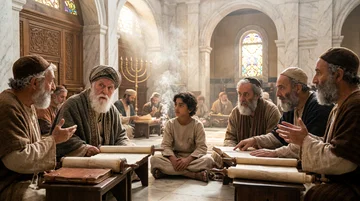

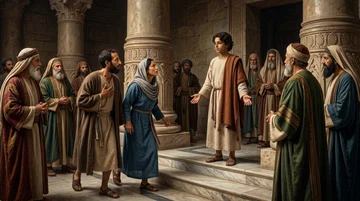
Cross-references 20 of 25
- John 4:34
Jesus saith unto them, My meat is to do the will of him that sent me, and to finish his work.
Jesus identifies doing his Father’s will as his sustaining work.
- Psalms 40:8
I delight to do thy will, O my God: yea, thy law is within my heart.
Jesus’ commitment to His Father’s work reflects delight in doing God’s will.
- Luke 1:32-33
He shall be great, and shall be called the Son of the Highest: and the Lord God shall give unto him the throne of his father David:
The angel foretold Jesus’ divine sonship and messianic mission.
- John 2:16
And said unto them that sold doves, Take these things hence; make not my Father’s house an house of merchandise.
Jesus calls the temple his Father’s house in both texts.
- John 6:38
For I came down from heaven, not to do mine own will, but the will of him that sent me.
Jesus says he came to do the will of the Father who sent him.
- John 9:4
I must work the works of him that sent me, while it is day: the night cometh, when no man can work.
Both make doing the Father’s work Christ’s necessary purpose.
- John 17:4
I have glorified thee on the earth: I have finished the work which thou gavest me to do.
Jesus completes the work his Father gave him.
- John 7:16
Jesus answered them, and said, My doctrine is not mine, but his that sent me.
Jesus identifies his teaching as coming from the Father.
- Matthew 10:37
He that loveth father or mother more than me is not worthy of me: and he that loveth son or daughter more than me is not worthy of me.
Christ’s work and claims take priority over earthly family ties.
- Luke 2:43-44
And when they had fulfilled the days, as they returned, the child Jesus tarried behind in Jerusalem; and Joseph and his mother knew not of it.
Gives the setting of Jesus remaining behind and His parents beginning their search.
- Luke 2:42
And when he was twelve years old, they went up to Jerusalem after the custom of the feast.
Places Jesus’ temple visit at age twelve during the feast.
- Luke 2:41
Now his parents went to Jerusalem every year at the feast of the passover.
Begins the account of Jesus’ visit to Jerusalem for Passover.
- John 14:10
Believest thou not that I am in the Father, and the Father in me? the words that I speak unto you I speak not of myself: but the Father that dwelleth in me, he doeth the works.
Jesus says the Father dwelling in him does the works.
- John 5:43
I am come in my Father’s name, and ye receive me not: if another shall come in his own name, him ye will receive.
Both speak of Jesus acting in his Father’s name and service.
- John 12:49
For I have not spoken of myself; but the Father which sent me, he gave me a commandment, what I should say, and what I should speak.
The Father directs what Jesus is sent to say.
- Matthew 12:50
For who soever shall do the will of my Father which is in heaven, the same is my brother, and sister, and mother.
Jesus puts obedience to the Father above earthly family ties.
- John 8:28
Then said Jesus unto them, When ye have lifted up the Son of man, then shall ye know that I am he, and that I do nothing of myself; but as my Father hath taught me, I speak these things.
Jesus says he acts and speaks in dependence on his Father.
- John 17:3
And this is life eternal, that they might know thee the only true God, and Jesus Christ, whom thou hast sent.
Jesus identifies Himself as sent by the Father.
- Psalms 69:9
For the zeal of thine house hath eaten me up; and the reproaches of them that reproached thee are fallen upon me.
Zeal for God’s house reflects Christ’s consuming mission.
- Hebrews 5:8
Though he were a Son, yet learned he obedience by the things which he suffered;
Both portray the Son’s obedience to his Father.
Commentary
Each commentary is drawn from primary sources: the writings of Ellen G. White and Adventist pioneers and periodicals. Each commentary is separate. Its own words are not a quotation; follow the references to read the source passages.
Ellen G. White
62 sources
At twelve, on His first childhood visit to Jerusalem for the Passover, Jesus stayed behind when Joseph and Mary started home and was found on the third day in the temple among the teachers, hearing them and asking questions with surpassing wisdom.DA 75.1Ms 93, 1899, par. 17–18COS 35.1–6DA 75 By My Father He meant God His heavenly Father, not Joseph, thus declaring His divine sonship and His unique relation as the Son of God.LC1 26.1–27.2Ms 145, 1906, par. 28–31Ms 132, 1902, par. 4Ms 85, 1906, par. 6–13 His Father's business was the work He came to earth to do, the redemption and salvation of humanity by revealing God, giving light, and fulfilling His mission as the sacrifice for sin, which He had already taken up among the teachers.LC1 26.1–27.2DA 146.2–147.1COL 282.3Ms 13, 1897, par. 30–31Ms 93, 1899, par. 17–18 His questions gently turned back Mary's reproof, for had they remembered His mission they would have known to find Him at His duty in the temple, and His answer struck the keynote of His whole life of putting His Father's will above every other claim.LC1 26.1–27.2Ms 78, 1893, par. 40–45ST Jun 9, 1914MH 19.1 That devotion is the pattern for all believers, who are to live everywhere in the Lord's service, making everything subordinate to glorifying God and saving sinners, letting no earthly tie turn them from duty to God.DA 146.2–147.1Ms 13, 1897, par. 30–31Ms 242, 1902, par. 7–8Ms 147, 1902, par. 8–9Ms 43, 1897, par. 17–20
Passover Visit at Twelve
The words belong to the Passover visit to Jerusalem after He had reached the customary age of twelve, when a Hebrew boy was regarded as a son of the law and was given special religious instruction.DA 75.1 The setting was the annual pilgrimage, when worshipers traveled from Galilee and other parts of Palestine to Jerusalem for the feast.DA 75DA 75.2 For Jesus it was His first childhood visit to Jerusalem to see the temple, made with Joseph and Mary for the Passover.IRCUP 10.1
During that visit He watched the white-robed priests in their solemn ministry and witnessed the impressive rites of the paschal service.IRCUP 10.1 Unlike merely formal observers, He saw their meaning more clearly day by day, for its ceremonies concerned His own life and helped awaken His understanding of His mission and His Father's work.IRCUP 10.1DA 77.2 Every act was bound up with His own life, and as He silently and absorbedly studied out a great problem new impulses awakened within Him.IRCUP 10.1 The mystery of His mission opened to Him, and the work He was to accomplish for the children of Abraham, Isaac, and Jacob, the appointed heirs of the promises of the covenant, began to dawn upon His mind.IRCUP 10.1
His early life had been shaped by instruction in the truths of Scripture at home in Nazareth, preparing Him for this moment.RH Oct 30, 1900 Afterward He made His home in Nazareth for thirty years, living there unhonored and unknown in a town proverbial for wickedness and considered the worst of the people of Palestine, from which it was thought a wonder if any good thing could come.Ms 181, 1897, par. 8–11RH Oct 30, 1900 He, the mighty Worker to uplift and regenerate the whole human soul, commenced His great work there amid moral darkness and misery by becoming a citizen of that place, thus setting His feet upon the paths the poor and neglected souls must tread.Ms 181, 1897, par. 8–11 Having left the courts of heaven and taken humanity upon Himself to live out a pure human character among those far down in the scale of popularity and morality, He poured contempt upon human pride of place, station, honor, and fame.Ms 181, 1897, par. 8–11 He might have made His home in places of renown but did not, lest His followers compelled to live in lowly places should frame an excuse for their sins and for their rough, hard, discourteous characters, and He thereby demonstrated that any place, however hard and lowly, if it is the post of duty, can be made honorable by fidelity.Ms 181, 1897, par. 8–11
Lost and Found Teaching
After the Passover feast Joseph and Mary started for home toward Galilee while Jesus remained behind in Jerusalem, separated from them for three days until they found Him on the third day in the temple.COS 35.1–61RED 30.2 His answer to Mary's sorrowful rebuke was a pointed question justifying His course in staying where duty placed Him.COS 35.1–6
Mary and Joseph searched sorrowing among kinsfolk and acquaintances and travelers and in every place along the way before they found Him.Ms 183, 1903, par. 8–9 They found Him sitting among the doctors and rabbis and wise men and lawyers, hearing them and asking questions in the posture of a learner.Ms 13, 1897, par. 30–31Ms 93, 1899, par. 17–18Ms 183, 1903, par. 8–9Lt 53, 1898, par. 25–26
His discreet questions and answers proved superior wisdom and penetration and mature judgment, and all who heard were astonished at His understanding.Ms 93, 1899, par. 17–18Ms 183, 1903, par. 8–9Lt 53, 1898, par. 25–26 Each question held light that flashed into darkened and confused minds, imparting new thoughts concerning the Messiah.Ms 93, 1899, par. 17–18Ms 183, 1903, par. 8–9Lt 53, 1898, par. 25–26RH Mar 13, 1900 His questions upon Isaiah's prophecies directed hearers to the true mission of the Messiah at His first coming in humiliation rather than the earthly exaltation many expected, and to promises centered in Himself.
As He answered His mother He pointed upward and lifted hand and eyes to heaven, with heaven's expressive light in His countenance.Ms 183, 1903, par. 8–9Lt 53, 1898, par. 25–26COS 35.1–65MR 103.2–104.1 From the time they found Him in the temple His course of action was a mystery even to His parents, though He lived as one set apart finding happiness in communion with God and Scripture and prayer.DA 89.6 Through childhood and youth He lived under the supervision of men professing to be God's chosen messengers, yet He steadfastly followed the clear light He had from His Father and not the counsel of priests and rulers when they tried to make themselves His advisers and press their own plans and suggestions upon Him to shape His course after their order.Lt 62, 1911, par. 2–3
The three days He was lost to them prepared Joseph and Mary for the later sorrow of His death for the sins of the world.1RED 30.2 Then also He would be lost to them for three days before revealing Himself again to strengthen their faith in Him as Redeemer and their Advocate with the Father.1RED 30.2
Father and His Business
When the boy spoke of His Father He meant Jehovah, the God of heaven, and not Joseph who was His earthly father in the home at Nazareth.LC1 26.1–27.2Ms 132, 1902, par. 42SP 33.2–34.1ST Oct 4, 1877 By that word He distinguished God as His true Father and made known His unique relation and divine origin as Son of God with no human father.Ms 132, 1902, par. 4RH Mar 13, 1900 In doing so He presented God as a loving and merciful heavenly Father, not a cruel despot driving men by compulsion.Ms 132, 1902, par. 4
The business of that Father was the work He had come into this world to perform, the very work in which He was then engaged among the teachers in the temple.LC1 26.1–27.2Lt 53, 1898, par. 25–262SP 33.2–34.1 At twelve years old He already knew He had been called to it and had taken it up in willing, loving obedience, showing that faithful service is the work of a son.COL 282.3ST Jun 8, 1915 Sitting among the doctors, hearing them and asking discreet questions and giving answers that proved superior wisdom, penetration and mature judgment, He was giving light to darkened minds.Lt 53, 1898, par. 25–26RH Mar 13, 1900
That work was the great work of redemption, the salvation of humanity made subordinate to nothing else.DA 146.2–147.1Ms 13, 1897, par. 30–31 It laid upon Him through childhood, youth and manhood the awful weight of responsibility for men, knowing that unless there was a decided change in the principles and purposes of the human race all would be lost. It was character-building and giving light, revealing God and explaining His word to Israel's leaders and opening new meaning in the sacrifices and offerings.Ms 93, 1899, par. 17–18STE 67.2 It was to make others sons of God and to fulfill Isaiah 53 as the great sacrifice for sin.Ms 22, 1898, par. 13–14STE 67.2
To be about that business meant to keep faithful watch over every faculty so that Satan could gain no advantage.Ms 22, 1898, par. 13–14 It meant in all His actions to live as the Son of God dwelling among men as the representative of the Father.Ms 22, 1898, par. 13–14 It meant to lose no opportunity to work for others, and to labor to the full extent of ability to become intellectually qualified to be a co-worker with God, a lesson He taught to youth and to those of mature age.Ms 22, 1898, par. 13–14
Gentle Reproof to Parents
His two questions gently and modestly turned Mary's reproof and blame back upon the parents themselves.LC1 26.1–27.22SP 33.2–34.11RED 26.1–28.1LC1 28.1–29.1 Had they remembered His duty and mission they would have known where to find Him, in the temple attending to that duty, engaged in the work entrusted to Him by His heavenly Father.LC1 26.1–27.22SP 33.2–34.12SP 31.2–32.1ST Oct 4, 1877 If they had not lost Him they would not have needed to search for Him.Ms 78, 1893, par. 40–45LC1 28.1–29.1 His answer was both a pointed question and a justification of His course at twelve years old, remaining in Jerusalem while Joseph and Mary started home.
While He was occupied with His Father's work among the doctors, they had neglected the sacred trust and responsible charge entrusted to them to keep track of Him.LC1 26.1–27.22SP 33.2–34.1ST Oct 4, 18771RED 26.1–28.1LC1 28.1–29.1 They let talk and visiting and matters of no special importance engross them, became absorbed in other matters and forgot Him, so that they left Jerusalem without Him.2SP 33.2–34.11RED 26.1–28.1LC1 28.1–29.1 If they had been mindful of their duty and kept Him in mind, they would not have left without Him nor needed to search.1RED 26.1–28.1LC1 28.1–29.1
His words reminded them of the high responsibility of caring for the Son of God entrusted to their care, not merely their own child.LC1 28.1–29.1DA 81.4–82.12SP 35.1 They taught them the importance of His divine mission and showed that He did not claim Joseph as father.LC1 28.1–29.1DA 81.4–82.1 They warned them against becoming indifferent to the sacred mission and blessing of His presence and against losing sight of Him and blaming Him.DA 81.4–82.12SP 35.1 By understanding the prophecies and the solemn meaning of the Passover and the significance of the events surrounding His birth and youth, they could have recognized their responsibility toward Him.Ms 78, 1893, par. 40–45
The incident warns His followers that neglecting watchfulness and prayer can lose the sense of His presence and peace.2SP 31.2–32.1 Recovering it may require anxious searching.2SP 31.2–32.1
Divine Sonship Revealed
Even as a child and boy He knew God as His Father and understood His unique relation to Him as Son of God with no human father, and at twelve He understood the work entrusted to Him and His duty to attend to it.Ms 85, 1906, par. 6–13RH Mar 13, 19001RED 26.1–28.1DA 81.1–3DA 81.4–82.1 His answer in the temple expressed that being there among the teachers belonged to that work, and that His life was devoted to the work He had come into the world to do.RH Mar 13, 1900DA 81.1–3DA 81.4–82.1 He was beginning to understand His relation to His heavenly Father and His responsibility for the Father's work, including the revelation of Christ to the world and responsibility for the salvation of humanity.Ms 145, 1906, par. 28–31Ms 85, 1906, par. 6–13 His words taught that He did not claim Joseph as father but distinguished God as His true Father.COS 35.1–61RED 26.1–28.1DA 81.4–82.1
On that first opening of the mystery of His mission He realized He was indeed the Son of God and that a special work lay before Him.Ms 22, 1898, par. 13–14STB 449.3–4 He felt the burden of His Messiahship and felt bound to do the work His Father had given Him.Ms 22, 1898, par. 13–14Lt 255, 1904, par. 27–28 He declared He must be about God's work and had been doing the work for which His Father had sent Him into the world, asking the teachers questions about promises centered in Himself.Ms 22, 1898, par. 13–14Ms 143, 1906, par. 23–24COS 35.1–6 When His mother questioned Him about the sorrow His absence had caused, He answered by pointing upward to God.COS 35.1–6IRCUP 10.3–4STB 449.3–4
As He spoke divinity flashed through humanity and light and glory from heaven illuminated His countenance like an angel's face with heaven's expressive light.Ms 37, 1898, par. 6Ms 93, 1899, par. 17–18Ms 183, 1903, par. 8–9 He lifted His eyes and hand to heaven, and with the light of divinity shining from His face He answered in a most solemn manner.Ms 93, 1899, par. 17–18Ms 22, 1898, par. 13–14Ms 183, 1903, par. 8–9 His divine identity shone through His human appearance, and a solemn awe fell upon the hearers.Ms 93, 1899, par. 17–18DA 81.1–3 Yet neither His parents nor the doctors understood His words, which were a mystery to them, though His questions and answers gave light to their darkened minds.Ms 37, 1898, par. 6Ms 93, 1899, par. 17–18RH Mar 13, 1900
Joseph and Mary wondered at His appearance and at the light on His face.Ms 37, 1898, par. 6Ms 13, 1897, par. 30–31COS 35.1–6 Mary in large measure understood its import that He spoke of God, not Joseph, as His Father.2SP 33.2–34.11RED 26.1–28.1 She laid the saying away in her heart to ponder and profit by in the future, remembered it afterward, and never forgot it.Ms 13, 1897, par. 30–31COS 35.1–61RED 26.1–28.1 She better understood its wonderful meaning in later years.COS 35.1–6
Lifelong Devotion Foreshadowed
His answer struck the keynote and guiding purpose that shaped His whole life and ministry, that He must devote Himself to His Father's work and be free to do God's will.ST Jun 9, 1914MH 19.1Ms 13, 1897, par. 30–31Lt 58, 1906, par. 14–15RH Nov 21, 1907 Spoken in His youth in the school of the rabbis when His mother questioned Him after He was found among the doctors in the temple, it meant He brought all His own wishes and desires into strict subjection to His mission and glorified His life by making everything in it subordinate to His Father's will and to the great work of redemption He came to accomplish.ST Jun 9, 1914MH 19.1Ms 13, 1897, par. 30–31RH Nov 21, 1907 With reverence and clear purpose He declared He must be occupied with His Father's work, and divinity flashing through humanity in His countenance made Joseph and Mary wonder, while Mary remembered the saying afterward.Ms 13, 1897, par. 30–31Lt 58, 1906, par. 14–15 That devotion expressed His carrying the awful weight of responsibility for the salvation of men, knowing that unless there was a decided change in the principles and purposes of the human race all would be lost, a burden that rested on Him through childhood, youth, and manhood.
Being about His Father's business means carrying out the work of redemption took precedence over every other claim.GW 111.2–3DA 146.2–147.1Ms 242, 1902, par. 7–8Ms 147, 1902, par. 8–9 Even in boyhood and youth He knew His life-work was to serve His Father, putting His own wishes and earthly family claims beneath the mission entrusted to Him, with His Father's will as the one law of His life.GW 111.2–3DA 146.2–147.1MH 19.1Ms 242, 1902, par. 7–8Ms 147, 1902, par. 8–9 He must be free to do God's will, and earthly ties must not turn Him from His mission, so that Mary's kinship gave her no special authority over His divine mission or spiritual standing before Him.DA 146.2–147.1 His example thus makes that devotion a model for followers, who are to subordinate earthly interests, social claims, and affections to the work God gives them and to make the work of redemption and God's claims paramount with the same devotion and self-sacrifice.Ms 242, 1902, par. 7–8Ms 147, 1902, par. 8–9
That devotion defined a life of constant self-sacrifice, counting no sacrifice too great and no toil too hard.ST Jun 9, 1914Ms 13, 1897, par. 30–31Ms 120, 1899, par. 15–16RH Jun 23, 1910 Having no home except as friends provided, He lived the life of the poorest and walked and worked unrecognized and unhonored among the needy and suffering, patiently and cheerfully ministering to them as a messenger of life and peace.ST Jun 9, 1914 He walked alone through childhood, youth, and manhood, daily meeting trials and temptations and contact with evil, yet without failing or becoming discouraged. As the appointed time came, He steadfastly went to Jerusalem to give Himself for the sins of humanity, refusing to turn aside to save Himself.DA 486.1–3
He proved He had heard the call and taken up His lifework at twelve years old.COL 282.3Ms 120, 1899, par. 15–16RH Jun 23, 1910 Serving His Father at the head of humanity, He stands as the Pattern of what every son should and may be, revealing the obedience God requires and living the commandments of God.Ms 120, 1899, par. 15–16RH Jun 23, 1910 His words express willing, loving obedience rendered in love with willingness and freedom, showing that serving God faithfully is the work of a son and that in God's service there is perfect freedom.COL 282.3Ms 120, 1899, par. 15–16RH Jun 23, 1910 They prove that God's claims cannot be evaded without eternal loss and set the highest standard by which all who would be sons and daughters of God must prove themselves coworkers with Christ and God and the heavenly angels.Ms 120, 1899, par. 15–16RH Jun 23, 1910
That devotion was consistent with obedience to earthly parents.Ms 145, 1906, par. 28–31Ms 143, 1906, par. 23–24FE 392.1–25MR 103.2–104.1 After answering His mother in the temple courts with heaven's expressive light in His countenance and with divinity shining through humanity, lifting His eyes and hand to heaven to declare His duty, He placed His hand in His mother's hand and went with them in obedience, returning to Nazareth where He was subject to them.Ms 22, 1898, par. 13–14Ms 183, 1903, par. 8–95MR 103.2–104.1 Though He realized He was indeed the Son of God with a special work before Him and did not lose the realization of His future work to labor to save the lost and make others sons of God, He did not exalt His divine character or use it as a reason to escape temporal care and labor, but worked at the carpenter's trade as an obedient son in all requirements.Ms 22, 1898, par. 13–14FE 392.1–25MR 103.2–104.1 He lived without sin from infancy to manhood, found happiness in communion with God, Scripture and prayer, kept faithful watch over every faculty so Satan could gain no advantage, lost no opportunity to work for others, and for eighteen years before His public ministry constantly ministered comfort and tenderness to young and old while waiting for the appointed time.Ms 22, 1898, par. 13–145MR 103.2–104.1
Being about the Father's business therefore includes toiling at the carpenter's bench just as much as working miracles for the multitude.Ms 73, 1895, par. 6Ms 24, 1898, par. 10–11 Even while a humble, unrecognized, neglected and despised artisan, He held His commission and authority from the Sovereign of heaven and had angels as His attendants, yet concealed this secret from the world and attached no high-sounding titles to His name, but lived the royal law of God.Ms 24, 1898, par. 10–11 By beginning His work in the humble trade of craftsmen who toil for daily bread, He consecrated common labor to give inspiration to the world of toilers.Ms 24, 1898, par. 10–11 His example shows that education includes both learning and useful physical work, developing the whole person by putting abilities and energy to practical use and laboring to the full extent of ability to become intellectually qualified to be co-workers with God.Ms 22, 1898, par. 13–14Ms 73, 1895, par. 6
Pattern for Believers
The saying sets the object before all Christians to do the work Christ did while on earth, living with an abiding sense wherever they go and whatever they do that they are in the service of the Lord.Ms 43, 1897, par. 17–20Lt 159, 1899, par. 10 To be about the Father's business is to minister without selfish motives or self-exaltation to a world full of the weak, the helpless and the ignorant who need to be ministered unto.Ms 43, 1897, par. 17–20 It means doing right just where one is, giving the whole soul to the work there, waking up and striving rather than suspending labor, calling on the Lord for help to succeed, and growing in wisdom in relation to God.Lt 159, 1899, par. 10 It means becoming not merely a consumer of grace but a provider and a living channel of light, finding happiness in exercising the energies of the soul in behalf of perishing mortals, taking a qualified place among workers in the various activities of life, and refusing to be a drone in the hive of workers.Lt 159, 1899, par. 10
Following Christ carries that same devotion into practical dealings, acting faithfully in business for the Father and obeying His teaching in both the Old and New Testaments.Ms 30, 1900, par. 13–14Lt 159, 1899, par. 10 It is illustrated by a husband who spent his life trying to save souls, serving his Master through self-denial and sacrifice and dying at his post.Ms 4, 1859, par. 3 The answer spoken after being lost three days and found among the doctors in the temple asking questions that astonished His parents and started trains of thought never forgotten struck the note of His whole life and ministry.Ms 13, 1897, par. 30–31 With divinity flashing through humanity in His countenance that made Joseph and Mary wonder and that Mary remembered afterward, everything was made subordinate to His great work of redemption which He came into the world to accomplish.Ms 13, 1897, par. 30–31
That subordination is the pattern required of all disciples in their mission to glorify God and cooperate with Him in saving sinners rather than serving or pleasing themselves, with devotion, self-denial, self-sacrificing spirit and subjection to the claims of the Word of God.Ms 13, 1897, par. 30–31Ms 242, 1902, par. 7–8Ms 147, 1902, par. 8–9 Even in youth He made His Father's work the governing purpose of His life, placing His own wishes, desires and earthly family claims beneath His mission to work for the fallen race.Ms 242, 1902, par. 7–8Ms 147, 1902, par. 8–9RH Dec 30, 1902RH Nov 21, 1907 His answer expresses complete devotion to God's work and makes that devotion the model for followers, who are to subordinate earthly interests, social claims and affections to the work God gives them and to place that work and the claims of redemption above every earthly interest and affection.Ms 242, 1902, par. 7–8Ms 147, 1902, par. 8–9RH Dec 30, 1902RH Nov 21, 1907
No earthly tie must turn believers from mission, for He must be free to do God's will and carry out redemption which took precedence over every other claim.DA 146.2–147.1 After thirty years of submission to parental control the time came to do His heavenly Father's work, the earthly relation as submissive son ended, and He stood as divine Lord free from every personal consideration and earthly tie to do only His Father's will, with no family claim to direct His divine power or influence His mission to the world.DA 146.2–147.12SP 101.2–102.23RED 5.1–6.1 At twelve this priority already appeared when He began His work in the temple by listening to Scripture and asking questions that brought new light to the teachers, knowing from what He saw there that He was to be the great sacrifice for sin fulfilling Isaiah 53, with His Father's claims taking precedence whenever they conflicted with His earthly parents' claims.Ms 183, 1903, par. 3–4Ms 183, 1903, par. 1–2 He was to love, obey and honor His parents in everything that did not oppose His God-given duty, and so parents and other human authorities including rulers and governments cannot rightly override conscience or duty to God.Ms 183, 1903, par. 3–4Ms 183, 1903, par. 1–2 Human and family love is sacred but must not become idolatrous, mar religious experience, or draw the heart from God's service, and kinship with Christ gives no special authority or spiritual standing, for even Mary's only hope like all others was to believe Him as Redeemer and yield Him implicit obedience.DA 146.2–147.12SP 101.2–102.23RED 5.1–6.1
Sources
Pioneers and periodicals
127 sources
At twelve years old during the Passover visit to Jerusalem He remained behind in the temple among the teachers, listening and asking questions with a wisdom that amazed them, and these are His first recorded words.ST Jan 29, 1894ST Aug 17, 1904ST Jul 16, 1894RH May 4, 1911 His question gently reproves Mary and Joseph for seeking Him elsewhere when they should have known He would be in His Father's house, and His answer means literally in the things of His Father, devoted to His Father's work.ST Oct 4, 1877ST Jan 29, 1894ST Jan 11, 1899 By My Father He means His heavenly Father and not Joseph, for even as a boy He already knew Himself as the Son of God with a holy mission that would make His life-work different from other people.ST Oct 4, 1877ST Dec 9, 1880ST Jan 11, 1899ST Dec 23, 1903 That devotion became the keynote and governing purpose of His whole life, to do only the Father's will and finish the work of redemption given Him to do, living in constant self-sacrifice for the salvation of men.ST Jun 9, 1914RH Dec 30, 1902ST Oct 30, 1907ST Mar 5, 1912ST Nov 20, 1884 Yet this did not set Him against home duty, for He returned with them to Nazareth and lived in willing obedience until thirty, and His example makes the Father's business of winning souls the true life-work of every believer even amid ordinary labor.ST Sep 17, 1894ST Mar 16, 1904RH Aug 12, 1875RH Sep 26, 1907ST Jun 4, 1894
Words and Temple Setting
At twelve years old, during the Passover visit to Jerusalem, Jesus remained behind in the temple while Joseph and Mary started home, and after a three-day search they found Him in its school or court, in a chamber or porch used as a free school, sitting among the teachers and doctors of the law with other youth at their feet.ST Jul 16, 1894ST Jun 14, 1899 There He listened and asked discreet questions and gave answers that amazed them with superior wisdom, penetration, mature judgment, and exact knowledge of doctrines, prophecies, and laws, probing deep mysteries no man much less a child had conceived and answering Himself with a sad sweet smile when they failed.ST Jul 29, 1880ST Jun 14, 1899 This was on His first visit to Jerusalem since His dedication as a babe, and the learned men present may have included prominent rabbis whose identities cannot now be established.ST Jun 14, 1899ST Dec 9, 1880 These are His first recorded words.ST Jul 16, 1894RH May 4, 1911
“How is it that ye sought me?” gently and respectfully reproves Mary and Joseph and modestly turns their censure back upon themselves, for they should have known He would be in His Father’s house about His Father’s business and need not have searched elsewhere.ST Dec 9, 1880ST Jul 16, 1894 The search followed their failure to watch the sacred trust, letting talk and visiting and matters of no special importance and of little importance engross them, neglecting duty and leaving Jerusalem without Him on the assumption He was with kinsfolk and acquaintances.ST Oct 4, 1877 His question reminded them that His duty was to carry out the work of God His Father, not Joseph’s earthly work, and that while they neglected the trust He was engaged in that work where God required Him to be.ST Oct 4, 1877ST Dec 9, 1880ST Jan 10, 1906
“I must be about my Father’s business” literally means “in the things of my Father,” that He must be in His Father’s house, devoted to His Father’s work, which explains why He remained in the temple among the teachers.ST Jan 29, 1894ST Jan 11, 1899ST Dec 23, 1903ST Jan 11, 1899ST Aug 27, 1912 He knew the temple was His Father’s house and that He belonged there, already knowing at twelve His unique relation to God and His special duty and expecting His parents to understand it.ST Jan 29, 1894ST Jan 11, 1899ST Jul 16, 1894 “My Father” means Jehovah, His heavenly Father, not Joseph His earthly father, for He already knew God as His Father and not merely as Joseph’s son, and lived as the Son of God and promised Messiah rather than merely as a Jew.ST Dec 9, 1880ST May 30, 1911ST Sep 15, 1898 His work belonged to His heavenly Father, and those entrusted with His care needed to understand and cooperate with that mission to save sinners.ST Oct 4, 1877ST May 30, 1911
Joseph and Mary did not fully comprehend the saying, though Mary in a great measure and in much understood its import.RH Mar 13, 1900ST Oct 4, 1877 She laid it away in her heart to ponder and profit by in the future, even while surprised that she did not recognize what occupied His heart, and silently led Him away while the council was left mute.ST Dec 9, 1880ST Jul 29, 1880 At twelve, under Jewish custom, Jesus became a “son of the law” and responsible to God, a man responsible to God brought by His parents to Jerusalem, marking a critical point when life and understanding unfold and character is consciously formed.ST Jun 17, 1913ST Jan 10, 1906 This does not establish a fixed age of accountability for every child, since God’s claim comes first only when a child is old enough, truly converted, and clearly understands it, and must not be asserted in rebellion, especially with godly parents whose direction and submission in all things is itself full service of God.ST Jun 17, 1913
He had grown strong in spirit, filled with wisdom, with the grace of God upon Him, and advanced in Scripture through His mother as His first human teacher, through converse with nature as the works of His own hands in field and woods and from the hills around Nazareth where He could see places of Old Testament events, and through God as His Teacher, not by earthly instruction or rabbinical schooling He never attended.RH Oct 30, 1900ST Jun 14, 1899ST May 19, 1898 He had God’s educational as well as religious reform work in mind, for although God’s original plan was for the Levites to educate youth so He might have sat as a learner at their feet, their teaching had degenerated into cold formalism that would have starved rather than fed young life.ST Jun 14, 1899 Through the sacrifices and Passover offerings, the Passover lamb, its blood, the temple services, and the perfection required in the rites, He recognized Himself as the Lamb to whom they pointed and longed to understand the plan of atonement, giving Himself to God with a fuller sense of what His life required and feeling the burden of His mission.ST Aug 27, 1912ST Jul 28, 1909ST May 30, 1911ST May 17, 1910
His Father’s work so absorbed Him that He remained without noticing His family had left, overwhelmed by the newly revealed sense of mission and not fully conscious of ordinary ties and earthly claims.ST Aug 27, 1912ST Jul 28, 1909 This showed no lack of respect, judgment, or trustworthiness as an obedient son.ST Jul 28, 1909 His questions about Isaiah’s prophecies directed His hearers to the Messiah’s true mission and first coming in humiliation rather than the earthly exaltation many expected, speaking with authority even when differing from the teachers and distinct from the expectation that He would simply relieve the nation’s sorrows.ST May 24, 1910 His words and appearance revealed divinity as He gave light to the teachers, astonishing them with knowledge of the prophets and flashing truths about the long-expected Messiah.RH Mar 13, 1900ST Jun 14, 1899ST May 24, 1910
Sonship and Early Mission
At twelve He already knew His unique relation to God as His heavenly Father, His divine identity as the Son of God and the promised Messiah and not merely Joseph's son, His holy mission and the burden of that mission, and that His life, duties and work belonged to the Father and would make His life-work different from other people.RH Mar 13, 1900ST Jan 11, 1899ST Dec 23, 1903RH Apr 10, 1866ST May 30, 1911 His answer explained why He had remained in the temple in His Father's house among the teachers, giving light through questions and answers whose wisdom revealed divinity, and why God's work must take priority.RH Mar 13, 1900ST Jan 11, 1899ST Dec 23, 1903RH Apr 10, 1866ST May 30, 1911 Though He answered His mother's sorrowful questioning meekly with His attention turned toward His Father in heaven, His parents did not understand what He meant.RH Mar 13, 1900ST Jan 11, 1899ST May 24, 1910 Those entrusted with His care needed to understand and cooperate with that mission to save sinners.ST May 30, 1911
The answer is the keynote of His life-work and the governing purpose of His life, expressing the mission to which He subordinated every wish, desire and choice and glorified His life by making everything subordinate to His Father's will.ST Jun 9, 1914RH Dec 30, 1902ST Oct 30, 1907RH Nov 21, 1907ST Apr 29, 1903 It defines a life of constant self-sacrifice, having no home except as friends provided, living as the poorest and walking and working unrecognized and unhonored among the needy and suffering, patiently and cheerfully ministering as a messenger of life and peace.ST Jun 9, 1914 It illustrates the devotion and submission expected of His followers, who are to place that work above every earthly interest and affection.RH Nov 21, 1907 Being about His Father's business meant doing the Father's will with His own will wholly subject, recognizing the Father's claim even at twelve that His life and work belonged to the Father.ST Mar 5, 1912RH Jun 13, 1871 His program and object was to be occupied with His Father's work, to do the works the Father gave Him to finish, to speak the words He heard from the Father, and to fulfill the commandment enjoined on Him, coming not in His own name but in His Father's name that men might see and know the Father.ST Nov 19, 1902 He spoke not of Himself but ever of the Father, sought not His own glory but His Father's, did all His mighty acts in His Father's name and did nothing of Himself, emptying Himself that the Father might appear in Him, so that His working maxim was none of self and all of God and His supreme glory lay in seeking not His own glory and His everlasting honor in honoring not Himself but the Father in every deed and word, never entertaining a thought of Himself or of the esteem of men, even disclaiming His own works because the Father dwelling in Him did the works, so that every act proclaims that glory and power belong to the Father.ST Nov 19, 1902
That work was the work of redemption He came to earth to perform, the atoning work He was sent from heaven to do, working for the fallen human race and carrying the awful weight of responsibility for the salvation of men.RH Dec 30, 1902ST Nov 20, 1884ST May 30, 1911ST May 30, 1911RH Feb 12, 1914 He knew that unless there was a decided change in the principles and purposes of the human race all would be lost, a burden that rested on Him through childhood, youth and manhood as He walked alone, daily meeting trials and temptations and contact with evil, yet without failing or becoming discouraged. He carried it out while mingling with people and accepting their hospitality, remaining faithful to His standard, ministering to physical needs with sympathy and love while giving spiritual teaching in order to save humanity.RH Feb 12, 1914 The Father and Son shared in that work, for He did not devise or accomplish salvation apart from the Father.ST Nov 20, 1884 He had heard the call and taken up His lifework at twelve, understanding He had a work to do for His Father, standing at the head of humanity serving the Father as the example of what every son should and may be.ST Jun 8, 1915RH Jun 23, 1910ST Feb 3, 1909 That service was rendered in love with willingness and freedom, counting no sacrifice too great and no toil too hard to accomplish the work He came to do, revealing the obedience God requires today and setting the highest standard by which all who would be sons and daughters of God must prove themselves coworkers with Christ and God and the heavenly angels, with willing service as the duty and example of God's children.ST Jun 8, 1915RH Jun 23, 1910
After thirty patient years at Nazareth in tranquillity and serene leisure, followed by crowded days of healing and controversy without being feverish or hurried or distraught, He moved deliberately like a king in His own realm on to an appointed and accepted end. That calling included eighteen years of ordinary life under humble conditions, doing daily work and duties rather than beginning public ministry at once, which was part of God's loving plan to give a Saviour who shared human life and could meet people in everyday experience.RH Sep 22, 1910 His labor did not end on earth, for after many years laboring on earth He labors in priestly attire in the holy of holies, doing the last work He will ever do for sinners, pleading and laboring in heaven to prepare a people, so that His followers as laborers working for an inheritance must do their Father's business with a will, be it ever so little, willing for the glory set before them and in view of His great love and sacrifice to give all for Him, bear the cross, despise the shame, and fear not those who can only destroy the body but Him who can destroy both soul and body, so that the way of life does not seem too rugged and the recompense of the just is not too dearly bought.RH Mar 30, 1869 By calling God by the endearing name of Father in the school of the rabbis when answering the anxious questioning after He was found, meaning not Joseph His earthly father nor Joseph's business but God and work with the doctors of the law, He revealed that God is not a cruel, despotic god to be worshiped through fear but a Father full of mercy and love for His children.ST Sep 23, 1908 The day of His birth is memorable in His history but is not the Lord's day, because He did not claim it as His, while His later earthly ministry gave divine sanction to the seventh day kept by the Jewish people, confirming it as the Sabbath established at creation and proclaimed at the Exodus, with His recognition of His mission marking the step toward that ministry.ST Apr 6, 1882
Father's Work Defined
The Father's business is the true and most important business, the one supreme object of devotion, pressing work that can take a person away from home and loved ones.ST Jun 15, 1904RH Mar 31, 1910RH Jan 19, 1911 At twelve years old Jesus already knew His chief duty was to carry out His heavenly Father's work, and His parents did not understand because they shared a limited idea of business.ST Jun 15, 1904 Faithfully done by God's people, that business would leave no cause for business worry or rivalry.ST Jun 15, 1904 In that application the pressing work includes warning people to turn from wicked ways even when separation may last through this life, with the hope of meeting again at the resurrection making the sacrifice sweet.RH Mar 31, 1910 Gospel preaching and saving souls must therefore remain its single aim, kept free from political and other side issues.RH Jan 19, 1911
That work concerns both people's everyday needs and their eternal welfare, not only strictly religious or public activity.ST Jun 15, 1904ST Jan 18, 1883 It was a commission from His Father, not a separate concern from ordinary business.ST Nov 20, 1884 It encompasses all of life, so that every person has an appropriate work and place within God's plan, and even a quiet, retired life can be sublime when understood as part of that plan.ST Jan 18, 1883 The work and place God assigns are the ones to desire.ST Jan 18, 1883 After saying He must attend to it, Jesus returned to Nazareth and obeyed His earthly parents, honoring the command to respect father and mother, so faithful work and family responsibilities can also be part of it.ST Jun 15, 1904
Besides ordinary work done for God, such as business, housekeeping, and trades, every person has special work to do for God as the Father's business.ST Jan 11, 1905ST Jan 16, 1896 Being in this world for Christ means adding to secular affairs daily duties of doing good as Christ directs, performing allotted tasks of love and service, and being gentle, kindly, patient, and Christly to everyone met.ST Jan 11, 1905ST Jan 16, 1896 Even under the heaviest pressure of task-work no kindness called for must be left undone, and no one must be too occupied with worldly affairs to help a wounded brother by the path like the good Samaritan.ST Jan 16, 1896 No pressure of daily work excuses neglecting a person in need, and each day should include service that blesses others and glorifies God.ST Jan 11, 1905 Any day without such a record is lost.ST Jan 16, 1896
It is God's great work to win lost men back to Himself and make ready for the regeneration of the world, and that same work is the work of believers. That purpose is the eradication of sin, and it is the business of every child of God to witness for God and advance His kingdom, even at the cost of temporal interests or life.RH Jul 15, 1909 At twelve Jesus made His Father's business His own business, which is working for the salvation of men by teaching the gospel of Christ and dispensing the truths of God.RH Sep 26, 1907 He kept that missionary work as His real life-work even while He labored at the carpenter's trade for support.RH Sep 26, 1907 Christians must do the same, making soul-winning, circulating truth, and interesting others in God's kingdom by talk and action their true business, while worldly work is only a means to support families and the cause and must not be done merely for worldly gain.RH Sep 26, 1907
To share in it they must study Christ and make His keynote their own, putting God's will before the work itself and delighting in that will even when the details of plowing, sowing, waiting, tending, weariness and hardship are irksome. Carrying the warning message to the world is the Father's business, and devoting every God-given talent to winning souls by preaching the gospel brings souls into the kingdom to be sealed by divine agencies for eternal life in the kingdom of glory.RH Sep 15, 1910ST Jan 13, 1914 That same sense of life and work belonging to the Father applies to preaching the gospel in the present time when heavenly agencies restrain the war spirit of the nations and delay the gathering for Armageddon so the servants of God may be sealed.ST Jan 13, 1914RH Sep 1, 1910
It must be done in the Father's way and under His guidance and supervision.ST Aug 27, 1912RH Sep 15, 1910 The phrase means literally in the things of the Father, and through the sacrifices and Passover offerings He gave Himself to God with a fuller sense of what His life required.ST Aug 27, 1912 As God's Son He gave wholehearted service, and His Father's work, done in His Father's way, was to guide His whole life.ST Aug 27, 1912 The work is His, the power is His, the final triumph and victory will be His, and the glory throughout eternity will be His, yet He carries it forward through consecrated human instrumentalities.RH Sep 15, 1910 This happens when the Spirit and Word possess the heart and mold all outward conduct free from cramping human forms and traditions, when His interests become ours and His law of righteousness and life takes the place of our law of sin and death, carrying the believer onward to the eternal city of the great King.ST Aug 20, 1912
Human desires for pleasure, fame, ease, or gain were not to shape His life or hinder His work.ST Aug 27, 1912 Ease, work, ambition, and love must not interfere with devotion to God's purpose but belong in life only when they harmonize with God's plan.RH Jun 20, 1871 The call to serve God takes precedence over diversions, answering demands to join in amusement.ST Nov 2, 1882 That work among fallen people was solemn, and His example shows His purpose was not amusement or sport, leaving no room for making amusement the purpose.ST Jul 17, 1884
Such work may be quiet and without public display or prominence, yet it helps save souls and extend the Redeemer's cause.ST Mar 30, 1888 Steady labor accomplishes more than seeking prominence or merely talking about good causes.ST Mar 30, 1888
It must be done while it is yet day, and one who helps that work onward is a valued friend.RH Jun 15, 1905 It is to be engaged in continually, especially in view of the ominous signs of the times.ST Feb 20, 1907 Belief that the Lord's coming is possibly at hand makes that duty urgent and immediate, requiring leaving home for foreign mission work rather than staying at home, because neglect of the Lord's commission when the Lord is at hand brings woe.ST Jan 16, 1879 In the solemn time of the last days it means being zealous instead of slow, backward and negligent in duty, and working in every possible way for the advancement of the cause, including writing to tell brethren and others of love for present truth and purpose to live it out wherever one's lot is cast, even when talents seem small.RH Jul 21, 1868
Prophecy and Scripture Connections
His appearance at twelve years old in the temple, publicly occupied with His Father's business, marks the prophesied time of the Messiah's advent, coming shortly before Judea lost its king and independence and before the other signs identifying that period passed away.RH Nov 28, 1907 The saying belongs to the account of the boy Jesus in Luke 2:40-52, which reaches from the annunciation to Mary to the permanent residence at Nazareth.ST Mar 12, 1896 There He is shown advancing in wisdom and stature and in favor with God and man, in obedience to His parents, and as an example to children.ST Mar 12, 1896 That youthful advance in wisdom and stature parallels Moses, who was learned in all wisdom.RH Feb 19, 1861
Even at twelve He already understood His duty to be His Father's business.ST Apr 5, 1905 His later words at the wedding carry the same principle, that He was no longer under human control, even His mother's, and that His time was in God's hands.ST Apr 5, 1905
Obedience in Family Life
His devotion to His Father's work did not keep Him from being subject to His parents, for after the temple visit at twelve He returned with them to Nazareth and lived in willing submission and family discipline until He was thirty, content to do ordinary labor and lowly home duties.ST Sep 17, 1894ST Mar 16, 1904RH Aug 12, 1875ST Mar 12, 1896ST Sep 15, 1898 That private life of patient, cheerful obedience was itself part of His life of service, just as His public ministry and death were, and His return is explained by the failure of the Levites' teaching, which had degenerated into cold formalism that would have starved rather than fed young life, though God's original plan had been for them to educate youth.ST Jun 14, 1899ST Sep 15, 1898 He had grown strong in spirit and filled with wisdom not by earthly instruction or rabbinical schooling, which He never attended, but by His mother as His first human teacher, by converse with nature in field and woods, and by God as His Teacher.ST Jun 14, 1899
Even the Son of God accepted parental authority, showing that obedience is not beneath a child's dignity.RH Aug 12, 1875 The account draws from Him an example of subjection and obedience for every youth, teaching that true progress and wisdom come through submission to God and parents, and shows Him advancing in wisdom and stature and in favor with God and man.ST Sep 17, 1894ST Mar 12, 1896
During those eighteen more years at Nazareth His Father's business was to live in obedience to His parents while engaged in home life and its lowly duties, with Jesus as the example in all things. As children grow up a due share of making a happy Christian home rests on them, to always obey and respect their parents. Every duty, including manual labor, is to be done with direct reference to God's glory, while believers remain ready to do or go wherever duty calls.RH Aug 22, 1871
His question why they sought Him is a rebuke and lesson for parents to know where their children are at all times, every hour of day and night, for the search followed their failure to keep track of Him after assuming He was with acquaintances. If duty had been done at first there would have been no need to seek after a day lost, and the child's safety from danger and temptation was not due to parental care. Supposing or even knowing that a child is with kinsfolk and acquaintance does not relieve responsibility, because many children have been ruined or have gained habits needing much discipline through supposedly innocent visits, so parents must be jealous in watchfulness over associates and every child belongs with its parents.
His words tenderly expected Mary to recognize His devotion to the Father and expressed surprise that she did not understand what occupied His heart, while His conduct presents an example of a son's care and respect for his mother.RH Sep 16, 1902 Those entrusted with His care needed to understand and cooperate with His mission to save sinners and perform the atoning work He had been sent from heaven to perform.ST May 30, 1911ST May 30, 1911 On the journey home He sought to help Joseph and Mary understand the meaning of that mission, including how the dying Passover lamb pointed to His work.ST May 30, 1911
They had grown careless by regarding Him merely as their own boy and not fully recognizing Him as the Son of God, having no reason to search elsewhere when they should have known He would be at His Father's house engaged in His Father's business.ST Dec 23, 1903 This warns against diminishing Christ's position as a full and efficient Saviour.ST Dec 23, 1903
His surprise that His parents were astonished to find Him among the teachers where He needed to be for growth and preparation rebukes teachers who neglect learning and prayer.ST Jul 1, 1880 His courageous devotion when conscience made the course clear stands against hesitation and turning back with the crowd.ST Jul 15, 1880
His childhood and youth show He knows how to sympathize with children in their trials and difficulties.ST May 15, 1907 His example as a boy living in relation to His Father speaks to children facing hardship and to all seeking purity and strength to look to the Father for help.ST Apr 9, 1902 It expresses the serious, unselfish purpose a boy may grow into that makes the work of raising him worthwhile.RH May 14, 1914
Service is what children give to parents and to God, with His being about His Father's business as the example of that service, already occupied with His Father's work as a child missionary.RH Nov 19, 1908RH Nov 21, 1907 His example teaches children to take part in work for God such as sharing religious tracts.ST Jun 21, 1905 Young people properly guided and encouraged should follow Him in missionary work.RH Sep 15, 1904
Pattern for Christian Service
His devotion to doing His Father's work, declared at twelve and sustained to His final It is finished, makes idleness unlike Him and sets the great object of life before His followers. RH Mar 12, 1857RH Mar 30, 1869RH May 4, 1911RH May 5, 1859RH May 1, 1856 True religion is more than profession and sentiment, more than attending meetings, singing hymns, or feeling raptures, and those good things are worthless unless accompanied by a life of self-denial, consecration, diligence, sacrifice, and constant service expressing love through work. ST Feb 4, 1886RH May 4, 1911RH May 1, 1856 He bore the world's sins, grieved over His people's sins, and completed the labor of love and mercy the Father gave Him, encouraging those burdened with their own work to keep serving faithfully. RH Mar 30, 1869
His consuming devotion is the pattern and constant motto for ministers in heart and speech. ST Jun 10, 1886ST Feb 7, 1911ST Feb 7, 1911 Ministry is never an idle office but unceasing labor of breaking up, sowing, and reaping, driven by the urgency of a harvest field already white where souls face salvation or destruction and where God and conscience demand work without procrastination. ST Jun 10, 1886 It means being pressed and straitened until the work is finished and keeping at it even when baffled by difficulties, discouraged, and met with apparent failure. ST Jun 10, 1886 Being about the Father's business is earnest ministry for God and carrying out God's work as an evangelist preaching the Word, seen in traveling to scattered believers who desire baptism and membership, praying earnestly, instructing, expounding the way of God more perfectly, helping new believers find their place, leading them into baptism to be buried with the Lord and rise to newness of life, and answering a lost world's calls without hope as the great day approaches with willingness to be sent. ST Feb 7, 1911ST Feb 7, 1911RH Sep 8, 1910
Believers must make the Father's business their own business and true life-work, working for salvation by teaching the gospel and dispensing truth, making soul-winning, circulating truth, and interesting others in the kingdom by talk and action their real aim. RH Sep 26, 1907ST Jun 4, 1894 Even while laboring at an ordinary trade such as carpentry for support, that missionary work remains the real life-work, with worldly work only a means to support family and cause and never merely for worldly gain, forgetting self and making the spread of the gospel the chief aim in answer to God's call to labor for souls. RH Sep 26, 1907ST Jun 4, 1894 The call is to arise and do God's work rather than merely contemplate, intend, or gaze, with faithful service shown in deeds and earnest effort and not purposes alone. RH Aug 22, 1912ST Aug 25, 1898ST Jul 1, 1903 That active service means carrying the message of love and salvation, sharing publications, helping the suffering and needy, persistently and lovingly speaking about religion, daily renouncing self, putting on the armor and doing and daring for God, consecrating all to the Master, making every other interest subordinate to winning souls, and improving every opportunity to minister to necessity and rescue sinners, with new and clearer vision because the King soon comes with reward according to work and the hastening day will try every man's work and divide between those who did well and those who neglected it. RH May 12, 1903ST Jul 1, 1903RH Dec 31, 1914
That service is seeking and saving the lost even at personal cost, devoting every God-given talent to winning souls by preaching so that souls are born into the kingdom and sealed for eternal life. ST Jan 13, 1914ST May 18, 1904 It is pressing work that can take a person away from home and loved ones, including warning people to turn from wicked ways even when separation lasts through this life, with the hope of meeting at the resurrection making the sacrifice sweet. RH Mar 31, 1910 It is going about the King's business in missionary work at home and abroad, where those who cannot go abroad help send and support workers by raising money and selling papers, taking active part in seeking salvation, writing to advance present truth, and, like a 104-year-old woman selling papers and tracts and like workers in Nyasaland, telling that Jesus is soon coming. RH Oct 29, 1914RH Apr 22, 1915RH Jan 21, 1915 Young people who leave the church to engage in worldly work turn away from that calling, leaving people without gospel warning and bringing shame on Christ. RH Apr 22, 1915
He put His Father's work before every other concern, living on meager necessities by a power that can sustain those who make God's work their chief purpose. RH Oct 5, 1911 Trust in God likewise leaves followers free to attend to that work rather than worry over what they cannot accomplish themselves. ST Oct 7, 1897 He carried it out while mingling with people and accepting their hospitality, remaining faithful to His standard, ministering to physical needs with sympathy and love while giving spiritual teaching, healing the sick and comforting the sorrowing, so that closeness to ordinary people never lowered His standard. RH Feb 12, 1914RH Nov 21, 1912RH Apr 6, 1911 Such wholehearted devotion, seen among the Indians and renewed in later workers, sets the whole heart on earnest ministry, shows itself in earnest face and voice that commands more than usual attention, and proves that a child raised with patient care can grow into that preaching ministry. RH Aug 4, 1859ST Mar 24, 1887ST Dec 28, 1888
He was devoted to saving souls on every day alike, responding to opportunities on Christmas as on any other day rather than treating a human-appointed day as specially sacred. ST Jan 15, 1902 What belongs to the Father's business, such as raising money for God's cause, may be opened and attended to on the Sabbath while ordinary business mail is set aside, and His language is fitting for urging active work to promote Sabbath observance. ST Jul 29, 1897RH Jan 17, 1907 Being about that business includes teaching obedience to God's commandments, publicly giving reasons for faith, and upholding the seventh-day Sabbath even when it provokes opposition from those favoring Sunday. ST Jun 24, 1889 It keeps gospel preaching and soul-saving as the single aim free from political and other side issues, absorbing the true missionary in representing Christ's kingdom and advancing salvation rather than an earthly kingdom, and leaves Christians too busy about the Master's business for cruel initiation rites or secret-society membership. ST Feb 20, 1901RH Jan 19, 1911ST Nov 21, 1900
His life's purpose was to bless others, with doing His Father's will and finishing His work as His sustaining aim, and service to God is the great business of life whose divine principle in His words to His parents should guide all His followers. RH Oct 20, 1904 The phrase expresses the need to give time to the Master's work and take part in the great religious work before believers, including helping evangelistic efforts and encouraging others to use their talents in good works. RH Nov 9, 1916ST Apr 1, 1875RH Aug 27, 1908 After the Spirit finishes its long striving with a person, he is left free to be about the Father's work with a contented soul and greater peace and joy in Jesus' smile, proclaiming the advent truth and giving the midnight cry that Christ stands at the door.
Sources