Luke 2:52
And Jesus increased in wisdom and stature, and in favour with God and man.
Translations
American King James Version, Webster Bible
And Jesus increased in wisdom and stature, and in favor with God and man.
King James Version, KJV Cambridge Paragraph Bible
And Jesus increased in wisdom and stature, and in favour with God and man.
Revised Version, Darby Translation
And Jesus advanced in wisdom and stature, and in favour with God and men.
And Jesus advanced in wisdom and stature, and in favor with God and men.
and Jesus was advancing in wisdom, and in stature, and in favour with God and men.
And, Jesus, went on advancing in wisdom, and in stature, and in favour with God and men.
Berean Standard Bible, Majority Standard Bible
And Jesus grew in wisdom and stature, and in favor with God and man.
And Jesus increased in wisdom and stature, and in favor with God and men.
And Jesus was increasing in wisdom and in years, and in grace before God and men.
And Iesus increased in wisedome, and stature, and in fauour with God and men.
Douay-Rheims (Challoner revision)
And Jesus advanced in wisdom, and age, and grace with God and men.
Pictures

Cross-references
- Luke 2:40
And the child grew, and waxed strong in spirit, filled with wisdom: and the grace of God was upon him.
Describes Jesus growing strong in spirit and wisdom, with God’s grace upon him.
- Luke 2:46-47
And it came to pass, that after three days they found him in the temple, sitting in the midst of the doctors, both hearing them, and asking them questions.
At twelve, Jesus displayed wisdom that astonished those who heard him.
- Ephesians 4:13
Till we all come in the unity of the faith, and of the knowledge of the Son of God, unto a perfect man, unto the measure of the stature of the fulness of Christ:
Growth aims at reaching the measure of Christ’s full stature.
- Hebrews 2:17
Wherefore in all things it behoved him to be made like unto his brethren, that he might be a merciful and faithful high priest in things pertaining to God, to make reconciliation for the sins of the people.
Jesus developed as a child and was made like his human brothers.
- 1 Samuel 2:26
And the child Samuel grew on, and was in favour both with the LORD, and also with men.
Both describe a child growing in favor with God and people.
- Luke 1:80
And the child grew, and waxed strong in spirit, and was in the deserts till the day of his shewing unto Israel.
Both describe Jesus’ growth during His early life.
- 2 Peter 3:18
But grow in grace, and in the knowledge of our Lord and Saviour Jesus Christ. To him be glory both now and for ever. Amen.
Both describe growth in wisdom or knowledge and favor or grace.
- Ephesians 4:15
But speaking the truth in love, may grow up into him in all things, which is the head, even Christ:
Believers are to grow up into Christ in all things.
- Daniel 1:9
Now God had brought Daniel into favour and tender love with the prince of the eunuchs.
Both describe receiving favor from God and people.
- Daniel 1:17
As for these four children, God gave them knowledge and skill in all learning and wisdom: and Daniel had understanding in all visions and dreams.
Daniel is given wisdom and understanding as an example.
- Proverbs 4:7
Wisdom is the principal thing; therefore get wisdom: and with all thy getting get understanding.
Both emphasize wisdom and understanding as things to seek.
Commentary
Each commentary is drawn from primary sources: the writings of Ellen G. White and Adventist pioneers and periodicals. Each commentary is separate. Its own words are not a quotation; follow the references to read the source passages.
Ellen G. White
86 sources
After astonishing the teachers at Jerusalem at twelve with His understanding, Jesus returned to Nazareth and lived in subjection to His parents for about eighteen years until thirty, growing in wisdom and bodily stature and in favor with God and people through an ordinary faithful life as son, brother and laborer.LC1 26.1–27.2FE 438.1Ms 93, 1899, par. 17–18Ms 24, 1898, par. 31 Though He was the Son of God, His divinity was veiled and He developed gradually according to the laws of childhood and youth, perfect at each stage, sinless and in harmony with God, increasing in mind and body without dwarfing of spiritual, mental or moral power.STE 72.3CT 140.3–141.2DA 68.2–3Ms 23, 1898, par. 1–2 He gained wisdom not from the rabbinical schools but from God through study of Scripture, early prayer and communion with His Father, instruction from His mother, faithful home work, and daily study of nature and life experience.STE 156.1CT 446.2–3CT 260.1COS 30.2DA 69.1 His favor with God and man came from a sweet, unselfish, obedient and righteous character, never separating Himself from God by disobedience, showing kindness, sympathy and mercy to all while patiently enduring hardship and Satan's assaults without retaliation.COS 28.3–29.1DA 68.2–3Lt 43, 1895, par. 49–58FE 401.2–402.2Ms 37, 1898, par. 14 His growth proves sanctification is continual increase in grace rather than the work of a moment, and stands as the pattern all children and youth may repeat by obedience, temperance, diligent study of God's Word and balanced training of body, mind and spirit toward the full stature of Christ.RH May 6, 18621T 339.8–340.4Lt 7, 1896, par. 26–28Ms 40, 1896, par. 23–24ST Jun 29, 1882
Childhood Setting at Nazareth
At twelve years old, after tarrying in Jerusalem, Jesus sat among the doctors hearing them and asking discreet questions and giving answers that showed superior wisdom, penetration, mature judgment and understanding that astonished all who heard Him.LC1 26.1–27.2Ms 93, 1899, par. 17–18RH Mar 13, 19002SP 31.2–32.1 The amazement was the greater because His parents were poor and He had not received advantages of education, so that men raised the question whence He had such wisdom having never learned, while His parents were gratified to see Him thus honored. After this He went down to Nazareth and was subject to His parents, and there continued to grow in wisdom and bodily stature and in favor with God and people.LC1 26.1–27.2FE 438.1RH Mar 13, 19002SP 31.2–32.1 That growth stands in contrast to an education that elevated human traditions and ceremonies above Scripture and hindered true development.ST Aug 27, 1896
The growth at Nazareth covers the secluded years at home, about eighteen years after recognizing He was the Son of God and thirty years in all living in subjection before beginning His public ministry at thirty.Ms 24, 1898, par. 31DA 82.2Ms 34, 1899, par. 2 Through the whole thirty years He was humble, meek and lowly, advancing step by step with the Spirit of God upon Him and a living connection with His Father, giving evidence to all who knew Him that He lived to please, honor and glorify His Father in the common things of life.Ms 24, 1898, par. 31 There He lived an ordinary faithful life, remaining with His earthly family, helping with their work, and fulfilling His duties as son, brother, friend and citizen while waiting for the appointed time to begin His public mission.DA 82.2Ms 110, 1904, par. 29 The brief account describes Him passing through infancy, childhood and youth and growing in strength and wisdom under God's favor.Ms 110, 1904, par. 29MYP 78.1
Though the Son of God, He lived as a human child and youth, and His divinity was veiled in humanity so that His daily life in many respects was like that of other children.Lt 47, 1893, par. 26–272SP 35.1Ms 191, 1907, par. 15–16 He was born to a pure, pious virgin poor in earthly riches, with Joseph the carpenter as His earthly father, and grew as a child obedient to father and mother and as an industrious youth helping to support the family.Ms 34, 1899, par. 2Ms 57, 1897, par. 21–22 He was a child like other children, growing up with the education of a child in order to give an example as a child, tempted in all points like humans are according to His strength at each stage, and yet without sin.Ms 57, 1897, par. 21–22Ms 191, 1907, par. 15–16 Having lived through childhood and youth, He knows the trials and perplexities, temptations, weariness, joys and happiness of youth.Ms 57, 1897, par. 21–22
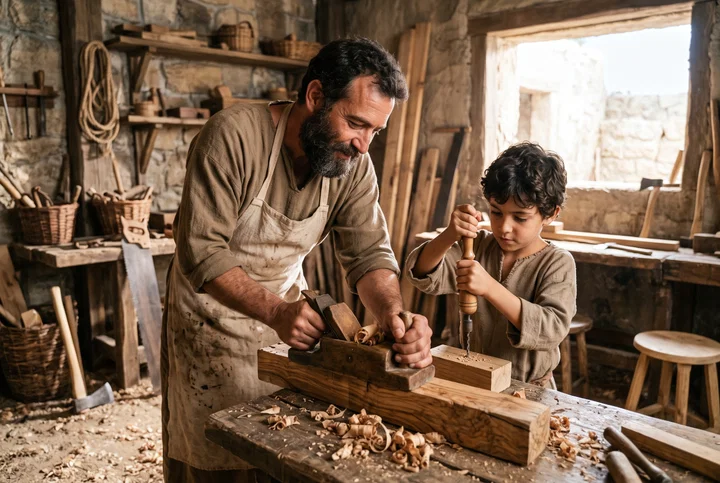
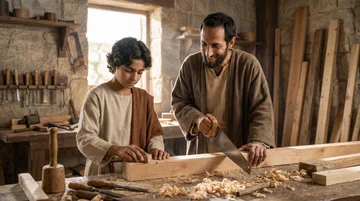
At Nazareth He learned the carpenter's or builder's trade from Joseph and worked with His hands with perfect labor, fitting His role as a character-builder.Ms 93, 1899, par. 17–18RH Mar 13, 1900STE 20.2 As He grew older and increased in wisdom and knowledge, His growing understanding of His divine mission did not make Him proud or exempt Him from humble work and ordinary duties.STE 20.2 He obeyed His human guardians, supported His poor parents by daily work, shared the burdens of the family and of a peasant household faithfully and cheerfully as a loving obedient son.Ms 93, 1899, par. 17–18Lt 47, 1893, par. 26–27 He did not use His divine origin to avoid temporal responsibilities but set an example of obedience for childhood, youth and adulthood, walking the streets in the simple garb of a common laborer.STE 20.2
He spent thirty years living unhonored and unknown in Nazareth, a place of comparative obscurity among peasants and laborers without recognition or honor.Ms 181, 1897, par. 8–114T 109.2 It was a town proverbial for wickedness and counted the worst in Palestine, where no good was thought possible, yet He began His great work of uplifting and regenerating the human soul there amid moral darkness and misery.Ms 181, 1897, par. 8–11 By becoming its citizen and putting His feet on the paths the poor and neglected must tread, He poured contempt on human pride of place, station, honor and fame.Ms 181, 1897, par. 8–11 He did not make His home in places of renown though He left the courts of heaven to live out a pure human character, and by dwelling among those far down in popularity and morality He demonstrated that any place, however hard and lowly, can be made honorable by fidelity when it is the post of duty, so that His followers compelled to live in lowly places would have no excuse for sin and rough, hard, discourteous character.Ms 181, 1897, par. 8–11 His early life in retirement there teaches humble guarding against harmful social influences rather than assuming strength against them.4T 109.2
Gradual Balanced Human Growth
His development was gradual, following the natural, divinely ordered laws and stages of childhood and youth, perfect at every stage for that age.STE 72.3CT 140.3–141.2COL 82.3 As a child He spoke and acted with a child's wisdom, honoring His parents and helping them according to a child's ability and carrying out their wishes, showing the simple, natural grace of a sinless life.CT 140.3–141.2COL 82.3ED 106.3 From the first dawning of intelligence He continually grew in grace and in knowledge of truth, making the seed's gradual growth a picture of His own development.STE 163.2ED 106.3FE 443.2
He increased in wisdom and in physical stature, developing mind and body the way other children do, with simple and childlike ways.COS 28.3–29.1DA 68.2–320MR 72.4–73.2 His mind was bright and active, penetrating and wise beyond His years, with quick understanding and thoughtfulness, and His intellectual powers were high and distinguished even in the morning of life.COS 28.3–29.1DA 68.2–320MR 72.4–73.24MR 234.4–237.3 He lived temperately, wasting no time in dissipating pleasures, indolence, sensual pleasure, self-indulgence or unprofitable things, and so kept a truly healthy body and true powers of mind, with physical and mental powers that could be expanded and developed just as any youth's can.Lt 17, 1878, par. 11–1320MR 72.4–73.24MR 234.4–237.3 True growth is increase in wisdom and stature together with favor with God and man, calling all powers of mind and body into active exercise in obedience to the laws of nature which are the laws of God, so that eager effort for intellectual culture must not neglect physical and moral training.ST Jun 29, 1882CE 124.1–28MR 137.2
His growth was balanced and well-rounded, never dwarfed in spiritual, mental or moral power.DA 68.2–3Ms 24, 1898, par. 31 Through the whole thirty years He was humble, meek and lowly, advancing step by step with the Spirit of God upon Him and keeping a living connection with His Father at all times, giving evidence to all who knew Him that He lived to please, honor and glorify His Father in the common things of life.Ms 24, 1898, par. 31 Education after this pattern cares for the body as well as the mind, combining physical training with study and habits of health, rest and moderation, developing physical powers and mental abilities with sound spiritual understanding into strong, well-balanced men and women.ST Jun 29, 1882CE 124.1–28MR 137.2
From the first dawning of intelligence He continually grew in heavenly grace and knowledge of truth, growing strong in spirit, filled with wisdom, with the grace and power of God upon Him.Ms 23, 1898, par. 1–2STE 163.2FE 443.22SP 30.1–2 Though He thought and spoke as a child, no trace of sin marred the image of God in Him, and His life was in harmony with God in perfect loyalty without sin, kept in keeping with the law and faithful in everything when He began His work.STE 163.2FE 443.2ST Mar 30, 1904Ms 77, 1910, par. 29 He passed through the stages of human life in a life without sin, making Him the ideal example for childhood, youth and adulthood.ST Mar 30, 1904
Though perfect as a man He still grew in wisdom and stature and in favor with God and people, which proves sanctification is not the work of a moment, an hour or a day but a continual growth in grace.RH May 6, 18621T 339.8–340.4 Even the most perfect Christian may and must increase continually in knowledge and love of God, with no stopping place where full attainment can be claimed.RH May 6, 18621T 339.8–340.4 As He increased in wisdom and stature and in favor with God and man, the star of hope that rose upon the world at His coming grew brighter, giving growing hope to the world and provision for men and women to gain an experimental knowledge of the character and work of their Redeemer.21MR 402.2–3Ms 176, 1899, par. 2–3
Sources of His Wisdom
His increase in wisdom came because God Himself was His instructor, not the schools of the rabbis or the schools of the prophets.STE 156.1CT 446.2–3CT 260.1STE 178.1–2FE 400.1–2 Although He was regarded as uneducated and without formal advantages or training under the teachers of His day, those who heard Him were astonished at His knowledge of Scripture.STE 156.1CT 446.2–3FE 447.3–448.1 That knowledge was the highest wisdom, learned from God through Scripture itself.STE 156.1FE 447.3–448.1
He increased in wisdom through diligent study of the Scriptures, faithful work at home, and early-morning prayer and communion with His Father.CT 260.1 His lack of rabbinical schooling did not mean He could not read, for He gained knowledge through diligent study of Scripture joined to close observation of nature, learning from God's works as well as God's word.CT 260.1DA 70.1–2
Day by day He watched and studied the wonderful things God had made in earth and sky — trees and plants and animals, and the sun and the stars — trying to learn lessons from them and to understand the reason of things.COS 30.2FE 442.3 Holy angels were with Him helping Him learn about God from nature, and He gained knowledge gradually by observing the lessons written in its living and nonliving works and thinking and seeking to understand their meaning.COS 30.2TSSW 105.1–106.1 The meaning of God's word and works unfolded to Him gradually as He cultivated holy thoughts and communion, so that His spiritual nature grew strong and His life revealed God's wisdom and grace.FE 442.3 This learning came through the ordinary surroundings of daily life, so that every child can likewise gain knowledge from nature and Scripture.TSSW 105.1–106.1
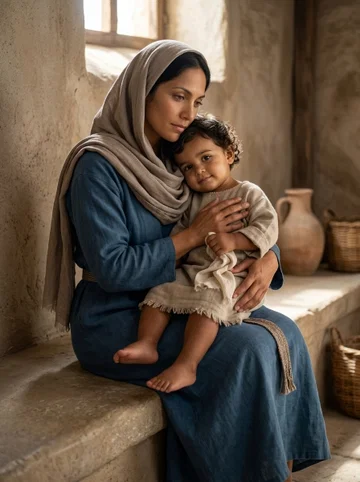
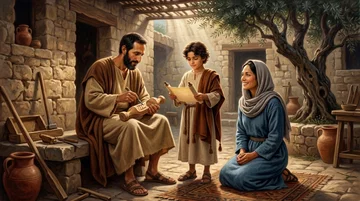
His mother was His first teacher, and from her lips and from the scrolls of the prophets He learned heavenly things, with study of the Scriptures and of nature and the experiences of life.10MR 253.3–254.2 His powers and character developed under His mother's attentive care, as she encouraged His receptive mind and through the Holy Spirit received wisdom to cooperate with heaven in the development of the child whose Father was God.DA 69.1 His early life in the humble home at Nazareth exemplifies Hebrew home training, in which loving instruction about God and His dealings was woven into daily life.RH Oct 30, 1900
His growth followed God's appointed laws and divine appointment that talents develop and faculties grow stronger through exercise.CT 260.1STE 178.1–2FE 400.1–2 That exercise was with willing hand, seeing eye, and understanding heart, receiving education directly from Heaven-appointed sources — useful work, Scripture, nature, and life experience.10MR 253.3–254.2 His wisdom and knowledge amazed His parents, brothers, and learned teachers and rulers, and His questions and answers displayed wisdom and deep insight that taught them and opened new lines of thought about His mission.STE 178.1–2FE 400.1–2 His knowledge came from access to the tree of life, a source of wisdom unknown to them and distinct from human schooling, and without pride or desire for greatness.STE 178.1–2FE 400.1–2
He did not seek the schools of His time, which magnified things small and belittled things great.10MR 253.3–254.2 Thus prepared by humble, obedient home life and practical training, He went forth to His mission as a genuine medical missionary, exerting upon every person He met an influence to bless and a power to transform.10MR 253.3–254.2 That blessing and transforming influence stood in marked contrast to a religion of outward show, pomp, and ostentation that measured value by display.10MR 253.3–254.2
His growing understanding was pursued with the purpose of blessing others and supplied spiritual lessons and illustrations for His later teaching.DA 70.1–2 As He grew He was often asked to read from the prophets in the synagogue on the Sabbath, and listeners heard familiar Scripture with new light.DA 73.1–74.2 His sympathy drew their affection, and the hope and courage in His presence made Him a blessing in every home.DA 73.1–74.2
Character That Won Favor
Jesus was unlike other children, yet His childhood can be copied by every little child.COS 28.3–29.1DA 68.2–3Lt 69, 1892, par. 1–2 In mind and body He developed the way other children do, with simple childlike ways, but His mind was bright and active, quick in understanding, thoughtful and wise beyond His years.COS 28.3–29.1DA 68.2–3 In character He was always sweet and unselfish, a cheerful sunbeam at home and wherever He was, with willing hands ready to serve others.COS 28.3–29.1DA 68.2–3 He was patient and truthful, kind and obedient, pleasant in all His words and actions, firm as a rock for what is right yet gentle and courteous to all.COS 28.3–29.1DA 68.2–3Lt 69, 1892, par. 1–2 He expects little children to do as He did, He is pleased when they are obedient and kind and patient, He is grieved when they act naughty, and He loves them and loves to have them pray to Him and tell Him their troubles.Lt 69, 1892, par. 1–2
He constantly increased in wisdom and ability through a right course of action as an obedient child subject to His parents.Ms 12, 1898, par. 12–14 He obeyed the will and wishes of His parents and did only works corresponding to the ability of a child, and this obedience was His missionary work in the home life.Ms 12, 1898, par. 12–14 This is all children can do, and they should be educated to obey in a manner that makes them a blessing in the home.Ms 12, 1898, par. 12–14 He never separated Himself from God by disobedience, so God's Spirit and peace rested upon Him as He passed from childhood to manhood and grew in favor with God and people.Ms 37, 1898, par. 14 His uninterrupted peace was the result of perfect righteousness, belonging to Him independently of the world so that no one could give it or take it away, and though continually humble His lovely character brought peace to others.Ms 37, 1898, par. 14
As He grew older He continued the work begun in childhood, increasing in wisdom and in favor with God and man through strict obedience and integrity in a perfect, upright, righteous, truthful life.FE 401.2–402.2STE 180.1–2 He was always kind and courteous, ever taking the part of the oppressed whether Jew or Gentile, so that He was beloved by all.FE 401.2–402.2STE 180.1–2 With impartial justice He refused to take the part of His own family merely because of natural ties, never vindicating them when guilty of injustice or wrong but ever vindicating only what He knew to be truth.FE 401.2–402.2 His sympathy for people of every age and circumstance drew their affection, and the hope and courage felt in His presence made Him a blessing in every home.DA 73.1–74.2 During the years in the home at Nazareth He shared its experiences, accepted its discipline, performed its duties and bore its burdens, and through unselfishness, patience, courage, faithfulness and care for others His secluded childhood brought a healing influence into the home and quietly ministered to people from childhood.MH 349.2–350.1
His continual growth in grace and knowledge and in favor with God and people was seen in devotion to God, care for the poor and suffering, and efforts to relieve suffering in people and animals.ST Aug 6, 1896 His life among people of every kind was harmless and undefiled, and He met them with compassion, giving lessons suited to their age and circumstances rather than words that discouraged or rebuked them.ST Aug 6, 1896 This growth took place amid continual assault by Satan, who saw God's image in His character and person and sought to overthrow Him, so that His life as a child in human nature was a continuing conflict against satanic agencies.Lt 43, 1895, par. 49–58 As He observed the sacrifices the Holy Spirit taught Him that He would give His life for the world, and His sinless life, faithful obedience to Scripture, patient endurance of hardship and insult, and refusal to retaliate showed His growth in character into a perfect character throughout childhood and youth.ST Aug 6, 1896 He grew from childhood to manhood with a spirit of meekness and with deeds of mercy and goodness, sent as God's remedy for man's self-exalted ideas and desperate rebellion, and His pure obedient life as a common laborer, doing good and wholly in keeping with God's life and character, ennobled and sanctified every part of practical life even though He did not begin public ministry until He was thirty.Ms 1, 1909, par. 12Ms 24, 1898, par. 23
Pattern for Believers Today
Jesus is the brightest example the world has seen, to be chosen above the greatest and most learned who do not know God, for all studies for youth should make them successful in God's service by following His footsteps from manger to Calvary, acting as He acted and holding the principles He held with His pure holy undefiled character as the standard.Ms 11, 1898, par. 9–11 Having passed through infancy, childhood and youth and borne equal weight of difficulty, sorrow, neglect, temptation and danger on a thorny path, He knows the trials, perplexities, weariness, joys and happiness of youth and is fitted as the standard to imitate by walking as He walked.4MR 234.4–237.3Ms 57, 1897, par. 21–22 Though Son of the infinite God who could have had myriads of angels, He hid His divinity to come as a little child and grow with a child's education, being tempted in all points according to strength at each stage yet without sin, leaving a pattern to be followed by seeking with all powers of being to be Christlike in character.Ms 191, 1907, par. 15–16
That pattern of growth in wisdom and stature and in favor with God and people can be repeated in every child and youth, who through obedience to God's laws and resistance to temptation may grow in spiritual strength, wisdom, spirituality and knowledge toward the full stature of men and women in Christ and become consecrated workers helping restore God's moral image in humanity.Lt 7, 1896, par. 26–28Ms 40, 1896, par. 23–2417MR 203.1–2 His life among people as child, youth and man was a living example of the truths He taught and the moral restoration and likeness to God that education should foster.CT 49.3 Each young person should develop abilities and knowledge, follow God's will, and share what is gained with others, so life and work are in harmony with His work.Ms 134, 1898, par. 8–10
Little children can copy Him, for in all His words and actions as a child He was pleasant, truthful, kind and obedient, and He expects little children to do as He did.Lt 69, 1892, par. 1–2 He is pleased when they are obedient and kind and patient but grieved when they act naughty, and He loves little children and loves to have them pray to Him and tell Him their troubles.Lt 69, 1892, par. 1–2 For His sake children are to be honored and dealt with gently as a sacred charge belonging to God, with mothers cooperating with Him in training them not by indulging, petting and idolizing but by teaching a pure noble life and helping form perfect characters.Ms 34, 1899, par. 5
Youth are to follow His temperate example, developing a healthy body and strong mental powers as any young person can, living temperately and not wasting time in dissipating pleasures.Lt 17, 1878, par. 11–13 His intellectual powers were high even in the morning of life, yet His physical and mental powers could be expanded just as any youth's can, and His favor came from unexampled excellence embracing everything pure, true, lovely and of good report with perfection of grace and bearing, without visiting parties of pleasure or dance halls and without wasting one hour from childhood to manhood in indolence, sensual pleasure, self-indulgence or unprofitable things.20MR 72.4–73.24MR 234.4–237.3 The Word of God was His study and is the pattern for youth to study and imitate, and as youth search it diligently for the Holy Spirit's guidance and share the grace given, understanding grows clearer and stronger and God's grace abides more richly, with humility like the child Jesus making them channels of light.20MR 72.4–73.2
Education should follow His balanced increase in wisdom and stature together with favor with God and man, calling all powers of mind and body into active exercise in obedience to nature's laws which are God's laws.ST Jun 29, 1882 Eager effort for intellectual culture must not neglect physical and moral training lest youth come forth with morals debased and physical powers enfeebled, but should combine study with physical training and habits of health, rest and moderation to form strong well-balanced men and women.ST Jun 29, 1882CE 124.1–2 Students should thus develop physical powers and mental abilities and gain sound spiritual understanding, becoming well developed in body and mind.8MR 137.2 His growth from childhood to manhood in diligent use of every moment, not in amusement and self-gratification but in God's service, working with His hands to help others, is the pattern for combining mental labor with diligent use of muscles in homely everyday duties as a wholesome practical education.Lt 89, 1897, par. 24–29
His early years were useful years helping His mother at home and working at the carpenter's bench, and those household duties and daily labor were as truly fulfilling His commission as His public ministry.RH May 6, 19097MR 19.3–20.2Ms 33, 1908, par. 2 This makes the Christian home under parental discipline after the Lord's order the best place for young children to learn to follow Him and drink in the gladness of His life, staying to help parents when study ends with parents and teachers cooperating.7MR 19.3–20.2Ms 33, 1908, par. 2 Born poor to a pure pious virgin with Joseph the carpenter as earthly father, He learned the trade Himself and worked with His hands to sustain the family, showing honest poverty is nothing to be ashamed of and that labor is honor not degradation but every man's duty.Ms 34, 1899, par. 2 For thirty years He was a faithful son sharing family burdens, giving followers strength to bear their home burdens faithfully.ST Mar 3, 1909
Those connected with God's work should likewise pursue steady progress, listening to God and seeking light from heaven to grow in wisdom and favor with Him in an undeviating course like the sun.STPW91 37.25T 549.2Lt 63, 1886, par. 1 They should grow in sanctified intelligence, holiness and spirituality, with each member right with God and sanctified through truth setting an example of unselfish character so the church increases in spirituality and favor.5T 549.25T 481.1 One who comes to Christ in meekness and surrenders to God may grow daily in favor with God and others as God increases intellectual and moral ability and fits for restoration of His image.Lt 28, 1896, par. 25–27 This sanctified ambition to keep advancing by living the Word comes by diligently using knowledge, endowments, talents and opportunities on the plan of addition while God works on the plan of multiplication, and busy activity counts for nothing unless yoked with Christ, with responsibility measured by grace received and growth shown in grace, love and unity day by day.17MR 203.1–2Ms 70, 1896, par. 35–37
His retirement at Nazareth walking among peasants and laborers without recognition or honor teaches humble guarding against harmful social influences rather than assuming strength against them.4T 109.2 David likewise grew in favor with God and others as he learned the Lord's ways and set his heart more fully on doing God's will, gaining through Saul's court new understanding of kingship's responsibilities and troubles.PP 643.3 The same language of wisdom and favor belongs to the brother whom the Lord has given wisdom and favor with God and people, helped and chosen as His agent to exalt truth at the Battle Creek Sanitarium.8T 180.4
His growing understanding of His divine mission did not make Him proud or exempt Him from humble work, for as He grew in wisdom, knowledge, stature and favor He supported His family, shared its burdens, worked with His hands and remained obedient to His human guardians. Though He knew He was the Son of God He did not use divine origin to avoid ordinary responsibilities but worked as a carpenter, obeyed parents, and carried out ordinary duties, setting an example of obedience for childhood, youth and adulthood.STE 20.2FE 392.1–2
Sources
Pioneers and periodicals
99 sources
It sums up the silent years at Nazareth between the Passover visit at twelve and the public work begun about thirty, when no detailed history was given.ST Jan 11, 1899ST May 12, 1909RH Feb 6, 1908ST Apr 1, 1889 It means real human growth from childhood to full manhood in body, mind and spirit, increasing gradually rather than appearing with full stature and wisdom.RH Nov 14, 1854ST Aug 12, 1897RH Nov 14, 1854ST Aug 21, 1901ST Feb 9, 1882 That growth was balanced and harmonious in physical, mental, spiritual and social powers, gained through work, study of Scripture and nature, prayer and home training.ST Nov 3, 1914ST Jul 1, 1880ST Jan 10, 1906RH Jul 2, 1908 It was growth without sin under obedient subjection to parents and to God, sharing humble labor and showing a warm upright character that won favor with God and people.ST Sep 17, 1894ST Aug 27, 1912RH Aug 12, 1875ST Dec 23, 1903ST Aug 21, 1901 So it stands as the pattern of true education and continual growth in grace for children and youth and all workers.ST Nov 3, 1914RH May 6, 1862ST Jan 10, 1906RH Feb 25, 1915RH Oct 19, 1905
Setting and Wording
The verse sums up the quiet years at Nazareth after the return from Jerusalem at twelve in subjection to parents, continuing until about thirty and baptism and the beginning of public ministry.ST Jan 11, 1899ST May 12, 1909 For the years of youth after twelve no detailed history is given beyond continued advance in wisdom and stature and in favor with God and men.ST Jan 11, 1899ST May 12, 1909 The detailed account was withheld because Infinite Wisdom did not see it necessary, since the Bible never ministers to human curiosity, and nothing needed was lost by its absence.ST May 12, 1909 Those quiet, less visible years were not an empty interval, for daily work and small duties belonged to a life devoted to doing God's will, largely unseen by people yet known to God and included in God's plan with an appropriate place and work for each person.ST Nov 21, 1892ST Jan 18, 1883 Though possessing power to relieve the suffering and disease seen each day, there was patient submission to the Father's will and waiting for the Father's time, teaching patience and submission.RH Jul 26, 1870
The eighteen years before public work were preparation, with thirty years spent preparing for three and one-half years of ministry.RH Feb 6, 1908 That secluded life for thirty years is associated with Nazareth, where life was lived before the public work and death.ST Nov 21, 1892ST Apr 1, 1889
The verse belongs to the account of the years in Nazareth before twelve and the going with parents to Jerusalem for Passover, then turning to being found in the temple questioning the teachers and astonishing them with answers.ST Jan 29, 1894GSAM 60.2 Nearly all that is recorded from childhood to twelve is summed up as normal increase in wisdom and stature joined with dutiful submission to parents, before the feast visit at age twelve and later years working as a carpenter.GSAM 60.2 At twelve, under Jewish custom, a child became a son of the law responsible to God, receiving the privileges of manhood, which is why the child was taken to Jerusalem.ST May 12, 1909ST Jun 17, 1913ST May 3, 1910 There the boy sat among the teachers in the school during Passover, questioned them, and showed understanding of devotion to the Father's work, while remaining subject to godly parents in all things as full service of God rather than setting aside God's claims.ST Jan 29, 1894ST Jun 17, 1913ST Dec 9, 1880
Wisdom represents growth of mental powers, stature represents physical development and age and size, and favor with God and people represents grace and spiritual and relational life.RH May 20, 1915ST Jun 3, 1897RH May 14, 1914 Together with Luke 2:40 this presents a balanced educational standard developing the whole person, a threefold growth in body, mind, and soul, with spiritual growth including love for truth and hatred of sin.RH May 20, 1915RH May 14, 1914 After the visit at twelve this growth continued until adulthood and public ministry, lived in the sunlight of the Father's countenance, with the Father's favor and love as the nurturing atmosphere in which growth takes place as children likewise need warmth and love to mature through instruction.ST Jun 3, 1897ST Sep 24, 1902
Little is recorded of words during the first thirty years, though possessing all knowledge of the mysteries of heaven and creation, with frequent silence that models holding the tongue.RH Nov 16, 1916 The secluded first thirty years as a carpenter in a humble home were preparation facing the trials of ordinary life while continually growing in reverence for God, obedient and subject to parents, gentle and patient, and advancing in wisdom, physical growth, and acceptance with God and people.ST Feb 13, 1896 The statement is brief yet wonderfully comprehensive, showing that none of the acts or words were empty or without power but form object lessons illustrating the love, power, and wisdom of God.ST Feb 13, 1896
The setting was growth to manly stature in the humble home of foster parents, where people did not know the mission to be fulfilled in human life.RH Dec 15, 1859 It was childhood in Nazareth with the surrounding country and places seen forming the setting of much of earthly life, connected with the customs and scenes of Palestine whose local habits had changed little over the centuries so that much could still be seen as then seen.ST May 11, 1891ST May 19, 1898 By about age thirty there was life in Nazareth with a good reputation, attention to ordinary work and the religious duties expected of a Jewish young man, and familiarity with Scripture and standing in the synagogue established enough that taking part in its services caused no surprise.
Real Human Growth
The verse describes genuine human development, not appearance only, as one born into the human family among human brethren and growing from childhood to perfect manhood.ST Jun 23, 1881RH Nov 14, 1854ST Aug 21, 1901 He passed through the same stages and ages as others, truly experiencing childhood and youth rather than entering the world as a fully matured man.ST Jun 23, 1881ST Aug 21, 1901ST Apr 15, 1897 In that real human life he depended on his parents for support and instruction as a child, was subject to them, honored God, learned the lessons of the Holy Word, engaged in useful work and learned his father's carpenter's trade.ST Jun 23, 1881RH Nov 14, 1854ST Apr 15, 1897
He was not born with full stature, nor with greater or inherited superior wisdom that freed him from learning as others learn.ST Aug 12, 1897ST Feb 9, 1882ST Aug 25, 1887 To have been born with perfect wisdom would have been as incongruous as to have been born with full stature, so he increased in wisdom as he grew in age and stature just as other children are expected to do.ST Aug 12, 1897ST Aug 25, 1887 His increase was gradual and unbroken from birth, with life and grace dawning together and growing in common increase to the end, with no precocious miracles and no moment when a higher light suddenly began.ST Feb 9, 1882 He had in himself no natural abilities superior to ours and no advantage closed to us, but as partaker of flesh and blood was as weak and helpless in himself as we are, subject to the same infirmities yet without sin, with the divine life dwelling in him to show what God can do in human flesh.ST Aug 12, 1897 The mighty difference between him and others, such as John the Baptist, was therefore seen only in later years, when the fresh leaves of childhood passed into flower.ST Feb 9, 1882
Such growth did not make him any less the Son of God, for he was fully divine while growing as a child and living under his parents' care.ST Jan 29, 1894 His real human growth from childhood toward adulthood in wisdom and physical stature is consistent with supernatural conception, which does not undo his humanity, and with sinless character, because sin is not essential to being human.ST Dec 2, 1889 He kept the innocence of childhood and the ideal of humanity, with no trace of sin marring God's image in him and evil alone never growing in him.ST Mar 30, 1904RH Sep 19, 1912ST Feb 9, 1882 He grew day by day in stature toward perfect manhood while remaining undefiled, in a life of perfect loyalty to God, with a bright receptive active penetrating mind and wisdom beyond his years, an unusually lovely disposition, thinking and acting as a child yet the ideal example for childhood, youth, and adulthood.ST Mar 30, 1904RH Sep 19, 1912ST Feb 9, 1882ST Nov 4, 1889
At about twelve his understanding was already evident, for sitting among the doctors in the temple, hearing them and asking discreet questions, he gave manifest proofs of superior wisdom, penetration, mature judgment and understanding in his answers.ST Jan 29, 1894ST Jul 16, 1894 All who heard were astonished and the wise were confounded, recognizing a seer's wisdom and a master's learning in one who knew the prophetic writings, whose teaching differed from that of the learned elders who questioned his authority.ST May 24, 1910ST May 24, 1910 The amazement was greater because his parents were poor and he had not received advantages of education, raising the question whence he had such wisdom having never learned, while his parents were gratified to see him thus honored. He knew he must be in his Father's house, yet after displaying remarkable understanding he returned to Nazareth and was subject to his parents, continuing to grow in wisdom and bodily size and in approval with God and men, including spiritual, intellectual, physical, and social development.RH Mar 13, 1900ST Jan 29, 1894ST Jul 16, 1894
He was perfect and complete at every stage while continually increasing, already fully the Son of God yet increasing in wisdom and favor with God while growing in stature.ST Aug 29, 1895ST Jan 29, 1894 His faith remained perfect in quality as he grew, while increasing in quantity through growth in the knowledge of God, in a life of preparation displaying intelligent unwavering faith that steadfastly made God's will manifest. Completeness and growth are not opposed, for he was complete yet growing in grace and knowledge, perfect all the time, as a plant is perfect when the leaves burst forth and perfect when the flowers bloom and perfect when the fruit comes while it keeps growing.ST Aug 29, 1895 So those complete in Christ still continually grow in grace, not growing into grace but growing in the grace already possessed, increasing in wisdom while complete in him, because completeness is not in self but in Christ whose fullness fills all with overflowing grace, with limitless possibilities for growth in him.ST Aug 29, 1895ST Jan 29, 1894 Christian perfection is therefore living growth, like a plant that is perfect as it grows but would be damaged by remaining unchanged, so the righteous flourish and grow.ST Jan 29, 1894
Balanced Whole-Person Growth
The verse describes natural, balanced, harmonious growth of mind, body, and soul, with no faculty overgrown while others stayed weak.RH Jul 2, 1908RH May 14, 1914 It presents a threefold increase in body, mind, and soul, or physically, mentally, and spiritually, including favor with God and people as spiritual and social life.ST Jan 10, 1906RH May 14, 1914RH May 14, 1914 This even development in the sheltering care of a humble home at Nazareth, sharing common life, submitting to its discipline, performing its duties and bearing its burdens without mighty miracles drawing multitudes, fulfilled the divine mission of those thirty secluded years and illustrates the importance of home life for restoring and uplifting humanity.ST Nov 3, 1914 It is the aim of true education and the restoration of God's image, preparing thoroughly for life's work and giving power and authority to teaching even when judged unlearned by popular standards, and it produces strong, well-balanced men and women.RH Jul 2, 1908 Physical growth came through healthful temperate living, outdoor air, and work at the carpenter's bench, while mental and spiritual growth came through feeding on God's Word, as God works through Christ in other boys when parents and children cooperate with Him.ST Jan 10, 1906 The same pattern calls parents to nurture boys beyond physical health by nourishing the body, educating the mind with honest attentive answers to curiosity, and forming high ideals and ambitions of soul so the whole child is prepared for a worthy purpose.RH May 14, 1914RH May 14, 1914
Increase in wisdom with stature shows that physical law must be understood and cheerfully obeyed, for growth from birth to perfect manhood in stature, wisdom, and grace never violated physical law.ST Jan 10, 1906ST Breaking the laws of being is as truly sinful as breaking the Ten Commandments.ST Those born from above are likewise to grow in these ways until reaching the measure of Christ.ST
Increase came through useful industrious work with no idle moments, study of Scripture and of God's works in nature, communion with the Father in prayer, home discipline, and instruction beginning with Mary as first human teacher and the prophetic scrolls.RH Nov 14, 1912RH Jul 20, 1916 Mental and spiritual development advanced by diligent study of Scripture, learning as others may from childhood instruction in the prophets through personal study and prayer in youth and ministry, demonstrating the Bible's power as a means of education. Knowledge increased through the same means open to all people — God's Word, God's works, and prayerful communion with the Creator — until greater than Solomon.RH Jul 20, 1916 Though perfect and divine and fit to become the great teacher, He still needed to grow and sought help from both people and God, showing that His followers and teachers must also grow by both study and prayer, since neither can replace the other.ST Jul 1, 1880 His presence at the teachers' meeting in the temple shows the value of learning from others, while His dependence on God shows the need for private prayer.ST Jul 1, 1880 His early years thus model children's education little by little about God through His Word and the beauty of nature, introducing early the truths of revelation, forming habits of industry and helpfulness, and growing in knowledge of God's love and plan in preparation for service.
He grew without earthly rabbinical schooling, for that teaching had degenerated into cold formalism that elevated human traditions and ceremonies above Scripture and would have starved rather than fed Him, hindering true development.ST Aug 27, 1896ST Jun 14, 1899 His mother, yielded to the Spirit's control, was His first human teacher, and God was His teacher as He wandered in fields and woods in converse with nature as the work of His own hands.ST Jun 14, 1899 Though He never attended a rabbinical school, at twelve in the temple school His questions and answers flashed truth about the Messiah, after which He returned to Nazareth and lived subject to His parents until baptism.ST Jun 14, 1899 His humble home at Nazareth belongs to the Hebrew pattern of home training, where children learned about God and His dealings through loving instruction woven into daily life.RH Oct 30, 1900 In this He stands as the model of proper training and true education, showing the worth of the child and how right training develops all the possibilities of manhood contained in the child, alongside Isaac, Moses, Samuel, Timothy, and John the Baptist, in contrast to Greek and Roman civilization which never knew or recognized the worth of the child.ST Nov 19, 1902 His growth is therefore the pattern of true education as well as true religion.ST Jun 14, 1899
Obedient Faithful Character
After astonishing the learned teachers in the temple, he returned home to Nazareth and lived subject to his parents in humble and cheerful obedience.ST Sep 17, 1894ST Sep 17, 1894RH Aug 12, 1875 That subjection was growth itself, for advancing in wisdom and stature and in favor with God and people included obedience at home, and submission to God is the truest way to progress and gain true wisdom.ST Sep 17, 1894ST Aug 27, 1912ST Mar 12, 1896 He did only the work of an obedient child, fulfilling his parents' wishes in duties suited to his ability as a child and blessing the household where he lived, and this is all children can do, making obedience at home their missionary work and their example to follow.ST Sep 17, 1894ST Aug 27, 1912RH Aug 12, 1875 His duty to God came first, yet his conduct toward parents and associates was agreeable and unexceptionable, yielding in matters of no moral consequence rather than seeking to please himself.ST Sep 17, 1894ST Mar 12, 1896RH Nov 20, 1860
His growing understanding of his divine mission did not make him proud or exempt him from humble work. He obeyed his human guardians, shared the family's burdens, worked with his hands to help support the household, and remained obedient while increasing in wisdom and knowledge and in favor with God and people.ST Jun 15, 1904 He helped his mother at home, and his household duties and work at the carpenter's bench were as truly part of his commission as his public ministry.RH May 6, 1909RH Sep 25, 1900ST Jun 15, 1904 His learning and skill as a carpenter showed perfection as a workman as well as in character, giving dignity to useful labor as part of his earthly example, and testifying that he was a dutiful son, an honest worker, an upright citizen, and faithful in religious duties.RH May 6, 1909RH Sep 25, 1900ST Jun 15, 1904 The long patient years in little Nazareth were a sinless childhood, boyhood, youth and manhood spent in humility, toil, obscurity, submission, contentment and prayer, living the life he afterward taught and listening to the voice of God, so that most who cannot imitate his public ministry can imitate his contentment with a humble lot and faithful obedience in the commonplace duties of uneventful routine.RH May 6, 1909ST Dec 12, 1895
His growing favor with God and people showed upright character and a religion that was not gloomy, harsh, or pharisaical.ST Aug 6, 1896ST Dec 23, 1903ST Aug 21, 1901 He worked for the good of the community with a warm, genial disposition that children loved, and his childhood and youth provide the pattern for growth in character and closeness to God in purity, goodness, and service.ST Dec 23, 1903ST Aug 21, 1901 His continual growth in grace and knowledge was seen in devotion to God and in care for the poor and suffering and in efforts to relieve suffering in people and animals, meeting people of every kind with harmless and undefiled compassion.ST Aug 6, 1896ST Dec 23, 1903 He gave lessons suited to age and circumstances rather than words that discouraged or rebuked, and his neighbors remembered his unusual wisdom, kindness, purity, and faithful obedience to parents and to Scripture from childhood, so that his life among them gave no cause for the accusations later made against him.ST Aug 6, 1896ST Aug 16, 1910
He grew to manhood and in his perfect life manifested the perfect law of God as righteousness incarnate.ST Oct 15, 1896ST May 23, 1911 From childhood he lived in strict obedience to the Jewish laws, grew in wisdom in his youth, and had the grace and power of God resting upon him.ST Aug 6, 1896RH Jan 23, 1866 As he observed the sacrifices, he was taught that he would give his life for the world, and his sinless life, faithful obedience to Scripture, patient endurance of hardship and insult, and refusal to retaliate showed his growth in character and made him an example for children and young people.ST Aug 6, 1896 His development also included growth in his qualification for the work of Messiah and mediator.ST Oct 15, 1896RH Jan 23, 1866
His growth belonged to a human life of trust in and dependence on God, in which through trials and sufferings endured he developed a character of righteousness by faith.ST Sep 25, 1901RH May 6, 1909 His perfection did not prevent him from learning obedience and developing through the ordinary work of life, for his time in the carpenter's shop was practice.ST Sep 25, 1901RH May 6, 1909 Growth in character comes through continual exercise and experience, including the cares, difficulties, and temptations of life, which can build patience, humility, generosity, unselfishness, kindness, and courtesy.ST Sep 25, 1901RH May 6, 1909
Doctrine and Prophecy
Considered as a man he was perfect and yet grew in grace, advancing in wisdom and growth and acceptance with God and people.RH May 6, 1862 That increase proves sanctification is not the work of a moment, an hour, or a day, but a continual growth in grace.RH May 6, 1862 Even the most perfect Christian may and must increase continually in the knowledge and love of God, with no stopping place where full attainment can be claimed.RH May 6, 1862 As growth in stature is accompanied by growth in wisdom, so experience in spiritual things should deepen as years increase.RH May 6, 1862RH Oct 19, 1905
His growth in wisdom and in stature matches Moses, who was learned in all wisdom.RH Feb 19, 1861 This correspondence proves him to be the prophet like Moses.RH Feb 19, 1861 In him the offices of lawgiver, prophet, worker of miracles, and king, and priest after the order of Melchisedec, are exercised in superior degree.RH Feb 19, 1861
He became a child and increased in wisdom rather than bringing into the world the treasury of his heavenly knowledge.RH Feb 1, 1906 He knew his sonship through faith in God's word, not through memory of preexistent knowledge.RH Feb 1, 1906 As Child, Boy, and Man, his earthly life and his relationship with God belong to the present realities of faith, not merely to distant history.RH Feb 1, 1906ST May 28, 1902
Example for Daily Life
Jesus lived through childhood and youth and its trials and difficulties, and therefore understands and sympathizes with children and young people in their needs.ST Oct 22, 1894ST May 15, 1907 Because he knows those needs he helps children become obedient and truthful, to act fearlessly for what is right, and to resist persuasion and temptation to sin.ST Oct 22, 1894 At ten he was tried as children are tried and answered from his Father's word, so children are to do as he did; at twenty, when life was bright and pleasures bewitching, he kept pure by holding to his Father in heaven, so youth are to keep pure as he did; at thirty he knew the cares and crowded labor of manhood with no minute free, and his throne of strength was his Father's seat, so men are to seek strength there as he did.ST Apr 9, 1902 His childhood teaches youth to search God's word diligently and receive the Holy Spirit's guidance so they can share light with others, and as they communicate the grace given them their understanding becomes clearer and stronger and God's grace abides more richly in their hearts, with humility like the child Jesus making them channels of light. He is the example of a young person growing in character and in favor with God and people, showing that God watches children with intense interest as they form character, and children are to be trained to grow in wisdom and in the knowledge of God following the pattern of his growth.ST Apr 23, 1912RH Jan 6, 1916
Training for God's service begins in the home, and his early years are the example of the importance of childhood training in the family.RH Aug 20, 1908 He grew to manhood in a simple home surrounded by nature, where he learned through his mother's time with him and through a life of toil, economy, and hardship.RH Sep 24, 1914 Children grow in grace and favor with God and people as Christian instruction is given regularly and its spirit shapes daily conduct.RH Apr 30, 1872 The boy's improvement in learning and physical strength, alongside instruction in true religion, reflects growing in wisdom and physical stature and gaining favor with God and people, which is the pattern also for small schools.RH Feb 2, 1905 He truly grew from childhood toward adulthood in both wisdom and physical stature with the ordinary development of human nature, consistent with sinless character because sin is not essential to being human, and consistent with supernatural conception which does not undo humanity.ST Dec 2, 1889
Growth in wisdom, physical maturity, and favor with God and people is the pattern for young people, who by studying and using time well can grow spiritually and intellectually and become prepared for the work God appoints them.RH Feb 25, 1915 His growth in wisdom, stature, and favor with God and people is the example for a secretary, for continued growth in these areas keeps a person useful, with no fixed age at which that usefulness must end.RH Feb 5, 1914 Increasing in favor with God and people is the pattern fulfilled where there is faithful defense of truth with benevolence and sacrifice, as seen in a church grown in such favor.RH Apr 2, 1867
At twelve he understood better than most men what it meant to be about his heavenly Father's business, yet he remained subject to his parents and accepted ordinary work until he was thirty.ST Mar 16, 1904 His years at Nazareth were a quiet season of growth and preparation, and that ripening preceded a few years of concentrated, intense activity in which every word and deed had enduring effect.RH Dec 19, 1871 He spent his early years in Nazareth subject to his earthly parents and growing through ordinary life and work, and those years of humble labor were a preparation for later ministry in which each day formed strength, wisdom, and patience, showing that routine, lowly work is not beneath a noble life and can serve as preparation for future usefulness.RH Nov 3, 1874 He developed through earnest, steady work and the discipline of accepting care and responsibility, and his energy and strength of character are qualities to be developed in the same way through the same kind of discipline.ST Sep 24, 1902
His missionary life began in childhood, for as a child he was already a missionary.RH Nov 19, 1908 From twelve until thirty he lived in Nazareth growing in wisdom and stature and in favor with God and people, not serving as priest or prophet during this time but living righteously and submitting to his parents in preparation for future service, leaving no basis for saying he went away to India or other mystical centers.ST May 20, 1913 He advanced in wisdom and physical stature and grew in favor with God and people, and this is the pattern for God's children: as they consider Christ, including his endurance of sinners' opposition, they grow like a lily, but if they do not keep attention on him they become weary and faint and wither like a flower separated from its root.ST Apr 21, 1898 A changed life that grows in grace and favor with God and people illustrates continuing spiritual growth after conversion for individuals.ST Jan 25, 1899 A church that grows in such favor through faithful defense of truth, benevolence, and sacrifice, and even a young land that grew in wisdom and size because God was present with her and so became a refuge for the fleeing, a home for the homeless, and an asylum for those longing to be free, illustrate the same increase in favor with God and people.RH Apr 2, 1867ST Nov 27, 1901
Sources