Translations
American King James Version, King James Version, KJV Cambridge Paragraph Bible, Webster Bible
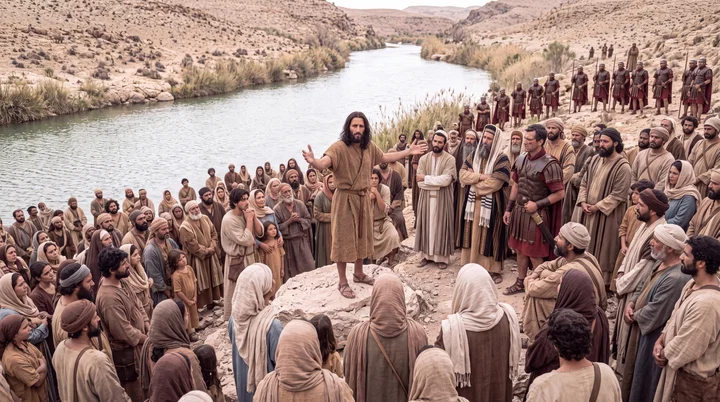
And the people asked him, saying, What shall we do then?
Revised Version, American Standard Version
And the multitudes asked him, saying, What then must we do?
And the multitudes were questioning him, saying, 'What, then, shall we do?'
And the crowds asked him saying, What should we do then?
And the multitude began to question him saying—What, then, shall we do?
Berean Standard Bible, Majority Standard Bible
The crowds asked him, “ What then should we do?”
The multitudes asked him, “ What then must we do?”
And the people put questions to him, saying, What have we to do?
Then the people asked him, saying, What shall we doe then?
Douay-Rheims (Challoner revision)
And the people asked him, saying: What then shall we do?
Pictures
Cross-references
- Matthew 3:1-12
In those days came John the Baptist, preaching in the wilderness of Judaea,
John’s preaching and baptism parallel the call to respond to his message.
- Mark 1:5
And there went out unto him all the land of Judæa, and they of Jerusalem, and were all baptized of him in the river of Jordan, confessing their sins.
The people came to John, confessed their sins, and were baptized.
- Luke 3:14
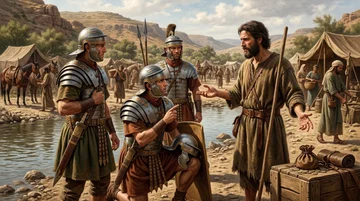
And the soldiers likewise demanded of him, saying, And what shall we do? And he said unto them, Do violence to no man, neither accuse any falsely; and be content with your wages.
Soldiers ask what they should do, and John instructs them to act justly.
- Acts 2:37
Now when they heard this, they were pricked in their heart, and said unto Peter and to the rest of the apostles, Men and brethren, what shall we do?
Hearers ask what to do after being convicted and called to repentance.
- Luke 3:16-17
John answered, saying unto them all, I indeed baptize you with water; but one mightier than I cometh, the latchet of whose shoes I am not worthy to unloose: he shall baptize you with the Holy Ghost and with fire:
John warns of the coming one’s baptism and judgment separating wheat from chaff.
- Luke 3:1-2
Now in the fifteenth year of the reign of Tiberius Cæsar, Pontius Pilate being governor of Judæa, and Herod being tetrarch of Galilee, and his brother Philip tetrarch of Ituraea and of the region of Trachonitis, and Lysanias the tetrarch of Abilene,
Historical details date the beginning of John’s ministry.
- Isaiah 40:3
The voice of him that crieth in the wilderness, Prepare ye the way of the LORD, make straight in the desert a highway for our God.
Foretells the preparatory message and work described in Luke.
- Acts 9:6
And he trembling and astonished said, Lord, what wilt thou have me to do? And the Lord said unto him, Arise, and go into the city, and it shall be told thee what thou must do.
Both ask what response or action is required.
- Luke 1:16-17
And many of the children of Israel shall he turn to the Lord their God.
John turns people to God and prepares them for the Lord.
- John 5:35
He was a burning and a shining light: and ye were willing for a season to rejoice in his light.
Jesus describes John’s public ministry as a shining light.
Commentary
Each commentary is drawn from primary sources: the writings of Ellen G. White and Adventist pioneers and periodicals. Each commentary is separate. Its own words are not a quotation; follow the references to read the source passages.
Ellen G. White
11 sources
The question, What shall we do then, was drawn out by conviction of sin under plain, direct preaching that brought a sense of sin and a desire to respond, reaching people from every class and of many stations and abilities who trusted straightforward words.Lt 19a, 1897, par. 22–24Ms 121c, 1898, par. 4 That preaching was the baptism of repentance for the remission of sins, demanding works worthy of repentance under warning of coming wrath and judgment.Lt 270, 1907, par. 8–13LC1 41.11RED 40.1–41.1 It belonged to the message given for John's day, and is to be studied to advantage by workers now.Lt 270, 1907, par. 8–13 Convicted by the warning of judgment and the call to bring forth fruits worthy of repentance, the people asked what practical action repentance required of them.Ms 121c, 1898, par. 6Ms 43, 1891, par. 19–20LC1 41.11RED 40.1–41.1 Their inquiry stands as the model of sincerely seeking practical direction about right living and moral purity.ApM 58.1–59.2Ms 121c, 1898, par. 4
The answer made repentance practical by requiring those with extra clothing or food to share with those who have none.Lt 270, 1907, par. 8–13Ms 121c, 1898, par. 6Lt 19a, 1897, par. 8–10LC1 41.1 Beyond that general duty, it gave specific ethical changes suited to each person's conduct and occupation.Lt 19a, 1897, par. 8–10LC1 41.11RED 40.1–41.1DA 107.2–3 Publicans must take no more than was appointed and deal honestly, stopping dishonest or oppressive collection.Lt 19a, 1897, par. 8–10LC1 41.11RED 40.1–41.1 No one is to act violently or falsely accuse anyone, and all are to be content with wages.LC1 41.11RED 40.1–41.1 The whole life is to show kindness, honesty, and fidelity, with justice, mercy, compassion, and care for the defenseless.1RED 40.1–41.1DA 107.2–3
Genuine repentance is shown by changed conduct and care for others, for actions are the fruit that reveals character.1RED 40.1–41.1DA 107.2–3 Faith and repentance must appear in daily conduct, and profession alone does not excuse sin.1RED 40.1–41.1DA 107.2–3 Repentance is proved by faithfulness to God in the place where God has called a person, without forsaking former duties.DA 150.3 John's own life in the wilderness, with its austerity and isolation, was God's direction for his special mission to shield him from the influence of the priests and rabbis and to prepare him, not an example for the people to copy.DA 150.3
The call urges conversion and fruitfulness in the Lord's vineyard.Ms 43, 1891, par. 19–20 Continued failure to meet Christ's expectation brings the judgment pictured as a fruitless tree being cut down.Ms 43, 1891, par. 19–20 This response stood against the background that the people were suffering under the curse brought by disobedience while claiming the blessings promised to the faithful.LC1 41.1 Applied as a pattern for moral purity, the same sincere inquiry directs parents to guard their children from unchastity by teaching them early, setting a pure example, correcting warning signs, and giving instruction about sin's consequences.ApM 58.1–59.2
Sources
Pioneers and periodicals
18 sources
The question was asked after the call to bring forth fruits worthy of repentance, seeking practical guidance on what repentance requires in daily conduct.ST Jan 18, 1899ST Jan 10, 1900 The answer to the people was that genuine repentance is shown by a changed life in care for others, specifically by sharing clothing and food with those who have none, while tax collectors were to collect no more than authorized and soldiers to do no violence or false accusation and be content with their wages.ST Jan 10, 1900ST Jan 10, 1900ST Jan 10, 1900ST Jan 17, 1906 Such repentance is a moral change expressed in practical generosity, honest dealings and rejection of selfishness, not merely sorrow, excitement, praise or prayer, and this call to do does not teach salvation by works but that true doctrine is revealed in practice and faith is made visible in life.ST Jun 3, 1875ST Apr 13, 1882RH Jun 22, 1905 The work of preparing the way for Christ's first advent in the spirit and power of Elias is the pattern for the last-days work preparing a people for Christ's second advent, the work that remembers the law of Moses and leaves a remnant keeping all God's commandments when Christ comes.RH May 8, 1879ST Aug 7, 1901 The same question belongs to every soul today, to whom God gives the same kind of answer by revealing besetting sins and promising help to overcome and forsake all unrighteousness in those who trust and believe with all the heart.ST Apr 10, 1907
Question's Setting and Sense
The inquiry follows the summons to produce fruits worthy of repentance, and it asks what practical action such repentance requires in conduct.ST Jan 18, 1899ST Jan 10, 1900ST Jan 10, 1900ST Jan 18, 1899 It is a request for guidance on how repentance should shape life and what duties would demonstrate it.ST Jan 18, 1899ST Jan 10, 1900ST Jan 18, 1899 The answer given in the verses that follow directs the people to share clothing and food with those who lack them, so that genuine repentance is shown by changed conduct and care for others.ST Jan 10, 1900
Its immediate setting is the multitudes going out to be baptized after being addressed as offspring of vipers and warned to flee from the wrath to come. They had been commanded to bring forth fruits worthy of repentance rather than trusting that they have Abraham for father. They had been warned that the ax is laid to the root and that every tree not bearing good fruit is cut down and cast into the fire. The question seeks the practical works that prove repentance, defined first as sharing clothing and food with those who have none, with further specific duties given to publicans and soldiers who ask the same thing.
The question means how to have a part in God's kingdom and what to do to be saved.ST Apr 10, 1907 It was drawn out by a strong demonstration of power in word and work that drew many to hear and be baptized in Jordan.ST Apr 10, 1907 It was asked not only by the people in general but also by the publicans and by the soldiers, each group likewise seeking practical direction.ST Apr 10, 1907ST Dec 26, 1892
Repentance Shown in Conduct
The question was met with a call to changed conduct and care for others, specifically to share clothing and food with those who lack them.ST Jan 10, 1900ST Jan 10, 1900ST Apr 13, 1882 The crowds asked what practical action repentance required, and that question opened the instruction to give to the needy from what one has.ST Jan 10, 1900ST Jan 10, 1900 Those with two coats or food were to share with those who had none, so that repentance became visible in practical generosity and the rejection of selfishness.ST Jan 10, 1900ST Apr 13, 1882
The full answer gave concrete duties suited to different groups: share clothing and food with the needy, collect no more tax than is authorized, and treat no one violently or dishonestly or by false accusation while being content with wages.ST Jan 10, 1900ST Jan 17, 1906 The multitudes sought the practical works that prove repentance, and further specific duties were given to publicans and soldiers who asked the same thing.ST Jan 10, 1900 Repentance is thus a moral change expressed in everyday conduct, not merely sorrow, religious excitement, praise, or prayer, involving practical care for others, honest dealings, and an orderly, dutiful life.ST Jun 3, 1875ST Apr 13, 1882
The people understood the call for good fruit as a call to change how they lived, not merely to correct beliefs, so doctrine was to be revealed in practice.RH Jun 22, 1905 The instruction about what to do did not teach salvation by works, but that correct doctrine and a character shaped by it belong together and faith is made visible in life.RH Jun 22, 1905 Each answer was exactly suited to the case because besetting sins were known and brought home to search motives.ST Apr 10, 1907 Even having one extra coat or food is enough to make sharing a duty, so those with abundance are to help people in need.ST Apr 10, 1907 The rebuke of sinners leading people to ask what they should do illustrates the definite response a genuine message of reform calls forth.ST Sep 20, 1883RH Feb 3, 1903 John's reform preaching before the first advent rebuked corruption and hypocrisy among religious leaders and rulers, and his call to repent was offensive to those who rejected reproof.ST Sep 20, 1883
Prophecy Pattern and Present Call
The inquiry arose from work in the spirit and power of Elias preparing the way for Christ's first advent, and that first-advent preparation is the pattern for the last-days work of Elijah preparing a people for Christ's second advent before the great and dreadful day of the Lord.RH May 8, 1879 That last-days work is symbolized by the three messages of Revelation 14, which call to remember the law of Moses and the ten commandments.RH May 8, 1879 Its outcome is a remnant keeping all the commandments of God when Christ comes, so that they are saved and the earth is not smitten with complete destruction.RH May 8, 1879
The message belonged to the generation preparing for the Messiah as present truth for its time.RH Jul 7, 1874 It was an important warning from God that people had to heed in order to receive His favor, and its specific application would not hold in another age.RH Jul 7, 1874
The mighty heralding of Christ came when His coming was impending as indicated by prophecy, and the question about what to do was met by a call to repent and turn to obedience to God and thus prepare for His coming.ST Aug 7, 1901 Full-hearted reception of that call was able to avert destruction.ST Aug 7, 1901 John's work and character faced cold, self-righteous, ceremonial, hypocritical formalism, infidel, critical, loose liberalism, low business morals, and gross commercialism invading even the temple, while Elijah's work faced general worldly idolatry centered in Baal or sun-worship, seduction, and union of church and state, and together they typify the work and character of God's servants in the last days.ST Aug 7, 1901
The preaching restored clear, neglected gospel truth for its time, calling people to turn to God's law, to trust God's coming One, and to reject reliance on human authority.ST Aug 28, 1901 It exalted God and humbled humanity, presenting holiness as the way to walk in God's light and be saved.ST Aug 28, 1901 The same question belongs to every soul today, asking how to have a part in God's kingdom and what to do to be saved.ST Apr 10, 1907 As the answer then was exactly suited to each case — to the people in general and also to the publicans and to the soldiers — because besetting sins were known and brought home to search motives, so God gives the same kind of answer today by revealing besetting sins and promising help to overcome sin and forsake all unrighteousness in those who trust and believe with all the heart.ST Apr 10, 1907 Asking must therefore be joined with pleading for will and strength to do known duty in the fear of God.ST Apr 10, 1907
Sources