Luke 3:14
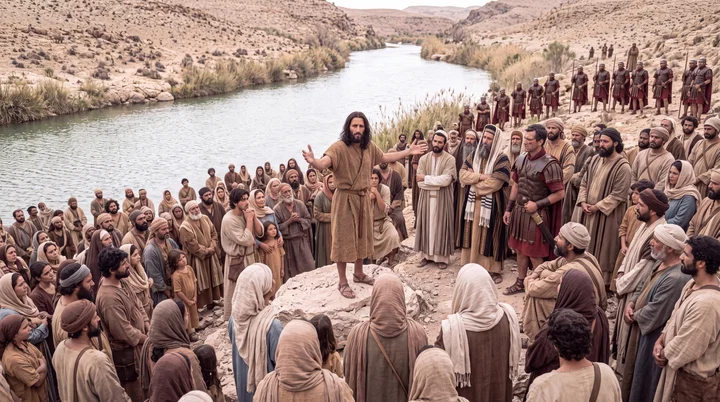
And the soldiers likewise demanded of him, saying, And what shall we do? And he said unto them, Do violence to no man, neither accuse any falsely; and be content with your wages.
Translations
And the soldiers likewise demanded of him, saying, And what shall we do? And he said to them, Do violence to no man, neither accuse any falsely; and be content with your wages.
King James Version, KJV Cambridge Paragraph Bible
And the soldiers likewise demanded of him, saying, And what shall we do? And he said unto them, Do violence to no man, neither accuse any falsely; and be content with your wages.
And the soldiers likewise asked him, saying, And what shall we do? And he said to them, Do violence to no man, neither accuse any falsely, and be content with your wages.
And soldiers also asked him, saying, And we, what must we do? And he said unto them, Do violence to no man, neither exact anything wrongfully; and be content with your wages.
And soldiers also asked him, saying, And we, what must we do? And he said unto them, Extort from no man by violence, neither accuse any one wrongfully; and be content with your wages.
And questioning him also were those warring, saying, 'And we, what shall we do?' and he said unto them, 'Do violence to no one, nor accuse falsely, and be content with your wages.'
And persons engaged in military service also asked him saying, And we, what should we do? And he said to them, Oppress no one, nor accuse falsely, and be satisfied with your pay.
Then were questioning him, soldiers also, saying—What shall, even we, do? And he said unto them—Molest ye, no one, neither accuse falsely; and be content with your supplies.
Berean Standard Bible, Majority Standard Bible
Then some soldiers asked him, “ And what should we do?”“ Do not take money by force or false accusation,” he said. “ Be content with your wages.”
Soldiers also asked him, saying, “ What about us? What must we do?”He said to them, “Extort from no one by violence, neither accuse anyone wrongfully. Be content with your wages.”
And men of the army put questions to him, saying, And what have we to do? And he said to them, Do no violent acts to any man, and do not take anything without right, and let your payment be enough for you.
The souldiers likewise demaunded of him, saying, And what shall we doe? And he saide vnto them, Doe violence to no man, neither accuse any falsely, and be content with your wages.
Douay-Rheims (Challoner revision)
And the soldiers also asked him, saying: And what shall we do? And he said to them: Do violence to no man; neither calumniate any man; and be content with your pay.
Pictures

Cross-references
- Matthew 3:1-12
In those days came John the Baptist, preaching in the wilderness of Judaea,
John’s preaching calls for repentance and righteous conduct.
- Exodus 20:13
Thou shalt not kill.
The prohibition on violence is linked to the command not to kill.
- Exodus 23:7
Keep thee far from a false matter; and the innocent and righteous slay thou not: for I will not justify the wicked.
Both warn against making false accusations.
- Matthew 5:39
But I say unto you, That ye resist not evil: but whosoever shall smite thee on thy right cheek, turn to him the other also.
Jesus’ teaching not to resist evil harmonizes with doing violence to no one.
- Matthew 26:52
Then said Jesus unto him, Put up again thy sword into his place: for all they that take the sword shall perish with the sword.
Jesus tells Peter to put away his sword and warns against violence.
- Luke 3:9
And now also the axe is laid unto the root of the trees: every tree therefore which bringeth not forth good fruit is hewn down, and cast into the fire.
John’s warning about bearing good fruit frames the soldiers’ question.
- Mark 1:1-8
The beginning of the gospel of Jesus Christ, the Son of God;
Both describe John the Baptist’s ministry as Christ’s forerunner.
- Luke 3:10
And the people asked him, saying, What shall we do then?
Both ask what they should do in response to John's message.
- Romans 12:17-19
Recompense to no man evil for evil. Provide things honest in the sight of all men.
harmonizes with do violence to no man
- 1 Thessalonians 5:15
See that none render evil for evil unto any man; but ever follow that which is good, both among yourselves, and to all men.
harmonizes with do violence to no man
- 1 Timothy 6:6
But godliness with contentment is great gain.
Godliness with contentment is described as great gain.
- Romans 13:10
Love worketh no ill to his neighbour: therefore love is the fulfilling of the law.
Love does no harm to a neighbor, reinforcing the command against violence.
- Luke 3:1-3
Now in the fifteenth year of the reign of Tiberius Cæsar, Pontius Pilate being governor of Judæa, and Herod being tetrarch of Galilee, and his brother Philip tetrarch of Ituraea and of the region of Trachonitis, and Lysanias the tetrarch of Abilene,
Historical details date John’s preaching before Jesus’ ministry.
Commentary
Each commentary is drawn from primary sources: the writings of Ellen G. White and Adventist pioneers and periodicals. Each commentary is separate. Its own words are not a quotation; follow the references to read the source passages.
Ellen G. White
12 sources
John's answer to the soldiers who asked what they should do commands them to stop harming people, to stop making false accusations, and to stop complaining about their pay and seeking more, but to practice justice, honesty, restraint and contentment.Lt 270, 1907, par. 8–13Ms 121c, 1898, par. 8DA 105.1–2ApM 58.1–59.2
The question belongs to John's ministry as the forerunner raised up to prepare the way by calling Israel to repentance and conversion, when soldiers in Roman service with princes and rabbis, publicans and peasants were alarmed and cut to the heart by God's warning, and many repented and were baptized to share in the kingdom he announced.Lt 270, 1907, par. 8–13Ms 43, 1891, par. 19–20Lt 19a, 1897, par. 8–10DA 97.2DA 105.1–2
Repentance must be practical and seen in honest and just conduct, so these concrete duties are fruits worthy of repentance and evidence of fitness for Christ's kingdom, without which life is like chaff given to the fire, yet they do not require leaving one's occupation but being faithful to God in it and reforming its unjust practices by God's statutes.Lt 270, 1907, par. 8–13Ms 121c, 1898, par. 8Lt 19a, 1897, par. 8–10DA 150.3
The life required of all subjects of Christ's kingdom shows kindness, honesty and fidelity with justice, mercy and the love of God by the transforming power of the Holy Spirit in ministering to the needy, shielding the defenseless and giving an example of virtue and compassion, and John's message is to be studied by present workers so that putting wrong practices away becomes part of the reformation of heart, mind and soul.Lt 270, 1907, par. 8–13Ms 43, 1891, par. 19–20DA 107.2–3
Setting and Hearers
Luke 3:14 belongs to the ministry of John as the forerunner raised up from among the faithful in Israel to prepare the ways, as part of his call to repentance and conversion in Luke 3:2-18.Ms 43, 1891, par. 19–20DA 97.2 Those who came to hear John included soldiers serving Roman power, together with princes and rabbis, publicans and peasants.Lt 19a, 1897, par. 8–10DA 105.1–2Ms 121c, 1898, par. 4 They listened with the other hearers.Ms 121c, 1898, par. 4
The solemn warning from God alarmed the soldiers for a time.DA 105.1–2 They went away cut to the heart with a sense of their sins.Ms 121c, 1898, par. 4 So with the others in Luke 3:10-14 they asked what they should do.Lt 270, 1907, par. 8–13ApM 58.1–59.2DA 107.2–3 Many were brought to repentance and received baptism, and persons of all ranks submitted to the Baptist's requirement in order to participate in the kingdom he announced.DA 105.1–2
Repentance in Daily Conduct
John's answer to the soldiers commands them to do violence to no one, to accuse none falsely, and to be content with their wages.Lt 270, 1907, par. 8–13Ms 121c, 1898, par. 8RH Jan 14, 1873Ms 43, 1891, par. 19–20 That means to stop abusing and harming people, to stop making false accusations, and to stop discontentedly seeking more pay or complaining about pay.Lt 270, 1907, par. 8–13Ms 121c, 1898, par. 8RH Jan 14, 1873Lt 19a, 1897, par. 8–10 The commands express justice, honesty, restraint, contentment, and practical godliness.Ms 121c, 1898, par. 8RH Jan 14, 1873Ms 43, 1891, par. 19–20Lt 19a, 1897, par. 8–10ST Oct 18, 1877
Repentance must be practical and be seen in honest and just conduct in daily life.Lt 270, 1907, par. 8–13Ms 121c, 1898, par. 8RH Jan 14, 1873Ms 43, 1891, par. 19–20 These concrete duties are fruits worthy of repentance and evidence of faith, virtuous character, goodness and fidelity.Lt 270, 1907, par. 8–13RH Jan 14, 1873Ms 43, 1891, par. 19–20ST Oct 18, 1877 By them soldiers become fit subjects of Christ's kingdom.RH Jan 14, 1873ST Oct 18, 1877 Without such a life they are like chaff given to the fire.DA 107.2–3
The verse does not tell soldiers or others to abandon their ordinary duties or leave their occupation.Ms 121c, 1898, par. 8DA 150.3 Repentance is to be shown by faithfulness to God where they were called to serve and by reforming its unjust practices.Ms 121c, 1898, par. 8DA 150.3 Though their service under Roman power could provoke insubordination and defiance, John appealed to God's statutes rather than to Roman laws.Lt 19a, 1897, par. 8–10
The life required of all who become subjects of Christ's kingdom will show kindness, honesty, and fidelity with justice, mercy, and the love of God through the transforming power of the Holy Spirit.ST Oct 18, 1877DA 107.2–3 It will minister to the needy, bring offerings to God, shield the defenseless, and give an example of virtue and compassion.DA 107.2–3 The message John gave to the people of his day is to be studied to advantage by present workers, bearing fruit rather than disappointing Christ's expectation.Lt 270, 1907, par. 8–13Ms 43, 1891, par. 19–20 Putting wrong practices away is part of the reformation of heart, mind, and soul needed by those who profess faith in Christ. The question of what to do in Luke 3:10-14 makes repentance practical through concrete duties and applies to the cause of moral purity, especially to parents to guard children from influences that encourage unchastity, teach them early, correct dangerous behavior, and instruct them about the consequences of impurity.ApM 58.1–59.2
Sources
Pioneers and periodicals
28 sources
Soldiers with awakened consciences came to John with the people and the tax collectors asking what they must do to have part in God's kingdom, showing his call summoned every station of life to repentance and confession of sin.ST Apr 10, 1907ST Oct 22, 1912ST Dec 26, 1892 His answer commanded them to do no abusive violence to anyone, to make no false accusation and take nothing by extortion, and to be content with their wages.RH Sep 30, 1862RH Sep 30, 1862ST Jan 10, 1900ST Jan 18, 1899ST Jan 10, 1900 Such repentance must bear fruit in a reformed heart and life, in sorrow for sin, confession and forsaking of wrong, and honesty toward God and man as subjects of Christ's kingdom.ST Apr 10, 1907ST Jan 18, 1899 John spoke to them as men still in service and required justice, humanity and fidelity in daily conduct rather than mere religious feeling, with his rebuke aimed directly at their besetting sins of violence and greed.RH Sep 30, 1862RH Sep 30, 1862ST Apr 10, 1907RH Sep 30, 1862 Those who held the stricter understanding taught that the command means literally no violence to any man and a putting up of the sword for spiritual warfare and peace, so that a repentant soldier could no longer remain a man of war.RH Oct 29, 1914RH Aug 14, 1856ST Apr 9, 1902RH Dec 16, 1862
Question and Historical Setting
Soldiers came to John together with the people in general and the tax collectors, asking what they should do to have a part in God's kingdom and to be saved.ST Apr 10, 1907ST Oct 22, 1912ST Dec 26, 1892 Their coming for baptism and confession of sin shows that his message called people from every station of life to repentance.ST Oct 22, 1912ST Jun 3, 1875ST Jun 6, 1900 Their consciences were aroused as he reproved and warned Israel, and their question belonged to the response to his preaching and baptism.ST Apr 10, 1907ST Dec 26, 1892ST Jun 6, 1900
The soldiers John addressed were serving in Herod's army as it marched against Aretas.RH Sep 30, 1862RH Sep 30, 1862RH Sep 30, 1862 Aretas's daughter had left Herod over his mistreatment of her, and the campaign supported Herod's unlawful marriage to Herodias and his transgression.RH Sep 30, 1862RH Sep 30, 1862RH Sep 30, 1862 Roman soldiers of that time could intimidate even their commanders and demand extra payments when emperors or governors changed. They complained about their pay, and amid that discontent they asked John what they should do.
Luke's account places the baptism of Jesus in the fifteenth year of Tiberius when Jesus was about thirty years old, which gives a chronological limit for determining the period of Jesus' birth.RH Apr 16, 1908 John's preaching was a special call to repentance and return to God's law to prepare a people for Christ because the Messiah was at hand.ST Aug 28, 1901RH Jul 7, 1874ST Aug 7, 1901 It restored downtrodden truth as the gospel message for that time, faithfully rebuking sin among religious leaders and rulers.ST Aug 28, 1901ST Sep 20, 1883ST Aug 7, 1901 It also rebuked the low business morals and formalism of the day, and that call could have averted the destruction of the people and city if received with all the heart.ST Sep 20, 1883RH Jul 7, 1874ST Aug 7, 1901
Meaning of John's Commands
John told the soldiers to treat people justly by using no abusive force or violence, making no false accusations, taking nothing wrongfully or by extortion, and being content with their wages.ST Jan 10, 1900ST Jan 18, 1899ST Jan 10, 1900ST Jan 18, 1899 Repentance for soldiers therefore shaped conduct, requiring them to stop injuring anyone, stop using force to extort people, and accept their pay without discontent.ST Jan 18, 1899ST Jan 10, 1900ST Jan 18, 1899ST Jan 17, 1906 To do violence to no man means to show humanity and to restrain unnecessary violence, plunder, extortion by force, and lustful and lawless conduct.RH Sep 30, 1862RH Sep 30, 1862
His answer was exactly suited to their case because he knew their besetting sins of violence and greed, brought those sins home to their hearts, and searched their motives.ST Apr 10, 1907 He applied truth directly to personal conduct rather than speaking only about sin in general, which was especially striking since soldiers of that time could intimidate even their commanders and demand extra payments when rulers changed. That word to do no violence, accuse none falsely, and be content with wages rebuked the low condition of morals that invaded even business and sacred life, calling for repentance and return to obedience that could have averted the destruction of the people and city if received with all the heart.ST Aug 7, 1901
These duties express justice, honesty, goodness, fidelity, and practical godliness in daily life, requiring an orderly and upright life rather than mere religious emotion.ST Oct 18, 1877ST Jun 3, 1875 Genuine sorrow for sin leads a person to do right, so those who would belong to Christ's kingdom must act with principle instead of selfishness.ST Oct 18, 1877ST Jun 3, 1875 The counsel to be content was given to men already serving amid complaints about pay, and it is not by itself an endorsement of enlistment, since refusing violence is incompatible with a soldier's role in battle.ST Jul 14, 1898 Discontent does not raise pay, while acceptance without discontent rejects dishonesty and greed.ST Jul 14, 1898
Repentance and Military Service
Repentance must produce reformation of heart, mind, and soul in concrete fruits worthy of repentance, putting wrong practices away rather than resting in mere religious emotion.ST Jan 18, 1899ST Jun 3, 1875 It is genuine sorrow for sins that have injured self and others and have grieved and dishonored the Lord, leading to confession and renunciation of sin, amendment of life, and bearing the fruits of righteousness.ST Jun 3, 1875RH Nov 12, 1914 That amendment requires honesty in all relations of life toward both God and man, an orderly and upright life of doing right, and thereby fitness as subjects of Christ's kingdom.RH Jan 14, 1873ST Jun 3, 1875RH Nov 12, 1914 God still answers the question what must be done to be saved by revealing besetting sins and bringing them home to the heart and searching motives, and He gives the willing and trusting person will and strength to forsake all unrighteousness and to do known duty.ST Apr 10, 1907
The weight of teaching holds that the command does not forbid soldiers from fighting in every circumstance but calls them to humane conduct while remaining in service, without wrongful violence, false accusation, plunder, or discontent with military pay.RH Sep 30, 1862RH Sep 30, 1862RH Sep 30, 1862 The reference to wages shows they were addressed as soldiers already serving, not commanded to abandon the army, and humanity here means restraint from unnecessary violence and pillage and from lustful and lawless conduct.RH Sep 30, 1862RH Sep 30, 1862 Those who held this view noted that these soldiers were marching in Herod's army against Aretas after Aretas's daughter left Herod over mistreatment, in a campaign supporting Herod's wrongdoing and unlawful marriage to Herodias, yet John's instruction addressed their conduct as soldiers.RH Sep 30, 1862RH Sep 30, 1862 From that same example it was also taught that serving in an unjust war is wrong.RH Sep 30, 1862
Against that limiting interpretation, others taught that the command means literally no violence to any man, not merely humanity and abstinence from unnecessary violence and pillage on private authority while still doing violence when officers require it.RH Dec 16, 1862 National warfare itself is violence and pillage, so a soldier who obeys officers must do violence and thereby violates the command, and pay for soldiering does not excuse fighting when required.RH Dec 16, 1862 John laid the axe at the root to cut down every corrupt tree not bringing forth good fruit, so if those soldiers repented and brought forth fruits meet for repentance and became servants of Christ they could no longer remain as men of war to maintain a cause involving transgression of the seventh commandment.RH Dec 16, 1862 This literal prohibition agrees with the Saviour's teaching not to resist evil and with Paul's command to follow only what is good and leave vengeance to God.RH Dec 16, 1862
The verse is a Christian demand to put up the sword and work for peace and righteousness.RH Oct 29, 1914 The follower's calling is not to fight other people with weapons but to engage in spiritual conflict using God's word and prayer and to pursue peace, so the command not to use violence is incompatible with fighting and harming others in battle.RH Aug 14, 1856ST Apr 9, 1902 Its counsel to men already serving in the army is therefore not an endorsement of enlistment, since refusing violence would be incompatible with a soldier's role in battle.ST Jul 14, 1898 Believers are exhorted by it to avoid violence even amid threats and opposition, and to accept military pay without discontent, greed, and dishonesty, since discontent does not increase wages.ST Jul 14, 1898RH Oct 13, 1863
Sources