Luke 9:54
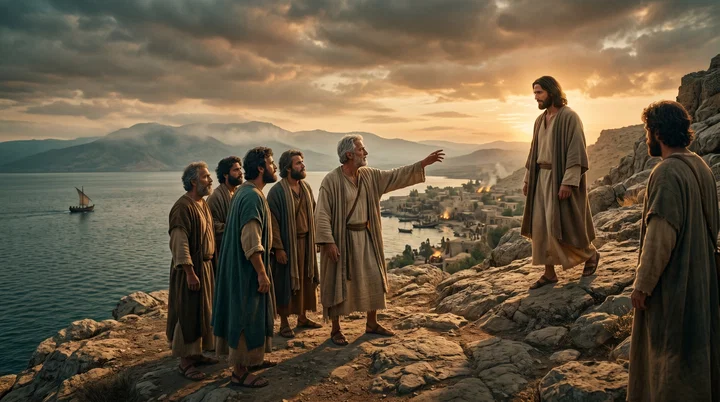
And when his disciples James and John saw this, they said, Lord, wilt thou that we command fire to come down from heaven, and consume them, even as Elias did?
Translations
And when his disciples James and John saw this, they said, Lord, will you that we command fire to come down from heaven, and consume them, even as Elias did?
King James Version, KJV Cambridge Paragraph Bible
And when his disciples James and John saw this, they said, Lord, wilt thou that we command fire to come down from heaven, and consume them, even as Elias did?
And when his disciples James and John saw this, they said, Lord, wilt thou that we command fire to come down from heaven, and consume them, even as Elijah did?
Revised Version, American Standard Version
And when his disciples James and John saw this, they said, Lord, wilt thou that we bid fire to come down from heaven, and consume them?
And his disciples James and John having seen, said, 'Sir, wilt thou [that] we may command fire to come down from the heaven, and to consume them, as also Elijah did?'
And his disciples James and John seeing [ it] said, Lord, wilt thou that we speak [ that] fire come down from heaven and consume them, as also Elias did?
And the disciples James and John, seeing it, said—Lord! wilt thou, that we bid fire come down from heaven, and destroy them?
When the disciples James and John saw this, they asked, “ Lord, do You want us to call down fire from heaven to consume them?”
When His disciples James and John saw this, they asked, “ Lord, do You want us to call down fire from heaven to consume them, just as Elijah did?”
When his disciples, James and John, saw this, they said, “ Lord, do you want us to command fire to come down from the sky and destroy them, just as Elijah did?”
And when his disciples, James and John, saw this, they said, Lord, may we send fire from heaven and put an end to them?
And when his disciples, Iames and Iohn sawe it, they saide, Lord, wilt thou that we commaund, that fire come downe from heauen, and consume them, euen as Elias did?
Douay-Rheims (Challoner revision)
And when his disciples James and John had seen this, they said: Lord, wilt thou that we command fire to come down from heaven, and consume them?
Pictures
Cross-references
- 2 Kings 1:10-12
And Elijah answered and said to the captain of fifty, If I be a man of God, then let fire come down from heaven, and consume thee and thy fifty. And there came down fire from heaven, and consumed him and his fifty.
Elijah calls down fire from heaven, the example James and John invoke.
- Matthew 26:52
Then said Jesus unto him, Put up again thy sword into his place: for all they that take the sword shall perish with the sword.
Jesus rebukes disciples for using force in his cause.
- Matthew 5:44
But I say unto you, Love your enemies, bless them that curse you, do good to them that hate you, and pray for them which despitefully use you, and persecute you;
Love and pray for persecutors instead of calling down judgment on them.
- Romans 12:19
Dearly beloved, avenge not yourselves, but rather give place unto wrath: for it is written, Vengeance is mine; I will repay, saith the Lord.
Disciples are told to leave vengeance to God, not avenge themselves.
- John 12:47
And if any man hear my words, and believe not, I judge him not: for I came not to judge the world, but to save the world.
Jesus came to save those who reject him, not to destroy them.
- Mark 3:17
And James the son of Zebedee, and John the brother of James; and he surnamed them Boanerges, which is, The sons of thunder:
James and John, who sought to call down fire, were named sons of thunder.
- Luke 9:49
And John answered and said, Master, we saw one casting out devils in thy name; and we forbad him, because he followeth not with us.
John shows the same judging, exclusive spirit among the disciples.
- John 18:11
Then said Jesus unto Peter, Put up thy sword into the sheath: the cup which my Father hath given me, shall I not drink it?
Both forbid defending Christ by force.
- Matthew 5:39
But I say unto you, That ye resist not evil: but whosoever shall smite thee on thy right cheek, turn to him the other also.
Both forbid retaliation against enemies.
- John 18:36
Jesus answered, My kingdom is not of this world: if my kingdom were of this world, then would my servants fight, that I should not be delivered to the Jews: but now is my kingdom not from hence.
Christ’s kingdom is not defended or advanced by worldly force.
- Romans 12:14
Bless them which persecute you: bless, and curse not.
Returning blessing for cursing counters the desire to call down anger.
- Deuteronomy 32:35
To me belongeth vengeance, and recompence; their foot shall slide in due time: for the day of their calamity is at hand, and the things that shall come upon them make haste.
God claims vengeance as his own.
- Romans 12:21
Be not overcome of evil, but overcome evil with good.
taught instead of retaliatory fire
- 1 Peter 2:23
Who, when he was reviled, reviled not again; when he suffered, he threatened not; but committed himself to him that judgeth righteously:
Christ endured insult without retaliation, unlike the disciples’ proposed response.
- Leviticus 19:18
Thou shalt not avenge, nor bear any grudge against the children of thy people, but thou shalt love thy neighbour as thyself: I am the LORD.
Cited with the command not to take vengeance.
- Hebrews 10:29-30
Of how much sorer punishment, suppose ye, shall he be thought worthy, who hath trodden under foot the Son of God, and hath counted the blood of the covenant, where with he was sanctified, an unholy thing, and hath done despite unto the Spirit of grace?
Cited in support of God’s authority to repay.
Commentary
Each commentary is drawn from primary sources: the writings of Ellen G. White and Adventist pioneers and periodicals. Each commentary is separate. Its own words are not a quotation; follow the references to read the source passages.
Ellen G. White
31 sources
On His final open journey toward Jerusalem to give His life to save the lost, Jesus sent messengers to ask refreshment in a Samaritan village, but because He seemed bound for Jerusalem they refused Him even a wayfarer's welcome and lost the blessing of His presence.Lt 21, 1901, par. 18–19DA 485.1–3AA 540.1–541.1DA 485DA 487.2–3 Seeing the slight to One they reverenced, James and John were filled with indignant surprise and asked leave to command fire from heaven to consume the offenders, as Elijah did to the captains and their companies sent to seize him.4SP 386.3GC88 570.2Ms 55, 1894, par. 7–8 Jesus looked on them with pity and pain and rebuked them that they did not know what manner of spirit they were of, for the Son of man came not to destroy men's lives or to bring judgment but to save them and to show mercy.4SP 386.3GC88 570.2Ms 55, 1894, par. 7–8 His work is never to force entrance, compel conscience, resent disrespect, or condemn and destroy those who withhold homage, but to advance His kingdom by love, mercy, peace and persuasion unto willing, voluntary service.4SP 386.3GC88 570.2DA 838.1–2 A revengeful, compelling and persecuting spirit that would punish rejecters under zeal for righteousness is opposite to Christ and comes from Satan, exposing any claim to act as His vicar while practicing it.4SP 386.3GC88 570.2Ms 62, 1886, par. 60–64 So His servants must never answer contempt, neglect or insult with resentment, retaliation or desire for divine punishment, but must learn from Him meekness, forbearance and tender love, as John himself did when he repented of his violent temper and was transformed by daily closeness to Christ.Ms 55, 1894, par. 7–8Ms 55, 1886, par. 28–302T 566.1–2Lt 338, 1905, par. 7SC 73.1
Setting and Request
The verse belongs to Jesus' final public journey toward Jerusalem, made openly so that attention would be fixed on His coming sacrifice where He would give His life to bring salvation to the lost world.DA 485.1–3DA 485 It records James and John asking whether they should call down fire from heaven to destroy a Samaritan village, following the example of Elijah, as they traveled toward Jerusalem.DA 485.1–3DA 485
On that journey He sent messengers ahead into a Samaritan village to request refreshments for Him.Lt 21, 1901, par. 18–19AA 540.1–541.1 Because He appeared desirous of passing on toward Jerusalem the Samaritans envied Him and refused Him hospitality and welcome, withholding even the courtesies due a common wayfarer.Lt 21, 1901, par. 18–19AA 540.1–541.1DA 487.2–3ST Nov 2, 1882 By that refusal they lost the blessing His presence would have brought, for He never urges His presence on any.AA 540.1–541.1 The disciples knew His purpose was to bless the Samaritans, so their coldness, jealousy and disrespect stood out all the more sharply against His intent to do them good.AA 540.1–541.1DA 487.2–3ST Nov 2, 1882
Seeing this slight and disrespect to One they so highly reverenced, James and John were filled with surprise, indignation and wounded feeling at the contempt shown to their Lord.4SP 386.3GC88 570.2Ms 55, 1894, par. 7–8Ms 62, 1886, par. 60–64AA 540.1–541.1 In that zeal they felt the insult was too great to pass over without immediate punishment, and angered by the rejection they asked whether they should command fire to come down from heaven to consume them, even as Elias did.BS 49.2–50.1Lt 21, 1901, par. 18–19AA 540.1–541.1DA 487.2–3ST Nov 2, 1882 Their call for fire referred to Elijah's destruction of the captains and their companies sent to take him.4SP 386.3GC88 570.2Ms 55, 1894, par. 7–8GC 570.2AA 540.1–541.1 Those who hold it describe them as the Syrian captains.BS 49.2–50.1Ms 62, 1886, par. 60–64
Christ's Rebuke and Mission
Jesus was pained by the words of James and John when, indignant at the disrespect shown to their Lord by the Samaritans who rejected Him, they proposed to call down fire from heaven to destroy them after the example of Elijah.Ms 55, 1894, par. 7–8GC 570.2BS 49.2–50.1Ms 62, 1886, par. 60–64 He looked with pity upon His disciples and rebuked their harsh spirit, telling them that they did not know what manner of spirit they were of.4SP 386.3GC88 570.2Ms 55, 1894, par. 7–8Ms 62, 1886, par. 60–64 He declared that the Son of man came not to destroy men's lives but to save them.4SP 386.3GC88 570.2GC 570.2BS 49.2–50.1Ms 62, 1886, par. 60–64 His mission was to show mercy, not to bring judgment.Ms 55, 1894, par. 7–8Ms 62, 1886, par. 60–64
The request proves that His work is not to compel men to receive Him nor to judge men for belief.DA 838.1–2AA 540.1–541.1Ms 99, 1894, par. 2–3 He never uses force against those who reject Him, never forces His way in where He is unwelcome, and never resents disrespect.4SP 386.3AA 540.1–541.1Ms 99, 1894, par. 2–3 He never consigns men to prison or the rack for refusing Him homage as King of Heaven, and never condemns to death those who do not accept Him.4SP 386.3GC88 570.2 His kingdom advances through mercy, love and peace, ever seeking to win by revealing His love and by persuasion.DA 838.1–2AA 540.1–541.1Ms 99, 1894, par. 2–3 He desires only voluntary service and the willing surrender of the heart under the constraint of love.AA 540.1–541.1
A revengeful and compelling spirit that would answer rejection with destruction is contrary to Christ.4SP 386.3Ms 62, 1886, par. 60–64AA 540.1–541.1 A cruel and persecuting spirit is opposite to Him, and comes from Satan and from men actuated by his spirit, who compel conscience and bring suffering under pretense of zeal for righteousness.GC88 570.2Ms 62, 1886, par. 60–64AA 540.1–541.1 To practice such cruelty while claiming to be His vicar proves the claim false.4SP 386.3GC88 570.2
His heart overflows with love, showing that love and sympathy must not be repressed.4SP 386.3GC88 570.2 The nearer man comes to moral perfection, the keener are his sensibilities, the more acute his perception of sin, and the deeper his sympathy for the afflicted.4SP 386.3GC88 570.2
Warning to Followers
The request to call down fire came from a harsh, indignant, vengeful, impulsive and destructive spirit, stirred by surprise and wounded feeling at the slight and disrespect shown to One the disciples highly reverenced.BS 49.2–50.1Ms 62, 1886, par. 60–64Ms 55, 1886, par. 28–30Ms 106, 1894, par. 9DA 487.2–3 In their zeal to defend the honor of their insulted Teacher they sought immediate punishment rather than reflecting His purpose to save, and thereby showed they did not know what manner of spirit they were of.Ms 55, 1894, par. 7–8Ms 62, 1886, par. 60–64Ms 55, 1886, par. 28–30DA 487.2–3ST Nov 2, 1882 What they needed to learn from Christ was meekness, humility, love, tenderness, forbearance and patience.BS 49.2–50.1ST Mar 8, 1905
That zealous but misguided wish to consume those who slighted and scorned their Master was of the same intensity and character as Saul's persecuting zeal, though directed differently and aimed in a different direction.3SP 305.2SLP 21.1AC1 37.27RED 37.2ST Dec 12, 1878 As James and John would have destroyed rejecters with fire from heaven, so Saul in his voluntary zeal dragged holy men before councils and had them imprisoned or condemned to death for faith in Jesus alone.7RED 37.2ST Dec 12, 1878
John did not naturally possess a gentle character, but a combative, violent and resentful temper that would answer injury and rejection with destruction.SC 73.1ST Mar 8, 1905 When reproved for wrongly wanting fire to destroy the Samaritans who refused to receive Christ, he accepted the correction and repented of his wrong spirit and conduct.Lt 338, 1905, par. 7Ms 82a, 1901, par. 32–40Ms 82, 1901, par. 29–37 Through daily closeness to Christ he came to see his own faults, yielded his temper to Christ, and learned tenderness, forbearance, humility and patience, until he was transformed by the Holy Spirit and Christ's love.SC 73.1ST Mar 8, 1905
The rebuke forbids Christ's servants to answer contempt, neglect or insult with resentment, retaliation, revenge, oppression, judgmental exclusion, or desire for divine punishment upon those who dishonor the truth.Ms 55, 1894, par. 7–8Ms 55, 1886, par. 28–302T 566.1–2RH Jan 7, 1902Ms 55, 1894, par. 9–10 Zeal for God and for His honor must be tempered, lest by using religion to punish or destroy it misrepresent Christ's character, whose mission was to show mercy and save lives, not to bring judgment.Ms 106, 1894, par. 92T 566.1–2Ms 55, 1894, par. 9–10Ms 21, 1893, par. 21–23 This correction is needed within His church, where love rather than oppression must be cultivated.RH Jan 7, 1902
The same warning applies against attacking or undermining others by words, actions or conduct.Ms 50, 1894, par. 16–19 Everyone who believes in Christ is precious to Him, and He treats harm done to people as harm done to Himself.Ms 50, 1894, par. 16–19
Sources
Pioneers and periodicals
73 sources
When a Samaritan village refused Jesus lodging because He was on His way to Jerusalem, James and John asked Him to let them call down fire from heaven to consume the villagers as Elijah did, but He rebuked them and quietly went to another village.ST Dec 4, 1893ST Jan 7, 1897ST Nov 14, 1895 Their request came from resentment at the insult and from lingering Jewish prejudice against Samaritans, a zeal for His honor without His tenderness, compassion and love.ST Nov 25, 1908ST Aug 21, 1893ST Mar 18, 1897ST Nov 3, 1881RH Oct 29, 1861 He rebuked them because they did not know what manner of spirit they were of, for He came not to destroy men's lives but to save them.ST Aug 21, 1893RH Jan 6, 1910ST May 26, 1898ST Sep 19, 1911ST Dec 4, 1893 Therefore belief must never be enforced or rejection punished by force or civil law, but the truth must win its way by humility, love and persuasion, while judgment on those who refuse is reserved to the last day.ST Nov 21, 1906ST Sep 25, 1901ST Feb 20, 1893ST Jul 13, 1904ST Oct 13, 1898
Setting and Request
A Samaritan village refused to receive Jesus and give Him hospitality and lodging when, weary and worn, He sought rest there because His face was set toward Jerusalem for worship.ST Nov 25, 1908ST Dec 4, 1893ST Jan 7, 1897ST Jul 4, 1899ST Jun 11, 1912 Two disciples sent ahead to secure lodging were turned away, and the refusal was because He was traveling toward Jerusalem to worship there.ST Dec 4, 1893ST Jan 7, 1897ST Jul 4, 1899ST Jun 11, 1912ST Jan 17, 1911
The refusal grew out of almost deadly Jewish-Samaritan hatred, for which the Jews were chiefly responsible through contempt and claims of superiority.ST Nov 25, 1886ST Dec 14, 1915ST Aug 4, 1881 They counted themselves far superior to the Samaritans and regarded them with contempt, treating them as dogs, and thought loyalty to their own people required enmity toward Samaritans.ST Nov 25, 1886ST Aug 4, 1881ST May 24, 1910 The conflict included disagreement over where to worship and hatred of Jerusalem, and the remaining Jewish prejudice was still strong in John at the first signs of hostility.ST Dec 14, 1915ST Aug 4, 1881ST May 24, 1910 This rejection came in an ungracious way a short time before Jesus told the parable of the good Samaritan, in which He made a Samaritan the hero of His story.ST Nov 25, 1886ST Dec 14, 1915
When James and John saw this they asked Jesus whether He willed that they command fire to come down from heaven to consume and destroy the villagers, even as Elijah did.ST May 14, 1894RH Jan 6, 1910ST May 26, 1898ST Jul 24, 1893 Their proposal to call down consuming fire followed the example of Elijah and was directed against those who would not receive Jesus.ST May 14, 1894ST Sep 27, 1910RH Jan 6, 1910ST May 26, 1898 They wanted fire to bring death to the Samaritan villagers who had refused to receive Him.ST May 14, 1894RH Jan 6, 1910ST May 26, 1898ST Jul 24, 1893
Jesus turned and rebuked them, refused to do anything of the kind, and calmly went with His disciples to another village that would receive Him and continued His work.ST Nov 14, 1895RH Mar 14, 1871ST Oct 3, 1878 He did not retaliate but displayed meekness and patient endurance when men treated Him badly, without becoming angry, taking offense, or quitting when unappreciated.ST Nov 14, 1895RH Mar 14, 1871ST Oct 3, 1878
Disciples' Wrong Spirit
The request sprang from resentment and indignation at the slight put upon Jesus when the Samaritans refused to receive Him, and from a desire to avenge that insult, contempt, rudeness and inhospitality with immediate punishment and retribution by fire from heaven to consume them.ST Aug 21, 1893ST Nov 17, 1881 It was the reflex of servants of an earthly king, who thought loyalty required them to call down curses upon the heads of those who committed or seemed to commit sin against their Master.ST Aug 21, 1893 It was egotism commending and exalting self, taking offense to the point of asking for destruction.RH Feb 10, 1859 That vengeful and intolerant impulse to be the instrument of God's vengeance rather than of His mercy decides the wicked are unfit to live and charges God with laxness for suffering them to live.ST Mar 18, 1897 The calm answer to such anger is to return good for evil and to show mercy and universal charity toward those who reject the message.ST Nov 17, 1881
It came also from lingering national prejudice and harsh Jewish hostility toward Samaritans, revealing how little had been learned of meekness, patience, humility, compassion and love.ST Nov 25, 1908ST Nov 3, 1881ST Nov 3, 1881 Weary and worn, Jesus sought rest where His face was set toward Jerusalem, and the refusal of hospitality was met with a wish to condemn and punish unbelief at once.ST Nov 25, 1908ST Nov 3, 1881 The appeal to what Elijah did expressed the mistaken belief that the Messiah's cause could be advanced through wrath and force.ST Nov 3, 1881
It came from personal pique, pride and selfish bigotry rather than true zeal for Christ, for love for Christ acts in a Christlike way.ST May 14, 1894 It came from an unconverted condition that did not see the principles of the kingdom.RH Feb 5, 1914 The readiness to wound, hurt, neglect and destroy those who did not think, speak and act as they did is a sign of spiritual immaturity and unripeness of character.RH Jan 1, 1901 It proved loss of first love and inability to represent the Lord in works of mercy and compassion, akin to striving for who should be greatest and for positions of honor, raising the question of remuneration, and taking the sword as Peter did.RH Mar 19, 1914 Even the naturally impetuous temper of the sons of thunder, with evil temper, revenge, a critical spirit, pride and ambition to be first, could be opened day by day to divine influence until hearing became doing.RH Jul 23, 1901 That the failure occurred after three years under special instruction, when they loved Jesus yet remained proud, self-seeking, heady, high-minded and not wholly devoted, yet were afterward fully converted, filled with the Spirit and overcame, gives hope that those who find grievous sins, envy, ill-will, pride and wrong speech in their own hearts can still overcome through faith.RH Jul 23, 1901
It was zeal for His honor and for right principles without His spirit and without the tenderness of the gospel, thinking proper regard for Jesus justified wrath when opposed.RH Oct 29, 1861ST Jul 14, 1887RH Sep 6, 1870 It was loyalty to their own party turned into an exclusive class and party spirit that would make His work a closed union of their own, although His heart was open to all classes including foreigners and Samaritans.ST Jun 12, 1907 It was selfish gatekeeping that presumed to guard Christ and control access to His power.ST Apr 16, 1896 Such zeal, harsh and unforgiving, self-seeking and desiring pre-eminence, opposite to meekness and gentleness, humility and forbearance, tenderness and love, cannot win souls or extend His cause, which is extended only in His spirit with love constraining the heart and the salvation of souls kept in view.ST Jul 14, 1887 The impulse warns believers to examine motives lest zeal be mixed with desire to defeat people rather than uphold what is right, and to wait patiently for God's purposes instead of seeking swift punishment.RH Sep 24, 1903
The disposition to hurt and destroy and to make men both judge and executioner proves ignorance of what manner of spirit they were of.ST Mar 18, 1897RH Feb 5, 1914 It is a harsh, unforgiving, self-seeking spirit opposite to Christ, even the spirit of Satan.RH Feb 5, 1914ST Jul 14, 1887 The desire to execute judgment on those who reject Christ is not possessed of the Spirit of Christ, and the path to glory and to God is self-denial, with greatness coming by serving rather than by ruling.ST Aug 21, 1893
Christ's Rebuke and Saving Mission
When the disciples asked to call down heavenly fire on the Samaritans who slighted Jesus by refusing to receive Him, He turned and rebuked them because they did not know what manner of spirit they were of.ST Aug 21, 1893ST May 26, 1898ST Jul 24, 1893ST Jul 4, 1899ST Dec 14, 1915 That rebuke exposed their failure to understand the spirit they should have shown, for calling down curses on the heads of those who commit or seem to commit sin is not actuated by the Spirit of Christ.ST Aug 21, 1893ST Jul 24, 1893ST Dec 14, 1915 Their ignorant, ill-considered proposal showed they did not understand the principle behind what they were saying.ST Mar 8, 1899 Force and destruction must therefore have no place among His followers toward those who reject Him.ST May 26, 1898
He declared the ground of the rebuke in His mission: the Son of Man came not to destroy men's lives but to save them.ST Aug 21, 1893RH Jan 6, 1910ST May 26, 1898ST Dec 4, 1893RH Mar 4, 1915 He came not to judge and condemn the world but to save the world.RH Jan 6, 1910ST Sep 19, 1911ST Dec 4, 1893ST Nov 21, 1906ST Sep 25, 1901 Judging and condemning persons belongs to God, while His work is carried out not through violence or force but through the Spirit.ST Sep 19, 1911ST Sep 25, 1901 Religious belief must thus not be enforced by coercion or punishment.ST Nov 21, 1906
Love does not compel faith, but offers salvation and leaves people free to accept or refuse it.ST Nov 25, 1908ST Jun 25, 1894 The light shines while judgment is suspended, mercy pleads, and the Holy Spirit touches the heart without forcing acceptance.ST Nov 25, 1908 Knowing Christ does not lead a person to compel others to profess faith in Him. The proper course toward rejection is therefore to leave and go elsewhere.ST May 26, 1898
All rejection is left to the judgment of the last day at His return, when every truth He spoke will be vindicated and every sinner will stand self-condemned by His word.ST Nov 25, 1908 Judgment belongs to the Lord and does not take place till the last day at His return, and not till then are His enemies destroyed, so there is no warrant for religious prosecution or persecution.ST Oct 13, 1898 The fire of judgment on His enemies is reserved chiefly for the future, and its delay does not make it uncertain.ST Jul 13, 1904 That gracious delay is for salvation, because He is gracious and merciful, slow to anger and of great kindness, and He calmly waits instead of destroying at once until the last soul who will accept His gracious terms has done so, when mercy ceases to act by limitation and there is no occasion for longer delay.ST Nov 25, 1908ST Jun 10, 1875RH Mar 11, 1875
In meekness He forbore to resent injuries and would do nothing of the kind the disciples proposed, refusing to answer rejection with punishment or revenge.RH Jan 27, 1863RH Mar 14, 1871ST Oct 3, 1878 He did not retaliate, defend Himself, take offense, become angry, or quit when unappreciated and criticized.RH Mar 14, 1871ST Oct 3, 1878 He calmly went to another village that would receive Him and continued His work and labor of doing good.RH Mar 14, 1871ST Oct 3, 1878 Such a meek spirit is not apt to be angry, forgives and forgets injury, denies self, expects no honor or good treatment, and endures rejection with patient continuance, which makes labor for Christ easy and restful.ST Oct 3, 1878
Elijah Example Explained
James and John's zeal in asking to command fire to come down from heaven was passionate and persecuting, though they supposed it sprang from proper regard for Jesus.RH Oct 29, 1861 Their wish was unlike Elijah's act, for Elijah acted without revenge to show that the Lord alone was God and should be sought in trouble, while they acted without understanding the principle behind that example.RH Oct 29, 1861 Circumstances that made destruction proper in Elijah's time did not make it proper for them, so the incident does not make Elijah's act a model for the disciples to imitate.ST Jul 13, 1904 Jesus directs disciples to copy deeds of mercy, not retribution.ST Jul 13, 1904
The fire of judgment on the Lord's enemies is reserved chiefly for the future, and its gracious delay does not make it uncertain.ST Jul 13, 1904 Their proposal to call down fire on a village that refused to receive Jesus, as Elijah had done, was ignorant and ill-considered.ST Mar 8, 1899 It was a companion to Peter's ill-considered suggestion to build shelters on the mountain, and Jesus rebuked the brothers because they did not understand the spirit behind what they were saying.ST Mar 8, 1899
No Coercion in Religion
Religious belief must never be enforced by coercion, compulsion, or punishment for refusal. ST Nov 21, 1906RH Mar 26, 1914RH Aug 4, 1910 The church has no authority to compel acceptance or to punish rejection with violence, for Christ's work is not advanced by coercion. ST Nov 21, 1906RH Mar 26, 1914RH Aug 4, 1910 His kingdom is not of this world, and those who truly know Him are not led to force others to profess faith. ST Oct 16, 1893ST Apr 23, 1912 When hospitality was refused, He did not coerce or condemn, but continued His work to save and serve rather than to force conduct. ST Nov 21, 1906ST Oct 16, 1893ST Apr 23, 1912
Force and destruction must have no place among His followers, who are to reject carnal weapons and vengeance and follow His example of mercy. RH Oct 16, 1856ST Feb 20, 1893ST Mar 3, 1898 Christians are not sent to bear the sword against enemies, and no retaliation for persecution belongs to Christ. RH Oct 16, 1856ST Jan 7, 1897ST Mar 3, 1898 To call for the sword or for civil law against others is the same thing, since civil law rests on physical force, and it acts in a spirit He condemns. ST Jan 7, 1897ST Aug 21, 1893 Religious observance must not be compelled by the civil sword nor violations of it met with civil penalties, but ministers are to persuade, entreat, reprove, and exhort with spiritual weapons. ST Feb 20, 1893ST Aug 21, 1893ST Mar 3, 1898 He never authorized His disciples to take the aggressive in reply to insult or conspiracy, but requires them to go as lambs among wolves, blameless and harmless, resisting not evil, overcoming evil with good, loving persecutors and praying for their conversion. ST Aug 21, 1893ST Mar 3, 1898
Temporal judgment and punishment must not be brought upon sinners for religious offenses. ST Jul 4, 1911ST Dec 24, 1896 Putting even a heretic to death is a greater heresy than the beliefs for which that person is condemned. ST Jul 4, 1911ST Nov 26, 1896
Answering insult with summary punishment is forbidden to His disciples. ST Apr 9, 1894ST Feb 6, 1896 Seeking authority to punish those who refuse to receive Him is an attempt to exercise magisterial power, which He rebuked as contrary to the spirit they should have. ST Feb 6, 1896ST May 14, 1894ST May 14, 1894 Trying to rule others in worship easily turns angry and coercive, unlike God, who loves, blesses, and pleads with patience and pity. ST Jan 31, 1911ST May 14, 1894 Punishing people for religious belief or for rejecting Christ, even when He Himself is openly rejected, is contrary to His saving work and comes from a spirit opposed to Him. ST May 14, 1894ST May 14, 1894ST May 14, 1894 Judging and condemning persons belongs to God, and persecuting others for belief is incompatible with One who came not to judge the world but to save it. ST May 14, 1894ST May 14, 1894
His work is not carried out through violence or force, but through the Spirit. ST Sep 25, 1901ST Sep 13, 1905ST Nov 3, 1881 His kingdom cannot be advanced by wrath and force, but depends on free, honest conviction and grows through humility, love, and free conviction rather than compulsion. ST Sep 25, 1901ST Nov 3, 1881ST Nov 3, 1881 Zeal for God never justifies punishing differences in worship, including disagreement over where to worship, for the impulse to enforce religious views by force comes from a wrong spirit. ST Nov 3, 1881ST Dec 14, 1915ST Jan 17, 1911 Using physical force by church or state to settle religious differences is therefore contrary to the Christian religion. ST Sep 13, 1905ST Dec 14, 1915
That same wrong spirit appears when so-called Christian governments are urged to wipe enemies from the map, as in the demand to wipe the Turkish domain from the map, which proves lack of His spirit. ST Jul 1, 1908ST Nov 19, 1896 It appears likewise in efforts for Sunday closing and Sunday laws, since He did not coerce or condemn those who rejected Him but saved and served. ST Oct 16, 1893ST Jul 1, 1908 It appears whenever the sword or civil law is called for against persecution and opposition, for religious matters are not to be enforced through human or civil power. ST Oct 16, 1893ST Jul 1, 1908ST Nov 19, 1896
Transformed Character and Conduct
John's early temper was judging, impetuous, resentful, revengeful, violent and ambitious, ready to call down fire to destroy a whole village that did not receive Christ as he thought it should.ST Jan 13, 1888ST Mar 8, 1905RH Mar 4, 1915RH Jul 23, 1901 When the Samaritans refused to receive Jesus because they thought He favored the Jews above them, he treated it as an insult demanding immediate retribution and wanted fire from heaven to consume them as Elijah had done.ST Jan 13, 1888RH Mar 4, 1915 Even John, one of those called sons of thunder, was not naturally meek and yielding but had evil temper, revenge, a critical spirit, pride, and ambition to be first in the kingdom.ST Mar 8, 1905RH Jul 23, 1901 Day by day as he beheld the tenderness of Jesus he opened his heart to divine influence and became not only a hearer but a doer of His words, and Christ bore with him day after day and by kindness and patience and tenderness and forbearance and humility and teaching by precept and example led him until he became the beloved disciple of love.ST Mar 8, 1905RH Mar 4, 1915RH Jul 23, 1901 That change proves that when erring and faulty disciples are not cast off all but one can be brought to repentance.RH Jul 23, 1901
The rebuke that they knew not what manner of spirit they were of exposes a spirit contrary to His meek, lowly, calm, forbearing and saving mission to save lives not destroy them.ST Oct 16, 1884ST Jan 13, 1888ST Jul 24, 1893 The episode therefore shows the need for hearts changed by God's Spirit, learning meekness, humility and love rather than answering disrespect, harshness and false accusation with vengeance.ST Oct 16, 1884ST Jan 13, 1888ST Jul 24, 1893 Revengeful thoughts, words and retaliation are foreign to Christ and must be guarded against and yielded to His moulding power, and insult is to be borne with loving forbearance and patience by drinking of His forgiving spirit, until beholding and copying Him banishes revenge and transforms the whole nature.ST Jan 13, 1888 Religious zeal must not be used to seek punishment for those who disagree.ST Jul 24, 1893
A meek spirit is not apt to be angry, does not defend itself or quit when unappreciated and criticized, forgives and forgets injury, seeks only to do good, denies self, expects no honor or good treatment, and endures rejection with patient continuance.RH Mar 14, 1871ST Oct 3, 1878ST Mar 3, 1898 Instead of becoming angry, taking offense, or retaliating, He calmly went to another village that would receive Him and continued His work, and His followers are to keep laboring on without growing weary or resentful, which makes labor for Christ easy and restful.RH Mar 14, 1871ST Oct 3, 1878ST Nov 17, 1881 They are never justified in taking the aggressive or offensive in reply to insult or conspiracy, but are to go as lambs among wolves, blameless and harmless, resisting not evil, returning good for evil, overcoming evil with good, loving persecutors and praying for their conversion, and warring with spiritual weapons rather than carnal weapons.ST Nov 17, 1881ST Mar 3, 1898 Sending the seventy to preach the kingdom in Samaria further showed that same spirit of mercy and universal charity.ST Nov 17, 1881
The destructive wish to call down fire on those who do not honor Jesus or who do not think, speak and act as disciples do is a failing that can still appear among Christ's followers and a lesson for reformers who share that punitive spirit.RH Jan 7, 1902ST Nov 14, 1906ST Jul 29, 1897RH Jan 1, 1901 It warns that Christ's servants must cultivate love, not oppression or judgmental exclusion of others.RH Jan 7, 1902 Zeal for God's cause can be mixed with desire to defeat people rather than uphold what is right, so believers should examine their motives and wait patiently for God's purposes instead of seeking swift punishment, and Christians who needlessly wound, hurt, or neglect others show they are still unripe and spiritually immature.RH Jan 1, 1901RH Sep 24, 1903
James and John showed this fault after three years under special instruction, loving Jesus yet proud, self-seeking, heady and high-minded and not wholly devoted to Him.RH Jul 23, 1901 They were afterward fully converted and filled with the Spirit, and overcame by the blood of the Lamb and the word of their testimony, loving not their lives unto death.RH Jul 23, 1901 Their fault therefore gives hope that those who find grievous sins, envy, ill-will, pride and wrong speech in their own hearts can still overcome through faith in His name.RH Jul 23, 1901 The path to glory and to God is self-denial, and greatness comes by serving rather than by ruling.ST Aug 21, 1893
Sources