1 Kings 19:10
And he said, I have been very jealous for the LORD God of hosts: for the children of Israel have forsaken thy covenant, thrown down thine altars, and slain thy prophets with the sword; and I, even I only, am left; and they seek my life, to take it away.
Translations
And he said, I have been very jealous for the LORD God of hosts: for the children of Israel have forsaken your covenant, thrown down your altars, and slain your prophets with the sword; and I, even I only, am left; and they seek my life, to take it away.
And he said, I have been very jealous for the LORD God of hosts: for the children of Israel have forsaken thy covenant, thrown down thine altars, and slain thy prophets with the sword; and I, even I only, am left; and they seek my life, to take it away.
And he said, I have been very jealous for the Lord God of hosts: for the children of Israel have forsaken thy covenant, thrown down thine altars, and slain thy prophets with the sword; and I, even I only, am left; and they seek my life, to take it away.
And he said, I have been very jealous for the LORD God of hosts: for the children of Israel have forsaken thy covenant, thrown down thy altars, and slain thy prophets with the sword; and I, I only, am left; and they seek my life to take it away.
And he said, I have been very jealous for the LORD, the God of hosts; for the children of Israel have forsaken thy covenant, thrown down thine altars, and slain thy prophets with the sword: and I, even I only, am left; and they seek my life, to take it away.
And he said, I have been very jealous for Jehovah, the God of hosts; for the children of Israel have forsaken thy covenant, thrown down thine altars, and slain thy prophets with the sword: and I, even I only, am left; and they seek my life, to take it away.
And he saith, 'I have been very zealous for Jehovah, God of Hosts, for the sons of Israel have forsaken Thy covenant — Thine altars they have thrown down, and Thy prophets they have slain by the sword, and I am left, I, by myself, and they seek my life — to take it.'
And he said, I have been very jealous for Jehovah the God of hosts; for the children of Israel have forsaken thy covenant, thrown down thine altars, and slain thy prophets with the sword; and I am left, I alone, and they seek my life, to take it away.
And he said—Very jealous, have I been, for Yahweh, God of hosts, because the sons of Israel have forsaken thy covenant, thine altars, have they thrown down, thy prophets, also have they slain with the sword,—and, I alone, am left, and they have sought my life, to take it.
Berean Standard Bible, Majority Standard Bible
“ I have been very zealous for the LORD, the God of Hosts,” he replied, “ but the Israelites have forsaken Your covenant, torn down Your altars, and killed Your prophets with the sword. I am the only one left, and they are seeking my life as well.”
He said, “ I have been very jealous for the LORD, the God of Armies; for the children of Israel have forsaken your covenant, thrown down your altars, and killed your prophets with the sword. I, even I only, am left; and they seek my life, to take it away.”
And he said, I have been burning for the honour of the Lord, the God of armies; for the children of Israel have not kept your agreement; they have made destruction of your altars, and have put your prophets to death with the sword: till I, even I, am the only one living; and now they are attempting to take away my life.
And he answered, I haue bene very ielous for the Lord God of hostes: for the children of Israel haue forsaken thy couenant, broken downe thine altars, and slayne thy Prophets with the sword, and I onely am left, and they seeke my life to take it away.
Douay-Rheims (Challoner revision)
And he answered: With zeal have I been zealous for the Lord God of hosts: for the children of Israel have forsaken thy covenant: they have thrown down thy altars, they have slain thy prophets with the sword, and I alone am left, and they seek my life to take it away.
Pictures


Cross-references 20 of 31
- 1 Kings 19:18
Yet I have left me seven thousand in Israel, all the knees which have not bowed unto Baal, and every mouth which hath not kissed him.
God reveals a faithful remnant who had not bowed to Baal.
- Romans 11:2-5
God hath not cast away his people which he foreknew. Wot ye not what the scripture saith of Elias? how he maketh intercession to God against Israel, saying,
Paul recalls God’s preservation of seven thousand in Elijah’s time.
- 1 Kings 18:36-39
And it came to pass at the time of the offering of the evening sacrifice, that Elijah the prophet came near, and said, LORD God of Abraham, Isaac, and of Israel, let it be known this day that thou art God in Israel, and that I am thy servant, and that I have done all these things at thy word.
God’s public vindication of Elijah at Carmel preceded his flight and discouragement.
- 1 Kings 18:4
For it was so, when Jezebel cut off the prophets of the LORD, that Obadiah took an hundred prophets, and hid them by fifty in a cave, and fed them with bread and water.)
Jezebel’s killing of the Lord’s prophets prompted Obadiah to hide and feed them.
- 1 Kings 19:4
But he himself went a day’s journey into the wilderness, and came and sat down under a juniper tree: and he requested for himself that he might die; and said, It is enough; now, O LORD, take away my life; for I am not better than my fathers.
Elijah’s death wish reveals the despair behind his complaint.
- 2 Kings 2:11
And it came to pass, as they still went on, and talked, that, behold, there appeared a chariot of fire, and horses of fire, and parted them both asunder; and Elijah went up by a whirlwind into heaven.
Elijah is taken up to heaven despite his discouragement and loneliness.
- 1 Kings 19:14
And he said, I have been very jealous for the LORD God of hosts: because the children of Israel have forsaken thy covenant, thrown down thine altars, and slain thy prophets with the sword; and I, even I only, am left; and they seek my life, to take it away.
Elijah repeats his complaint that he is alone and in danger.
- James 5:17
Elias was a man subject to like passions as we are, and he prayed earnestly that it might not rain: and it rained not on the earth by the space of three years and six months.
Elijah’s discouragement shows he shared human frailty.
- 1 Kings 19:15-17
And the LORD said unto him, Go, return on thy way to the wilderness of Damascus: and when thou comest, anoint Hazael to be king over Syria:
God directs Elijah to appoint agents to punish idolatrous Israel.
- 1 Kings 18:21-22
And Elijah came unto all the people, and said, How long halt ye between two opinions? if the LORD be God, follow him: but if Baal, then follow him. And the people answered him not a word.
Elijah describes Israel’s divided worship and says he alone remains a prophet of the Lord.
- 1 Kings 19:1-3
And Ahab told Jezebel all that Elijah had done, and withal how he had slain all the prophets with the sword.
Jezebel’s threat led Elijah to flee.
- 1 Kings 18:41-45
And Elijah said unto Ahab, Get thee up, eat and drink; for there is a sound of abundance of rain.
Rain followed Elijah’s faithful work, contrasting with his later discouragement.
- 1 Kings 18:22
Then said Elijah unto the people, I, even I only, remain a prophet of the LORD; but Baal’s prophets are four hundred and fifty men.
Elijah says he alone remains a prophet of the Lord.
- 1 Kings 18:13
Was it not told my lord what I did when Jezebel slew the prophets of the LORD, how I hid an hundred men of the LORD’s prophets by fifty in a cave, and fed them with bread and water?
Obadiah recounts hiding the Lord’s prophets from Jezebel’s slaughter.
- 1 Kings 18:40
And Elijah said unto them, Take the prophets of Baal; let not one of them escape. And they took them: and Elijah brought them down to the brook Kishon, and slew them there.
Elijah slays Baal’s prophets before fleeing in discouragement.
- Romans 11:5
Even so then at this present time also there is a remnant according to the election of grace.
Paul applies Elijah’s remnant to his own time.
- 1 Kings 18:19
Now therefore send, and gather to me all Israel unto mount Carmel, and the prophets of Baal four hundred and fifty, and the prophets of the groves four hundred, which eat at Jezebel’s table.
Elijah confronts Baal’s prophets before fleeing.
- 1 Kings 18:1
And it came to pass after many days, that the word of the LORD came to Elijah in the third year, saying, Go, shew thyself unto Ahab; and I will send rain upon the earth.
God sends Elijah to Ahab during the famine, contrasting with his wilderness flight.
- Romans 11:3
Lord, they have killed thy prophets, and digged down thine altars; and I am left alone, and they seek my life.
Repeats Elijah’s complaint of being left alone.
- Malachi 4:5-6
Behold, I will send you Elijah the prophet before the coming of the great and dreadful day of the LORD:
Elijah’s mission turns hearts before the day of the Lord.
Commentary
Each commentary is drawn from primary sources: the writings of Ellen G. White and Adventist pioneers and periodicals. Each commentary is separate. Its own words are not a quotation; follow the references to read the source passages.
Ellen G. White
29 sources
Elijah spoke these words at Horeb in answer to God's question why he was there, after fleeing Jezebel's threat to his life despite God's victory over Baal's prophets on Carmel, disappointed that no reformation had followed and having fled without being sent.Lt 62, 1900, par. 3–6PK 167.23T 291.3–292.1PK 168.1RH Oct 7, 1873 In them he declares his zeal for the Lord, charges Israel with forsaking the covenant, throwing down the altars and slaying the prophets, and says he alone is left and his life is sought, supposing Jezebel's persecution had left him the only faithful one escaped.Ms 116, 1899, par. 3–6Lt 62, 1900, par. 11–163T 291.3–292.1 His claim to stand alone was mistaken, for seven thousand had not bowed to Baal, showing that widespread unfaithfulness had not meant God had rejected all His people but a faithful remnant remained by grace.Ms 116, 1899, par. 3–6Lt 62, 1900, par. 11–16Ms 79, 1886, par. 23WAJP 2.1–2AA 375.2–376.2 The complaint expresses deep discouragement after self-sacrificing labor, when weary, disappointed and feeling his work defeated and his life undesirable, yet teaches that quiet trust and firm reliance will ever find God a present help and that heaven never forsakes integrity even in greatest weakness.3T 291.3–292.1RH Oct 7, 1873RH Oct 30, 1913 God's question and answer therefore call His children when opposition silences or drives them from duty to come out of hiding, keep in the way of duty without withdrawing, and return to their mission to let their light shine rather than remain under sadness and helplessness.PK 171.3PK 172.214MR 174.2Lt 19, 1895, par. 29Ms 40, 1890, par. 42–43
Elijah's Flight to Horeb
The words belong to Elijah's flight after Jezebel threatened his life, even though God had helped him defeat Baal's prophets on Carmel.Lt 62, 1900, par. 3–6PK 167.2 Disappointed that the display of divine power had not brought the reformation he expected, he lost courage and confidence in God's protection and fled without being sent.Lt 62, 1900, par. 3–6 Had he remained steadfast and trusted God, the impression made upon the king and people could have led to reformation, for the victory on Carmel had opened the way for further work among those drawn into Baal worship, yet he turned away from those opportunities.Lt 62, 1900, par. 3–6PK 167.2 His account of Israel's rebellion and the danger to his life reflects the weakness of his present position, driven from the work God intended him to do, and he needed to trust wholly in God to complete his work.PK 167.2
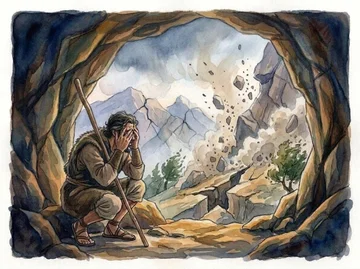
After receiving food and water from the angel, he traveled forty days and nights to Horeb and took refuge in a cave.PK 166.2PK 167.1PK 168.1 There God met him at the entrance of the cave while he was weary and discouraged.PK 167.1PK 168.1Lt 154, 1894, par. 2 In that encounter God sent to learn of his needs and to make clear His purpose for Israel.PK 167.1
The words are Elijah's answer to God's question about why he is there.3T 291.3–292.1PK 168.1RH Oct 7, 1873 God had sent him to Cherith, to the widow of Sarepta, and back to Israel to confront Baal worship at Carmel and to bear a message to Ahab in Samaria.PK 168.1RH Oct 7, 1873 But no one sent him on the long journey into the wilderness, and he has no errand there.PK 168.1RH Oct 7, 1873
In them he declares his zeal for the Lord and charges that the children of Israel have forsaken the covenant, thrown down the altars, and slain the prophets with the sword.Lt 62, 1900, par. 11–163T 291.3–292.1RH Oct 7, 1873WAJP 2.1–2AA 375.2–376.2 He says he alone is left and his life is sought to be taken away.Ms 116, 1899, par. 3–6Lt 62, 1900, par. 11–163T 291.3–292.1RH Oct 7, 1873WAJP 2.1–2 Jezebel's persecution was so severe that he supposed he was the only one who had escaped her power.Ms 116, 1899, par. 3–6
That belief that he was the only faithful worshiper left was mistaken and incomplete.Lt 62, 1900, par. 11–16Ms 79, 1886, par. 23 God's answer that seven thousand had not bowed to Baal shows that faithful people remained, including people living up to the light they had.Ms 79, 1886, par. 23 The surrounding account also shows that God would bring punishment on the wrongdoers.Lt 62, 1900, par. 11–16 The lesson encourages faithfulness in sharing God's truth and leaving the results to Him, trusting that others may be faithful even when they are not readily apparent.Ms 79, 1886, par. 23
God Preserves Faithful Remnant
Elijah's mournful complaint that Israel had forsaken the covenant, torn down God's altars and killed His prophets with the sword, leaving him alone with his own life threatened, is paired with God's answer that He had kept seven thousand in Israel who had not bowed to Baal.Ms 79, 1886, par. 23WAJP 2.1–2AA 375.2–376.2 Israel's widespread unfaithfulness did not mean God had rejected all His people, for a faithful remnant remained by His grace.WAJP 2.1–2AA 375.2–376.2 Elijah's view that he alone remained faithful was incomplete, since faithful people remained, including people living up to the light they had.Ms 79, 1886, par. 23 The lesson is faithfulness in sharing God's truth and leaving the results to Him, trusting that others may be faithful even when they are not readily apparent.Ms 79, 1886, par. 23
The verse illustrates that a servant of God may stand alone against powerful opponents amid national idolatry, as Elijah did during Ahab's reign when Israel had abandoned the covenant, destroyed the altars, killed the prophets and sought his life, yet remain supported by God and His word.ED 151.1–2GC88 142.1–2 His faithful warnings and service had borne a heavy burden, but after fleeing Jezebel's threats in weariness and weakness his faith failed and he prayed to die, so he did not complete the work he had begun.ED 151.1–2 The same is true today, with faithful ones scattered in every land who have not bowed to Baal.RH Nov 20, 1913 When God's judgments were falling on backsliding Israel Elijah counted only himself on the Lord's side, while in fact God had His hidden faithful; so now they are found in heathen Africa, in the Catholic lands of Europe and South America, in China, in India, in the islands of the sea and in all dark corners of the earth, among every nation, tongue and people.RH Nov 20, 1913
Like stars that appear only at night they will shine forth when darkness covers the earth and gross darkness the people, shining most brilliantly in the darkest night in the hour of deepest apostasy.RH Nov 20, 1913 That hour comes when Satan makes his supreme effort to cause all, under penalty of death, to receive the sign of allegiance to a false rest day.RH Nov 20, 1913 Therefore no one should attempt to number Israel today, but everyone should have a heart of flesh, a heart of tender sympathy reaching out like the heart of Christ for the salvation of a lost world.RH Nov 20, 1913 The thrown-down altars also picture neglected family and home religion, joined with abandoned first love and the religion of Christ expelled from the soul to give place to speculation and business enterprises.9MR 171.3–4 That condition is constantly multiplying when devotion, piety and godliness are not interwoven into every transaction and men leave God and heaven out of their calculations.9MR 171.3–4
Trust God Return to Duty
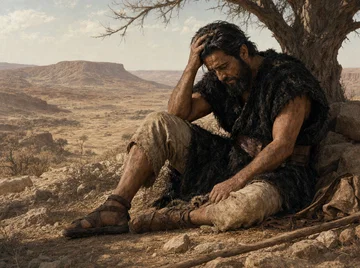
The complaint is the voice of deep discouragement after self-sacrificing labor, spoken when Elijah was weary and travel-worn with bitter disappointment crushing his spirits, seeing nothing desirable in life and even asking that he might die.RH Oct 30, 1913 His hope was gone and his life-work seemed threatened with defeat, his zeal for God's cause misunderstood and unappreciated, his counsels and reproofs slighted, and his efforts at reform repaid with hatred and opposition.RH Oct 30, 1913 Such despondency in a man of spiritual power pressed beyond measure is nothing strange or new, even in one of the mightiest of prophets, and it brings hope and courage to all tempted to despondency and distrust in assurance of God's watchful care, love, and power.RH Oct 30, 1913 In his hour of greatest weakness he learned the need and the possibility of trusting God under the most forbidding circumstances, and that heaven never forsakes him while he maintains his integrity.RH Oct 30, 1913
After bearing a heavy burden for Israel through three and a half years of famine and standing alone for God on Carmel where idolatry was cast down, he yielded once to human weakness, let go of faith, fled in weariness before Jezebel's threats, and alone prayed that he might die feeling his work was over and he alone was left.ED 151.1–2ST Nov 17, 1909 That failure of faith cut short his life-work so that the work he had begun he was not to complete, and God bade him anoint another to be prophet in his stead.ST Nov 17, 1909 Yet God had marked his heart-service, so he was not to perish in discouragement and solitude nor go down to the tomb but was to ascend with angels to the presence of glory.ST Nov 17, 1909 This declares that unbelief means failure and sin brings only shame and loss, but God's mercy reaches the deepest depths and faith lifts the repenting soul to share the adoption of the sons of God.ST Nov 17, 1909
God's answer to the grieving over covenant-breaking, destroyed altars, slain prophets, and hunted life manifests that quiet trust and firm reliance upon Him will ever find Him a present help in time of need.3T 291.3–292.1RH Oct 7, 1873 His history, carefully and prayerfully studied, helps God's people under difficulties to put trust not in the wisdom of men but in the Lord God of Israel as defense, to keep in the way of duty and not let fear discourage them.13MR 362.1Ms 6, 1889, par. 57 It teaches not to assume responsibilities God does not require and not to interpose between the Lord and His tempted and tried ones so that God's purposes in their experience are carried out.13MR 362.1 In trusting implicitly and waiting patiently and prayerfully with confidence in God they will see a wonderful display of His power.13MR 362.1
God's question about his presence there is put to His children when opposition or persecution silences them or drives them from their duty, calling them to return to the mission He gave them and preach the gospel.PK 171.3 They are called to come out of the cave and stand with God in listening obedience to hear what He will say, rather than remain under thoughts that bring sadness and helplessness, and to renew their witness for Christ.14MR 174.2Lt 19, 1895, par. 29Lt 10, 1892, par. 18–21 Standing to hear brings a person under divine guidance where the Comforter leads into all truth, taking the things of Christ and infusing them as living principles into hearts opened to receive them, so that hearing God results in knowing both the Father and the Son.14MR 174.2 The same call meets grief and shattered plans with grace to meet the trial.Lt 19, 1895, par. 11–12
Christians are not to withdraw from duty as he did in discouragement, but to come forth and stand with God and let their moral light shine into the world's darkness.Ms 40, 1890, par. 42–43Ms 40a, 1890, par. 50–52 The question is put to Christian families who know the truths of God's word to consider whether they should move to places where their gifts can serve people in spiritual need.PK 172.2 Answering that call requires self-sacrifice, and waiting for every obstacle to be removed leaves people without hope and without God.PK 172.2
Sources
Pioneers and periodicals
77 sources
Elijah spoke these words alone in a cave at Horeb the mount of God in answer to the word of Jehovah, What doest thou here, Elijah, after fleeing for his life from Jezebel's threat to kill him and traveling forty days and forty nights in the strength of the angel's food.ST Aug 24, 1904ST Aug 20, 1885ST Jul 7, 1898ST Aug 19, 1889 He declared that he had been very jealous for the Lord God of hosts while the children of Israel had forsaken His covenant, thrown down His altars and slain His prophets with the sword, so that he alone was left and they sought his life to take it away.RH Oct 23, 1913RH Oct 7, 1873ST Aug 24, 1904ST Jul 7, 1898 His cry came from weariness, discouragement and wounded zeal after self-sacrificing labor and standing alone on Carmel, and his belief that he stood alone was mistaken, for God had left seven thousand in Israel who had not bowed unto Baal, hidden loyalists scattered in secret places known to God though unknown to him.ST Aug 24, 1904RH Mar 5, 1914ST Jul 1, 1880RH Feb 21, 1865ST May 24, 1905 God met him not in wind, earthquake or fire but in a still, small voice, comforted and strengthened him, gently reproved his failure in duty, and set him to work again to anoint Hazael and Jehu and another to be prophet in his stead.ST Sep 7, 1904ST May 24, 1905ST Aug 19, 1889ST Jul 6, 1915ST Aug 7, 1901 So the verse teaches that truth may be held by a small minority when the larger body is corrupt, that a child of God need never fear for numbers against him for God and one man are always a majority, and that faithful witnesses remain hidden in every land who will shine most brilliantly in the darkest night.RH Nov 20, 1913RH Nov 11, 1858RH Oct 5, 1905RH Aug 5, 1873ST Oct 29, 1885 Elijah therein represents those who keep the commandments of God just before the coming of the Lord in their flight from the new Jezebel seeking their lives, and those seven thousand are the remnant in his time pointing to the remnant of the last days numbering one hundred and forty-four thousand who will not bow to the antitypical Baal.RH Dec 3, 1901RH Jul 9, 1867ST Aug 20, 1885ST Sep 14, 1882
Historical Setting at Horeb
The complaint was Elijah's answer when the word of Jehovah asked him alone in a cave at Horeb the mount of God what he was doing there, after he had fled for his life from Jezebel's threat to kill him.ST Aug 20, 1885ST Aug 20, 1885 He had fled into the wilderness to the south of Judah, despaired under the juniper tree and asked to die, was twice touched by an angel who gave him cake baken on the coals and water and bade him arise and eat because the journey was too great for him, and in the strength of that food traveled forty days and forty nights to Horeb.ST Aug 20, 1885ST Aug 19, 1889ST Aug 20, 1885 He made that journey without eating or drinking, to spend forty days communing with God.ST Aug 20, 1885ST Aug 27, 1896 His answer declared wounded zeal, weariness and discouragement, that he had been very jealous for Jehovah the God of hosts, that the children of Israel had forsaken the covenant, thrown down the altars and slain the prophets with the sword, and that he alone was left and they sought his life to take it away.ST Aug 20, 1885RH Feb 4, 1915 Grief in such circumstances is natural and right, but prolonged grief borders on selfishness, and God's mercy met him by arousing him, strengthening him for the journey, and then setting him to work by commissioning him to go and anoint Hazael and Jehu, showing it is a blessed privilege to forget personal sorrows in carrying forward God's broader plans.ST Aug 19, 1889RH Feb 4, 1915
The verse stands in the wholly historical account of 1 Kings 3-21.RH May 25, 1916ST Apr 26, 1910 It belongs to the history of the two separate kingdoms of Judah and Israel for about eighty years from the revolt of the ten tribes to the death of Jehoshaphat, displaying Elijah's extraordinary ministry during the reigns of several kings of both kingdoms.RH May 25, 1916ST Apr 26, 1910 That history is a sad record of general downward moral tendency with times of reviving, showing that whenever the people sought God He wrought for them and through them abundantly.ST Apr 26, 1910 It also shows the responsibility resting on leaders, since faithful kings and priests molded the people while failing leaders caused the people to fail with them.ST Apr 26, 1910
The conditions described were those under Ahab, seventh king of Israel, second ruler of the third Israelitish dynasty, contemporary of Elijah the Tishbite and Jehoshaphat of Judah, reigning twenty-two years early in the ninth century before Christ when Judah and Israel attained the height of power and prosperity.RH Nov 7, 1912 Ahab, though a clever statesman, skilled general and patriotic ruler, was a moral coward who wickedly sold himself to the worship of a plurality of heathen deities and later enforced their worship upon his monotheistic people under a semitheocratic civil regime.RH Nov 7, 1912 His promotion of Baal worship and other idolatry made persecution part of Israel's religious life, with the Lord's prophets killed and His altars destroyed.RH Nov 7, 1912ST May 15, 1901 All that is recorded of him as man and king, including Elijah's complaint that he alone was left, was written for the learning and profit of men and kings of after generations.RH Nov 7, 1912
In the verse the Hebrew word nephesh is used in the sense of life, in that they seek his life to take it away.ST Jun 6, 1878 The broken-down altar mentioned had been thrown down either by royal decree or by the people's own choice as they turned to idolatry.ST Jun 30, 1898 The flight to Horeb and the experience there took place about ten years before Elijah's ascension.ST Elijah with Elisha belongs to the account in 1 Kings 17, 18, 19 of prophets under whose ministrations many wonderful things occurred, placing him among more than one hundred and fifty prophets named in the Old Testament besides the sixteen writing prophets from Isaiah to Malachi.RH Jun 23, 1903
Horeb is a mountain place of communion where God's servants gain strength for renewed work, as Moses was fitted by communion there to lead Israel and as Jesus was strengthened by praying alone on the mountains, sometimes all night.RH Jul 24, 1913 Elijah was trained in the mountains and met with God there, leaving far behind the habitations of men and going down into the desert of Sinai forty days' journey from companions to seek audience with the Majesty of heaven.RH Jul 24, 1913 After the wind that rent the mountains, the earthquake and the fire, God was not in those upheavals but spoke in a still, small voice.ST Sep 7, 1904RH Aug 16, 1906ST May 2, 1906RH Jul 24, 1913 His power is manifested quietly through that voice, while the dramatic display was a deceptive attempt to bewilder Elijah.ST Sep 7, 1904RH Jul 24, 1913 God comforted Elijah through an angel and instructed him through that voice, not through earthquake or fire.RH Aug 16, 1906ST May 2, 1906 In that instruction God gently reproved his weakness and failure in duty, teaching him that He is not merely a severe judge but a loving Father, and supporting His servant with extraordinary signs in human weakness.ST Jul 6, 1915ST Aug 7, 1901
Elijah's Zeal and Complaint
The verse is Elijah's answer that he has remained zealously faithful to the Lord God of hosts while Israel has abandoned the covenant, destroyed the altars, and killed the prophets, and that he alone is left and his life is sought to take it away.ST Aug 24, 1904ST Jul 7, 1898 It describes widespread apostasy and covenant-breaking, rejection of warning despite manifest working, destruction of worship, and killing of prophets under Ahab and Jezebel with threat against Elijah's life.ST Aug 24, 1904ST Jul 7, 1898RH Dec 3, 1901ST Oct 28, 1908 His prophetic work is a call to restore true worship amid idolatry and persecution, delivered as one regarded as a troubler yet working for Israel's salvation and standing before God.ST Oct 28, 1908 The chapter parallels a time when those turned from the commandments blame the commandment-keeper for troubles caused by their own disobedience and seek to remove him.RH Dec 3, 1901
His words express zeal for the Lord and His cause, grief over unfaithfulness, and a sense of isolation and danger.RH Oct 23, 1913ST Jul 7, 1898ST Aug 7, 1901 They are lodged with bitterness of soul when hope is gone and his life-work seems threatened with defeat, his zeal misunderstood and unappreciated, his counsels and reproofs slighted, and his efforts at reform repaid with hatred and opposition.RH Oct 7, 1873RH Oct 30, 1913 God had sent him to the brook Cherith, to the widow of Sarepta, and to Samaria with a message to Ahab, but no one sent him on this long journey into the wilderness and he has no errand there.RH Oct 7, 1873 Weary and travel-worn, fleeing far from habitations of men down into the desert of Sinai forty days' journey from companions, seeking audience with the Majesty of heaven, he sees nothing desirable in life and even asks that he might die.RH Oct 30, 1913ST Aug 7, 1901RH Jul 24, 1913 In deep discouragement after self-sacrificing labor, crushed by bitter disappointment, almost heart-broken yet determined to stand faithful, he feels himself alone of all Israel still true to God.RH Oct 30, 1913RH Jul 24, 1913
The verse reflects discouragement, weariness, wounded zeal, increasing fear rather than faith, excessive focus on himself, and the effects of physical strain, hunger, thirst, and loneliness.RH Mar 5, 1914ST Jul 1, 1880ST May 24, 1905 It follows self-sacrificing labor through three and a half years of famine and standing alone for God on Carmel where idolatry was cast down and rain testified to blessing, then fleeing before Jezebel's threat, casting himself down under the juniper tree and wishing to die.ST Nov 17, 1909ST May 24, 1905ST Aug 19, 1889 Grief under certain circumstances is natural and right, but prolonged grief borders on selfishness, and the best remedy for undue sorrow is to find other employment for the mind.ST Aug 19, 1889 That yielding to human weakness and letting go of faith cut short his life-work so that the work he had begun he was not to complete, and God bade him anoint another to be prophet in his stead, commissioning him to go and anoint Hazael and Jehu.ST Nov 17, 1909ST Aug 19, 1889 God's mercy met him by arousing him and strengthening him for his journey to Horeb and then setting him to work, showing it a blessed privilege to forget personal sorrows and disappointments in carrying forward the broader plans of God.ST Aug 19, 1889
To be very jealous for the Lord God of hosts means to jealously regard His commandments even at the expense of every earthly thing, to keep the commandments of God and the faith of Jesus against all earthly powers.ST Aug 20, 1885 It is firm loyalty rather than compromise with Baal, keeping God's commandments even at the cost of life, arising because Israel had forsaken the covenant.ST Aug 20, 1885RH May 29, 1856 Its language of jealousy expresses intense zeal for the Lord and His cause, grief and concern over God's word being distorted and His church defiled, with a duty to warn against those evils.RH Mar 24, 1859 It expresses determination to speak and act for God rather than remain silent.
In hiding, trembling, perplexed with doubt and fear and cast down with grim despair and gloom though abiding within God's care and though zealous for the Lord of glory, he breathes a plaintive prayer that he is left alone and his life is sought.RH Aug 21, 1913 God calls him forth from hiding to wrap his mantle round him, for no soul can bear God's awful righteous gaze, sends fierce wind, quaking earth, and blazing fire about him, then answers with a still, small voice declaring that God is his defender.RH Aug 21, 1913 Though weary and fleeing after Carmel when Jezebel threatened his life, he was not forsaken, learned a lesson at Horeb, and returned to do God's work.ST May 13, 1908RH Aug 21, 1913 Told that seven thousand remained faithful, he returned to serve as a trustworthy leader, showing that Zion was not a wreck.RH Feb 4, 1915 If valiant in God's might no force of earth or hell can deter him, and erelong the chariots of God will take him to his mansion in the courts of light.RH Aug 21, 1913
Not Truly Alone
Elijah's plea that only he was left faithful was mistaken, for he judged his people as a whole and failed to recognize the faithful prophets hidden by Obadiah and Obadiah himself.ST Aug 24, 1904ST Aug 24, 1904 He stood in front of the battle and felt alone, but he was short-sighted and did not know what God was doing around him.ST Apr 6, 1888 His belief that he stood alone did not mean that no other servants of God remained or that God had no faithful people remaining.RH Feb 21, 1865ST May 4, 1904 Although apostasy was widespread and visible, God preserved a faithful remnant hidden from his view.RH Feb 21, 1865
His complaint was correct as far as human knowledge could tell, and the times were deeply evil with Baal worship spread through Israel and Jezebel killing those who still worshiped Jehovah.RH Feb 21, 1865RH Dec 24, 1861 His mistaken conclusion that the cause was hopeless because he had fled the conflict shows that discouragement distorts a person's view of God's people and the prospects of His work. Judging others as unfaithful can contribute to discouragement.ST Aug 24, 1904 The verse therefore warns against judging that God has few faithful people or claiming to be the only truly righteous person in one's community.ST Oct 1, 1894
God corrected him by declaring He had left seven thousand in Israel, all the knees which have not bowed unto Baal and every mouth which hath not kissed him.RH Jul 9, 1867 Those seven thousand are the remnant in Elijah's time, hidden loyalists amid apostasy who had escaped by hiding in caves and dens and were scattered throughout the land in secret places at peril of their lives.RH Jul 9, 1867ST Apr 6, 1888 There they strove to maintain integrity before God and waited a favorable moment to openly declare themselves.ST Apr 6, 1888 Many faithful people were hidden throughout the land, unknown to Elijah but known to God.RH Jul 9, 1867ST Apr 17, 1893 This revelation showed Elijah that a faithful remnant remained and gave him renewed courage for his commission, proving that widespread apostasy did not mean God had cast off all His people.RH Dec 24, 1861ST Apr 17, 1893
The verse therefore illustrates that faithful servants may be hidden from view, and that appearances of widespread apostasy can lead people to underestimate how many remain loyal to God.RH Dec 24, 1861 His personal experience with God sustained him in this mistaken sense of isolation, even while seven thousand had not bowed to Baal or kissed his image.RH Jul 1, 1915
Prophetic End-Time Parallels
Elijah stands as the representative of those who keep the commandments of God just before the coming of the Lord, and his flight for his life foreshadows their flight when the new Jezebel, the union of church and state compelling Sunday in violation of God's commandment, seeks their lives to take them away.ST Aug 20, 1885 When found fleeing they answer as he did, that they have been very jealous for the Lord God of hosts because Israel has forsaken His covenant and seeks their life.ST Aug 20, 1885 To be very jealous for the Lord God of hosts means to jealously regard His commandments even at the expense of every earthly thing, to keep the commandments of God and the faith of Jesus against all earthly powers.ST Aug 20, 1885 The chapter parallels a time when people who have turned from God's commandments blame the commandment-keeper for the troubles caused by their own disobedience and seek to remove him.RH Dec 3, 1901ST Aug 20, 1885
The great apostasy in the days of Elijah when the Israel of God backslid yet left a faithful remnant who responded to the call of His prophet illustrates those who come out of apostasy as the remnant according to the election of grace. Those seven thousand hidden loyalists who had not bowed unto Baal nor kissed him are the remnant in Elijah's time, and even so also there is a remnant according to the election of grace amid the apostasy of the Jewish church at the introduction of the gospel who believed and obeyed Christ.RH Jul 9, 1867 Even so amid the general apostasy of the last days there will be a remnant who heed the last message by keeping the commandments of God and the faith of Jesus, numbering one hundred and forty-four thousand who will not bow the knee to the antitypical Baal and his image by keeping the commandments of the man of sin and receiving the mark of the Roman beast.RH Jul 9, 1867 Against that remnant the dragon makes war, and though threatened with death they will be delivered and translated to stand with the Lamb upon Mount Zion.RH Jul 9, 1867 As many faithful people were hidden throughout the land unknown to Elijah but known to God, so many people preparing for translation may be unknown to those who expect the 144,000 to be few.ST Sep 14, 1882
Jezebel, Ahab's wife, who killed the Lord's prophets and led Ahab into idolatry, provides the historical pattern behind the figurative Jezebel in Revelation 2:20.RH Oct 16, 1856 Her persecution of the Lord's prophets and her promotion of idolatry make her a figure for the Papal system, its corruptions, and papal abominations as a power that opposed God's people and persecuted His faithful servants.RH Jun 17, 1862RH Oct 16, 1856RH Aug 7, 1860RH Feb 12, 1857 Elijah's lament that he alone remained faithful while his life was threatened belongs to that setting where her idolatry had deceived the people and covenant-breaking had destroyed the Lord's altars.RH Jun 17, 1862RH Aug 7, 1860RH Feb 12, 1857RH Nov 7, 1912
The account of Elijah discouraged after the victory at Carmel, believing he was the only person in Israel still following God, grieving that Israel had forsaken God's covenant, destroyed His altars, and killed His prophets, fearing for his own life and asking to die though God had further blessings in store, provides a biblical basis for the later reformatory work associated with Elijah and John the Baptist.RH Jul 9, 1901ST Aug 7, 1901 It raises whether Elijah will come again in person or his coming will be in character in the spirit and power of Elias.ST Aug 7, 1901 He belongs to a repeated pattern in which God gives a special message and works through a faithful few when most turn away, as with eight at the flood and one lone man in Abraham's time, and then revives His work.RH Apr 19, 1906 The same pattern holds in the crisis in the days of John the Baptist and Jesus on earth, in the Reformation, and in the last great crisis just before the coming of Christ, calling for loyalty and faithfulness to the commandments of God, the faith of Jesus, and the spirit of prophecy.RH Apr 19, 1906
Doctrinal Lessons on Remnant
The verse shows Elijah apparently standing alone for the Lord after Israel forsook the covenant, and it illustrates that truth may be held by a small minority even when the larger body is corrupt, so popularity is no test of truth.RH Nov 11, 1858 It shows him standing for God and His truth in a time of general apostasy even while believing he stood alone, and standing alone in prophetic work in King Ahab's time, proving that God's truth may be upheld by only a few and its servants may face opposition at the peril of their lives.RH Feb 24, 1916RH Apr 7, 1863 He is one of the greatest workers the Lord has ever had, laboring against seeming impossibilities when circumstances were not favorable but with the spirit of labor in him, thinking none of the worshipers of Jehovah were left but himself and that his own life was sought.RH Aug 5, 1873
The verse means a child of God need never be afraid because of the numbers that oppose him, for to go by appearances is to count God out of the conflict, since God and one man are always a majority.ST Oct 29, 1885 Though Elijah believed he stood all alone in God's service, with court and priesthood and people, church and state and rabble all against him and his cause, even so he had no fear and asked no odds but faced them all squarely.ST Oct 29, 1885 It teaches that God's best work is carried forward by one man at a time breasting the combined forces of evil, that no popular support should be expected in God's service, and that readiness to face the world, the flesh, and the devil in their fullest force is required for active service.ST Oct 29, 1885 His recorded fear and complaint that he alone was left and his life was sought encourages those who feel lonely and let doubts press in, while the Lord's assurance that seven thousand others were fighting that same battle and conquering shows that here one child of God defeats a thousand foes and there another does, and by this onslaught from individuals the hosts of evil are terribly discomfited.RH Oct 5, 1905
The verse illustrates that God has faithful witnesses even when their service is hidden and others cannot see how widely the gospel is advancing, for Elijah's sense of being alone was mistaken when he said he believed he alone remained faithful while Israel had abandoned the covenant, destroyed God's altars, and killed His prophets, since God had reserved seven thousand who had not bowed to Baal.ST Nov 23, 1904 When God's judgments were falling on backsliding Israel he counted only himself on the Lord's side and declared his life was sought, while God in fact had left seven thousand in Israel who had not bowed to Baal.RH Nov 20, 1913 The same is true today, with faithful ones scattered in every land, in heathen Africa, in the Catholic lands of Europe and South America, in China, in India, in the islands of the sea and in all dark corners of the earth, in every nation, tongue and people, who have not bowed to Baal and who like the stars that appear only at night will shine forth when darkness covers the earth and gross darkness the people.RH Nov 20, 1913 They will shine most brilliantly in the darkest night in the hour of deepest apostasy when Satan makes his supreme effort to cause all under penalty of death to receive the sign of allegiance to a false rest day, therefore no man should attempt to number Israel today.RH Nov 20, 1913
The verse presents Elijah as a prophet persecuted by apostate Israel, where the people had forsaken God's covenant, destroyed His altars, and killed His prophets, while seeking Elijah's life, and his case is an example of the wicked persecuting those who are faithful to God.RH Jun 8, 1916 As Ahab persecuted God's prophets and people, so under a wrong law the makers and enforcers of the law are the real guilty parties and the one on trial has committed no real crime.RH Jun 10, 1909 Applied to arrest for Sunday labor, it proves the accused should plead not guilty, since to plead guilty would admit guilt where none exists and cut off further presentation of truth and principle.RH Jun 10, 1909
Courage for Discouraged Believers
The words express the loneliness and danger of a faithful servant who believes the covenant has been forsaken, the altars thrown down, the prophets slain with the sword, and his own life now sought, convinced that he alone remains faithful with no human help or sympathy left to him.RH Mar 5, 1914RH Apr 24, 1856ST Jul 19, 1905 They are the anguish of one who feels loyal to God while surrounded by widespread rebellion and danger, overwhelmed by storms of hatred, lust, lawlessness and sin in the world, in the nation, or in the professed church, crying out that he is left alone and threatened.RH Mar 5, 1914ST Jul 19, 1905 The same language belongs to isolated believers and small scattered groups who feel alone, defeated and without sympathy amid widespread unfaithfulness, to those who feel left alone and threatened by opponents, and to the sense of being alone in a vast country, yet even then God's work has other helpers and moves forward.RH Apr 24, 1856RH Feb 17, 1916RH May 23, 1854 They need to learn that many others remain faithful and have not bowed to Baal nor followed his laws.RH Apr 24, 1856
The verse illustrates the steadfastness needed to cling to God's message when church, leaders and people appear to have turned from it and regard God's servant as wrong, even to the point of standing alone to rebuke wrongdoing and apostasy.ST Nov 1, 1905 That steadfastness includes standing alone in loyalty amid crisis, conscious of God's abiding presence and spiritual guidance.RH Nov 16, 1916 Though regarded as a troubler, the faithful prophet grieves over rejection of God's warning despite His manifest working, yet stands before God, delivers his message, and works for Israel's salvation.ST Oct 28, 1908 Faithfulness required standing alone against prevailing apostasy at the cost of ease and safety when to outward appearance all brethren had fallen into idolatry and warnings obliged flight for life into the wilderness, proving that serving God is not convenient.RH Oct 22, 1872
Grief under certain circumstances is natural and right, but prolonged grief borders on selfishness, and the best remedy for undue sorrow is to find other employment for the mind.ST Aug 19, 1889 It is a blessed privilege to forget personal sorrows and disappointments in carrying forward the broader plans of God, as mercy met the discouraged prophet under the juniper tree where he wished to die by arousing him and strengthening him for his journey to Horeb and then setting him to work by commissioning him to go and anoint Hazael and Jehu.ST Aug 19, 1889 Withdrawing alone to be with God in a cave in the wilderness is a means of gaining strength for renewed effort, not an end in itself.ST Oct 16, 1884 Overwhelmed by loneliness and persecution after labor for God, feeling none remained faithful and life was in danger though God had seven thousand who had not bowed to Baal, patience had to be learned alone with God under human persecution.ST Apr 28, 1914
Such despondency in a man of spiritual power pressed beyond measure is nothing strange or new, even in one of the mightiest of prophets.RH Oct 30, 1913 Under God he had slain the prophets of Baal, a work Israel itself ought to have done, and had prayed for rain and God had answered, yet even so great, devoted and earnest a worker grew discouraged through weariness, and still God translated him.ST May 20, 1913 His words come when hope was gone and his life-work seemed threatened with defeat, weary and travel-worn with bitter disappointment crushing his spirits, seeing nothing desirable in life and even asking to die, when zeal for God's cause was misunderstood and unappreciated, counsels and reproofs slighted, and efforts at reform repaid with hatred and opposition.RH Oct 30, 1913 After bearing a heavy burden through three years and a half of famine and standing alone for God on Carmel where idolatry was cast down and rain testified to blessing, yielding once to human weakness and letting go of faith, fleeing before Jezebel's threats and praying alone in the desert that he might die feeling his work was over, that failure of faith cut short his life-work so that the work begun was not to be completed and another was bidden to be prophet in his stead.ST Nov 17, 1909 Yet God had marked his heart-service, so he was not to perish in discouragement and solitude nor go down to the tomb but was to ascend with angels to glory, showing that unbelief means failure and sin brings only shame and loss, but mercy reaches the deepest depths and faith lifts the repenting soul to share the adoption of the sons of God.ST Nov 17, 1909
His experience brings hope and courage to all tempted to give way to despondency and distrust, in assurance of God's watchful care, love and power.RH Oct 30, 1913 In his hour of greatest weakness he learned one of the deepest lessons of life, the need and possibility of trusting God under the most forbidding circumstances, and that Heaven never forsakes him while he maintains integrity.RH Oct 30, 1913 Answering the question what doest thou here in the cave at Horeb, where he had no errand though sent before to Cherith, to the widow of Sarepta and to Samaria with a message to Ahab, mourning with bitterness of soul that he had stood jealous for the Lord while Israel had broken the covenant, overthrown worship and killed the prophets, God's answer manifests that quiet trust and firm reliance will ever find Him a present help in need.RH Oct 7, 1873 God may allow His servants to feel lonely when the work appears to be failing, to loosen reliance on human support and teach complete trust, for the prophet was not truly alone since God had other faithful people then and faithful souls remain today. In hiding, trembling, perplexed with doubt and fear and cast down with grim despair and gloom though abiding within God's care and zealous for the Lord of glory, breathing a plaintive prayer of being left alone with life sought, he is called forth to wrap his mantle round him, shown wind, earthquake and fire, then answered by a still small voice declaring God his defender, so that if valiant in God's might no force of earth or hell can deter him and erelong the chariots will take him to his mansion in the courts of light.RH Aug 21, 1913
The recording of his fear and complaint that he alone was left and his life was sought encourages those who feel lonely and let doubts press in, assured that seven thousand others were fighting that same battle and conquering, so that here one child of God defeats a thousand foes and there another does, and by this onslaught from individuals the hosts of evil are terribly discomfited.RH Oct 5, 1905 Being abandoned by others when covenant is forsaken, altars destroyed, prophets killed and life threatened tests resolve to remain faithful in suffering.ST Oct 23, 1879 The cave also figures those overwhelmed by forces beyond wisdom, with church, statesmen, philosophers and historians driven back into the cave of Sinai while storms beyond known law pass by.ST May 3, 1899 Therefore no man should attempt to number Israel today, but everyone should have a heart of flesh, a heart of tender sympathy reaching out like the heart of Christ for the salvation of a lost world.RH Nov 20, 1913
Sources