Luke 6:42
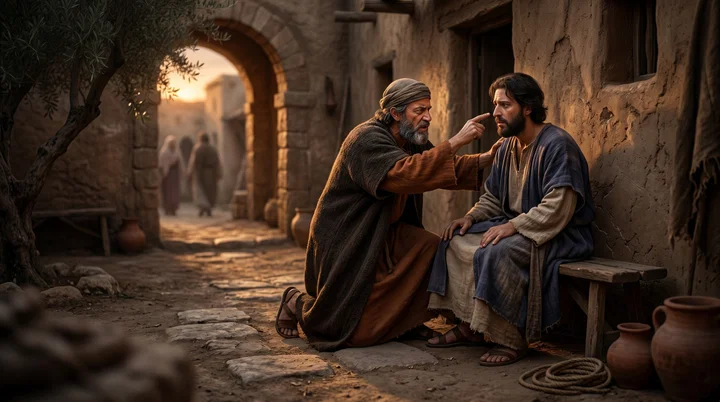
Either how canst thou say to thy brother, Brother, let me pull out the mote that is in thine eye, when thou thyself beholdest not the beam that is in thine own eye? Thou hypocrite, cast out first the beam out of thine own eye, and then shalt thou see clearly to pull out the mote that is in thy brother’s eye.
Translations
Either how can you say to your brother, Brother, let me pull out the mote that is in your eye, when you yourself behold not the beam that is in your own eye? You hypocrite, cast out first the beam out of your own eye, and then shall you see clearly to pull out the mote that is in your brother’s eye.
King James Version, KJV Cambridge Paragraph Bible
Either how canst thou say to thy brother, Brother, let me pull out the mote that is in thine eye, when thou thyself beholdest not the beam that is in thine own eye? Thou hypocrite, cast out first the beam out of thine own eye, and then shalt thou see clearly to pull out the mote that is in thy brother’s eye.
Either how canst thou say to thy brother, Brother, let me pull out the mote that is in thy eye, when thou thyself beholdest not the beam that is in thy own eye? Thou hypocrite, cast out first the beam out of thy own eye, and then shalt thou see clearly to pull out the mote that is in thy brother's eye.
Revised Version, American Standard Version
Or how canst thou say to thy brother, Brother, let me cast out the mote that is in thine eye, when thou thyself beholdest not the beam that is in thine own eye? Thou hypocrite, cast out first the beam out of thine own eye, and then shalt thou see clearly to cast out the mote that is in thy brother’s eye.
or how art thou able to say to thy brother, Brother, suffer, I may take out the mote that [is] in thine eye — thyself the beam in thine own eye not beholding? Hypocrite, take first the beam out of thine own eye, and then thou shalt see clearly to take out the mote that [is] in thy brother's eye.
or how canst thou say to thy brother, Brother, allow [ me], I will cast out the mote that is in thine eye, thyself not seeing the beam that is in thine eye? Hypocrite, cast out first the beam out of thine eye, and then thou shalt see clear to cast out the mote which is in the eye of thy brother.
How canst thou say to thy brother—Brother! let me cast out the mote that is in thine eye,—thyself, the beam in thine own eye, not beholding? Hypocrite! cast out, first, the beam out of thine own eye, and, then, shalt thou see clearly, to cast out, the mote that is in the eye of thy brother.
How can you say, ‘Brother, let me take the speck out of your eye,’ while you yourself fail to see the beam in your own eye? You hypocrite! First take the beam out of your own eye, and then you will see clearly to remove the speck from your brother’s eye.
Or how can you say, ‘Brother, let me take the speck out of your eye,’ while you yourself fail to see the beam in your own eye? You hypocrite! First take the beam out of your own eye, and then you will see clearly to remove the speck from your brother’s eye.
Or how can you tell your brother, ‘Brother, let me remove the speck of chaff that is in your eye,’ when you yourself don’ t see the beam that is in your own eye? You hypocrite! First remove the beam from your own eye, and then you can see clearly to remove the speck of chaff that is in your brother’s eye.
How will you say to your brother, Brother, let me take the grain of dust out of your eye, when you yourself do not see the bit of wood in your eye? O false one! first take the wood out of your eye and then you will see clearly to take the dust out of your brother's eye.
Either howe canst thou say to thy brother, Brother, let me pull out the mote that is in thine eye, when thou seest not the beame that is in thine owne eye? Hypocrite, cast out the beame out of thine owne eye first, and then shalt thou see, perfectly to pull out the mote that is in thy brothers eye.
Douay-Rheims (Challoner revision)
Or how canst thou say to thy brother: Brother, let me pull the mote out of thy eye, when thou thyself seest not the beam in thy own eye? Hypocrite, cast first the beam out of thy own eye; and then shalt thou see clearly to take out the mote from thy brother’s eye.
Pictures
Cross-references
- Matthew 7:3-5
And why beholdest thou the mote that is in thy brother’s eye, but considerest not the beam that is in thine own eye?
Both teach removing one’s own fault before correcting a brother.
- Romans 2:1
Therefore thou art inexcusable, O man, whosoever thou art that judgest: for wherein thou judgest another, thou condemnest thyself; for thou that judgest doest the same things.
Faultfinding condemns others while the judge remains guilty of the same things.
- Luke 6:37
Judge not, and ye shall not be judged: condemn not, and ye shall not be condemned: forgive, and ye shall be forgiven:
Both teach against judging and condemning others.
- Galatians 6:1
Brethren, if a man be overtaken in a fault, ye which are spiritual, restore such an one in the spirit of meekness; considering thyself, lest thou also be tempted.
Correction of another is to be gentle and humble.
- James 4:11-12
Speak not evil one of another, brethren. He that speaketh evil of his brother, and judgeth his brother, speaketh evil of the law, and judgeth the law: but if thou judge the law, thou art not a doer of the law, but a judge.
Both forbid condemning a brother and affirm God alone as judge.
- Matthew 23:27
Woe unto you, scribes and Pharisees, hypocrites! for ye are like unto whited sepulchres, which indeed appear beautiful outward, but are within full of dead men’s bones, and of all uncleanness.
Outward spotlessness can hide inward foulness.
- Matthew 5:1-7
And seeing the multitudes, he went up into a mountain: and when he was set, his disciples came unto him:
The sermon on the plain is compared with Matthew’s Sermon on the Mount.
- Revelation 3:18
I counsel thee to buy of me gold tried in the fire, that thou mayest be rich; and white raiment, that thou mayest be clothed, and that the shame of thy nakedness do not appear; and anoint thine eyes with eyesalve, that thou mayest see.
The Lord offers eye ointment so people may see clearly.
Commentary
Each commentary is drawn from primary sources: the writings of Ellen G. White and Adventist pioneers and periodicals. Each commentary is separate. Its own words are not a quotation; follow the references to read the source passages.
Ellen G. White
1 source
The beam in one's own eye is a cherished mischievous disposition and an unsanctified tongue given to criticism and faultfinding and talebearing.Ms 59, 1902, par. 35–37 To cherish such a spirit while offering to remove the mote from a brother's eye is to be the hypocrite named in the verse.Ms 59, 1902, par. 35–37 That hypocrite lives in darkness under Satan's power, and his influence darkens others.Ms 59, 1902, par. 35–37
Such a blind person cannot lead his brother and cannot help him, for both will fall together.Ms 59, 1902, par. 35–37 His corrupt speech proves he is a corrupt tree, revealing an evil treasure stored in the heart.Ms 59, 1902, par. 35–37 The command is to first cast the beam out of one's own eye by correcting oneself, and then vision will be clear to help a brother and to bring forth good from a good heart.Ms 59, 1902, par. 35–37 This direction comes from One who cannot err, it applies to every follower, and it should be received without taking offense.Ms 59, 1902, par. 35–37
Sources
Pioneers and periodicals
27 sources
The small fault noticed in another is a splinter beside the timber of a far greater fault overlooked in oneself, and it is hypocrisy and folly to offer to remove the other's fault while blind to one's own, for the greater fault must be recognized and put away first, and only then is vision clear to help.ST Mar 19, 1894ST Jan 23, 1896ST Jan 23, 1896ST Aug 5, 1897ST Jan 23, 1896 The unremoved fault clouds sight so that a person is blind to his own habits while quick to detect, notice and remember the failings of others, sharp-sighted for specks abroad and excusing himself even at another's expense.ST Jan 23, 1896RH Oct 9, 1856ST Jun 15, 1882 Before correcting another a person must examine and correct himself, and then help with clear sight, charity, humility and tender care, since love softens judgment while harsh and self-righteous reproof is misplaced.ST Jan 23, 1896RH Apr 2, 1867RH Oct 16, 1860 Habitual faultfinding shows something radically wrong and selfish in the critic, so no one is to make it his work to discern others' faults or demand perfection in a brother until he is near it himself, but must mind and prevent his own, judge himself rather than his brother, and refuse to play surgeon for others until his own eyes are opened.ST Jan 23, 1896ST Mar 12, 1896ST Sep 12, 1916RH Apr 21, 1863RH Oct 9, 1856 No one can judge another heart since outward appearance deceives and no one knows whose sin is greater or how he would stand under another's temptations, yet reproof from a flawed person is not to be rejected, since no one is free from faults and speaking of a higher ideal can show the ideal is still alive within.RH Mar 14, 1907ST Jan 23, 1896ST Mar 12, 1896ST Aug 25, 1887ST Aug 4, 1881
Words and Picture
Luke 6:42 belongs to the sermon on the plain, Luke's great discourse, in the Gospel whose central emphasis is sympathy.ST Mar 9, 1888 The mote is a splinter or small particle, while the beam is a log or stick of timber, representing a fault far greater than the other person's.ST Jan 23, 1896ST Jan 23, 1896 The contrast is illustrated by a familiar proverb about removing a small piece of wood from another's teeth while a beam is in one's own eyes.ST May 19, 1881
It is hypocrisy and folly to overlook a serious fault in oneself while offering to remove a smaller fault from a brother, even the same fault one has oneself.ST Mar 19, 1894ST Jan 23, 1896ST Mar 19, 1894 The great fault must be recognized and removed first, and only then will a person see clearly to help remove the fault in another.ST Mar 19, 1894ST Jan 23, 1896ST Aug 5, 1897ST Mar 19, 1894RH Apr 2, 1867 Love and charity help bring that clearer sight, while harsh or self-righteous reproof is misplaced, so correcting another requires clear sight and tender, loving care.RH Apr 2, 1867RH Oct 16, 1860 In one use the verse supplies only this title image of noticing another's small fault while overlooking one's own greater fault, without further explanation.ST Mar 19, 1894ST Jan 23, 1896ST Aug 5, 1897ST Mar 19, 1894RH Apr 2, 1867
The own fault impairs the critic's vision so that he cannot see clearly.ST Jan 23, 1896ST Jan 23, 1896 He is blind to his own faults and habits while habitually and readily detecting, noticing and remembering others' faults.ST Jun 15, 1882ST Jun 3, 1889ST Aug 4, 1881 People notice small faults in others more readily than their own larger faults, often because their own habits go unnoticed.ST Jun 3, 1889ST Aug 4, 1881 Those with beams in their own eyes have sharp sight for motes in other eyes, justifying himself even at another's expense.RH Oct 9, 1856
Judging Others Humbly
Before helping a brother with his fault, self-examination must come first, with prayer for the Lord to reveal and correct personal imperfections, so that help can then be given with clear sight, charity, humility, and tender loving care.ST Jan 23, 1896RH Apr 2, 1867RH Oct 16, 1860ST Jan 23, 1896ST Aug 25, 1887 Love and charity bring clearer sight and heal and soften judgment, while harsh or self-righteous reproof is out of place.RH Apr 2, 1867RH Oct 16, 1860 Looking chiefly at the faults of others breeds arrogance and greater readiness to sin, while examining one's own failures brings humility and noticing the good qualities of others encourages imitation, and neglect of one's own religious life leaves a person unfit to help a neighbor.ST Aug 25, 1887RH Sep 9, 1862
Faultfinding criticism reveals something radically wrong in the critic, borders on judging, and marks an extremely selfish nature, though the Lord has power to remove even this.ST Jan 23, 1896ST Jan 23, 1896 Self-righteousness blinds people to their own wrongdoing and makes them hypocritical and hasty judges.ST Aug 25, 1887 Discerning the faults of others must never be made an employment; each must mind and prevent his own faults, stop judging his brother and begin judging himself, and when tempted to harsh judgment turn the judgment upon himself beginning with his own deficiencies.ST Sep 12, 1916RH Sep 9, 1862RH May 26, 1868
Reproof from a flawed person is not to be rejected, since no one is free from faults, but faults should be pointed out kindly and received thankfully in a manner that encourages others to offer correction again.RH Mar 14, 1907 Imperfect conduct by itself does not make a person's better teaching hypocritical or conceited, since speaking of a higher ideal can show the ideal is still alive within and a dissatisfaction with personal and shared shortcomings.ST Aug 4, 1881
No one can judge another heart, for outward appearance deceives, with many who look spotless as snow foul within like sepulchers and many thought impure pure and near to God through secret penitence and mercy.ST Nov 11, 1880 No one can tell who has sinned more, and under the hell of another's untold temptations the judge might walk less uprightly.ST Nov 11, 1880 Christ is the only standard, and when a person looks fully to him for guidance there is no place for human ambition.ST Mar 12, 1896 Others are not to be condemned for the ills they do, for their strength is small and their trials many and the tide of wrong hard to stem, so those given clearer knowledge of good and truth owe them help and pity instead of condemnation, for all are human with small power, all are allured by evil and fall and cannot walk the perfect way alone, and all need God to help and lead day by day, leaving no room for boasting.ST Nov 11, 1880 Spiritually blind teachers cannot guide others to salvation, but will make their followers like themselves unto further error and destruction, and as Jesus judged no one so his followers are to follow his example.ST Jan 23, 1896ST Aug 25, 1887
Perfection must not be required in a brother until one is near it himself.RH Jul 21, 1904 It is hypocrisy to be enraged at faults cherished in oneself, to call them sins in others while excusing them as peculiarities in oneself, to frown upon frowns, be harsh with harshness, exaggerate exaggerations, and insincerely reprimand falsehoods.RH Jul 21, 1904 The eyes must be closed to a brother's grievous errors until opened upon one's own sins, and while the beam is in one's own eye one must refuse to play surgeon for the motes in others.RH Jul 21, 1904 In a divided church this means those who demand that others confess must first recognize their own first offense that helped cause the trouble, so that examining and correcting one's own part first opens the way to confession, reconciliation, and Christian love.RH Apr 21, 1863 The same warning exposes deceptive conduct that conflicts with claims to special light and purity, and it rebukes assuming the worst about others, where fault-finding can make real or imagined faults seem clear and becomes a thing to regret.RH Oct 9, 1856RH Jun 18, 1908
The devil delights in rebuking sin, and those with beams give no time to scrutinizing themselves, count their own sins as nothing beside their neighbors' mountainous sins, mind everybody's business but their own, and make it their mission to ferret out faults, using eyes, ears, and tongues to see, hear, and spread reports of failings, derelictions, errors, transgressions, and enormities, often invented, until a brother's faults become the staple of conversation.RH Oct 9, 1856 Criticizing another, condemning a course without knowledge of it, drawing prejudicial inferences, and picking at, slurring, and hinting against others comes from faulty sight in the critic himself, like dust on glasses making a clean room look dusty, with the dust thicker on some glasses than on others, so one's own glasses must be rubbed clear first.ST Mar 10, 1881 It is hypocrisy for governments to hunt down small murderers while keeping a far greater murder in their own eye: the mote is the microscopic offenders who make clockwork dynamite machines to blow up shipping, whose timed fuse would murder thousands, while the beam is the eye of power holding the license system that authorizes making and selling intoxicating drinks, plans for it and divides profits with maker and seller, flooding the land with liquid dynamite that robs then kills.ST Nov 10, 1881 The length of the fuse counts for nothing, whether drink kills in six hours or in six years, and in a single year this licensed traffic destroys more life than hatred of England ever did, so England and the United States must first cast out this beam of gigantic licensed murder, and then they will see clearly to take out the mote of dynamite plots.ST Nov 10, 1881
Sources