Matthew 5:1
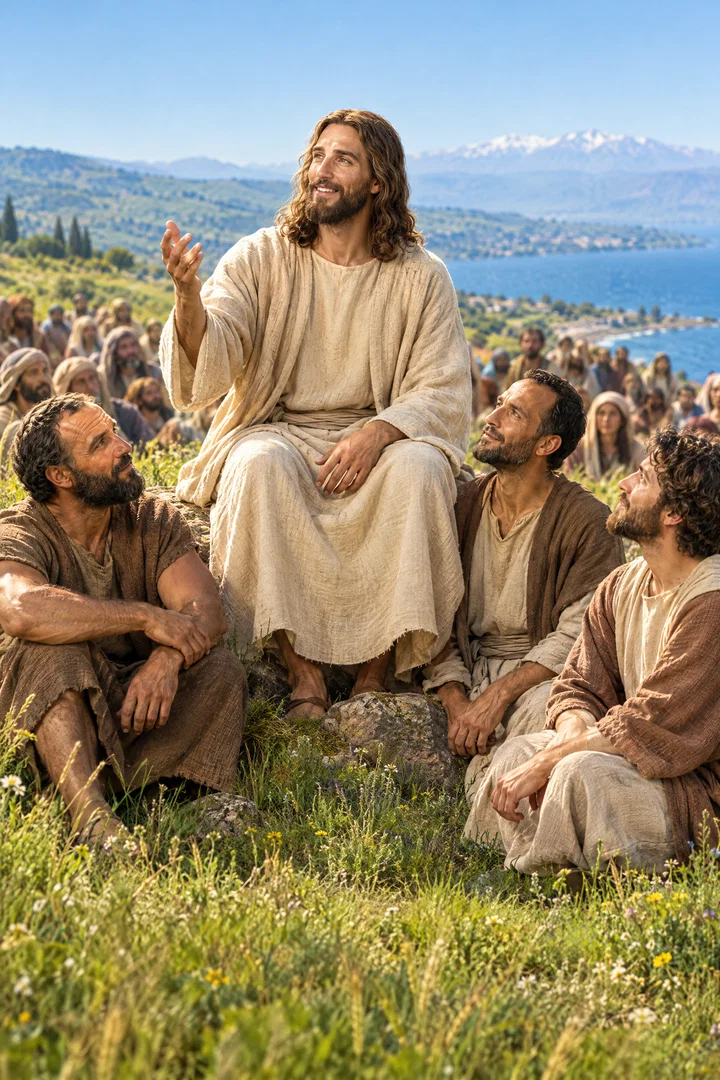
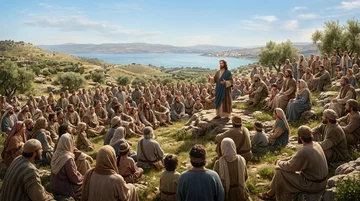
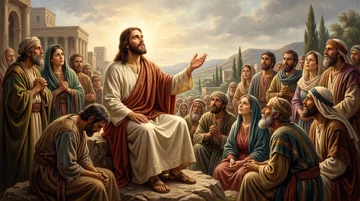
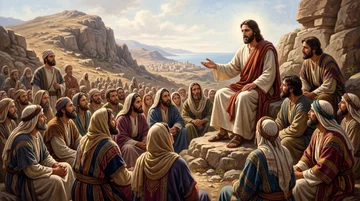
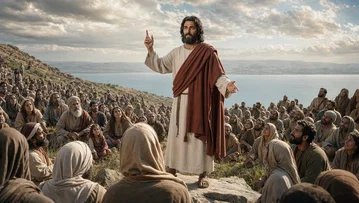
And seeing the multitudes, he went up into a mountain: and when he was set, his disciples came unto him:
Translations
And seeing the multitudes, he went up into a mountain: and when he was set, his disciples came to him:
King James Version, KJV Cambridge Paragraph Bible
And seeing the multitudes, he went up into a mountain: and when he was set, his disciples came unto him:
And seeing the multitudes, he ascended a mountain: and when he was seated, his disciples came to him.
Revised Version, American Standard Version
And seeing the multitudes, he went up into the mountain: and when he had sat down, his disciples came unto him:
And having seen the multitudes, he went up to the mount, and he having sat down, his disciples came to him,
But seeing the crowds, he went up into the mountain, and having sat down, his disciples came to him;
But, seeing the multitudes, he went up into a mountain,—and, when he had taken a seat, his disciples came unto him;
Berean Standard Bible, Majority Standard Bible
When Jesus saw the crowds, He went up on the mountain and sat down. His disciples came to Him,
Seeing the multitudes, he went up onto the mountain. When he had sat down, his disciples came to him.
And seeing great masses of people he went up into the mountain; and when he was seated his disciples came to him.
And when he sawe the multitude, he went vp into a mountaine: and when he was set, his disciples came to him.
Douay-Rheims (Challoner revision)
And seeing the multitudes, he went up into a mountain, and when he was set down, his disciples came unto him.
Pictures
Cross-references
- Luke 6:17
And he came down with them, and stood in the plain, and the company of his disciples, and a great multitude of people out of all Judæa and Jerusalem, and from the sea coast of Tyre and Sidon, which came to hear him, and to be healed of their diseases;
Jesus stands with his disciples among a great crowd gathered to hear him and be healed.
- Exodus 20:1-17
And God spake all these words, saying,
Jesus unfolds the principles of the law proclaimed at Sinai.
- Matthew 7:28-29
And it came to pass, when Jesus had ended these sayings, the people were astonished at his doctrine:
The people were astonished when Jesus finished teaching with authority.
- Matthew 4:23-25
And Jesus went about all Galilee, teaching in their synagogues, and preaching the gospel of the kingdom, and healing all manner of sickness and all manner of disease among the people.
Jesus’ preaching and healing drew the multitudes he then taught on the mountain.
- Exodus 19:16-19
And it came to pass on the third day in the morning, that there were thunders and lightnings, and a thick cloud upon the mount, and the voice of the trumpet exceeding loud; so that all the people that was in the camp trembled.
God revealed his law at Sinai amid thunder and lightning.
- Luke 6:12-13
And it came to pass in those days, that he went out into a mountain to pray, and continued all night in prayer to God.
Jesus prayed through the night before choosing the twelve and beginning the sermon.
- Luke 6:20-49
And he lifted up his eyes on his disciples, and said, Blessed be ye poor: for yours is the kingdom of God.
Both begin Jesus’ discourse of teachings, corresponding to the Sermon on the Mount.
- Matthew 8:1
When he was come down from the mountain, great multitudes followed him.
Describes the large congregation listening to Christ’s discourse.
- Exodus 19:20
And the LORD came down upon mount Sinai, on the top of the mount: and the LORD called Moses up to the top of the mount; and Moses went up.
The law was given from a mountain.
- Matthew 6
Take heed that ye do not your alms before men, to be seen of them: otherwise ye have no reward of your Father which is in heaven.
Part of the sermon associated with this mountain setting.
- Exodus 19:3-6
And Moses went up unto God, and the LORD called unto him out of the mountain, saying, Thus shalt thou say to the house of Jacob, and tell the children of Israel;
Christ’s mount teaching is compared with instruction to Israel at Sinai.
- Matthew 5:13-16
Ye are the salt of the earth: but if the salt have lost his savour, wherewith shall it be salted? it is thenceforth good for nothing, but to be cast out, and to be trodden under foot of men.
continues the same mountain teaching on salt and light
- Matthew 5:17-48
Think not that I am come to destroy the law, or the prophets: I am not come to destroy, but to fulfil.
Christ explains the law’s full reach in His teaching from the mount.
Commentary
Each commentary is drawn from primary sources: the writings of Ellen G. White and Adventist pioneers and periodicals. Each commentary is separate. Its own words are not a quotation; follow the references to read the source passages.
Ellen G. White
115 sources
Seeing the crowds He could not contain on the narrow shore, Jesus led them to a level place on the mountainside by the Sea of Galilee near Capernaum, sat down as a teacher, and His disciples gathered close around Him to open the Sermon on the Mount.Lt 258, 1907, par. 12–14Lt 86, 1908, par. 7–12Ms 187, 1903, par. 2–5DA 298.2–3ST Apr 19, 1877 He called them near so the great truths would be indelibly impressed on their minds by the Holy Spirit to be received without loss, repeated, written, and carried to every land and age, while the mixed multitude beyond them listened with hopes of earthly glory that He disappointed.Ms 129, 1907, par. 13–26Ms 241, 1902, par. 6–75T 253.2–254.1ST Apr 19, 18774RED 56.2 There He declared the character of those He calls blessed and the principles of God's kingdom of grace, restating in stronger and clearer terms the same law He had given through Moses and exemplified in His sinless life.Lt 258, 1907, par. 12–14Lt 86, 1908, par. 7–1220MR 115.1–2ST Apr 19, 1877 In peaceful beauty unlike the fear at Sinai, the same Teacher who spoke from Sinai magnified that law, stripping away human traditions and revealing God as merciful Father.ST Dec 11, 1879SCE 7.1Ms 80, 1896, par. 4ST Feb 4, 1897 His words are spirit and life with heaven's authority, to be read often, believed, practiced, and lived out in heart service until character is transformed into His likeness.Ms 201, 1898, par. 11Lt 48, 1911, par. 5–6Ms 151, 1902, par. 8–97T 268.2CT 439.1
Mountain Setting Described
Seeing the multitudes, Jesus went up into a mountain, sat down, and His disciples came to Him, and this opens the Sermon on the Mount.Lt 258, 1907, par. 12–14Lt 86, 1908, par. 7–12Ms 187, 1903, par. 2–5Lt 204, 1907, par. 8–10Ms 201, 1898, par. 11 The disciples gathered close around Him and had room to be close beside Him whenever He addressed a multitude, sharing His burdens in ministry and bringing to Him people who needed help and healing, working together with Him.Lt 258, 1907, par. 12–14Lt 204, 1907, par. 8–10Ms 129, 1907, par. 13–26 The setting introduces His public declaration of the Beatitudes in Matthew 5:1-12, describing the character of those Christ calls blessed and the blessings promised them as belonging to the kingdom of heaven.Lt 258, 1907, par. 12–14Lt 86, 1908, par. 7–12Ms 187, 1903, par. 2–5Lt 8, 1910, par. 4–8 That mountain teaching on the Beatitudes and on being salt and light reveals the character of His teaching, and it is to be studied together with His conflicts and victories over temptation in the wilderness in Matthew 4.Lt 86, 1908, par. 7–12 Its sayings are the great Teacher's words, and reading, believing, and practicing them develops Christlike character and puts divine principles into the heart.Ms 201, 1898, par. 11
The narrow beach by the sea could not hold everyone within hearing distance after crowds had gathered to hear Him and be healed, so He led the people to a level place on the mountainside that could accommodate them.DA 298.2–3ST Apr 19, 18772SP 203.24RED 56.1 He had healed the sick and comforted the sorrowing on the narrow beach where the multitudes had gathered, but the crowd grew too large for room there, and He chose a level space where the people could gather.DA 298.2–32SP 203.24RED 56.1 There He sat down and was followed by His disciples and the multitude, then called His disciples near so the great truths He was about to utter would be indelibly impressed upon their minds with nothing diverting their attention from His words.DA 298.2–3ST Apr 19, 18772SP 203.24RED 56.1 The sermon was directed especially to the disciples but was spoken where the crowd could hear it, so the gathered crowd was also meant to hear.DA 298.2–3ST Apr 19, 1877
The mountain was beside the Sea of Galilee or Lake of Gennesaret near Capernaum, a high table-land overlooking the lake with a grassy plain below.ST Dec 11, 1879ST Dec 19, 1916STMH 52.2 He sat on an eminence beneath trees as the people gathered on the grassy plain below, and His disciples came to hear teaching that would endure through the ages.ST Dec 11, 1879STMH 52.2 The setting was away from the turmoil and confusion of crowded cities, and Jesus often taught and trained His disciples outdoors where the quiet and simplicity of nature suited the lessons of simplicity, faith, and self-denial He wanted to teach.Ms 129, 1907, par. 13–26STMH 52.2 The natural setting helped turn people's thoughts from artificial things to God's creation.ST The peaceful beauty of the setting contrasted with the fearful signs at Sinai where God gave the law, for at the mount Christ was to explain the law's principles for practical life.ST Dec 11, 1879
He sat down as a teacher, on a rock or some elevated place, ready to open the treasure of truth to those willing to listen.CT 261.4Ms 39, 1909, par. 5–6 The mountain was a place of solitude where He spent the night in prayer to His Father before important work, and prayer preceded the Sermon on the Mount.MH 509.1ST Aug 31, 1915 It was morning after He had spent long before daybreak in meditation and prayer in communion with God on the shores of Lake Gennesaret near Capernaum while the disciples were still sleeping, refreshing His spiritual strength.Ms 60, 1902, par. 1–218MR 83.1–2 The mountain setting belongs to prayerful communion with the Father before important work.MH 509.1ST Aug 31, 1915 As soon as it was day, multitudes who had learned where He was hastened to the lakeside anxious to hear the word of truth, so that though He loved retirement He could not remain alone very long at a time.Ms 60, 1902, par. 1–218MR 83.1–2
Disciples and Multitudes Present
Whenever He addressed a multitude His disciples had room to be close beside Him, gathered close around Him as an inner circle, including the twelve who followed Him in public and private and shared His burdens in ministry by bringing to Him those who needed help and healing and working together with Him.Lt 258, 1907, par. 12–14Lt 204, 1907, par. 8–10ED 85.1–2Lt 208a, 1902, par. 23 On the mountain they came near to Him and formed that innermost circle about Him as He sat to teach.5T 253.2–254.1ED 85.1–2Lt 208a, 1902, par. 235T 253.1 They listened attentively in that place, while a curious multitude pressed near expecting something extraordinary.5T 253.2–254.1ED 85.1–25T 253.1
He called the disciples near so that nothing would divert their attention and the great truths He was about to utter would be indelibly impressed upon their minds and remain in their memories through the Holy Spirit.Ms 129, 1907, par. 13–26ST Apr 19, 18772SP 203.24RED 56.1 Withdrawn thus from the turmoil of crowded cities, they belonged close to the Great Teacher to attend to every word spoken slowly and distinctly and to receive the truth without losing or misinterpreting it.Ms 129, 1907, par. 13–26Ms 241, 1902, par. 6–7ST Apr 19, 1877 So established, they could later repeat and write what they had heard for the benefit of the whole world and carry it to others who did not know it in every land and age.Ms 129, 1907, par. 13–26Ms 241, 1902, par. 6–7ED 85.1–2
He sat surrounded by His disciples with a large mixed gathering as He opened His mouth to teach.DA 298.2–3ST Feb 4, 18972SP 204.1 The sermon was directed especially to the disciples and spoken first to them, yet it was spoken where the crowd could hear and was designed to reach the hearts and consciences of those in ignorance and error and not limited to those already familiar with the way of life.DA 298.2–3DA 298.1ST Apr 19, 1877COS 63.2–64.12SP 204.1 The people at such large gatherings expected a great display of power concerning the new kingdom, with believing Jews looking for earthly glory and political freedom, liberty from the yoke of bondage, and restoration to ancient glory.ST Apr 19, 18774RED 56.22SP 204.1 He disappointed their hopes of earthly glory by opening His discourse with the Beatitudes, which state the principles that govern His kingdom of divine grace rather than promising what they expected.ST Apr 19, 18774RED 56.22SP 204.1
The twelve had been called to the apostolic work in that mountain setting, and withdrawing to the mountain to meet with His disciples was communion with Jesus preceding their mission and later Pentecostal power.ST Dec 19, 1916ST Jul 27, 1915 Taking unlearned fishermen from their boats and nets and connecting them with Himself as He traveled from place to place teaching the people and ministering to their needs, then gathering them about Him on a rock or some elevated place for instruction while hundreds listened, is the highest education of following in His footsteps in living connection with Him as laborers together with God.Ms 39, 1909, par. 5–6 That training is the pattern in harmony with true higher education for qualifying nurses, physicians, and medical missionary evangelists.Ms 39, 1909, par. 5–6 Crowds had followed Him from Galilee, Decapolis, Jerusalem, Judea, beyond Jordan, and Syria, drawn by His teaching in the synagogues, His preaching of the gospel of the kingdom, and His healing of every kind of sickness and disease.Ms 36, 1898, par. 6–8Ms 115, 1909, par. 50–54SSP 39.1 His compassionate acts in restoring the sick to health stirred deep interest and awakened concern that prepared the people to listen when, seeing the multitudes, He went up into the mountain, sat down, and His disciples came to Him to receive the lesson to be believed in simplicity and accepted in conversion.Ms 115, 1909, par. 50–54STB 814.1SSP 39.1RH Jul 23, 1914
Sermon Message Declared
This sitting on the mountain opens the Sermon on the Mount and the Beatitudes of Matthew 5:1-12, declaring the character of those Christ calls blessed and the blessings promised to them.Lt 258, 1907, par. 12–14Lt 86, 1908, par. 7–12Ms 187, 1903, par. 2–5Lt 8, 1910, par. 4–8Ms 69, 1907, par. 4–6 The setting introduces His public declaration of who belongs to the kingdom of heaven and the way of life taught there, including being salt and light.Lt 86, 1908, par. 7–12Ms 187, 1903, par. 2–5Ms 69, 1907, par. 4–6 The promises of verses 3-5 are precious jewels to take in, gather up, and consider when discouraged and thinking of having a hard, close time, and those who love and fear God in this world are the very people who shall realize His blessings.Ms 132, 1909, par. 1–2 The blessing on spiritual poverty is for those who feel need, come to One rich in mercy, desire a better world and another kingdom, and are unsatisfied with earthly things.Lt 258, 1907, par. 12–14Lt 86, 1908, par. 7–12Ms 187, 1903, par. 2–5Lt 8, 1910, par. 4–8Ms 69, 1907, par. 4–6
The sermon begins by setting out the principles of God's kingdom of grace and kingdom of divine grace, giving a true conception of the kingdom and Christ's character and the conditions of entrance.ST Apr 19, 1877DA 299.34RED 56.22SP 204.1 It corrects false ideas of worldly greatness without directly attacking errors, not promising the earthly glory and political freedom many expected.ST Apr 19, 1877DA 299.34RED 56.22SP 204.1 Though spoken especially to the disciples, it was designed to reach the hearts and consciences of the mixed crowd assembled there.ST Apr 19, 1877DA 299.34RED 56.22SP 204.1
There He restated principles previously given through Moses, setting out duties to God and to one another in stronger and clearer terms because disobedience had confused understanding of God's claims.20MR 115.1–2STMW9 58.1–2Lt 39, 1899, par. 12Lt 73, 1896, par. 46 There He defined the far-reaching claims of God's law and the spirit and conduct of those who love God and keep His commandments, in lessons of practical obedience still binding after sacrificial offerings ceased when type met antitype in His death.SCE 7.1Lt 39, 1899, par. 12ST Mar 26, 1896 His teaching astonished both religious leaders and ordinary people because it revealed the law in its true light beyond human traditions, clarifying true principles and exposing human traditions and external observances that had displaced genuine religion.SCE 7.1ST Mar 26, 1896
He gave from the mount the same law He exemplified in His sinless life, unfolding the principles of His kingdom in peaceful beauty and loving words while explaining the same law proclaimed at Sinai.ST Mar 4, 1897ST Jan 9, 1912 That law is far-reaching in character, condemns every evil action, demands perfect obedience, and is immutable.ST Mar 4, 1897ST Jan 9, 1912Lt 16, 1892, par. 20–21 He expounded its precepts so that people departing from it might return to allegiance and become representatives of the Son and the Father, with truly following Him meaning keeping God's commandments as He kept them and manifesting love to God and fellow men.ST Mar 4, 1897ST Oct 17, 1895
He stripped from God's law the rubbish covering of human thou-shalt and thou-shalt-not, traditions, and external observances of priests, rulers, scribes, and Pharisees, letting the great moral standard of righteousness appear in its true light.SCE 7.1Ms 80, 1896, par. 4ST Mar 26, 1896 His sermon opposed self-righteous teaching and human traditions, correcting the false picture of God as stern and without compassion or mercy or love and as a harsh despot.FE 309.1Lt 81, 1894, par. 10–11ST Mar 26, 1896STE 199.2–3 He revealed God as merciful, loving, and Father to be addressed, restoring confidence in His love and showing God's character through Himself.FE 309.1Lt 81, 1894, par. 10–11STE 199.2–3
He taught principles of God's law that shape daily life and form right character, showing the gospel is practical and true service involves the heart, not merely formal worship.Ms 8, 1902, par. 9–10 There He defined true sanctification and the spiritual experience God expects and people may gain, showing the great things God expects of every believer.4MR 351.3Lt 153, 1902, par. 23Lt 193, 1901, par. 9–12 His holy life is the example, and followers are to be crucified and buried with Him, quickened and made alive by His Spirit, and filled with His life.4MR 351.3Lt 153, 1902, par. 23
He pronounced blessings on those seeking the righteousness He gives, showing who is truly blessed and pointing to the rewards of the faithful at the judgment.COS 63.2–64.1Ms 137, 1897, par. 3–4 The Beatitudes are His greeting to the whole human family and bread and water of life, declaring blessed those receiving His light and life, including the poor in spirit, meek, lowly, sorrowful, despised, and persecuted, and explaining what God values most and what brings true happiness.COS 63.2–64.1ST Dec 30, 1913Ms 3, 1878, par. 12–13 The qualities Christ blesses are gained by carrying godliness and its principles into daily life, and are worth time and effort to study and practice.14MR 211.3Lt 163, 1902, par. 6–7
He spoke with clearness, power, and unlimited authority as the fountain of all goodness acting in the office of God, with treasures of eternity and riches of heaven at command.Ms 187, 1903, par. 6–10 His words of blessing were to come down to our time as a treasure of goodness full of encouragement, to fill the world with heaven-like peace and joy and to refine, purify, and sanctify a people who receive His instruction through belief of the truth imparted as breath of higher life.Ms 187, 1903, par. 6–10 There He publicly specified subjects of the heavenly kingdom, not flattering worldly dignitaries but presenting traits for a peculiar royal family as heirs of God and joint-heirs sharing service, blessing, glory, and honor while trading on His gifts, with a great reward for sufferers for His name as Saviour to all who receive Him.Ms 187, 1903, par. 6–10Ms 109, 1899, par. 9
He gave a law of duty with heaven's light, hope, and comfort in discouragement, speaking words given by the Father as Master-teacher, a blessing to the whole world.7T 268.2ST Dec 30, 1913 Its enduring principles are for every age, class, and rank, presenting the high standard of character required with divine help provided by faith, and leading to salvation when received and practiced as the Holy Spirit impresses minds through those who teach them.Lt 117, 1896, par. 20–21Ms 139, 1906, par. 6–87T 270.1ST Dec 30, 1913 Its words retain power through all time, and through faith in Christ and living His life everyone can reach the standard it sets in forming righteous character.7T 270.1ST Dec 30, 1913
Links With Earlier Revelation
The mountain where Jesus sat to teach stood in peaceful beauty, in deliberate contrast to the fearful signs that attended the giving of the law at Sinai, yet the work there was the same, to explain the principles of that law for practical life in loving words.ST Dec 11, 1879 Though the setting was quiet and the speech was gentle, the instruction unfolded on that height was the same law once proclaimed amid Sinai's terrors.ST Dec 11, 1879
That unnamed height beside the Lake of Gennesaret takes the place of Mount Gerizim as the Mount of Blessing and the mount of the Beatitudes. Israel had fallen short under Joshua and needed another Guide to bring His people into the true rest of faith, so the benediction once proclaimed from Gerizim is now given by Jesus to a sinning and sorrowing world. Its vividness and deeper lessons are found by sitting in imagination with the disciples on the mountainside and entering into what His words meant to those who heard them.
He who taught there is the same Teacher who gave Israel's laws at Sinai, and the principles taught on the mount of beatitudes are the same principles taught on Mount Sinai.ST Feb 4, 1897ST Jun 11, 1896 They rest on love to God and to neighbor, the two principles on which hang the law and the prophets.ST Jun 11, 1896 The sermon magnifies and makes honorable the law He Himself had proclaimed to His chosen people during their wilderness wandering.ST Feb 4, 1897 Having laid aside the glory He had with the Father before the world was and clothed Himself with humanity to minister to men, He impressed the principles underlying His great standard of righteousness.ST Feb 4, 1897 Keeping God's commandments is shown there to mean manifesting love for God and for fellow men in daily life, while He instills His own love for humanity and sows seeds of truth that produce holiness and beauty of character, with a sanctifying and purifying influence of love reaching through time into eternity.ST Feb 4, 1897
He gave His gospel from the mount of beatitudes just as truly as He gave His gospel to the children of Israel enshrouded in the pillar of cloud as Captain of the Lord's host.Ms 109, 1899, par. 9 That giving reveals His prerogatives, high authority, glory, character, truth, and purity.Ms 109, 1899, par. 9 Become flesh and dwelling among men, beheld full of grace and truth, He set before the human race the perfect standard of practice in purity, righteousness, and love, and with that standard gave the bright prospect of immortal life in the paradise of God.Ms 109, 1899, par. 9
As the foundation of the Jewish economy He gave there lessons of practical obedience that remain still binding on God's people today.Lt 39, 1899, par. 12 When type met antitype in His death the need for sacrificial offerings ceased, but these lessons did not cease.Lt 39, 1899, par. 12 The Jewish people's failure to walk in the light God had given them separated them from God, and as they failed to follow that light, darkness came upon them in proportion to the light they had allowed to shine on their path.Lt 39, 1899, par. 12ST Mar 26, 1896
Manner of Teaching Used
He taught outdoors rather than in a temple, building, or imposing church, choosing the mountainside, fields, groves, lakesides, plain, highway, and fisherman's boat for instruction, meditation, and prayer.ST Apr 19, 1877DA 290.14RED 52.2–3ST Jun 7, 1883 As He was cradled in a manger at birth, so His work on the mountainside shows that God's work begins in humble, simple places without grand buildings.ST Jun 7, 1883 He often trained the disciples outdoors beneath trees away from the confusion of the city, where quiet and simplicity suited lessons of simplicity, faith, and self-denial and turned thoughts from artificial things to creation and to God.STMH 52.24RED 52.2–3 He did so both because the crowds could not fit in a synagogue and because He loved nature and regarded quiet retreats as sacred, joining sacred experience with the beauty of mountain, valley, and sea.MH 52.2ST Apr 19, 1877DA 290.1
He selected familiar figures, objects, and things before His hearers, often what was seen and happening at the very time He spoke, to make His discourse impressive.LC1 66.11RED 66.1 His illustrations were frequently drawn from nature and were beautiful in simplicity and living reality, so that minds were attracted and hung with intense interest upon His words.ST Oct 17, 18951RED 66.1 He did not use lofty eloquence, though He could have commanded it as readily, but preferred plain, simple, touching language so that even the least educated and weakest minds comprehended His meaning, including the weary and oppressed with great needs.ST Oct 17, 1895LC1 66.11RED 66.1 In this way the living principles of God's law were brought home to minds and consciences, and some who heard and believed were among the thousands converted after His resurrection and ascension.Ms 104, 1898, par. 120MR 241.1–2
The sermon begun there was not sermonizing in modern style but Bible instruction and inculcation of important truths on an educating plan, in which everything received from God comes through His Word with the Spirit impressing it upon the heart.Ms 91, 1891, par. 53–55 It was instruction in practical godliness distinctly outlining duty, illustrating truth in all its bearings to commend it to the conscience rather than proving truth by argument.19MR 259.1–3Ms 24, 1891, par. 88 He left hearers free to accept or reject without forcing belief, came right to the point with no long, farfetched, complicated reasoning, touched the heart and awakened sympathy, and the same power appears in the clearness and earnestness with which the disciples express truth.19MR 259.1–3Ms 24, 1891, par. 88
His words came from God with heaven's authority as Master-teacher on the mount of beatitudes, which represents the high spiritual elevation on which He stood.7T 268.2CT 439.1STE 10.1FE 407.1–2 Every sentence carries divine authority and presents truth without anything false or nonessential, and is spirit and life, giving a law of duty with heaven's light, hope, and comfort in discouragement as He spoke the words given Him by the Father.7T 268.2FE 407.1–2 The teaching is simple enough for a child to study without being misled, yet contains ennobling, saving truth and assurance of hope, retains power through all time, and became a sure foundation for faith and practice taught plainly and with authority.CT 439.1STE 10.1FE 407.1–25T 253.1 He lived every phase of the sermon before giving it, so the Beatitudes record His own deeds and His words express His life, revealing the contrast between His spirit and methods and those of the rabbis.Lt 81, 1894, par. 10–11ST Apr 7, 1909 Without kingly pomp or royal retinue, in a setting where He could teach humility, He came as teacher and example as well as redeemer with truths giving hope to the lowly.DA 138.1–3ST Apr 7, 19095T 253.1
Call to Study Obey
Matthew 5 opens a chapter full of precious instruction in which plans are laid out in figures to be studied and acted upon, to be read and written upon the tablets of the soul.ST May 10, 1910 Its teachings are valuable for old and young, to be read often in the family and lived out in daily life.ST Sep 23, 1886 It is wonderful teaching given before a large congregation listening in the open air, revealing the character of Christ's teaching in the Beatitudes and in being salt and light, to be studied together with His conflicts and victories over temptation in the wilderness in Matthew 4.Lt 86, 1908, par. 7–12Ms 139, 1906, par. 1–5
Its sayings are the great Teacher's words, and reading, believing, and practicing them develops Christlike character and puts divine principles into the heart.Ms 201, 1898, par. 11 Its lessons and divine requirements are to be cherished and followed, transforming character so that believers show forth God's praise.Lt 48, 1911, par. 5–6 Its lesson is that unity and love and Christian fellowship shall prevail among followers, a lesson to be learned today by spending time in it.Ms 151, 1902, par. 8–9 Learning and obeying it forms Christlike characters, while failure to learn it brings condemnation, because God cannot cooperate with those who do not obey His teaching and who look upon their own way as better than His.Ms 151, 1902, par. 8–9
The blessings spoken upon the mount are full of deep meaning and wonderful golden treasures of truth and instruction, where every symbol has value.Ms 201, 1898, par. 8–9 Yet they are dimly appreciated, and many who claim to be Christians do not choose to bring them into practical experience.Ms 201, 1898, par. 8–9 They need to be incorporated into the life to give experimental knowledge of the highest value, and when messengers see their real value they understand the true position they are called to occupy and work it out in their own lives when proved and tried.Ms 201, 1898, par. 8–9 The qualities Christ blesses are gained by carrying the principles of godliness into daily life and practice, and His blessing is worth the time and effort this requires.14MR 211.3Lt 163, 1902, par. 6–7
The chapter reveals truth about the laws of God's government and carries a soul-saving message.Lt 202, 1908, par. 12Lt 195, 1899, par. 16–17 Those who are humble in spirit and receive Christ's truths will be converted, and God's rebuke for their past wrongs will be removed.Lt 202, 1908, par. 12 There He clearly defined the spiritual experience people may gain, showing the great things God expects of every believer.Lt 193, 1901, par. 9–12
Its lessons are to be lived out, not merely taught, and workers are urged to exemplify them in life.6T 472.1 Living those teachings makes a deeper and more lasting impression than preaching alone or sermons spoken from a pulpit.6T 472.1RH May 6, 1902 Modest speech that hides self in Christ is guided by the Holy Spirit, and Christ works with the speaker to impress hearts.6T 472.1
Obeying its teachings leads to seeking perfection of Christian character and forms Christian character.SBAWP 5.32T 631.2–3ST Jul 31, 1879 It makes followers lights in the world and witnesses carrying God's truth to people in spiritual darkness.SBAWP 5.32T 631.2–3ST Jul 31, 1879ST Apr 2, 1894 It gives the standard for building a Christlike character, requiring rising above evil influences and poor character.Ms 72, 1895, par. 3 Its truths widen vision beyond one's own region to include sinful, suffering people, removing territorial boundaries and human-made distinctions.Ms 64, 1894, par. 10
Matthew 5:1-48 gives a clear expression of Christ's will, to be considered often and applied in church life, including by resisting misunderstandings, unkindness, retaliation, and strife.18MR 348.1–2 The pure gospel given on the mount in its explanation of God's law sets the holy standard of character, requiring loving God wholeheartedly and loving one's neighbor, and exposing unjust business dealings as failure to learn God's law.Ms 26, 1899, par. 29–30 Its principles are to be worked out in business life by everyone who takes Christ's yoke with full determination to obey God's word, giving a healthy, symmetrical experience and the blessings of a life hid with Christ in God.RH Oct 23, 1900 In business this means renouncing the bag of deceitful weights and despising fraud and tricks in trade, earning money not to hoard but to put in circulation, holding an abiding sense of partnership in the heavenly firm with duty to trade upon God-given talents, realizing adoption into God's family, and acting toward all as Christ acted on earth.RH Oct 23, 1900Ms 147, 1899, par. 17
Its words set the scene of Jesus seated on the mountain with His disciples coming to Him, and they are to be studied for personal benefit in connection with doing what He says and building life on a firm foundation.Ms 157, 1907, par. 14 The words spoken there are a source of sanctified, Christlike speech, and following Christ's way and teachings equips a person to meet the adversary and avoid leading others away from the path He has set.Lt 80, 1906, par. 8–10
Its principles are to be studied prayerfully, received with humility and with a teachable, contrite heart, and lived out in obedience.Lt 208a, 1902, par. 23Lt 96, 1902, par. 15 Taking heed to oneself and practicing its truths brings joy and peace and forms a life, spirit, inclinations, and habits conformed to Christ.Lt 96, 1902, par. 15 Lessons illustrated by familiar things brought the living principles of God's law home to minds and consciences, and some who heard and believed were among the thousands converted after Jesus rose and ascended.Ms 104, 1898, par. 120MR 241.1–2
It declares followers the light of the world to shine before men by good works to glorify the Father in heaven, and the salt of the earth which must not lose its savor lest it become good for nothing.ST May 10, 1910 The attributes it teaches, when cherished, bring workers peace and joy.Lt 55, 1897, par. 26–29 Its call is not satisfied by hearing or professing alone, for Christ's word must be put into practice, and doers are compared to a builder whose house stands firm through floods and winds.Lt 55, 1897, par. 26–29 Those who cherish Christ's Spirit have His mind and can do His will.Lt 55, 1897, par. 26–29
The Sermon had long been in preparation as a book needed by the people.Lt 59a, 1895, par. 23 Its lessons are to be shared with people of every rank, and when received and practiced they lead to salvation, with the Holy Spirit working through those who teach them to impress minds.Ms 139, 1906, par. 6–8
Sources
Pioneers and periodicals
120 sources
Seeing the crowds, Jesus withdrew up the mountain, sat down to teach, and his disciples gathered around him to listen.ST Jan 11, 1916RH Apr 21, 1863ST Aug 13, 1874RH Sep 29, 1874
The sitting was the customary posture of a teacher, with the learners at his feet to be instructed for their work to the nations.ST Aug 13, 1874RH Sep 29, 1874RH Sep 5, 1871
The verse opens the Sermon on the Mount in Matthew 5 to 7, beginning with the Beatitudes, his longest discourse and inaugural proclamation of the gospel kingdom.ST Sep 22, 1909ST Jan 23, 1896
It was spoken especially to the disciples to teach them how to keep the law and carry its principles to the world, while the multitudes of poor and oppressed were also present to hear.ST Jan 15, 1880ST Aug 13, 1874ST Sep 19, 1911
It lays out a spiritual kingdom of love within the soul, affirming that the commandments remain in force, fulfilled and magnified to reach the thoughts and intents of the heart.ST Jan 15, 1880RH May 17, 1864RH Jul 26, 1870ST Apr 9, 1896ST Jul 18, 1911
Words Actions and Setting
Seeing the multitudes, Jesus withdrew from the crowd and went up into a mountain, and when he sat down his disciples came to him to listen while the multitudes were also present to hear.ST Jan 11, 1916RH Apr 21, 1863ST Aug 13, 1874ST Sep 19, 1911 Sitting was the customary posture of a teacher, and they gathered at his feet ready to be instructed.ST Aug 13, 1874RH Sep 29, 1874 That gathering was instruction for the disciples, including Peter, James and John, for their future mission to teach his commands and his law to all nations and to the world.ST Aug 13, 1874RH Sep 29, 1874RH Sep 5, 1871RH Sep 5, 1871 The chapter cannot be separated from who he is, for his words express his character.ST Nov 17, 1881
The Greek word for going up does not in itself mean again, and no word meaning again is expressed or implied.RH Oct 1, 1872 The phrase for going up into the mountain uses the single preposition for into with the meaning of actual going into, not merely toward or near to, which proves that going into can be expressed without compounding, as with going into the water in Acts 8:38.ST May 17, 1883 The mountain is the Mount of Beatitudes in Galilee near Capernaum and the Sea of Galilee, in the original the mountain, the mountainous region in the vicinity of Capernaum.ST Dec 19, 1916ST Apr 24, 1901ST Jan 23, 1896 It is identified with Horn Hattin west of the plain of Gennesaret reached by a ravine with precipitous sides a thousand feet high, whose broad gentle south slope, clear air, visible lake, cities and villages, trees, grass and flowers made a fitting open-air place where thousands could hear and see.ST Apr 19, 1877ST Dec 11, 1879ST May 5, 1881
Its barrenness contrasts with the blessings and life in his words, showing that divine presence and power can bring hope, fruitfulness and joy even in desolate circumstances.ST Apr 24, 1901 The sermon was uttered amid sunshine and peace, under the summer sky with no sound to break the stillness but the songs of birds, and its peaceful beauty on the high table-land overlooking the lake, with the people on the grassy plain below, contrasts with Sinai amid thunder and cloud and flame, with divine glory like devouring fire resting on its summit and the mountain quaking while the hosts lay prostrate listening in solemn awe.ST Dec 11, 1879ST Jan 21, 1897 He who speaks there in accents of love is the same who proclaimed the law on Sinai, now explaining its principles for practical life.ST Dec 11, 1879ST Jan 21, 1897
This mountain discourse is distinct from the sermon on the level place in Luke 6:12-49, given at a different time, though the same needed truths were spoken to the crowds on both occasions.ST Nov 5, 1894ST Jan 23, 1896 He taught outdoors and not in a temple or imposing church or formal house of worship, using the mountain as his pulpit with the people on the bare ground or grass.RH Mar 27, 1856ST Nov 20, 1893ST Jun 8, 1904 When the crowd grew too large for the beach he moved to a level place on the mountain, coming down from a higher point and teaching seated on a slightly raised rock or eminence while the people and disciples sat below, calling the disciples close so they would remember and not be distracted.ST Apr 19, 1877ST Dec 11, 1879ST May 5, 1881 He preferred fields, groves, lakesides and highways, where familiar scenes from nature could help make his lessons simple and memorable, an example of proclaiming the gospel wherever people can be found.ST Apr 19, 1877ST Nov 20, 1893ST Jun 8, 1904
Time Place and Audience
The sermon was given about the middle of the second year of ministry, after considerable influence and following had been gained.ST Sep 6, 1910 It was not at the beginning of the ministry, for the first year was spent largely in Judea.ST Sep 6, 1910 It came probably about two years after baptism and after the beginning of public teaching.ST Sep 16, 1886 It was spoken three and a half years before death and before the crucifixion.RH Mar 31, 1859ST Jan 3, 1878 In another reckoning it is presented as the inaugural address and formal inauguration of the new kingdom and of the gospel dispensation at the beginning of public ministry and teaching.ST Apr 20, 1915ST Aug 30, 1877ST Aug 13, 1874 That beginning followed wondrous events at the Jordan, including the audible voice from heaven, and followed temptation in the wilderness, and it marks the starting point for the period of miracles and teachings.ST Sep 1, 1898ST Jun 23, 1881ST Jul 7, 1909
Healing and compassionate work had awakened deep interest and helped prepare the people to listen.RH Jul 23, 1914 The calm of a period of peace in Palestine allowed the people to assemble on the mountainside, since serious conflict would have made such peaceful gathering impossible.ST Jan 13, 1914 The going up into the mountain before teaching belonged to prayerful communion with the Father before important work.ST Aug 31, 1915 The gathering followed a night of prayer before the choice of the twelve, who were called to the apostolic work in that mountain setting near the Sea of Galilee.ST Dec 19, 1916ST The natural setting beneath the trees suited lessons of simplicity, faith and self-denial and helped turn thoughts from artificial things to creation.ST
The teaching was addressed especially to the disciples, who came and sat at his feet ready to listen, sitting being customary for teachers.ST Aug 13, 1874RH Sep 29, 1874 Among them were Peter, James and John, gathered around him to be instructed for their future mission of teaching the nations and proclaiming principles to the world.ST Aug 13, 1874RH Sep 29, 1874RH Sep 5, 1871 It taught them how to keep the law and laid out work for the church to be heard and obeyed.RH Mar 31, 1859ST Aug 30, 1877 While spoken especially to the disciples, the gathered multitudes were also present and meant to hear, including the poor, the weary and oppressed, the crowds who had followed for healing, and a large mixed gathering on the grassy plain below.ST Jan 15, 1880ST Apr 19, 1877ST Sep 19, 1911ST Apr 20, 1915 The command not to judge and the enduring gospel truths were thus for disciples and not limited to Pharisees or to Jews of the old dispensation.ST Sep 19, 1911RH Sep 29, 1874 The disciples expected him to commence his reign as Prince upon David's throne, to break the Roman yoke, and to give them great honor and glory with him.ST Jan 15, 1880 The sermon disappointed those expectations of earthly glory and political freedom by setting out instead the principles of the kingdom of grace in the Beatitudes and more clearly revealing the character of his kingdom and the principles governing it.ST Jan 15, 1880ST Apr 19, 1877
Though first spoken centuries ago to a diverse and cosmopolitan gathering, the words remain applicable to people in every age.ST May 13, 1897ST Jul 29, 1897ST Jul 1, 1897 The teaching was not only for the crowds who had followed him but also for people throughout all generations, carrying hope to the whole human family.ST Dec 30, 1913ST Apr 20, 1915 Its words are spirit and life, still carrying that same spirit and life, declaring blessed those who receive his light and life.ST Dec 30, 1913ST Jul 29, 1897 They are a message of duty, heavenly light, hope and comfort for meditation and the quiet hour, taking hold of the inner being.ST Dec 30, 1913ST Jul 29, 1897
Sermon It Introduces
This verse opens the Sermon on the Mount recorded in Matthew 5 through 7, the instruction given on the mountainside to be read together through Matthew 6 and 7.ST Sep 22, 1909ST Jan 23, 1896 It places Jesus on the mountain as he gives another sermon on a mount nearly fifteen centuries after the law was proclaimed at Sinai, speaking with the same divine authority without retracting or nullifying any part of that law.ST Sep 22, 1909 It is to be read together with Luke 6:12-49, the Sermon on the Plain, which was given at a different time, while its own setting is the mountain, in the original the mountainous region in the vicinity of Capernaum.ST Jan 23, 1896 Seeing the crowds, Jesus went up the mountain, sat down, and his disciples came to him, giving the sermon its mountainside setting and beginning with the Beatitudes.ST Nov 18, 1897ST Aug 22, 1911 Its spiritual teaching includes the Beatitudes and the instruction of Matthew's fifth, sixth, and seventh chapters.ST Nov 18, 1897
It is his longest discourse, also called the sermon on the mount of beatitudes and the Mount of Blessing.RH Apr 2, 1867ST Nov 1, 1899 It is his inaugural address for the gospel dispensation, his greatest and most delightful sermon, a Gospel sermon of surpassing wisdom, power and authority unlike the scribes that astonished its hearers.RH Apr 2, 1867 It reveals God and human duty to all who can read it, embodies an absolutely perfect code of ethics and the bedrock of all spiritual truth, and shows what Christianity is in contrast to vague mysticism and spiritualism.ST May 24, 1883 It rests on the commandments of God and the faith of Jesus, is plain and clear enough to be understood by children yet profound, and remains a source of teaching and guidance for life.RH Apr 2, 1867 Its promises, commands, and blessings are Gospel, and its blessings spoken on the Galilean mountainside stand contrasted with the woes later pronounced in the courts of the Lord's house, for the Gospel brings light and blessing to the faithful but gloom and a curse to the faithless.ST Nov 1, 1899 Whoever hears and does these sayings builds character as a temple founded upon a rock that shall never fall, so that the storms of adversity and temptation may beat in all their fury without overthrowing the house.ST May 24, 1883
Its contents include the Beatitudes, the spirituality of the law, the true motive in service, the Lord's Prayer, and teaching on not judging but doing.ST Jul 18, 1911ST Nov 3, 1909 It opens a chapter full of precious instruction laying out in figures the plans to be studied and acted upon, to be read and written upon the tablets of the soul, declaring his followers to be the light of the world to shine before men by good works to glorify the Father in heaven and the salt of the earth which must not lose its savor lest it become good for nothing.ST May 10, 1910 On the mount he first sets out the precepts of holiness and their beatitudes, explains the spiritual meaning of the law, and teaches about almsgiving and love for enemies before giving the prayer that serves as a pattern, showing that preparation for prayer consists in living according to God's will and resisting the temptations one asks God to help avoid.RH Jan 8, 1861 The sermon also teaches on salt and light, on the golden rule, and on building on the rock, and it is full of comfort and blessing for all who obtain and read it.ST May 24, 1883
It was spoken by simple declaration before he began using parables to enforce the truths of his kingdom more strongly.ST Nov 26, 1894 It stands some weeks before the events in Capernaum in Mark 3:22-35.ST Nov 12, 1894 When that sermon was finished Jesus went to Capernaum where the centurion's servant was healed.ST Apr 11, 1900
Its beatitudes and other portions were memorized, recited in homes, and taught to others and to children as the life-giving word even when possessing or reading Scripture in English was unsafe and punishable.RH Jul 25, 1912 Teaching these lessons was forbidden by church authority, with command not to teach them any more to any person, especially to children.RH Jul 25, 1912 Those who loved and kept these words belong to unnumbered multitudes who loved and obeyed the voice of the Two Witnesses through the long night of papal supremacy.RH Jul 25, 1912
Law Kingdom and Doctrine
The sermon explains the true reach of the commandments and affirms that the full code remains in force, not destroyed, abolished, retracted, nullified, or replaced by a new or partial law.RH May 17, 1864RH Jul 26, 1870RH Feb 17, 1859RH Apr 16, 1861 It is fulfilled, magnified, restored to original purity and proper dignity, still binding on followers, Jews and Gentiles, as the law of Christ for gospel times.RH May 17, 1864RH Jul 26, 1870RH Apr 16, 1861ST Jun 4, 1885 Its words carry the same inspiration and authority as the Old Testament and the Ten Commandments, and though spoken before Pentecost they remain applicable to Christians and are not to be set aside as belonging only to a time before the kingdom was established.ST Jan 16, 1907ST Jun 4, 1885 The chapter shows the commandments in their spiritual and comprehensive nature, including their claim on thoughts and desires.RH Jul 26, 1870RH Feb 17, 1859
It carries the moral law into every action and precept, reaching beyond outward acts and words to the mind, heart, thoughts, desires and intents.RH Dec 3, 1857RH Jul 11, 1865ST Mar 4, 1889RH Dec 4, 1860 It forbids inward sin and requires holy affections, holy thoughts, and a pure inward principle, correcting misinterpretation and exposing human traditions and outward forms that treated the law as forbidding only sinful acts.RH Jul 11, 1865ST Mar 4, 1889RH Dec 4, 1860 Sin includes inward motions that violate God's law and must be watched and resisted, and thought and motive are forever linked with action in what it means to be a Christian.RH Dec 3, 1857ST Oct 28, 1889 That standard demands clean hands and a pure heart rather than outward washing while sharing guilt, outward fairness hiding betrayal, or mere freedom from grosser sins while retaining envy, ambition, pride, self-seeking and advantage-taking just removed from open dishonesty.ST Oct 28, 1889 Preparation for prayer consists in living according to God's will and resisting the temptations one asks God to help one avoid, with almsgiving and love for enemies set out before the pattern prayer.RH Jan 8, 1861
The whole discourse deals with moral law and touches only commandments of a moral nature, making no reference to merely ceremonial or local laws.RH Mar 31, 1859 Spoken three and a half years before his death, it enforces the ten commandments upon all people for all coming time, which shows they were not to be abolished at his death.RH Mar 31, 1859 It reproduces the ten commandments and expands them spiritually, showing Old and New Testaments as one system that stands together.ST Nov 25, 1889 Its most prominent feature is doing to others as one would be done by, the teaching of the law and the prophets found in the law spoken with God's own voice and written on tables of stone, confirmed later by the apostles.ST Mar 22, 1883ST Feb 25, 1886
In a contrary reckoning the sermon was preached three and a half years before the crucifixion while the old law was admittedly binding, so it is not a New Testament re-giving of the ten commandments for after the cross.ST Jan 3, 1878 On that reckoning it does not contain the ten commandments, not even half of them, and contains no command against image worship.ST Jan 3, 1878 Its silence about the Sabbath does not prove the Sabbath ended or is no longer in force.ST Jul 24, 1893
Its silence about a duty does not abolish the duty.ST May 5, 1881ST May 5, 1881 Omitting baptism does not show baptism is unnecessary, and omitting repentance does not make repentance unnecessary for salvation.ST May 5, 1881ST May 5, 1881 A duty remains binding when it is plainly taught elsewhere in Scripture.ST May 5, 1881
It lays out the principles, character and administration of a spiritual kingdom of love and justice within the soul, laying down the whole sum and substance of true religion by specifying the kind of character essential for subjects of the kingdom.ST Jan 15, 1880ST Apr 9, 1896ST Feb 6, 1901 It is given as an ordination sermon to individuals in the Christian dispensation and not as civil policy, national code, or theocratic rule over conscience.ST Apr 9, 1896ST Jul 18, 1911ST Dec 20, 1910 That kingdom exists alongside earthly civil governments, whose laws and restraints are necessary because of sin, and the sermon is for individuals within a nation to accept in the Gospel spirit rather than for the nation as a moral personality to take as its code by legislative enactment with civil authority.ST Apr 9, 1896ST Dec 20, 1910 Such national use destroys the right of private judgment and returns to the plight of the Dark Ages.ST Dec 20, 1910 Its peaceful beatitudes and commands to resist not evil, turn the other cheek, and love and pray for enemies reveal the Father's love and good will and leave no place for deliberately hunting and killing fellow men or for war with carnal weapons as Christian warfare.ST Feb 6, 1901ST Jun 6, 1900
He who speaks in love on the mount is the same Christ who proclaimed the law at Sinai and exemplified it in a sinless life.ST Feb 4, 1897ST Sep 22, 1909 Nearly fifteen centuries after Sinai, he speaks with the same divine authority and does not retract or nullify any part of that law, but magnifies and makes it honorable.ST Feb 4, 1897ST Sep 22, 1909 He speaks the Father's words, and his kindness and peace reveal the Father's own love and good will toward all mankind.ST Feb 6, 1901 His teaching flows from the Old Testament and expresses in gentle tones for practical life the same principles taught to ancient Israel through Moses and Joshua, where love for God leads to purity of heart shown in good works.ST Dec 11, 1879 The peaceful beauty of the high table-land overlooking the lake, with the people on the grassy plain below, contrasts with the fearful signs at Sinai, yet the law proclaimed there is also expressed here for every condition of life and every duty God requires.ST Dec 11, 1879ST Feb 4, 1897ST Jan 7, 1897 Keeping the commandments means manifesting love for God and fellow men in daily life, sowing seeds of truth that produce holiness and beauty of character with a sanctifying influence reaching into eternity.ST Feb 4, 1897
Character Blessing and Light
The word blessed that opens the teaching means holy, praised, happy or joyful, favored by God, and consecrated.ST Jan 11, 1916 It stands opposite sorrow, discouragement, hopelessness, and evil.ST Jan 11, 1916 The blessings pronounced long ago upon the disciples and the multitude gathered with them belong to people today as well.ST Dec 7, 1904ST Jan 18, 1905ST Dec 14, 1904 They retain their power through all time, with principles for every age and class.ST Dec 30, 1913
The opening Beatitudes describe the blessings God gives to those who seek and develop righteousness, or God-like character.ST Aug 6, 1912 The first promise is for those who know their spiritual need and are ready to receive help beyond themselves.ST Apr 20, 1915 They are poor in spirit, mourning, meek, longing for righteousness, merciful, pure in heart, peacemakers, lowly, sorrowful, despised, and willing to suffer persecution and false accusations for doing right.RH Apr 21, 1863ST Jan 21, 1889 These exalted characteristics fit his people for their work, and those who bear the message must possess these qualities before they are prepared to take their place in the world and give light.RH Apr 21, 1863RH Apr 21, 1863 Through faith in Christ and living His life, everyone can reach the standard it sets and form such righteous character.ST Dec 30, 1913
That character prepares Christ's followers to be the light of the world in the midst of the unbelieving world.RH Apr 21, 1863RH Apr 21, 1863 His followers are the light of the world to shine before men by good works to glorify the Father in heaven.ST May 10, 1910 They are the salt of the earth which must not lose its savor lest it become good for nothing.ST May 10, 1910 Those who gain victory over the beast, its image, and its mark will possess what is called the faith of Jesus taught there.RH Feb 7, 1854 The sermon sets out how to gain victory over the world, the flesh, and the devil.RH Jun 2, 1904RH Apr 21, 1863
The sermon expounds the principles of true Christianity, centered on love to God and to one's neighbor.RH Aug 17, 1905 It teaches equality among His followers. It proclaimed the great principle of common brotherhood as children of God the Father, with love to Him and love to God, the brotherhood of man, and the rights of all however poor, degraded, or despised as the leading characteristics of His kingdom.RH Oct 8, 1861 It fulfills His commission to bring glad tidings to the poor, deliverance to captives and slaves, and liberty to the bruised, and teaches by precept the opposite of chattel slavery and property in man in any form, with the dignity of labor and the laborer and consequent equality political and religious.RH Oct 8, 1861
Its peaceful beatitudes and teachings express the character and will of both the Son and the Father, for He speaks the Father's words, and His kindness and peace reveal the Father's own love and good will toward all mankind.ST Feb 6, 1901 Its principles forbid deliberately going into the field to hunt and kill fellow men.ST Jun 6, 1900 They require resisting not evil, turning the other cheek when smitten, and loving, praying for, and doing good to enemies, so that living out its teaching leaves no place for deadly weapons and makes carrying Bibles together with rifles inconsistent.ST Jun 6, 1900ST May 5, 1898 War waged with carnal weapons cannot be Christian warfare, and its teaching is incompatible with supporting war and serving militarism in Christ's name.ST Jun 6, 1900ST May 5, 1898ST Aug 8, 1916
Scripture Links and Application
The sermon that follows embodies the moral law and is as inspired as the Old Testament and the Ten Commandments, built upon much of the richness of the Old Testament Scriptures and resting on its kingdom and monotheism.ST Sep 10, 1912 Its teaching of love and mercy does not contradict God's justice or judicial punishment of sin, for God is both Father and Judge and Christ is earth's present Ruler who punishes sin in persons and nations.ST Nov 15, 1883RH Apr 4, 1871 Its mild moral teaching and forgiveness of enemies stand in contrast with the imprecations of the psalmist and with David's final dealings with Joab and Shimei, yet the different emphases do not mean contradiction, for the spirit of David and the Spirit of Christ are identical and both Testaments show love and justice.ST Nov 15, 1883ST Nov 2, 1882ST Nov 15, 1883 The same sermon is presented in the Book of Mormon as Christ's teaching in America.ST Aug 5, 1875
Its teachings are valuable instruction for old and young, to be read often in the family, written on the soul, heard and lived out in daily life, and applied literally in practical life.ST Sep 23, 1886 Together with Romans 12 and 1 Corinthians 13 it gives the portrait and high standard of the Bible Christian for Christian life in daily, social, family and business relations, shaping conduct, publishing, schooling and citizenship.RH Jan 21, 1875RH Dec 11, 1900 It calls for renouncing deceitful weights, fraud and hoarding, for trading on God-given talents as part of the heavenly firm, and for conduct expressing the law of God in its full intent rather than being reduced to theory, outward reform or entertainment.RH Dec 11, 1900 Emphasizing this practical teaching while neglecting doctrine and communion with God leaves love and service without their source of renewal, for its ethics, though Christian, are disappointing and hopeless without faith in Christ and the power that comes through him.RH Jun 2, 1903
It is a model of simplicity in preaching, exemplifying simple, pure language that expresses noble and grand truths so even the weakest mind can grasp, with purity of style witnessing to careful speech learned in youth.RH Jul 15, 1875RH Dec 23, 1915 Its aim is to present gospel truth in a way that awakens people to guilt before God and need of a Saviour.RH May 18, 1911 It shows Jesus teaching the crowds outdoors on a mountain slope and publicly outside a formal house of worship, an example of proclaiming the gospel wherever people can be found and not only in temples, alongside talks shared in everyday settings.ST Nov 20, 1893RH Jun 22, 1905 It is one of two preserved popular discourses, delivered on a mountain with the other by the seaside, while most of his instruction came in personal conversations with individuals or with his small band of disciples, to multitudes as well as to one listener or very small groups, and not staged as drama.ST Jun 8, 1904 Its verses may still require careful thought and comparison with other Scriptures to disclose their meaning.RH Jul 15, 1875
It opens teaching about blessing, whose words include the Beatitudes and carry spiritual teaching for devotional meditation, for times of meditation and the quiet hour.ST Dec 15, 1898ST Nov 25, 1897 The teaching that follows is deeply religious and devotional, pleasant and helpful and enlightening and uplifting, and far from a mere lesson in outward morality it takes hold of the inner being and calls for a life of believing and following the Master in simplicity and consecration and purity.ST Jul 1, 1897 It is the Master's greatest sermon spoken on the mountaintop, naming those called blessed including the pure in heart and the gentle in spirit, and hearing it awakens desire to belong among the blessed and leads to prayer for a pure heart and a gentle spirit.ST Jan 21, 1889ST Apr 1, 1913 Its words provide Christian counsel and encouragement and comfort and blessing for saint and sinner, with blessings contrasted with woes on the faithless.RH Jul 14, 1904
Living out those teachings forms Christian character and makes disciples lights and witnesses in the world, sharing God's truth with people in spiritual darkness, and can influence people more deeply and lastingly than sermons spoken from a pulpit.RH May 6, 1902ST Jul 31, 1879 Its teaching tells of God's love to man and his plan of redemption and belongs to the gospel to be believed and to the Gospel the church must study and carry to others rather than learning the world's methods.RH May 30, 1912ST Jan 30, 1901 Treating the sick opens the way for people to listen to it, and it can be told and read in simple words in village homes with prayer to those hearing it for the first time, scattered as seed of truth.RH May 30, 1912 Its teaching remains current and calls for a life of simple Christianity and equality among followers, and failure to live by it is presented as a reason working people have lost sympathy with the church, while its gospel, carried by power received from God rather than instinct or human effort, corrects society's evils and uplifts humanity.ST Jun 22, 1904
Sources